
Original publish date: January 22, 2019
Were you alive on January 22, 1973? If so, consider this a reminder, if not, let me show what a typical day was like for a late-stage Baby Boomer like me. January 22, 1973 was a Monday in the Age of Aquarius. All in the Family was # 1 on television and The Poseidon Adventure was tops at the box office. Carly Simon was riding the top of the charts with her hit song “You’re so vain.” A song that has kept people guessing who she’s singing about to this day. Is it Warren Beatty? Mick Jagger? David Cassidy? Cat Stevens? David Bowie? James Taylor? All of whom have been accused. Carly has never fessed up, although she once admitted that the subject’s name contains the letters A, E, and R.

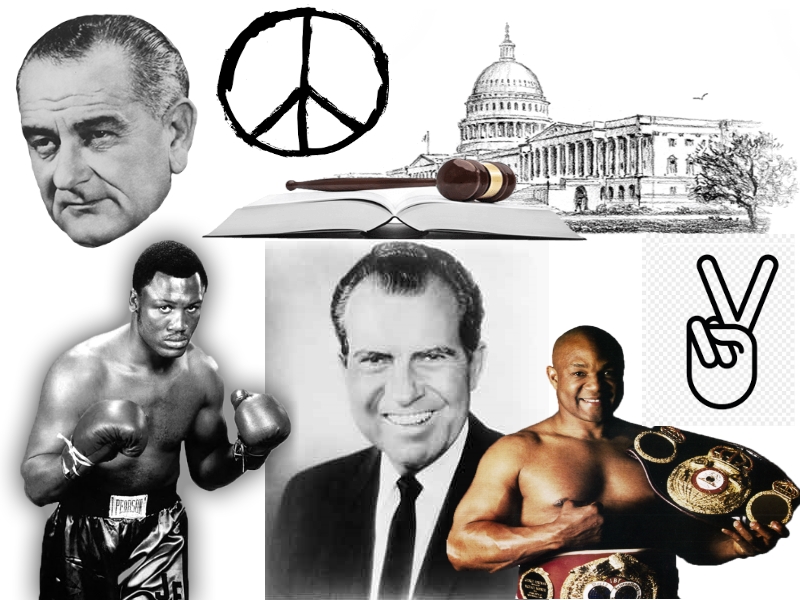
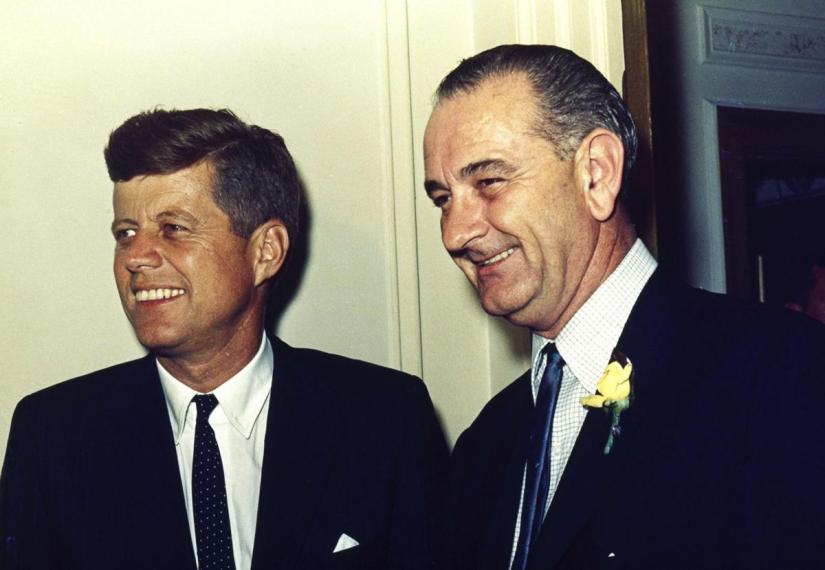
The month of January 1973 had started on a somber note with memorial services in Washington D.C. for President Harry S Truman on the 5th (he died the day after Christmas 1972). Then, Judge John Sirica began the Nixon impeachment proceedings on the 8th with the trial of seven men accused of committing a ” third rate burglary” of the Democratic Party headquarters at the Watergate. Next came the Inauguration of Richard Nixon (his second) on the 20th. Historians pinpoint Nixon’s speech that day as the end of the “Now Generation” and the beginning of the “Me Generation.” Gone was JFK’s promise of a “New Frontier,” lost was the compassionate feeling of the Civil Rights movement and LBJ’s dream of a “Great Society.” The self-help of the 1960s quickly morphed into the self-gratification of the 1970s, which ultimately devolved into the selfishness of the 1980s.
The line between want and need became hopelessly blurred and remains so to this day.
Twelve years before, John F. Kennedy decreed, “Ask not what your country can do for you, ask what you can do for your country.” On January 20th, 1973, Richard Nixon, purposely twisted JFK’s inaugural line by declaring , “In our own lives, let each of us ask—not just what will government do for me, but what can I do for myself?” At that moment, the idealism of the sixties gave way to narcissistic self-interest, distrust and cynicism in government of the seventies. Although it had been coming for years, when change finally arrived, it happened so fast that most of us never even noticed.
January 22nd was warm and rainy. It was the first Monday of Nixon’s second term and it would be one for the books. That day, Nixon announced that the war in Vietnam was over. The day before, his National Security Adviser Henry Kissinger and North Vietnamese politburo member Lê Đức Thọ signed off on a treaty that effectively ended the war; on paper that is. The settlement included a cease-fire throughout Vietnam. It addition, the United States agreed to the withdrawal of all U.S. troops and advisers (totaling about 23,700) and the dismantling of all U.S. bases within 60 days. In return, the North Vietnamese agreed to release all U.S. and other prisoners of war. It was agreed that the DMZ at the 17th Parallel would remain a provisional dividing line, with eventual reunification of the country “through peaceful means.”
That same day, the United States Supreme Court issued their landmark decision 410 U.S. 113 (1973). Better known as Roe v. Wade. Instantly, the laws of 46 states making abortion illegal were rendered unconstitutional. In a 7-2 decision, the U.S. Supreme Court ruled that a woman’s right to privacy extended to her right to make her own medical decisions, including having an abortion. The decision legalized abortion by specifically ordering that the states make no laws forbidding it. Rove V. Wade came the same day as the lesser known ruling, Doe v. Bolton, 410 U.S. 179 (1973), which overturned the abortion law of Georgia.
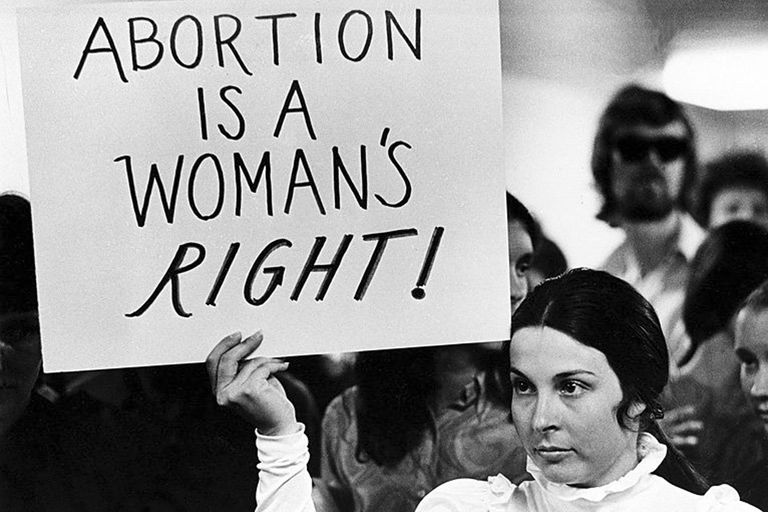
The Georgia law in question permitted abortion only in “cases of rape, severe fetal deformity, or the possibility of severe or fatal injury to the mother.” Other restrictions included the requirement that the procedure be “approved in writing by three physicians and by a three-member special committee that either continued pregnancy would endanger the pregnant woman’s life or “seriously and permanently” injure her health; the fetus would “very likely be born with a grave, permanent and irremediable mental or physical defect”; or the pregnancy resulted from rape or incest.” Only Georgia residents could receive abortions under this statutory scheme: non-residents could not have an abortion in Georgia under any circumstances. The plaintiff, a pregnant woman known as “Mary Doe” in court papers, sued Arthur K. Bolton, then the Attorney General of Georgia, as the official responsible for enforcing the law. The same 7-2 majority that struck down a Texas abortion law in Roe v. Wade, invalidated the Georgia abortion law.
The Roe v. Wade case, filed by “Jane Roe,” challenged a Texas statute that made it a crime to perform an abortion unless a woman’s life was in danger. Roe’s life was not at stake, but she wanted to safely end her pregnancy. The court sided with Roe, saying a woman’s right to privacy “is broad enough to encompass a woman’s decision whether or not to terminate her pregnancy.” Dozens of cases have challenged the decision in Roe v. Wade in the 46 years since the landmark ruling and the echoes of challenge are heard to this day.
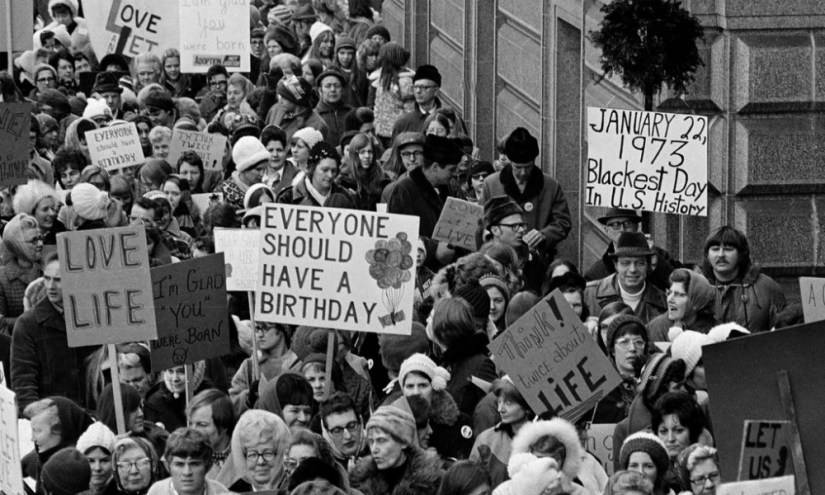
And what did Nixon think about that day’s ruling? The same Oval Office taping system that would bring about his downfall in the Watergate Scandal recorded his thoughts on Roe V. Wade for posterity. “I know there are times when abortions are necessary,” he told aide Chuck Colson, “I know that – when you have a black and a white, or a rape. I just say that matter-of-factly, you know what I mean? There are times… Abortions encourage permissiveness. A girl gets knocked up, she doesn’t have to worry about the pill anymore, she goes down to the doctor, wants to get an abortion for five dollars or whatever.” Yep, that was the President of the United States talking. And his day wasn’t even over yet.
At 3:39 p.m. Central Time, former President Lyndon B. Johnson placed a call to his Secret Service agents on the LBJ ranch in Johnson City, Texas. He had just suffered a massive heart attack. The agents rushed into LBJ’s bedroom where they found Johnson lying on the floor still clutching the telephone receiver in his hand. The President was unconscious and not breathing. Johnson was airlifted in one of his own airplanes to Brooke Army General hospital in San Antonio where he was pronounced dead on arrival. Johnson was 64 years old. Shortly after LBJ’s death, his press secretary telephoned Walter Cronkite at CBS who was in the middle of a report on the Vietnam War during his CBS Evening News broadcast. Cronkite abruptly cut his report short and broke the news to the American public.
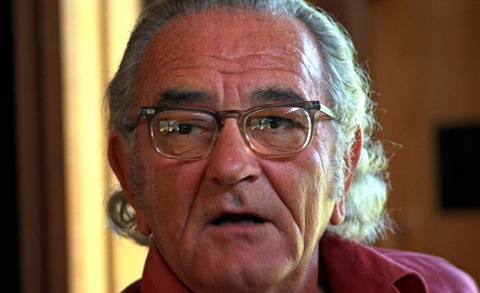
His death meant that for the first time since 1933, when Calvin Coolidge died during Herbert Hoover’s final months in office, that there were no former Presidents still living; Johnson had been the sole living ex-President Harry S. Truman’s recent death. Johnson had suffered three major heart attacks and, with his heart condition recently diagnosed as terminal, he returned to his ranch to die. He had grown his previously close-cut gray hair down past the back of his neck, his silver curls nearly touching his shoulders. Prophetically, LBJ often told friends that Johnson men died before reaching 65 years old, and he was 64. Had Johnson chosen to run in 1968 (and had he won) his death would have came 2 days after his term ended. As of this 2019 writing, Johnson remains the last former Democratic President to die.
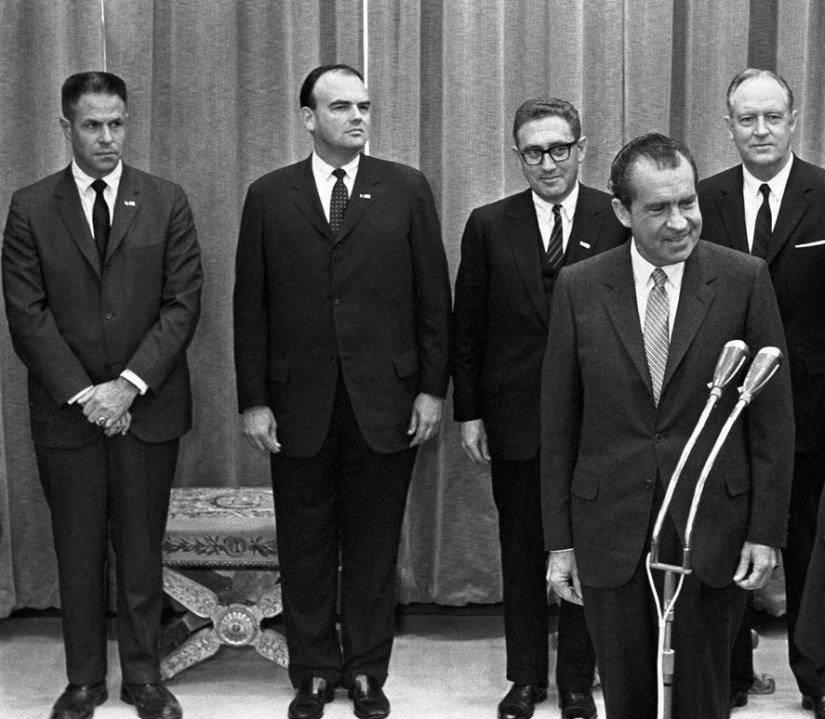
Nixon mentioned all of these events (and more) on his famous tapes. All the President’s men are there to be heard. Along with Colson, Nixon talks with H.R. Haldeman, John Ehrlichman (whom ha calls a “softhead” that day), Bebe Rebozo, Ron Ziegler, and Alexander Haig. Haldeman is the first to inform Nixon of LBJ’s death in “Conversation 036-051” by stating “He’s dead alright.” For his part, Nixon states in “Conversation 036-061” that it makes the “first time in 40 years that there hasn’t been a former President. Hoover lived through all of 40 years” and then refers to the recent peace treaty, “In any event It’ll make him (LBJ) look better in the end than he would have looked otherwise, so… The irony that he died before we got something down there. The strange twists and turns that life takes.”
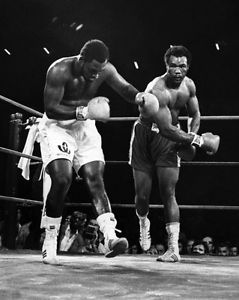
Another event took place that night to round out the day, but unlike the others, you won’t find mention of it on the Nixon tapes. In Jamaica, a matchup of two undefeated heavyweight legends took place. Undisputed world heavyweight champion Smokin’ Joe Frazier (29-0) took on the number one ranked heavyweight challenger George Foreman (37-0) in Jamaica’s National Stadium. Foreman dominated Frazier by scoring six knockdowns in less than two rounds. Foreman scored a technical knockout at 1:35 of the second round to dethrone Frazier and become the new undisputed heavyweight champion (the third-youngest in history after Floyd Patterson and Cassius Clay). This was the fight where ABC’s television broadcaster Howard Cosell made the legendary exclamation, “Down goes Frazier! Down goes Frazier! Down goes Frazier!”
“This is a peace that lasts, and a peace that heals.” Nixon announced to the American people the next day. The announcement came exactly 11 years, one month and one day after the first American death in the Vietnam conflict: 25-year-old Army Specialist 4th Class James Thomas Davis of Livingston, Tenn., who had been killed in an ambush by the Viet Cong outside of Saigon on Dec. 22, 1961. For you budding numerologists out there, that translates to 11-1-1. It was all downhill from there. LBJ’s death precipitated the cancellation of several Inauguration events and a week later, on January 30, former Nixon aides G. Gordon Liddy, James W. McCord Jr. and five others were convicted of conspiracy, burglary and wiretapping in the Watergate incident. The dominoes were falling and eventually “Down goes Nixon! Down goes Nixon!”

 Because Pavlick didn’t get near Kennedy on the day he was arrested, the story was not immediate national news. The story of Pavlick’s arrest happened the same day as a terrible airline disaster, known as the TWA Park Slope Plane Crash, in which two commercial planes collided over New York City, killing 134 people (including 6 on the ground). The plane crash story, the worst air disaster in U.S. history up to that time, occupied the national headlines and led the television and radio newscasts.
 On January 27, 1961, a week after Kennedy was inaugurated as the 35th President of the United States, Pavlick was committed to the United States Public Health Service mental hospital in Springfield, Missouri. He was indicted for threatening Kennedy’s life seven weeks later. The case would drag on for years without resolution. Belmont Postmaster Thomas M. Murphy had been promised that he would remain an anonymous informant, but was quickly identified as the tipster by the media. At first he was hailed as a hero and his boss, the Postmaster General, commended his actions. Congress even passed a resolution praising him. But then, fervent right wing publisher William Loeb of the Manchester Union Leader, New Hampshire’s influential state-wide newspaper, began defending Pavlick. Turns out, Loeb held many of the same opinions about Kennedy as the would-be assassin.
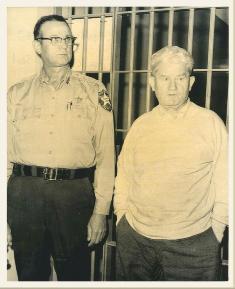 Loeb very publicly protested that Pavlick was being persecuted and denied his sixth amendment right to a speedy trial. Loeb’s newspaper disputed the insanity ruling and insisted the defendant have his day in court. Once the newspaper took up Pavlick’s cause, Murphy and his family began receiving hate mail, death threats and anonymous phone calls at all hours of the day and night accusing him of helping to frame Pavlick and for “railroading an innocent man.” The abuse continued for years after Murphy’s November 14, 2002 death at age 76. Even today, the surviving Murphy children are targeted by right-wing groups whenever the case gets a new round of public attention.
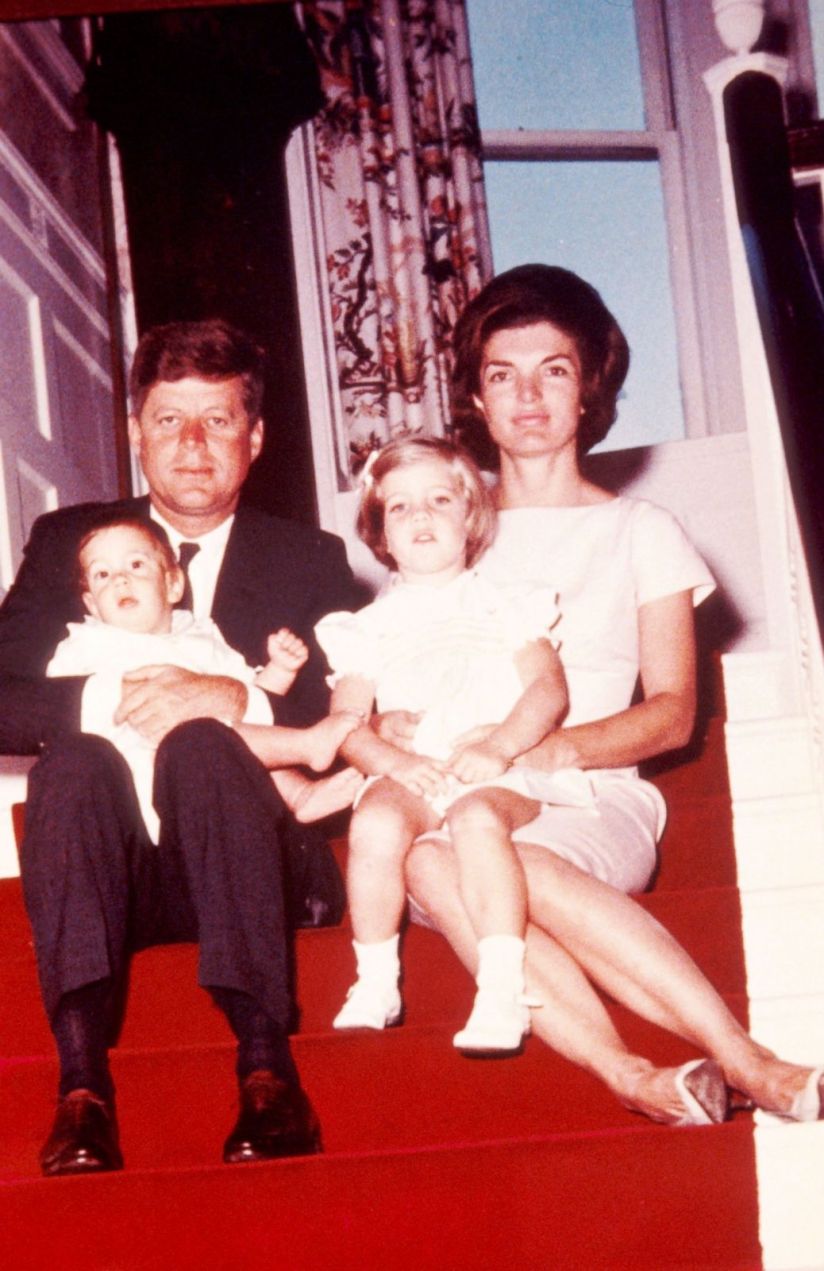 In today’s 24-hour-a-day, scandal-driven media environment, it is hard to believe that an incident of this magnitude would go unnoticed. Or would it? Sure, we all know about the very public assassination threats and attempts once they are out in the open. But what about those threats that are never reported? In Pavlick’s case, the public learned about it from the would-be assassin himself. He was proud of his plans and, after capture, boasted about it to anyone that came within earshot. The answer can be found in the name of the organization protecting the President: The Secret Service is, well, secret.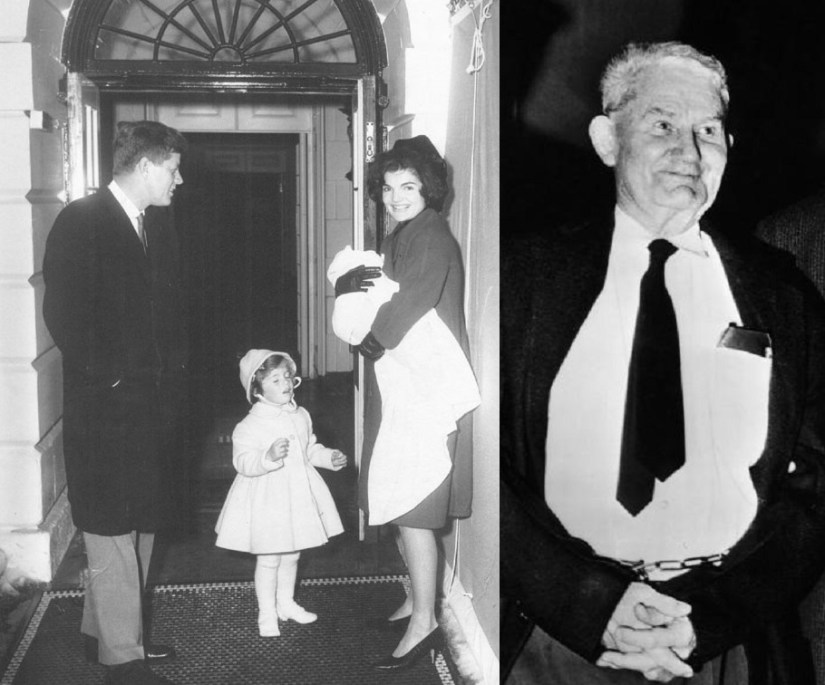
 nowhere. He lived alone and had no family to speak of. Locals in his hometown of Belmont remember him for his angry political rants and public outbursts at local public meetings. After accusing the town of poisoning his water, Pavlick once confronted the local water company supervisor with a gun, which was then promptly confiscated. His central complaint was that the American flag was not being displayed appropriately. He often criticized the government and blamed most of the country’s problems on the Catholics. But the perpetually grumpy, prune-faced Pavlick focused most of his anger on the Kennedy family and their “undeserved” wealth.
 Luckily for Mr. Kennedy, fate stepped in to save the day… and the President-elect’s life. Kennedy did not leave his house alone that morning. Much to Pavlick’s surprise, JFK opened the door holding the hand of his 3-year-old daughter Caroline alongside his wife, Jacqueline who was holding the couple’s newborn son John, Jr., less than a month old. While Pavlick hated John F. Kennedy, he hadn’t signed up to kill Kennedy’s family. So Pavlick eased his itchy trigger-finger off the detonator switch and let the Kennedy limousine glide harmlessly past his car. No one realized that the beat-up old Buick and the white haired old man in it was literally a ticking time bomb. Pavlick glared at the car as it slipped away and decided he would try again another day. Luckily, he never got a second chance.

 The ALPLM’s “problems” began back in 2007 when it purchased the famous Taper collection for $23 million. “The collection is amazing,” says Sam, “the Lincoln top hat and bloodied gloves seem to be the items that resonate most with people, but the collection is much more than that.” Dr. Wheeler says that the uniqueness of the Taper collection centers around its emphasis on assassination related items, a field that had been largely ignored by Lincoln collectors at that time of its assemblage. The collection was created by Louise Taper, daughter-in-law of Southern California real estate magnate S. Mark Taper. She created the exhibition The Last Best Hope of Earth: Abraham Lincoln and the Promise of America which was at the Huntington Library from 1993–1994 and at the Chicago Historical Society from 1996-1997.
 “Bottom line,” Sam says, “we need to keep the collection here. That is our first priority.” It is easy to see how important this collection is to Dr. Wheeler by simply watching his eyes as he speaks. To Wheeler, the collection is not just a part of the museum, it is a part of the state of Illinois. Sam relates how when he speaks to groups, which he does quite regularly on behalf of the ALPLM, he often reaches into the vault to bring along pieces from the Taper collection to fit the topic. “People love seeing these items. It gives them a direct connection to Lincoln.” states Wheeler.
 Hoosiers may ask, why doesn’t the ALPLM just ask the state of Illinois for the money? After all, with 300,000 visitors annually, the Lincoln Library Museum is one of the most popular tourist sites in the state of Illinois and is prominently featured in all of their state tourism ads. Well, the state is billions of dollars in debt despite approving a major income-tax increase last summer and as of the time of this writing, has yet to put together a budget. To the casual observer, one would think that financial stalemate between the state and the museum would be a no-brainer when you consider that the ALPLM has drawn more than 4 million visitors since opening in 2005. The truth is a little more complicated than that. Illinois State government runs and funds the Lincoln library and museum. The separately run foundation raises private funds to support the presidential complex. The foundation, which is not funded by the state, operates a gift store and restaurant but has little role in the complex’s operations, programs and oversight.


 To be sure, Minnesota has given us very normal politicians like Lyndon B. Johnson’s Vice-President Hubert H. Humphrey and Jimmy Carter’s Vice-President Walter Mondale and Senator Eugene McCarthy. All 3 men ran for President (Humphrey and McCarthy against each other in 1968) and all 3 men lost. Although mainstream, all 3 were unconventional in their own ways. McCarthy was the grandfatherly looking darling of the Anti-Vietnam War Hippy protesters, most of whom were one third his age. Humphrey was a peace seeking dove who became the hawkish voice of the LBJ administration during the Vietnam War. And Mondale was the first to chose a woman as his running mate (Geraldine Ferraro 1984).
 You may not realize just how prolific Minnesota has been in baby boomer’s collective national political conversation until you realize that Mondale, McCarthy or Hubert Humphrey were on the Democratic ticket as candidates for President or Vice President in the 1964, 1968, 1972, 1976, 1980, 1984, 1988 and 1992 elections. Minnesota is known for a politically active citizenry, with populism being the driving force among the state’s political parties. Minnesota has consistently high voter turnout, in the 2008 U.S. presidential election, 77.8% of eligible Minnesotans voted – the highest percentage of any U.S. state or territory – versus the national average of 61.7%.
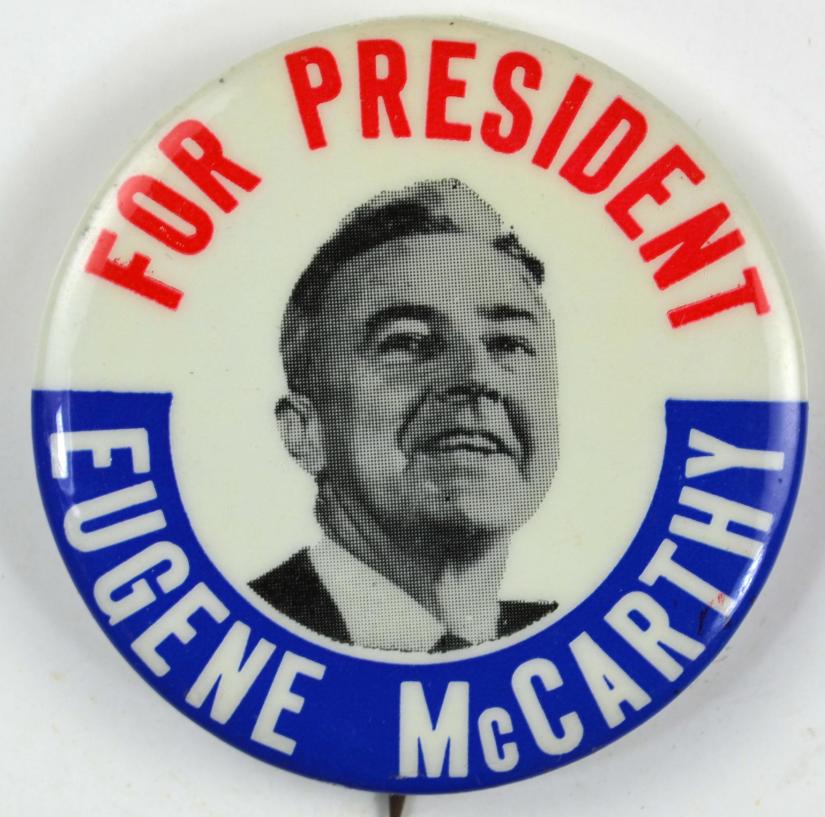 The history of Minnesota electing non-conventionals goes back to 1876 when the state elected John Pillsbury as their 8th Governor. Name sound familiar? Yes, he was the namesake of the Pillsbury doughboy and served from 1876 to 1882. He died in 1901. Following the food theme, Minesota also elected Frank B. Kellogg tot he Senate in 1916. No, he wasn’t the cereal guy, but he did become Secretary of State, British Ambassador and a Nobel Prize winner in 1929.
 Then came (and came-and came-and came) Harold Stassen, Minnesota Governor (it’s youngest ever) from 1939 to 1943. Stassen was a candidate for the Republican Party nomination for President nine times between 1944 and 1992 (1944, 1948, 1952, 1964, 1968, 1980, 1984, 1988, and 1992). He never won the Republican nomination, much less the presidency; in fact, after 1952, he never even came close, but continued to campaign actively and seriously for President until just a year before his death. When you add Stassen’s name alongside those of McCarthy, Mondale and Humphrey, a Minnesotan was on the ballot for every Presidential election for six decades.
 Then came Jesse Ventura. The former navy seal turned pro wrestler known as “The Body” was born James George Janos in Minneapolis in 1951. In the Minnesota gubernatorial election of 1998 he was elected the 38th Governor of Minnesota and served from 1999 to 2003 but did not seek a second term. Ventura ran as a candidate for the Reform Party of Minnesota. Ventura went on to gain the highest approval rating of any governor in Minnesota history, with some polls ranking his public approval as high as the 73% in 1999. Ventura is widely regarded as one of the first candidates to effectively use the Internet in a national political campaign.
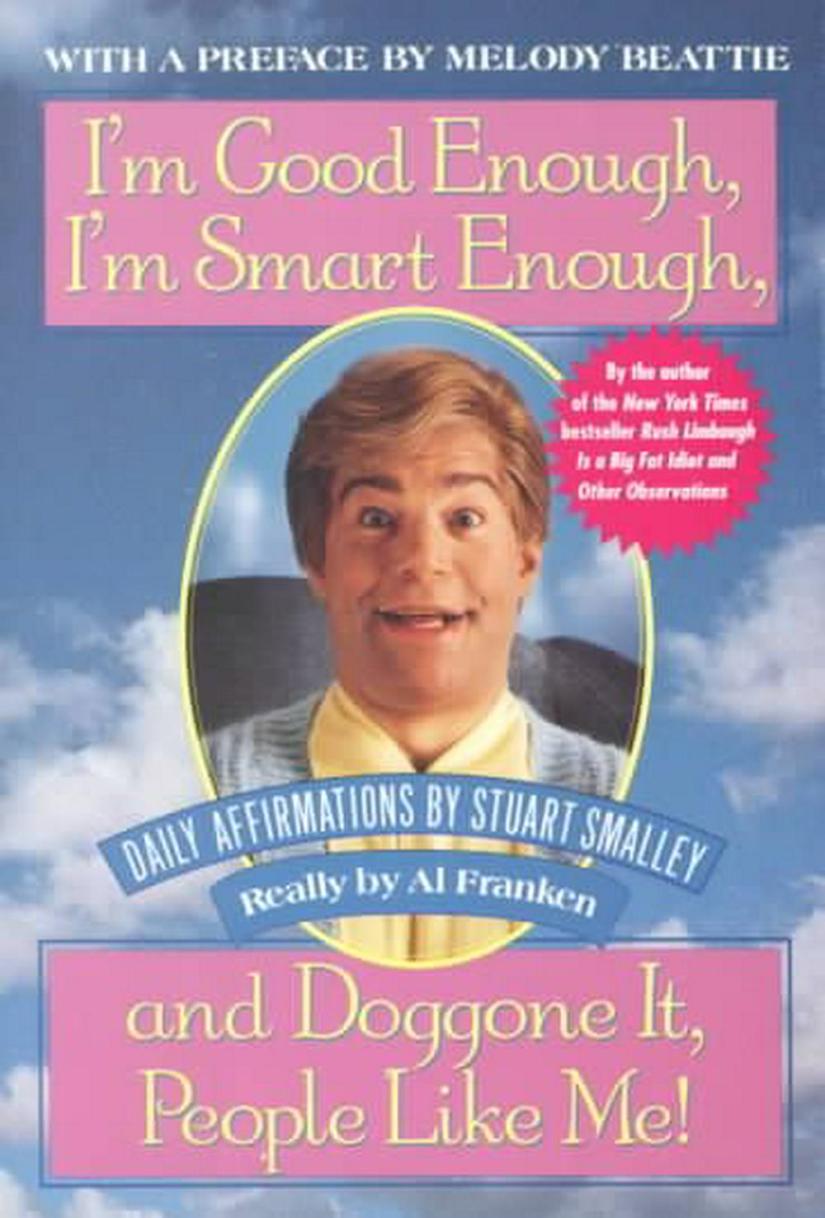 Franken then hosted a nationally syndicated, political radio talk show, The Al Franken Show, and authored six books, four of which are political satires critical of conservative politics. The success of his radio show and books led Franken to run for the U.S. Senate. Franken’s narrow victory was challenged but upheld. The most famous incident that emerged revolved around a ballot that would come to epitomize Franken’s victory. It was a ballot that had been marked twice, once for Franken and once for a write-in candidate known as “Lizard People.” This ballot gained infamy, not only for the absurd nature of a vote being cast for Lizard People but also for whether it should be counted for Franken or for lizard people. Eventually, the ballot was thrown out altogether. Franken was sworn into the Senate on July 7, 2009 (seven months after the congressional session had started) and was re-elected to a second term in office in 2014.
 Alan E. Hunter