
 Original publish date: October 29, 2014
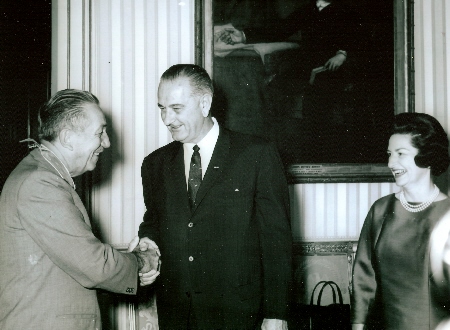
Mid-term elections are over, so I figure it is once again safe to write about politics. Well, sort of anyway. One of my favorite political stories involves a pair of baby-boomer heroes on the eve of the seminal 1964 Presidential election. On September 14, 1964, Walt Disney received the Presidential Medal of Freedom, the United States’ highest civilian honor, from Lyndon B. Johnson. The award recognizes those individuals who have made “an especially meritorious contribution to the security or national interests of the United States, world peace, cultural or other significant public or private endeavors”
There can be little doubt that Walt Disney deserved the honor, but controversy revolves around what Mr. Disney was wearing when he received the medal from President Johnson that day. Controversy from the man who brought us the happiest place on earth. What could that possibly be? Well, when Walt met Lyndon, he was wearing a Barry Goldwater for President button on his lapel. The lapel opposite the one that LBJ would pin the distinguished medal to.
The White House announced on July 3, 1964, that Walt would be a recipient of the Medal of Freedom. It was during the Goldwater campaign, and Walt Disney and his entire family were all united in their enthusiastic support of the Conservative Arizona Senator. Walt felt that it was all a ploy to surround the incumbent Democrat LBJ with people judged to be outstanding Americans for a powerful photo op during the campaign. The invitation came at a time when Walt Disney had bigger things on his mind: the New York World’s fair opening, the first death at Disneyland (Mark Maples on the Matterhorn) and the United States Lawn Bowling Championships. Wait, what? Lawn Bowling?
Betcha didn’t know that Walt Disney was one mean lawn bowler did ya? The White House ceremony was scheduled the Monday after the U.S. Lawn Bowling Championships at Buck Hill Falls, in the Pocono Mountains of eastern Pennsylvania near Scranton. The White House ceremony came at the end of a cross country journey Walt had arranged to take his Beverly Hills lawn bowling team back east to play in a few tournaments. Disney was passionate about lawn bowling at this time in his life. Walt bowled in the championships at Buck Hill Falls surrounded by, and competing against, just plain folk less than a week before he would meet the President of the United States.
At some point during his bowling sojourn, Walt decided he wanted to wear a Goldwater button to the White House. He asked an aid to get him a Goldwater pin. They got him two; a large 3″ pin with the slogan “Go-Go Goldwater” and a small tie-tac sized metallic gold metal lapel pin that combined the letter “G” and the numerals “64” as shorthand for “Goldwater in ’64”. Walt wore the big button on the plane going to Washington and joked to friends that he was going to wear it to the White House, although no-one really thought that he would.
Here’s where the story gets a little confusing. Some say that Walt wore the small “G ’64” pin in full view on the front of his lapel while others say he wore it pinned upside down under his lapel. Some of Walt’s friends say that he left the larger pin in his pocket while still others claim that he wore it pinned under his lapel. The very lapel that LBJ would pin the medal onto.
When Walt went to the podium to receive the medal from the President, he in some way tried to let Johnson know that he was wearing the Goldwater button. One account has LBJ discovering the pin while pinning the medal on. At the point of feeling the obstruction under the lapel, Walt flipped the lapel up to show the President the pin. Another states that LBJ saw the smaller tie-tac pin while initially pinning the medal onto the opposite lapel. Still another account claims that while Walt was on the podium and at a point when he and the President were face to face, Walt flipped up his lapel to reveal the pin.
For decades, this episode was viewed as an urban legend. It’s only recently that accounts from eye witnesses have surfaced confirming the incident. Although the exact details may remain fuzzy, the event itself has not been denied. Some members of the Johnson administration came forward to admit that LBJ “was not very happy about it…but I don’t think anything was said between them” and that “Johnson did not take Walt’s political commentary with good grace at all.”
One account of the incident comes from Emile Kuri, a longtime set decorator for the Disney live-action films. Kuri was a regular travel companion of Walt’s in the 1960s. Kuri recalls: “Walt didn’t like Johnson at all and he was wearing a Goldwater button. I was wearing the same button. But before I entered the White House, I took the button off. Walt didn’t. When he went into the White House, the aides to Johnson said, “Mr. Disney, please take that off.” He said, “Why should I? I’m voting for him.” You know he had the courage to do that. I didn’t. I had to take my button off. That man had such tremendous courage.”
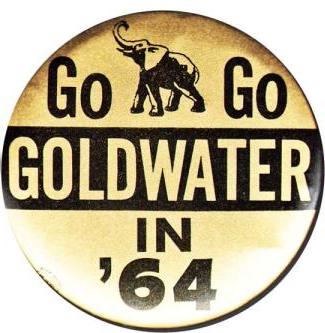 Back in Los Angeles, Walt told his daughter that he had worn the small button openly and that he had worn the larger “Go Go Goldwater” button on the underside of his lapel. He explained this double placement as “So if anyone said anything about it [the small button], I’d flash this [the larger button]… as if to say, ‘which one do you prefer I wear?’ Wearing an opponent’s button visible to LBJ would seem to have been a slap in the President’s face, a rude gesture difficult to reconcile with the Walt Disney legend.
Walter Elias Disney, was born in Chicago and grew up in Missouri. He was a very devout Congregationalist Christian, the religion of his family, and was named after the family minister. Walt’s political leanings are well-known to be conservative, anti-union, and vehemently anti-communist. Disney was a close ally of “Red Scare” zealot Joe McCarthy. Walt even testified against some of his Hollywood peers in McCarthy’s infamous House Un-American Activities Committee hearings. But was Walt Disney a boorish, ungrateful guest in the People’s House receiving an award so prestigious that- like the comparable Congressional Medal of Honor- it must be bestowed by an act of U.S. Congress?
Whatever the exact nature of Walt’s gesture, it was not defiant or insulting. It was more of an expression of Walt’s Midwestern sense of humor. If Walt said anything to LBJ about the incident, it would have surely been in jest. LBJ was well aware of Disney’s support for Goldwater before he bestowed the honor upon him. The subject of Walt’s support for Goldwater came up in one of LBJ’s recorded telephone conversations on September 6, 1964, eight days before the Medal of Freedom ceremony.
Disney was by nature an enthusiast, and in 1964, politics had become one of his enthusiasms. He had gotten to know General Dwight Eisenhower on social occasions at Palm Springs, and in July 1964, just a few days after the Medal of Freedom announcement, he visited the GOP national convention in San Francisco and was photographed there with Ike and his son, John. By wearing a Goldwater button, Walt may have been sticking up for his friends. Probably a mix of motives was at work: loyalty to fellow Republicans, sharp political differences with Johnson, and, perhaps most importantly, a once in a lifetime opportunity to pull the ultimate prank.
Years later, Walt’s daughter Diane said, “It was in bad taste not to remove it when he was received by the President. Dad did not respect Johnson, but did have great respect for the office he held. I was uneasy about what he said he’d done, but I did not let on. Rather, I probably said, ‘Good for you!’ or something like that. Alas, your animated man was not a perfect man. But he was not a coarse man. He did like to do the little unexpected ‘cute’ things like the bride and groom he designed for our wedding cake [the bride figure, representing Diane, was dressed in Levi’s, and the groom figure, representing Ron Miller, was dressed in Bermuda shorts and bare feet—and a football helmet]. He was the consummate gag man.”
Whether you believe Walt Disney was making a political statement or just pulling a gag, this little known episode from the real life of a man whose name, like Ford, Hershey or Firestone, has become an iconic American brand, must surely make you smile.
 Original publish date: March 11, 2018
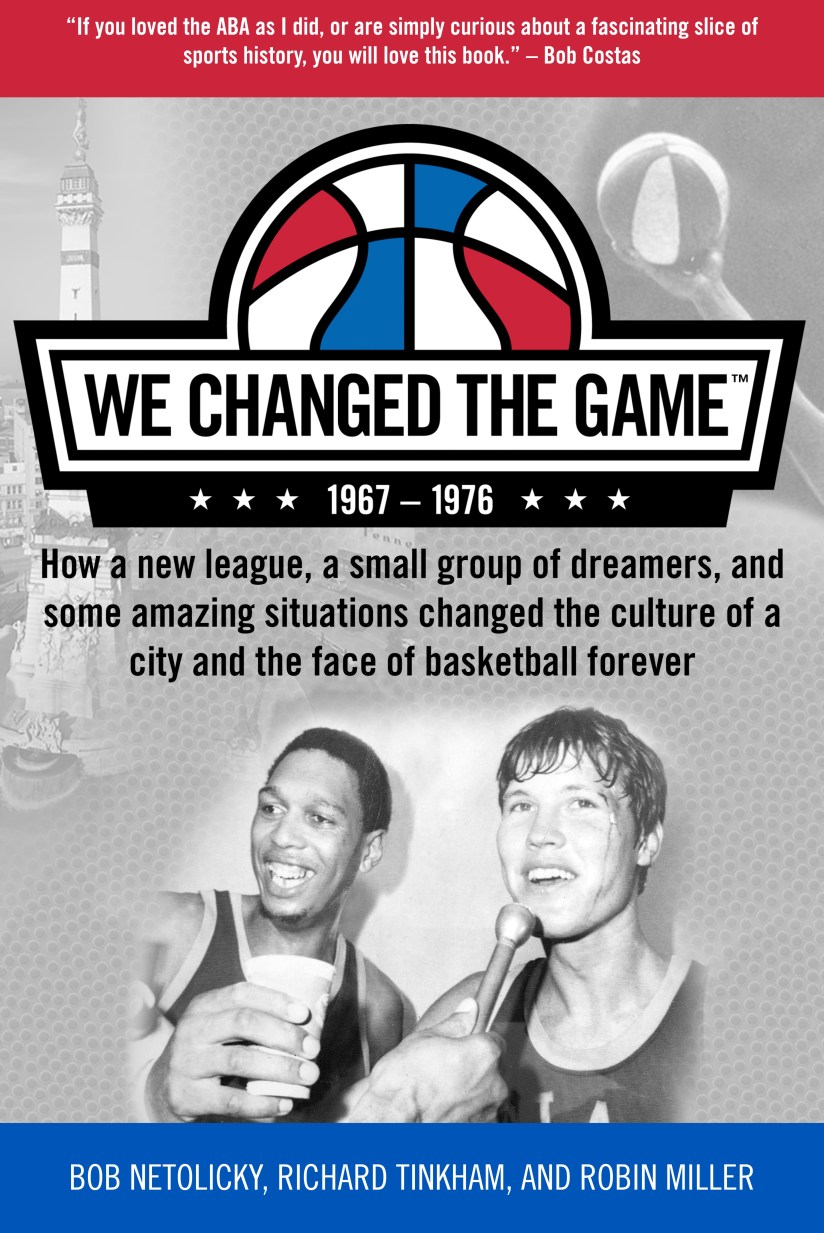
 The nicest thing about this book is that, in many instances, it defines the folklore of the league by telling the real story from the men who actually lived it. For me, the book’s bombshell revelation is the story of just how close the Pacers came to folding at the close of the 1968-69 season. Before that second season, the Pacers made the greatest trade in team history, sending Jimmy Dawson, Ron Kozlicki and cash to the Minnesota / Miami franchise for ABA Rookie of the Year Mel Daniels. That trade, along with the hing of Leonard as the new head coach, legitimized the team. After starting the season 2-7, the team went 42-27 the rest of the way, winning the Eastern Division by 1 game over Miami. However, the Pacers found themselves down 3 games to 1 against the rival Kentucky Colonels in the first round of the league playoffs.
 For sure, there will be other book signings for “We Changed the Game”. Thus far Neto has scheduled a signing at the J & J all-star sportscard show on Saturday March 24th from 10:00 to 12:00. The card show is held at the American Legion Post # 470 at 9091 E. 126th St. in Fishers and then again at Saturday March 31st from Noon to 2:00 at Bruno’s Shoebox 50 North 9th St. in Noblesville. Bruno’s shoebox is owned and operated by former longtime Indianapolis Star / News reporter and Indiana Pacers webmaster Conrad “Bruno” Brunner.
 Original publish date: July 8, 2015

 Original publish date: July 12, 2015
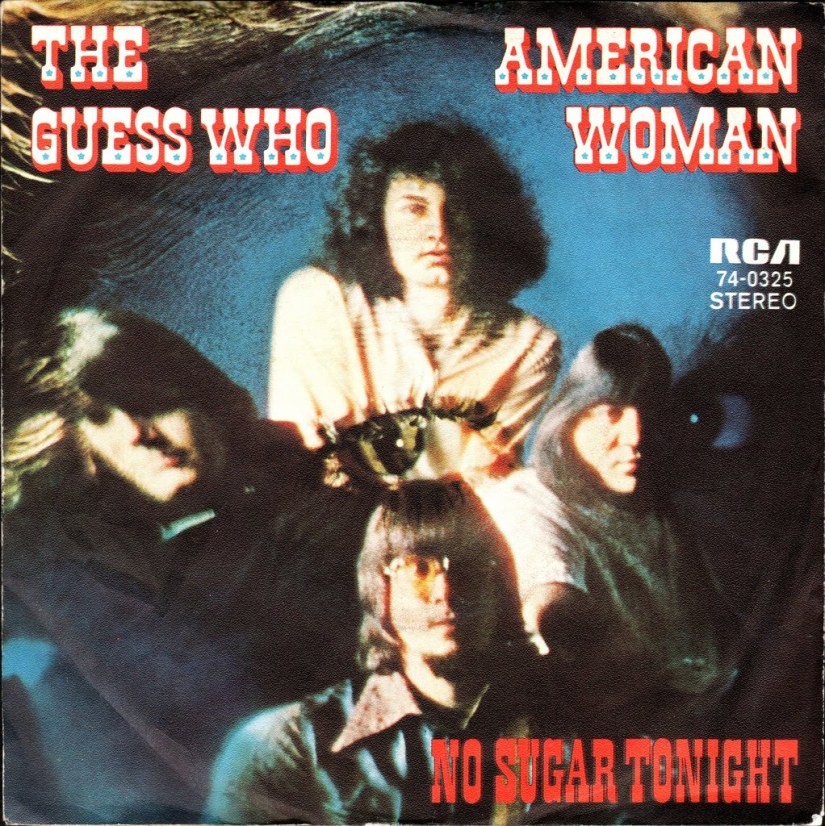 Despite it’s popularity and Patriotic sounding title, “American Woman” posed a problem for the Nixon family and more importantly, the Nixon White House. The song was viewed, rightly or wrongly, as as war protest anthem and this was not your ordinary White House garden party. It was a royal reception for England’s Prince Charles and Princess Anne, who were guests at the White House. No doubt the fact that the band was from Canada, a British territory ruled by the Royal guest’s mother, made perfect sense and sealed the deal.
 Cummings went on to say this about about playing The White House: “It was strange. All the guests were white, all the military aides were white in full military dress, and all the people serving food were black. And the way the White House was landscaped it kind of looked like Alabama …before Lincoln issued the Emancipation Proclamation. It left a bad taste in my mouth. It was terribly racist and this was 1970. I remember sitting with Edward Lear, heir to the Lear Jet fortune, and Billy Graham’s daughter was there. It was really the so-called upper crust aristocracy of America, very stuffy, boring people…We were told not to play “American Woman” but we did “Hand Me Down World.” We thought we were just as cool for doing it. But we did get a great tour of The White House, though, and (band mate) Leskiw and I spent an hour going through all these rooms and corridors seeing stuff most people don’t get to see.”
 Original publish date: June 8, 2015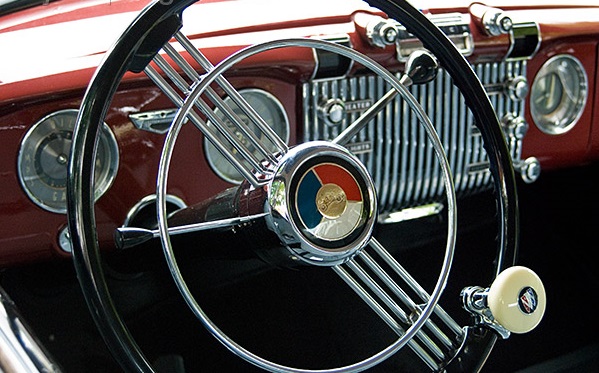
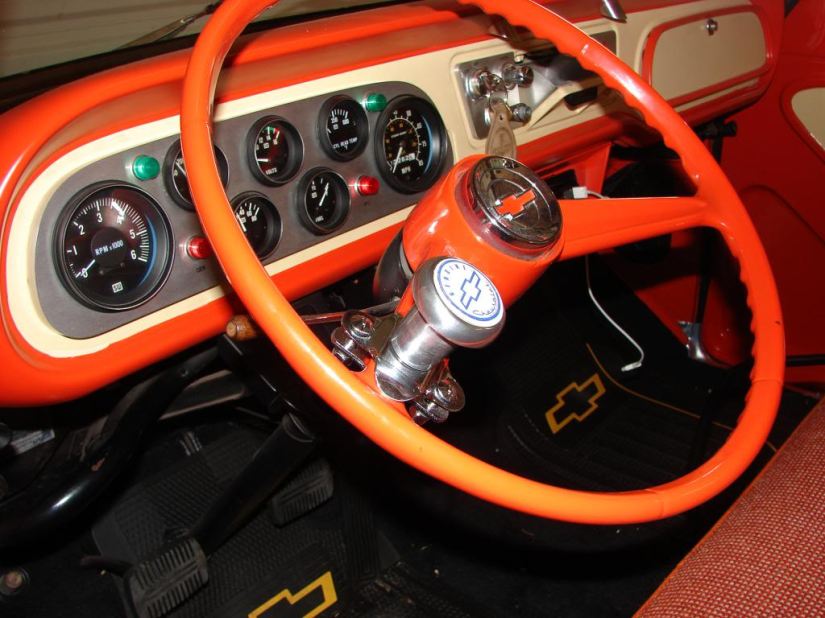 The manufacturers names that can be found on these knobs are unfamiliar to all but the most dedicated gearhead: Casco, Fulton, Morton and Santay among others. As fas as I can tell, suicide knobs are an invention unique to the United States. I’ve yet to find one from another country. I believe the VW version I once saw was produced for the American market. But I have my suspicion now that Cuba’s borders are opening up, we might find that the suicide knob is alive and well in that Caribbean time capsule. If you’re lucky, you can pick up a vintage suicide knob for ten bucks or less, but some of them command several hundred dollars each.
 Alan E. Hunter