
 Original publish date: January 17, 2011
In last week’s article, I described how author Harry E. Pratt’s research incorrectly pegged our 16th President as a cocaine user shortly before he was elected in 1860. However, Pratt cannot be blamed entirely because other historians found evidence that the Lincoln family had purchased other powerful drugs in 1853 and 1854 from the same drug store . The ledgers showed that one of the drugs purchased was opium. More specifically, “camphorated opium tincture” used at the time for its anti-diarrheal and pain relief properties. The main ingredient in this drug was Morphine, a highly addictive and dangerous drug.
It must be noted that in the Antebellum Era little was known about drugs and their side effects at the time. Drugs that we know today to be addictive, at least. and life threatening, at worst, were prescribed in Mid-19th century for everyday maladies treated today by aspirin and mild pain killers. In part one, I described how Abraham Lincoln suffered and dealt with his dark moods and depression throughout his life. It should come as no surprise to learn that Mary Lincoln experienced depression, mood swings, and hallucinations after witnessing her husband’s murder. But in truth, Mary dealt with her personal demons long before she met her husband. And like her husband, Historical pundits would claim that many of these symptoms were due to her drug use.
One contemporary of Mary Lincoln’s claimed to witness her use of paregoric, whose principal active ingredient is powdered opium, making the claim that Mary Lincoln had become addicted to this drug. The evidence can be found in a manuscript housed at the Lincoln library in Springfield. The pertinent paregoric passages from the handwritten document wildly claims that the “Hoy & James” drug store ledger show that the Lincoln family used four gallons of paregoric during the year 1854, and only seven quarts of brandy over the same period. The pen & ink document is backed up by an unattributed newspaper clipping from the same time frame as the handwritten account.
The newspaper clipping reads in part: “Abraham Lincoln used four gallons of paregoric in his home during the year 1854, and only seven quarts of brandy over the same period”. The paregoric statement in the handwritten manuscript reads: “De Missy [Mary Lincoln] raised the paregoric bottle and drank from it. Ah know that bottle was a plumb gallon” These accounts were used as reference material for nearly every article and book written about Mary Lincoln after their discovery in the late 1800’s. As with the Lincoln cocaine allegation, 20th century historians would prove that these 2 research materials were wildly inaccurate with respect to the quantities of paregoric purchased by the Lincolns.
 Under close examination the paregoric account in the newspaper clipping begins to unravel. It smacks of a garbled interview by a careless reporter using a badly informed source. Contrary to the clipping, there was no Hoy & James drugstore in Springfield when Lincoln resided there. Lincoln left Springfield, never to return alive, for Washington on February 11, 1861; the Hoy & James drugstore did not begin operations until 1902.
Historians believe that the handwritten account, although not questioning the veracity of the claims to a personal relationship with Mary Lincoln, were written after the newspaper account came out. It is believed that the witness who wrote the account included the erroneous information, probably believing it to be true, as a way of “spicing” up her memoirs for inclusion in one of the many Lincoln books that were now appearing on a regular basis. Therefore, the handwritten account was based on a contaminated source to begin with. Conversely, future historians would also use this source to fabricate a whole line of outrageous accounts of Mary Lincoln’s use of the opium-based narcotic in future publications. To definitively prove this fabrication, scholars simply look to the history of Springfield drugstores in Lincoln’s time.
The Diller family operated a drugstore on the east side of the square in Springfield for over sixty years. The store began in 1839 as Wallace & Diller, founded by Jonathan Roland Diller and William Wallace, Mary Lincoln’s brother-in-law. When Diller died in 1849, his cousin Roland Weaver Diller and druggist Charles S. Corneau formed a new partnership known as Corneau & Diller Drug Store at this same location. Lincoln patronized the firm of Corneau & Diller from the time it was established until he left for Washington to become president. Luckily the records of drugstore survived because they show purchases by it’s most famous customer, Abraham Lincoln. The Illinois State Historical Library in Springfield has all of these records that include three day-books, three ledgers, and one blotter.
These records show all of the Lincoln drug purchases at Corneau & Diller from August 10, 1849, to November 9, 1860. The Lincoln purchases from Corneau & Diller are carefully listed in a chart by date, item, and cost. The narcotics purchased over this eleven year period are as follows: April 29, 1853-Paregoric 10 cents…July 25, 1853-Paregoric 10 cents…March 22, 1854-Paregoric 60 cents and October 12, 1860-Cocoaine 50 cents. A far cry from the “four gallons of paregoric” claimed by later scandal seeking Mary Lincoln biographers. to use the vernacular of the era, “A preposterous amount!” The inflated claims that Mary Lincoln was addicted to paregoric are nonsense, poppycock, balderdash!
The purchase of 80 cents’ worth of this “paregoric” drug over a period of eleven years is far from an addiction. After all, the Encyclopedia Americana describes paregoric as “a narcotic drug composed of opium, camphor, benzoic oil, oil of anise, honey, alcohol, and water. At one time widely used to quiet colicky babies, quiet coughs and ease stomach pains.” Not unlike many over-the-counter cough & cold medications and none of which carry a stigma of addiction today.
Nevertheless this fabrication has become part of the Mary Lincoln mythology. Mary Lincoln and others of her generation were prescribed paregoric y physicians who believed that the medication would cure them. Ironically for Mary, while the medication gave her a temporary “high”, it was quickly followed by a deeper depression. Undoubtedly, these small doses of paregoric contributed to Mary’s frequent mood swings, from her temper tantrums to what Lincoln called her “stupor.” But she was by no definition addicted.
Lincoln authority Lloyd Ostendorf once explained Mary’s temper tantrums and anger this way, “Perhaps she can be forgiven for this side of her nature since she unknowingly took paregoric medication to calm her nerves. Neither she nor her doctors knew, at the time, the awful side effects of what she prescribed for herself. It occasionally caused her to lose control, and Lincoln had his own way of dealing with her. To her credit, she later regretted her outbursts and tried to make amends.”
 Another Lincoln scholar, Walter Oleksy made things worse when he claimed Mary Lincoln was a heavy user of paregoric and had become addicted. Oleksy wrote, “Mary Lincoln was troubled most of her adult life with emotional and psychological problems. In Springfield, to calm her nerves…Mary took paregoric, a popular drug sold in pharmacies in the nineteenth century… Little was then known about the drug’s side effects. For Mary Lincoln the side effects were depression, mood swings, and hallucinations and believed she could communicate with her dead sons.”
Deaths in the family and Mary’s well documented mental and emotional instability combined with a very troubled and tragic family life to form what most saw in Mary Lincoln as a difficult woman. But did she deserve this? I’ve always believed that Mary Lincoln got a bad rap and an undeserved reputation as a drug addict by revisionist historians. To this day, Mary gets no respect. Who among you hasn’t heard the joke, “Other than that Mrs. Lincoln, how’d you like the play?” Drug addiction rumors notwithstanding, Mary Lincoln might just be the saddest woman this country has ever known.
 Original publish date: June 29, 2015
 Paul, sharply dressed in a white, silver flecked jacket and black stovepipe pants with a guitar strapped to his back, whipped out the guitar and began playing Eddie Cochran’s “Twenty Flight Rock” followed by Gene Vincent’s “Be Bop A Lula” before launching into a medley of Little Richard songs. Lennon was floored by the demonstration. McCartney sealed the deal by tuning Lennon’s guitar and writing out the chords and lyrics to some of the songs he’d just played.
 But wait, there is proof. That July 6, 1957 Quarrymen’s set was recorded by a member of St Peter’s Youth Club, Bob Molyneux, on his portable Grundig reel-to-reel tape recorder. Made just moments after that historic meeting, it remains the earliest known recording of Lennon. The three-inch reel includes Lennon’s performances of two songs; “Puttin’ on the Style,” a No. 1 hit at the time for Lonnie Donegan, and “Baby Let’s Play House,” an Arthur Gunter song made popular by Elvis Presley. In 1965 Lennon used a line from the Gunter song – “I’d rather see you dead, little girl, than to be with another man”- as the opening line of his own “Run for Your Life”. In 1963, Molyneux offered the tape to Lennon, through Ringo Starr. But Lennon never responded, so Molyneux put the tape in a vault.
 Original publish date: March 11, 2018
 The nicest thing about this book is that, in many instances, it defines the folklore of the league by telling the real story from the men who actually lived it. For me, the book’s bombshell revelation is the story of just how close the Pacers came to folding at the close of the 1968-69 season. Before that second season, the Pacers made the greatest trade in team history, sending Jimmy Dawson, Ron Kozlicki and cash to the Minnesota / Miami franchise for ABA Rookie of the Year Mel Daniels. That trade, along with the hing of Leonard as the new head coach, legitimized the team. After starting the season 2-7, the team went 42-27 the rest of the way, winning the Eastern Division by 1 game over Miami. However, the Pacers found themselves down 3 games to 1 against the rival Kentucky Colonels in the first round of the league playoffs.
 For sure, there will be other book signings for “We Changed the Game”. Thus far Neto has scheduled a signing at the J & J all-star sportscard show on Saturday March 24th from 10:00 to 12:00. The card show is held at the American Legion Post # 470 at 9091 E. 126th St. in Fishers and then again at Saturday March 31st from Noon to 2:00 at Bruno’s Shoebox 50 North 9th St. in Noblesville. Bruno’s shoebox is owned and operated by former longtime Indianapolis Star / News reporter and Indiana Pacers webmaster Conrad “Bruno” Brunner.
 Original publish date: July 8, 2015

 Original publish date: July 12, 2015
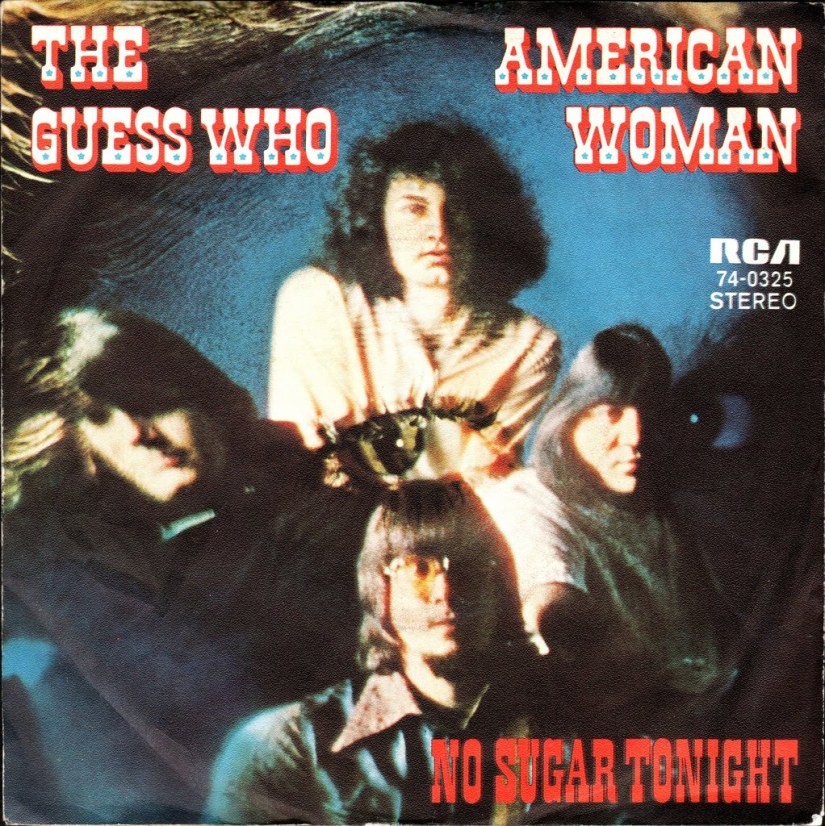 Despite it’s popularity and Patriotic sounding title, “American Woman” posed a problem for the Nixon family and more importantly, the Nixon White House. The song was viewed, rightly or wrongly, as as war protest anthem and this was not your ordinary White House garden party. It was a royal reception for England’s Prince Charles and Princess Anne, who were guests at the White House. No doubt the fact that the band was from Canada, a British territory ruled by the Royal guest’s mother, made perfect sense and sealed the deal.
 Cummings went on to say this about about playing The White House: “It was strange. All the guests were white, all the military aides were white in full military dress, and all the people serving food were black. And the way the White House was landscaped it kind of looked like Alabama …before Lincoln issued the Emancipation Proclamation. It left a bad taste in my mouth. It was terribly racist and this was 1970. I remember sitting with Edward Lear, heir to the Lear Jet fortune, and Billy Graham’s daughter was there. It was really the so-called upper crust aristocracy of America, very stuffy, boring people…We were told not to play “American Woman” but we did “Hand Me Down World.” We thought we were just as cool for doing it. But we did get a great tour of The White House, though, and (band mate) Leskiw and I spent an hour going through all these rooms and corridors seeing stuff most people don’t get to see.”
 Alan E. Hunter