
 Original publish date: July 12, 2015
If you were born after 1970, this story probably won’t mean a thing to you. But if you’re a baby boomer (like me) you might get a giggle out of it. First families seem boring nowadays compared to the sixties and seventies. Caroline, John-John, those strung out Ford kids, Amy & Billy Carter and even the dissenting Reagan siblings, they always made for good copy. True Roger Clinton had his moments and the Bush twins had some hi-jinx, but for the most part…BORING! But those Nixon girls, now THEY were some rebels!
Okay, maybe not. Julie Nixon (Eisenhower) was America’s sweetheart and her sister Tricia Nixon (Cox) was not far behind. But for a time, Tricia gave “wild and crazy” a run, even if was in a very WASPish sort of way. For our generation, finding out that Tricia might have been edgy and cool is like watching The Red Hot Chilli Peppers or Lady Gaga sing with Tony Bennett. Might be hip, but it ain’t very cool.
45 years ago this Friday (July 17, 1970) Tricia Nixon’s favorite band, The Guess Who, played the White House. The Guess Who, a Canadian rock band from Winnipeg, Manitoba led by Burton Cummings and Randy Bachman (of Bachman–Turner Overdrive), had a string of hit singles, including “Laughing”, “Undun”, “These Eyes” and “Share the Land”. So I suppose the Guess Who were about as cool as Tricia could get. By the time the band hit the White House, they were in the midst of a transformation from AM radio popstars to a louder, sharper Underground Rock Band for FM radio. With songs like “No Time”, “No Sugar Tonight” and “American Woman” (which would hit # 1 on the charts), the band was changing it’s image. That change in tone did not go unnoticed by Tricia’s mom. Pat Nixon.
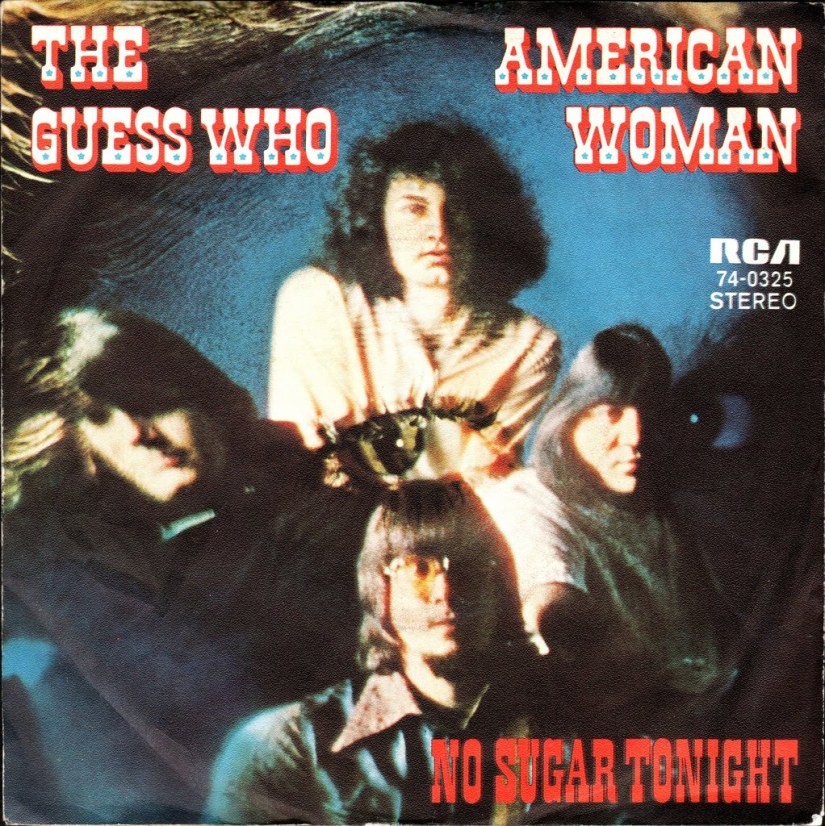 Despite it’s popularity and Patriotic sounding title, “American Woman” posed a problem for the Nixon family and more importantly, the Nixon White House. The song was viewed, rightly or wrongly, as as war protest anthem and this was not your ordinary White House garden party. It was a royal reception for England’s Prince Charles and Princess Anne, who were guests at the White House. No doubt the fact that the band was from Canada, a British territory ruled by the Royal guest’s mother, made perfect sense and sealed the deal.
In the summer of 1970, America was embroiled in an unpopular war in Vietnam, still struggling with Civil Rights, the Cold War, Inflation and global instability. America was a target, and here was this ubiquitous song, heard everyday on radio stations across the country, casting further aspersions on the United States. And worse, the band that sang that song was invited to play on the White House lawn. This could get complicated.
Canada’s official diplomatic position during the Vietnam War was that of a non-belligerent. Although our neighbors to the north imposed a ban on the export of war-related items to the combat areas, they weren’t necessarily against supplying equipment and supplies to the American forces, as long as those goods weren’t sent directly to South Vietnam. Those goods included relatively benign items like boots and gear, but also aircraft, munitions, napalm and commercial defoliants, the latter of which were fiercely opposed by anti-war protesters at the time. Between 1965 and 1973, Canadian companies sold $2.47 billion in materiel to the United States. Canada, in accordance with existing treaties, also allowed their NATO ally to use facilities and bases in Canada for training exercises and weapons testing. A sticky wicket to be sure.
But what about THAT song, “American Woman”? Let me refresh your memory. Although the band denies it, critics and wags alike claim the song is a “Thanks, but no thanks” anthem about the Vietnam War. Rightly or wrongly, Canadians believed that America was trying to get Canada to adapt nuclear missiles and join them in their Cold War jungle conflict. When the song warns the American Woman to “Don’t come hangin’ around my door, I don’t wanna see your face no more, I got more important things to do, then spendin my time growin old with you” he’s basically saying that Canada has its own troubles and that the USA burned the blister, now they must sit on it.
The rest is pretty self-explanatory: “I don’t need your war machine” refers to nuclear weapons. “I don’t need your ghetto scenes” refers to the after math of the explosives. “Colored lights can hypnotize” refers to explosions of the bombs. “Sparkle someone else’s eyes” means, well, get lost. Despite the fact that the song was a huge hit at the time, it wasn’t the type of song Tricia would play for the folks. The Guess Who didn’t perform “American Woman” that day because they were asked not to “as a matter of taste.” That request came from first lady Pat Nixon’s press secretary. Fits right into the “clean hands doctrine” of the Nixon White House that would end a President’s tenure a couple of years later, huh?
Burton Cummings, who wrote and sang the song, insists it has nothing to do with politics but is a song about, what else, girls. “What was on my mind was that girls in the States seemed to get older quicker than our girls and that made them, well, dangerous,” he told the Toronto Star in 2014. “When I said ‘American woman, stay away from me,’ I really meant ‘Canadian woman, I prefer you.’ It was all a happy accident.” Yeah I know, that excuse doesn’t wash with me either.
In John Einarson’s book, “American Woman-The Story Of The Guess Who”, Cummings offered a more plausible explanation: “People read their own meanings into that song. They thought the American woman I alluded to was the Statue of Liberty and RCA contributed to that image with the ad campaigns. It came from looking out over a Canadian audience after touring through the southern U.S.A. and just thinking how the Canadian girls looked so much fresher and more alive. As opposed to an anti-American statement, it was more of a positive Canadian statement. ”
 Cummings went on to say this about about playing The White House: “It was strange. All the guests were white, all the military aides were white in full military dress, and all the people serving food were black. And the way the White House was landscaped it kind of looked like Alabama …before Lincoln issued the Emancipation Proclamation. It left a bad taste in my mouth. It was terribly racist and this was 1970. I remember sitting with Edward Lear, heir to the Lear Jet fortune, and Billy Graham’s daughter was there. It was really the so-called upper crust aristocracy of America, very stuffy, boring people…We were told not to play “American Woman” but we did “Hand Me Down World.” We thought we were just as cool for doing it. But we did get a great tour of The White House, though, and (band mate) Leskiw and I spent an hour going through all these rooms and corridors seeing stuff most people don’t get to see.”
The 68-year-old Cummings now has no doubt the band was brought in to impress the royal guests. “It left a bad taste in my mouth,” he told the Winnipeg Free Press recently. “They wanted a Commonwealth act when Charles and Anne went there. We were the token Commonwealthers.”
Even though he had left the band by the time of The White House gig, guitarist Randy Bachman remembers the song having a much more spontaneous genesis: it was written on stage with no thought given to deeper meaning or politics.The Guess Who was playing a show at a curling rink in Ontario when he broke a string on his guitar. In those days, that meant stopping the show until he could replace it. His bandmates left the stage, and Bachman put a new string on his ’59 Les Paul. The next challenge was getting it in tune (he didn’t have a tech or even a tuner in those days), so he went in front of Cummings’ electric piano and hit the E and B notes to give him reference. As he tuned his guitar a riff developed, then something magical happened.
“I started to play that riff on stage, and I look at the audience, who are now milling about and talking amongst themselves,” Bachman said. “And all their heads snapped back. Suddenly I realize I’m playing a riff I don’t want to forget, and I have to keep playing it. So I stand up and I’m playing this riff. I’m alone on stage.” The band’s drummer Garry Peterson, who had made his way to the audience, jumped on stage and started playing. Bassist Jim Kale heard the ruckus and joined them, and finally Burton Cummings came up and grabbed the microphone. “Sing something!” Bachman implored him. Burton obliged: the first words out of his mouth were, “American woman, stay away from me.” The crowd, which included a fair number of draft dodgers and war protesters, loved it. And the rest was history.
Tricia Nixon cool? Well, maybe not by today’s standards. But maybe you’ll see that Guess Who gig in a different light when you learn what else was going on at that party. If you’re a fan of Downton Abbey, you’ll get a kick out of next week’s article when we explore Tricky Dick Nixon and the hook-up.
Next Week: Part II: Tricky Dick Nixon and the Hook Up.
 Original publish date: June 8, 2015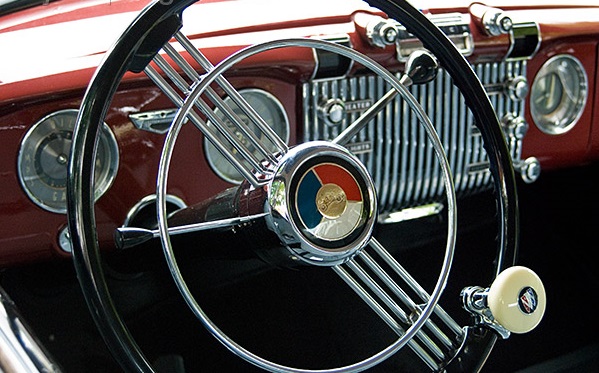
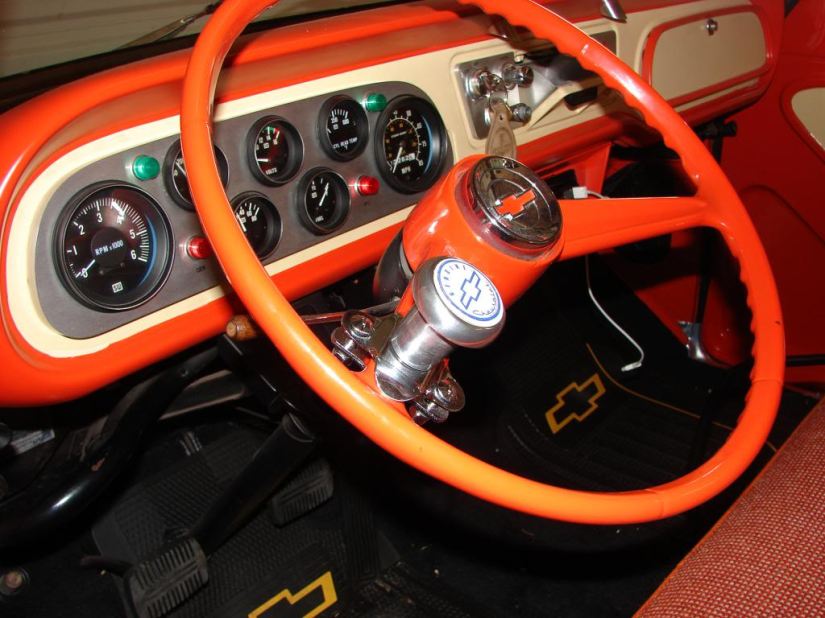 The manufacturers names that can be found on these knobs are unfamiliar to all but the most dedicated gearhead: Casco, Fulton, Morton and Santay among others. As fas as I can tell, suicide knobs are an invention unique to the United States. I’ve yet to find one from another country. I believe the VW version I once saw was produced for the American market. But I have my suspicion now that Cuba’s borders are opening up, we might find that the suicide knob is alive and well in that Caribbean time capsule. If you’re lucky, you can pick up a vintage suicide knob for ten bucks or less, but some of them command several hundred dollars each.
 Original publish date: July 11, 2016
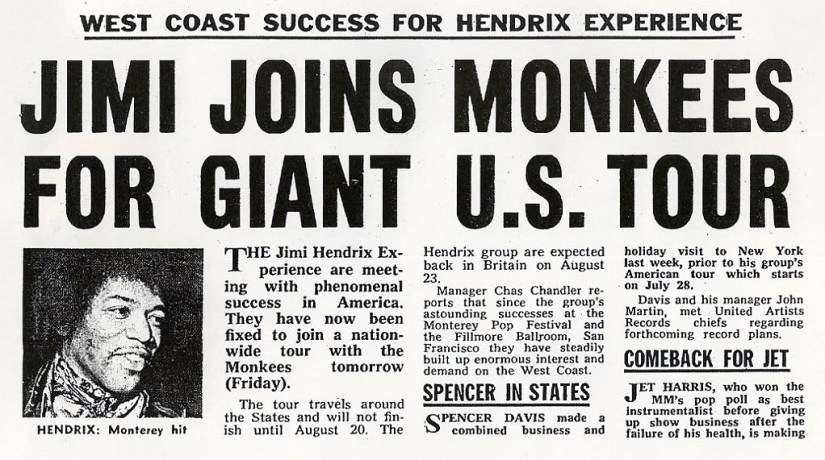 Jimi joined the tour on July 8 in Jacksonville, Florida, after The Monkees returned from three gigs in England. Now, imagine being a Monkees-loving teenager wedged into a sweaty, darkened, cram-packed concert hall anticipating the arrival of your favorite TV-pop band. Wearing your Monkees bubblegum machine pins, flipping through your official Monkees trading cards and holding your hand lettered poster professing your love for one Monkee or another. The curtain rises and this new guy Jimi Hendrix storms the stage to melt your face off while playing the guitar with his teeth!
 The Jimi Hendrix Experience experiment lasted just eight of the 29 scheduled tour dates. After only a few gigs, Hendrix grew tired of the “We want the Monkees” chant that met his every performance. Matters came to a head a few days later as the Monkees played a trio of dates in New York. On Sunday July 16, 1967, Jimi flipped off the audience at Forest Hills Stadium in Queens, threw down his guitar and walked off stage, leaving Monkeemania forever in his wake. After all, “Purple Haze” and Are You Experienced? were climbing the American charts, and it was time for him play for audiences who wanted to see him. He asked to be let out of his contract, and he and the Monkees amicably parted ways.
 Original publish date: December 18, 2016
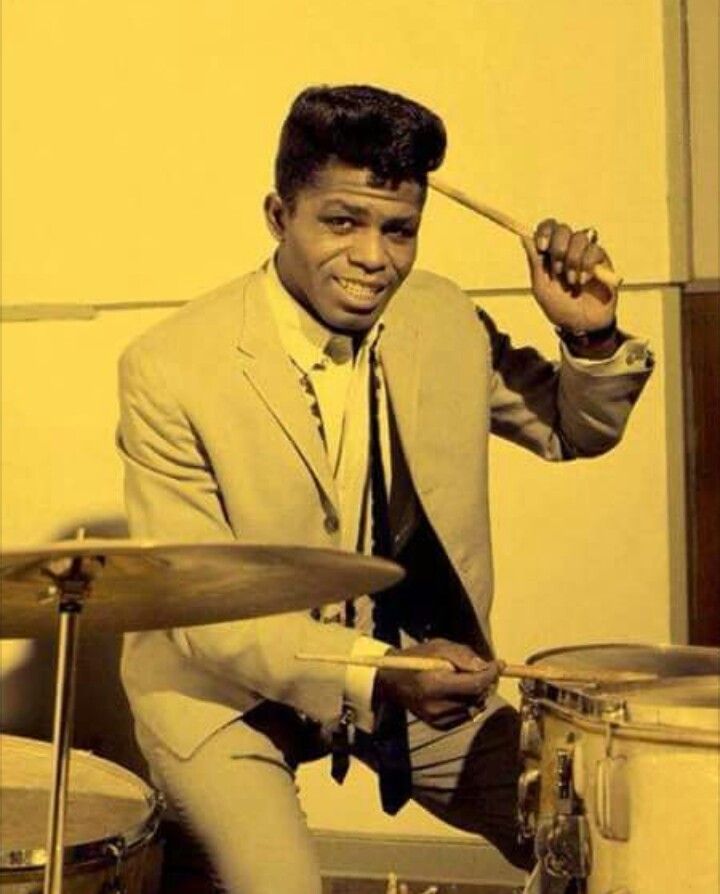 By 1968, James Brown was much more than an important musician; he was an African-American icon. He often spoke publicly about the pointlessness of rioting. In February 1968, Soul Brother No. 1 informed Black Panther leader H. Rap Brown, “I’m not going to tell anybody to pick up a gun.” Brown often canceled his shows to perform benefit concerts for black political organizations like the Southern Christian Leadership Conference (SCLC). In 1968, he initiated “Operation Black Pride,” and, dressing as Santa Claus, presented 3,000 certificates for free Christmas dinners in New York City’s poorest black neighborhoods. He also started buying radio stations.
 Except for a brief period during the mid-1960s when Brown wore his hair in a traditional afro as a temporary form of protest, for most of his career, James Brown had his hair “marceled” aka straightened or conked. The conk (derived from congolene, a hair straightener gel made from lye) was a hairstyle popular among African-American men. This hairstyle transformed naturally “kinky” hair by chemically straightening it with a relaxer (sometimes the pure corrosive chemical lye), so that the newly straightened hair could be styled in specific ways.
 Original publish date: June 26, 2014
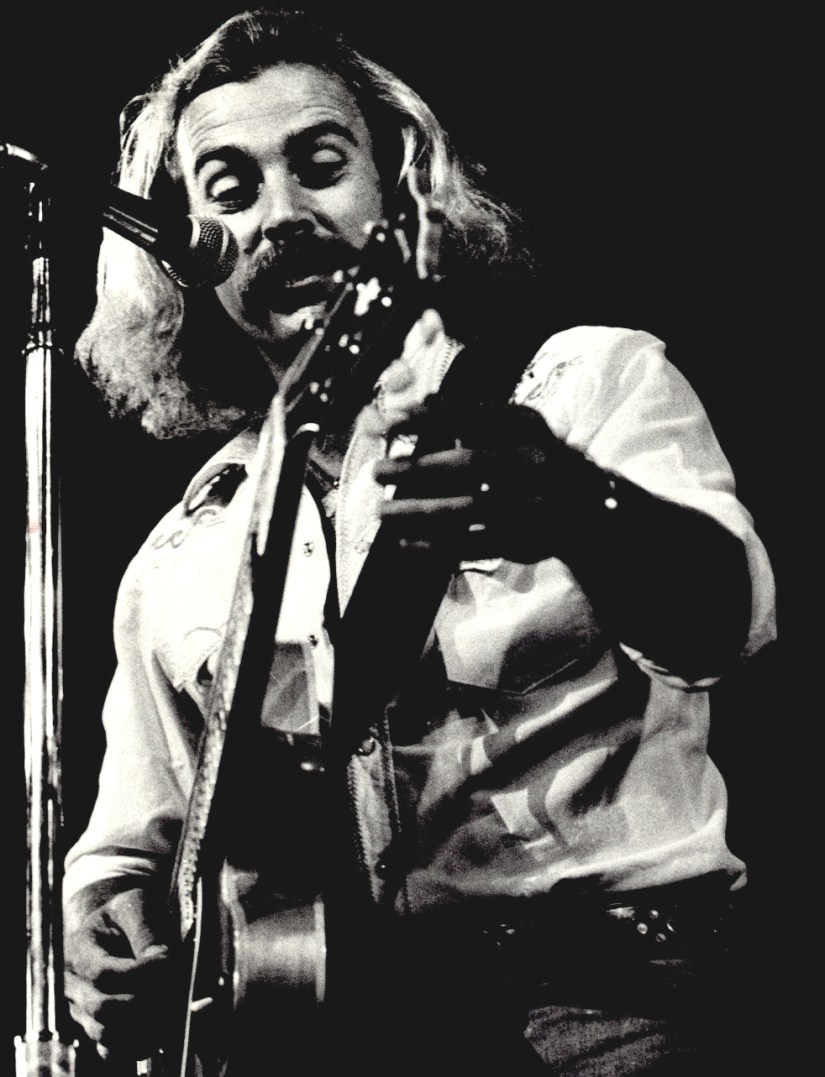 Buffett himself tells the story on his fan website, in a 1975 interview for Rolling Stone and in his own biography. “We’re there dining and dancing. Sammy Creason (Drummer) was with me (other accounts say Kris Kristofferson’s bass player Terry Paul was there too), so we provided just a gala of entertainment. Me on acoustic guitar so drunk I couldn’t hit the chords and him just pounding the drums out in 3-quarter time. Ran everybody out. We got the screaming munchies and we were going to Charlie Nickens to eat. And I couldn’t find my rent-a-car, which was parked somewhere amidst thousands of cars in the parking lot of the fabulous, plush King of the Road hotel. It was a little bitty car. It was hiding among many big ones there. And there was a Tennessee Prosecutors convention going on there. If they had made it to room 819 they would’ve had a closed door case.
 I was not scared of this individual. I just thought he was some ex-football player turned counselor. And Sammy said “look whatever damage we did ABC will pay for everything” which was awfully generous of Sammy since he didn’t have the authority to say so. Being a good company man I took up for my company and said “No they won’t. I’m still gonna beat your a*s if you don’t leave us alone”. With that he pulled up then stuck his big head and his hand in and grabbed me by my hair until it separated from my head. I had a big bald spot on the back of it and I looked like a monk for about 3 months. Then he punched Sammy right in the nose. We knew he wasn’t kidding. So Sammy defended himself bravely with a bic pen. He starts stabbing at this man’s arm trying to get it out of the window because we couldn’t start the car because with the new modern features of ‘74 automobiles you can not start your car unless your seat belt’s buckled and we were too drunk to get ours hooked up.
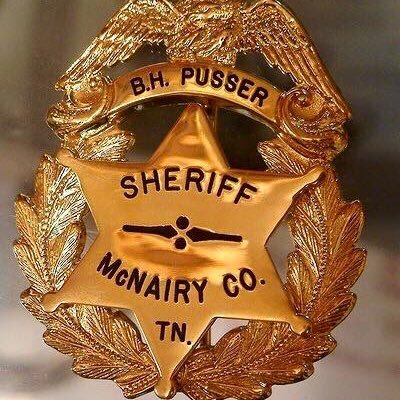 If you don’t recognize the name Buford Pusser, the epic films made about his life might ring a bell. Buford Hayse Pusser was the Sheriff of McNairy County, Tennessee from 1964 to 1970 and the subject of the film “Walking Tall”. Pusser, a 6 feet 6 inch tall 250 pound former professional wrestler, became known for his virtual one-man war on moonshining, prostitution, gambling, and other vices on the Mississippi-Tennessee state-line against the Dixie Mafia and the State Line Mob. By the time he encountered Buffett, Pusser had already killed two men.
