

Original publish date: June 29, 2012 Reissue date: June 27, 2019
Last week, I recounted the 40th anniversary of the Watergate break-in and fall from grace of the Richard Nixon administration. There are not many voices left to clarify the events and personalities from that sad affair today. However, we are fortunate that two of the most important figures from Watergate have reunited to share their recollections of the scandal from a four decade perspective. Bob Woodward and Carl Bernstein recently co-authored an article for the Washington Post discussing the Nixon White House and Watergate affair as seen through the haze of history.
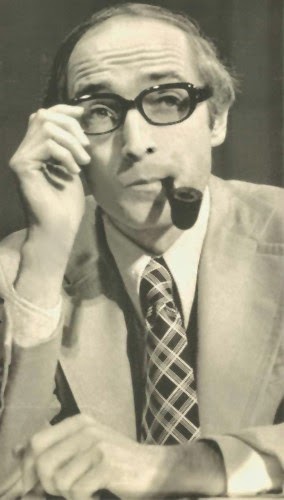
To me, the most interesting aspect of the Woodward / Bernstein article was the clarification of the role played in the events leading up to Watergate by a young Indianapolis attorney named Thomas Charles Huston. A man I have known for over 30-years myself. A complicated, enigmatic man to say the least. Over those years, I belonged to a political items collecting organization with Mr. Huston and even worked for him for a couple years in the early 1990s. I politely stayed off the subject of the Nixon White House years myself, but over that time picked up interesting tidbits from his relatives and friends. More on that later.

To Woodward and Bernstein, the most amazing developments from the years since the Watergate scandal are the continuing revelations further proving President Nixon’s involvement in the whole affair. It must be remembered that the duo of young reporters were shunned by their peers, dismissed by colleagues and threatened by the Washington establishment and the government itself. If anything, the tapes proved that Nixon was involved in schemes and secret plans potentially far worse than the hotel break-in that brought him down.
Woodward and Bernstein discovered that Nixon’s first war was against the anti-Vietnam War movement., which he considered subversive and detrimental to the war effort in Southeast Asia. In 1970, the President approved the top-secret “Huston Plan”, authorizing the CIA, the FBI and military intelligence units to identify any and all individuals identified as “domestic security threats”, in short, all those considered unfriendly to the Nixon administration.
 Tom Huston (derisively called “Secret Agent X-5” behind his back by some White House officials), the White House aide who devised the plan, was a young right-wing lawyer who had been hired as an assistant to White House speech writer Patrick Buchanan. Huston graduated from Indiana University in 1966 and from 1967 to 1969, served as an officer in the United States Army assigned to the Defense Intelligence Agency and was associate counsel to the president of the United States from 1969-1971.His only qualifications for his White House position were political – he had been president of the Young Americans for Freedom, a conservative campus organization nationwide.
The Huston Plan was a 43-page report and outline of proposed security operations unknown by all but the most intimate Nixon White House insiders until it came to light during the 1973 Watergate hearings. The radical plan was born from President Richard Nixon’s desire to better coordinate domestic intelligence information gathering about ‘left-wing radicals’ and the anti-war movement in general. The plan was based on the assumption that, as Nixon said, “hundreds, perhaps thousands, of Americans—mostly under 30—are determined to destroy our society.” It called for intercepting mail, wire-tapping, covertly photographing and video-taping of administration “enemies” and lifting restrictions on “surreptitious entry”, in plainer speak, break-ins and “black bag jobs.” At one time it also called for the creation of camps in Western states where anti-war protesters would be detained. Huston’s Top Secret memo warns that parts of the plan are “clearly illegal.”
 Despite Huston’s warning that his namesake plan was illegal, Nixon approves the plan, but rejects one element-that he personally authorize any break-ins. Per Huston plan guidelines, the Internal Revenue Service began to harass left-wing think tanks and charitable organizations such as the Brookings Institution and the Ford Foundation. Huston writes that “making sensitive political inquiries at the IRS is about as safe a procedure as trusting a whore,” since the administration has no “reliable political friends at IRS.” He adds, “We won’t be in control of the government and in a position of effective leverage until such time as we have complete and total control of the top three slots of the IRS.” Huston suggests breaking into the Brookings Institute to find “the classified material which they have stashed over there,” adding: “There are a number of ways we could handle this. There are risks in all of them, of course; but there are also risks in allowing a government-in-exile to grow increasingly arrogant and powerful as each day goes by.”
FBI Director J. Edgar Hoover objected to the plan, not on ethics or principles, but because he considered those types of activities the FBI’s turf. One June 5, 1970, FBI director J. Edgar Hoover brought Huston into his office and explains that the “old ways” of unfettered wiretaps, political infiltration, and calculated break-ins and burglaries are “too dangerous,” to attempt today. Hoover says he will not share FBI intelligence with other agencies, and will not authorize any illegal activities without President Nixon’s personal, written approval. The next day, Nixon withdraws his support for the Huston plan. Although Nixon covertly personally implemented several of its provisions anyway including lowering the age of campus informants and expanding surveillance of American college students and interception of mail.
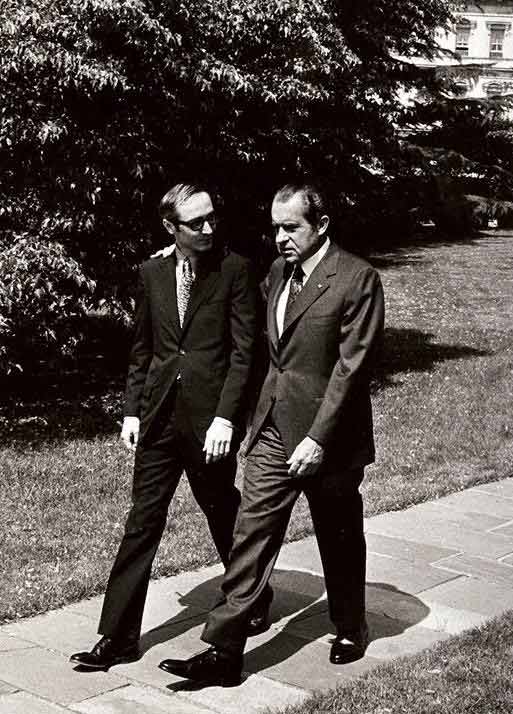
Placed in a White House safe, Huston’s blueprint became public in 1973 after Congress investigated the Watergate affair and learned that Nixon had ordered illegal monitoring of American citizens. Historians consider the Huston Plan as the impetus of what Attorney General Mitchell referred to as, “White House horrors” including the Plumbers Unit, the proposed fire-bombing of the Brookings Institution, the 1971 burglary of the office of the psychiatrist of Daniel Ellsberg, the creation of a White House enemies list, the use of the Internal Revenue Service (IRS) to punish those deemed to be enemies, and the Watergate affair itself.
Woodward and Bernstein are amazed at the psychotic ramblings still surfacing on the tapes as they are released a few at a time over the past few years. Huston’s name continues to surface on the tapes as well. On June 17, 1971, exactly one year before the Watergate break-in, Nixon met in the Oval Office with his chief of staff, Bob Haldeman and national security adviser Henry Kissinger to talk about former president Lyndon Johnson’s handling of the 1968 bombing halt in Vietnam. “You can blackmail Johnson on this stuff, and it might be worth doing,” Haldeman said, according to the tape of the meeting. “Yeah,” Kissinger said, “but Bob and I have been trying to put the damn thing together for three years.” They wanted the complete story of Johnson’s actions. “Huston swears to God there’s a file on it at Brookings,” Haldeman said. “Bob,” Nixon said, “now you remember Huston’s plan? Implement it. . . . I mean, I want it implemented on a thievery basis. G-d damn it, get in and get those files. Blow the safe and get it.” Nixon would not let the matter drop. Thirteen days later, according to another taped discussion with Haldeman and Kissinger, the president said: “Break in and take it out. You understand?” The next morning, Nixon said: “Bob, get on the Brookings thing right away. I’ve got to get that safe cracked over there.” And later that morning, he persisted, “Who’s gonna break in the Brookings Institution?” Luckily for history’s sake, the break-in was never carried out, at least not that we are aware of.

W. Mark Felt, the deputy director of the FBI and the man who would later be identified as Woodward’s “Deep Throat” source, later called Huston “a kind of White House gauleiter over the intelligence community.” The definition of “gauleiter” is, according to Webster’s Dictionary, “the leader or chief official of a political district under Nazi control.” Huston developed a staggeringly long “enemies list” that included, in historian Richard Reeves’s words, “most every man or woman who had ever said a discouraging word about Nixon.” As details of the Huston plan surfaced after Watergate, with its blatant contempt for civil liberties and disdain for the rule of Constitutional law, many historians and journalists identified it with the spirit and mood thought to pervade the Nixon White House.

During the 1977 David Frost Nixon interviews, former Watergate prosecutor Philip Lacovara told Frost’s aide James Reston Jr. that it was surprising Huston was not taken out and shot. Reston would later write: “Not only was Tom Charles Huston not taken out and shot, the plan was calmly considered and signed by Nixon, and was in force for a week, until J. Edgar Hoover objected on territorial rather than philosophical grounds.”
For his part, Mr. Huston has rarely spoke publicly of the plan that bears his name. In late 1973, Huston talked about Watergate and civil liberties with a small audience during a meeting of the Philadelphia chapter of the conservative organization Young Americans for Freedom (YAF). According to Huston, at that time, the country was reeling from bombings and bomb threats, closed-down schools, National Guard alerts, university ROTC buildings being burned, police officers injured and killed, civilians killed, snipers firing from rooftops; in short, a country on the brink of armed insurrection. “Looking back, it is easy to understand why people now think the administration overreacted,” he says. “And had I known at the time that if we had done nothing, the problem would just go away, I would have recommended that we do nothing. But we did not understand that, and I don’t think that any reasonable person could have known this. Something had to be done. In the last analysis, I suppose this is an example of the dangers of letting down your guard against increased executive powers—no matter what the circumstances. Not that the danger was not real, but in this case the risk of the remedy was as great as the disease. There was a willingness to accept without challenge the Executive’s claim to increased power. That’s why we acted as we did, and it was a mistake.”
 During the question-and-answer session at that meeting, a woman stood up to relay a story of how her son was being beat up by neighborhood bullies, and how, after trying in vain to get law enforcement authorities to step in, gave her son a baseball bat and told him to defend himself. Meanwhile, the partisan crowd is chanting and cheering in sympathy with the increasingly agitated mother, and the chant: “Hooray for Watergate! Hooray for Watergate!” began to fill the room. Huston waited for the cheering to die down and says, “I’d like to say that this really goes to the heart of the problem. Back in 1970, one thing that bothered me the most was that it seemed as though the only way to solve the problem was to hand out baseball bats. In fact, it was already beginning to happen. Something had to be done. And out of it came the Plumbers and then a progression to Watergate. Well, I think that it’s the best thing that ever happened to this country that it got stopped when it did. We faced up to it…. [We] made mistakes.”
In an interview after that speech, Huston speaks derisively about many of his former White House colleagues, particularly Richard Nixon. “Frankly, I wouldn’t put anything past him and those damn technocrats,” he says of Nixon and his senior aides. “you can’t begin to compete with the professional Nixonites when it comes to deception. If Nixon told them to nationalize the railroads, they’d have nationalized the railroads. If he’d told them to exterminate the Jews, they’d have exterminated the Jews.” Despite alleged authorship of the radical plan that bears his name, Tom Huston left the Nixon White House with his reputation intact and managed to remain above the morass of the Watergate Scandal.

He did not, however, escape the wickedly lucid scrutiny of legendary “Gonzo” journalist and author Hunter S. Thompson, who said of Huston in his book, “The Great Shark Hunt” in 1979, “the Tom Charles Huston Domestic Intelligence Plan amounted to nothing less than the creation of a White House Gestapo.”
During my period of closest association with Tom Huston, he was a partner with the Barnes & Thornburg law firm and was chairman of the firm’s Real Estate Department. Huston is listed in Who’s Who in America, The Best Lawyers in America and Who’s Who in Indianapolis Commercial Real Estate and is admitted to practice law in Indiana. The mild mannered man most often seen dressed in a fine mohair topcoat, English derby hat and smoking a pipe is far from what one might expect from the author of a document that, in 2007, author James Reston Jr. called “arguably the most anti-democratic document in American history… a blueprint to undermine the fundamental right of dissent and free speech in America.”
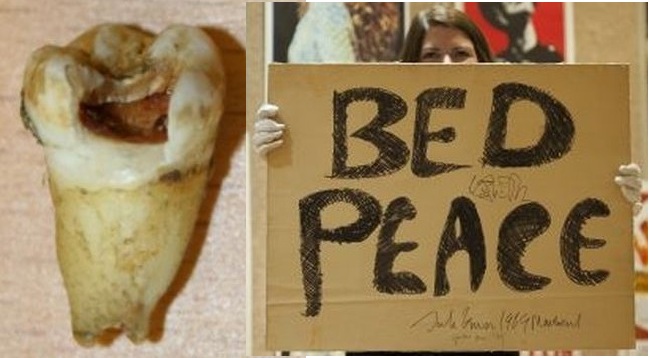

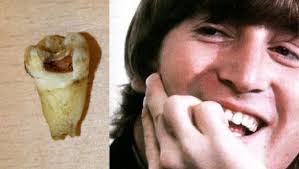 The molar, slightly yellowed with heavy coffee stains and a large cavity, was given to Dorothy “Dot” Jarlett, John Lennon’s housekeeper for half-a-decade. The story goes that one day Lennon encountered the housekeeper in the kitchen of his Kenwood home in Weybridge, Surrey. John, having just returned home from a trip to the dentist, gave Dot the tooth wrapped in a piece of paper and asked her to dispose of it for him. Then John paused for a moment and suggested that Dot give it to her daughter as a souvenir, since she was such a huge Beatles fan. Dot Jarlett’s daughter cherished the sacred relic and when she married a Canadian, she brought her Beatle biting bicuspid into the marital union. The tooth has been “living” in Canada for all but a couple of the last 45 years.
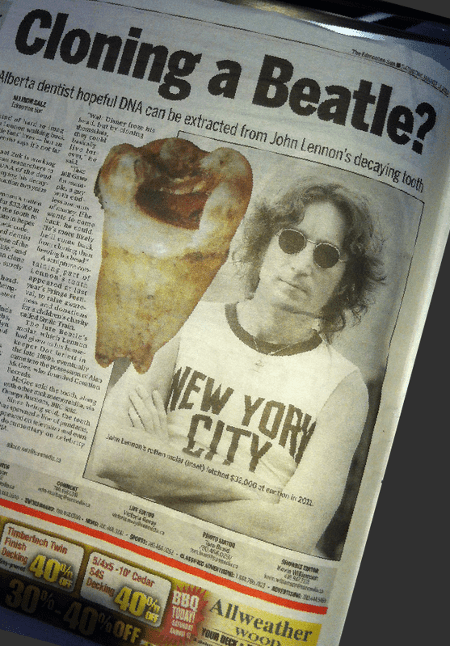 While “Aunty Dot” is selling the tooth, she plans to keep a leather wallet and a pearl necklace Lennon gave to her after returning from a concert tour of Japan. Lennon gave the Jarlett family many gifts over the years. A few years ago, Dot sold the jacket worn by John on the “Rubber Soul” album cover, also given to her by Lennon. Dot, who is now 90-years-old, said it was the right time to pass it on rather than to risk the tooth getting lost. Auction house experts have determined that the tooth is too fragile to conduct a DNA test but they have no doubt about its authenticity and point to the impeccable provenance that accompanies it.
 The Montreal bed-in came two months after the couple’s honeymoon bed-in in Amsterdam and was their take on a sit-in. Lennon’s idea was for protesters to stay in bed and grow their hair rather than doing anything violent. The couple opened their hotel room door to the world’s media and spoke to journalists, politicians and artists trying to promote the idea of peace in the world. They also found time to record the anthem Give Peace a Chance. Many artworks and placards were created over the week and were moved around and given away but the Bed Peace sign was a constant.
 The sign is not the only item from the Montreal “Bed-In” to be auctioned by the famed auction house recently. On July 10, 2008, Lennon’s hand-written lyrics for “Give Peace a Chance” sold for $800,000 at Christie’s. When Lennon gave teenager Gail Renard his scribbled lyrics to “Give Peace a Chance” in 1969, he told her to hold on to the cue card. “It will be worth something someday,” predicted Lennon. She did, and it was.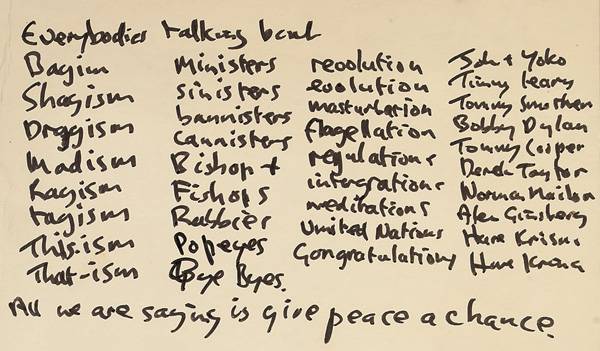

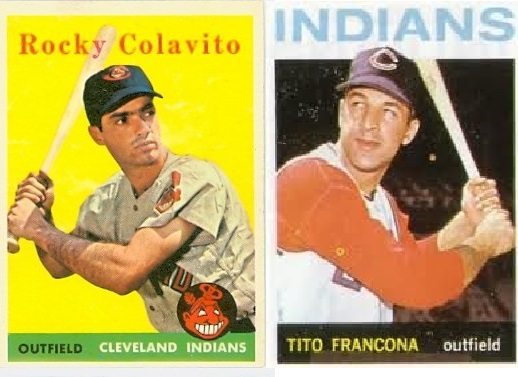
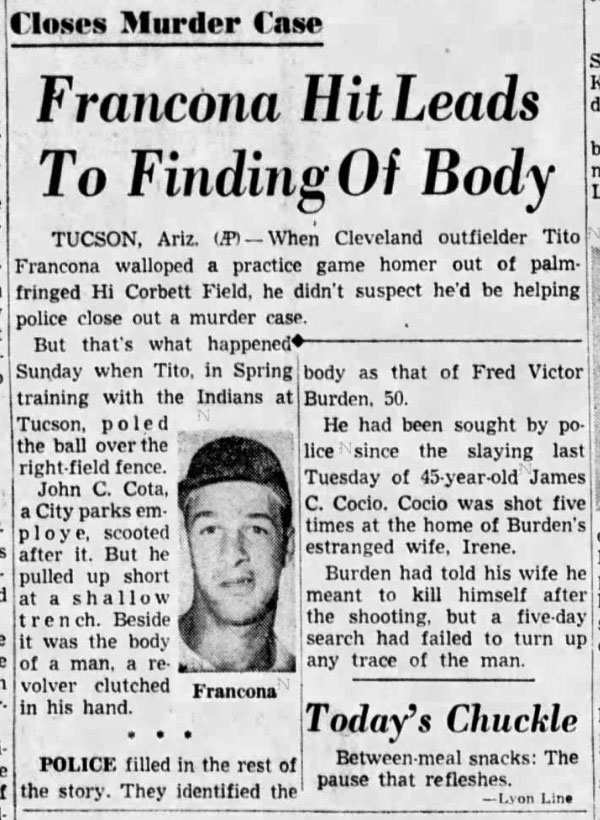 The front page of the Tucson Daily Citizen on March 27, 1961 ran a story headlined, “Practice Homer Leads To Body”. The story detailed, “An over-the-wall smash by Cleveland Indians’ Tito Francona yesterday led to the discovery that Frederick Victor Burden had carried out his threat to commit suicide after killing a man in the home of his estranged wife. Burden’s body, with a bullet in the head, was found by city parks employee John C. Cota, 52, of 238 E. E. 19th St., while he was looking for a ball that had just been knocked over the west wall during the practice at Hi Corbett Field in Randolph Park. The partially concealed body was found lying in a shallow watering trench under low – hanging palm fronds when discovered about 11:30 a m.”
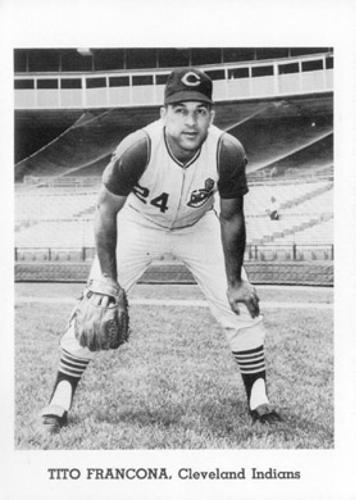 Despite having emerged as the best defensive left fielder in the league, Francona was shifted to first base during spring training in 1962 and finished the season leading the American League in double plays turned as a first baseman. He finished with 14 homers, 28 doubles and batted .272. When Birdie Tebbetts took over as Indians manager in 1963, Francona was moved back into left, but his numbers fell drastically. His .228 batting average was a career low, and his ten home runs and 41 RBIs were his fewest over a full season. The Indians acquired All-Star Leon “Daddy Wags” Wagner to play left field prior to the 1964 season, so Francona split time between right and first base. After the season, he was dealt to the St. Louis Cardinals for a player to be named later and cash.
 And what about that curse? The curse of Rocky Colavito? Well, in recent years, it has dampened a little with the Indians “rebuilding years” of the past two decades. But. although they’ve played in three World Series Championships since 1995, they still haven’t won one. Here are just a few of the mishaps blamed on that curse since Colavito’s 1960 trade. September 1961: Fireballer “Sudden Sam” McDowell breaks two ribs throwing a fastball. June 1964: Third Baseman Max Alvis suffers an attack of spinal meningitis on a team flight. January 1965: The Indians reacquire Rocky Colavito from the Kansas City A’s in exchange for Rookie of the Year winner Tommie Agee and future 286-game winner Tommy John. July 1970: Reds star Pete Rose plows over catcher Ray Fosse in the All-Star game, effectively ending Fosse’s career in Cleveland. June 1974: Drunken fans pour onto the Cleveland Stadium field during ten-cent beer night, forcing a forfeit while destroying the diamond. March 1977: 20-game winner Wayne Garland hurts his arm in Spring training, effectively ending his career. March 1978: Indians trade Hall of Famer Dennis Eckersley to the Red Sox. July 1981: Cleveland hosts the All-Star game which is delayed until August by the MLB strike. August 1981: 1980 AL Rookie of the Year “Super Joe” Charboneau is sent down to AAA, never to be heard of again. April 1987: Sports Illustrated picks the Indians to win the pennant but they lose 101 games and finish last. March 1993: three Indians pitchers die in car crashes and a fourth is seriously injured. July 1994: Indians are speeding towards the World Series when the season is cancelled by a player’s strike.
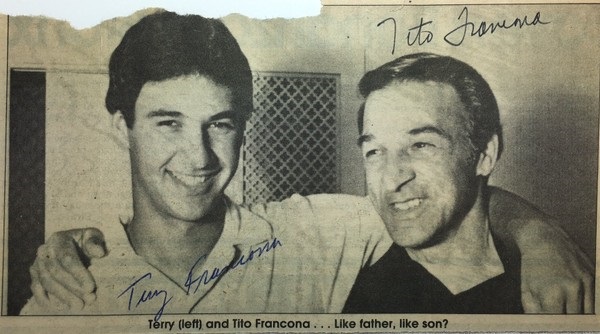 There is so much about Tito Francona that typifies that which makes baseball so interesting. Aside from one of the greatest nicknames in sports history, he was considered a journeyman for most of his career, but a damned good one. Tito Francona was a baseball player, a great husband and father and an even better teammate. When he died at the age of 84 he left a lasting legacy. Tito was there at the beginning of “The Curse” and although he’s gone, he’s likely to be there when the curse ends because “Little Tito” just might lead the Indians to a World Series Championship this season. After all, it was Francona who broke the Boston Red Sox Curse of Babe Ruth by winning two World’s Series titles in four years. Yep, baseball is a funny game.
 Inside the House chamber guests listened to historian George Bancroft (former Secretary of the Navy and the man who established the Naval Academy at Annapolis) talk about “the life, character, and services of Lincoln…forming one of the most imposing scenes ever witnessed in the land.” The address took nearly two hours. The push for a formal celebration quickly spread to state capitals, legislatures and city councils. Most northern states quickly warmed to the idea but bitterness over Reconstruction and the cult of the “Lost Cause” among southerners scuttled attempts to make Lincoln’s birthday a Federal holiday.
 In 1971 Congress passed the Uniform Monday Holiday Act. The law shifted several holidays (Veteran’s Day, Washington’s Birthday, Memorial Day, Labor Day, Lincoln’s Birthday and Columbus Day to name a few) from specific days to a Monday. The reason behind the change was seen as a way to create more three-day weekends and reduce employee absenteeism. The birthdays of George Washington and Lincoln were only 10 days apart, so they were blended into Presidents’ Day.
 Eventually, individual states created their own Presidents’ Day holidays to be observed on the third Monday in February. This celebration has been enacted in some fashion by 38 states, though never federally, and each varies by state. Some mark the day as a specific remembrance of Washington and Lincoln while others view it as a day to recognize all U.S. presidents. Alabama celebrates Washington and Jefferson. A few states still recognize Lincoln’s birthday on February 12 as its own official holiday. Most notably, Kentucky, his birth state and Illinois,his adopted home state, both celebrate Lincoln’s birthday as an official state holiday, along with a few other states including New York, Connecticut, and Missouri. However, this number has declined in recent years, when California, Ohio and New Jersey ended the celebration of Lincoln’s birthday as paid holidays to cut budgetary costs. Unfortunately, more states now celebrate Black Friday as a holiday than celebrate Lincoln’s birthday. Indiana and Georgia are a couple states that recognize Lincoln’s Birthday on the day after Thanksgiving aka Black Friday.
 In most states, Lincoln’s birthday is not celebrated separately, as a stand-alone holiday. Instead Lincoln’s Birthday is combined with a celebration of President George Washington’s birthday (also in February) and celebrated either as Washington’s Birthday or as Presidents’ Day on the third Monday in February, concurrent with the federal holiday. Good for George Washington. Sad for Abraham Lincoln. Once upon a time, Lincoln’s birthday was a milestone for Americans to pause and honor greatness.
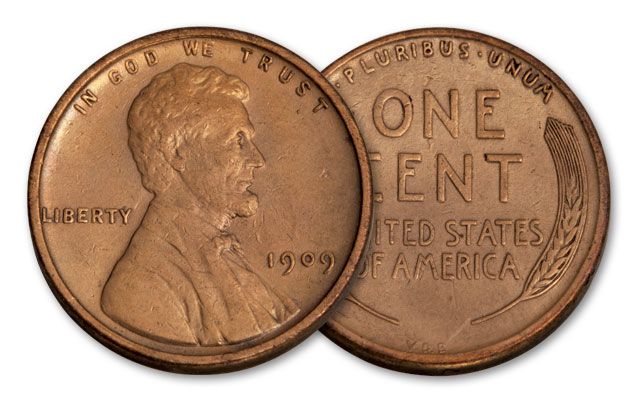 Regardless, the U.S. Mint still produces more than 13 billion pennies annually. That’s approximately 30 million pennies per day; 1,040 pennies every second. More than two-thirds of all coins produced by the U.S. Mint are pennies and the U.S. Government estimates that $62 million in circulated pennies are lost every year (according to Bloomberg). In fact, the penny is the most widely used denomination in circulation and it remains profitable to make. Each penny costs .93 of a cent to make, but the Mint collects one cent for it. The profit goes to help fund the operation of the Mint and to help pay the public debt. The average penny lasts 25 years.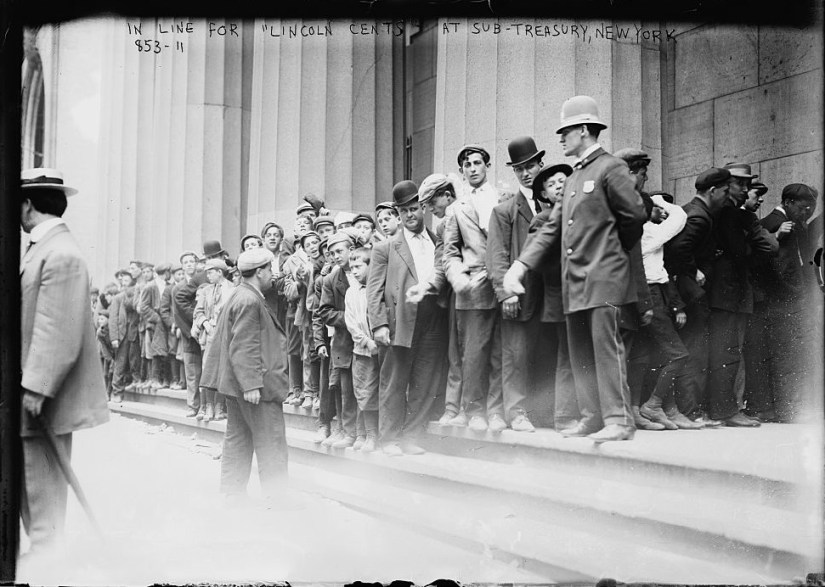


 Almost immediately conspiratorialists saw the Abbey Road album cover as a funeral procession. Leading the procession is John dressed in white, symbolizing the clergy. Next comes Ringo, dressed in black like an undertaker. Paul, the presumed corpse, is third in line and walks out of step with the other Beatles, he is barefoot and his eyes are closed. George brings up the rear, dressed in work clothes the supposed gravedigger. Also, Paul is smoking a cigarette, also known as a “coffin nail”. The fact that he is holding the cigarette in his right hand, even though the “real” Paul McCartney was left handed, only added to the belief that this was an impostor posing as the dead bassist.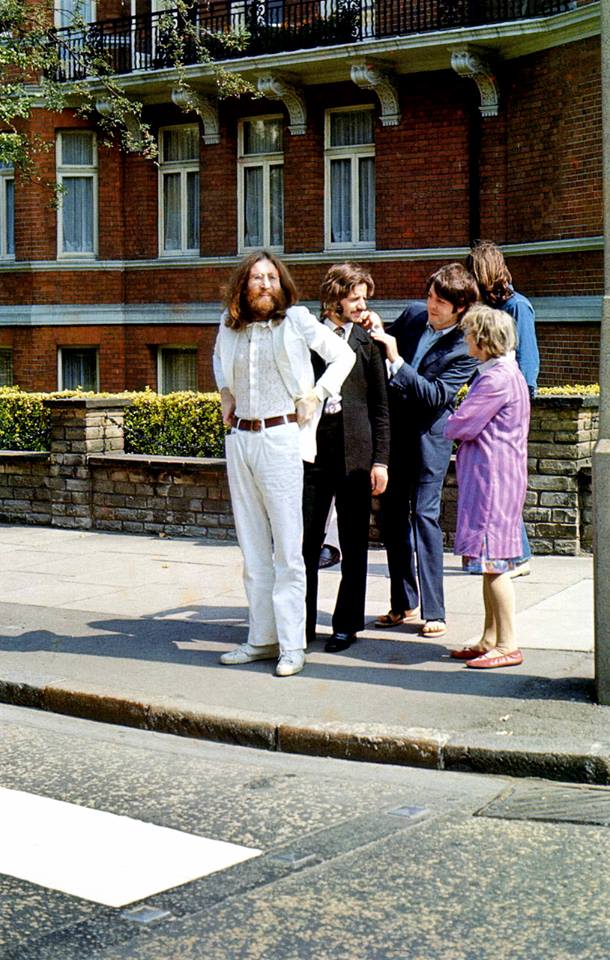
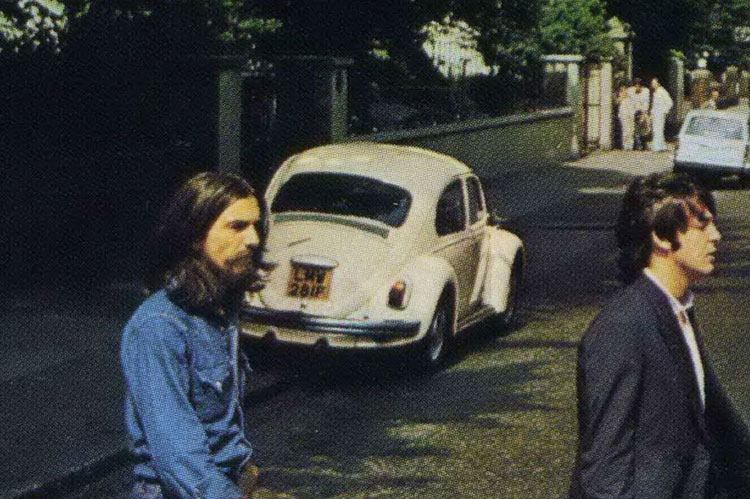 The death clues were not confined to the image of the lads in the crosswalk however. For behind the Beatles on the left side of the street is a Volkswagen Beetle with a license plate reading “LMW 28IF”, suggesting that Paul would have been 28 if he were still alive. Actually Paul would have been 27 when Abbey Road was released. This seeming miscalculation was explained away by the rumorists with the fact that Paul studied mysticism in the Near East. Most mystics believe we are all one year old at birth (counting the nine months of pregnancy) confirming that Paul would have been 28 IF he had lived!.” The first three letters on the license place, “LMW,” were interpreted as “Linda McCartney Weeps”. On the right side of the road is a police van, seen as a reference to the cover up of Paul’s death by police.
 Perhaps as expected, the clues are not only confined to the front cover, for devoted clueseekers, many hidden secrets can be found on the back cover as well. To the left of the tiles spelling out “Beatles” are eight dots, which when connected form the number “3”, so the back cover actually reads “3 Beatles”. Also, there is a crack in the “S” at the end of “Beatles”. Some say that to the right of the tiles is an odd shadow that looks like a skull.
 Finally, on the “Let It Be” cover, the album cover is black. Said to symbolize the end, or death, of the Beatles. Or maybe it was to symbolize the death of a Beatle? The background squares of John, George, and Ringo’s photos are all adorned in white. While Paul’s square is depicted with a blood red background. Also, Paul is shown facing forward rather than in three-quarter profile. Another indication of Paul’s death is seen by the fact that he grew a beard, seen by some religions as a sign of death and mourning. The rest of The Beatles’ beards are clues as well, as they all indicate that the three surviving members are in mourning for their lost bandmate.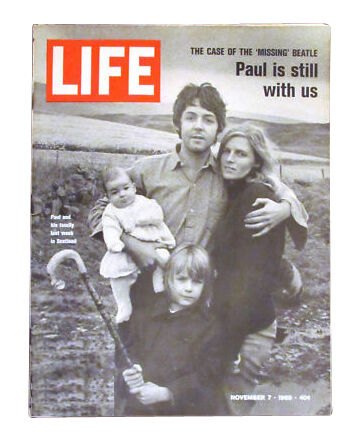

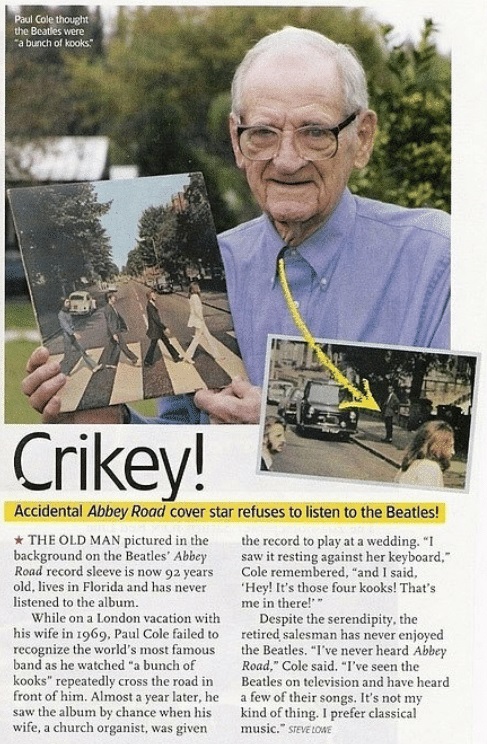 Cole, a Florida salesman, was on vacation with his wife, who wanted to go see “yet another museum.” Mr. Cole decided to wait outside on the north London thoroughfare. Cole watched as photographer Iain McMillan stood on a stepladder in the middle of the street, photographing the four Beatles as they walked, single-file, across Abbey Road. The entire shoot lasted 10 minutes. “I just happened to look up, and I saw those guys walking across the street like a line of ducks,” Cole remembered. “A bunch of kooks, I called them, because they were rather radical-looking at that time. You didn’t walk around in London barefoot.”

