
Original publish date: August 21, 2016
Our first day on the 127 Yard Sale (aka the World’s Longest or 127 sale) was tiring but an adventure none-the-less. Part one detailed this popular annual event that officially begins on the first Thursday in August, spans six states (Michigan, Ohio, Kentucky, Tennessee, Georgia, and Alabama) and 690 miles. We started just South of Cincinnati and ended our first leg in Daniel Boone country near Harrodsburg / Danville, Kentucky.
Luckily, our hotel reservations were made months in advance and in this case it was a good thing. As we drove down the 127 toward the hotel, we ran parallel to a rather wicked looking train derailment. Seems that a coal train pulling a long line of cars loaded with coal somehow left the track. It slowly tipped over like a wave crashing on the beach as it skidded to a stop. We heard that 27 cars tipped over spilling their loads and closing the crossroads for miles. It was an interesting coal country site to say the least. Train wrecks don’t seem to happen around these parts much anymore, thank goodness. Luckily, no one was hurt but it sure was a mess.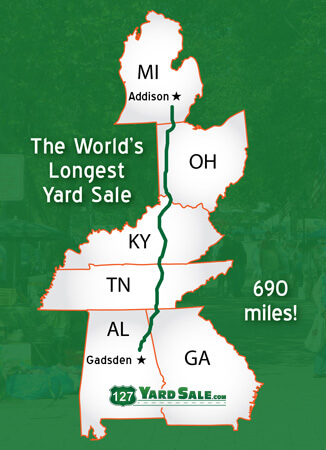
As we checked into the hotel, our rooms were fine, but guests checking in after us kept coming down to the lobby and asking why their beds had no bedspreads on them. The front desk had the same reply to every query, stating rather matter-of-factly that whenever the “coal boys’ were in town, the staff removes the bedspreads because the workers are filthy and the coal stains won’t come out. Go figure. It certainly made the casual conversation with our fellow guests all the more interesting.
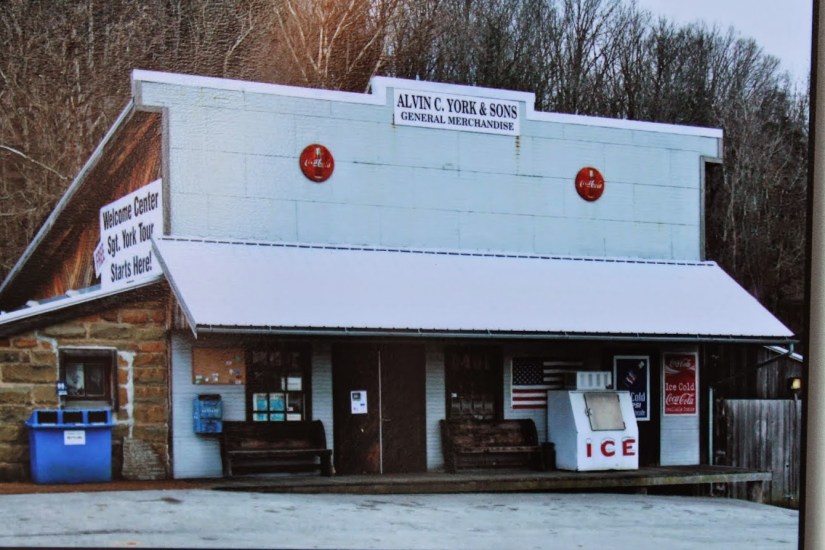
Now back to the 127. The second day could be your most interesting. That is if you are on the 127 to see sights, take pictures and meet the locals. Along this leg you will pass hilly terrain dotted generously with “See Rock City” barns and Ruby Falls signs. You’ll pass through valley towns where time seems to stand still. You can stop and visit places like the Alvin C. York General Store and Visitor Center in Pall Mall, Tennessee. Here you can walk in the footsteps of one of the most celebrated soldiers in American history.
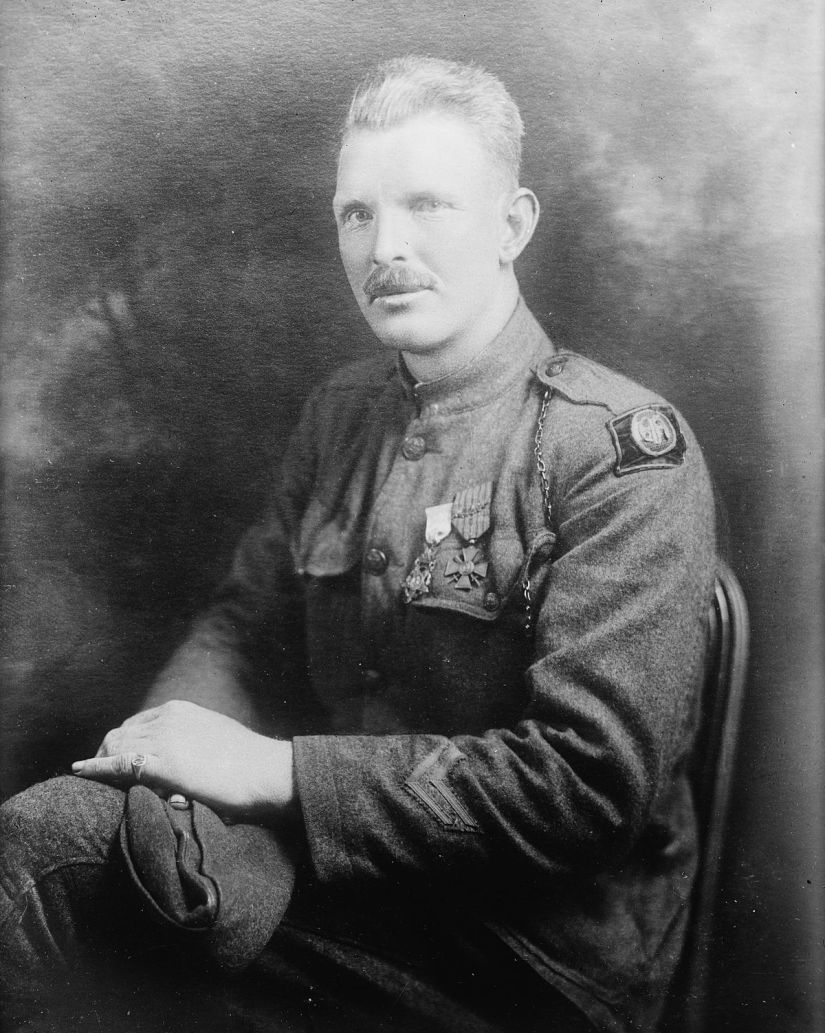
A pacifist drafted for service in World War I in 1917, York applied for conscientious objector status, but was denied. On October 8, 1918, while on patrol in France, York and his platoon were caught in an ambush behind enemy lines that left over half the platoon dead. York almost single-handedly led a counterattack that resulted in the taking of 35 machine guns, killing of 28 German soldiers and capture of 132 enemy combatants. York was awarded the Medal of Honor and became an instant celebrity. He was barraged with offers for commercial endorsements along with movie and book deals, which he rejected, believing it was wrong to profit from his war service. The York site is well worth a stop.
As you steam South, the road winds through towns with interesting names like Junction City, Hustonville, Liberty, Pricetown, Dunnville, Sycamore Flat, Webbs Crossroads, Humble, and Freedom. You’ll pass the Jordan Motel in Jamestown, Tennessee, a must see stop for all 127 roadsters. For it was here on the grounds of the motel where those original vendors first set up their tents, booths and tables for that very first yard sale nearly 30 years ago. The quaint little roadside ranch motel’s wooded front yard still hosts booths and tables today. 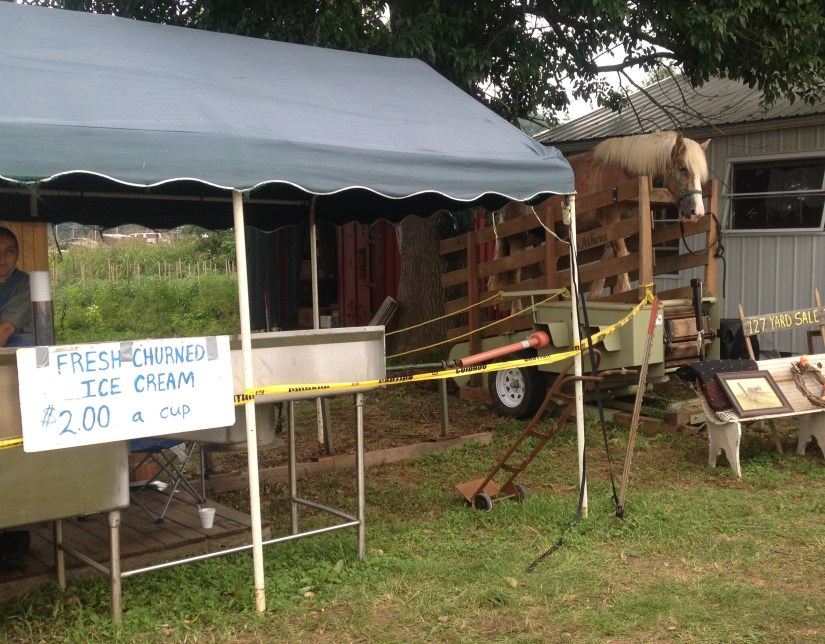
From here we passed an Amish Ice Cream stand consisting of a churn operated by a horse walking on a treadmill. It was something to see but the ice cream is warm and doesn’t really live up to the hype. It was at a yard sale table nearby where I heard my favorite quote of the weekend. As I perused the offerings on the table, a prospective customer picked up a boxed candle-ma-jig off the table and asked the older, matronly looking lady in charge how much? She answered three bucks. As the customer put it down and walked away, the woman muttered aloud to no-one in particular, “Well, It outta be worth $ 3.00. It was my only Christmas gift last year.” Think about that for a minute.
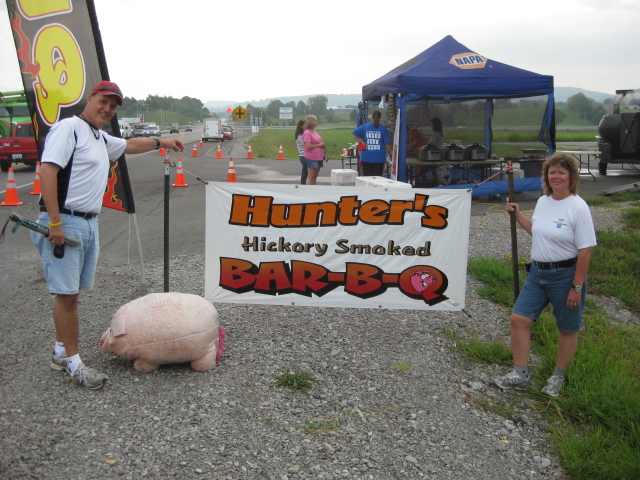
It is along our journey’s second leg where most of the “tent cities” cropped up. A tent city is easy to spot from a distance by the small oasis of shelters and pop-up canopies blanketing farm fields and parking lots along the highway. Usually, these tent cities contain anywhere from a dozen to several dozen sellers gathered together in one central location. These stops require a stop and park followed by a lot of walking. Woe be it those yard saler’s who find that over sized, bulky “must have” widget while shopping on the other side of the lot. The walk back to the car will seem like an Olympic event for these unfortunates. All part of the tent city experience on the 127.
 It was during the second day of the trip where our little quartet found our most interesting finds along the route. While at a tent city near Grimsley, Tennessee we came upon a large group of dealers set up in a local park. On this 95 degree / 50 % humidity day (heat index 107), I found a rather refined looking group of Southern Belles strategically seated in a shady corner of their booth. Leaning against a post near them was a heavy steel sign from the Jack Kerouac Era California State Beaches that read: “Clothing Optional Beyond This Point”. My red-faced smirk must have betrayed me and the ladies giggled at my sheepish delight. I asked for the price and as I picked it up I realized that the sign had 2 bullet holes in the center of it. I had to have it! I forked over the cash equivalent of a St. Elmo’s dinner for two (with shrimp cocktails of course) to make it mine. The delightful owner said she had purchased the sign on “this very same field 8 years ago.”
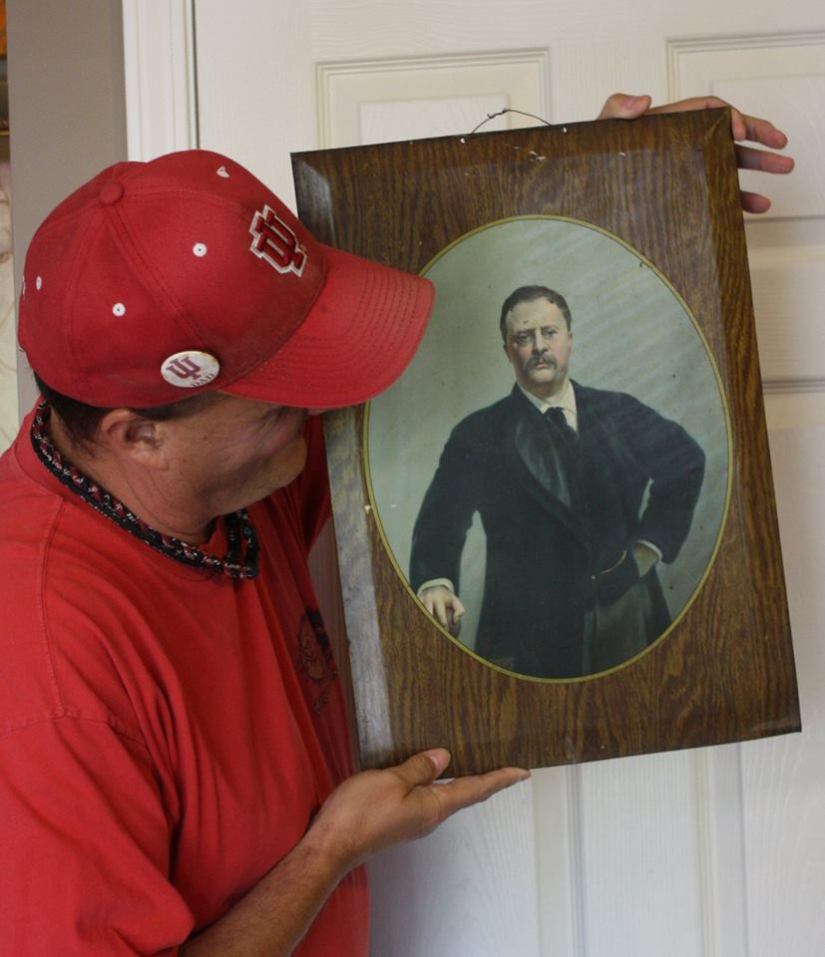
 Rhonda found a San Francisco Candlestick Park exit sign in the same booth from another lady and got a much better deal than I (about the cost of a McDonald’s Happy Meal.) A little further down the road, I found a beautiful Teddy Roosevelt metal color lithographed sign from 1903, a real stuffed alligator dressed as a sheriff complete with tiny cowboy hat and badge (please don’t judge me animal activists) and a wooden sign that had me puzzled at first. It was a large B&W direction arrow sign with the word “AWFISS” on the front. My traveling companion Chuck Hodson had to clue me in on the meaning. Apparently, “AWFISS” is slang for “Office” in the hill country. Sadly, it was not for sale.
 The last of the day’s finds was made by Chuck. It was a 12″ tall miniature prison electric chair complete with skull and crossbones in the back chair rest. “Beware Tennessee State Prison” and a 1956 year date were painted on the seat back. Constructed of wood, finish nails and leather straps, it was obviously made by an inmate back in the Ike Era. The Prison, located near downtown Nashville, opened in 1898 and closed in 1992. Hollywood movies Nashville, Ernest Goes to Jail, The Green Mile, and many more were filmed within it’s walls. I find myself strangely drawn to objects like these. I guess I love that type of gallows humor.
We ended the second day at Crossville, Tennessee and although the third day’s journey towards our Chattanooga terminus was fun, we were happy to get off the congested road, out of the heat and back into the air conditioning once and for all. The yard sale continued without us down The Lookout Mountain Parkway (which Reader’s Digest calls one of the most scenic drives in America) all the way to the end of the 127 yard sale in Gadsden, Alabama. Maybe someday we will travel the entire route, but for now, we’ve seen enough. Driving north, it was amazing how fast we covered the same ground via I-24 and I-65 back to Indianapolis when we weren’t stopping every fifty feet.
We have made the trip on the 127 Yard Sale six times now but I don’t think we’ve ever done it two years in a row. It seems that, although it is fun, the 127 is the sort of thing that you need space and time to appreciate. What can be said for sure is that the 127 is a bucket list kind of thing for anyone who loves traveling, history and antiques. You will meet folks you’ll never forget, find treasures you’ll cherish forever and ALWAYS kick yourself for not buying one thing or another. I guess that’s what keeps us coming back.
Then, every once in awhile, you could just find something that spins you off into a direction you never would have guessed you’d have found yourself traveling to begin with. Something that seems to call your name and invite you in to learn more about it’s origin. My wife found one such relic at the bottom of a dusty drag box in the hills of Kentucky. A little bit of Golden Age Hollywood on the banks of Turkeypen Creek.
Next week: Part III- Highway 127: The World’s Longest Yard Sale. 2016


 Assuming you are starting South of Cincinnati, consider making hotel reservations in or around the Harrodsburg / Danville, Kentucky area for your first night’s stay. Not only will you be spending the night in historic Daniel Boone country, you’ll most likely find that, allowing for the frequent stops on your treasure hunt, you will have seen all you care to see by the time you reach this area. Go out and have a nice dinner and turn in early. If you are a people person, you’ll soon discover that most of your fellow hotel guests are coming off the sale as well. Many of them are eager to tell stories, share tips and show off their prized buys after a day of buying on the 127. Swapping tales about your shared struggle can be some of the best memories of all and are only rarely disappointing.
 Once you’re out on the road again, you’ll soon find that yard sales are EVERYWHERE! In the front yards of people’s homes, farm fields, cow pastures, side streets and alleyways, in empty lots, business parking lots, community parks, churches and town centers. Some areas will have large groups of vendors together (127 veterans call these ‘tent cities’), while others will be set up separately. As you weave your way from one yard sale to the next, Highway 127 winds through horse country surrounded by beautiful rural areas and interesting scenery, so be sure to enjoy the ride along the way.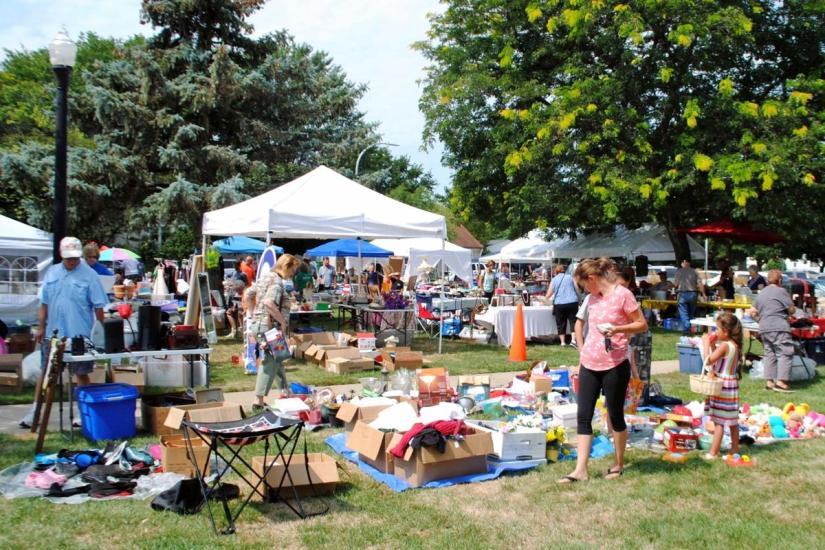

 We started our trip on Wednesday, August 2nd south of Cincinnati. We allowed ourselves three days for the 127. We learned long ago that it would take at least five to hit every sale. We started out at nine in the morning and made it as far as Harrodsburg Kentucky that evening. Normally it would take 2 hours to drive the 120 mile route between the two locations. The next day, Thursday, August 3rd, we left around 8:30 AM and by 6 PM we had made it as far as Spring City Tennessee. This day’s route was 180 miles between locations. Normally this is a four hour trip without stops. By our third day, Friday, August 4th, between the crowds, the traffic and general fatigue, we had just about had our fill. By the time we had reached Chattanooga that afternoon, we were done.
 And what did we find on the world’s longest yard sale 2017 redux? Unlike years past, we really didn’t find anything fantastic for ourselves; we just found stuff. Don’t get me wrong, we found some cool things. We just didn’t find any life changers. My personal prize was a bronze statue of Gettysburg hero General Winfield Scott Hancock. It now rests on my desk. I found tons of old paper to play that I am still winding my way through. My favorite so far is a packet of letters written by a French woman to her soldier beau in Geneva Indiana in 1919 – 20 at the close of World War I. She pleads for news from her soldier boy and wonders why he doesn’t write. Poignant to say the least.
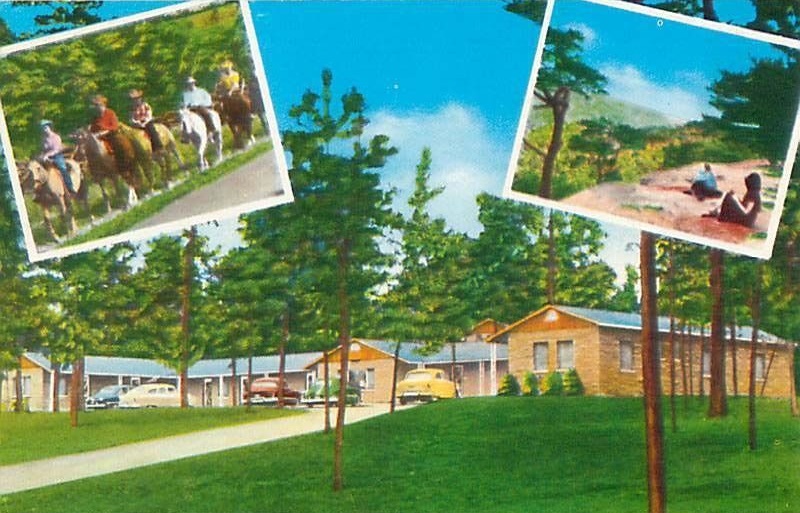
 My favorite memory comes from a gentleman I met at the Jordan Motel in Jamestown Tennessee. The motel is an important landmark on the 127 because this is the spot where the first booths were set up back in 1987 to start what would become the world’s longest yard sale. Jamestown is in the heart of Big South Fork Country which bills itself as the Trail Riding Capital of the Southeast. At first I was drawn to the booth by a large metal highway 70 sign leaning against a nearby tree. It was only 35 bucks but it wasn’t our I-70 so I passed. Let me rephrase that, Rhonda suggested I pass because I am apparently out of room for any more road signs.
 On this man’s table were a couple dirty squares of carpeting, each about 4″x4″ and each displayed in picture frames. Alongside the dingy relics were photographs of a scene that looked strangely familiar to me. It was a large hole inside a closed building that I soon recognized as the sinkhole that swallowed eight Corvettes at the National Corvette Museum in Bowling Green Kentucky around Valentine’s Day of 2014. I asked about them and was informed me that the vendor was the contractor hired to pull the cars out and repair the hole. He said, “In fact, I’m the guy that fired up that Corvette and drove it out. It didn’t have anything but an oil leak.” As he searched his cell phone to show me a video of the event as proof, he informed me that he was surprised the Corvette museum called him because, “I’m just a good old boy from Kentucky, I didn’t know thing about Corvettes or fixing sinkholes.” As Rhonda and I got back in the car and drove south, she asked me if I had asked him how much they were. Strangely, I hadn’t. I guess I was too caught up in the story.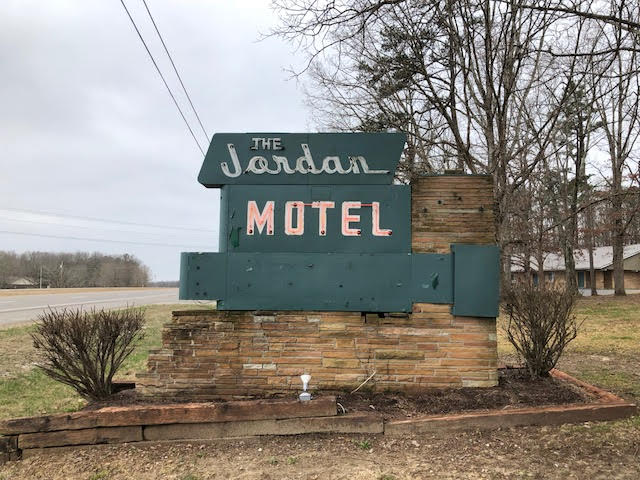
 Spring City Mayor Billy Ray Patton claims the town is one of the best places in the world to view the eclipse because it is located along the exact path the eclipse will travel. Spring City rests on the 70 mile wide “path of totality.” Residents and visitors will have two minutes and 39 seconds of totality when the moon completely blocks the view of the sun. The total solar eclipse will darken skies all the way from Oregon to South Carolina. But don’t get any ideas, the hotels in Spring City were already sold out two weeks ago. On Monday this small TVA town of 2000 is expected to swell to 50,000 with visitors hoping to catch a good view of the eclipse.






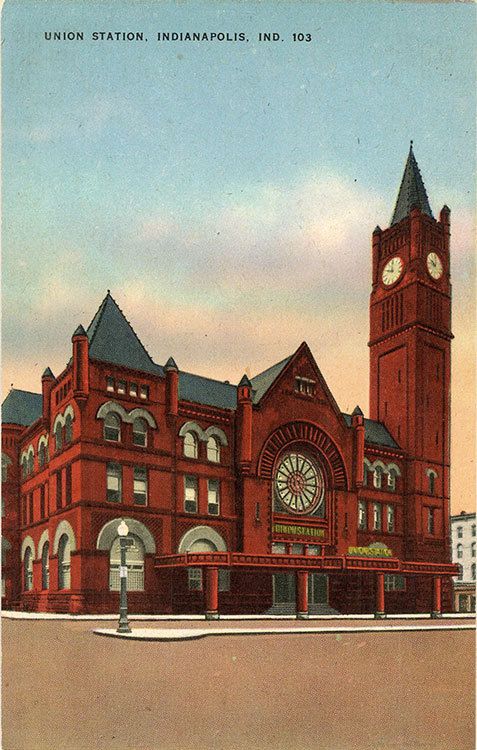
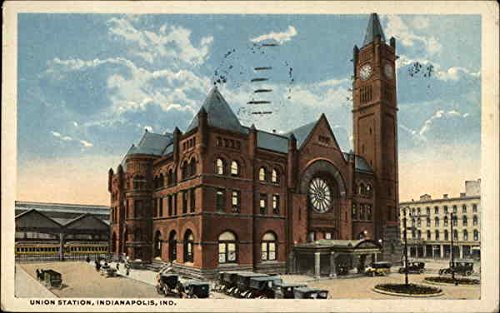
 Beginning in November 1886 a new station was constructed just north of the existing station, and soon a three-story, red brick and granite station with extensive vaulted Romanesque arches and a 185-foot clock tower began to rise towards the Hoosier heavens. It was that clock, with its four separate clock faces each nine feet in diameter, that would become an Indianapolis landmark for generations to come.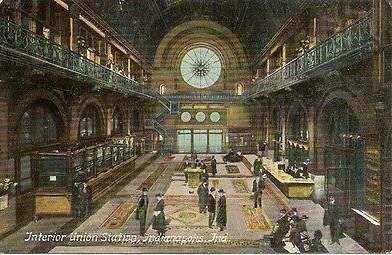
 Train travel dropped in the 1930s, mostly because of the Great Depression, but rebounded during World War II because so many servicemen were on the move. After the war, passenger trains were declining as the automobile and aviation industries experienced rapid growth, all but signing the death warrant of Union Station. By 1946, as post-war passenger service fell off, only 64 trains a month operated and by 1952, barely 50 passenger trains a month used the station. Over the next generation, as rail travel continued to decline, Union Station gradually became a dark, ghostly relic of a by-gone era. During the 1960s and 1970s, it suffered from the same pattern of deferred maintenance and slow decline plaguing most urban buildings.
 Union Station was then owned by Penn Central, a “Frankenline” created by the merger of the old Pennsylvania and New York Central lines. A series of events including inflation, poor management, abnormally harsh weather and the withdrawal of a government-guaranteed $200-million operating loan forced the Penn Central to file for bankruptcy protection on June 21, 1970. Many of the once-powerful railroad firms were bankrupt and only six trains operated out of the station. Penn Central offered the station for sale and the decline continued when by 1971, the United States mail room closed and Amtrak was formed out of the few remaining rail lines. It looked like the grand station would be bulldozed into a parking lot. A “Save Union Station” committee scrambled to keep it from being demolished.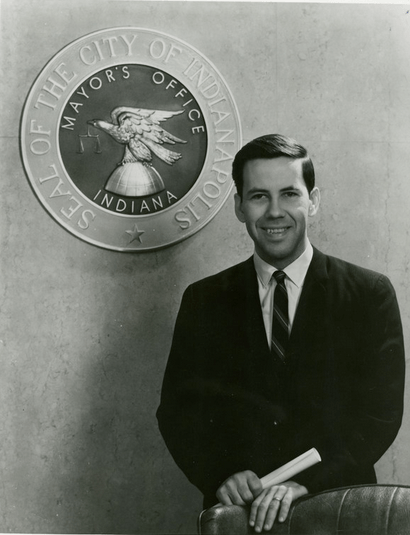
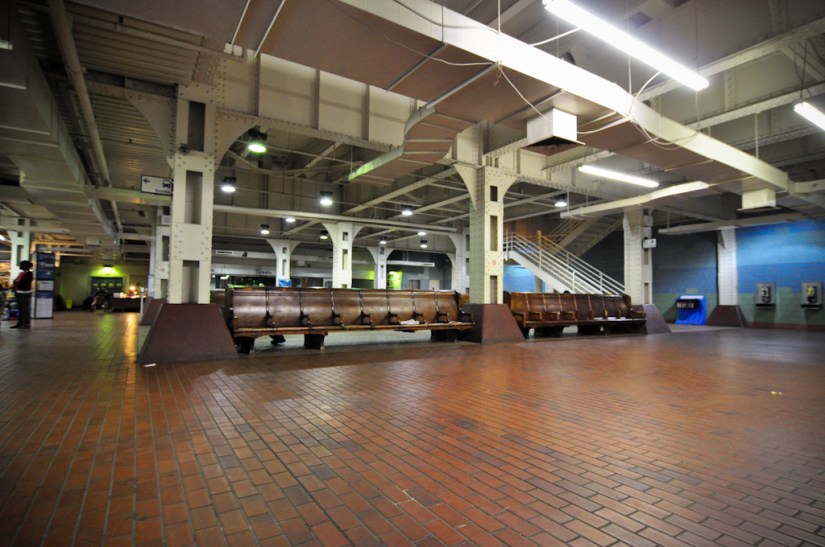
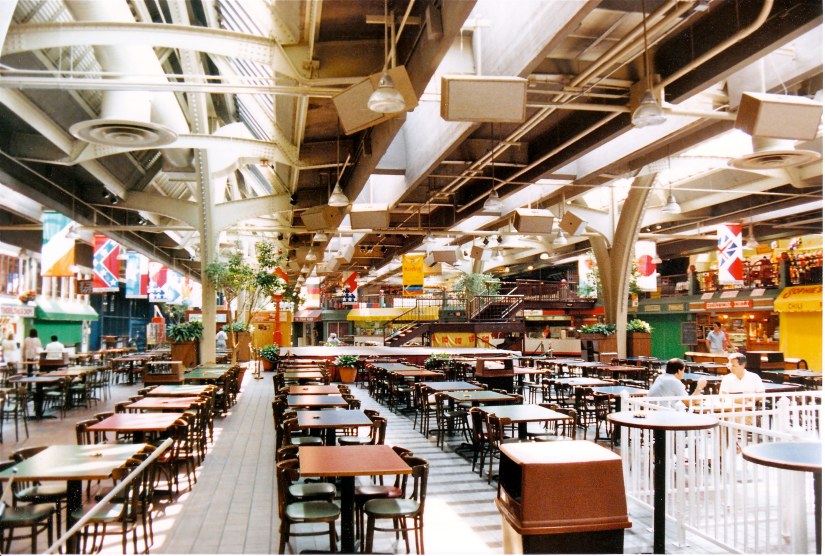
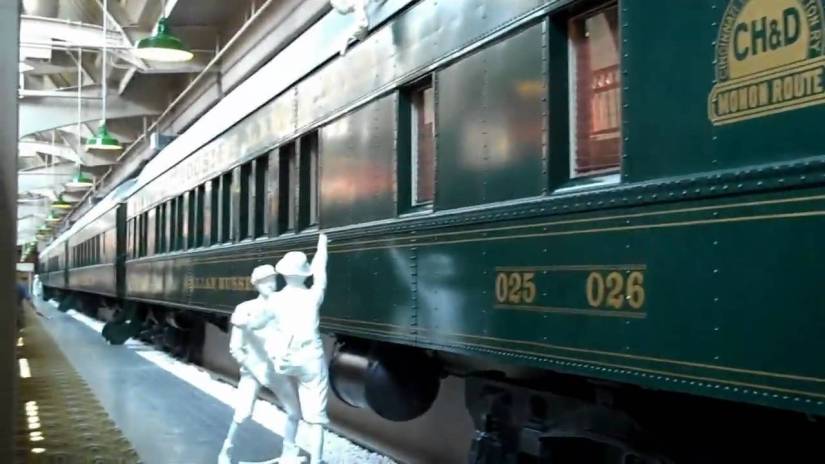
 Perhaps as an homage to the vibrant spirits of luminaries past, Twenty-eight “Ghost People” linger around the Grand Hall at Union Station. Dressed in authentic period clothing, carrying real items from their times, each have a special story. Made of white fiberglass, they were created by Indianapolis native Gary Rittenhouse, from an idea of developers Bob and Sandra Borns, who were fascinated by the history of thousands of people beginning and ending their travels in Union Station.