
Original publish date: March 28, 2019
During a spring training Cactus League exhibition game on March 26, 1961, Cleveland Indians outfielder Tito Francona hit a 350-foot home run against the Boston Red Sox at Hi Corbett Field in Tucson, Arizona. It’s 349 feet to right field, 366 feet to left field, and 410 feet to “dead” center. Unwittingly, when Tito’s homer flew over the right-field fence of paim-fringed Hi Corbett field and finally stopped rolling, it helped solve a murder case. As John Cota, a city parks employee, chased after it, he pulled up short at the edge of a shallow water trench. The ball rolled to a dead stop beside a body, partly covered with a coat, a .22-caliber revolver clutched in his hand. Police identified the body as that of Fred Victor Burden, 50, a house painter from Toronto. Burden was wanted by Tucson police in connection with the shooting death of former prize fighter James Cocio.
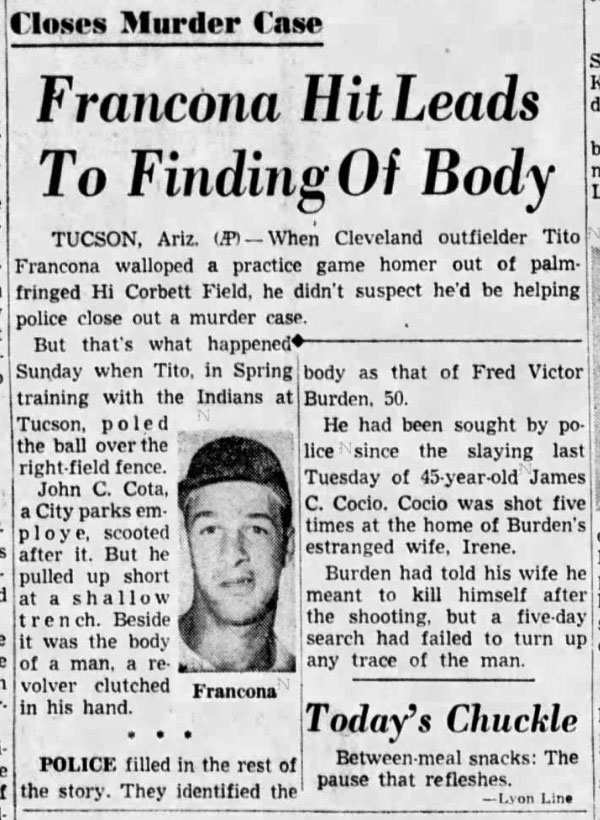 The front page of the Tucson Daily Citizen on March 27, 1961 ran a story headlined, “Practice Homer Leads To Body”. The story detailed, “An over-the-wall smash by Cleveland Indians’ Tito Francona yesterday led to the discovery that Frederick Victor Burden had carried out his threat to commit suicide after killing a man in the home of his estranged wife. Burden’s body, with a bullet in the head, was found by city parks employee John C. Cota, 52, of 238 E. E. 19th St., while he was looking for a ball that had just been knocked over the west wall during the practice at Hi Corbett Field in Randolph Park. The partially concealed body was found lying in a shallow watering trench under low – hanging palm fronds when discovered about 11:30 a m.”
A few days prior, the same paper covered the story about the fatal shooting of 45-year-old James Contreras Cocio. Burden’s body was found lying face up with a .22 automatic pistol clutched in the right hand, his glasses found hanging on a small palm tree nearby. County Pathologist Louis Hirsth said Burden had been dead at least 48 hours. The killer had shot himself in the roof of the mouth, the bullet lodging in the skull. Before the discovery, Burden had been charged in absentia with the first-degree murder of Cocio, a World War II Marine veteran and former three-time Arizona featherweight boxing champion.
Burden, out of the country since January, had returned home from Canada unexpectedly to find his 46-year-old wife Irene and Cocio together in the couple’s home at 2207 E. 20th St. Mrs. Burden told police the two men had argued over her and investigators said it was obvious that the Tuesday night killing was the result of that quarrel. Police said the woman’s husband fired five quick shots at the victim when Cocio opened the rear door of the home and discovered Burden standing outside in his stocking feet. A sixth shot fired at Cocio’s body nearly two hours later wounded Mrs. Burden in the left leg. Burden drove his wife to the home of her employer after discovering the wound, and told her he was going to kill himself. She was taken to St. Mary’s Hospital for treatment of the leg wound and discharged the same day her husband’s body was found. No record survives as to whether parks department employee John Cota retrieved, much less saved, the baseball.
What many might have viewed as a bad omen didn’t derail Tito’s season however. Francona kicked off the season with a Chief Wahoo Indian “Ki Yi Waugh Woop!” He was batting .293 with eleven home runs and 53 RBIs at the All-Star break of the 1961 season and Tito was named to the American League All-Star squad for the only time in his career. He finished the season batting .301 with sixteen home runs, 85 RBIs and he lead American League left fielders in fielding percentage.
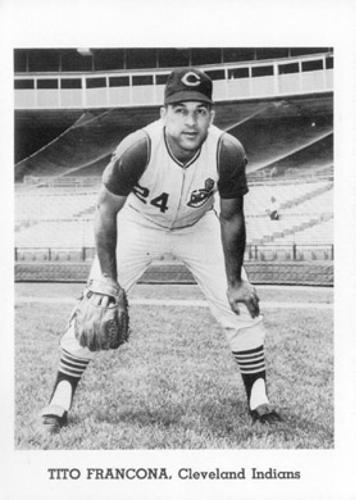 Despite having emerged as the best defensive left fielder in the league, Francona was shifted to first base during spring training in 1962 and finished the season leading the American League in double plays turned as a first baseman. He finished with 14 homers, 28 doubles and batted .272. When Birdie Tebbetts took over as Indians manager in 1963, Francona was moved back into left, but his numbers fell drastically. His .228 batting average was a career low, and his ten home runs and 41 RBIs were his fewest over a full season. The Indians acquired All-Star Leon “Daddy Wags” Wagner to play left field prior to the 1964 season, so Francona split time between right and first base. After the season, he was dealt to the St. Louis Cardinals for a player to be named later and cash.
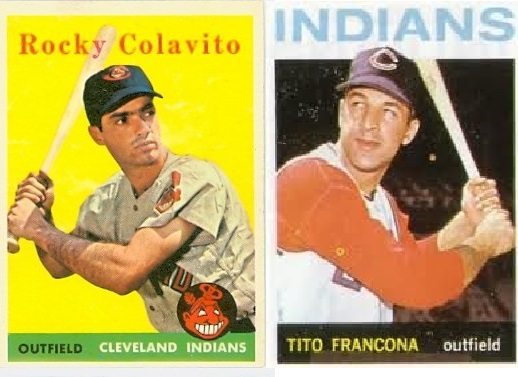
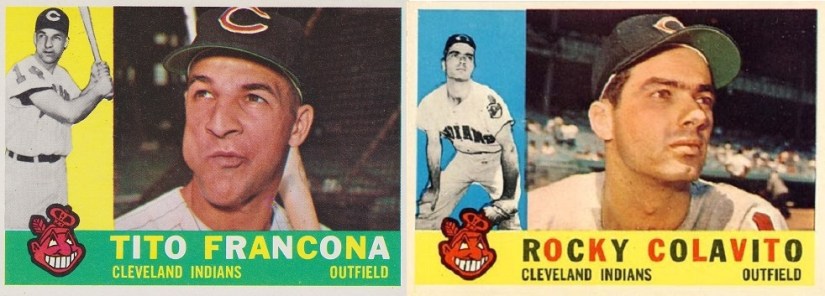
Tito had quite a career, spanning 15 seasons and including stops with eight other teams, including the Braves, Cardinals, A’s, Orioles, Phillies, Tigers, Brewers and White Sox. He was originally signed by the St. Louis Browns in 1952 but left the game for two years to serve in the U.S. Army, by the time he returned, the team had relocated and was now the Baltimore Orioles. In 1956 upon returning to the O’s, Tito finished tied with the Cleveland Indians’ Rocky Colavito for second place in American League Rookie of the Year balloting behind Chicago White Sox shortstop Luis Aparicio. For his career, Francona hit .272 with 125 homers, 656 RBIs and a .746 OPS in 1,719 games. Francona spent six seasons (’59-64) with the Indians.
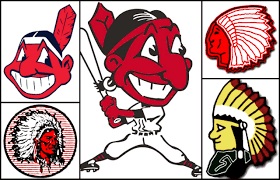 And what about that curse? The curse of Rocky Colavito? Well, in recent years, it has dampened a little with the Indians “rebuilding years” of the past two decades. But. although they’ve played in three World Series Championships since 1995, they still haven’t won one. Here are just a few of the mishaps blamed on that curse since Colavito’s 1960 trade. September 1961: Fireballer “Sudden Sam” McDowell breaks two ribs throwing a fastball. June 1964: Third Baseman Max Alvis suffers an attack of spinal meningitis on a team flight. January 1965: The Indians reacquire Rocky Colavito from the Kansas City A’s in exchange for Rookie of the Year winner Tommie Agee and future 286-game winner Tommy John. July 1970: Reds star Pete Rose plows over catcher Ray Fosse in the All-Star game, effectively ending Fosse’s career in Cleveland. June 1974: Drunken fans pour onto the Cleveland Stadium field during ten-cent beer night, forcing a forfeit while destroying the diamond. March 1977: 20-game winner Wayne Garland hurts his arm in Spring training, effectively ending his career. March 1978: Indians trade Hall of Famer Dennis Eckersley to the Red Sox. July 1981: Cleveland hosts the All-Star game which is delayed until August by the MLB strike. August 1981: 1980 AL Rookie of the Year “Super Joe” Charboneau is sent down to AAA, never to be heard of again. April 1987: Sports Illustrated picks the Indians to win the pennant but they lose 101 games and finish last. March 1993: three Indians pitchers die in car crashes and a fourth is seriously injured. July 1994: Indians are speeding towards the World Series when the season is cancelled by a player’s strike.
It is believed by some that the curse extends to the Indians’ old spring training home in Tucson as well. Hi Corbett Field served as the spring training home of Cleveland from 1947 through 1992. Hi Corbett has not been used for Spring Training games since, but parts of the movie Major League were filmed there which ironically portrayed the Cleveland Indians as the laughing stock of the league.
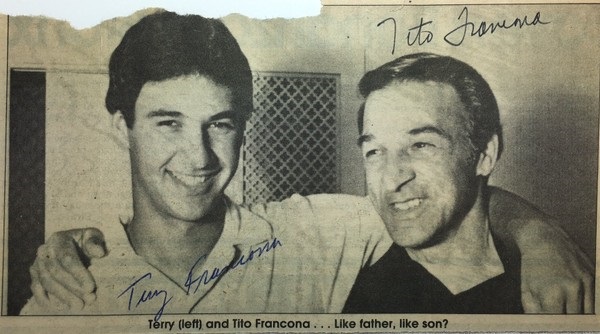 There is so much about Tito Francona that typifies that which makes baseball so interesting. Aside from one of the greatest nicknames in sports history, he was considered a journeyman for most of his career, but a damned good one. Tito Francona was a baseball player, a great husband and father and an even better teammate. When he died at the age of 84 he left a lasting legacy. Tito was there at the beginning of “The Curse” and although he’s gone, he’s likely to be there when the curse ends because “Little Tito” just might lead the Indians to a World Series Championship this season. After all, it was Francona who broke the Boston Red Sox Curse of Babe Ruth by winning two World’s Series titles in four years. Yep, baseball is a funny game.
 My grandparents retired to Cape Coral in the late 1970s and I recall one of their oldster neighbors showing me a photo album from the 1930s with pictures of the New York Yankees at Spring Training down there. Turns out his family lived near the facility, Fort Lauderdale if memory serves, where the Yankees trained. I can remember the photos in there of Lou Gehrig in a bathing suit (MAN that dude was HUGE!) and Babe Ruth in full uniform on the beach, two bats resting on his shoulder with his fielder’s glove and cleats hanging from the back like a hobo pouch. In his pin striped uniform! On the Beach! Everything in that photo would be worth a small fortune today, including the photo itself!
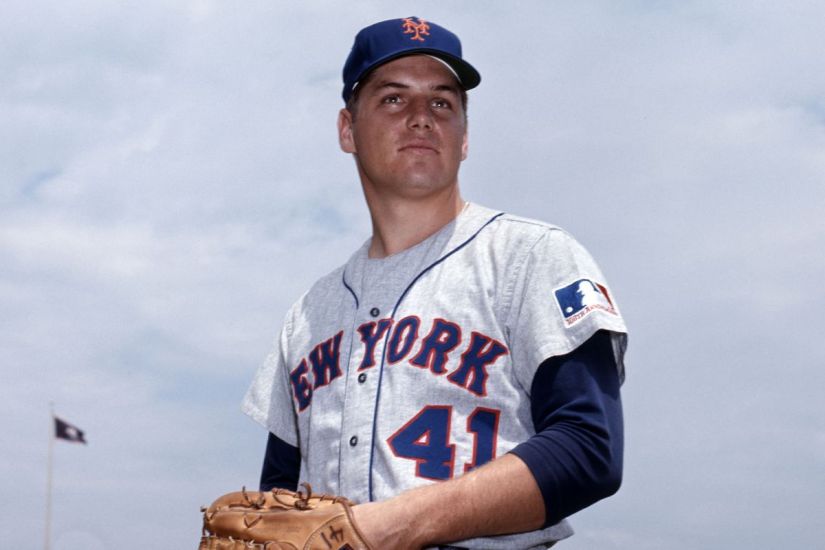 Somehow, I became a Blue Jays fan. Probably because I went to their first spring training game in franchise history in Dunedin. March 11, 1977 they beat the Mets 3-1 at Grant Field, which was built in 1930 and looked like it. I went to a few games that year. I distinctly recall sitting on a wooden bleacher seat right next to Tom Seaver who was talking to me like it was no big deal. And he was pitching that day. Within a few weeks, he was traded to the Cincinnati Reds “Big Red Machine.” Florida meant Spring Training, period. Somewhere along the line that changed.
 March of 1961 was a busy time: America’s brand new President John F. Kennedy creates the Peace Corps, The Beatles start performing at the Cavern Club, Nine African-American students from Mississippi’s Tougaloo College made the first peaceful attempt to end segregation by staging a “read-in” at the whites-only main branch of the Jackson municipal public library, NASA launches a Mercury-Redstone BD rocket from Cape Canaveral as one final test flight to certify its safety for human transport. Alan Shepard had volunteered to take the flight and become the first man to travel into outer space, but was stopped by Wernher von Braun from going, Less than three weeks later, Soviet cosmonaut Yuri Gagarin would, on April 12, would reach the milestone, Actor Ronald Reagan bursts onto the political scene with his speech “Encroaching Control” before the Phoenix chamber of commerce and the Boston Strangler Albert DeSalvo is captured.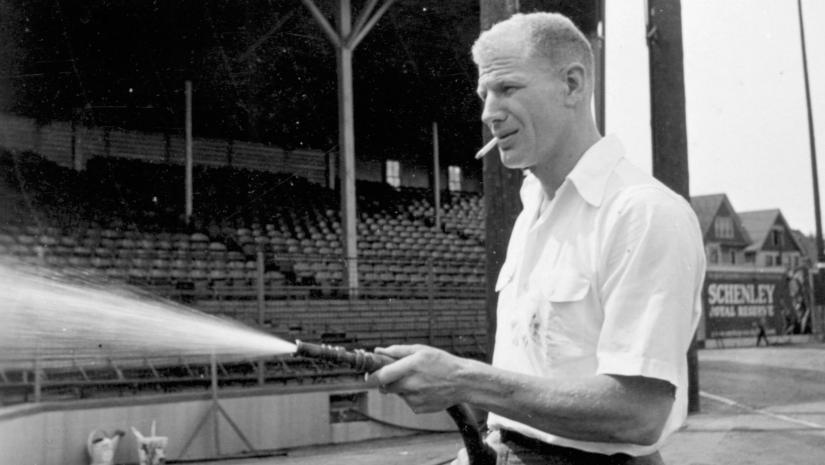
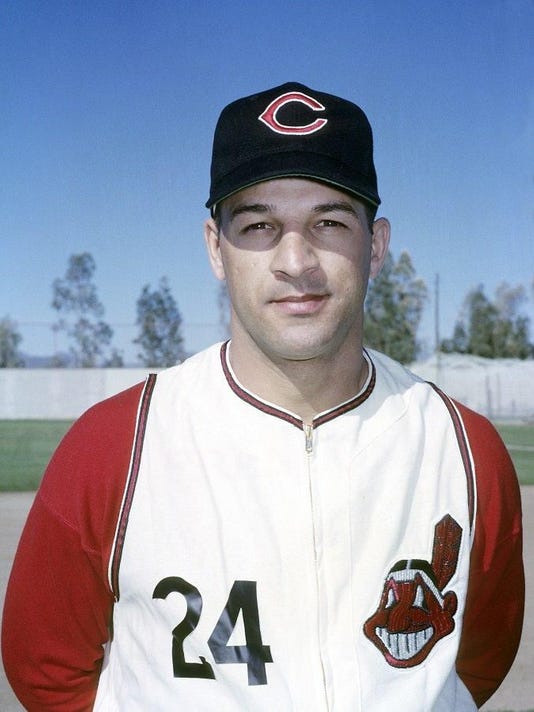 Last year, John Patsy Francona, a Cleveland Indians fan favorite better known as “Tito” died on the eve of spring training. It was the day before Valentine’s Day and the Indians’ pitchers & catchers were just trickling in to their spring training park in Goodyear, Arizona. The passing was made all the more bittersweet when you consider that the team was managed by Tito’s son, Terry Francona. Terry grew up in the Indians dugout where players called him “Little Tito.” As a member of the Montreal Expos, Terry played against our Indians here in Indianapolis at the old 16th street stadium. Before that he played college ball for Arizona State and led his team to the 1980 College World Series Championship. Terry Francona’s dad’s nickname of “Tito” was naturally passed down to his son, and although the broadcasters and news media still call him “Terry”, Tito is what the manager’s friends and players call him.
 That season Tito batted .363 with a career high twenty home runs and 79 RBIs to help the Indians to an 89–65 record and second place in the American League. His .363 average would have led the league, however, he fell 34 at-bats short of the 3.1 per game necessary to qualify. The batting championship went to the Detroit Tigers’ Harvey Kuenn, with a .353 batting average, ten points below Tito. Francona finished fifth in balloting for the AL Most Valuable Player Award that season. He compiled 20 home runs, 17 doubles, 79 RBIs, 68 runs scored, 145 hits, a .414 on-base percentage and a .566 slugging percentage in 122 games.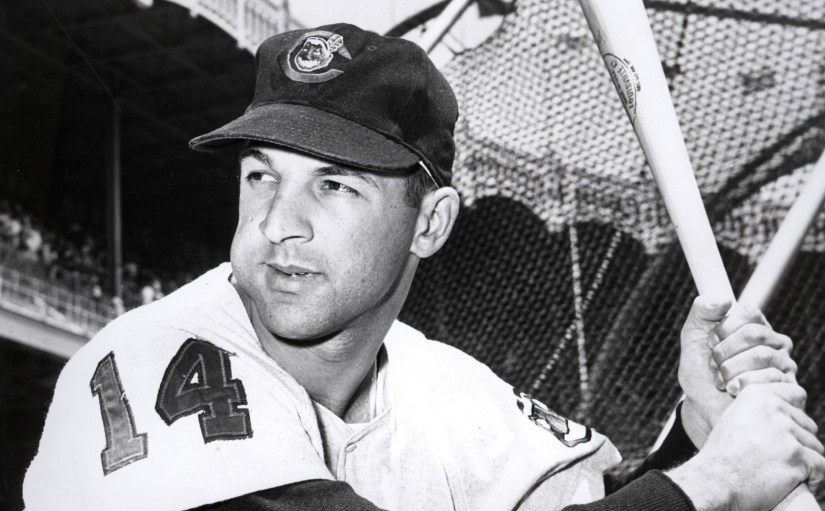
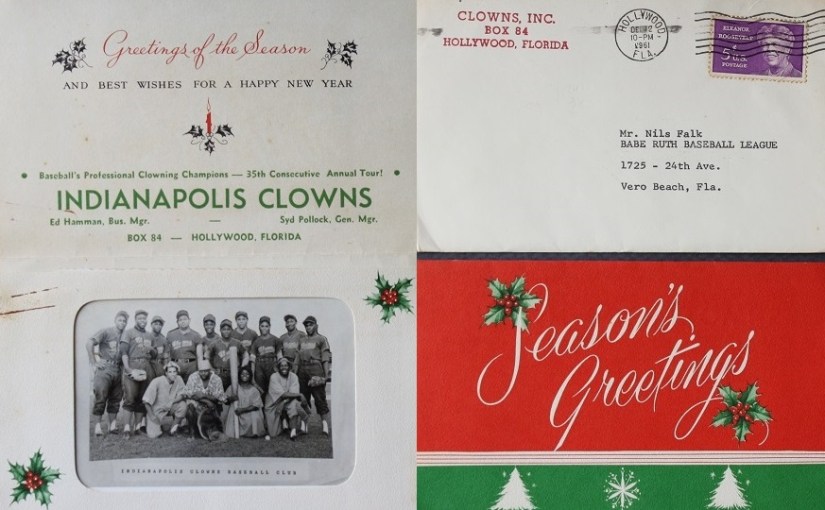
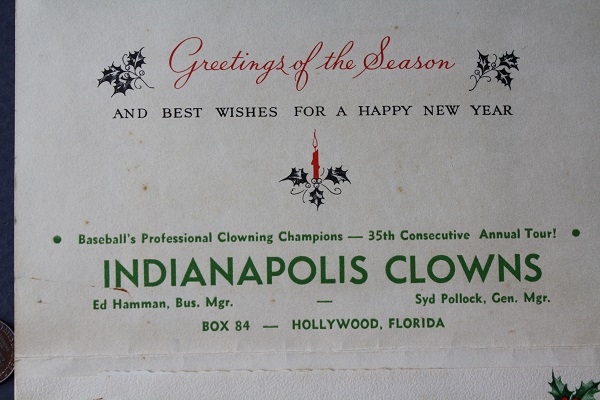 The card reads: “Greetings of the Season and Best Wishes for a Happy New Year. Baseball’s Professional Clowning Champions- 35th Consecutive Annual Tour! Indianapolis Clowns Ed Hamman, Bus. Mgr. Syd Pollack, Gen. Mgr. Box 84- Hollywood, Florida” inside. The original mailing envelope has the return address on front and same on back via an embossed stamp on the back. The Christmas card was sent to the Babe Ruth Baseball League in Vero Beach, Florida. True baseball fans will recognize Vero Beach as the spring training home of former Negro leader Jackie Robinson’s Brooklyn Dodgers and later the Koufax/Drysdale Los Angeles Dodgers. For a baseball fanatic, there is a lot going on in this little Christmas card.
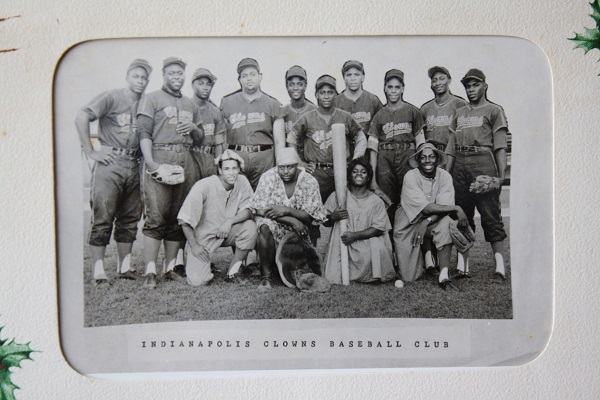 The team photo pictures 10 players in old wool baseball uniforms standing in a line with another four players dressed in comic field costumes including a female player holding one of the Clowns’ trademark props, a grossly oversized baseball bat. The Clowns were one of the first professional baseball teams to hire a female player. They featured three prominent women players on their roster in the 1950s: Mamie “Peanut” Johnson (1935-2017) a right handed pitcher who went 33-8 in 3 seasons with the Clowns, Constance “Connie” Morgan (1935-1996) who played 2 seasons at second base for the Clowns and the first female player in the Negro Leagues, Marcenia “Toni” Stone (1921-1996) who once got a hit off of Satchel Paige.
 knew how to order off the menu. Aaron first experienced overt northern style racism while playing with the Clowns. The team was in Washington, D.C. and a few of the Clowns’ players decided to grab a pregame breakfast in a restaurant behind Griffith Stadium. The players were seated and served but after they finished their meals, they could hear the sounds of employees breaking all the plates in the kitchen. Aaron and his teammates were stung by the irony of being in the capital of the “Land of Freedom” whose employees felt they “had to destroy the plates that had touched the forks that had been in the mouths of black men. If dogs had eaten off those plates, they’d have washed them.”
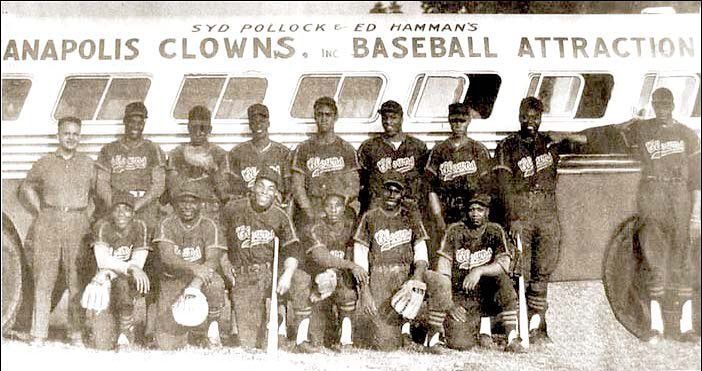 During Aaron’s tenure the Clowns were a powerhouse team in the Negro American League. However, the story of the Indianapolis Clowns does not begin, or end, with the Hank Aaron connection. The team traces their origins back to the 1930s. They began play as the independent Ethiopian Clowns, joined the Negro American League as the Cincinnati Clowns and, after a couple of years, relocated to Indianapolis. The team was formed in Miami, Florida, sometime around 1935-1936 and was originally known as the Miami Giants. After a couple years the team changed its name to the Miami Ethiopian Clowns and hit the road to become the longest running barnstorming team in professional baseball history.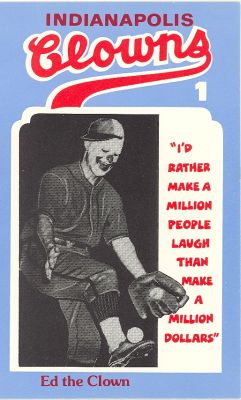
 Harlem Globetrotter star “Goose” Tatum also played for the Clowns during this time. Goose was as much of a showman on the diamond as he was on the basketball court. Whether fielding balls with a glove triple the size of a normal one, confusing opposing players with hidden ball tricks or playing second base while seated in a rocking chair, Tatum was amazing. During the same era, Richard “King Tut” King played the field using an enormous first baseman’s mitt and occasionally augmenting his uniform with grass hula skirts in the field. King, who spent over 20-years with the Clowns, paved the way for great white baseball comedians like Max Patkin.
 By 1966 the Indianapolis Clowns were the last Negro league team still playing. The Clowns continued to play exhibition games into the 1980s, but as a humorous sideshow rather than a competitive sport. After many years on the road as a barnstorming team, the Clowns finally disbanded in 1989. The Clowns were also the first team to feature women as umpires. The 1976 movie “The Bingo Long Traveling All-Stars & Motor Kings”, starring James Earl Jones, Billy Dee Williams, and Richard Pryor, is based on the Indianapolis Clowns.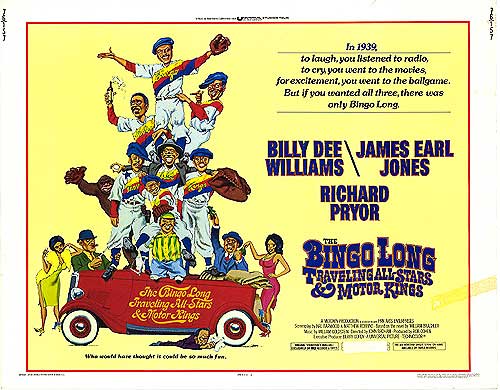
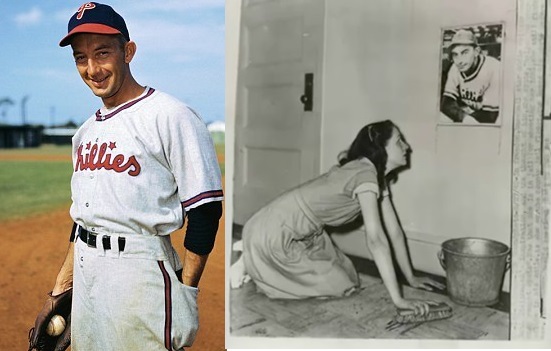
 individual player. On June 14, 1949 Philadelphia Phillies “Whiz Kids” (and former Chicago Cub) first baseman Eddie Waitkus was shot by an obsessed fan named Ruth Ann Steinhagen in a Chicago Hotel Room. The comparison between Waitkus and the movie character pretty much ends there. But it is a Helluva story.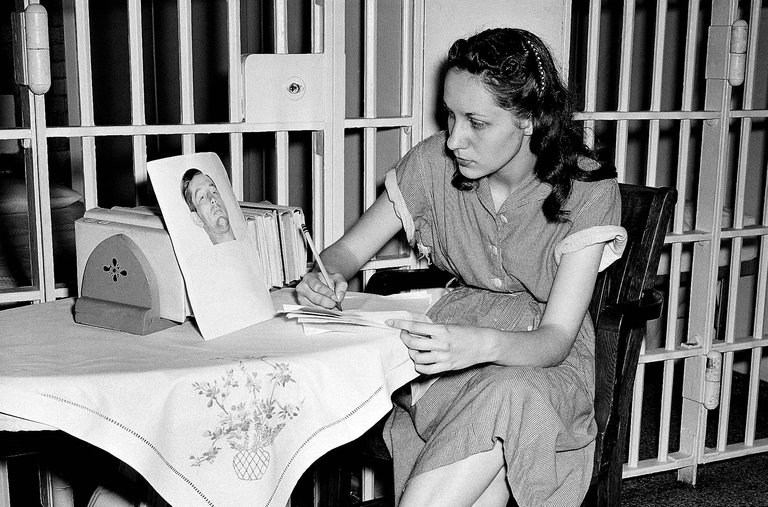
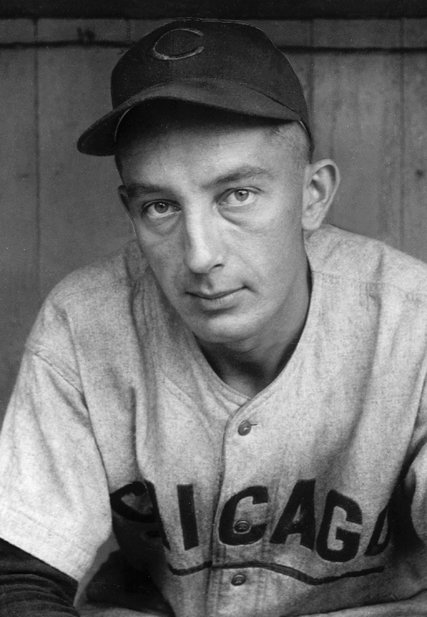
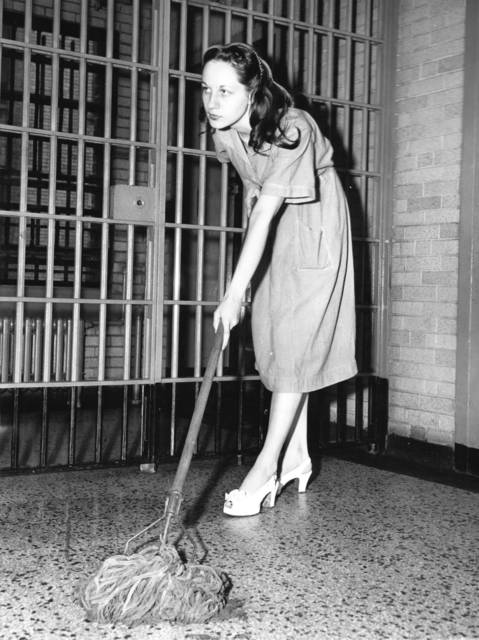
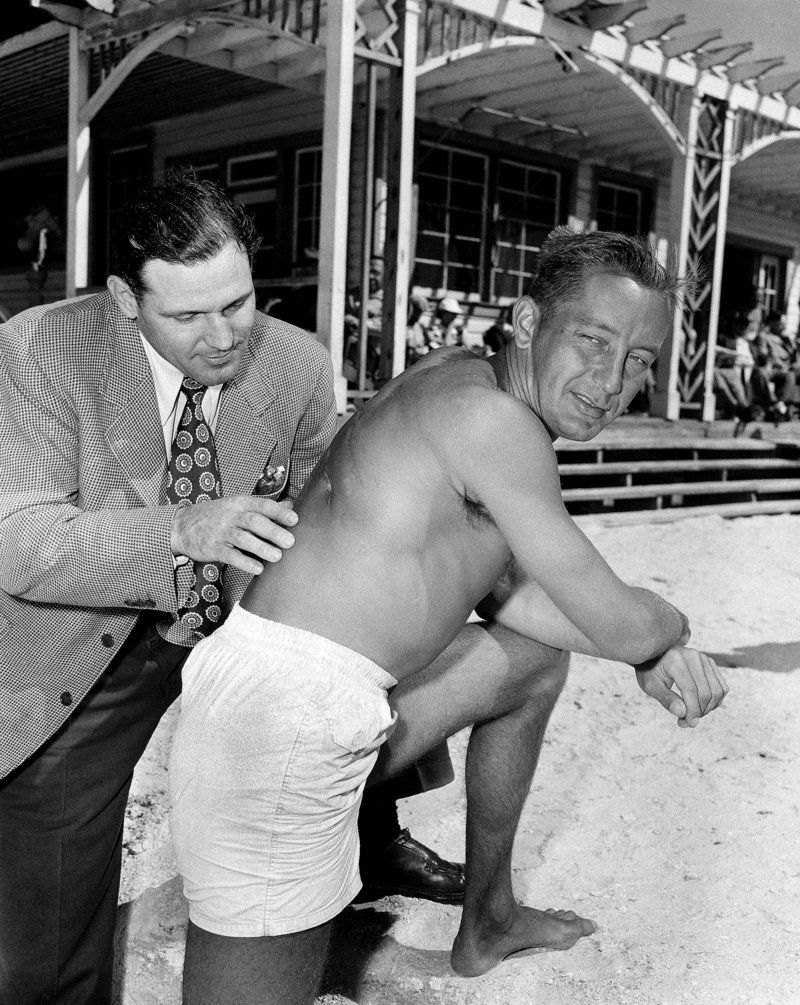
 The Waitkus shooting is regarded as the inspiration for Bernard Malamud’s 1952 baseball book The Natural, which was made into a film by Barry Levinson in 1984. Other than the shooting, its hard to make a comparison between Eddie Waitkus and Roy Hobbs, the character played by Robert Redford in the film. In The Natural, Hobbs was shot as a teenage phenom before ever reaching the majors and the shooting kept him from reaching the big leagues until the age of 34, at which point he immediately started hitting like Babe Ruth with his miracle bat “Wonder Boy”. When shot, Waitkus was a 29-year-old veteran of both World War II and 448 major league games.
 Miraculous comeback aside, Waitkus, who died in 1972, was no Hobbs at the bat. Though he was enjoying his finest season when he was shot, he had just one home run in 246 plate appearances, and when he retired in 1955 at age 35, he had just 24 home runs in 4,681 at bats. Waitkus hit for respectable averages (.304 in 1946, .306 in 1949 before the shooting, .285 for his career), but they were empty. He hit for little power and drew only an average number of walks. He did make a pair of All-Star teams and drew some low-ballot MVP votes in two seasons, but was by no means a Hall of Fame candidate.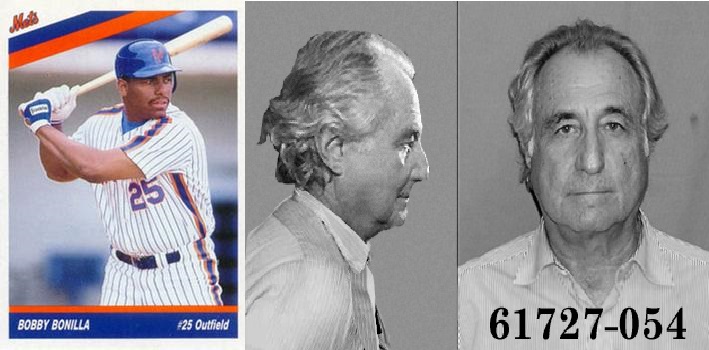
 Many of these athletes are notoriously bad at managing their own money. Their teams often take care of all travel, meal and lodging expenses as part of their contracts. They see their salaries as instant, disposable income and make terrible investment decisions. When they retire or injury ends their career, they continue to spend wildly even though there is no more money coming in. Curt Schilling lost every cent of the $50 million he made playing baseball on a failed video game company. Allen Iverson squandered a $150 million fortune on gambling, houses, jewelry, child support and a 50-person entourage. Mike Tyson blew through a $300 million fortune. Evander Holyfield blew through a $250 million fortune. Phillies star Len Dykstra lost his fortune, then regained it only to lose it again. Locally, former Colts Quarterback Art Schlicter lost his fortune to drugs and gambling and he has been in-and-out of prison since his playing days ended.
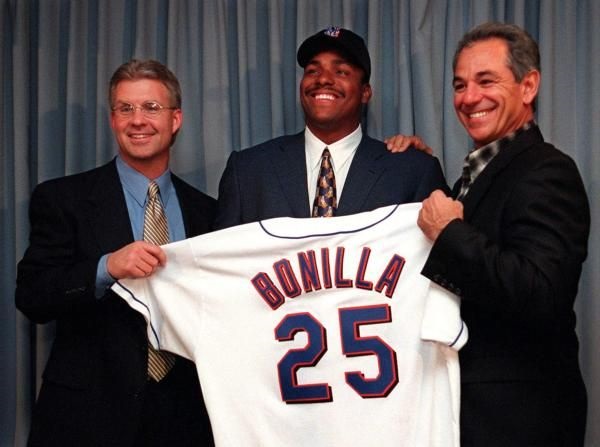
 $1.9 million annual salary a decade after an employee leaves the job? What does all that mean? Well, nothing really. That is nothing to everyone except Bobby Bonilla. Keep in mind that an average annual teacher’s salary in Indiana is $ 53,000, a Hoosier cop makes about $ 50.000, a Circle City Fireman makes about $ 45,000 and the President of the United States makes $ 400,000 per year. To me it means that it’s the Major League All-Star game break again and I felt like writing a baseball story. True, the Bonilla deal remains a trivial footnote from the pages of sports history, but it’s a footnote that I find infinitely interesting.
 Alan E. Hunter