Baseball, Creepy history, Criminals, Sports

Tito Francona and the Curse of Rocky Colavito. PART I

Curse Part one

Original publish date:  March 21, 2019

Spring training baseball is back. I am one of those legion of fans who wait every year to hear the five most beautiful words in the English language: “Pitchers and Catchers Report.” As a kid growing up, spring training baseball was always synonymous with Florida. In the Mid-1970s, my family took our spring break vacations at the Island Towers resort hotel in Fort Myers. It just so happened that the hotel was the spring training headquarters of the Kansas City Royals. So it was no big thing seeing guys like George Brett, Frank White, Freddie Patek, and Cookie Rojas hanging out at the pool or chasing my older sisters on the beach. Years later, I ran into Jamie Quirk at old 16th Street Bush Stadium and he informed me that the Island Towers were owned by Buck Martinez’s parents.
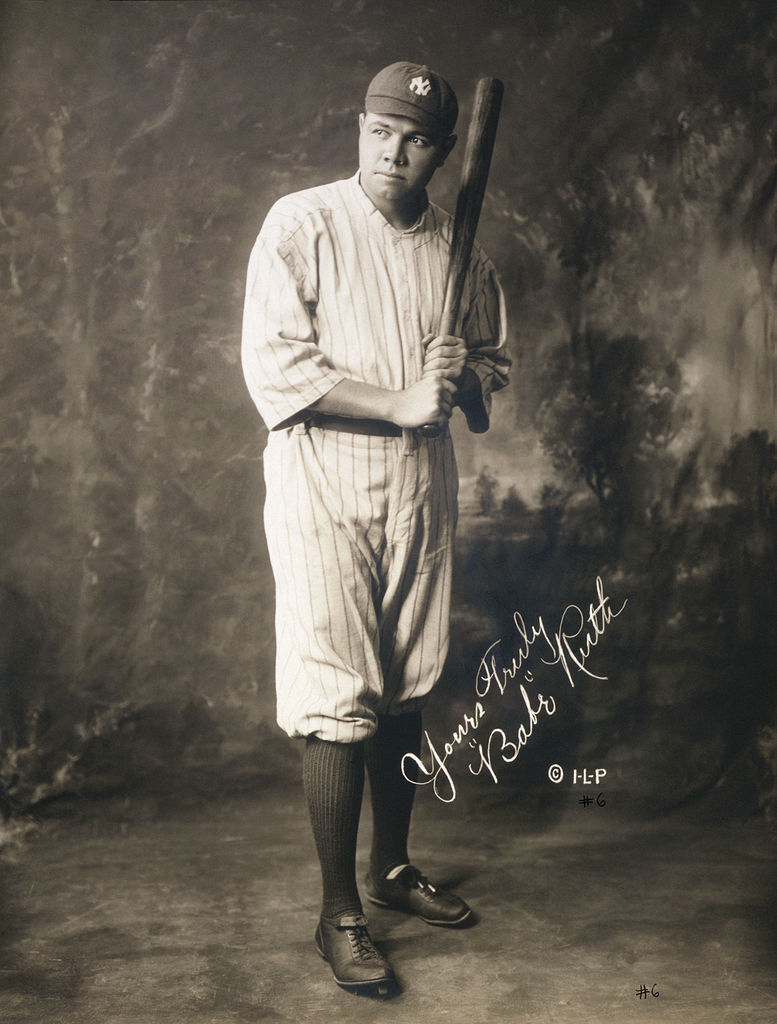
Ruth Jersey AuctionMy grandparents retired to Cape Coral in the late 1970s and I recall one of their oldster neighbors showing me a photo album from the 1930s with pictures of the New York Yankees at Spring Training down there. Turns out his family lived near the facility, Fort Lauderdale if memory serves, where the Yankees trained. I can remember the photos in there of Lou Gehrig in a bathing suit (MAN that dude was HUGE!) and Babe Ruth in full uniform on the beach, two bats resting on his shoulder with his fielder’s glove and cleats hanging from the back like a hobo pouch. In his pin striped uniform! On the Beach! Everything in that photo would be worth a small fortune today, including the photo itself!
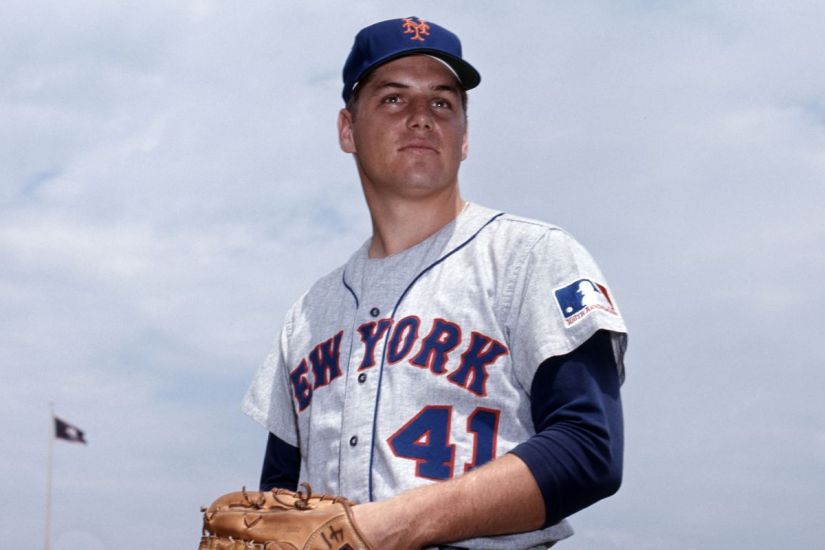
z seaver 1Somehow, I became a Blue Jays fan. Probably because I went to their first spring training game in franchise history in Dunedin. March 11, 1977 they beat the Mets 3-1 at Grant Field, which was built in 1930 and looked like it. I went to a few games that year. I distinctly recall sitting on a wooden bleacher seat right next to Tom Seaver who was talking to me like it was no big deal. And he was pitching that day. Within a few weeks, he was traded to the Cincinnati Reds “Big Red Machine.” Florida meant Spring Training, period. Somewhere along the line that changed.
They had spring training games in Arizona, something called the “Cactus League”, but that didn’t count for much back then. Today, more teams call Arizona home for spring training than ever before. The teams that play in Arizona now are the Diamondbacks, Chicago Cubs & White Sox, Cincinnati Reds, Cleveland Indians, Colorado Rockies, Kansas City Royals, Los Angeles Angels and Dodgers, Milwaukee Brewers, Oakland Athletics, San Diego Padres, San Francisco Giants, Seattle Mariners, and Texas Rangers. More than 100 games are scheduled between Feb. 21 – March 26, 2019. The broadcasters say that the travel in Florida is brutal, sometimes 3-4 hour bus rides, while the travel between stadiums in Arizona is usually less than an hour. When it comes to Arizona baseball, I think of a spring training story from the Cactus League that happened before I was born. The story emanates from Hi Corbett Field in spring training of 1961. But first a little background.
HiCorbett1March of 1961 was a busy time: America’s brand new President John F. Kennedy creates the Peace Corps, The Beatles start performing at the Cavern Club, Nine African-American students from Mississippi’s Tougaloo College made the first peaceful attempt to end segregation by staging a “read-in” at the whites-only main branch of the Jackson municipal public library, NASA launches a Mercury-Redstone BD rocket from Cape Canaveral as one final test flight to certify its safety for human transport. Alan Shepard had volunteered to take the flight and become the first man to travel into outer space, but was stopped by Wernher von Braun from going, Less than three weeks later, Soviet cosmonaut Yuri Gagarin would, on April 12, would reach the milestone, Actor Ronald Reagan bursts onto the political scene with his speech “Encroaching Control” before the Phoenix chamber of commerce and the Boston Strangler Albert DeSalvo is captured.
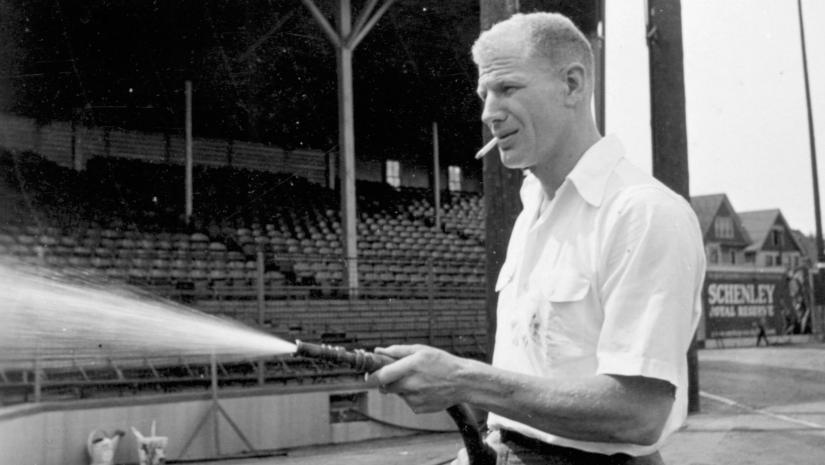
Hi Corbett Field is located in Tucson, Arizona. Opened in 1937, it was originally called Randolph Municipal Baseball Park. In 1951, it was renamed in honor of Hiram Stevens Corbett (1886–1967), a former Arizona state senator who was instrumental in bringing spring training to Tucson, specifically by convincing Bill Veeck to bring the Cleveland Indians there in 1947. Veeck owned a ranch in Tucson, and he and players sometimes rode horses there after games. Veeck claimed that he moved the team’s training camp from Florida to Arizona in order to avoid Florida’s Jim Crow laws.
z Veeck hero
Bill Veeck

In the mid-1940s, while Veeck was owner of the then-minor league Milwaukee Brewers of the AAA American Association, during one of his team’s spring games in Ocala, Florida, the owner took a bleacher seat and started talking with the fans around him. Veeck had no idea that he had sat in the part of the stadium that was designated for African American fans. That turned out to be a big deal in the segregated “Jim Crow” South of the 1940s. Veeck had no idea that he was breaking a law that kept black fans from mixing with white spectators. In his book, “Veeck as in Wreck”, he wrote, “Within a few minutes, a sheriff came running over to tell me I couldn’t sit there.” The Brewers owner refused to move, and soon the mayor himself was threatening to force him to sit in another section. Veeck countered that if they wanted him to move from his seat, he would would move his team right along with him; to another city. The mayor finally backed down, but Veeck never forgot it.
In time, Veeck sold his stake in the Brewers and bought the Cleveland Indians. Veeck chose Phoenix, Arizona as the Indians’ spring training home for 1947. Veeck convinced the New York Giants to join his Indians so that the two teams could prepare for the season. The next season, Veeck signed Larry Doby to a contract, making him the American League’s first black player. Doby made his major league debut with the Indians on July 5, 1947, about 11 weeks after Robinson’s first game with the Brooklyn Dodgers. The Giants followed by signing Hall of Famer Monte Irvin the next year and the Cactus League was born.
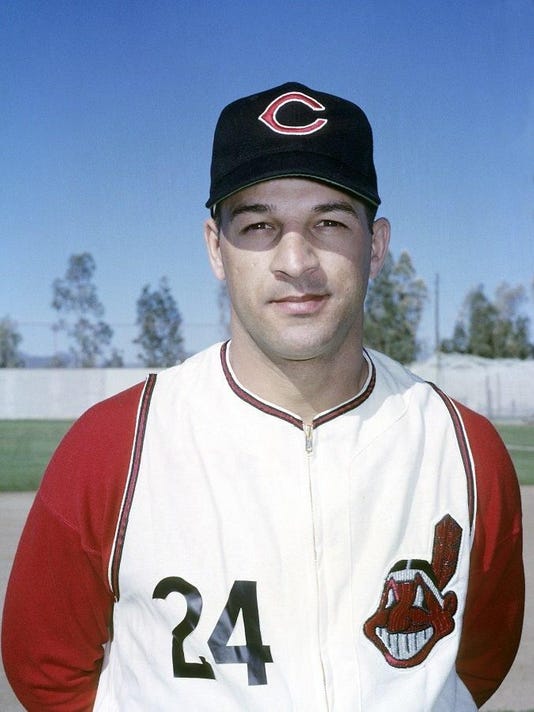
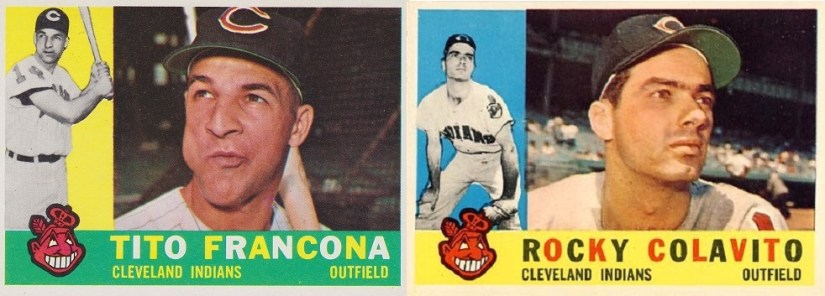
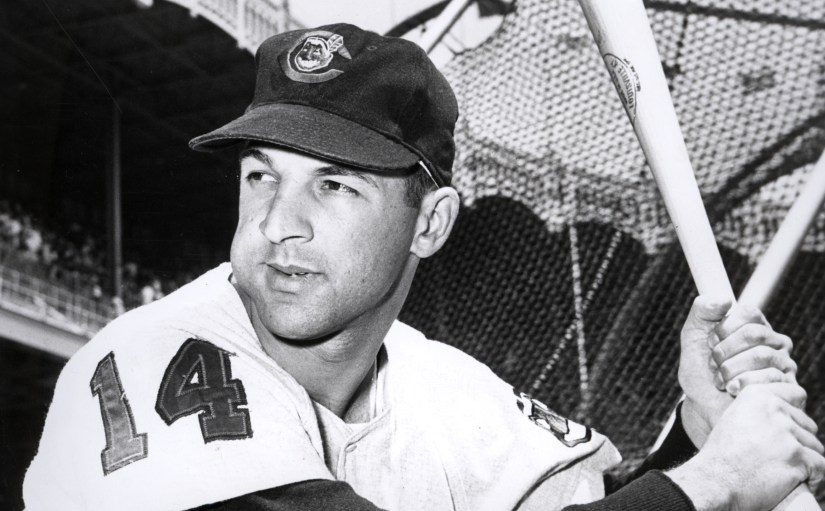
z B99629538Z.1_20180214121756_000_GTU1S68FU.1-0Last year, John Patsy Francona, a Cleveland Indians fan favorite better known as “Tito” died on the eve of spring training. It was the day before Valentine’s Day and the Indians’ pitchers & catchers were just trickling in to their spring training park in Goodyear, Arizona. The passing was made all the more bittersweet when you consider that the team was managed by Tito’s son, Terry Francona. Terry grew up in the Indians dugout where players called him “Little Tito.” As a member of the Montreal Expos, Terry played against our Indians here in Indianapolis at the old 16th street stadium. Before that he played college ball for Arizona State and led his team to the 1980 College World Series Championship. Terry Francona’s dad’s nickname of “Tito” was naturally passed down to his son, and although the broadcasters and news media still call him “Terry”, Tito is what the manager’s friends and players call him.
The elder Francona arrived in Cleveland in 1959 with baby Terry (born April 22 of that year) in tow. That season, Tito was at the top of his game and his presence knocked some all-time Indian greats right off the roster. Francona came to Cleveland in a one-for-one trade that sent Hall of Famer Larry Doby to the White Sox. (Ironically, it was the second time Tito had been traded for Larry Doby after the O’s traded him to the White Sox in 1958) Tito arrived at the “Mistake on the Lake” with big shoes to fill, but Francona, who began the 1959 season as a pinch hitter and utility man, quickly earned a regular place in the lineup. After going five-for-nine with a home run in a June 7 doubleheader against the Yankees, Francona replaced Jim Piersall as Cleveland’s starting center fielder. By the end of the season, he displaced Indians regular first baseman Vic Power, who was shifted to second base.
z AR-304189941That season Tito batted .363 with a career high twenty home runs and 79 RBIs to help the Indians to an 89–65 record and second place in the American League. His .363 average would have led the league, however, he fell 34 at-bats short of the 3.1 per game necessary to qualify. The batting championship went to the Detroit Tigers’ Harvey Kuenn, with a .353 batting average, ten points below Tito. Francona finished fifth in balloting for the AL Most Valuable Player Award that season. He compiled 20 home runs, 17 doubles, 79 RBIs, 68 runs scored, 145 hits, a .414 on-base percentage and a .566 slugging percentage in 122 games.
Ironically, the next season, Francona was shifted to left field when the Indians traded home run leader Rocky Colavito for Kuenn, the same player who edged out Tito for the batting title the year before. With former Indianapolis Indians slugger Colavito gone (Indianapolis was Cleveland’s minor league affiliate from 1952-56), Francona was inserted in the clean-up spot in manager Joe Gordon’s batting order. Tito tallied only six home runs through the All-Star break and was dropped to the number six spot in the batting order for August, and then back up to number two by September. Tito hit eleven home runs over the rest of the season to finish with seventeen overall. He batted ,292 and his 36 doubles led the American League for 1960. The trade of Colavito for Kuenn is considered by longtime Indians’ fans the beginning of the “Curse of Rocky Colavito” and as you might imagine, Tito Francona was right in the thick of it.Francona Tito 2053.68WTC_Bat_NBL
Baseball, Indianapolis, Weekly Column

The Day Babe Ruth Came To Indianapolis.

Original publish date:   August 24, 2015 Republished: April 22, 2018.

https://weeklyview.net/2026/09/03/the-day-babe-ruth-came-to-indianapolis-2

Babe Ruth - Older
Babe Ruth in Indianapolis.

All through the summer of 1946, the mighty Babe Ruth had a severe pain over his left eye that would not go away. At first he thought it was a sinus infection, then a toothache. Whatever it was, it wasn’t getting any better. It eventually caused so much pain that Ruth admitted himself to a New York hospital on November 26. By then the entire left side of his face was swollen, his left eye closed shut, and he couldn’t eat solid food. Doctors removed three bad teeth, then pumped the Bambino full of penicillin and other drugs. By Christmas, Ruth was still in pain and back in the hospital.


Babe Ruth had cancer but the doctors never told him. They had discovered a malignant growth wrapped like a vine around a major artery in the left side of his neck. In the operation that followed, nerves were cut and the artery tied off. Not all of the cancer could be removed. Babe’s wife Claire said she was eventually told, but Babe remained in the dark until the very end. The surgery was on January 5, 1947. In the month that followed, Babe remained confined to the hospital in a state of near constant pain and depression. His hair began to fall out and he lost a lot of weight (estimated at between 80 to 128 pounds). It seemed that the Babe was just waiting to die.

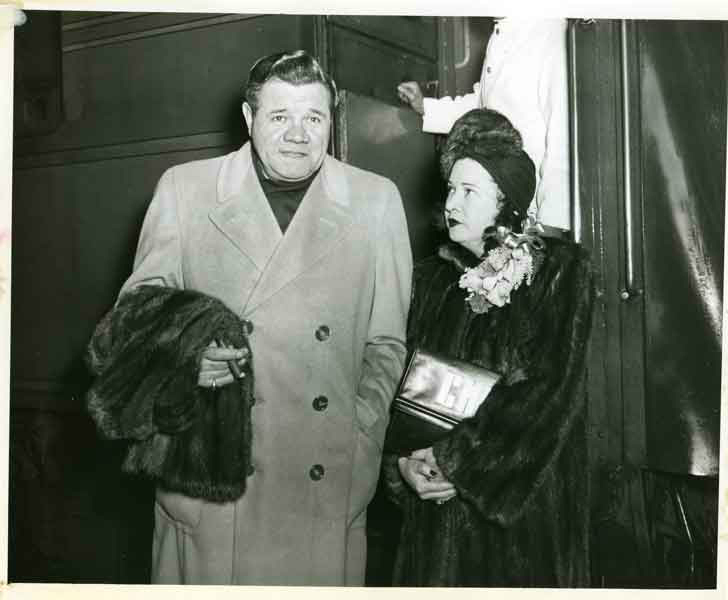
Babe Ruth and his wife Claire.


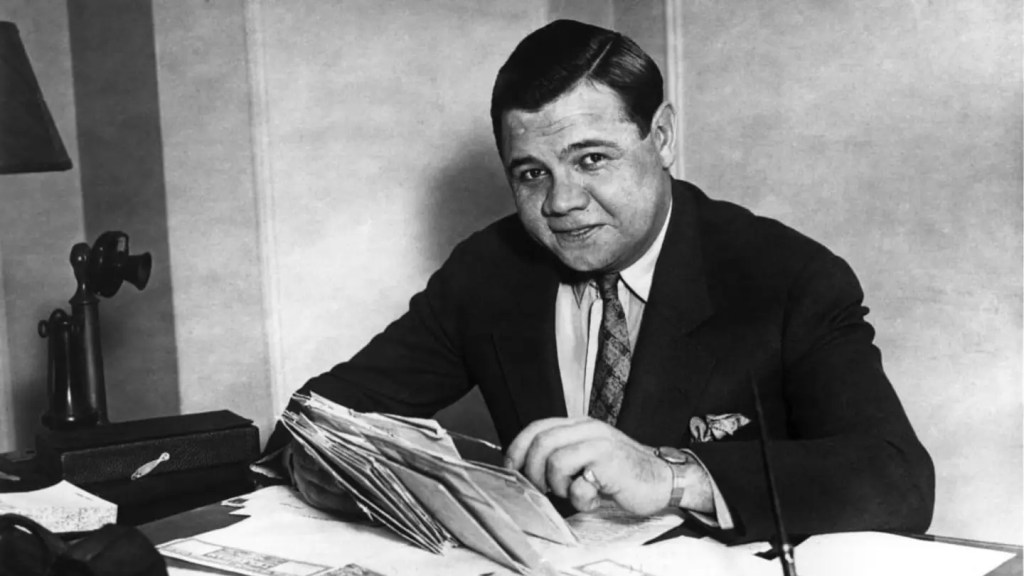
Thousands of telegrams poured in every week from former teammates , sports luminaries (Connie Mack and Jack Dempsey among them), and average everyday fans. Claire read as many of letters as she could out loud to the Babe. On February 6 he celebrated his 52nd birthday in the hospital with Claire, Julia, and their dog, Pal. On February 15, Ruth left the hospital and wept unashamedly as he saw the throngs of admirers gathered outside as he was led to a waiting car. His natty camel’s hair overcoat and matching cap couldn’t hide the fact that Babe Ruth was a shadow of his former self.
Although weak and sickly, Ruth instinctively knew that he was back in the public eye. Extremely conscious of his debt to the “kids of America,” to whose loyal support he attributed his success, Ruth decided to apply himself to child welfare programs after his discharge from the hospital. He was engaged by the Ford Motor Company as a consultant in connection with its participation in the American Legion junior baseball program. In May, 1947, he established and made the first contribution to the Babe Ruth Foundation. Inc., an organization whose name soon became synonymous with youth baseball.

Babe Ruth opening letters & telegrams.
Babe Ruth -
Claire and Babe Ruth in an Indianapolis Taxi Cab.


The ravages of his illness left little of Ruth’s once robust physique. The Babe now appeared gaunt, bent and vulnerable. His once resonant voice reduced to only a rasping whisper. The Mighty Ruth continued to astound his physicians by tackling his new job with all his old-time vigor. “They call me a consultant,” said Ruth, “but I want to tell you that I plan to work hard at this job-just as hard as my health permits. The possibilities are unlimited and I won’t be happy until we have every boy in America between the ages of 6 and 16 wearing a glove and swinging a bat.” He logged more then 50,000 miles in support of the program, appearing on diamonds all over the USA in front of thousands of youths.


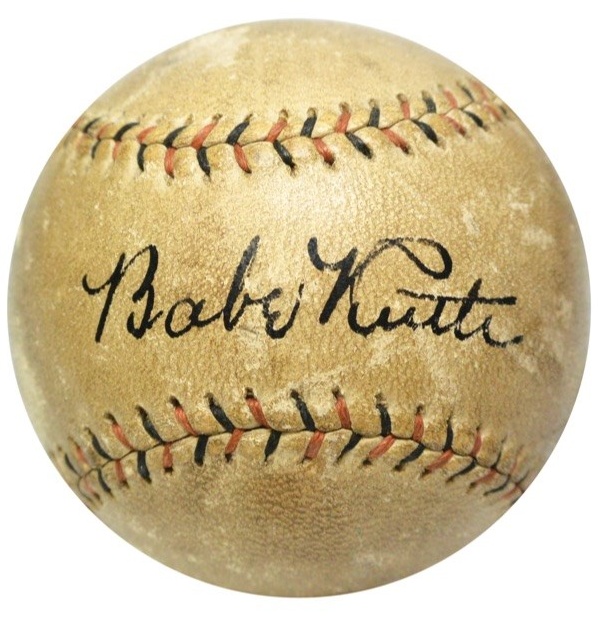
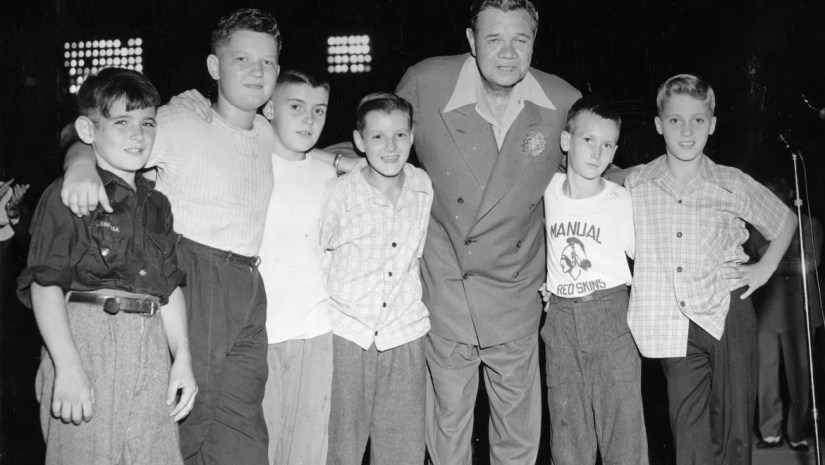
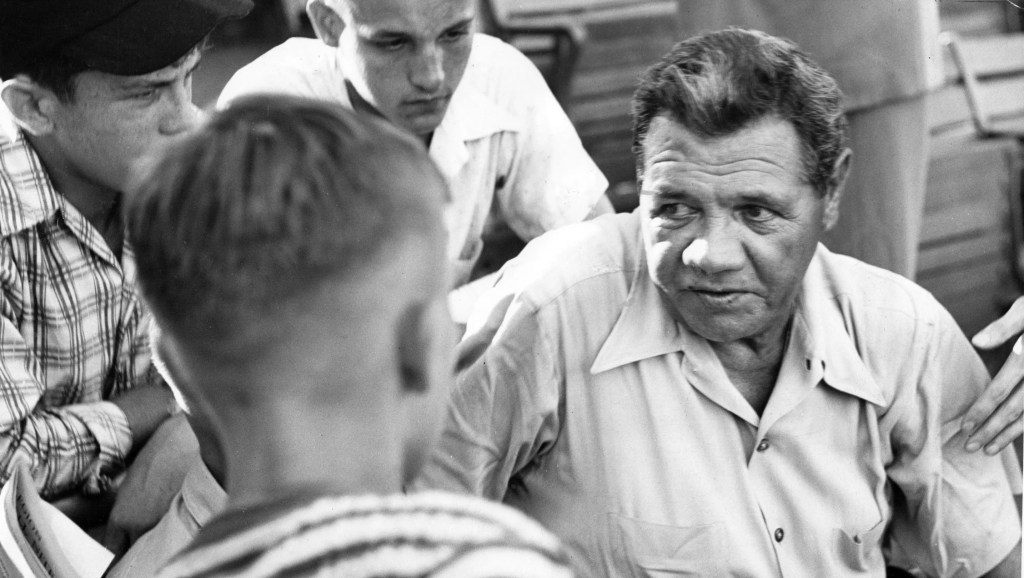
Treatment with an experimental drug beginning in late June improved Ruth’s health tremendously. Throughout that summer of 1947 Ruth became the official ambassador of the American Legion baseball program. One of his stops while on the “American Legion Goodwill Tour” that summer was at the original Victory Field home of the Indianapolis Indians on 16th Street. Ruth appeared at the August 5, 1947 American Legion Junior All-Star game. The Sultan of Swat appeared on the field, shook hands with players and coaches and posed with local youngsters. He signed autographs for the fans and each All-Star player received an autographed baseball from Ruth. Two of the players in that game were future big leaguers Don Zimmer and Jim Frey representing the Robert E. Bentley Post # 50 out of Cincinnati.


The Indianapolis news reported: “Ruth thrilled the crowd when he was introduced during the intermission between the Legion game and the Indianapolis Indians’ game with Milwaukee. Ruth sat through the Legion game and several innings of the Indians game, but his ill health began to take its toll and he had to leave. Earlier in the day, he conducted an hour-long press conference, a pair of radio broadcasts and attended a luncheon in his honor. Once a hefty 278 pounds, Ruth’s weight had dropped to 193. He was coming off an illness that almost cost him his life and had just undergone a blood transfusion three days prior.”

Babe Ruth in Indianapolis with fans. Note the Manual High School Redskins t-shirt on the boy at Ruth’s left side.


The news spoke to one of the kids after the game about meeting the Babe, “His voice was deep and raspy, he coughed quite a bit, but it was the thrill of a lifetime.” said the unnamed player. The young athlete was surprised to see the once robust Ruth in such failing health, but impressed that he would spend time with them. Babe Ruth breezed through Indianapolis like an aging movie star unveiling their star on the Hollywood walk-of-fame. He was gone as fast as he came. It would be nearly 40 years after Ruth’s visit before my dad, Robert E. Hunter Arsenal Tech class of 1954, sat beside me at old Victory Field and dreamily stated, “You know I was here when Babe Ruth came through in 1947. I was selling peanuts here in the grandstands.” Strangely, he could rattle off the names of all those Pittsburgh Pirates minor league players on that team but couldn’t recall much about the Babe’s visit that day.
Ford renewed Ruth’s contract in early 1948, “not only because he was an inspiration to every American boy but because of the excellent results of his efforts last season.” The ex-slugger’s salary was not revealed but Ford announced that it “ranks him high on the list of baseball’s top money-earners.” As long as his strength permitted, Ruth continued to make appearances on behalf of the Junior Baseball program. It was to be only a momentary reprieve. At his last appearance in June 1948, before 16,000 youngsters in St. Louis, he was too weak to wave a bat for photographers.

Babe Ruth in Indianapolis chatting with young fans.


The remaining piece of the tumor was growing, and soon morphine was the only thing that could stop the discomfort. Babe still tried to live his normal life of golf outings and devouring steaks, but now the drives fell far short off the tee and the meat had to be served chopped up for him. Soon even biting down on the white of an egg caused excruciating pain for the once mighty “Sultan of Swat.” Despite the pain, Babe wrote in the closing of his autobiography “The Babe Ruth Story” that hopeful summer of 1947: “I’ve got to stick around a long, long time. For above everything else, I want to be a part of and help the development of the greatest game God ever saw fit to let men invent-Baseball.”

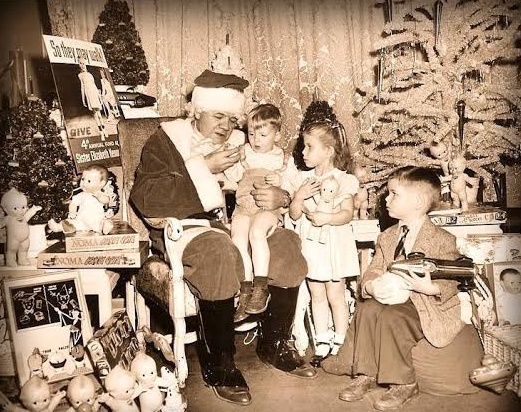
Babe Ruth as Santa Claus with Polio afflicted children December 1947.


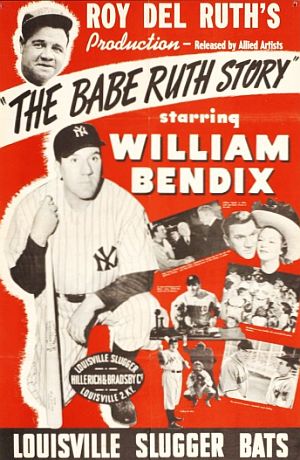
Ruth bravely attended the Dodgers-Yankees World Series that fall and in December dressed up as Santa Claus to entertain young polio victims. Babe may not have known or wanted to believe it, but his own time was growing short. On July 26, the Ruth’s went to the New York City premiere of “The Babe Ruth Story”, but as his daughter Julia Ruth Stevens recalled, “he was so sick and so medicated that I’m not even sure he knew where he was.”

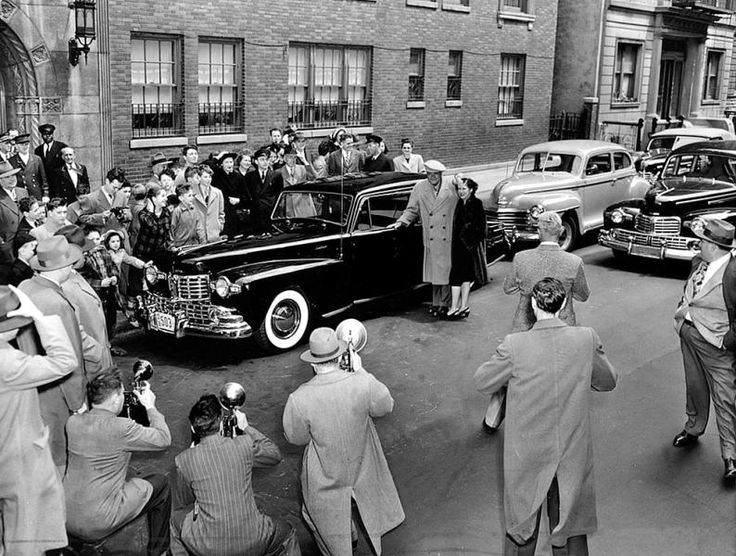
George Herman “Babe” Ruth w/ Walter T. Rowcraft, Lincoln-Mercury District Manager, presents to Babe Ruth, the keys for his new 1948 Ford Lincoln car. The last car the Babe would ever own.


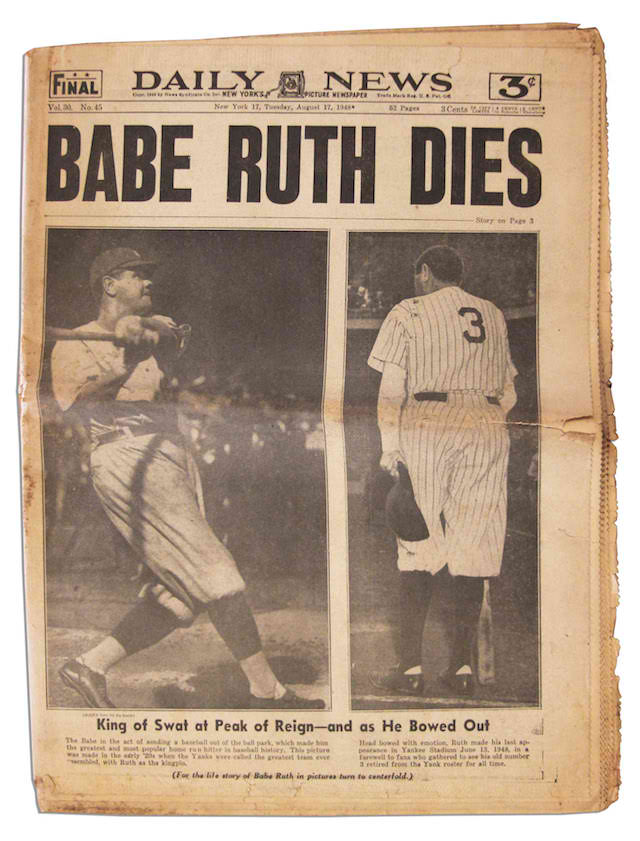
Babe and Claire left shortly after the picture started and checked into Memorial Hospital for the last time. Babe Ruth struggled to answer letters and meet with visitors right up until August 15, 1948, barely a year after he graced the diamond of Victory Field in Indianapolis. Babe Ruth died in his sleep at 8:01 p.m. on the evening of on Aug. 16,1948. His last conscious act was to autograph a copy of his autobiography for one of his nurses. It was only after the great man’s death that the newspapers announced the cause of death as “throat cancer”.


A long line of mourners encircled Yankee Stadium to pay their respects as Ruth’s body lay in state. During the next two-days, more than 100,000 passed his open casket inside the ballpark. They were men, women, and children of all races and ages; from uniformed Little Leaguers to old men in derby hats. The crowd of worshipful mourners rivaled only the display of grief for President Franklin D. Roosevelt in 1945. Vendors sold hot dogs and photographs of the Babe to those waiting their turn in line. As crass as that might sound, the Babe would have loved it.

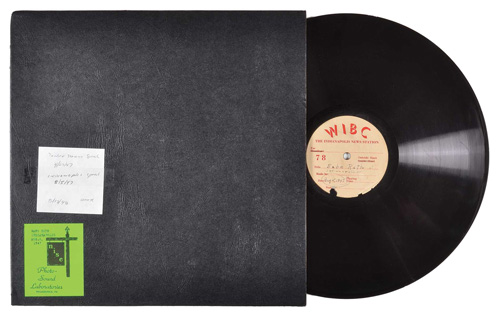
A one-of-a-kind 78 rpm recording of Babe Ruth’s speech in Indianapolis recorded by radio station WIBC surfaced (and was presumably sold) at auction in August of 2018 by REA auction house. The description billed it as the last known recording of Babe Ruth.