


Original publish date: November 1, 2018
Halloween is over and once again, it is time to box up the decorations and compost the jack-o’-lanterns to get ready for the next holiday season. This October I spent some time tracking an old muse from my childhood, George Pogue. Not only is Pogue Indy’s oldest cold case, he is also the Circle City’s oldest ghost story. Over the past few weeks I have re-shared past stories on Pogue’s run and the story of his disappearance. This week I’ll talk about his legacy.
The city of Indianapolis owes George Pogue a debt of gratitude. It was Pogue whom most historians credit as being our city’s first white settler. In 1819 Pogue followed a meandering narrow deerpath paralleling the banks of a pristine little stream that eventually fed into the West Fork of the White River. The Genesis of this once craggy little creek can be found near the intersection of Massachusetts and Ritter avenues on the east side. It spills into the White River south of the Kentucky Avenue bridge in the shadow of Lucas Oil Stadium.

Prior to Pogue’s arrival, native American Indians would often follow Pogue’s Run hunting the wildlife that naturally gathered there. 58-year-old George Pogue, a blacksmith from Connersville, blazed the trail present-day eastsiders know as Brookville Road. Depending on which historian you talk to, on or about March 2, 1819, Pogue built (or occupied) a cabin where Michigan Street currently crosses Pogue’s Run for his family of seven. After Pogue’s mysterious disappearance in April 1821, the creek he followed to arrive in the Whitewater basin became known as Pogue’s Run.
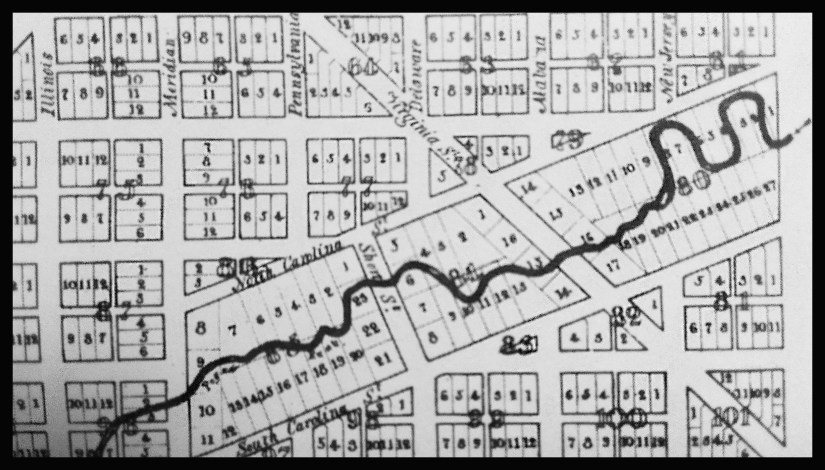
If you Google Alexander Ralston’s original plat map of the city of Indianapolis, you will see Pogue’s run traversing diagonally across the southeast portion of the “Mile Square” area like a giant black snake. Just as Pogue’s mysterious end did not fit the desired narrative put forth by Indianapolis’ founding fathers, Pogue’s run disturbed the orderliness of Ralston’s tidy grid pattern. Before the state government could be moved to Indianapolis from Corydon, fifty dollars was spent to rid swampy Pogue’s Run of the mosquitoes that made it a “source of pestilence”.
Seems that poor old Pogue’s run never had a chance. It was too small to be a canal and too big to be a latrine. So city planners decided that the troublesome trickling waterway needed to be “straight jacketed” once and for all. Pogue’s run was prone to flooding and it had a funky odor hanging over it that wrinkled the tapestry the city’s elite were trying to create. So, beginning in 1914, a year long, million-dollar project variously known as the “Pogue’s Run Drain” and the “Pogue’s Run Improvement” was undertaken to hide the historic waterway. City planners felt that the stream’s submersion beneath downtown Indianapolis (from New York Street on the east side to the White River on the west side) would make the perfect aqueduct to alleviate flooding in the Circle City.
Sounds like a reasonable, viable engineering solution made by concerned public servants to obviate a city eyesore while protecting the citizenry at the same time, right? Well, it may run a little bit deeper than that. A number of factors influenced the decision to “straitjacket” Pogue’s Run, including the economic and human costs from decades of violent flooding, public health risks from diseases, and the stream’s unsightly and unpleasant smell due to years of sewage and industrial pollution. The covering of Pogue’s Run paved the way for the expansion of railroad track elevations, which in turn alleviated congestion on Indianapolis’ busy streets and avenues. It also enabled the city to create Brookside Park in 1898 at the spot where Pogue’s run enters downtown Indianapolis.
Although the legendary waterway now more closely resembles a drainage ditch, make no mistake about it, Pogue’s Run is real. It runs under the city of Indianapolis for nearly two-and-a-half miles, and it’s possible to walk from one end to another. Every underground tunnel presents an irresistible mystery, but Pogue’s Run has a more ghostly history than most. The Pogue’s run tunnels are reportedly home to the spirit of old George Pogue who lords over the dozen or so unfortunate victims of the floods that plagued the city via the waterway for nearly a century before it was covered over.
As detailed in previous articles, one morning George Pogue walked out his front door in search of his lost dog and disappeared forever. He was also trailing a Native American man known as “Wyandotte John” whom he suspected of stealing horses from his farm. Pogue walked over hill and was never seen again. His body was never found. Even though Pogue vanished nearly 200 years ago, his name hits the headlines every few years. It seems that whenever a foundation for a business in downtown Indianapolis is dug and human remains are found, the ghost of George Pogue rises from his unknown grave.
The first widely used cemeteries in Indianapolis didn’t start popping up until long after George Pogue disappeared. While the “City Cemetery”, ironically located on Kentucky Avenue near the White River where George Pogue disappeared, can be traced back to 1821, it was not at all what we would consider a cemetery today. Greenlawn Cemetery was added around 1834 as an 8 acre addition. By 1852 this pioneer cemetery had reached 25 acres and was quickly running out of room. Crown Hill opened in 1864 and Greenlawn quickly fell out of favor. By the 1890s, Greenlawn was gone. In George Pogue’s time, people were often buried where they were found or nearby where they worshiped, worked or lived. Burial records are scarce, wooden markers disintegrate and landmarks disappear. So it is not uncommon for human remains to pop up from time to time even today. So, needless to say, George Pogue does not rest in peace.
When the city of Indianapolis buried their troublesome waterway in 1915, Pogue’s run, like its namesake, disappeared. The trickling little stream is now forever trapped underground. And so is the ghost of George Pogue. Legend claims that Pogue is doomed to walk this underworld purgatory until his remains are found and he is given a proper burial. Pogue leads a small army of ghosts whose souls were lost in the flooding that once plagued the area.
Today, no one thinks much about the creek that runs underneath downtown Indianapolis. True, Hoosiers cling tightly to the White River by naming parks, streets and events in its honor. But unlike other major American cities, the Circle City has very few myths or legends surrounding its chief waterways. That is unless you count the tales of late-night TV host David Letterman and his friends attempting to traverse the central canal via canoe back in the “naptown” days. As a homegrown Hoosier, it has always been a mystery to me why the Pogue’s run waterway has not been more prominently featured in our city’s weird history.
During George Pogue’s era, antebellum times and the years after the Civil War and Reconstruction, flooding was not really a concern in Indianapolis. The Circle City really had no riverfront development to speak of, roads were sparse and unpaved and any excess winter water thaws had plenty of places to go. In past columns I have detailed a few of the many floods that plagued Indy in the years before the Pogue’s run tunnels were created. The Easter Sunday floods in 1913 brought twelve inches of rain in a five day period and the White River crested to 31.5 feet; 19.5 feet above flood stage. No one knows what the true crest was because the city’s measuring equipment and gauges washed away at 29.5 feet. 70,000 cubic feet per second, an amount 50 times greater than normal, sent torrents of water rushing through the city. In Indianapolis, 7000 families lost their homes and over 25 deaths were reported as a result of this flood. Statewide, 200,000 people lost their homes and over 200 lives were lost. More than a few of those bodies were never found and their spirits, like that of its namesake, haunt the Pogue’s run tunnels today.
A couple of Sundays ago I was joined by several Irvington Ghost tour volunteers in a search of the Pogue’s run tunnels. Rhonda and I were joined that day by our daughter Jasmine, friends Elise Remissong and Jada Cox, Kris and Roger Branch, Steve Hunt, Tim Poynter, Christy and Cameron McAbee, Trudy and Steve Rowe and Cindy Adkins. WISH-TV Channel 8 TV’s Joe Melillo also joined us for a pre-Halloween trek in search of the ghost of old George Pogue. The results of our trip can be found on the WISH TV website under Joe’s banner. Joe’s segment captured only a fraction of what took place down there.
That day, the Colts were playing the Buffalo Bills at Lucas oil above us. (the Colts won 37 to 5) Inside the century old pitch-black tunnel the water had slowed to a trickle. The entrance to the Pogue’s run tunnel is hidden in a thickly wooded area within sight of the downtown skyline. The city of Indianapolis maintains Pogue’s run very nicely and has recently constructed a two-story wooden walkway leading down to the tunnel entrance. Upon entering the mouth of the tunnel the original stream can be seen entering the concrete spillway looking much as it has for nearly two centuries.
The concrete walls leading into the tunnel are festooned with spray-painted graffiti indicative of its big city location. The water stream is contained down the center of the trough with dry foot paths on either side. About 100 yards down stream inside the tunnel, a separate parallel tunnel is revealed through large round vents in the walls that are easy to step through. The upper channel is the spillway used for relief of excess water flowing through Pogue’s run when necessary. These walls are also peppered with graffiti as expected. Mostly introspective, sometimes profane, the graffiti is often nonsensical; logical only to whomever placed it there.
There are rats down here along with spiders, snakes and the occasional stranded fish from floods past. There is also evidence that the homeless population of Indianapolis occasionally seek shelter in the tunnels, but most of that evidence gets washed away by the floodwaters on a regular basis. The temperature outside is just above freezing, but it is warm here in the tunnels. So warm that it is easy for our team of urban spelunker’s to feel overdressed. The water can be deep in places depending on the rainfall. The total blackness of the Pogue’s run tunnels cannot be understated. Without the aid of a trusty flashlight or lantern, it is impossible to see your hand held in front of your face.
The ceiling and sidewalls are cracked in places, betraying rushing floodwaters of years gone by. The side tunnels are made of brick and occasionally they branch off the main route to parts unknown. Cell phones are useless in the tunnel; there ain’t no service down here . There are manholes and open grates that I suppose could be accessed to determine one’s location, but thanks to Stephen King’s “It” (and Pennywise the sewer clown) I wouldn’t recommend it. In places, perhaps owing to the day’s Colts Sunday atmosphere, it is possible to hear activity on the streets above including music and conversation. But mostly it is quiet. Occasionally cars passing above make high-pitched traffic sounds that can be confused with the cries of a baby or wounded animal, but the logical mind soon determines the source. Once in a while one of these vehicles will pass directly over a manhole with a thunderous result that echoes through the tunnel and shakes even the most resolute of subterranean urban explorers.
Upon closer examination, evidence remains of those original pre-World War I era tunnels. Brick troughs and well foundations pepper the tunnels as do the rotted remains of wooden trusses and the occasional displaced iron train rail, the presence of which immediately elicits the thought “how did that get down here?” Oddly, there’s not much of an echo down here. The voice carries, but it doesn’t carry far. When the visitor cups the mouth and lets loose a “Hello”, it rolls only a few rods before disappearing into the darkness. But is there anything else down in the old Pogue’s Run tunnels?
As a student of history, I often find myself asking that question. Is there anything else? I rely on a few friends with deeper insight in that department to answer that query. Tim Poynter, founder of the SPIRIT Paranormal team, observed a few spirits lingering in the tunnels of Pogue’s run, “I encountered the spirit of a light-skinned black man dressed in mid 20th century clothing within a few hundred feet of the opening. His attitude seemed to be one of ‘stay back’which is not uncommon. I imagine this was the spirit of a homeless man who passed while living down there in the tunnels.” Intuitive Cindy Adkins echoed Tim’s feelings at the mouth of the tunnel, “I did not see the gentleman until we got into the tunnel. I was not getting a bad feeling at all just that we were invading his space and he did not like that too well.” Cindy would encounter this man further down in the tunnels of Pogue’s run.
WISH-TV Channel 8 TV reporter Joe Melillo segregated three of our number, Cindy Adkins, Christy McAbee and Steve Hunt, deep within the depths of the Pogue’s Run tunnel. Here, light and sound go to die. Joe watched as the trio “spoke” with the dead. Cindy Adkins is a gifted intuitive and the only person I have encountered who has had an actual conversation with a ghost on tape (or EVP). When Joe Melillo turned on his camera, this man’s spirit came out to play.
“The gentleman is over 6 feet tall,” says Cindy. “He told me there was a house fire and his big two-story home was completely engulfed in flames. He told me his family was killed in the fire. His house was near Pogue’s run and he lived down there in the tunnels. He likes it down in the tunnels and he doesn’t want to leave. But while we were down there and Joe was taping, a woman joined us. Her initials were C. L. and I kept getting the date 1964. She was lost down there in the tunnels and said that she died of a drug overdose. Christy, Steve and I managed to clear her spirit and send her on her way to the light. But the man is still down there. He just laughed when I asked him if he wanted to leave too.”
As I write this article, Joe Melillo’s segment has yet to air. His WISH-TV Channel 8 Pogue’s run segment airs on Halloween morning. When asked for his thoughts and impressions on the Pogue’s run adventure, Joe Melillo siad, “I would say the best way to describe the experience for me was stifling… Almost suffocating. Very dense down there and it made me have a headache. Overall I did feel something, but I am more of a history guy so the paranormal things don’t hit me as hard. When we sat with the group of paranormal investigators I was there to document the exercise, but nothing happened to me specifically. I was so ready for someone to touch me or to see a shadow figure, but I got nothing. At least this time. Maybe next time I’ll have better luck.” Yes, Joe, maybe next time. Sounds like the Pogue’s run entities will still be there, waiting for you.

 Some historians argue that Pogue simply moved into an existing cabin that had been built and briefly occupied by Newton “Ute” Perkins. Others claim that John Wesley McCormick accompanied Pogue to Indianapolis from Connersville and deserves to be mentioned as the first settler in the Capitol city. But Perkins moved to Rushville “on account of loneliness” and McCormick settled near Bloomington where he later had a popular state park named in his honor. But for this historian, George Pogue is the man. Why? Because one day, George Pogue simply vanished from the face of the earth.
 One evening at twilight, an Indian brave known as “Wyandotte John”, stopped at the Pogue family cabin asking for food and shelter for the night. Although wary of the request, some of Pogue’s horses had been recently stolen and he was determined to track down the thieves. The Indian had a bad reputation and the rumor was that he had been banished from his own tribe in Ohio for some unknown offense and was now wandering aimlessly among the various Indiana tribes in the area. Wyandotte John had spent the previous winter living rough, but comfortably, in a hollowed out sycamore log perched under a bluff just east of the area that, a decade later, would become the spot where the National Road bridge crossed the White River. On the inside of the log he had fashioned hooks by cutting forks from tree limbs, on which he rested his gun. At the open end of the log near the waterline he built his fire, which kept the wildlife away while heating the enclosure at the same time.
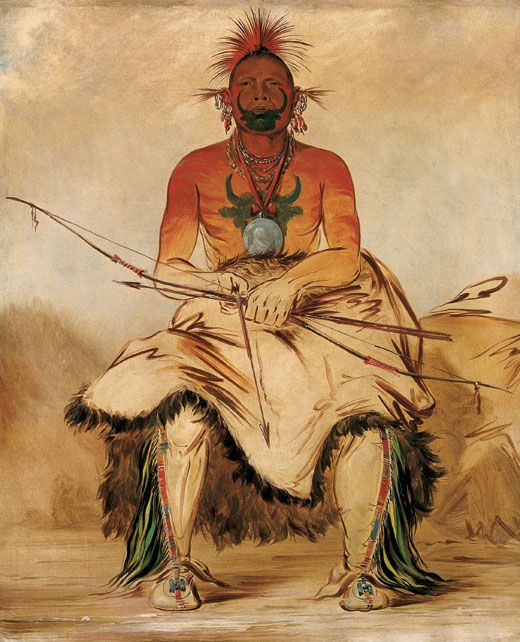 When the Indian left the next morning, Pogue grabbed his gun and his dog and followed as Wyandotte John walked towards the river and the pioneer settlement. Pogue followed for some distance waiting for the Indian to turn towards the native camps, but the Indian kept walking towards the white settlers. The two men disappeared over a rise and George Pogue was never seen or heard from again. The settlers formed a company of armed men to search all the Indian camps within fifty miles of the settlement looking for some trace of Pogue, but his fate remains a mystery to this day. The conclusion is that he was killed by Indians. Locals claimed to have seen his horse and several of his possessions in the hands of local tribes. The dog was purportedly killed, cooked and eaten.
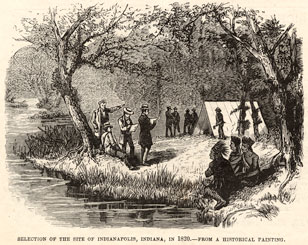 As every Circle City student knows, Indianapolis was laid out in 1815 by Alexander Ralston, an assistant to French architect Pierre L’Enfant, the man who designed Washington D.C. Ralston chose to design the city in a grid pattern, similar to the District of Columbia. There was just one problem; Pogue’s Run. The swampy little creek named after the ghost of an enigmatic city pioneer, called a “source of pestilence” because of all the mosquitoes it attracted, disturbed the orderliness of Ralston’s master plan and required him to make contingencies for it.
 Since much of Pogue’s Run downtown path was diverted underground via hidden tunnels, it is hard for us to imagine today what it must have looked like to the eyes of Indianapolis’ earliest residents. However, the atmosphere of the original waterway was perhaps best captured in an 1840 painting by Jacob Cox. Titled “Pogue’s Run, The Swimming Hole”, this tranquil and pastoral landscape depicts a pair of cows drinking from a stream under a bridge where Pogue’s Run crosses Meridian Street. The image presents a realistic portrayal of the location as it appeared before it became the site where Union Station (which was originally built on pylons over Pogue’s Run) rests today . Although relatively unknown by today’s Circle City denizens, Antebellum Pogue’s Run was the subject of many works of art and poetry by our forefathers.
 Today, as the waterway runs south it most closely resembles its original creek form as it winds through a housing development fronting Massachusetts Avenue and continues through Brookside Park. Skirting the south edge of the Cottage Home neighborhood, between 10th and New York Streets , it disappears into an underground aqueduct. It continues flowing under Banker’s Life Fieldhouse and Lucas Oil Stadium, and empties into the White River at 1900 S. West St. near Kentucky Avenue.
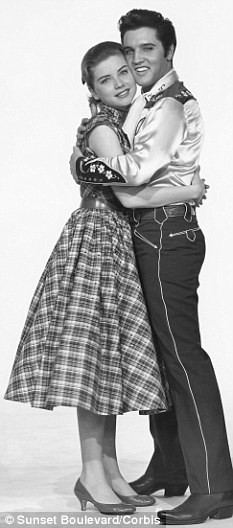

 In 1963, she broke off her engagement and the 25-year-old actress joined the Benedictine Abbey of Regina Laudis in Bethlehem, Connecticut as a Roman Catholic nun. She would ultimately become the Prioress of the Monastery. Legend claims that while on the final leg of a promotional tour for her last movie, “Come Fly with Me” starring Hugh O’Brian, Ms. Hart literally stepped out of a Hollywood limousine and into the abbey.
 In 2012 Benedictine nun Mother Prioress Dolores made a rare foray from her isolated life at the Abbey of Regina Laudis and traveled from her Connecticut home to Hollywood to celebrate an Oscar-nominated HBO documentary film titled, “God Is Bigger Than Elvis”. The film chronicles her life as an actress and a nun, including her close friendship with spurned fiancé, Don Robinson, who never married and who has visited Sister Dolores at the Connecticut monastery faithfully. One of the most touching moments in the film features Robinson and Prioress Dolores casually talking, Robinson referring to Hart as “Mother” while looking, and acting, like a typical elderly married couple. The scene takes on added significance when you realize that Don Robinson died shortly after the film was made, ending a platonic love affair that lasted a half a century.

 Because Pavlick didn’t get near Kennedy on the day he was arrested, the story was not immediate national news. The story of Pavlick’s arrest happened the same day as a terrible airline disaster, known as the TWA Park Slope Plane Crash, in which two commercial planes collided over New York City, killing 134 people (including 6 on the ground). The plane crash story, the worst air disaster in U.S. history up to that time, occupied the national headlines and led the television and radio newscasts.
 On January 27, 1961, a week after Kennedy was inaugurated as the 35th President of the United States, Pavlick was committed to the United States Public Health Service mental hospital in Springfield, Missouri. He was indicted for threatening Kennedy’s life seven weeks later. The case would drag on for years without resolution. Belmont Postmaster Thomas M. Murphy had been promised that he would remain an anonymous informant, but was quickly identified as the tipster by the media. At first he was hailed as a hero and his boss, the Postmaster General, commended his actions. Congress even passed a resolution praising him. But then, fervent right wing publisher William Loeb of the Manchester Union Leader, New Hampshire’s influential state-wide newspaper, began defending Pavlick. Turns out, Loeb held many of the same opinions about Kennedy as the would-be assassin.
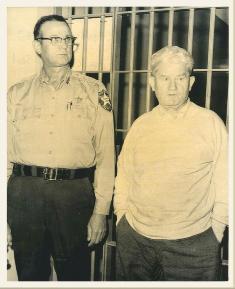 Loeb very publicly protested that Pavlick was being persecuted and denied his sixth amendment right to a speedy trial. Loeb’s newspaper disputed the insanity ruling and insisted the defendant have his day in court. Once the newspaper took up Pavlick’s cause, Murphy and his family began receiving hate mail, death threats and anonymous phone calls at all hours of the day and night accusing him of helping to frame Pavlick and for “railroading an innocent man.” The abuse continued for years after Murphy’s November 14, 2002 death at age 76. Even today, the surviving Murphy children are targeted by right-wing groups whenever the case gets a new round of public attention.
 In today’s 24-hour-a-day, scandal-driven media environment, it is hard to believe that an incident of this magnitude would go unnoticed. Or would it? Sure, we all know about the very public assassination threats and attempts once they are out in the open. But what about those threats that are never reported? In Pavlick’s case, the public learned about it from the would-be assassin himself. He was proud of his plans and, after capture, boasted about it to anyone that came within earshot. The answer can be found in the name of the organization protecting the President: The Secret Service is, well, secret.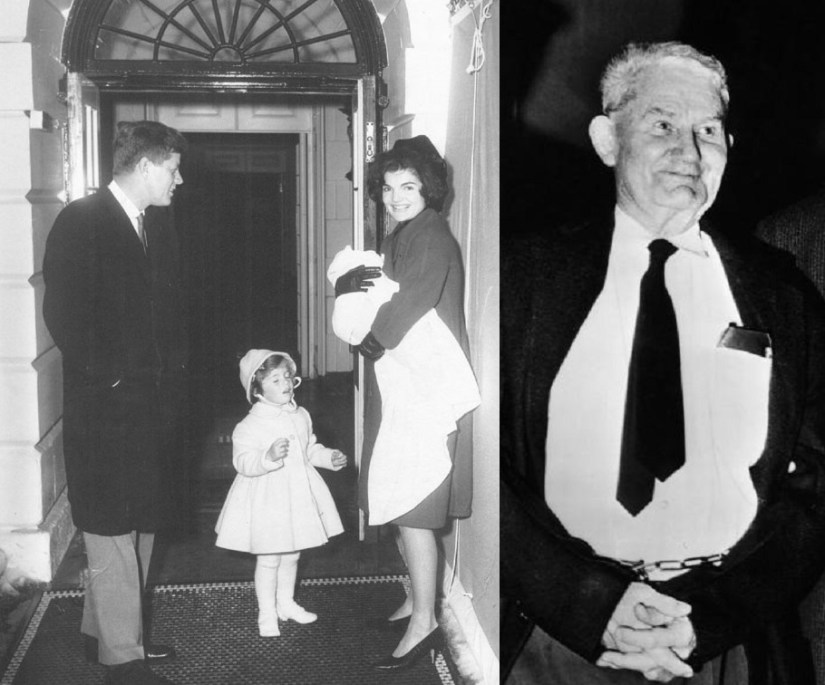
 nowhere. He lived alone and had no family to speak of. Locals in his hometown of Belmont remember him for his angry political rants and public outbursts at local public meetings. After accusing the town of poisoning his water, Pavlick once confronted the local water company supervisor with a gun, which was then promptly confiscated. His central complaint was that the American flag was not being displayed appropriately. He often criticized the government and blamed most of the country’s problems on the Catholics. But the perpetually grumpy, prune-faced Pavlick focused most of his anger on the Kennedy family and their “undeserved” wealth.
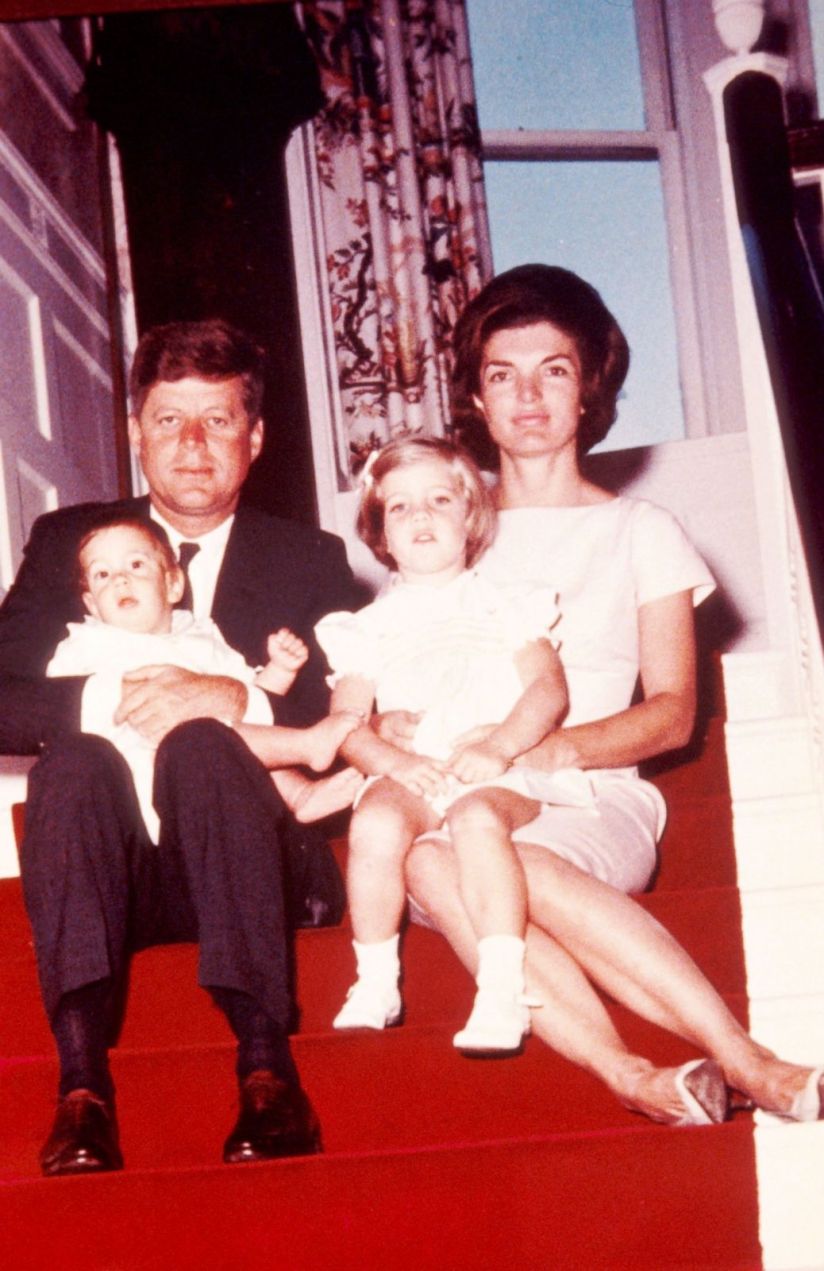
 Luckily for Mr. Kennedy, fate stepped in to save the day… and the President-elect’s life. Kennedy did not leave his house alone that morning. Much to Pavlick’s surprise, JFK opened the door holding the hand of his 3-year-old daughter Caroline alongside his wife, Jacqueline who was holding the couple’s newborn son John, Jr., less than a month old. While Pavlick hated John F. Kennedy, he hadn’t signed up to kill Kennedy’s family. So Pavlick eased his itchy trigger-finger off the detonator switch and let the Kennedy limousine glide harmlessly past his car. No one realized that the beat-up old Buick and the white haired old man in it was literally a ticking time bomb. Pavlick glared at the car as it slipped away and decided he would try again another day. Luckily, he never got a second chance.
 Alan E. Hunter