
Original publish date: November 7, 2019
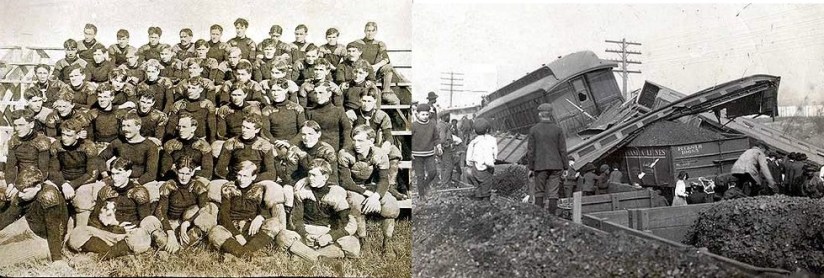
On Halloween of 1903, nearly 600 Purdue fans and players were traveling to Washington Park on Indy’s eastside for the Boilermaker’s annual in-state football rivalry game against Indiana University. On that frosty morning, the boisterous Boiler fans filled 14 train coaches to overflowing. The trains never arrived and the game was never played.
A misplaced message from a telegraph operator triggered a fatal train wreck. A train dispatcher failed to inform a coal train that two trains were hurtling down the main line towards disaster. Fifty-nine miles away from its Big Four railroad depot departure point, the train rounded a curve at 18th and Gray near the Mill Street Power House and crashed into a line of steel coal cars that were backing down the track. The first four coaches were shattered; the second car, containing the team, was split in half. According to the 2002 book, “A University of Tradition: The Spirit of Purdue”, “The floor was driven beneath the gondola and the roof fell across the top of another. Bodies were everywhere … players hung from wooden beams and slowly slipped into puddles of blood. Clothing, footballs, padded jerseys and pennants tied to canes were all strewn along the track.”
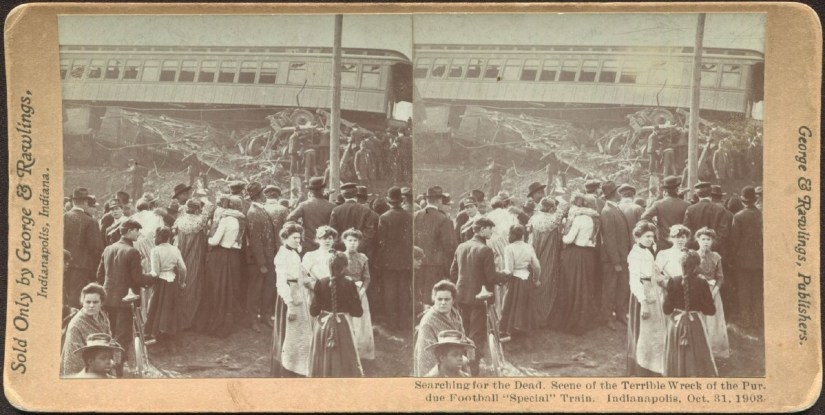 A total of 17 people died immediately, including 13 players, a coach, a trainer, a student manager and a booster. One member of the team miraculously landed on his feet and was unharmed after being thrown out a window. All the casualties were limited to the team’s railcar. Twenty-nine more players were hospitalized, several of whom suffered crippling injuries that would last the rest of their lives. Further tragedy was averted when several people, led by the “John Purdue Special” brakeman, ran up the track to slow down the second special train that was following 10 minutes behind the first. This heroic action undoubtedly saved many lives by preventing another train wreck. One of the survivors of the wreck was Purdue University President Winthrop E. Stone who remained on the scene to comfort the injured and dying.
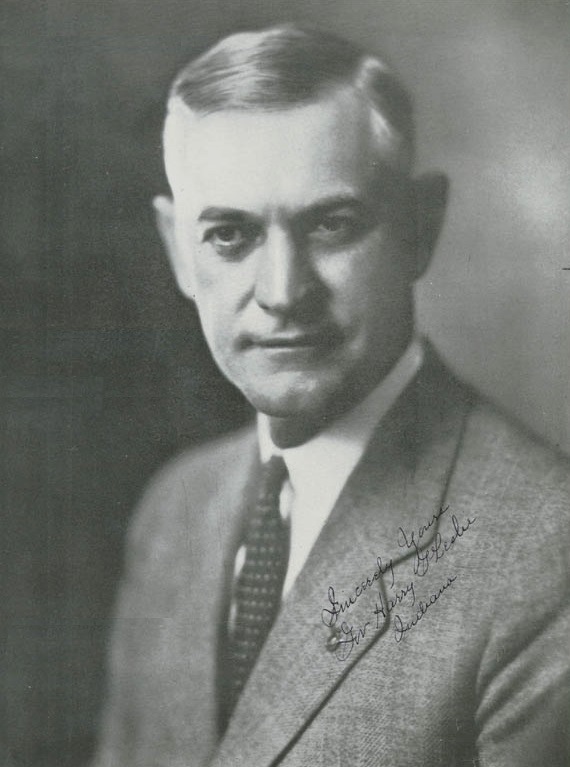
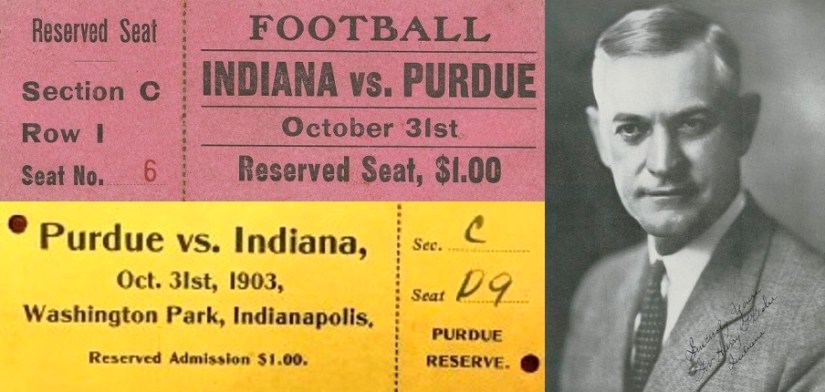 Walter Bailey, a reserve player from New Richmond, was grievously injured but refused aid so that others could be helped before him. Bailey would die a month later at the hospital from complications from his injuries and massive blood loss. Purdue team Captain Harry “Skeets” Leslie was found with ghastly wounds and covered up for dead. His body was transported to the morgue with the others. Leslie would later be upgraded to “alive” when, while his body lay on a cold slab at the morgue, someone noticed his right arm move slightly and he was found to have a faint pulse. Skeets was clinging to life for several weeks and needed several operations before he was out of the woods. Leslie would later go on to become the state of Indiana’s 33rd governor, the only Purdue graduate to ever hold that office. As a reminder of that Halloween train disaster, Skeets would walk with a limp for the rest of his life.
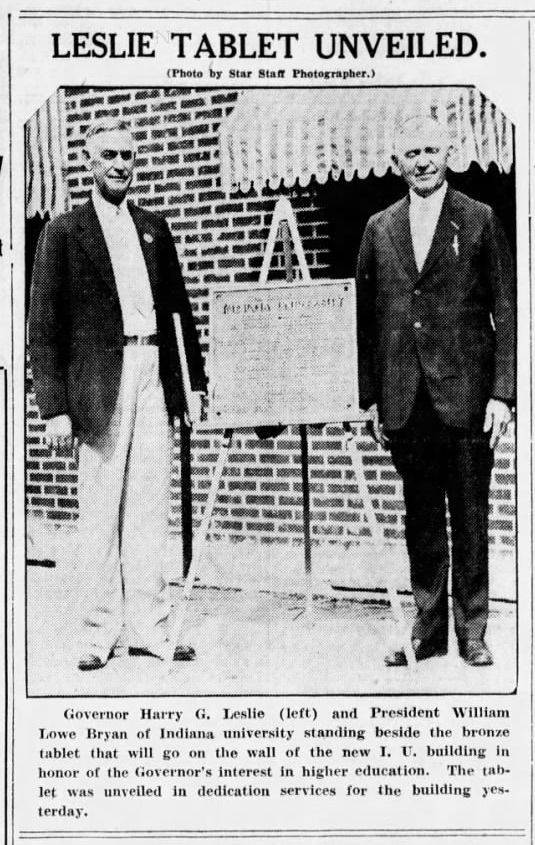
Harry G. Leslie may be the perfect model of what a Purdue graduate aspires to achieve. Born in West Lafayette, on April 6, 1878, he grew up in the Hoosier countryside, his father serving as chief of police for the town for awhile. He attended public schools and worked delivering groceries as a teenager. In 1898 he was elected town clerk at the age of 20, a year after he graduated high school. He soon enrolled in the recently constructed Purdue University where he was made captain of both the school’s football and baseball teams. His personal story of survival from the Purdue train wreck disaster received statewide acclaim and made him a folk hero.
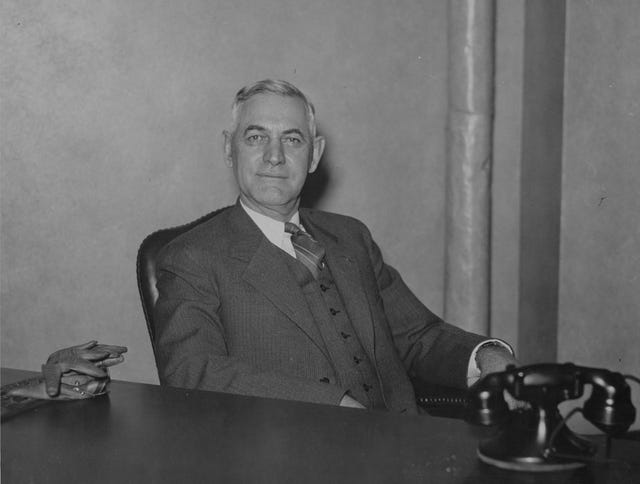
In 1904, Leslie returned to school and founded the Purdue College Republicans before he graduated. Leslie graduated from the Indiana Law School (now the Indiana University Robert H. McKinney School of Law) in 1907 and opened a law office in Lafayette that same year. In 1923 Leslie was elected to the Indiana House of Representatives where he became known for his down-to-earth style of speaking. He was elected Speaker of the House, and remained in that position until he left the body. His term as Speaker was dominated by the Indiana Ku Klux Klan. Their leader, D.C. Stephenson, was arrested and convicted of rape and murder in 1925.
Over the next two years many other Klansman were exposed and forced out of office-including nearly half the members of the General Assembly. The Klan had tacitly supported Leslie in his bid for the speakership primarily because they opposed his rival candidate. However, Skeets fought the KKK on several issues and was pleased with the Grand Dragon’s conviction and the collapse of the Klan. Among the causes Leslie championed during this time in the Legislature was the creation of Riley Children’s Hospital.
Leslie ran for the governor’s nomination in the 1928 Republican primary and won on the fifth ballot. Leslie was elected with 51.3% if the vote, making him the state’s fifth consecutive Republican governor. The beginning of Leslie’s term was a period of economic growth for the city and state and he hosted several high-profile events; the National Governors Association and visits by President Herbert Hoover and aviator Charles Lindbergh. Then, nearly 26 years to the day after the Purdue trainwreck that almost ended his life, the Great Depression began on Halloween of 1929, threatening his Governorship.

The stock market crash caused widespread economic failure resulting in factory shutdowns all around Indiana. Unemployment and poverty began in the urban regions and quickly spread to the rural communities. The decreased purchasing power and resulting decreased consumption struck the agriculture industry hard. This was complicated by a statewide drought. For the most part, Governor Leslie did nothing significant believing that the Depression would soon end. In 1932 he vetoed relief legislation passed by the General Assembly which would have been Indiana’s first old-age pension act. As the Depression continued, Leslie began hiring unemployed workers to work on state road projects. He also advocated that his program be duplicated by the federal government, and his plan was soon implemented as the WPA. Among Leslie’s other projects was continuing to grow the state park system. Leslie died unexpectedly from heart disease on December 10, 1937.
The shock of the Purdue Halloween train disaster not only rocked Purdue, but I.U. as well. The intense rivalry was pushed entirely aside as the Indiana University team arrived on scene a few minutes after the wreck to assist in the work of rescue and caring for the injured. I.U. faculty members paid tribute to the fallen Purdue footballers in an open letter as “honorable and friendly rivals, not our enemies,” and likened their shock at Purdue’s loss as “to brothers who have lost the comrades of their day’s work.”
Naturally, the game was cancelled, as was the remainder of Purdue’s season. Many of those killed and injured were among the best men on the Purdue squad and the accident effectively wiped out the entire team. Although Boilermakers all, kids from all over Indiana died that day. From Butler, Veedersburg, Lafayette, Lawrenceburg, Huntington, Noblesville, Indiana Harbor, Spencer, New Richmond, Indianapolis and a few from out of state. Distraught fans speculated that Purdue may never have a football team again. Most fans thought it might take almost two seasons before a team could be put together again.
The Boilermakers would not take the field again until September 17, 1904 in an exhibition game. The first official game was against Indiana and played in Indianapolis on November 12, 1904. Purdue won 27-0. Purdue stunned everyone by going 9-3 in 1904, including a win over traditional powerhouse Notre Dame 36-0, capping a very successful comeback season for the Boilers. Since then, Purdue & I.U. have alternated every game on their respective campuses and have not played a neutral site game since.
Although the section of railroad that witnessed the tragedy no longer exists, traces of the rail bed at the accident site can still be seen in satellite photos. Google Earth shows that, from the northwest, the rail bed passes through Riverside Golf Course and crosses the White River near North White River Parkway East Drive and Rivershore Place. The rail bed continues southeast between Burton Street and the Central Canal Trail, then crosses to the east side of the canal at Fall Creek Parkway North Drive, continuing southeast onto the property of the Republic Waste Services facility.
In today’s Indianapolis, the crash site would be at the intersection of W. 21st and Senate Blvd not far from where the Crispus Attucks museum now stands (between Attucks and I-65). The actual site of the wreck on the original Big 4 route is now mostly buried underneath the sprawling Indiana University Health Methodist Hospital complex. The present-day accident site is bounded on the north by West 21st Street, on the south by West 16th Street, on the east by Senate Boulevard, and on the west by West Dr. Martin Luther King Jr. Street, West 18th Street, and Mill Street. Prominent landmarks include I.U. Methodist Hospital to the east, the Peerless Pump factory to the north, and an electrical substation on the site of the former Mill Street Power House.
For you present day urban explorers, after crossing West Dr. Martin Luther King Jr. Street just south of the entrance to the Peerless Pump factory, the rail bed passes between the factory grounds and the electrical substation. There you will find the deadly right turn to the south that continues until reaching Interstate 65. Beyond this point, the rail bed is no longer visible, being covered by the interstate and the west lawn of Methodist Hospital along Senate Boulevard. A map of Indianapolis from 1916 shows the tracks continued south across West 16th Street at Lafayette Street, then along Lafayette Street into the downtown area to Union Station.
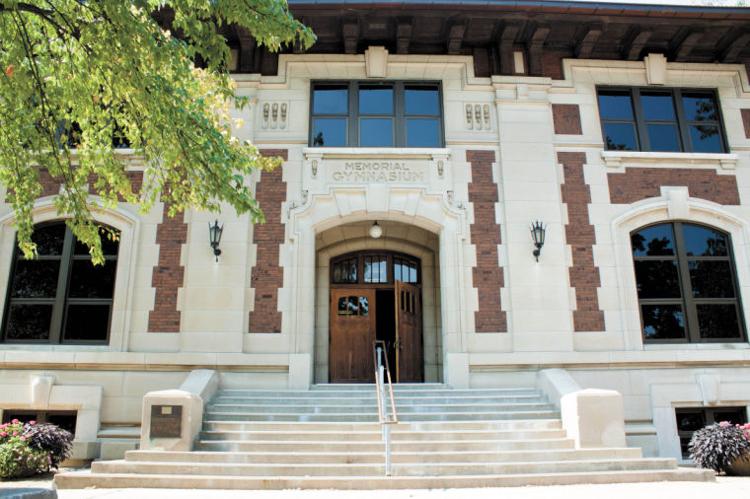
If you are looking for traces of the team on the Purdue campus, the school’s Memorial Gymnasium is the best place to start. The gym was built to pay tribute to those who died as a result of the collision. A combination of $5 donations from every senior of the 1903 class and many donations from supportive alumni and partners raised the $88,000 it took to build the gymnasium which was completed in 1909.The plaque outside the memorial states “the appalling event is still considered the worst tragedy in the University’s history.” There are 17 steps-one for each person who died-leading up to the entrance of the building. Although, the building is now home to the computer sciences department, the original entrance still remains, as does the memory of those who died.
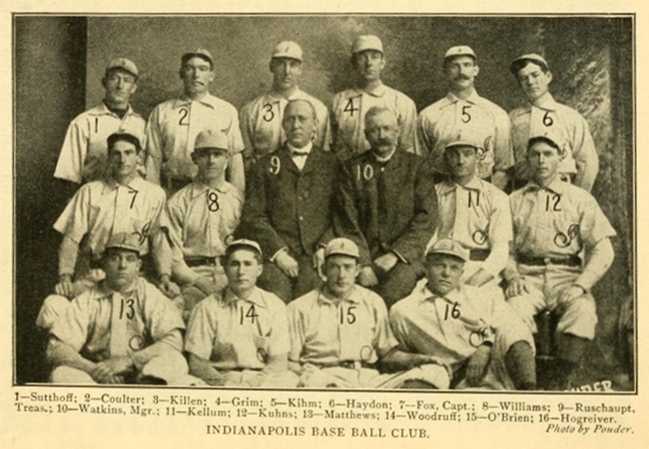
 The train was traveling on what would have been the 101st birthday of school founder and namesake John Purdue (born October 31, 1802). Purdue, a wealthy landowner, politician, educator and merchant, was the primary benefactor of the University. In 1903, if you wanted to get to Indianapolis from either school, you had three choices: ride a horse and buggy, walk or take the train. Since these were the days before automobile travel was popular, train travel was the most widely accepted form of transportation.
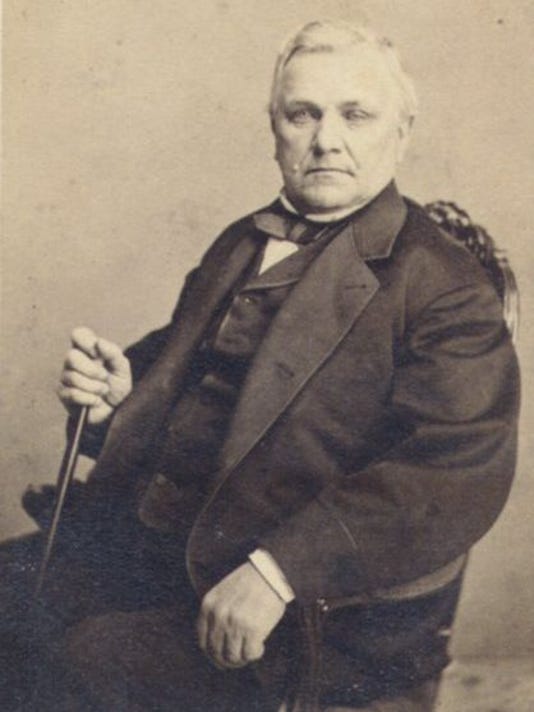
 Unlike the raucous fans traveling in the 13 plush, modern streamliner train coaches behind them, the Boilermakers team traveled in relative silence, focusing on the task at hand, mentally preparing for their upcoming rivalry game in the cozy confines of an older wooden train car. Unfortunately, the athletes had no idea that a minor mistake would lead to a major disaster. Railroad protocol specified that “Special” trains operate independent of the regular schedule. Timing was everything in the railroad game.
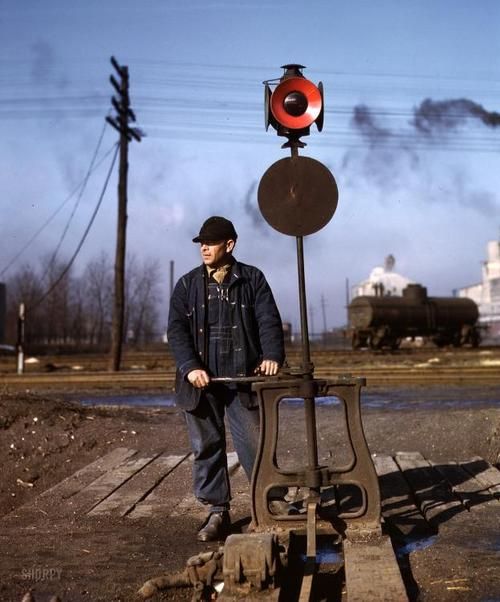
 The Indianapolis star reported, “The trains came together with a great crash, which wrecked three of the passenger coaches, in addition to the engine and tender of the special train and two or three of the coal cars. The first coach on the special train was reduced to splinters. The second coach was thrown down a fifteen-foot embankment into the gravel pit and the third coach was thrown from the track to the west-side and badly wrecked. The coal cars plowed their way into the engine and demolished it completely. The coal tender was tossed to the side and turned over. A wild effort on the part of the imprisoned passengers to escape from the wrecked car followed the crash. Immediately following the wreck the students and the others turned their attention to the work of rescuing the injured, and by the time the first ambulances arrived many of the dead and suffering young men had been carried out and placed on the grass on both sides of the track.”
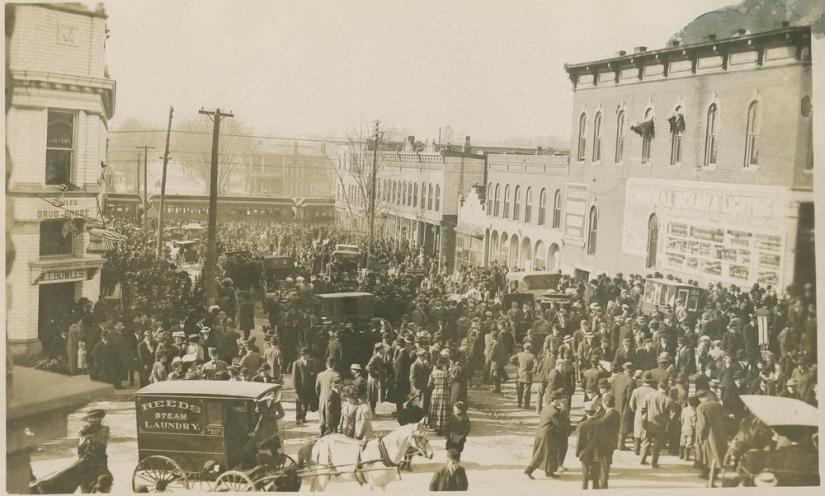 The fans at the rear of the train were unaware of what happened and only felt a slight jolt as the train came to a sudden stop. These rearmost passengers wasted no time in coming to the assistance of the victims up ahead. The erstwhile revelers skidded to a stop at the scene of carnage and were horrified at the devastation before them. Acts of unselfish action made heroes out of athletes and ordinary people alike.
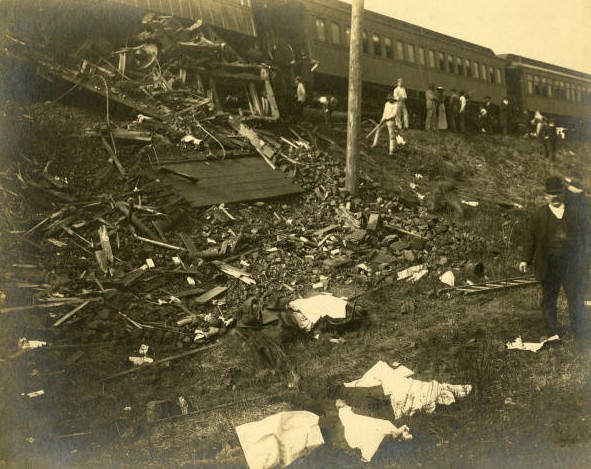 Seventeen passengers in the first coach were killed. Thirteen of the dead were members of the Purdue football team. Walter Bailey, a reserve player from New Richmond, although grievously injured, refused aid so that others could be helped. Team Captain Skeets Leslie was covered up for dead, his body transported to the morgue with the others. It was the first catastrophe to hit a major college sports team in the history of this country. The affects would be felt for decades to come and one of those players would rise from the dead, shake off accusations of association with Irvington KKK leader D.C. Stephenson, and lead his state and country through the Great Depression.
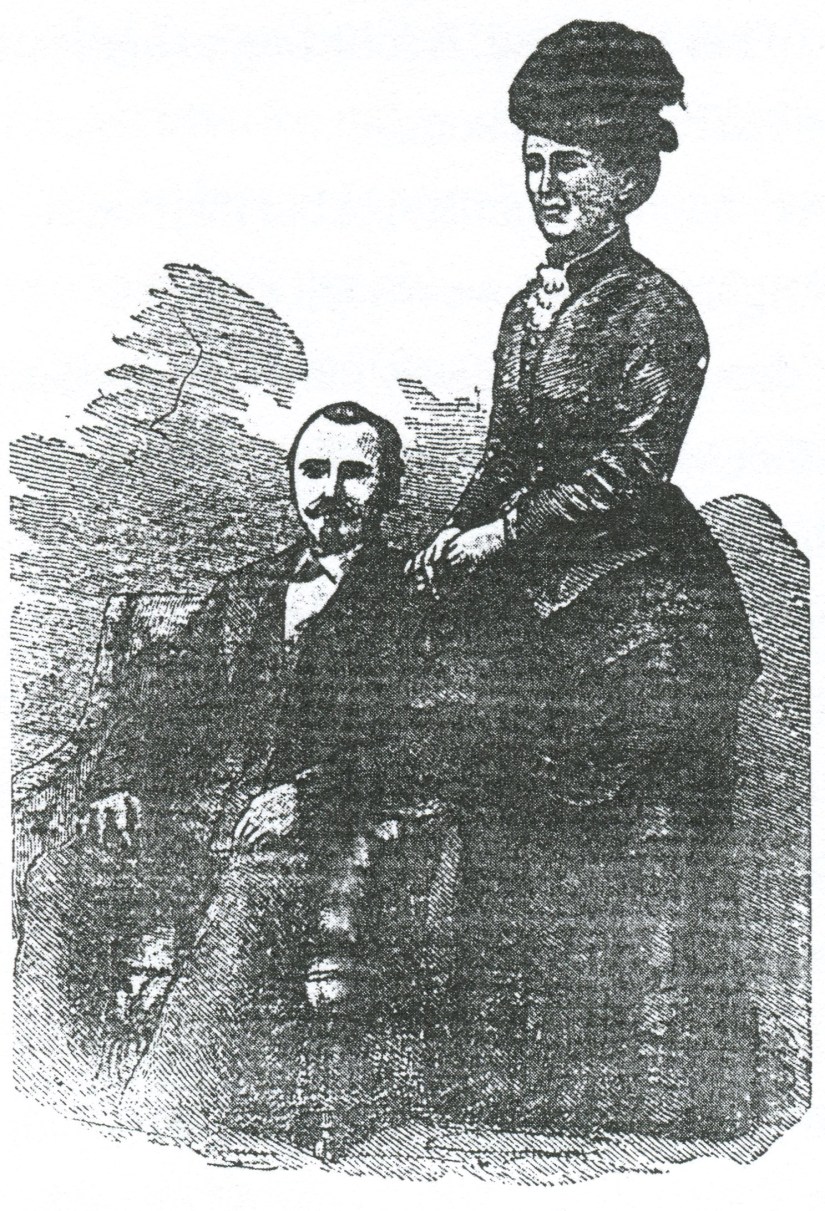
 If he was fearful, Joseph Brown did not show it as he sat down for what would be his last meal. At 5:30 PM, Mary Brown sent her two older children to the Smith’s, neighbors whose home was frequently visited by Wade, the children and Mary Brown. Mary instructed the children that she would come to get them after dinner and that Wade would play fiddle that evening to entertain at the Smith home. During the course of the evening, Wade asked Brown to borrow his buggy. He stated that he wanted to sell a horse to Irvington’s Dr. long. Brown agreed. As dinner ended, Brown went into the front yard to work on an ax handle. Wade was hitching the horse to the buggy.
 The investigation by Coroner George Wishard, namesake of today’s Wishard Hospital, was thorough and damning to Wade. During his investigation at the Brown farm, Wishard “found a board, probably a small kneading tray, hidden away under the shed… Which is bespattered with blood.” Signs of a violent struggle and blood were found in the yard. The mountain of evidence was building against Wade. But did he act alone? Or was “Bloody Mary” Brown, as one of the contemporary newspapers dubbed her, more involved than she claimed?
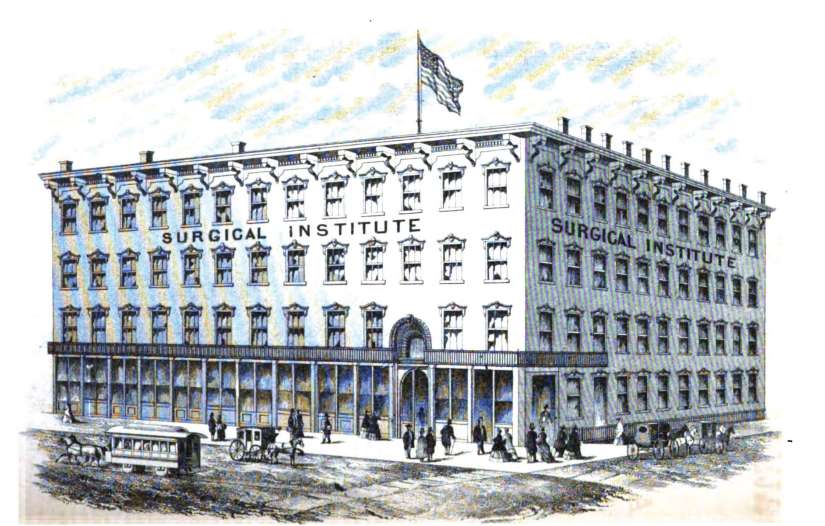

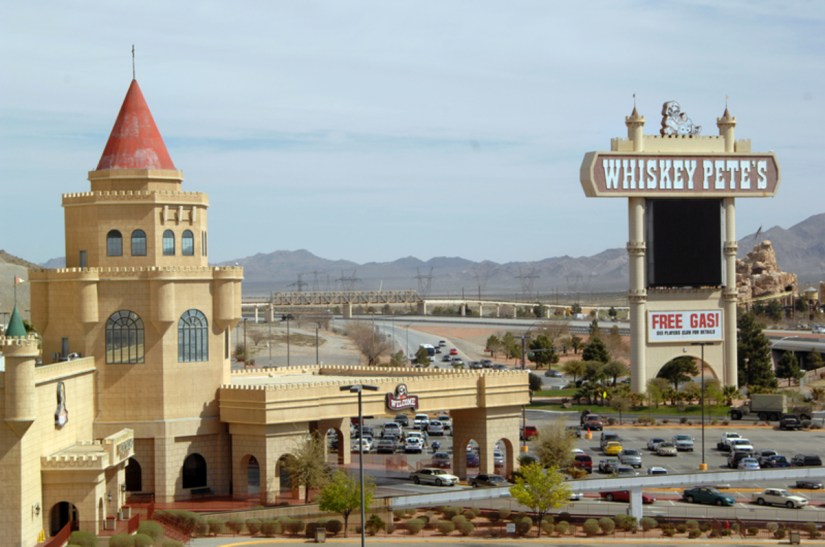 One of those “must see” old timey casinos is located about 30 miles southwest of the Vegas strip in a desert town called Primm, Nevada not far from the California border. Known as “Whiskey Pete’s”, the casino covers 35,000 square feet, has 777 rooms, a large swimming pool, gift shop and four restaurants. The casino is named after gas station owner Pete MacIntyre. “Whiskey Pete” had a difficult time making ends meet selling gas, so he resorted to bootlegging and an idea was born. When Whiskey Pete died in 1933, he was secretly buried standing up with a bottle of whiskey in his hands so he could watch over the area. Decades later, his unmarked grave was accidentally exhumed by workers building a connecting bridge from Whiskey Pete’s to Buffalo Bill’s (on the other side of I-15). According to legend, the body was reburied in one of the caves where Pete once cooked up his moonshine.
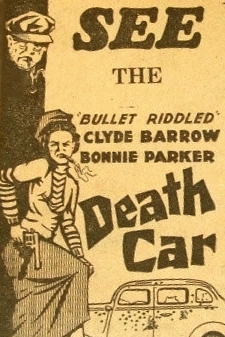
 Oh, I forgot to mention that Whiskey Pete’s is also home to the Bonnie and Clyde death car. As detailed in part III of this series, the car has had a long strange trip to Primm. The bullet-ridden car toured carnivals, amusement parks, flea markets, and state fairs for decades before being permanently parked on the plush carpet between the main cashier cage and a lifesize caged effigy of Whiskey Pete himself. According to the “Roadside America” website, “For a time it was in the Museum of Antique Autos in Princeton, Massachusetts, then in the 1970s it was at a Nevada race track where people could sit in it for a dollar. A decade later it was in a Las Vegas car museum; a decade after that it was in a casino near the California / Nevada state line. It was then moved to a different casino on the other side of the freeway, then it went on tour to other casinos in Iowa, Missouri, and northern Nevada.
 Complicating matters was the existence of at least a half-dozen fake Death Cars and the Death Car from the 1967 Bonnie and Clyde movie (which was in Louisiana and then Washington, DC, but now is in Tennessee).” Just in case of any remaining confusion, the Primm car is accompanied by a bullet riddled sign reading: “Yes, this is the original, authentic Bonnie and Clyde death car” (in all caps for emphasis).

 The walls surrounding the death car are festooned with authentic newspapers detailing the outlaw lover’s demise and letters vouching to the vehicle’s authenticity. Cases contain other Bonnie and Clyde relics like a belt given by Clyde to his sister and classic candid photos of the star-crossed lovers and their families.
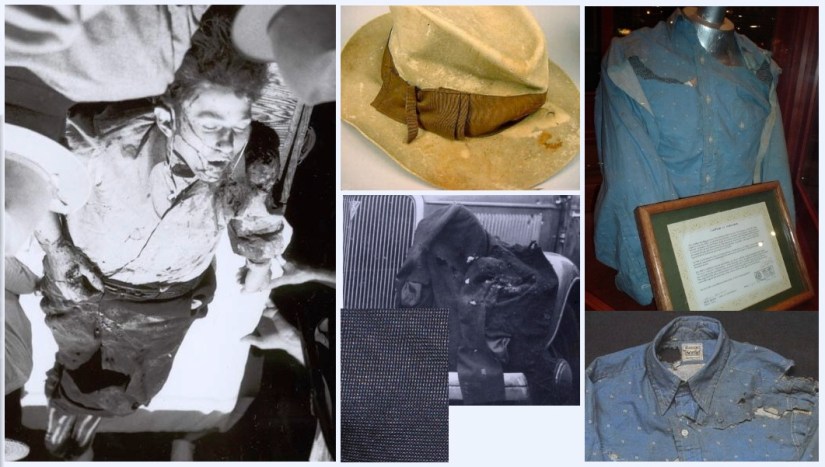 A movie, obviously created many years ago, recreates the event using newsreel footage, landscape photography and contemporary interviews with family members and eyewitnesses. Here, it is revealed that the shirt was found, decades after the outlaw’s death, secreted away in a sealed metal box along with Clyde’s hat. The film itself has become a piece of Americana and the images of Bonnie’s torn and tattered body left twitching in the car, resting silently mere yards away, are equally breathtaking. Nearby, although not nearly as shocking as the Bonnie and Clyde death car, another bullet-scarred automobile is on display. This one first belonged to gangster Dutch Schultz and later, Al Capone. Signs around the car proclaim that the doors are filled with lead and, judging by the pockmarks of the bullets denting the exterior, it is true. Although, like every casino, Whiskey Pete’s job remains separating gamblers from their money, both cars are on display 24 hours a day for free.
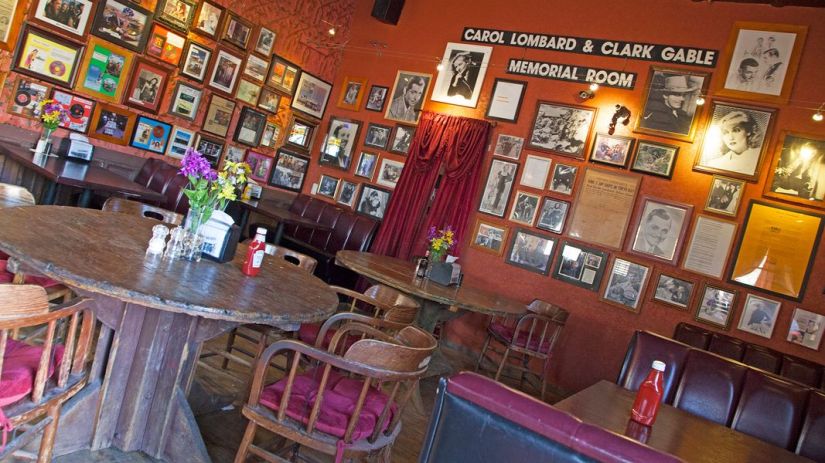 The interior of the Pioneer Saloon remains unchanged. It is easy to imagine Gone with the Wind star Gable drowning his sorrows at a rickety table or bracing himself against the cowboy bar and it’s brass boot rail. Ask and the bartender will point out the cigarette burn holes in the bar caused by Gable when he passed out from a mixture of grief and alcohol during his somber vigil. The tin ceiling remains as do the ancient celing fans (it gets HOT in the desert) and the walls are peppered with bullet holes left by cowboys who rode off into the sunset generations ago. The bar’s backroom is a shrine to the Lombard / Gable tragedy but sadly most of the relics on display there are modern photocopies and recreations. Locals claim that Carole Lombard’s ghost haunts the saloon in a desperate attempt to contact her grieving husband. The saloon is also reportedly haunted by the ghost of an old “Miner 49er” who appears drinking alone at the far end of the bar before vanishing into thin air. Millennials flock to the bar as the birthplace of the game “Fallout: New Vegas” which also has a small shrine located there.
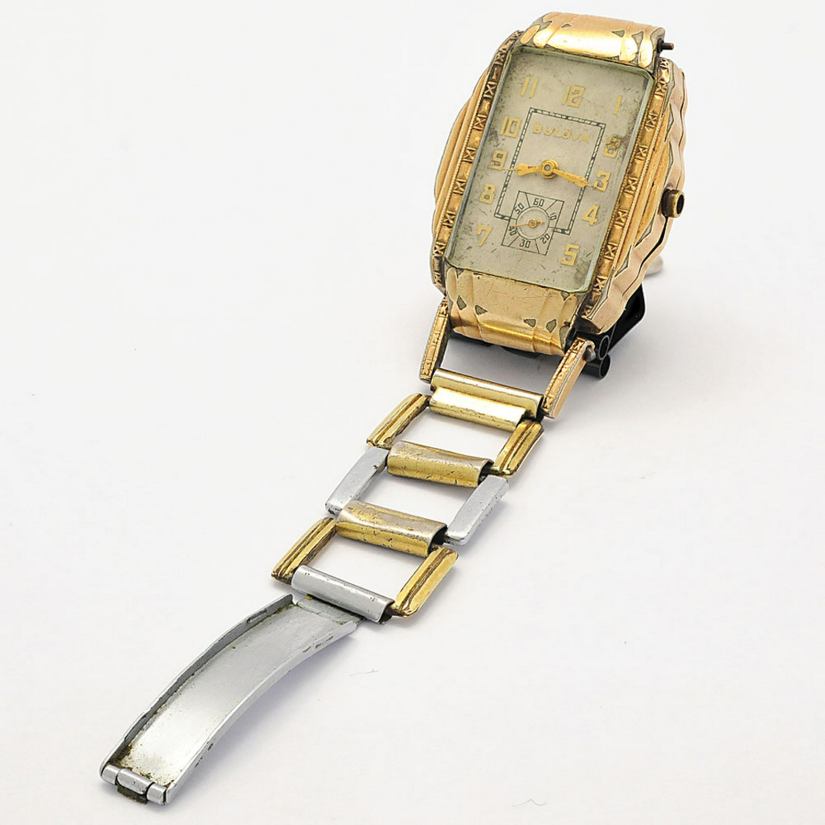

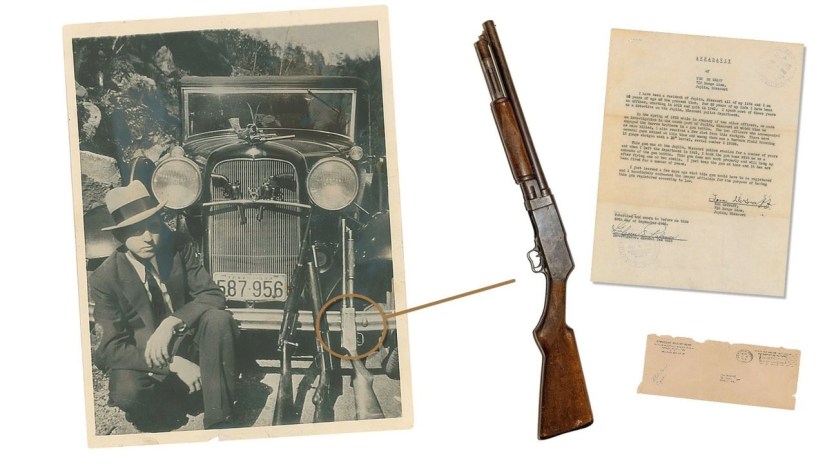


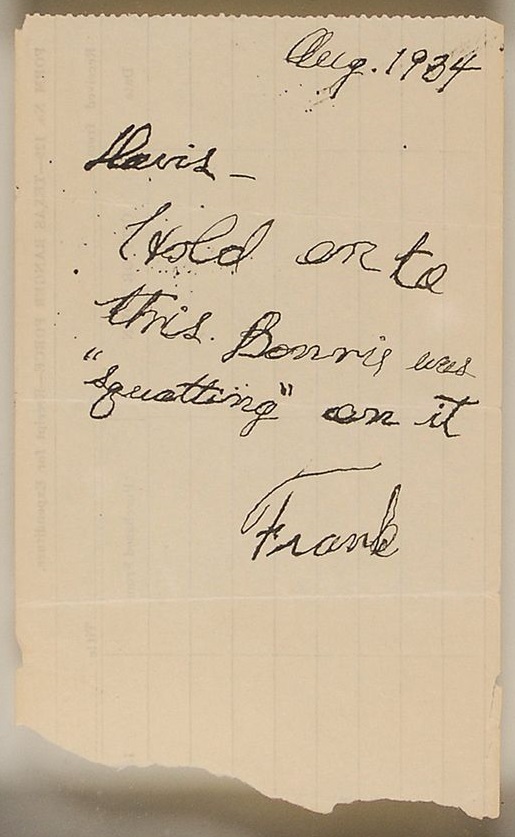


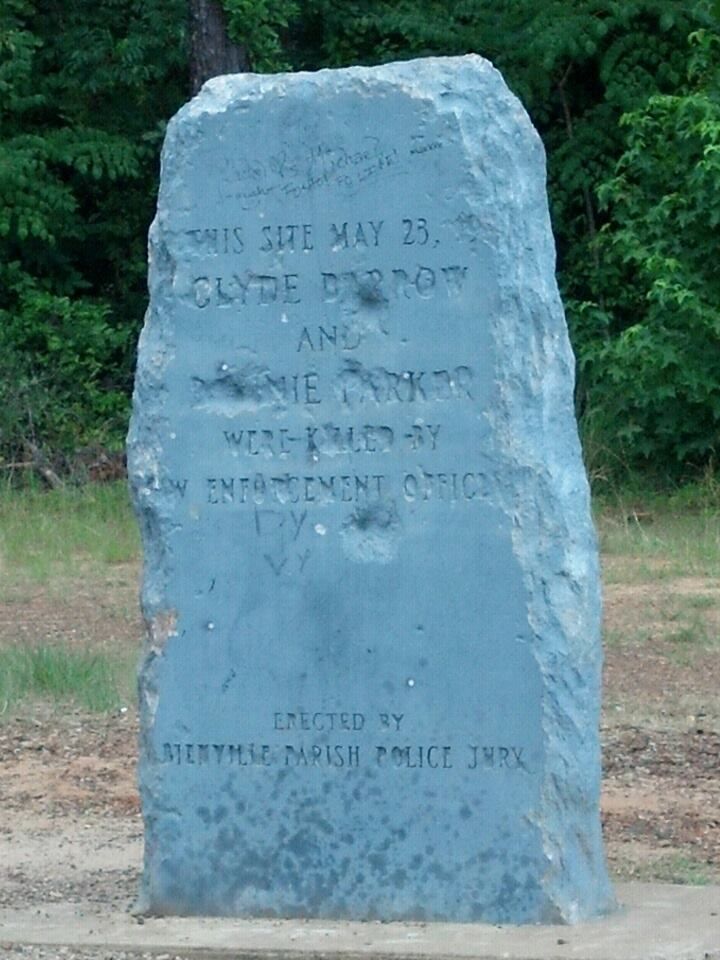
 During the Great Depression, some viewed the duo as near folk heroes, like Robin Hood and Maid Marian. And, although Hoosier outlaw John Dillinger reportedly once told a reporter that Bonnie and Clyde were “a couple of punks”, he and his fellow gang member Pretty Boy Floyd reportedly sent flowers to their funeral homes. The Barrow gang killed a total of 13 people, including nine police officers. They finally met their match on May 23, 1934, when six police officers ambushed them and shot some 130 rounds into the car. Dillinger outlasted Bonnie and Clyde by about two months – he met his maker on July 22, 1934. Truth is, proceeds from auctions of items associated with these outlaws over the past two decades (which number in the millions of dollars) far outdistance the proceeds of all of their robberies combined.
 For my part, when we told our 25-year-old son about our anniversary trip to Las Vegas, he remained nonplussed by saying, “I would only want to go out there to see a town called Primm.” To which we said “been there, done that.” His reply, “I’d also like to go to a little town called Good Springs.” We answered, “Been there too.” He concluded by saying he’d like to see an old dive bar named the “Pioneer Saloon.” He was shocked when we said we went there too. Of course, the reason he wants to venture out there is video game related, not history related. Nonetheless, he was chagrined by our answers. I guess we old folks aren’t so square after all.




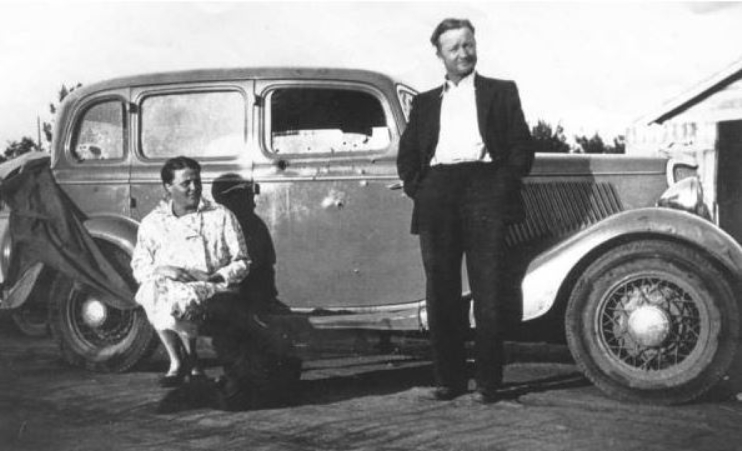
 She called the police and reported the car as stolen. According to the police report, shortly after one o’clock, neighbors saw a man and a woman circling the block in a Plymouth coupe. Later the mystery couple returned, this time with a man riding on the right running board. He jumped off, climbed into the Warren’s car, started it, backed out of the driveway, and sped away. The Warrens wouldn’t see their new Ford for three months.

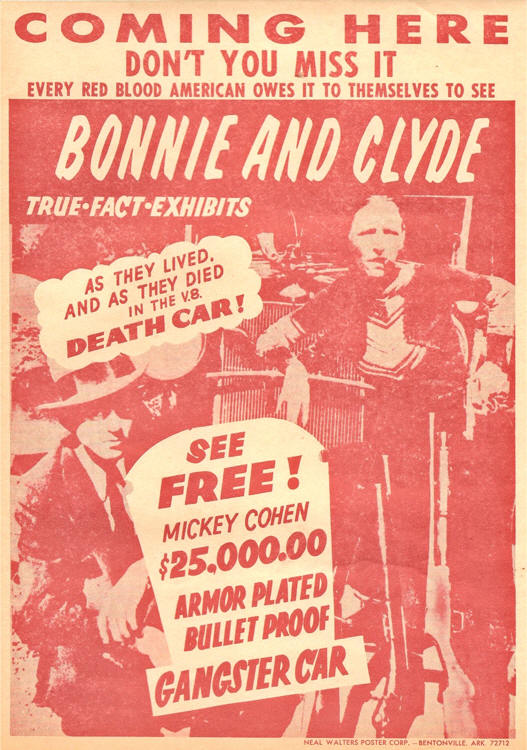 Ruth then rented the death car to carnival operator Charles Stanley, who exhibited it on the Hennies Brothers Midways in his 1939 crime show. Stanley displayed the car outside of his tent and charged admission to see the film of the actual ambush on the inside. Eventually, multiple bullet-riddled 1934 Ford Fordor sedans began appearing on the county fair and carnival circuit over the next few years, all claiming to be the actual death car. The various owners sometimes vigorously defended their claims, too, casting doubt on the authenticity of the real death car. Aside from the damage to historical accuracy, the frauds cut into the revenue generated by Ruth Warren as the death car toured the country.
 After Ruth divorced her husband Jesse, she kept the title to the car and sold it to Stanley for $3,500.The car was then exhibited at Coney Island amusement park in Cincinnati from 1940-1960. After World War II, memories faded and interest waned in the “Public Enemies” Era, pushing the car further-and-further into obscurity. In a 1960 issue of Billboard magazine, Stanley offered the Bonnie and Clyde Death Car for sale. Ted Toddy purchased the car in 1960 for $14,500. The car then sat in a warehouse for years until the popularity of the 1967 movie “Bonnie & Clyde” brought it out of retirement.