

Original publish date: February 27, 2020
So, are you going through football withdrawals yet? It’s been three weeks since the Kansas City Chiefs won the Super Bowl, the team’s first in half a century. Ironically, that victory came just over a century after the most famous Native American Indian athlete in our country’s history landed on a gridiron in the Hoosier state. Notre Dame? Nope. Purdue? Nope. Jim Thorpe, the world’s greatest athlete, was once an assistant coach for the Indiana University Hoosiers in Bloomington.
If you’ve never heard the story, then its worth a visit. If you already know it, then let us refresh. Thorpe began his athletic career at Pennsylvania’s Carlisle Indian Industrial School in 1907 (a stone’s throw from the Gettysburg battlefield) where he played baseball, football, and was the star of the track team. He learned the game of football at the foot of a legend: Glen Scobey “Pop” Warner. Coach Warner was hesitant to allow Thorpe, his best track and field athlete, to compete in such a physical game as football. Thorpe, however, convinced Warner to let him try some rushing plays in practice against the school team’s defense. According to author Glen Jeansonne, Thorpe “ran around, past and through them not once, but twice” before walking over to Warner and saying “Nobody is going to tackle Jim”, while flipping him the ball.

In 1911 Thorpe made headlines when, while playing running back, defensive back, placekicker and punter, he scored all of his team’s points in an 18–15 upset of highly ranked Harvard. The game is considered one of the greatest upsets in early NCAA history. With Thorpe moving the ball, the tiny Carlisle team was winning against powerhouses like Harvard and Yale. Carlisle finished the season 11–1. In 1912 Carlisle won the national collegiate championship largely as a result of Thorpe’s efforts. That season, Thorpe ran for 27 touchdowns and accounted for 224 points. Recorded stats show that Thorpe rushed 191 times for 1,869 yards in 12 games but those figures do not include statistics from 2 of Carlisle’s 14 games in 1912 because full records were not kept.
That 1912 season included a 27–6 victory over Army. In that game, a 92-yard touchdown by Thorpe was called back by a teammate’s penalty. On the very next play, Thorpe rushed for a 97-yard touchdown. Future General and President Dwight D. Eisenhower, who played against Thorpe that day, recalled Thorpe in a 1961 speech: “Here and there, there are some people who are supremely endowed. My memory goes back to Jim Thorpe. He never practiced in his life, and he could do anything better than any other football player I ever saw.”
In the spring of 1912, Thorpe started training for the Olympics in Sweden. He had confined his efforts to jumps, hurdles and shot-puts, but soon added pole vaulting, javelin, discus, hammer and 56 lb weight throw. At Stockholm, Thorpe smashed many records and won gold medals for the pentathlon and decathlon (the first time both events were held at any Olympics). In 1912, the medals were presented to the athletes at the closing ceremonies of the games. Along with his two gold medals, Thorpe also received two challenge prizes, which were donated by King Gustav V of Sweden for the decathlon and Czar Nicholas II of Russia for the pentathlon.
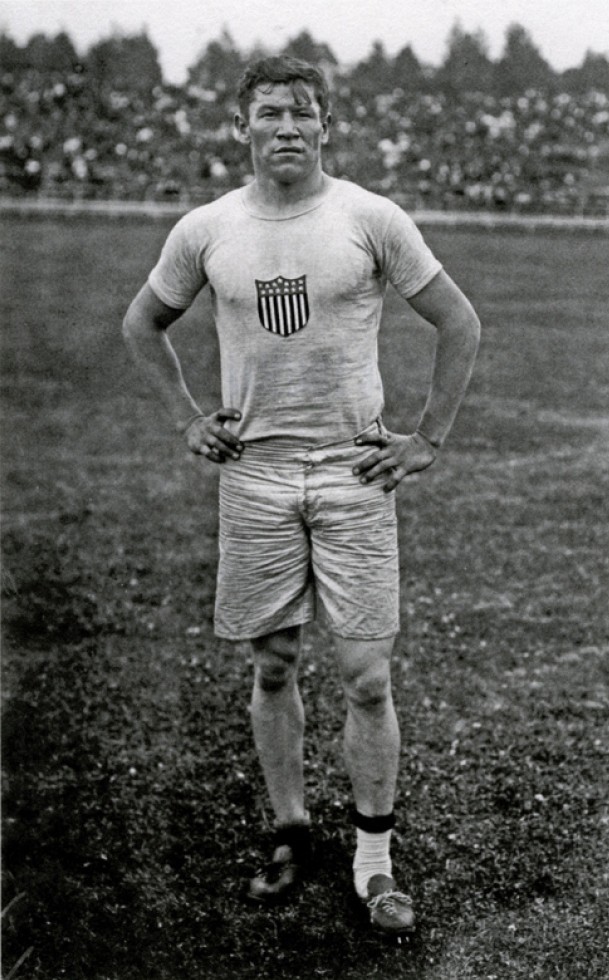
Legend states that, when awarding Thorpe his prize, King Gustav said, “You, sir, are the greatest athlete in the world”, to which Thorpe replied, “Thanks, King”. On his return to the United States he was honored in New York City with a ticker-tape parade down Broadway. Thorpe recalled later, “I heard people yelling my name, and I couldn’t realize how one fellow could have so many friends.”
Along with his standout track and field appearances, Thorpe also played in one of two exhibition baseball games at the 1912 Olympics, a decision that would come back to haunt him. In late January 1913, the Worcester Telegram published a story revealing that Thorpe had played professional baseball, and soon, U.S. newspapers followed up on the story. In 1909 & 1910, Thorpe had played professional baseball in the Eastern Carolina League for the Rocky Mount Railroaders. For his efforts, Thorpe was reportedly paid $2 ($55 today) per game and as much as $35 ($960 today) per week. College players, in fact, regularly spent summers playing professionally but most used aliases, unlike Thorpe.
In a letter to the Amateur Athletic Union (AAU) secretary Edward Sullivan, Thorpe explained, “I hope I will be partly excused by the fact that I was simply an Indian schoolboy and did not know all about such things. In fact, I did not know that I was doing wrong, because I was doing what I knew several other college men had done, except that they did not use their own names.” The letter did not help. The AAU withdrew Thorpe’s amateur status retroactively. Later that year, the International Olympic Committee (IOC) unanimously decided to strip Thorpe of his Olympic titles, medals and awards and declare him a professional.
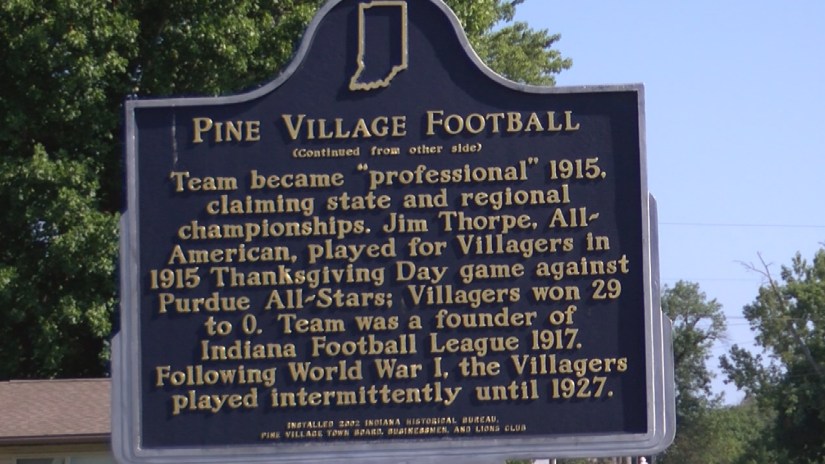 Thorpe played professional football in 1913 as a member of the Indiana-based Pine Village Pros, a team that had a several-season winning streak against local teams during the 1910s. Also that year, Thorpe signed pro contracts to play baseball with the New York Giants and football for the Chicago Cardinals and Canton (Ohio) Bulldogs. The Bulldogs paid Thorpe $ 250 per game ($5,919 today) a huge sum for the time. Overnight, the Bulldogs went from drawing 1,200 fans per game to 8,000. Thorpe was front page news, leading the Bulldogs to league championships in 1916, 1917 and 1919. In 1920, the Bulldogs and 13 other teams formed the APFA (American Professional Football Association) the forerunner of today’s NFL and Thorpe was elected the league’s first president. You might say that Jim Thorpe was a big deal.

What is perhaps the least known era of Thorpe’s career was the season he spent at Indiana. In 1914 IU hired Clarence Chester Childs as its head football coach. C.C. Childs, captain of the Yale track team, competed for the United States in the 1912 Summer Olympics alongside Jim Thorpe. Childs won a bronze medal in the hammer throw. Childs was an interesting man in his own right. He served in France during World War I and afterwards was appointed by President Warren Harding to a position within the U.S. Treasury Department. However, he was fired after he attacked a US Secret Service agent, who was following him on suspicion that Childs had illegally removed sensitive documents.
After being hired at I.U., Childs contacted his fellow Olympic teammate Thorpe, who was wrapping up a season with the Giants. Thorpe was asked to assist with IU’s 1915 football season. He was paid a salary of $1000 plus a room for his family at a Bloomington hotel and ftoke his meals on campus. The students were thrilled to learn that the World’s Greatest Athlete would be joining their team on notoriously soggy Jordan Field, a gridiron famous for its inability to shed water. Often, Coach Childs had to move practice to the school’s track oval, which recently had been fitted with temporary high-power electric lights. Now, with the hiring of Jim Thorpe, the Hoosiers were moving up a notch. Not only is C.C. Childs best remembered for the man he hired as an assistant coach, but also for the man he passed over to do it.

Next Week: Park II of Jim Thorpe-Indiana Hoosier.

 The president was scheduled to meet the thousands of people who, in spite of the oppressive heat, were waiting at the Temple of Music on the north side of the fairgrounds. In that line, no one stood out more than James “Big Ben” Parker, a six-foot six inch, 250 pound “Negro” waiter from Atlanta who has been laid off by the exposition’s Plaza Restaurant only days before. One could conclude that “Big Ben” was the angriest man in the room and the one the Secret Service should be watching. However, that sobriquet would belong to the man standing immediately in front of the gentle giant. A stoop-shouldered, nervous little man whose hand was wrapped in a handkerchief.
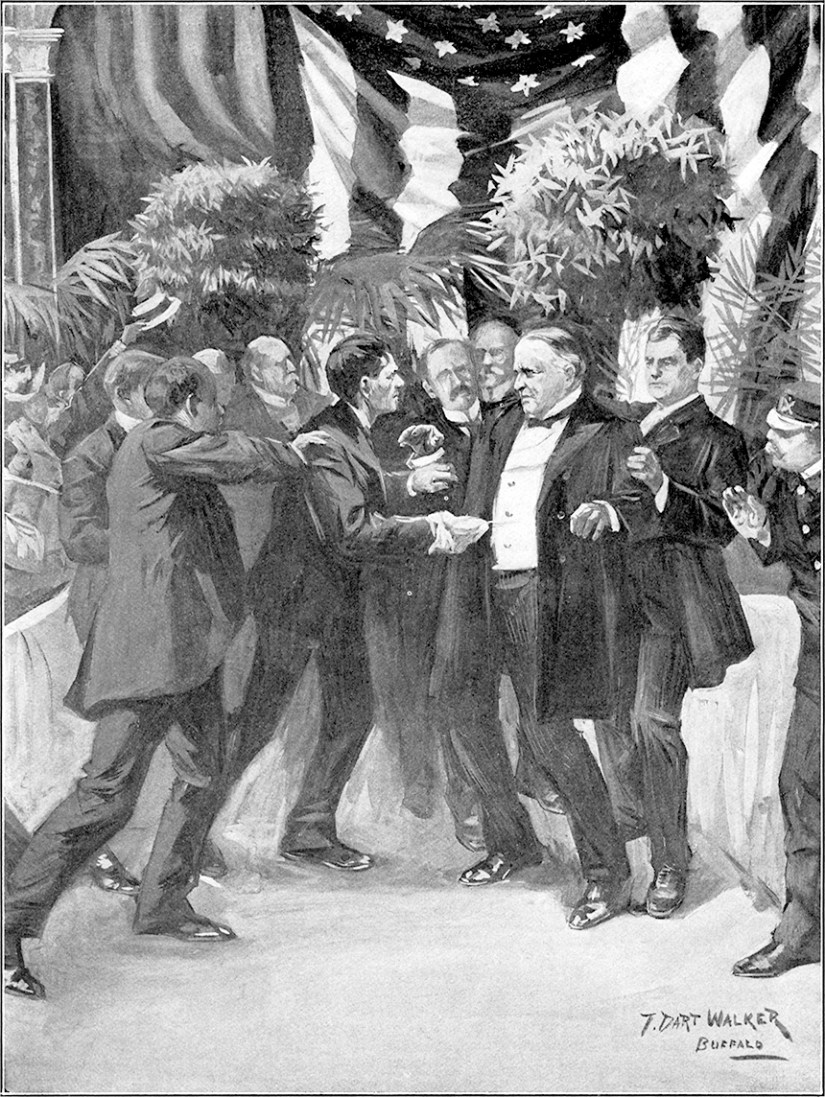 The first bullet sheared a button off of McKinley’s vest, the second tore into the President’s abdomen. The handkerchief burst into flames and fell to the floor. McKinley lurched forward as Czolgosz took aim for a third shot. Within seconds after the second pistol shot, Big Ben Parker was grappling with the adrenaline charged assassin. Secret service special agent Samuel Ireland described the scene: “Parker struck the assassin in the neck with one hand and with the other reached for the revolver which had been discharged through the handkerchief and the shots had set fire to the linen. While on the floor Czolgosz again tried to discharge the revolver but before he got to the president the Negro knocked it from his hand.” A split second after Parker struck Czolgosz, so did Buffalo detective John Geary and one of the artillerymen, Francis O’Brien. Czolgosz disappeared beneath a pile of men, some of whom were punching or hitting him with rifle butts. The assassin cried out, “I done my duty.”
 A Los Angeles Times story said that “with one quick shift of his clenched fist, he [Parker] knocked the pistol from the assassin’s hand. With another, he spun the man around like a top and with a third, he broke Czolgosz’s nose. A fourth split the assassin’s lip and knocked out several teeth.” In Parker’s own account, given to a newspaper reporter a few days later, he said, “I heard the shots. I did what every citizen of this country should have done. I am told that I broke his nose—I wish it had been his neck. I am sorry I did not see him four seconds before. I don’t say that I would have thrown myself before the bullets. But I do say that the life of the head of this country is worth more than that of an ordinary citizen and I should have caught the bullets in my body rather than the President should get them.” In a separate interview for the New York Journal, Parker remarked “just think, Father Abe freed me, and now I saved his successor from death, provided that bullet he got into the president don’t kill him.”
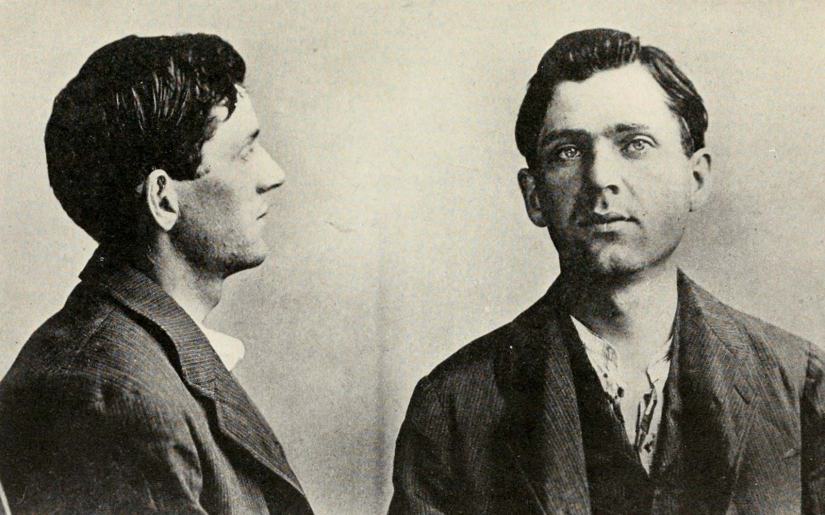

 Historians agree that Czolgosz’s trial was a sham. Sadly, what should have been Big Ben Parker’s time to shine instead became his disappearing act. Prior to the trial, which began September 23, 1901, Parker was expected to be a major character in the assassination saga. Instead,the trial minimized Parker’s participation in the events of three weeks prior. Parker was never asked to testify and those few participants who did never identified Big Ben as the person who first subdued the assassin. Czolgosz’s sanity was never questioned and the case was closed twenty-four hours after it opened. Newspaper reports after the trial failed to mention Big Ben’s role and witnesses, including lawyers and Secret Service agents, began to enlarge their own roles in the tragedy by going as far as saying they “saw no Negro involved” whatsoever.

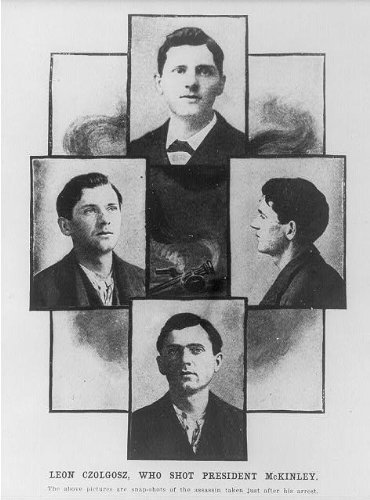 Just as Big Ben is the forgotten figure in the McKinley assassination saga, Leon Czolgosz is the least known of all presidential assassins. Prior to his execution Czolgosz met with two priests and said, “No. Damn them. Don’t send them here again. I don’t want them. And don’t you have any praying over me when I’m dead. I don’t want it. I don’t want any of their damned religion.” Czolgosz was electrocuted on October 29, 1901 at Auburn penitentiary. Initially, Czolgosz’s family wanted the body. The warden convinced them that it would be a bad idea, that relic hunters would disturb his grave, or worse, that unscrupulous carnival promoters would want to display the body in traveling sideshows.
 His family agreed that the prison should take care of the funeral arrangements by giving the assassin a decent burial within the protection of the prison grounds. When Leon Czolgosz was buried in the Auburn prison cemetery, yards away from where he was executed, unbeknownst to the family, the decision was made to have his body destroyed. The local crematorium refused to undertake the job. So the assassin’s body was placed in a rough pine box and lowered into the ground which had been coated with quicklime. The lid was removed and two barrels of quicklime powder was caked on top of the body. Then sulfuric acid was poured on top of that followed by another two layers of quicklime.
 Their intention was to make the anarchist’s body dematerialize. What the prison officials did not know was that when quicklime (calcium oxide) and sulfuric acid are combined, a chemical reaction occurs which creates an exterior coating best compared to plaster of paris. Since the shell is insoluble in water, the coating acts as a protective layer thus preventing further attack on the corpse by the acid. It is entirely possible that the body of Czolgosz was preserved in perpetuity accidentally.


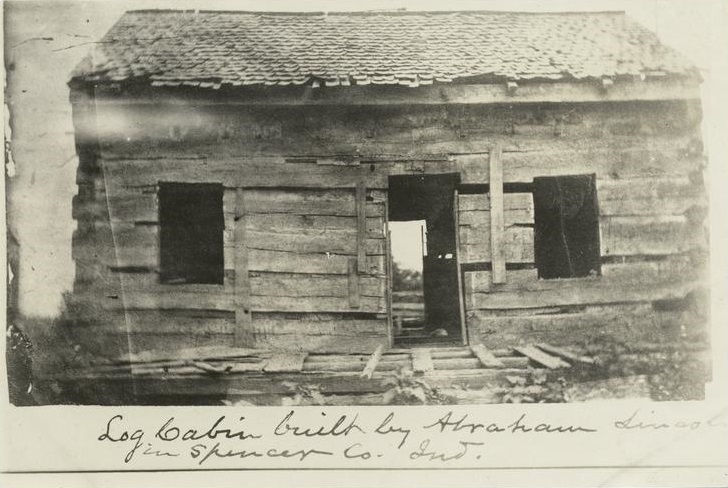
 Eventually it was Abraham’s turn to hitch his old mare to the gristmill’s arm. As he tediously walked his horse round and round, he grew impatient at having wasted most of the morning already. He began to apply a hickory switch to the beast’s behind while shouting, “Git up, you old hussy; git up, you old hussy” to keep his horse moving at an accelerated pace. This tactic worked for a short time until the horse had had enough and, just as his young master clucked out the words “Git up”, the horse kicked backwards and hit the boy in the head with a rear hoof. Lincoln was knocked off his feet and into the air, landing some distance away where he came to rest bruised and bloodied. Noah Gordon rushed to the aid of the unconscious young man. Realizing the seriousness of the situation, Gordon picked the boy up and brought him in to his house, placing him on a nearby bed.
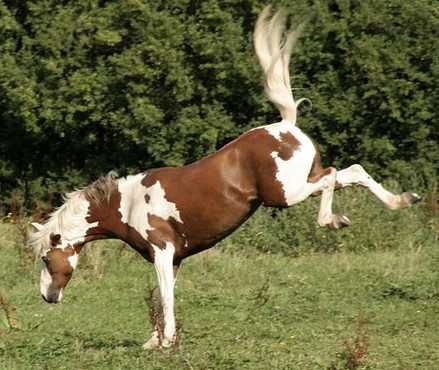 Meanwhile, Dave Turnham, who had come to the mill with Abraham, ran the two miles to get Abraham’s father. Thomas Lincoln rushed to his wagon and lit out to the scene. The elder Lincoln, seeing his son’s grave condition, hauled the injured boy home and put him to bed where the young man remained prone and unconscious all night. Neighbors from the small, close knit community, including mill owner Noah Gordon, gathered at the Lincoln cabin believing Thomas Lincoln’s boy was close to death. The next morning one witness jumped from their seat, pointed and shouted, “Look he’s coming straight back from the dead!” Abraham was shaking and jerking from head to toe when he opened his eyes and finished his cadence from the day before by shouting “You old hussy”.
 Lincoln’s contemporaries noticed that at times his left eye drifted upward independently of his right eye, a condition doctors diagnosed as “strabismus” but more derisively known as “Lazy Eye”. The resulting affliction results in the eyes failure to properly align with each other when looking straight ahead, particularly when trying to focus on an object. As proof, experts point to the best surviving evidence; two life masks of Lincoln. One a beardless portrait made in April of 1860 and the other, a bearded image made in February of 1865. Laser scans of both masks reveal an unusual degree of facial asymmetry. In short, the left side of Lincoln’s face was much smaller than the right, resulting in the double diagnosis of “hemifacial microsomia” compounded by “strabismus”. The defects join a long list of posthumously diagnosed ailments including smallpox, heart disease, bi-polar disorder and depression that doctors claimed afflicted Lincoln.
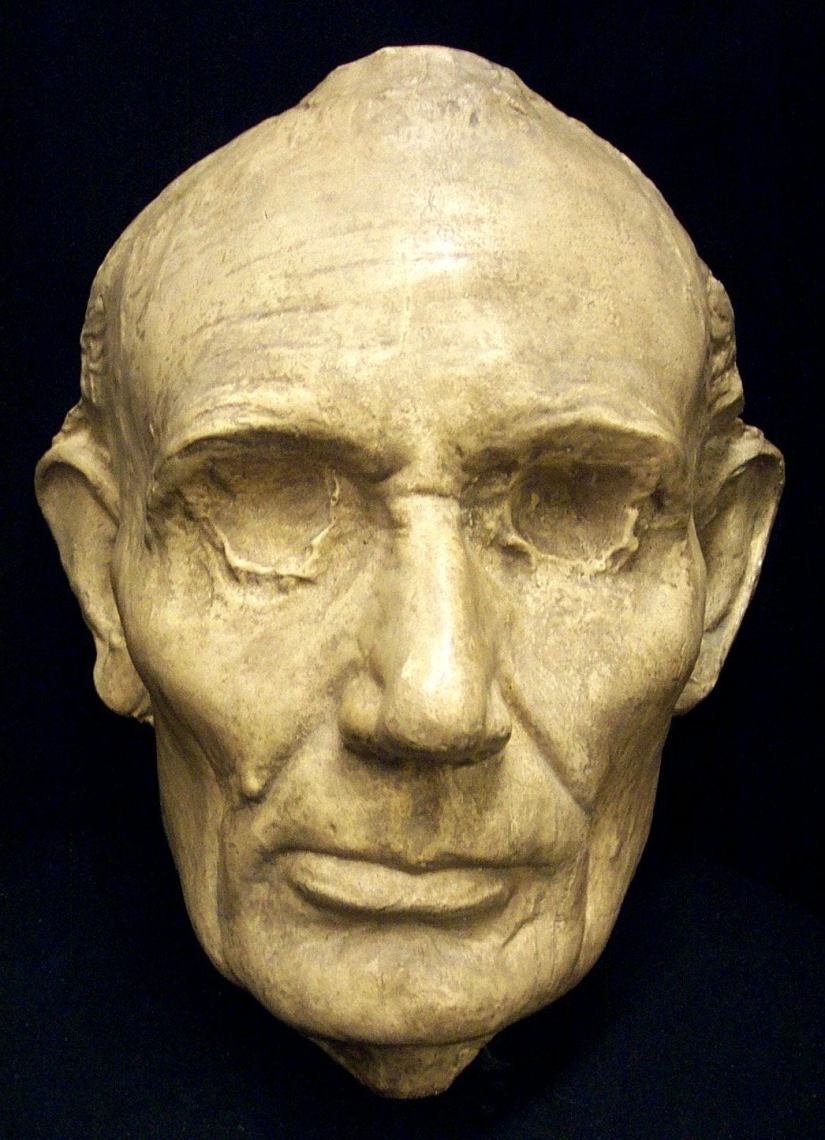 According to a cadre of modern day medical historians, Gardner’s photo is worth a thousand words. Although modern neurologists admit that a positive diagnosis would require a complete examination of the living Lincoln, photographic evidence strongly supports their theory. The mule kick to the forehead undoubtedly fractured the skull at the point of impact, the size and depth of the depression attesting to the incident’s severity. In addition, the nerves behind the left eye were damaged by the violent snapping of the head and neck backward. That whiplash also caused several small hemorrhages in the brainstem resulting in the permanent ocular and facial effects and was likely responsible for Lincoln’s high pitched, rasping voice.
 Yet another after effect of that boyhood mulekick was noticed by Josiah Crawford, a neighbor from Gentryville, Ind. who employed the boy Lincoln, loaned him books for study. Gentry liked to playfully needle the young railsplitter about the way he “stuck out” his lower lip while in deep concentration. When 35-year-old Lincoln returned to to make a speech in southern Indiana in 1844 for Henry Clay, Crawford noticed Abe’s lower lip still protruded abnormally. When Crawford asked what books he consulted before making the speech, Lincoln replied humorously, “I haven’t any. Sticking out my lip is all I need.”


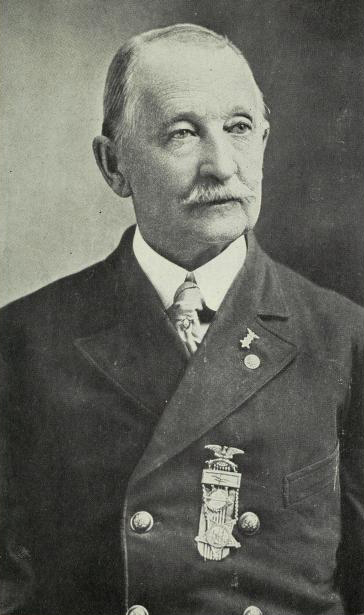

 The Reynolds leaflet further reveals,”Father and mother were at Ford’s Theatre the night of the assassination, and although it was late when they returned home, the general excitement of the night had reached our neighborhood. The newsboys shrill cries of “Extra! Extra! President Lincoln Shot” had awakened everybody in the boarding house. I, too, was awake. Young as I was, I realized what dreadful thing had happened, and I lay wide-eyed in my little trundle bed while father and mother related to the others their personal story of the tragedy. Father, accompanied by several of the men guests, went back to the scene and did not return until after the fateful hour of 7:22 the next morning. I remember as clearly as though it were of yesterday, wearing a wide band of black around the sleeve of my bright plaid jacket, and, carried in father’s arms, of passing the somber catafalque in the rotunda of the Capitol, which inclosed (sic) all that was mortal of the beloved Lincoln. A few weeks later I witnessed the Grand Review of the Army – that wonderful spectacle of the returning boys in blue – which took several days in its passing.”
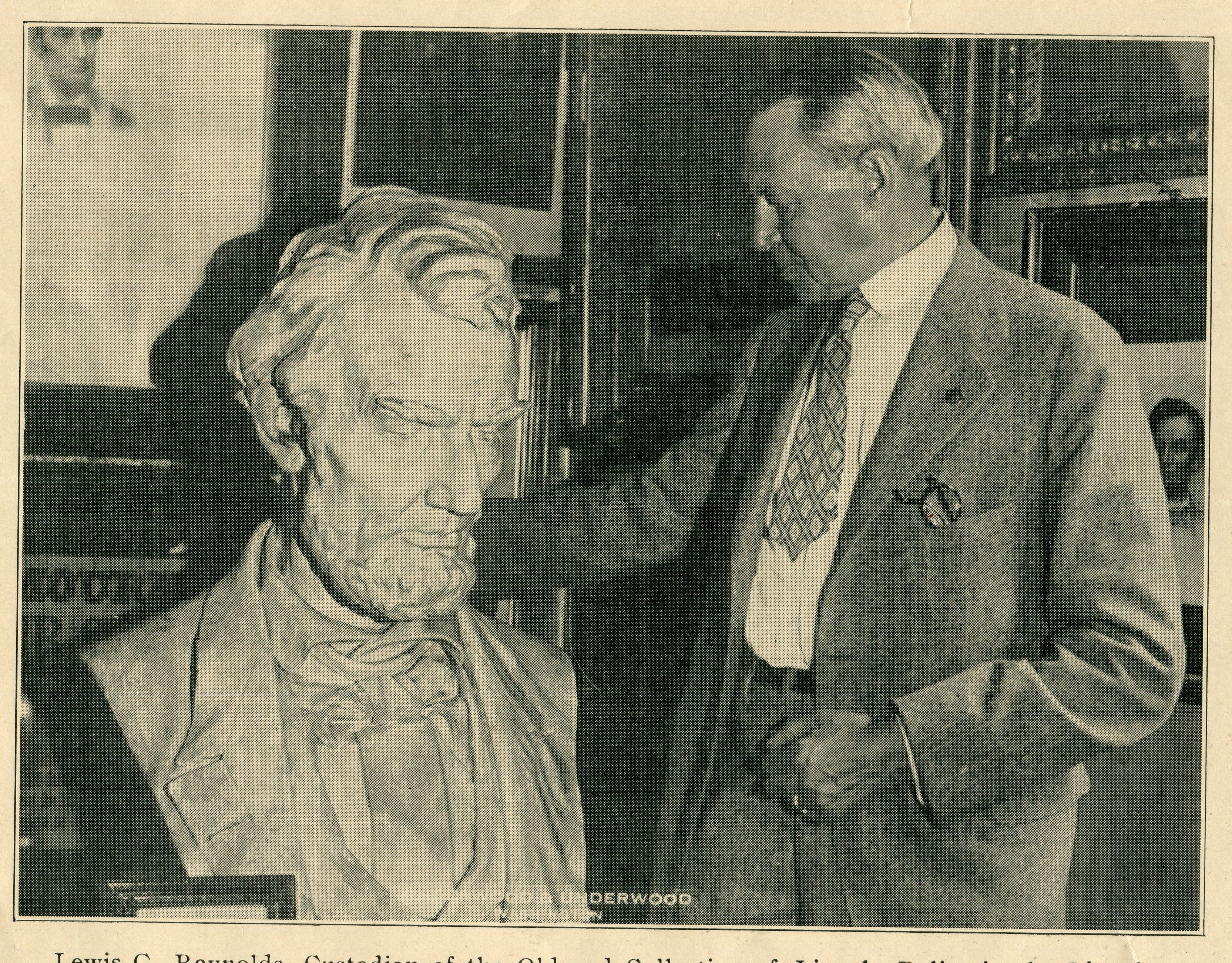

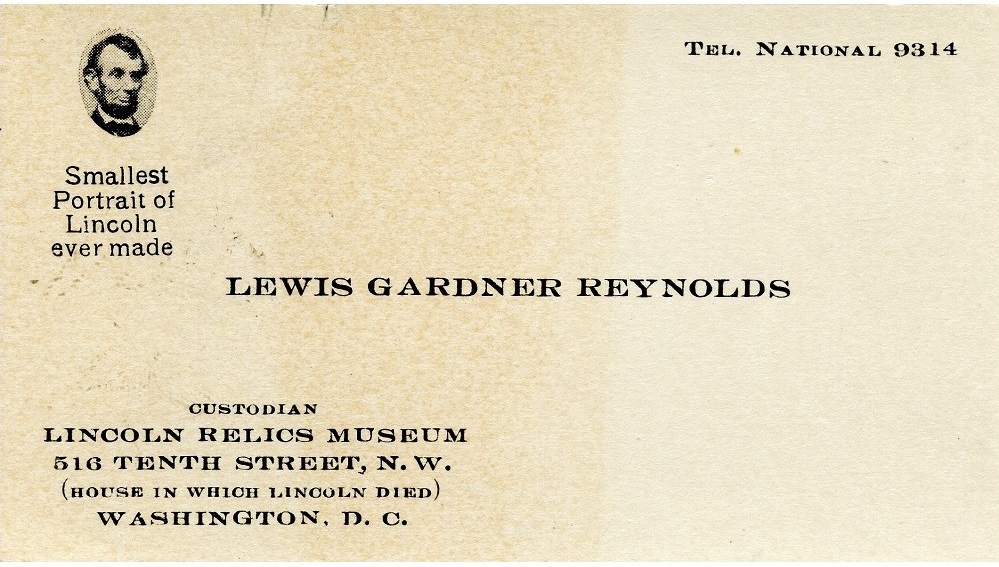 Two decades later, in 1960, the Richmond Palladium-Item newspaper profiled the widow of the former curator, offering new insight. The article is titled: “Local Woman Conducted Tours In House Where Lincoln Died.” It reveals, “Mrs. Reynolds and her husband lived on the second floor of the house at 516 Tenth Street, Washington, DC, at the time Mr. Reynolds was curator of the Oldroyd Lincoln Memorial collection. This was from 1928 through 1936. “I never heard anyone ask Mr. Reynolds a question about Mr. Lincoln he could not answer,” Mrs. Reynolds recalls. Her husband acquired the job as curator when he heard Oldroyd wanted to retire… “I have had visitors say to me doesn’t it give you a creepy feeling?” (sleeping in the house where Lincoln died.) Her answer was always “No.” To the reporter, she said, “I never had a creepy feeling. When I thought about it, it was just a feeling of awe and reverence.” Mr. Reynolds described the collection via radio from the Petersen house several times.“


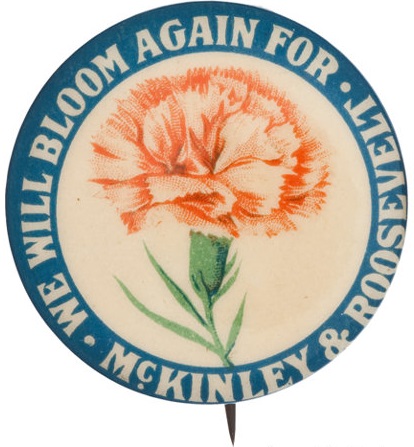 Most Americans remember President William McKinley solely for the way he died. His image a milquetoast chief executive from the age of American Imperialism who was at the helm for the dawn of the 20th century. McKinley’s ordinary appearance belied the fact that he was the last president to have served in the American Civil War and the only one to have started the war as an enlisted soldier. It is long forgotten that McKinley led the nation to victory in the Spanish-American War, protected American industry by raising tariffs, and kept the nation on the gold standard by rejecting free silver. Most notably, his assassination at the 1901 Pan-American Exposition in Buffalo, New York unleashed the central figure who would come to personify the new century; his Vice-President Teddy Roosevelt.
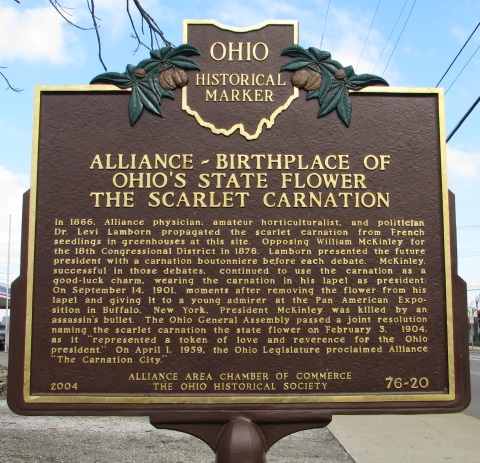
 McKinley’s favorite flower was a red carnation. He displayed his affection by wearing one of the bright red florets in his lapel every day. The carnation boutonnière soon became McKinley’s personal trademark. As President, bud vases filled with red carnations were conspicuously placed around the White House (known as the “Executive Mansion” back then). Whenever a guest visited the President, McKinley’s custom was to remove the carnation from his lapel and present it to the star-struck visitor. For men, he would often place the souvenir blossom into the lapel himself and suggest that it be given to an absent wife, mother, or child. Afterward, he would replace his boutonnière with another from a nearby vase and repeat the transfer again and again for the rest of the day. McKinley was superstitious about these carnations, believing that they brought good luck to both him and his recipient.
 One account alleges that McKinley’s “Genus Dianthus” custom began early in his presidency when an aide brought his two sons to the White House to meet the President. McKinley, who loved children dearly, presented his carnation to the older boy. Seeing the disappointment in the younger boy’s face, the President deftly retrieved a replacement carnation and pinned it on his own lapel. Here the flower remained for a few moments before he removed it and gave to the younger child, explaining “this way you both can have a carnation worn by the President.”
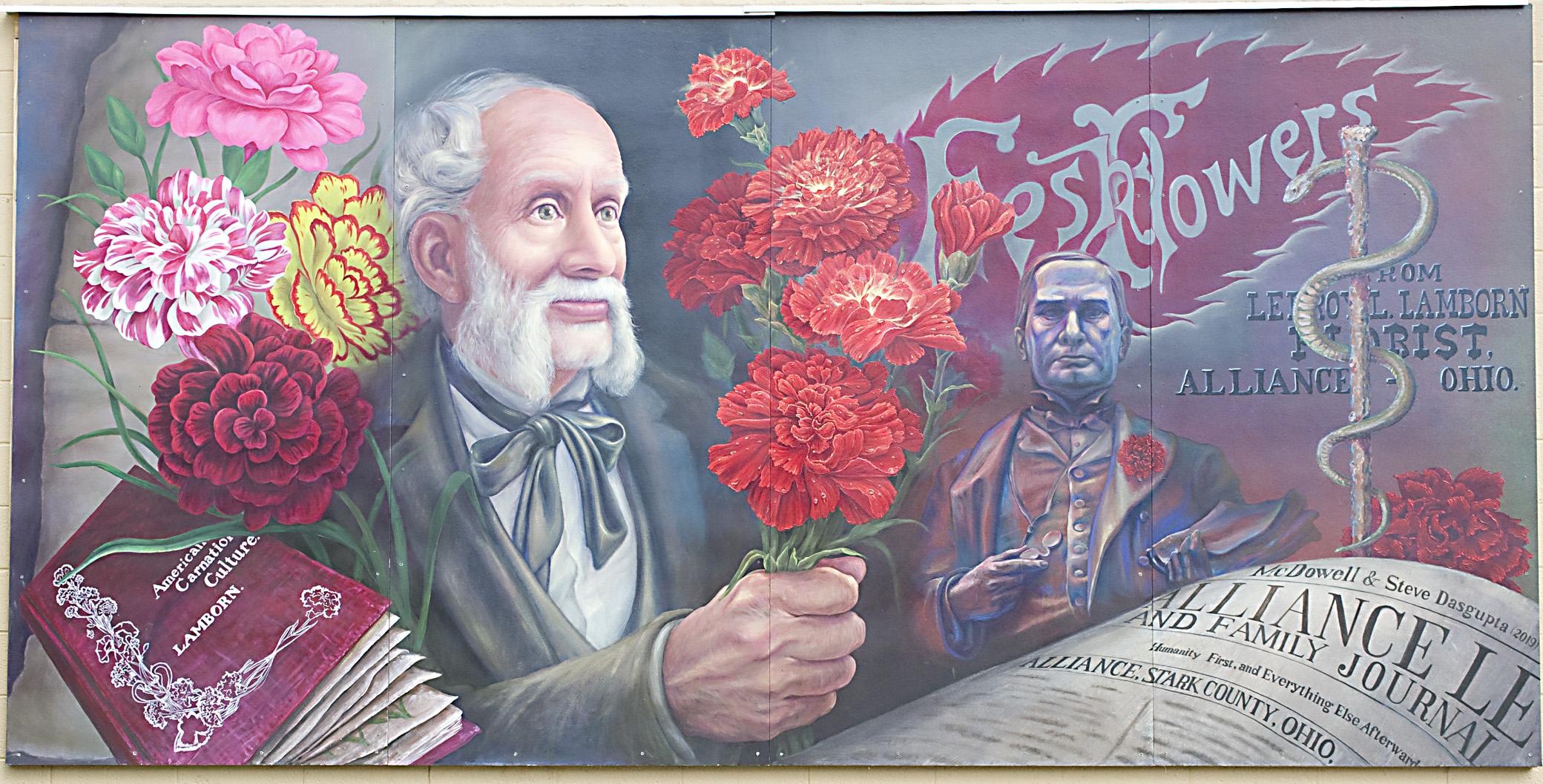
 However, McKinley’s ubiquitous floral tradition can be traced to the election of 1876, when he was running for a seat in Congress. His opponent, Dr. Levi Lamborn, of Alliance, Ohio, was an accomplished amateur horticulturist famed for developing a strain of vivid scarlet carnations he dubbed “Lamborn Red.” Dr. Lamborn presented McKinley with a “Lamborn Red” boutonniere before their debates. After he won the election, McKinley viewed the red carnation as a good luck charm. He wore one on his lapel regularly and soon began his custom of presenting them to visitors. He wore one during his fourteen years in Congress, his two gubernatorial wins and both 1896 and 1900 presidential campaigns.
 After his second inauguration on March 4, 1901, William and Ida McKinley departed on a six-week train trip of the country. The McKinleys were to travel through the South to the Southwest, and then up the Pacific coast and back east again, to conclude with a visit to the Buffalo Exposition on June 13, 1901. However, the First Lady fell ill in California, causing her husband to limit his public events and cancel a series of planned speeches. The First family retreated to Washington for a month and then traveled to their Canton, Ohio home for another two months, delaying the Expo trip until September.
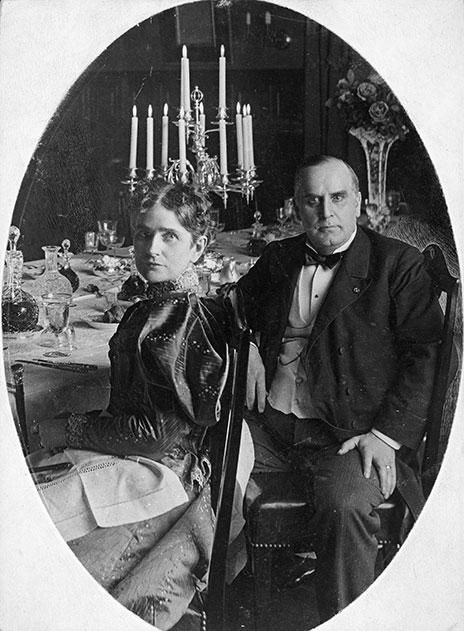
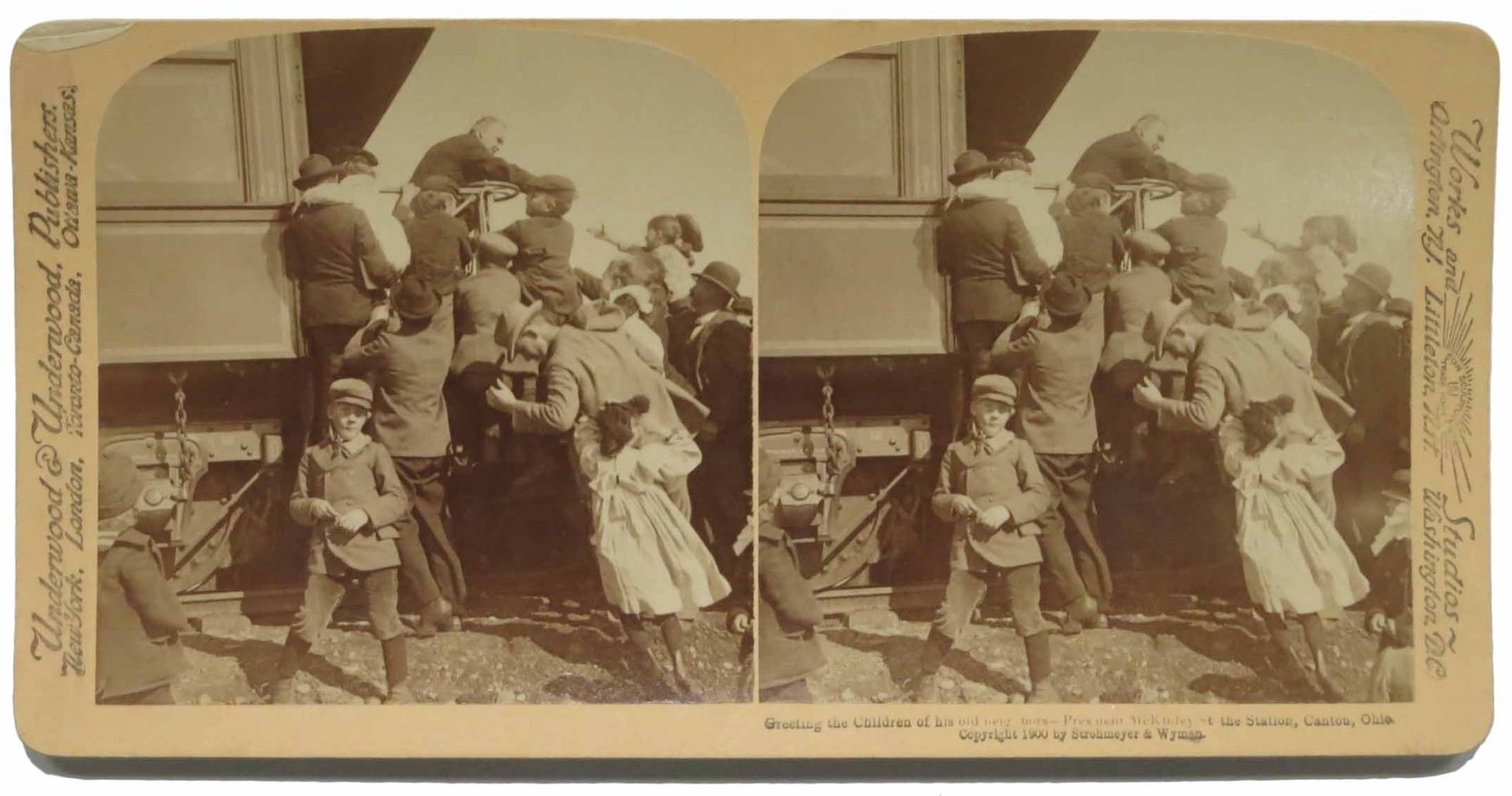
 As McKinley fell backwards into the arms of his aides, members of the crowd immediately attacked Czolgosz. McKinley said, “Go easy on him, boys.” McKinley urged his aides to break the news gently to Ida, and to call off the mob that had set on Czolgosz, thereby saving his assassin’s life. McKinley was taken to the Exposition aid station, where the doctor was unable to locate the second bullet. Ironically, although a newly developed X-ray machine was displayed at the fair, doctors were reluctant to use it on the President because they did not know what side effects. Worse yet, the operating room at the exposition’s emergency hospital did not have any electric lighting, even though the exteriors of many of the buildings were covered with thousands of light bulbs. Amazingly, doctors used a pan to reflect sunlight onto the operating table as they treated McKinley’s wounds.
 McKinley drifted in and out of consciousness all day. By evening, McKinley himself knew he was dying, “It is useless, gentlemen. I think we ought to have prayer.” Relatives and friends gathered around the deathbed. The First Lady sobbed over him, “I want to go, too. I want to go, too.” Her husband replied, “We are all going, we are all going. God’s will be done, not ours” and with final strength put an arm around her. Some reports claimed that he also sang part of his favorite hymn, “Nearer, My God, to Thee” while others claim that the First Lady sang it softly to him. At 2:15 a.m. on September 14, President McKinley died. Czolgosz was sentenced to death and executed by electric chair on October 29, 1901.
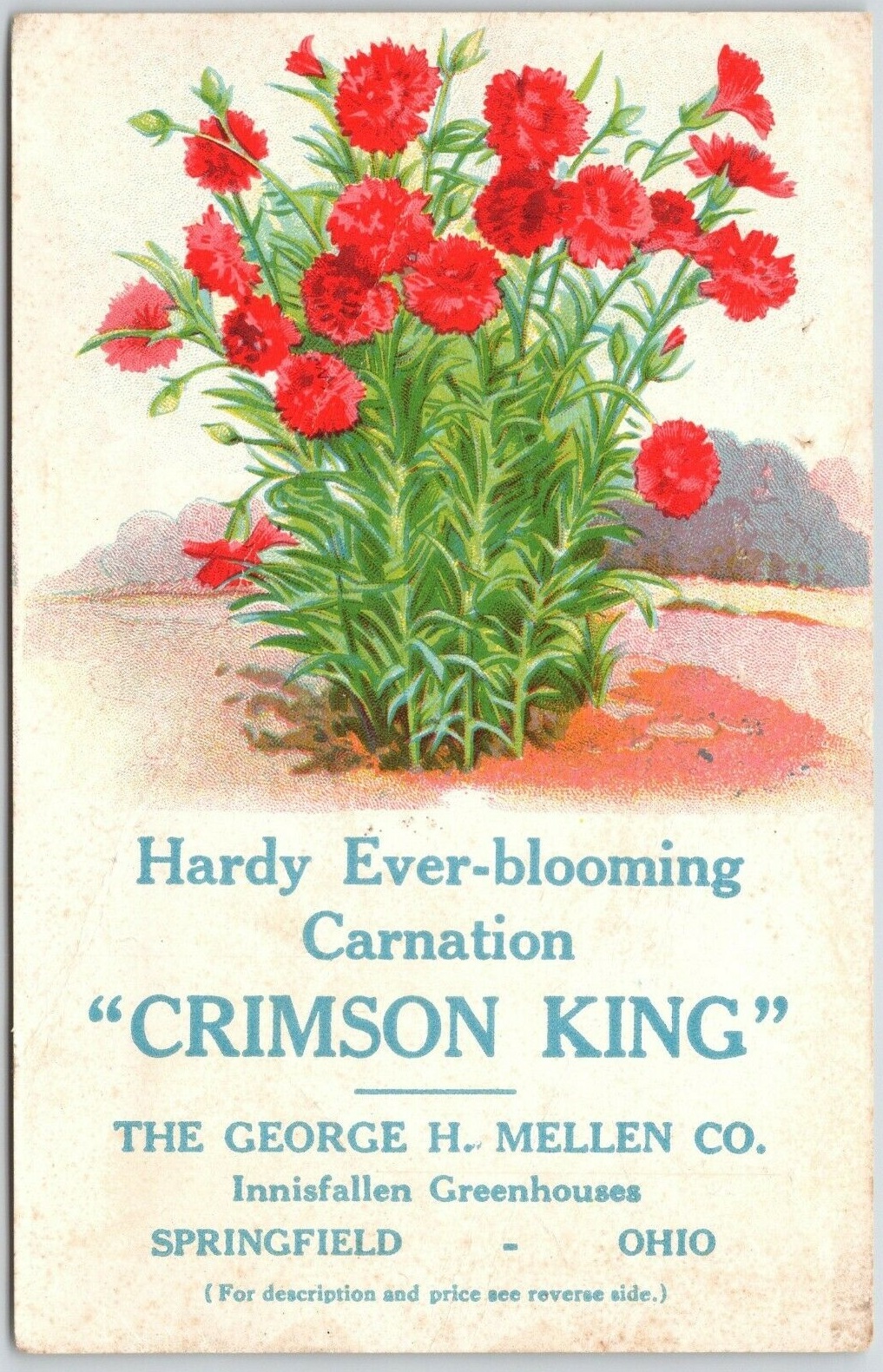 Loyal readers will recognize my affinity for objects and will not be surprised by the query, “What became of that assassination carnation?” In an article for the Massillon, Ohio Daily Independent newspaper on Sept. 7, 1984, Myrtle Ledger Krass, the 12-year-old-girl to whom the President gave his lucky flower moments before he was killed, reported that the McKinley’s carnation was pressed and kept in the family Bible. Myrtle, at the time a well-known painter living in Largo, Florida, explained how, many years later while moving, “The old Bible had been put away for years, when I took it out to wrap it for moving, it just crumbled in my hand. Just fell away to nothing.”
 In 1902, Lewis Gardner Reynolds (born in 1858 in Bellefontaine, Ohio) found himself in Buffalo on business on the first anniversary of McKinley’s death. While there he found that the mayor of Buffalo had declared the day a legal holiday. Gardner recalled, “without thinking at the time that I was doing something that would become a national custom, I purchased a pink carnation which I placed in the buttonhole of my coat after tying a small piece of black ribbon on it. As I went through Buffalo I explained to questioners the reason for the flower and the black ribbon. Many of those who questioned me followed my example.” On his return to Ohio, he explained to his friend Senator Mark Hannah what he had done in Buffalo. Later, in Cleveland, Reynolds met with Hannah and Governor Myron T. Herrick. Soon plans were made to celebrate Jan. 29, the anniversary of McKinley’s birth, as “Carnation Day.”
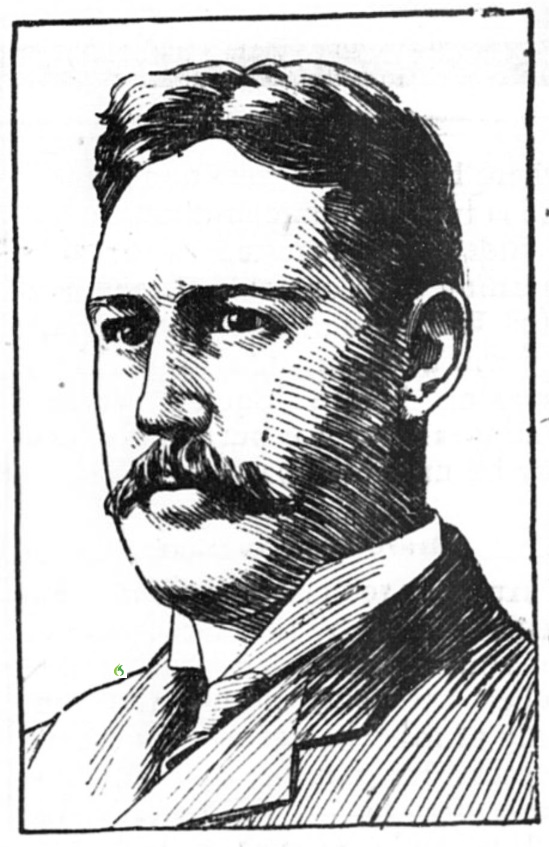
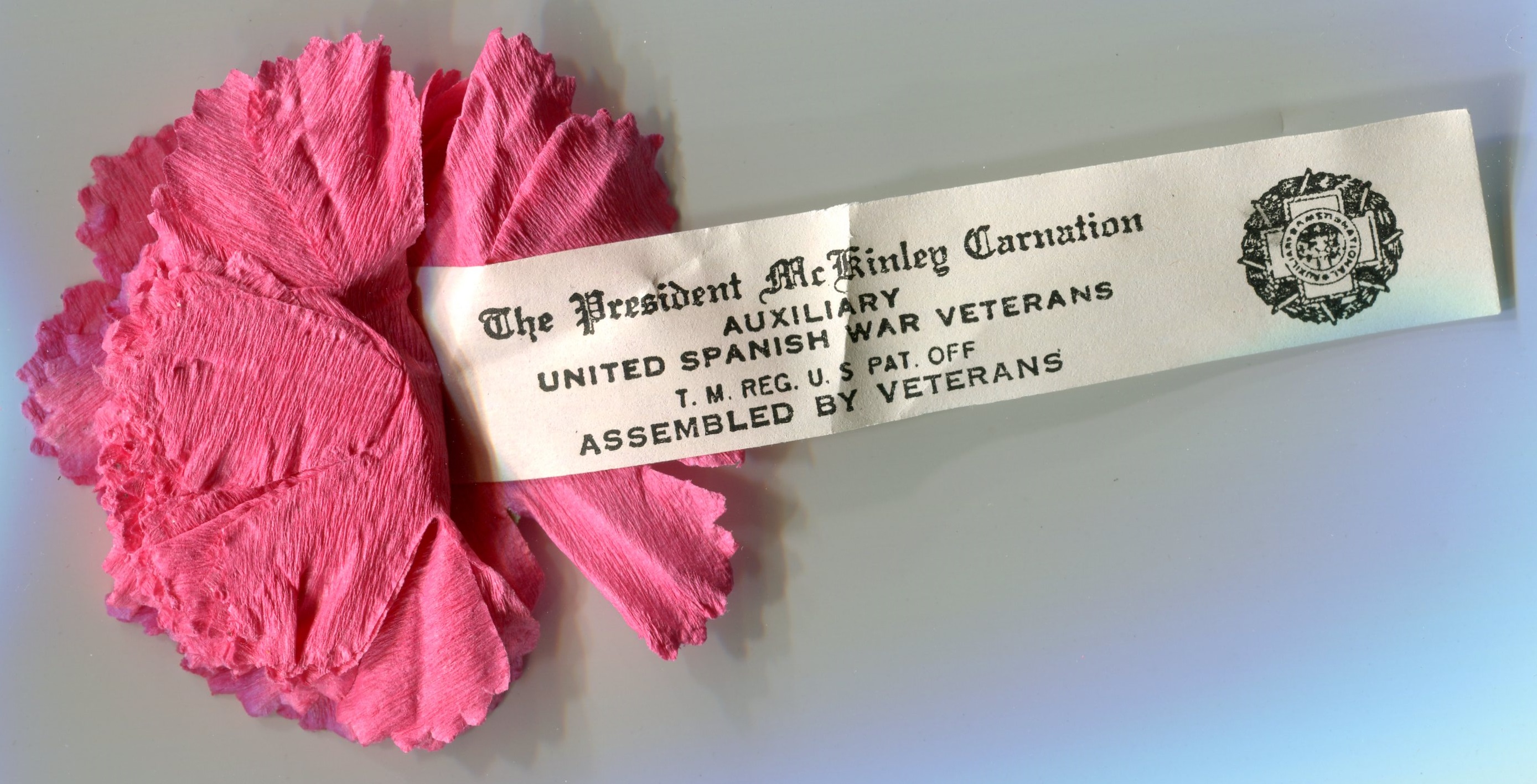 Today, the Ohio Statehouse in Columbus continues observing Red Carnation Day every January 29 by installing a small display honoring the assassinated President. Last year, the Statehouse Museum Shop and on-site restaurant offered special discounts to anyone wearing a red carnation or dressed in scarlet on that day. Yes, the sentimental association of the carnation with McKinley’s memory is due to Lewis Gardner Reynolds.


