Alan E. Hunter’s column, “Bumps in the Night”, has run on the front page of the Weekly View / Eastside Voice / Eastside Herald newspaper in Irvington on the east side of Indianapolis since 2007. Al’s Pop culture-based articles have been the genesis of several national and local television and radio programs over the years spurring programs on subjects as varied as John Dillinger, Abraham Lincoln, Charles Manson, the ABA Indiana Pacers, and Burger Chef to the mysterious disappearance of ABA star John Brisker and all points in between.
Alan E. Hunter is the author of the books “The Petersen House, the Oldroyd Museum and the House Where Lincoln Died“, “Thursdays with Doc. Dr. Wayne C. Temple’s recollections on Springfield and Lincoln“, “Osborn H. Oldroyd: Keeper of the Lincoln Flame“, and has co-authored two books on the Historic Indiana National Road.
Al has researched, scripted, and led the Irvington Ghost Walks since 2002. Al’s tours are roughly 75% history and 25 % ghost stories and folklore. These non-profit tours raise much-needed funds for the Eastside Irvington community. In addition, Al has led similar tours in Greenfield and Cambridge City on the Historic National Road. Al is a former Vice-President and board member of the Indiana National Road Association. Al served as the historian and event coordinator for the Dropping Dimes Foundation which aids the former players of the ABA (American Basketball Association). Al also organized both the 30-year reunion of the ABA held at the Hoosier Dome in 1997 and the 50-year reunion of the ABA festivities at Bankers Life Fieldhouse on the campus of Butler University on Saturday, April 7, 2018.
Al has co-authored two books on haunted Irvington. In 2013, Al published a compilation of his “Bumps in the Night” articles selected from his column in the Weekly View newspaper. Al also wrote a book on “Haunted Indianapolis” and most recently, a book on the H.H. Holmes relic collection for the benefit of the Irvington Historic Society and the Bona Thompson Memorial Center. The relics detailed in the books were featured in the History Channel 8-part series “American Ripper.” Al and his wife Rhonda appeared in 3 of the segments alongside the Great-great-grandson Jeff Mudgett. Al was featured in the November 21, 2018, episode of Mysteries at the Museum with Don Wildman where he detailed a scalpel used by America’s first serial killer, H.H. Holmes, in Irvington. Al was also featured in the October 9, 2019, episode of Ghost Adventures with Zak Bagans in which he detailed the history of the H.H. Holmes house in Irvington.
Over the decade, Al has led talks and programs in Irvington that have collected food and personal care items for the Irvington homeless shelter, gathering well over a ton of food, clothing, and personal care goods for distribution. A former teacher and baseball coach at Westfield High School, Al graduated from Indiana University and has been married to his wife Rhonda since 1989. They have 2 children, Jasmine and Addison.
Original publish date: June 10, 2011 Reissue Date April 2, 2020
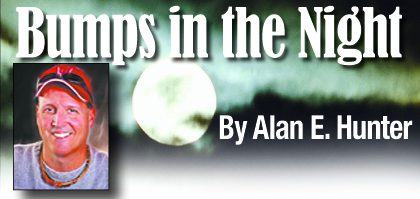
2009 was the year of John Dillinger. 75 years after being gunned down in a Chicago alley, the Hoosier bandit was the subject of a hit movie starring Johnny Depp this past summer. Did you know that Dillinger’s only Indianapolis bank robbery occurred just around the corner from Irvington? On Wednesday September 6, 1933, Dillinger, along with Hilton Crouch and his cousin John Vinson, robbed the Massachusetts Avenue State Bank of nearly $ 24,000 in cash. Located at 815 Massachusetts Avenue near the headquarters of the Indiana State Police, Dillinger and Vinson brazenly strolled into the bank with guns drawn. Assistant manager Lloyd Rinehart, seated at his desk chatting casually on the telephone, heard someone yell: “This is a stickup! We mean business.” He later told police that he thought it was a joke and didn’t even look up to interrupt his conversation. “Get off that damned telephone,” Dillinger snarled. Rinehart looked up from his desk to find he was staring into the barrel of a .45 automatic. Two bank patrons, George Alexander and Francis Anderson, upon seeing the 2 armed bandits, instinctively raised their arms into air. Dillinger yelled at them to put their arms down, fearing the overt submissive gesture would draw immediate attention from passersby on the streets outside. While gracefully leaping over the bank railing with his pistol aimed at the teller’s head, Dillinger ordered cashier A.J. Krueger to open the cash drawers and fill the cloth sacks with loot. While nervously adjusting his handkerchief-mask and waving his pistol in the air, Vinson pestered Dillinger to “Hurry Up, Hurry Up.” Dillinger casually emptied all of the cash drawers and made his way to the vault. There he discovered a cache of 1,000 half dollars which he gleefully threw over the top of the teller cage bars to Vinson as the Hoosier bandit giggled like a schoolboy. Unbeknownst to them, the bandits had stumbled upon the payroll of the “Real Silk Hosiery Company”, which was the nation’s largest shipper of c.o.d. parcel post packages whose headquarters were located in the Lockerbie Square area. (The building has since been converted to stylish apartments and condominiums.) From his exterior lookout position, driver Crouch gunned the engine of the recently stolen blue Desoto and the trio made a clean getaway up Michigan Avenue headed for Chicago. Dillinger divided the loot on the way and the trio parted company forever. Crouch openly flaunted his newfound riches, buying a Chicago tavern and marrying a 17 year old socialite after publicly wining and dining her. By December, Crouch was behind bars. Vinson, on the other hand, took his eight grand and disappeared. He was never heard from again. Dillinger, well, you know what happened to him.
Original publish date: November 12, 2008 Reissue date: March 26, 2020
Sometimes it’s just a photo that starts the discussion. Such was the case with the photo I ran across in the archives of the Indianapolis Commercial Club’s collection. It’s a curious photo of a group of Boy Scouts in Indianapolis in 1907. The serious faced group of young men are holding signs with the official “National Tuberculosis Association” (Now the American Lung Association) Red Cross symbols on the front with ominously humorous slogans that read “Join the Drive against the Spitter…A Spotless Town is a Spitless Town…Don’t Spit-A Clean City is a Safe City…Save the Children-Don’t Spit.” What could possibly have caused these fresh faced kids to parade around Indiana’s Capitol City carrying signs with such frightening messages? The Tuberculosis War in Indianapolis.
Tuberculosis , or T.B. for short, is a respiratory disease that mainly effects the lungs but can also effect the central nervous system, bones, joints, and even the skin. The symptoms of T.B. include a chronic raspy bronchial cough, fever, night sweats, weight loss, and bloody expectorations or spit. T.B. is spread through the air when infected victims cough, sneeze or spit. According to a 1907 article in the New York Times, “The anti-spitting movement, a thing of comparatively recent growth, has spread all over the union. The purpose of the anti-spitting ordinance is two fold: first, to abate a nuisance; second, to prevent disease. While the nuisance is a very real one, and from that stand point, if from no other, spitting should be prohibited, the danger of the spreading of disease by spitting in public places has been exaggerated…Spitting upon the sidewalks, in street cars and public places is not nearly so dangerous as the spitting in tenement houses, cheap lodging houses, factories and workshops, and other places which the average spitting law does not presume to prohibit.” More precisely, the article goes on to note that in 1907, there were 20 arrests in Indianapolis for spitting in public. All of these arrests were made by health officers, not policemen. The article went on to say “If you have to spit, don’t spit in Buffalo, N.Y., for it may cost you $25. The cheapest place to spit is Indianapolis, where people paid an average of 78 cents.” In 1907 tuberculosis was the second leading cause of death behind pneumonia /influenza. During this period, no fewer than four tuberculosis hospitals were built in and around Indianapolis. The Flower Mission Pavilion for Incurables was added to the grounds of the city hospital. The revolutionary design of the building featured open air verandas built at the height of 822 feet containing 2 wards with 10 beds each and 6 private rooms. This hospital was unique in that it charged no fee for services and was available only to patients with advanced, incurable cases of “Consumption.”
The other hospitals were located in Danville, known as the Rockwood Tuberculosis Sanitarium and the State Tuberculosis Hospital in Rockville. The Danville facility was used chiefly for early cases of T.B. with rates ranging from $15 to $25 per week. It had a capacity of 50 patients. An ad for the facility read, “The Rockwood Tuberculosis Sanitarium is located twelve miles west of Indianapolis on the Indianapolis and Danville Interurban Electric line. Cars run hourly in each direction. The institution is located in wooded hill country, and overlooks White Lick Creek. All patients are accommodated in individual cottages, and are kept in touch with physicians and nurses by an electric call-bell system.” The State T.B. hospital was located on 527 acres near the Sand Creek station of the Vandalia Railroad. Started in 1908, it would not open until 1909. But by far the most interesting of these four T.B. hospitals was the Day Camp of the Women’s Improvement Club, located in the Brightwood area of Indianapolis. It’s capacity was only 7 patients. Literature of the era described the facility as being “For colored women in incipient or convalescent stages of tuberculosis. The camp is located in a grove near Brightwood, a suburb of Indianapolis. The equipment used is largely tents. This is one of the few camps in the United States exclusively for colored women. It is conducted by the Women’s Improvement Club, composed of twenty colored women of Indianapolis.”
I could not be true to the “spirit” of this column if I failed to speak of the folklore that surrounded the dread disease tuberculosis. Before the Industrial Revolution, tuberculosis was regarded as vampirism. When one family member died of T.B., the rest of the family would inevitably contract the disease and their health would slowly begin to fail. People mistakenly believed that the original victim was draining the life out of the remaining family members. Symptoms of T.B. closely mimicked those historically connected to the victims of vampires, including red, swollen eyes (which naturally caused a sensitivity to bright light), pale skin, extremely low body heat, a weak heart and coughing blood, suggesting that the only way for these T.B. victims to replenish themselves was by sucking blood. As with most medical maladies, the pain associated with tuberculosis seemed to multiply in the nighttime hours, causing the victim to stay awake all night and sleep most of the day. All are classic symptoms associated with vampires. It was mistakenly believed that the only way the epidemic could be stopped within a family was to visit the cemetery at night and disinter the deceased subject and remove it’s heart. There was a well documented case of this very thing happening in Rhode Island in 1892. Nineteen-year-old Mercy Brown had died of consumption and as her family began to suffer from the same symptoms, her father went to the family tomb two months after her death and, assisted by the family physician, removed her heart and burnt it to ashes. These fears and old wive’s tales about T.B. surely existed in 1907, undoubtedly contributing to the ferocity of the Tuberculosis War in Indianapolis.
Although this article concentrates on the 1907 TB epidemic, it should be noted that tuberculosis is making a modern day comeback. This new strain of T.B. is resistant to today’s antibiotics. It’s estimated that one third of the world’s current population is infected with tuberculosis, and new infections occur at a rate of one per second. However, only a small percentage of these infections will develop into full blown TB. These hosts with latent T.B. cannot transmit the disease. The disease can only be transmitted by those TB victims with active tuberculosis. Most will remain dormant or latent with little effect to the infected host. Eighty percent of these new T.B. infections occur in Asia and Africa with only 5 to 10 percent occurring here in the United States.
Some interesting trivia from the world of 1907. The average life expectancy was 47. The average wage was 22 cents per hour. Ninety-five percent of all births took place at home. There were 230 murders reported in the entire U.S., marijuana, heroin, and morphine were all available over the counter at local drugstores. Back then pharmacists claimed, “Heroin clears the complexion, gives buoyancy to the mind, regulates the stomach and bowels, and is, in fact, a perfect guardian of health.” That last bit of trivia casts a somewhat dubious level of importance to Indianapolis’ Tuberculosis War. Wouldn’t you agree?
The September 2, 1915 Indianapolis Star ran the headlines: “Jim Thorpe to Coach Indiana”…”World’s Greatest Athlete Will Help Childs with Backfield Men” and “Noted Indian Will Start Work When Baseball Season Is Ended.” The article reported, “This news, coming as it does on the eve of the opening of the season, should serve to act as a tonic to athletics at the Bloomington institution…Thorpe should be – and no doubt will be – of great assistance to Coach Childs in developing a powerful football eleven at Indiana this year. Coach Childs said last night over the long-distance telephone that he proposes to turn over the backfield men to Thorpe and devote most of his own time to the linesmen. Thorpe probably will be unable to join Coach Childs’ staff until the close of the National League baseball season, for he is now playing with the New York Giants.”
The September 28 Indiana Daily Student announced, “James Thorpe, the famous Carlisle Indian athlete, reputed the world’s greatest athlete, will arrive here in a few days to assist Coach Childs in football …Thorpe will take charge of the backfield upon his arrival and will, no doubt, be able to turn out a strong offensive from the fine material on hand…. As Coach Childs has a large squad of nearly forty men, Thorpe will be of great assistance.”
It is hard to put that announcement into perspective today. Imagine if NBA & Olympic star Michael Jordan had paused at the height of his career to come and coach the foundering IU football team. No one knows for sure when Childs contacted Thorpe about joining the Hoosiers football staff, but what is certain is that by early October, Thorpe was in Bloomington. The Indianapolis star reported, “After some three weeks of anxious waiting, (John) McGraw’s national pastimers turn over to the University coaching staff one of the greatest athletes the world has ever known, James Thorpe. He and his family will arrive in this city Thursday evening at 7 o’clock. Thorpe will take up his duties as assistant coach Friday afternoon…Students, alumni and, in fact, the entire college world looks forward to the coming of this great athlete, with great eagerness to know exactly how his coaching will compare with his known ability as a player. In fact, the thing foremost in the minds of these men is, can this All-American star teach the Indiana backfield men the tricks that made him so famous at Carlisle?”
An article in a Greencastle newspaper noted, “Thorpe, however, wouldn’t arrive in time to help the Hoosiers for their season opener vs. DePauw. Still, as the campus buzzed over the unveiling of plans for a new gymnasium to be built north of Jordan Field, Childs and his IU squad got off to a fast start to the season, beating DePauw 7-0. A player only identified as McIntosh scored the only touchdown of the game in the second quarter.” The campus was abuzz when, a few days after the DePauw victory, it was announced in the Daily Student newspaper that Jim Thorpe would be arriving by train in Bloomington on Thursday, Oct. 7. The news sent a shockwave through the Indiana football community.
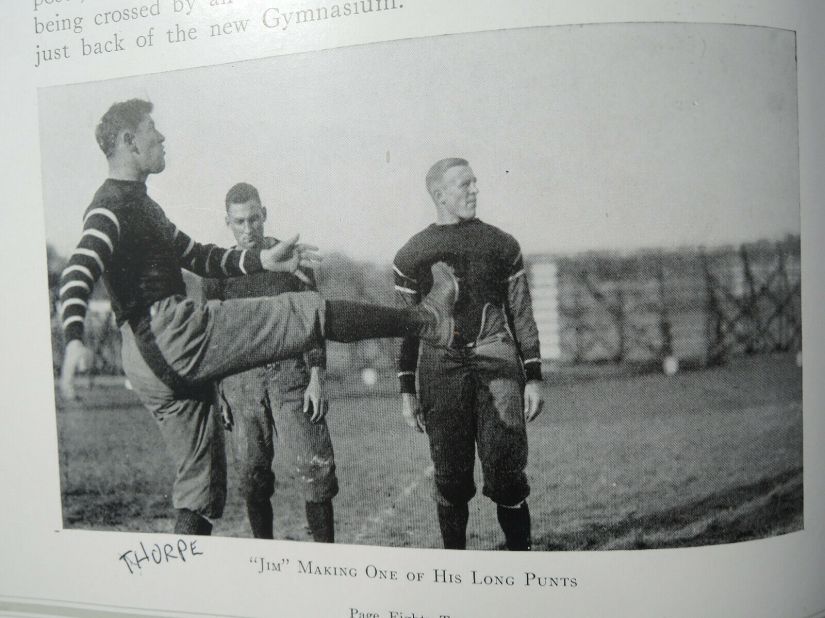
Thorpe made his first appearance on campus the next day. Even though it was just a practice, the IU faithful showed up in droves, first gathering at 4 p.m. outside the Student Building before marching through campus to Jordan Field. Chic Griffis, the yell leader for the Hoosiers, taught the standing room only crowd new cheers for the game including one called “nine cheers for Thorpe,” and another named “nine cheers for Childs” as the Hoosiers practiced. A number of alumni made their way into town to get a glimpse of the superstar on the Hoosiers’ staff. The next day, Thorpe made his Hoosier coaching debut against the Miami Redskins. Thorpe’s presence fired up the crowd as IU jumped out to a 34-0 lead by halftime. IU fans thrilled to the sight of Thorpe pacing the sideline. IU hammered Miami 41-0 in front of a huge crowd at Jordan Field. By the next Tuesday, Thorpe was finally getting in some real work with the kickers. The Daily Student noted, “Before the scrimmage, assistant coach Thorpe had the kickers out in the center of the arena instructing them in getting off their punts in good form…The Indian’s long, twisting spirals were not duplicated by either Scott or Whitaker, although both Crimson backs showed much improvement over past performances.”
A few days later, before the University of Chicago game, Thorpe wowed observers again. The IDS observers noted, “In showing the kickers how to boot the ball, the Indian sent the pigskin seventy and seventy-five yards on an average and was roundly applauded.” Despite Thorpe’s expert training, the Hoosiers’ lost to Amos Alonzo Stagg’s Maroons 13-7. The Chicago media hyped Thorpe’s appearance in the city, completely overlooking the fact that Childs, not Thorpe, was IU’s head coach. One paper described the team as “Indian Jim Thorpe’s Hoosier footballers” and Thorpe far overshadowed the IU football team. After the game, Thorpe spent his time on Jordan Field practicing kicking by himself. One IDS reporter noted on October 19th, “No one was around – there was no grandstand play – just a step, a quick swing of the leg and a double-thud as the ball hit ground and cleated shoe at the same instant. The kicker was “Jim” Thorpe, late addition to the Crimson coaching staff. He stood on the line which divides the gridiron into two equal portions, a little toward the sideline to avoid the mud. There was a flash of red and brown as his leg swung to meet the rising pigskin and away sailed the ball, end over end, squarely between the white posts at the end of the field. The long kick was accomplished with so much ease and grace that it appeared the least difficult feat in the world, but the big Indian merely smiled. It’s not “being done” on many gridirons this season, however, so old Jordan Field ought to feel mighty proud.”
With a bye week on the schedule following the Chicago game, the coaching staff focused on the fundamentals during a closed practice on Jordan Field. Barbed wire was placed along the top of the wooden fence surrounding the field and guards were posted at every entrance and more were on hand to discourage anybody peeking through a knothole. It was during Thorpe’s tenure at IU the ground was cleared near the football field for the new Men’s Gymnasium. Tradition claims that Jim Thorpe was on hand for the groundbreaking when axes were handed out and male students chopped down an apple orchard that occupied the site. Coeds handed out cider and sandwiches, and a good time was had by all.
Next, the Hoosiers traveled to Indianapolis’ Washington Field to take on Washington and Lee Oct. 30 in a sold out game attended by an estimated three-quarters of the IU student body. Indiana Governor Sam Ralston was also in attendance. Despite all of Thorpe’s work, IU’s kickers missed twice in the third quarter, one from less than 40 yards out. Those misses were critical in IU’s 7-7 tie with Washington and Lee in front of the largest crowd ever to see a game in pre-Hoosier Dome Indianapolis-8,500. Thorpe’s presence in the capital city translated into big money for the University as IU cleared between $5,000-$6,000 for the game, a staggering amount for the time worth over $ 150,000 today.
Indiana then traveled to Ohio State Nov. 6. Perhaps in shades of things to come, the Buckeyes won 10-9 in a game that saw the Hoosiers flagged for more than 100 yards in penalties. Once again, Thorpe’s work with the kickers didn’t pan out as IU missed five field-goal attempts, including one that skidded across the ground and over the goal line and another that was blocked. Childs returned to Bloomington and drilled his squad hard while Thorpe worked with the offensive players in search of a new kicker. He found one in a freshman walk-on who went 6-of-8 from 40 yards in practice.
Indiana traveled back to Chicago by train for its Nov. 13 battle with Northwestern. After falling behind 6-0 in the first quarter, the Hoosiers scored a pair of touchdowns and kicked both extra points to lead Indiana to a 14-6 victory. At halftime, Thorpe wowed the windy city crowd with a kicking and punting exhibition. By now, reality was setting in for Jim Thorpe. His love for football could not overcome his impatience for coaching others to perform a task that he was still the best in the game at. So Jim Thorpe went back to what he knew best.
He signed his contract with the Canton Bulldogs of the Ohio League and took a train from Chicago to Massillon (Ohio) while still under contract as an IU coach. In that Nov. 14 game, Thorpe came off the bench for the Bulldogs and although Canton lost 16-0, more than 5,000 fans packed the stands to watch the game. Since previous attendance had been 1,500 fan, it was obvious that most of them were there to see Thorpe. After the game, Thorpe hopped a train back to Bloomington just in time for the old oaken bucket game and Homecoming Weekend. Adding to the excitement was the thought that Jordan Field would be hosting its last game. The new football stadium, next to the Men’s Gymnasium, was under construction. On the day of the game, Nov. 20, Jordan Field was covered with sawdust to try to dry the water left by the snow, sleet and the rain of the past week. A crowd of more than 7,000 packed Jordan Field to see IU battle the Boilermakers in the old oaken bucket game. Purdue won 7-0. Thorpe put on another punting exhibition for the crowd at halftime. This one wasn’t as spirited as the Chicago exhibition the week before. Understandable because, Thorpe had a game to play the next day in Canton. Thorpe arrived in time for the second game in three weeks between Canton and Massillon, and he took over as head coach of the Bulldogs. In the game, Thorpe drop-kicked a field goal from 45 yards out in the first quarter and added a place kick of 38 yards in the third quarter to push Canton to a 6-0 victory.
And just like that, the Jim Thorpe Era at IU ended. Thorpe proved to be a better player than he was a coach. His much ballyhooed addition to the staff did not help the Hoosiers that season. They finished with a 3–3–1 record; eighth place in the Western Conference. While Thorpe remained a hero on campus and in the Bloomington community for years to come, coach Childs was fired and replaced in early December by former Nebraska coach Ewald O. “Jumbo” Stiehm. Childs never coached football again. He was sent to France, where he served in the Army during World War I, and eventually he became the athletic director at the Colombes Stadium in Paris. He left the military with the rank of major, and he became an industrial engineer. He passed away in Washington, D.C., in 1960. Jim Thorpe left Bloomington to continue his professional athletic career in baseball and football. He helped Canton win three Ohio League championships, reportedly sealing the 1919 title with a wind-assisted 95-yard punt late in the game. Thorpe eventually played for six NFL teams, although he never won a title, and he retired from football in 1928. He played Major League Baseball with the Giants, the Cincinnati Reds and the Boston Braves, compiling a career batting average of .252 in 289 games before retiring in 1919. He would be named the greatest athlete of the first half of the 20th century by the Associated Press and was inducted into the College Football Hall of Fame in 1951 and the Pro Football Hall of Fame in 1963.
After his playing days ended, Thorpe struggled. He dabbled in Hollywood with little success, descended into alcoholism, and he worked a number of odd jobs later in life, including serving as a doorman, a ditch digger and a security guard. When he was hospitalized for lip cancer in 1950, he was broke and had to be admitted as a charity case. Thorpe finally succumbed to his third heart attack March 28, 1953 at the age of 64. Following his death, the town of Mauch Chunk purchased his remains and erected a monument in his honor, even though there is no proof he ever visited the area in life. The town renamed itself Jim Thorpe, Pa. In 1982, the Olympic committee reinstated Thorpe’s Olympic gold medals from the 1912 games. One of Thorpe’s odd jobs was serving as a traveling softball umpire. When I was young collector, I purchased an old World War II softball in a box. It belonged to man who had received the ball as his own personal trophy for being named MVP of some long forgotten tournament. He mentioned that the ball had been signed by the tourney umpire. A man named Jim Thorpe. I opened the box and looked at the fountain pen signature, crisp as the day it had been signed. “You probably don’t know who that is.” the old man said. To which I answered, “Oh, I know who it is,” I answered. I’m an IU grad as are both of my children. And for a time, Jim Thorpe was one of us. That ball was sold off many years ago when the responsibility and expense of raising children trumped the need for sentimental objects. But the memory remains,
Knute Rockne
Oh, and that coach that C.C. Childs passed over in favor of Jim Thorpe? Well, that was a young man who was working as a lifeguard at Cedar Point in the summer of 1913. A young man named Knute Rockne. He would go on to become one of the greatest coaches in the history of college football for the Notre Dame Fighting Irish.
“Live fast, die young and leave a good looking corpse.” James Dean was the epitome of that 1949 quote penned by pioneering Chicago African American author Willard Motley. Dean died in a car crash nearly 65 years ago (September 30, 1955) but he remains a fixture on the pop culture landscape as the gold standard of cool. If you need proof of that assessment, go and visit his grave in Fairmount, Indiana. There you will see the lipstick spotted grave marker covered by more kisses than the yard of bricks at the Indianapolis Motor Speedway. James Dean’s aluminium-bodied Porsche was launched into the air, torn and crushed. But that was not the end of the car’s story. The “curse” of James Dean’s car has become a part of America’s cultural mythology. Some claim that the source of that “curse” was none other than iconic Pop Culture car creator known as the “King of the Kustomizers”, George Barris. It was Barris who created the Batmobile, the Beverly Hillbillies truck, the Munster Koach and Grandpa Munster’s “Drag-U-La” casket car used in the 1960s TV series. It was Barris who painted the number 130 on the doors, front hood and rear trunk of Dean’s Posche Spyder. It was Barris who also stenciled the name “Little Bastard” on the back of the car. And it was Barris who eventually came to own the deathcar.
The wrecked Spyder was declared a total loss by the insurance company, which paid Dean’s father, Winton, the fair market value as a settlement. The insurance company, through a salvage yard in Burbank, sold the Spyder to a Dr. William F. Eschrich, a driver who had competed against Dean in his own sports car at three races in 1955. Dr. Eschrich installed Dean’s Porsche 4-cam engine in his Lotus IX race car chassis. Eschrich then raced the Porsche-powered Lotus, which he called a “Potus”, at seven California Sports Car Club events during 1956. At the Pomona Sports Car Races on October 21, 1956, Eschrich, driving this car, was involved in a minor scrape with another driver. In that same race, a Dr. McHenry was killed when his race car went out of control and struck a tree. Dr. Eschrich had loaned Dr. McHenry the transmission and several other parts from James Dean’s deathcar. After Dr. Eschrich striped the car of it’s engine and any other salvageable racing components, he evidently sold the Spyder’s mangled chassis to Barris. It is not known exactly how Barris knew Eschrich, but in late-1956, Barris announced that he would rebuild the Porsche. However, as the wrecked chassis had no remaining integral strength, a rebuild proved to be a Herculean task, even for a wizard like Barris. Barris welded aluminum sheet metal over the caved-in left front fender and cockpit. He then beat on the aluminum panels with a 2×4 to try to mimic collision damage. So, likely to protect his investment and reputation, Barris promoted the “curse” by placing the wreck on public display. First, Barris loaned the car out to the Los Angeles chapter of the National Safety Council for a local custom car show in 1956. The gruesome display was promoted as: “James Dean’s Last Sports Car”. From 1957 to 1959, the exhibit toured the country in various custom car shows, movie theatres, bowling alleys, and highway safety displays throughout California. It even made an appearance at Indianapolis Raceway Park during the NHRA Drag Racing Championship track’s grand opening in 1960. According to Barris, during those years 1956 to 1960, a mysterious series of accidents, not all of them car crashes, occurred involving the car resulting in serious injuries to spectators and even a truck driver’s death.
A few of those stories can be corroborated. A March 12, 1959 wire service story reported that the deathcar, temporarily stored in a garage at 3158 Hamilton Avenue in Fresno, caught fire “awaiting display as a safety exhibit in a coming sports and custom automobile show”. The Fresno Bee followed up with a newspaper story exactly two months later, stating that the “fire occurred on the night of March 11 and only slight damage occurred to the Spyder without any damage to other cars or property in the garage. No one was injured. The cause of the fire is unknown. It burned two tires and scorched the paint on the vehicle.” Barris claimed that the deathcar mysteriously disappeared in 1960 while returning from a traffic safety exhibit in Florida in a sealed railroad boxcar. When the train arrived in Los Angeles, Barris said he signed the manifest and verified that the seal was intact—but the boxcar was empty. Barris offered $1,000,000 to anyone who could produce the remains of the deathcar, but no one ever came forward to claim the prize.
James Dean display at Historic Auto Attractions in Roscoe, Illinois.
Although the legendary car has disappeared, Historic Auto Attractions in Roscoe, Illinois, claims to have an original piece of Dean’s Spyder on display. It is a small chunk of aluminum, a few square inches in size, that was allegedly pried off and stolen from an area near the broken windscreen while the Spyder was being stored in the Cholame Garage after the crash. Also on display in the museum are an assortment of Abraham Lincoln relics (a lock of his hair, the handles from his coffin, various bloodstained cloth and one of the coins purportedly placed on the dead President’s eyes) as well as the Bonnie & Clyde, Flintstones, Back to the Future Movie cars and George Barris’ Batmobile. In 2005, for the 50th anniversary of Dean’s death, the Volo Auto Museum in Volo, Illinois, announced they were displaying what was purported to be the passenger door of the “Little Bastard”.
The 4-Cam Porsche engine (#90059), along with the original California Owner’s Registration (a.k.a. CA Pink Slip) listing the engine number, is still in the possession of the family of the late Dr. Eschrich. The Porsche’s transaxle assembly (#10046), is currently owned by Porsche collector and restorer Jack Styles in Massachusetts. But, to date, neither of Dean’s Porsches have been located. In his 1974 book “Cars of the Stars” George Barris first wrote about the curse and the numerous incidents involving fatal accidents and other serious injuries, but other than the few minor mishaps reported here, researchers have found no evidence to support most of Barris’ claims. Regardless, the story of the curse has certainly failed to diminish the James Dean legend. Like many a Hoosier youth, I too had my “James Dean phase”. Some twenty years ago, my wife Rhonda and I took a trip up to Fairmount to visit James Dean country. We were toured around the community by a couple of older gentlemen who graciously pointed out spots the young actor frequented including the family farm, Dean’s old high school, a few of the old stores Dean used to frequent, the cemetery and the funeral home where Dean was prepared for burial. One of the men mentioned, “He had a closed-casket funeral to conceal his severe injuries from his hometown friends and family.” These men had been underclassmen at Fairmount high school and relayed stories of encounters with Dean from their school days. They remarked that when the young method actor returned to Fairmount after making a Pepsi commercial and a bit part on TV, Dean attended a high school dance. “We didn’t like him because he had all of the girls in the room fawning all over him and we couldn’t get a dance.” they said. “We didn’t see him as a big shot from Hollywood, we saw him as a guy trying to steal our dates.”
Google Earth view of the crash site.
During our 10th wedding anniversary trip to California in 1999, Rhonda and I drove from San Francisco to Hollywood. Part of the way on scenic Highway 101 (which I highly recommend should you ever find yourself out that way) and part of the way retracing James Dean’s final drive. The best way you could envision the scene while sitting here in Indiana in the dead of winter would be for you to make a peace sign with the index and middle fingers of your right hand. Hold your arm straight out. The crash happened where your fingers meet, with the Porsche coming toward you on your middle finger and the Ford traveling up your forearm toward your index finger in the opposite direction. Imagine Turnupseed’s car bearing left and swerving onto your index finger precisely at the same time as Dean’s car passes the same spot. Got it? Driving along that long two-lane stretch of Central California highway, it’s easy to imagine what James Dean’s last hour was like even though much of today’s road isn’t the same one James Dean traveled on. The route was upgraded and moved slightly north in the 1960s. However, parts of the original can still be found. As you drive west on the last mile to the crash site and look off to your left and you can still see what’s left of the original two-lane road. If you pull off to the side of the road, it’s still possible to walk on part of the crumbling pavement, with weeds sprouting in the middle, and imagine that little silver Porsche speeding past.
Donald Turnupseed’s car after the wreck.
From this vantage point, it’s also easy to understand how Donald Turnupseed didn’t see the tiny silver sports car as it approached from the foot of the Polonio Pass. The road shimmers along this route, making it hard to tell where the road ends and the horizon begins. Cars appear and disappear in vaporous waves of prismic light like an optical illusion as light reflects off the road surface. Today, the intersection has been widened and there’s a left-turn lane to access Highway 41 requiring a stop and a 90-degree turn. A road sign rises from the median between the converging lanes ominously proclaiming it as “James Dean Memorial Junction”. The two lanes have remained virtually unchanged since then, while the population of the southern San Joaquin Valley has grown 120% since the crash. Headlight use is mandatory along the 58-mile route, from Lost Hills off Interstate 5 to past Paso Robles to the west. Today, the spot where James Dean died is known as “Blood Alley” due to the number of fatal crashes, mainly head-on collisions, that still occur there among the high volume of commuters, truck drivers, and tourists today. Highway officials report that 42 deaths occurred on the road during the 45 years after James Dean’s passing. Another 38 were killed from 2000 to 2010.
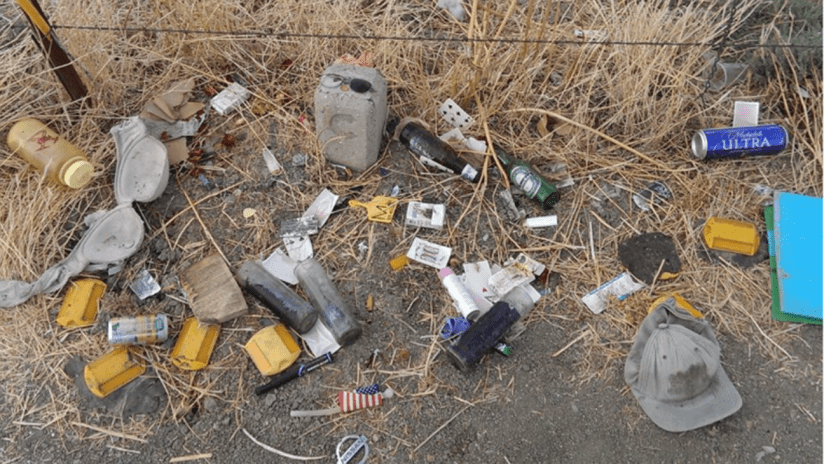
Offerings left by fans at the James Dean death site.
Parking and walking over to the spot where James Dean died is a dangerous exercise on this remote, but very busy highway. Cars and trucks speed by in both directions and anything short of a cautious drive by is not recommended. Where Highway 41 merges into Highway 46, on a barbed-wire fence off the westbound lane, is a small memorial signifying the spot where Dean’s Porsche skidded to a stop. There is a small barren patch dotted with tufts of grass. It can easily be missed unless you know it’s there. It sort of blends in to the surrounding nothingness except for the shadows of footprints and mementos left by fans from all over the world. In September 2015, The Hollywood Reporter noted that visitors to the crash site leave an assortment of tributes, including pictures, alcohol and women’s underwear. However, contrary to popular belief, this is not the actual intersection where the accident occurred. The accident scene is approximately 100 feet to the south of the current intersection, where the road used to be. Seems that retrospectively, Dean’s death, like his life, can easily get lost in the legend. One thing is certain though, the crash that killed the rising Hoosier movie star succeeded in cementing his status as a legend.
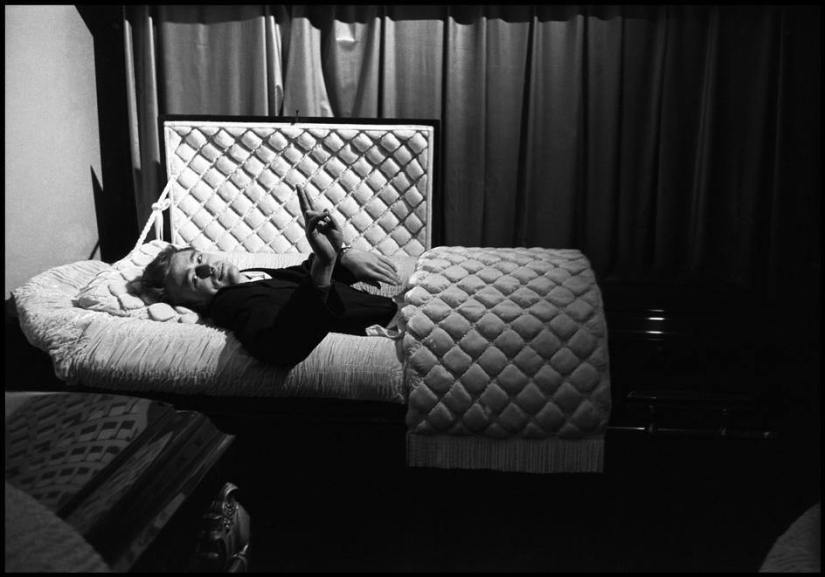
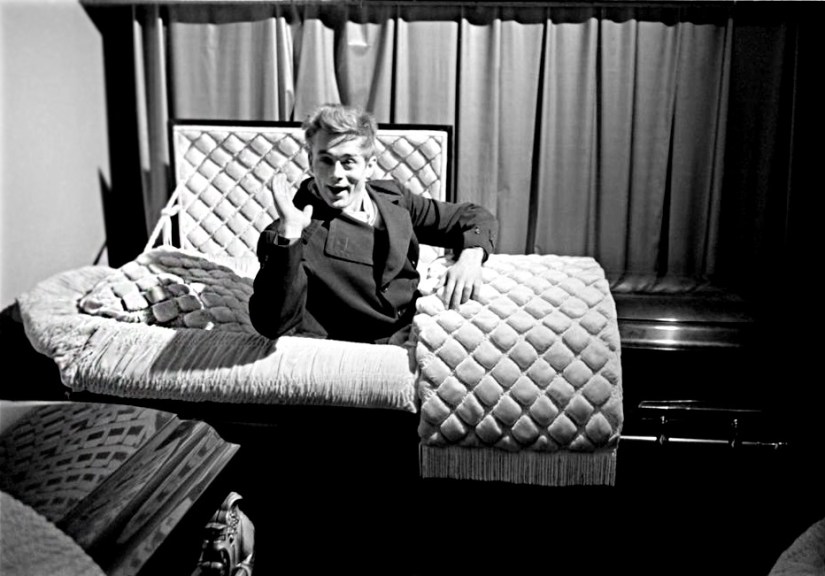
Macabre Images of James Dean clowning in the Fairmount Funeral Home.
Hoosier James Dean died in an automobile accident on a desolate stretch of highway in Cholame, California nearly 65 years ago, yet he remains ever present in the collective memory of fans born well after his death. It is ironic that Cholame sits within a mile of the San Andreas Fault-line because on September 30, 1955, the death of James Dean caused a seismic shift in pop culture history that resonates to this day. Dean became a cultural icon immediately after his death. He remains the symbol of teenage angst to millions of young people whose grandparents were more familiar with him than them. Part of his remaining allure involves his small town genesis, the curse of his death car and an unexpected connection to the Star Wars franchise.
Although tiny Cholame (population 116) makes Dean’s hometown of Fairmount, Indiana (population @ 2,600 in 1955) look like a metropolis, it would be hard to find a more typical California town. Like James Dean himself, Cholame is frozen in time. One of the town’s founders was Robert Edgar Jack. During the Civil War, Jack enlisted in the 56th New York Volunteer Infantry. He fought at the Battle of Gettysburg and was part of the unit dispatched to New York City to quell the infamous draft riots there. Near the end of the war, he moved to California and soon became the largest wool grower in Central California. He later switched to cattle and agriculture. Jack’s land was eventually sold to the William Randolph Hearst Corporation in 1966 and is still a working cattle ranch today. Can’t get much more California than that now can you?
24-year-old James Dean was killed when his Porsche 550 Spyder collided when 23-year-old college student Donald Turnupseed’s 1950 Ford Tudor Custom coupe as it made a left turn at the junction of State Highways 41 and 46. Dean was at the wheel of his sleek silver Porsche Spyder was headed to a sports car race (his fourth) at Salinas Municipal Airport. With him in the car was his Porsche factory-trained mechanic, Rolf Wütherich. The car’s mirror finish was accented by the number 130 on the front hood, rear trunk and side doors and the name “Little Bastard” (designated as such by Dean himself) on the back. The original plan was to tow the high performance car on a trailer behind Dean’s 1955 Ford “woodie” style station wagon the actor had purchased just three months before.
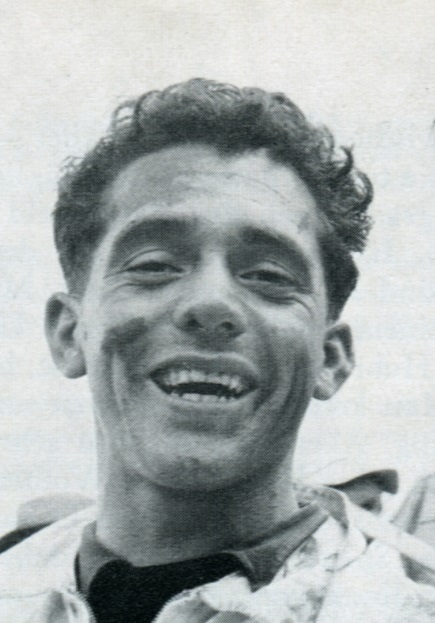
Rolf Wütherich & James Dean.
However Dean’s riding mechanic Wütherich, a former Luftwaffe glider pilot, recommended that they “unloose” the car instead by driving it the 300 miles from Hollywood to Salinas so Dean could get “more seat time” behind the wheel before the race. Dean’s first races were run in a Porsche 356 Speedster, which he bought in March 1955. He won a race for novices at Palm Springs, Calif. driving his No. 23F, a 1954 Porsche Speedster. As his star (and income) began to rise, he graduated to the Spyder 550, an ultra-low, rear-engined sports-racer that cost $7000 in the States, the equivalent of two new Cadillacs in 1955. He traded in his Speedster for the Spyder on September 21, and his new buddy Wütherich was part of the deal.
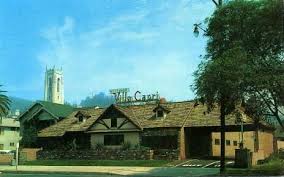
The Villa Capri Restaurant.
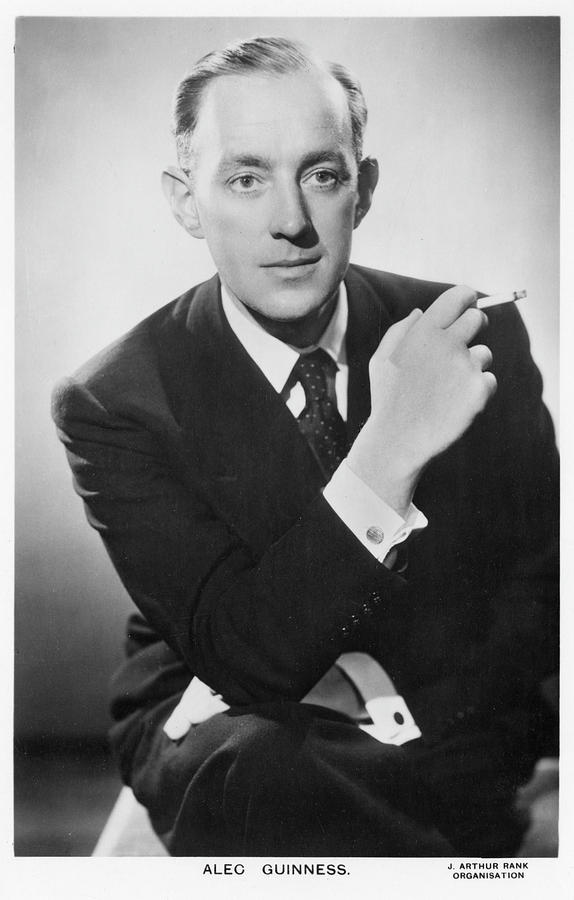
Just after purchase, Dean was driving his new car around Hollywood on September 23, 1955 when he ran into British actor Alec Guinness outside the Villa Capri restaurant. Guinness, exhausted after a long flight from Copenhagen, was having dinner with Thelma Moss, an actress and screenwriter. Because Moss was wearing trousers, the duo had been turned away from a number of restaurants so they traveled to the less formal Italian restaurant. But there were no available tables at the Villa Capri either. As they left the restaurant, Guinness heard the sound of “running, sneakered feet” behind them. He turned and found himself face to face with James Dean. “I was in that restaurant and you couldn’t get a table. My name is James Dean, would you please come and join me?”
Guinness didn’t know Dean (by this time, of Dean’s three movies, only East of Eden had been released) but Dean sure knew Guinness. Guinness had already received an Academy Award nomination for Best Supporting Actor in The Lavender Hill Mob in 1951. Sir Alec (1914-2000) won an Oscar portraying Col. Nicholson in The Bridge on the River Kwai (1957), but he is best remembered by modern fans for portraying Obi-Wan Kenobi in the original Star Wars trilogy. Guinness appeared in nine of the British Film Institute’s 100 greatest British films of the 20th century. Guinness and Moss followed Dean to the restaurant, but before they reached the door, Dean stopped and said, “I’d like to show you something.” Years later, Guinness recalled “There in the courtyard of this little restaurant was this little silver thing, very smart, all done up in cellophane with a bunch of roses tied to its bonnet.” The young method actor told his new British star, “It’s just been delivered,” said Dean “I haven’t even been in it at all.” Guinness thought the car looked “sinister”. “How fast is it?” he asked. “She’ll do a hundred and fifty,” replied Dean.
In a 1977 interview on BBC television, Guinness recounted a prophetic premonition: “Exhausted, hungry, feeling a little ill-tempered in spite of Dean’s kindness, I heard myself saying in a voice I could hardly recognize as my own, ‘Please, never get in it.’ Guinness said. “And some strange thing came over me. Some almost different voice and I said, ‘Look, I won’t join your table unless you want me to, but I must say something: Please do not get into that car, because if you do’ — and I looked at my watch — and I said, ‘if you get into that car at all, it’s now Friday, 10 o’clock at night and by 10 o’clock at night next Friday, you’ll be dead if you get into that car.'” “Dean laughed. ‘Oh, shucks! Don’t be so mean!’” After Dean brushed off the warning, the group proceeded to have a “charming dinner.” Guinness recalled, then closed his story by saying, “It was one of those odd things. It was a very, very odd, spooky experience. I liked him very much, too. I would have loved to have known him more.” Would you expect any less from Obi-Wan Kenobi?
Sir Alec’s prediction came true. A week after that dinner at the Villa Capri, James Dean was dead. Details of James Dean’s last hours on earth have been well documented but are worth revisiting. Dean’s posse that day consisted of Porsche mechanic Rolf Wütherich, Warner Bros. Studios stuntman and close friend Bill Hickman and photographer Sanford H. Roth who was shooting photos for an upcoming story of Dean at the races for Collier’s magazine. The group gathered for coffee and donuts at the Hollywood Ranch Market on Vine Street before leaving around 1:15 p.m. They stopped at a nearby Mobil station on Ventura Blvd. at Beverly Glen Blvd. in Sherman Oaks around 2:00 p.m. to gas up for the 300 mile trip up to Salinas. The group then headed north on the Golden State Freeway and then headed out on Interstate 5 (aka the “Grapevine”) toward Bakersfield. At 3:30 p.m., Dean was stopped by California Highway Patrolman O.V. Hunter at Mettler Station on Wheeler Ridge, just south of Bakersfield, for driving 65 mph in a 55 mph zone. Hickman, following the Spyder in Dean’s Ford “woodie” station wagon pulling the trailer, was also ticketed for driving 20 mph over the limit, as the speed limit for all vehicles towing a trailer was 45 mph. After receiving the citations, Dean and Hickman turned left onto SR 166 / 33 to bypass Bakersfield’s congested downtown district. This bypass became known as “the racer’s road”, a popular short-cut for sports car drivers going to Salinas. The racer’s road went directly to Blackwells Corner at U.S. Route 466 (later SR 46). Around 5:00 p.m., Dean stopped at Blackwells Corner for “apples and Coca-Cola” and met up briefly with fellow racers Lance Reventlow and Bruce Kessler, who were also on their way to Salinas in Reventlow’s Mercedes-Benz 300 SL coupe. As Reventlow and Kessler were leaving, they all agreed to meet for dinner that night in Paso Robles.
At approximately 5:15 p.m., Dean’s party hit the road, driving west on Route 466 toward Paso Robles, approximately 60 miles away. Dean unleashed his Porsche 550 and left Hickman and the Ford station wagon far behind. The Porsche crested Polonio Pass and headed west down Route 466’s long Antelope Grade, passing cars along the way while heading straight toward the junction of Route 41. Around 5:45 p.m., a black-and-white 1950 Ford Tudor Custom coupe traveling at high speed was headed east on Route 466 just west of the town of Shandon. Allegedly, James Dean’s last words, uttered right after Wütherich warned Dean to slow down as the Ford Tudor rolled into their lane just before the impact were, “That guy’s gotta stop… He’ll see us”.
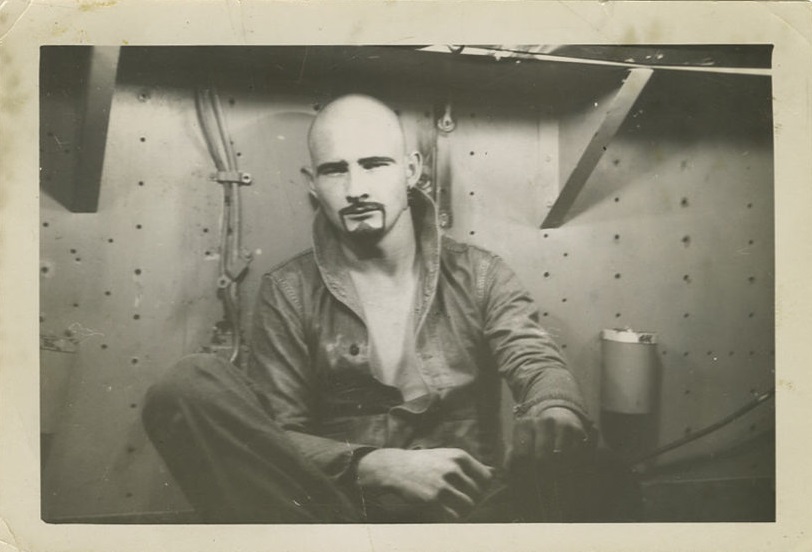
US Navy veteran and Cal Poly student Donald Turnupseed.
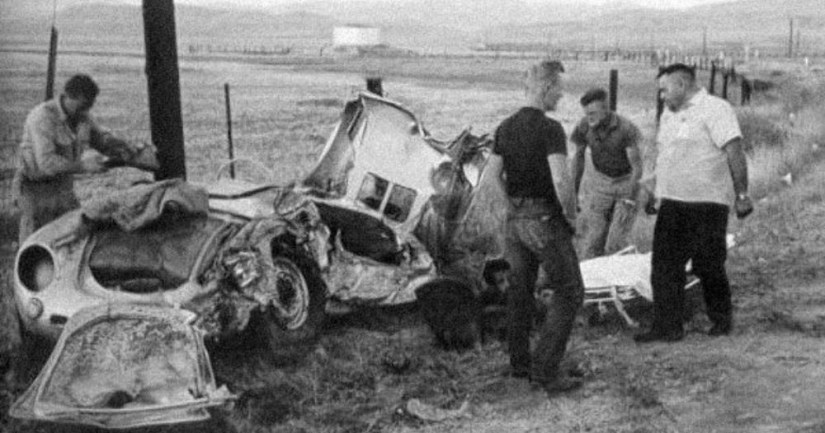
The driver, 23-year-old US Navy veteran and Cal Poly student Donald Turnupseed, made a left turn onto Route 41 headed north, toward Fresno. The skid marks suggested that, as Turnupseed’s Ford crossed over the center line, Dean tried to avoid the impact by steering the Spyder in a “side stepping” racing maneuver, but it was too late and the two cars collided almost head-on. A witness, John Robert White, reportedly saw the Spyder fly into the air and tumble two or three times in cartwheels before landing in a gully beside the shoulder of the road, northwest of the junction. The impact sent the much-heavier Ford sliding 39 feet down Route 466 in the opposite lane. The collision was witnessed by several passersby who stopped to help. A woman with nursing experience attended to Dean and detected a weak pulse in his neck, but according to the woman, “death appeared to have been instantaneous”.
Rolf Wütherich
California Highway Patrol Capt. Ernest Tripke and his partner, Corp. Ronald Nelson were called to the scene. Before the CHP officers arrived, Dean had been pulled from the Spyder’s mangled cockpit, his left foot having been crushed between the clutch and brake pedal. He suffered a broken neck and massive internal and external injuries. Nelson arrived just in time to see an unconscious and dying Dean being placed into an ambulance. Wütherich, who had been in the passenger seat, was thrown from the Spyder, where he lay barely conscious on the shoulder of the road beside the wrecked vehicle. Dean and Wütherich traveled in the same ambulance to the Paso Robles War Memorial Hospital, 28 miles away. Dean was pronounced dead on arrival at 6:20 p.m. by the attending emergency room physician, Dr. Robert Bossert. The cause of death listed on James Dean’s death certificate is listed as “a broken neck, multiple fractures of the upper and lower jaw, both right and left arms broken, and internal injuries.”
James Dean Crash Scene.
Despite reports of Dean’s speed being around 85 mph, Corp. Nelson estimated that the actual speed was around 55 mph, based on the wreckage and position of Dean’s body. It was later determined that Turnupseed was speeding at around 85 mph before impact. Hickman and Roth arrived on scene some ten minutes after the crash. Hickman assisted in extricating Dean from the wreckage while Roth took photographs of the crash. Wütherich survived with a broken jaw and serious hip and femur injuries that required immediate surgery. Turnupseed was only slightly injured with facial bruises and a bloody nose. After being interviewed by the CHP, Turnupseed hitch-hiked in the dark to his home in Tulare. He was not ticketed or ever charged with any wrongdoing and he remained a recluse for the rest of his life. Turnupseed died of cancer in 1995. Wütherich returned to Germany where he became a successful rally co-driver in the 1960s but reportedly never got over the 1955 crash physically or emotionally. In 1981 he too died in a car crash.
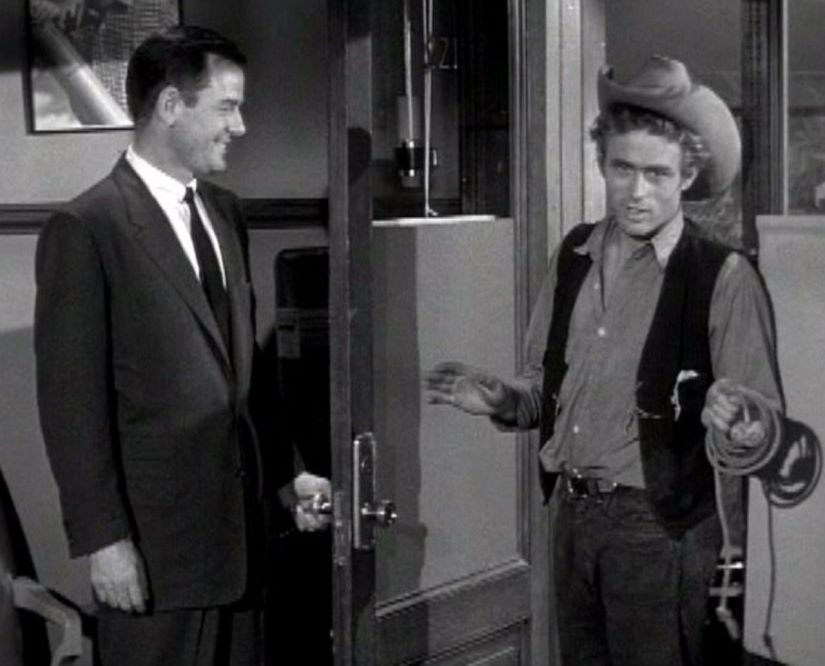
Gig Young and James Dean.
Shortly before the accident, Dean, dressed as his cowboy character from Giant, filmed a road safety television spot with Hollywood star Gig Young. In it, Dean fiddles nervously with a rope lasso and ends the spot by saying, “Take it easy driving – the life you save may be mine”. Four days after the crash, “Rebel Without a Cause” was released. Dean’s performance as Jim Stark, the confused teenager with doting but clueless parents, came to epitomize brooding adolescent behavior. At the time of the crash, Dean had completed one other film, 1956’s “Giant,” which starred Rock Hudson and Elizabeth Taylor. Although billed below them, Dean’s Jet Rink character stole the movie by playing a character who over the course of 40 years goes from cowboy to oil tycoon. Ironically, in this film, we see Dean go from a young man to an old man on screen. Something that never materialized in real life.
Next Week-PART II of Obi-Wan Kenobi and the Curse of James Dean.


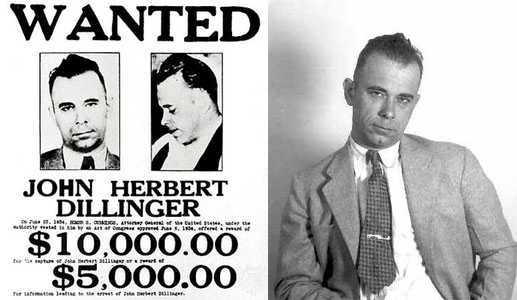 Located at 815 Massachusetts Avenue near the headquarters of the Indiana State Police, Dillinger and Vinson brazenly strolled into the bank with guns drawn. Assistant manager Lloyd Rinehart, seated at his desk chatting casually on the telephone, heard someone yell: “This is a stickup! We mean business.” He later told police that he thought it was a joke and didn’t even look up to interrupt his conversation. “Get off that damned telephone,” Dillinger snarled. Rinehart looked up from his desk to find he was staring into the barrel of a .45 automatic.
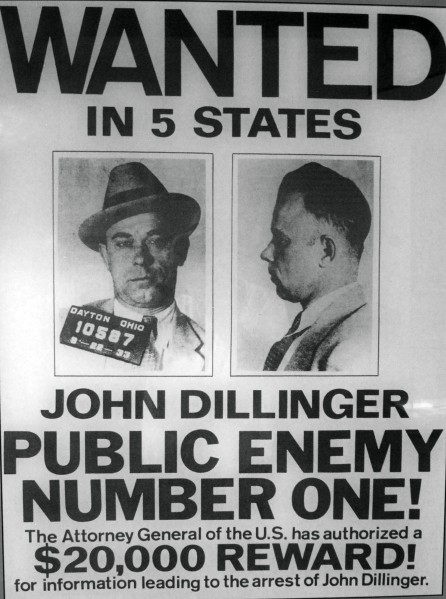 While nervously adjusting his handkerchief-mask and waving his pistol in the air, Vinson pestered Dillinger to “Hurry Up, Hurry Up.” Dillinger casually emptied all of the cash drawers and made his way to the vault. There he discovered a cache of 1,000 half dollars which he gleefully threw over the top of the teller cage bars to Vinson as the Hoosier bandit giggled like a schoolboy. Unbeknownst to them, the bandits had stumbled upon the payroll of the “Real Silk Hosiery Company”, which was the nation’s largest shipper of c.o.d. parcel post packages whose headquarters were located in the Lockerbie Square area. (The building has since been converted to stylish apartments and condominiums.)
 According to a 1907 article in the New York Times, “The anti-spitting movement, a thing of comparatively recent growth, has spread all over the union. The purpose of the anti-spitting ordinance is two fold: first, to abate a nuisance; second, to prevent disease. While the nuisance is a very real one, and from that stand point, if from no other, spitting should be prohibited, the danger of the spreading of disease by spitting in public places has been exaggerated…Spitting upon the sidewalks, in street cars and public places is not nearly so dangerous as the spitting in tenement houses, cheap lodging houses, factories and workshops, and other places which the average spitting law does not presume to prohibit.”
 More precisely, the article goes on to note that in 1907, there were 20 arrests in Indianapolis for spitting in public. All of these arrests were made by health officers, not policemen. The article went on to say “If you have to spit, don’t spit in Buffalo, N.Y., for it may cost you $25. The cheapest place to spit is Indianapolis, where people paid an average of 78 cents.” In 1907 tuberculosis was the second leading cause of death behind pneumonia /influenza.
 During this period, no fewer than four tuberculosis hospitals were built in and around Indianapolis. The Flower Mission Pavilion for Incurables was added to the grounds of the city hospital. The revolutionary design of the building featured open air verandas built at the height of 822 feet containing 2 wards with 10 beds each and 6 private rooms. This hospital was unique in that it charged no fee for services and was available only to patients with advanced, incurable cases of “Consumption.”
 But by far the most interesting of these four T.B. hospitals was the Day Camp of the Women’s Improvement Club, located in the Brightwood area of Indianapolis. It’s capacity was only 7 patients. Literature of the era described the facility as being “For colored women in incipient or convalescent stages of tuberculosis. The camp is located in a grove near Brightwood, a suburb of Indianapolis. The equipment used is largely tents. This is one of the few camps in the United States exclusively for colored women. It is conducted by the Women’s Improvement Club, composed of twenty colored women of Indianapolis.”
 It was mistakenly believed that the only way the epidemic could be stopped within a family was to visit the cemetery at night and disinter the deceased subject and remove it’s heart. There was a well documented case of this very thing happening in Rhode Island in 1892. Nineteen-year-old Mercy Brown had died of consumption and as her family began to suffer from the same symptoms, her father went to the family tomb two months after her death and, assisted by the family physician, removed her heart and burnt it to ashes. These fears and old wive’s tales about T.B. surely existed in 1907, undoubtedly contributing to the ferocity of the Tuberculosis War in Indianapolis.
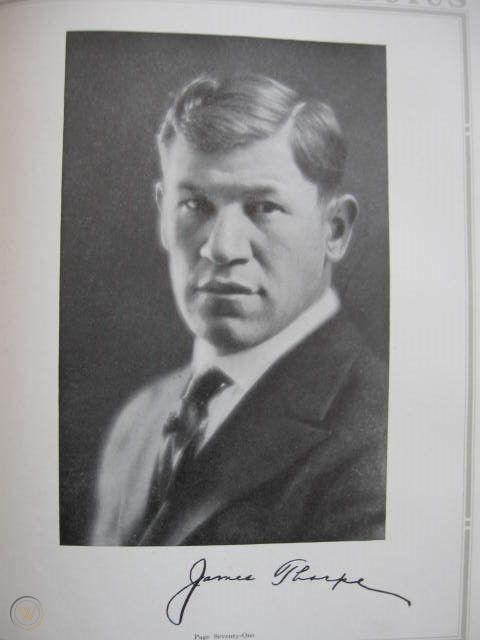 The Indianapolis star reported, “After some three weeks of anxious waiting, (John) McGraw’s national pastimers turn over to the University coaching staff one of the greatest athletes the world has ever known, James Thorpe. He and his family will arrive in this city Thursday evening at 7 o’clock. Thorpe will take up his duties as assistant coach Friday afternoon…Students, alumni and, in fact, the entire college world looks forward to the coming of this great athlete, with great eagerness to know exactly how his coaching will compare with his known ability as a player. In fact, the thing foremost in the minds of these men is, can this All-American star teach the Indiana backfield men the tricks that made him so famous at Carlisle?”
 Thorpe’s presence fired up the crowd as IU jumped out to a 34-0 lead by halftime. IU fans thrilled to the sight of Thorpe pacing the sideline. IU hammered Miami 41-0 in front of a huge crowd at Jordan Field. By the next Tuesday, Thorpe was finally getting in some real work with the kickers. The Daily Student noted, “Before the scrimmage, assistant coach Thorpe had the kickers out in the center of the arena instructing them in getting off their punts in good form…The Indian’s long, twisting spirals were not duplicated by either Scott or Whitaker, although both Crimson backs showed much improvement over past performances.”
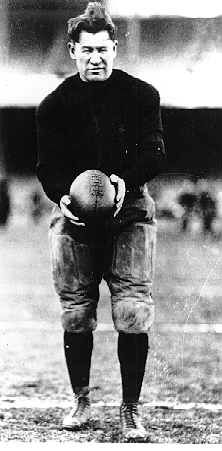 After the game, Thorpe spent his time on Jordan Field practicing kicking by himself. One IDS reporter noted on October 19th, “No one was around – there was no grandstand play – just a step, a quick swing of the leg and a double-thud as the ball hit ground and cleated shoe at the same instant. The kicker was “Jim” Thorpe, late addition to the Crimson coaching staff. He stood on the line which divides the gridiron into two equal portions, a little toward the sideline to avoid the mud. There was a flash of red and brown as his leg swung to meet the rising pigskin and away sailed the ball, end over end, squarely between the white posts at the end of the field. The long kick was accomplished with so much ease and grace that it appeared the least difficult feat in the world, but the big Indian merely smiled. It’s not “being done” on many gridirons this season, however, so old Jordan Field ought to feel mighty proud.”
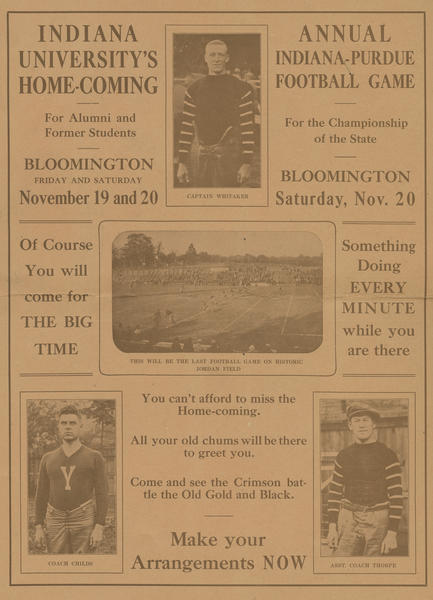 On the day of the game, Nov. 20, Jordan Field was covered with sawdust to try to dry the water left by the snow, sleet and the rain of the past week. A crowd of more than 7,000 packed Jordan Field to see IU battle the Boilermakers in the old oaken bucket game. Purdue won 7-0. Thorpe put on another punting exhibition for the crowd at halftime. This one wasn’t as spirited as the Chicago exhibition the week before. Understandable because, Thorpe had a game to play the next day in Canton. Thorpe arrived in time for the second game in three weeks between Canton and Massillon, and he took over as head coach of the Bulldogs. In the game, Thorpe drop-kicked a field goal from 45 yards out in the first quarter and added a place kick of 38 yards in the third quarter to push Canton to a 6-0 victory.
 Jim Thorpe left Bloomington to continue his professional athletic career in baseball and football. He helped Canton win three Ohio League championships, reportedly sealing the 1919 title with a wind-assisted 95-yard punt late in the game. Thorpe eventually played for six NFL teams, although he never won a title, and he retired from football in 1928. He played Major League Baseball with the Giants, the Cincinnati Reds and the Boston Braves, compiling a career batting average of .252 in 289 games before retiring in 1919. He would be named the greatest athlete of the first half of the 20th century by the Associated Press and was inducted into the College Football Hall of Fame in 1951 and the Pro Football Hall of Fame in 1963.
 One of Thorpe’s odd jobs was serving as a traveling softball umpire. When I was young collector, I purchased an old World War II softball in a box. It belonged to man who had received the ball as his own personal trophy for being named MVP of some long forgotten tournament. He mentioned that the ball had been signed by the tourney umpire. A man named Jim Thorpe. I opened the box and looked at the fountain pen signature, crisp as the day it had been signed. “You probably don’t know who that is.” the old man said. To which I answered, “Oh, I know who it is,” I answered. I’m an IU grad as are both of my children. And for a time, Jim Thorpe was one of us. That ball was sold off many years ago when the responsibility and expense of raising children trumped the need for sentimental objects. But the memory remains,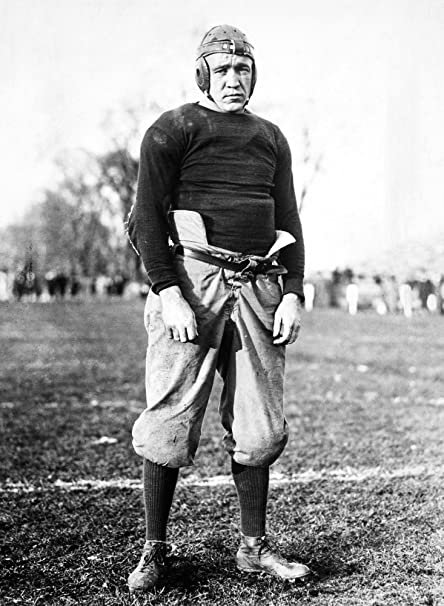

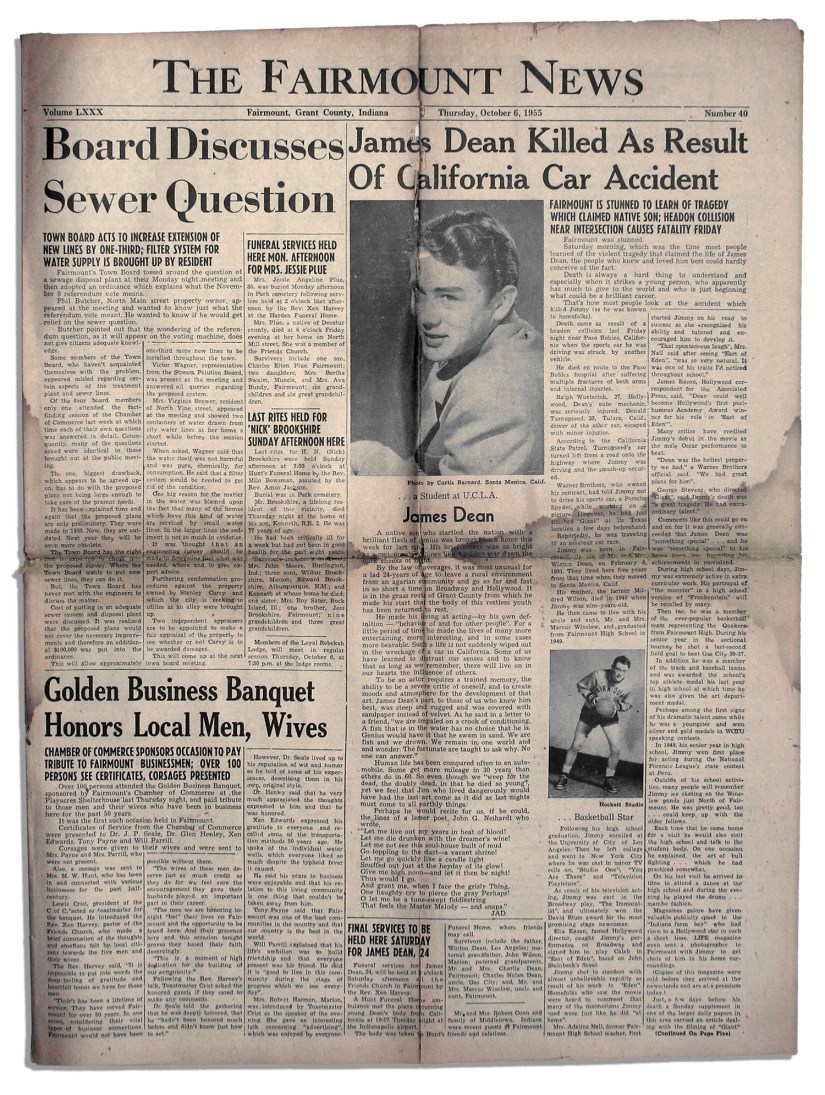 James Dean’s aluminium-bodied Porsche was launched into the air, torn and crushed. But that was not the end of the car’s story. The “curse” of James Dean’s car has become a part of America’s cultural mythology. Some claim that the source of that “curse” was none other than iconic Pop Culture car creator known as the “King of the Kustomizers”, George Barris. It was Barris who created the Batmobile, the Beverly Hillbillies truck, the Munster Koach and Grandpa Munster’s “Drag-U-La” casket car used in the 1960s TV series. It was Barris who painted the number 130 on the doors, front hood and rear trunk of Dean’s Posche Spyder. It was Barris who also stenciled the name “Little Bastard” on the back of the car. And it was Barris who eventually came to own the deathcar.
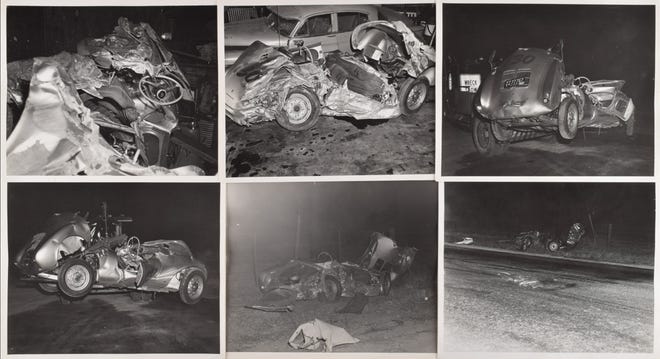 After Dr. Eschrich striped the car of it’s engine and any other salvageable racing components, he evidently sold the Spyder’s mangled chassis to Barris. It is not known exactly how Barris knew Eschrich, but in late-1956, Barris announced that he would rebuild the Porsche. However, as the wrecked chassis had no remaining integral strength, a rebuild proved to be a Herculean task, even for a wizard like Barris. Barris welded aluminum sheet metal over the caved-in left front fender and cockpit. He then beat on the aluminum panels with a 2×4 to try to mimic collision damage. So, likely to protect his investment and reputation, Barris promoted the “curse” by placing the wreck on public display.
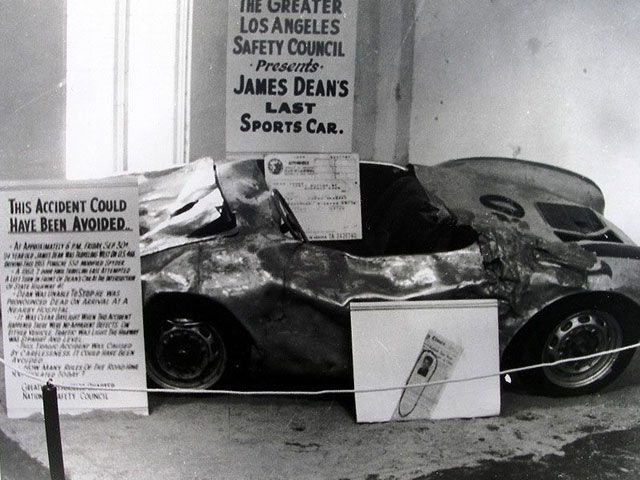 First, Barris loaned the car out to the Los Angeles chapter of the National Safety Council for a local custom car show in 1956. The gruesome display was promoted as: “James Dean’s Last Sports Car”. From 1957 to 1959, the exhibit toured the country in various custom car shows, movie theatres, bowling alleys, and highway safety displays throughout California. It even made an appearance at Indianapolis Raceway Park during the NHRA Drag Racing Championship track’s grand opening in 1960. According to Barris, during those years 1956 to 1960, a mysterious series of accidents, not all of them car crashes, occurred involving the car resulting in serious injuries to spectators and even a truck driver’s death.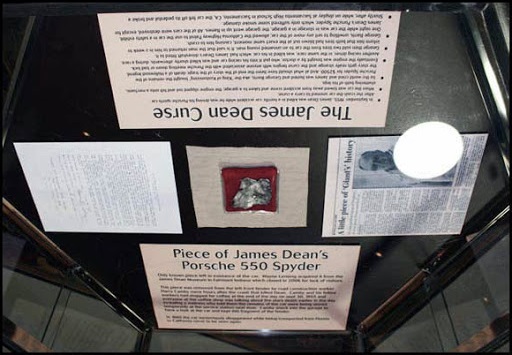
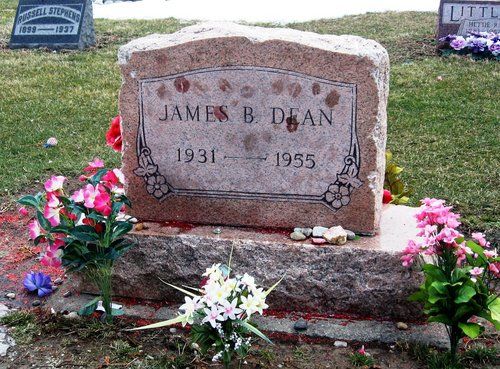 Like many a Hoosier youth, I too had my “James Dean phase”. Some twenty years ago, my wife Rhonda and I took a trip up to Fairmount to visit James Dean country. We were toured around the community by a couple of older gentlemen who graciously pointed out spots the young actor frequented including the family farm, Dean’s old high school, a few of the old stores Dean used to frequent, the cemetery and the funeral home where Dean was prepared for burial. One of the men mentioned, “He had a closed-casket funeral to conceal his severe injuries from his hometown friends and family.” These men had been underclassmen at Fairmount high school and relayed stories of encounters with Dean from their school days. They remarked that when the young method actor returned to Fairmount after making a Pepsi commercial and a bit part on TV, Dean attended a high school dance. “We didn’t like him because he had all of the girls in the room fawning all over him and we couldn’t get a dance.” they said. “We didn’t see him as a big shot from Hollywood, we saw him as a guy trying to steal our dates.”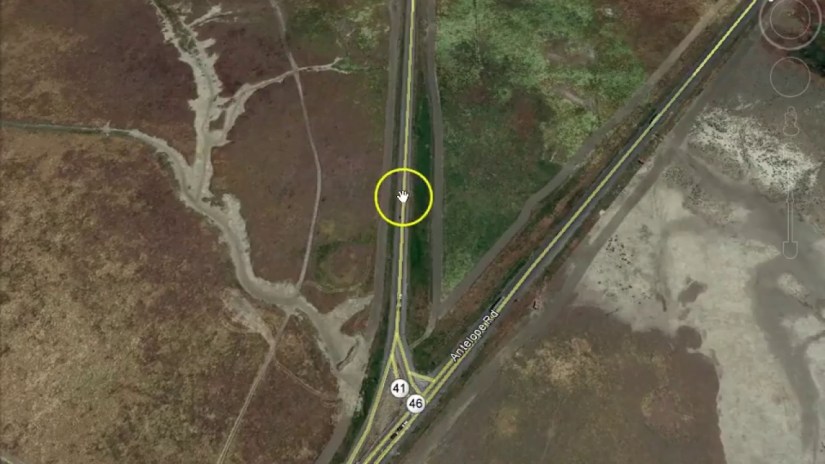
 Driving along that long two-lane stretch of Central California highway, it’s easy to imagine what James Dean’s last hour was like even though much of today’s road isn’t the same one James Dean traveled on. The route was upgraded and moved slightly north in the 1960s. However, parts of the original can still be found. As you drive west on the last mile to the crash site and look off to your left and you can still see what’s left of the original two-lane road. If you pull off to the side of the road, it’s still possible to walk on part of the crumbling pavement, with weeds sprouting in the middle, and imagine that little silver Porsche speeding past.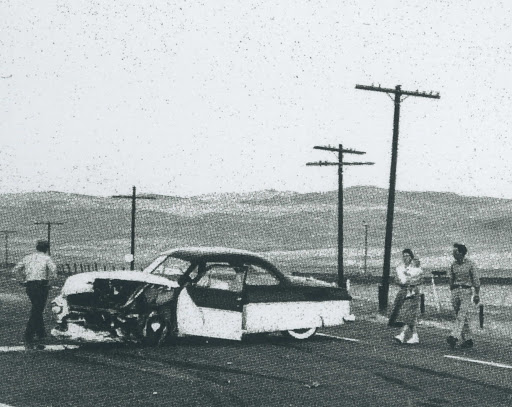


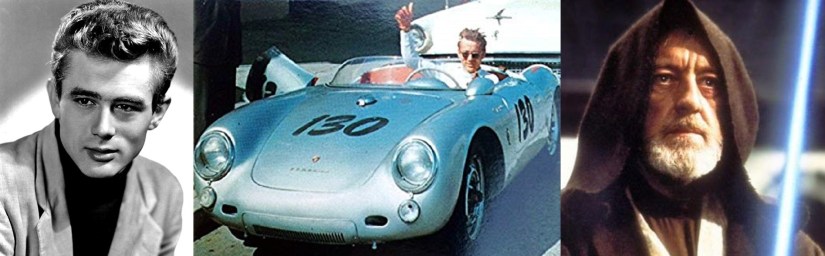
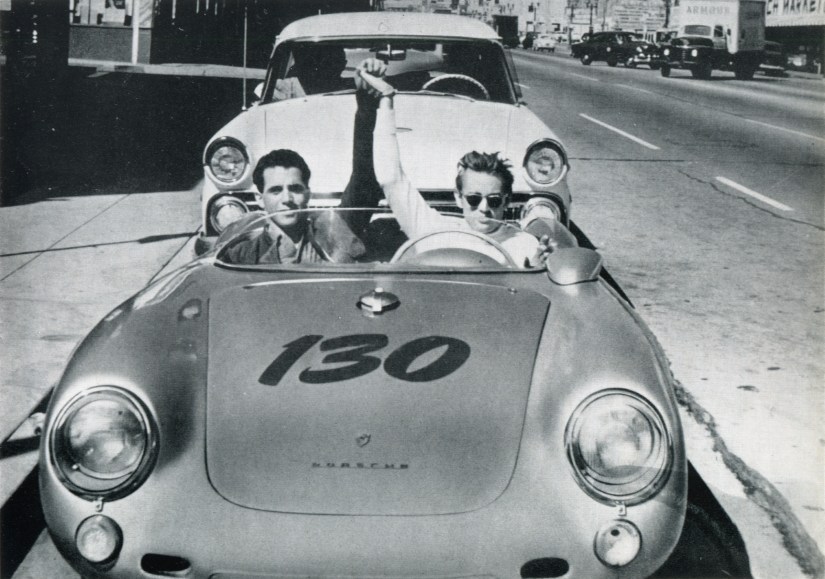
 Guinness and Moss followed Dean to the restaurant, but before they reached the door, Dean stopped and said, “I’d like to show you something.” Years later, Guinness recalled “There in the courtyard of this little restaurant was this little silver thing, very smart, all done up in cellophane with a bunch of roses tied to its bonnet.” The young method actor told his new British star, “It’s just been delivered,” said Dean “I haven’t even been in it at all.” Guinness thought the car looked “sinister”. “How fast is it?” he asked. “She’ll do a hundred and fifty,” replied Dean.
 At 3:30 p.m., Dean was stopped by California Highway Patrolman O.V. Hunter at Mettler Station on Wheeler Ridge, just south of Bakersfield, for driving 65 mph in a 55 mph zone. Hickman, following the Spyder in Dean’s Ford “woodie” station wagon pulling the trailer, was also ticketed for driving 20 mph over the limit, as the speed limit for all vehicles towing a trailer was 45 mph. After receiving the citations, Dean and Hickman turned left onto SR 166 / 33 to bypass Bakersfield’s congested downtown district. This bypass became known as “the racer’s road”, a popular short-cut for sports car drivers going to Salinas. The racer’s road went directly to Blackwells Corner at U.S. Route 466 (later SR 46). Around 5:00 p.m., Dean stopped at Blackwells Corner for “apples and Coca-Cola” and met up briefly with fellow racers Lance Reventlow and Bruce Kessler, who were also on their way to Salinas in Reventlow’s Mercedes-Benz 300 SL coupe. As Reventlow and Kessler were leaving, they all agreed to meet for dinner that night in Paso Robles.