Original publish date August 28, 2014. Republished on September 10, 2026.
https://weeklyview.net/2026/09/10/the-family-affair-curse-part-1-2
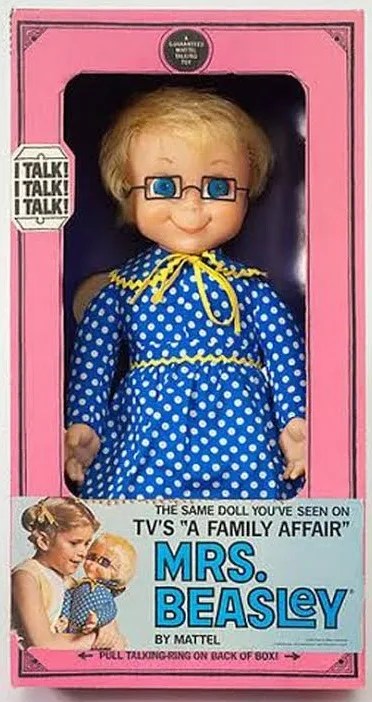
My wife and I visited an antique mall the other day. When we entered, I noticed a strange doll behind a glass case. I usually don’t pay attention to dolls, but this one looked familiar. It was about two feet tall and wore a blue-and-white polka-dot dress with yellow fringe. Her short blonde hair, bright blue eyes, and square glasses made her easy to recognize. I asked my wife, Rhonda, why the doll looked familiar, and she replied, “Oh, that’s Mrs. Beasley from Family Affair.”
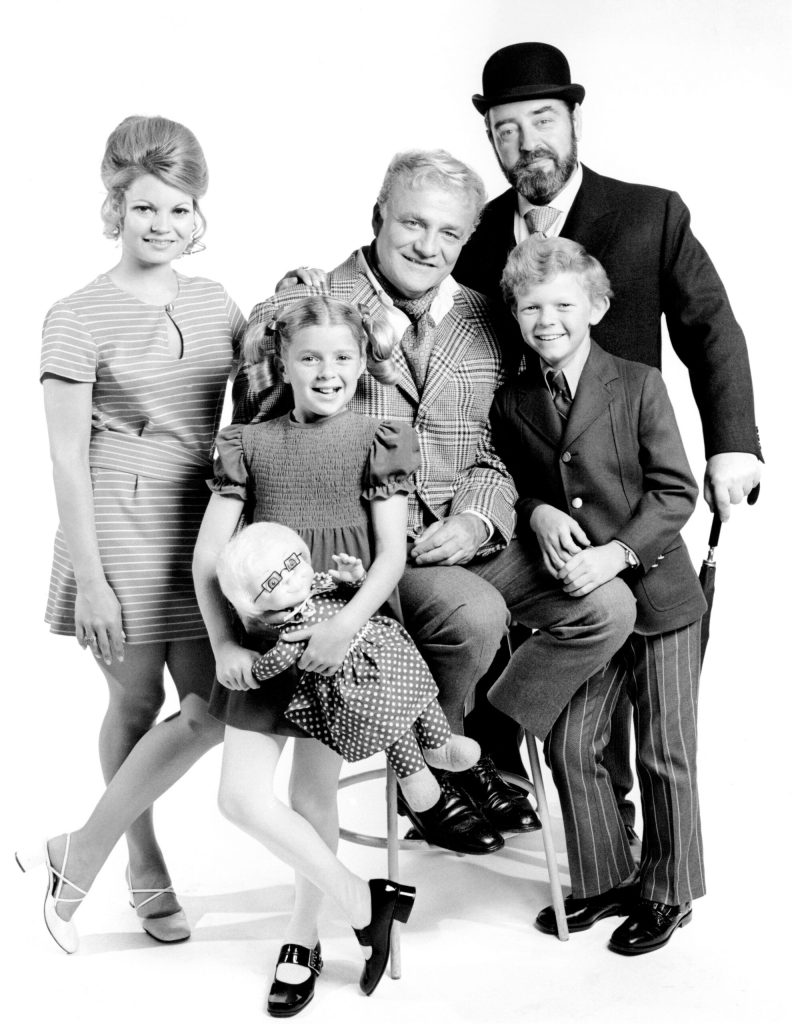
Family Affair? I remember that TV show. Most of all, I remember the owner of that little doll; Anissa Jones. But before I get ahead of myself, for those of you who need a refresher course. Family Affair told the story of a handsome New York City bachelor who becomes the guardian of his nieces and nephew when their parents suddenly die in a car accident. William Davis (a.k.a. “Uncle Bill” played by Brian Keith) is the head of an engineering firm who finds that he has to put his playboy lifestyle on hold to raise these kids. At first he believes it will only be a temporary position, but by the end of the first episode he comes to adore the children and enlists his butler Mr. French (Sebastian Cabot) as their co-protector. The show ran for five seasons from 1966 to 1971 and was in the top five rated programs on TV for three of those seasons.
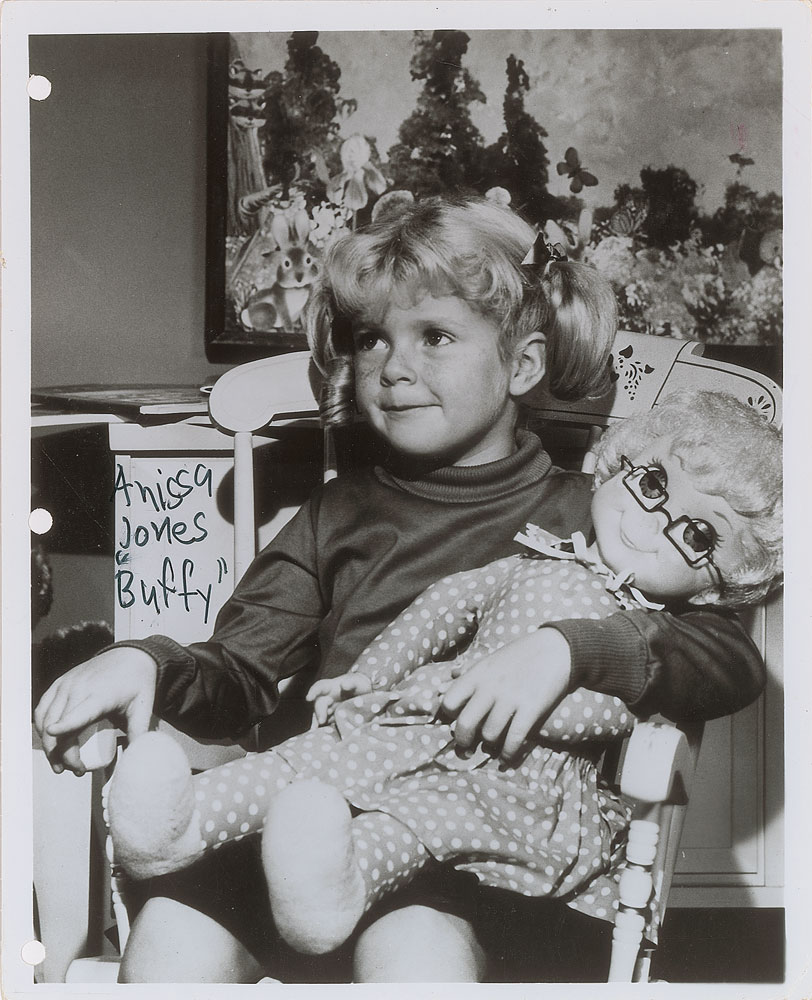
Maybe you’re visualizing that doll, Mrs. Beasley. Maybe the theme song is weaving a path through your head like an ear worm …”da da da dun dada da dun dun, da da da dun dada da dun dun.” Or maybe, like me, you remember Buffy — Anissa Jones. Did you know she was from Indiana? Ironically, on the show, the three kids were born and raised in Terre Haute when they moved to Manhattan to live with their Uncle Bill.
Mary Anissa Jones was born in West Lafayette, Indiana to Purdue faculty member Dr. John Paul Jones and his wife Mary “Paula” Tweel on March 11, 1958. Paula was of Lebanese descent and the child’s middle name (pronounced Ah-NEE-Sah) meant “little friend” in Arabic. A little over a year later, a baby brother, Paul, arrived. (More about him later).
The family moved to Playa del Rey, California while the children were still toddlers but the parents soon divorced in 1965. The divorce undoubtedly affected Anissa adversely and contributed to her precociousness. The most immediate change in behavior was that Anissa and her baby brother Paul became inseparable.
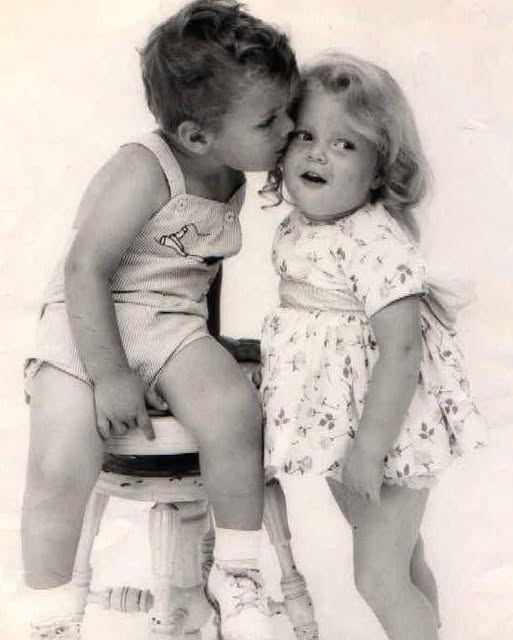
Anissa’ s mom was a school teacher; her dad, a well paid engineer for Hughes Aircraft. But Anissa’s dad has been described as a deadbeat who abandoned his family. Dr. Jones was court ordered to pay $80 per child per month in support. He eventually fell over $10,000.00 behind in child support. This delinquency caused the family car to be repossessed and the family home to go into foreclosure. Despite these terrible family setbacks, Anissa’s career was just starting to take off.
Paula enrolled Anissa in dance class at the tender age of four. Her troupe was asked to perform on The Art Linkletter Show, and 7-year-old Anissa was singled out to do a cartwheel. She failed the first time, landing on her rear end instead, and the audience roared with laughter. Anissa picked herself up and tried it again, this time she nailed it. Although the audience loved it, Anissa was mortified by her initial failure and cried all the way home. An agent was in the audience that night and he immediately contacted her mother to sign Anissa to a contract. Soon, Jones began landing jobs in television commercials, appearing in close to two dozen commercials before the age of eight. Television producer Don Fedderson was putting together the cast for a new series called Family Affair.
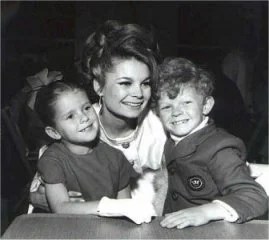
The show needed a 15-year-old girl (Cissy), an 6-year-old boy (Jodie) and another 6-year-old girl (Buffy). Although 8 years of age, Anissa auditioned for and won the part of Elizabeth “Buffy” Patterson-Davis thanks to her youthful look, charming personality and above-average acting talent. Series star Brian Keith suggested Fedderson consider a little boy he’d recently worked on in the film The Russians are Coming, the Russians are Coming who had the ability to cry on cue. Redheaded 6-year-old Johnnie Whitaker’s casting as Jodie required a shift in the concept. He and Jones were written as fraternal twins, with Cathy Garver cast as their 15-year-old sister. (Garver was nearly 21 at the time!)
In another case of life imitating art, Anissa’s parents bitter divorce caused upheaval in her home life which transferred well to her orphan TV character being shuttled here and there under traumatic circumstances. Anissa didn’t have to stretch to obtain the forlorn, dejected qualities that Buffy initially displayed on the show. The first couple of episodes of Family Affair highlighted the adjustments to this newly formed unconventional family unit and the misunderstandings that were sure to arise when a confirmed bachelor takes on three youngsters. This theme, perhaps commonplace by today’s standards, was considered edgy and controversial for the 1960s.
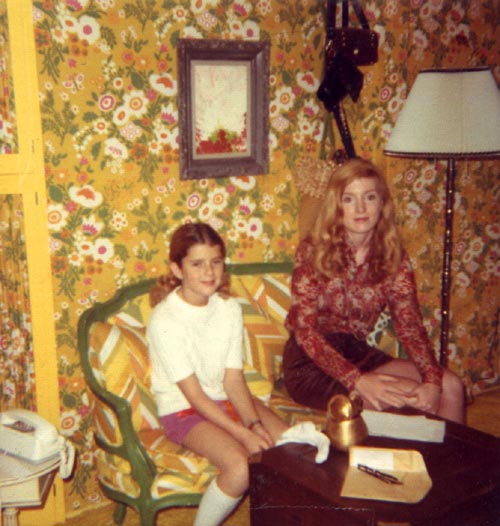
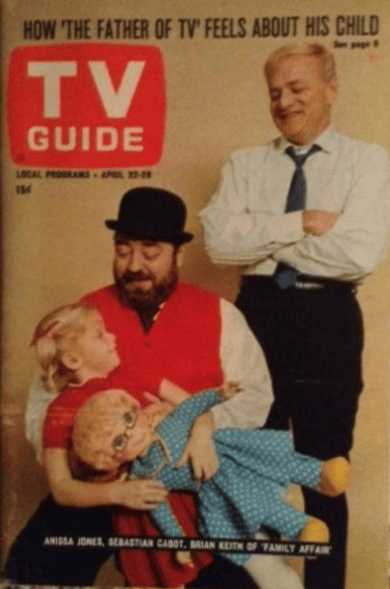
Eventually, the TV quintet solidified into a warm family unit dealing with the regular sort of issues befalling any family. Rotund Sebastian Cabot portrayed the fastidious, efficient British butler whose household and lifestyle are upended as much as his employer’s by the arrival of the children. His exasperation eventually melted into affection and the vision of this large man with a tiny twin on each side became a favorite TV image. At first, Anissa called him “Mr. Cabot,” but as their relationship grew closer she began calling him “Sabby.” When her cat Tiger (a gift from Brian Keith) had kittens, she named one of them Sabby in his honor.
Admittedly, the series was often over-produced and overly sweet, but it was also pleasant, charming, tender, amusing and most of all, cute. The premise of a sitcom featuring an unconventional family was considered innovative but Family Affair opened the door for future shows like Nanny and the Professor, The Brady Bunch, Diff’rent Strokes, and Who’s the Boss to be accepted and believable. The character of Cindy on The Brady Bunch (played by Susan Olsen) was in fact based on Anissa Jones’ Buffy character in both appearance and demeanor.
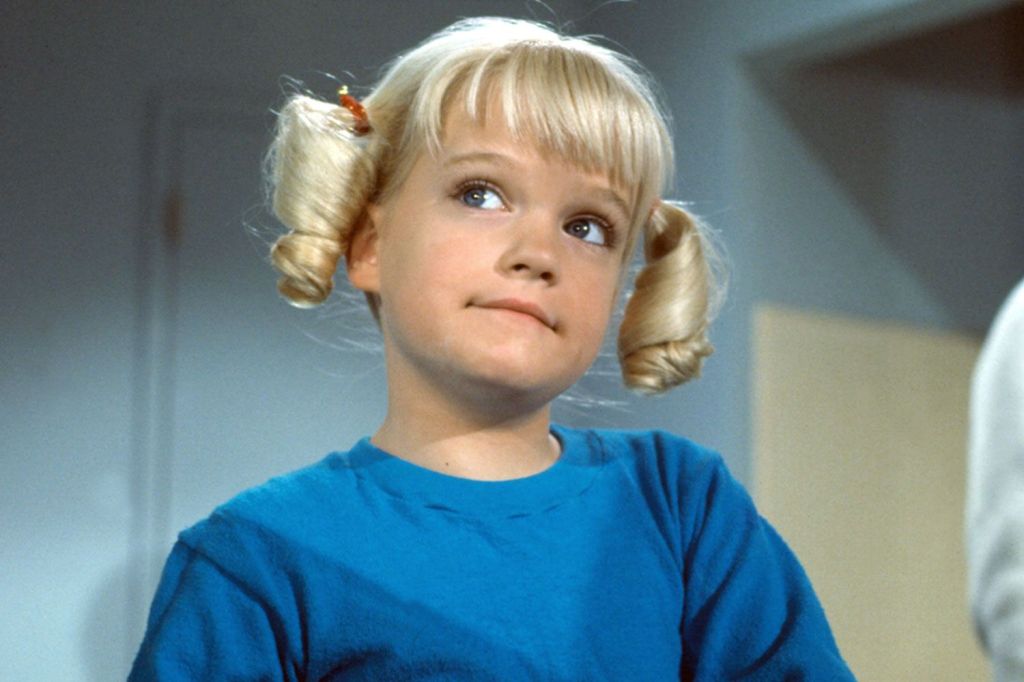
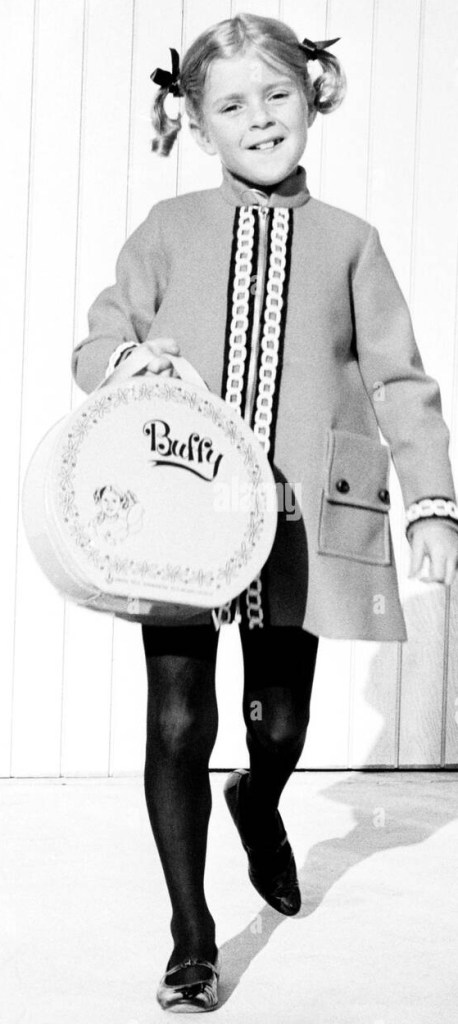
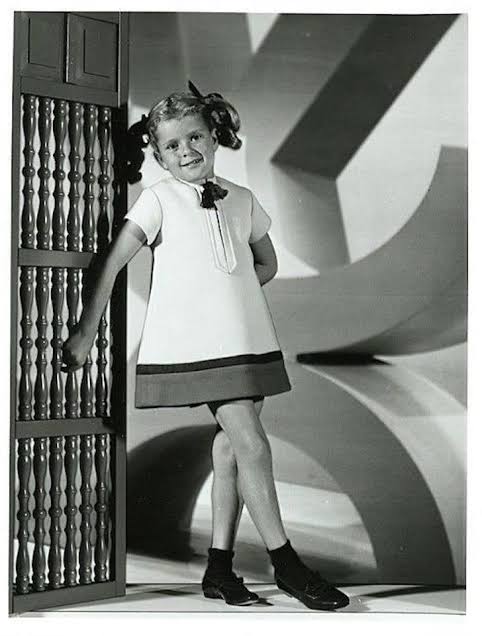
No doubt about it, Anissa Jones was cuter-than-cute. Her natural precocious manner along with her thoughtful freckle-faced visage and sweet plaintive voice made her irresistible to children and adults alike. The vision of the pint sized, pig-tailed prodigy asking questions that she didn’t know the answer to (but had suspicions of what the answers were) is what most fans remember Buffy for. Well, either that or the image of Mrs. Beasley, the doll that started this conversation off. Buffy and Mrs. Beasley were inseparable. Anissa’s character treated the doll not as an inanimate object, but as a close friend with whom she would often talk to and confide in.
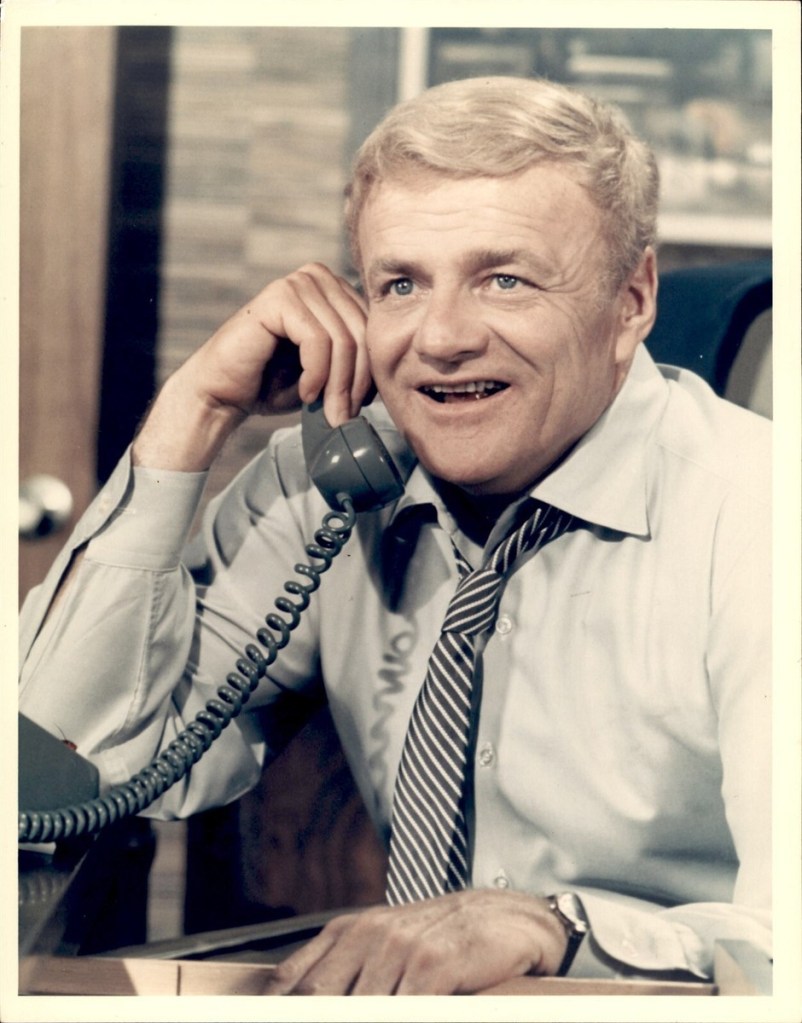
Family Affair was, like Fedderson’s previous series My Three Sons starring Fred MacMurray, almost completely geared to fit its leading man. It must be remembered that both MacMurray and Keith were movie stars, not TV stars. Fred MacMurray arranged to have all of his scenes filmed together in a certain block of time, then the rest of the cast would do their own scenes later after MacMurray had left the set. Likewise, Keith’s scenes were filmed all in a row and in a certain time frame, leaving the rest of the cast to work around them after the fact.
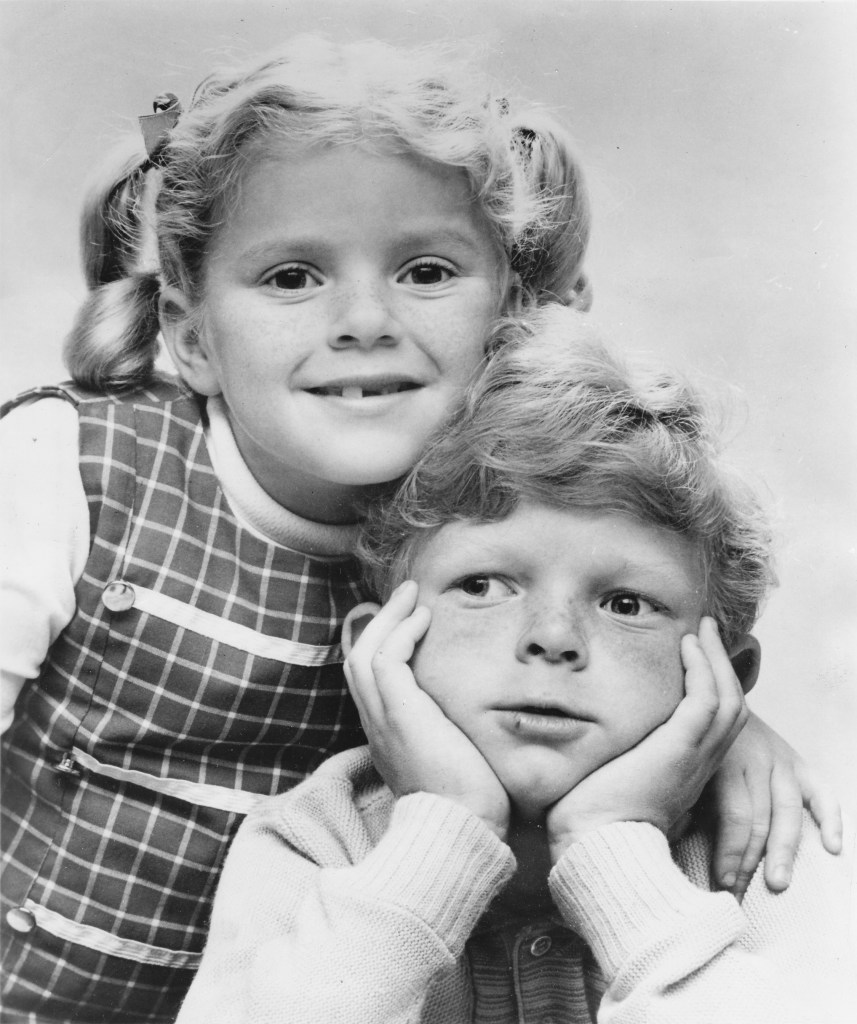
It’s a testament to the acting skills of both child stars when you realize that Anissa Jones and Johnny Whitaker could give the type of performances they did while filming scenes and episodes completely out of sequence. Many times Uncle Bill wasn’t even present on the set, let alone in the room and the scenes were patched together later in editing. Keep in mind that they were filming 30 episodes a year during those first two years — many more than are filmed nowadays.
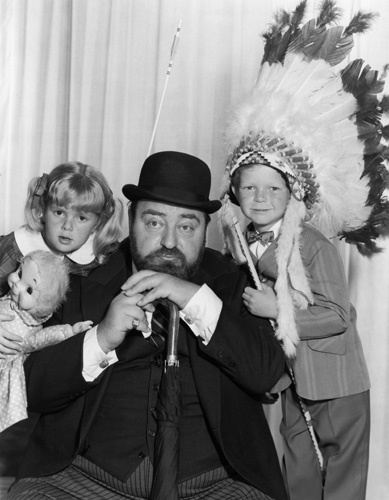
Anissa Jones, Sebastian Cabot, Johnny Whitaker.
Naturally, though they got on well with Keith (and Whitaker, in particular, adored him) his absences caused them to naturally gravitate more towards Sebastian Cabot. During the series, Cabot was stricken with bleeding ulcers in real life and had to exit the program for a while. In his absence, another actor stepped in as his brother and took over the role until Cabot returned — 40 pounds lighter than when he’d left! But the Buffy character proved to be so popular with fans that when Anissa broke her leg in real life, it was written into the show. For an entire year of episodes Anissa’s leg was put in a cast and the scripts were revised to reflect her injury so that there would be no loss of production time.
Anissa would play Buffy for the show’s entire five year run. Her schedule was grueling, often requiring her to work seven days a week year round. In June of 1969, the show hit number 1 in the ratings, turning Buffy and Jody into household names. Mrs. Beasley, Buffy’s doll, also became the best-selling doll in America.
Anissa’s fame skyrocketed. She guest-starred in numerous television specials including Rowan and Martin’s Laugh-In, To Rome With Love, and as a presenter at the 1967 Emmy Awards. Anissa, alongside Jimmy Durante, presented the Monkees with an Emmy for “Best Comedy Series” that year. Merchandising deals soon followed with Buffy paper dolls, Family Affair coloring books and lunch boxes, a Buffy line of children’s clothes, and a Buffy cookbook, not to mention magazines and more TV commercials. The strain on Anissa was beginning to show.
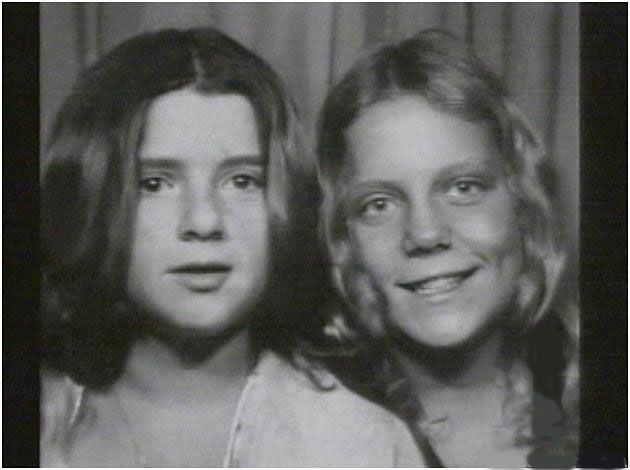
Her mother was still a hard working school teacher with bills to pay and much of Anissa’s growing fortune was locked away in a trust fund unavailable for anything other than emergencies until the child star turned 18. With no money to spare for babysitters, Anissa’s younger brother Paul almost always accompanied her to the studio. Anissa was extremely close to Paul and her love and kindness often showed on the set. As the star of a hit TV series, Anissa often received gifts from advertisers, fans and the studio. She always demanded that an identical one for her brother accompany any gift she received. If a gift were not brought for Paul, she would give hers away. Even at this young age, Anissa’s kind heart was beginning to show.
As proof of her kindness, when Earl Graham, a janitor on the Family Affair set died, Anissa had her Mom take out a $400 ad in Variety Magazine wherein Anissa said goodbye to her good friend. Although Earl was in reality nothing more than a janitor on the set, Anissa saw him as a kind friend. Family Affair would last for five seasons and 138 total episodes, garnering seven Emmy and Golden Globe nominations for the show and its stars along the way. But after the 1971 season the show began to slump in the ratings and was abruptly cancelled.
Surprisingly, Anissa was thrilled that the show’s run was over. Now she could finally go to school, hang out with her friends, and just be a normal girl. Most of all it meant she could finally be rid of those cursed pigtails and that stupid Mrs. Beasley doll that the producers insisted she continue to play with even though she was now 13 years old. Anissa Jones had grown tired of show biz.
Next week — Part 2. The Family Affair Curse.
The “Family Affair” Curse, Part 2
Original publish date September 4, 2014. Republished on September 17, 2026.
https://weeklyview.net/2026/09/17/the-family-affair-curse-part-2
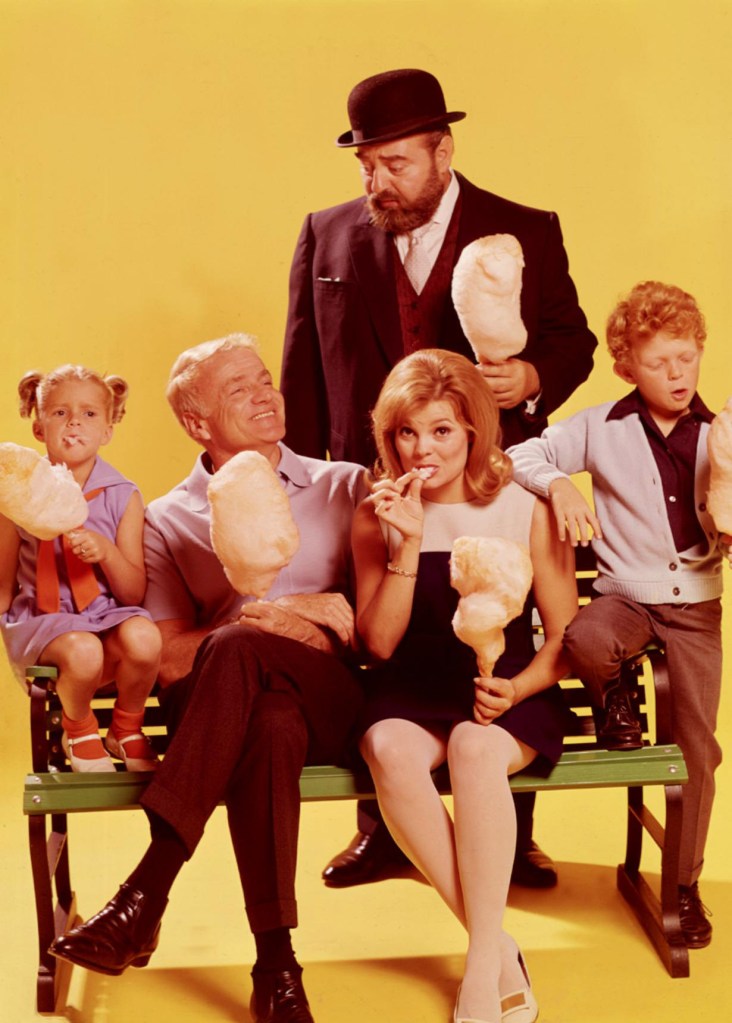
Family Affair was one of the most successful family comedies of the 1960s. The show ran for five seasons from 1966 to 1971 and was in the top five for three of those five seasons. In 1969, the show hit number 1 in the ratings, turning fraternal TV twins Buffy and Jody into household names. Mrs. Beasley, Buffy’s doll, became the best-selling doll in America. Buffy’s likeness was everywhere: paper dolls, puzzles, coloring, comic and cookbooks, clothing and lunch boxes, not to mention movies and TV commercials. Everybody knew Buffy, but not many knew her alter-ego, Anissa Jones.
Anissa was born in Lafayette on March 11, 1958. She was cast in the role of Elizabeth “Buffy” Patterson-Davis Jones on Family Affair in 1965 at the age of 8. During filming, she attended school on the studio lot alongside many other child actors. However, a significant amount of her free time was spent promoting the show. She posed for still photos, went on promotional trips, appeared on other series including Laugh-In and an episode of To Rome with Love (as Buffy Davis). Her image was marketed in every conceivable way. In short, she knew life more as Buffy then Anissa.
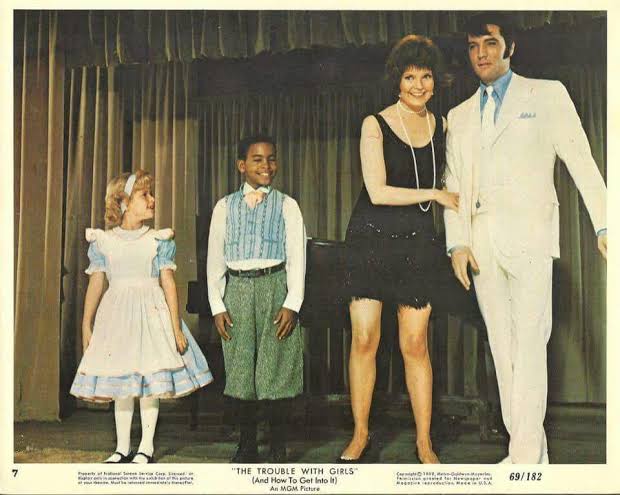
In 1969, while Family Affair was still in production, Jones was cast alongside Elvis Presley in the movie The Trouble With Girls (and how to get into it.) It was one of Elvis’s last films featuring one of the most diverse casts ever assembled: Vincent Price, John Carradine, Dabney Coleman, the voices of Velma and Fred from “Scooby Doo” and baseball great Duke Snider. For once, Anissa was seen without her trademark Buffy pigtails. Ironically, also appearing (without credit) was Susan Olsen, who would herself become a Buffy clone on The Brady Bunch three weeks after the film hit the theatres. Despite her grueling work schedule and a rocky family life, 12-year-old Anissa was adjusting to her fame quite nicely.
In 1971, the show’s ratings fell out of the top 30 and CBS abruptly canceled it. The network was changing its image to more adult-oriented fare. Family Affair was still popular, with rumors of a switch from CBS to ABC, but in the end ABC decided that having The Brady Bunch was enough and nixed the deal. Far from lamenting the loss of her fame and fortune, Anissa was excited at the prospect of being unemployed. She had been working in show business almost nonstop since the age of 5 and now came an unexpected opportunity for Anissa to be a regular kid. For five years, she worked (often seven days a week), ate, studied (she attended school on set) and sometimes slept at the television studio. All the while tending to her little brother Paul at her own insistence.
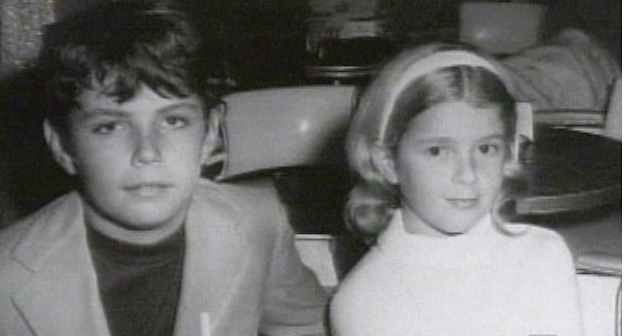
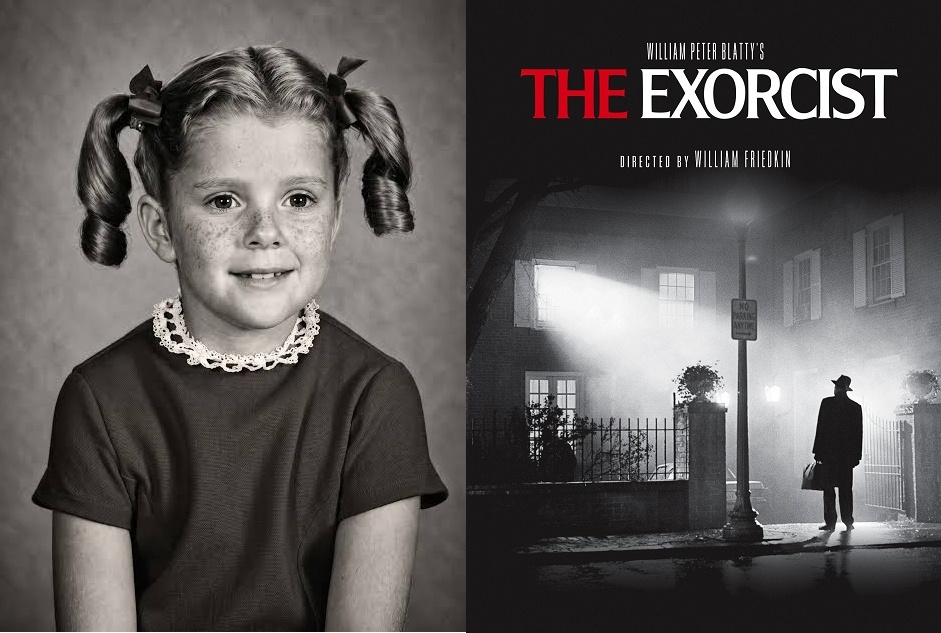
Although canceled, CBS almost immediately sold the show into syndication keeping Buffy ever present in the public’s consciousness. Initially, Jones went to school and attempted a normal life, though her acting career was still garnering interest in Tinseltown. She auditioned for the role of satanically possessed Regan MacNeil in The Exorcist (the polar opposite of Buffy) but ultimately Linda Blair was cast.
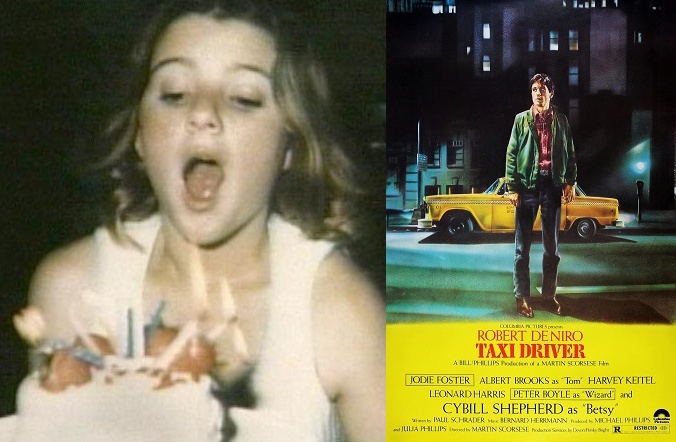
Brian Keith asked her to work with him again on The Brian Keith Show, in which he played a Hawaiian pediatrician, but she declined the part. Amazingly, she was offered the role of Iris “Easy” Steensma in Taxi Driver, but turned it down. Only Jones knows why she didn’t take the part. It seemed to be just the sort of edgy, alternative work she was searching for in the wake of Mrs. Beasley and those pigtails. Instead, the role went to Jodie Foster, who was nominated for an Academy Award for best supporting actress for her portrayal. Anissa seemed content to busy herself with school and friends.
She was offered the controversial role of a child prostitute in the film Pretty Baby, a film set in the brothels of New Orleans, whose key role was that of a 12-year-old girl. It seems that every young actress in Hollywood was connected to that film. Tatum O’Neal, Jodie Foster, Linda Blair, Kristy MacNichol and Dana Plato all allegedly turned it down. While others like Diane Lane, Michelle Pfeiffer, Melanie Griffith, Jennifer Jason Leigh, Laura Dern, and Helen Hunt auditioned for it. Sadly, Anissa would be dead before filming began. The role ultimately went to Brooke Shields whose career skyrocketed from it.
Friends and family later said that Anissa made a decision to quit acting after Family Affair ended in 1971. They claim that she auditioned only because she was collecting unemployment which required her to go to three auditions to receive benefits. After her unemployment ran out Anissa never went to another audition. Anissa walked away from fame, money and success with hope of becoming a regular kid.
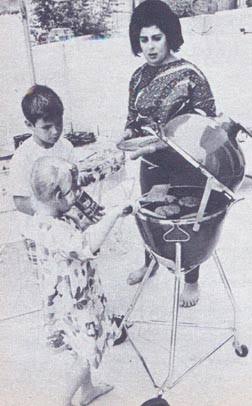
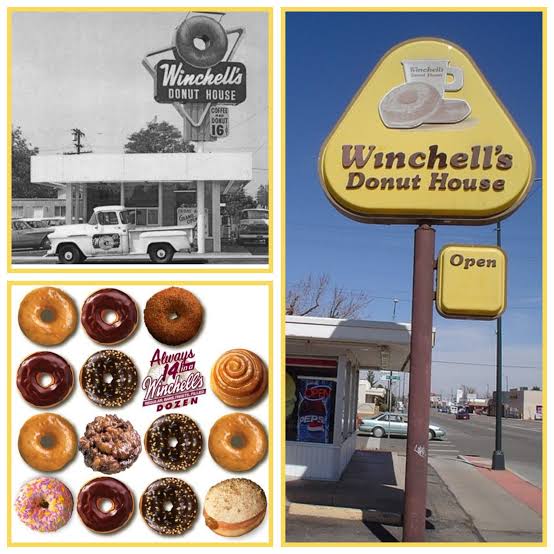
In the months after the show ended, Anissa’s relationship with her divorced mother continued to deteriorate. For a time, Anissa and her brother Paul moved in with their father. But he died and the children moved back with their mother. Anissa’s grades at Westchester High School in L.A. began to slip and, rather than fighting it out with her mom, she began to couch surf at friend’s houses instead. Her mother reported her as a runaway and Anissa was sent to juvenile detention jail for a short time. Upon her release, Anissa again began hanging out at the beach, drinking and using drugs. Her life was spiraling out of control and any traces of Buffy seemed to be washing away like footprints in the sand. Her mother kicked her out and cut off all support. Hoping to make ends meet until she turned 18 and royalties from Family Affair kicked in, Anissa took a job at Winchell’s Donut Shop in Playa Del Rey. After her eighteenth birthday, Anissa would receive her $63,000 trust fund and $107,800 in U.S. Savings Bonds (actual cash value of $75,000.00) from her Family Affair earnings (the average household income in 1976 was $11,172 per annum). When Anissa turned 18, she and her brother Paul moved into an apartment together. Anissa bought herself a brand-new Ford Pinto and her brother a loaded Camaro that cost twice as much as her own car.
With newfound freedom, recent wealth (nearly three quarters of a million dollars in today’s money), and more drugs than she knew what to do with, Anissa embarked on the final role of her life. She began seeing Allan Kovan, a local partier heavily involved in the L.A. drug scene. Anissa’s substance abuse problem escalated from smoking weed and binge drinking to taking large doses of Quaaludes, angel dust, cocaine, and barbiturates. She was in serious trouble and Uncle Bill, Jody, Cissy and Mr. French were nowhere to help.
On August 28th, 1976, while attending a party at a friend’s house, Anissa consumed a potent cocktail of barbiturates, phencyclidine, cocaine and methaquaalone. Boyfriend Kovan later said he checked on her around 9:30 that morning and she was fine. Later, sometime between 11:00 to 11:30 a.m., her friends found Anissa lying in bed nude and unresponsive. After dressing her in a pair of boxer shorts, they called the paramedics an hour later at 12:29 p.m.

Paramedics and firemen were on scene at 12:34. Anissa was found face up, covered by a blanket and a sheet. At 4’ 11” and 85 lbs, one of the paramedics mistook her as a much younger girl and frantically tried to resuscitate her even though the arm, neck and face were already in rigor. They attached the electrodes and difib’ed her once but it was clearly useless, and the order was given to cease resuscitation efforts. Anissa died from what the coroner, who placed the time of death somewhere between 4:30-6:30 a.m., said was “one of the most massive overdoses I’ve ever seen”. She was just 18 years old.
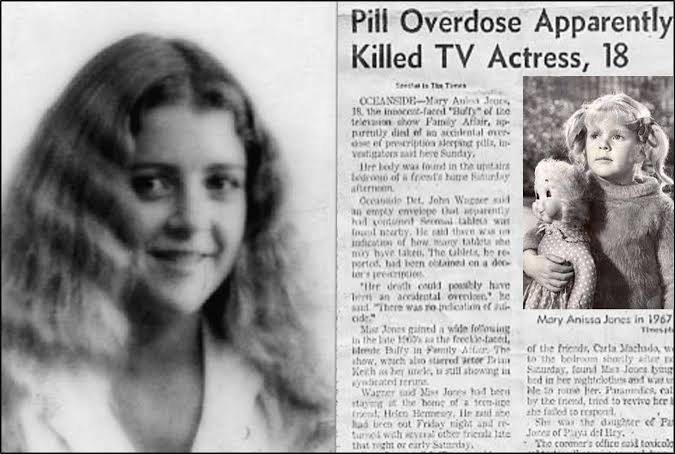
Friend, fellow student and partygoer Steve Hanford recalled later, “The night Anissa died was weird. She wasn’t being very social. She and some other kids stayed in a bedroom taking angel dust and coke. When Anissa came out of the bedroom she said she and some friends were going down to Oceanside to visit her friend Helen Hennessey. The next thing I heard about Anissa was that she was dead. It blew my mind because I thought she was too smart to destroy herself with drugs. She didn’t seem depressed the week before she died.”

Her body was taken to McCormick Funeral Home in Inglewood and then to the Pacific Crest crematory in Redondo Beach for cremation. There were no official services held for her and on September 1, 1976 her ashes were scattered over the Pacific Ocean. But the story doesn’t end there. For years after Anissa’s death, one of the very first in a long line of tragic TV child star premature deaths, became an urban legend known as the “Curse of Family Affair.”
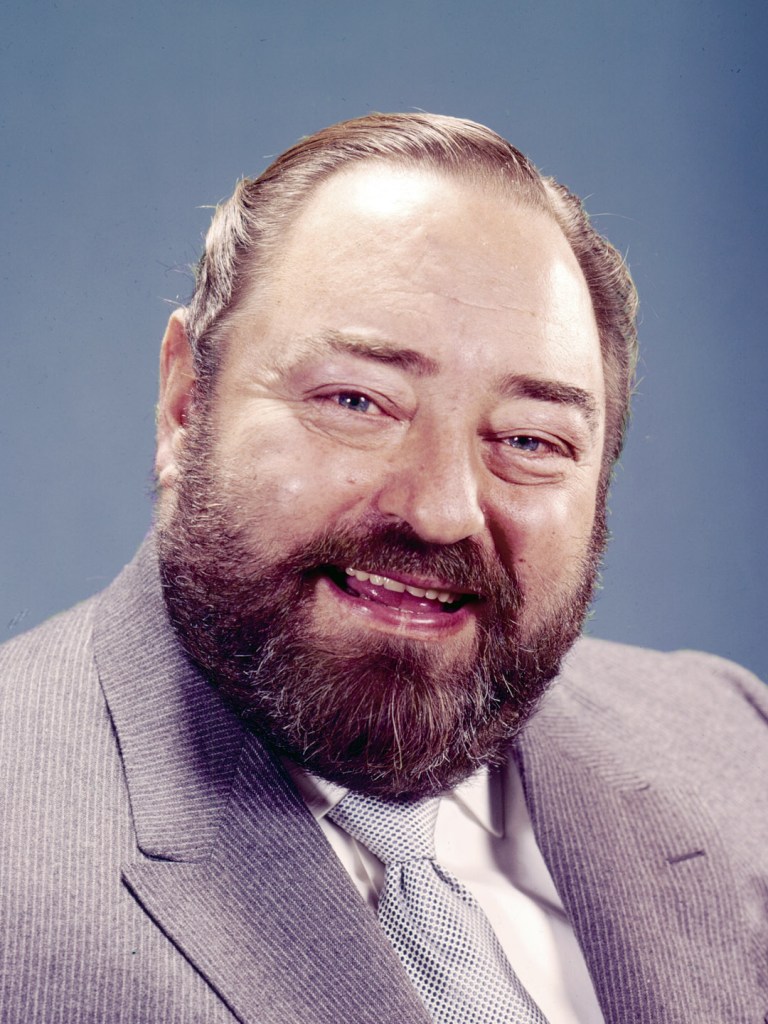
Sebastian Cabot was forced to leave the series for an entire season after being stricken with bleeding ulcers. He had to be replaced by another actor until his return, several months and some 40 pounds lighter. In 1977 Cabot suffered a stroke, his second in three years. He died on August 22, 1977 at the age of 59. His death coming less than a year after Anissa’s. Like his diminutive pig-tailed costar, he was cremated.

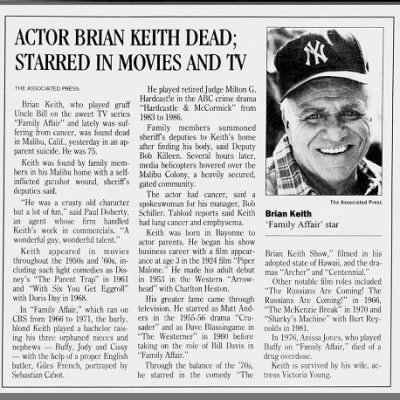
Before the show aired, Brian Keith suffered the real life loss of a child when his 8-year-old son Michael died from a sudden case of pneumonia. Keith’s stepmother was Peg Entwistle, a well-known Broadway actress who committed suicide by jumping from the “H” of the famous Hollywood Sign in 1932. In later life, Keith suffered from emphysema and lung cancer despite having quit smoking 10 years earlier. On June 24, 1997, he was found dead of a self-inflicted gunshot wound at his home in Malibu, two months after his daughter Daisy committed suicide. Keith left a handwritten note in which he wrote “The end is here. I’m finished. The pain is too much. Now it’s time for me to join our little Daisy. She needs me. She didn’t want to be without me here, so she’ll have me again over there. Don’t be sad. This had to come soon.”
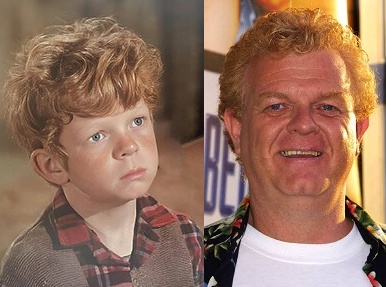
Johnny Whitaker fell into drug and alcohol abuse for nine years during the 1980-90s before an intervention led him to a 12-step program. He has been clean and sober for 17 years. Eight years after Anissa’s accidental overdose, her brother, Paul, would also die from a drug overdose.
The host of the party at which Anissa attended that fateful night was a 14-year-old girl who lived at the house with her divorced father. This girl died at age 34 in a violent car crash in Keaau, Hawaii in 1996.
Today, Anissa Jones is entertaining a whole new generation of children whose parents, many of whom grew up watching her, show them TV Land reruns and DVD episodes of Family Affair. All five seasons are available on DVD. They are a delightful piece of entertainment for young and old. The story of Anissa Jones is a sad one, but her legacy still shines through the innocent countenance of freckle-faced, pig-tailed little Buffy Davis.

 The Indianapolis star reported, “After some three weeks of anxious waiting, (John) McGraw’s national pastimers turn over to the University coaching staff one of the greatest athletes the world has ever known, James Thorpe. He and his family will arrive in this city Thursday evening at 7 o’clock. Thorpe will take up his duties as assistant coach Friday afternoon…Students, alumni and, in fact, the entire college world looks forward to the coming of this great athlete, with great eagerness to know exactly how his coaching will compare with his known ability as a player. In fact, the thing foremost in the minds of these men is, can this All-American star teach the Indiana backfield men the tricks that made him so famous at Carlisle?”
 Thorpe’s presence fired up the crowd as IU jumped out to a 34-0 lead by halftime. IU fans thrilled to the sight of Thorpe pacing the sideline. IU hammered Miami 41-0 in front of a huge crowd at Jordan Field. By the next Tuesday, Thorpe was finally getting in some real work with the kickers. The Daily Student noted, “Before the scrimmage, assistant coach Thorpe had the kickers out in the center of the arena instructing them in getting off their punts in good form…The Indian’s long, twisting spirals were not duplicated by either Scott or Whitaker, although both Crimson backs showed much improvement over past performances.”
 After the game, Thorpe spent his time on Jordan Field practicing kicking by himself. One IDS reporter noted on October 19th, “No one was around – there was no grandstand play – just a step, a quick swing of the leg and a double-thud as the ball hit ground and cleated shoe at the same instant. The kicker was “Jim” Thorpe, late addition to the Crimson coaching staff. He stood on the line which divides the gridiron into two equal portions, a little toward the sideline to avoid the mud. There was a flash of red and brown as his leg swung to meet the rising pigskin and away sailed the ball, end over end, squarely between the white posts at the end of the field. The long kick was accomplished with so much ease and grace that it appeared the least difficult feat in the world, but the big Indian merely smiled. It’s not “being done” on many gridirons this season, however, so old Jordan Field ought to feel mighty proud.”
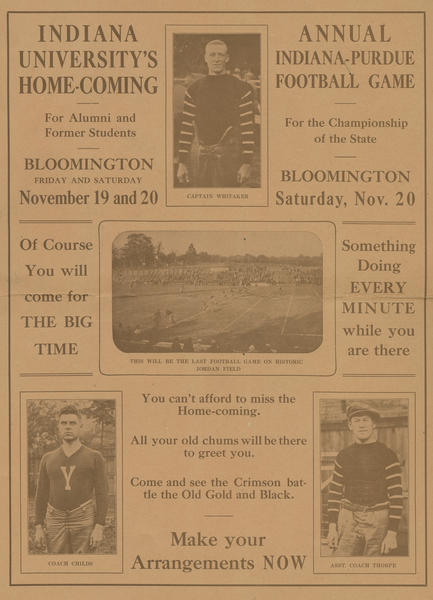 On the day of the game, Nov. 20, Jordan Field was covered with sawdust to try to dry the water left by the snow, sleet and the rain of the past week. A crowd of more than 7,000 packed Jordan Field to see IU battle the Boilermakers in the old oaken bucket game. Purdue won 7-0. Thorpe put on another punting exhibition for the crowd at halftime. This one wasn’t as spirited as the Chicago exhibition the week before. Understandable because, Thorpe had a game to play the next day in Canton. Thorpe arrived in time for the second game in three weeks between Canton and Massillon, and he took over as head coach of the Bulldogs. In the game, Thorpe drop-kicked a field goal from 45 yards out in the first quarter and added a place kick of 38 yards in the third quarter to push Canton to a 6-0 victory.
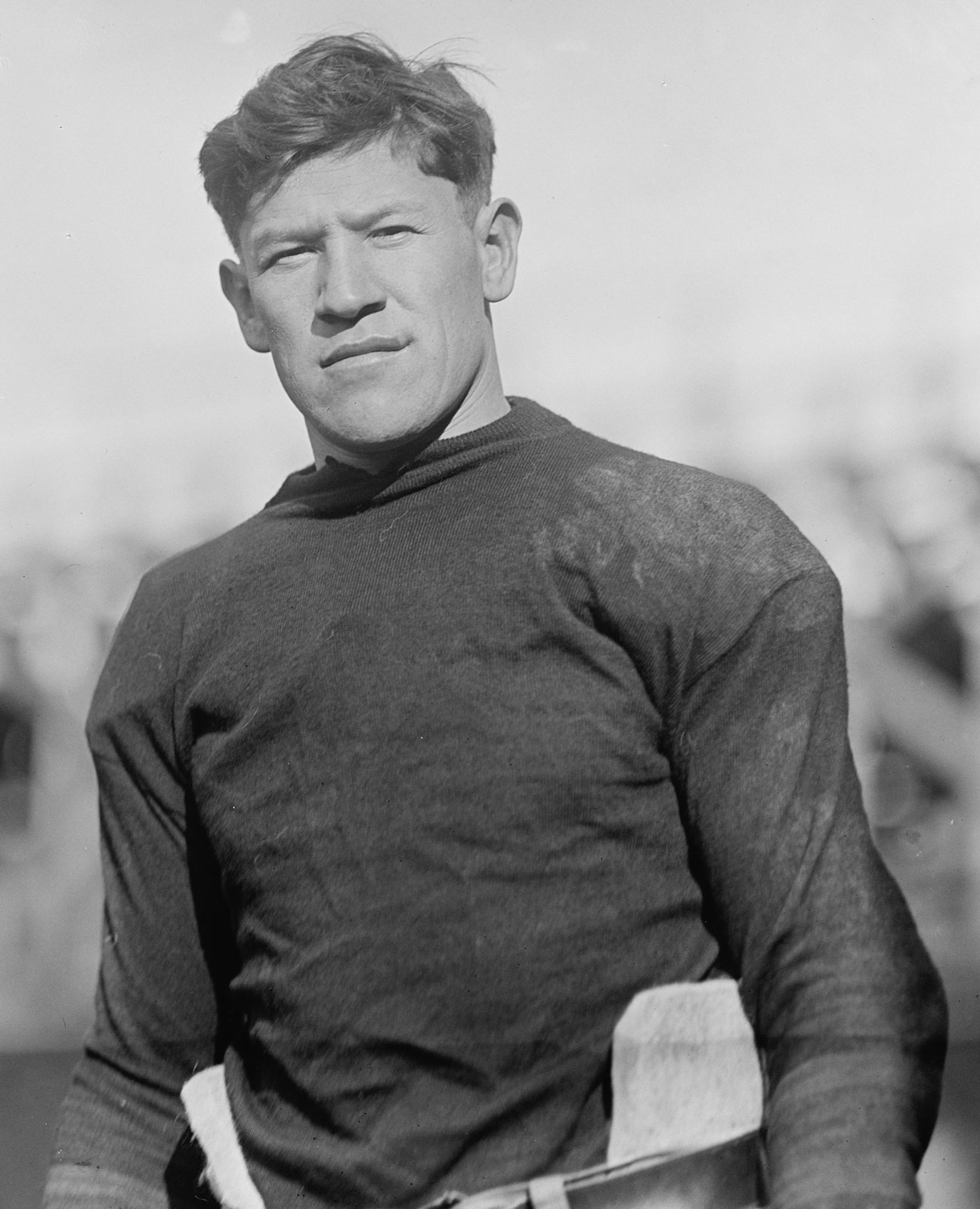 Jim Thorpe left Bloomington to continue his professional athletic career in baseball and football. He helped Canton win three Ohio League championships, reportedly sealing the 1919 title with a wind-assisted 95-yard punt late in the game. Thorpe eventually played for six NFL teams, although he never won a title, and he retired from football in 1928. He played Major League Baseball with the Giants, the Cincinnati Reds and the Boston Braves, compiling a career batting average of .252 in 289 games before retiring in 1919. He would be named the greatest athlete of the first half of the 20th century by the Associated Press and was inducted into the College Football Hall of Fame in 1951 and the Pro Football Hall of Fame in 1963.
 One of Thorpe’s odd jobs was serving as a traveling softball umpire. When I was young collector, I purchased an old World War II softball in a box. It belonged to man who had received the ball as his own personal trophy for being named MVP of some long forgotten tournament. He mentioned that the ball had been signed by the tourney umpire. A man named Jim Thorpe. I opened the box and looked at the fountain pen signature, crisp as the day it had been signed. “You probably don’t know who that is.” the old man said. To which I answered, “Oh, I know who it is,” I answered. I’m an IU grad as are both of my children. And for a time, Jim Thorpe was one of us. That ball was sold off many years ago when the responsibility and expense of raising children trumped the need for sentimental objects. But the memory remains,


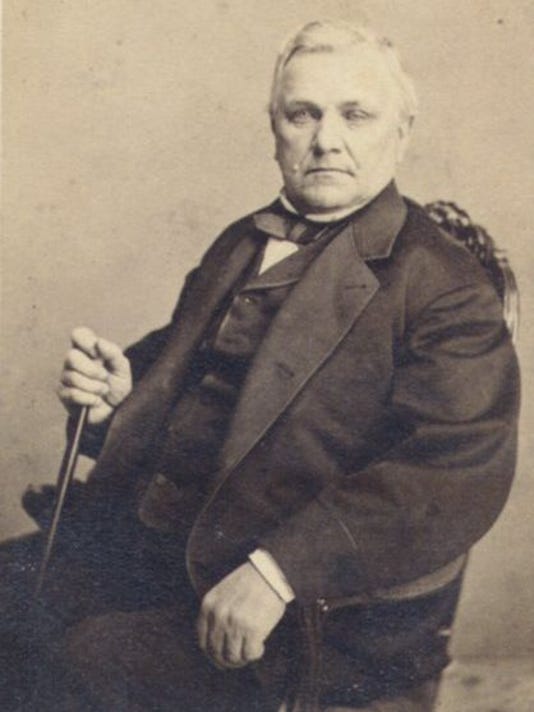
 The train was traveling on what would have been the 101st birthday of school founder and namesake John Purdue (born October 31, 1802). Purdue, a wealthy landowner, politician, educator and merchant, was the primary benefactor of the University. In 1903, if you wanted to get to Indianapolis from either school, you had three choices: ride a horse and buggy, walk or take the train. Since these were the days before automobile travel was popular, train travel was the most widely accepted form of transportation.
 Unlike the raucous fans traveling in the 13 plush, modern streamliner train coaches behind them, the Boilermakers team traveled in relative silence, focusing on the task at hand, mentally preparing for their upcoming rivalry game in the cozy confines of an older wooden train car. Unfortunately, the athletes had no idea that a minor mistake would lead to a major disaster. Railroad protocol specified that “Special” trains operate independent of the regular schedule. Timing was everything in the railroad game.
 The Boilermakers never knew what hit ’em. The engine slammed into the coal car, splintering apart the first few cars while folding like an accordion. When the two trains collided, the lead car hit the debris, causing it to shoot into the air. This gave the full impact to the second train car, causing all the deaths. The wooden train cars splintered like kindling and were destroyed, and the adjacent cars careened violently off the elevated tracks, tumbling to the ground below like jack straws.
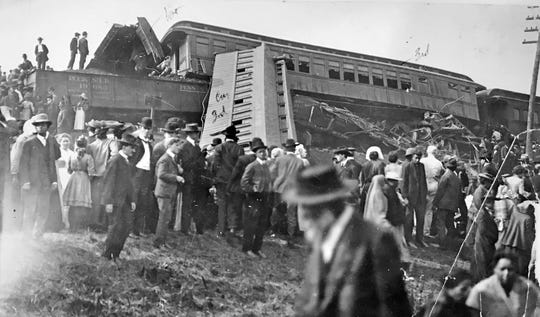 The Indianapolis star reported, “The trains came together with a great crash, which wrecked three of the passenger coaches, in addition to the engine and tender of the special train and two or three of the coal cars. The first coach on the special train was reduced to splinters. The second coach was thrown down a fifteen-foot embankment into the gravel pit and the third coach was thrown from the track to the west-side and badly wrecked. The coal cars plowed their way into the engine and demolished it completely. The coal tender was tossed to the side and turned over. A wild effort on the part of the imprisoned passengers to escape from the wrecked car followed the crash. Immediately following the wreck the students and the others turned their attention to the work of rescuing the injured, and by the time the first ambulances arrived many of the dead and suffering young men had been carried out and placed on the grass on both sides of the track.”
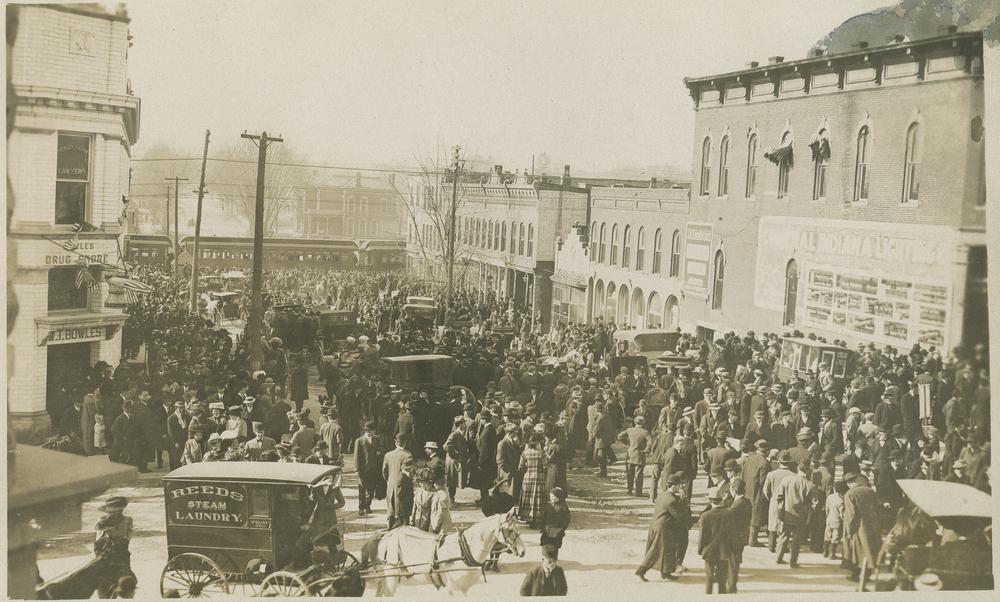 The fans at the rear of the train were unaware of what happened and only felt a slight jolt as the train came to a sudden stop. These rearmost passengers wasted no time in coming to the assistance of the victims up ahead. The erstwhile revelers skidded to a stop at the scene of carnage and were horrified at the devastation before them. Acts of unselfish action made heroes out of athletes and ordinary people alike.
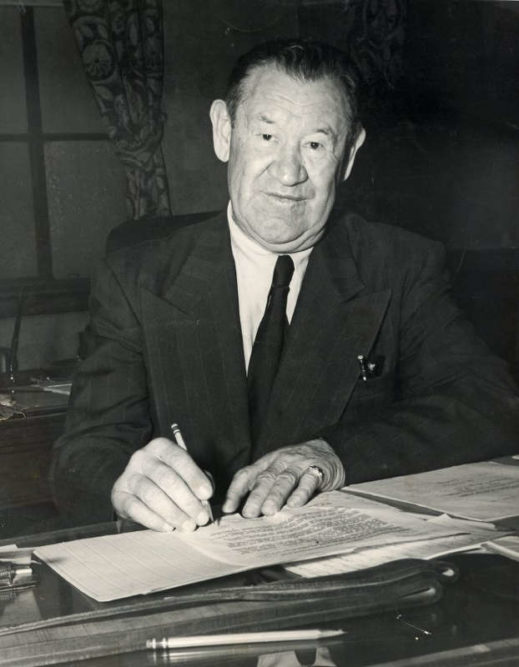
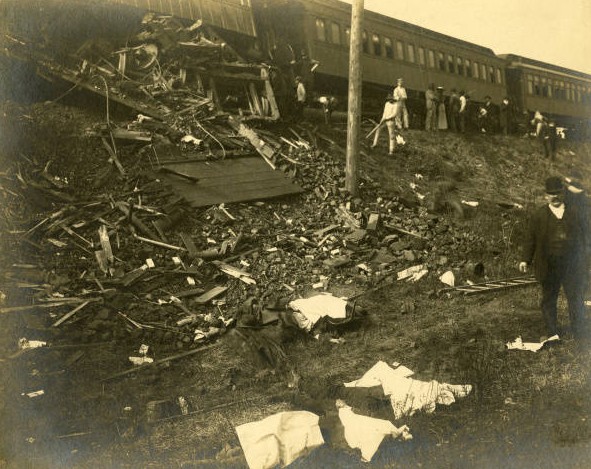 Seventeen passengers in the first coach were killed. Thirteen of the dead were members of the Purdue football team. Walter Bailey, a reserve player from New Richmond, although grievously injured, refused aid so that others could be helped. Team Captain Skeets Leslie was covered up for dead, his body transported to the morgue with the others. It was the first catastrophe to hit a major college sports team in the history of this country. The affects would be felt for decades to come and one of those players would rise from the dead, shake off accusations of association with Irvington KKK leader D.C. Stephenson, and lead his state and country through the Great Depression.