Health & Medicine, Indianapolis

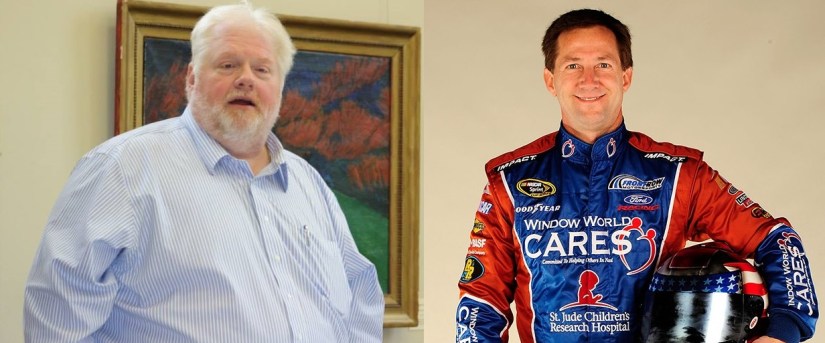
Dave Wilson & John Andretti: A Friendship.

Wilson=Andretti

Original publish date:  May 18, 2017

Last week I traveled out to the Indianapolis Motor Speedway to catch up with an old friend. Most people know Dave Wilson from his many appearances on the Q-95 Bob & Tom show, others from his longtime gig as an Indy 500 radio man, and still more know him as “The King” of the Circle City stand-up comic scene. What most don’t know about Dave is his devotion to his hometown of Indianapolis.
Dave and his wife Peggy are now running the club room of the Speedway American Legion Post # 500 at 1926 Georgetown Road. The post is literally a stone’s throw from the track and, as you might guess, the interior is decked out in a black and white checkered flag design. “This will be my 51st Indy 500,” says Dave. “My dad brought me to this post for the first time even before I saw my first race.” Turns out that both Dave’s and Peggy’s fathers were high ranking members of Post 500. “In the past 5 years, we’ve lost 300 members to father time.” Dave continues. “We were really afraid that this post might not be able to continue.”
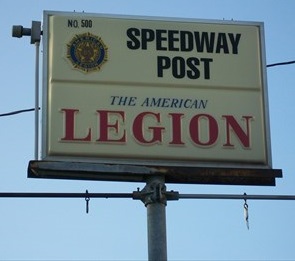
z post sign
Speedway American Legion Post # 500. 1926 Georgetown Rd, Indianapolis.

Now, with the Wilson’s steady management alongside the leadership of Post Commander John Hannon, the Speedway Legion Post 500 is on the upswing. “In the old days, if you didn’t get here by 5 o’clock on a Friday or Saturday night, you didn’t get a table.” Wilson says. “Those numbers fell way off in the in late 1990s-early 2000s, but we’re attracting younger members now and things are looking up.”
Wilson is a busy man during the month of May. Along with his daily management chores at Post 500, Dave reports from the Pits at the Speedway for the Bob & Tom Show. While race fans are accustomed to seeing Wilson on patrol in Gasoline Alley, Dave’s biggest impact may well be his work for the “Race for Riley” which celebrates its 21st year in 2017. Wilson started the charity go kart race back in 1995 with his longtime WIBC radio show host (and former Indianapolis Colt) Joe Staysniak and NASCAR / Indy Car driver John Andretti. The race is always held at the New Castle Motorsports Park the week before the Brickyard 400.
Wilson has known John Andretti since the late-1980s. Dave recalls that inaugural Race for Riley event, “John called into my radio show every Tuesday. At the time he was driving in the NASCAR series for Cale Yarborough Motorsports. Somehow we came up with the idea of a go-kart race for charity and we picked Riley Children’s Hospital as our beneficiary. We raised $ 36,000 for Riley that first year. As of this year, we are up over $ 4 million.”
photo
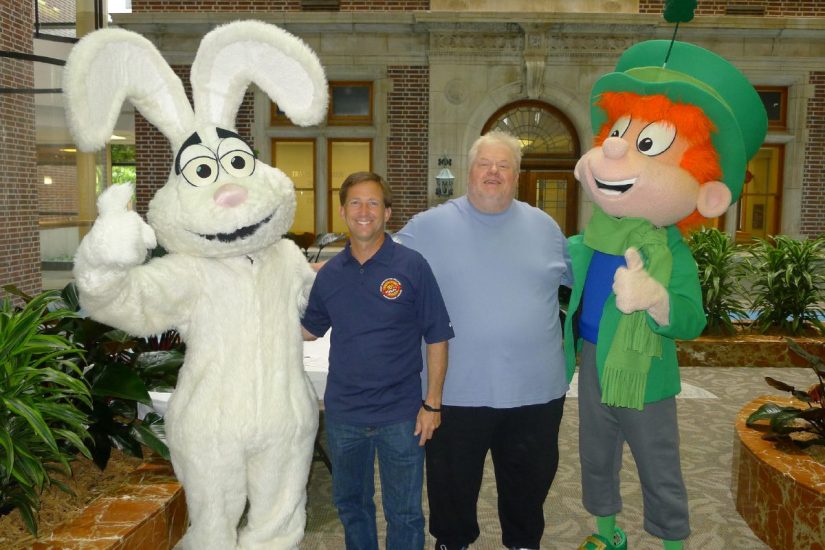
John Andretti and Dave Wilson alongside Trix the Rabbit and Lucky.

Dave notes that while John Andretti has been the name draw for the Race for Riley over the years, Andretti does it all without the use of a foundation. What does that mean? Dave answers, “That means that all of the money raised goes directly to Riley. Since there is no foundation, there are no administrative fees and no overhead. Everything is donated.” As for the expenses involved in this 3 or 4 day event, “John pays most of those out of his own pocket.” states Wilson. “That’s just the kind of guy he is.” Wilson pauses for a moment to reflect about his friend of 30 years.
John Andretti has been in the news lately. On April 28th, Andretti revealed to the world that he is battling stage four colon cancer. The 54-year-old Andretti made 393 starts in NASCAR’s premier series from 1993-2010, scoring 13 top-five and 37 top-10 finishes. He also won four poles- at Darlington, Talladega, Atlanta and Phoenix. He made the last of his 10 Indy 500 starts in 2011, with a best finish of fifth in 1991. He has two NASCAR and one IndyCar wins in his career, and was last a full-time driver during the 2009 NASCAR season. Andretti, the nephew of famed racer Mario Andretti, is currently undergoing chemotherapy and will have surgery in June.
“At first, John wanted to keep his diagnosis private,” says Wilson. “But word got out and John decided he was going to use his personal battle to spur others to get themselves checked out for colon cancer.” The Andretti family has started using the hashtag #checkit4Andretti on social media to encourage people to take the easy test for colon cancer. Their goal is to keep other families from suffering their pains by getting a colonoscopy before it’s too late.
When asked how he feels about his friend’s prognosis, Wilson replies,”Well, if anybody can do it, John can. He’s tough. One of the toughest guys I know.” Wilson notes that Andretti is getting some good advise and counsel from NASCAR engine builder and team owner Robert Yates, who is himself battling stage 4-B cancer.
z INDY_5-18-07_0131
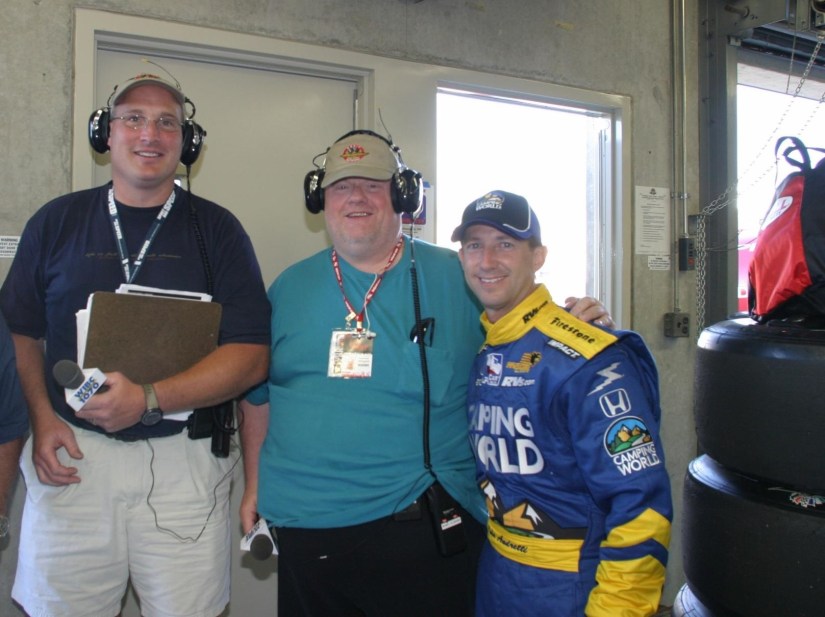
Big Joe Staysniack, Dave Wislon & John Andretti.

Wilson relates how his friend John Andretti, who makes his home in North Carolina, would often drop into Riley Children’s hospital unannounced whenever he was in town. “After every race, we have a party in the lobby at Riley. John always goes upstairs to visit with those kids too sick to attend and he would spend hours up there. Do you remember the pro wrestler Bobby “The Brain” Heenan? I had him on my radio show once and I took him out to Riley to see the kids. He didn’t last 10 minutes.” says Wilson. That’s how dedicated John Andretti is.
The Andretti family has a rich history in our city. They are as much a part of our racing tradition as the Unser’s, the Bettenhausen’s, the Vukovich’s, the Foyt’s and the Hulman’s. We owe it to those racing families, just as much as our own, to go and get ourselves tested. Guys, if you are 50 years old or older, the time to get a colonoscopy is now. When you make your appointment, reach out to John Andretti on social media and let him know your date. Don’t tell him you’re thinking about it, give him the date. That will make John Andretti smile and it might just save your life.
food, Indianapolis, Music, Pop Culture

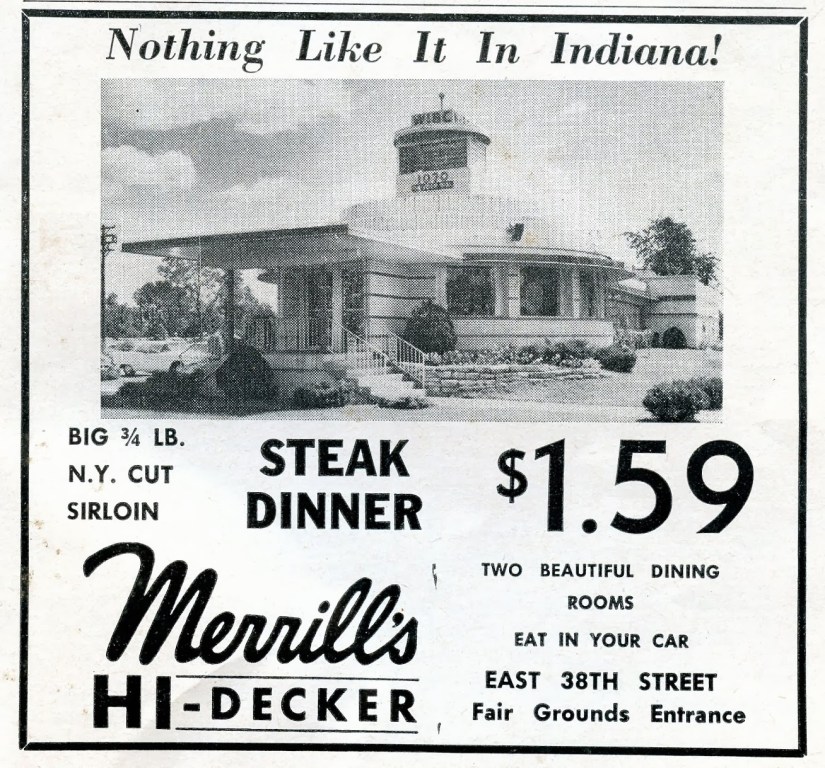
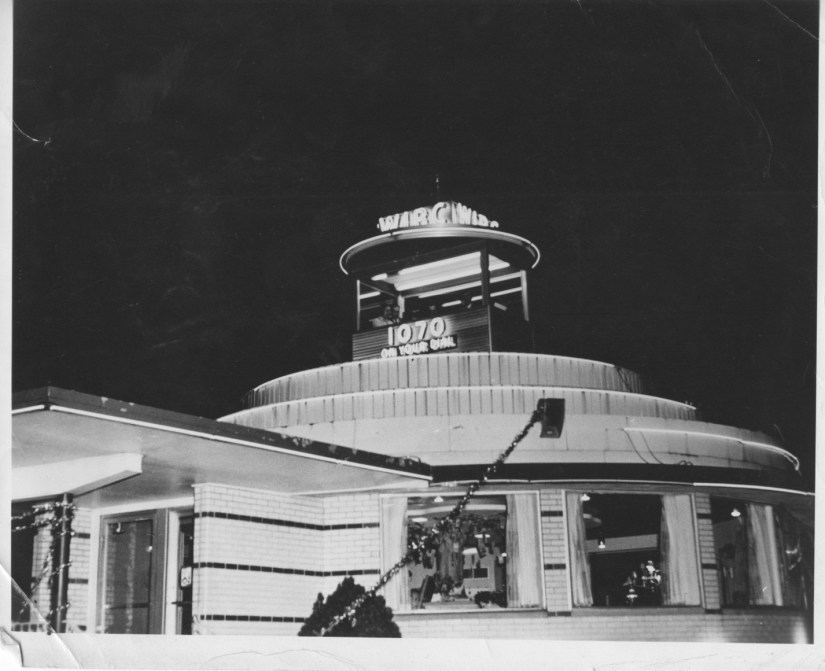
Merrill’s Hi-Decker in Indianapolis.

merrill's high decker
WIBC radio booth atop Merrill’s Hi-Decker.

Original publish date:  August 6, 2015

Summertime is closing fast and the Indiana State Fair has come and gone for another year. So I figured I’d break out one last gasp of summertime from 38th and Fall Creek that might jog a memory or two for you. Back when Elvis was blonde, the Tee Pee stood tall and Ike was in charge there was a place called Merrill’s Hi- Decker restaurant located right across the street from the Fairgrounds (officially 1155 East 38th Street). The Hi- Decker took over a restaurant known as “The Parkmoor” in 1956 as a curbside drive-in hamburger stand restaurant whose most famous whose most famous “deckhand” never sold as much as one burger or milkshake.

z Dick-Barbsbz
WIBC Disc Jockey Dick Summer.

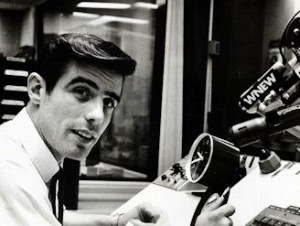
His name was Dick Summer and he manned the coolest DJ booth in Indianapolis in the late 1950s. His glass booth sat on the roof of Merrill’s High Decker. The restaurant was shaped like a stack of records anyway, so the addition of the rectangular booth with the circular roof made the High Decker one of the city’s hottest spots when Summer was in session. The booth was brightly lit with neon lights featuring the “WIBC 1070 On Your Dial” marque sign ablaze like a Rock-N-Roll sun. Indianapolis radio station WIBC was the No. 1 station among teens.
All the “flattop cats” and “dungaree dolls” spent their weekends buzzing Merrill’s and other drive-ins like Laughners at Irvington Plaza on Washington Street, Jack ‘n Jill’s on North Shadeland, Knobby’s at Shadeland & 38th Street and the Blue Ribbon on 10th Street. The Northside Tepee across the street from Merrill’s was Shortridge and Broad Ripple territory and the southside Tepee was for Sacred Heart and Southport. Spencer’s North Pole at Lafayette Road and 16th was for Washington and Ben Davis high schools. And who can forget Al Green’s at Washington and Shadeland and their freebie drive-in movies for restaurant patrons (The joke was that the service was so slow, they had to do something to keep people from leaving). But none of them had Dick Summer.

z dick_summer_wnew_1130_am_new_york-300x226
WIBC Disc Jockey Dick Summer.

Summer, a wildly handsome young Disc Jockey from Brooklyn New York, had a perfectly quaffed pompadour and an act to matched. He had a show called “Summertime, live from the Skyline Studio”. Summer would play the newest rock-and-roll hits from his WIBC radio booth on high. His show included a nightly segment after the 10 PM News he called “make it or break it.” He would spin new “Hot Wax” 45 rpm releases, many from local bands, and ask the cheeseburger chompin’ patrons parked in their cars below to vote on them. Patrons would vote by sounding their car horns. The results would decide whether the record would be played on future shows or if he should break it. Car horns could be clearly heard over the air. If the “No’s” won, Summer would break the record over his microphone. If more people honked for “Make It” that record was played every hour for the next week.
Every Saturday night Summer did a live broadcast featuring a different local band which set up right out on the parking lot. Any time recording artists and bands came to town, Summer interviewed them out in the Merrill’s parking lot. Part of these interviews included an opportunity for the people eating at the restaurant to walk over and ask questions of their own. One of the things fans remember best was the midnight story feature. Every midnight Summer read a short story, most often something by Edgar Allan Poe.
Summer, now retired, recalled a funny story from those years, “The manager of the restaurant was a young guy who was very much into guns. One night as I was doing “Make It Or Break It” he decided that he REALLY didn’t like the record I was playing, so he pulled out his hand gun and shot me. Seriously. I watched him, standing probably 20 feet away, reach into his belt, pull his gun, aim, and squeeze the trigger. The blast was huge, and I thought I was dead. It was a blank. He hit the ground laughing. So the next night I wedged a pound of Limburger cheese right on the engine block of his car. He got the first laugh, but mine lasted longer.”
z merrill'sAnother Summer gimmick was to slowly bite into a juicy hamburger before he kicked off every commercial during his show. Doesn’t sound like much now, but apparently back in the day it drove customers crazy. Not to mention it sold a lot of hamburgers. The only way into the glass booth studio was up a fire escape ladder leading up to the roof, and then into the tiny studio via a trap door in the floor. Legend claims that George Lucas used Summer’s “Skyline Studio” as the inspiration for Wolfman Jack’s studio in his movie American Graffiti. You’d have to rent the movie and see for yourself because Merrill’s Hi-Decker and the radio booth are long gone now.
Even though Summer’s gig kept the Hi-Decker in the black in the Ike Era up into the John F. Kennedy Camelot Era. But Summer eventually left WIBC and went to WIL-AM, in St. Louis. WIBC kept rolling along nicely, but the Indy radio scene really took the blow hard. The British Invasion pretty much sealed the fate of local radio hijinx. And Merrills was in big trouble. Within a short time after Summer’s departure, the Hi-Decker had to make a deal with an auto dealer up the street to park his used cars in the drive-in parking lot on the weekends to look like it was still doing a bang-up business. It was a far cry from the days of two block long traffic jams of tail-fin and fuzzy dice cars waiting to cruise the Hi-Decker.
Recently Summer waxed poetic about his time in Indy and parts elsewhere as a young DJ: “It is truly hard being an aging young person. Hide and seek, ringalevio, kick the can, double dutch, punch ball, stick ball, box ball, stoop ball, doctor-lawyer-indian chief thoughts keep popping up in my head while I’m trying to be serious doing my day job. Pay checks are poor substitutes for wax lips, candy drops on rolls of paper and chocolate cigarettes. Kid-hood had stresses like “are you going to be the LAST guy picked to play on the stickball team?” (Guys will understand.) Adult-hood has stresses that involve having to override your body’s basic desire to choke the living crap out of some idiot who desperately deserves it…and would probably never even be the last person ever picked for any stickball team. The most wonderful part of the kind of radio I did was as long as I was on the air, it was never too late to have a happy childhood. I don’t ever want to get too old or too angry to do goofy stuff. That’s why I always listen carefully to what my Rice Krispies tell me when I pour milk over them at breakfast…Radio seems awfully grown up now. Talk shows are angry, computers spit out carefully researched music lists, and there’s no time to broadcast local kid bands live from a drive-in while the guy on the air munches his juicy hamburger.”

Baseball, Indianapolis, Weekly Column

The Day Babe Ruth Came To Indianapolis.

Original publish date:   August 24, 2015 Republished: April 22, 2018.

https://weeklyview.net/2026/09/03/the-day-babe-ruth-came-to-indianapolis-2

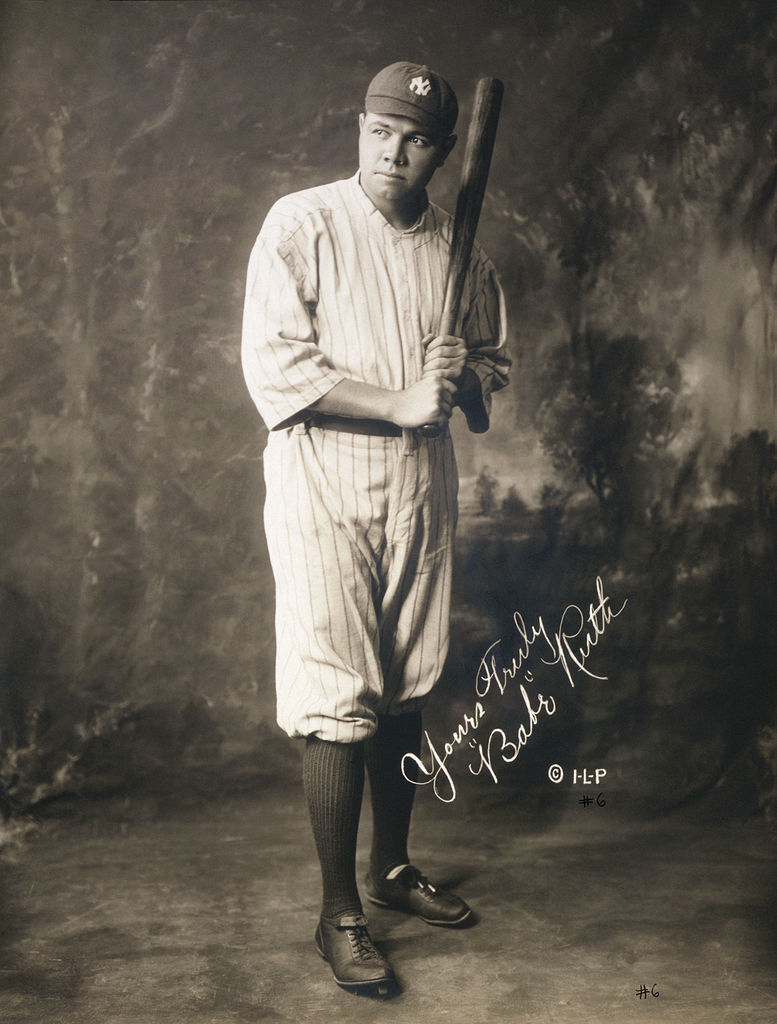
Babe Ruth - Older
Babe Ruth in Indianapolis.

All through the summer of 1946, the mighty Babe Ruth had a severe pain over his left eye that would not go away. At first he thought it was a sinus infection, then a toothache. Whatever it was, it wasn’t getting any better. It eventually caused so much pain that Ruth admitted himself to a New York hospital on November 26. By then the entire left side of his face was swollen, his left eye closed shut, and he couldn’t eat solid food. Doctors removed three bad teeth, then pumped the Bambino full of penicillin and other drugs. By Christmas, Ruth was still in pain and back in the hospital.


Babe Ruth had cancer but the doctors never told him. They had discovered a malignant growth wrapped like a vine around a major artery in the left side of his neck. In the operation that followed, nerves were cut and the artery tied off. Not all of the cancer could be removed. Babe’s wife Claire said she was eventually told, but Babe remained in the dark until the very end. The surgery was on January 5, 1947. In the month that followed, Babe remained confined to the hospital in a state of near constant pain and depression. His hair began to fall out and he lost a lot of weight (estimated at between 80 to 128 pounds). It seemed that the Babe was just waiting to die.

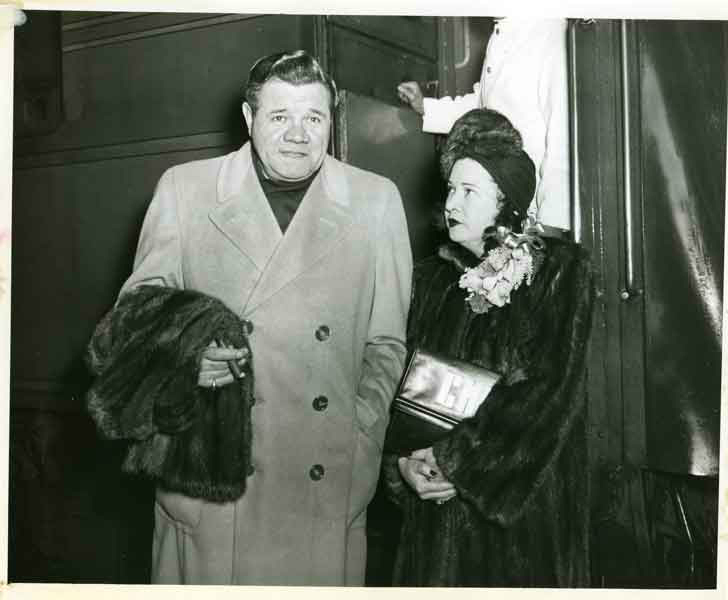
Babe Ruth and his wife Claire.


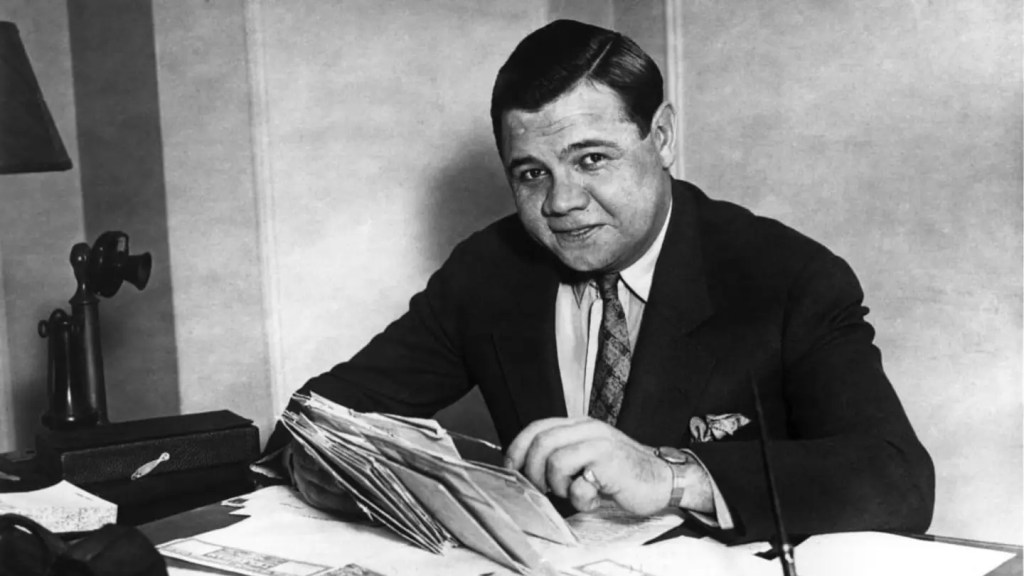
Thousands of telegrams poured in every week from former teammates , sports luminaries (Connie Mack and Jack Dempsey among them), and average everyday fans. Claire read as many of letters as she could out loud to the Babe. On February 6 he celebrated his 52nd birthday in the hospital with Claire, Julia, and their dog, Pal. On February 15, Ruth left the hospital and wept unashamedly as he saw the throngs of admirers gathered outside as he was led to a waiting car. His natty camel’s hair overcoat and matching cap couldn’t hide the fact that Babe Ruth was a shadow of his former self.
Although weak and sickly, Ruth instinctively knew that he was back in the public eye. Extremely conscious of his debt to the “kids of America,” to whose loyal support he attributed his success, Ruth decided to apply himself to child welfare programs after his discharge from the hospital. He was engaged by the Ford Motor Company as a consultant in connection with its participation in the American Legion junior baseball program. In May, 1947, he established and made the first contribution to the Babe Ruth Foundation. Inc., an organization whose name soon became synonymous with youth baseball.

Babe Ruth opening letters & telegrams.
Babe Ruth -
Claire and Babe Ruth in an Indianapolis Taxi Cab.


The ravages of his illness left little of Ruth’s once robust physique. The Babe now appeared gaunt, bent and vulnerable. His once resonant voice reduced to only a rasping whisper. The Mighty Ruth continued to astound his physicians by tackling his new job with all his old-time vigor. “They call me a consultant,” said Ruth, “but I want to tell you that I plan to work hard at this job-just as hard as my health permits. The possibilities are unlimited and I won’t be happy until we have every boy in America between the ages of 6 and 16 wearing a glove and swinging a bat.” He logged more then 50,000 miles in support of the program, appearing on diamonds all over the USA in front of thousands of youths.


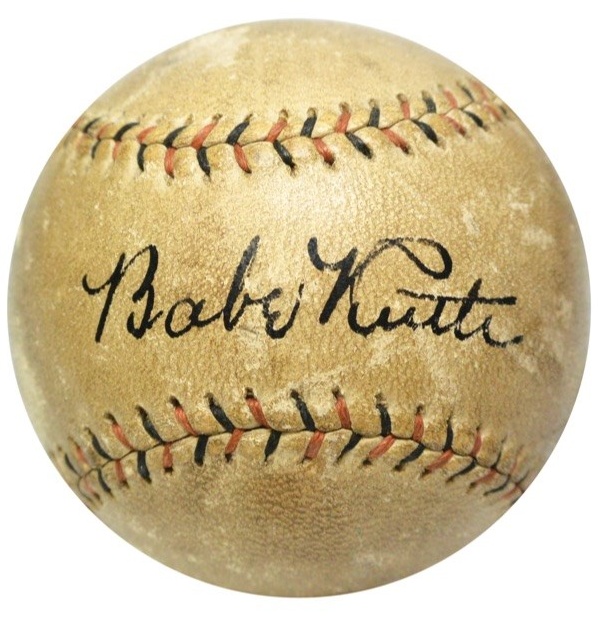
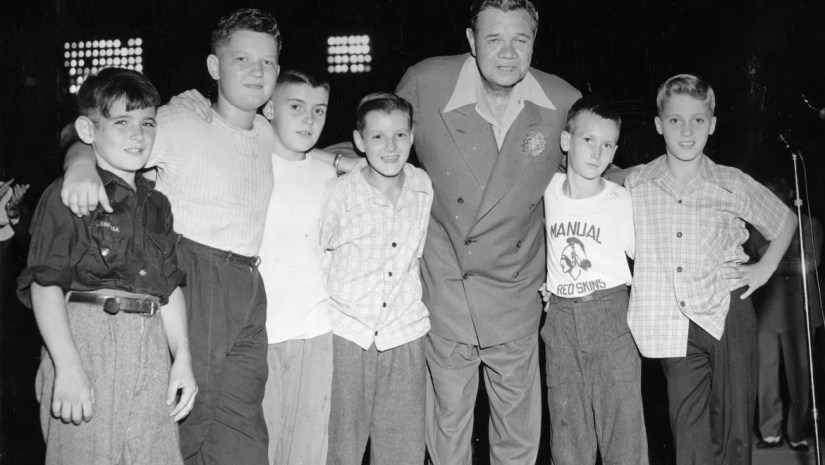
Treatment with an experimental drug beginning in late June improved Ruth’s health tremendously. Throughout that summer of 1947 Ruth became the official ambassador of the American Legion baseball program. One of his stops while on the “American Legion Goodwill Tour” that summer was at the original Victory Field home of the Indianapolis Indians on 16th Street. Ruth appeared at the August 5, 1947 American Legion Junior All-Star game. The Sultan of Swat appeared on the field, shook hands with players and coaches and posed with local youngsters. He signed autographs for the fans and each All-Star player received an autographed baseball from Ruth. Two of the players in that game were future big leaguers Don Zimmer and Jim Frey representing the Robert E. Bentley Post # 50 out of Cincinnati.


The Indianapolis news reported: “Ruth thrilled the crowd when he was introduced during the intermission between the Legion game and the Indianapolis Indians’ game with Milwaukee. Ruth sat through the Legion game and several innings of the Indians game, but his ill health began to take its toll and he had to leave. Earlier in the day, he conducted an hour-long press conference, a pair of radio broadcasts and attended a luncheon in his honor. Once a hefty 278 pounds, Ruth’s weight had dropped to 193. He was coming off an illness that almost cost him his life and had just undergone a blood transfusion three days prior.”

Babe Ruth in Indianapolis with fans. Note the Manual High School Redskins t-shirt on the boy at Ruth’s left side.


The news spoke to one of the kids after the game about meeting the Babe, “His voice was deep and raspy, he coughed quite a bit, but it was the thrill of a lifetime.” said the unnamed player. The young athlete was surprised to see the once robust Ruth in such failing health, but impressed that he would spend time with them. Babe Ruth breezed through Indianapolis like an aging movie star unveiling their star on the Hollywood walk-of-fame. He was gone as fast as he came. It would be nearly 40 years after Ruth’s visit before my dad, Robert E. Hunter Arsenal Tech class of 1954, sat beside me at old Victory Field and dreamily stated, “You know I was here when Babe Ruth came through in 1947. I was selling peanuts here in the grandstands.” Strangely, he could rattle off the names of all those Pittsburgh Pirates minor league players on that team but couldn’t recall much about the Babe’s visit that day.
Ford renewed Ruth’s contract in early 1948, “not only because he was an inspiration to every American boy but because of the excellent results of his efforts last season.” The ex-slugger’s salary was not revealed but Ford announced that it “ranks him high on the list of baseball’s top money-earners.” As long as his strength permitted, Ruth continued to make appearances on behalf of the Junior Baseball program. It was to be only a momentary reprieve. At his last appearance in June 1948, before 16,000 youngsters in St. Louis, he was too weak to wave a bat for photographers.

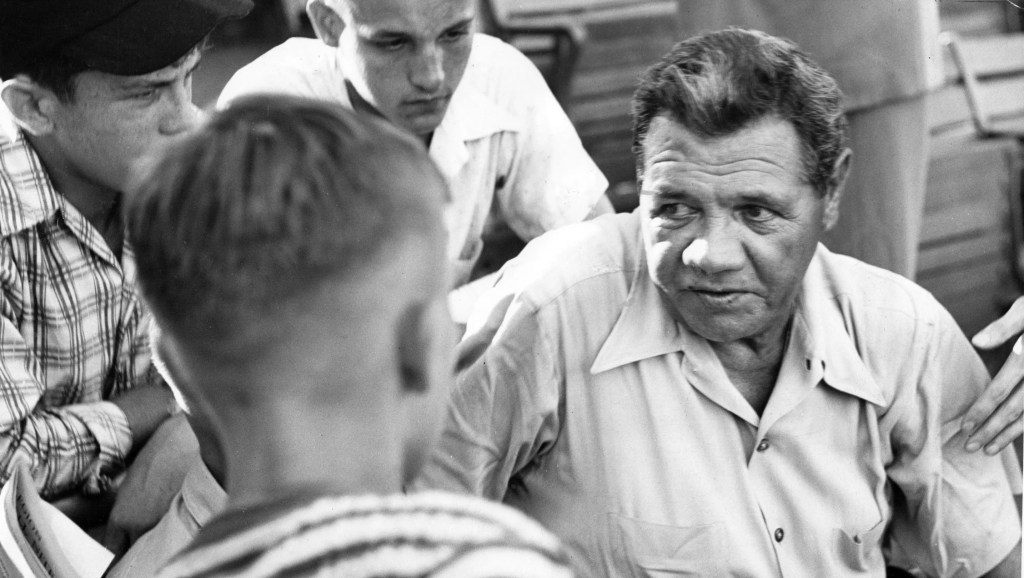
Babe Ruth in Indianapolis chatting with young fans.


The remaining piece of the tumor was growing, and soon morphine was the only thing that could stop the discomfort. Babe still tried to live his normal life of golf outings and devouring steaks, but now the drives fell far short off the tee and the meat had to be served chopped up for him. Soon even biting down on the white of an egg caused excruciating pain for the once mighty “Sultan of Swat.” Despite the pain, Babe wrote in the closing of his autobiography “The Babe Ruth Story” that hopeful summer of 1947: “I’ve got to stick around a long, long time. For above everything else, I want to be a part of and help the development of the greatest game God ever saw fit to let men invent-Baseball.”

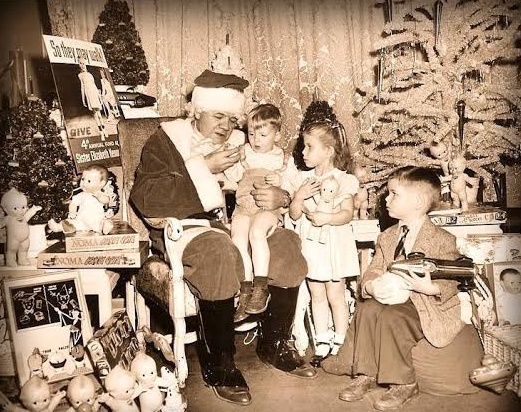
Babe Ruth as Santa Claus with Polio afflicted children December 1947.


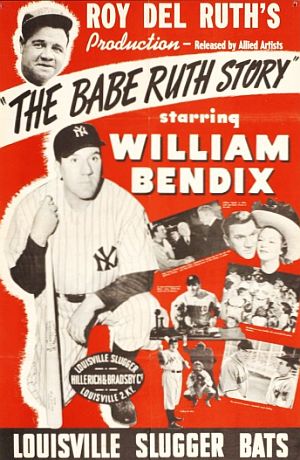
Ruth bravely attended the Dodgers-Yankees World Series that fall and in December dressed up as Santa Claus to entertain young polio victims. Babe may not have known or wanted to believe it, but his own time was growing short. On July 26, the Ruth’s went to the New York City premiere of “The Babe Ruth Story”, but as his daughter Julia Ruth Stevens recalled, “he was so sick and so medicated that I’m not even sure he knew where he was.”

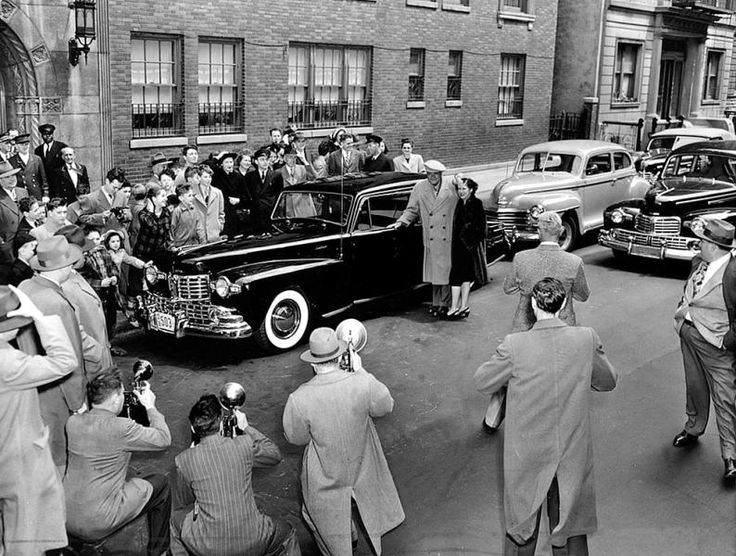
George Herman “Babe” Ruth w/ Walter T. Rowcraft, Lincoln-Mercury District Manager, presents to Babe Ruth, the keys for his new 1948 Ford Lincoln car. The last car the Babe would ever own.


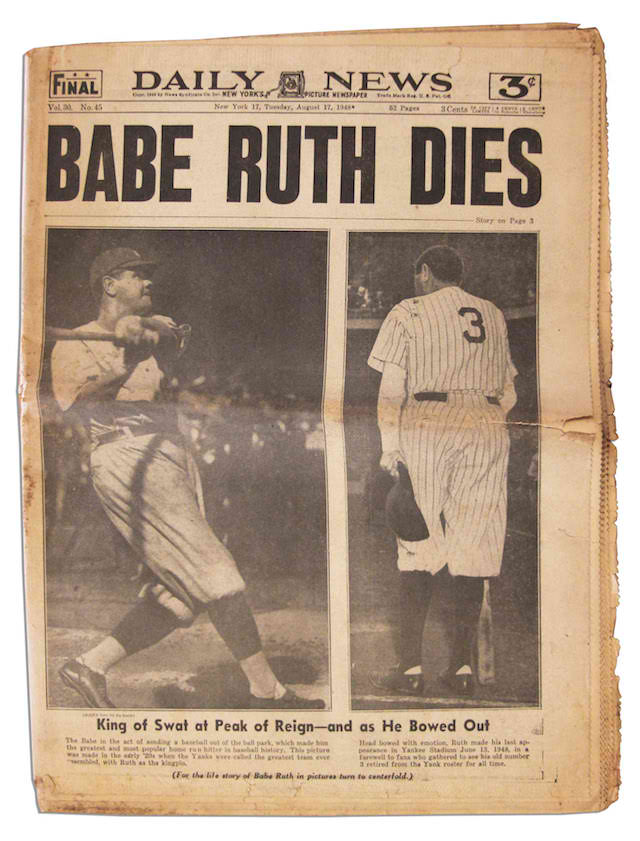
Babe and Claire left shortly after the picture started and checked into Memorial Hospital for the last time. Babe Ruth struggled to answer letters and meet with visitors right up until August 15, 1948, barely a year after he graced the diamond of Victory Field in Indianapolis. Babe Ruth died in his sleep at 8:01 p.m. on the evening of on Aug. 16,1948. His last conscious act was to autograph a copy of his autobiography for one of his nurses. It was only after the great man’s death that the newspapers announced the cause of death as “throat cancer”.


A long line of mourners encircled Yankee Stadium to pay their respects as Ruth’s body lay in state. During the next two-days, more than 100,000 passed his open casket inside the ballpark. They were men, women, and children of all races and ages; from uniformed Little Leaguers to old men in derby hats. The crowd of worshipful mourners rivaled only the display of grief for President Franklin D. Roosevelt in 1945. Vendors sold hot dogs and photographs of the Babe to those waiting their turn in line. As crass as that might sound, the Babe would have loved it.

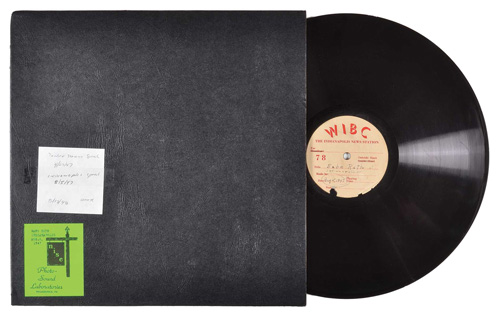
A one-of-a-kind 78 rpm recording of Babe Ruth’s speech in Indianapolis recorded by radio station WIBC surfaced (and was presumably sold) at auction in August of 2018 by REA auction house. The description billed it as the last known recording of Babe Ruth.