
Original publish date: July 23, 2012
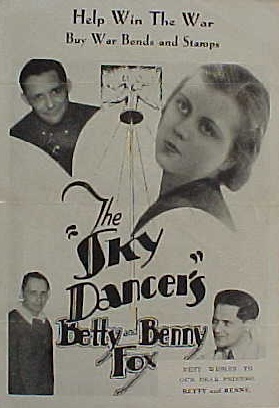
Recently, I was sorting through an old box of paper purchased at an antique show in Indianapolis some time ago. I ran across an interesting little leaflet from the 1940s World War II Era that piqued my interest. The flyer pictured a pretty young blonde haired woman in the foreground surrounded by 3 images of a dapper looking man. It reads, “Help win the War. Buy War Bonds and Stamps. The Sky Dancers Betty and Benny Fox. Best wishes to our dear friends. Betty and Benny.”
I have an abiding affection for wartime homefront items and often find myself lamenting that I was born too late. As I looked closer at the brochure, I noticed that there seemed to be an image of the duo standing atop the Indiana Soldiers and Sailors Monument “ghosted” into the background. Naturally, my curiosity shifted into overdrive and I had to know what this all meant.
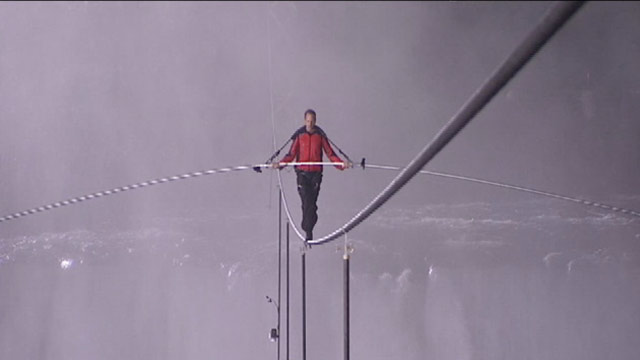
As I pondered the significance of this little piece of paper, a news report fluttered across my TV screen about a dispute between the City of Niagara Falls, N.Y. and tightrope walker Nik Wallenda. It seems that Nik Wallenda promised the city that his recent tightrope walk across Niagara Falls would bring much needed publicity and generate untold millions to this struggling community in upstate New York. Wallenda’s June 15 crossing went off without a hitch physically, but the city is now looking to the daredevil to pay about $25,000 in unpaid overtime bills for police officers and firefighters.
As I looked away from the television to the flyer in my hands, it suddenly hit me like the cold light of dawn, Betty and Benny Fox were barnstorming daredevils! This flyer must have been created for a visit to Indianapolis and a planned stunt involving our cities most identifiable landmark. I did a quick internet search but could find no record of the duo ever coming to Indianapolis. However my suspicions were confirmed when it was revealed that Betty and Benny were in fact high wire aerial artists.
Sky Dancers Betty and Benny Fox.

Benny and Betty Fox, the famous death defying sky dancers pictured on the flyer, were billed as a brother and sister act but they were not related. And Betty was not always the same person nor was she actually named Betty. Benny chose the name for his partner because he liked the sound of it. (That explains why Betty is pictured only once and Benny is pictured three times.) Whoever she was, she was willing to put her life in Benny’s hands while they danced on an 18-inch wide disc affixed to the top of a pole extending 100 feet up in the air.
Contemporary newspaper articles claimed that Benny had been born into a circus family, known as the “Flying Foxes”, near Berlin, Germany. Another article from the 1950s stated that Benny was part of an international circus family, either of Lithuanian or Polish, and lived with his family in Flushing, N.Y. According to that article, “For a time it was feared, because of Benny’s small stature, that he would not be able to carry on for the “Flying Foxes,” but Benny’s father, who was old school, said “I will build him in body, mind and strength.” And that he did.

A little research reveals that the Betty from the brochure was the very first one; Nano Clifford, Benny’s wife, who quit the act in 1945 to raise their children. No wonder, she must have been exhausted after a 22-month tour in World War II performing for troops at 187 hospitals in Europe. The next Betty’s real name was Clara, who worked with Benny for a few years until she gained weight, (Benny claimed anything over 120 pounds was too heavy for skydancing), she was replaced by yet another Betty, whose real name was Alice. Undoubtedly, there were many other Betty’s because Benny performed well into the 1970s. But those “Betty’s” are lost to history.
The duo’s most documented performance took place 3 hours to the west of our city in Springfield, Illinois. On October 6, 1937, they did six performances throughout the day from the roof of a building at 313 S. Sixth Street. The last performance at 8 p.m. was lit by four powerful floodlights. It seems that the couple were hired by the Illinois State Journal newspaper and the perch upon which they performed was atop the Journal building itself. The stunt was arranged and staged by the paper in hopes of boosting lagging circulation numbers. The act proved so successful that the daredevil duo was asked back to the land of Lincoln in 1946.
The newspaper reported that the streets below the Journal building were packed shoulder-to-shoulder with anxious spectators watching the duo as they danced, whirled, stood on their hands, and performed acrobatics that evening. “Streets, windows, roofs and fire escapes all through the downtown area were jammed for the night show.” The Journal estimated the crowd at 100,000, but that figure seems improbable at best.
The crowd stared in disbelief when the aerial artists pulled off their “death whirl,” which had Betty face down with her legs clasped around Benny’s waist while he swirled her “around and around” on the small disc. The crowd cheered with approval as the couple danced the Charleston & the Lindy Hop atop their beach ball sized disc 100 feet off the ground with no fear. According to the Journal, “the blindfolded waltz, fast fox trots and Charlestons at the afternoon shows drew a great round of applause, but that became a mere whisper in comparison to the ovation which greeted them at the conclusion of the death whirl.”
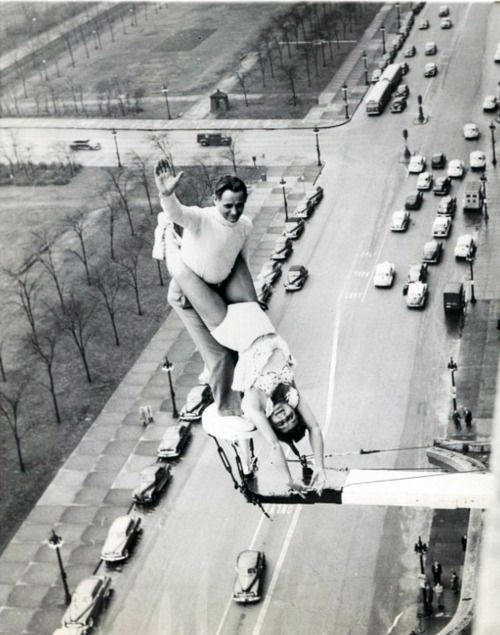
Benny’s loudest cheers came when he stood upside down on his hands for 30 seconds. The couple’s most daring stunt involved Betty, supported by Benny, bending over the edge of the platform backwards to pick up a handkerchief 3 feet below the 18-inch disc. The act concluded with Benny calling down to the crowd that Betty had fainted. The drama built at a frenzied pace until Betty was revived and waved to the anxious crowds below.
During pre-publicity for the event, the newspaper ramped up the drama by explaining that a physician and two nurses would be on the roof of the building during all performances should the couple miss a step in their dangerous setup. “An ambulance will wait at the curb to rush them to the hospital if Death fails to take his expected holiday.”
Apparently, although I had never heard of them before picking up this flyer, Betty and Benny Fox were the bomb back in the day. They toured Europe pretty extensively during the War and the other cities besides Lincoln’s hometown that I could find reports of their shows include: the Westin Hotel in Detroit, the Morning Call Newspaper building in Allentown, Pa., the Sheraton Hotel in Chicago and The Mint Hotel in Las Vegas. However, despite the flyer, I can’t find a record of the daredevil duo ever passing through our fair city.
It seems that, as the Great Depression dragged on, Betty and Benny Fox were just one of many traveling sideshow acts whose outlandish feats of stamina, spectacular stunts and bizarre competitions were popular entertainment. As dance marathons and flagpole sitting became passé, slowly fading from the headlines, and as the Roaring Twenties came to a crashing end, Betty and Benny skipped from town-to-town to entertain the saddened masses, starved for free entertainment.
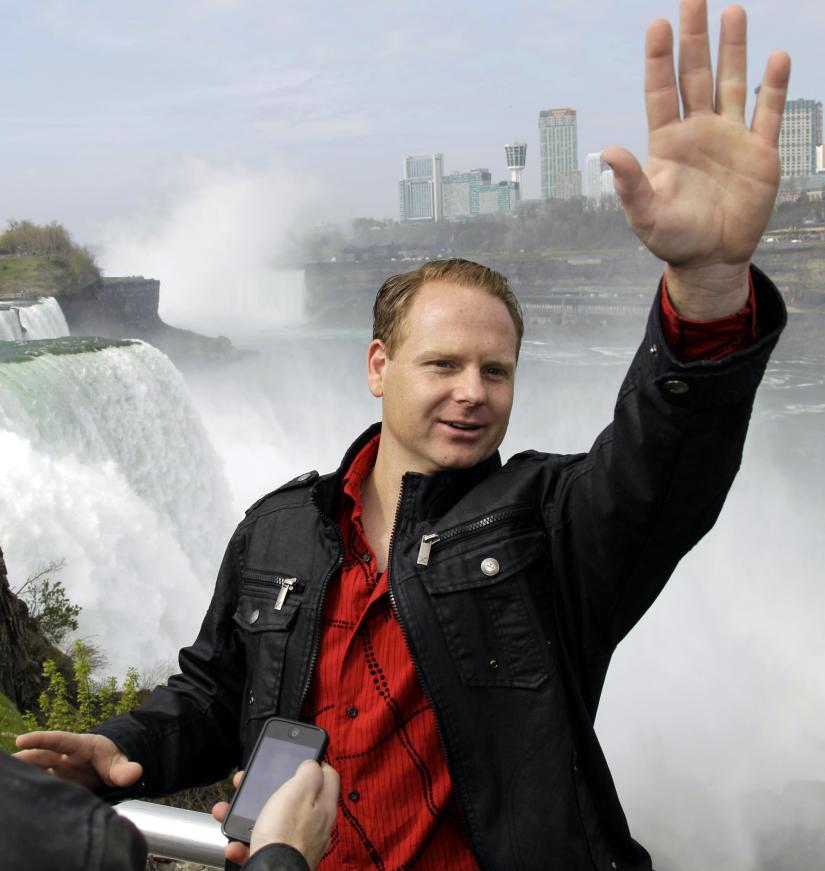
Which brings us back to Mr. Wallenda, a seventh-generation circus performer, and the claim that he owes money to the city that he promised his high-wire act would help revitalize. City officials say Mr. Wallenda’s team took advantage of their hospitality. Mr. Wallenda says he was stabbed in the back. Mr. Wallenda’s 1,800-foot crossing transfixed a national television audience and generated a wave of publicity that the falls had not experienced in decades. It seemed like a particular coup for the economically depressed American side of the falls, creating an instant hero and a point of pride for a city that has lost more than half its population in the last half century. Now the City of Niagara Falls is not so sure. Mr. Wallenda, for his part, said he had been hoping to open a Wallenda-themed exhibition (perhaps someday a full-scale museum) in Niagara Falls, N.Y. But he suggested he might have to rethink the location. I wonder what Betty and Benny Fox would think?




 Early in 1955 WFBM channel 6 began airing the Indiana Hoedown, starring entertainers who had been on WLW in Cincinnati. In addition to working the Hoedown, Curley had Curley’s Cowboy Theater for seven or eight years, then did a Saturday morning kids show with Cap’n Star and Harlow Hickenlooper. Altogether, Curley spent over 15 years there as the “Saturday Morning Cowboy”. In May, 1972 the TV station was sold and the new owners planned a change of programming formats and personalities.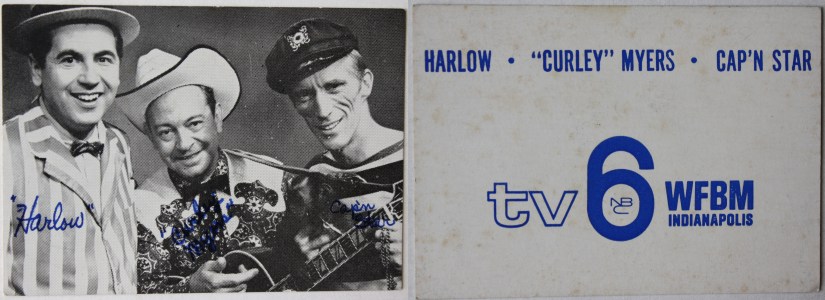


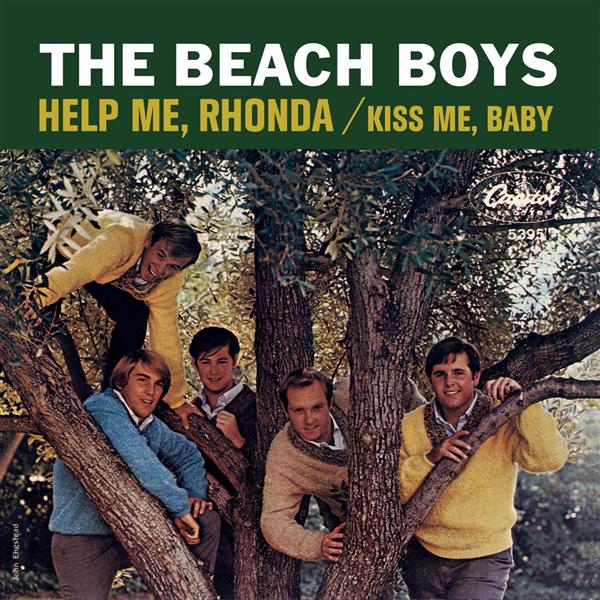
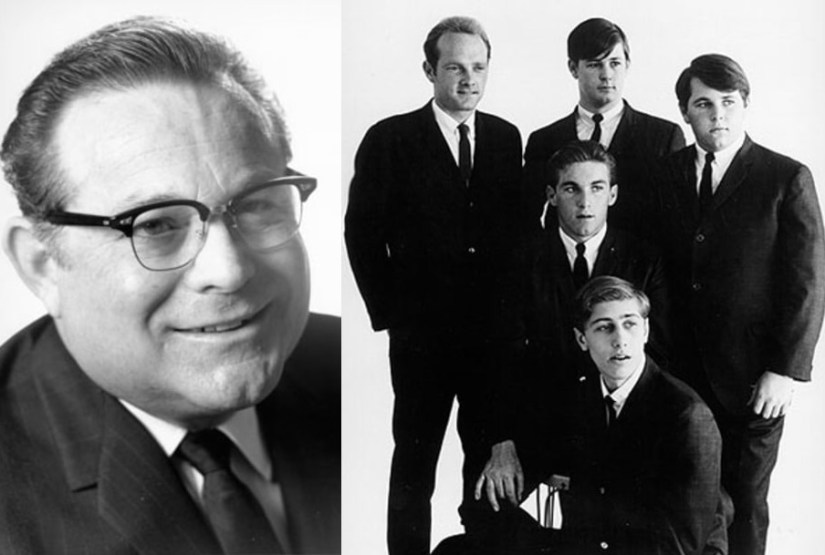
 The banter among the bandmates and “Wrecking Crew” studio musicians is typical witty chatter with hints of the Era in which the recording was made scattered thourhgout. Mike Love saying “I got Vietnam-itus in here.” Al Jardine replying with a giggle: “I was just thinking of that, you know that?” Mike: “What?” Al: “Vietnam…for some reason, I don’t know why…” and Brian yelling from the booth: “Get in the front of the mic, Carl!”
 At this point, Murry departs with the boy’s mother Audree in tow and the Beach Boys continued on with the session. Emotionally devastated by the evening’s drama, the Boys called it a night, returning the next day to redo the vocals. Brian would have the last laugh in this battle by sneaking the song “I’m Bugged At My Ol’ Man” onto the album at the last minute. It would be another three years before Murry again attended a Beach Boys recording session. Legend claims that from that point on, the band purchased a fake audio console for their sessions, so Murry could twiddle knobs on the fake mixing board to his heart’s delight without destroying anything.
 In 1964, Murry Wilson’s wife Audree left him and they separated. The marriage ended in divorce in 1966. In a letter written on May 8, 1965, just a few months before Brian recorded what is arguably the band’s masterpiece, “Pet Sounds”, Murry gives a glimpse into the complicated, psychologically messed up relationship with his son.
 I am over the big hurt of losing my three sons as a manager for their benefit and good fortune, but I am not over the fact that I have lost my three sons’ love, and I mean real love, because you are all in a distorted world of screams, cheers and financial success. The money will not mean a damn thing to any of my sons if they are not happy when the job is done and it is a sad thing for three young beautiful sons to place their life’s success on the success of a record album or a 45 RPM disc or to how successful they are in the eyes of the music world from how many seats they sell in a live concert. I hope to God that you and your brothers review your thinking now before it is too late, because only more damage can arise from this temporary, fleeting image of success known as The Beach Boys.
 Although a marginally successful songwriter and musician, the self-aggrandizing and ostensibly talented Murry Wilson’s primary claim to fame was as the patriarch of the Beach Boys. Once the Beach Boys established themselves, Murry managed to finagle a solo album deal for himself in 1967; “The Many Moods of Murry Wilson.” It was not commercially successful. Murry Wilson died on June 4, 1973 after suffering a heart attack at the age of 55.
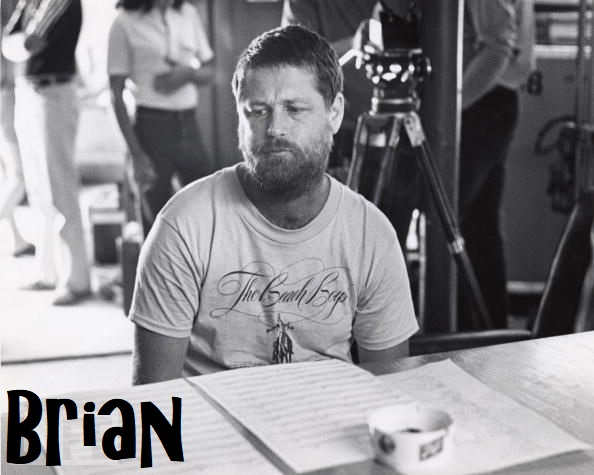 Brian Wilson spent the bulk of the two years after his father’s death hiding in the chauffeur’s quarters of his home; sleeping, abusing alcohol, taking drugs (including heroin), overeating, and exhibiting self-destructive behavior. He attempted to drive his vehicle off a cliff, and at another time, demanded that he be pushed and buried into a grave he had dug in his backyard. Although reclusive during the day, Wilson spent his nights fraternizing with Hollywood colleagues known as the “Vampires” including Alice Cooper, Iggy Pop, Harry Nilsson, John Lennon, Ringo Starr, and Keith Moon. The Monkees Micky Dolenz recalls dropping LSD with Wilson, Lennon, and Nilsson, while Wilson “played just one note on a piano over and over again.” During this period, his voice deteriorated significantly as a result of his mass consumption of cocaine and incessant chain smoking.
 On December 28, 1983, three weeks after his 39th birthday, Dennis Wilson drowned at Marina Del Rey in Los Angeles. After drinking all day, he dove into the Marina searching for items he had thrown overboard from his yacht three years before. He never resurfaced. Carl Wilson died of cancer in Los Angeles on February 6, 1998, just two months after the death of his mother, Audree.
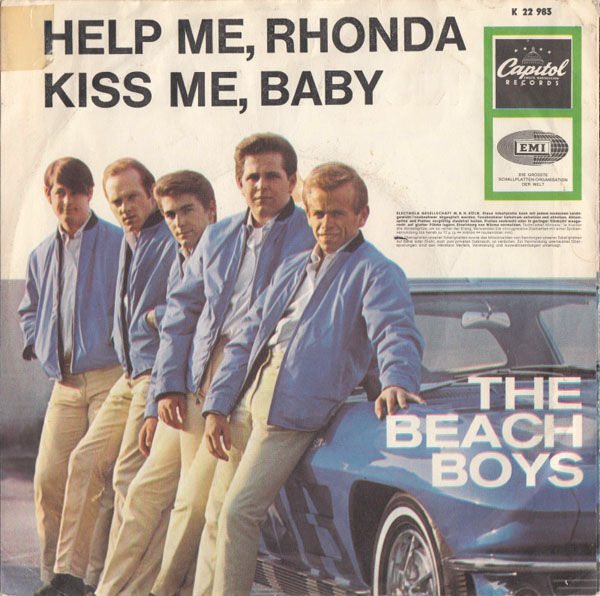 “Help Me, Rhonda” came at a time of amazing creativity and overwhelming psychological turmoil for Brian Wilson and the Beach Boys. Wilson was trying to come up with enough material to fill three albums and four singles per year, material good enough to compete with the Beatles, all while undertaking grueling tours with the band. In December 1964, Wilson suffered a nervous breakdown and stopped touring with the Beach Boys, but the relentless schedule of record releases did not let up. Just two months later, the “Help Me Rhonda” sessions took place. Who knew such turmoil and drama could surround such a catchy little tune?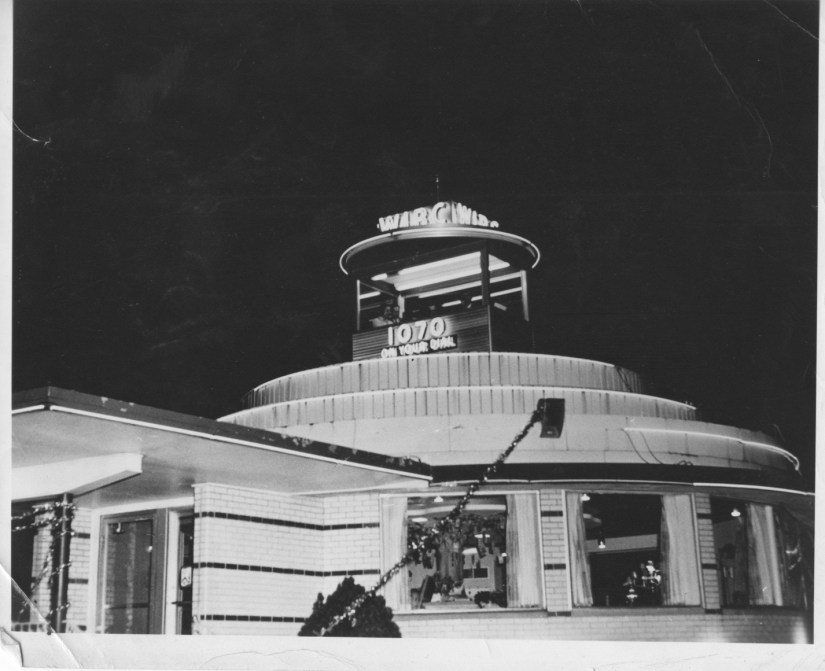

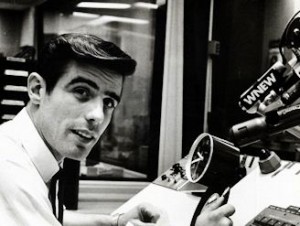
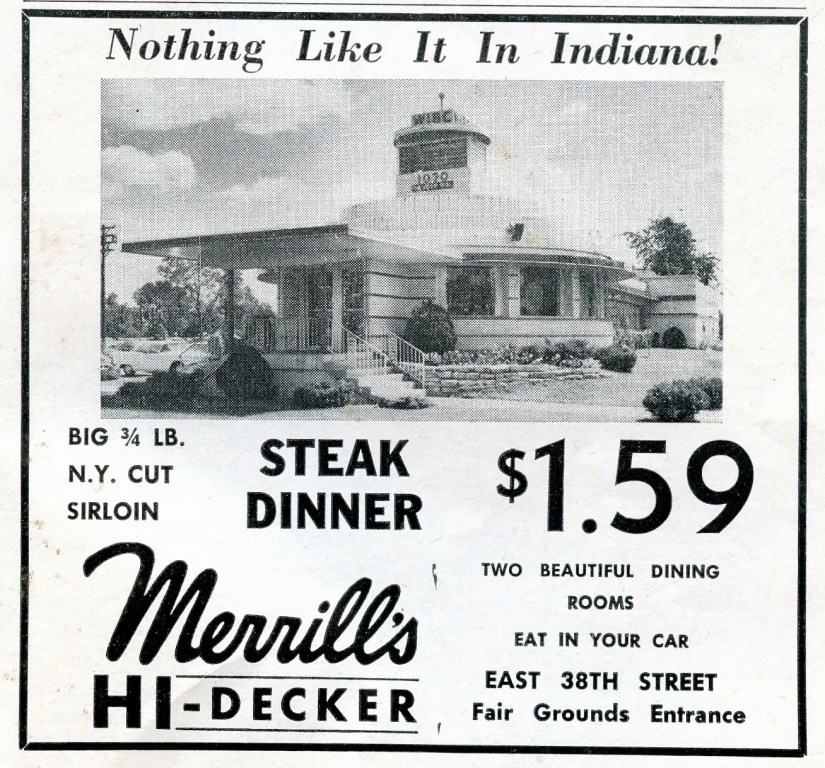 Another Summer gimmick was to slowly bite into a juicy hamburger before he kicked off every commercial during his show. Doesn’t sound like much now, but apparently back in the day it drove customers crazy. Not to mention it sold a lot of hamburgers. The only way into the glass booth studio was up a fire escape ladder leading up to the roof, and then into the tiny studio via a trap door in the floor. Legend claims that George Lucas used Summer’s “Skyline Studio” as the inspiration for Wolfman Jack’s studio in his movie American Graffiti. You’d have to rent the movie and see for yourself because Merrill’s Hi-Decker and the radio booth are long gone now.
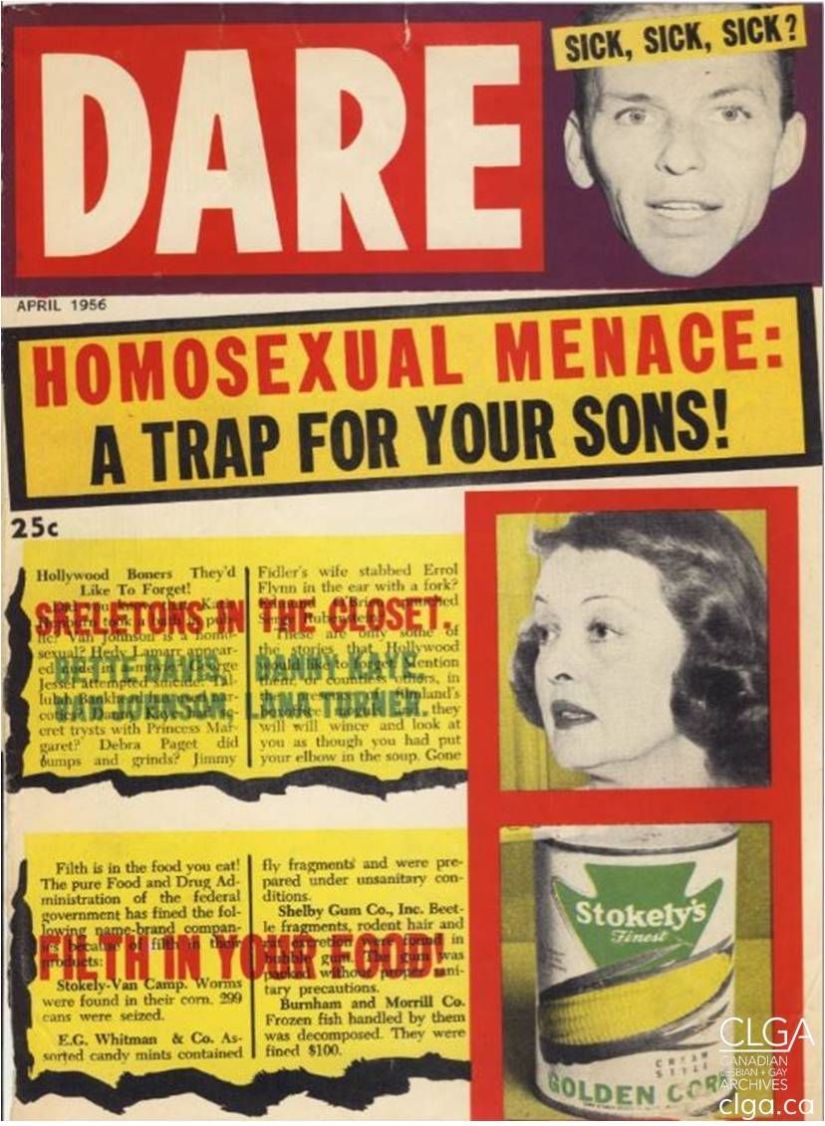
 The media knew a controversy when they saw it and soon newspapers and magazines helped whip the frenzy into a fevered pitch. The New York Times took the lead, running at least seven stories promoting this anti-homosexual campaign in May of 1950. A month later, the Senate authorized an official investigation, the first of its kind in U.S. history. It was popularly dubbed the “pervert inquiry.”
 Nebraska GOP Senator Kenneth Wherry concluded in December, “You can’t hardly separate homosexuals from subversives… Mind you, I don’t say that every homosexual is a subversive, and I don’t say every subversive is a homosexual. But [people] of low morality are a menace in the government, whatever [they are], and they are all tied up together.” In 1950, a Senate investigation chaired by Clyde R. Hoey noted in a report, “It is generally believed that those who engage in overt acts of perversion lack the emotional stability of normal persons.”, and said all of the government’s intelligence agencies “are in complete agreement that sex perverts in Government constitute security risks.”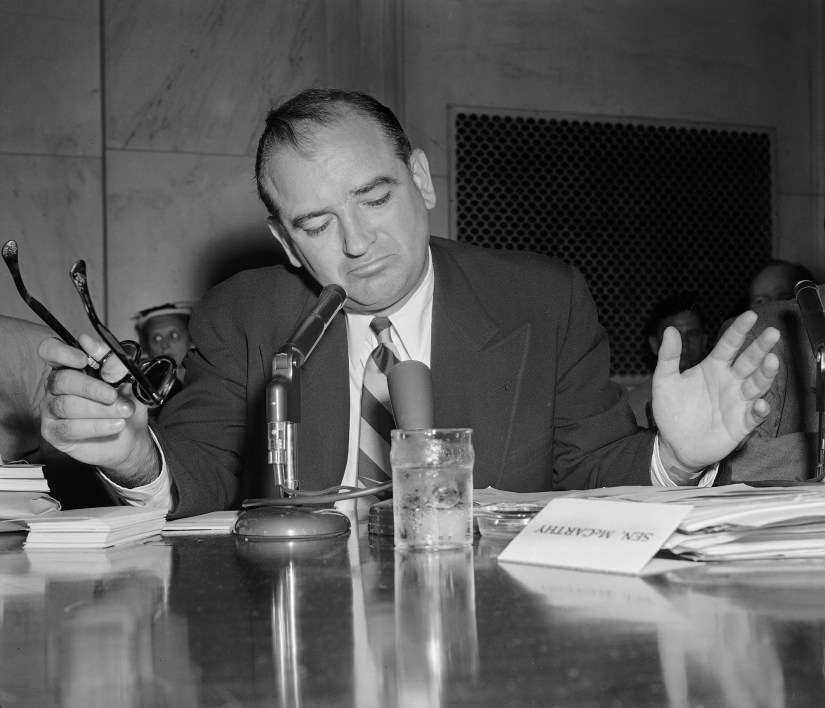

 Until the election of John Fitzgerald Kennedy as President, no other politician of Irish descent had achieved a national impact comparable with McCarthy’s in twentieth century America. McCarthy took a serious issue, undermined it through reckless behavior and destroyed the lives of many people in the process. McCarthy’s Red Scare didn’t come to an end until he dared to attack the Army with his accusations. A very bad idea when the Oval office is occupied by the most famous General of his generation.
