
Original publish date: June 24, 2013
The Major League All-Star break is over and once again regular season baseball games are in full swing. Off hours are filled with baseball themed like Major League, Field of Dreams, A League of their own, Eight Men Out and, of course, The Natural. But did you ever stop to think, is Robert Redford’s character in The Natural based on a real life player? Well, the answer is yes. And no.
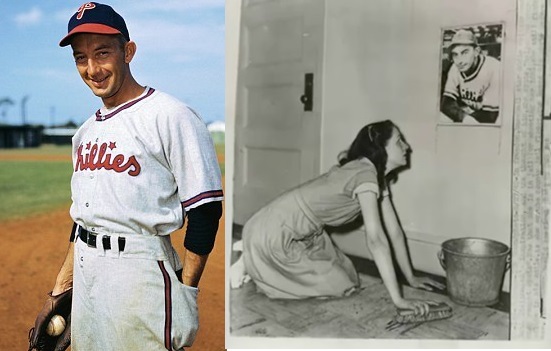
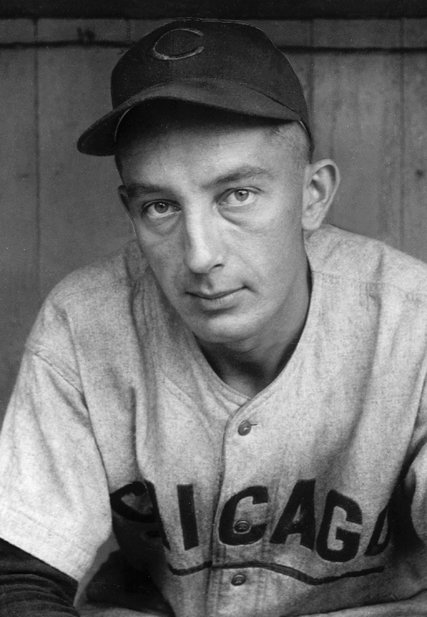
It would be more accurate to say that the film is based on an event, rather than an  individual player. On June 14, 1949 Philadelphia Phillies “Whiz Kids” (and former Chicago Cub) first baseman Eddie Waitkus was shot by an obsessed fan named Ruth Ann Steinhagen in a Chicago Hotel Room. The comparison between Waitkus and the movie character pretty much ends there. But it is a Helluva story.
Just a few years into the start of what seemed a very promising career, Waitkus was shot in the chest at the Edgewater Beach Hotel in Chicago. A 19-year-old typist at the time of the incident, shooter Steinhagen became infatuated with Eddie when he was a Cub and seeing him play every day fed her obsession. However, once he was traded to the Phillies, Ruth Ann’s sanity snapped when she realized that her “crush” would only be in Chicago 11 games that season.
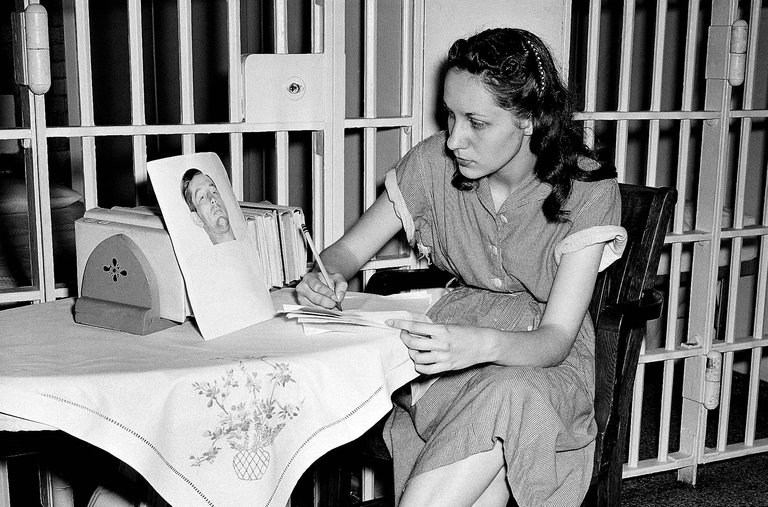
Born two days before Christmas in 1929, Ruth was the daughter of immigrant parents from Berlin, Germany. Born Ruth Catherine Steinhagen, she adopted the middle name Ann at some point in her youth. While she never actually met Waitkus before she shot him, she created a ‘shrine’ to him inside her bedroom with hundreds of photographs and newspaper clippings – sometimes spreading them out and looking at them for hours, according to her mother. She would often set an empty place across from her at the dinner table reserved for Waitkus. She told her doctors, after the incident, “I used to go to all the ball games to watch him. We used to wait for them to come out of the clubhouse after the game, and all the time I was watching I was building in my mind that idea of killing him.”
In 1948, Steinhagen’s family sent her to a psychiatrist, but her obsession didn’t diminish, even after Waitkus was traded to Philadelphia. After the shooting, police found extensive clippings in her suitcase and even pictures papering the ceiling of her bedroom at home. On June 14, 1949, the Phillies came to Chicago for a game against the Cubs. After the game, which she attended, Steinhagen sent Waitkus a handwritten note through a bellboy, inviting him to visit her in her 12th floor room in the Edgewater Beach Hotel where they were both registered.
Claiming to be Ruth Anne Burns, the note began: “Mr. Waitkus–It’s extremely important that I see you as soon as possible. We’re not acquainted, but I have something of importance to speak to you about I think it would be to your advantage to let me explain to you.” After insisting that she was leaving the hotel the next day and stressing the urgency of the request, she concluded: “I realize this is a little out of the ordinary, but as I said, it’s rather important. Please, come soon. I won’t take up much of your time, I promise.”
According to Waitkus’ friend and roommate, Russ Meyer, Waitkus received the note, which was attached to the door of their 9th floor room after returning from dinner with Meyer’s family and fiancé past 11:00 p.m. Waitkus called the room but the woman would not discuss the details over the phone. The Sunday Gazette Mail says Waitkus knew some people named Burns. Waitkus’s son later speculated that his father may have “thought he had a hot honey on the line.” For whatever reason, he went to meet her in the room.
The details of what happened in the room are a little sketchy. According to the Associated Press report day after the shooting, Steinhagen told police that as Waitkus entered the room, she greeted him by saying, “I have a surprise for you”. After which she retrieved a .22 rifle from the closet and shot him in the chest. Meyer said that Waitkus told him that when he entered the room, the woman claimed to be “Mary Brown.” He said that Waitkus claimed Steinhagen’s words after retrieving the gun from the closet were “If I can’t have you, nobody else can.” Another account claimed that Steinhagen said, “You’re not going to bother me anymore.” Waitkus, who later said he believed the woman was joking, stood his ground and was shot. He said he asked her, as she knelt beside his prone body with her hand on his, “Oh baby, what did you do that for?”
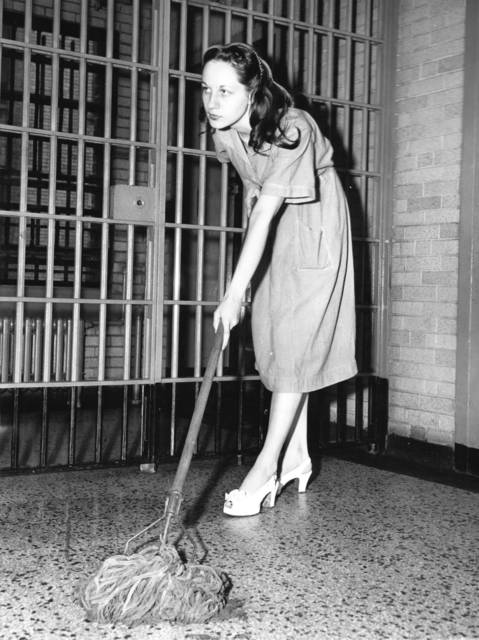
Steinhagen later told police that she had originally planned to stab Eddie, and use the gun to shoot herself, but changed her plans when Waitkus walked into the room and sat down. Steinhagen still intended to shoot herself, but evidently could not find another bullet. While Waitkus was lying on the floor bleeding from the chest, Steinhagen called down to the front desk of the hotel and told them “I just shot a man….” After the shooting, she went to wait for the authorities on the benches near the elevator, although she later claimed that she stayed with the wounded man and held his head in her lap until help arrived. The phone call, which brought quick medical attention as well as police, saved Waitkus’ life.
Steinhagen was arrested and then arraigned on June 30, 1949. Questioned about the shooting, she told police she did not know why she had done it, explaining that she wanted “to do something exciting in my life.” Strangely, when taken to Waitkus’ hospital room the day after the shooting, she told Eddie that she didn’t know for sure why she had done it. She told a psychiatrist before she went to court that “I didn’t want to be nervous all my life”, and explained to reporters that “the tension had been building up within me, and I thought killing someone would relieve it.” She said she had first seen Waitkus three years before, and that he reminded her “of everybody, especially my father.”
Steinhagen’s counsel presented a petition to the court saying that their client was “unable to cooperate with counsel in the defense of her cause” and did not “understand the nature of the charge against her.” The petition requested a sanity hearing. At the ensuing sanity hearing (which also occurred on June 30, 1949), Dr. William Haines, a court-appointed psychiatrist, testified that Steinhagen was suffering from “schizophrenia in an immature individual” and was insane. Chief Judge James McDermott of the Criminal Court of Cook County then directed the jury to find her insane, and ordered her committed to Kankakee State Hospital. The judge also struck “with leave to reinstate” the grand jury’s indictment of Steinhagen on a charge of assault with intent to commit murder, meaning that prosecutors could refile the charge if Steinhagen recovered her sanity.
Steinhagen never stood trial, but instead was confined to a mental institution until 1952, when she was declared cured and released. Waitkus did not press charges against Steinhagen after she was released, telling an assistant state’s attorney that he wanted to forget the incident. After her release, Steinhagen moved back home to live with her parents and her younger sister in her parents’ small apartment on Chicago’s North Side. She shunned publicity in the ensuing decades, and remained a recluse for the rest of her life. In 1970, she and her family purchased a home in a crowded, racially mixed neighborhood on Chicago’s Northwest Side. She lived in the home with her parents and sister and, after their parents died in the early 1990s, continued to live there even after her sister died in 2007. She employed full-time caregivers in her final years.
She lived a quiet and secluded life, steadfastly maintaining her privacy, avoiding reporters, and refusing to comment publicly on her shooting of Waitkus. She never married and worked an office job for 35 years, her neighbors and coworkers never knew of her place in infamy. Court records and routine background checks reveal no information about her career. On December 29, 2012, Steinhagen died in a Chicago hospital of a subdural hematoma that she suffered as a result of an accidental fall in her home. She was 83 years and six days old, and left no immediate survivors.
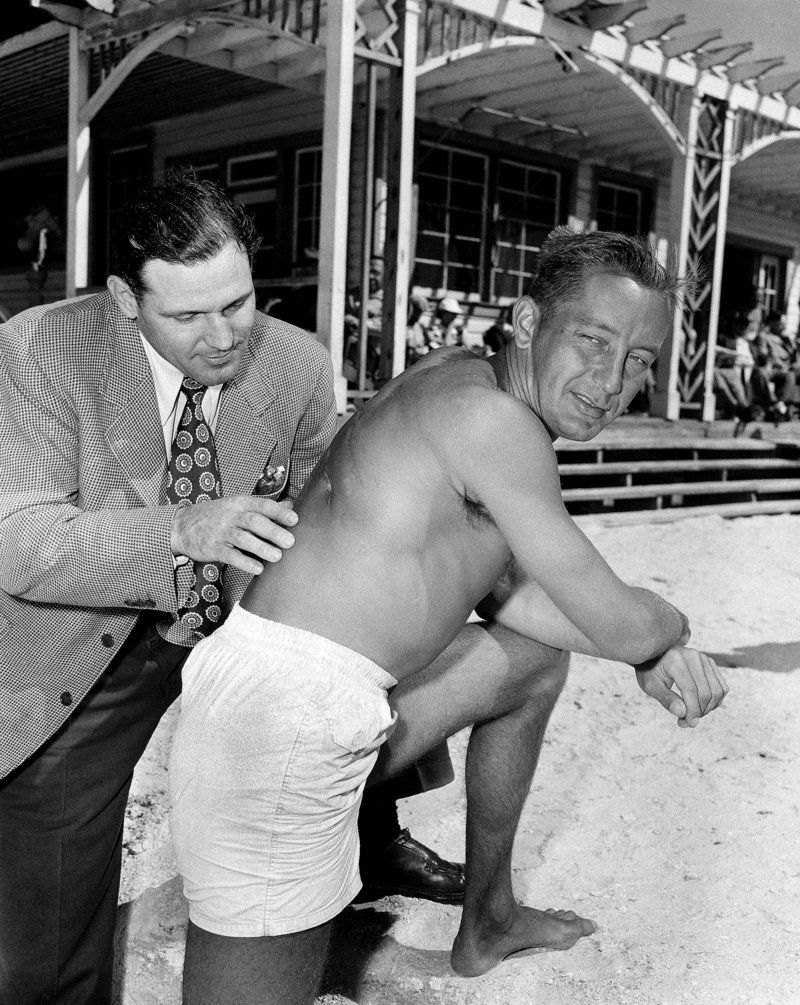
The bullet that struck Waitkus lodged in a lung, barely missed his heart, required four surgeries and prevented his return to baseball for the rest of that 1949 season. Eddie nearly died several times on the operating table before the bullet was successfully removed. The incident profoundly influenced Waitkus’ career and personal life as well; he was never the same player after the shooting. Eddie developed somewhat of a phobia worrying that others might not understand why he had visited Steinhagen’s room. He also, according to roommate Meyer, developed a drinking problem after the incident.
On August 19, 1949, the Phillies held “Eddie Waitkus Night” at Shibe Park and showered their wounded first baseman with gifts. Waitkus appeared at the stadium in uniform for the first time since he was shot in Chicago. Although the shooting left Waitkus knocking on death’s door, he was back in the Phillies’ Opening Day lineup the next year, going 3-for-5. After the 1950 season, Waitkus was named the Associated Press Comeback Player of the Year.
 The Waitkus shooting is regarded as the inspiration for Bernard Malamud’s 1952 baseball book The Natural, which was made into a film by Barry Levinson in 1984. Other than the shooting, its hard to make a comparison between Eddie Waitkus and Roy Hobbs, the character played by Robert Redford in the film. In The Natural, Hobbs was shot as a teenage phenom before ever reaching the majors and the shooting kept him from reaching the big leagues until the age of 34, at which point he immediately started hitting like Babe Ruth with his miracle bat “Wonder Boy”. When shot, Waitkus was a 29-year-old veteran of both World War II and 448 major league games.
 Miraculous comeback aside, Waitkus, who died in 1972, was no Hobbs at the bat. Though he was enjoying his finest season when he was shot, he had just one home run in 246 plate appearances, and when he retired in 1955 at age 35, he had just 24 home runs in 4,681 at bats. Waitkus hit for respectable averages (.304 in 1946, .306 in 1949 before the shooting, .285 for his career), but they were empty. He hit for little power and drew only an average number of walks. He did make a pair of All-Star teams and drew some low-ballot MVP votes in two seasons, but was by no means a Hall of Fame candidate.
Whether it was the seasons’ lost to World War II, his advancing age or the shooting, Eddie Waitkus never really lived up to the Roy Hobbs hype. Turns out that author Malamud built his iconic character around what was by far the most interesting thing about Waitkus’s career; the shooting. The similarities between fact and fiction end with the echo of that gunshot.


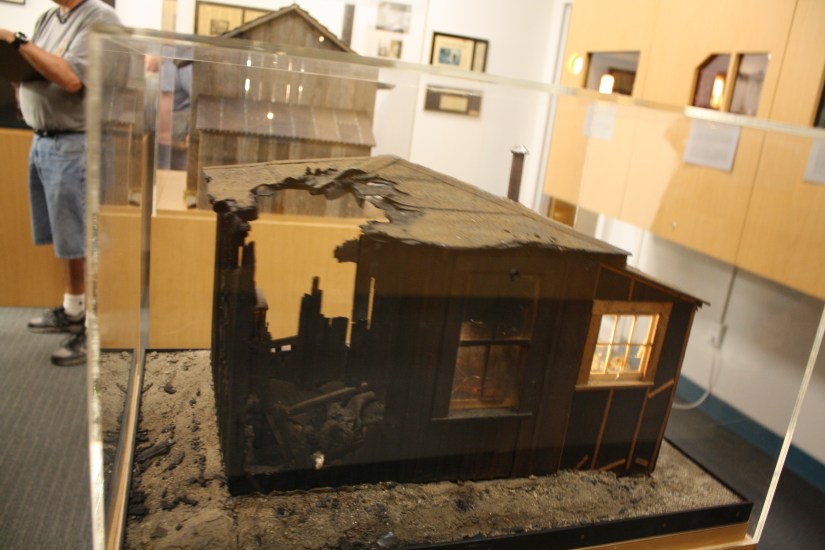
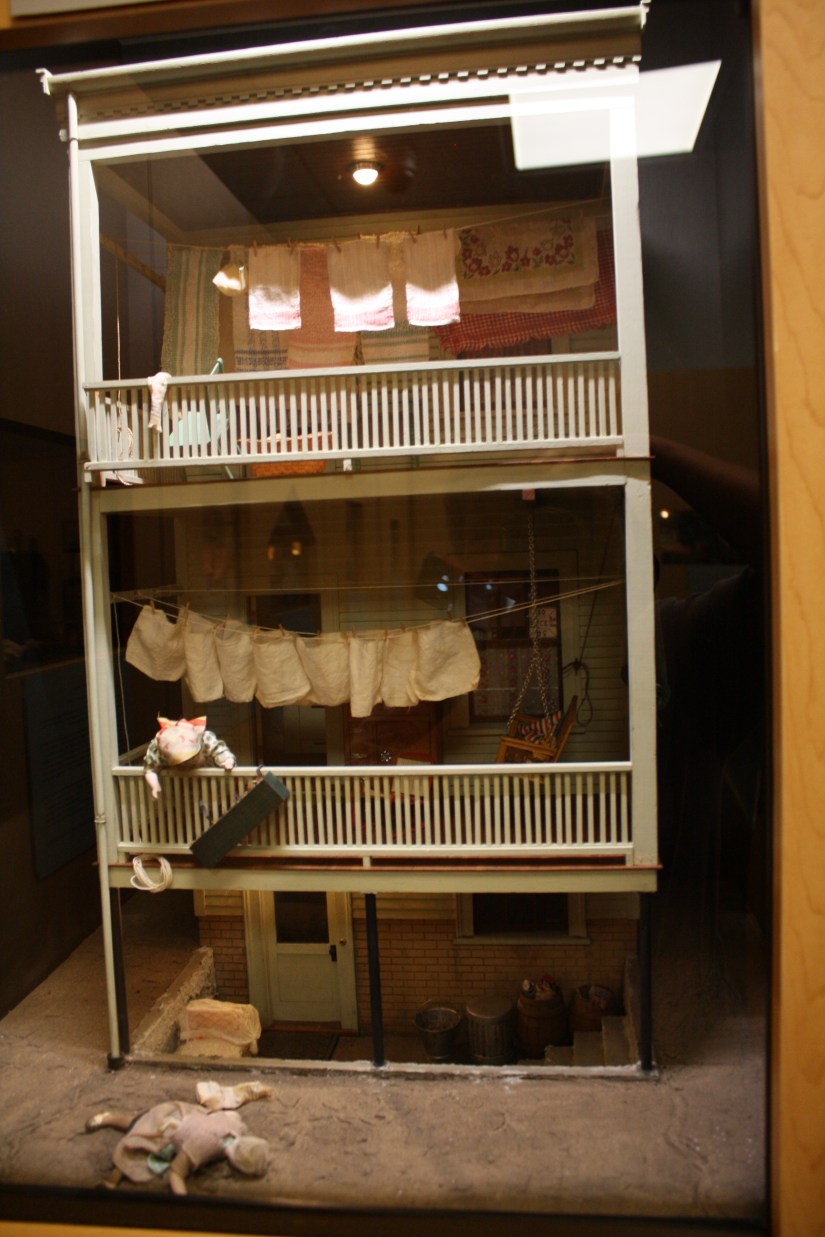
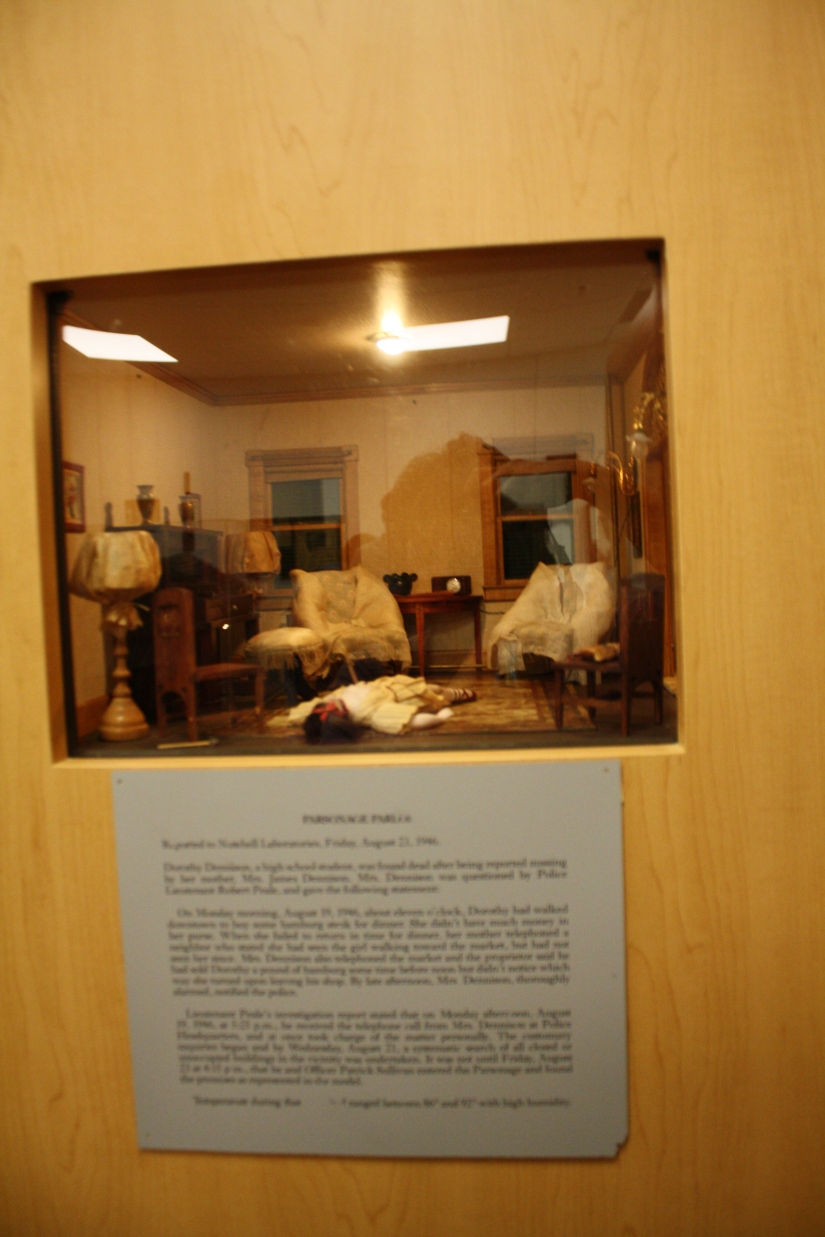
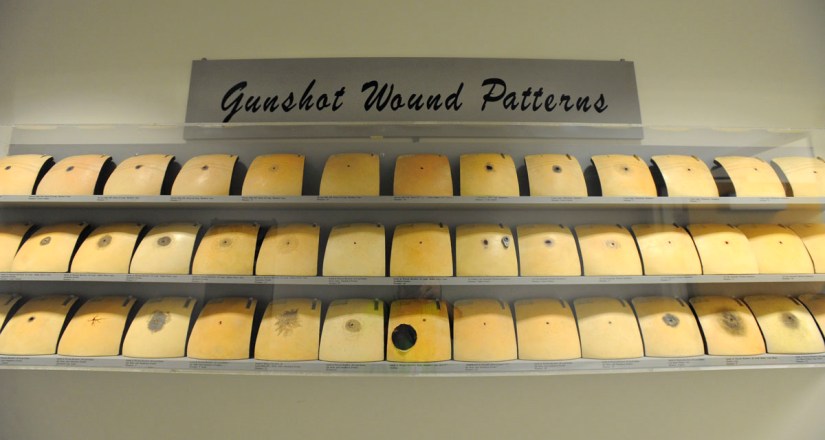
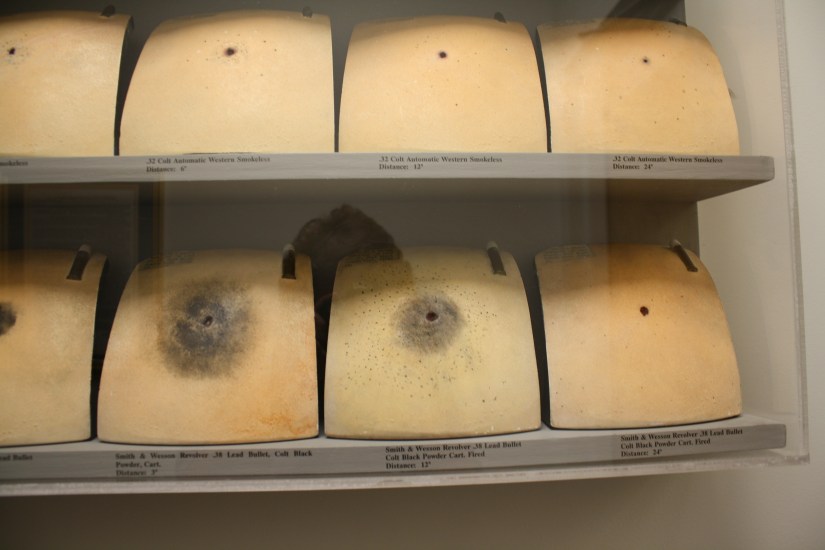
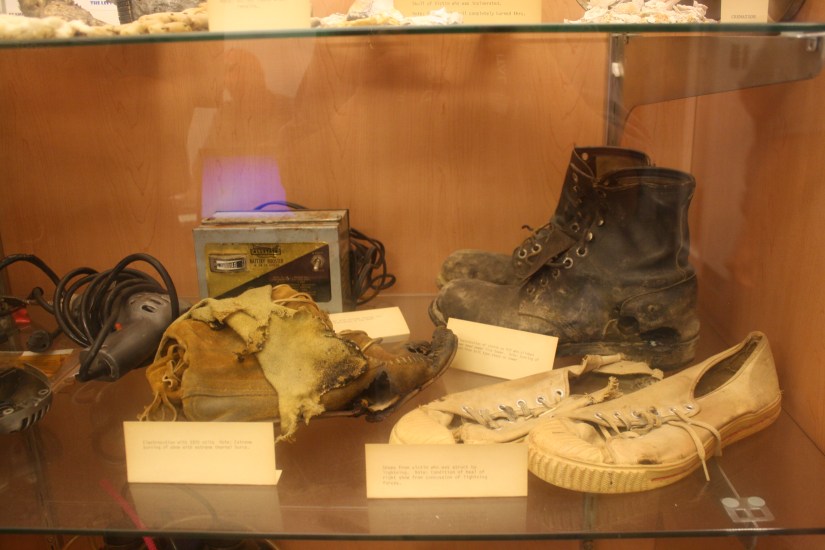
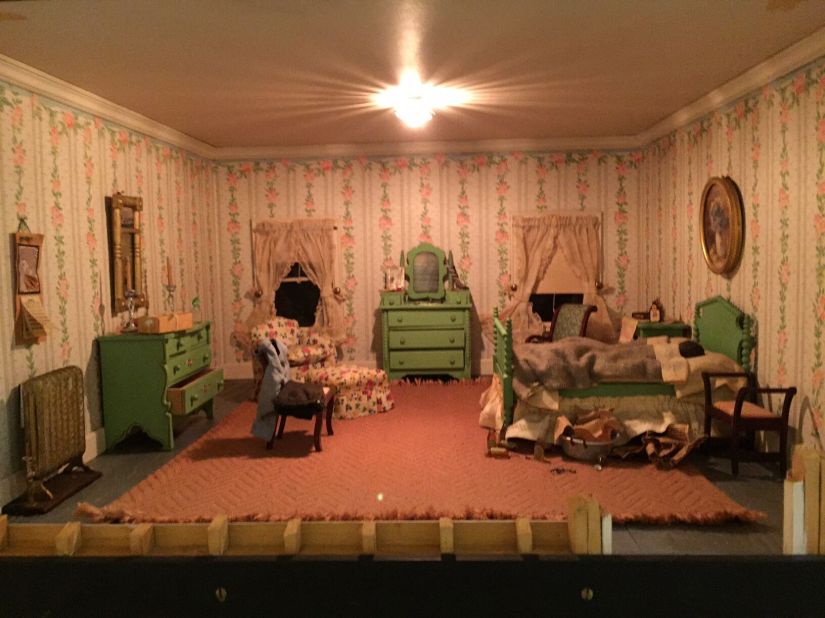
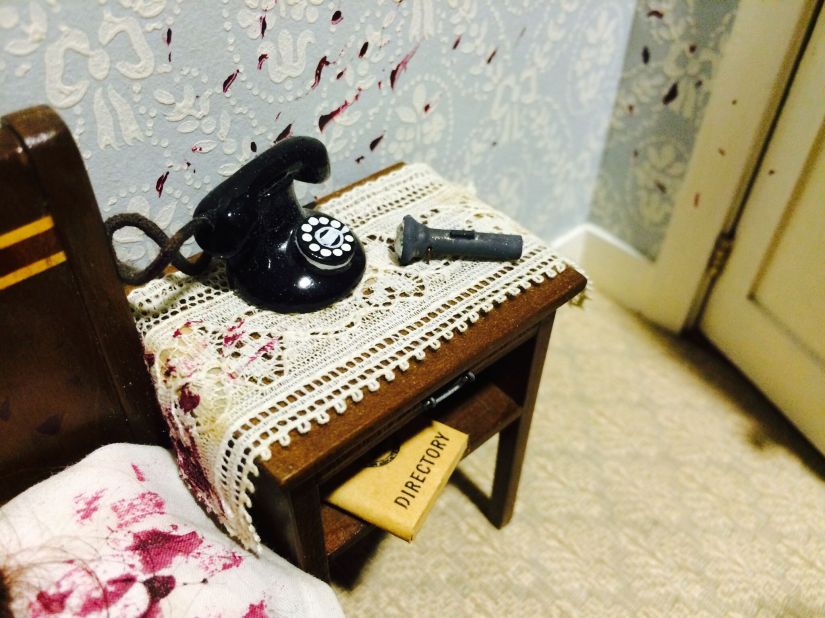
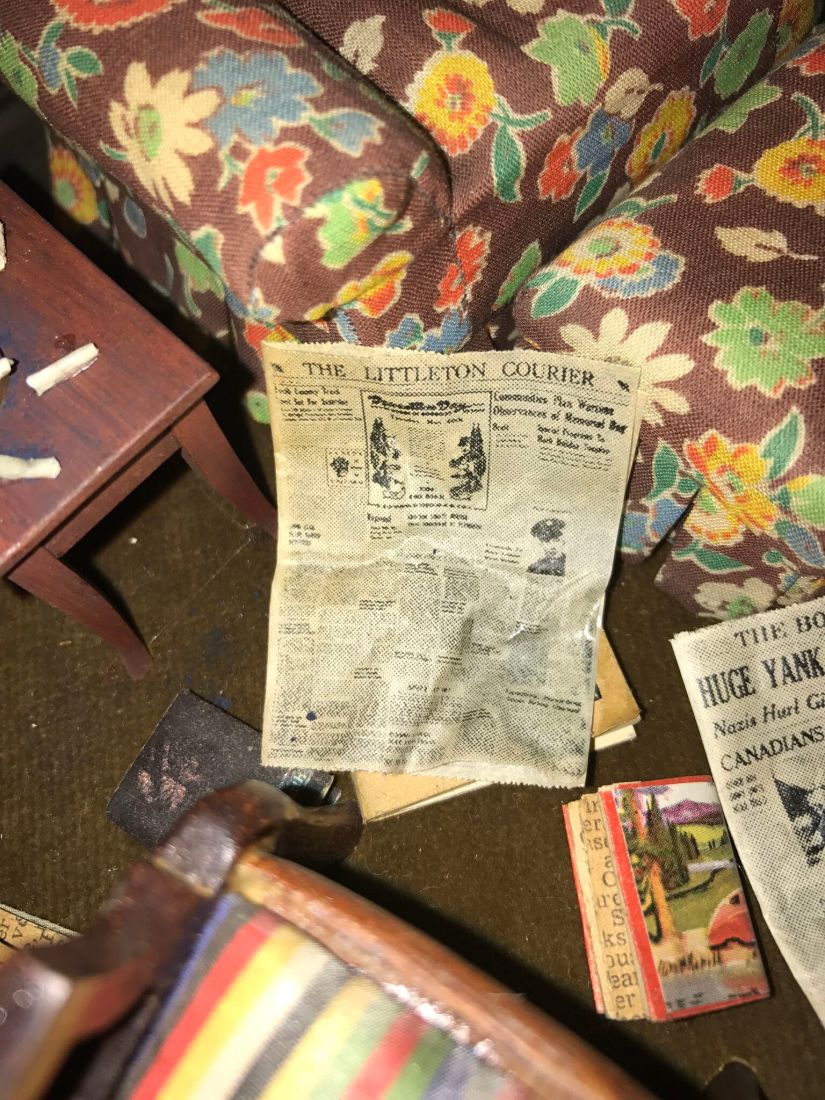
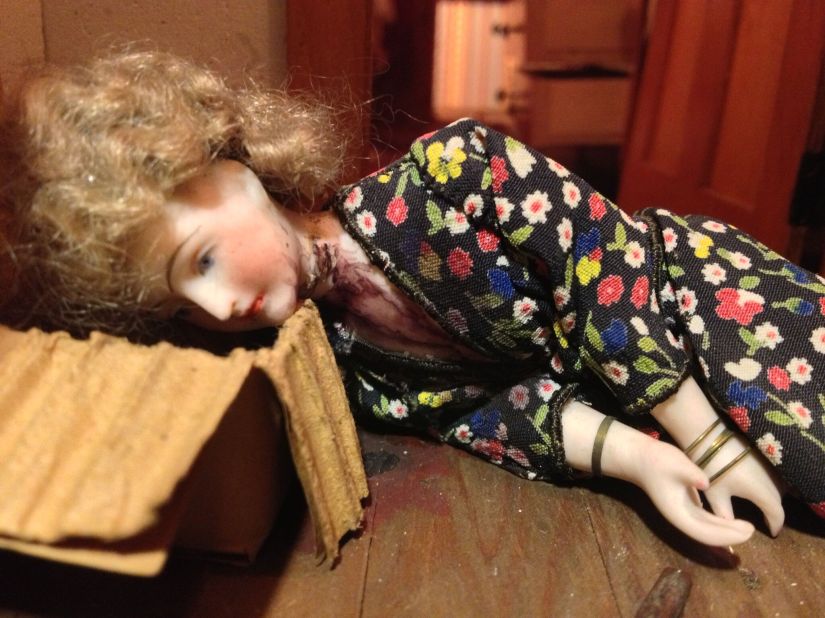
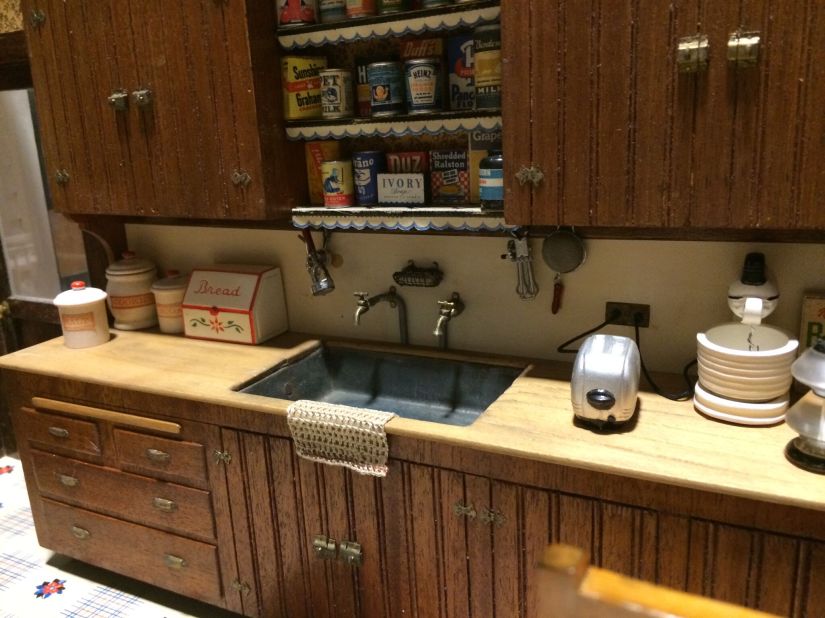
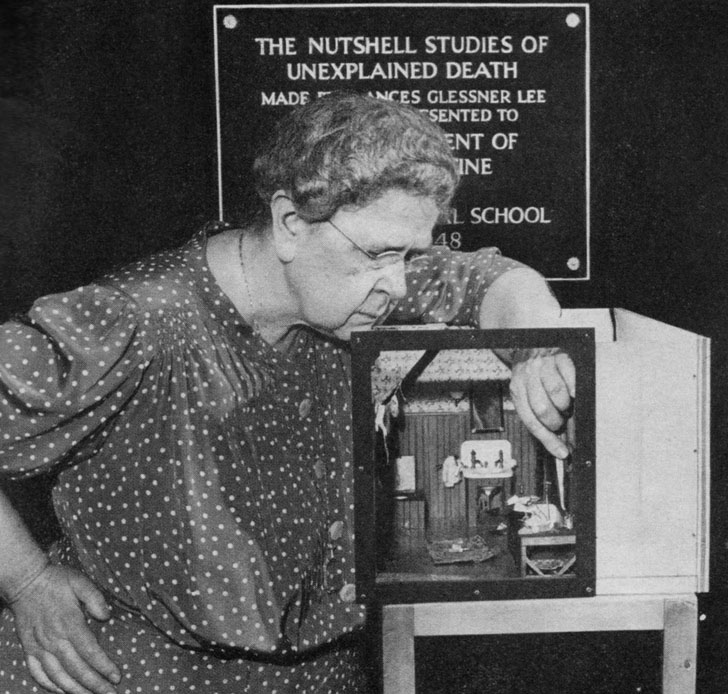 Housed in impressive looking wood and glass locked cases, they are not unlike the ancient penny arcade mechanical machines recalled by every baby boomer’s childhood. Except these scenes are populated by dead bodies, gruesome instruments of death and startling realistic blood spatter patterns. The scenes take place in attics, barns, bedrooms, log cabins, bathrooms, garages, kitchens, parsonages, saloons, jails, porches and even a woodman’s shack. Sometimes, it’s easy to determine the cause of death, but look closer and conclusions are tested. There is more than meets the eye in the Nutshell Studies and any object could be a clue. Every element of the dioramas-angles of minuscule bullet holes, placements of window latches, discoloration of painstakingly painted miniature corpses-challenges the powers of observation and deduction.
 Bruce says, “Look at the miniature sewing machine (about the size of your thumbnail) it’s threaded. There is graffiti on the jail cell walls. The newspapers (less than the size of a postage stamp) are real. Each one had to be printed on a tiny press, the newsprint is immeasurably small. The Life magazine cover is accurate to the week of the crime. The ant-sized cigarettes are hand rolled and burnt on the end. Amazing!” Bruce, who came to the M.E.’s office in 2012, says that although he’s been over every inch of each diorama, he is still making new discoveries.

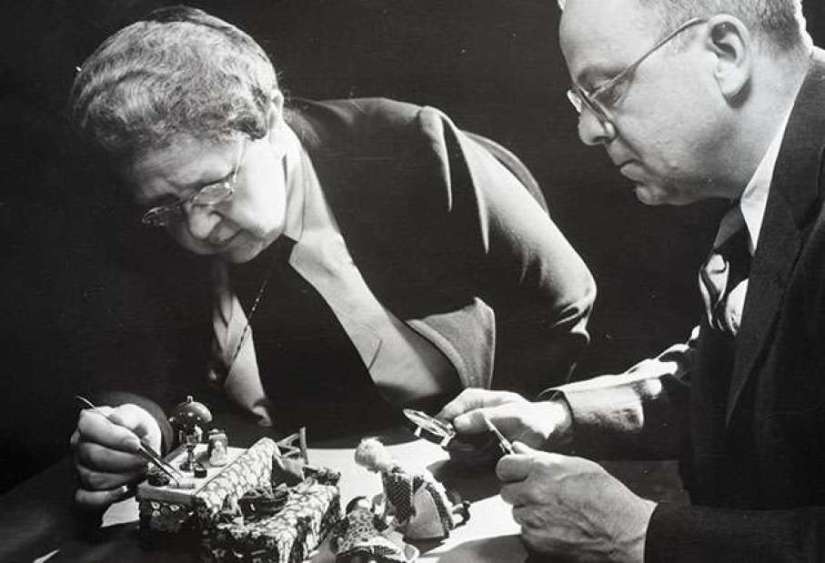 The Nutshell Studies made their debut at the homicide seminar in Boston in 1945. It was the first of it’s kind. Bruce says, “Frances’ intention was for Harvard University to do for crime scene investigation what they had done for their famous business school. When Frances died in 1962, support evaporated and by 1966, the department of legal medicine at Harvard was dissolved.” When asked how the displays made the trip from Harvard yard to Baltimore, Bruce states, “That’s a good question. When Harvard planned to throw them away, longtime medical examiner Russell S. Fisher brought them here in 1968. Fisher was a legend and a former student of Frances Glessner Lee. Fisher was one of the doctors called in to examine John F. Kennedy’s head wounds.”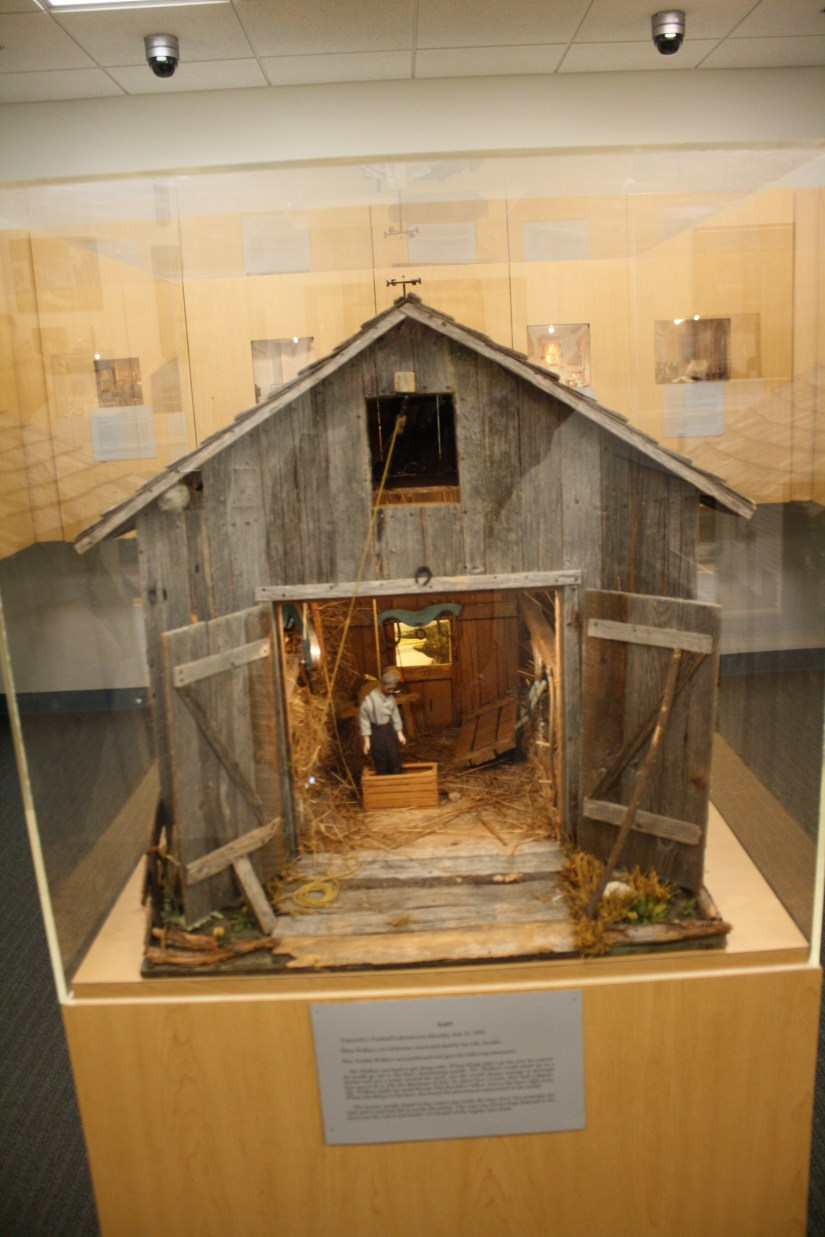








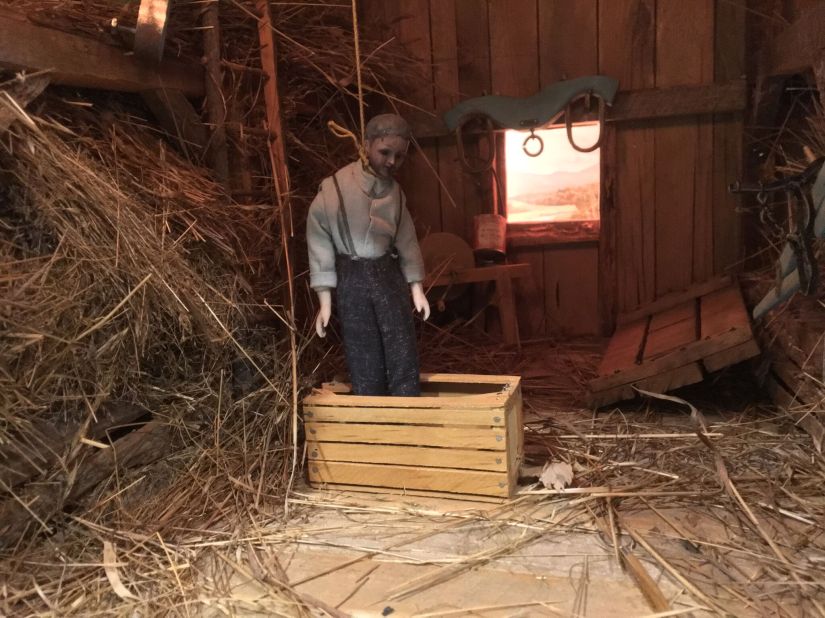


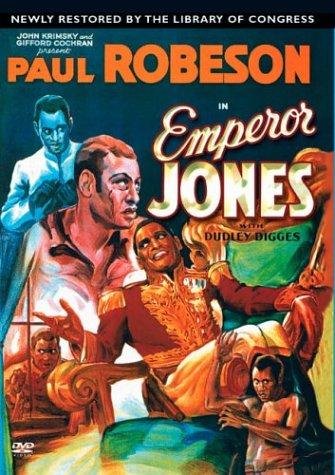

 With the choice of O’Neill’s work, “The Emperor Jones”, the Society was taking an enormous risk if only for the fact that it required an elaborate stage for a one night performance. And then there was the Klan. The KKK was growing by leaps and bounds despite the fact that it had just been formally recognized in the state that same year. Soon, one third of the native male white born citizenry of the state would belong to the Klan. This was a play solely centered around a strong, murderous black man in a position of absolute authority in production in the principally white governed center of the WASP-ish Midwestern cornbelt.
 W. F. McDermott, drama editor of the Indianapolis News, wrote this about Long: “a colored actor, played the role of the emperor with several moments of great naturalness. He was able to portray the negro fear of “ha’nts” with unusual power.” But McDermott was less kind to the playwrite, “O’Neill writes darkly of brooding, inscrutable fate; of black and stormbound heights, of man, stripped savage and terrified; of man tragically at odds with his environment and foredoomed.”
 Perhaps the most unusual feature of the Indianapolis production was the choice of the lead actor chosen to portray Brutus Jones. Arthur Theodore Long was born on December 31, 1884, the son of Henry and Nattie (Buckner) Long in Morrillton, Arkansas. According to the 6th edition of “Who’s Who in Colored America (1941-1944)”, Long graduated from Sumner High School in St. Louis, Missouri in 1904. He entered the University of Illinois at age twenty and earned a BA degree in 1908. Arthur then went on to further his education at both Indiana and Butler universities. He then studied at the University of Chicago, presumably in pursuit of his master’s degree. Long earned teaching credentials in history, civics, English, music and mathematics.
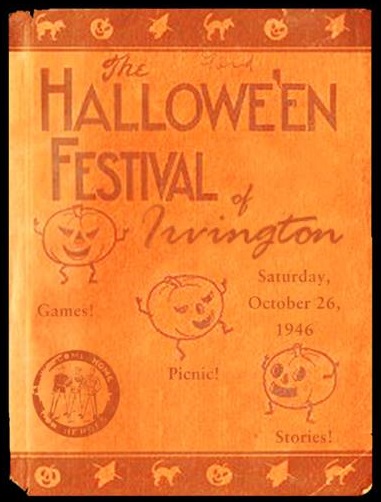
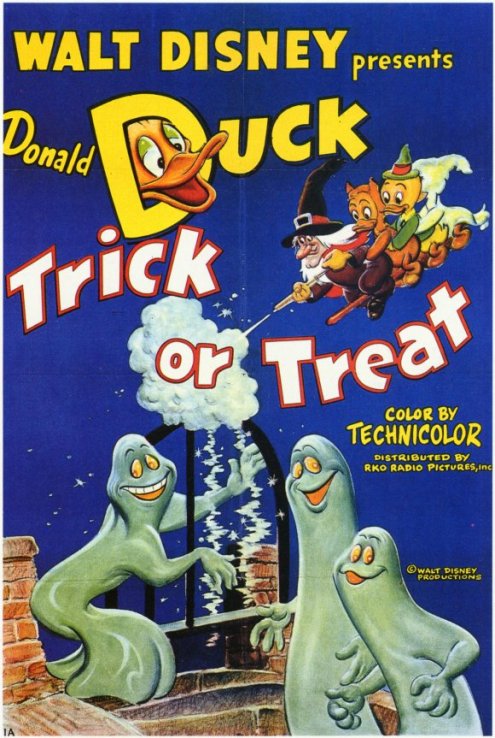 We’ve all heard the stories, legends and rumors surrounding that now legendary first event. It was sponsored by the Walt Disney company featuring costumed characters with a Disney based theme. The Disney folks gave away potentially priceless hand painted film production cels right here on the streets of old Irvington town. Walt Disney himself was seen walking down Audubon with Mickey Mouse at his side. It’s hard to separate fact from fiction nowadays.
 A week later on May 5, 1942, every United States citizen received their much anticipated “War Ration Book Number One”, good for a 56-week supply of sugar. Initially, each stamp was good for one pound of sugar and could be redeemed over a specified two-week period. Later on, as other items such as coffee and shoes were rationed, each stamp became good for two pounds of sugar over a four-week period. The ration book bore the recipient’s name and could only be used by household members. Stamps had to be torn off in the presence of the grocer. If the book was lost, stolen, or destroyed, an application had to be submitted to the Ration Board for a new copy. If the ration book holder entered the hospital for greater than a 10-day stay, the ration book had to be brought along with them. Talk about your red tape!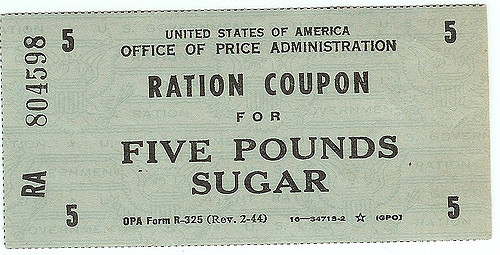
 To make matters worse, just because you had a sugar stamp didn’t mean sugar was available for purchase. Shortages occurred often throughout the war, and in early 1945 sugar became nearly impossible to find in any quantity. As Europe was liberated from the grip of Nazi Germany, the United States took on the main responsibility for providing food to those war ravaged countries. On May 1, 1945, the sugar ration for American families was slashed to 15 pounds per year for household use and 15 pounds per year for canning – roughly eight ounces per week per household. Sugar supplies remained scarce and, just as sugar had the distinction of being the first product rationed at the start of the war, sugar was the last product to be rationed after the war. Sugar rationing continued until June of 1947, over six months after the first Irvington Halloween festival in October of 1946.
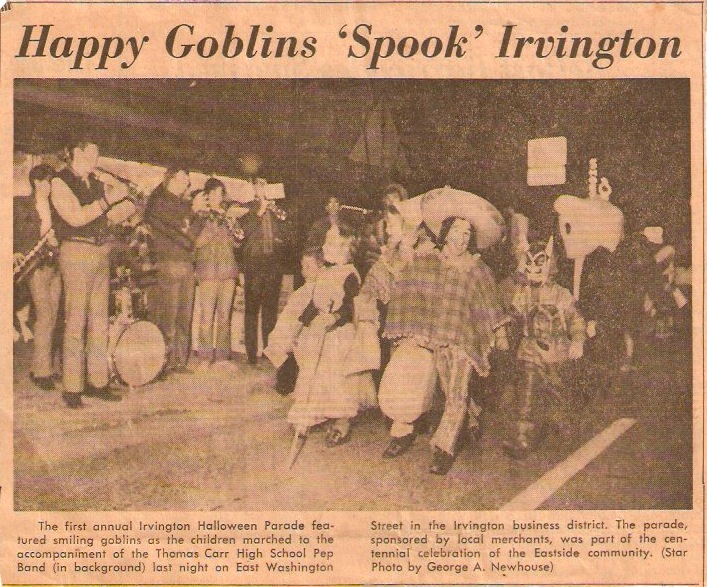 An argument can be made that it was events like the First Irvington Halloween Festival that kicked off the tradition of trick-or-treating as we know it today. Although the Halloween holiday was certainly well known in America before that first Irvington celebration, it was predominantly a holiday for adult costume parties and a chance to cut loose with friends playing party games while consuming hard cider. Early national attention to trick-or-treating in popular culture really began a year later in October of 1947. That’s when the custom of passing out the playful “candy bribes” began to appear in issues of children’s magazines like Jack and Jill and Children’s Activities, and in Halloween episodes of network radio programs like The Baby Snooks Show, The Jack Benny Show and The Adventures of Ozzie and Harriet. Trick-or-treating was first depicted in a Peanuts comic strip in 1951, perhaps the image most identified with the children’s holiday in the hearts and minds of baby boomers today. The custom had become firmly established in popular culture by 1952, when Walt Disney debuted his Donald Duck movie “Trick or Treat”, and again when Ozzie and Harriet were besieged by trick-or-treaters on an episode of their popular television show. In 1953, less than a decade after that first festival in Irvington, the tradition of Halloween as a children’s holiday was fully accepted when UNICEF conducted it’s first national children’s charity fund raising campaign centered around trick-or-treaters.
 Most of this column’s readers are aware that part of my passion for history revolves around collecting, cataloging, displaying and observing antiques and collectibles. There exists in the collecting world a strong group of enthusiasts devoted to the pursuit and preservation of Halloween memorabilia of all types. Costumes, decorations, photographs, publications and postcards in particular. The origins of Halloween as we now know it might best be traced in the postcards issued to celebrate the tradition. The thousands of Halloween postcards produced between the turn of the 20th century and the 1920s commonly show costumed children, but do not depict trick-or-treating. It is believed that the pranks associated with early Halloween were perpetrated by unattended children left to their own devices while their parents caroused and partied without them. Some have characterized Halloween trick-or-treating as an adult invention to curtail vandalism previously associated with the holiday. Halloween was not widely accepted and many adults, as reported in newspapers from the 1930s and 1940s, typically saw it as a form of extortion, with reactions ranging from bemused indulgence to anger. Sometimes, even the children protested. As late as Halloween of 1948, members of the Madison Square Boys Club in New York City carried a parade banner that read “American Boys Don’t Beg.” Times have certainly changed since that first Halloween festival 65 years ago.
 A 2005 study by the National Confectioners Association reported that 80 percent of American households gave out candy to trick-or-treaters, and that 93 percent of children, teenagers, and young adults planned to either venture out trick-or-treating or to participate in other Halloween associated activities. In 2008, Halloween candy, costumes and other related products accounted for $5.77 billion in revenue. An estimated $2 billion worth of candy will be passed out during this Halloween season and one study claims that “an average Jack-O-Lantern bucket carries about 250 pieces of candy amounting to about 9,000 calories and containing three pounds of sugar.” Yes, 65-years ago, Halloween looked quite different than it does today. Next week, doorbells all over Irvington will ring, doors will be opened and wide-eyed gaggles of eager children will unanimously cry out “Trick-or-Treat” from Oak Avenue to Pleasant Run Parkway.
 Costumed kids will be rewarded for their efforts with all sorts of tribute in the form of coins, nuts, popcorn balls, fruit, cookies, cakes, and toys. As a casual observer born long after that first Irvington Halloween Festival and an active participant in the festivities that will begin next week, I’m glad that our Irvington forefathers skirted government regulations all those years ago. In fact, as a fan of all things Irvington, I’d go so far as to say that this community has played a big part in the Halloween holiday as we know it today. Because, grammar notwithstanding, nobody does Halloween like Irvington do.
 My first thought, where the heck is Bloomfield, Indiana? Well, if you didn’t know, it is a small town of some 2,400 people located in Greene County not far from, and currently considered a part of, Bloomington. Its best known for having one of the most well preserved covered bridges in the state and for its long association with the Native American Indian tribes including the Miami, Kickapoo, Piankeshaw, and Wesa tribes. That settled, I was on to the next question. What is this thing? I’m guessing some of you already know the answer, but it was unknown to me. It is a book, distributed by the electric company to their wartime, homefront customers to read their own meters and pay the fees associated with usage based on the honor system. That’s right, the honor system. With the electric company. An Oxymoron if you ever heard one right?
 The customer would record the electricity their household used, pay the bill, and the electric company trusted them. Seriously? The electric company…trust you? Could that be possible? Can you imagine such a system? I gotta tell ya, when I see things like this I’m convinced that I was born in the wrong era. I must admit, I’m one of those people that believes that the World War II Generation was truly our greatest. Life was simpler, people were nicer, and businesses were staffed by friends and neighbors who were really rooting for our success. Whenever I see things like this I realize that back then, everyone pulled together to do their part. All for one and one for all. Corny, but true. I didn’t realize that this little booklet was a first generation relic of the rural electrification movement that began in 1935 as part of an effort to bring electricity, telephone and indoor plumbing to the rural communities all over the state. Something we take for granted today.


