

Original publish date: May 9, 2017
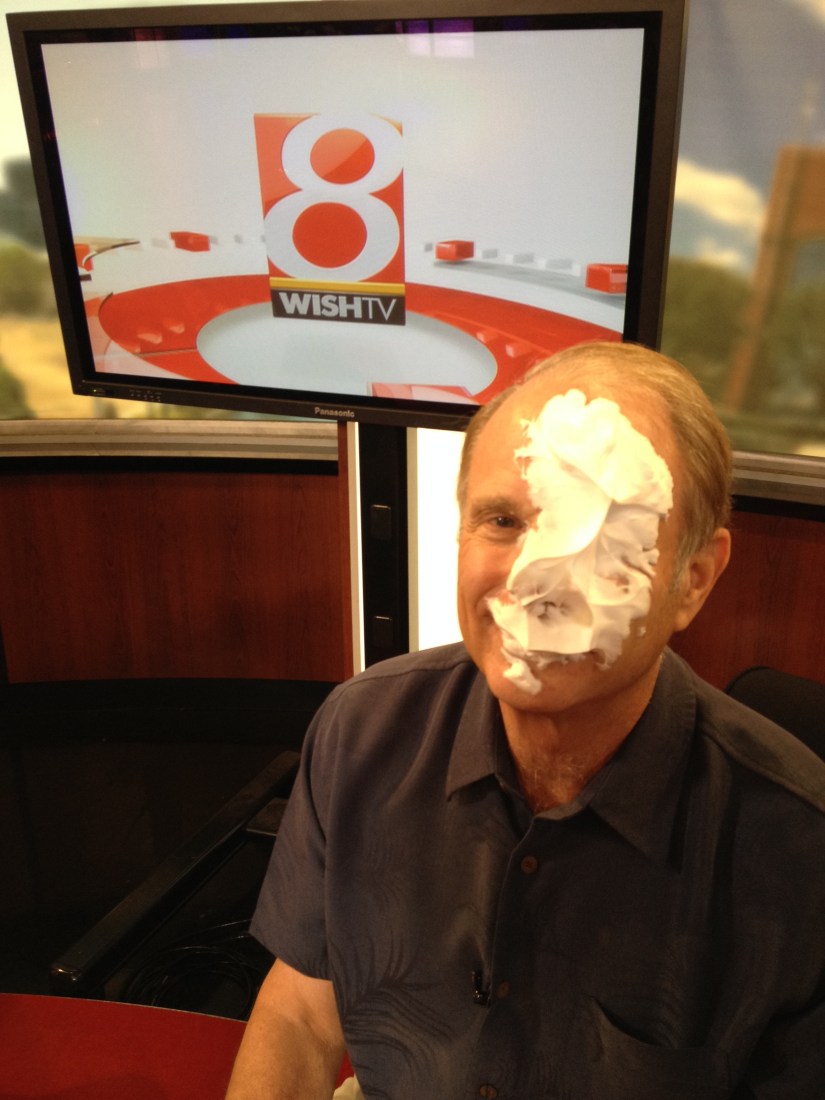
Last week, it happened. Hal Fryar died. Hal, better known to generations of Hoosiers as Harlow Hickenlooper, made it to his 90th birthday on June 8th but died peacefully in his sleep a couple weeks later on June 25th. I would like to thank all of you who sent birthday cards to Hal down in Florida. His son Gary informs me that they were the highlight of the party and Hal appreciated each and every one of them. WISH-TV Channel 8 reporter Dick Wolfsie contacted me about filming a tribute to Hal for his July 1st show and I was honored to do it for Hal.
Wolfsie had a long history with Hal and his interview segment filmed back in 2008 remains a classic. Hal’s alter ego Harlow was known as an affable schlemiel whose just compensation was always a pie in the face. Not only did Dick share space with Hal in the TV broadcasting fraternity, Mr. Wolfsie also shares membership with Hal in the pie-in-the-face fraternity. (Okay, there is no such thing but there should be.) Dick Wolfsie was once “pie’d in the face” by non other then the king of the genre, Soupy Sales himself back in 1998.

Dick felt a proper way to honor his pal Hal was to take a pie in the face himself. That show, which you can find on the WISH-TV website under the Dick Wolfsie / Hal Fryar segment name, went off without a hitch and was a suitable tribute to Hal Fryar. I had the honor of “Pie-ing” Dick in the face just as Hal Fryar himself had showed me at the Irving Theatre so many years ago. As for Mr. Wolfsie, he was such a trooper that he actually took TWO pies in the face. Now that is dedication.
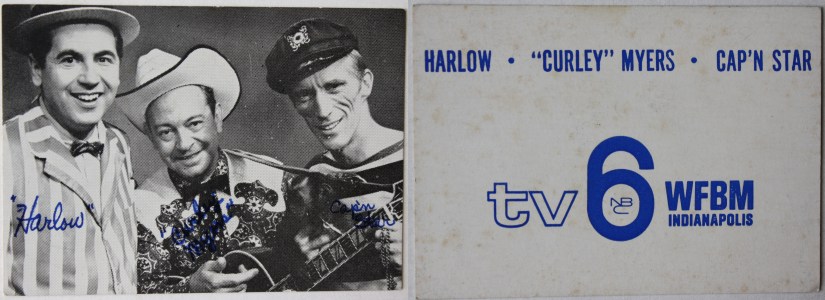
As fate would have it, a few days before appearing on Dick Wolfsie’s segments I attended an antique show and ran across a photo of Hal and his co-stars Curley Myers and Cap’n Star (Jerry Vance, a.k.a. Larry Vincent). These photos, which were actually giveaways from WFBM TV Channel 6 back in the early 1960s, brought back memories. Having grown up in Indy around that time, I clearly remember getting things like this whenever and wherever the TV stars would show up for promos. Store, bank and restaurant openings, live shows and taped segments; the stars would hand these out to their young fans as souvenirs. I found the timing of the card’s discovery ironic because they came into my world just after Hal’s 90th birthday and the day before I had found out he had passed. Life is funny that way.

I realized that I had written several article on Hal Fryar but had never touched on the lives of his cohorts. By now, you know that Hal rose to prominence as Harlow Hickenlooper, the host of The Three Stooges Show on Channel 6 in Indianapolis from 1960 to 1972. Together, Hal, Curley and Cap’n Star sang songs and performed skits for a live studio audience of children. Fryar also hosted several other children’s shows over 43 years in local television. In 1965, Fryar was cast in the Three Stooges movie, The Outlaws Is Coming, playing the part of Johnny Ringo. On October 2, 2008, Fryar was inducted into the Indiana Broadcast Pioneers Hall of Fame. But what became of his costars?

Gerald L. “Curley” Myers, known by fans as “your ole buckaroo buddy”, was born April 1, 1920 twelve miles east of Lebanon, Indiana. Curley grew up on a farm in Clinton County and attended grade school in Forest and Frankfort, Indiana. From the age of eight he was in love with music and played his bass violin in the school orchestra, at church and fiddled at neighborhood hoedowns on the weekends. He graduated from Frankfort High School in 1938. Somewhere along the way, Curley took up the banjo and guitar, which opened the door to a successful career in show business.
Curley’s list of bands reads like a page out of country music history: Woodside Harmonica Band (19334-36), The Hoosier Ramblers (1936-38)s, the Semi Solid Ramblers (1938-39), Cap’n Stubby and the Buccaneers (1939-45) and the Shady Acres Ranch Cowboys (1949-57). Curley’s Cap’n Stubby years were spent at WLW in Cincinnati performing on the same slate as Doris Day, The Williams Brothers with Andy Williams, Merle Travis, The Girls of the Golden West, Lulu Belle and Scotty, Bradley Kincaid and the Delmore Brothers to name a few.
 Early in 1955 WFBM channel 6 began airing the Indiana Hoedown, starring entertainers who had been on WLW in Cincinnati. In addition to working the Hoedown, Curley had Curley’s Cowboy Theater for seven or eight years, then did a Saturday morning kids show with Cap’n Star and Harlow Hickenlooper. Altogether, Curley spent over 15 years there as the “Saturday Morning Cowboy”. In May, 1972 the TV station was sold and the new owners planned a change of programming formats and personalities.
This led to a kind of semi-retirement from the music business for Curley Myers. He went to work for the Culligan Water Conditioning company but continued entertaining on nights and weekends at state fairs, parties and a long standing gig performing Wednesday through Saturday nights at the Best Western. Curley spent well over 60 years pickin’, singin’ and grinnin’ all ovr the midwest. Curley and Hal remained close until Curley’s death on May 19, 2013 at a Retirement home in Mulberry, Indiana.
Larry Vincent (aka Larry Vance) was born Larry Francis Fitzgerald Vincent on June 14, 1924 in Boston, Massachusetts. Not much is known about Vincent’s early life. He first surfaces in the 1940s as an understudy to Kirk Douglas in the Broadway play “Alice in Arms.” The play ran for only 5 performances at the National Theatre in New York City, but is notable for being Kirk Douglas’ Broadway debut. Vincent teamed up with Don McArt to form a stand-up comedy act that performed in nightclubs all over New York City. Anderson Indiana native Donald Craig McArt had previously appeared in the Walt Disney films “Son of Flubber” and the “Absent Minded Professor.”

Vincent landed in the Circle City in the early 1960s where he created his “Cap’n Star” character for WFBM in Indianapolis. Cap’n Star appeared alongside Harlow and Curley for children’s programming which showcased old Three Stooges shorts. Along with his pet monkey “Davy Jones”, Cap’n Star sang songs and performed skits on the show. Vincent lived in a house at 41st and Graham Avenue on the east side. Local children remember Vincent as a kind neighbor who always had time for kids, often letting them wear his sailor’s cap from the show and play with the show’s mascot monkey Davy Jones.
In 1968 he left Indianapolis to become staff director for KHJ-TV in Los Angeles. From 1969 to 1974 Vincent was the host for a Sammy Terry style Friday night horror show program known as “Fright Night” on KHJ-TV and later Seymour’s Monster Rally on KTLA TV. Vincent’s Seymour horror host presented—and heckled—low-budget horror and science fiction movies on both local Los Angeles stations. He is remembered for his style of criticizing the movies he presented in an offbeat and funny manner, usually appearing in a small window which would pop up in the corner, tossing a quip, then vanishing again. Sometimes he would, using blue-screen, appear in the middle of the movie, apparently interacting with the characters in the movie.

Along with appearing in several episodes of The New Three Stooges during his Indianapolis years, Vincent also had small roles on Get Smart, Mission: Impossible, Mannix, The Flying Nun, and I Dream of Jeannie. Larry Vincent served as Knott’s Berry Farm’s inaugural “Ghost Host,” in 1973 at Knott’s Scary Farm Halloween Haunt. Vincent aka Seymour’s last show came in 1974. Traditionally, Seymour ended the show by saying, “I’d like to thank you… I’d like to, but it’s not my style! Bad Evening!” But on his final telecast, Seymour eschewed his familiar goodbye and said nothing. He merely waved as the stagehands disassembled the set behind him. Mr. Vincent quickly succumbed to stomach cancer and died less than a year later on March 9, 1975. Several years later, Elvira took over Larry’s place as horror-film hostess on Fright Night, which later morphed into her own series, “Elvira’s Movie Macabre.” And the rest, as they say, is history.
Although these men and their genre has left the local TV scene, their legacy is recalled fondly by baby-boomers all over the country. They don’t make men like Harlow, Curley and Cap’n Star anymore. Like Janie Hodge and Bob Glaze (Cowboy Bob) these people were integral parts of Indianapolis schoolkids. They entertained and informed us all by filling the hours after school until our parents came home. Corny, yes, old fashioned, sure but they were our TV friends, We could always count on them to make us feel like they were all talking directly to us, Hal Fryar was really the first of his kind and his reach was a long one. He will be missed.

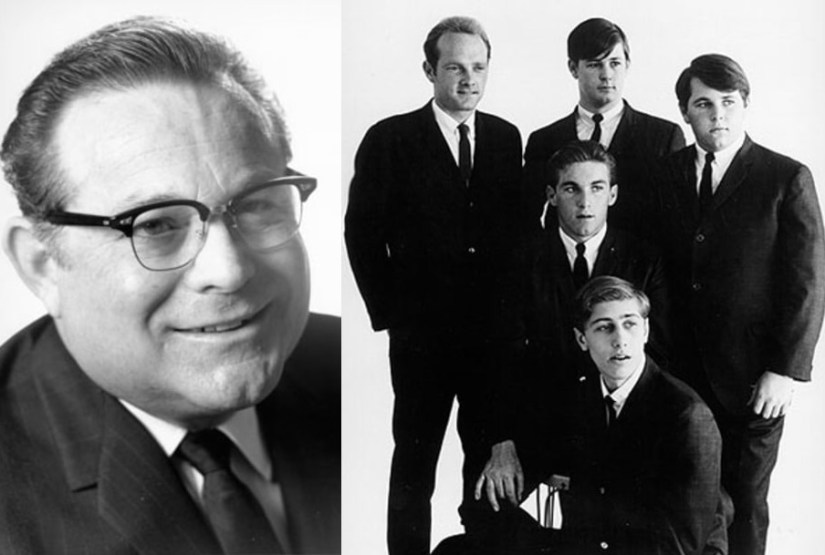
 The banter among the bandmates and “Wrecking Crew” studio musicians is typical witty chatter with hints of the Era in which the recording was made scattered thourhgout. Mike Love saying “I got Vietnam-itus in here.” Al Jardine replying with a giggle: “I was just thinking of that, you know that?” Mike: “What?” Al: “Vietnam…for some reason, I don’t know why…” and Brian yelling from the booth: “Get in the front of the mic, Carl!”
 At this point, Murry departs with the boy’s mother Audree in tow and the Beach Boys continued on with the session. Emotionally devastated by the evening’s drama, the Boys called it a night, returning the next day to redo the vocals. Brian would have the last laugh in this battle by sneaking the song “I’m Bugged At My Ol’ Man” onto the album at the last minute. It would be another three years before Murry again attended a Beach Boys recording session. Legend claims that from that point on, the band purchased a fake audio console for their sessions, so Murry could twiddle knobs on the fake mixing board to his heart’s delight without destroying anything.
 In 1964, Murry Wilson’s wife Audree left him and they separated. The marriage ended in divorce in 1966. In a letter written on May 8, 1965, just a few months before Brian recorded what is arguably the band’s masterpiece, “Pet Sounds”, Murry gives a glimpse into the complicated, psychologically messed up relationship with his son.
 I am over the big hurt of losing my three sons as a manager for their benefit and good fortune, but I am not over the fact that I have lost my three sons’ love, and I mean real love, because you are all in a distorted world of screams, cheers and financial success. The money will not mean a damn thing to any of my sons if they are not happy when the job is done and it is a sad thing for three young beautiful sons to place their life’s success on the success of a record album or a 45 RPM disc or to how successful they are in the eyes of the music world from how many seats they sell in a live concert. I hope to God that you and your brothers review your thinking now before it is too late, because only more damage can arise from this temporary, fleeting image of success known as The Beach Boys.
 Although a marginally successful songwriter and musician, the self-aggrandizing and ostensibly talented Murry Wilson’s primary claim to fame was as the patriarch of the Beach Boys. Once the Beach Boys established themselves, Murry managed to finagle a solo album deal for himself in 1967; “The Many Moods of Murry Wilson.” It was not commercially successful. Murry Wilson died on June 4, 1973 after suffering a heart attack at the age of 55.
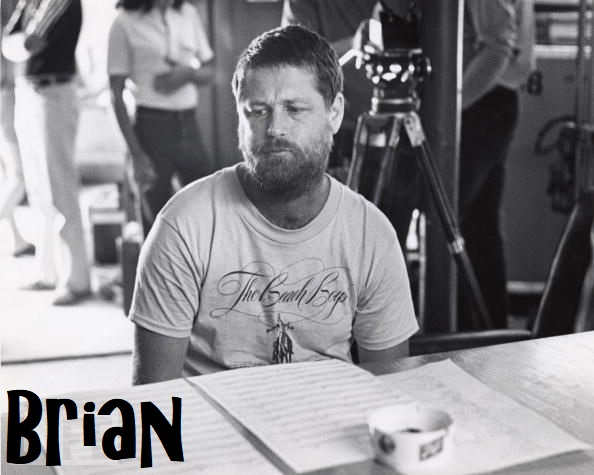 Brian Wilson spent the bulk of the two years after his father’s death hiding in the chauffeur’s quarters of his home; sleeping, abusing alcohol, taking drugs (including heroin), overeating, and exhibiting self-destructive behavior. He attempted to drive his vehicle off a cliff, and at another time, demanded that he be pushed and buried into a grave he had dug in his backyard. Although reclusive during the day, Wilson spent his nights fraternizing with Hollywood colleagues known as the “Vampires” including Alice Cooper, Iggy Pop, Harry Nilsson, John Lennon, Ringo Starr, and Keith Moon. The Monkees Micky Dolenz recalls dropping LSD with Wilson, Lennon, and Nilsson, while Wilson “played just one note on a piano over and over again.” During this period, his voice deteriorated significantly as a result of his mass consumption of cocaine and incessant chain smoking.
 On December 28, 1983, three weeks after his 39th birthday, Dennis Wilson drowned at Marina Del Rey in Los Angeles. After drinking all day, he dove into the Marina searching for items he had thrown overboard from his yacht three years before. He never resurfaced. Carl Wilson died of cancer in Los Angeles on February 6, 1998, just two months after the death of his mother, Audree.
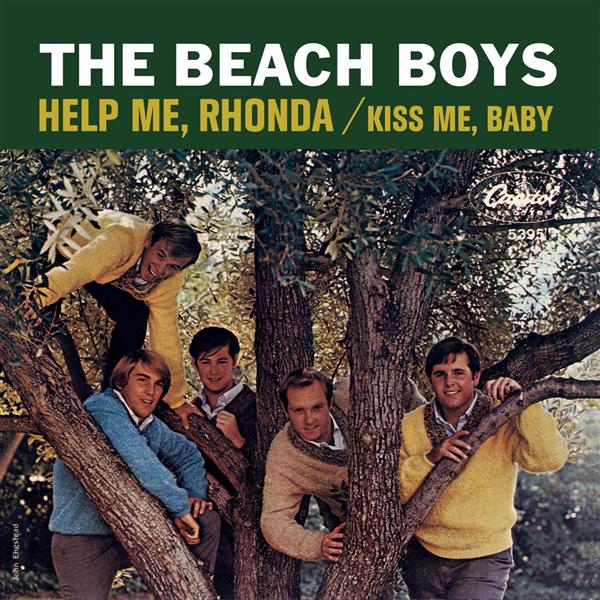
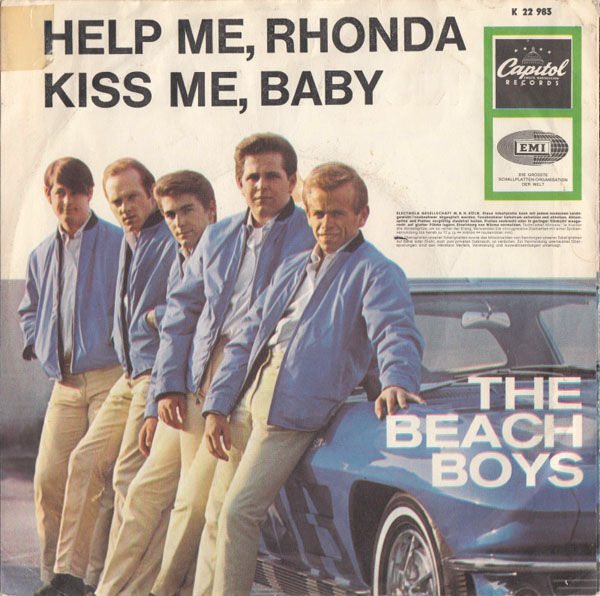 “Help Me, Rhonda” came at a time of amazing creativity and overwhelming psychological turmoil for Brian Wilson and the Beach Boys. Wilson was trying to come up with enough material to fill three albums and four singles per year, material good enough to compete with the Beatles, all while undertaking grueling tours with the band. In December 1964, Wilson suffered a nervous breakdown and stopped touring with the Beach Boys, but the relentless schedule of record releases did not let up. Just two months later, the “Help Me Rhonda” sessions took place. Who knew such turmoil and drama could surround such a catchy little tune?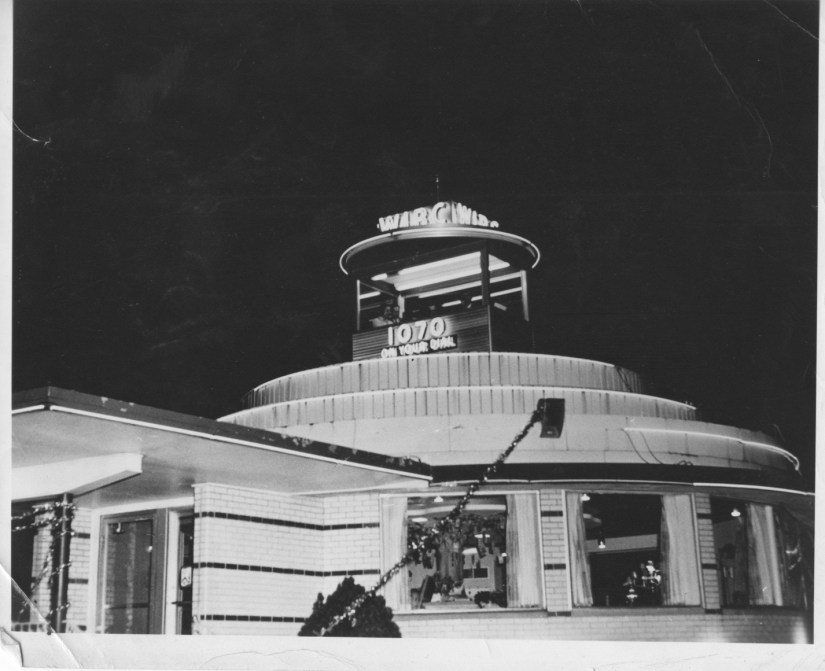

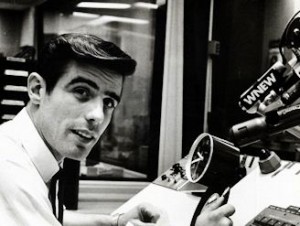
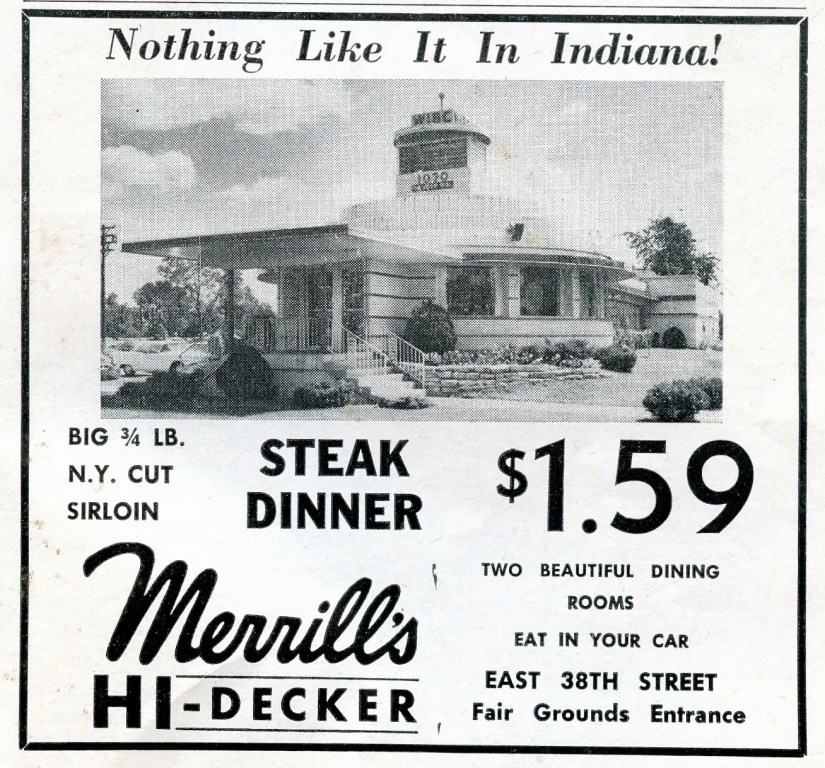 Another Summer gimmick was to slowly bite into a juicy hamburger before he kicked off every commercial during his show. Doesn’t sound like much now, but apparently back in the day it drove customers crazy. Not to mention it sold a lot of hamburgers. The only way into the glass booth studio was up a fire escape ladder leading up to the roof, and then into the tiny studio via a trap door in the floor. Legend claims that George Lucas used Summer’s “Skyline Studio” as the inspiration for Wolfman Jack’s studio in his movie American Graffiti. You’d have to rent the movie and see for yourself because Merrill’s Hi-Decker and the radio booth are long gone now.
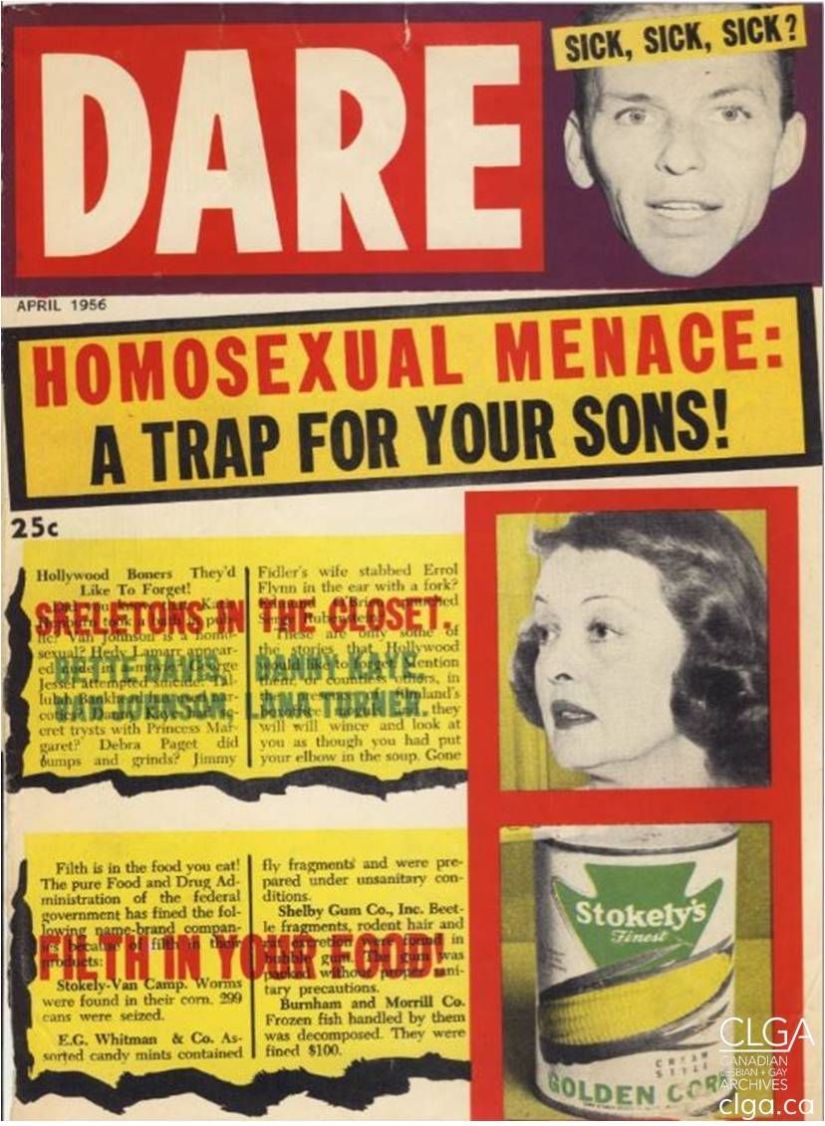
 The media knew a controversy when they saw it and soon newspapers and magazines helped whip the frenzy into a fevered pitch. The New York Times took the lead, running at least seven stories promoting this anti-homosexual campaign in May of 1950. A month later, the Senate authorized an official investigation, the first of its kind in U.S. history. It was popularly dubbed the “pervert inquiry.”
 Nebraska GOP Senator Kenneth Wherry concluded in December, “You can’t hardly separate homosexuals from subversives… Mind you, I don’t say that every homosexual is a subversive, and I don’t say every subversive is a homosexual. But [people] of low morality are a menace in the government, whatever [they are], and they are all tied up together.” In 1950, a Senate investigation chaired by Clyde R. Hoey noted in a report, “It is generally believed that those who engage in overt acts of perversion lack the emotional stability of normal persons.”, and said all of the government’s intelligence agencies “are in complete agreement that sex perverts in Government constitute security risks.”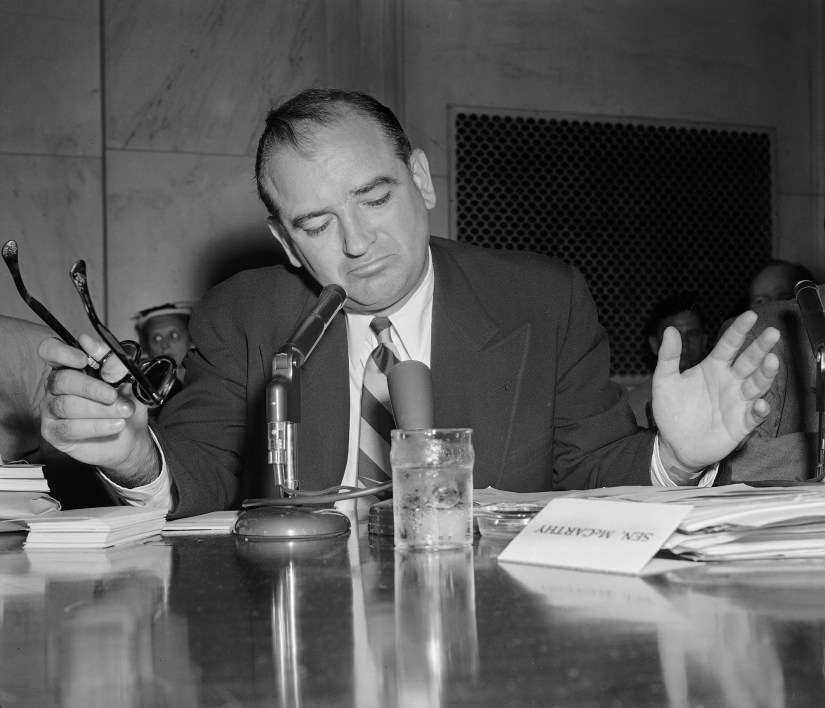

 Until the election of John Fitzgerald Kennedy as President, no other politician of Irish descent had achieved a national impact comparable with McCarthy’s in twentieth century America. McCarthy took a serious issue, undermined it through reckless behavior and destroyed the lives of many people in the process. McCarthy’s Red Scare didn’t come to an end until he dared to attack the Army with his accusations. A very bad idea when the Oval office is occupied by the most famous General of his generation.


 Alan E. Hunter