Disney, Hollywood, Indianapolis, Music

Irvington’s Disney Prince — Bill Shirley

Originally published in 2008, this article was reprinted on December 5, 2024. https://weeklyview.net/2024/12/05/irvingtons-disney-prince-bill-shirley-2/
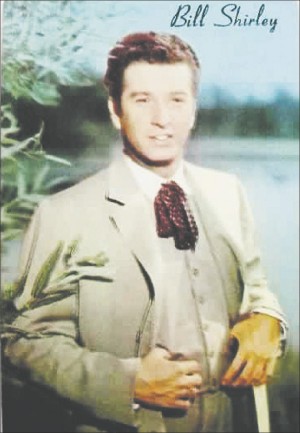
Bill Shirley on his 1953 “Mother’s Cookies” trading card.

During World War II through the I Like Ike years in America, Irvington had its own representative in Tinseltown. Irvingtonian Bill Shirley made fifteen movies starting in 1941 starring alongside Hollywood luminaries like John Wayne, Abbott and Costello, Ward Bond, and the beautiful Audrey Hepburn. Bill played the part of legendary American songwriter Stephen Foster of “”Swanee River” fame and worked with the great Walt Disney as the voice of Prince Phillip in the 1959 Disney classic Sleeping Beauty.
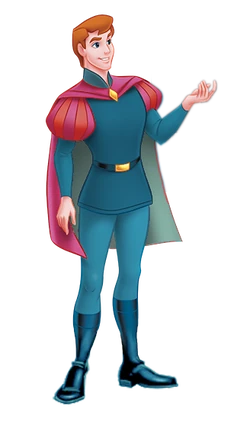
Disney’s Prince Phillip 1959.

Bill Shirley was born in Irvington on July 6, 1921, and attended George Washington Julian School number 57. From his earliest days, Bill Shirley had a natural talent for singing and acting. He would spend his afternoons daydreaming about becoming a star in Hollywood, and his weekends were spent watching his idols on the big screen at the Irving Theatre, located to this day on Washington Street between the intersection of Ritter and Johnson Streets. By the tender age of 7, blessed with a beautiful singing voice, Bill had the rare honor of singing at the Easter sunrise services held annually from 1929 to 1938 on Monument Circle until age 16. Bill gained his acting abilities while performing in musicals and plays at the Irvington Playhouse and Civic Children’s Theater.
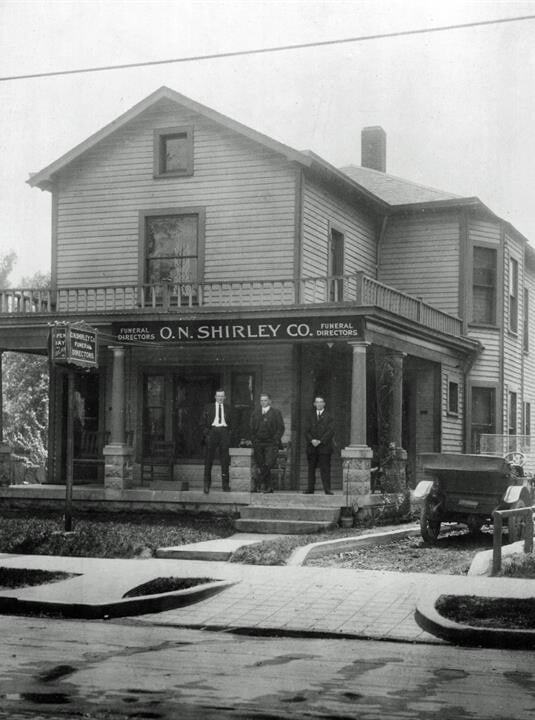
The original O.N. Shirley Funeral Home at 2755 East Washington Street in Indianapolis.

Bill’s father Ottie N. Shirley, along with his uncles Luther and Arley Shirley, formed the Shirley Brothers Funeral Home located at 2755 East Washington St. Bill lived with his family in their home at 5377 East Washington Street until he graduated from Shortridge High School at the age of 18. Immediately after Bill graduated, the family home was remodeled and opened as Irving Hill Chapel, part of the Shirley Brothers mortuary. As soon as Bill completed his studies at Shortridge, his mother packed up their bags and headed for Hollywood. She very wisely hooked Bill up with a voice coach in Los Angeles and almost immediately began to see results. His good looks, along with his mannish voice and natural acting ability, landed Bill a seven-year contract with Republic Pictures at the improbable age of 19. Bill made his first film in early 1941, a musical titled Rookies on Parade starring Bing’s brother Bob Crosby in the lead role. Within a year of arriving in Hollywood, Bill Shirley was cast in seven films for Republic Studios including the John Wayne war film Flying Tigers in 1942. Bill also appeared with one of his childhood idols, Roy Acuff in the 1942 film Hi, Neighbor shot at the Grand Ole Opry in Nashville, Tenn. His other films for Republic included Sailors on Leave and Doctors Don’t Tell in 1941, Ice Capades Review in 1942, Three Little Sisters in 1944, and Oh, You Beautiful Doll in 1949. Bill was uncredited in the film but sang the opening theme for Dancing in the Dark in 1949.
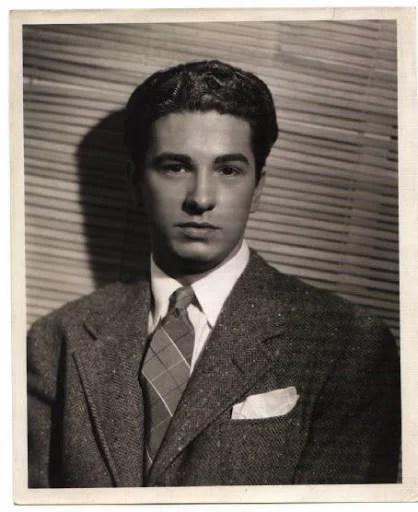
A very young Bill Shirley.

In the summer of 1942, Shirley joined the Army. When he returned at the close of the war, Bill found it hard to pick up his movie career where he had left off. He found a home as a radio announcer in Los Angeles but yearned to return to the big screen. He kept his acting skills sharp by performing on stage in the Hollywood area. He caught a break in 1947 when he was hired to dub the singing of actor Mark Stevens who was starring as Joe Howard, the man who invented kissing, in the entirely forgettable film I Wonder Who’s Kissing Her Now. This voice-over work came back to haunt him later in his career.
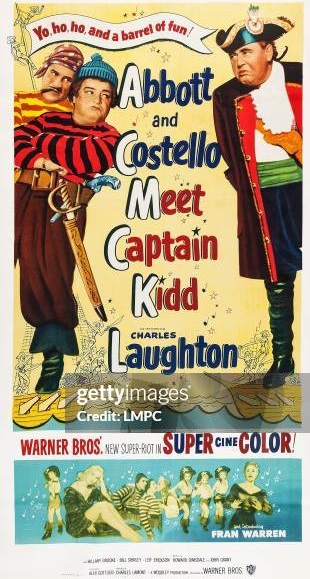
His next big break would come in 1952 when he landed a lead role as Bruce Martingale alongside the comedy team of Abbott & Costello and shared the screen with Academy Award-nominated British actor Charles Laughton in the Warner Brothers film Abbott & Costello Meet Captain Kidd. The critics hated it but the audiences loved this campy film.

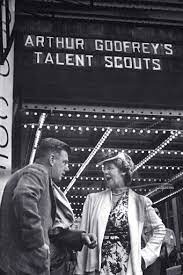
Bill landed the role of historic southern songwriter Stephen Foster in the 1952 film I Dream of Jeannie. He returned to Republic Pictures in 1953 to make the film Sweethearts on Parade. In this role, Shirley, along with co-star Ray Middleton, were being touted as Republic’s answer to the Bob Hope and Bing Crosby duo. It didn’t work. It was a critical and box office disappointment. Today the film is most remembered for the staggering 26 different songs in the film. Bill was a winning contestant on Arthur Godfrey’s “Talent Scouts” TV show which ran from 1948 to 1958. “Talent Scouts” was the highest rated TV show in America and was responsible for discovering stars like Tony Bennett, Lenny Bruce, Jonathan Winters, Connie Francis, and Don Knotts. Bill’s winning accomplishment is notable when you consider that Elvis Presley and Buddy Holly auditioned but were not chosen to appear on the show. It would take Bill six years before he made another film. But it was worth the wait.
In 1959, Bill Shirley made the film appearance he is most remembered for by today’s fans when he appeared as the voice of Prince Phillip in Walt Disney Pictures’ Sleeping Beauty. It was an impressive feat considering that he was one of only three lead voices in the entire film. The film would take nearly an entire decade to produce. The story work began in 1951, the voices were recorded in 1952 and the animation production began in 1953 and did not conclude until 1958 with the musical score recorded in 1957. During the original release on January 29, 1959, the film was considered a box office bust, returning only one-half of the Disney Studios’ investment of $6 million. It was widely criticized as slow-paced with little character development. Time has been much kinder to the film and today’s Disney fans and critics alike hail it as one of the best animated films ever made with successful releases in 20 foreign countries. To date the film has grossed nearly $500 million, placing it in the top 30 highest-grossing films of all time.
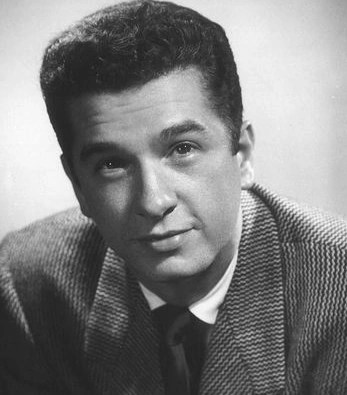
Bill Shirley.

In 1959, Bill Shirley made the film appearance he is most remembered for by today’s fans when he appeared as the voice of Prince Phillip in Walt Disney Pictures’ Sleeping Beauty. It was an impressive feat considering that he was one of only three lead voices in the entire film. The film would take nearly a decade to produce. The story work began in 1951, the voices were recorded in 1952 and the animation production began in 1953 and did not conclude until 1958 with the musical score recorded in 1957. During the original release on January 29, 1959, the film was considered a box office bust, returning only one-half of the Disney Studios’ investment of $6 million. It was widely criticized as slow-paced with little character development. Time has been much kinder to the film and today’s Disney fans and critics alike hail it as one of the best animated films ever made with successful releases in 20 foreign countries. To date the film has grossed nearly $500 million, placing it in the top 30 highest-grossing films of all time.
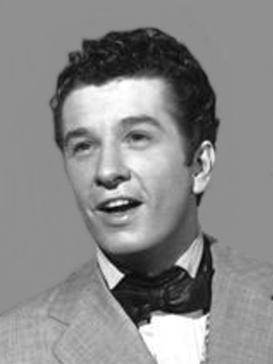
Bill Shirley.

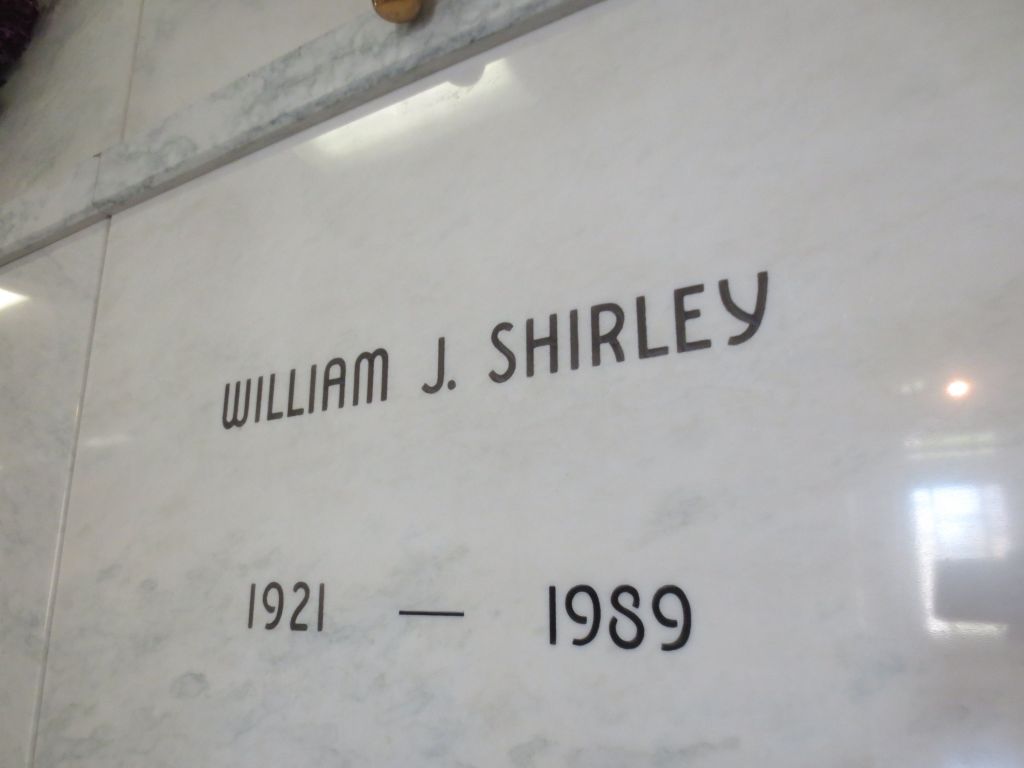
Bill Shirley died of lung cancer on August 27, 1989, in Los Angeles, California. He is buried in Crown Hill Cemetery. By the way, what is the trivia question attached to Irvington’s Bill Shirley? Prince Phillip was the first of the Disney Princes to have a first name. Cinderella’s and Snow White’s previous princes had gone nameless. Bill Shirley’s name may be all but forgotten by most of Indy’s eastsiders, but I assure you that not only has he attained a lasting measure of fame in the film industry, but he has also been immortalized in a way that not even his wildest dreams could have predicted. You see, Bill Shirley appeared in the 1953 “Mother’s Cookies” baseball-style trading card set of up-and-coming movie stars. He’s card # 33 out of the 63 card set of these premium cards that were given away in packs of Mothers Cookies sold in the Oakland/San Francisco region. The card is pretty rare and if you can find it at all, it’ll cost you about $25.
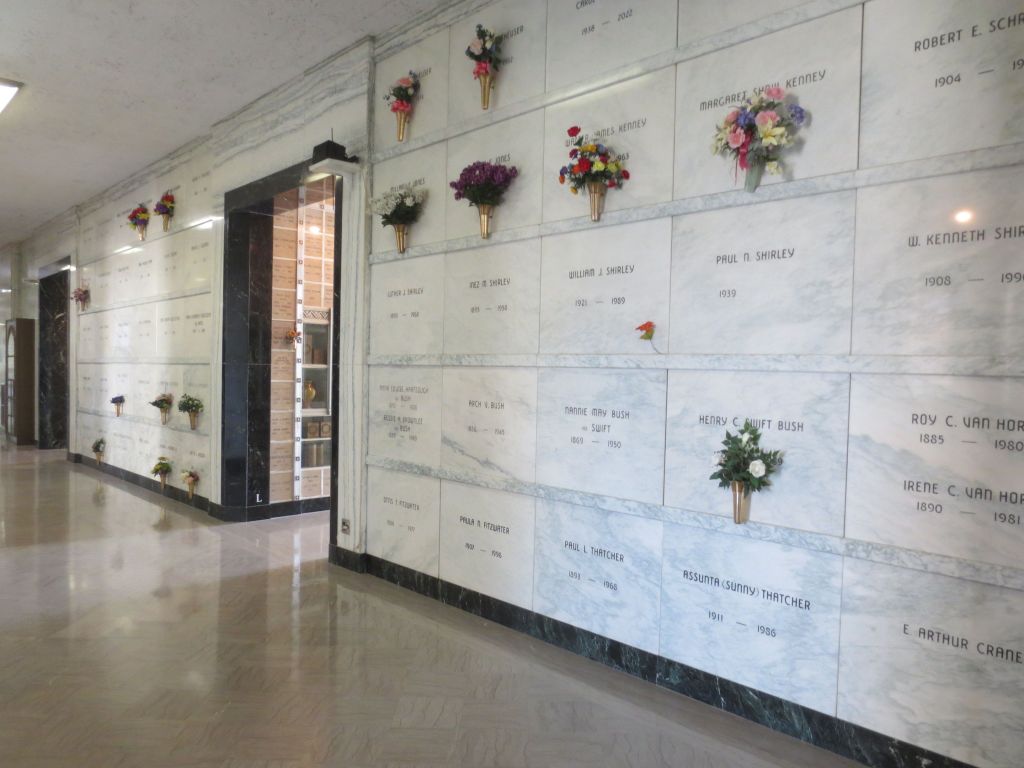
Bill Shirley’s Grave at Crown Hill Cemetery in Indianapolis, Indiana.
food, Indianapolis, Pop Culture, Uncategorized

Beef Manhattan: Born in Irvington?

Original Publish Date March 14, 2024 https://weeklyview.net/2024/03/14/beef-manhattan-born-in-irvington/

Okay, okay, not likely…but possible. No one really knows EXACTLY where the Beef Manhattan was born, but most culinary historians agree that the dish (a diagonally cut roast beef sandwich split butterfly fashion with a generous scoop of mashed potatoes resting between the two halves and the whole shebang swimming in a pool of brown beef gravy) came from the eastside of Indianapolis.

Legend claims the Beef Manhattan was born at the Naval Air Warfare Center, a former US Navy facility located at Arlington Avenue and East 21st Street in Warren Township, a stone’s throw from Irvington. The knife and fork-plated comfort food was (allegedly) the brainchild of Manhattan-trained cooks working at the factory during World War II. Faced with an overage of Hoosier staples (meat, potatoes, & bread) these crafty Hell’s Kitchen food slingers came up with a plan.

A poor man’s version of the dish had been making the rounds of Manhattan (the most densely populated and smallest of the five boroughs of New York City) for generations. The difference was, that the first version contained mysterious New York City street meat, rolls, not bread, potatoes, and no gravy. We do not know the name of the chef (or chefs) who created it or, for that matter, the date the dish first showed up in the cafeteria of the Naval Ordnance Plant. But, the best guess is that the Beef Manhattan made its debut in the winter of 1942.

Ratheon-300x136
Naval Ordinance Plant in Indianapolis.

The plant opened that year, covering 1,000,000 square feet and employing 3,000 workers in avionics research and development. Construction began in 1941 and the plant became fully operational in 1943. The “NOP-I”, as it was known locally, was one of five inland sites selected in July 1940 by the US Department of the Navy Bureau of Ordnance for the manufacture of naval ordnance. The other plants were in Canton, Ohio; Center Line, Michigan; Louisville, Kentucky; and Macon, Georgia. The government-owned, contractor-operated (GOCO) plant was built for $13.5 million ($255 million in 2024 dollars) and the plant manufactured Norden bombsights until September 1945.

After World War II, the plant was renamed the Naval Avionics Center, where employees designed and built prototype avionics, including “electronic countermeasures, missile guidance technologies, and guided bombs.” In 1992, the facility changed its name to the Naval Air Warfare Center Aircraft Division. The site was closed in 1996 on the recommendation of the 1995 Base Realignment and Closure Commission at which time it transferred ownership to Hughes Electronics Corporation. In 1997, it was the “largest full-scale privatization of a military facility in U.S. history” at the time. Eventually, the company was acquired and renamed the Raytheon Analysis & Test Laboratory. As of 2022, the facility is privately owned by Vertex Aerospace and employs about 600.

While those are the facts about the origin of place for the Beef Manhattan, determining where it first hit the streets of Indianapolis is a little bit more speculative. The riddle begins with the name itself. It is a misnomer. The dish is one of two Manhattan-named staples with no ties to New York City other than a space on the menu. The other, Manhattan clam chowder, originated in Rhode Island. Sure, New York City can claim many different foods created within its five boroughs: Eggs Benedict & the Waldorf salad (Midtown), Chicken & Waffles (Harlem), The Reuben (Manhattan), and the Cronut (So-Ho), but the Beef Manhattan is pure Hoosier.

There are different variations. One calls for shredded, pot-roast style beef on two slices of white bread, mashed potatoes on the side, with a layer of brown gravy poured over all. While another insists that the mashed potatoes are placed on top of the sliced, but unseparated, sandwich which is then drowned in brown gravy. Some versions call for diagonal slices, others conventional center-sliced bread. Another variation is Turkey Manhattan, which substitutes turkey for roast beef, but that is an obvious imposter. And, although the dish is named after Manhattan, if you were to order it in a Gotham City restaurant, you’re likely to be served a cocktail (whiskey, sweet vermouth, bitters, and a maraschino cherry garnish). Beef Manhattan is unknown there, instead such dishes are usually called “open-face sandwiches” in the Big Apple.

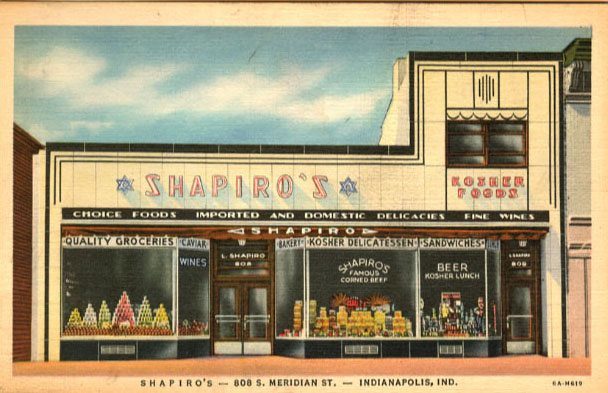
Should you Google it, you are likely to see that the dish was first served under the name “Beef Manhattan” in a now-defunct Indianapolis deli in the late 1940s, and shortly after its introduction, it became a Hoosier staple. But, nobody seems to know exactly which Indianapolis Deli was the first to put it on the menu. However, there are a few likely suspects. The natural choice would seem to be Shapiro’s. Their website states that restaurant namesakes, Louis and Rebecca Shapiro, arrived in the Hoosier state around 1900 after fleeing Russia due to anti-Semite persecution which included vandalism to their family grocery store in Odessa, Ukraine. They sold sugar and flour from a pushcart on the streets of Indianapolis for two years while saving up money to open their deli at Shapiro’s 808 South Meridian in 1905.

Shapiro's

So, Shapiro’s certainly fits the bill timewise, appearing on the scene a generation before the birth of the Beef Manhattan. Shapiro’s is the sentimental favorite for sure. And it has an Irvington tie-in too. In 1925, during the reign of terror by the Ku Klux Klan in Indiana, Shapiro’s thumbed their nose at Klansman/Governor (and Irvington resident) Ed Jackson by redecorating their storefront in an art-deco style dominated by a huge Star of David for all to see. But officially, “Shapiro’s Kosher Deli” didn’t open until 1945, three years after the dish was invented.

Likewise, the Hook’s Drug Company opened a new drugstore and soda fountain at the corner of 22nd and Meridian Streets on Feb. 17, 1940, to serve hungry Hoosiers. Hook’s restaurant featured a new stainless steel soda fountain perfectly designed to serve Beef Manhattans. A contemporary news article described Hook’s as having “year-round air conditioning” and as “the last word in efficiency and beauty. The floor behind the fountain is depressed to a level so that the customer is sitting in the same comfortable position as at his own dining table. The fountain is provided with a system of sterilization which makes it sanitary for refreshments and luncheons. The cooking equipment is electrical.” Hook’s advertised heavily in the 1940s but never mentioned the Beef Manhattan in those ads. The dish did not appear in Hook’s ads until the 1950s.

The best bet (at least of this reporter) is that the Beef Manhattan most likely appeared first as a menu selection somewhere on Illinois Street. There were at least three delis operating on Illinois Street in 1942, including Brownie’s Kosher Deli at 3826 N. Illinois, Fox Delicatessen at 19 S. Illinois, and Henry Dobrowitz & Sons Kosher Meats and Delicatessen at 1002 S. Illinois. Someday, somewhere, a better Circle-city researcher than me will pinpoint the exact location but until then, I’m content to let it remain a mystery.


Choosing instead to revisit Shapiro’s version of the “Hot Beef Manhattan” in my daydreams. It consists of 2 slices of white bread, not cheap squishy white bread, but good firm white bread with some heft to it, cut diagonally and spread out on the plate like a poker hand, a layer of handmade mashed potatoes binds them together, and forms the foundation for a generous portion of thin-sliced tender beef, brisket I’m guessing. The meat mound is topped with more mashed potatoes and covered with enough gravy to float a kayak. Not that better than bouillon gravy stuff that somehow smacks of chemicals to me, but rather, real gravy made from the constant stirring of the collected juices of meats roasting. To those haughty Food Network snobs, the Beef Manhattan looks like a failure pile on a sadness plate, but Hoosiers know it is delicious.

Typically, Indianapolis sees 29 days a year where the thermometer doesn’t rise above 32 °F, and for five months a year, we’re shivering below the fifties. So, knowing that, is it that hard to understand why the Beef Manhattan remains so popular in Indiana? I mean, no one eats a tenderloin to get warm. And while the Beef Manhattan most likely wasn’t born in Irvington, it did originate on the east side of Indianapolis and Irvingtonians can fairly claim to be among the first wave of devotees.

Creepy history, Hollywood, Indianapolis, Pop Culture, Television

WFBM-TV Cap’n Star a.k.a. Sinister Seymour

Original Publish Date August 19, 2021. https://weeklyview.net/2021/08/19/wfbm-tv-capn-star-a-k-a-sinister-seymour/

https://www.digitalindy.org/digital/collection/twv/id/4271/rec/89

I’ve written about Jerry Vance, a.k.a. Larry Vincent, a.k.a. Cap’n Star, a.k.a. Sinister Seymour in past columns, mostly in conjunction with the late great Hal Fryar a.k.a. Harlow Hickenlooper, a.k.a. Grandpa Harlow. Confused? Well, so am I. However, if ever an Indianapolis children’s TV host from the Circle City’s golden age of television deserved a redux, it’s Jerry, I mean Larry. Bear with me now as we sort out this man of many sobriquets who left Indianapolis to become a Hollywood cult classic legend.
Larry Vincent (a.k.a. Jerry Vance) was born Larry Francis Fitzgerald Vincent on June 14, 1924 in Boston, Massachusetts. After graduating from Bishop-Lee College of Theatre and Radio in Boston, he enlisted in the Merchant Marines during World War II. He first surfaced in the mid-1940s, appearing alongside Kirk Douglas in the Broadway play Kiss and Tell from 1943 to 1945 and then as an understudy for Douglas in the short-lived play Alice in Arms. Both are notable for being Kirk Douglas’ Broadway debuts. For a time, Vincent also performed in the play Life with Father. The Broadway production ran for 3,224 performances over 401 weeks to become the longest-running non-musical play on Broadway, a record that still stands. Vincent changed his name to Jerry Vance and teamed up with Anderson, Indiana native Donald Craig McArt to form a stand-up comedy act that performed in nightclubs all over New York City. Don McArt later appeared in the Walt Disney films Son of Flubber and the Absent Minded Professor and a slew of TV shows.

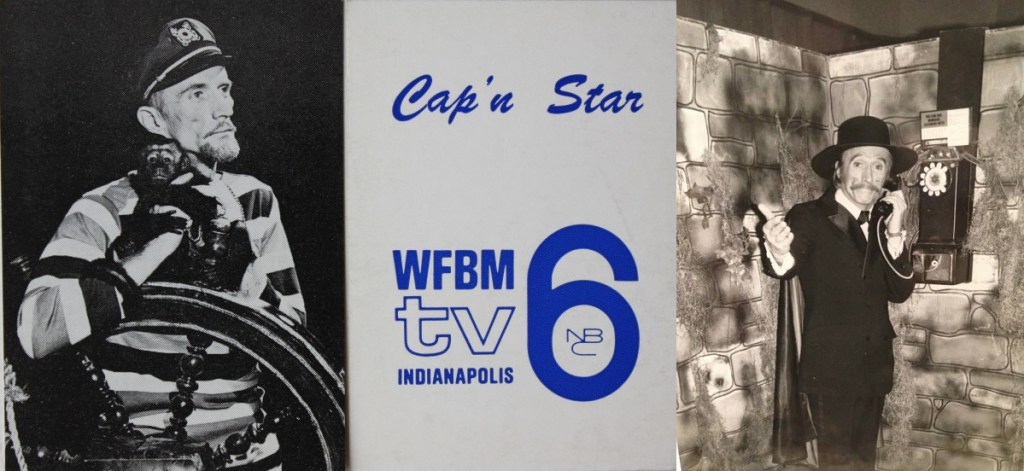
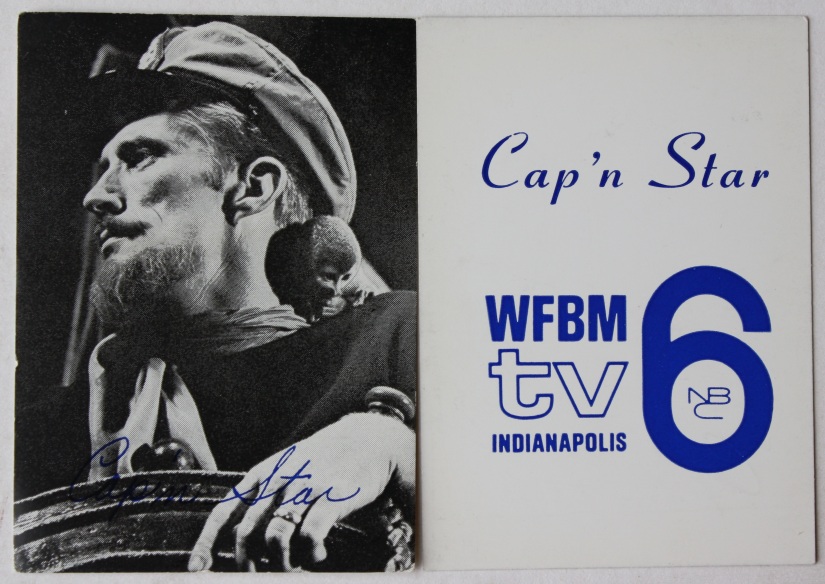
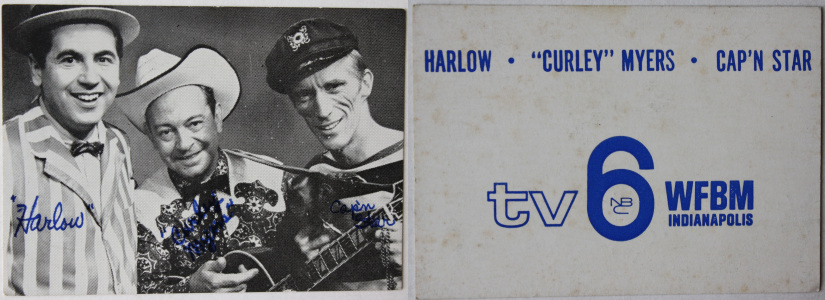
Vance landed in the Circle City in 1951. In the early 1960s, he was working as a producer/director for Indianapolis’ first TV station, WFBM-TV (WRTV Channel 6 nowadays). Vance was among the first wave of Indy television personalities working alongside Howard Caldwell and Tom Carnegie. Since the early television business demanded an “all hands on deck” attitude, Vance created a character he dubbed “Cap’n Star.” Vance’s character appeared in a segment titled “Cap’n Star and Friends” alongside Harlow Hickenlooper and Curley Myers. The segment showcased cartoons and old Three Stooges shorts. Alongside his pet monkey “Davy Jones,” Cap’n Star sang songs and performed skits on the show.

Vance also directed many of Frances Farmer’s shows at the station from 1959 to 1964. The show, known as “Frances Farmer Presents,” aired five days a week, with Farmer doing her inserts live. She showed only the newest available movies from major studios. Farmer’s show was the number one show in its time period from the day it premiered until the day it left the air.

Vance lived in a house at 41st and Graham Avenue on Indy’s east side. Local children remember him as a kind neighbor who always had time for kids, often letting them wear his sailor’s cap from the show and play with the show’s mascot monkey. Vance had a background in Indianapolis theatre, performing as a leading man and directing many productions at the Circle Theatre, Catholic Theatre Guild and Civic Theatre. In 1961 and 1966, he won the city’s best actor award.
While in Indianapolis, Vance led the league in personal appearances. He spent his nights as a stage actor and his days as Cap’n Star. While at WFBM-TV, he handled nearly every chore affiliated with the production of his show, including beating the bushes for sponsorship and commercial advertising. Almost every weekend found Cap’n Star at a local store, restaurant, school, carnival, or fair. The August 30, 1963, Indianapolis Star announced that “Cap’n Star, star of his own WFBM-TV show ‘Cap’n Star’ and ‘Deputy Dawg’ on Channel 6” would be appearing on Saturday morning at 11:00 at the new Eastgate Shopping Center on East Washington Street.
In 1967 he left Indianapolis to become staff director for KHJ-TV in Los Angeles. Utilizing a formula developed in Indianapolis, Vance became a member of the Barbary Coast Theater. In an October 3, 1967 column, well-known Indianapolis showbiz reporter R.K. Shull recalled a perchance encounter with Vance in Hollywood. “Last Spring, Vance left Indianapolis and decided to try his hand at the big-time in Hollywood. So far, he’s done well. He played a scene with Julie Andrews in her upcoming movie, Star. He’s had three guest roles on TV series, the first of which, an I Dream of Jeannie series. Only he isn’t Vance anymore.”
Shull continued, “‘I’m now Larry Vincent,’ he said, exhibiting a briefcase with that name under the handle, as though that proved something. But why Larry Vincent? ‘That’s my real name,’ he explained. Soon, Vance applied for his ‘SAG’ card with the Screen Actors Guild. ‘They already had a Jerry Vance registered as a member… a stunt man,’ he said. ‘So I had to pick another name and I chose my own… I found out about the other Jerry Vance the hard way. They mailed him my check for the work in ‘Star.’ He’s a decent guy though; he sent it back.’”
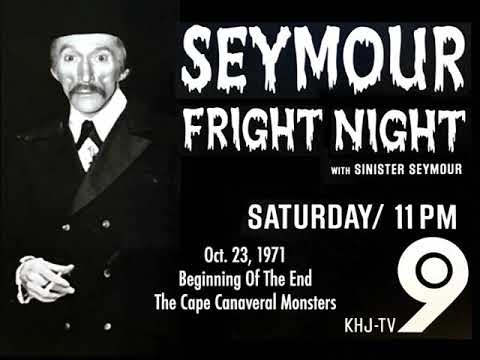
Vincent made guest appearances in other series: The Flying Nun (1967), Mission: Impossible (1969), Get Smart (1968–1969), and Mannix (1970). However, Vincent secured his legend as host for a few Sammy Terry-style Friday night horror show programs in L.A. The first was known as Fright Night and aired from 1969 to 1973 on KHJ-TV, the next, Monster Rally for one season in 1973, and the last was Seymour’s Monster Rally from 1973–1974 (both of the latter shows aired on KTLA TV-5). Although the shows were different in name, they followed roughly the same format.

Vincent’s “Sinister Seymour” character presented low-budget horror and science fiction movies on both local Los Angeles stations. Fans remember Seymour’s “slimy wall” behind which was an ongoing party of ghouls that, try as he might, Seymour was never invited to join. They recall a pay phone from which Seymour was constantly trying to scam “Pizza fella” out of free pizza (on a borrowed dime no less). And they remember Banjo Billy (played by Vincent himself) whose bright orange band uniform matched his cheery disposition and whose one-piece Groucho glasses and nose combo was as bad as his banjo playing, played foil to Seymour on the show.

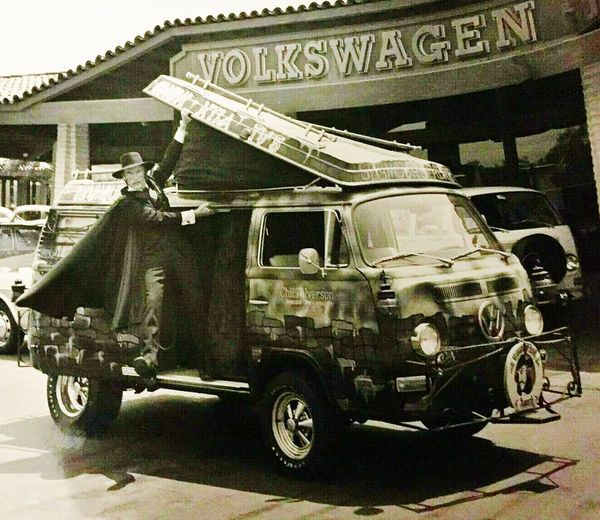
Sinister Seymour advertising Volkswagens back in the day.

He is remembered for his style of criticizing the movies, presented in an offbeat and funny manner, usually appearing in a small window that would pop up in the corner, tossing a quip, before vanishing again. Sometimes he would, using a blue screen, appear in the middle of the movie, apparently interacting with the characters in the film. Seymour called these movies “turkeys” right out of the gate. One need only look at the titles to understand why: Teenage Vampires, Monster from the Surf, The Spider Woman Strikes Back, X-The Man With X-Ray Eyes, The Crawling Eye, The Brain Eaters, Santa Claus Conquers the Martians and Attack of the Mushroom People, which he renamed “Attack of the Bunny Slippers” because of the unfrightening appearance of the film’s furry little parasite protagonists.

Dressed in black with a wide-brimmed gaucho plantation hat and cape, Sinister Seymour stalked his way into the films to openly mock the films as they aired. He equally derided his viewership, calling them “dummies” and “Fringies” while admonishing them for wasting their time by watching his program. No one was immune from Seymour’s insults, which could help explain his cancellations and reinstatements. For the last episode of Fright Night, Seymour ended the show by walking out of the studio, and the first episode of Monster Rally had him breaking into KTLA-5.
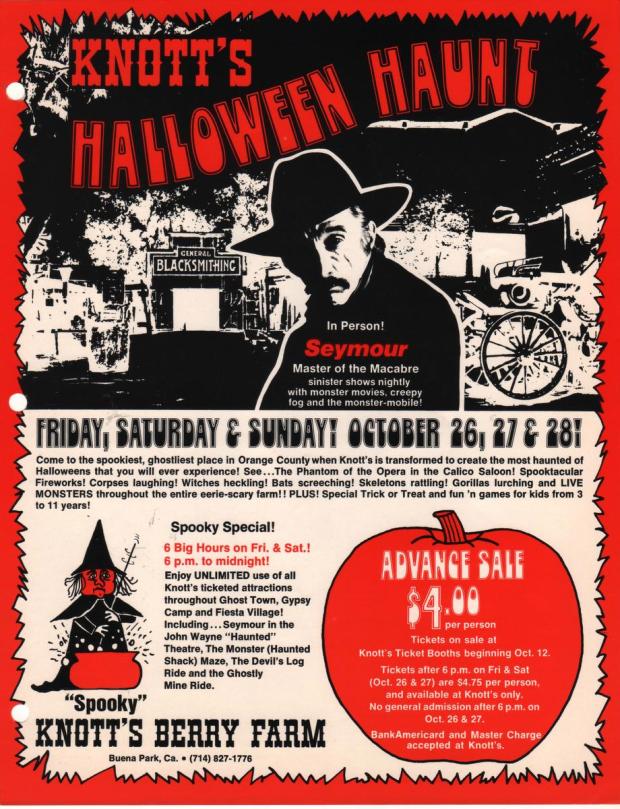
As he had done in Indianapolis, Seymour blanketed Tinseltown with personal appearances. Seymour was the Master of Ceremonies for the costume party at the first annual Witchcraft and Sorcery Convention in Los Angeles in 1971. He hosted “Seymour Day at Marineland” and was the first host of “The Seymour Show” in 1973/1974 — a Halloween Haunt show in the (then) John Wayne Theater at Knott’s Berry Farm. The event has since grown to become the largest and most haunting Halloween experience in California known as “ScaryFarm.”


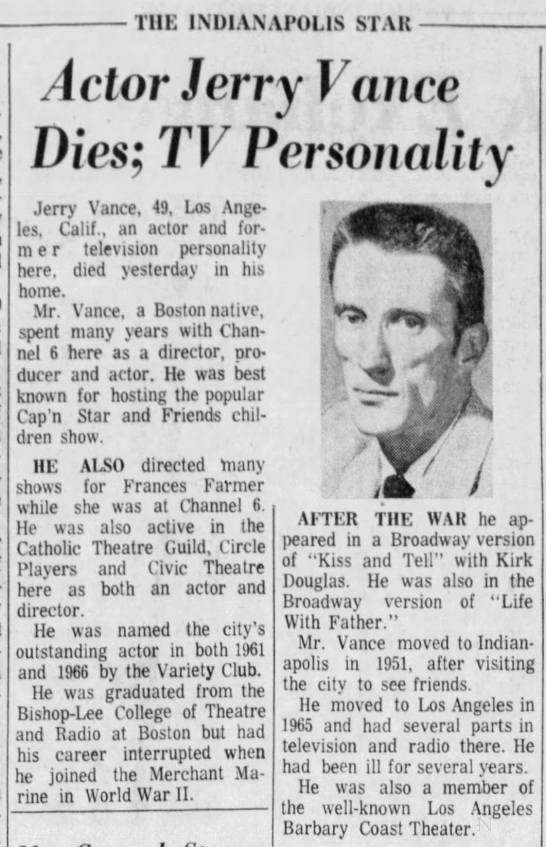
Vincent a.k.a. Seymour’s last show came in 1974. Traditionally, Seymour ended the show by saying, “I’d like to thank you… I’d like to, but it’s not my style! Bad Evening!” But on his final telecast, Seymour eschewed his familiar goodbye and said nothing. He merely waved as the stagehands disassembled the set behind him. His last movie performance was in 1975 in an uncredited role in The Apple Dumpling Gang. For the last years of his life, Mr. Vincent battled stomach cancer. He died on March 9, 1975, at the age of 49.


Several years later, Elvira took over Larry’s place as horror film hostess on Fright Night, which later morphed into her own series, Elvira’s Movie Macabre. And the rest, as they say, is history.

Elvira Mistress of the Dark.
Larry Vincent’s 1975 Obit in the Indy Star.
Indianapolis, Music, Pop Culture, The Beatles

The Beatles, John Lennon, WIFE… and Irvington. Part III

Original Publish Date May 20, 2021.

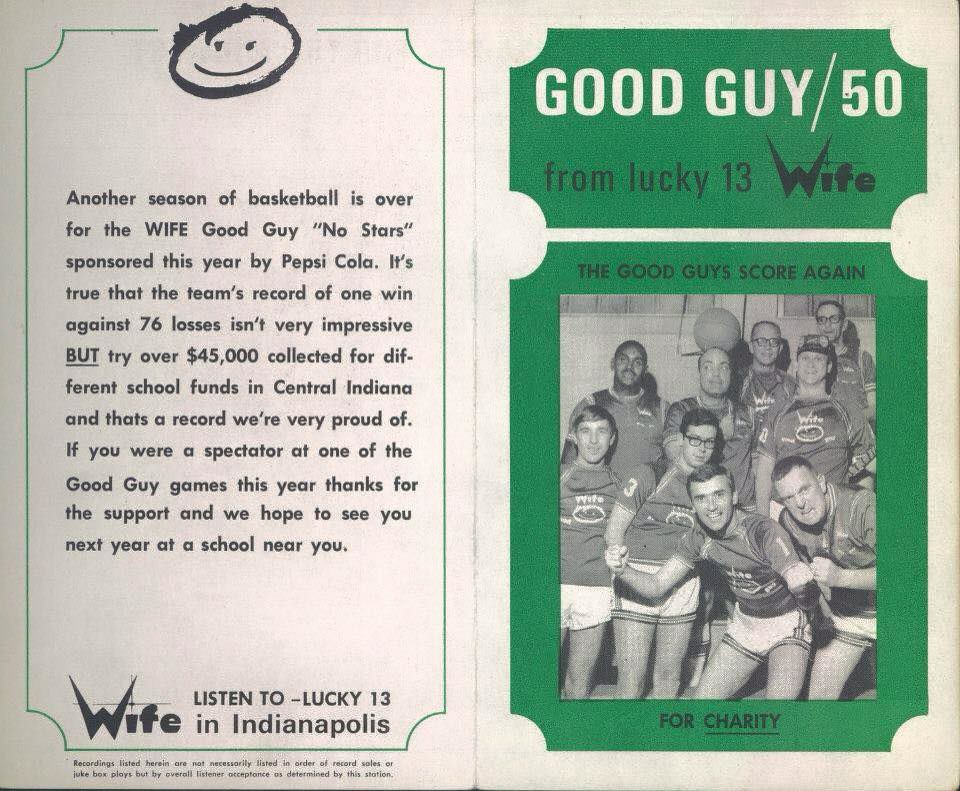
In the John Lennon film “Above Us Only Sky” (a segment from the larger film “Imagine”) there’s a scene from a 1971 encounter with a young man who shows up at Lennon’s house in England. Lennon talks with him and eventually invites him in to eat some food. In the clip, Lennon’s Mini Cooper car (parked outside the house) has a WIFE Good Guys radio sticker in the back window. How in the world did a sticker from a local Indianapolis radio station end up on a car in John Lennon’s driveway in England? The mystery was uncovered by Irvingtonian Bill Price in part I of this article and solved by Irvingtonian Stephen Bruce Smith in part II. Part III reveals another Irvington connection.
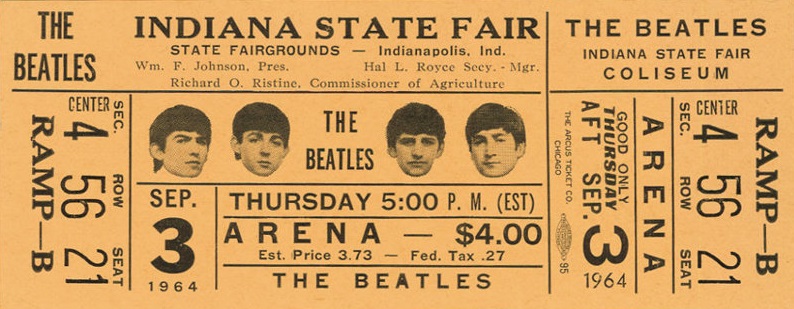
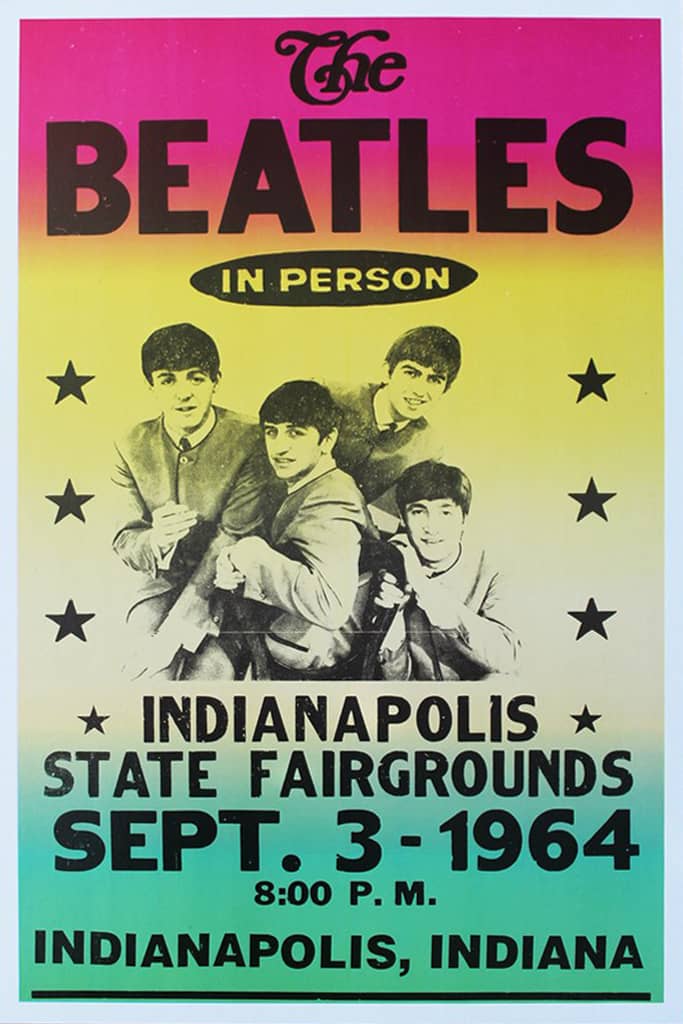
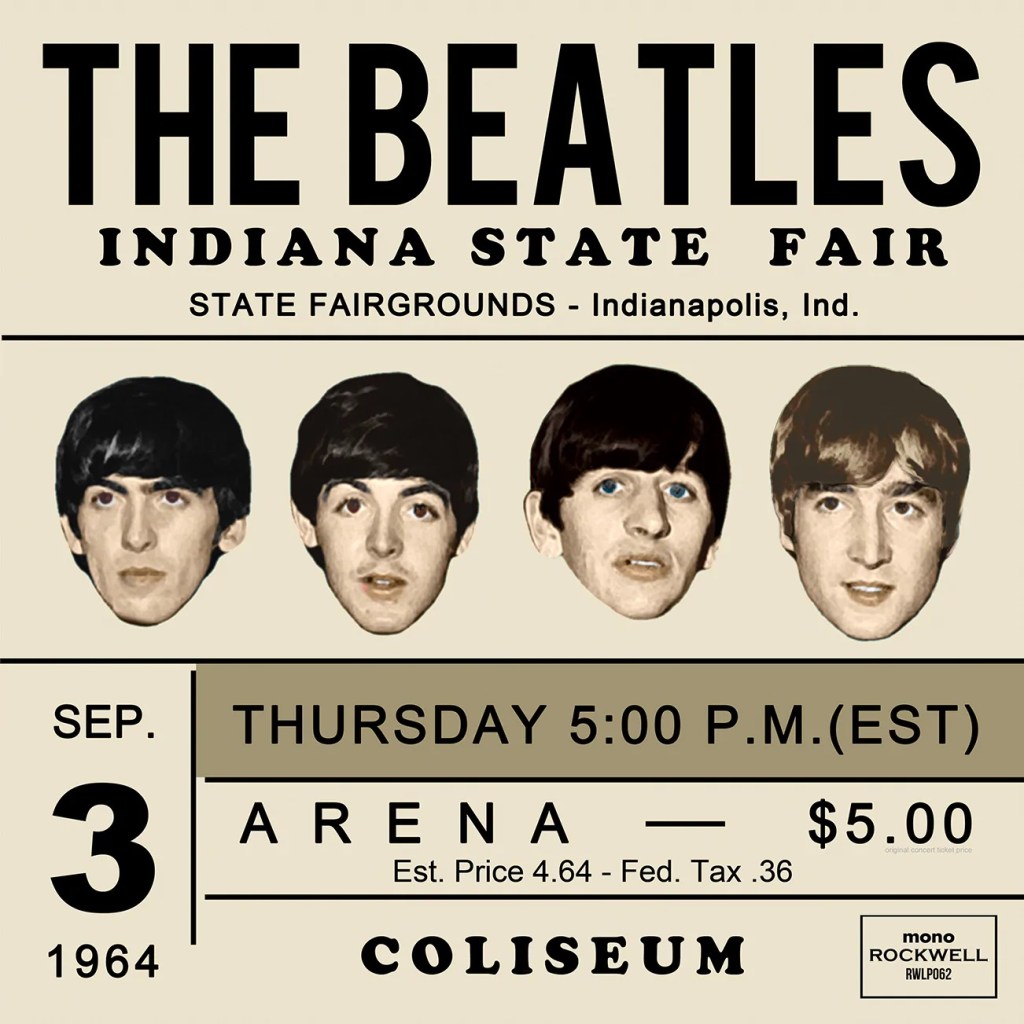
When the Beatles played two shows at the Indiana State Fair in September of 1964, Radio station WIFE 1310 sponsored the show in the Coliseum, and WIBC sponsored the show in the grandstand. In 1963, WIFE-310 AM signed on the air with a rock-heavy playlist. And by the time The Beatles arrived, the station had rapidly surged to the top of the ratings race, bringing an end to radio station WIBC-1070 AM’s reign as the champion of Indianapolis’ airwaves. In 1964, programming on WIFE largely focused on top 40 hits and bubblegum rock including The Beatles.


The Beatles concerts have been detailed by this writer in past columns and the specifics of those shows are well-known to all Circle City Beatles fans. Stephen Bruce Smith added more details to that story and revealed that Lennon “got the bumper sticker in 1964 at the station when The Beatles awarded tickets to a lucky high school girl who won a contest. I knew her brother at Howe High School. John got that sticker at the station from either Jay Reynolds or Jack Sunday (Jerry Baker).”
Turns out Smith, who knows everybody, rediscovered that lucky ticket-winning girl too. Did I mention Stephen Bruce Smith knows EVERYBODY? Her name is Elaine Conly and she is a Howe graduate, class of 1966. She was Elaine May when she won that contest back in 1964. Elaine’s mother, Virginia Casey May, who passed in 2002, was active in the Irvington Women’s Club as past chairwoman and past president of the Irvington Music Study Group. She was also a pioneer member of the neighborhood CrimeWatch program and Human Rights Commission, retiring from the Indianapolis Mayor’s office in 1977. Virginia was also a former chairwoman for the Junior Civic Theatre and scriptwriter for the “Time for Timothy (Churchmouse)” program. So Elaine, who performed in some of those productions for her mother’s Civic Theatre, knew a thing or two about the entertainment business.

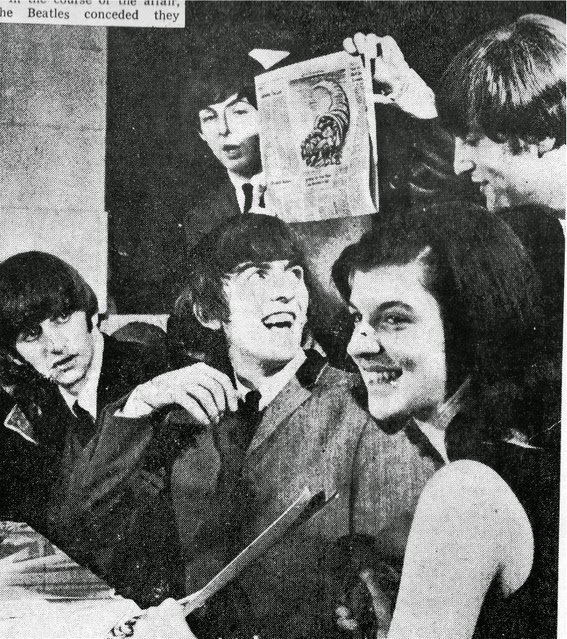
Elaine May Conly With Paul, Ringo, George & John at the Concert Press Conference.

15-year-old Elaine entered a 50-word or less summertime essay contest by the Indianapolis News titled “I want to meet the Beatles because…” Elaine entered (without telling her parents) and her 47-word essay was selected as the winner from more than 3000 entries. Her winning entry read: “I want to meet the Beatles because they have a special magic. When they perform, the oppressing world crisis and other problems can be temporarily forgotten. They sing happy, swinging songs. I’d love to meet the four young men who can make everything seem a little brighter.” Just like in the movie Bye-Bye Birdie, Elaine supplants Ann-Margret who likewise wins a contest to meet her Elvis-like hero, Conrad Birdie.
“I had to keep it a secret though, that was hard to do,” Elaine says. When her picture appeared on the front page of the newspaper announcing her victory, “The phone rang off the hook, it was pandemonium.” Elaine, the daughter of Harry A. May, grew up at 1134 N. Butler Ave., “Butler Avenue North of 10th, Two blocks from the Steer Inn,” she states.
“I was worried that they (The Beatles) would not want to meet a teen-aged kid and that they might poke fun at me. I expected to get a cold reception.” Elaine recalls, “But they were perfect gentlemen and very nice to me. I shook all of their hands and when I entered the room, John stood up an offered me his seat.” Which was a good thing because John Lennon was her chosen Beatle. “He had written a book of poetry and he was my favorite. They were all very nice and gentlemanly but John was the nicest of the four.” Elaine recalls. “I went out and bought a special black crepe dress because I heard that John liked black.”

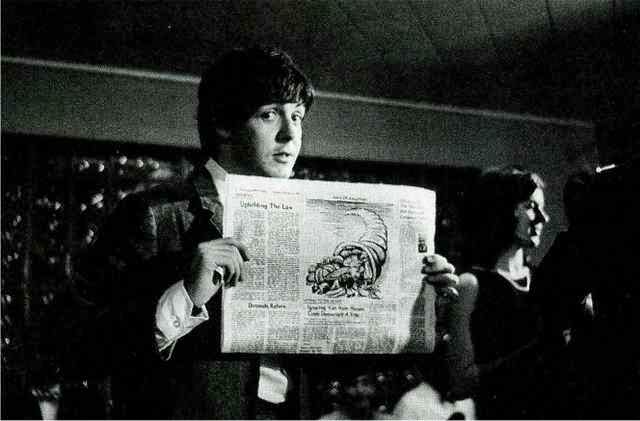
Paul McCartney with Elaine in the background.

The whole encounter, which took place in the communications building at the State Fairgrounds across from the Coliseum, took less than five minutes. Elaine reveals, “I wore the class rings of four of my classmates to the meeting. They belonged to my friends. They all wanted their ring to touch a Beatle.” When I asked if she got any souvenirs or autographs, she responds, “No, I was told (by the Indy News) that I couldn’t ask for autographs or take photographs of my own. I wish I would have because I probably could have paid for my college tuition with that money now.”
Elaine states that the newspapers followed up on Elaine’s story every few years. As for the Fab Four, “They were very funny but very polite.” she recalled. Part of Elaine’s duties that day, aside from the obvious photo op for the news, was to deliver an original editorial cartoon from the News to the Lads from Liverpool. “Then I just stood to the side for the rest of the Press Conference”, Elaine says. When she left the building, she was bombarded with questions from local reporters.

Elaine May Conly with the Beatles.
Elaine May Conly

Part of her prize package included tickets to the show. When asked what memories she had of the concert, Elaine says, “Security was very tight. It was very dark and very hard to hear them. But it was great to look at them, they were so handsome.” Her tickets? “Oh, they were very close, first 10 rows or so.” Did anyone recognize her as the contest winner? “Yes, a few people picked me out right away, but then the Beatles came out and that was that.” Elaine is still saddened by the death of her favorite Beatle. “I was watching Monday Night Football (December 8, 1980) when they broke in to announce that John Lennon had been shot. I cried. I cried a lot.”

And what about that little black dress, the only physical souvenir she has left from that encounter? “That dress was good luck.” she says, “I was wearing that dress a year later when I walked a friend to the bus station. A friend of a friend, University of Cincinnati architecture student Michael Conly, was on the bus and kept asking, “Who’s that girl in the black dress?” Long story short, Elaine and Michael Conly have been married for 51 years. And her engagement ring? Michael purchased it for her in Beatles Country: England, where he was studying in Europe.
Several years ago, Michael had a special print of his wife’s brush with the Beatles enlarged and the poster-sized photo hangs on the couple’s wall inside their Fishers home. “That’s my claim to fame I guess. Over the years it (the photo) was a big hit with our babysitters who would gasp and ask me about the encounter. I was always amazed because most of them were not even born when that meeting took place. The Beatles still have that power though, after all these years.”

Indianapolis, Music, Pop Culture, The Beatles

The Beatles, John Lennon, WIFE… and Irvington. Part II

Original Publish Date May 13, 2021.

In part I of this series, I told you about an obscure episode involving The Beatles John Lennon and the Indianapolis radio station WIFE. In the film “Above Us Only Sky” there is a car parked outside Lennon’s house that has a WIFE Good Guys radio sticker on the back window. How did a sticker from a Circle City radio station end up on a car 3,947 miles away in John Lennon’s driveway?
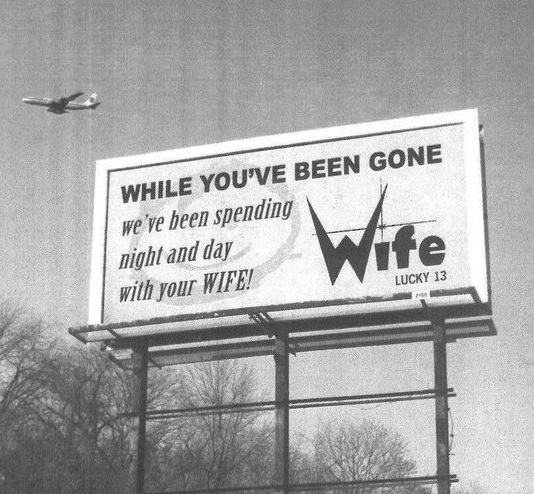
Anyone over the age of 50 should remember WIFE AM 1310 in Indianapolis. How can you forget those Coppertone commercials in the summertime: “Time to turn so you won’t burn.” Or the WIFE Lucky 13? Or the billboard near Indianapolis’ Weir Cook Airport (later Indianapolis International Airport) which amused passing motorists with the message, “While you’ve been gone we’ve been spending night and day with you WIFE!” Or even the “window on the world” of the WIFE studios at 1440 N. Meridian Street where pedestrians and downtown shoppers could walk past the window and see one of the “WIFE Good Guy” DJs in action?
WIFE was the top 40 giant of Indy for years and the only real AM radio rockers in town during the mid to late sixties (sometimes garnering as much as a 40% share of the Indy radio audience). WIFE is remembered for their endless contests (“The 100 Thousand Dollar Dream Home” or “The 100 Thousand Dollar Cash and Car Give-A-Way”), ear-worm jingles pounding the call letters and station numbers ad nauseam, and, maybe worst of all, the station sped up the records to cram more music in between the ads, witty banter, and promos. This last practice confounded pre-teens who wondered why the songs sounded so much different on WIFE than on the 45s. Most of all, radio fans remember the “WIFE Good Guys”: Big Jack Armstrong, Roger W. Morgan, Reb Porter, Jay Reynolds, Joe Light, Jay Hawkins, Buddy Scott, Jim Fox, T.J. Byers, Scott Wheeler, Mike O’Brien, Dan Summers, and Steve Miller.


And who can forget Jack Sunday: aka ABA / NBA Indiana Pacers radio voice Jerry Baker. Jerry handled the noon to 3:00 shift for a couple of years at WIFE chanting “Hey, this is Jack Sunday” every break and intro and while hosting the “Pool Party” segments. It was Jerry Baker who introduced the Beatles during their two concert stops at the Indiana State Fairgrounds. For years, WIFE would replay Jerry’s Beatles intro from the fairgrounds every time they played one of the Fab Four’s songs: “On behalf of the Indiana State Fair Board and WIFE Good Guys…The Beatles!” No doubt about it, WIFE 1310 is an Indiana institution. And somehow, a bumper sticker from the station ended up on John Lennon’s car in England.
I found the answer, where else? On Facebook, which led me right back here to Irvington. I started by joining the WIFE RADIO ALUMS & FANS Facebook page. It was there that I found Irvingtonian Stephen Bruce Smith. That name should be familiar to many Irvintonians. Smith is a former Irvington Council President (1997-99), 1975 Howe high school alumni, and 1980 Butler grad. Smith, who grew up on the corner of Brookville and Grand (421 So. Grand), is a Beatles superfan, authority and collector. And he knows EVERYONE in Irvington. I called Smith on a Saturday afternoon. When he answered the phone I could hear that he was spinning Beatles vinyl on the turntable in the background. EXACTLY what you might expect from an Irvington Beatles guy.
Smith unraveled the mystery of the bumper sticker quite succinctly. “The Beatles came to Indy in September 1964 to do two concerts at The State Fair on the 3rd. WIFE sponsored the concert and had various contests surrounding the concert. The Beatles visited the WIFE studio earlier that day and were given various gifts to remember their visit to Indianapolis. They were greeted by Miss Indiana State Fair as well as meeting a girl who won the Meet The Beatles Contest. She happened to be a Howe High School girl. The WIFE Good Guy sticker on John’s Mini Cooper in the 1971 film came from that studio appearance that morning at WIFE 1330 North Meridian. John loved stickers and t-shirts so I’m sure he just stuck it on there many years later.”


However, the story doesn’t end there. Stephen went to the first Beatles concert at the Fairgrounds. There were two, one inside the Coliseum and the other on the stage/grandstands outside. “I went with my father, Stephen Smith Sr., in exchange for punishment to see Andy Williams and the Osmond Brothers,” Stephen jokingly says. “My dad was shipping supervisor at Atkomatic Valve Co. at 141 S. Sherman Drive at Brookville and Sherman. They produced valves used in the NASA space program. He passed away in November of 1967. He got the tickets for free from a coworker.”
Smith remembers actually being excused from school to go to the concert. “It was a weekday, a Thursday I think. I was 8 years old and I was worried my teacher, Mrs. Cunningham, wouldn’t agree. I went to Orchard Park School and I think I got on her bad side because I had dressed up as Vic Morrow from the Combat TV show for Halloween. She gave me a frown as she lifted my mask. Everyone else was dressed as princesses, ghosts, and cartoon characters and my costume was a little rough looking, but she let me go.” Smith found out later that several other kids in school went to the concert too.
I asked what he remembered about the concert, and he stated, “It was about 35 minutes long and they played maybe 6 songs. You couldn’t hear anything.” Smith adds that, years later, he became good friends with WIFE Good Guy DJ Jay Reynolds and they often talked about that concert. “I remember Jay gave me the greatest quote about the noise. He said, “it got so loud that it got quiet.” And he was right.” Smith recalls that the Coliseum was “remodeled and brand new after the explosion.” (On October 31, 1963, during a Holiday on Ice show, a propane leak at a concession stand caused an explosion that killed 74 people and injured around 400 others. A subject I’ve written about in past columns.)


Smith continues, “Even at that young age, I could see that the security seemed unprepared for what was happening. Girls were screaming, fainting, and crying and there was even a rumor that one girl died from an asthma attack during the concert. Girls were all peeing themselves and getting hurt jumping from seat to seat. There were 16 Marion County deputies around the stage and they were all scared to death. You could not hear a word.” Stephen continues, “My dad was a pilot in World War II and he said he hadn’t seen that kind of crazy since wartime.”
One image that sticks with Smith is that of a smashed golf cart he and his father walked past after the show. “I remember staring at that thing for a long time. It was totally destroyed. After the concert, they used it as a diversion to get the girls away from the band. These screaming girls chased it down and literally tore it apart. I can still see that trashed golf cart in my mind.”


As an adult, Stephen Bruce Smith also encountered Jerry Baker, aka WIFE Good Guy “Jack Sunday”. Smith relates, “Jerry told me that the Beatles were each given goody packs that included Bibles in each bag. And the only thing they requested was a black and white TV, coca-colas, hamburgers, French fries, and Marlboro cigarettes. Also in those goody bags were t-shirts and stickers from WIFE. John loved trinkets and collected all that stuff, t-shirts, patches, and stickers of any kind; anything American. John had stickers on everything in his house.”
It makes sense that Lennon, fresh on the heels of The Beatles’ 1970 break-up (which many attribute to Yoko Ono), chose the WIFE sticker, with its slogan “WIFE Good Guy”, as a wry contrary comment on his relationship with Yoko. The Indianapolis connection was purely coincidental.
Many years later, Smith won a contest to meet Paul McCartney backstage in Chicago in 2005. “I was ushered in to meet him with a group of reporters. It was only 6 minutes, but it seemed like 6 hours. The reporters were stunned and really weren’t talking to him. I asked him if he remembered the concerts in Indianapolis. He said, “Oh yes, I remember Ringo went drinking with the cops.” Smith adds the little-known detail that Ringo traveled up to Noblesville where one of the police security officers (State Trooper Jack Marks) owned a horse farm. “When word got out about that visit, those poor people were invaded by teenage girls wanting details.”
Smith continues, “knowing Paul owned a sheepdog, I told him I had a sheepdog myself. He asked, “Oh really, what is the dog’s name?” I answered, “Jack the Moose” and Paul said hmmm, “Jack the Moose, Jack the Moose” over and over a few times. I was hoping he was gonna use it in a song, but that never happened.” Smith, who lives next to Pleasant Run Golf Course, ran into Paul’s assistant at another McCartney concert later. “He recognized me and said as we parted, “Cool, Paul will see you after the show.” Smith says, “It never happened. But the concert was great.”


Next week, Part III


The Beatles, John Lennon, WIFE… and Irvington.