
Original publish date: January 16, 2020
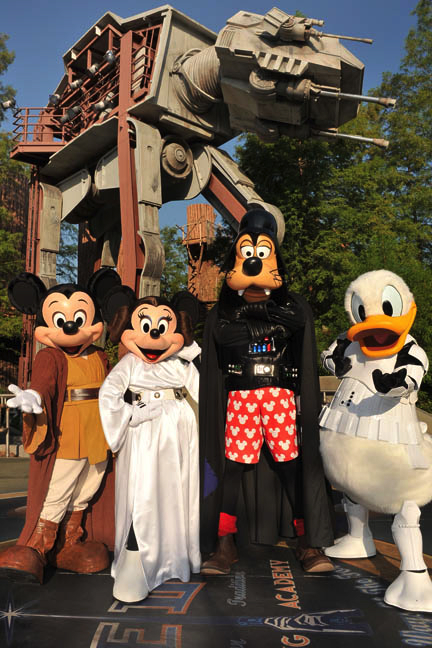
There has been a lot of hubbub going around lately about the latest Star Wars movie “The Rise of Skywalker” from Walt Disney studios and the new Star Wars themed lands in Disneyland and Disneyworld’s Hollywood Studios known as “Star Wars: Galaxy’s Edge.” Disney purchased Star Wars parent company, Lucasfilms, for $4.05 billion in cash and stock on Oct. 30, 2012 and recouped their investment in just a few short years. The four Disney Star Wars movies alone grossed more than $4.8 billion at the box office. That figure doesn’t even count any monies generated by the franchise in merchandising or at the theme parks, which opened in 2019.
What would you think if I were to tell you that the Disney / Star Wars merger was not the first “big idea” to land on the house of the mouse doorstep? There was another big idea that was nearly floated out of Anaheim over fifty years ago. And this one came from “Uncle Walt” himself. Well, to paraphrase Winnie the Pooh, Walt Disney’s rumbly tummy anyway. Believe it or not, there was a time when Disneyland and McDonald’s nearly partnered up.
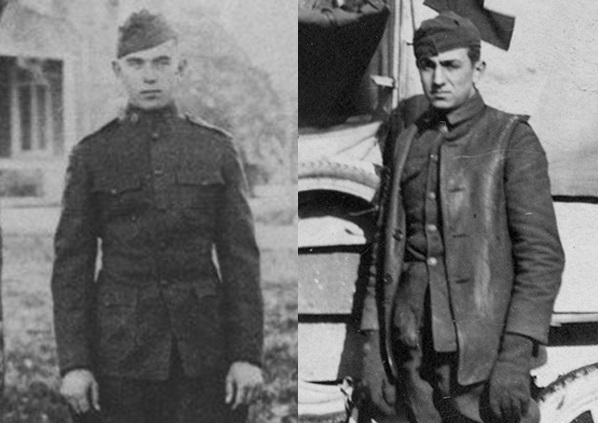
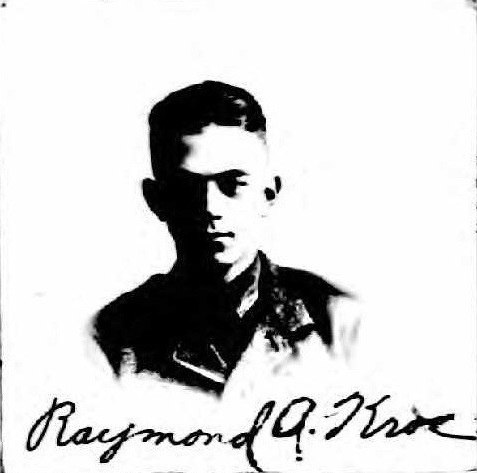
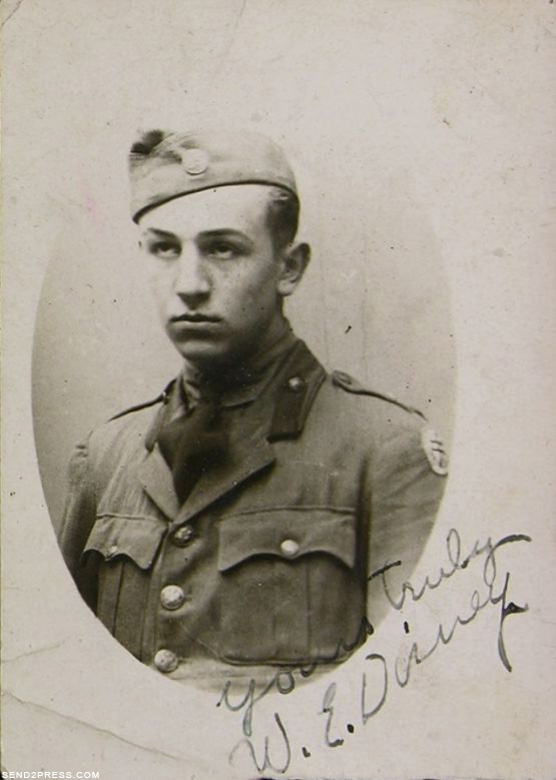
This was not a proposal made by a couple of opportunistic bandwagon jumpers, there was history behind this love affair. Walt Disney and Ray Kroc first met in a Connecticut Army camp in 1918 while both were teenaged dreamers known only to their families. Both men were born near Chicago, Illinois less than a year apart. Walter Elias Disney in Chicago’s Hermosa neighborhood on December 5, 1901 and Ray Albert Kroc in Oak Park, Illinois, on October 5, 1902.
In mid-1918, Walt Disney dropped out of high school at 16 and attempted to join the United States Army to fight against the Huns, but he was rejected because he was too young. Undeterred, Disney forged the date on his birth certificate and joined the Red Cross in September 1918 as an ambulance driver. Ironically, Walt began his ambulance corps training at a burned down amusement park near the University of Chicago where he was taught by mechanics from the Yellow Cab Company how to repair motors and drive cars over rough terrain.
Likewise, Ray Kroc dropped out of school, lied about his age and joined the Red Cross as an ambulance driver at the age of 15. Disney was shipped to France, arriving in November, after the armistice. The only action Disney participated in was drawing cartoons on the side of ambulances. As for Kroc, the war ended shortly after he enlisted. In his 1977 autobiography “Grinding It Out: The Making of McDonald’s”, Ray Kroc said this about his old war buddy, “In my company, which assembled in Connecticut for training, was another fellow who had lied about his age to get in. He was regarded as a strange duck, because whenever we had time off and went out on the town to chase girls, he stayed in camp drawing pictures. His name was Walt Disney.”
While training to be a driver in Ambulance Company A, Disney and Kroc became friends. Ironically, at the same time, a couple of young idealistic writers, also from Chicago, were serving in the ambulance corps; Ernest Hemingway and John Dos Passos. These four men shared not only an occupation but a desire to revolutionize American writing, entertainment and pop culture. However, this article ain’t that deep and talking about Hemingway and Dos Passos is above my pay grade. This article is about pop culture at it’s finest.
After Ray and Walt returned to the US, independently, they both headed out to Southern California seeking fame and fortune. Disney as an animator, even though the cartoon industry was headquartered in New York City, and Kroc as a businessman, even though California was still a relative unknown in the business world. Disney struggled for a time but finally caught on in 1928 with a cartoon about a mouse called “Steamboat Willie”—the first cartoon with synchronized sound. For Kroc, it would take a little bit longer for his ship to come in: 26 years to be specific.
Disney’s story is well known, but Kroc’s story might be worth a revisit. Kroc was working as a traveling salesman for the Mixmaster Corporation when he met two brothers who were tearing it up in San Bernardino. Richard and Maurice “Mac” McDonald, who curiously shared the same middle name (James), developed a restaurant using what they called the “Speedee Service System.” The new restaurant proved a rousing success, especially with teenagers, and the brothers were soon making $40,000 a year, big money back then.

By 1953, the brothers had set their sights on franchising with a goal of making $1 million before they turned 50. Their first step was to buy eight shiny new milkshakes machines. Curious why one business would need eight machines, Ray visited the McDonalds’, took one glance at the brothers’ method of cooking hamburgers “assembly-line-style” to get the food out to the customers more quickly and he immediately saw dollar signs. In 1954, the McDonald brothers partnered with Ray Kroc. Around this same time (April 1954) Walt Disney unveiled his plans for a bold new concept in family fun parks he planned to call Disneyland.

As soon as Ray Kroc heard the news about this new mega-fun park, he knew that hungry teenagers would flock to it by the carload. Kroc knew that he’d finally found the perfect place to build his first McDonald’s franchise. In late 1954, Ray sent a letter to his old ambulance corps buddy, it read, in part, “Dear Walt…I look over the Company A picture we had taken in Sound Beach, Conn. many times and recall a lot of pleasant memories.” Then Kroc cut to the chase, “I have very recently taken over the national franchise of the McDonald’s system. I would like to inquire if there may be an opportunity for a McDonald’s in your Disneyland Development.”
Walt responded cordially to the former Red Cross ambulance driver’s note by saying that he would be handing the proposal over to the Disneyland executive in charge of concessions. Walt explained that he was “currently confining his activities to the creative side” while the Disney Company “raced to complete the theme park on time.” The Disney Archives has a copy of Kroc’s letter and Walt’s response. Kroc claimed he never received a response from the vice president in charge of concessions.
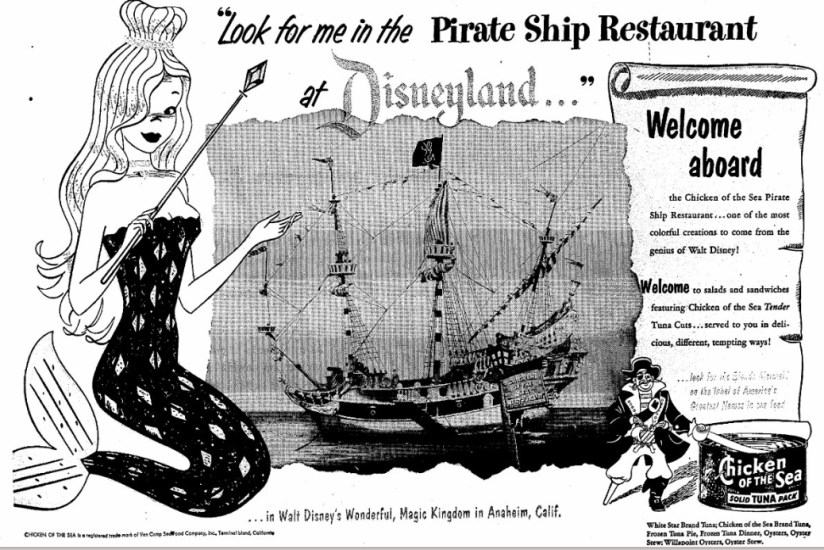
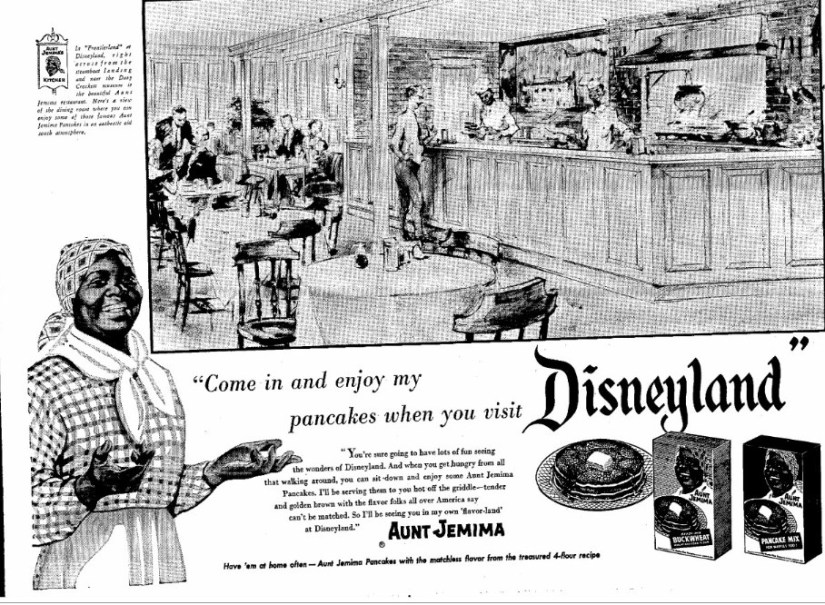 From there, well, nobody knows. For the answer, you need look no further than the fact that there are no McDonald’s at Disney. It should be noted that there were SOME franchise restaurants in Disneyland during those first first years. They included the Aunt Jemima pancake and waffle house in Frontierland and the Chicken of the Sea Pirate Ship in Fantasyland.
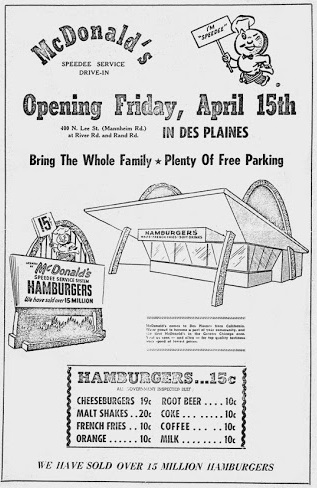
 To his dying day, Ray Kroc insisted that the reason the “world’s first McDonald’s” was not featured inside Disneyland at the park’s July 17, 1955 grand opening was because the head of concessions had tried to force Ray to raise the price of his french fries by a nickle (from 10 cents to 15 cents) for the Disneyland crowd. Kroc, the man in charge of McDonald’s franchising, believed that he was being charged a franchise fee by virtue of Walt Disney Productions tacking on a concessionaire’s fee. Kroc, the consummate businessman, said he wasn’t about to give away 1/3 of his profits while gouging his customers. Great story, but by the time Disneyland debuted, Kroc had only opened one McDonald’s franchise (in Des Plaines, Illinois on April 15, 1955). So he had no loyal customers to offend…yet. Well, no customers within 2,000 miles anyway.
 It is more likely to say that while the executives in charge of Disneyland’s concessions were undoubtedly intrigued by Ray’s “fast food” proposal, “war buddy” or not, Kroc just didn’t have enough experience in the restaurant business to take that gamble. So, despite how Kroc spun the tale to reporters from the 1950s forward, while there was some discussion of putting a McDonald’s inside the theme park, the project never really made it past the talking stage. But Ray Kroc would never let the truth stand in the way of a good story.
Ray Kroc eventually bought the brothers out in 1961, a year after Walt Disney received TWO stars on the Hollywood walk of fame: one for movies, the other for television. All business partnership questions aside, the parallels between the two men continued. Both men were vehement conservative Republicans. Disney famously wore a Barry Goldwater for President pin to the White House in 1964 when President Lyndon B. Johnson presented the Presidential medal of Freedom to the animator. Kroc donated $255,000 to Richard Nixon’s reelection campaign in 1972, and was accused by some, including N.J. Senator Harrison Williams, of trying to influence Nixon to veto a minimum wage bill making its way through Congress (which was a $ 1.60 per hour by the way).
Both men were brilliant businessmen. Both were always looking to the future. Both would be categorized as “control freaks” today. And both men were among the first to market their product specifically to children. But there was one major difference. While Kroc had a legendary temper and was famous for holding a grudge, Disney retained a childlike innocence and truly enjoyed people. While it is true that the Golden Arches never made it onto Main Street USA, they still found a place in Walt Disney’s heart. Or maybe it is more accurate to say, his stomach.
Perhaps unsurprisingly, Walt Disney , the ultimate imagineer, was one of the first businessmen in America to utilize a personal airplane for business and travel. Actually, he had three. Although Walt never got a pilot’s license, he frequently sat in the co-pilot’s seat. Lillian Disney disapproved strongly of her husband’s desire to fly. Once, after Walt announced from the cockpit: “This is your captain speaking”, Lillian jumped from her seat and stormed towards the cabin. Walt quickly backed off by saying: “No, not the captain. This is the commander in chief of the whole damned outfit!”
Walt’s first plane was an eight passenger Beechcraft Queen Air Model 80, which Walt bought in February of 1963 and used until 1965. The twin engine turboprop, nicknamed “The Queen” by Disney, had a top speed of 247 mph, a list price of $135,000 and a large circular logo of the “Mickey Mouse Club” near the nose. Legend states that it was this plane that Walt used to fly over central Florida to pick the spot for his Disney World complex nine months after purchase.
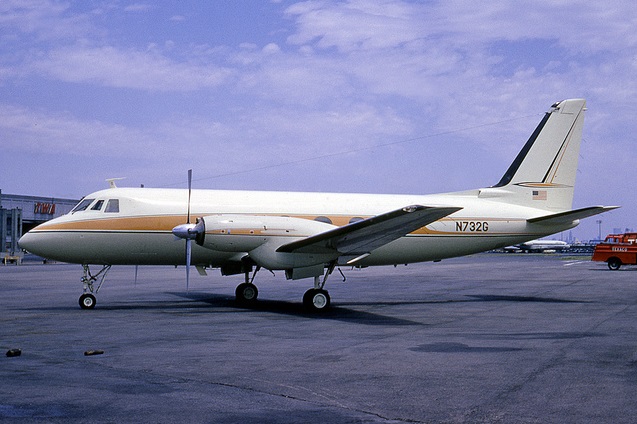
In March of 1964, the small cabin of the Queen Air necessitated an upgrade to a used Grumman Gulfstream G-159 one, tail number N732G. This new tan and brown plane was a significant upgrade with a cruising speed of 350 mph at 30,000 feet. It was a smooth ride to the 1964-65 New York World’s Fair, while Walt was busy working on his “Great Moments with Mr. Lincoln” and “It’s a Small World” projects. At one time it was the most highly utilized Gulfstream I in the country.
In July of 1965, Walt purchased a Beechcraft King Air Model 90, which he used from 1965 to 1967. The Beechcraft could carry 10 passengers, including a flight crew of two. It was powered by a pair of Pratt and Whitney PT-6 Turboprop engines, capable of cruising at 270 mph at 23,000 feet. Fully equipped, its list price was $320,000. Perhaps most importantly, this new plane carried the tail number N234MM. The King Air was fast and quiet, but the Gulfstream could get in and out of smaller airports much easier. So by 1967, the Gulfstream eventually ended up with the N234MM tail number and the forever designation as “Walt’s Plane”.

Disney pilots originally used “two-three-four-Metro-Metro” as their radio call sign but it soon morphed into “two-three-four-Mickey-Mouse” which was not a standard ICAO Aircraft call. Soon the FAA enroute controllers were also calling it “Mickey Mouse.” According to friends, Walt took delight in every aspect of flying. He loaded the luggage, served the drinks and supervised the galley. Even those with a passing knowledge of McDonald’s Ray Kroc’s personality realize it would find it hard to imagine the Golden Arches CEO doing any of that. 
Walt’s “problem” was that he always liked to fly as low as possible, to study the landscape. Perhaps by decree of Lillian (or the insurance company) Walt ended up with his own personal seat in the back equipped with an altimeter and air speed indicator on the wall and a telephone direct to the pilot. During the 1960s, as Walt Disney was flying around the country overseeing World’s Fair attractions, selecting movie sets, participating in lawn bowling events (yes, he was a world class lawn-bowler) and planning more self-titled mega-theme parks, he would often land his plane to search for… a McDonald’s hamburger.
NEXT WEEK: Part II of Disney East McDonald’s

 Although I never fail to take my annual trip around Monument Circle at Christmastime to gaze in wonder at the fantastic fir tree fantasy, my personal memories of Christmas on the Circle revolve around a little shack that used to rest at its base facing the Indiana Statehouse. You may think of the L.S. Ayres Cherub, Santa’s mailbox, the 26 larger-than-life toy soldiers and sailors surrounding the Circle, the 26 red & white striped peppermint sticks, the 52 garland strands or the 4,784 colored lights strung from the top of the Monument to its base, but I think of the Roselyn Bakery Christmas Hut.
 Decorated with Gingerbread man shutters and candy cane pillars, coated in what looked like white icing, the Christmas hut was set up on the West side of the Circle where it remained for 25 years from 1974 to 1999. It was estimated that some 1.2 million Gingerbread man cookies were handed out from within that festive little house over those years. Just like the bakery itself, that little hut was an institution.
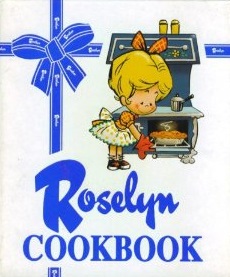 For me, Roselyn will always be identified for buttermilk jumbles, toffee cookies, alligator & sweetheart coffee cakes, yeast donuts and the darling little girl cartoon mascot known as “Rosie”. A blonde haired, blue eyed perpetually smiling little naive whose popularity forced the Roselyn Christmas Hut to undergo a name change to “Rosie’s Gingerbread House.” If memory serves, for a time there was even a living, breathing life-sized “Rosie” mascot dressed in a horribly oversized paper mache’ head and wearing a red velvet dress. Every so often, she would wobble awkwardly out of the Gingerbread hut to personally pass out cookies to the eager, but slightly befuddled, kiddies on the Circle. As I recall, she didn’t speak, but to a 12-year-old cartoon addicted boy like me, her skirt was short and her cookies were hot.
 a long way baby.”
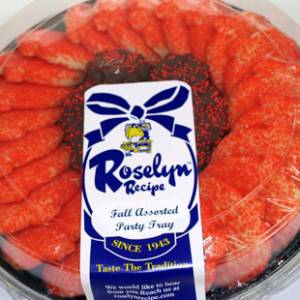 Eight mayors and ten governors have served our city and state over the past 50 years. I can’t say that I miss any of them, but I do miss those Gingerbread cookies. If you do too, you can make them yourself. Here’s the recipe for Roselyn Bakeries famous Gingerbread Men cookies: 1 1/4 teaspoon allspice, 2 3/4 teaspoons baking soda, 5 teaspoons ground cinnamon, 1 teaspoon ground cloves, 1 teaspoon ground ginger, 2 1/2 teaspoons salt, 3/4 cup Crisco shortening, 3/4 cup granulated sugar, 6 tablespoons whole eggs, 1 1/4 cup extra fine coconut (Make sure that the coconut you use is very fine, almost like coarse sugar-you may have to grind store bought coconut flake down), 1 1/4 cup honey, 5 cups all-purpose flour. Preheat oven to 360 degrees F. Combine allspice, baking soda, cinnamon, cloves, ginger, salt, shortening, and sugar into a large mixing bowl. Cream together. Scrape down bowl. Add beaten eggs and mix thoroughly.
 Scrape down bowl. Add coconut and honey and mix well. Scrape down bowl. Add flour and mix well. On a lightly floured surface, with a floured rolling pin, roll dough 1/8 inch thick. With a 5 inch long cutter, cut out men. Re-roll trimmings and cut more cookies. With spatula, place 1/2 inch apart on cookie sheets. Bake at 360 degrees for 8 minutes or until browned, then, with spatula, remove cookies to racks to cool. Decorate as desired. Makes 3 dozen cookies. Now if I could only locate a slightly used Christmas shack.
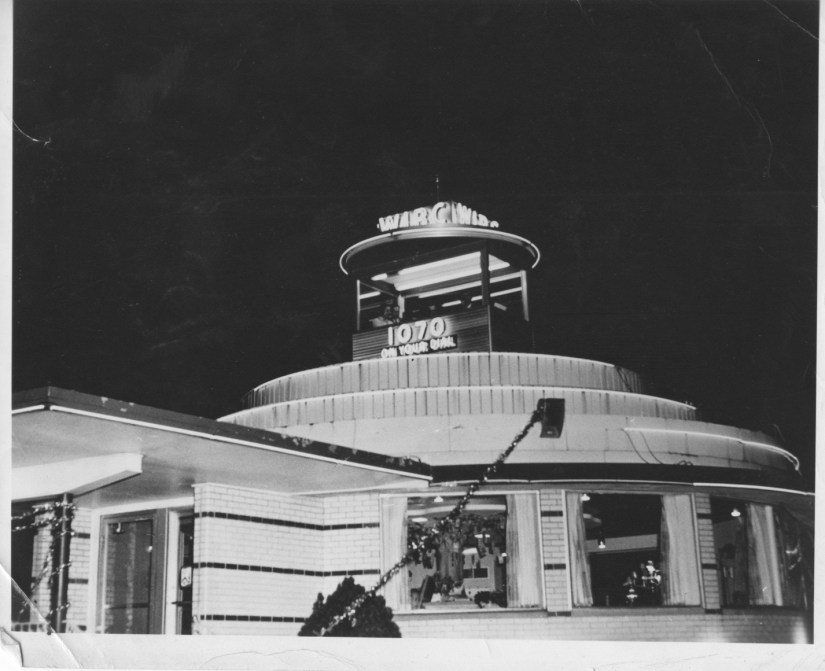

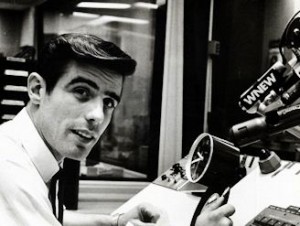
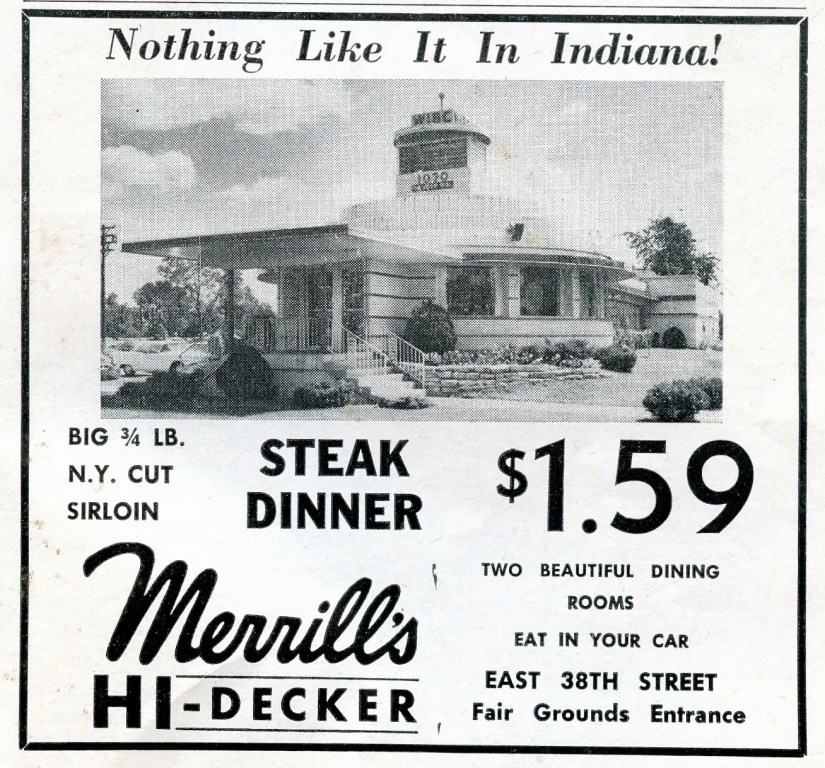 Another Summer gimmick was to slowly bite into a juicy hamburger before he kicked off every commercial during his show. Doesn’t sound like much now, but apparently back in the day it drove customers crazy. Not to mention it sold a lot of hamburgers. The only way into the glass booth studio was up a fire escape ladder leading up to the roof, and then into the tiny studio via a trap door in the floor. Legend claims that George Lucas used Summer’s “Skyline Studio” as the inspiration for Wolfman Jack’s studio in his movie American Graffiti. You’d have to rent the movie and see for yourself because Merrill’s Hi-Decker and the radio booth are long gone now.
 Original publish date: September 11, 2015
 Original publish date: September 10, 2015
 Alan E. Hunter