

Original publish date: May 23, 2019
The Dillinger gang was speeding towards Chicago underworld “fixer”, Dr. Joseph Moran. During World War I, Moran served honorably as a pilot in the Army Signal Corps raising to the rank of lieutenant. His addiction to alcohol eventually gained him an unscrupulous reputation as the windy city’s best “pin artist” (someone who performed illegal abortions). In 1928 he was sentenced to 10 years in prison after one of his patients died. He lost his medical license and was released after serving only two years. He became well known for his plastic surgery skills, particularly for his ability to obliterate fingerprints, and was most often associated with the Ma Barker and Dillinger gangs. It was Moran who removed five bullets and stitched up Red Hamilton after a previous shootout, hitting Dillinger up for a cool $ 5,000 for his handiwork.
But now, the silver dollar sized wound in Red’s back was festering and oozing. The bullet had lodged in Red’s lung and was already stinking of gangrene. The shady Moran refused to treat Hamilton at any price, likely because he knew that Hamilton’s wound was mortal. Moran directed the gang to take their dying compadre to Elmer’s Tavern in Bensenville and let him die there. Before the year is out Doc Moran will mysteriously vanish from the face of the earth.

Hamilton spent a few days at Elmer’s, every hour in excruciating pain, but he simply refused to die. Finally, Dillinger took him to a Barker-Karpis gang safe house in Aurora that was being rented by Dillinger / Barker gang associate Volney Davis and his girlfriend, Edna “Rabbits” Murray. For the next three days, Dillinger, Van Meter, Davis, and Doc Barker stood watch as Hamilton slowly died. Edna took care of Red as best she could, but, ravaged with gangrene, Hamilton finally died on Thursday, April 26. On Friday night, the men took the body to a gravel pit in Oswego, Illinois, for disposal. Laid in a shallow grave, to hinder identification by the authorities, Hamilton’s right hand is cut off (presumably discarded elsewhere) and ten cans of lye are poured over his face and body by Dillinger who reportedly said, “Red, old pal, I hate to do this, but I know you’d do the same for me” as he emptied each can of it’s contents. After the grave was filled in, a roll of rusted barb wire was placed over it as a makeshift marker. Red Hamilton was left there to rest in peace – but not for long.
On May 19th authorities, unaware that Hamilton had died almost three weeks prior, indicted him on charges of harboring fugitives. Hamilton’s sister was convicted of the same charge, and served a short prison stint. Since Hamilton had been reported killed on other occasions, the FBI continued searching, refusing to believe reports of Red’s demise until the body was found. When Red’s grave was discovered on August 28, 1935, there wasn’t much left of him. The corpse was missing a hand and was so damaged by the lye that it could only be identified by some strands of hair and a belt size. Ultimately, only Hamilton’s dental records from the Indiana state penitentiary confirmed the identity. The FBI claimed that a couple of molars with distinct fillings matched Red’s prison x-rays.

It was not until Volney Davis was arrested, escaped, and rearrested that FBI agents learned the fate of Red Hamilton. At least, Red’s demise from the outlaw perspective. However, legend tells many different tales about the fate of Red Hamilton. What was left of the body that was removed from the gravel pit and reburied in the Oswego cemetery. The funeral service was paid for by Hamilton’s sister from Michigan. Like many fellow outlaws (John Dillinger, Billy the Kid, John Wilkes Booth, Butch and Sundance) most of the rumors claimed that Red was not dead, while other rumors never questioned Red’s fate, but rather the disposition of his mortal remains. One rumor claimed that he had been buried in the sand of the Indiana dunes. Another that he had been dropped into an abandoned mine shaft in Wisconsin.
Red’s fate remained in question long after Dillinger’s death in an alley outside the Biograph theatre in Chicago on July 22. Even before the body was found, the FBI had been receiving reports from police and public claiming that Hamilton was still alive and hiding out in northern Indiana. When interrogated by the FBI, Dillinger’s girlfriend Polly Hamilton (no relation to Red) claimed that Anna Sage told her that Red was alive and being treated for a “badly infected wound” by Dr. Harold Cassidy.
Dr. Harold Bernard Cassidy was the plastic surgeon who had famously performed surgery on John Dillinger’s face. It was Cassidy who injected the overdose of anesthetic which nearly killed Dillinger, who swallowed his tongue. However, the surgery was a success and Dillinger gave him $500 for his troubles. In 1933 Cassidy was arrested and charged with harboring a fugitive. He was given a suspended sentence in exchange for testimony against Dillinger. He served as a physician on Indian reservations and during World War II rose to the rank of Major in the Pacific. After the war he came back to Chicago, suffered a nervous breakdown, and shot himself in the head in front of his sister and mother on July 30, 1946.

Over the years, the FBI received numerous tips from people claiming to have seen or heard from Hamilton. Red’s nephew Bruce swore that he had visited his uncle in Ontario, Canada (Red’s birthplace) long after Red’s reported death. Nevertheless, no hard evidence for Hamilton’s survival has ever been discovered. FBI director J. Edgar Hoover officially marked Red’s fate as “case closed” in 1935. In typical Hoover style, the Director trumpeted the belated discovery of the last member of the Dillinger gang to every newspaper in the country. However, underworld rumors persisted that Red had recovered from his wound and was alive and well and living north of border after retiring from a life of crime. Supposedly, Red outlived John Dillinger, Homer Van Meter, and Baby Face Nelson (all killed in violent shootouts) and lived out his life working as an electrician and handy man.
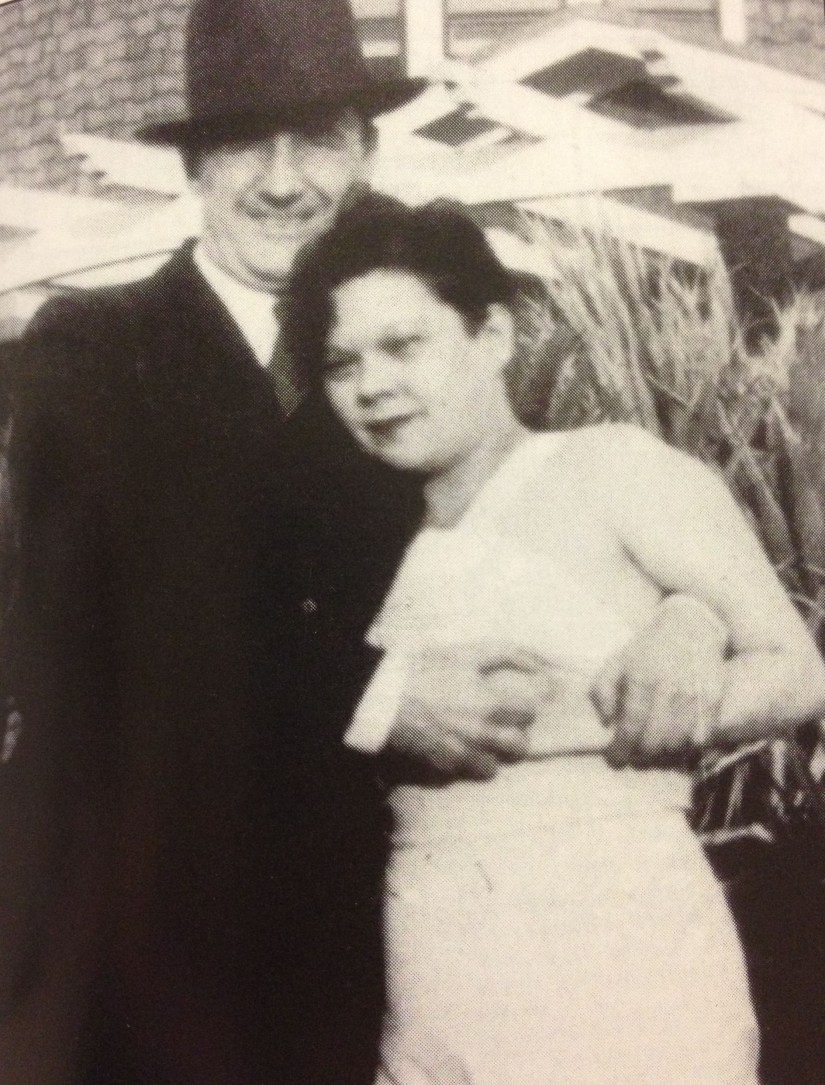
Reports claiming that Hamilton was still alive continued flowing in to the FBI on the regular, but, by Hoover’s directive, they were disregarded. Most were written off as mistaken identity. However, one survives that sounds particularly convincing. The letter, found in the files of the FBI, is dated August 24, 1936, a year after Red’s body was found. It was sent by a former inmate known as “Happy” who knew some of the gang members, as well as Dillinger’s attorney, Louis Piquett. It is believed that “Happy” may have been an associate of Dillinger named Fred Meyers, from Chicago.
The letter read: “Dear Sir: Will you kindly advise how much you will guarantee in cash for secret and confidential information about the movements of John Hamilton? There are three people who know that he is still living and happen to know the details concerning him. If interested please make offer through personal column of Chicago Tribune as follows, HAP * Will buy ,000 bushels, meaning of course that many thousand dollars for this information and place ED after the word bushels. If this offer is OK you will be supplied with an amazing detail report on his present physical condition and movements. Money must be on deposit at your Chicago Office but will not have to be paid until this man is captured or killed or both. This information must be kept strictly confidential between you and I and must be kept out of the newspapers except code transmissions between you and I. I am a hardworking electrician and took considerable time and money to get this data and do not want to risk my life for the deal. Everything will be handled by correspondence and code in the Chicago Tribune. If your offer is accepted, I will make you proposals which must be guaranteed by you as a strictly gentlemen’s agreement.”

There is no evidence that J. Edgar Hoover ever saw it or whether there was ever a follow-up. By then, the FBI claimed that Hamilton’s dead body had been found and identified and that Hoover had won the national “War on Crime”, thereby securing his position as Director for the next four decades. But could the letter have been true? Red’s nephew, Bruce Hamilton certainly believed it was. Years later, he described a family trip to Michigan to visit his “dead” uncle Red in 1945. The trip took the family to Sault Sainte Marie on the Canadian border to the home of John Hamilton’s sister, Anna. Wilton and his wife, Harriet, their older son Douglas, their daughter, Jane Margaret, and 15-year-old Bruce, all met the man known as John “Red” Hamilton. Wilton told his wife and children not to discuss the trip with anyone.
The trip to the Upper P resulted in the collection of a large amount of money that had been stashed away by the Dillinger gang. The loot’s whereabouts were known only by the gang’s last surviving member: Red Hamilton. As evidence, crime buffs and conspiracy theorists note that the impoverished Hamilton family suddenly came into thousands of dollars in cash years after Red’s “death”. After that 1945 trip, Bruce’s father Wilton paid off the mortgage on the family home in South Bend, bought a new house, and purchased the family’s first new car. Around this same time, Hamilton’s brother, Foye, recently released from prison, also came into a great deal of money. He used it to build a machine shop in Rockford, Illinois, and he also purchased Turtle Island in the Great Lakes area near Sault Sainte Marie, as well as boats and a seaplane to get to and from the island. Bruce suspected that a large cabin on the island provided a hiding place for his uncle John. The family claimed that the outlaw survived into the 1970s, vacationing numerous times with his family over the years.
According to a March, 2007 article in the South Bend Tribune, Bruce (then living in Shiprock,N.M.) believed “the wounded Hamilton, after stopping in Aurora and then Chicago (where the FBI originally believed he had died), was patched up by Dr. Cassidy and then went into hiding with his brother, Sylvester, in East Gary, Indiana. Dillinger then returned to Aurora, while Sylvester took Red to the home of William Hamilton, Bruce’s grandfather, in South Bend. William helped get him to a hideout previously used by the Dillinger gang, a nearby place called Rum Village Woods. Hamilton recuperated well enough to go to work as an electrician at a family-owned bowling alley in South Bend in 1936 and 1937.” Bruce also said that over the years, his great-uncle Red occasionally slipped over the border to rob a bank or two until he “got tired of being shot at.” According to Bruce’s elderly aunt, Red later moved to Canada and died in the 1970s.
But if Red Hamilton didn’t die in Aurora in 1934, then whose body was found in that barbed wire covered grave in 1935? Rumor says it was Dr. Joseph Moran, who disappeared shortly after refusing to treat Red’s wound in Chicago. Hoover directed his agents to continue searching for Moran for months after he vanished. Hoover eventually declared that Moran had been killed and dumped in Lake Michigan. Alvin “Creepy” Karpis, of the Ma Barker gang admitted that Moran had been murdered and his body buried, but he never said where.

In 2001, Jack “Red” Hamilton rocketed to pop culture immortality when he became the subject of a short story by horror author Stephen King. “The Death of Jack Hamilton” was originally published in the 2001 Christmas issue of The New Yorker magazine. In 2002, it was published in King’s collection Everything’s Eventual. The true crime story is based on the death of Red Hamilton and is written as a first-person narrative, told by Homer Van Meter, who relays the slow, painful death of his fellow gangmember. In King’s story, Van Meter spares no detail in relating how Red lapsed into dementia before his agonizing, but merciful death.
Yet another account can be found that ties the mysterious Red Hamilton to Irvington while at the same time claiming John Dillinger survived as well. The anonymous writer relates, “I knew the remaining members of the White Cap Gang in Indianapolis. In the late fifties I was told the same story you have from his nephew. He recuperated in South Bend and went to his sister in Sault Sainte Marie. Later Red moved to a new place on the Canadian side. The fellows I knew had regular communication with him. Dillinger was still sending him letters and current photos of himself. As far as I know these are the only two members of the gang to have survived. I did see such a letter and photo that Tubby Toms brought to the house for verification after Dillinger had sent it to the Indianapolis Star. They told Toms that they weren’t sure of the ID of the man in the picture but laughed like crazy when he left. They knew both Dillinger and Hamilton where alive at that time and their respective location. Toms showed me the rabbits foot Dillinger gave him. It was small. Every one was so crooked that none of the official stories was true.” In June of 1933, John Dillinger and the White Cap gang robbed the Haag’s drug store / soda fountain on the Northwest corner of Washington and Audubon in Irvington. You can’t make this stuff up folks.

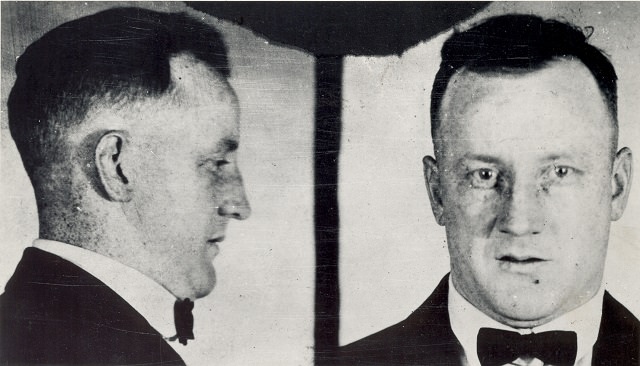
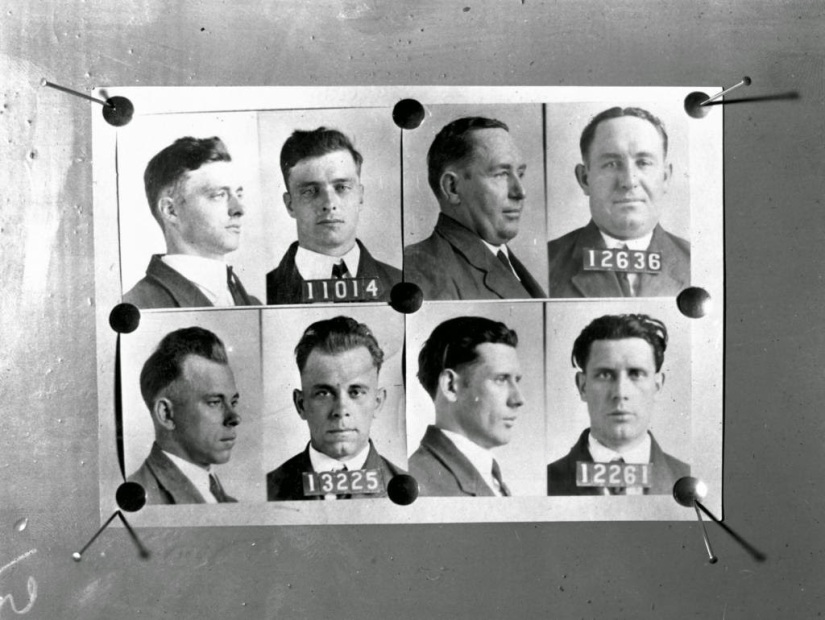
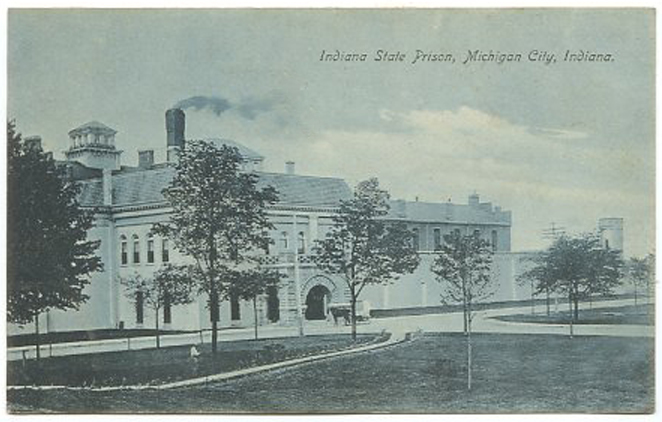
 Hamilton, escaped out the main gate of Indiana State Prison.
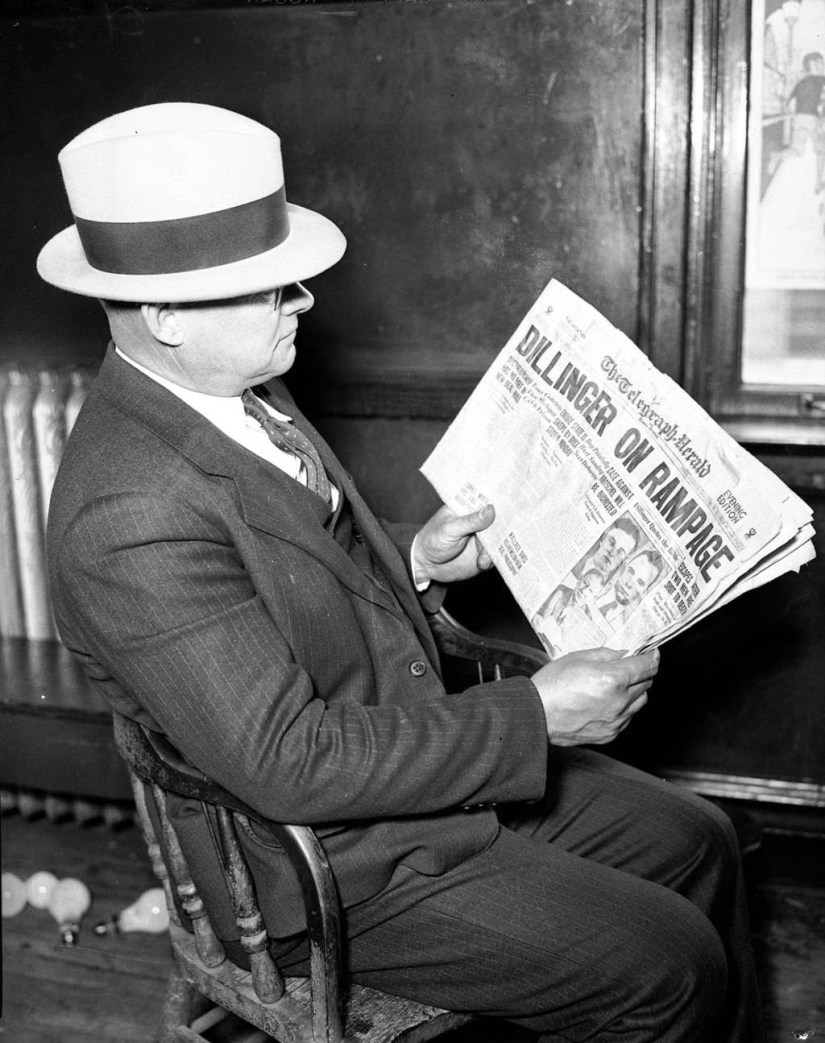 On December 13, 1933, the Dillinger gang robbed a Chicago bank, netting a reported $50,000. Afterwards, the gang went down to Daytona Beach, Florida for a time and then went west to Tucson. Hamilton, however, decided to go to Chicago instead, where, on December 13, 1933, he took part in the robbery of a local bank. The next day, Hamilton left his car at a Chicago garage for some body work, the garage’s mechanic called police reporting it as a “gangster car”. Hamilton returned to pick up the car and found police detective, William Shanley and two other officers waiting for him. He opened fire, killing Shanley, and escaped from the other two officers. Red’s incident led to the Chicago Police Department forming a special forty man “Dillinger Squad”. A month later, on January 15, 1934, Hamilton and Dillinger robbed the First National Bank in East Chicago, Indiana, for $20,376. During the heist, police officer William O’Malley was shot dead. Dillinger was officially charged with the murder, but several witnesses ID’d Hamilton as the shooter. By the end of the year, Hamilton found himself ranked third on Indiana’s list of “public enemies”, behind circle-city natives Dillinger and Pierpont.
 During the robbery, Hamilton was shot twice and left in the care of his girlfriend Pat Cherrington and underworld physician Joseph Moran, while Dillinger and the others headed to Tucson where they were apprehended by the authorities. Afterwards, for a short time, the fugitive Hamilton shot to the top of the public enemies list. There he remained until Dillinger, using a wooden gun, escaped from the Crown Point jail. Afterwards, Dillinger formed a new gang consisting of Hamilton, Homer Van Meter, Tommy Carroll, Eddie Green, and Baby Face Nelson.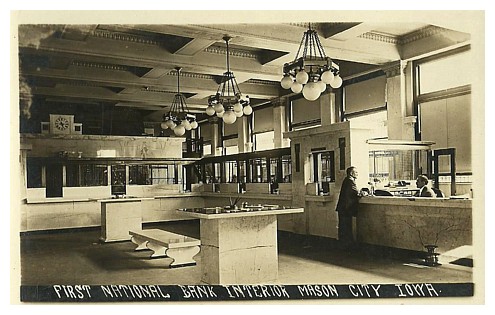
 Dillinger smashed out the window and returned fire with his .45, shattering the windshield of the police car and nearly killing the pursuing officer. A running gun battle ensued as the two cars traded 40 or 50 rounds for the next 50 miles or so, before the outlaws finally losing the pursuing patrolmen. With Hamilton losing blood from the massive hole in his back, Dillinger told Van Meter to head to Chicago and find a doctor for his friend. But first, they needed a faster, less bullet-riddled car. Van Meter cut off a 1934 Ford V8 Deluxe containing power company manager Roy Francis, his wife, Sybil, and their 19-month-old son, Robert.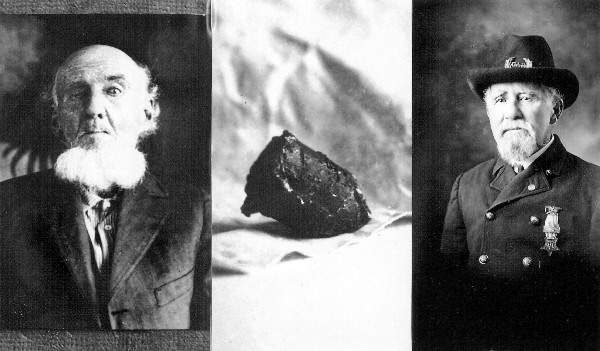
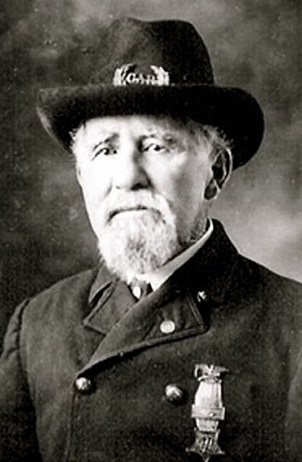
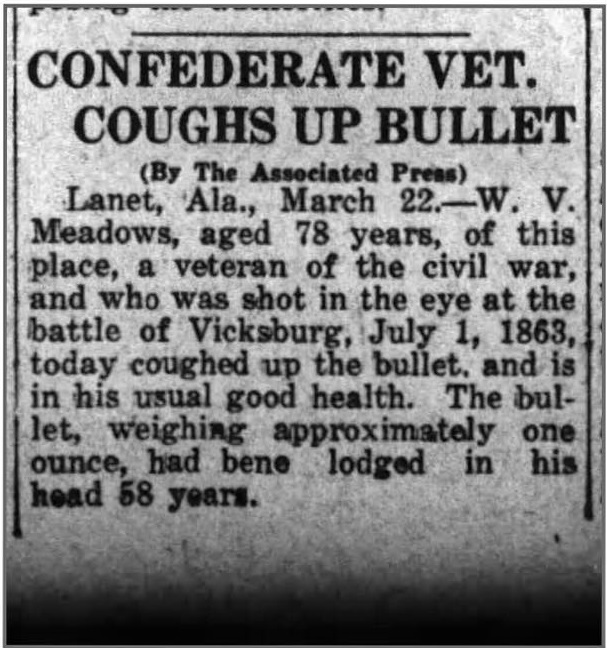 It was July 1st, 1863, the day before the pivitol battle of Gettysburg commenced. After holding out for more than forty days, with no reinforcements and supplies nearly gone, things were getting desperate. While languishing in the trenches, Pvt. Meadors cobbled together a shield made of pig-iron. His crudely constructed armored bulwark had one hole to see through and another to fire his weapon. The shield worked well at first, allowing the Rebel sharpshooter to fire with impunity and relative security. Then, like a scene from a Hollywood movie, as the sharpshooter lined up his next shot, he was shot in the eye through his very own peephole. Miraculously, he survived.


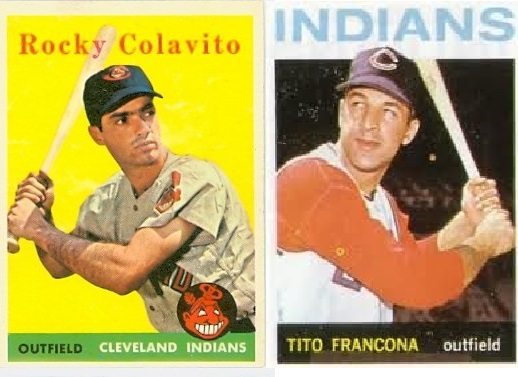
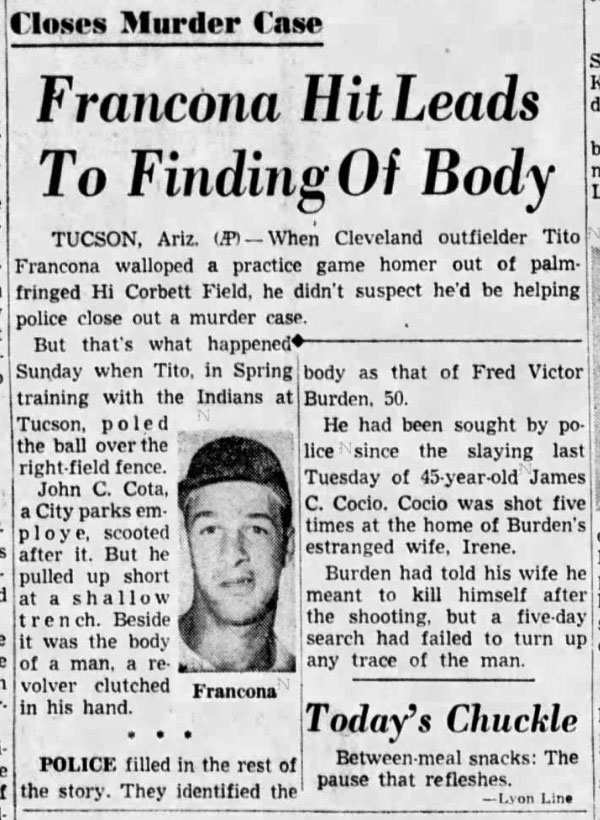 The front page of the Tucson Daily Citizen on March 27, 1961 ran a story headlined, “Practice Homer Leads To Body”. The story detailed, “An over-the-wall smash by Cleveland Indians’ Tito Francona yesterday led to the discovery that Frederick Victor Burden had carried out his threat to commit suicide after killing a man in the home of his estranged wife. Burden’s body, with a bullet in the head, was found by city parks employee John C. Cota, 52, of 238 E. E. 19th St., while he was looking for a ball that had just been knocked over the west wall during the practice at Hi Corbett Field in Randolph Park. The partially concealed body was found lying in a shallow watering trench under low – hanging palm fronds when discovered about 11:30 a m.”
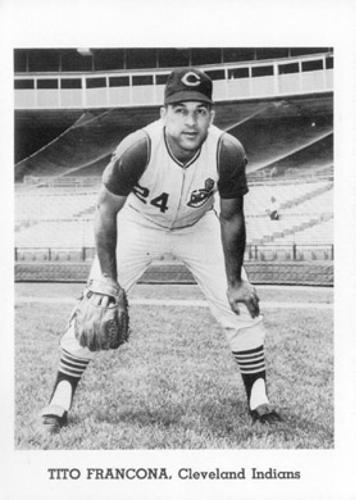 Despite having emerged as the best defensive left fielder in the league, Francona was shifted to first base during spring training in 1962 and finished the season leading the American League in double plays turned as a first baseman. He finished with 14 homers, 28 doubles and batted .272. When Birdie Tebbetts took over as Indians manager in 1963, Francona was moved back into left, but his numbers fell drastically. His .228 batting average was a career low, and his ten home runs and 41 RBIs were his fewest over a full season. The Indians acquired All-Star Leon “Daddy Wags” Wagner to play left field prior to the 1964 season, so Francona split time between right and first base. After the season, he was dealt to the St. Louis Cardinals for a player to be named later and cash.
 And what about that curse? The curse of Rocky Colavito? Well, in recent years, it has dampened a little with the Indians “rebuilding years” of the past two decades. But. although they’ve played in three World Series Championships since 1995, they still haven’t won one. Here are just a few of the mishaps blamed on that curse since Colavito’s 1960 trade. September 1961: Fireballer “Sudden Sam” McDowell breaks two ribs throwing a fastball. June 1964: Third Baseman Max Alvis suffers an attack of spinal meningitis on a team flight. January 1965: The Indians reacquire Rocky Colavito from the Kansas City A’s in exchange for Rookie of the Year winner Tommie Agee and future 286-game winner Tommy John. July 1970: Reds star Pete Rose plows over catcher Ray Fosse in the All-Star game, effectively ending Fosse’s career in Cleveland. June 1974: Drunken fans pour onto the Cleveland Stadium field during ten-cent beer night, forcing a forfeit while destroying the diamond. March 1977: 20-game winner Wayne Garland hurts his arm in Spring training, effectively ending his career. March 1978: Indians trade Hall of Famer Dennis Eckersley to the Red Sox. July 1981: Cleveland hosts the All-Star game which is delayed until August by the MLB strike. August 1981: 1980 AL Rookie of the Year “Super Joe” Charboneau is sent down to AAA, never to be heard of again. April 1987: Sports Illustrated picks the Indians to win the pennant but they lose 101 games and finish last. March 1993: three Indians pitchers die in car crashes and a fourth is seriously injured. July 1994: Indians are speeding towards the World Series when the season is cancelled by a player’s strike.
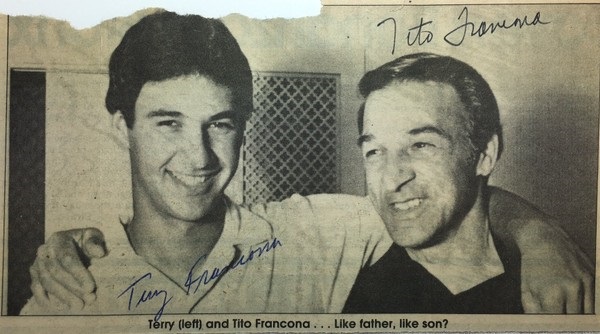 There is so much about Tito Francona that typifies that which makes baseball so interesting. Aside from one of the greatest nicknames in sports history, he was considered a journeyman for most of his career, but a damned good one. Tito Francona was a baseball player, a great husband and father and an even better teammate. When he died at the age of 84 he left a lasting legacy. Tito was there at the beginning of “The Curse” and although he’s gone, he’s likely to be there when the curse ends because “Little Tito” just might lead the Indians to a World Series Championship this season. After all, it was Francona who broke the Boston Red Sox Curse of Babe Ruth by winning two World’s Series titles in four years. Yep, baseball is a funny game.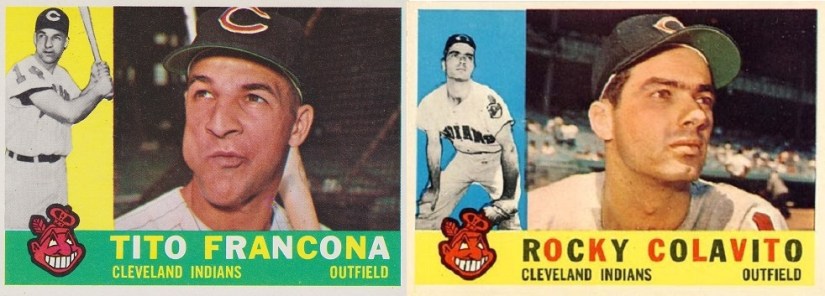
 My grandparents retired to Cape Coral in the late 1970s and I recall one of their oldster neighbors showing me a photo album from the 1930s with pictures of the New York Yankees at Spring Training down there. Turns out his family lived near the facility, Fort Lauderdale if memory serves, where the Yankees trained. I can remember the photos in there of Lou Gehrig in a bathing suit (MAN that dude was HUGE!) and Babe Ruth in full uniform on the beach, two bats resting on his shoulder with his fielder’s glove and cleats hanging from the back like a hobo pouch. In his pin striped uniform! On the Beach! Everything in that photo would be worth a small fortune today, including the photo itself!
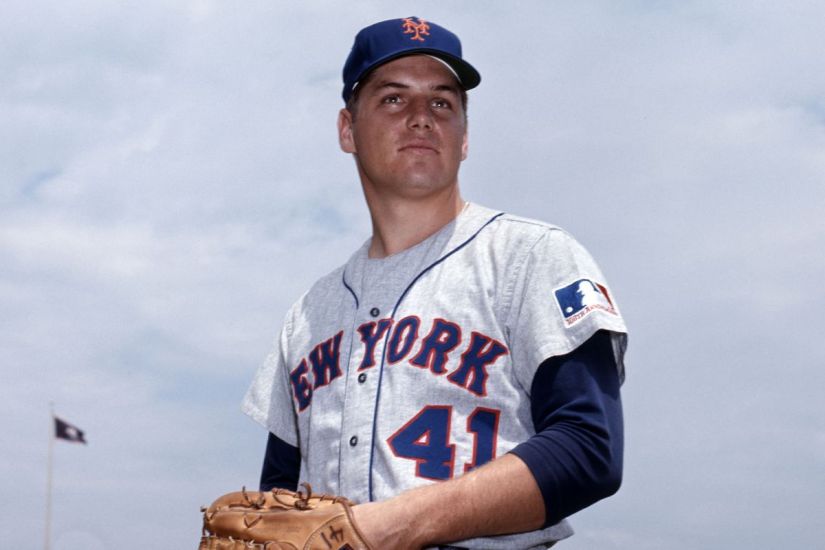 Somehow, I became a Blue Jays fan. Probably because I went to their first spring training game in franchise history in Dunedin. March 11, 1977 they beat the Mets 3-1 at Grant Field, which was built in 1930 and looked like it. I went to a few games that year. I distinctly recall sitting on a wooden bleacher seat right next to Tom Seaver who was talking to me like it was no big deal. And he was pitching that day. Within a few weeks, he was traded to the Cincinnati Reds “Big Red Machine.” Florida meant Spring Training, period. Somewhere along the line that changed.
 March of 1961 was a busy time: America’s brand new President John F. Kennedy creates the Peace Corps, The Beatles start performing at the Cavern Club, Nine African-American students from Mississippi’s Tougaloo College made the first peaceful attempt to end segregation by staging a “read-in” at the whites-only main branch of the Jackson municipal public library, NASA launches a Mercury-Redstone BD rocket from Cape Canaveral as one final test flight to certify its safety for human transport. Alan Shepard had volunteered to take the flight and become the first man to travel into outer space, but was stopped by Wernher von Braun from going, Less than three weeks later, Soviet cosmonaut Yuri Gagarin would, on April 12, would reach the milestone, Actor Ronald Reagan bursts onto the political scene with his speech “Encroaching Control” before the Phoenix chamber of commerce and the Boston Strangler Albert DeSalvo is captured.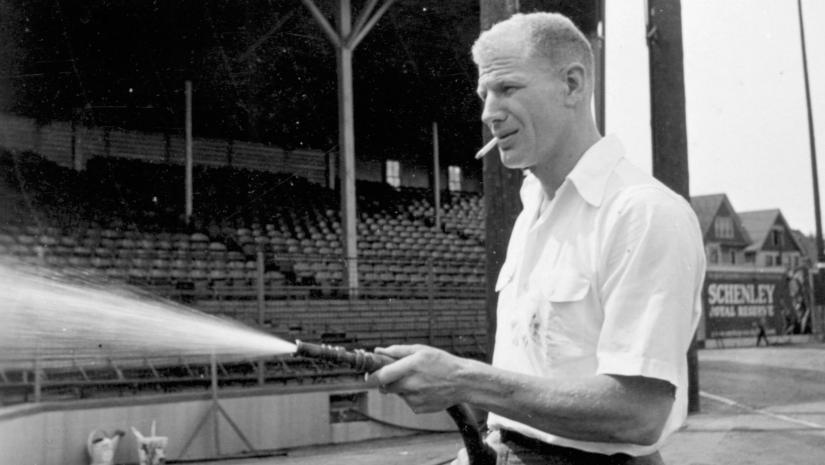
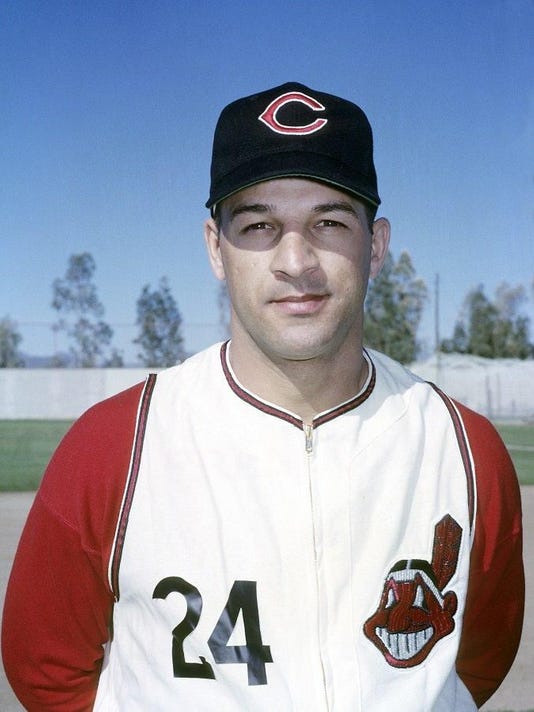 Last year, John Patsy Francona, a Cleveland Indians fan favorite better known as “Tito” died on the eve of spring training. It was the day before Valentine’s Day and the Indians’ pitchers & catchers were just trickling in to their spring training park in Goodyear, Arizona. The passing was made all the more bittersweet when you consider that the team was managed by Tito’s son, Terry Francona. Terry grew up in the Indians dugout where players called him “Little Tito.” As a member of the Montreal Expos, Terry played against our Indians here in Indianapolis at the old 16th street stadium. Before that he played college ball for Arizona State and led his team to the 1980 College World Series Championship. Terry Francona’s dad’s nickname of “Tito” was naturally passed down to his son, and although the broadcasters and news media still call him “Terry”, Tito is what the manager’s friends and players call him.
 That season Tito batted .363 with a career high twenty home runs and 79 RBIs to help the Indians to an 89–65 record and second place in the American League. His .363 average would have led the league, however, he fell 34 at-bats short of the 3.1 per game necessary to qualify. The batting championship went to the Detroit Tigers’ Harvey Kuenn, with a .353 batting average, ten points below Tito. Francona finished fifth in balloting for the AL Most Valuable Player Award that season. He compiled 20 home runs, 17 doubles, 79 RBIs, 68 runs scored, 145 hits, a .414 on-base percentage and a .566 slugging percentage in 122 games.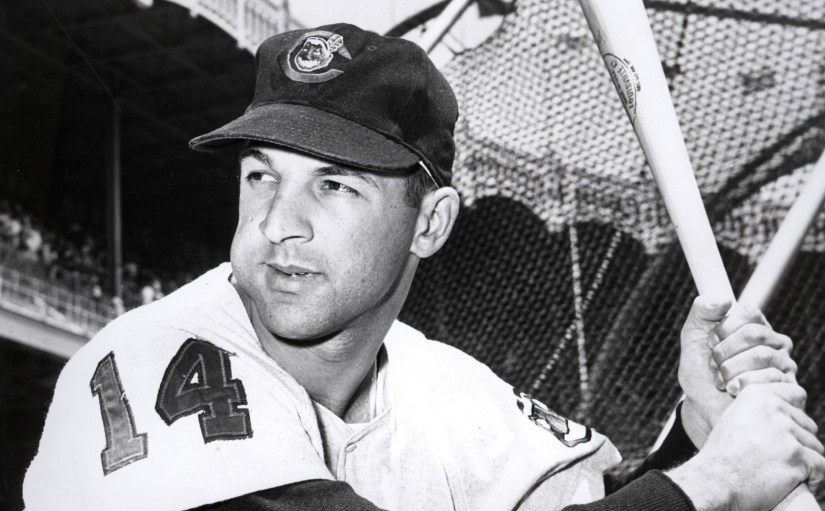
 Alan E. Hunter