Indianapolis, Medicine, Politics

First Lady Caroline Harrison. Death in the White House.

death-at-white-house

Original publish date: October 20, 2013

121 years ago this Friday, America lost it’s first lady, Benjamin Harrison lost a wife and two weeks later, he lost the Presidential election. Caroline Scott and Benjamin Harrison were married on October 20, 1853. The newlyweds lived at the Harrison family home at North Bend, Ohio for the first year until Benjamin completed his law studies and they moved to Indianapolis and set up his first practice.
During the first few years of their marriage, the couple rarely spent time together, as Benjamin worked to establish his law practice and became active in fraternal organizations to help build a network. In 1854, their first child Russell Benjamin Harrison was born. Not long after, a fire destroyed the Harrison home and all their belongings. Benjamin took a job handling cases for a local law firm and the family managed to recover financially. In 1858, Caroline gave birth to Mary Scott Harrison. In 1861 she gave birth to a second daughter, who died soon after birth.
While Benjamin Harrison’s star rose rapidly in his profession, Caroline cared for their children and was active in the First Presbyterian Church and Indianapolis orphans’ home. Benjamin’s long hours at the law office and his pursuit of a living drove a wedge between the young couple and although Caroline did not complain, the strain showed.
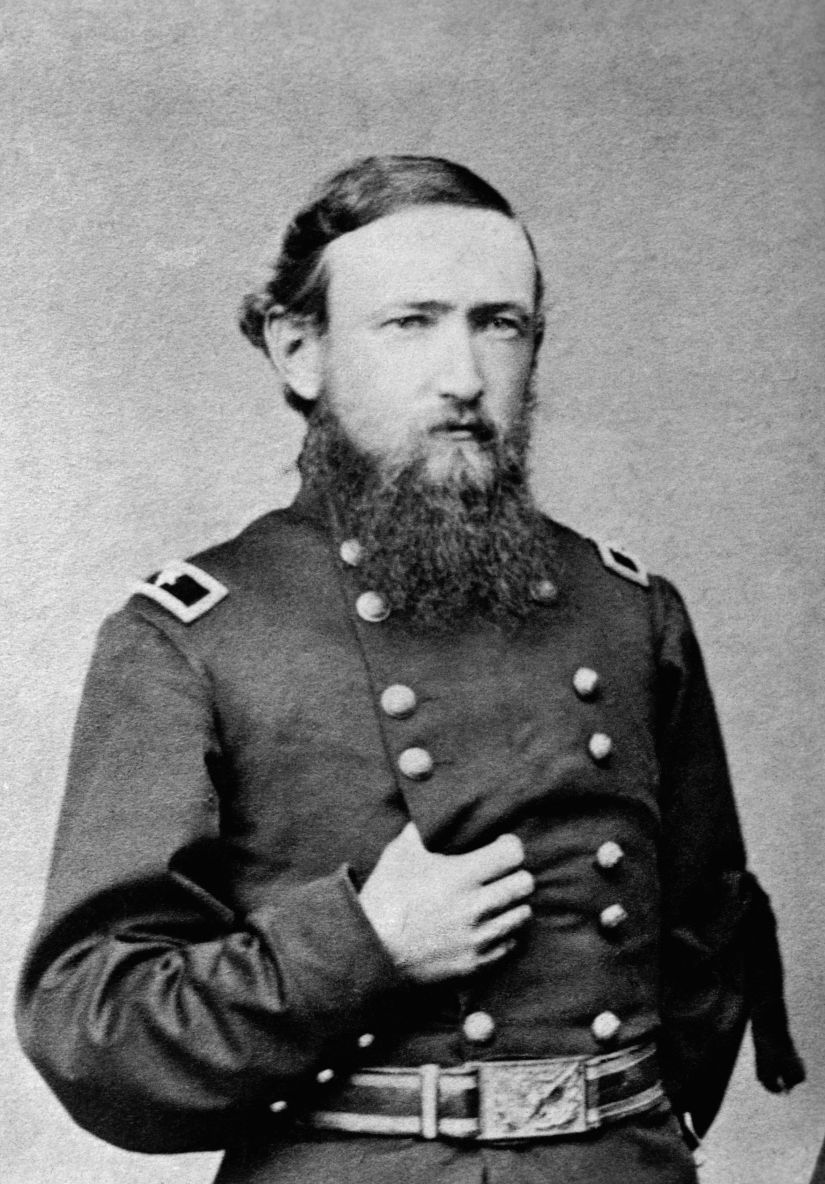
At the onset of the Civil War, both Harrison’s sought to help in the war effort. Caroline joined Indianapolis groups that raised money for supplies to help care for wounded soldiers. In 1862, when President Abraham Lincoln issued a call for more troops, Benjamin recruited a regiment of over 1,000 men from Indiana. When the regiment left to join the Union Army at Louisville, Kentucky, Harrison was promoted to the rank of colonel, and his regiment was commissioned as the 70th Indiana Infantry.
z 28bacc9d683dd37788f44fa81f0a0736
Brigadier General Benjamin Harrison of the XX Corps, 1865

In May 1864, the 70th Indiana regiment joined General William Tecumseh Sherman’s Atlanta Campaign and moved to the front lines, and Harrison was promoted to command the 1st Brigade of the 1st Division of the XX Corps. Harrison’s brigade participated in the brutal Battle of Nashville in December 1864, considered by historians to be the “Gettysburg of the West”. On March 22, 1865, Harrison earned a promotion to the rank of brigadier general.
The horrors of the Civil War taught General Harrison what was really important in his life and the tone of his letters to Caroline during the war are filled with a deep passionate tone. When he returned home, she would never again reproach him for neglect. His law practice and his fame grew, and he became a political force.
After the war, Benjamin Harrison spent the next decade practicing law and getting involved in politics. He ran for governor of Indiana in 1876, but lost. The Harrison home on North Delaware Street was built in 1874-75, and soon became a center of political activity. Her husband’s election to the Senate in 1880 brought Caroline to Washington, DC, but a serious fall on an icy sidewalk that year undermined her health. In 1883, she had surgery in New York that required a lengthy period of recovery. She had also suffered from respiratory problems since a bout with pneumonia in her youth, and did not participate much in Washington’s winter social season.
In the fall of 1887 Harrison was nominated for President by the Republican Party. In the campaign, Caroline was a definite asset. Her natural charm and open manner offset her husband’s chilly reserve (He often wore gloves to protect him from infection from others, and it bothered him to shake the hands of White House visitors), and the press loved her. In November 1888, Harrison defeated the incumbent Grover Cleveland.

z 2e02ea2673a0692697075334113fab93
First Lady Caroline Harrison.

Caroline Harrison was 56 years old when she became first lady. Historians regard her as one of our most underrated First Ladies who, in contrast to her husband’s conservative policies, was earnestly devoted to women’s rights. She became known for her many “firsts” as First Lady. Caroline was the first first lady to deliver a speech she had written herself after she became the first president of the Daughters of the American Revolution.
Caroline’s sister died in early December 1889 at the executive mansion and Mrs. Harrison decided to have the funeral in the east room of the White House. It would be the first funeral in that room since Abraham Lincoln in 1865. In spite of the family tragedy, Caroline went ahead with her plans to raise the first Christmas tree in the White House that same month. She had John Phillip Sousa and the Marine Band play and, for the first time since Sarah Polk was First Lady, there was dancing in the White House.
Perhaps her biggest first came when she had electricity installed in the White House, even though she was terrified by the new technology. Seems that President Benjamin Harrison received a shock from an Edison dc current light switch, after which his family feared touching the switches. Mrs Harrison rarely operated the light switches herself, choosing instead to sleep with the lights on when neither she nor her husband were willing to touch them for fear of electrocution. Servants were often made to turn the lights on and off for the Harrison family.
The First Lady was noted for her elegant White House receptions and dinners, but she is most remembered for her efforts to refurbish the dilapidated White House. She was horrified at the filth and clutter and thought the White House was beneath the dignity of the Presidency, describing it as “rat-infested and filthy.” She brought in ferrets to eat the rats, and lobbied to have the White House torn down and replaced with a more regal Executive Mansion. Instead the old building was refurbished from basement to attic, including a new heating system and a second bathroom. The old, sagging worn-out floors were replaced.
She hated the crowded living area and the tourists made it impossible to use the first floor. In 1889 Caroline Harrison found fault with the “circus atmosphere” in the mansion when she found visitors wandering uninvited into the family quarters. Harrison complained about the lack of privacy on the White House grounds, saying, “The White House is an office and a home combined. An evil combination.” She was the first to suggest the addition of office space to the Executive Mansion when she made up very detailed plans to add an East and a West Wing so that the original mansion could be used for entertaining and the family’s living area. Caroline Harrison’s plan was the first to move the office spaces out of the house.
As she worked to remodel the White House, Caroline was careful to inventory the contents of every room. She cataloged the mansion’s furniture, pictures and decorative objects, working to preserve those that had historical value. Caroline unearthed the chinaware of former presidential administrations found hidden away in closets and unused attic and basement spaces. She personally cleaned, repaired and identified which pieces belonged to which past President. She used their items to create a popular museum display case that remains in the White House to this day.
Artistically talented, Caroline taught classes in painting to anyone who wanted to learn and became the first First Lady to design her own White House china. She wanted new china that would be “symbolic and meaningful to Americans.” The first lady placed the Coat of Arms of the United States in the center ringed by a goldenrod and corn motif etched in gold around a wide outer band of blue. The corn represents Mrs. Harrison’s home state of Indiana and 44 stars, one for each state in the Union at the time, made up the inner border.
In the winter of 1891-1892 while she tried to fulfill her social obligations, Mrs.Harrison was frequently ill with bouts of bronchial infections. In March of 1892 she developed catarrhal pneumonia, followed by hemorrhaging of the lungs and was moved to a three-bedroom cottage on Loon Lake in the Adirondack Mountains in July. Following a brief rally, her doctors diagnosed her condition as tuberculosis, which at the time had no known cure or treatment other than rest and good nutrition. Although she briefly recovered at the mountain retreat, she suffered a setback in September and asked to be returned to the White House.

z ih156311_1024x1024
The Death of First Lady Caroline Harrison in the White House.

On September 20, she returned to her favorite pale green and silver bedroom in the White House. It was sometimes used as a music room, furnished in pale green plush. One account states that Mrs. Harrison’s bedroom was: “Daintily appointed in pale green and silver, it stands just as Mrs. Harrison left it, and like the rest of the beautified White House, is a memorial to her refined and artistic taste.” Caroline must have been fond of the pale green palate as many of the multi-colored fabric pieces are done in green tones.
Caroline did not live to see her husband’s defeat for a second term as President. On October 25, 1892, Caroline died at the age of sixty of Typhoid fever. It was an election year, and out of respect for the president’s lady, after her death neither Harrison nor Cleveland actively campaigned for the presidency. Two weeks following her death, Harrison lost his bid for reelection. Daughter Mary Harrison McKee was already living at the White House with her family, and she took up the responsibilities of first lady for the last few months of Harrison’s term.
After private services were held in the East Room, the family brought her back to Indianapolis for interment. An official funeral service was held at the First Presbyterian Church. After the service, the cortege proceeded past the Harrison’s Delaware Street home before going on to Crown Hill Cemetery for burial.
Caroline Harrison’s legacy has proved to be historically important. The current architectural plan of the White House, in particular the East and West Wing, reflects the plan suggested by her in 1889, and the White House china room is certainly a testament to her historical sensitivity in rescuing, repairing and identifying artifacts from previous administrations. Caroline Harrison was not able to use the china she had ordered. She died before it was delivered. It arrived at the White House in December of 1892.


z 1200px-Benjamin_Harrison_Home
Benjamin Harrison home at 1230 North Delaware Street in Indianapolis.

You can honor Caroline Harrison’s memory with a visit to the Benjamin Harrison Presidential Site at 1230 North Delaware Street. The home offers tours daily. Another option, perhaps more consistent with the season, would be to visit her final resting place at Crown Hill Cemetery at 3402 Boulevard Place. Tour Guide and historian Tom Davis will be reprising his popular “Skeletons in the closet” tours (there are 2 different) on October 24, 25, 26 and November 2. Check their web site for specifics. Although I don’t think Caroline’s gravesite is particularly featured on Tom’s tours, I’m pretty sure he’ll take you there if you were to ask him. After all, Tom knows where all the bodies are buried.

z harrisoncarolin2
Benjamin Harrison Grave in Crown Hill Cemetery.
z harrisoncarolin
Caroline Harrison Grave in Crown Hill Cemetery.
Creepy history, Health & Medicine, Pop Culture

Raggedy Ann and the Anti-Vaxxers.

raggedy syringe

Original Publish date: August 16, 2015

The Tribeca Film Festival in New York City opens this weekend. Recently, news that Robert De Niro, co-founder of the festival, announced he was pulling an anti-vaxxer film came as a shocker to the medical and science community as much as it did for fans of the festival. The documentary, titled Vaxxed: From Cover-Up to Conspiracy, is directed by British gastroenterologist Andrew Wakefield, who published a study in 1998 linking the MMR (measles, mumps, rubella) vaccine to autism.
De Niro, who himself has a child with autism, first zealously defended the choice of the film for the festival. The decision to pull the film has restarted the anti-vaxxer movement in a big way. What does anti-vaxxer mean, you ask? Strictly defined, an Anti-vaxxer is any person who is opposed to vaccination, typically a parent who does not wish to vaccinate their child. Some believe, myself included, that the anti-vaxxer argument started right here in Irvington. And what’s more, that the first symbol for the anti-vaxxer movement is a beloved little doll that is as American as apple-pie: Raggedy Ann.

raggedy-3-johnny-gruelle
Johnny Gruelle.

Everyone is familiar with the cute little rag doll known as Raggedy Ann but most don’t know the real story about her creator or his inspiration. John Barton Gruelle was born on Christmas eve 1880 in Arcola, Illinois. A the age of two, he moved with his family to Indianapolis, where his painter father, Richard Gruelle, became associated with the Hoosier Group of painters, many of whom lived in Irvington. Undoubtedly, the elder Gruelle introduced his son Johnny to Irvington at an early age and he never forgot it.
Johnny married Myrtle J. Swann on March 23, 1901 and a little over a year later, 18-year-old Myrtle gave birth to a daughter, Marcella Delight Gruelle on August 18, 1902. Gruelle was working as an illustrator for the Indianapolis People newspaper and would soon leave to join the Indianapolis News. Around 1903, the couple had saved up enough money to buy a lot at 5630 Lowell Ave (early records show the address variously as “5606” and “5696”). The family would eventually build a 3-story home on the lot.
Johnny spent long hours at the drawing board, hurrying home each night to play with baby Marcella, whom he called Muggins. Popular legend claims that Raggedy Ann was born in suburban Indianapolis (Irvington perhaps?) when Marcella brought from her grandmother’s attic a long forgotten faceless rag doll upon which her father drew a face. The myth further states that Gruelle suggested that Marcella’s grandmother sew a shoe button for a missing eye. He then suggested naming the doll Raggedy Ann by combing the names of two James Whitcomb Riley poems, “The Raggedy Man” and “Little Orphant Annie”. The legend is further bolstered by the the knowledge that Poet Riley had been a close friend of the Gruelle family.

z 32775c7e76fdccbd4ddf7ae25c360455
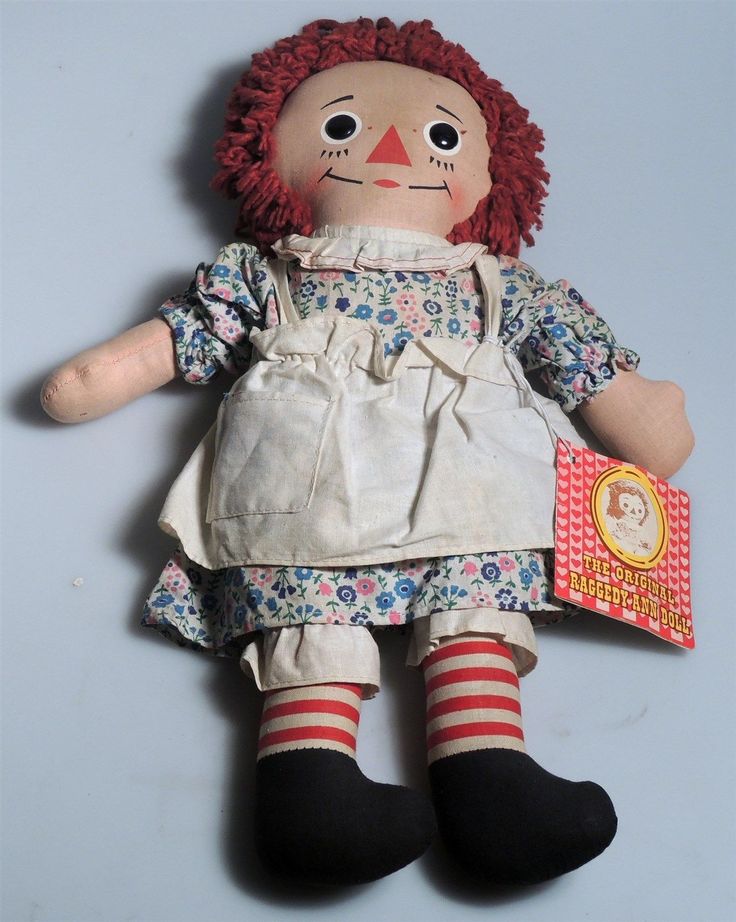
The Original Raggedy Ann Doll from 1915.

Separating fact from fiction when it comes to Raggedy Ann is made all the more difficult because Gruelle was a prankster with a puckish sense of humor who was known for initiating many of these legends himself. What is known for sure is that Johnny Gruelle received US Patent D47789 for his Raggedy Ann doll on September 7, 1915. The character was introduced to the public in the 1918 book Raggedy Ann Stories based on tales that Gruelle drew from playtime episodes and stories shared with daughter Marcella. By this time, Gruelle had left Indianapolis for good and his beloved daughter Marcella was not there to share the stories she had inspired.
The year is 1915. America is marching towards World War I and smallpox is hot on its heels. Mass inoculation was the public response. It seemed that the easiest solution to the epidemic was to inoculate all public school children against the dreaded disease. Perhaps unbelievably nowadays, obtaining consent from the parents prior to inoculation was not necessary back then. Children were routinely inoculated at school, sometimes several times for the same disease without parents even knowing it.

z s4f
Marcella Gruelle and Raggedy Ann.

Marcella Gruelle was one of those young schoolchildren receiving a hypodermic smallpox inoculation at school. Almost immediately, she loses her appetite, becomes feverish and fatigued. Instead of notifying her parents, the school nurse administers another round of shots to little Miss Gruelle. Marcella’s health continues to decline and she quickly becomes bedridden. She loses her muscle control, “becoming listless and lifeless like a rag doll.”
Marcella dies a slow and painful death, every moment of which witnessed by her loving parents. After her death in November of 1915, seven leading physicians were called upon to opine about the cause of her death. Six of them determined that death was caused as the result of vaccine induced poisoning and call it malpractice. The seventh, being the head of the school board and a supporter of vaccination, declined to comment.
In spite of this, Marcella’s death certificate cited vascular heart disease of several years duration as the cause of death. The secondary (or contributory) cause was listed as oedema with a duration of about 90 days. Oedema is defined as a condition characterized by an excess of watery fluid collecting in the cavities or tissues of the body. Nowhere on the certificate was a vaccination, or infected vaccination for that matter, listed as a cause of death. For the rest of their lives, Myrtle and Johnny Gruelle staunchly maintained that either a bad vaccination or a dirty needle had killed their daughter.

z fc64f059f1c575fd6098a199972dece2
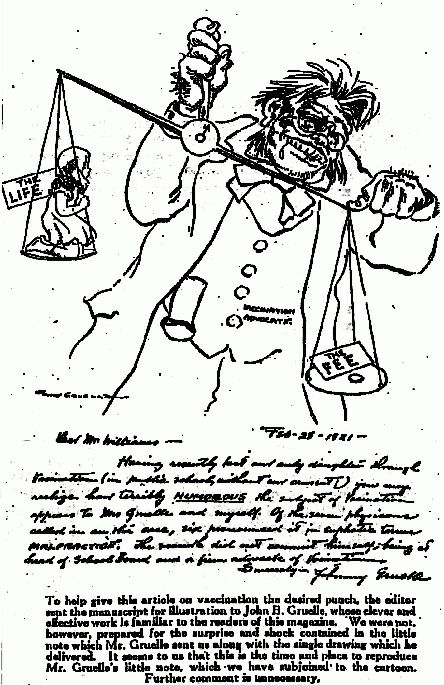
Johnny Gruelle’s original Anti-Vaxxer letter and sketch from 1921.

Not long after his daughter’s death, the still grieving Gruelle was commissioned to create an illustration for an article in Physical Culture magazine titled “Vaccines Killed My Two Sisters.” The cartoon is a clever and effective work, reflective of Johnny’s style which is familiar to the readers of the magazine. Mr. Gruelle enclosed the following handwritten note along with his submitted illustration: “Feb. 28, 1921. Dear Mrs. Williams, Having recently lost our only daughter through Vaccination (in public school, without our consent) you may realize how terribly HUMOROUS the subject of vaccination appears to Mrs. Gruelle and myself. Of the seven physicians called in on the case, six pronounced it in emphatic terms MALPRACTICE. The seventh did not commit himself, being the head of the school board and a firm advocate of vaccination. Sincerely, Johnny Gruelle.”
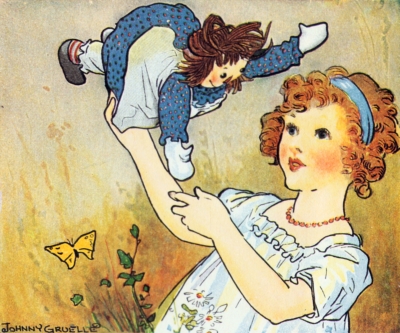
The tragic vaccine-induced death of Marcella propelled Johnny to become a staunch member of the anti-vaccination movement of the time. Shortly after Marcella’s death, Johnny puts the finishing touches on a doll much different than the more popular, rigid, ceramic and composite dolls of the time. Rather than create a rigid doll that stands up straight with a healthy and happy glow, in a fitting tribute to his only daughter, he designs a soft cloth rag doll to represent her limp and dying body. Raggedy Ann is a stark contrast to the Era’s Kewpie doll’s erect posture and healthy demeanor.

z raggedy-ann
Modern day Raggedy Ann doll.

In 1920, Chicago department store giant, Marshall Field, markets the Raggedy Ann doll. It becomes an instant best seller and customers have no clue about the tragic inspiration behind it. To generations of consumers, Raggedy Ann is their colorful little friend with a candy heart. To the anti-vaxxers, Raggedy Ann symbolizes a century of childhood vaccine injuries and deaths.

ABA-American Basketball Association, Indianapolis

Richard P. Tinkham’s ABA Indiana Pacers. PART II

ABA Irvington-9958
Richard P. Tinkham, Robin Miller & Bob Netolicky.

Original Publish Date: March 26, 2018

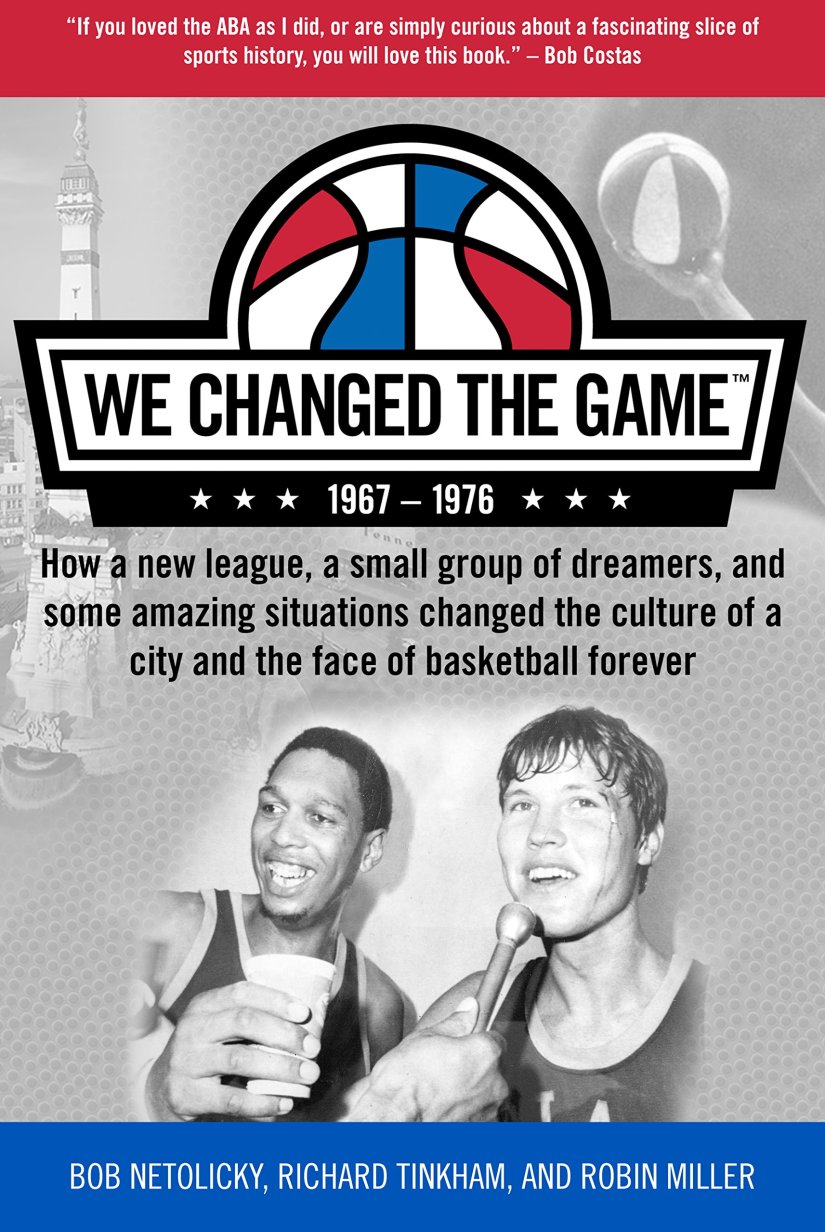
Richard P. Tinkham Jr., who visited the Irving Theatre in Irvington last Sunday, is one of the true pioneers of the American Basketball Association, which celebrates its 50th anniversary this year. Mr. Tinkham was in the Irv, along with co-authors Bob Netolicky & Robin Miller, to sign copies of their new book, “We changed the game.” Mr. Tinkham, co-founder of the ABA and the Indiana Pacers franchise, knows all of the league’s secrets. He was instrumental in the creation of Market Square Arena and co-chaired the ABA merger committee that sent four ABA teams into the NBA and helped lead the ABA/NBA consolidation. As detailed in part one of this series, that road to merger was a long journey. Dick Tinkham was there for every step.

oscar
Oscar Robertson- The Big O.

Indianapolis native Oscar Robertson delayed the first merger attempt in 1971 with a court case and subsequent injunction that ultimately doomed the league. Before the 1975–76 season, the Denver Nuggets and New York Nets tried to defect from the ABA to join the NBA. The owners of the Nets and Nuggets had approached John Y. Brown, Jr. (Kentucky Fried Chicken magnate and future Governor of the Blue Grass State) in an attempt to get his Kentucky Colonels to join their attempted defection. Brown refused, saying he would remain loyal to the ABA.
Instead, the two teams were forced by judicial order to play a lame-duck season in the ABA. Ironically, the two would be defector teams had the last laugh as they would end up playing for the championship that final season (The Nets beat the Nuggets 4 games to 2).
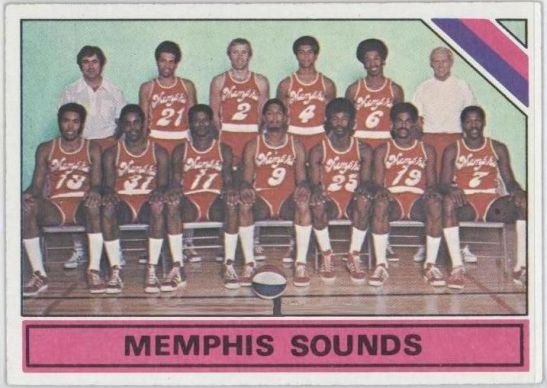
This attempted defection exposed the emerging financial weakness of the league’s lesser teams. Soon, the ABA began it’s death throe. Perhaps the best illustration of league instability can be found in the New Orleans / Memphis franchise. The New Orleans Buccaneers were among the original 11 teams. In 1972 the Bucs moved to Memphis and began a 5 year identity crisis. The team left New Orleans and became the Pros, then the Tams and finally the Sounds. That last Memphis team looked an awful lot like the Indiana Pacers.

z sounds2
Mike Storen’s team with former Indiana Pacers Rick Mount, Freddie Lewis, Mel Daniels & Roger Brown.

The team was led by Mike Storen, former vice president and general manager of the Indiana Pacers. Storen stacked the Sounds with former Indiana players Mel Daniels, Freddie Lewis, Roger Brown and Rick Mount along with Hoosier hot shot Billy Shepherd. Prior to the start of the 1975-76 season, the Sounds moved to Baltimore, Maryland. The team was initially named the Baltimore Hustlers, but public pressure forced them to rename it the Claws. The Claws folded in October of 1975 during the preseason after playing just three exhibition games. Mel Daniels, disappointed at the Claws’ demise, retired rather than play for another team. Later Daniels recalled that the Claws’ players were encouraged to take equipment and furniture from the team office in lieu of payment.
Not long after the Claws folded, the San Diego Sails followed suit. The Sails (formerly the Conquistadors) were the ABA’s first and only expansion team. While the departure of those two teams may not have been a surprise, when the Utah Stars, one of the ABA’s most successful teams, folded, the league dropped from 10 teams to 7. The Virginia Squires folded in May following the end of the season.
That left six teams standing: the Kentucky Colonels, Denver Nuggets, Indiana Pacers, New York Nets, Spirits of St. Louis and San Antonio Spurs. With settlement of the Oscar Robertson suit on February 3, 1976, the final merger negotiations began. Dick Tinkham says “Calling it a merger is a misnomer, the NBA said it was an expansion draft, but in truth, it was a massacre.” During the June 1976 negotiations, the NBA made it clear that it would accept only four ABA teams, not five. In addition “The NBA required that the remaining four ABA teams pay a $ 3.2 million expansion fee by September 15, 1976,” states Tinkham.

z brown
ABA Kentucky Colonels owner (& future Governor) John Y. Brown,

On June 17, 1976, Kentucky owner John Y. Brown folded the Colonels for a $3 million payment from the remaining teams. In addition to the $3 million he received for agreeing to stay out of the merger, Brown also sold Gilmore’s rights to the Bulls for $1.1 million. Additionally, the Portland Trail Blazers took Maurice Lucas for $300,000, the Buffalo Braves took Bird Averitt for $125,000, the Pacers took Wil Jones for $50,000, the Nets took Jan van Breda Kolff for $60,000, and the Spurs took Louie Dampier for $20,000. Ironically, with all of those funds, Brown bought the NBA’s Buffalo Braves for $1.5 million, and later parlayed the Braves into ownership of the Boston Celtics.
Lawyer Tinkham points out that although Brown came out smelling like a rose when the ABA folded, it was the owners of the Spirits of St. Louis who struck the best deal with the use of one obscure Latin term inserted at the tail end of their “merger” deal. “As part of the deal, none of the four teams would receive any television money during the first three seasons, on top of having to pay one -seventh of their annual television revenues of the defunct Spirits team in perpetuity.” That term, “In Perpetuity”, would prove most advantageous in the years to come.
z merge

The 1976 ABA-NBA “merger” saw the Denver Nuggets, Indiana Pacers, New York Nets, and San Antonio Spurs join the NBA. The deal was finally consummated on June 17, 1976, at the NBA league meetings in the Cape Cod Room at Dunfey’s Hyannis Resort in Hyannis, Massachusetts.
Perhaps fittingly, brothers Ozzie and Daniel Silna made their fortune as pioneers in the manufacture of polyester, the fabric that defined the 1970s. After failing to buy the Detroit Pistons, an NBA franchise that began life in Ft. Wayne, the Silnas’ purchased the ABA’s Carolina Cougars. The Cougars began life as the Houston Mavericks in 1967. Just as future North Carolina Lieutenant Governor Jim Gardner had bought the Mavericks and moved them to North Carolina in 1969, the Silna brothers bought the Cougars with the expectation of moving it to St. Louis. In 1974, St. Louis, Missouri was the largest city in the United States without a professional basketball team.
The 1975–76 Spirits season had not gone well in either attendance or wins. In May 1976, due to attendance problems, the Spirits announced that they were going to merge with the Utah Stars. But the Stars folded before the merger could occur and instead, the Spirits wound up with some of Utah’s best players. Then in an effort to be included in the ABA–NBA merger, the Silna brothers proposed selling the Spirits to a Utah group, buying the Kentucky Colonels franchise, and moving them to Buffalo to replace the Buffalo Braves. Seems that the Silna brothers were always looking towards a future in the NBA. That deal didn’t happen either.
The merger included the Spirits of St. Louis players being put into a special dispersal draft. Marvin Barnes went to the Detroit Pistons for $500,000, Moses Malone went to the Portland Trail Blazers for $300,000, Ron Boone went to the Kansas City Kings for $250,000, Randy Denton went to the New York Knicks for $50,000 and Mike Barr went to the Kansas City Kings for $15,000. It must be noted that, in all, twelve players from the final two Spirits of St. Louis rosters (1974–76) played in the NBA during the 1976–77 season and beyond: Maurice Lucas, Ron Boone, Marvin Barnes, Caldwell Jones, Lonnie Shelton, Steve Green, Gus Gerard, Moses Malone, Don Adams, Don Chaney, M. L. Carr and Freddie Lewis.
z spirits-of-st-louis-aba-logo

But that wasn’t the end of the line for the Silna boys. Together, they managed to turn the ABA-NBA merger into one of the greatest deals in the history of professional sports. First, the remaining ABA owners agreed, in return for the Spirits folding, to pay the Silnas’ $2.2 million in cash and that 1/7 share of television revenues in perpetuity. As the NBA’s popularity exploded in the 1980s and 1990s, the league’s television rights were sold to CBS and then NBC, and additional deals were struck with the TNT and TBS cable networks; league television revenue soared into the hundreds of millions of dollars. The Silnas’ continue to receive checks from the NBA on a yearly basis, representing a 4/7 share of the television money that would normally go to any NBA franchise, or about two percent of the entire league’s TV deal.
That deal turned into at least $4.4 million per year through the 1990s. From 1999 through 2002 the deal netted the Silnas’ another $12.50 million per year; from 2003 to 2006 their take was at least $15.6 million per year.The two Silna brothers each get 45% of that television revenue per year and their merger, Donald Schupak, receives the orher 10%. As of 2013, the Silna brothers have received over $300 million in NBA revenue, despite the fact that the Spirits never played a single NBA game.
In 2012, the Silna brothers sued the NBA for “hundreds of millions of dollars more” they felt were owed them for NBA League Pass subscriptions and streaming video revenues that claimed was an extension of television revenues. In January 2014, a conditional settlement agreement between the NBA, the four active former-ABA clubs and the Silnas was announced and the Silnas’ received an estimated $500 million more from the former ABA teams. Ozzie Silna passed in 2014 at the age of 83. Daniel Silva is a successful philanthropist living in New Jersey.
In the first NBA All Star Game after the merger, 10 of the 24 NBA All Stars were former ABA players, five (Julius Erving, Caldwell Jones, George McGinnis, Dave Twardzik and Maurice Lucas) were starters. Of the 84 players in the ABA at the time of the merger, 63 played in the NBA during the 1976–77 season. Additionally, four of the NBA’s top ten scorers were former ABA players (Billy Knight, David Thompson, Dan Issel and George Gervin). The Pacers’ Don Buse led the NBA in both steals and assists during that first post-merger season. The Spirits of St. Louis’ Moses Malone finished third in rebounding, Kentucky Colonels’ Artis Gilmore was fourth. Gilmore and his former Colonels teammate Caldwell Jones were both among the top five in the NBA in blocked shots. Tom Nissalke left the ABA to coach the NBA’s Houston Rockets in the first post-merger season and was named NBA Coach of the Year. Yes, the ABA left its mark on the NBA instantly.
And where was Richard P. Tinkham, the man right in the middle of all of those previous league negotiations when the merger news was announced? “I was driving home from the airport when I heard the news on the radio,” he says, “It was great news, but people have no idea what it took to pull it off.”
ABA 50th_BLF[2]On Saturday, April 7th, Indianapolis will host the 50th reunion celebration of the ABA with an evening banquet at Banker’s Life Fieldhouse and a special daytime public event at Hinkle Fieldhouse from 11:00 to 3:00. The public is invited to attend this once in a lifetime event that will include a special ABA 50th anniversary ring presentation for all the players followed by a Guinness World Book of Records attempt to set the mark for most pro athletes signing autographs in a single session.
Special guest ring presenters for this charity event include Mayor Joe Hogsett, Senator Joe Donnelly, Congresswoman Susan Brooks, City Councillors Mike McQuillen and Vop Osili, WISH-TV personality Dick Wolfsie and Rupert from Survivor. It promises to be a very special event. Dick Tinkham will be there too, watching over his players as they gather for one last collective hurah. Oh, and the man paying for those player rings? None other than Spirits of St.Louis owner Dan Silva. Paying it forward, “In Perpetuity”.

Ron Sanders group photo
Mayor Joe Hogsett, Dick Wolfsie, City Councilman Michael McQuillen, Senator Joe Donnelly, City Councilman  Vop Osili, Dr. John Abrams, Scott Tarter, Rupert Boneham, Ted Green & Congresswoman Susan Brooks.
Photo by Ron Sanders.
ABA-American Basketball Association, Indianapolis

Richard P. Tinkham’s ABA Indiana Pacers. PART I

Dick Tinkham Part I photo
Alan E. Hunter & ABA Indiana Pacers legend Richard P. Tinkham.

Original Publish date: March 19, 2018

This past weekend the Irving Theatre played host to a book signing. Bob Netolicky, Robin Miller and Richard P. Tinkham visited the Irv for the official release party of their new book “We changed the game.” The book tells the story of the Indiana Pacers and the ABA from the very beginning by the men who lived it. Netolicky and Miller shared funny stories about the league that kept the crowd of 150 guests in stitches for the duration. However, even though he spoke in measured tones, sometimes barely above a whisper, it was Mr. Tinkham who kept the crowd on the edge of their seats.
z 914lSM8JoKLDick Tinkham is the Rosetta Stone of the American Basketball Association. He was there during the embryonic stages of the league forward. Dick explained how the ABA was originally designed to be a six-foot or under player league…gasp! He revealed how the Pacers team almost folded at the close of the 1968-69 season…gulp! And he continued with tales of crucial deals made in airports, hotel rooms, restaurants and bars…wheeze! Yes, Dick Tinkham knows where all the bodies are buried.
Mr. Tinkham talked about early attempts by the ABA to lure Indianapolis native and hall of famer Oscar Robertson away from the NBA Cincinnati Royals. In 1967, Tinkham had hopes that Robertson might jump to the upstart Pacers. Robin Miller pointed out that Oscar had a $100,00 guaranteed contract and that “the Big O wasn’t going anywhere”. Mr. Tinkham then disclosed that it was Robertson who advocated that the Pacers travel to Dayton Ohio and check out a young man named Roger Brown. That signing changed the face of this city and arguably, saved the ABA. Ironically a few shot years later, Oscar Robertson would pop up again, this time as the foil for the ABA.
In June of 1971, only three years after the ABA began play, NBA owners voted 13–4 to work toward joining both leagues. A merger between the NBA and ABA appeared imminent and Dick Tinkham was right in the middle of it. After the 1970–71 season, Basketball Weekly reported: “The American basketball public is clamoring for a merger. So are the NBA and ABA owners, the two commissioners and every college coach. The war is over. The Armistice will be signed soon.” During this short-lived courtship, the two leagues agreed to play pre-season interleague exhibition games for the first time ever.
At last Saturday’s event in the Irving theatre, Dick Tinkham detailed how he met privately with Seattle SuperSonics owner Sam Schulman, a member of the ABA–NBA merger committee in 1971 to work out details for the merger. Schulman asked Tinkham how much it was going to take to get each ABA team (there were 11 at the time) to move into the NBA. Tinkham revealed to the gathered crowd that this was a question he had not anticipated and was totally unprepared to answer. Dick, thinking fast on his feet, replied that it would take $ 1 million for each team. Schulman agreed and phoned NBA Commissioner J. Walter Kennedy to announce that an agreement had been reached for a merger.

z 10aaf9897fcf9141cfc56787e4644a74
Seattle Supersonics owner San Schulman with ABA standout Spencer Haywood.

Schulman told the commissioner that he was so adamant about the merger that if the NBA did not accept the agreement, he would move the SuperSonics from the NBA to the ABA. Not only that, but Schulman threatened to move his soon-to-be ABA team to Los Angeles to compete directly with the Lakers. The owners of the Dallas Chaparrals (now the NBA’s San Antonio Spurs) were so confident of the impending merger that they suggested that the ABA hold off on scheduling and playing a regular season schedule for the 1971–72 season.

z 71champs-1100
1971-72 NBA Milwaukee Bucks.

The first NBA vs. ABA exhibition game was played on September 21, 1971 at Moody Coliseum in Dallas, Texas. The first half was played by NBA rules and the second half by ABA rules, including the red, white and blue basketball and 3-point shot. Kareem Abdul-Jabbar’s NBA Milwaukee Bucks barely squeaked past John Beasley’s ABA Dallas Chaparrals, 106-103.
Down 12 points with 10 minutes to go, Chaps Gene Phillips hit six straight shots in fourth quarter to rally his team. The Chaps went ahead 103-102 with 24 seconds remaining on a pair of free throws from guard Donnie Freeman. With the Chap’s defense collapsing on Jabbar, McCoy McLemore hit a 15-foot jumper with 11 seconds left to give the Bucks a 104-103 lead. The Chaps’ Steve “Snapper” Jones missed a 10-foot baseline jumper with five seconds on the clock. Bucks Lucius Allen made two free throws for the final score. Bucks’ stars Oscar Robertson and Bob Dandridge missed the game. Dandridge was appearing in a Willamsburg Virginia court settling a traffic ticket and Oscar Robertson was in Washington D.C. fighting the merger.

z Chaps 71-72 Home Team
1971-72 ABA Dallas Chaparrals.

Officially, the litigation was known as “Robertson v. National Basketball Association, 556 F.2d 682 (2d Cir. 1977)”, but it became forever known as the Oscar Robertson suit. Robertson, as president of the NBA Players Association, filed a lawsuit in April of 1970 to prevent the merger on antitrust grounds. Robertson, still smarting from his unexpected trade by his college hometown Cincinnati Royals to the Milwaukee Bucks, sought to block any merger of the NBA with the American Basketball Association, to end the option clause that bound a player to a single NBA team in perpetuity, to end the NBA’s college draft binding a player to one team, and to end restrictions on free agent signings. The suit also sought damages for NBA players for past harm caused by the option clause. The court issued an injunction against any merger thus delaying the ABA-NBA merger.
Robertson himself stated that his main gripe was that clubs basically owned their players: players were forbidden to talk to other clubs once their contract was up, because free agency did not exist back then. In 1972, the U.S. Congress came close to enacting legislation to enable a merger despite the Oscar Robertson suit. In September 1972, a merger bill was reported favorably out of a U.S. Senate committee, but the bill was put together to please the owners, and ended up not pleasing the Senators or the players. The bill subsequently died without coming to a floor vote. When Congress reconvened in 1973, another merger bill was presented to the Senate, but never advanced.
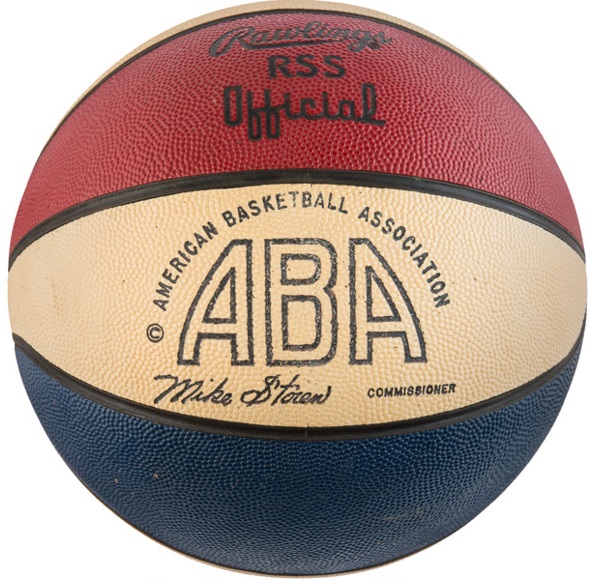
lfMeantime, the ABA-NBA exhibition games continued. In these ABA vs. NBA exhibition games, the ABA’s RWB ball was used for one half, and the NBA’s traditional brown ball was used in the other half, the ABA’s three-point shot (and 30 second shot clock) was used for one half only, in some games, the ABA’s no-foul out rule was in effect for the entire game and the league hosting the game provided its own referees. NBA refs wore the traditional B&W “zebra” shirts while ABA refs wore shorts matching the ball: red, white & blue. Most of the interleague games were played in ABA arenas because the NBA did not want to showcase (and legitimize) the ABA in front of NBA fans. On the flip side, ABA cities were eager to host NBA teams because they attracted extra fans, made more money, and proved both leagues could compete against each other. Results from those first few years were not highly publicized by either league.
Although they didn’t count for anything except pride, ABA / NBA exhibition games were always intense due to the bad blood between the leagues. During these ultra-competitive games players (including future Hall of Famers Rick Barry and Charlie Scott who played for teams in both leagues) were thrown out with multiple technical fouls. Likewise, Hall of Fame coaches like Larry Brown and Slick Leonard (who coached in both leagues) often ended up listening to interleague games in the locker room after being ejected.
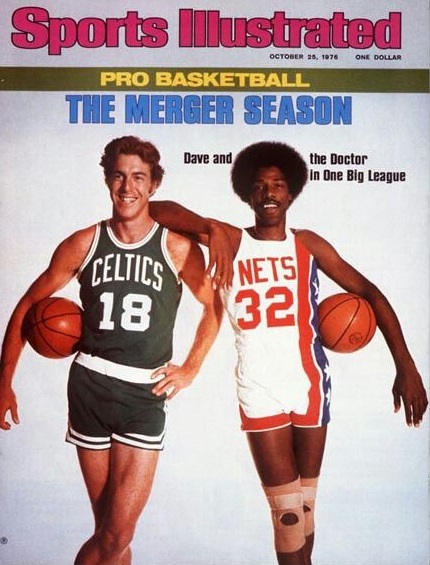
After the 1974-75 regular season, the ABA Champion Kentucky Colonels formally challenged the NBA Champion Golden State Warriors to a “World Series of Basketball,” with a winner-take-all $1 Million purse (collected from anticipated TV revenues). The NBA and the Warriors refused the challenge. Again, after the 1975-76 season, the ABA Champion New York Nets offered to play the NBA Champion Boston Celtics in the same fashion, with the proceeds going to benefit the 1976 United States Olympic team. Predictably, the Celtics declined to participate.
In the later years of the rivalry, buoyed by younger players, better talent and the home court advantage, ABA teams began winning most of the games. Over the last three seasons of the rivalry, the ABA steadily pulled ahead: 15-10 (in 1973), 16-7 (in 1974), and 31-17 (in 1975). The ABA won the overall interleague rivalry, 79 games to 76 and in every matchup of reigning champions from the two leagues, the ABA champion won, including in the final pre-merger season when the Kentucky Colonels defeated the Golden State Warriors, sans $ 1 million dollar purse.
The Oscar Robertson suit would eventually seal the fate of the ABA and for the entirety of its pendency it presented an insurmountable obstacle to the desired merger of the two leagues. The worm was beginning to turn.

Next Week- Part II including details of the April 7, 2018 American Basketball Association Reunion in Indianapolis.

Amusement Parks, animals, Pop Culture

Kings Island: Trespassers will be eaten.

Kings Island Trespassers will be eaten photoOriginal publish date: February 6, 2017

It should come as no surprise to you that I have an affinity for Disney’s Haunted Mansion. I’ve been fortunate enough to have ridden the popular theme park ride at Disneyland in California as a little kid with my mom and again as an adult with my family. Likewise, I rode the Haunted Mansion ride at Florida’s Disney World shortly after it opened with my mom and have ridden it dozens of times since with my wife and kids. It never gets old.
Over the years I have been reeled in by the master marketing of Disney imagineers and their many forms of merchandise based upon the popular ride. Somehow or other I have amassed a small collection of items ranging from art posters and statues to toys and tchotchkes of every variety. I have been gifted with relics actually used in the ride over the years ranging from doorknobs to wallpaper that once adorned the walls of this popular haunted mecca.
This past Christmas my family gave me the last in a series of art statues modeled after the characters depicted in the famous stretching portraits that greet visitors in the anteroom. Here Master Gracey invites all “foolish mortals” who dare enter his home by requesting that all visitors step into the “dead center” of the room. As the Ghost Host delivers his spiel, the room (which is actually a slow creeping elevator) begins to “stretch” vertically. The portraits on the wall elongate, revealing the grim fates of the previous residents depicted in the bucolic paintings seen only moments before. The paintings stretch into humorously macabre situations: a middle-aged bearded man holding a document is shown to be standing atop a barrel of dynamite in his boxer shorts with a candle lighting the fuse; a smiling elderly woman holding a rose is shown to be sitting on the tombstone of her late husband George, who is depicted as a stone bust with an ax in his head; and a confident-looking middle-aged man in a bowler hat is shown to be sitting on the shoulders of a frightened-looking man, while sitting upon the shoulders of a third man who is waist-deep in quicksand, an expression of terror on his face; and finally, a beautiful young girl holding a pink parasol is shown to be balancing on a fraying tightrope above the gaping jaws of a ferocious alligator.
She is one of the 999 ghosts that inhabit the Haunted Mansion and, like everything at Disney World, she has her own backstory. WDW cast members call her “Lillian Gracey” and say she was a tightrope walker who strung her rope across to Tom Sawyer’s Island from the Mansion grounds where she met her grizzly fate. She looks like she is completely oblivious to anything that is going on around her. She has no clue at all what is awaiting her below should she fall. Proud as I was, and still am, to add alligator girl to my modest collection, my daughter Jasmine shared some info with me that put a new spin on the statue.
Fresh from a New Year’s Eve trip to Disney World with her friends (they opened the park at 10:00 and stayed well after Midnight…you can only do that when you’re young) she informed me that the statue had been pulled from all sales outlets in the park. She explained how, time and time again, she and her friends listened while Disney sales staffers informed angry customers the statue was no longer being offered for sale. Jasmine asked one of the sales staff, known as “Cast Members”, why the statues had been pulled. The cast member explained it was a result of the August 2016 alligator attack on park property that had tragically killed a 2-year-old Nebraska boy. The cast member explained that people were getting angry because alligator girl was the last one they needed to complete their set.
Although the revelation was interesting , I didn’t think much more about it until I ran across an evocative amusement park relic a couple weeks later. It was a pair of souvenir salt & pepper shakers from the Kings Island amusement park near Cincinnati, Ohio. Although dating from the earliest years of the park (which opened in the Spring of 1972) the set had a distinctive Mid-Century Modern look to it that attracted me. On the front of each shaker was the image of a thick-maned lion resting in front of a wooden sign reading: “Trespassers will be eaten.” The set was a souvenir from the short lived Lion Country Safari attraction inside the park.
z lionsDon’t remember THAT part of Kings Island? Well, that may due to the fact that this “ride” came with an up charge. It required an extra 50 cent ticket to enter. Most kids didn’t go because they didn’t have the extra money or because their parents were unwilling to spring for the extra expense.
The Lion Country Safari opened on April 27, 1974, almost two years to the day from the opening of the park itself. The animal themed area featured various attractions, including multiple small animal exhibits, a restaurant (today known as the Stunt Crew Grill), a gift shop and a large monorail. In 1974, over 300 animals were housed inside the safari included 12 elephants, 25 rhinoceros, 5 giraffes, 4 hippopotamus, 20 ostriches, 20 zebras, 150 antelope, 1 cape buffalo, 75 “critters” (monkeys, swans, exotic birds, etc.) and 70 lions and assorted other big cats.
Mostly, the ride consisted of a two-mile monorail (known as Kenya Safari) that was part of the new trend of “drive-in zoos” popping up in amusement parks all over the country. The trains were fully enclosed and powered by electricity. They ran on rubber wheels and were designed to travel around six miles per hour. This allowed for a 20-25 minute ride. The park estimated the six train monorail could accommodate up to 2,000 guests per hour.

z 1974-Kings-Island-Map
Kings Island’s Lion Country Safari was completely surrounded by nine-foot high chain-link fences. The fences were hidden from view by hills, strategically planted trees and thick shrubbery designed to create the illusion that visitors were actually in Africa rather than the Miami Valley. The lion section featured additional security measures by means of a separate six-foot high fence within the larger boundary fence. In addition, the electrical current running through the monorail track itself acted as a security measure by discouraging animals from using it as an escape route.
But, without a doubt, it was the animals that were the safari’s main attraction. In particular, as the name denotes, the lions. Originally, the animals were brought in by an outside third party vendor. As the animal population began to push 300, it became very clear, very soon that changes were needed. Although the safari was secure and there is no record of a guest ever having been harmed by an animal at the park, one incident in particular brought change and infamy to Kings Island’s Lion Country Safari. On July 24, 1976, a lion mauled a 20-year-old Lion Country Safari ranger to death. Officially, he had left his protected vehicle for “unknown reasons”. However, park legend insists that he was killed when he left the safety of his jeep to relieve himself.
Which brings me back to that classy looking set of Mid-century modern salt & pepper shakers and their depiction of a lion resting under the “Trespassers will be eaten” sign. I would imagine that the reason we don’t often see this Kings Island souvenir set is that it was surely pulled from the shelves after the Bicentennial year tragedy. If not directly pulled, they were certainly never reordered. Incidentally, this unnamed Safari Ranger is rumored to haunt the area where the attraction was once located. Today, that space is used for roller coasters Flight of Fear, Firehawk and the new Banshee (where the Son of Beast once stood).
However, although sales of those sardonically unfortunate salt & pepper shakers most certainly stopped, the encounters between employee and beast continued. On May 26, 1982, a park employee was attacked by a lion while cleaning the lion’s compound. 34-year-old Terry Raitt suffered a punctured trachea and several bite wounds to the head, chest and upper torso. He managed to climb onto the roof of a building to escape the attack. There paramedics reached him and he was rushed to Bethesda North Hospital in critical condition.Thankfully, he survived. In August, the OSHA ruled that the mauling was due to human error and found no safety violations. Raitt later admitted that he had accidentally left the gate open, allowing the lion to enter the area. Because of this attack, OSHA recommended that rangers be armed with handguns, alongside the shotguns that they already carried in their jeeps.
In the 20 years it was open, more than 15 million people visited the animal preserve before it closed in 1993. The air conditioned monorail was especially popular on blazing hot summer days in the years before the Splash park opened in 1989. Ultimately, the cost of the animal upkeep, low monorail ridership, use of the land, and lack of interest spelled doom for Lion Country Safari. Roller Coasters, which unlike animals, don’t ever die, became a much more attractive option.

z LCS-Entrance-1974
The entrance to the Monorail at Kings Island’s Lion Country Safari.

There are a precious few safari traces available for urban explorers to discover. For perspective, the monorail entrance was located to the right of the current Drop Tower. The overpass that exists at the entrance to The Bat and The Banshee (now used as a park access road) was an original section of monorail track, as well as the access road rangers used to get to the animals. The monorail station was located where the Xtreme Skyflyer tow poles are now and near where the Son of Beast midway was once located.
However, should you still pine for the old Kings Island’s Lion Country Safari, you can catch a glimpse of it if you wish. The old monorail marks the entrances to Jungle Jim’s International Markets in Fairfield and near Eastgate Mall near Cincinnati. Ask anyone living east of Greenfield and they’ll tell you that you haven’t lived until you’ve been to Jungle Jim’s. Imagine a supermarket with an amusement park inside and you’ll get the idea. I suppose in today’s hyper-sensitive overly politically correct world, we can look back on things once considered innocent, humorous and inoffensive and wonder how we ever survived.