Baseball, Criminals

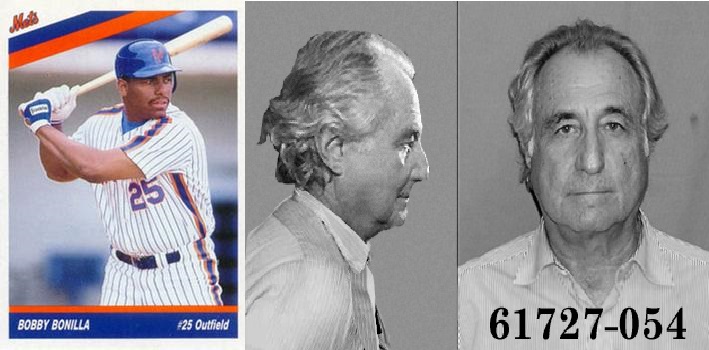
The New York Mets, Bobby Bonilla and Bernie Madoff.

Bonilla

Original publish date:  July 6, 2015

On Sunday, October 7, 2001, 6-time all-star Bobby Bonilla of the St. Louis Cardinals stepped to the plate before a crowd of 47,518 fans at Busch Stadium. The 3-time silver slugger award winner appeared as a pinch hitter and struck out in the 9-2 loss to the Houston Astros. It was Bonilla’s last at bat as a player. He officially retired at season’s end citing “injuries and reduced playing time” as the main reason for his decision. And although Bobby Bonilla has not recorded an MLB at-bat in 14 years, on July 4th, he cashed a $1.19 million paycheck from the New York Mets.
Bonilla was a 3rd baseman / outfielder for 8 teams (Pirates, Mets, White Sox, Marlins, Braves, Cardinals, Orioles and Dodgers) during his 16 year big league career. He finished with a .279 lifetime batting average, 287 homers and 1,173 R.B.I. He turned 52 years old this year and yet his salary would be the eighth-highest on the Mets 2015 payroll. He received his first million-dollar-plus check on July 1, 2011 and will continue to receive one every year until 2035. The $1.19 million tag would place him above Mets stars Noah Syndergaard and Matt Harvey even though Bonilla hasn’t worn a Mets uniform in 16 years.
At his peak, he averaged 20 home runs a year with 100 RBIs and a batting average over .300. In 1991, Bobby signed a five-year $29 million contract with the Mets that made him the highest paid baseball player ever, up to that point. Bonilla played for the Mets from 1992-1995, tanked, then bounced around the league for 3 teams in 3 seasons. He returned to Shea Stadium and the Mers in 1999 when he hit a paltry .237 with seven homers and 30 RBI in 60 games. During that horribly bad season, Bonilla spent the bulk of his time arguing with manager Bobby Valentine. The season ended with an embarrassing incident that irreparably severed the Mets love affair with Bobby Bonilla.
In Game 6 of the 1999 NLCS, the Mets were down to the Atlanta Braves 5-0 in the first inning. By the 7th inning, the Mets had tied the game. Both teams battled run-for-run to remain tied through the 10th inning. By then, Bonilla and teammate Rickey Henderson had been pulled from the lineup. While their teammates were fighting for their series lives (they were down to the Braves 3 games to 2), Ricky and Bobby were absent from the dugout. Seems they were in the clubhouse playing Go Fish as the Mets lost to the Atlanta Braves 10-9 in 11 innings The victory sent the Braves to the World Series.
z image_
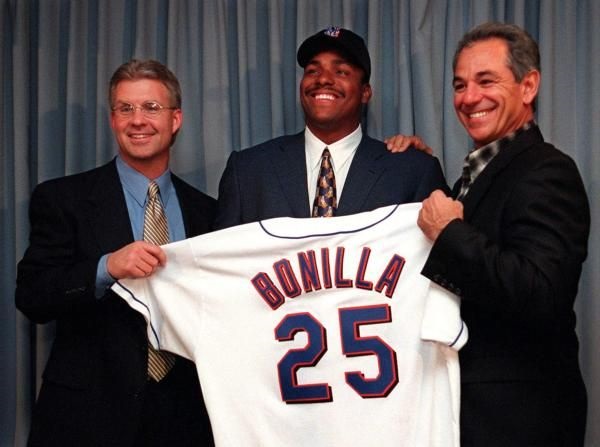
New York Mets owner Fred Wilpon, Bonilla and manager Bobby Valentine.

By then, the Mets wanted to get rid of Bonilla’s contract so badly that they deferred his $5.9 million buyout until the year 2011. Ironically, Bonilla signed with Braves for the next season even though the Mets still owed him $5.9 million. Enter the biggest financial error in Mets history. Instead of simply writing Bonilla a check for that amount in 2011, they agreed to spread it out over 25 years, plus interest. The Grand total after eight percent interest? $29,831,205. Cha-Ching!
So why on earth would the New York Mets agree to that incredibly lucrative contract that still pays Bobby Bonilla millions every year? The answer involves some razzle-dazzle financial planning, an overly aggressive Mets owner and, are you ready for this? Bernie Madoff. Mets owner Fred Wilpon accepted the deal mostly because he was heavily invested with Ponzi scheme operator Madoff. Wilpon did the math and decided that the 10 percent returns he believed he was getting on his Madoff investments outweighed the 8 percent interest the Mets were paying on Bonilla’s initial $5.9 million. While it is true that the Mets team owner deserves the blame, Bonilla deserves some credit here.
Bobby was in the twilight of his career and he knew that these were likely the very last dollars he would ever see from a big league contract. He was still young (36) with a young son and daughter who would be looking to go to college, and he likely had many years worth of life left to live. Whatever money he had saved up plus this final payment from the Mets would need to last him the rest of his life. Bonilla surely realized that high profile athletes going broke was an all too common story. Sports Illustrated recently reported that 70% of NFL players, 60% of NBA players and a high majority of MLB players went bankrupt within 2-4 years after retirement.
z marijuana--pile-of-moneyMany of these athletes are notoriously bad at managing their own money. Their teams often take care of all travel, meal and lodging expenses as part of their contracts. They see their salaries as instant, disposable income and make terrible investment decisions. When they retire or injury ends their career, they continue to spend wildly even though there is no more money coming in. Curt Schilling lost every cent of the $50 million he made playing baseball on a failed video game company. Allen Iverson squandered a $150 million fortune on gambling, houses, jewelry, child support and a 50-person entourage. Mike Tyson blew through a $300 million fortune. Evander Holyfield blew through a $250 million fortune. Phillies star Len Dykstra lost his fortune, then regained it only to lose it again. Locally, former Colts Quarterback Art Schlicter lost his fortune to drugs and gambling and he has been in-and-out of prison since his playing days ended.
When it came time to leave the Mets, Bonilla was smart enough to negotiate one of the most forward thinking contracts in sports history. He knew the Mets wanted him gone but they still owed him $5.9 million. Bonilla and his agents offered the team a quick fix: The Mets could release him and delay paying him the $5.9 million buyout for 11 years, with interest, starting in the year 2011. When he received his first payment, Bobby was 48 years old and had not played in the big leagues for a decade. He has basically guaranteed himself a big league salary every year for the rest of his life. Today Bobby Bonilla makes more than most of the team’s active players! So, again, why would the Mets ever agree to that deal?
In 1986, real estate developer Fred Wilpon purchased 50% of The New York Mets for an undisclosed sum. He then purchased the remaining 50% for $135 million in 2002. Wilpon was one of the biggest investors in Bernie Madoff’s Ponzi scheme hedge fund. It has been reported that Wilpon lost about $700 million with Madoff, which led to speculation that he would be forced to sell the team. Wilpon expected that the Mets would actually make a huge profit by deferring Bonilla’s $5.9 million. Even though it meant agreeing to pay Bonilla more than five times the amount they owed ($29.8 million), Wilpon estimated that the Mets would make $60-70 million in interest off of the $5.9 million over those 25 years investing with Madoff. Unfortunately for the Mets, Bernie Madoff’s investment fund was actually a gigantic scam that wiped out between $20 and $65 billion in wealth for thousands of investors. Madoff’s in jail for the rest of his life, Bonilla is a lifetime millionaire and Wilpon is still majority owner of the New York Mets. Go figure.
G1BBNOT21 3C S USA PA$1.9 million annual salary a decade after an employee leaves the job? What does all that mean? Well, nothing really. That is nothing to everyone except Bobby Bonilla. Keep in mind that an average annual teacher’s salary in Indiana is $ 53,000, a Hoosier cop makes about $ 50.000, a Circle City Fireman makes about $ 45,000 and the President of the United States makes $ 400,000 per year. To me it means that it’s the Major League All-Star game break again and I felt like writing a baseball story. True, the Bonilla deal remains a trivial footnote from the pages of sports history, but it’s a footnote that I find infinitely interesting.
food, Indianapolis, Music, Pop Culture

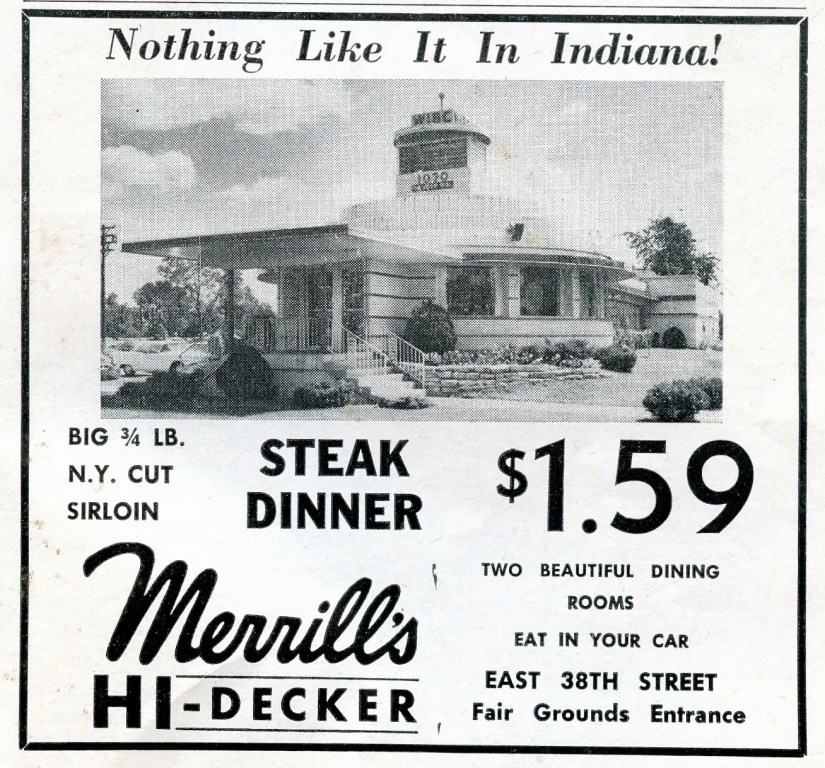
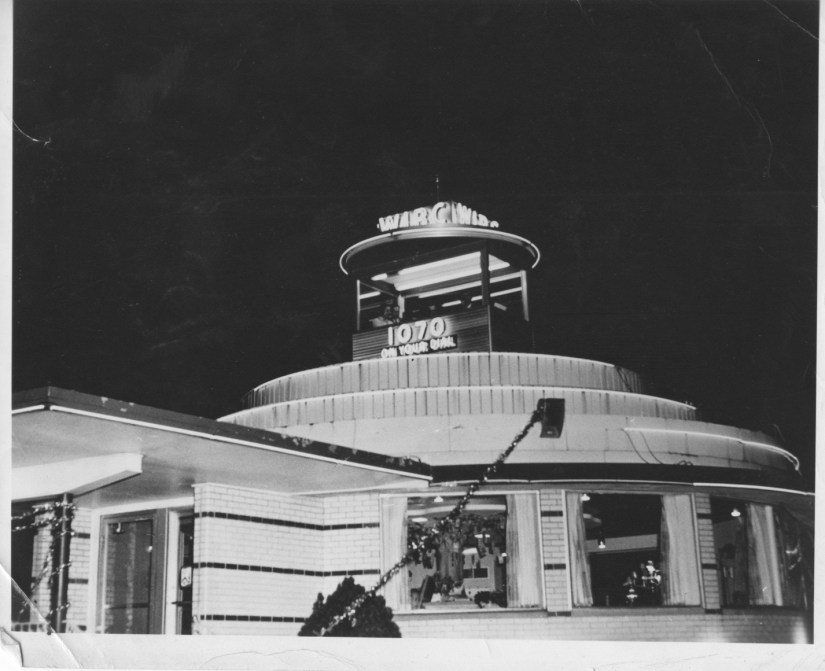
Merrill’s Hi-Decker in Indianapolis.

merrill's high decker
WIBC radio booth atop Merrill’s Hi-Decker.

Original publish date:  August 6, 2015

Summertime is closing fast and the Indiana State Fair has come and gone for another year. So I figured I’d break out one last gasp of summertime from 38th and Fall Creek that might jog a memory or two for you. Back when Elvis was blonde, the Tee Pee stood tall and Ike was in charge there was a place called Merrill’s Hi- Decker restaurant located right across the street from the Fairgrounds (officially 1155 East 38th Street). The Hi- Decker took over a restaurant known as “The Parkmoor” in 1956 as a curbside drive-in hamburger stand restaurant whose most famous whose most famous “deckhand” never sold as much as one burger or milkshake.

z Dick-Barbsbz
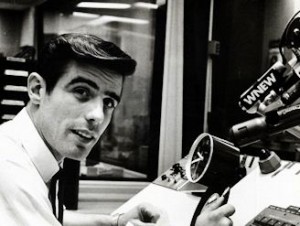
WIBC Disc Jockey Dick Summer.

His name was Dick Summer and he manned the coolest DJ booth in Indianapolis in the late 1950s. His glass booth sat on the roof of Merrill’s High Decker. The restaurant was shaped like a stack of records anyway, so the addition of the rectangular booth with the circular roof made the High Decker one of the city’s hottest spots when Summer was in session. The booth was brightly lit with neon lights featuring the “WIBC 1070 On Your Dial” marque sign ablaze like a Rock-N-Roll sun. Indianapolis radio station WIBC was the No. 1 station among teens.
All the “flattop cats” and “dungaree dolls” spent their weekends buzzing Merrill’s and other drive-ins like Laughners at Irvington Plaza on Washington Street, Jack ‘n Jill’s on North Shadeland, Knobby’s at Shadeland & 38th Street and the Blue Ribbon on 10th Street. The Northside Tepee across the street from Merrill’s was Shortridge and Broad Ripple territory and the southside Tepee was for Sacred Heart and Southport. Spencer’s North Pole at Lafayette Road and 16th was for Washington and Ben Davis high schools. And who can forget Al Green’s at Washington and Shadeland and their freebie drive-in movies for restaurant patrons (The joke was that the service was so slow, they had to do something to keep people from leaving). But none of them had Dick Summer.

z dick_summer_wnew_1130_am_new_york-300x226
WIBC Disc Jockey Dick Summer.

Summer, a wildly handsome young Disc Jockey from Brooklyn New York, had a perfectly quaffed pompadour and an act to matched. He had a show called “Summertime, live from the Skyline Studio”. Summer would play the newest rock-and-roll hits from his WIBC radio booth on high. His show included a nightly segment after the 10 PM News he called “make it or break it.” He would spin new “Hot Wax” 45 rpm releases, many from local bands, and ask the cheeseburger chompin’ patrons parked in their cars below to vote on them. Patrons would vote by sounding their car horns. The results would decide whether the record would be played on future shows or if he should break it. Car horns could be clearly heard over the air. If the “No’s” won, Summer would break the record over his microphone. If more people honked for “Make It” that record was played every hour for the next week.
Every Saturday night Summer did a live broadcast featuring a different local band which set up right out on the parking lot. Any time recording artists and bands came to town, Summer interviewed them out in the Merrill’s parking lot. Part of these interviews included an opportunity for the people eating at the restaurant to walk over and ask questions of their own. One of the things fans remember best was the midnight story feature. Every midnight Summer read a short story, most often something by Edgar Allan Poe.
Summer, now retired, recalled a funny story from those years, “The manager of the restaurant was a young guy who was very much into guns. One night as I was doing “Make It Or Break It” he decided that he REALLY didn’t like the record I was playing, so he pulled out his hand gun and shot me. Seriously. I watched him, standing probably 20 feet away, reach into his belt, pull his gun, aim, and squeeze the trigger. The blast was huge, and I thought I was dead. It was a blank. He hit the ground laughing. So the next night I wedged a pound of Limburger cheese right on the engine block of his car. He got the first laugh, but mine lasted longer.”
z merrill'sAnother Summer gimmick was to slowly bite into a juicy hamburger before he kicked off every commercial during his show. Doesn’t sound like much now, but apparently back in the day it drove customers crazy. Not to mention it sold a lot of hamburgers. The only way into the glass booth studio was up a fire escape ladder leading up to the roof, and then into the tiny studio via a trap door in the floor. Legend claims that George Lucas used Summer’s “Skyline Studio” as the inspiration for Wolfman Jack’s studio in his movie American Graffiti. You’d have to rent the movie and see for yourself because Merrill’s Hi-Decker and the radio booth are long gone now.
Even though Summer’s gig kept the Hi-Decker in the black in the Ike Era up into the John F. Kennedy Camelot Era. But Summer eventually left WIBC and went to WIL-AM, in St. Louis. WIBC kept rolling along nicely, but the Indy radio scene really took the blow hard. The British Invasion pretty much sealed the fate of local radio hijinx. And Merrills was in big trouble. Within a short time after Summer’s departure, the Hi-Decker had to make a deal with an auto dealer up the street to park his used cars in the drive-in parking lot on the weekends to look like it was still doing a bang-up business. It was a far cry from the days of two block long traffic jams of tail-fin and fuzzy dice cars waiting to cruise the Hi-Decker.
Recently Summer waxed poetic about his time in Indy and parts elsewhere as a young DJ: “It is truly hard being an aging young person. Hide and seek, ringalevio, kick the can, double dutch, punch ball, stick ball, box ball, stoop ball, doctor-lawyer-indian chief thoughts keep popping up in my head while I’m trying to be serious doing my day job. Pay checks are poor substitutes for wax lips, candy drops on rolls of paper and chocolate cigarettes. Kid-hood had stresses like “are you going to be the LAST guy picked to play on the stickball team?” (Guys will understand.) Adult-hood has stresses that involve having to override your body’s basic desire to choke the living crap out of some idiot who desperately deserves it…and would probably never even be the last person ever picked for any stickball team. The most wonderful part of the kind of radio I did was as long as I was on the air, it was never too late to have a happy childhood. I don’t ever want to get too old or too angry to do goofy stuff. That’s why I always listen carefully to what my Rice Krispies tell me when I pour milk over them at breakfast…Radio seems awfully grown up now. Talk shows are angry, computers spit out carefully researched music lists, and there’s no time to broadcast local kid bands live from a drive-in while the guy on the air munches his juicy hamburger.”

Homosexuality, Politics, Pop Culture

Joe McCarthy & the Lavender Scare. Part II

Lavender scare II
Wisconsin Senator Joe McCarthy in 1950.

Original publish date: April 7, 2016

The Joe McCarthy Red Scare era of political repression stands curiously at odds with most Americans memories of the 1950s Ike years where Roy Rogers ruled the range and every kid wore a Davy Crockett coonskin cap. Last week’s article explored the anti-communist fervor that led to the name change of the Cincinnati Reds to the Cincinnati Red legs. This article will attempt to tell the story of another aspect of those terrible days that has been mostly forgotten and long neglected by the history books.
From 1950 to 1954, the question, “Are you now or have you ever been a member of the Communist Party?” resonated thru the halls of Congress and struck fear in the hearts of even the most hearty of American Heroes. Walt Disney, Humphrey Bogart, Gene Kelly and Ronald Reagan were among those called to testify. The hearings succeeded in destroying the careers of many employed in governmental, motion picture, literary and fine arts communities.
However, there was another question asked more in hushed whispers echoing in the back conference rooms away from the glare of the cameras. While those cacophonous communist accusations grabbed all the headlines out front, security officials posed this question at least as frequently but much more discreetly: “Information has come to the attention of the Civil Service Commission that you are a homosexual. What comment do you care to make?”

3f9ff61a91db16f4979a3c13f7dfce8b
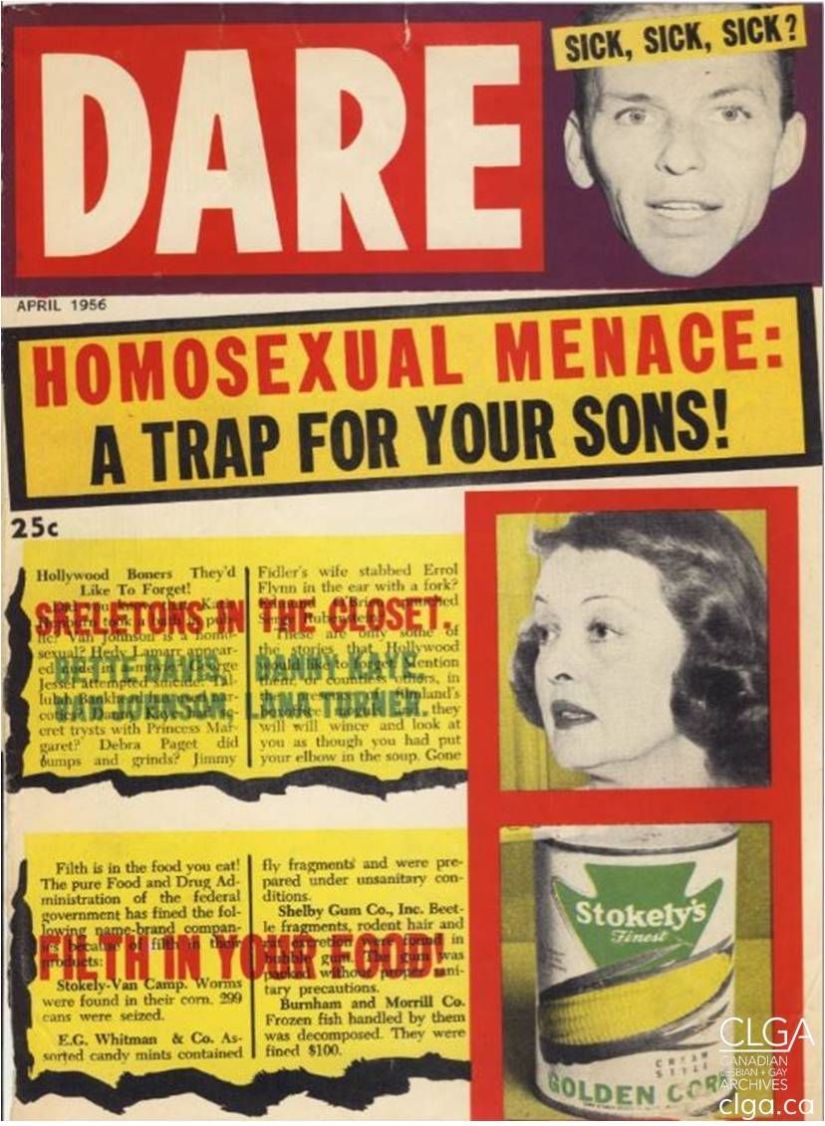
April 1956 DARE magazine cover.

During the Cold War, homosexuals were considered to be as potentially dangerous a threat to national security as were the Communists. Rumors abound that the Roosevelt and Truman administrations were havens for homosexuals. Such Scandalous talked proved a perfect addendum to the fervor of the moment and sparked a “Lavender Scare” more vehement and long-lasting than McCarthy’s Red Scare.
During an Era when Lucy loved Desi, Elvis was headed towards an Army haircut and everybody liked Ike, Americans were being secretly questioned about their sex lives in the hallowed halls of Congress. On April 27, 1953 (63 years ago this month) President Dwight Ike Eisenhower signed Executive Order 10450 into law. Its language was broad: “Any criminal, infamous, dishonest, immoral, or notoriously disgraceful conduct, habitual use of intoxicants to excess, drug addiction, or sexual perversion.” Without explicitly referring to homosexuality, the executive order determined that the presence of homosexual employees in the State Department posed blackmail risks and should not be employed.
Over the next few months, approximately 5,000 homosexuals were fired from federal jobs including private contractors and military personnel. Not only did the victims lose their jobs but they were also forced out of the closet and thrust into the public eye as homosexuals. Many more government employees were dismissed because of their homosexual orientation than because of their left-leaning or communist beliefs. These homosexual purges ended promising careers, ruined lives, and pushed many to suicide.
The Red Scare witch hunt, which began as a movement to crush any opposition to the Cold War, also led to the firing, red-listing and public outing of people who didn’t fit the straight-laced classification of main stream America. Quite literally, anyone considered queer were rounded up and branded as subversive, anti-American communist sympathizers. The Lavender Scare’s legacy is that it harmed far more people and continued for a much longer period of time. But most have never even heard of it.
The term for this persecution drew its title from the phrase “lavender lads” used repeatedly by powerful Illinois GOP Senator Everett Dirksen as a synonym for homosexual males. In 1952, Dirksen said that a Republican victory in the November elections would mean the removal of “the lavender lads” from the State Department. The phrase was also used back in the day by Confidential magazine, a National Enquirer style gossip rag known for gossiping about the sexuality of politicians and Hollywood stars.
In 1950, the same year that Senator Joseph McCarthy claimed 205 communists were working in the State Department, Truman Undersecretary of State John Peurifoy said that the State Department had allowed 91 homosexuals to resign. On April 19, 1950, Republican National Chairman Guy George Gabrielson said that “Perhaps as dangerous as the actual Communists are the sexual perverts who have infiltrated our Government in recent years.” Gabrielson charged that the media was not doing enough to alert the population to the “homosexual menace.”
z Prog03-08-770x433The media knew a controversy when they saw it and soon newspapers and magazines helped whip the frenzy into a fevered pitch. The New York Times took the lead, running at least seven stories promoting this anti-homosexual campaign in May of 1950. A month later, the Senate authorized an official investigation, the first of its kind in U.S. history. It was popularly dubbed the “pervert inquiry.”
The politically motivated results of these hearings, issued in December, charged the Truman administration with indifference toward the danger of homosexuals in government. The official “justification” for this witch hunt against gay and lesbian employees was cited as “lack of emotional stability” and “weakness of … moral fiber” that allegedly made them susceptible to Soviet propaganda and recruitment.
438418410_780x439Nebraska GOP Senator Kenneth Wherry concluded in December, “You can’t hardly separate homosexuals from subversives… Mind you, I don’t say that every homosexual is a subversive, and I don’t say every subversive is a homosexual. But [people] of low morality are a menace in the government, whatever [they are], and they are all tied up together.” In 1950, a Senate investigation chaired by Clyde R. Hoey noted in a report, “It is generally believed that those who engage in overt acts of perversion lack the emotional stability of normal persons.”, and said all of the government’s intelligence agencies “are in complete agreement that sex perverts in Government constitute security risks.”
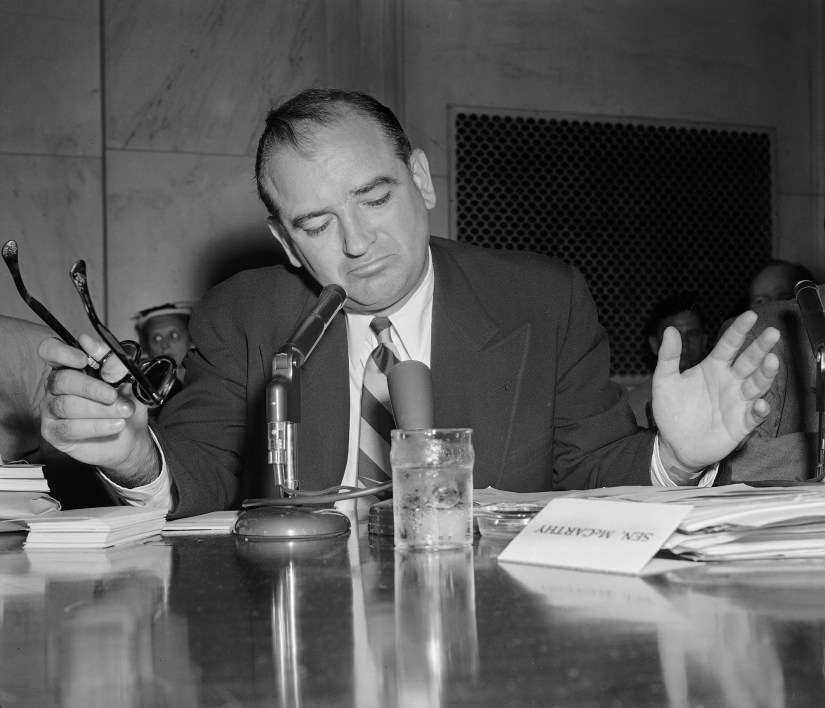
Between 1947 and 1950, 1,700 federal job applications were denied, 4,380 people were discharged from the military, and 420 were fired from their government jobs for being suspected homosexuals. In the State Department alone, security officials bragged about firing one homosexual per day, more than twice the rate of those charged with political disloyalty to capitalism.
Strangely absent in voice or written opinion on the homosexual debate is the man the movement was named for; Senator Joe McCarthy. While the domestic witch hunt of lesbian, gay men and gender-variant people became an integral component of McCarthyism, Joe McCarthy himself was not the main power behind the anti-homosexual frenzy. True, the senator from Wisconsin did pepper his tirades with references to “Communists and queers.” But as the political crusade took off, McCarthy was nowhere to be seen.
Though he was a member of the congressional committee that spent several months examining the homosexuals-in-government issue, McCarthy mysteriously recused himself from those hearings. Websters defines recuse as a challenge by a judge, prosecutor, or juror as unqualified to perform legal duties because of a possible conflict of interest or lack of impartiality. So was Joe McCarthy excusing himself from the issue because he was biased or was he excusing himself because he was gay?

z 1_GNDaJyYnRVM0PVGJtE8irQ
Wisconsin Senator Joe McCarthy.

McCarthy, the middle-aged, confirmed bachelor, may have considered himself vulnerable to questions about his own sexuality that were sure to circulate soon. After all, it was McCarthy who hired Roy Cohn–who died of AIDS in 1986 and is widely believed to have been a closeted homosexual–as chief counsel of his Congressional subcommittee. Together, McCarthy and Cohn, with the enthusiastic support of the head of the FBI, J. Edgar Hoover (also believed by many to have been a closeted homosexual),

z LavenderScareM
Wisconsin Senator Joe McCarthy and legal counsel Roy Cohn.

vigorously prosecuted any and all accused homosexuals who came before them.
McCarthy did get married in 1953, but it was late in his career and his bride was his longtime secretary. Many viewed the union as a ruse designed to deflect rumors about his sexuality that were beginning to surface. No credible evidence has ever surfaced to confirm (or deny) that Joe McCarthy was gay, but the 1940-50s Era Milwaukee underground (where Joe was from) are filled with stories of the Senator’s escapades in the gay clubs and bars of that Era. Rumors must not be confused with history and should be relegated to files of speculation, gossip and innuendo.
z a5ddb6b06f432e1379d5558762e2b0aaUntil the election of John Fitzgerald Kennedy as President, no other politician of Irish descent had achieved a national impact comparable with McCarthy’s in twentieth century America. McCarthy took a serious issue, undermined it through reckless behavior and destroyed the lives of many people in the process. McCarthy’s Red Scare didn’t come to an end until he dared to attack the Army with his accusations. A very bad idea when the Oval office is occupied by the most famous General of his generation.
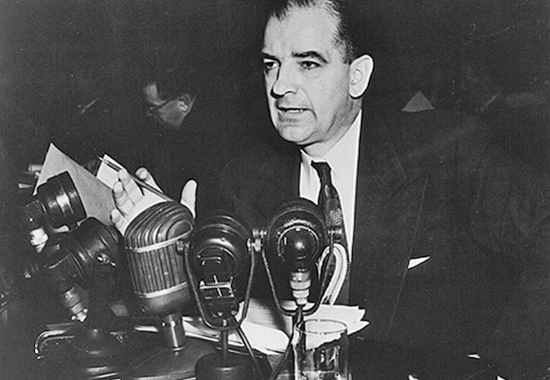
One of the victims of McCarthyism was sexologist Alfred Kinsey of Indiana University. The McCarthy hearings investigated links between non-profit organizations and the Communist Party, but Kinsey and his principal funding source, the Rockefeller Foundation, were clearly the primary targets. The Committee sought testimony criticizing Kinsey’s work and publicized exaggerated tales of his alleged sexual depravity and links to communism, while barring witnesses who might defend Kinsey or the Institute. The Committee ferociously condemned his work and made headlines across America. The Rockefeller Foundation soon withdrew its financial support, which crippled and effectively ended Kinsey’s work. Dr. Kinsey died a short time later in August of 1956 followed by Joe McCarthy some 9 months later in May of 1957.
Most Americans view Joe McCarthy’s Red Scare as a forgotten relic of the Cold War Era. But the Lavender Scare lived on into the Bill Clinton administration. Ike’s Executive Order 10450 baring gays from entering the military was not rescinded until 1995.

Baseball, Politics

Joe McCarthy & the Cincinnati Red Legs Scare. Part I.

IMG_1467 2

Original publish date: April 4, 2016

It’s that time of year again. The rosters are set and the boys of summer have oiled their gloves and taped their bats for another season. Springtime has always been the zenith of hope for Cubs fans (and usually their best chance of winning a pennant) but this year the Cubs are picked by many to win the title so there’s no story in that. The once mighty Reds held a fire-sale over the winter so 2016 could be a long season for Reds fans (my wife among them). This is also an election year and the airwaves are hot with news from the campaigns. Trump, Cruz and Kasich are battling for the GOP nomination. Clinton and Sanders are chasing the Democratic nomination. Charges of sexism, elitism, racism and socialism pepper nearly every news story and blog. Politics and the Reds? That reminds me of a story.
In the decade or so after World War II, the idea of communist subversion at home and abroad seemed frighteningly real to many people in the United States. These fears would define the era’s political culture and spark a worldwide Cold War that lasted over half a century. Then, as now, some took advantage of those fears to advance their own personal agenda or further their career. The Cold War paranoia sparked a dastardly era in America that became known as the “Red Scare” and the demagogue Du Jour was Republican Senator Joseph P. McCarthy of Wisconsin.
Beginning in 1950, McCarthy spent nearly five years trying in vain to expose communists and other subversives working in the U.S. government. In the hyper-suspicious atmosphere of the Cold War, the mere insinuation of disloyalty was enough to convince many Americans that their government was packed with traitors and spies. McCarthy’s accusations were so intimidating that few people dared to speak out against him. While McCarthy’s Red Scare accusations were focused on national and foreign communists in the government, it quickly became a witch hunt for Commies influencing society thru the media, music, art, literature and motion picture industry.

z joseph_r_mccarthy
Wisconsin Senator Joe McCarthy.

It seemed like no-one was safe from accusation. McCarthy accused icons of the government of supporting communism including two of Harry S Truman’s Secretaries of State; General George Marshall and Dean Acheson. McCarthy eventually insinuated that President Truman himself was soft on Communism after he made the decision to remove General Douglas MacArthur from power during the Korean War. In time, McCarthy targeted many names you might recognize: Albert Einstein, Charlie Chaplin, Lucille Ball, Pete Seeger, J. Robert Oppenheimer, Leonard Bernstein, Danny Kaye, Linus Pauling, Burgess Meredith, Edward G. Robinson and Orson Welles. All targets of McCarthy’s Red Smear.
McCarthy contended that all of these individuals (and more) worked within communist organizations and/or belonged to the Communist Party of America. Additionally, McCarthy’s reckless accusations ruined careers of those who were not famous and worked in the private sector. Many of those who were black-balled remained ostracized from their respective profession long after the Red Scare subsided. The fear of association with anything “Red” became so pervasive that even a professional baseball team from Cincinnati decided to change their name.
z s-l300

The Cincinnati Reds name is a colloquial abbreviation of the Queen City’s original team, the Cincinnati Red Stockings, which was the first fully professional baseball team. The Red Stockings had ten men on salary for eight months to play baseball in the National Association of Base Ball Players (NABBP). It was organized in 1869 by Harry Wright, who also played center field for the team and managed the defensive positioning, something typically unknown at that time. The Red Stockings were wildly successful early on, going 57-0 in league play and posting a perfect 65-0 record overall (still the only perfect season in professional baseball history). The team barnstormed the nation coast-to-coast, challenging (and defeating) every base ball club it played that inaugural season.
They followed this up by winning 24 straight games the next season. On June 14, 1870, after 81 consecutive wins, the Cincinnati Red Stockings lost 8-7 in 11 innings to the Brooklyn Atlantics before a crowd of 20,000. Apparently, the novelty of an undefeated team wore off quickly with attendance declining substantially after that first loss. Although they only lost 6 games that second season, the Red Stockings Executive Board recommended that the club not employ a team for 1871, citing that it was just too expensive.
Five years later in 1876, the National League is formed in New York City with Cincinnati as a charter member. In October of 1880, Cincinnati is expelled from the league, due in part to its refusal to stop renting out their ballpark on Sundays and to cease selling beer during games. The next year, the American Association is formed and the Reds would play their next eight seasons in the league which included (for a short time) a team from Indianapolis known as the Hoosiers. In 1889 the Red Stockings rejoined the National League where they remain to this day.
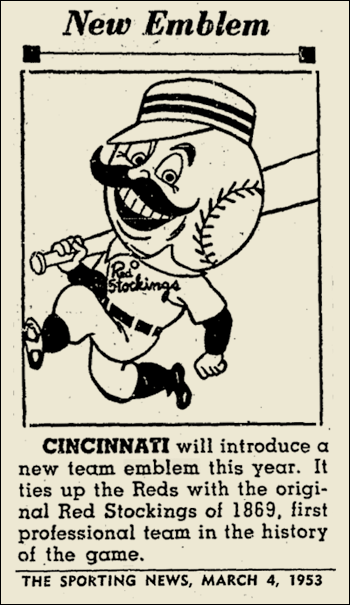
MR-RED_53Irregardless of all that storied history, in 1953 the Reds decided to rename themselves the “Cincinnati Redlegs” to avoid the social stigma, potential money-losing prospects and career-ruining repercussions of being viewed as the “Reds”. Think about it, newspaper headlines like “The Reds bomb St. Louis” or “Reds murder Senators” might spread War of the Worlds style pandemonium. Okay,okay the Senators and Yankees were American League teams, but you get the idea.
So, for a four year stretch from 1956-1960, the name “Reds” was removed from the team’s logo and no longer appeared on team uniforms. Programs, tickets, pennants, buttons, and all team memorabilia was changed from Reds to Red Legs. The club’s logo was altered to remove the term “REDS” from the inside of the “wishbone C” symbol. In short, Cincinnati’s beloved Reds were no more.
Ironically, the term Red Legs, at least in the pages of history, was viewed as no better than the Red Stain nickname of the Reds. Red Legs derogatorily described guerrilla raiders in the Civil War, a 1670s Scottish pirate or a specific group of poor white people living on various islands in the Caribbean who generally originated from Ireland and Scotland and were most commonly known as “white slaves”. Guerrillas, pirates or slaves seemed to be a more prudent choice for the Reds during Joe McCarthy’s Red Scare.

z 1953-asg_n4bbzbf86ibb1eetmgobqanusSometimes peer pressure and cultural hysteria make businessmen do strange things.
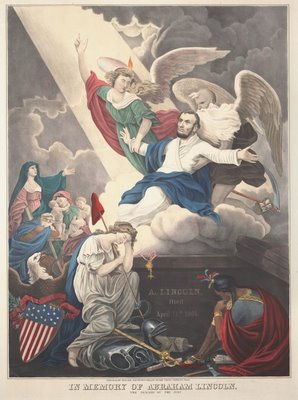
It was not until Joe McCarthy attacked Ike’s Army in 1954 that his actions earned him the censure of the U.S. Senate. Even so, it took four years for the team to change the name back to the “Cincinnati Reds” after the 1958 season. By the start of Spring training in 1959, the team would be known as the Reds again. The cultural back-peddling inspired one unnamed exasperated team executive to remark: “If the communists don’t like it, let them change their name. We were the Reds before they were.” It didn’t take long for the anti-communist fears to fade. One need only consider those Big Red Machine teams of the 1970s (during the Cold War) as evidence. And would did the Reds beat in the 1976 World Series? The Yankees. Yep, the news headlines read “Reds defeat Yankees”. What would Joe McCarthy say about that?
Next week: Part II- Joe McCarthy’s Lavender Scare.

Abe Lincoln, Irvington Ghost Tours, Politics

Abraham Lincoln & the angels of Community North Hospital.

z Apotheosis_of_Lincoln

Original publish date: March 21, 2016

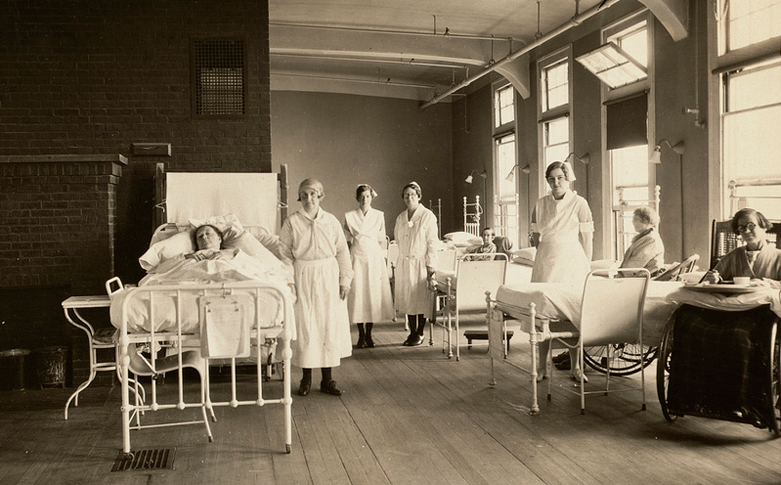
This past October while leading a ghost tour through historic Irvington, I met a pair of lovely young women who posed an interesting question to me. The query came after I concluded my version of the Lincoln funeral train story, a tale fraught with emotional imagery and historical fancy that has been the last story on the tour for over a decade. As the group dispersed into the Irvington night, the young women sheepishly approached to ask their question. They introduced themselves as nurses at Community North hospital, not just any nurses, these were critical care nurses working in the hospice unit there.
As part of their duties they were often in charge of patients in the final stages of life and both had sadly witnessed firsthand the dying of the light many times. They wanted to share personal experiences with me, witnessed by both independently and together, that they hoped I might have an answer for. They explained that on more than a few occasions, patients would suddenly see the figure of Abraham Lincoln moments before dying. One instance in particular involved a recent near comatose patient arising with arms outstretched proclaiming that Abraham Lincoln was there in the room to deliver him up to heaven.

z vintage-nurses-in-boston
Luckily, I was able to tell them that this was not the first time I had heard this story. As a lover of history, ghost stories, writer and folklore, I have become somewhat of an ersatz authority and repository of Abraham Lincoln ghost stories and sightings. Interestingly enough, most accounts I hear of Abraham Lincoln as a secular saint are rooted within the baby boomer generation although the roots of this belief can be found in his assassination on Easter weekend of 1865.
The assassination had occurred on Good Friday, and on the following Sunday, known colloquially as “Black Easter,” hundreds of church speakers found a sermon buried in the tragedy. Some men of the cloth viewed the act as more than mere coincidence that assassination day was also crucifixion day. One preacher declared, “Jesus Christ died for the world; Abraham Lincoln died for his country.” The meteoric posthumous growth of his reputation was influenced by the timing and circumstances of his death, which won for him a kind of saintly aura.
Although Lincoln enjoyed public popularity during his life, it was his death which erased all opposition and cemented his mythic identity. Lincoln’s shooting on Good Friday and death on Holy Saturday were his first steps on the stairway to heaven. Just moments after he breathed his last breath, Lincoln began his ascension to sainthood. Secretary of War Edwin Stanton kick-started the heavenward trip by stating, “Now he belongs to the angels.”
Churches across the country were now faced with the difficult task of celebrating Easter and mourning the death of Lincoln at the same time. The resulting nationwide church services devoted to Lincoln on Easter Sunday began his posthumous religious transformation from man of the people to Godlike status. Many Americans, North and South, came to believe that his death was the price we paid for the bloodshed of the Civil War. In fact, it became the capstone for America’s greatest internal sin: slavery.
The sermons preached on Easter Day, 1865 painted a theologically enigmatic portrait of Abraham Lincoln. Barely twenty-four hours after his death, Lincoln’s memory was already being defined as superhuman. Lincoln, as a symbolic figure, was revered not only by those who had supported him during his life, but now by all Americans, and soon by the whole world.
z 71.2009.081.0258_lbWithin forty-eight hours of his passing, the association of Lincoln’s character with American tradition began. The clergy, alongside their biblical images of Moses and martyrdom, also invoked the images of Lincoln and the founding fathers. In addition to grouping the Emancipation Proclamation and the Declaration of Independence as sacred texts, these sermons also established a link between Lincoln and the nation’s first President George Washington.
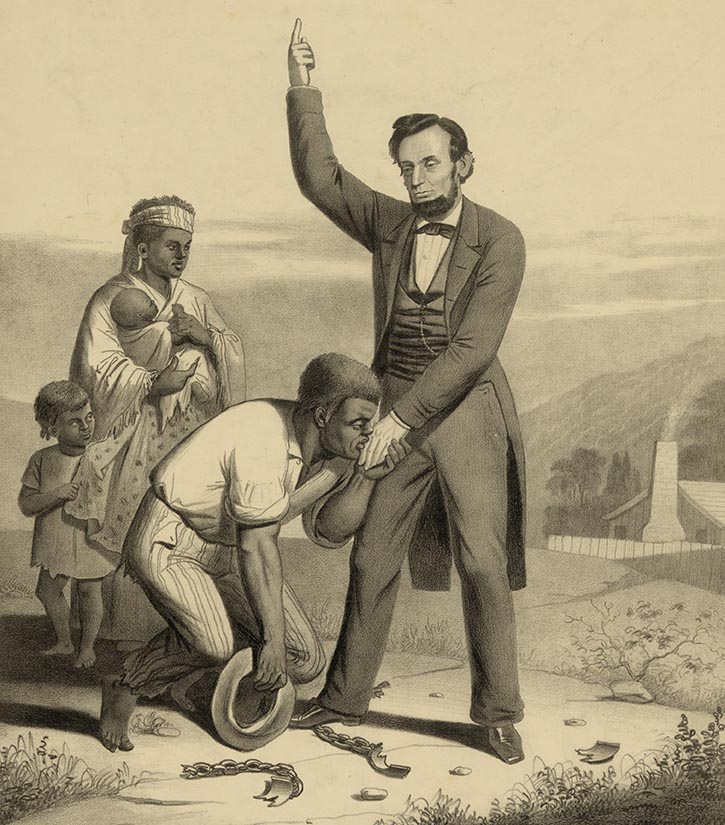
The timing and tragic nature of Lincoln’s death underscored the accomplishments of his life. Lincoln quickly became a central figure-perhaps the central figure-in the unfolding epic of America as a nation post 1865. Who else but Lincoln, the rough-hewn man forged on the prairies of Indiana, Kentucky and Illinois, could have seen us through the sectional conflict pitting brother-against-brother? The plain speaker-unpolished, unschooled, and untutored- somehow managed to master a situation that was in his own words “piled high with difficulty.” He did so with a rhetorical mastery that no other American political figure has come close to matching since.
Generations of schoolchildren were taught to memorize two things: the Pledge of Allegiance and the Gettysburg address. Lincoln’s image graces both our paper money and our coinage. Lincoln is referred to as Father Abraham, Honest Abe and the Great Emancipator. Therefore it should come as no surprise to even the most casual observer that Lincoln’s evolution into a religious figure was / is inevitable. Couple that with the realization that more and more late 20th / early 21st century Americans are drifting further away from organized religion and the church, and these visions of Lincoln in the last moments of life become more easily explained.

z Lincoln
If Abraham Lincoln does not assume the identity of God to these folks, he must certainly signify the most positive prospects of heaven. I have studied Lincoln’s complicated religious beliefs over the years through conversations with Lincoln scholar and author C. Wayne Temple, whose 1995 book “Abraham Lincoln: From Skeptic to Prophet” is considered the definitive study on the subject. It appears that Abraham Lincoln was a deist, making the view of him as a prophet, angel or Godlike figure all the more ironic. A deist is defined as “a person who accepts the belief in god,but does not believe in the religion.” To a deist, the concept of God is rhetorical with a belief in his power of creation and omnipotence, but unrelated to organized religion.
The religious views of Abraham Lincoln remain a matter of interest among scholars and the public. Lincoln grew up in a highly religious Baptist family. He never joined any church, and sometimes (as a young man) ridiculed revivalists. He often referred to God and had a deep knowledge of the Bible, regularly quoting from it. Lincoln attended Protestant church services with his wife and children, and after two of them died he became more intensely concerned with religion. In short, Lincoln was the “thinking man’s” Christian whose religious ambiguity makes him a perfect candidate for a last second spiritual visitation.
When the sermons of April 16, 1865 asked the American people to “pledge not only to the affectionate memory of our MARTYR but to the imitation of his character and the perpetuation of his principles” a spiritual place was created for Lincoln in the American mind which has existed ever since. The Lincoln of legend has grown into a temporal god available to assume a shape to please almost anyone at anytime.
A 2015 Gallup poll shows that Americans’ trust in organized religion is on the decline, continuing a gradual, decades-long trend. Gallup noted in their commentary on the poll that “Once reliably at the top of Gallup’s confidence in institutions list, [organized religion] now ranks fourth behind the military, small business and the police, and just ahead of the medical system.”
The poll shows that only 42% of Americans have a “great deal” or “quite a lot” of confidence in organized religion or the Church, well below the high of 68% in the 1970s. This coincides with a 2014 Pew Study showing Americans are becoming increasingly unlikely to identify with any particular religion and that America is building fewer churches. The amount of construction spending on religious structures has dropped by 62% since January 2002. Therefore, it stands to reason that more and more people are apt to view Abraham Lincoln as a savior at the closing moments of their life.

z 1200px-Charles_Leale_-_Brady-Handy
Dr. Charles A. Leale in 1865.

As for me, I think it important for all people to believe in something bigger than themselves, whatever or whomever that may be. So to the nurses of Community North Hospital’s Hospice care unit I want to say thank you for sparking this conversation. Thank you for caring enough to recall with kindness and concern the plight of your beloved patients. It is good for us all to know that you care as deeply as you do right up until the last moments of precious life. One of my personal heroes of the Lincoln assassination saga is a 23-year-old U.S. Army Surgeon named Dr. Charles Leale. For most of that tragic night, Leale held the dying president’s hand. He later said “I held his hand firmly to let him know, in his blindness, that he had a friend.” Ladies, it cheers me to think that the patients of Community North know that they too have angels in the darkness.