

Original Publish Date May 20, 2021.
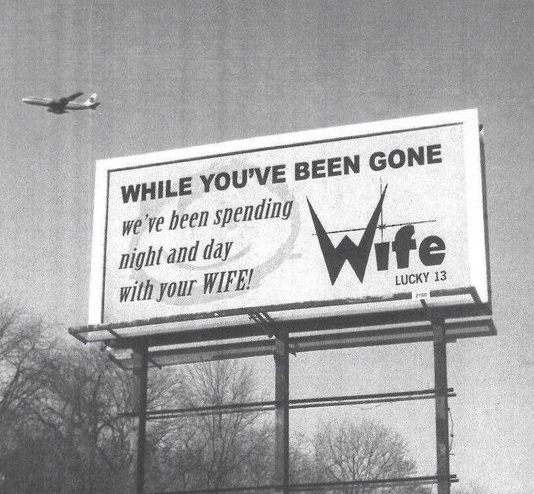
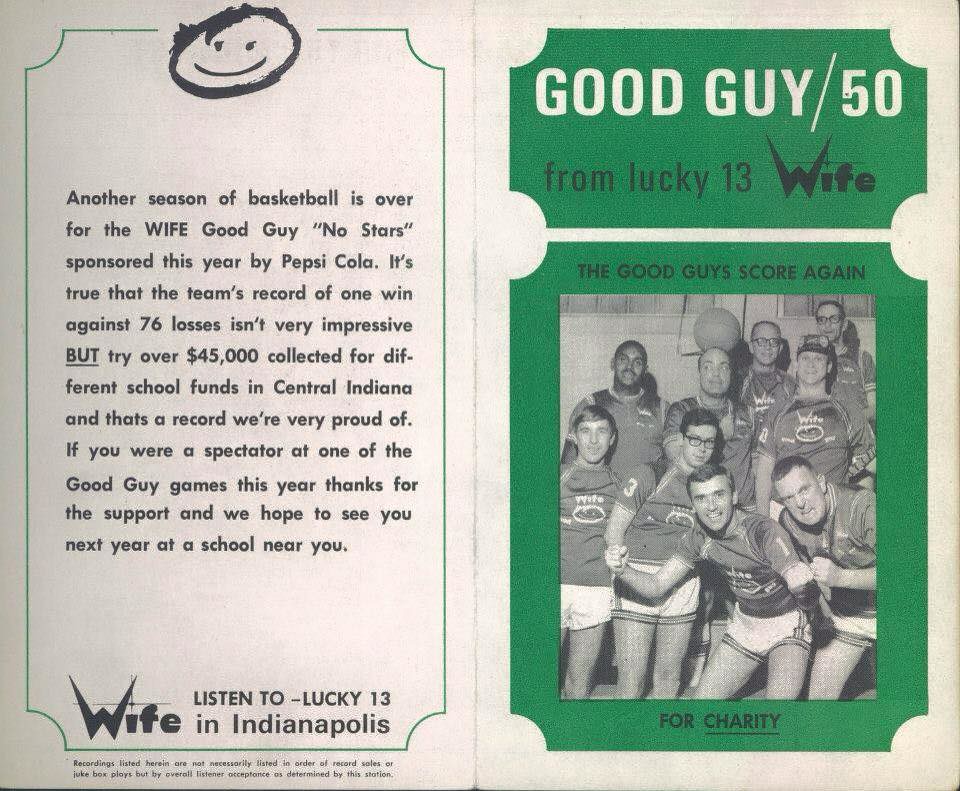
In the John Lennon film “Above Us Only Sky” (a segment from the larger film “Imagine”) there’s a scene from a 1971 encounter with a young man who shows up at Lennon’s house in England. Lennon talks with him and eventually invites him in to eat some food. In the clip, Lennon’s Mini Cooper car (parked outside the house) has a WIFE Good Guys radio sticker in the back window. How in the world did a sticker from a local Indianapolis radio station end up on a car in John Lennon’s driveway in England? The mystery was uncovered by Irvingtonian Bill Price in part I of this article and solved by Irvingtonian Stephen Bruce Smith in part II. Part III reveals another Irvington connection.
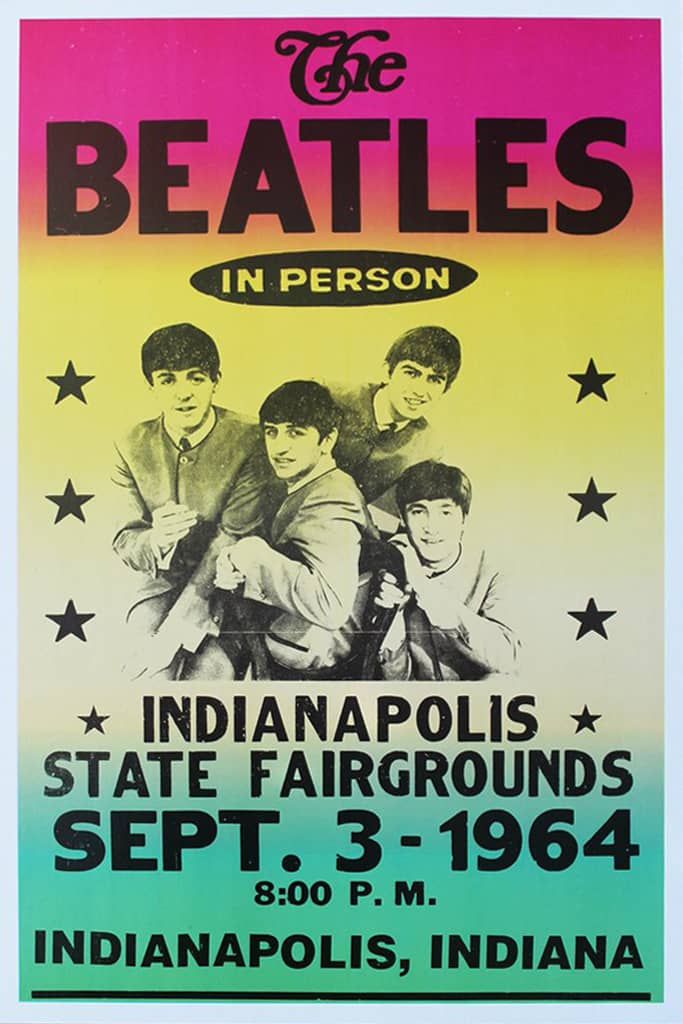
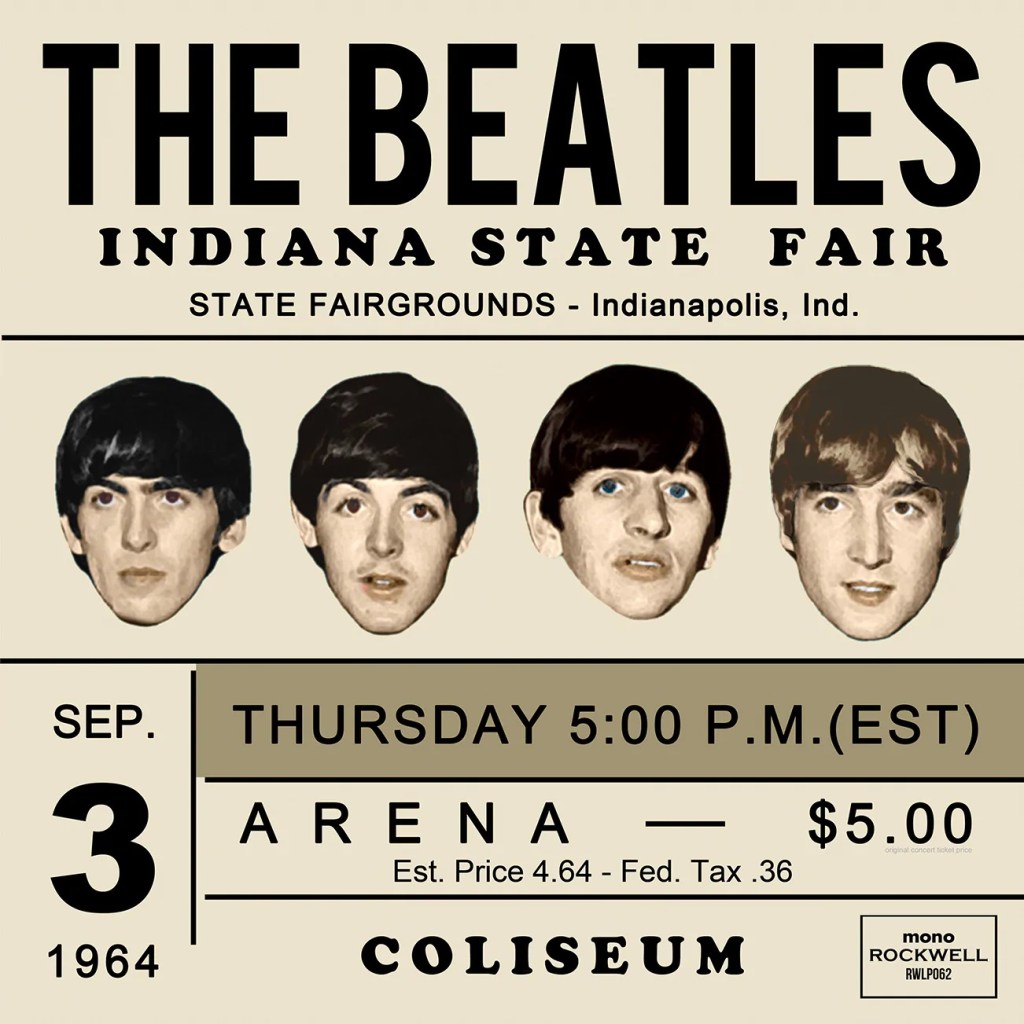
When the Beatles played two shows at the Indiana State Fair in September of 1964, Radio station WIFE 1310 sponsored the show in the Coliseum, and WIBC sponsored the show in the grandstand. In 1963, WIFE-310 AM signed on the air with a rock-heavy playlist. And by the time The Beatles arrived, the station had rapidly surged to the top of the ratings race, bringing an end to radio station WIBC-1070 AM’s reign as the champion of Indianapolis’ airwaves. In 1964, programming on WIFE largely focused on top 40 hits and bubblegum rock including The Beatles.
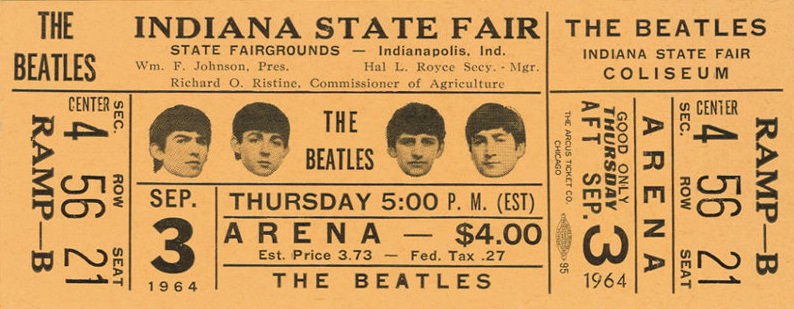
The Beatles concerts have been detailed by this writer in past columns and the specifics of those shows are well-known to all Circle City Beatles fans. Stephen Bruce Smith added more details to that story and revealed that Lennon “got the bumper sticker in 1964 at the station when The Beatles awarded tickets to a lucky high school girl who won a contest. I knew her brother at Howe High School. John got that sticker at the station from either Jay Reynolds or Jack Sunday (Jerry Baker).”
Turns out Smith, who knows everybody, rediscovered that lucky ticket-winning girl too. Did I mention Stephen Bruce Smith knows EVERYBODY? Her name is Elaine Conly and she is a Howe graduate, class of 1966. She was Elaine May when she won that contest back in 1964. Elaine’s mother, Virginia Casey May, who passed in 2002, was active in the Irvington Women’s Club as past chairwoman and past president of the Irvington Music Study Group. She was also a pioneer member of the neighborhood CrimeWatch program and Human Rights Commission, retiring from the Indianapolis Mayor’s office in 1977. Virginia was also a former chairwoman for the Junior Civic Theatre and scriptwriter for the “Time for Timothy (Churchmouse)” program. So Elaine, who performed in some of those productions for her mother’s Civic Theatre, knew a thing or two about the entertainment business.

15-year-old Elaine entered a 50-word or less summertime essay contest by the Indianapolis News titled “I want to meet the Beatles because…” Elaine entered (without telling her parents) and her 47-word essay was selected as the winner from more than 3000 entries. Her winning entry read: “I want to meet the Beatles because they have a special magic. When they perform, the oppressing world crisis and other problems can be temporarily forgotten. They sing happy, swinging songs. I’d love to meet the four young men who can make everything seem a little brighter.” Just like in the movie Bye-Bye Birdie, Elaine supplants Ann-Margret who likewise wins a contest to meet her Elvis-like hero, Conrad Birdie.
“I had to keep it a secret though, that was hard to do,” Elaine says. When her picture appeared on the front page of the newspaper announcing her victory, “The phone rang off the hook, it was pandemonium.” Elaine, the daughter of Harry A. May, grew up at 1134 N. Butler Ave., “Butler Avenue North of 10th, Two blocks from the Steer Inn,” she states.
“I was worried that they (The Beatles) would not want to meet a teen-aged kid and that they might poke fun at me. I expected to get a cold reception.” Elaine recalls, “But they were perfect gentlemen and very nice to me. I shook all of their hands and when I entered the room, John stood up an offered me his seat.” Which was a good thing because John Lennon was her chosen Beatle. “He had written a book of poetry and he was my favorite. They were all very nice and gentlemanly but John was the nicest of the four.” Elaine recalls. “I went out and bought a special black crepe dress because I heard that John liked black.”
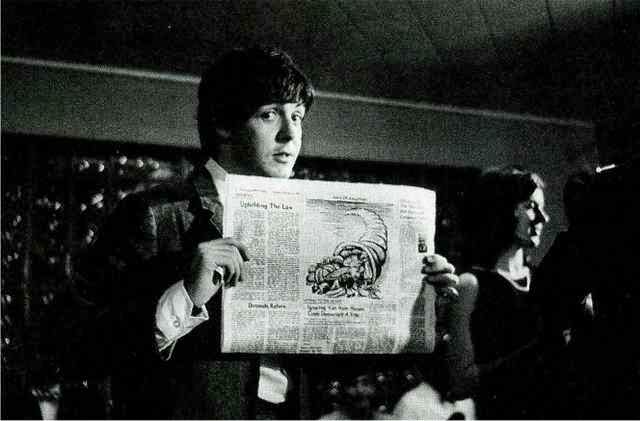
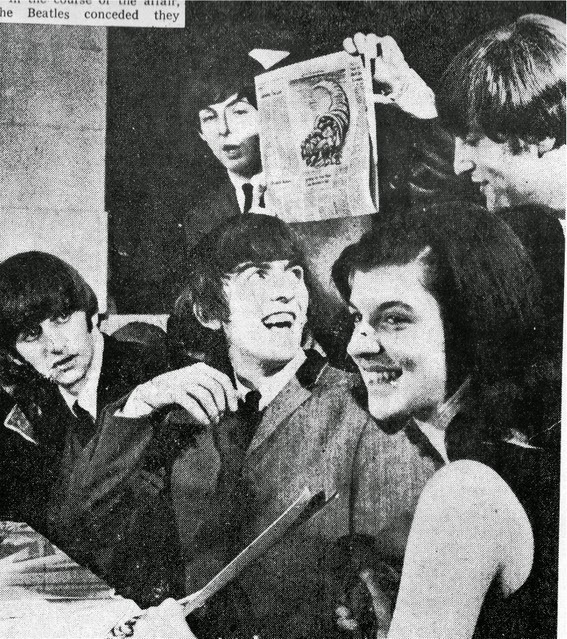
The whole encounter, which took place in the communications building at the State Fairgrounds across from the Coliseum, took less than five minutes. Elaine reveals, “I wore the class rings of four of my classmates to the meeting. They belonged to my friends. They all wanted their ring to touch a Beatle.” When I asked if she got any souvenirs or autographs, she responds, “No, I was told (by the Indy News) that I couldn’t ask for autographs or take photographs of my own. I wish I would have because I probably could have paid for my college tuition with that money now.”
Elaine states that the newspapers followed up on Elaine’s story every few years. As for the Fab Four, “They were very funny but very polite.” she recalled. Part of Elaine’s duties that day, aside from the obvious photo op for the news, was to deliver an original editorial cartoon from the News to the Lads from Liverpool. “Then I just stood to the side for the rest of the Press Conference”, Elaine says. When she left the building, she was bombarded with questions from local reporters.

Part of her prize package included tickets to the show. When asked what memories she had of the concert, Elaine says, “Security was very tight. It was very dark and very hard to hear them. But it was great to look at them, they were so handsome.” Her tickets? “Oh, they were very close, first 10 rows or so.” Did anyone recognize her as the contest winner? “Yes, a few people picked me out right away, but then the Beatles came out and that was that.” Elaine is still saddened by the death of her favorite Beatle. “I was watching Monday Night Football (December 8, 1980) when they broke in to announce that John Lennon had been shot. I cried. I cried a lot.”
And what about that little black dress, the only physical souvenir she has left from that encounter? “That dress was good luck.” she says, “I was wearing that dress a year later when I walked a friend to the bus station. A friend of a friend, University of Cincinnati architecture student Michael Conly, was on the bus and kept asking, “Who’s that girl in the black dress?” Long story short, Elaine and Michael Conly have been married for 51 years. And her engagement ring? Michael purchased it for her in Beatles Country: England, where he was studying in Europe.
Several years ago, Michael had a special print of his wife’s brush with the Beatles enlarged and the poster-sized photo hangs on the couple’s wall inside their Fishers home. “That’s my claim to fame I guess. Over the years it (the photo) was a big hit with our babysitters who would gasp and ask me about the encounter. I was always amazed because most of them were not even born when that meeting took place. The Beatles still have that power though, after all these years.”

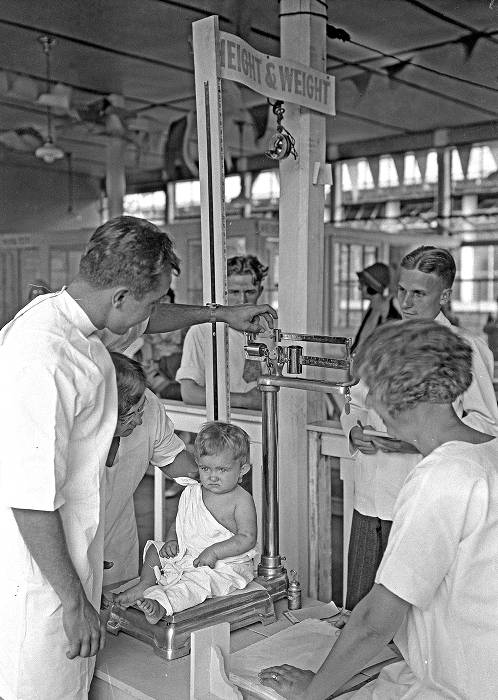



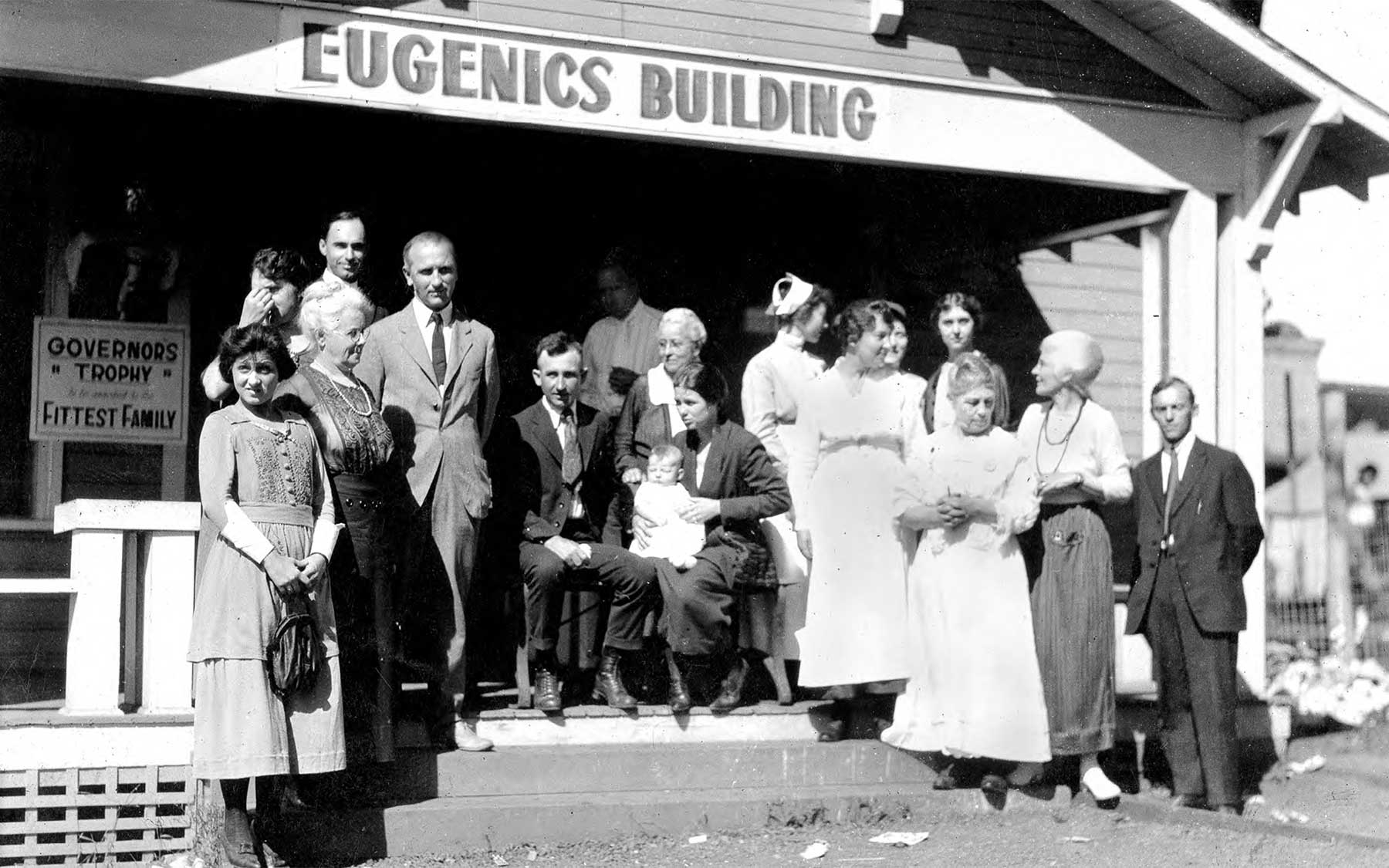
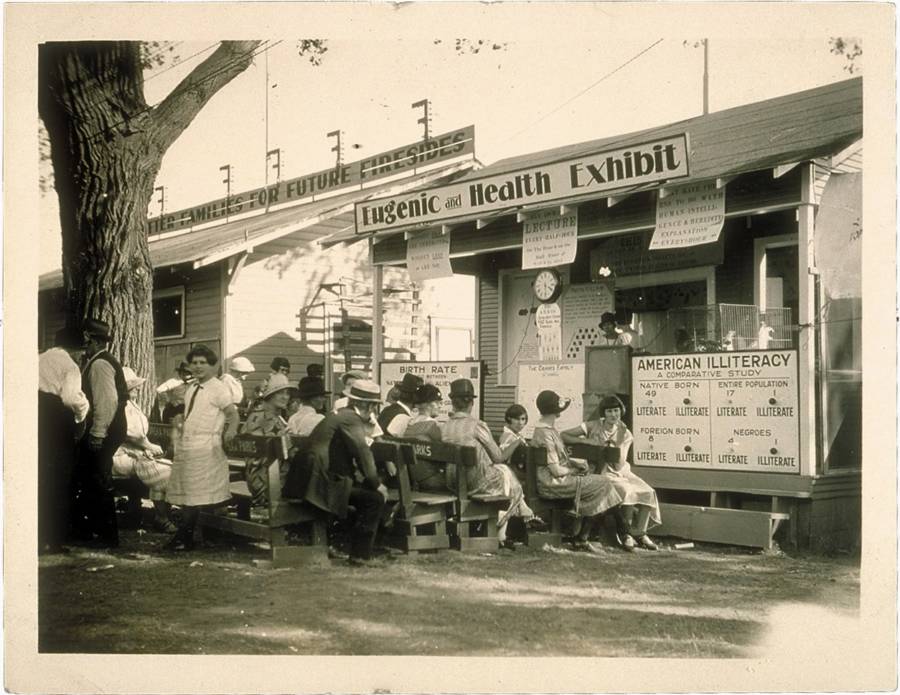 If the criteria were based solely on demography and topography, Indiana was the perfect test case for the larger National Eugenics movement. In 1920, the state’s population approached 3 million residents, 95% of whom were native-born and 97% of whom were White. The bulk of Indiana’s African American and immigrant communities lived in segregated communities within the cities of Indianapolis, Gary, and East Chicago. Unlike other more racially diverse, multilingual states such as New York, Illinois, and California, Indiana’ Eugenics project did not have to translate their message into foreign languages or tailor their “Americanization” campaigns to foreign speaking populations. Instead, the Hoosier project targeted poor and working-class Whites, especially impoverished farm dwellers living in undeveloped rural communities. (Keep in mind that most rural Hoosier farms and homes did not have indoor plumbing or electricity until the 1940s.)
 As a Hoosier, although others may argue otherwise, the connection between Eugenics and the Ku Klux Klan cannot be denied. Implicit to be sure, both organizations shared undeniable common goals, the first being the assurance of racial purity and the second being the improved survival of the Anglo-Saxon race. Luckily for us, the fall from favor of the Eugenics movement in our state and nation coincides with the fall of the KKK.
 The sad truth is that 2,424 people were medically sterilized in Indiana institutions. There was near parity between males and females in that number: 1,167 males and 1,257 females were sterilized. 1,751 of these people were considered mentally deficient and 667 mentally ill. That figure does not reflect the number of sterilizations performed in the years before the law was passed. As many as 800 of those sterilizations were carried out in the Indiana State Reformatory by one man, Dr. Harry Sharp. It was Dr. Sharp who is credited with performing the very first vasectomy in the United States and the procedure has changed little since he created it in 1899.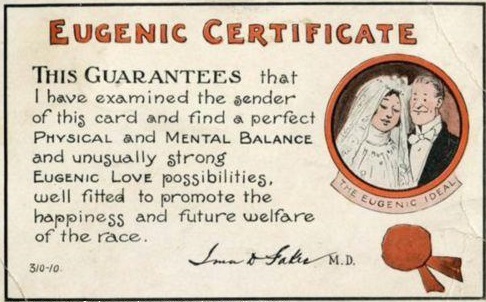

 Over 19 million people attended this “West Coast World’s Fair Exposition” during 10 months from February 20 to December 4, 1915. The fair was devoted to extolling the virtues of a rapidly progressing nation, with particular emphasis devoted to new developments in science, agriculture, manufacturing and technology. The display generating the most interest among fairgoers was devoted to medical developments concerning health and disease, particularly theories on race betterment or, the promotion of eugenic studies. Expo promoters noted the interest of excited visitors and soon, Eugenics, billed as the advancement of civilization, became the main theme of the fair.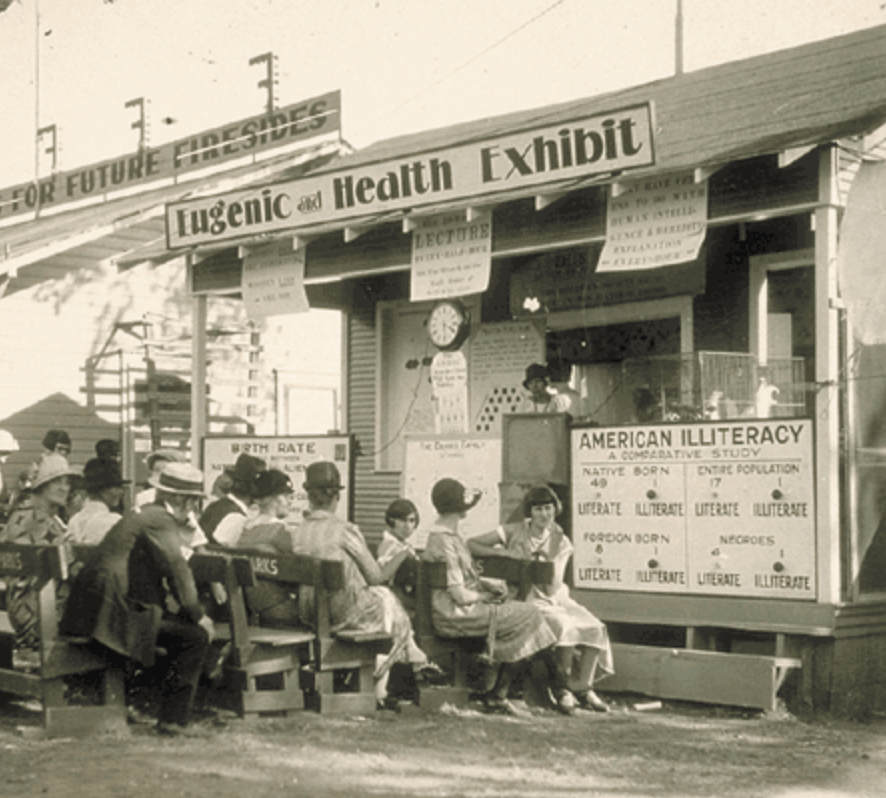

 Alan E. Hunter