
PART II
Original publish date: November 12, 2020
The southern Indiana town of Warren, a stop on the route of the Indianapolis & Ft. Wayne Railroad in Huntington County, had one of the first local Horse Thief Detective Association chapters. The town’s story typifies why a HTDA chapter was needed. Warren had a race track that drew horses from across the tri-state area; horse thieves could easily ride trains and the interurban from larger neighboring cities, steal the horses, and hide them in Wells County caves – where the Huntington County sheriff couldn’t cross county lines to look for them. In 1800’s Indiana, a deputized vigilante force of constables was formed to track, arrest and detain these suspected horse thieves. Indiana was frontier back then. It might take days (or weeks) for a US Marshal to appear. So locals took matters into their own hands.
However, there was a frail line between being protectors of people and property and frontier vigilante justice. The latter, called whitecapping, led to the beating and very often lynching of people who whitecappers saw either as criminals or simply people whose actions were eroding the morality of a community. In many cases, by the turn of the 20th century, the NHTDA had devolved into a violent lawless movement among farmers defined by extralegal actions to enforce community standards, appropriate behavior, and traditional rights.
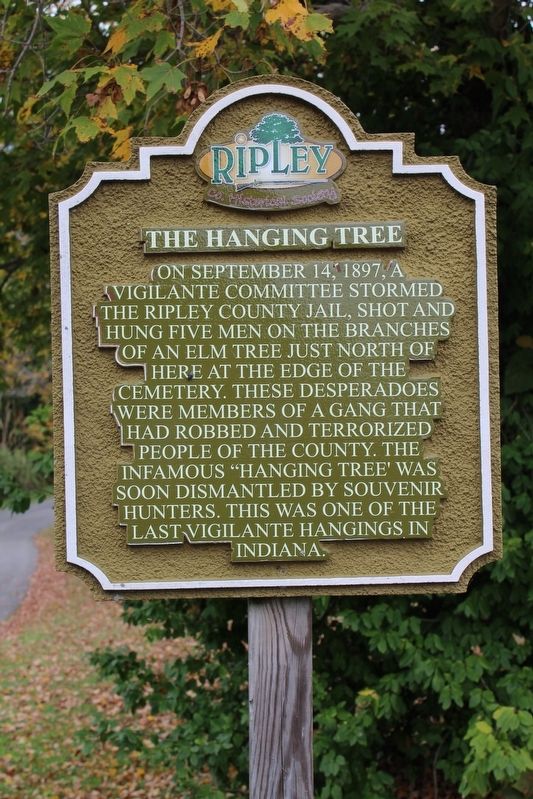
In September of 1897, newspapers reported on the “Versailles lynching,” or the “Ripley lynching” in which 400 men on horseback came to the Ripley County jail demanding that five men there, all facing charges for burglary and theft, be turned over to them. County residents were being victimized by thieves that were becoming bolder and more aggressive – sometimes conducting their crimes in broad daylight. One of the most egregious of these, which was reported to have led to the lynching, was the alleged torture of an elderly couple who had hot coals put to their feet by men demanding money. The deputy in charge of the jail refused to turn over the keys, but was quickly overpowered.
“The mob surged into the jail, and, unable to restrain their murderous feeling, fired on the prisoners. Then they placed ropes around their necks, dragged them (behind horses) to some trees a square away and swung them up,” according to an account in the Sept. 15, 1897, issue of The Madison Courier. The men killed were Lyle Levi, Bert Andrews, Clifford Gordon, William Jenkins and Hiney Shuler.
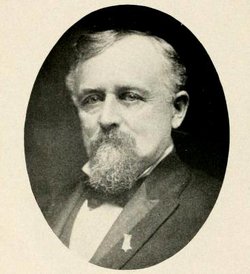
James A. Mount.
Indiana Governor James A. Mount had called immediately for those responsible for the lynching’s to be brought to justice, writing to Ripley County Sheriff Henry Bushing and ordering that he “proceed immediately with all the power you can command to bring to justice all the parties guilty of participation in the murder of the five men alleged to have been lynched. Such lawlessness is intolerable.” Despite his best efforts, the identity of those responsible for lynching these men was never discovered.

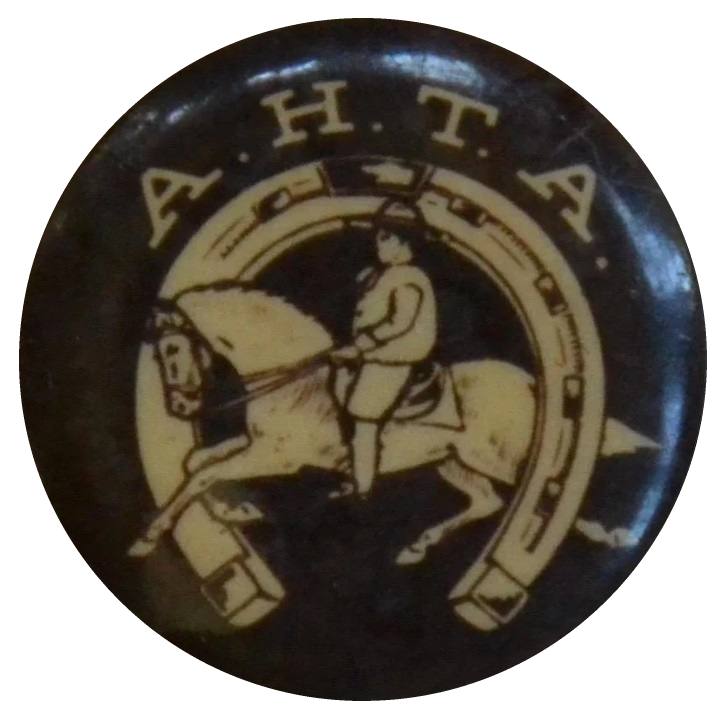
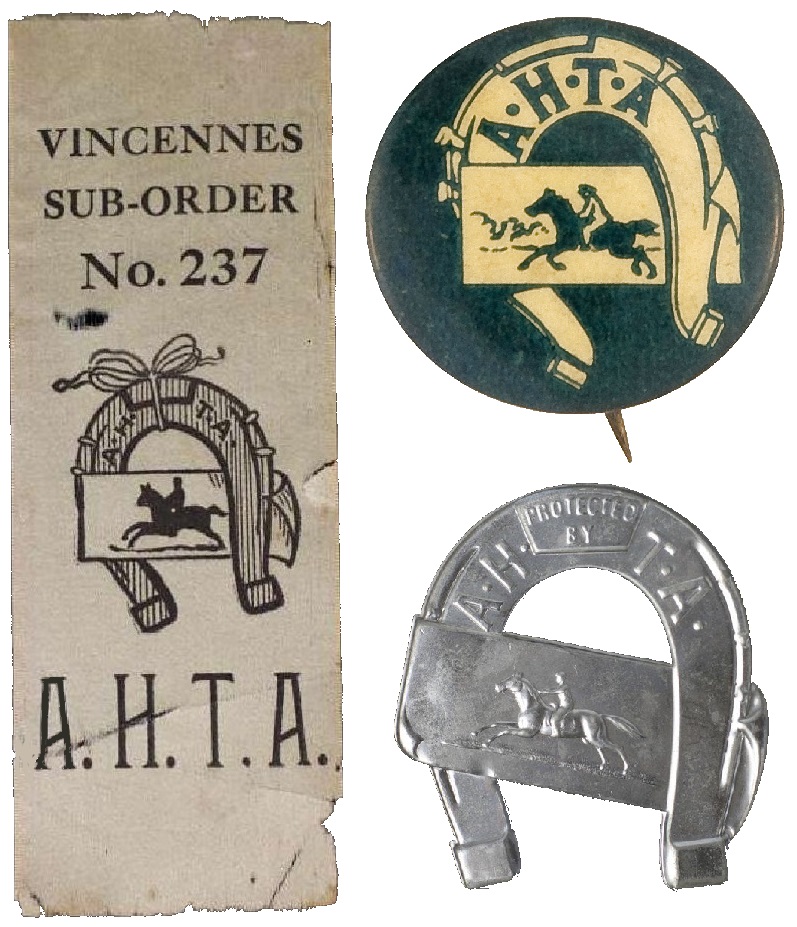
Anti-Horse Thief Association lapel badges.
Mount, who was ironically also the NHTDA’s president, reported that from 1890 to 1896 the association had investigated the theft of 75 horses and had recovered 65, leading to the conviction of 129 thieves. Mount condemned the lynching by saying, “The hideous crime of lynching is not to be measured by the worth or the character of the subject lynched, but by the dangerous precedent established,” he stated. “We would be unworthy of an organization created by the statutes if we dared to insult the law by becoming law breakers ourselves.” The vigilante spirit that once drove the organization ultimately turned ugly but remained strongest in Indianapolis.
The front page of the Feb. 25, 1925 Indianapolis Star reported that 13 Democratic State Senators bolted to Dayton, Ohio to thwart the forming of a quorum (subjecting themselves to a $ 1,000 fine per day) to pass an appropriation bill that included the gerrymandering of a Democratic Congressional District. The Star reported that “members of the Horse Thief Detective Association would come to Dayton to attempt to arrest the striking Senators.” It was clear that by 1925, the NHTDA had turned into little more than a well-organized mob of armed thugs with badges.
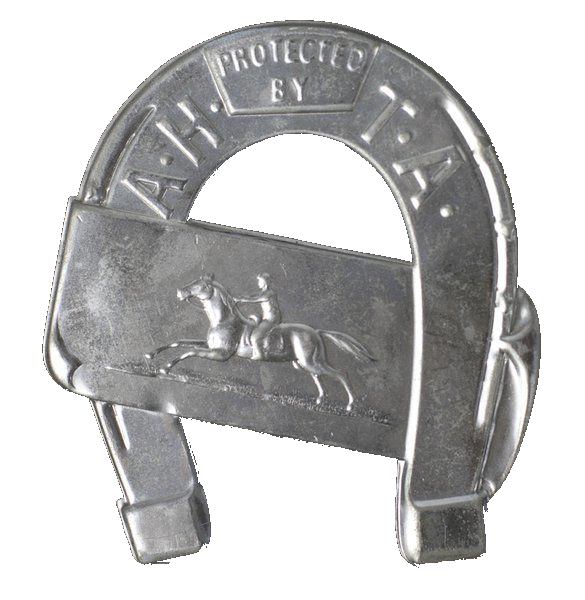
Anti-Horse Thief Association badge and watch fob.
By 1926 there were still as many as 300 active companies of the National Horse Thief Detective Association in Indiana and neighboring states. The western states version was known as the National Anti-Horse Thief Association and out east, the Horsethief Detection Society (founded in Medford, Massachusetts around 1807). And while by this time, horses were few, crime had not diminished much. By the Roaring Twenties, most of the NHTDA agencies had formed alliances with the Ku Klux Klan. It is this late association with the KKK that hastened the end of the organization and forever tarnished its history.
D.C. Stephenson, Grand Dragon of the Indiana KKK, wanted to take advantage of the broad legal powers afforded to Indiana’s horse thief detective associations. Stephenson utilized the Hoosier NHTDA chapters, still on the books but mostly forgotten, as his “hidden” enforcement arm of the KKK. He succeeded in having KKK members infiltrate the group. The post-World War I atmosphere fomented fears of political radicals, outsiders, foreigners, seditionists and minorities which played right into Stephenson’s klan plan. Stephenson’s klan latched onto fears of racism and, particularly in Irvington, anti-Catholic sentiment at the time.
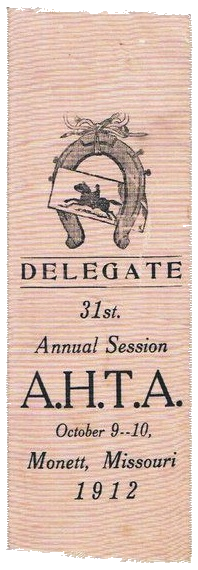

Anti-Horse Thief Association ribbons.
Stephenson’s klan quickly gained momentum in the state (membership cresting at half a million members) but that all changed with his brutal assault on Madge Oberholtzer, an adult literacy advocate and state employee. Oberholtzer died of injuries suffered in the attack, but not before implicating Stephenson in a graphic 9-page deathbed statement that ultimately led to his conviction for second degree murder. Madge’s death brought down the klan and proved once and for all that, contrary to his boastful statements, he was no longer the law in Indiana.
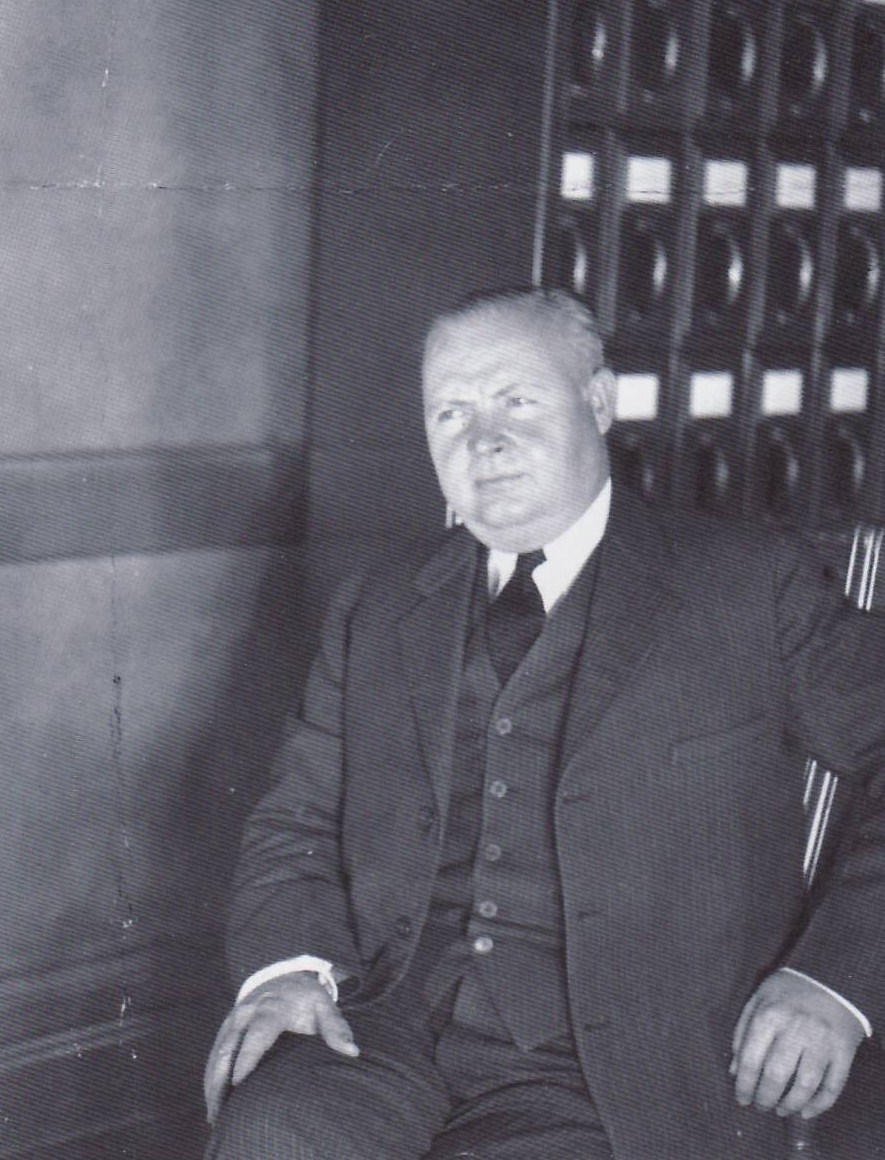
Klan Leader D.C. Stephenson
Stephenson was denied a pardon by the Irvington resident he claimed to have gotten elected Governor: Ed Jackson. He began to leak the names of all those he had helped to elect with his influence and dirty klan money. D.C. Stephenson’s savage attack of Madge Oberholtzer in Irvington hastened the destruction of the KKK and took the NHTDA with it. (In 1928, the Indianapolis Times won a Pulitzer Prize for its coverage of the biggest scandal in the state’s history.)
In 1928, the group dropped the “Horse Thief” specification from its name in an attempt to rid itself of the Klan connection. The name change to “National Detective Association” didn’t take. By 1933, Indiana lawmakers had repealed all laws that gave the agency, regardless of name, any enforcement powers. These organizations remained on life support into the mid-1950s, but their reputations were ruined irreparably. By 1957, all such groups had faded into history. The desperate demise of the association has in many ways complicated its history. The Indiana organization, despite its onetime prominence and clear tie to the state’s history, has been largely stricken from the state’s history.

Like the Klan itself, association with the NHTDA in the Hoosier state seems to have become a taboo subject, deservedly so. So the task has fallen onto collectors, county historic societies, local libraries and archives to maintain records, roles and histories of local chapters of the NHTDA. However, the Anti Horse Thief Association fared somewhat better.
Likewise, the Anti Horse Thief Association was formed as a vigilance committee at Fort Scott, Kansas in 1859 with a noble cause: to provide protection against marauders thriving on border warfare precipitating the Civil War. It resembled other vigilance societies in organization and methods, but the AHTA did not share some of the shadier tactics of the Hoosier NHTDA. Kansas, Oklahoma and Missouri had the largest number of active AHTA chapters. A major difference between the AHTA and the NHTDA was that not only could a thief steal a horse and hurry across a state line, they could also escape into the Indian territories where local authorities could not easily follow. Stealing horses was easy and lucrative. Horses were seldom recovered, since it typically cost more to go after them than they were worth.
The AHTA was not a group of vigilantes, capturing horse thieves and hanging them from the nearest tree. The group believed in supporting and upholding the law, and the last thing they wanted to do was break the law. The AHTA worked hand in hand with law enforcement, gathering evidence and testifying in court to punish horse thieves and other criminals. It was a way for law-abiding citizens to restore order by working with law enforcement rather than becoming helpless victims.
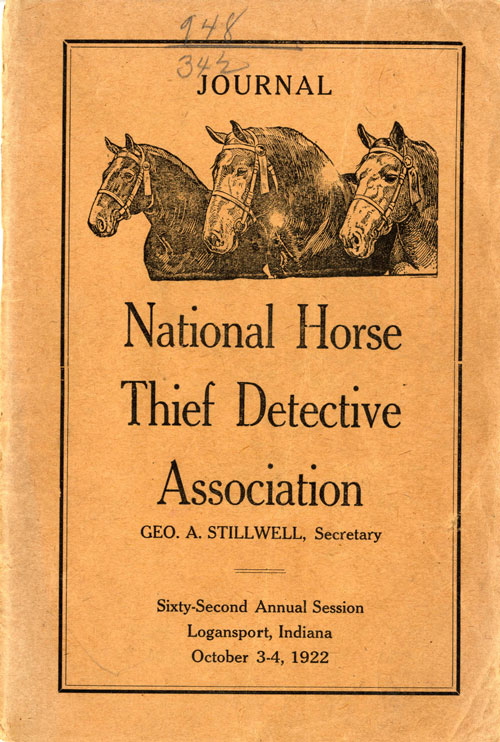
Although it was a “secret” organization, nearly any man could join. To become a member of the AHTA, it was only necessary that you be a citizen in good standing, male and over eighteen years old. One of the reasons the AHTA was so successful was because the members didn’t have to worry about getting extradition orders and crossing state lines while bringing back a thief. The AHTA had a clever way around this. If a thief was chased into another state, part of that state’s AHTA group would remain close to the state line. When captured, they would take him to the line and tell him to, “get out of our state and don’t come back.” As soon as the thief crossed the state line he would be arrested by AHTA members on the other side waiting for him.
AHTA membership peaked at 50,000 in 1916. As with the NHTDA, World War I changed rural life, members left for the war, many never to return, and mechanization replaced horsepower. As automation took over, and horses were used less, stealing them became a misdemeanor offense. By the Great Depression and Dust Bowl, AHTA membership shrank drastically, only a few individual chapters survived as social clubs.
Although the Horse Thief Associations are all gone now, horse thieving still exists. There are no solid statistics available, but it is estimated that between 40,000 to 55,000 horses are stolen each year. It is relatively easy to pull up to a pasture and coax a horse into a trailer and haul it to an auction and make a quick buck. Sadly, most of these stolen horses taken to auction end up at a slaughterhouse. There is a modern-day version of the AHTA. It is called Stolen Horse International (SHI). Thanks mostly to the Internet, SHI boasts a 51% recovery rate of stolen horses that are reported within the first day of the theft.
And what what remains of Indiana’s NHTDA? Today, badges once worn by HTDA, NHTDA and AHTA members are highly prized by collectors. Badges vary in style, size and design according to chapter and year. Collectors also seek out buggy markers (designed to be nailed to a buggy to signify a buggy owner’s membership) and books, stickpins and ribbons are also highly sought after. Relics from a lost era when horses were a part of the family and the only pollution being produced could fertilize your garden.


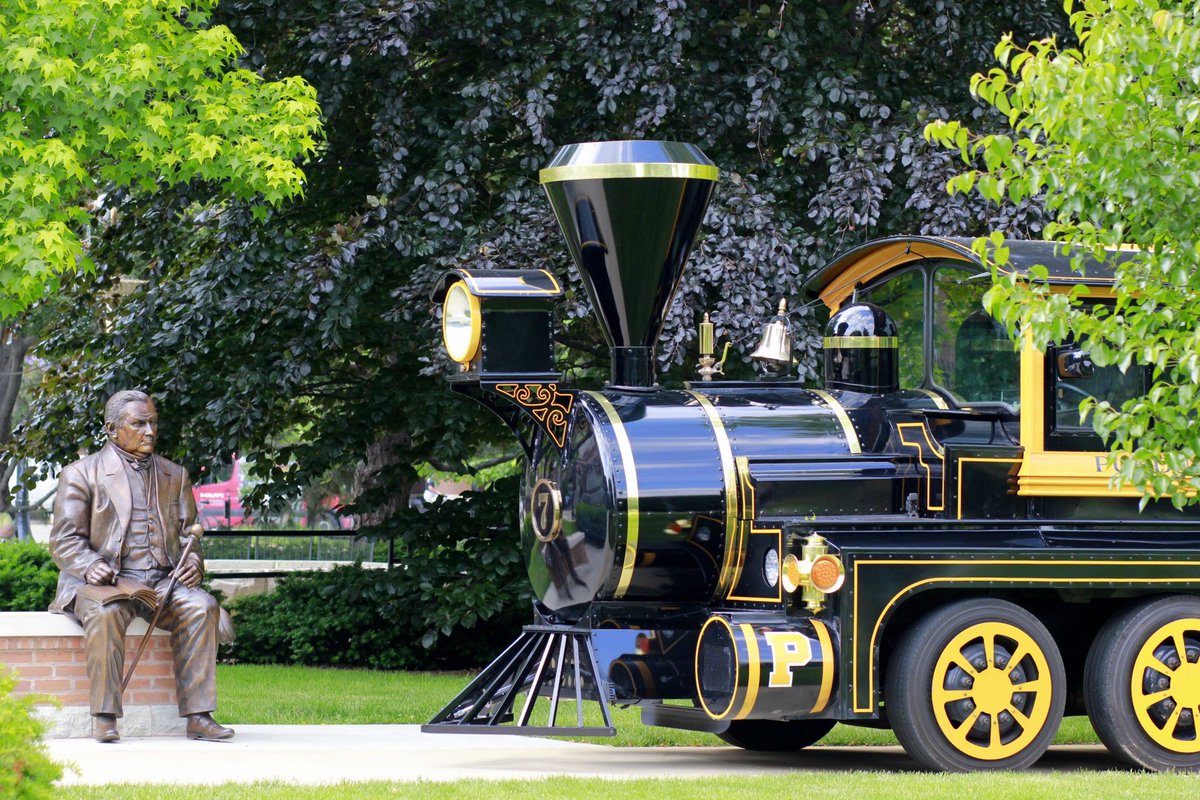
 The train was traveling on what would have been the 101st birthday of school founder and namesake John Purdue (born October 31, 1802). Purdue, a wealthy landowner, politician, educator and merchant, was the primary benefactor of the University. In 1903, if you wanted to get to Indianapolis from either school, you had three choices: ride a horse and buggy, walk or take the train. Since these were the days before automobile travel was popular, train travel was the most widely accepted form of transportation.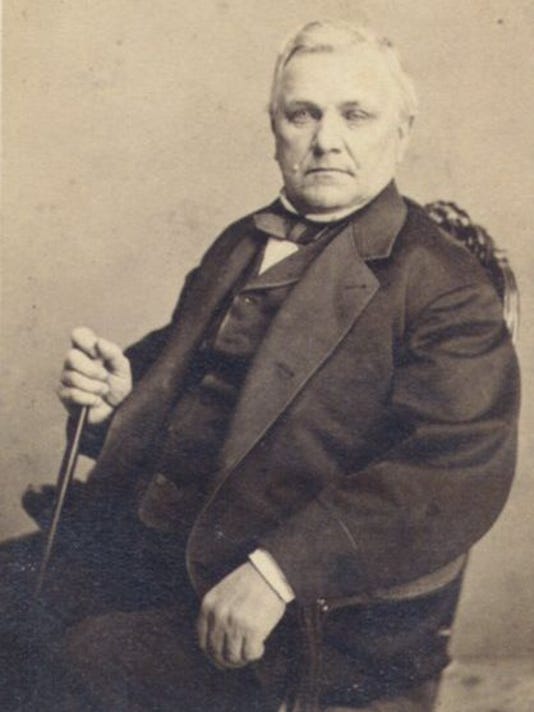
 Unlike the raucous fans traveling in the 13 plush, modern streamliner train coaches behind them, the Boilermakers team traveled in relative silence, focusing on the task at hand, mentally preparing for their upcoming rivalry game in the cozy confines of an older wooden train car. Unfortunately, the athletes had no idea that a minor mistake would lead to a major disaster. Railroad protocol specified that “Special” trains operate independent of the regular schedule. Timing was everything in the railroad game.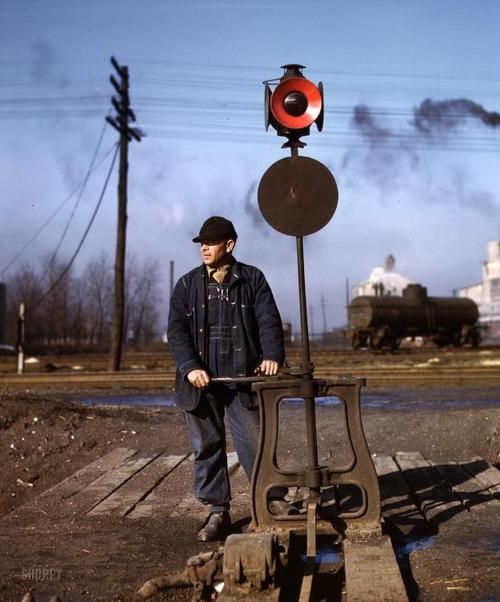
 The Boilermakers never knew what hit ’em. The engine slammed into the coal car, splintering apart the first few cars while folding like an accordion. When the two trains collided, the lead car hit the debris, causing it to shoot into the air. This gave the full impact to the second train car, causing all the deaths. The wooden train cars splintered like kindling and were destroyed, and the adjacent cars careened violently off the elevated tracks, tumbling to the ground below like jack straws.
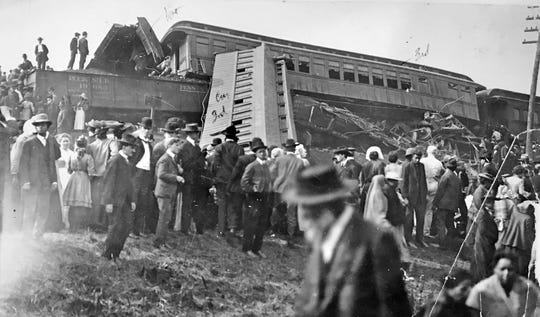 The Indianapolis star reported, “The trains came together with a great crash, which wrecked three of the passenger coaches, in addition to the engine and tender of the special train and two or three of the coal cars. The first coach on the special train was reduced to splinters. The second coach was thrown down a fifteen-foot embankment into the gravel pit and the third coach was thrown from the track to the west-side and badly wrecked. The coal cars plowed their way into the engine and demolished it completely. The coal tender was tossed to the side and turned over. A wild effort on the part of the imprisoned passengers to escape from the wrecked car followed the crash. Immediately following the wreck the students and the others turned their attention to the work of rescuing the injured, and by the time the first ambulances arrived many of the dead and suffering young men had been carried out and placed on the grass on both sides of the track.”
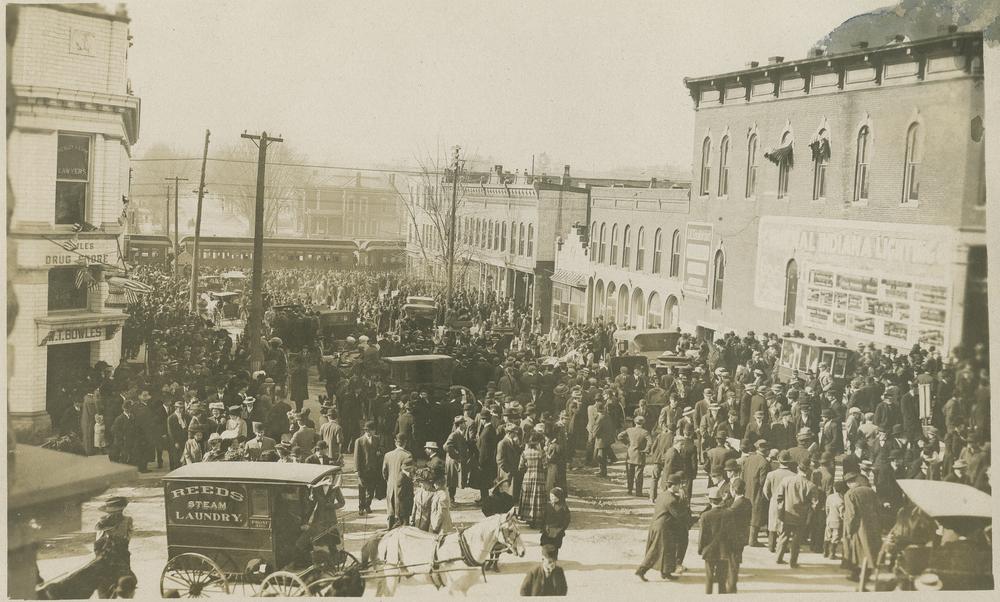 The fans at the rear of the train were unaware of what happened and only felt a slight jolt as the train came to a sudden stop. These rearmost passengers wasted no time in coming to the assistance of the victims up ahead. The erstwhile revelers skidded to a stop at the scene of carnage and were horrified at the devastation before them. Acts of unselfish action made heroes out of athletes and ordinary people alike.
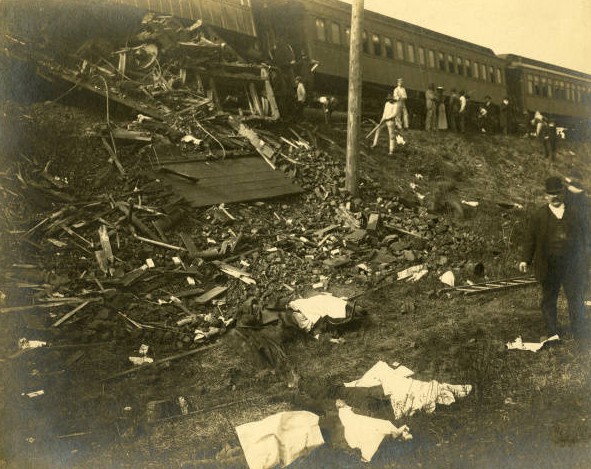 Seventeen passengers in the first coach were killed. Thirteen of the dead were members of the Purdue football team. Walter Bailey, a reserve player from New Richmond, although grievously injured, refused aid so that others could be helped. Team Captain Skeets Leslie was covered up for dead, his body transported to the morgue with the others. It was the first catastrophe to hit a major college sports team in the history of this country. The affects would be felt for decades to come and one of those players would rise from the dead, shake off accusations of association with Irvington KKK leader D.C. Stephenson, and lead his state and country through the Great Depression.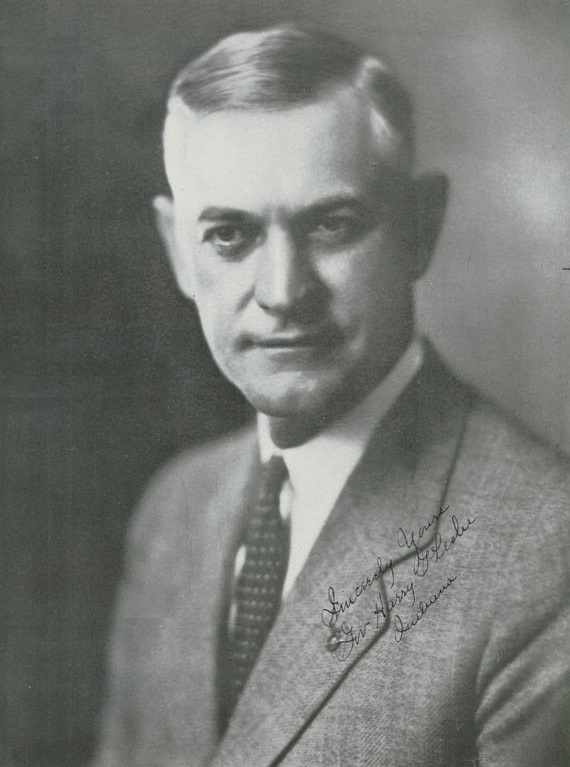
 Alan E. Hunter