Music, Pop Culture, The Beatles

Genesis: John Lennon and Paul McCartney’s First Meting.

Lennon-McCartney 1st meetingOriginal publish date:  June 29, 2015

58 years ago this Monday, the headline on the front-page of the July 6, 1957 Liverpool Evening Express read “MERSEYSIDE SIZZLES.” England was in the 10th day of a heat wave that had enveloped all of Europe. The day before it reached 98 degrees in Vienna and a staggering 125 degrees in Prague. The headline proved prophetic because that day was the first meeting of two Liverpool teenagers who would change the world: John Lennon and Paul McCartney.
On that fateful Saturday afternoon John Lennon’s “skiffle” band, “The Quarrymen” performed at St Peter’s Church in Liverpool. The church fair featured booths selling crafts, cakes, carnival games, police dog demonstrations, and a parade culminating with the crowning of the Rose Queen. The first parade truck carried the Queen and her court. The second truck carried John Lennon and his Quarrymen.
The band was asked to play and sing while the truck slowly lurched its way down the street. When the bumpy ride prohibited the standing band’s ability to play coherently, Lennon sat on the edge of the truck, his legs dangling over the edge, as he dutifully played his guitar and sang for the curbside crowd.
Eventually the trucks came to a stop and the Quarrymen’s first set took place on a molten hot stage in a shadeless field behind the church. 16-year-old John Lennon was the undisputed leader of the band. Even though his guitar skills were rough and he often forgot the lyrics to the songs he was performing, he covered it well by ad-libbing his own lyrics. Midway through that first set, 15-year-old Paul McCartney arrived and watched, transfixed, as John held the crowd with his charm and swagger.
The band’s second set took place that evening inside the Grand Dance Hal at St. Peter’s church. Admission to the 8 p.m. show was two shillings (about 10 ¢). After setting up their equipment to play, bass player Ivan Vaughan introduced the band to one of his classmates, Paul McCartney. It was 6.48 pm on July 6 1957 and the older, cocksure Lennon sat slouched on a folding chair. When Ivan introduced Paul to John, the two didn’t shake hands, they just nodded warily at one another. Ivan arranged the meeting but recalled that Paul wasn’t going to go until he was informed that it was a good place to pick up girls. At first Ivan thought he’d made a mistake as the two hardly spoke to each another. But Paul, who Lennon himself often described as precocious and wise far beyond his years, was determined to make a good impression.
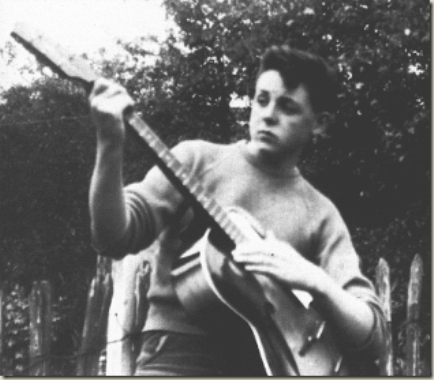
young_paul_mccartney_thumbPaul, sharply dressed in a white, silver flecked jacket and black stovepipe pants with a guitar strapped to his back, whipped out the guitar and began playing Eddie Cochran’s “Twenty Flight Rock” followed by Gene Vincent’s “Be Bop A Lula” before launching into a medley of Little Richard songs. Lennon was floored by the demonstration. McCartney sealed the deal by tuning Lennon’s guitar and writing out the chords and lyrics to some of the songs he’d just played.
After the Quarrymen’s show the group invited McCartney to come along to a local pub where they lied about their ages to get served. For Lennon it must have been a dilemma to invite the talented youngster into the fold as a possible challenge to his own superiority within the group. Lennon, even then a savvy businessman, realized that McCartney’s addition might mean the difference between success and failure. Two weeks later Paul joined the band.
In a 1995 interview, McCartney recalled: “I remember coming into the fete and seeing all the sideshows. And also hearing all this great music wafting in from this little Tannoy system. It was John and the band. I remember I was amazed and thought, ‘Oh great’, because I was obviously into the music. I remember John singing a song called Come Go With Me. He’d heard it on the radio. He didn’t really know the verses, but he knew the chorus. The rest he just made up himself. I just thought, ‘Well, he looks good, he’s singing well and he seems like a great lead singer to me.’ Of course, he had his glasses off, so he really looked suave. I remember John was good. He was really the only outstanding member, all the rest kind of slipped away.”
Lennon was equally impressed with McCartney’s instant ease in playing and singing songs that the Quarrymen worked long and hard to learn. McCartney remembered, “I also knocked around on the backstage piano and that would have been ‘A Whole Lot Of Shakin’ by Jerry Lee. That’s when I remember John leaning over, contributing a deft right hand in the upper octaves and surprising me with his beery breath. It’s not that I was shocked, it’s just that I remember this particular detail.” Yes, at that historic first meeting, 16-year-old John Lennon was drunk.
In his 1964 introduction to bandmate Lennon’s first book, “In His Own Write”, McCartney recalled: “At Woolton village fete I met him. I was a fat schoolboy and, as he leaned an arm on my shoulder, I realized he was drunk…We went on to become teenage pals.” More recently, Paul recalled: “There was a guy up on the stage wearing a checked shirt, looking pretty good singing a song I loved, the Del-Vikings’ Come Go With Me. He was filling in with blues lines, I thought that was good, and he was singing well. He was a little afternoon-pissed, leaning over my shoulder breathing boozily.”
Pessimists may assume that John and Paul would eventually have met on some other day had that hot and humid Saturday introduction 58 years ago never happened. But despite their mutual passion for music, the two lads lived in different neighborhoods, went to different schools and were nearly two years apart in age. All recalcitrant intentions aside, ‘Imagine’ if John Lennon had never become a Beatle. ‘Imagine’ if the band that changed pop culture forever had never existed. Fate is a funny thing. Encounters like this are often the stuff of legend; primarily unwitnessed, unobserved, and unrecorded thereby making them unprovable.
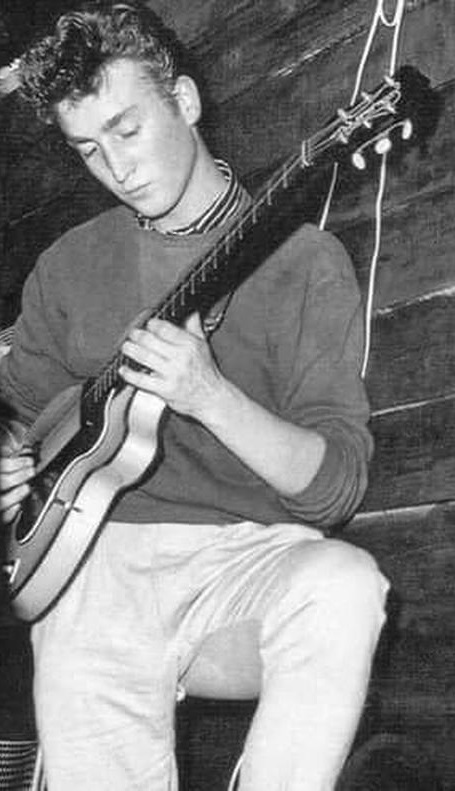
DYRYyu3X4AAEnC3But wait, there is proof. That July 6, 1957 Quarrymen’s set was recorded by a member of St Peter’s Youth Club, Bob Molyneux, on his portable Grundig reel-to-reel tape recorder. Made just moments after that historic meeting, it remains the earliest known recording of Lennon. The three-inch reel includes Lennon’s performances of two songs; “Puttin’ on the Style,” a No. 1 hit at the time for Lonnie Donegan, and “Baby Let’s Play House,” an Arthur Gunter song made popular by Elvis Presley. In 1965 Lennon used a line from the Gunter song – “I’d rather see you dead, little girl, than to be with another man”- as the opening line of his own “Run for Your Life”. In 1963, Molyneux offered the tape to Lennon, through Ringo Starr. But Lennon never responded, so Molyneux put the tape in a vault.
In 1994 Molyneux, then a retired policeman, rediscovered the tape and contacted Sotheby’s auction house. The tape, along with the portable Grundig TK8 tape machine that made it, was sold on September 15, 1994 at Sotheby’s for £78,500 (Roughly $ 730,000 US) to EMI records. EMI considered using the recording as part of their Beatles Anthology project, but chose not to as the sound quality was substandard. It was recorded with a hand-held microphone in a cavernous church hall with a high, arched ceiling and a hard floor. EMI decided that although it was an incredibly important recording made on a historic day, the poor sound quality made it unsuitable for commercial release.
The two Beatles never forgot the friend who brought them together. Ivan had first met John when he was three and the two boy’s shared adjoining backyards. Years later, Ivan recalled, “One wet morning, John appeared on my doorstep clutching his Dinky toys, looking to make friends. And we did, going on to play cowboys and Indians in the fields and cricket in the park.” Paul and Ivan were born in the same city (Liverpool) on the same day (June 18, 1942).
For a time the Beatles put Ivan on the payroll of Apple records, in charge of a plan that never took off to set up a school with a Sixties, hippie-style education theme. Ivan’s wife Jan, a French teacher, was hired to sit down with Lennon and McCartney and help with the French lyrics to the 1965 classic “Michelle.” In 1977 Ivan was diagnosed with Parkinson’s Disease and spent the next 15 years working on a search for a cure. During those years Ivan and Jan often spent the evening’s out with Paul and his wife Linda in London restaurants. Ivan died in 1993. His death upset Paul so much that he started writing poetry again.
In 2002, Paul wrote the book “Blackbird Singing: Poems and Lyrics, 1965-1999″ in which he honored his old friend with a poem titled, Ivan: ” Two doors open, On the eighteenth of June, Two Babies born, On the same day, In Liverpool, One was Ivan, The other – me. We met in adolescence, And did the deeds, They dared us do, Jive with Ive, The ace on the bass, He introduced to me, At Woolton fete, A pal or two, And so we did, A classic scholar he, A rocking roller me, As firm as friends could be, Cranlock naval, Cranlock pie, A tear is rolling, Down my eye, On the sixteenth of August, Nineteen ninety-three, One door closed.” And it all started 58 years ago: July 6, 1957.
Disney, Politics

Walt Disney Meets LBJ.

WaltAndLBJOriginal publish date:                October 29, 2014

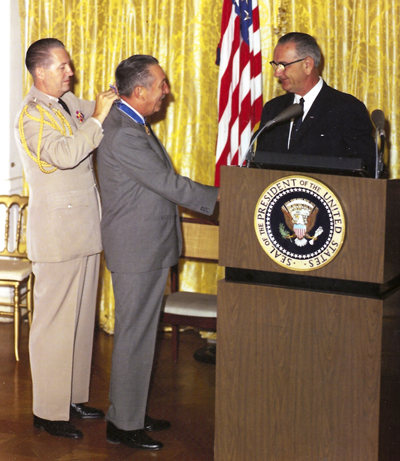
Mid-term elections are over, so I figure it is once again safe to write about politics. Well, sort of anyway. One of my favorite political stories involves a pair of baby-boomer heroes on the eve of the seminal 1964 Presidential election. On September 14, 1964, Walt Disney received the Presidential Medal of Freedom, the United States’ highest civilian honor, from Lyndon B. Johnson. The award recognizes those individuals who have made “an especially meritorious contribution to the security or national interests of the United States, world peace, cultural or other significant public or private endeavors”
There can be little doubt that Walt Disney deserved the honor, but controversy revolves around what Mr. Disney was wearing when he received the medal from President Johnson that day. Controversy from the man who brought us the happiest place on earth. What could that possibly be? Well, when Walt met Lyndon, he was wearing a Barry Goldwater for President button on his lapel. The lapel opposite the one that LBJ would pin the distinguished medal to.
The White House announced on July 3, 1964, that Walt would be a recipient of the Medal of Freedom. It was during the Goldwater campaign, and Walt Disney and his entire family were all united in their enthusiastic support of the Conservative Arizona Senator. Walt felt that it was all a ploy to surround the incumbent Democrat LBJ with people judged to be outstanding Americans for a powerful photo op during the campaign. The invitation came at a time when Walt Disney had bigger things on his mind: the New York World’s fair opening, the first death at Disneyland (Mark Maples on the Matterhorn) and the United States Lawn Bowling Championships. Wait, what? Lawn Bowling?
Betcha didn’t know that Walt Disney was one mean lawn bowler did ya? The White House ceremony was scheduled the Monday after the U.S. Lawn Bowling Championships at Buck Hill Falls, in the Pocono Mountains of eastern Pennsylvania near Scranton. The White House ceremony came at the end of a cross country journey Walt had arranged to take his Beverly Hills lawn bowling team back east to play in a few tournaments. Disney was passionate about lawn bowling at this time in his life. Walt bowled in the championships at Buck Hill Falls surrounded by, and competing against, just plain folk less than a week before he would meet the President of the United States.
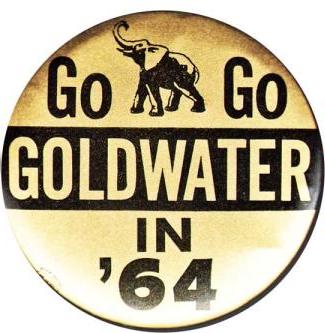
At some point during his bowling sojourn, Walt decided he wanted to wear a Goldwater button to the White House. He asked an aid to get him a Goldwater pin. They got him two; a large 3″ pin with the slogan “Go-Go Goldwater” and a small tie-tac sized metallic gold metal lapel pin that combined the letter “G” and the numerals “64” as shorthand for “Goldwater in ’64”. Walt wore the big button on the plane going to Washington and joked to friends that he was going to wear it to the White House, although no-one really thought that he would.
Here’s where the story gets a little confusing. Some say that Walt wore the small “G ’64” pin in full view on the front of his lapel while others say he wore it pinned upside down under his lapel. Some of Walt’s friends say that he left the larger pin in his pocket while still others claim that he wore it pinned under his lapel. The very lapel that LBJ would pin the medal onto.
When Walt went to the podium to receive the medal from the President, he in some way tried to let Johnson know that he was wearing the Goldwater button. One account has LBJ discovering the pin while pinning the medal on. At the point of feeling the obstruction under the lapel, Walt flipped the lapel up to show the President the pin. Another states that LBJ saw the smaller tie-tac pin while initially pinning the medal onto the opposite lapel. Still another account claims that while Walt was on the podium and at a point when he and the President were face to face, Walt flipped up his lapel to reveal the pin.
For decades, this episode was viewed as an urban legend. It’s only recently that accounts from eye witnesses have surfaced confirming the incident. Although the exact details may remain fuzzy, the event itself has not been denied. Some members of the Johnson administration came forward to admit that LBJ “was not very happy about it…but I don’t think anything was said between them” and that “Johnson did not take Walt’s political commentary with good grace at all.”
One account of the incident comes from Emile Kuri, a longtime set decorator for the Disney live-action films. Kuri was a regular travel companion of Walt’s in the 1960s. Kuri recalls: “Walt didn’t like Johnson at all and he was wearing a Goldwater button. I was wearing the same button. But before I entered the White House, I took the button off. Walt didn’t. When he went into the White House, the aides to Johnson said, “Mr. Disney, please take that off.” He said, “Why should I? I’m voting for him.” You know he had the courage to do that. I didn’t. I had to take my button off. That man had such tremendous courage.”
2013GoldwaterLine-1x10Back in Los Angeles, Walt told his daughter that he had worn the small button openly and that he had worn the larger “Go Go Goldwater” button on the underside of his lapel. He explained this double placement as “So if anyone said anything about it [the small button], I’d flash this [the larger button]… as if to say, ‘which one do you prefer I wear?’ Wearing an opponent’s button visible to LBJ would seem to have been a slap in the President’s face, a rude gesture difficult to reconcile with the Walt Disney legend.
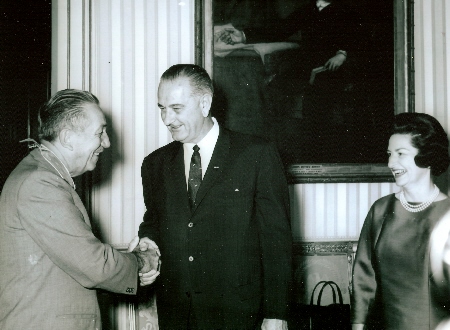
Walter Elias Disney, was born in Chicago and grew up in Missouri. He was a very devout Congregationalist Christian, the religion of his family, and was named after the family minister. Walt’s political leanings are well-known to be conservative, anti-union, and vehemently anti-communist. Disney was a close ally of “Red Scare” zealot Joe McCarthy. Walt even testified against some of his Hollywood peers in McCarthy’s infamous House Un-American Activities Committee hearings. But was Walt Disney a boorish, ungrateful guest in the People’s House receiving an award so prestigious that- like the comparable Congressional Medal of Honor- it must be bestowed by an act of U.S. Congress?
Whatever the exact nature of Walt’s gesture, it was not defiant or insulting. It was more of an expression of Walt’s Midwestern sense of humor. If Walt said anything to LBJ about the incident, it would have surely been in jest. LBJ was well aware of Disney’s support for Goldwater before he bestowed the honor upon him. The subject of Walt’s support for Goldwater came up in one of LBJ’s recorded telephone conversations on September 6, 1964, eight days before the Medal of Freedom ceremony.
Disney was by nature an enthusiast, and in 1964, politics had become one of his enthusiasms. He had gotten to know General Dwight Eisenhower on social occasions at Palm Springs, and in July 1964, just a few days after the Medal of Freedom announcement, he visited the GOP national convention in San Francisco and was photographed there with Ike and his son, John. By wearing a Goldwater button, Walt may have been sticking up for his friends. Probably a mix of motives was at work: loyalty to fellow Republicans, sharp political differences with Johnson, and, perhaps most importantly, a once in a lifetime opportunity to pull the ultimate prank.
Years later, Walt’s daughter Diane said, “It was in bad taste not to remove it when he was received by the President. Dad did not respect Johnson, but did have great respect for the office he held. I was uneasy about what he said he’d done, but I did not let on. Rather, I probably said, ‘Good for you!’ or something like that. Alas, your animated man was not a perfect man. But he was not a coarse man. He did like to do the little unexpected ‘cute’ things like the bride and groom he designed for our wedding cake [the bride figure, representing Diane, was dressed in Levi’s, and the groom figure, representing Ron Miller, was dressed in Bermuda shorts and bare feet—and a football helmet]. He was the consummate gag man.”
WaltAndJohnson0001

Whether you believe Walt Disney was making a political statement or just pulling a gag, this little known episode from the real life of a man whose name, like Ford, Hershey or Firestone, has become an iconic American brand, must surely make you smile.

ABA-American Basketball Association, Pop Culture

Neto Comes to Irvington.

Neto signing photoOriginal publish date:  March 11, 2018

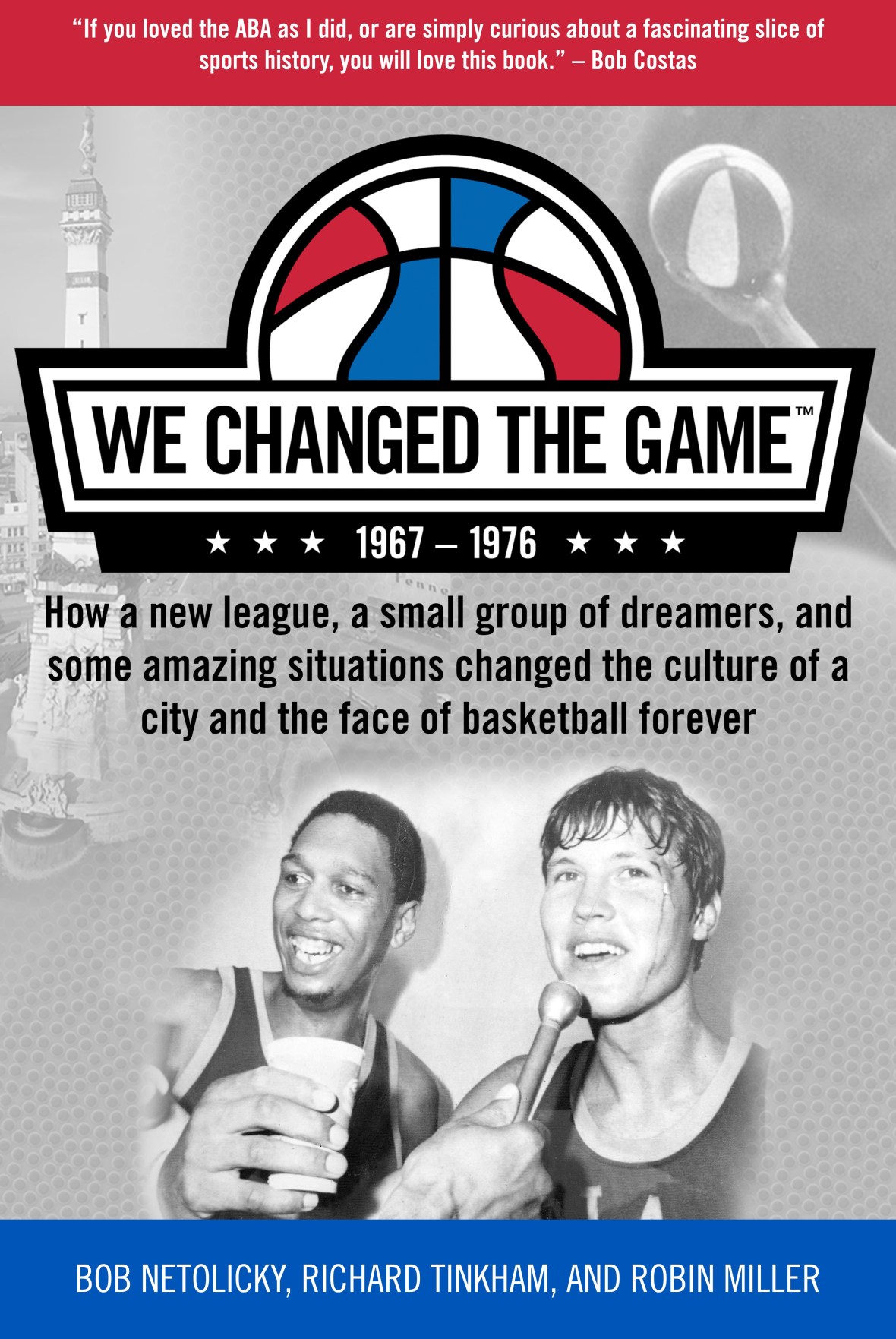
You never know who’s going to show up when Neto walks into the room. Bob Netolicky, former ABA Indiana Pacers 4-time all-star, can draw a crowd. On any given day, Neto may show up with former teammates like George McGinnis, Darnell Hillman or Billy Keller. Or maybe with former Pacers coach Bobby “Slick” Leonard or Pacers team founder Dick Tinkham. Or media legends like Robin Miller or Bob Costas. Neto knows ’em all.
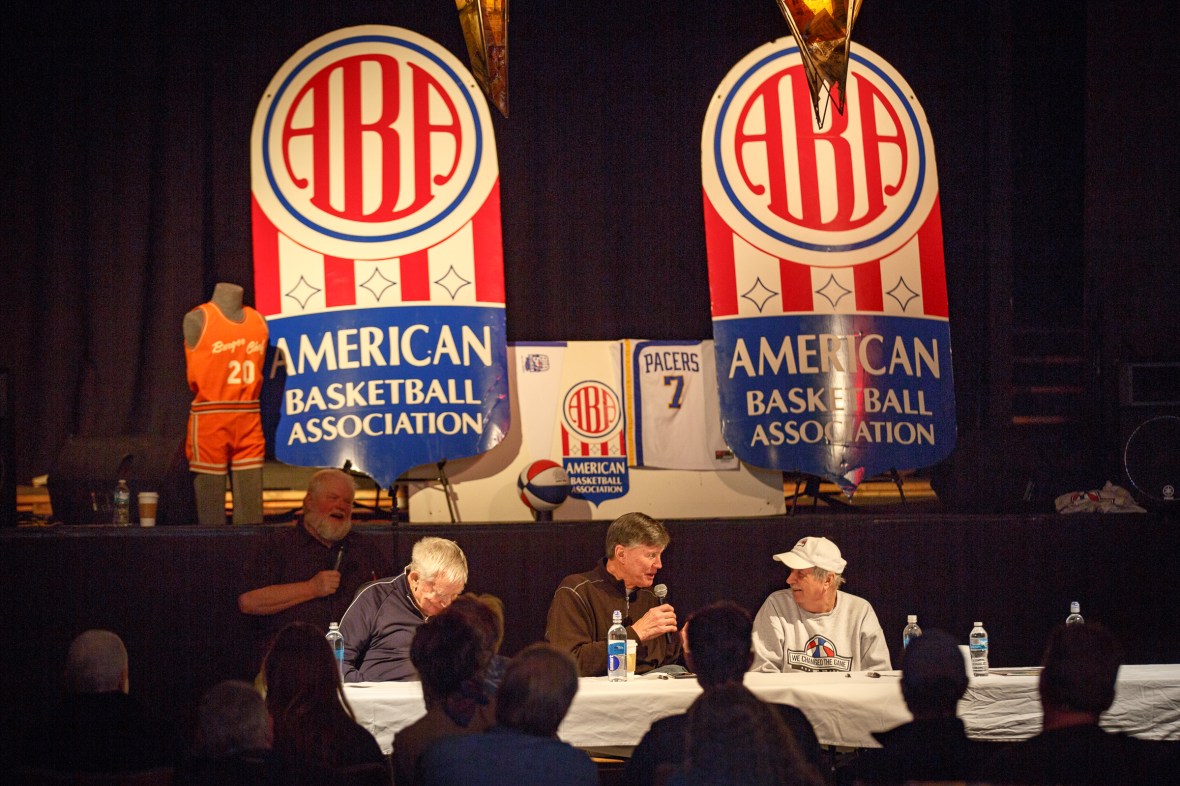
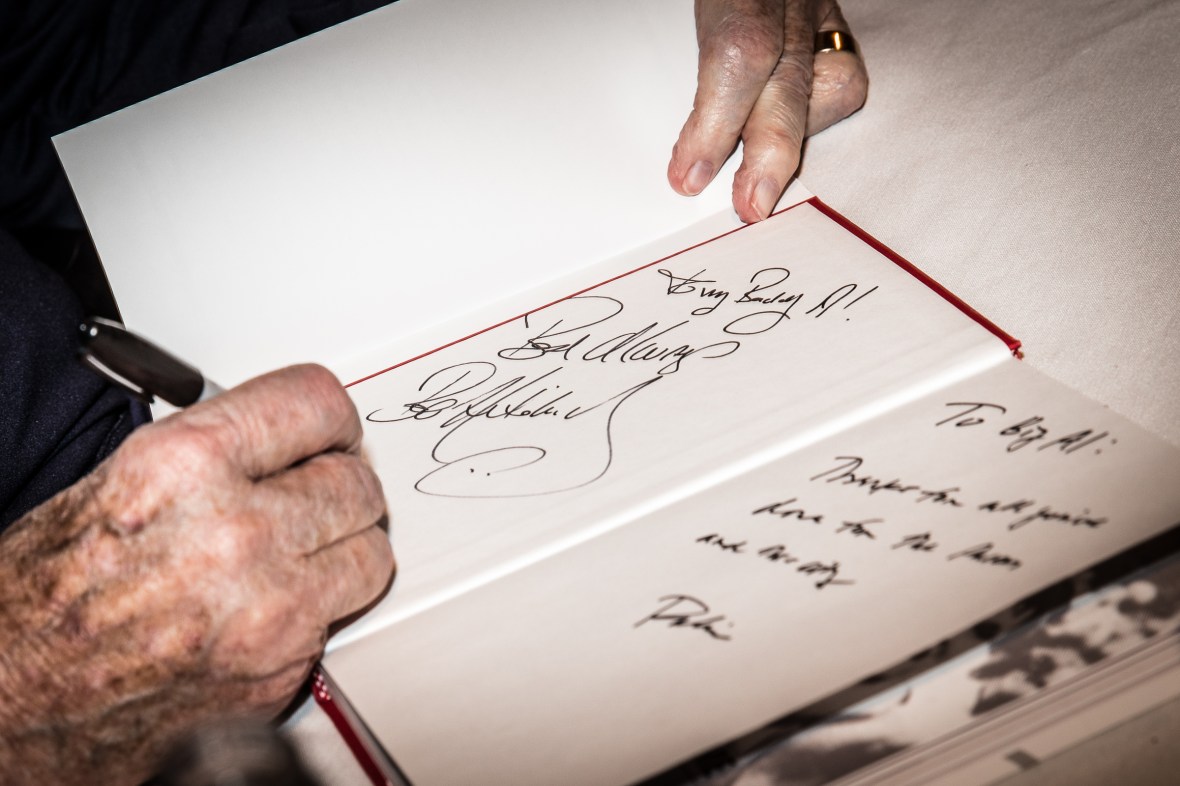
This Sunday, March 18th, you are invited to the Irving theatre to hang out with Neto and friends. Netoclicky, along with Dick Tinkham and Robin Miller, has written a book called “We Changed the Game” and all three authors will be in Irvington from 2:00 to 4:00 to sign books, swap stories and answer questions from fans. The trio has chosen the Irving Theatre for their book release party. Former Q-95 on -air personality, actor and stand-up comedian Dave “The King” Wilson will act as emcee for the event.
Neto says, “The book is a collection of stories told by those who lived it. It’s the Pacers’ insider’s view from the very first day of the franchise.” Netolicky stresses that the book is not just another stat guide or seasonal recap. “It’s the real story of a team, a coach and a handful of dreamers, who brought a new league and a new team to Indianapolis – and how they not only changed the culture and future of a city, but the game of basketball forever,” said Netolicky.
Richard “Dick” Tinkham, an original ABA Indiana Pacers founder and legal counsel, is one of the few execs still around to tell the real stories of the team, the league and the ABA-NBA merger from the perspective of someone who was intimately involved with the X’s and O’s of the team and league from start to finish. It was Tinkham who reviewed all documents, ranging from incorporation papers, player contracts to merger agreements. Yes fans, there was more than one ABA-NBA merger agreement. Tinkham will share never-before-heard stories about the mergers, anti-trust lawsuits, and wild negotiations between the two leagues that could only be told by someone who was there. Mr. Tinkham, whose reputation and shrewd negotiating skills in the league are legendary, will tell you all about it this Sunday.
ABC Sports reporter Robin Miller will also be at the Irving to talk about his days as a cub reporter for the Indianapolis Star from 1968-76. Born in Anderson, Miller grew up in Indianapolis. His first assignment with the Star was to answer the score phones and run copy. Miller had two passions during those early years: the Pacers and auto racing. He was lucky to find himself working in the epicenter of both.
This Sunday, Miller will describe the Pacer’s from the viewpoint of a cub reporter not yer old enough to drink (were there really guns in the locker room?), Tinkham will explain how the ABA contracts worked (did the team really sign Mel Daniels contract on a barrom napkin?) and Neto will share stories about Pacers coach Bobby “Slick” Leonard’s unusual motivational techniques (did Slick REALLY chase Neto around the locker room with a hockey stick?).
ABA Irvington-0263The nicest thing about this book is that, in many instances, it defines the folklore of the league by telling the real story from the men who actually lived it. For me, the book’s bombshell revelation is the story of just how close the Pacers came to folding at the close of the 1968-69 season. Before that second season, the Pacers made the greatest trade in team history, sending Jimmy Dawson, Ron Kozlicki and cash to the Minnesota / Miami franchise for ABA Rookie of the Year Mel Daniels. That trade, along with the hing of Leonard as the new head coach, legitimized the team. After starting the season 2-7, the team went 42-27 the rest of the way, winning the Eastern Division by 1 game over Miami. However, the Pacers found themselves down 3 games to 1 against the rival Kentucky Colonels in the first round of the league playoffs.
In the book, for the first time ever, Tinkham recounts how that game 5 playoff changed everything. “If we hadn’t won that game and advanced, there was no additional playoff revenue,” Tinkham said. “There was no more money and, even worse, there was no plan.” Mayor Bill Hudnut, who wrote the foreword for the book prior to his passing in 2016, said “to have the franchise fold would have sent out the message that Indianapolis could not be considered a major-league city, and that in turn would hinder our ability to garner business and jobs from elsewhere.”
The Pacers won the next 3 games by an average of 15 points per game to take the series 4 games to 3 and then defeated Miami in 5 games. The Oakland Oaks beat the Pacers 4-1 to win the second ABA Championship, but the Pacers strong playoff performance saved the franchise. That win changed not only the face of a city but the game of professional basketball forever. Netolicky averaged nearly 19 points and 10 rebounds per game. Neto seemed to always rise to the occasion in the playoffs. During his 9-year ABA career, Bob averaged 15.5 points per game. Good enough to land him at 30th place on the all-time ABA playoff scoring average list. 8 of the 29 in front of him are Hall of Famers.
What I’ll look forward to most this Sunday are the stories Netolicky will surely share with Irvingtonians. Long considered one of pro basketball’s most colorful personalities, Neto’s tales live up to that reputation. Netolicky was famous for a having a pet ocelot. If you don’t know what an ocelot is, google it. Neto hints, “When I’d come home after midnight I’d often find it (the ocelot) in my bed, I’d try to move it… it would growl… and I’d go sleep on the couch.” Known for his mod lifestyle and popularity with Pacers’ female fans, one sportswriter dubbed him the “Broadway Joe Namath of the ABA”.
Neto talks about those days coming out of college and joining the upstart new league, “I didn’t know the difference between the ABA and the NBA. I’d been to a lot of NBA games but I found out pretty fast that the ABA game was more wide open, it moved a little faster. The NBA was a post-up league; a bunch of big, clumsy guys with a good center. The ABA had speed and quickness from the start. It was a faster league.” Neto continues, “I’m a big auto racing fan, and the way I associate the early ABA with the NBA was similar to when the rear-engine car came to Indy racing. It changed the sport by making it faster, better, quicker. They took the big, old roadsters, which were fun to watch, but slow, heavy and not very maneuverable, and they changed—they literally adapted and changed the sport, and that’s what the ABA did.”
Neto and Tinkham both agree that in those early years, the ABA was touch and go. But soon parity set in and within a few years, the most exciting players were in the ABA. Neto explains, “Right before the merger happened, there were a couple of teams, Seattle most prominent, where the owner [Sam Schulman] said that if the merger wasn’t going to happen, they were going to jump to the ABA. The Supersonics literally wanted to go to the ABA.”
“We Changed the Game” is being published by Hilton Publishing. It’s founder is Dr. Hilton M. Hudson II, one of less than 40 board-certified, African-American interventional cardiologists practicing in this country. Dr. Hilton grew up in Indianapolis and as a high school player, he used to scrimmage with the old ABA Pacers during the off seasons. Yet another Indianapolis connection to the book can be found right here in Irvington. The book is being handled by McFarland P.R. & Public Affairs, Inc. whose offices are located at 211 S Ritter Ave.
The book release party comes just a few weeks before the ABA 50-year reunion celebration on April 7th in Indianapolis Ten percent of the book proceeds will fund Dropping Dimes, an Indiana nonprofit that assists ABA players and their families facing financial or medical difficulties. “These proceeds are crucial to so many of my former teammates and league players, because after the merger … former ABA players who were not absorbed into the NBA were generally left without a pension,” said Netolicky, who serves on the advisory board of Dropping Dimes. For the past few years, Bob has been involved in trying to get the ex-ABA players their rightly deserved pensions, many of these former players are experiencing extreme hardships today.
The American Basketball Association (ABA) gave many unsung players a shot or a second chance to make it in pro basketball. It was the first to shine the spotlight on Indianapolis as a nationwide sports mecca. The ABA flagship Pacers franchise became one of the top-contending professional basketball teams in the country. 50 years ago, the ABA Pacers triggered the transformation of downtown Indianapolis, turning it into a thriving destination for sports at every level and in every hue. Come out to the Irving Theatre this Sunday and hear the story as witnessed by Robin Miller, Richard Tinkham and Bob Netolicky who were there through it all.
ABA Irvington-0012For sure, there will be other book signings for “We Changed the Game”. Thus far Neto has scheduled a signing at the J & J all-star sportscard show on Saturday March 24th from 10:00 to 12:00. The card show is held at the American Legion Post # 470 at 9091 E. 126th St. in Fishers and then again at Saturday March 31st from Noon to 2:00 at Bruno’s Shoebox 50 North 9th St. in Noblesville. Bruno’s shoebox is owned and operated by former longtime Indianapolis Star / News reporter and Indiana Pacers webmaster Conrad “Bruno” Brunner.
But this Sunday’s book release event is the only opportunity fans will have to hear stories and ask questions of the authors in a public forum. So come out and say hi to Neto, Robin Miller, Dick Tinkham and Dave “The King” Wilson from 2:00 to 4:00 pm. Books will be available for sale and you will have the opportunity to have your copy personally signed by these sports legends. Admission is free and the program will be free wheelin’. And remember, you never know who might show up with Neto in the Irv. Could be Slick, Dr. Dunk, Big Mac or any other Pacer great you can imagine. You never can tell with Neto.

Photos courtesy Lauri Mohr-Imaginemohr photography.

Politics, Pop Culture

Tricky Dick Nixon and the Hook Up.

TRicia Nixon and Prince CharlesOriginal publish date:  July 8, 2015

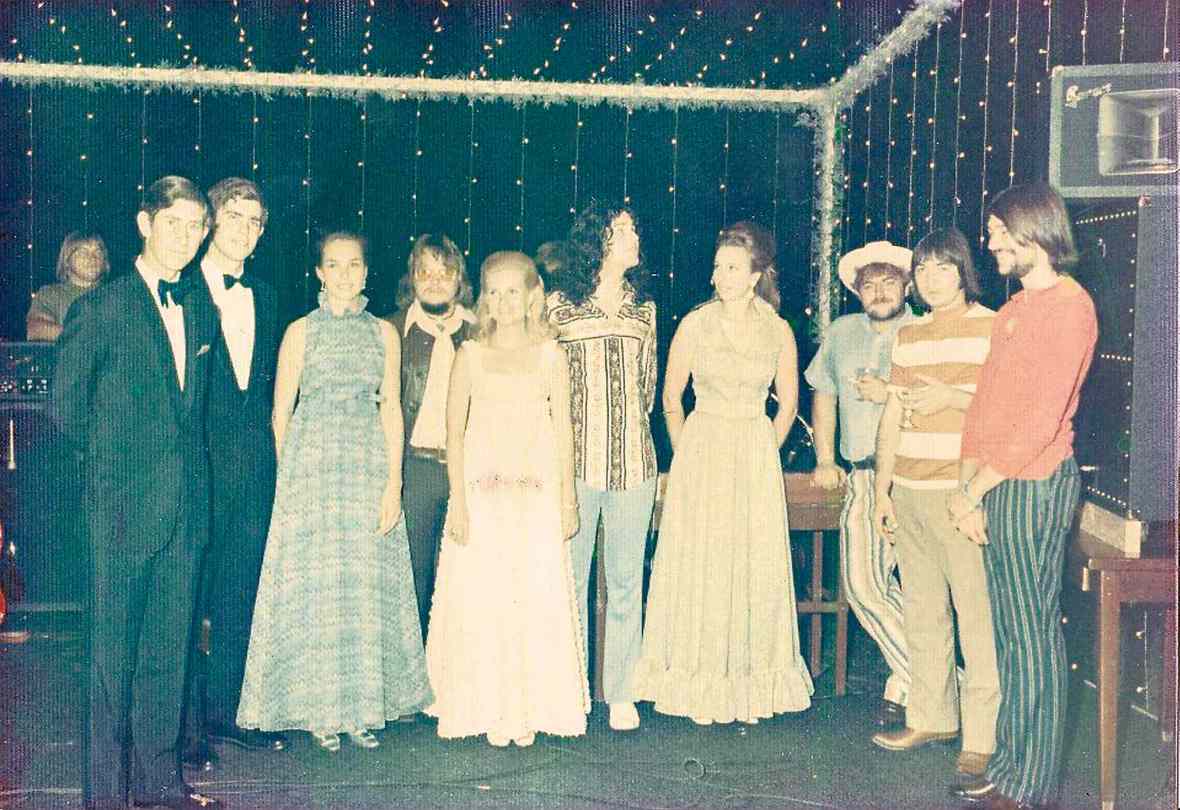
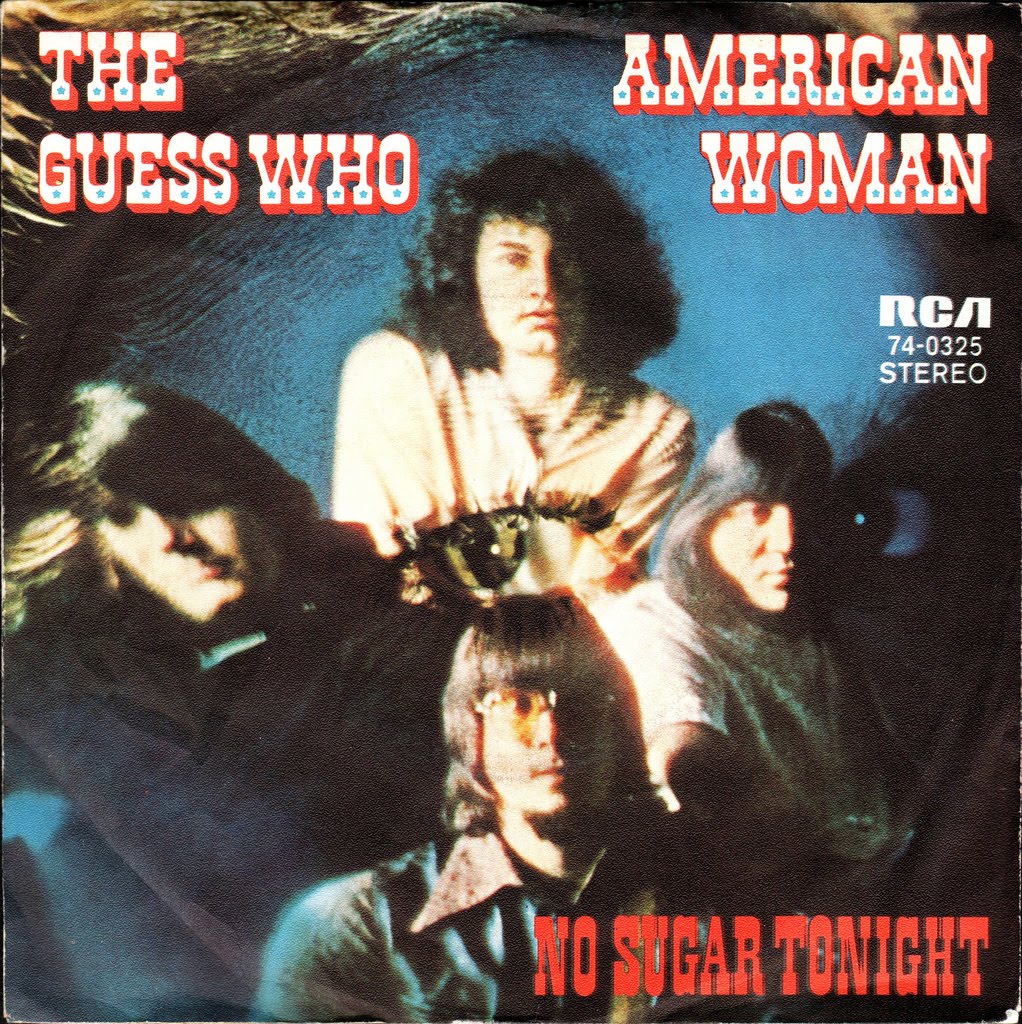
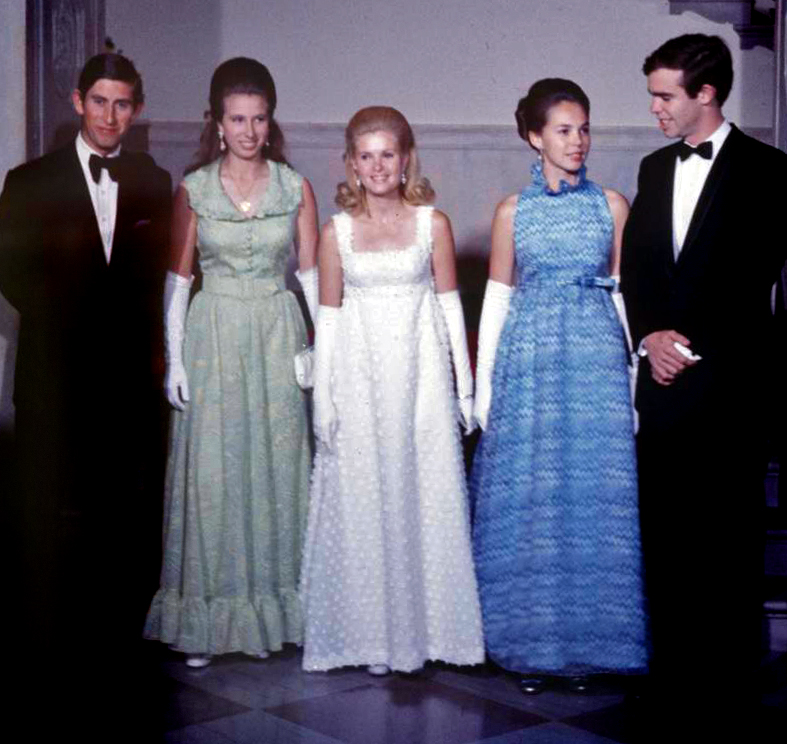
Last week I tried, perhaps in vain, to make President Richard Nixon’s eldest daughter Tricia seem cool. Her musical choice for a July 17th, 1970 party in honor of Britain’s Prince Charles and his sister Princess Anne was a Canadian band known as “The Guess Who.” The band was scheduled to play live on the White House lawn for the Royal fete despite the fact that their most popular song was an Anti-American war anthem; “American Woman”. The possibility of an International Incident was avoided when first lady Pat Nixon, through her press secretary, asked the band not to perform that song as a “matter of taste.”
Asking the Guess Who to play a party? Trendy to be sure. Cool? Possibly. But what was going on behind the scenes was the real story. Seems that Richard Nixon, President of the United States, was scheming to play matchmaker by marrying his daughter Tricia off to His Royal Highness Prince Charles, heir to the throne of England.
In the summer of 1970 Nixon was securely in the White House, miniskirts were popular, and 21-year-old Prince Charles and his 20-year-old sister, Princess Anne, arrived in Washington, D.C. It was their first trip to the United States and temperatures had reached the mid-nineties. Keep in mind that if the U.K. hits 80, it’s a heatwave. The White House garden party was on the second day of a whirlwind three-day visit for Britain’s royal pair. The day before, America’s first family welcomed them on the South Lawn of the White House where Prince Charles told the press that he and his sister had always longed to come to America.
The Nixon’s had a tightly packed schedule planned for the Royals, starting with a visit to Camp David for a picnic, skeet shooting, and a swim. That evening the couple visited the Washington Monument and young Charles walked down all 898 steps. On day two of their visit, the Prince and his sister met with Senate and House leaders in their chambers, where 28 Senate pages shook hands with the royal couple. Next came a tour of the Smithsonian’s Air and Space Museum where astronauts Neil Armstrong and Frank Borman served as their guides, a luncheon sail on the Presidential yacht Sequoia to George Washington’s home at Mount Vernon followed by tea at the British Embassy.
The Press reported that the usually bubbly Princess Anne seemed to be “in a mood”. It was discovered that she had hoped to visit a horse farm, a discotheque, and go shopping, none of which were on the Nixon schedule. That evening was the dance on the White House lawn hosted by Nixon’s two daughters, Tricia and Julie, and his son-in-law, David Eisenhower. The Canadian band Guess Who and Gary Puckett and the Union Gap provided the music.
2c3624dd5e097a05021e7a98f6fbb5b6

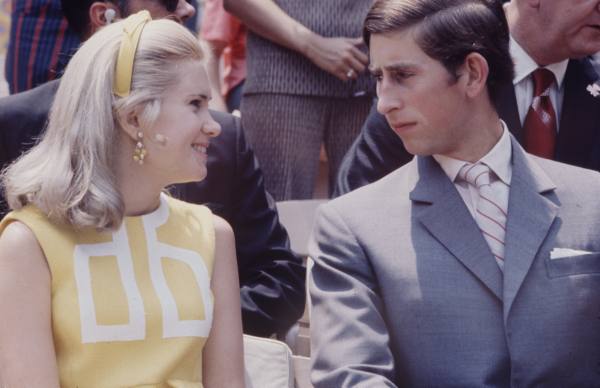
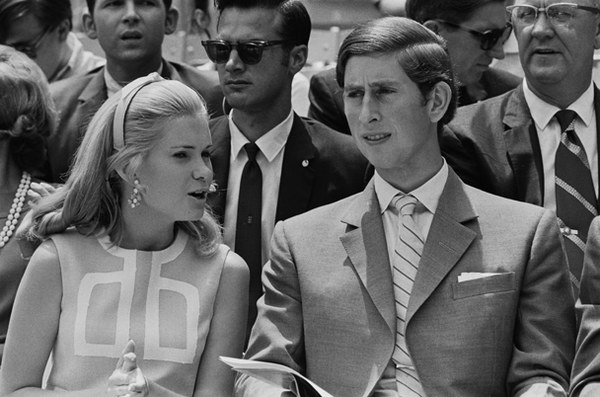
Soon after the Prince’s arrival it became embarrassingly clear that President Nixon was trying to pair him off with his daughter Tricia, who was three years older at 24. According to royal biographer Anthony Holden: “Seating plans constantly had Charles and Tricia side by side while the programme had them spending all of each day together, even to being left alone with each other in various parts of the White House.” Prince Charles noted that Nixon famously told him: “My wife and I will keep out of the way so you can feel at home.”
Any matchmaking hopes were doomed from the start. Charles was “distinctly annoyed” because of “his sense of his position not receiving its accustomed deference” and told insiders that he found Tricia “plastic and artificial”. After all, it was barely a year earlier that Prince Charles officially received his crown from his mother the Queen on July 1, 1969. Cupid never got a shot as the distracted bachelor prince and the “American Princess” danced awkwardly together at the party then parted ways. The Royal couple left town the next day. Prince Charles would not return for 11 years.
For her part, Tricia reported the she felt the Prince was too young for her. She told a London newspaper interviewer, “Well, let me just say that Prince Charles is my sister’s age. I think he’s going to make an outstanding king. He’s got considerable poise for his age.” When asked if age would be a barrier to love, she replied “if you’re in love with someone, I suppose age would not matter.” Tricia then admitted that newspaper reports attempting to marry her off had embarrassed her. “It would make life simpler if they would not do that, because it is most embarrassing to both parties concerned because they say you’re in love and everything,” she said.
But wait, there’s more. That same year Tricia Nixon was involved in a romantic hook-up that turned out to be a Presidential threesome! Now that got your attention don’t I? President Nixon and future President George H.W. Bush were trying to play matchmaker to Tricia with future-future President George W. Bush. Tricky Dicky, George and W. Now THERE is a threesome!
In 1970, George H.W. Bush was a second term Congressman and a favorite pet of the President. That year, Nixon convinced Bush to give up his Congressional seat and run for US Senator from the longhorn state (he lost to Lloyd Bentsen). No one knows for sure who came up with the idea, but somehow it was decided that the Junior Bush, then training to be a pilot in the Texas Air National Guard at Moody Air Force Base in Georgia, would escort Tricia Nixon on a date. The occasion was a party at the Alibi Club not far from the White House honoring NASA astronaut Frank Borman. His father thought his young pilot-in-training son would get a kick out of rubbing elbows with some astronauts with Tricia on his arm.
image

George arrived in his mom and dad’s brand new 1970 Purple Gremlin equipped with snazzy denim seats (Yes, blue jean covered seats were standard in 1970 Gremlins). He took the elevator to the second floor and met Tricia in the family quarters. From there, the couple climbed into the back of a secret service car, leaving the stylish Gremlin behind, for the short ride to the party. It had the potential to be the start of a new American political dynasty: unfortunately, the date did not go well.
Years later, George W. Bush recalled the date, “During dinner, I reached for some butter, knocked over a glass, and watched in horror as the stain of red wine crept across the table…Then I fired up a cigarette, prompting a polite suggestion from Tricia that I not smoke,” he continued. “The date came to an end when she asked me to take her back to the White House immediately after dinner.” Thirty years later, as he drove through the gates of the White House as president, “I thought back to my first visit and had a good chuckle,” Mr Bush writes.
Within a year, Richard Nixon got his wish when Tricia married Harvard law student Edward Finch Cox on June 12, 1971 becoming the only child of a U.S. President to be married in the White House Rose Garden. It was an all too predictable end to a bumpy ride that, for a brief moment, offered so much potential for political intrigue.

Music, Politics, Pop Culture

Guess Who’s coming to Richard Nixon’s White House?

Tricia Nixon and the Guess WhoOriginal publish date:  July 12, 2015

If you were born after 1970, this story probably won’t mean a thing to you. But if you’re a baby boomer (like me) you might get a giggle out of it. First families seem boring nowadays compared to the sixties and seventies. Caroline, John-John, those strung out Ford kids, Amy & Billy Carter and even the dissenting Reagan siblings, they always made for good copy. True Roger Clinton had his moments and the Bush twins had some hi-jinx, but for the most part…BORING! But those Nixon girls, now THEY were some rebels!
Okay, maybe not. Julie Nixon (Eisenhower) was America’s sweetheart and her sister Tricia Nixon (Cox) was not far behind. But for a time, Tricia gave “wild and crazy” a run, even if was in a very WASPish sort of way. For our generation, finding out that Tricia might have been edgy and cool is like watching The Red Hot Chilli Peppers or Lady Gaga sing with Tony Bennett. Might be hip, but it ain’t very cool.
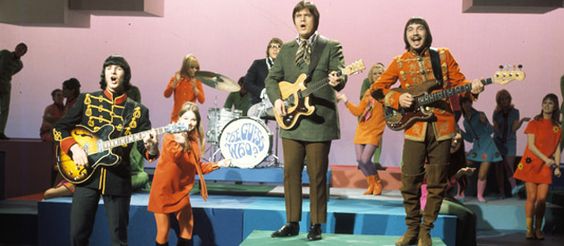
45 years ago this Friday (July 17, 1970) Tricia Nixon’s favorite band, The Guess Who, played the White House. The Guess Who, a Canadian rock band from Winnipeg, Manitoba led by Burton Cummings and Randy Bachman (of Bachman–Turner Overdrive), had a string of hit singles, including “Laughing”, “Undun”, “These Eyes” and “Share the Land”. So I suppose the Guess Who were about as cool as Tricia could get. By the time the band hit the White House, they were in the midst of a transformation from AM radio popstars to a louder, sharper Underground Rock Band for FM radio. With songs like “No Time”, “No Sugar Tonight” and “American Woman” (which would hit # 1 on the charts), the band was changing it’s image. That change in tone did not go unnoticed by Tricia’s mom. Pat Nixon.
maxresdefaultDespite it’s popularity and Patriotic sounding title, “American Woman” posed a problem for the Nixon family and more importantly, the Nixon White House. The song was viewed, rightly or wrongly, as as war protest anthem and this was not your ordinary White House garden party. It was a royal reception for England’s Prince Charles and Princess Anne, who were guests at the White House. No doubt the fact that the band was from Canada, a British territory ruled by the Royal guest’s mother, made perfect sense and sealed the deal.
In the summer of 1970, America was embroiled in an unpopular war in Vietnam, still struggling with Civil Rights, the Cold War, Inflation and global instability. America was a target, and here was this ubiquitous song, heard everyday on radio stations across the country, casting further aspersions on the United States. And worse, the band that sang that song was invited to play on the White House lawn. This could get complicated.
Canada’s official diplomatic position during the Vietnam War was that of a non-belligerent. Although our neighbors to the north imposed a ban on the export of war-related items to the combat areas, they weren’t necessarily against supplying equipment and supplies to the American forces, as long as those goods weren’t sent directly to South Vietnam. Those goods included relatively benign items like boots and gear, but also aircraft, munitions, napalm and commercial defoliants, the latter of which were fiercely opposed by anti-war protesters at the time. Between 1965 and 1973, Canadian companies sold $2.47 billion in materiel to the United States. Canada, in accordance with existing treaties, also allowed their NATO ally to use facilities and bases in Canada for training exercises and weapons testing. A sticky wicket to be sure.
But what about THAT song, “American Woman”? Let me refresh your memory. Although the band denies it, critics and wags alike claim the song is a “Thanks, but no thanks” anthem about the Vietnam War. Rightly or wrongly, Canadians believed that America was trying to get Canada to adapt nuclear missiles and join them in their Cold War jungle conflict. When the song warns the American Woman to “Don’t come hangin’ around my door, I don’t wanna see your face no more, I got more important things to do, then spendin my time growin old with you” he’s basically saying that Canada has its own troubles and that the USA burned the blister, now they must sit on it.
The rest is pretty self-explanatory: “I don’t need your war machine” refers to nuclear weapons. “I don’t need your ghetto scenes” refers to the after math of the explosives. “Colored lights can hypnotize” refers to explosions of the bombs. “Sparkle someone else’s eyes” means, well, get lost. Despite the fact that the song was a huge hit at the time, it wasn’t the type of song Tricia would play for the folks. The Guess Who didn’t perform “American Woman” that day because they were asked not to “as a matter of taste.” That request came from first lady Pat Nixon’s press secretary. Fits right into the “clean hands doctrine” of the Nixon White House that would end a President’s tenure a couple of years later, huh?
Burton Cummings, who wrote and sang the song, insists it has nothing to do with politics but is a song about, what else, girls. “What was on my mind was that girls in the States seemed to get older quicker than our girls and that made them, well, dangerous,” he told the Toronto Star in 2014. “When I said ‘American woman, stay away from me,’ I really meant ‘Canadian woman, I prefer you.’ It was all a happy accident.” Yeah I know, that excuse doesn’t wash with me either.
In John Einarson’s book, “American Woman-The Story Of The Guess Who”, Cummings offered a more plausible explanation: “People read their own meanings into that song. They thought the American woman I alluded to was the Statue of Liberty and RCA contributed to that image with the ad campaigns. It came from looking out over a Canadian audience after touring through the southern U.S.A. and just thinking how the Canadian girls looked so much fresher and more alive. As opposed to an anti-American statement, it was more of a positive Canadian statement. ”
45758d0412b1a49eae642d00c598e257--the-guess-who-electric-warriorCummings went on to say this about about playing The White House: “It was strange. All the guests were white, all the military aides were white in full military dress, and all the people serving food were black. And the way the White House was landscaped it kind of looked like Alabama …before Lincoln issued the Emancipation Proclamation. It left a bad taste in my mouth. It was terribly racist and this was 1970. I remember sitting with Edward Lear, heir to the Lear Jet fortune, and Billy Graham’s daughter was there. It was really the so-called upper crust aristocracy of America, very stuffy, boring people…We were told not to play “American Woman” but we did “Hand Me Down World.” We thought we were just as cool for doing it. But we did get a great tour of The White House, though, and (band mate) Leskiw and I spent an hour going through all these rooms and corridors seeing stuff most people don’t get to see.”
The 68-year-old Cummings now has no doubt the band was brought in to impress the royal guests. “It left a bad taste in my mouth,” he told the Winnipeg Free Press recently. “They wanted a Commonwealth act when Charles and Anne went there. We were the token Commonwealthers.”
Even though he had left the band by the time of The White House gig, guitarist Randy Bachman remembers the song having a much more spontaneous genesis: it was written on stage with no thought given to deeper meaning or politics.The Guess Who was playing a show at a curling rink in Ontario when he broke a string on his guitar. In those days, that meant stopping the show until he could replace it. His bandmates left the stage, and Bachman put a new string on his ’59 Les Paul. The next challenge was getting it in tune (he didn’t have a tech or even a tuner in those days), so he went in front of Cummings’ electric piano and hit the E and B notes to give him reference. As he tuned his guitar a riff developed, then something magical happened.
“I started to play that riff on stage, and I look at the audience, who are now milling about and talking amongst themselves,” Bachman said. “And all their heads snapped back. Suddenly I realize I’m playing a riff I don’t want to forget, and I have to keep playing it. So I stand up and I’m playing this riff. I’m alone on stage.” The band’s drummer Garry Peterson, who had made his way to the audience, jumped on stage and started playing. Bassist Jim Kale heard the ruckus and joined them, and finally Burton Cummings came up and grabbed the microphone. “Sing something!” Bachman implored him. Burton obliged: the first words out of his mouth were, “American woman, stay away from me.” The crowd, which included a fair number of draft dodgers and war protesters, loved it. And the rest was history.
Tricia Nixon cool? Well, maybe not by today’s standards. But maybe you’ll see that Guess Who gig in a different light when you learn what else was going on at that party. If you’re a fan of Downton Abbey, you’ll get a kick out of next week’s article when we explore Tricky Dick Nixon and the hook-up.

Next Week: Part II: Tricky Dick Nixon and the Hook Up.