
 Original publish date: February 6, 2017
It should come as no surprise to you that I have an affinity for Disney’s Haunted Mansion. I’ve been fortunate enough to have ridden the popular theme park ride at Disneyland in California as a little kid with my mom and again as an adult with my family. Likewise, I rode the Haunted Mansion ride at Florida’s Disney World shortly after it opened with my mom and have ridden it dozens of times since with my wife and kids. It never gets old.
Over the years I have been reeled in by the master marketing of Disney imagineers and their many forms of merchandise based upon the popular ride. Somehow or other I have amassed a small collection of items ranging from art posters and statues to toys and tchotchkes of every variety. I have been gifted with relics actually used in the ride over the years ranging from doorknobs to wallpaper that once adorned the walls of this popular haunted mecca.
This past Christmas my family gave me the last in a series of art statues modeled after the characters depicted in the famous stretching portraits that greet visitors in the anteroom. Here Master Gracey invites all “foolish mortals” who dare enter his home by requesting that all visitors step into the “dead center” of the room. As the Ghost Host delivers his spiel, the room (which is actually a slow creeping elevator) begins to “stretch” vertically. The portraits on the wall elongate, revealing the grim fates of the previous residents depicted in the bucolic paintings seen only moments before. The paintings stretch into humorously macabre situations: a middle-aged bearded man holding a document is shown to be standing atop a barrel of dynamite in his boxer shorts with a candle lighting the fuse; a smiling elderly woman holding a rose is shown to be sitting on the tombstone of her late husband George, who is depicted as a stone bust with an ax in his head; and a confident-looking middle-aged man in a bowler hat is shown to be sitting on the shoulders of a frightened-looking man, while sitting upon the shoulders of a third man who is waist-deep in quicksand, an expression of terror on his face; and finally, a beautiful young girl holding a pink parasol is shown to be balancing on a fraying tightrope above the gaping jaws of a ferocious alligator.
She is one of the 999 ghosts that inhabit the Haunted Mansion and, like everything at Disney World, she has her own backstory. WDW cast members call her “Lillian Gracey” and say she was a tightrope walker who strung her rope across to Tom Sawyer’s Island from the Mansion grounds where she met her grizzly fate. She looks like she is completely oblivious to anything that is going on around her. She has no clue at all what is awaiting her below should she fall. Proud as I was, and still am, to add alligator girl to my modest collection, my daughter Jasmine shared some info with me that put a new spin on the statue.
Fresh from a New Year’s Eve trip to Disney World with her friends (they opened the park at 10:00 and stayed well after Midnight…you can only do that when you’re young) she informed me that the statue had been pulled from all sales outlets in the park. She explained how, time and time again, she and her friends listened while Disney sales staffers informed angry customers the statue was no longer being offered for sale. Jasmine asked one of the sales staff, known as “Cast Members”, why the statues had been pulled. The cast member explained it was a result of the August 2016 alligator attack on park property that had tragically killed a 2-year-old Nebraska boy. The cast member explained that people were getting angry because alligator girl was the last one they needed to complete their set.
Although the revelation was interesting , I didn’t think much more about it until I ran across an evocative amusement park relic a couple weeks later. It was a pair of souvenir salt & pepper shakers from the Kings Island amusement park near Cincinnati, Ohio. Although dating from the earliest years of the park (which opened in the Spring of 1972) the set had a distinctive Mid-Century Modern look to it that attracted me. On the front of each shaker was the image of a thick-maned lion resting in front of a wooden sign reading: “Trespassers will be eaten.” The set was a souvenir from the short lived Lion Country Safari attraction inside the park.
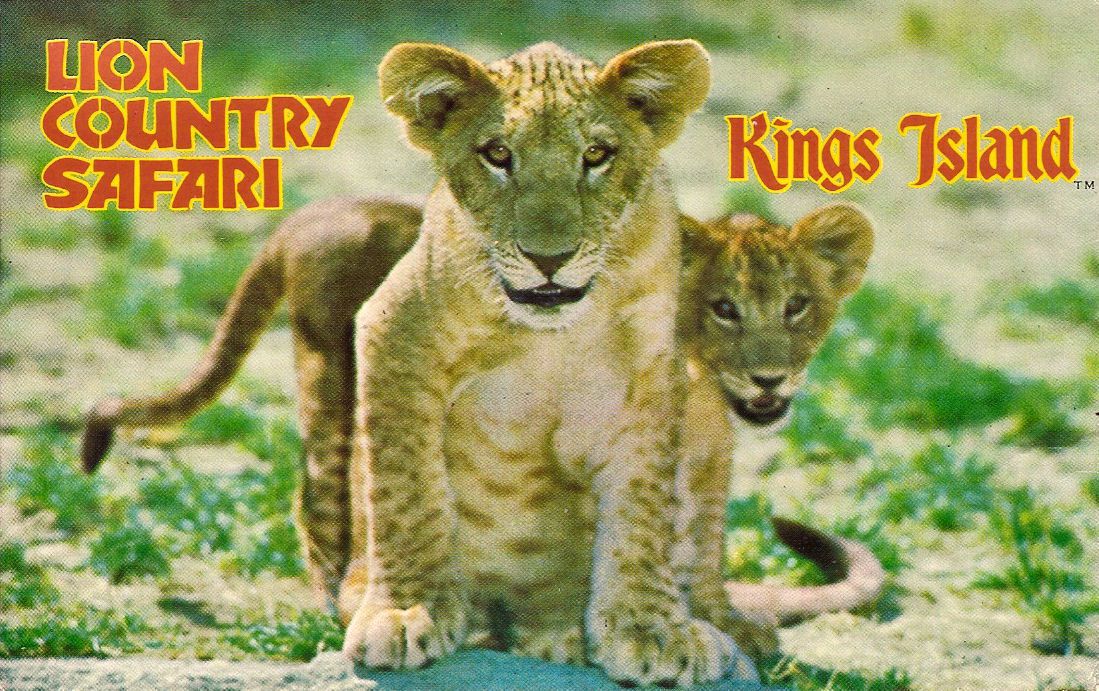 Don’t remember THAT part of Kings Island? Well, that may due to the fact that this “ride” came with an up charge. It required an extra 50 cent ticket to enter. Most kids didn’t go because they didn’t have the extra money or because their parents were unwilling to spring for the extra expense.
The Lion Country Safari opened on April 27, 1974, almost two years to the day from the opening of the park itself. The animal themed area featured various attractions, including multiple small animal exhibits, a restaurant (today known as the Stunt Crew Grill), a gift shop and a large monorail. In 1974, over 300 animals were housed inside the safari included 12 elephants, 25 rhinoceros, 5 giraffes, 4 hippopotamus, 20 ostriches, 20 zebras, 150 antelope, 1 cape buffalo, 75 “critters” (monkeys, swans, exotic birds, etc.) and 70 lions and assorted other big cats.
Mostly, the ride consisted of a two-mile monorail (known as Kenya Safari) that was part of the new trend of “drive-in zoos” popping up in amusement parks all over the country. The trains were fully enclosed and powered by electricity. They ran on rubber wheels and were designed to travel around six miles per hour. This allowed for a 20-25 minute ride. The park estimated the six train monorail could accommodate up to 2,000 guests per hour.
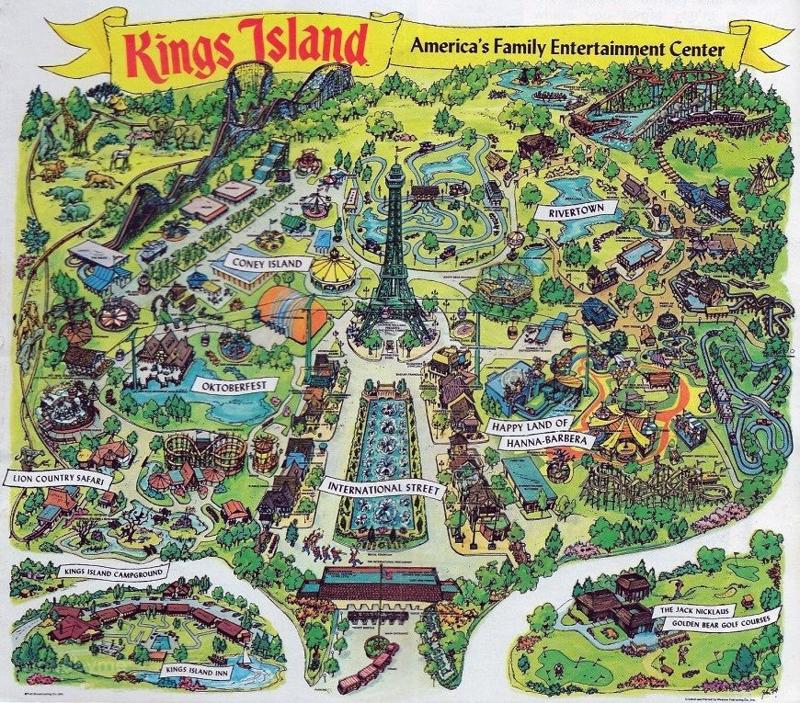
Kings Island’s Lion Country Safari was completely surrounded by nine-foot high chain-link fences. The fences were hidden from view by hills, strategically planted trees and thick shrubbery designed to create the illusion that visitors were actually in Africa rather than the Miami Valley. The lion section featured additional security measures by means of a separate six-foot high fence within the larger boundary fence. In addition, the electrical current running through the monorail track itself acted as a security measure by discouraging animals from using it as an escape route.
But, without a doubt, it was the animals that were the safari’s main attraction. In particular, as the name denotes, the lions. Originally, the animals were brought in by an outside third party vendor. As the animal population began to push 300, it became very clear, very soon that changes were needed. Although the safari was secure and there is no record of a guest ever having been harmed by an animal at the park, one incident in particular brought change and infamy to Kings Island’s Lion Country Safari. On July 24, 1976, a lion mauled a 20-year-old Lion Country Safari ranger to death. Officially, he had left his protected vehicle for “unknown reasons”. However, park legend insists that he was killed when he left the safety of his jeep to relieve himself.
Which brings me back to that classy looking set of Mid-century modern salt & pepper shakers and their depiction of a lion resting under the “Trespassers will be eaten” sign. I would imagine that the reason we don’t often see this Kings Island souvenir set is that it was surely pulled from the shelves after the Bicentennial year tragedy. If not directly pulled, they were certainly never reordered. Incidentally, this unnamed Safari Ranger is rumored to haunt the area where the attraction was once located. Today, that space is used for roller coasters Flight of Fear, Firehawk and the new Banshee (where the Son of Beast once stood).
However, although sales of those sardonically unfortunate salt & pepper shakers most certainly stopped, the encounters between employee and beast continued. On May 26, 1982, a park employee was attacked by a lion while cleaning the lion’s compound. 34-year-old Terry Raitt suffered a punctured trachea and several bite wounds to the head, chest and upper torso. He managed to climb onto the roof of a building to escape the attack. There paramedics reached him and he was rushed to Bethesda North Hospital in critical condition.Thankfully, he survived. In August, the OSHA ruled that the mauling was due to human error and found no safety violations. Raitt later admitted that he had accidentally left the gate open, allowing the lion to enter the area. Because of this attack, OSHA recommended that rangers be armed with handguns, alongside the shotguns that they already carried in their jeeps.
In the 20 years it was open, more than 15 million people visited the animal preserve before it closed in 1993. The air conditioned monorail was especially popular on blazing hot summer days in the years before the Splash park opened in 1989. Ultimately, the cost of the animal upkeep, low monorail ridership, use of the land, and lack of interest spelled doom for Lion Country Safari. Roller Coasters, which unlike animals, don’t ever die, became a much more attractive option.
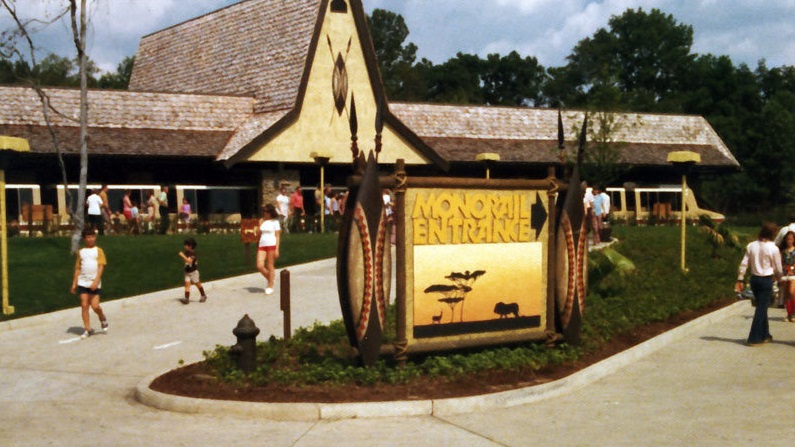
There are a precious few safari traces available for urban explorers to discover. For perspective, the monorail entrance was located to the right of the current Drop Tower. The overpass that exists at the entrance to The Bat and The Banshee (now used as a park access road) was an original section of monorail track, as well as the access road rangers used to get to the animals. The monorail station was located where the Xtreme Skyflyer tow poles are now and near where the Son of Beast midway was once located.
However, should you still pine for the old Kings Island’s Lion Country Safari, you can catch a glimpse of it if you wish. The old monorail marks the entrances to Jungle Jim’s International Markets in Fairfield and near Eastgate Mall near Cincinnati. Ask anyone living east of Greenfield and they’ll tell you that you haven’t lived until you’ve been to Jungle Jim’s. Imagine a supermarket with an amusement park inside and you’ll get the idea. I suppose in today’s hyper-sensitive overly politically correct world, we can look back on things once considered innocent, humorous and inoffensive and wonder how we ever survived.
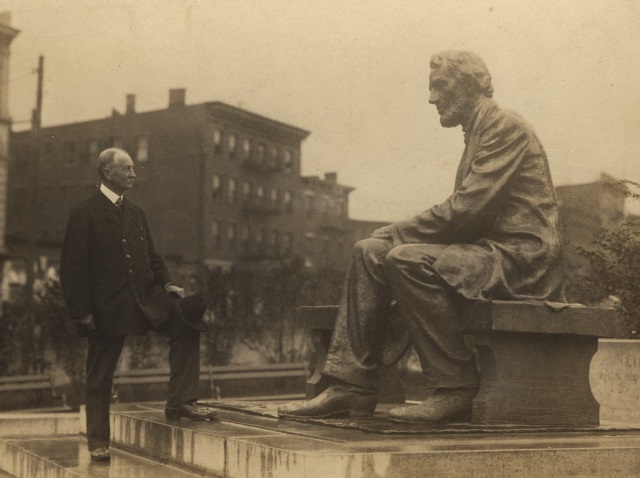
 On June 16th I found myself in Marshalltown examining the items. I obtained my bidder number, which happened to be bidder # 1, and retreated to my hotel room to await the next day’s auction. There’s not much to do in Marshalltown, Iowa so I decided to drive to the nearby community of LeClaire, Iowa to mark time.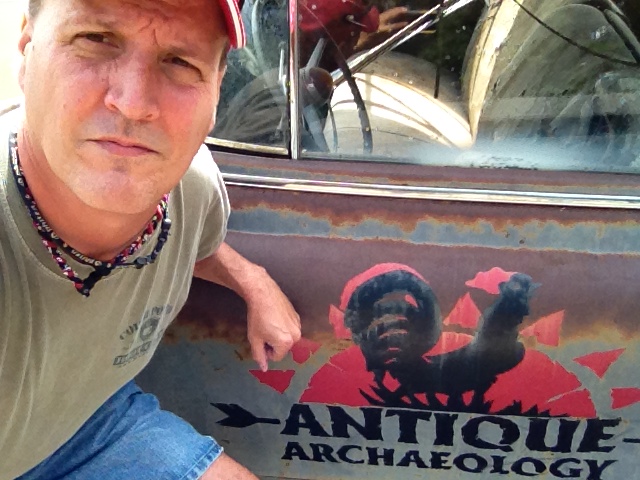
 Among the items I brought home were a pair of contemporaneous framed leaflets. Both are displayed starkly in black wood and glass frames, one is a copy of Lincoln’s farewell address to the citizens of Springfield, and the other is a copy of Lincoln’s favorite poem. The farewell address is important to me because Lincoln’s first stop after the delivery of this poignant edict was Indianapolis. The next item was a classic-looking photo of Lincoln ascending to heaven wrapped in the open arms of George Washington. The careworn oval metal frame fits snugly in the palm and bears the wear and patina of an item held repeatedly in the loving hands of a legion of Lincoln admirers.
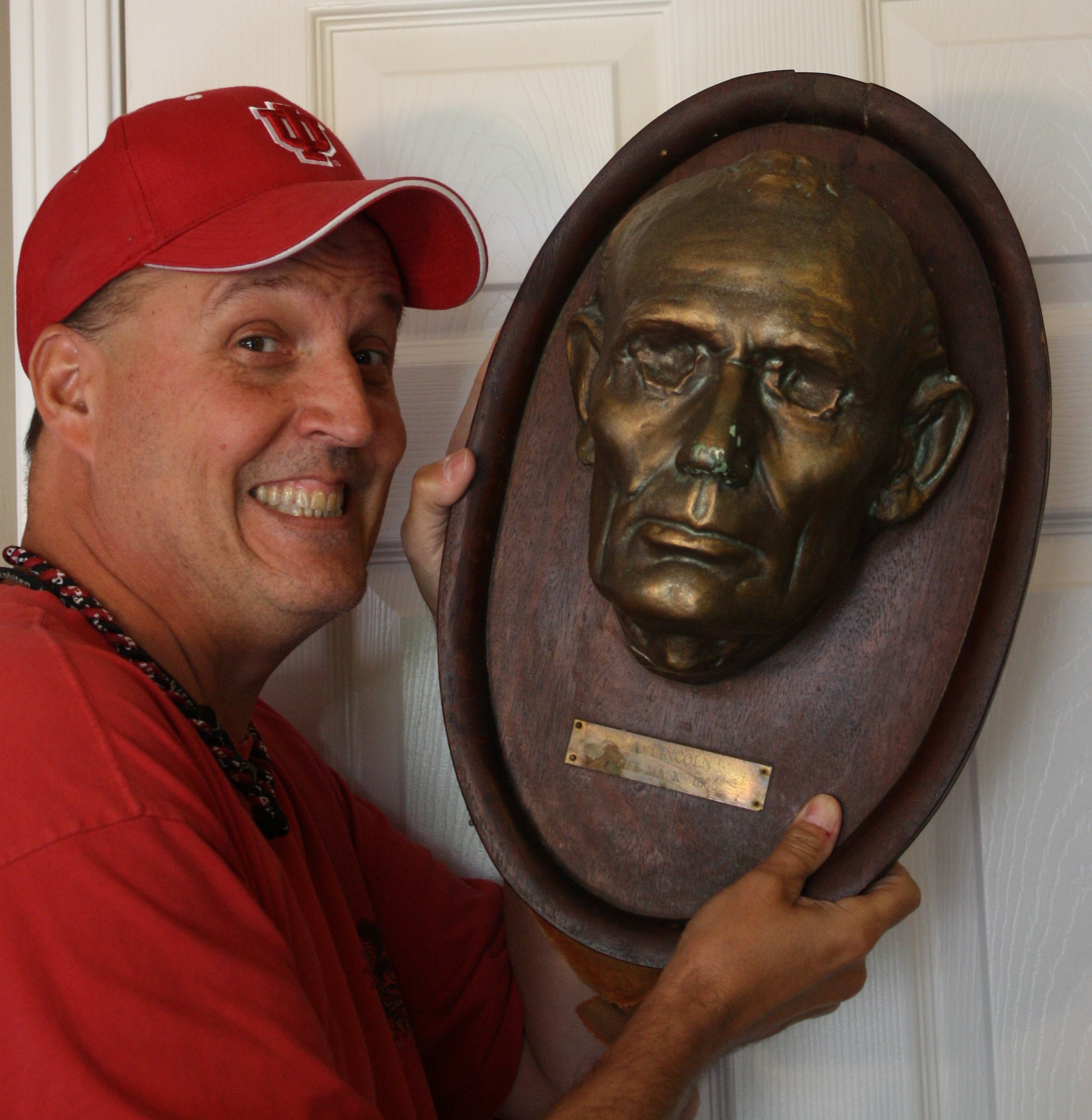 The next item is the haunting life mask of Abraham Lincoln that once hung on the wall of Oldroyd’s museum. The lifesized mask is attached to a larger handcrafted oval wooden plaque with a smaller brass nameplate attached to the front. The lifemask, made by artist Leonard Volk in 1860 before Lincoln grew his signature beard, is an accurate representation of what it would have been like to look at the face of a young and vibrant Lincoln. This item was surely a highlight of the museum and, judging by the loss of paint and subsequent repair of the nose, was a good luck talisman for all visitors. Rubbing Lincoln’s nose is still a popular tradition at the Lincoln tomb in Springfield.
 owned. The Bible was obtained by Oldroyd after Mr. Lincoln was killed and presumably following the death of Mary and Tad Lincoln. The phone book-sized Bible shows signs of heavy wear and transport in compliance with the somewhat vagabond lifestyle led by Mary and Tad after vacating the White House in 1865. Mary died in 1882. Tad preceded her in 1871. The Bible includes a couple pages of contemporary Carte de Visite photographs of the Lincoln family along with a few other disparate images from the Civil War and immediate post-period. The inclusion of CDVs depicting Union Civil War Generals Grant, Sheridan, Burnside, and Sherman alongside images of the US Capitol Dome under construction and George and Martha Washington could easily be construed as Tad’s version of collecting baseball cards.
 The last three items of acquisition were perhaps the most important to me. I am a native Hoosier. I cherish the idea that Abraham Lincoln grew to manhood in the southern region of my home state. These three items offered a direct connection to Lincoln and Indiana. The first two items are innocuous in their relevance to Lincoln the Hoosier; the Lincoln family coffee grinder and Abraham Lincoln’s ice skate.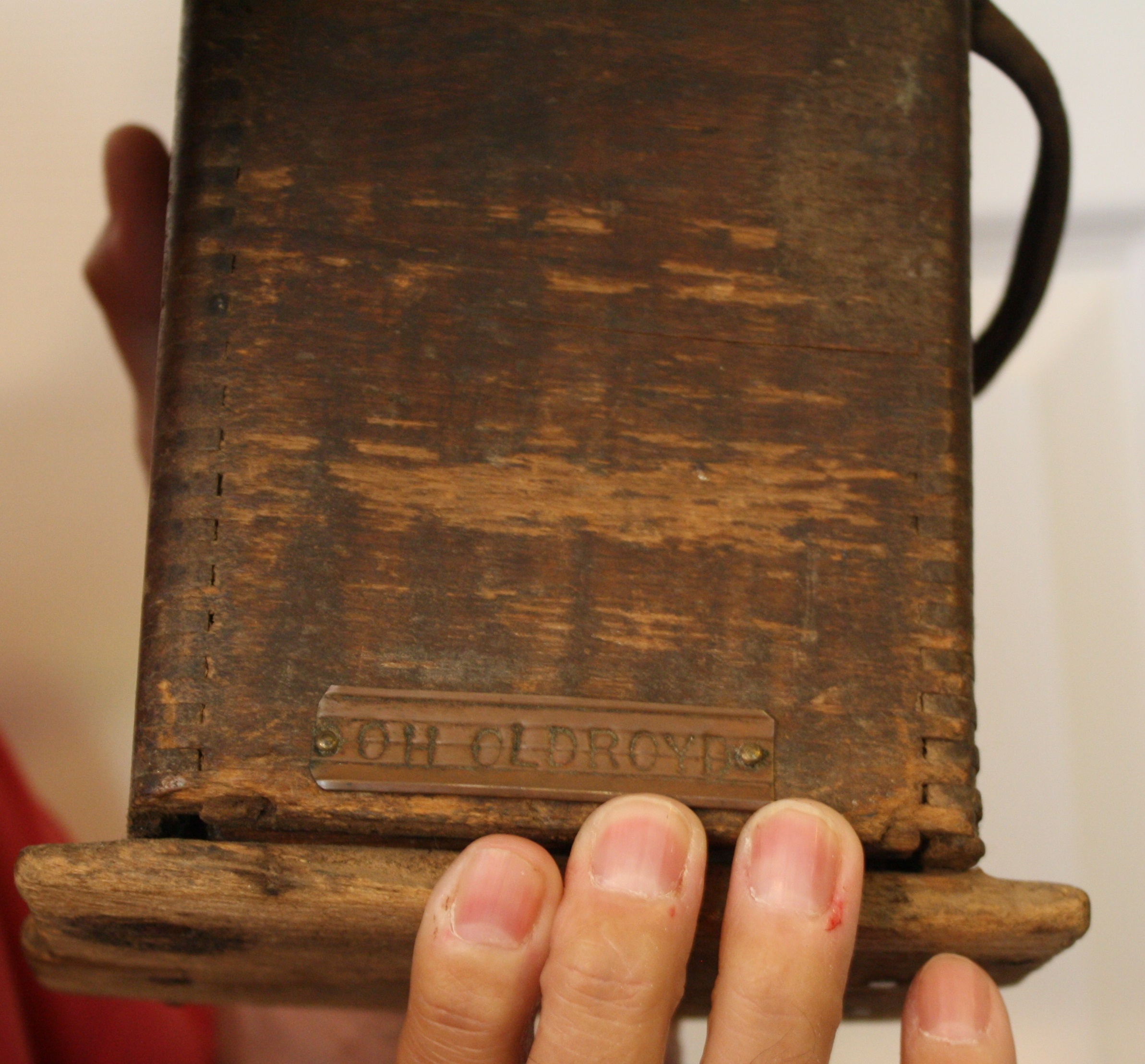
 The next Indiana Lincoln item is an ice skate. The thick wooden shoe stand is shaped like an hourglass and the heavy iron blade is curled at each end like an ancient Crakow shoe. While no official reference exists of Lincoln the ice skater, the skate presents a romantic image of boyhood Lincoln at play on a frozen southern Indiana pond. Simply holding it in your hands brings a smile to your face.
 with me, at all costs. It is an ancient-looking Colonial Era metal candle maker. During colonial times up to the Antebellum Era, candles were the main source of light during the long, dark, nighttime hours. Candles on the western frontier were made from beeswax and tallow (animal fat). The wicks were lain loosely inside the tube as the wax was poured in around them to harden.
 Included with the candle maker is a framed certificate written and signed by Osborn Oldroyd reading: “This candle maker is from the Lincoln and Sparrow Cabin on Pigeon Creek Indiana (1818-1835) O.H. Oldroyd Washington April 9, 1901”. The certificate has a small brass diecut tab attached with the seal of the state of Indiana inset. It would be hard to find a more romantic artifact to illustrate Lincoln’s time spent in the Hoosier state. Young Abraham may well have learned to read by the light of a candle made in this, the Lincoln family candle mold. Stories abound of Young Abe the railsplitter reading by candle and firelight into the wee hours of the morning after a long day’s work in the fields.
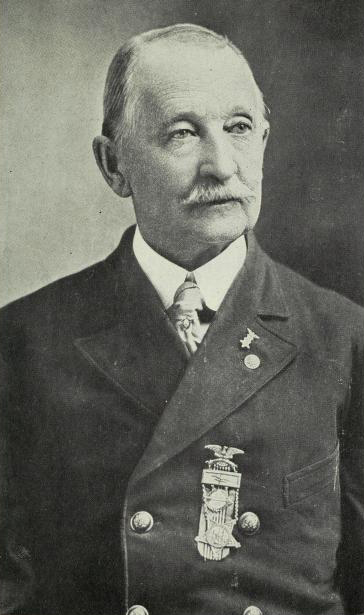
 Lastly, my wife treated me to a birthday trip to Springfield, Illinois in July. I traveled to the Lincoln home on an early Saturday morning to reflect while seated in front of the Lincoln home. Based on trips past, I’ve learned that the early morning hours are best. No school buses, tourists or fitness walkers/bikers to mar the scene. I have been coming to Springfield for many years. Of course, Abraham Lincoln is the reason for my visit. However, I never forget that Osborn Oldroyd lived in the house and operated his museum here for nearly a decade (1884-93). I’d asked several people, ranging from officials at the Lincoln Museum to parks department employees, about Oldroyd in the past but always got a cool reception to my querie.
 Original publish date: July 20, 2017
 Another of the letters, dated Dec. 10, 1902, touched me personally because it was written by the sister of Louis Weichmann, the main government witness at the trial of the conspirators. Weichmann lived in Mrs. Surratt’s boarding house and many believe it was Weichmann’s testimony that got Mary Surratt hung. Weichmann moved to Anderson Indiana after the trial and founded Anderson business college. He is buried in Anderson’s St. Francis cemetery in an unmarked grave. “Dear Sir-I am sending you a copy of Sunday’s Indianapolis Journal containing a confession of one of the conspirators of President Lincoln….With best regards from our family, I remain Sincerely yours, Mrs. C.O. Crowley Sister of the late L.J. Wiechmann.” Curiously, Mrs. Crowley misspelled her own maiden name in her letter.
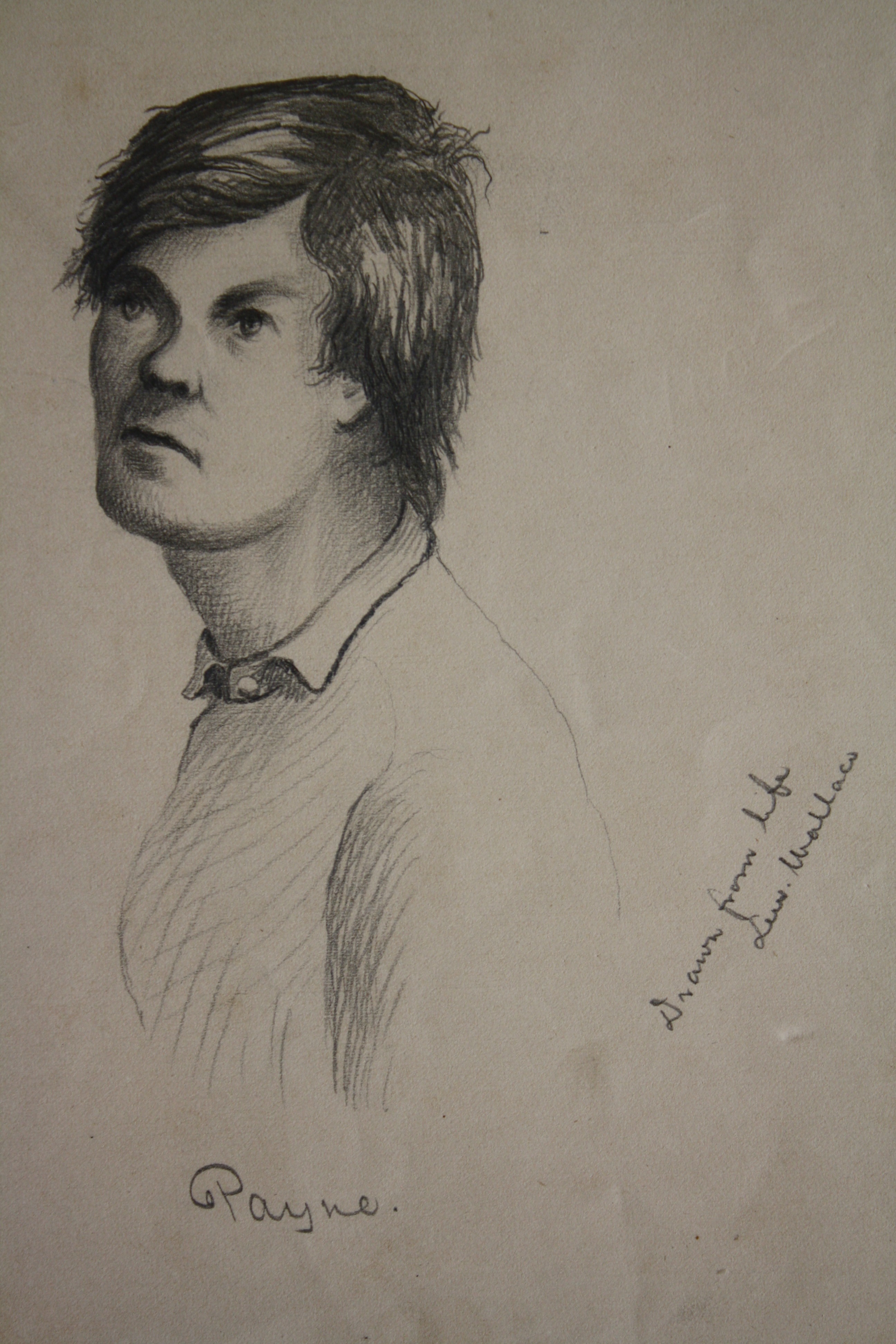 Included within that collection was a group of several dozen items that once belonged to Osborn Oldroyd himself. This included correspondence from Anderson’s Louis Weichmann to Oldroyd about shared information for books about Abraham Lincoln both men were simultaneously working on as well as photos and several handwritten eyewitness accounts of the assassination of President Lincoln. My personal favorite was a pencil drawing of Lincoln Conspirator Lewis Thornton Powell drawn by Crawfordsville, Indiana’s General Lew Wallace.
 Original publish date: July 13, 2017
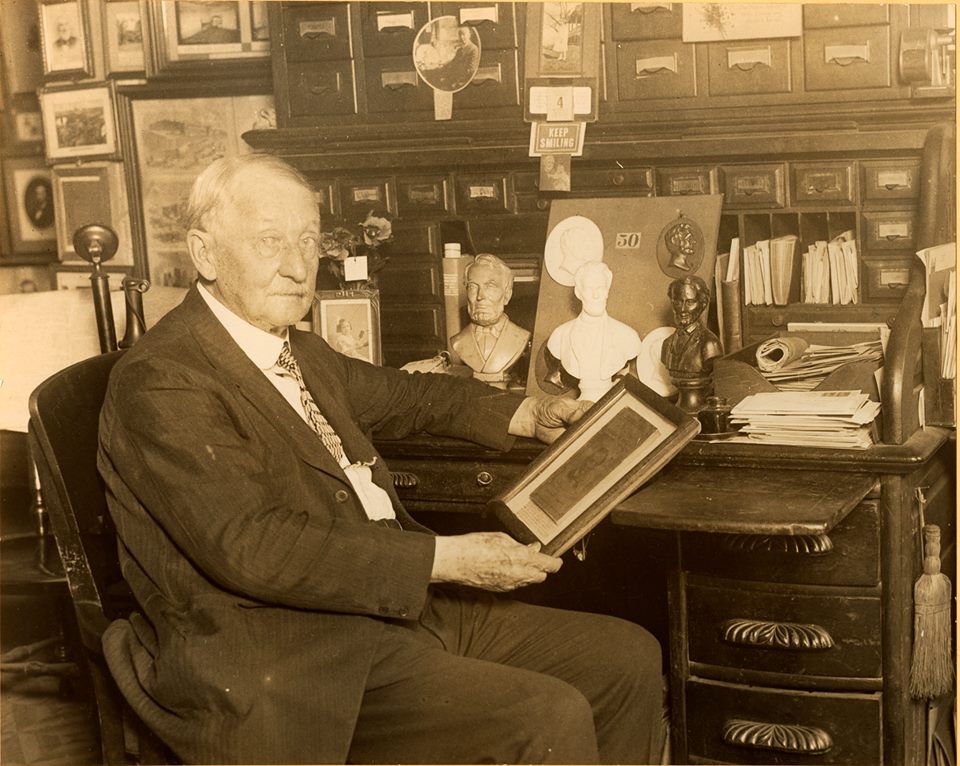
 Ironically, the same year that Oldroyd moved to the Peterson house, Ford’s Theatre, where John Wilkes Booth had shot Abraham Lincoln, collapsed. The building closed since the President’s death, operated as an office until June 9, 1893, when the interior of the historic building collapsed. Twenty-two clerks died in the tragedy and sixty-eight others were seriously injured. Within a year the damage was repaired and the former theatre was remodeled for use as a government warehouse.
 The May 2, 1926, Washington Post announced the purchase with a banner headline reading, “Gets Storehouse of Lincoln Relics: Government Action Assures Preservation of Oldroyd Collection Here.” The newspaper column reported, “Captain Oldroyd has been gathering the collection for 63 years, having started on this patriotic work of love for his chieftain soon after he was released from service in the internecine strife (Civil War). Mr. Oldroyd is now 80 years old. Having for years been a student of Lincoln, acting as a guide for his collection all through its formation, Capt. Oldroyd has become a rich source of Lincoln traditions. Passage by Congress of the measure authorizing the purchase of the Oldroyd collection, 3, 000 authentic Lincoln mementos now on display in the historic Petersen House where the martyred president died, will preserve for future generations making pilgrimages to Washington a great storehouse of materials identified with Lincoln tradition.”
 What became of the pilfered Lincoln home artifacts? During a near forty year period between the 1950s and late 1980s, the Lincoln Home got back the disputed 25 items from Ford’s Theater that Oldroyd had allegedly removed without permission. “The items were well preserved. For the most part, these were all utilitarian items that might have been used every day by the residents of the home during the years before preservation became a priority.” says curator Cornelius “An argument could be made that if not for Osborn Oldroyd, these items might have been lost forever.”
 Original publish date: July 6, 2017
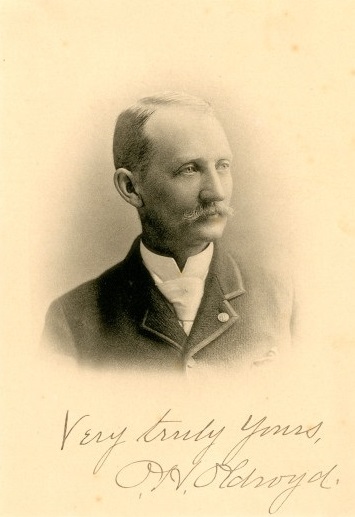
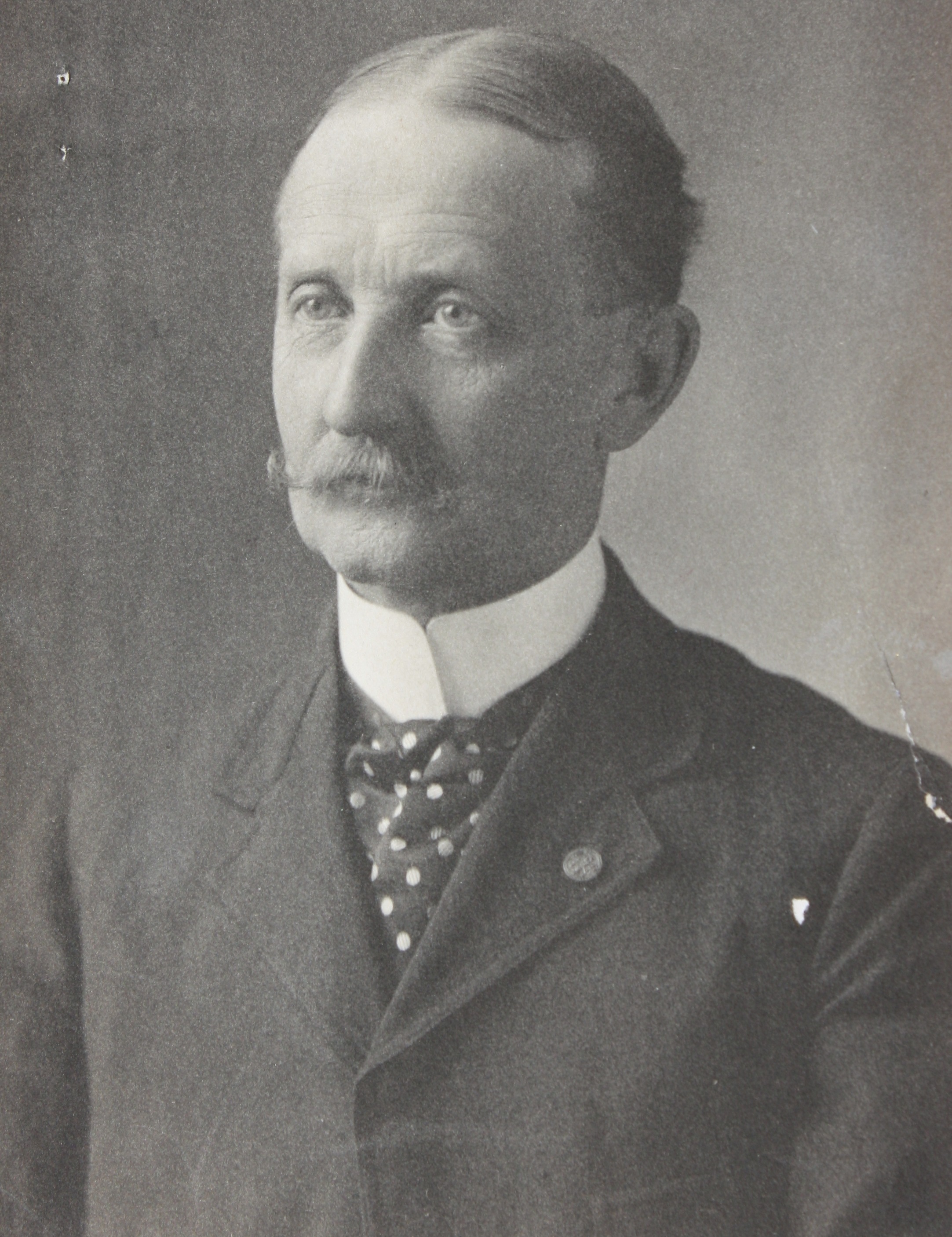 During his early years in Springfield, he ran a succession of failed businesses. All the while, Oldroyd was moving his family ever closer to the Lincoln Home at Eighth and Jackson Streets. The Oldroyd family first lived at 1101 South Seventh, then 500 South Eighth Street (immediately south of the home), and then, in 1883, when the Lincoln Home became available to rent, Oldroyd moved his family in before the last occupants had completely moved out. At that time, Lincoln’s only surviving son, Robert, owned the home and reluctantly charged Oldroyd $25 per month rent. Contemporary accounts claim that Robert Todd Lincoln agreed to the idea of a museum as long as it was free to the public, a stipulation in place to this day.
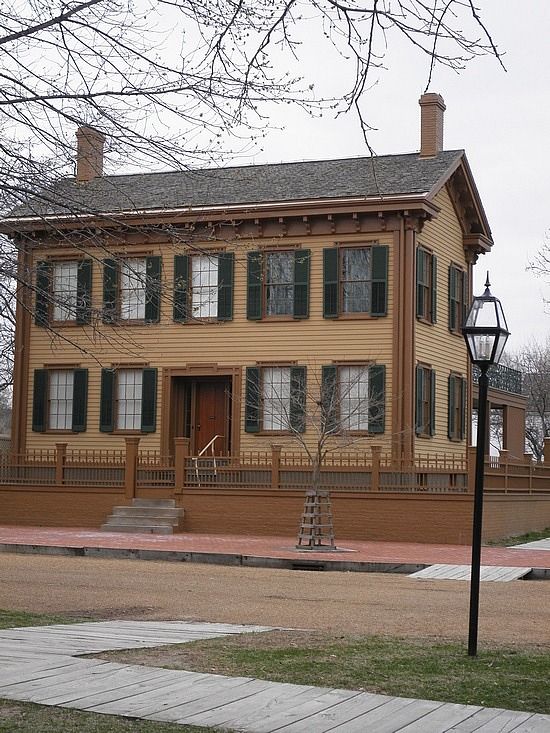 For the next five years “Captain” Oldroyd kept the Lincoln Home and added to his Lincoln collection. At one point, reports claim that Robert Lincoln was furious when Oldroyd allegedly displayed a photograph of John Wilkes Booth in the home, reportedly on the fireplace mantle. Some sources claim that Robert protested and in 1893, when the Illinois state political tides shifted, Oldroyd was unceremoniously ousted as custodian. The new governor put one of his own men into Oldroyd’s former position as political patronage.
