
Original publish date: February 13, 2020
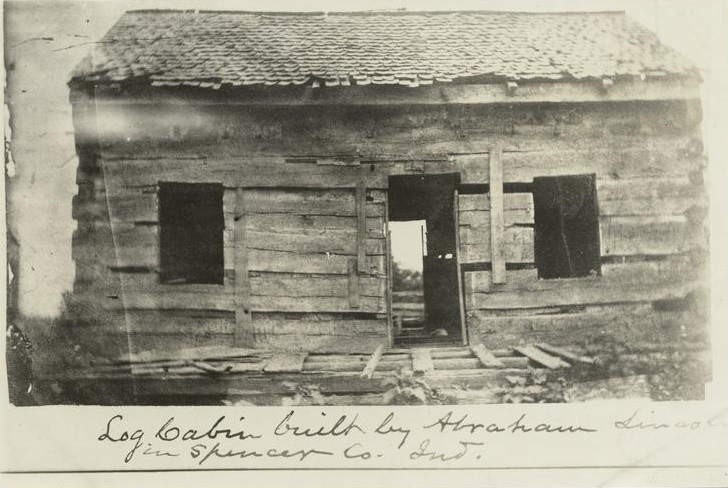
“In his 10th year he was kicked by a horse, and apparently killed for a time.” The words were Abraham Lincoln’s. He was describing his boyhood in the hills of southern Indiana. Although much has been written about Abraham Lincoln’s life, his time as a Hoosier has been woefully neglected. Lincoln’s family moved to Indiana in 1816, when Lincoln was seven years old. Multiple noteworthy events in Lincoln’s life occurred during his time in Indiana. The most important of these was the death of his mother, Nancy Hanks, who died of “milk sickness” from drinking poisonous cows’ milk on October 5, 1818.
Her death was a tragedy Lincoln never got over, however her death resulted in a “rebirth” of sorts when the young railsplitter’s father Thomas married Sarah Bush Johnston of Kentucky in December 1819. Lincoln’s stepmother moved into the family’s Pigeon Creek cabin, bringing with her three children (two girls and one boy). More importantly Sarah brought with her the attention and educational encouragement that young Abraham Lincoln craved and was lacking from his relationship with his father. Lincoln attended school sporadically in present-day Spencer County during the years 1820-24 where he learned to read and write.
On January 20, 1828, Lincoln’s sister Sarah passed away while delivering a stillborn child and both were buried in the Pigeon Creek Baptist Church Cemetery attached to the church the Lincoln family attended, and in which Abraham worked as a janitor for a short time. Perhaps the most significant theological event in Lincoln’s life occurred while he was a Hoosier. In December of 1828 he and his friend Allen Gentry embarked on a trip to New Orleans down the Mississippi River where Lincoln witnessed a slave auction, after which Lincoln said, “If I ever get a chance to hit that thing (slavery), I’ll hit it hard.” Also during those formative years in Indiana, Lincoln worked as a store clerk and met lawyers like John Pritcher, who he borrowed law books from. On March 1, 1830, the Lincolns packed up and moved to Illinois.
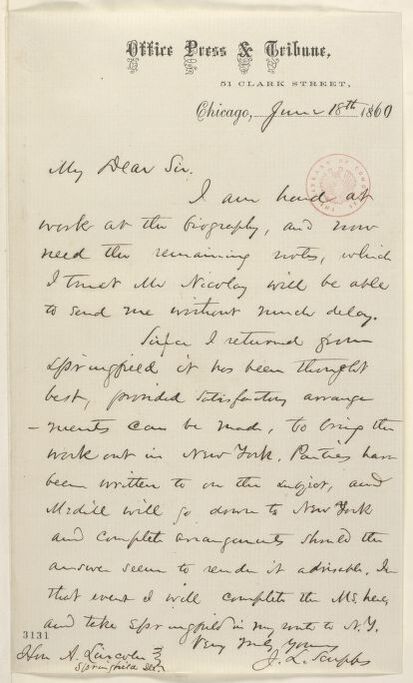
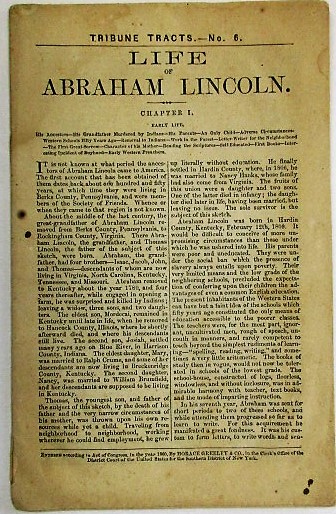
When Lincoln ran for President in 1860, John Locke Scripps, senior editor of the Chicago Press and Tribune, asked the candidate for an autobiography. This third-person account, the longest of his autobiographies, offers fascinating details about his early years told in the folksy, homespun style only Lincoln could relay. In this autobiography Lincoln refers to himself alternatively as ‘A’ or ‘Mr. L.’ It is remarkably brief about certain periods of his life, including his years spent in Indiana “A. now thinks that the aggregate of all his schooling did not amount to one year. He was never in a college or Academy as a student; and never inside of a college or academy building till since he had a law-license. What he has in the way of education, he has picked up.’”
Although historians, beginning with biographer Carl Sandburg, love to weave homespun stories about Lincoln into nearly every written account of the 16th President’s life, Lincoln himself was ashamed of the poverty of those early days spent in the Hoosier state and was uncomfortable talking about his life before Springfield. When Scripps interviewed him in 1860, Lincoln explained “Why Scripps, it is a great piece of folly to attempt to make anything out of my early life. It can all be condensed into a single sentence and that sentence you will find in Gray’s Elegy; ‘The short and simple annals of the poor.’ That’s my life, and that’s all you or anyone else can make of it.’”
But what about Lincoln’s statement that he was, “apparently killed for a time”? Well, as you might expect, there is more to the story. Like many a Hoosier farm boy in 1818 frontier Indiana, Lincoln the boy was assigned certain chores perhaps better suited for a man. One of those chores was to deliver corn to Gordon’s gristmill located about two miles from the Lincoln cabin. Abraham rode one of Thomas’ horses to the mill with the sack of corn for grinding stowed safely behind the saddle. Upon his arrival the young railsplitter found a considerable line of others waiting their turn at the wheel. Gordon’s gristmill utilized a horse engine as the power source, but the mill could also be powered by dogs, donkeys, oxen or humans. Watching the horses slowly go round and round, young Lincoln remarked that “my dog could eat the meal as fast as the mill could grind it.”
 Eventually it was Abraham’s turn to hitch his old mare to the gristmill’s arm. As he tediously walked his horse round and round, he grew impatient at having wasted most of the morning already. He began to apply a hickory switch to the beast’s behind while shouting, “Git up, you old hussy; git up, you old hussy” to keep his horse moving at an accelerated pace. This tactic worked for a short time until the horse had had enough and, just as his young master clucked out the words “Git up”, the horse kicked backwards and hit the boy in the head with a rear hoof. Lincoln was knocked off his feet and into the air, landing some distance away where he came to rest bruised and bloodied. Noah Gordon rushed to the aid of the unconscious young man. Realizing the seriousness of the situation, Gordon picked the boy up and brought him in to his house, placing him on a nearby bed.
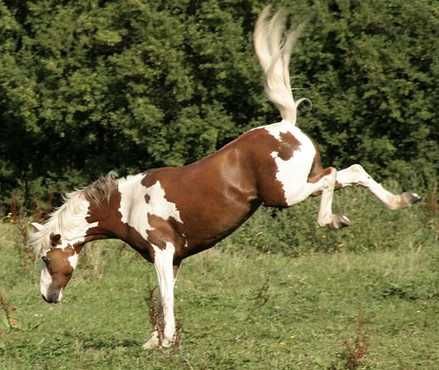 Meanwhile, Dave Turnham, who had come to the mill with Abraham, ran the two miles to get Abraham’s father. Thomas Lincoln rushed to his wagon and lit out to the scene. The elder Lincoln, seeing his son’s grave condition, hauled the injured boy home and put him to bed where the young man remained prone and unconscious all night. Neighbors from the small, close knit community, including mill owner Noah Gordon, gathered at the Lincoln cabin believing Thomas Lincoln’s boy was close to death. The next morning one witness jumped from their seat, pointed and shouted, “Look he’s coming straight back from the dead!” Abraham was shaking and jerking from head to toe when he opened his eyes and finished his cadence from the day before by shouting “You old hussy”.
After the family relocated to Illinois, settling in Macon County, 10 miles west of Decatur, Abraham became increasingly distant from Thomas and those low days in Indiana. In 1831, as Thomas established a new homestead in Coles County, Illinois, Abraham left home for New Salem, where he lived for six years. Leaving his “Angel Mother”, his only sister, his only niece or nephew, and that ornery mule far behind him. But, according to most historians, that angry mule kick stayed with him for the rest of his life.
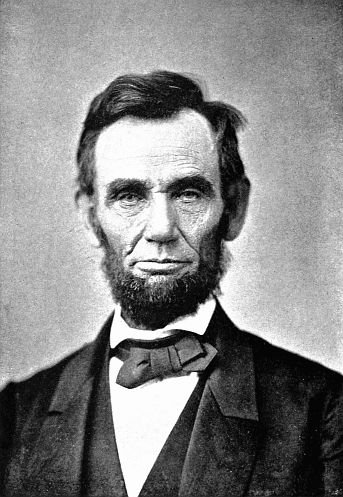
Edward J. Kempf, an accomplished neurologist and psychiatrist, theorized in his 1965 book, “Abraham Lincoln’s Philosophy of Common Sense”, that the incident caused cerebral damage and contributed to the “melancholy” Lincoln felt throughout his life. The book featured numerous “psychobiographies” of many great figures, including Lincoln. Kempf’s study brought unusual expertise to the subject and is among the best works of its genre. Kempf’s hypothesis was based on what generations of artists, sculptors and photographers already knew; that Abraham Lincoln’s face had a good side and a bad side.
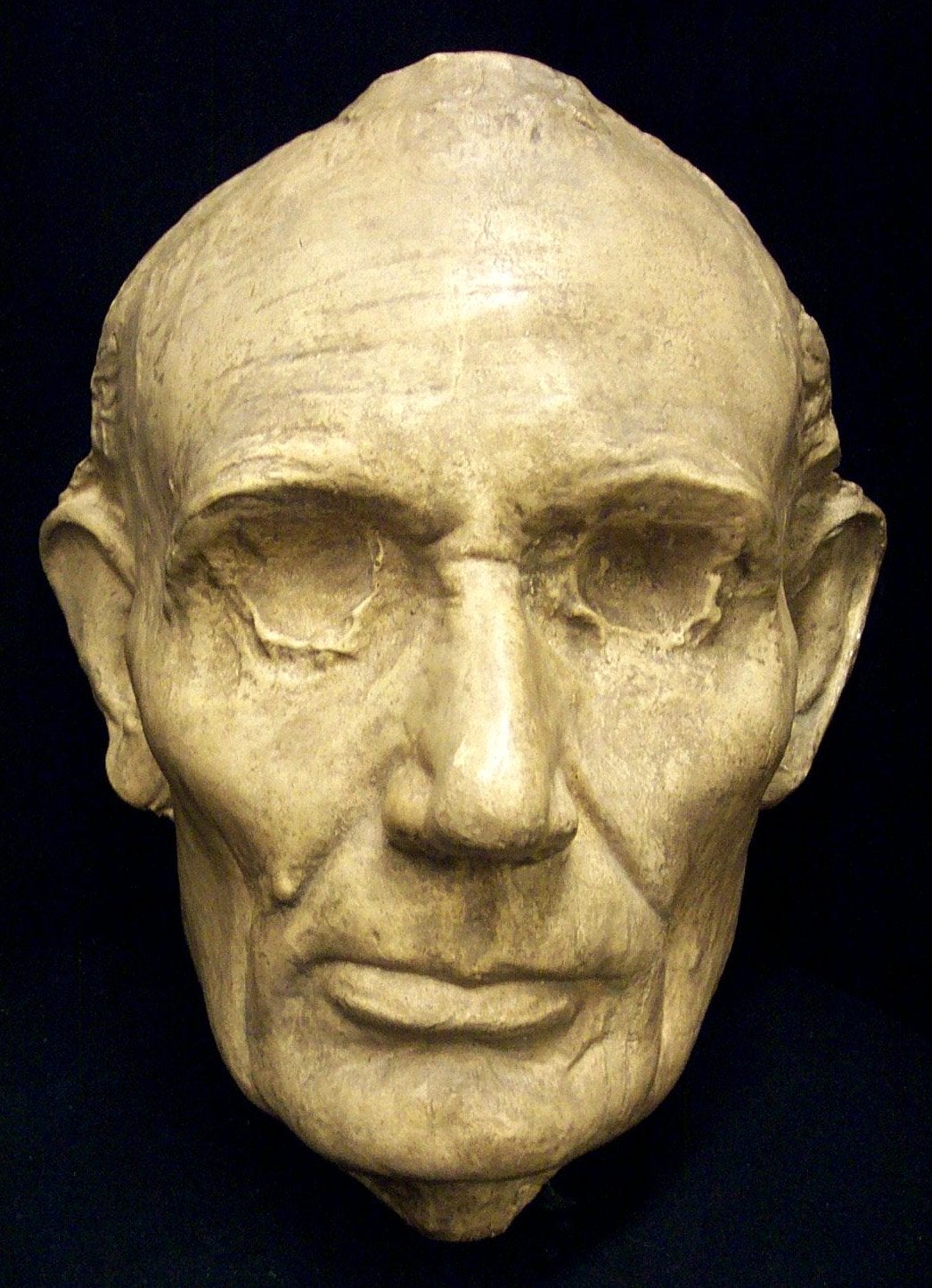
 Lincoln’s contemporaries noticed that at times his left eye drifted upward independently of his right eye, a condition doctors diagnosed as “strabismus” but more derisively known as “Lazy Eye”. The resulting affliction results in the eyes failure to properly align with each other when looking straight ahead, particularly when trying to focus on an object. As proof, experts point to the best surviving evidence; two life masks of Lincoln. One a beardless portrait made in April of 1860 and the other, a bearded image made in February of 1865. Laser scans of both masks reveal an unusual degree of facial asymmetry. In short, the left side of Lincoln’s face was much smaller than the right, resulting in the double diagnosis of “hemifacial microsomia” compounded by “strabismus”. The defects join a long list of posthumously diagnosed ailments including smallpox, heart disease, bi-polar disorder and depression that doctors claimed afflicted Lincoln.
Lincoln’s case can be identified by the bony ridge over his deep-set left eye, which was rounder and thinner than the right side. In life, Lincoln’s appearance was mocked by friend and foe alike. In 1862, author Nathaniel Hawthorne, a Lincoln admirer, noted the president’s “homely sagacity” and his “sallow, queer, sagacious visage.” A description considered so disrespectful and inflammatory that it was deleted by Hawthorne’s Atlantic Monthly magazine editor. The strongest evidence for the “case of Lincoln’s lopsided face” can be found in the iconic November 1863 Alexander Gardner photograph taken shortly before the Gettysburg Address.
 According to a cadre of modern day medical historians, Gardner’s photo is worth a thousand words. Although modern neurologists admit that a positive diagnosis would require a complete examination of the living Lincoln, photographic evidence strongly supports their theory. The mule kick to the forehead undoubtedly fractured the skull at the point of impact, the size and depth of the depression attesting to the incident’s severity. In addition, the nerves behind the left eye were damaged by the violent snapping of the head and neck backward. That whiplash also caused several small hemorrhages in the brainstem resulting in the permanent ocular and facial effects and was likely responsible for Lincoln’s high pitched, rasping voice.
Other symptoms included Lincoln’s tendency to lapse into a lower conscious state of mental detachment, occasional bouts of sadness and melancholy, accentuated by a near constant gloomy facial expression. These symptoms were described by contemporaries and friends as “ugly and stupid looking”, “dull,” “sad and abstract,” “detached” and “withdrawn.” In those rare moments of joy, humor and happiness, Lincoln’s facial expression turned on a dime from dull indifference to animated interest and boisterous laughter, which doctors point to as a further sign of brain injury.
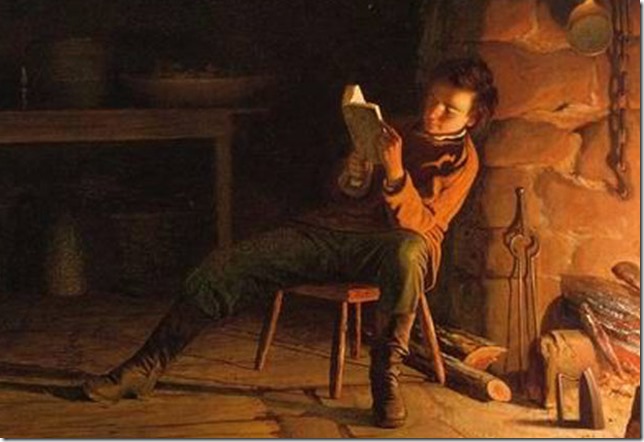 Yet another after effect of that boyhood mulekick was noticed by Josiah Crawford, a neighbor from Gentryville, Ind. who employed the boy Lincoln, loaned him books for study. Gentry liked to playfully needle the young railsplitter about the way he “stuck out” his lower lip while in deep concentration. When 35-year-old Lincoln returned to to make a speech in southern Indiana in 1844 for Henry Clay, Crawford noticed Abe’s lower lip still protruded abnormally. When Crawford asked what books he consulted before making the speech, Lincoln replied humorously, “I haven’t any. Sticking out my lip is all I need.”
The study of Lincoln’s alleged malady through photos began when many who knew the martyred President were still alive. In 1914, Dr. S. Mitchell found “evidence of left hyperphoria” and suggested that “the corrugations of his brow and crow’s feet at each corner of the eyes showed that he habitually used auxiliary facial muscles to support the external muscles of the eyes in the work for visual coordination.” In 1932, ophthalmologist Dr. W. H. Crisp observed that “Fullface photographs show an upward deviation of the left eye, great enough to produce a lack of fusion of its images with the right eye. The two eyes did not work together, possibly as a result of a vertical strabismus of the left.” And in 1948, Dr. K. C. Wold suggested that the “diplopia was caused by a decoordination of the external muscles of the left eye which was inherently connected in some way with the other facial asymmetries. No physician of record, in so far as I know, has offered an explanation of the nervous origin and nature of the asymmetrical functioning of the left facial and ocular muscles, although some of the nervous effects of eyestrain have been discussed.”
Perhaps due to that mule kick, Lincoln’s adult years were filled with nervous attacks, characterized by eyestrain and headache with nausea and indigestion, so severe that often he became unable to work and had to lie down with a cold compress over his eyes. He had couches in his law office, at home, and in the White House, for this purpose. Mount Rushmore sculptor Gutzon Borglum unknowingly described the disparity of Lincoln’s face for posterity. Before creating the great marble head of Lincoln in the Capitol rotunda at Washington (and also located at the entrance to the tomb in Springfield) Borglum made meticulous comparative measurements of all known photographs, life paintings and masks of Lincoln before attempting his sculpture.
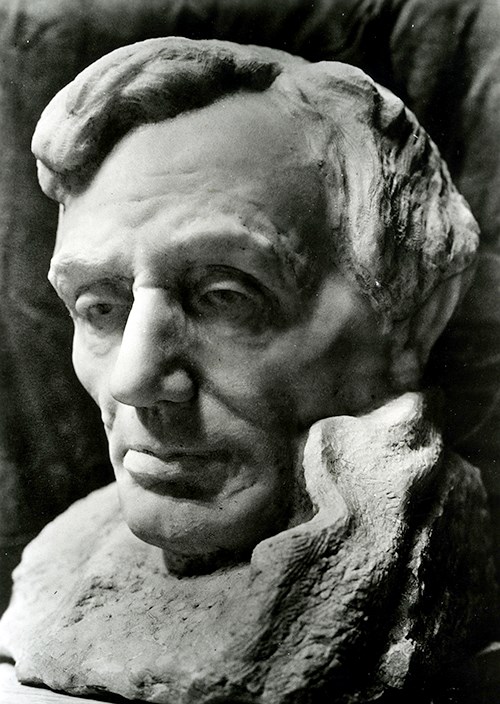
The Danish-American Borglum later gave careful interpretations of the relative meanings of the right and left sides of his face as indicated by its lines and measurements detailing that he saw greater strength of function on the right side rather than the left. The sculptor determined that the lines around the right eye revealed that it was more active, more dominant, and that Lincoln “naturally thought and planned with the visualized imagery of this eye.” The lines around Lincoln’s mouth on the right side indicated that “he smiled very, very often when his nature took no part in it.”
Borglum also noticed that the tip of Lincoln’s nose pointed slightly to the right and the left eye was “wide open” and out of focus, “indecisive,” “noncommittal and dreamy.” The left side of the face seemed “primitive,” “immature” and “unfinished.” Its weak expression was “sad and undetermined” in contrast to the determined strength of the right side. The left brow was “anxious, ever slightly elevated and concerned.” Written on his face was “humor, pathos, half-smile, half-sadness; half-anger, half-forgiveness, half-determination, half-pause; …. a dual Nature struggling with a dual problem delivering a single result.” Borglum’s description of Lincoln’s face is most noteworthy because he made no attempt to find a medical determination to explain why the left side was characterless, weak and undeveloped and the right side expressed the real personality and state of mind of Lincoln.
One final symptom of that childhood mule kick was noted by many biographers and contemporaries (like Ward Lamon and Noah Brooks) over the years. Mr. Lincoln spoke often of several impressive mystifying episodes he experienced as “double visions” that all had superstitious meanings for him. These dreamstate visions were welcomed by the President, who believed them to be good luck omens foretelling good news. That is all but his last vision that foretold of a death in the White House; the death of the President by an assassin’s bullet. A bullet that came to rest behind Abraham Lincoln’s left eye. The very same eye which that errant mule kick at an Indiana gristmill cast toward the heavens nearly fifty years before.

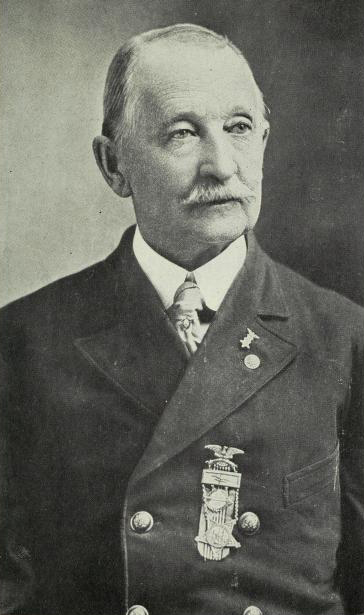

 The Reynolds leaflet further reveals,”Father and mother were at Ford’s Theatre the night of the assassination, and although it was late when they returned home, the general excitement of the night had reached our neighborhood. The newsboys shrill cries of “Extra! Extra! President Lincoln Shot” had awakened everybody in the boarding house. I, too, was awake. Young as I was, I realized what dreadful thing had happened, and I lay wide-eyed in my little trundle bed while father and mother related to the others their personal story of the tragedy. Father, accompanied by several of the men guests, went back to the scene and did not return until after the fateful hour of 7:22 the next morning. I remember as clearly as though it were of yesterday, wearing a wide band of black around the sleeve of my bright plaid jacket, and, carried in father’s arms, of passing the somber catafalque in the rotunda of the Capitol, which inclosed (sic) all that was mortal of the beloved Lincoln. A few weeks later I witnessed the Grand Review of the Army – that wonderful spectacle of the returning boys in blue – which took several days in its passing.”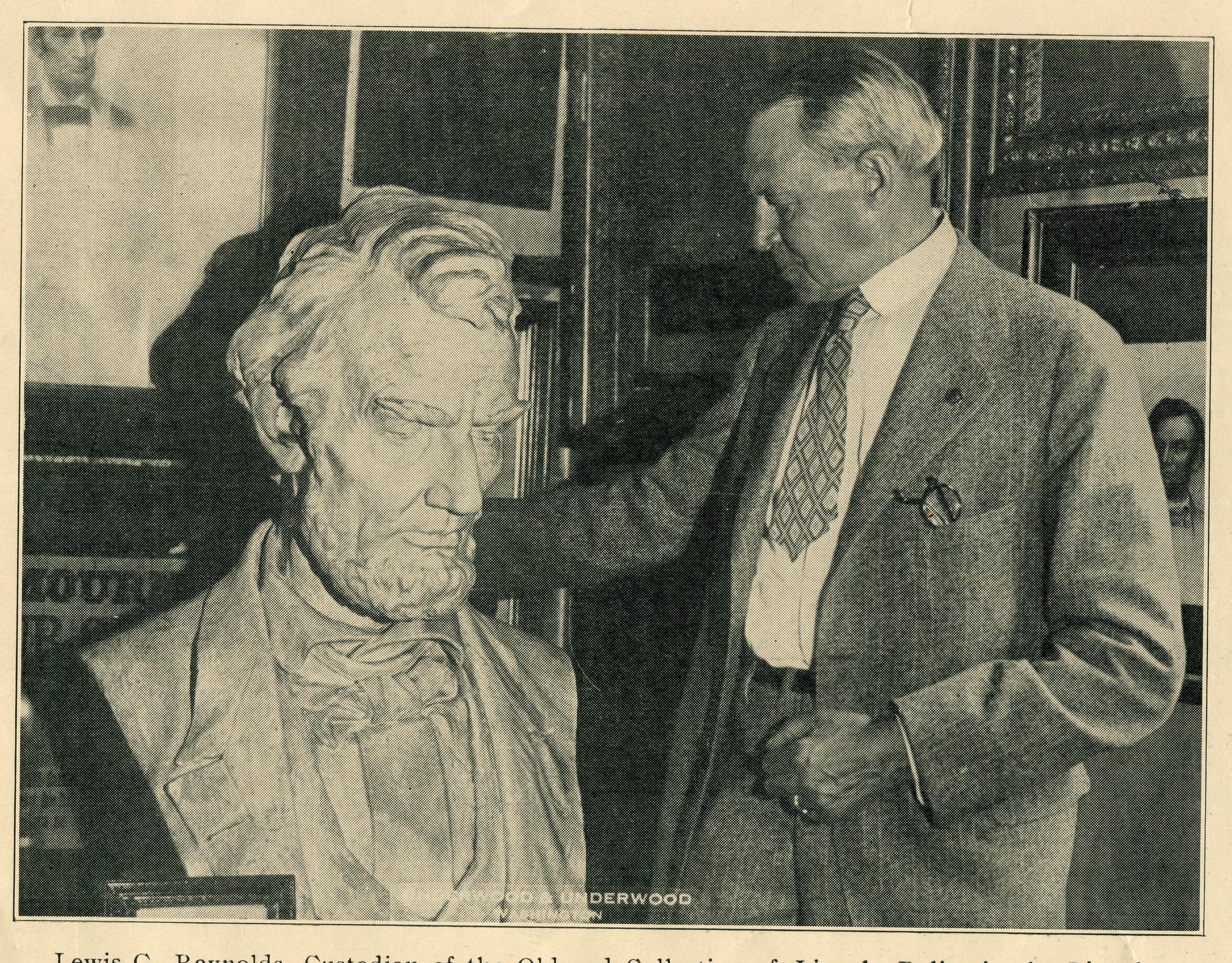

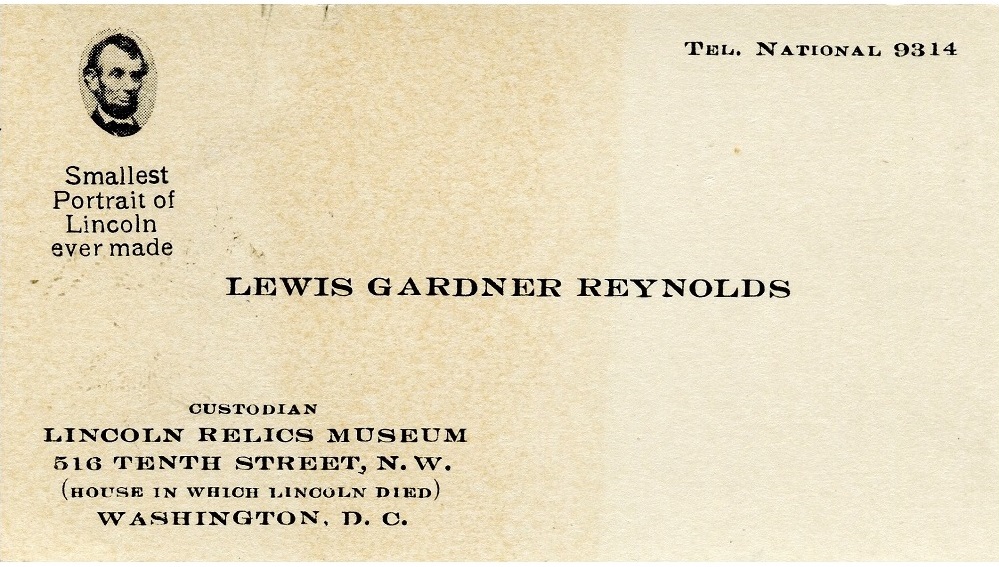 Two decades later, in 1960, the Richmond Palladium-Item newspaper profiled the widow of the former curator, offering new insight. The article is titled: “Local Woman Conducted Tours In House Where Lincoln Died.” It reveals, “Mrs. Reynolds and her husband lived on the second floor of the house at 516 Tenth Street, Washington, DC, at the time Mr. Reynolds was curator of the Oldroyd Lincoln Memorial collection. This was from 1928 through 1936. “I never heard anyone ask Mr. Reynolds a question about Mr. Lincoln he could not answer,” Mrs. Reynolds recalls. Her husband acquired the job as curator when he heard Oldroyd wanted to retire… “I have had visitors say to me doesn’t it give you a creepy feeling?” (sleeping in the house where Lincoln died.) Her answer was always “No.” To the reporter, she said, “I never had a creepy feeling. When I thought about it, it was just a feeling of awe and reverence.” Mr. Reynolds described the collection via radio from the Petersen house several times.“

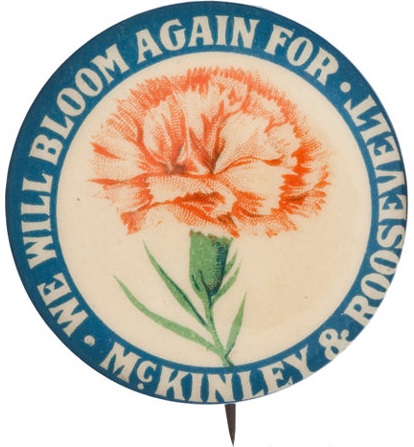 Most Americans remember President William McKinley solely for the way he died. His image a milquetoast chief executive from the age of American Imperialism who was at the helm for the dawn of the 20th century. McKinley’s ordinary appearance belied the fact that he was the last president to have served in the American Civil War and the only one to have started the war as an enlisted soldier. It is long forgotten that McKinley led the nation to victory in the Spanish-American War, protected American industry by raising tariffs, and kept the nation on the gold standard by rejecting free silver. Most notably, his assassination at the 1901 Pan-American Exposition in Buffalo, New York unleashed the central figure who would come to personify the new century; his Vice-President Teddy Roosevelt.
 McKinley’s favorite flower was a red carnation. He displayed his affection by wearing one of the bright red florets in his lapel every day. The carnation boutonnière soon became McKinley’s personal trademark. As President, bud vases filled with red carnations were conspicuously placed around the White House (known as the “Executive Mansion” back then). Whenever a guest visited the President, McKinley’s custom was to remove the carnation from his lapel and present it to the star-struck visitor. For men, he would often place the souvenir blossom into the lapel himself and suggest that it be given to an absent wife, mother, or child. Afterward, he would replace his boutonnière with another from a nearby vase and repeat the transfer again and again for the rest of the day. McKinley was superstitious about these carnations, believing that they brought good luck to both him and his recipient.
 One account alleges that McKinley’s “Genus Dianthus” custom began early in his presidency when an aide brought his two sons to the White House to meet the President. McKinley, who loved children dearly, presented his carnation to the older boy. Seeing the disappointment in the younger boy’s face, the President deftly retrieved a replacement carnation and pinned it on his own lapel. Here the flower remained for a few moments before he removed it and gave to the younger child, explaining “this way you both can have a carnation worn by the President.”
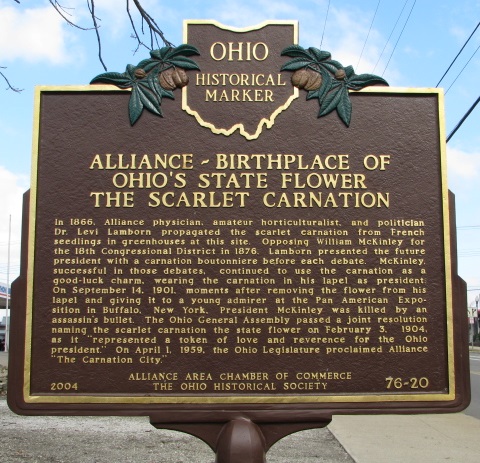
 However, McKinley’s ubiquitous floral tradition can be traced to the election of 1876, when he was running for a seat in Congress. His opponent, Dr. Levi Lamborn, of Alliance, Ohio, was an accomplished amateur horticulturist famed for developing a strain of vivid scarlet carnations he dubbed “Lamborn Red.” Dr. Lamborn presented McKinley with a “Lamborn Red” boutonniere before their debates. After he won the election, McKinley viewed the red carnation as a good luck charm. He wore one on his lapel regularly and soon began his custom of presenting them to visitors. He wore one during his fourteen years in Congress, his two gubernatorial wins and both 1896 and 1900 presidential campaigns.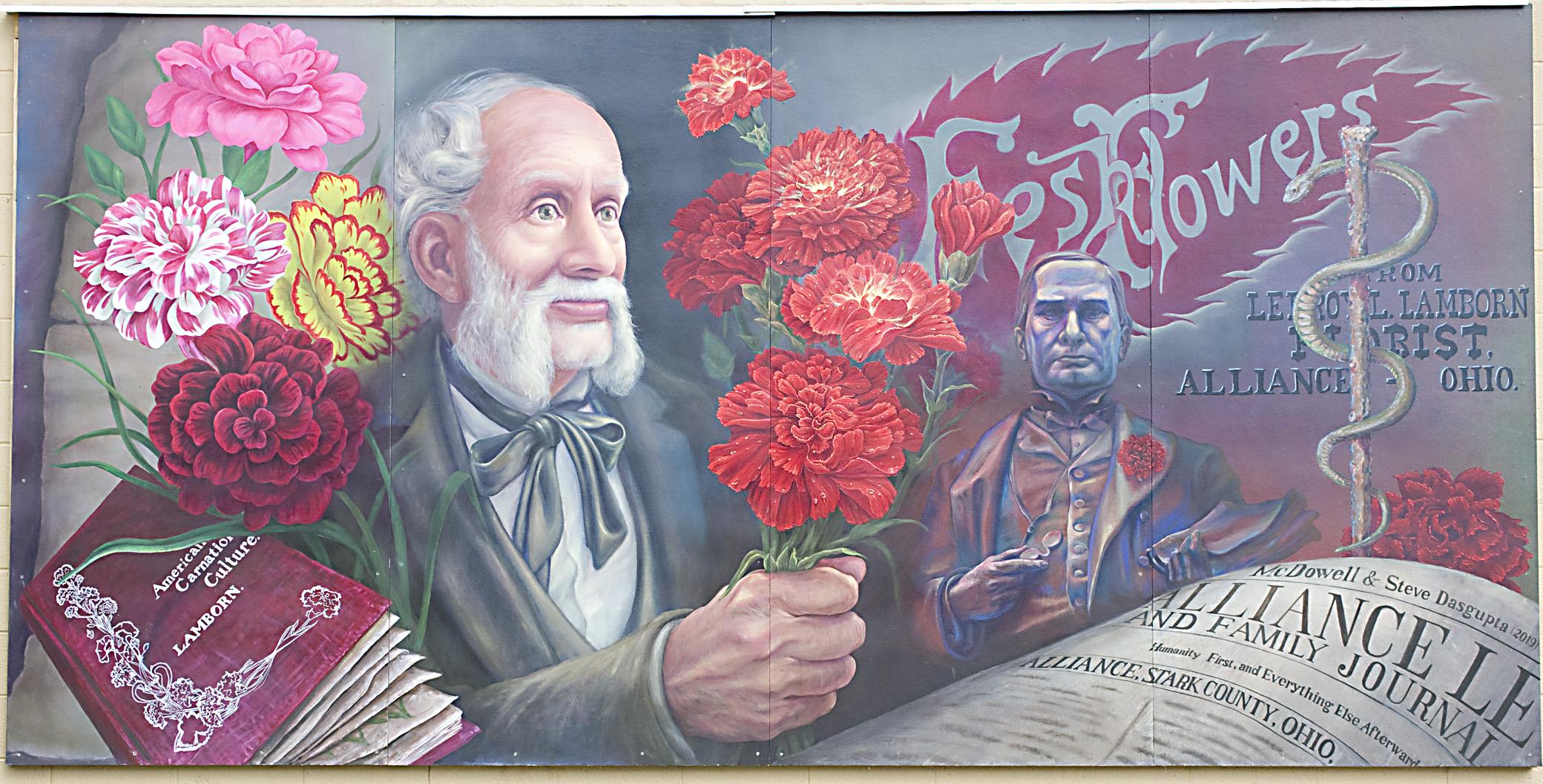
 After his second inauguration on March 4, 1901, William and Ida McKinley departed on a six-week train trip of the country. The McKinleys were to travel through the South to the Southwest, and then up the Pacific coast and back east again, to conclude with a visit to the Buffalo Exposition on June 13, 1901. However, the First Lady fell ill in California, causing her husband to limit his public events and cancel a series of planned speeches. The First family retreated to Washington for a month and then traveled to their Canton, Ohio home for another two months, delaying the Expo trip until September.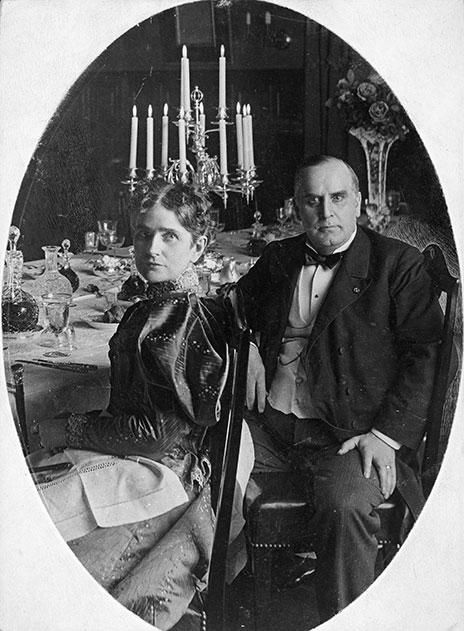
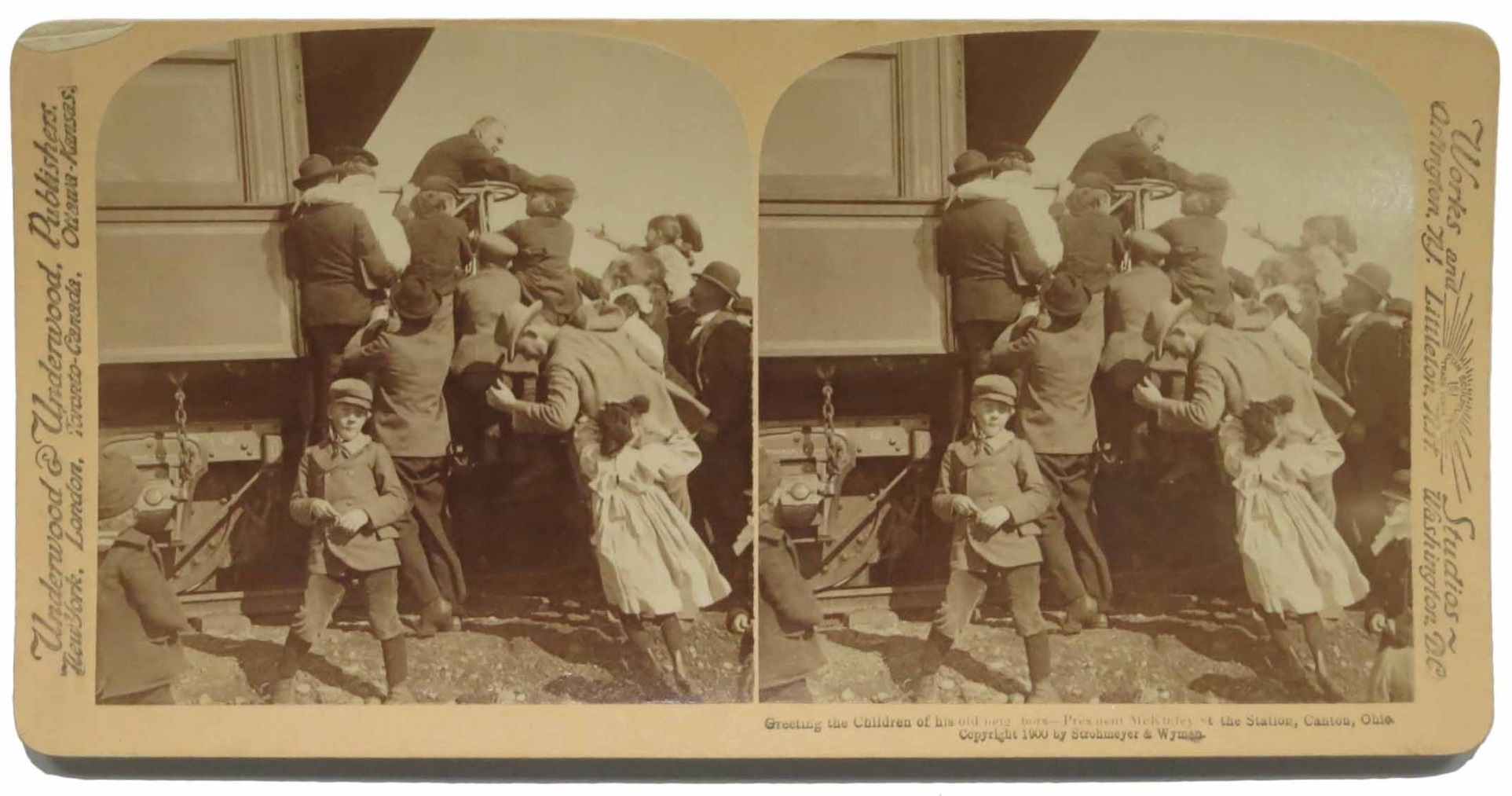
 As McKinley fell backwards into the arms of his aides, members of the crowd immediately attacked Czolgosz. McKinley said, “Go easy on him, boys.” McKinley urged his aides to break the news gently to Ida, and to call off the mob that had set on Czolgosz, thereby saving his assassin’s life. McKinley was taken to the Exposition aid station, where the doctor was unable to locate the second bullet. Ironically, although a newly developed X-ray machine was displayed at the fair, doctors were reluctant to use it on the President because they did not know what side effects. Worse yet, the operating room at the exposition’s emergency hospital did not have any electric lighting, even though the exteriors of many of the buildings were covered with thousands of light bulbs. Amazingly, doctors used a pan to reflect sunlight onto the operating table as they treated McKinley’s wounds.
 McKinley drifted in and out of consciousness all day. By evening, McKinley himself knew he was dying, “It is useless, gentlemen. I think we ought to have prayer.” Relatives and friends gathered around the deathbed. The First Lady sobbed over him, “I want to go, too. I want to go, too.” Her husband replied, “We are all going, we are all going. God’s will be done, not ours” and with final strength put an arm around her. Some reports claimed that he also sang part of his favorite hymn, “Nearer, My God, to Thee” while others claim that the First Lady sang it softly to him. At 2:15 a.m. on September 14, President McKinley died. Czolgosz was sentenced to death and executed by electric chair on October 29, 1901.
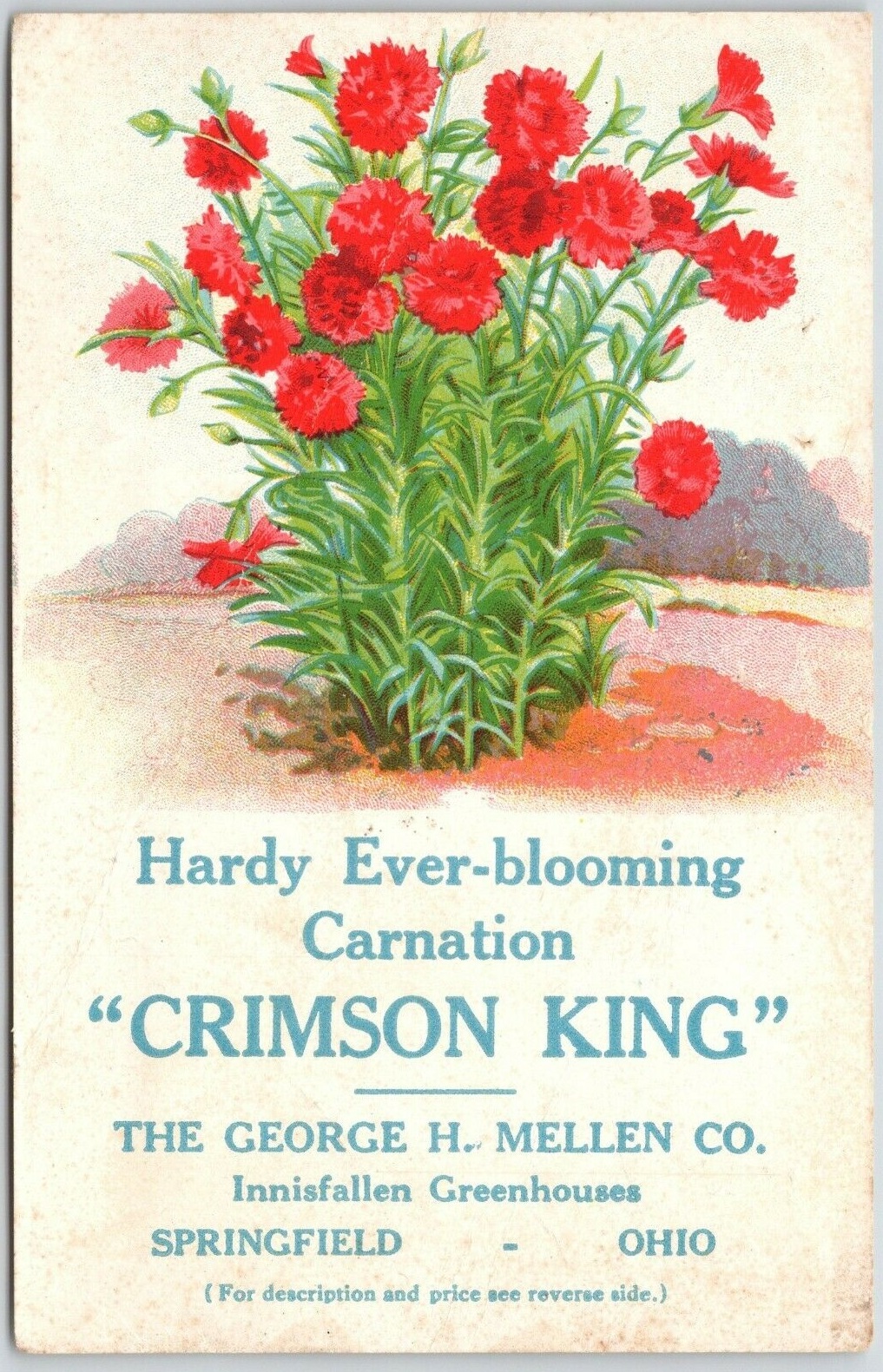 Loyal readers will recognize my affinity for objects and will not be surprised by the query, “What became of that assassination carnation?” In an article for the Massillon, Ohio Daily Independent newspaper on Sept. 7, 1984, Myrtle Ledger Krass, the 12-year-old-girl to whom the President gave his lucky flower moments before he was killed, reported that the McKinley’s carnation was pressed and kept in the family Bible. Myrtle, at the time a well-known painter living in Largo, Florida, explained how, many years later while moving, “The old Bible had been put away for years, when I took it out to wrap it for moving, it just crumbled in my hand. Just fell away to nothing.”
 In 1902, Lewis Gardner Reynolds (born in 1858 in Bellefontaine, Ohio) found himself in Buffalo on business on the first anniversary of McKinley’s death. While there he found that the mayor of Buffalo had declared the day a legal holiday. Gardner recalled, “without thinking at the time that I was doing something that would become a national custom, I purchased a pink carnation which I placed in the buttonhole of my coat after tying a small piece of black ribbon on it. As I went through Buffalo I explained to questioners the reason for the flower and the black ribbon. Many of those who questioned me followed my example.” On his return to Ohio, he explained to his friend Senator Mark Hannah what he had done in Buffalo. Later, in Cleveland, Reynolds met with Hannah and Governor Myron T. Herrick. Soon plans were made to celebrate Jan. 29, the anniversary of McKinley’s birth, as “Carnation Day.”
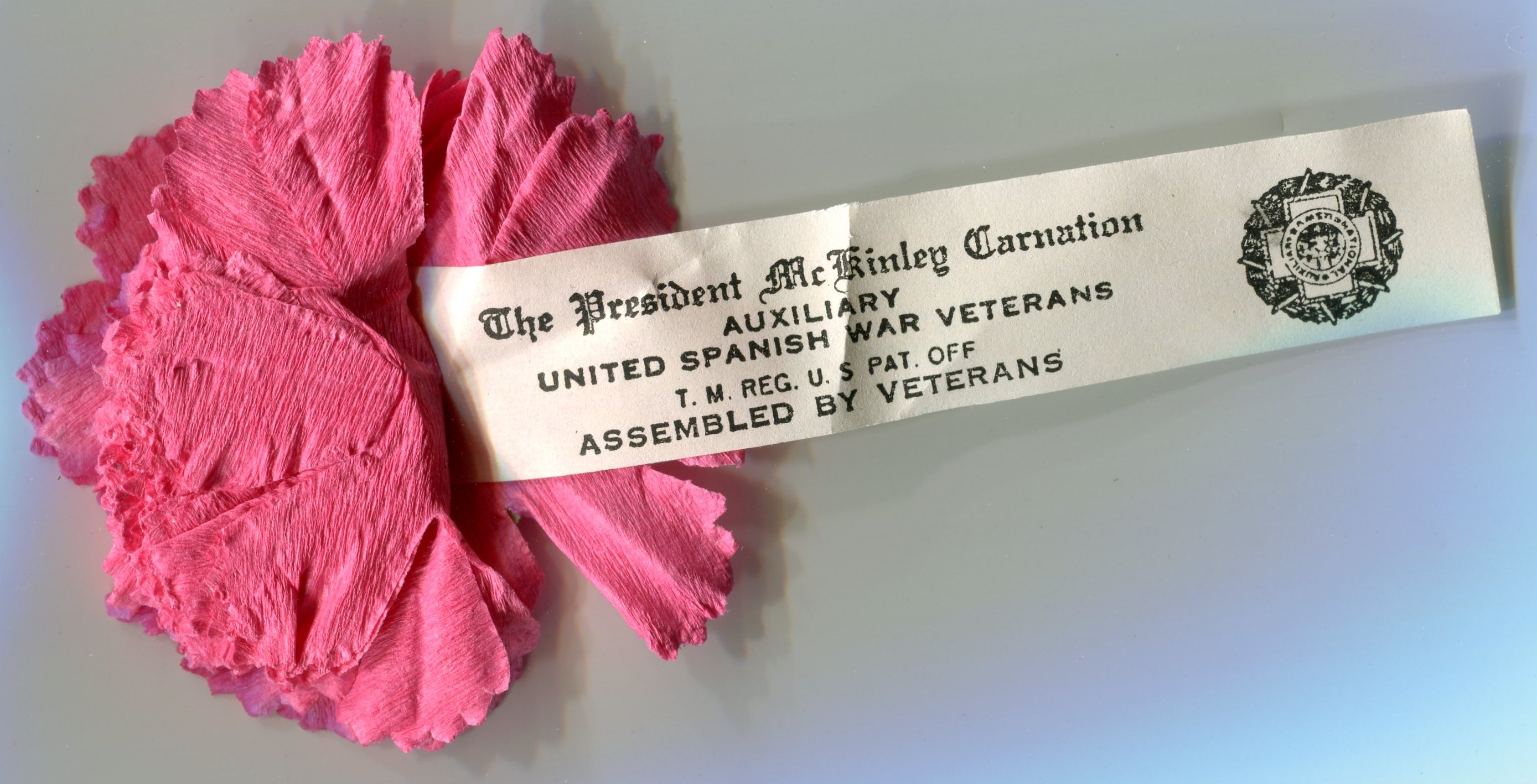 Today, the Ohio Statehouse in Columbus continues observing Red Carnation Day every January 29 by installing a small display honoring the assassinated President. Last year, the Statehouse Museum Shop and on-site restaurant offered special discounts to anyone wearing a red carnation or dressed in scarlet on that day. Yes, the sentimental association of the carnation with McKinley’s memory is due to Lewis Gardner Reynolds.


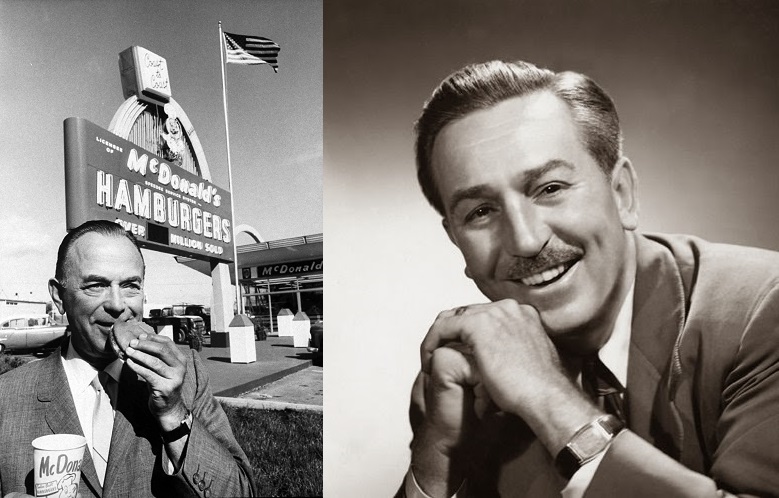
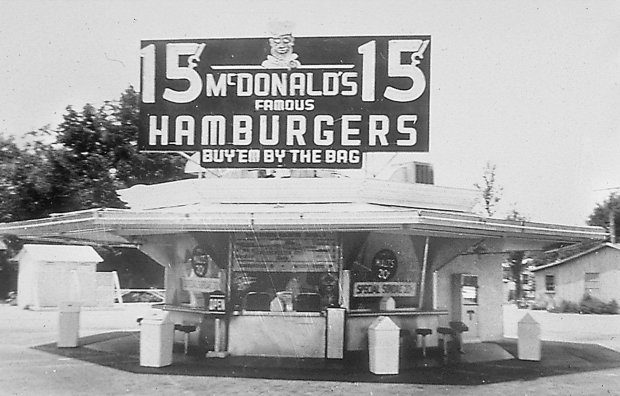
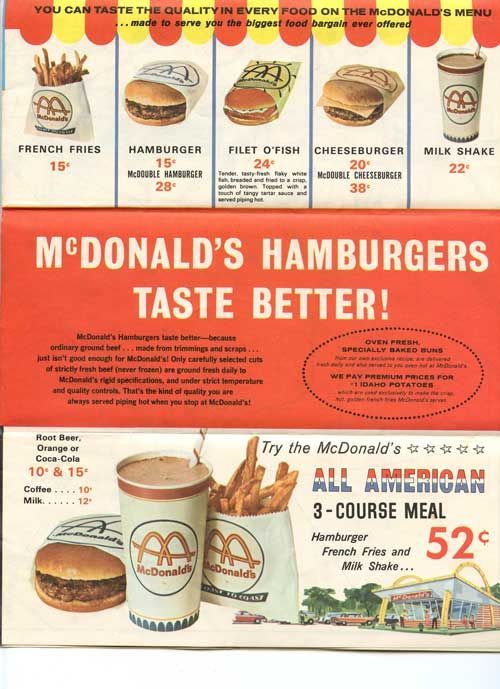
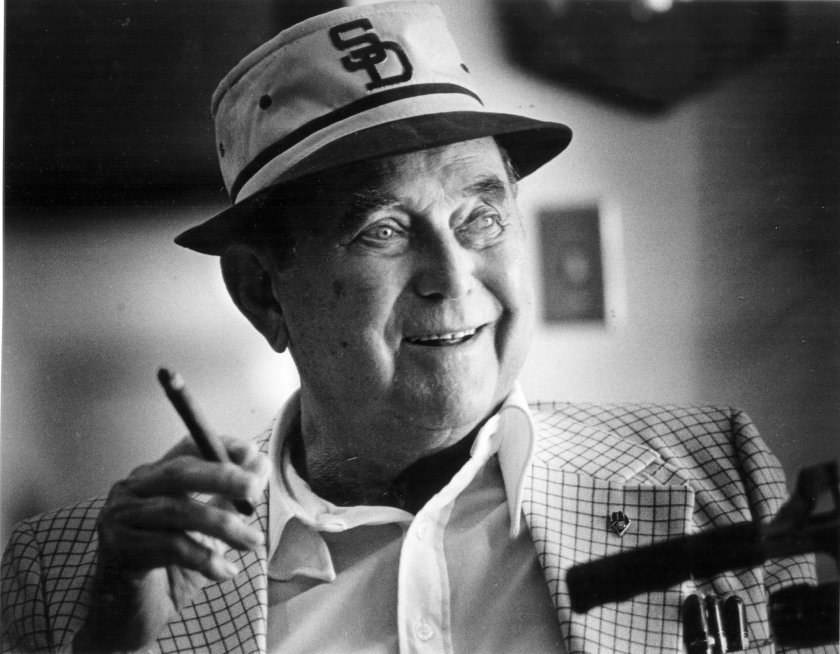
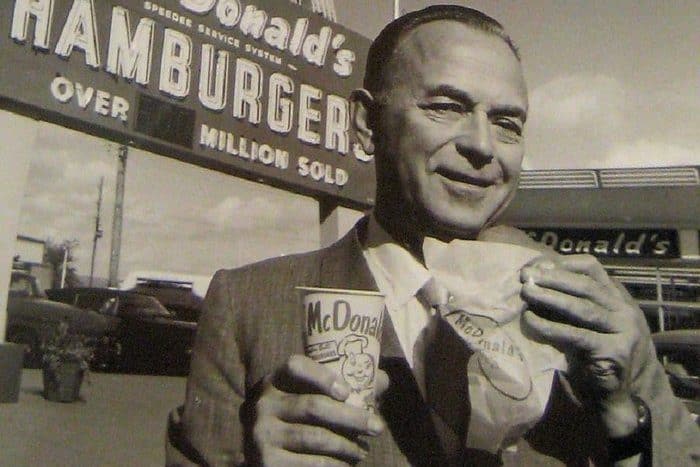 By this time, Ray Kroc was relegated to the sidelines serving in a largely ceremonial role as McDonald’s “senior chairman”. Kroc had given up day-to-day operations of McDonald’s in 1974. Ironically, the same year he bought the San Diego Padres baseball team. The Padres were scheduled to move to Washington, D.C., after the 1973 season. Legend claims that the idea to buy the team formulated in Kroc’s mind while he was reading a newspaper on his private jet. Kroc, a life-long baseball fan who was once foiled in an attempt to buy his hometown Chicago Cubs, turned to his wife Joan and said: “I think I want to buy the San Diego Padres.” Her response: “Why would you want to buy a monastery?” Five years later, frustrated with the team’s performance and league restrictions, Kroc turned the team over to his son-in-law, Ballard Smith. “There’s more future in hamburgers than baseball,” Kroc said. Ray Kroc died on January 14, 1984 and the San Diego Padres won the N.L. pennant that same year (They lost in the World Series to the Detroit Tiger 4 games to 1).
 By the 1980s, Disney was a corporation that seemed to be creatively exhausted. The entertainment giant was seriously out of touch with what consumers wanted to buy, what moviegoers wanted to see. McDonald’s had introduced their wildly popular “Happy Meal” nationwide in 1979. Disney saw an opportunity for revival by proposing the idea of adding Disney toys and merchandising to Happy Meals. In 1987, the first Disney Happy Meal debuted, offering toys and prizes from familiar characters like Cinderella, The Sword In The Stone, Mickey Mouse, Aladdin, Simba, Finding Nemo, Jungle Book, 101 Dalmatians, The Lion King and other classics. For a time, changing food habits, mismanagement and failure to recognize trends, placed the Disney corporation in an exposed position. Rumors circulated that the Mouse was on the brink of being swallowed up by Mickey D’s.
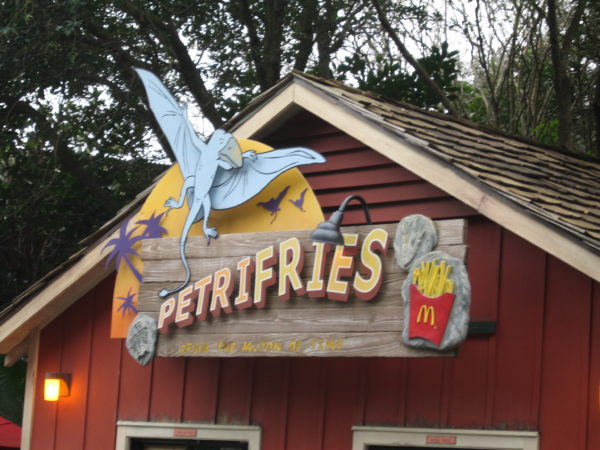 Additionally, there once was a McDonald’s at downtown Disney (before it became Disney Springs). At the Magic Kingdom, visitors could munch on french fries at the Village Fire Shoppe. At Disney’s Hollywood Studios, McDonald’s sponsored Fairfax Fries at the Sunset Ranch March. Fairfax is a reference to the street where the famous Los Angeles Farmers Market (the inspiration for the Sunset Ranch Market) is located. At Epcot, on the World Showcase promenade, is the Refreshment Port where sometimes international cast members from Canada would bring Canadian Smarties (similar to M&Ms) for the food and beverage location to make a Smarties McFlurry. The exclusive contract with Disney did not allow McDonald’s to tie in with blockbuster movies such as the Star Wars franchise even though movie studios would have preferred the tie in since McDonald’s had a higher profile and market share.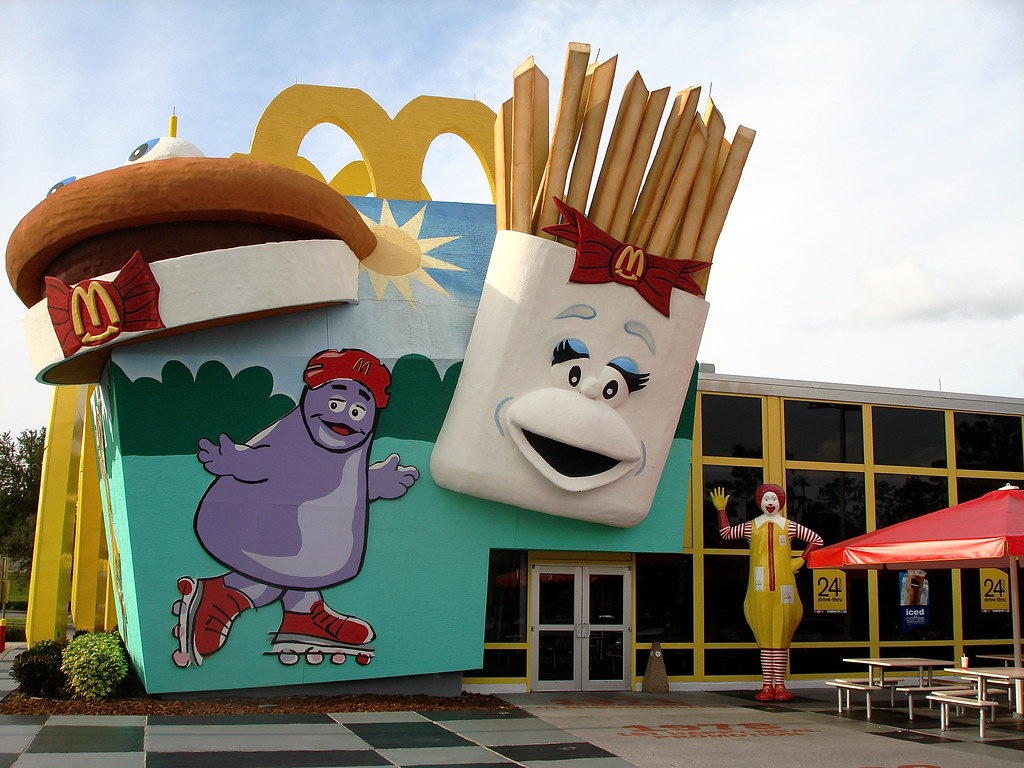
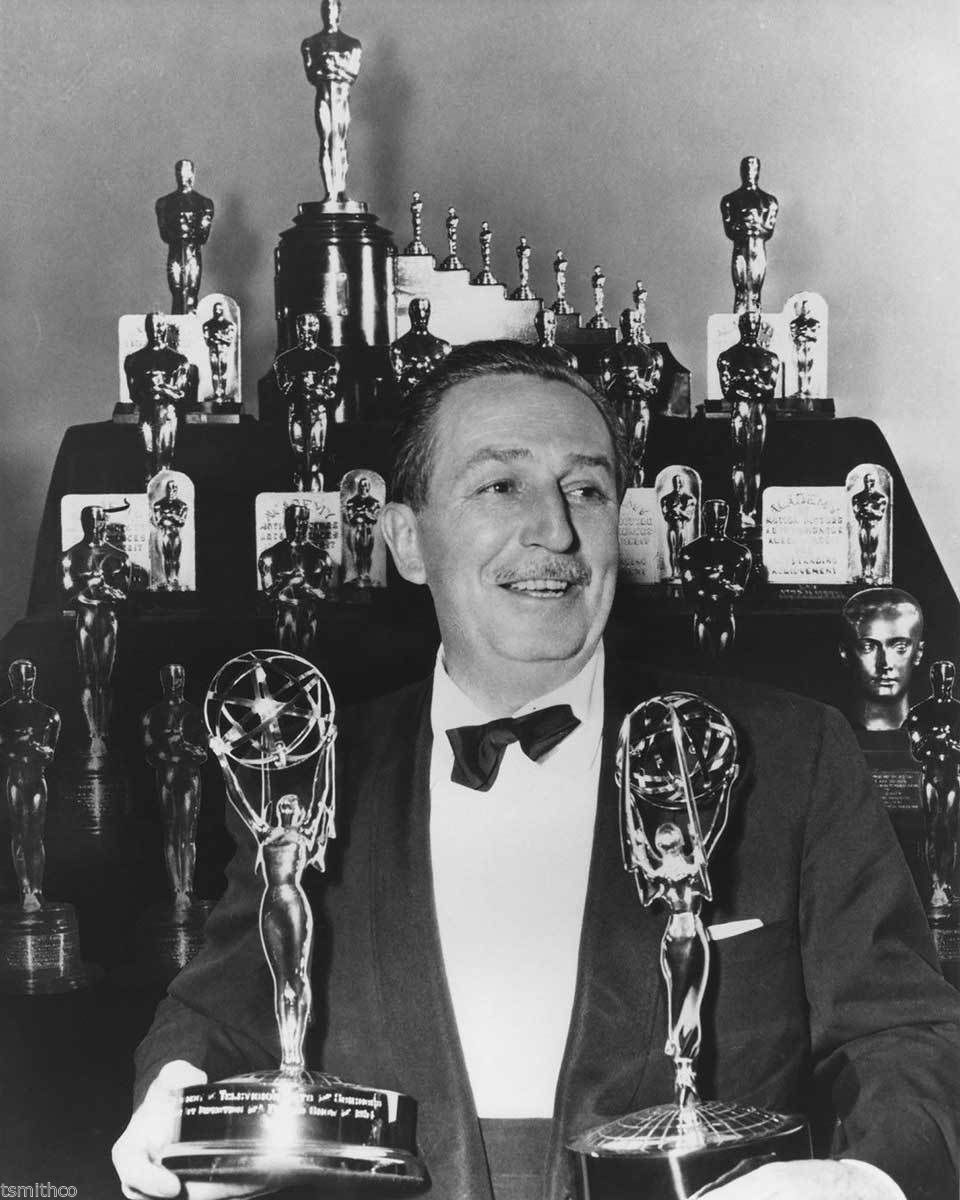 During his lifetime, Walt Disney received 59 Academy Award nominations, including 22 awards: both totals are records. Walt Disney’s net worth was equal to roughly $1 billion at the time of his death in 1966 (after adjusting for inflation). At the time of his death, Disney’s various assets were worth $100-$150 million in 1966 dollars which is the same as $750 million-$1.1 billion today. By the time of Kroc’s death in 1984, his net worth was $600 million. That’s the same as $1.4 billion after adjusting for inflation. One can only imagine how the pop culture landscape might have changed back in 1955 if those two former ambulance corps buddies had formed a partnership. But wait, would that make it Mickey D’s Mouse?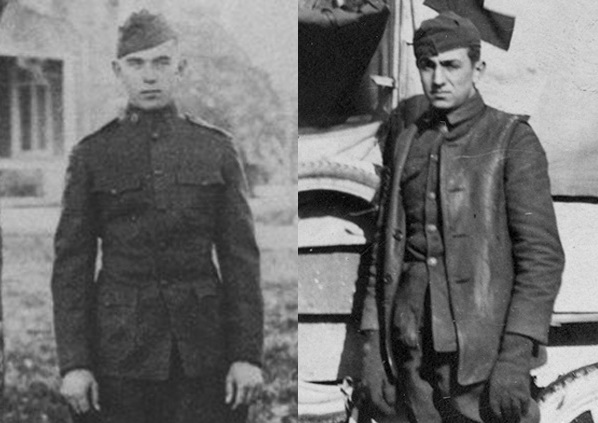
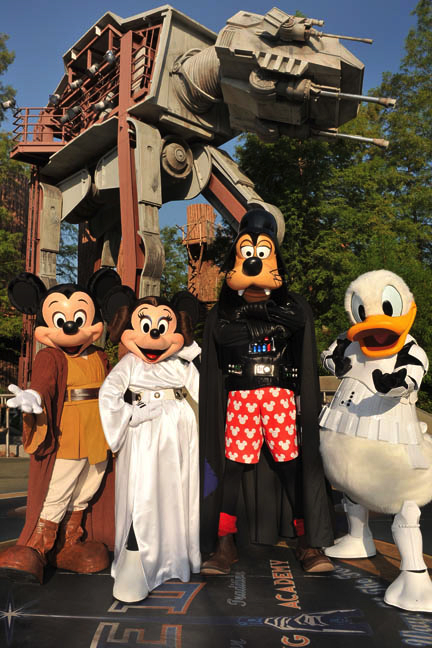
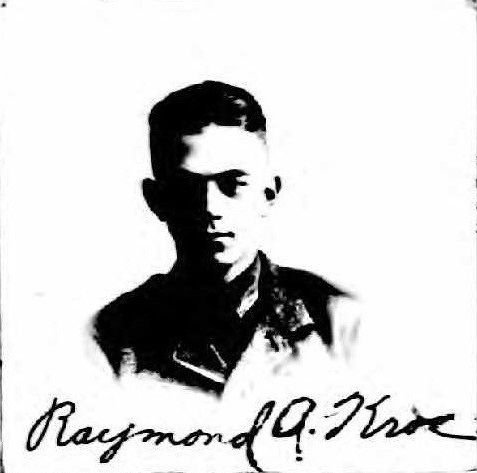
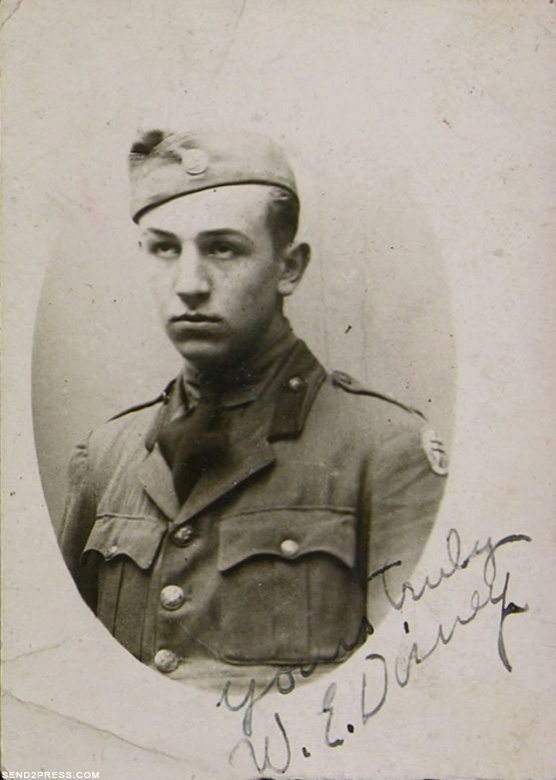
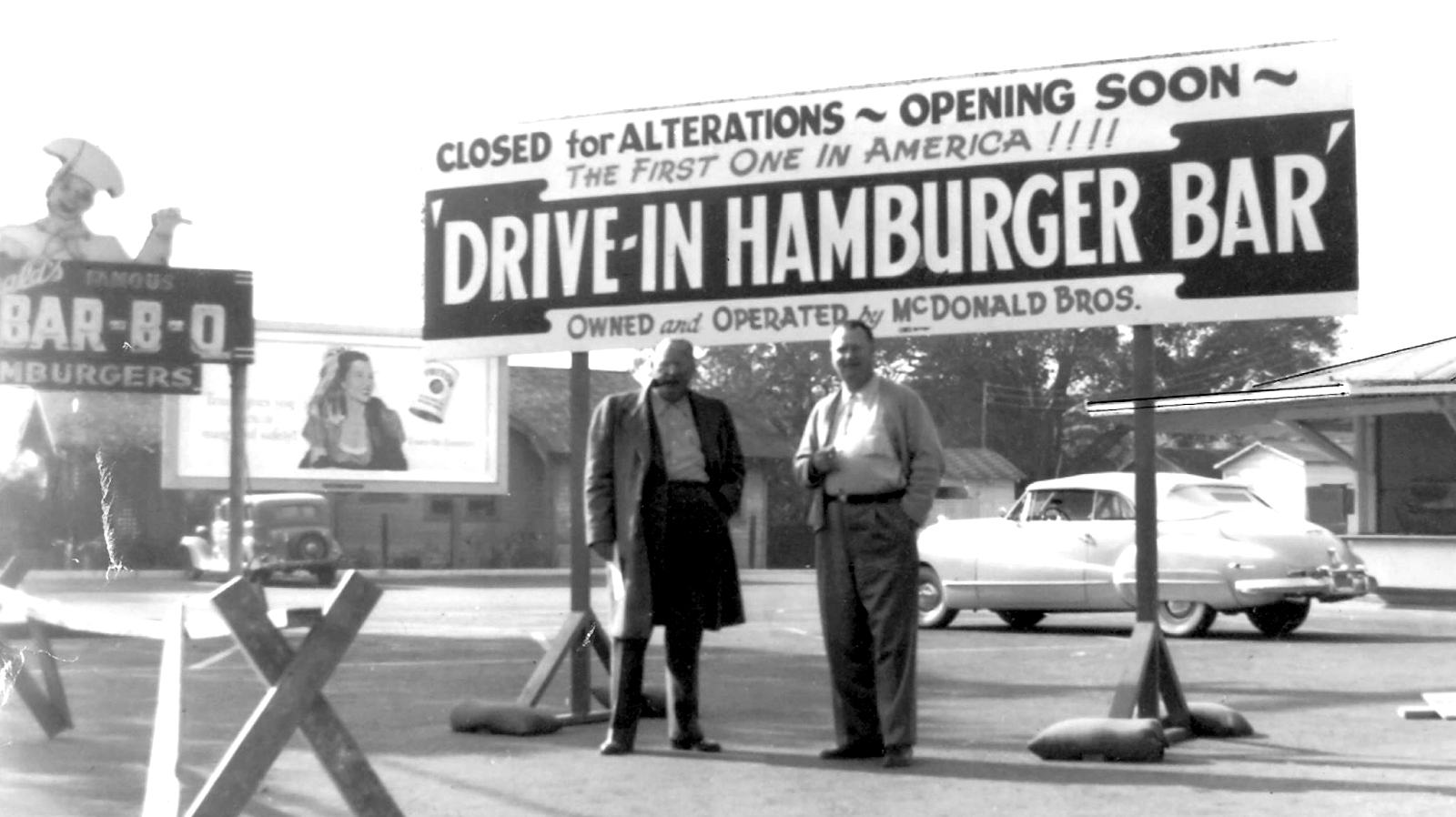
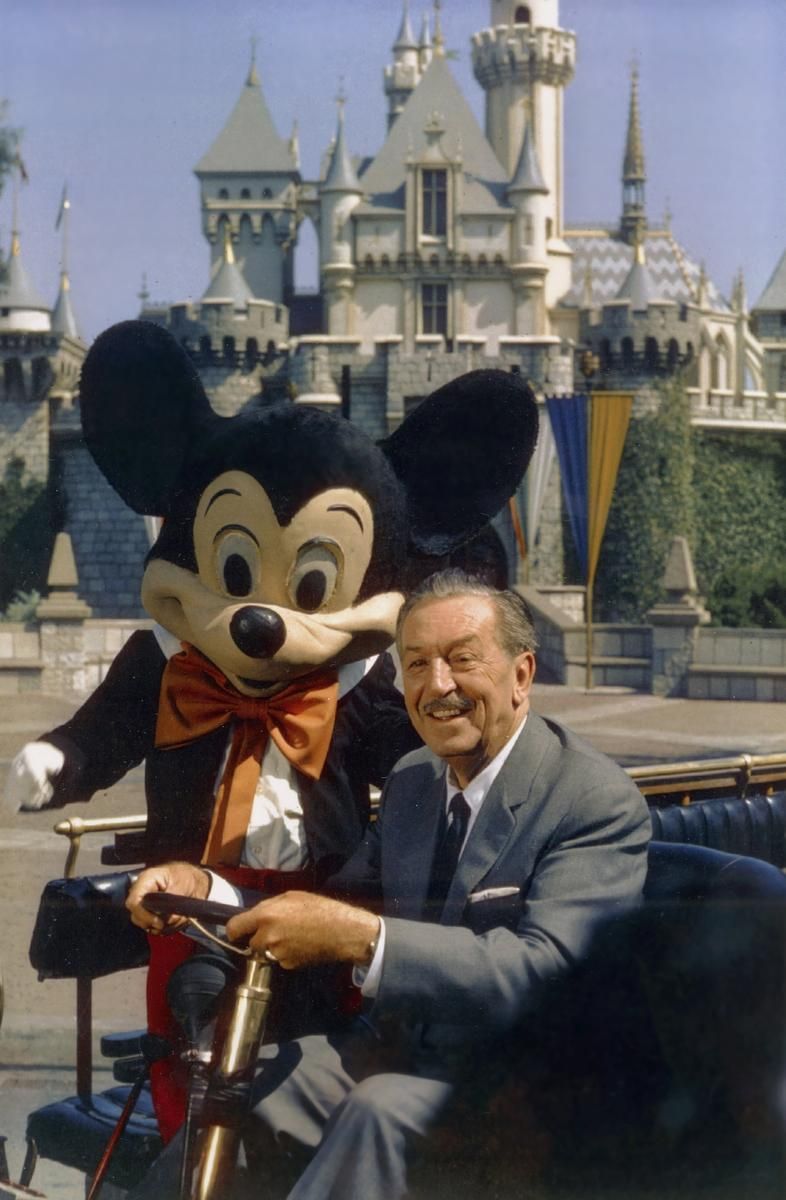
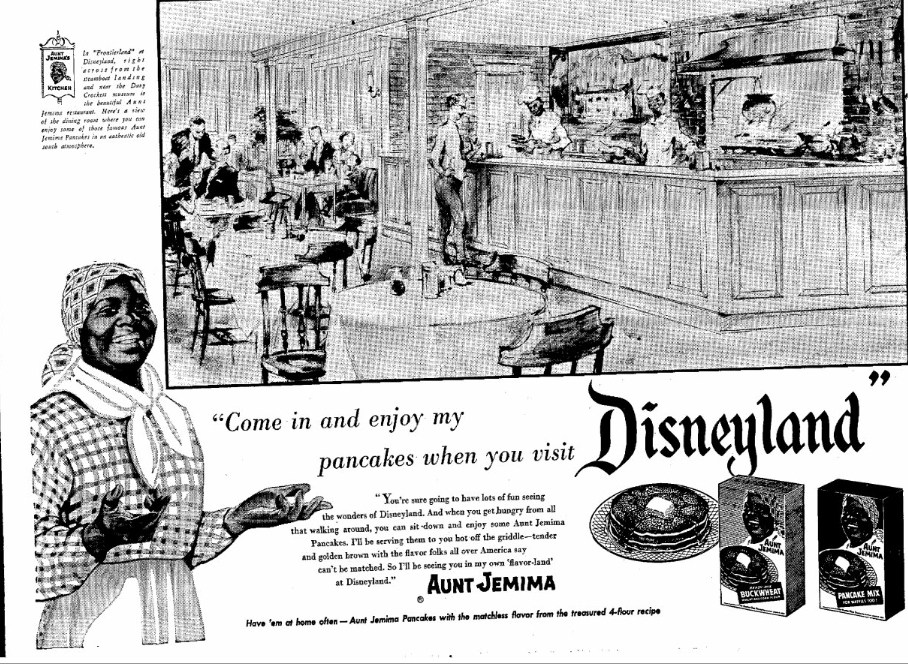 From there, well, nobody knows. For the answer, you need look no further than the fact that there are no McDonald’s at Disney. It should be noted that there were SOME franchise restaurants in Disneyland during those first first years. They included the Aunt Jemima pancake and waffle house in Frontierland and the Chicken of the Sea Pirate Ship in Fantasyland.
 To his dying day, Ray Kroc insisted that the reason the “world’s first McDonald’s” was not featured inside Disneyland at the park’s July 17, 1955 grand opening was because the head of concessions had tried to force Ray to raise the price of his french fries by a nickle (from 10 cents to 15 cents) for the Disneyland crowd. Kroc, the man in charge of McDonald’s franchising, believed that he was being charged a franchise fee by virtue of Walt Disney Productions tacking on a concessionaire’s fee. Kroc, the consummate businessman, said he wasn’t about to give away 1/3 of his profits while gouging his customers. Great story, but by the time Disneyland debuted, Kroc had only opened one McDonald’s franchise (in Des Plaines, Illinois on April 15, 1955). So he had no loyal customers to offend…yet. Well, no customers within 2,000 miles anyway.
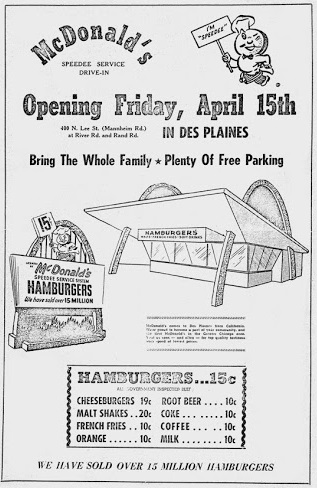 It is more likely to say that while the executives in charge of Disneyland’s concessions were undoubtedly intrigued by Ray’s “fast food” proposal, “war buddy” or not, Kroc just didn’t have enough experience in the restaurant business to take that gamble. So, despite how Kroc spun the tale to reporters from the 1950s forward, while there was some discussion of putting a McDonald’s inside the theme park, the project never really made it past the talking stage. But Ray Kroc would never let the truth stand in the way of a good story.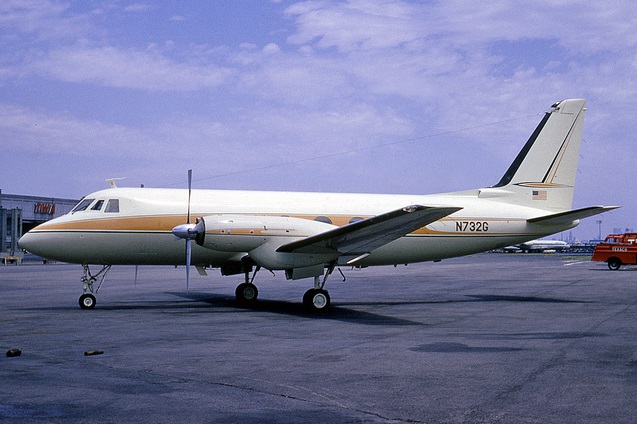
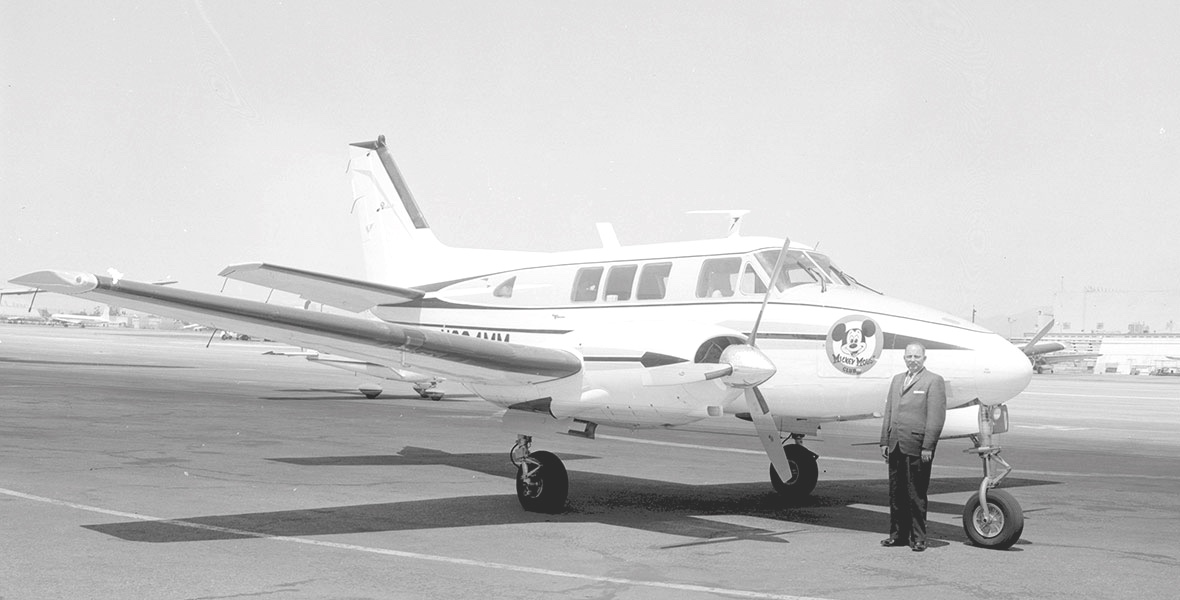
 Alan E. Hunter