Hollywood, Music, Pop Culture, Weekly Column

The Monster Mash Gets Banned!

Original publish date October 7, 2021.

https://weeklyview.net/2021/10/07/the-monster-mash-gets-banned/

https://www.digitalindy.org/digital/collection/twv/id/3927/rec/246

Quick, what do Bing Crosby, David Bowie, Elvis Presley, The Beatles, Frank Sinatra, The Wizard of Oz, ABBA, Queen, The Everly Brothers, Johnny Cash, The Rolling Stones, The Sex Pistols, Donna Summer, Perry Como, Bob Dylan, Glenn Miller, The Kinks, The Who, Louis Prima, Liberace, Ella Fitzgerald, and “The Monster Mash” have in common? At one point or another, all of these artists, or one of their songs, have been banned by BBC radio.

Looking at that list, some are no-brainers, others are head-scratchers. Reasons for bans range from the very British reasons of “lyrics are too tragic” (Everly Brothers “Ebony Eyes”) to “connotations with armies and fighting” (ABBA’s “Waterloo” during the Gulf War). David Bowie’s “Space Oddity” was banned until AFTER the Apollo 11 crew landed and safely returned. Paul McCartney & Wings song “Give Ireland Back to the Irish” is not a hard one to figure out but how about Bing Crosby’s “Deep in the Heart of Texas”? In 1942, the BBC banned the song during working hours on the grounds that its infectious melody might cause wartime factory workers to neglect their tools while they clapped along with the song. Oh, those proper Brits.

Some bans are humorous and fairly obvious. Louis Prima’s 1945 World War II song “Please No Squeeza Da Banana” (admit it, you giggled) was specifically sent out by the New Orleans jazz great to the GI’s returning home from World War II. And the Wizard of Oz film’s “Ding Dong the Witch is Dead” was banned after the death of Margaret Thatcher 74 years after the movie debuted (it still made it to # 2 on the British charts).

But the REAL head-scratcher this time of year? This Saturday marks 59 years since Bobby Pickett’s “Monster Mash” was banned by the BBC. On October 20, 1962, the BBC claimed the song was “too morbid” for airplay. The traditional autumnal anthem was released in August of 1962 during the height of summer but cemented its place in music history when it reached number one on the U.S. charts just in time for Halloween of that year.

Bobby Pickett of “Monster Mash” fame.

The song is narrated by a mad scientist whose monster creation rises from his slab to perform a new dance routine. The dance soon becomes “the hit of the land,” and the scientist throws a party for other monsters, including the Wolfman, Igor, Count Dracula, and a pack of zombies. The mad scientist explains that the twist has been replaced by the Monster Mash, which Dracula embraces by joining the house band, the Crypt-Kicker Five. The story closes with the mad scientist inviting “you, the living” to the party at his castle. The song used primitive, yet effective, sound effects: pulling a rusty nail out of a board to simulate a coffin opening, blowing water through a straw to mimic a bubbling cauldron, and chains dropped onto a tile floor to ape the monster’s movements.

Bobby Boris Pickett performing on Dick Clark’s American Bandstand TV show.

Bobby Pickett and Leonard Capizzi wrote the anthem and, as the song notes, recorded it with the “Crypt Kicker Five” consisting of producer Gary Paxton, Johnny MacRae, Rickie Page, Terry Ber, and pianist Leon Russell. Yes, THAT Leon Russell. The Rock ‘n Roll Hall of Famer was famously late for the session. And the backup singers on the original single? They were led by none other than Rock ‘n Roll Hall of Famer Darlene Love (“He’s a Rebel”). Mel Taylor, drummer for the Ventures, is sometimes credited with playing on the record as well.
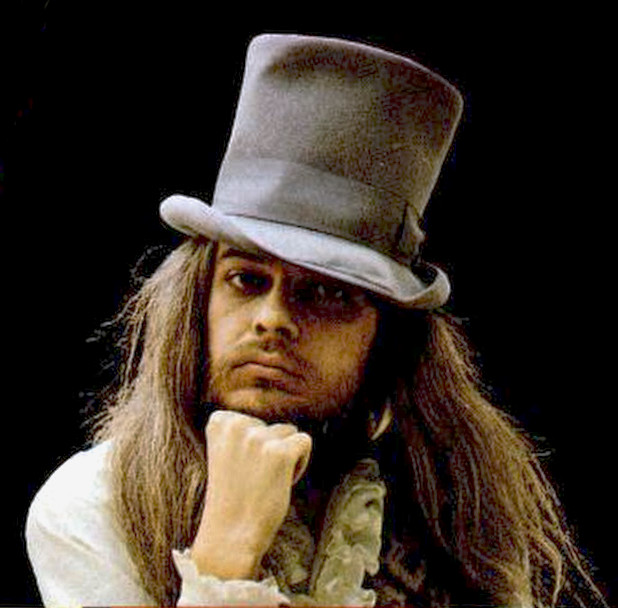
Leon Russell.

The song came about quite by accident. Bobby Pickett, a Korean War vet, and aspiring actor was fronting a band called the Cordials at night and going to auditions during the day. One night, on some long-forgotten nightclub stage with his band, Pickett ad-libbed a monologue in the distinctive lisping voice of horror movie star Boris Karloff while performing the Diamonds’ “Little Darlin’.” Karloff, the distinctive British actor perhaps best remembered for voicing the Grinch, conquered a childhood stutter but never lost his idiomatic lisp.
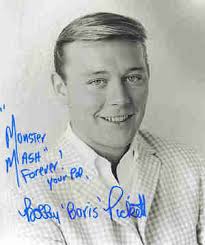
The audience loved it, and the band encouraged Pickett to do more with the Karloff imitation. It wasn’t long before Bobby changed his name to “Boris” and a Halloween icon was born. In the song, Pickett not only imitates Boris Karloff but also Bela Lugosi as Count Dracula complaining “Whatever happened to my Transylvania Twist?” and actor Peter Lorre as Igor, despite the fact that Lorre never played that character on screen. Every major record label declined the song, but after hearing it, Crypt Kicker Fiver member Gary S. Paxton agreed to produce and engineer it on his Garpax Records label. The single sold a million copies, reaching number 1 on the Billboard Hot 100 chart for two weeks before Halloween in 1962 (it remained on the U.S. charts for 14 weeks).

The song cemented its generational appeal when it re-entered the U.S. charts twice, in August 1970, and again in May 1973 when it peaked at #10. The UK ban was reversed in 1973, 11 years after the song was released. In October of that year, it officially became a British “graveyard smash” when it charted at number three in the UK. For the second time, the record sold over one million copies. To celebrate the resurgence, Bobby and the Crypt-Kickers toured Dallas and St. Louis around the 1973 Halloween holiday. On this tour, the Crypt-Kickers were composed of Brian Ray, longtime guitarist for Paul McCartney, and folk singer Jean Ray who allegedly was the inspiration for Neil Young’s “Cinnamon Girl.” Pickett frequently toured around the country performing the “Mash,” at one point employing the Brian Wilson-less dry-docked Beach Boys and a very young Eddie Van Halen in his backing band.

Although many listeners were introduced to Pickett’s Monster Mash strictly as a novelty song worthy of Dr. Demento, turns out it was a well-orchestrated musical slot machine whose number hit every decade or so. Pickett tapped in on three distinct national trends colliding simultaneously during those pre-British invasion years. First, the reintroduction of the Universal monster movies at drive-in theatres and on syndicated television. Second, American pop music of the late ‘50s and early ‘60s was populated by novelty songs like “Itsy Bitsy Teenie Weenie Yellow Polkadot Bikini,” “The Name Game,” “Hello Muddah, Hello Fadduh,” and “The Purple People Eater.” And third, the pop charts were awash with dance songs, from Chubby Checker’s “The Twist” and “Pony Time”, the Orlons “Wah-Wahtusi,” Little Eva’s “Loco-Motion,” to Dee Dee Sharp’s “Mashed Potato Time.”
Monster Mash Co-songwriter Leonard “Lenny” Capizzi.

Pickett’s co-songwriter, Lenny Capizzi, an otherwise mildly successful backup singer, profited from the song right up until he died in 1988. After Pickett landed a recording contract, he remembered his friend Lenny and their brainstorming jams. It had been Capizzi who encouraged Pickett to further utilize his unique impressionist skills in the first place. With the studio album nearly complete, Pickett called Lenny in at the last minute to see if his old pal could jazz up some tracks. But with most of the production money spent, all he could offer Capizzi was second-place songwriter credits. That tiny second-place billing on the single turned out to be the goose that laid the golden egg.

Lenny made a small fortune when “Monster Mash’ charted in 1962. However, it was a payday he spent foolishly on a drug-fueled rock ‘n roll lifestyle. In the early ‘70s, as “Monster Mash” was re-charting, the royalties began rolling in again, this time from both sides of the pond. Alas, within a short time, Lenny was broke again. But every time the song came back — either from airplay in its original version or as a cover (the Beach Boys, Vincent Price, Sha-Na-Na, and many others covered the song) — the royalty checks reappeared. If Pickett hadn’t already spent the original production money by the time Lenny stepped in, Capizzi would have been paid as a one-time session musician and that would have been the end of it. Instead, Lenny stepped in for an afternoon’s work for no money and accepted a co-writer’s credit for a dubious hit. When asked years later about the song, Capizzi couldn’t even recall his contribution.

Crypt Kicker Five Member Gary Paxton Producer of the song Alley Oop.

The song was inspired by Crypt-kicker Five member Gary Paxton’s earlier novelty hit “Alley Oop.” Paxton (1939-2016) built a reputation as an eccentric figure in the 1960s recording industry. Brian Wilson was known to admire his talents and Phil Spector feared him. His creativity and knack for promotion were legendary. In 1965, he produced Tommy Roe’s hit “Sweet Pea.” The next two years, he produced “Along Comes Mary” and “Cherish” both hits for the Association, and followed it up with another for Roe, “Hooray for Hazel.” Paxton moved toward the Bakersfield sound in the late 1960s, concentrating on country music.

Phil Spector and Darlene Love in studio in 1963.

Darlene Love, “Monster Mash” backup singer, told Billboard magazine’s Rob LeDonne in 2017, “We had a hard time doing it because it was totally ridiculous. When you do a song like that, you never think you’re going to be famous or that it’ll be a hit. We sat down to listen to the song to try to figure out what the background was going to be. He had to sing his vocals so we could figure out where to come in. It made it more fun, with him singing his line and then us answering him.” For his part, Pickett told The Washington Post, “The song wrote itself in a half hour and it took less than a half-hour to record it.”

On April 25, 2007, Bobby (Boris) Pickett, whose novelty voice talents on “Monster Mash” made him one of pop music’s most enduring one-hit wonders, died in Los Angeles from leukemia at age 69. Pickett was still performing the song live on stage until November 2006, five months before his death. Alongside Michael Jackson’s “Thriller,” Pickett’s “Monster Mash,” the song that started out with zero expectations 59 years ago this week, has firmly planted itself as a seasonal standard. And what about the dance? Was there ever a dance created for the song? Well, yes actually, there was. Turns out the Monster Mash is simply a Peanuts-meets-Frankenstein-style stomp-about accented by monster gestures made by outstretched arms and hands. Don’t expect to see that one on Dancing With The Stars any time soon.

Abe Lincoln, Ghosts, Indianapolis, Irvington Ghost Tours, Museums, Politics, Presidents, Weekly Column

Abraham Lincoln & James Whitcomb Riley on Halloween!

Original publish date:  October 29 2020

In 1988, a survey was taken in conjunction with the “Hoosier Celebration” during Governor Robert Orr’s administration ranking the best known Hoosiers. Abraham Lincoln was number one and James Whitcomb Riley was number two followed (in descending order) by Benjamin and William Henry Harrison and explorers Lewis and Clark, who tied with former Governor Otis Bowen. And, because everybody loves a list, others making the cut included Larry Bird, John Cougar Mellencamp, Red Skelton, Florence Henderson, Jane Pauley, Michael Jackson and Bobby Knight. Don’t remember the “Hoosier Celebration”? Neither do I.

Screenshot (155)
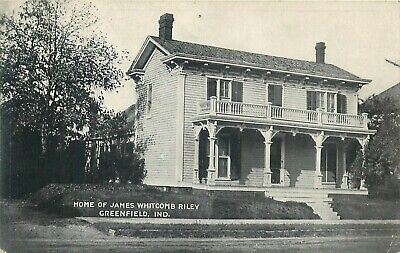
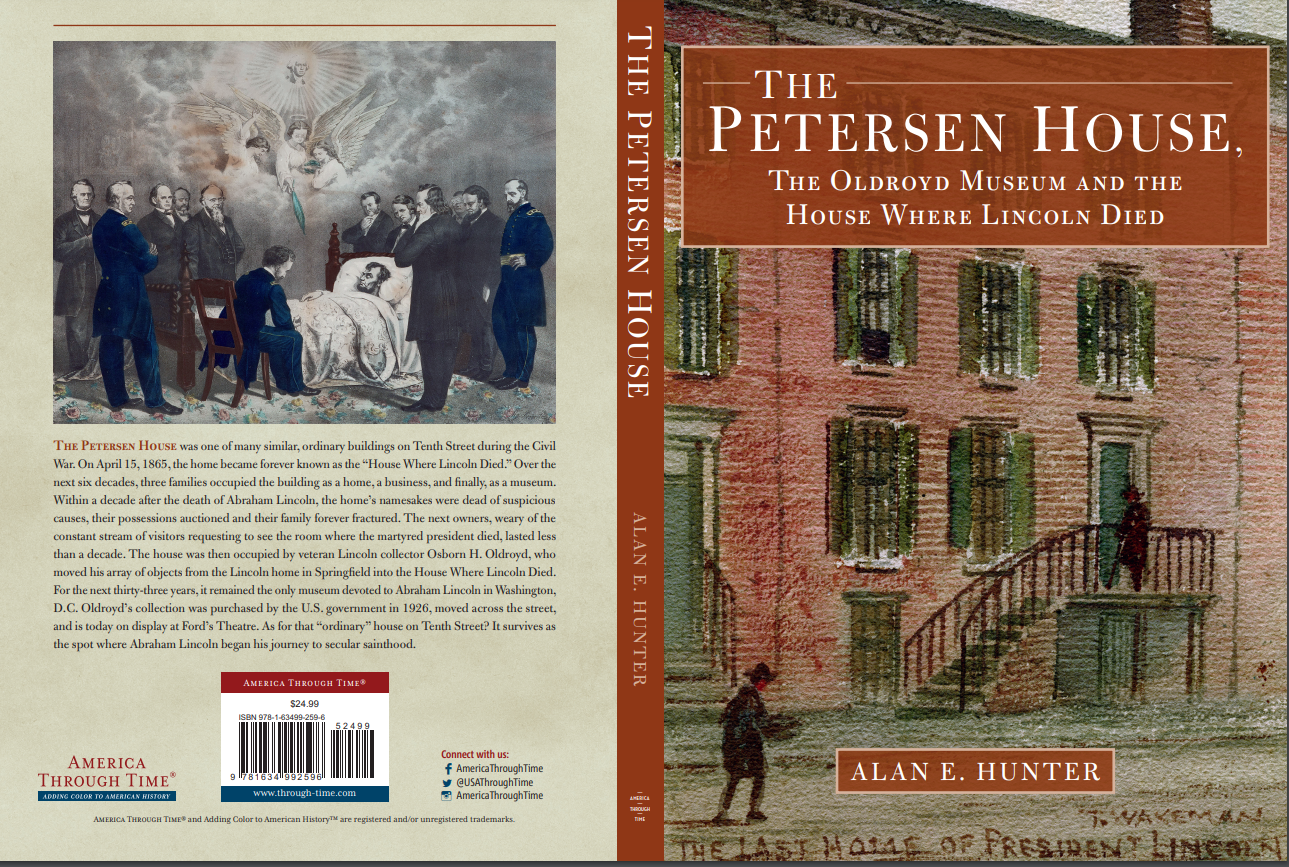
This Saturday (Yay! On Halloween!) October 31st, I will be visiting the James Whitcomb Riley boyhood home in Greenfield to talk about both Lincoln and Riley. That day will be the official book reveal for my newest book, “The Petersen House, The Oldroyd Museum and The House Where Lincoln Died”. Thanks to the courtesy of former Indiana National Road Board member and Director of the Riley Boyhood Home and Museum Stacey Poe, you are invited to come out at 2:00 pm and experience the Riley home and their new “Lizabuth Ann’s Kitchen” facility located at 250 W. Main Street on the historic National Road. I will be bringing some Lincoln props, signing books, sharing stories about the Washington DC building Lincoln died in (and it’s Indiana connection) and, in the “spirit” of the season, spinning a few ghost stories too.

z jws-l400Although Lincoln and Riley died a half-century apart, the men had much in common. The two were considered the state’s most famous Hoosiers (that is until John Dillinger died in 1934) and their names were often linked in speeches, newspaper articles, books and periodicals in the first fifty years of the 20th century. One of my favorite quotes found while searching the virtual stacks of old newspapers comes from the July 20, 1941 Manhattan Kansas Morning Chronicle: “If you want to succeed in life, you might run a better chance if you live in a house with green shutters. Abraham Lincoln, Mark Twain and James Whitcomb Riley all lived in such houses.” Lincoln and Riley epitomized everything that was good about being a Hoosier, right down to the color of their green window shutters.

z jw liz download

Lizabuth Ann’s Kitchen

The comparison was not unfounded. Both men were born in a log cabin. Both came from humble origins. Both were unevenly educated and both men never stopped learning. Both studied law-Lincoln with borrowed law books, Riley doodling poetry in the margins of his father’s law books. Both men were poets and both were considered among the greatest speakers of their generation. And both men had problematic relationships with women. Lincoln once said that he could “never be satisfied with anyone who would be blockhead enough to have me” and Riley famously said “the highest compliment I could pay to a woman is to not marry her.”

z 13964410_1441413422


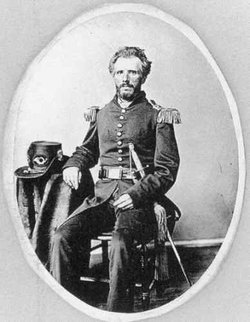
Reuben Alexander Riley (1819-1893)

For the poet, his admiration began with his father, Reuben Riley. The senior Riley was a state legislator and among the first central Indiana politicians to embrace the railsplitter as a national figure and presidential candidate. Riley was considered by many to be the best political orator of his day. He traveled the Hoosier state stumping for Lincoln in 1860 and continued his support until the day that Lincoln died. Because of this young J.W. Riley could not remember a time when he did not admire Lincoln.
When the Lincoln funeral train came through Indiana on April 30, 1865, the official “Travel Log” notes that it arrived in Greenfield at 5:48 a.m., Philadelphia at 5:57 a.m., Cumberland at 6:30 a.m., the Engine House (identified as “Thorne” in Irvington) at 6:45 a.m. before finally arriving in Indianapolis at 7:00 a.m. In Greenfield, the depot was choked with people wishing to gaze upon the face of the departed leader one last time. The train was not officially scheduled to stop in Greenfield, but the mood among the citizens was that perhaps the engineer might be persuaded to stop when he witnessed the tremendous outpouring of trackside emotion at the Greenfield depot.

Lincoln train
The local newspaper described “a knot of three boys, hands in pockets chattering back and forth with each other while pacing up and down the railroad tracks. Two older fellows were standing together, each arm around the other, probably soldiers remembering what it means to be a comrade.” The depot porch was filled to overflowing with women in their long dresses, old soldiers in their Union uniforms and a sea of men dressed entirely in black. The telegraph operator in Charlottesville wired that the train had just passed and was heading towards the neighboring town. A sentinel was perched atop the station to alert the citizens below of the train’s approach.
In a few moments, a cloud of silver phosphorescent smoke appeared above the tree tops along the route of today’s Pennsy trail. “Here it Comes” was the cry from above and immediately the crowd below hushed and gazed eastward expectantly. For several moments, the only sound that could be heard on the platform was the muffled weeping of the gathered mourners. As the train slowly approached, Captain Reuben Riley read aloud excerpts from Lincoln’s second Inaugural address at the close of which he sat down and wept uncontrollably. The train paused briefly at the station and the engineer removed his cap in respect to reverent gathering. Fortuitously, Reverend Manners stepped from the crowd and led the group in a prayer that began, “Thank God for the life of Abraham Lincoln.” The people now openly wept as the train slowly departed westward towards Indianapolis. It is likely that 16-year-old James Whitcomb Riley was present that day.

Alan Hunter 3 col x 3

Riley wrote two poems dedicated to Abraham Lincoln. in a letter to Edward W. Bok dated October 23, 1890, Riley said this of the sixteenth President; “I think of what a child Lincoln must have been-and the same child-heart at home within his breast when death came by.” Along with all the shared common traits mentioned above, Lincoln and Riley were, and still remain, perhaps foremost, the idol of children everywhere.
Three days after Riley died on July 22, 1916, the Morning Call newspaper in Allentown, Pennsylvania eulogized the poet by saying: “The country has produced poets of more creative power and commanding genius, but none- not even Longfellow, beloved as he was- ever came quite so close to the heart of the mass of the people as the Hoosier Poet, James Whitcomb Riley, who died at Indianapolis on Sunday. He was truly from and of the people as was Lincoln, and in their way, his personality and career are almost as interesting and picturesque as those of the immortal emancipator.”
Elbert Hubbard, founder of the Roycrofters Arts & Crafts community in Aurora, New York, said “Who taught Abraham Lincoln and James Whitcomb Riley how to throw the lariat of their imagination over us, rope us hand and foot and put their brand upon us? God educated them. Yes, that is what I mean, and that is why the American people love them.” Hubbard was a contemporary of Riley’s who, along with his wife, died when the Germans sunk the RMS Lusitania leading to our entry into World War I a year before Riley passed.
However, in my view, what links both men in perpetuity is a shared language. Both men spoke fluent Hoosier. All his life, Lincoln and Riley tended to swallow the ‘g’ sound on words ending with ‘ing’, so a Walking Talking Traveling man become Walkin’, Talken’, Travelin’, man. Lincoln said “warsh” for wash, “poosh” for push, “kin” for can, “airth” for earth, “heered” for for heard, “sot” for sat, “thar” for there, “oral” for oil, “hunnert” for hundred, “feesh” for fish and “Mr. Cheerman” for Mr. Chairman. Likewise, Riley practiced the Hoosier dialect in his printed work, saying “punkin'” for pumpkin, “skwarsh” for squash, “iffin'” for if then and “tarlet” for toilet. Both men peppered their speech with distinctive words like yonder and for schoolin’ both “larned” their lessons and got their “eddication” in fits and spurts.
Both men’s lives came to an end in private houses, not in hospitals. Riley in the Nickum House in Indianapolis’ Lockerbie Square and Lincoln in the Petersen House in Washington, D.C. This Saturday, I will share my favorite ghost story about J.W. Riley (in the Lockerbie house) and while I have no ghost stories to share about The House Where Lincoln Died, I will detail a connection between the two. I will introduce you to the three families who resided there, the last of whom, Osborn Oldroyd, displayed his Lincoln collection of relics and objects for over thirty years before selling it to the United States Government in 1926. That collection is now on display in the basement of Ford’s Theatre.
Riley Lincoln poemOldroyd, a thrice-wounded Civil War veteran, collector, curator and author, is perhaps the father of the house museum in America. One of Oldroyd’s books, a compilation of poems entitled, “The Poets’ Lincoln— Tributes In Verse To The Martyred President”, was published in 1915. James Whitcomb Riley’s poem, A Peaceful Life with the name “Lincoln” in parenthesis as a sub-title can be found there on page 31. In Oldroyd’s version, the first line differs from Riley’s original version. Riley’s handwritten original (found today in the archives of the Lilly Library on the Bloomington campus of Indiana University) begins: “Peaceful Life:-toil, duty, rest-“. Oldroyd’s book version begins; “A peaceful life —just toil and rest—.” Interestingly, the Oldroyd version has become the standard. And there you have it. Oldroyd’s influence is subtle, his name largely unknown, yet he stays with us to this day.

Baseball, Indianapolis, Weekly Column

The Day Babe Ruth Came To Indianapolis.

Original publish date:   August 24, 2015 Republished: April 22, 2018.

https://weeklyview.net/2026/09/03/the-day-babe-ruth-came-to-indianapolis-2

Babe Ruth - Older
Babe Ruth in Indianapolis.

All through the summer of 1946, the mighty Babe Ruth had a severe pain over his left eye that would not go away. At first he thought it was a sinus infection, then a toothache. Whatever it was, it wasn’t getting any better. It eventually caused so much pain that Ruth admitted himself to a New York hospital on November 26. By then the entire left side of his face was swollen, his left eye closed shut, and he couldn’t eat solid food. Doctors removed three bad teeth, then pumped the Bambino full of penicillin and other drugs. By Christmas, Ruth was still in pain and back in the hospital.


Babe Ruth had cancer but the doctors never told him. They had discovered a malignant growth wrapped like a vine around a major artery in the left side of his neck. In the operation that followed, nerves were cut and the artery tied off. Not all of the cancer could be removed. Babe’s wife Claire said she was eventually told, but Babe remained in the dark until the very end. The surgery was on January 5, 1947. In the month that followed, Babe remained confined to the hospital in a state of near constant pain and depression. His hair began to fall out and he lost a lot of weight (estimated at between 80 to 128 pounds). It seemed that the Babe was just waiting to die.

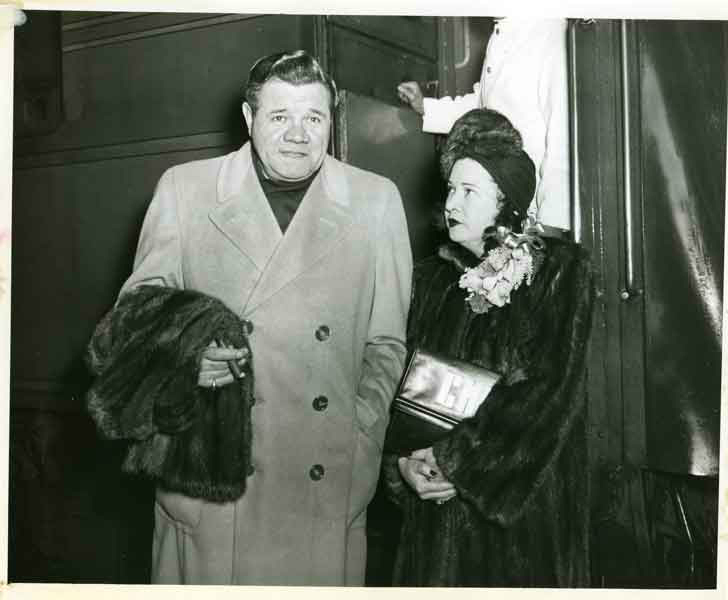
Babe Ruth and his wife Claire.


Thousands of telegrams poured in every week from former teammates , sports luminaries (Connie Mack and Jack Dempsey among them), and average everyday fans. Claire read as many of letters as she could out loud to the Babe. On February 6 he celebrated his 52nd birthday in the hospital with Claire, Julia, and their dog, Pal. On February 15, Ruth left the hospital and wept unashamedly as he saw the throngs of admirers gathered outside as he was led to a waiting car. His natty camel’s hair overcoat and matching cap couldn’t hide the fact that Babe Ruth was a shadow of his former self.
Although weak and sickly, Ruth instinctively knew that he was back in the public eye. Extremely conscious of his debt to the “kids of America,” to whose loyal support he attributed his success, Ruth decided to apply himself to child welfare programs after his discharge from the hospital. He was engaged by the Ford Motor Company as a consultant in connection with its participation in the American Legion junior baseball program. In May, 1947, he established and made the first contribution to the Babe Ruth Foundation. Inc., an organization whose name soon became synonymous with youth baseball.

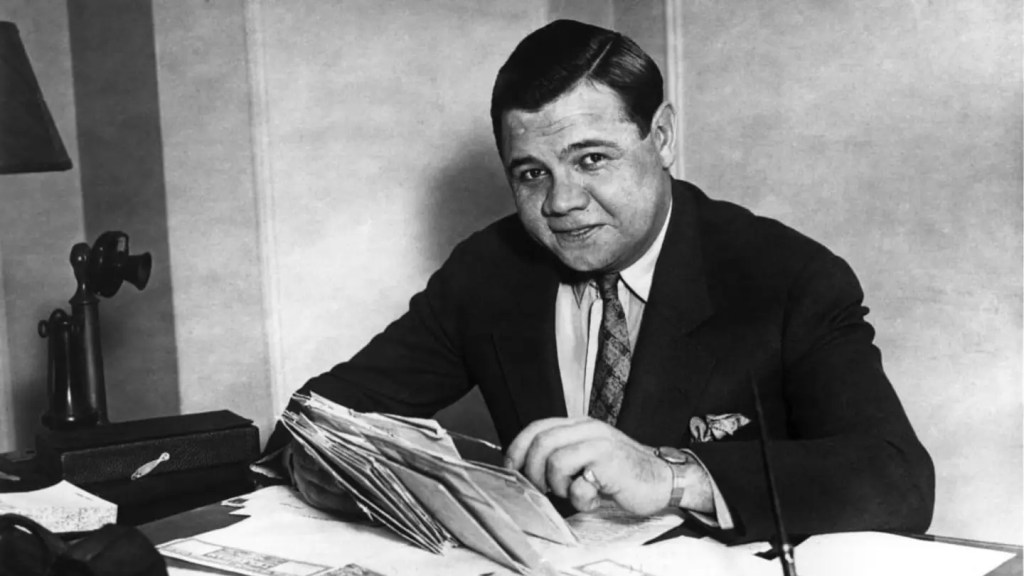
Babe Ruth opening letters & telegrams.
Babe Ruth -
Claire and Babe Ruth in an Indianapolis Taxi Cab.


The ravages of his illness left little of Ruth’s once robust physique. The Babe now appeared gaunt, bent and vulnerable. His once resonant voice reduced to only a rasping whisper. The Mighty Ruth continued to astound his physicians by tackling his new job with all his old-time vigor. “They call me a consultant,” said Ruth, “but I want to tell you that I plan to work hard at this job-just as hard as my health permits. The possibilities are unlimited and I won’t be happy until we have every boy in America between the ages of 6 and 16 wearing a glove and swinging a bat.” He logged more then 50,000 miles in support of the program, appearing on diamonds all over the USA in front of thousands of youths.


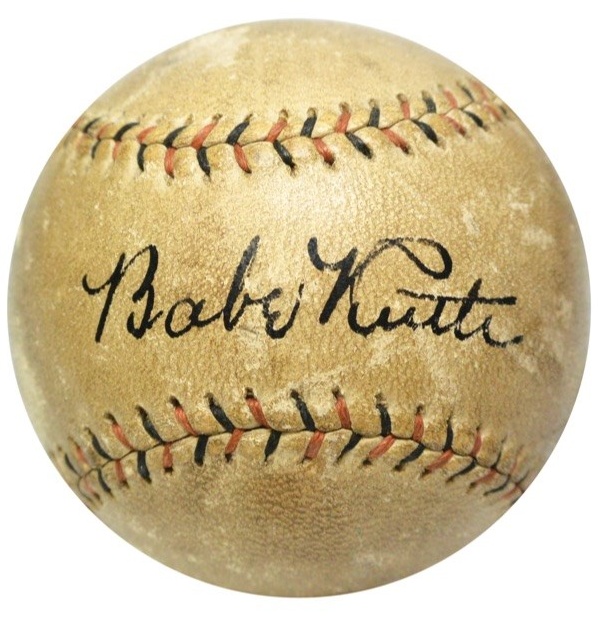
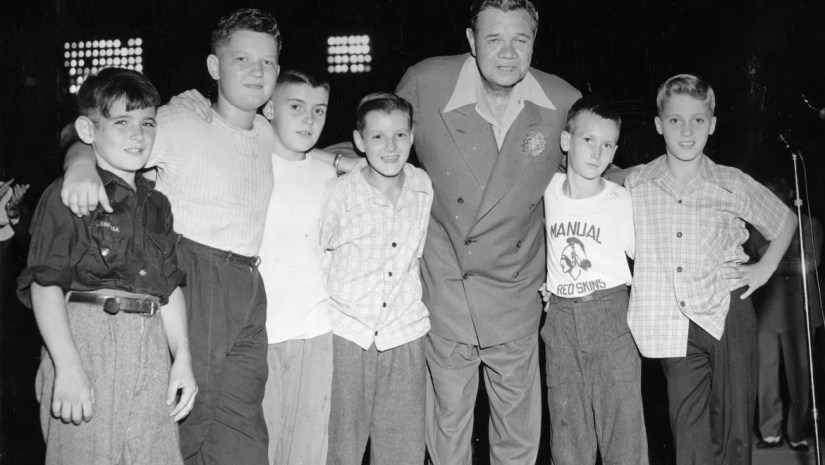
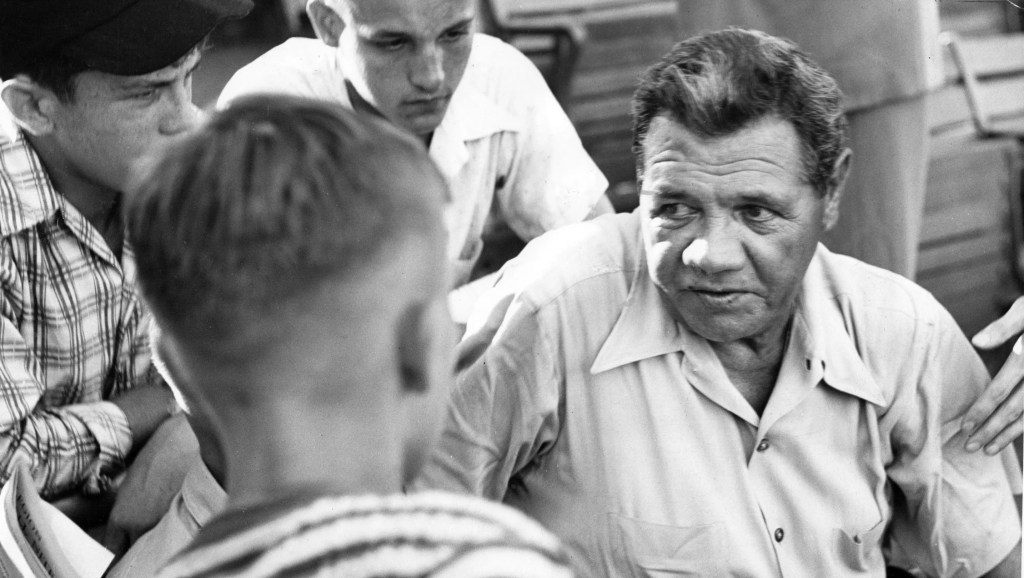
Treatment with an experimental drug beginning in late June improved Ruth’s health tremendously. Throughout that summer of 1947 Ruth became the official ambassador of the American Legion baseball program. One of his stops while on the “American Legion Goodwill Tour” that summer was at the original Victory Field home of the Indianapolis Indians on 16th Street. Ruth appeared at the August 5, 1947 American Legion Junior All-Star game. The Sultan of Swat appeared on the field, shook hands with players and coaches and posed with local youngsters. He signed autographs for the fans and each All-Star player received an autographed baseball from Ruth. Two of the players in that game were future big leaguers Don Zimmer and Jim Frey representing the Robert E. Bentley Post # 50 out of Cincinnati.


The Indianapolis news reported: “Ruth thrilled the crowd when he was introduced during the intermission between the Legion game and the Indianapolis Indians’ game with Milwaukee. Ruth sat through the Legion game and several innings of the Indians game, but his ill health began to take its toll and he had to leave. Earlier in the day, he conducted an hour-long press conference, a pair of radio broadcasts and attended a luncheon in his honor. Once a hefty 278 pounds, Ruth’s weight had dropped to 193. He was coming off an illness that almost cost him his life and had just undergone a blood transfusion three days prior.”

Babe Ruth in Indianapolis with fans. Note the Manual High School Redskins t-shirt on the boy at Ruth’s left side.


The news spoke to one of the kids after the game about meeting the Babe, “His voice was deep and raspy, he coughed quite a bit, but it was the thrill of a lifetime.” said the unnamed player. The young athlete was surprised to see the once robust Ruth in such failing health, but impressed that he would spend time with them. Babe Ruth breezed through Indianapolis like an aging movie star unveiling their star on the Hollywood walk-of-fame. He was gone as fast as he came. It would be nearly 40 years after Ruth’s visit before my dad, Robert E. Hunter Arsenal Tech class of 1954, sat beside me at old Victory Field and dreamily stated, “You know I was here when Babe Ruth came through in 1947. I was selling peanuts here in the grandstands.” Strangely, he could rattle off the names of all those Pittsburgh Pirates minor league players on that team but couldn’t recall much about the Babe’s visit that day.
Ford renewed Ruth’s contract in early 1948, “not only because he was an inspiration to every American boy but because of the excellent results of his efforts last season.” The ex-slugger’s salary was not revealed but Ford announced that it “ranks him high on the list of baseball’s top money-earners.” As long as his strength permitted, Ruth continued to make appearances on behalf of the Junior Baseball program. It was to be only a momentary reprieve. At his last appearance in June 1948, before 16,000 youngsters in St. Louis, he was too weak to wave a bat for photographers.

Babe Ruth in Indianapolis chatting with young fans.


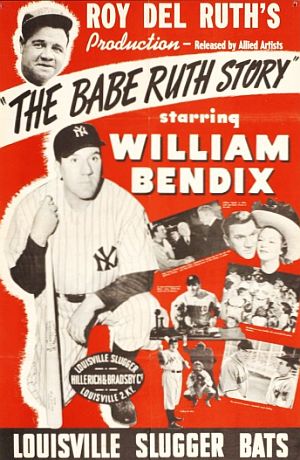
The remaining piece of the tumor was growing, and soon morphine was the only thing that could stop the discomfort. Babe still tried to live his normal life of golf outings and devouring steaks, but now the drives fell far short off the tee and the meat had to be served chopped up for him. Soon even biting down on the white of an egg caused excruciating pain for the once mighty “Sultan of Swat.” Despite the pain, Babe wrote in the closing of his autobiography “The Babe Ruth Story” that hopeful summer of 1947: “I’ve got to stick around a long, long time. For above everything else, I want to be a part of and help the development of the greatest game God ever saw fit to let men invent-Baseball.”

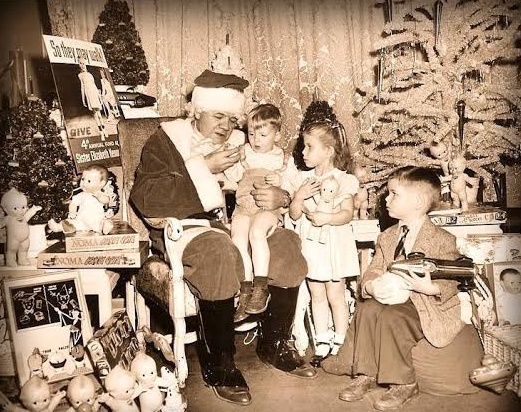
Babe Ruth as Santa Claus with Polio afflicted children December 1947.


Ruth bravely attended the Dodgers-Yankees World Series that fall and in December dressed up as Santa Claus to entertain young polio victims. Babe may not have known or wanted to believe it, but his own time was growing short. On July 26, the Ruth’s went to the New York City premiere of “The Babe Ruth Story”, but as his daughter Julia Ruth Stevens recalled, “he was so sick and so medicated that I’m not even sure he knew where he was.”

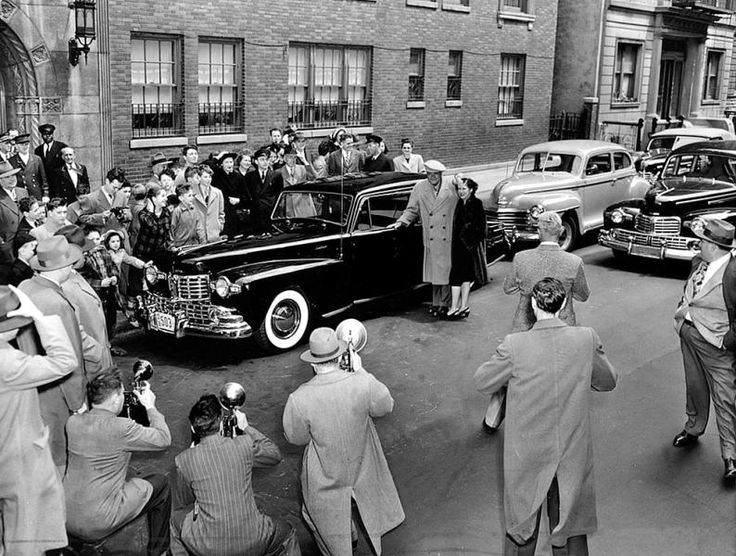
George Herman “Babe” Ruth w/ Walter T. Rowcraft, Lincoln-Mercury District Manager, presents to Babe Ruth, the keys for his new 1948 Ford Lincoln car. The last car the Babe would ever own.


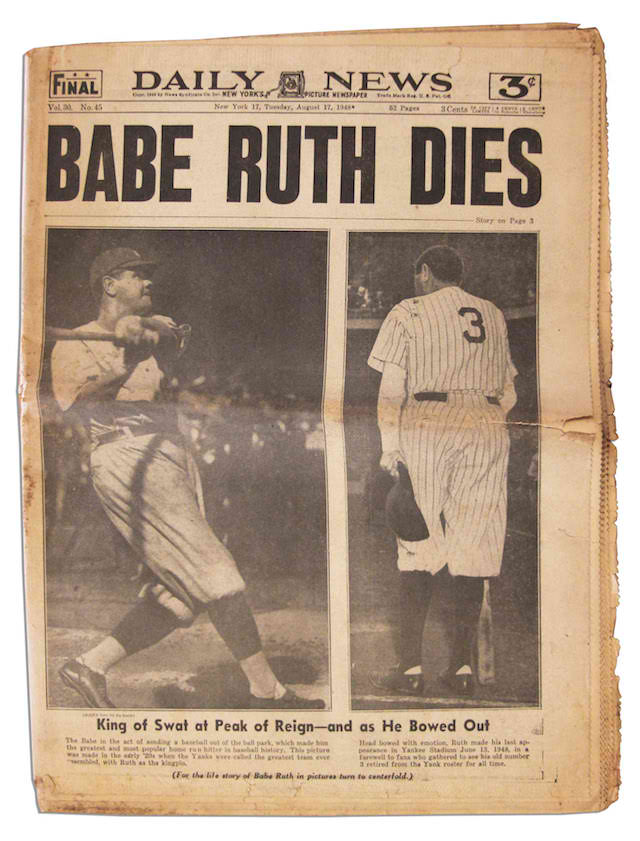
Babe and Claire left shortly after the picture started and checked into Memorial Hospital for the last time. Babe Ruth struggled to answer letters and meet with visitors right up until August 15, 1948, barely a year after he graced the diamond of Victory Field in Indianapolis. Babe Ruth died in his sleep at 8:01 p.m. on the evening of on Aug. 16,1948. His last conscious act was to autograph a copy of his autobiography for one of his nurses. It was only after the great man’s death that the newspapers announced the cause of death as “throat cancer”.


A long line of mourners encircled Yankee Stadium to pay their respects as Ruth’s body lay in state. During the next two-days, more than 100,000 passed his open casket inside the ballpark. They were men, women, and children of all races and ages; from uniformed Little Leaguers to old men in derby hats. The crowd of worshipful mourners rivaled only the display of grief for President Franklin D. Roosevelt in 1945. Vendors sold hot dogs and photographs of the Babe to those waiting their turn in line. As crass as that might sound, the Babe would have loved it.

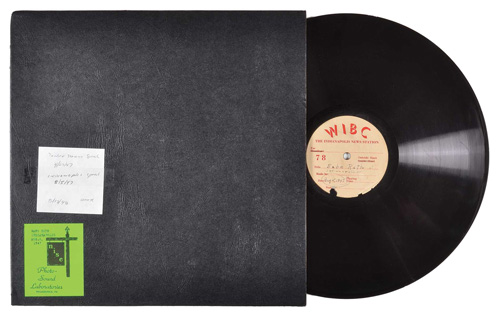
A one-of-a-kind 78 rpm recording of Babe Ruth’s speech in Indianapolis recorded by radio station WIBC surfaced (and was presumably sold) at auction in August of 2018 by REA auction house. The description billed it as the last known recording of Babe Ruth.