
Original publish date: August 29, 2016
Over the past two weeks, I have shared with you tips and stories about the Highway 127 yard sale that takes place the first week of August and spans 690 miles through six states. Although we found many exciting and interesting items to add to our ever mounting number of side collections, it was one item in particular that came as a surprise.
At one of the tent cities near Liberty, Kentucky my wife and I encountered a dealer that we could hear before we could see. It was still fairly early in the day and I guess since the crowds were sparse, this seller decided the best way to drum up business was to bellow like a carnival barker to any prospective buyer that came within earshot. He looked like Burl Ives’ version of Big Daddy from Cat on a Hot Tin Roof: large boned, bald-headed and wearing a white tank-top t-shirt, suspenders, dress slacks and wing tip shoes.
Amid the blusterous, braggadocio, and bombastic rhetoric the seller was hurling our general direction, my wife Rhonda pulled out a typed letter from a paper filled drag box. A “drag box” is a term we use to describe a large wooden box of great length and width but of shallow depth. Usually, these boxes contain castoffs and quick sale items or varying size and category. In short, you never know what you might find in one. Usually you are guaranteed to come away with nothing more than dirty hands but in this instance Rhonda picked up the one thing that seller was most proud of.
As she held it in her hands, the seller barked “Read it! Read it! There’s some really wild stuff in there!” Rhonda perused the letter, smiled politely at the dealer and handed it to me. Dated July 20, 1963 from Rochester, New York, the letter was signed at the conclusion in red eye-liner pencil by a name vaguely familiar to me but one that I didn’t immediately recognize: Louise Brooks. As I scanned the document I agreed that it indeed lived up to the dealer’s hype. I bought the letter.
Here it is so that you may read it verbatim as I did. ” “7 North Goodman Rochester 7, N.Y. 20 July 1963. Dear Paul-It was nice talking “at” you the other night. I hope I didn’t go on too interminably. There has never been a community where I was accepted but always there were people who could teach me things. Living here in Rochester, I am compelled to be exclusively autodidactic. When I make an occasion contact with someone of your intelligence, or Herman’s, I have atendency (sic) to carry on. I thought a great deal about our conversation and I am thinking of writing a short romantic story, in the fashion of CAMILLE. I was putting it off for years. Then I re-read Tolstoy and weighed your comments carefully. You see, I didn’t think that I could write a man. But following Tolstoy’s example, I willdo (sic) the reverse and simply put my own feelings into a man. The CAMILLE style seems right because it was about a tramp and a bum: myself and George Marshall fit that description famously.”
The letter continues: “Yes, I did read LOLITA and I don’t think he is that obvious. Having been one, of course, I should know. Do you recall that Lolita was Lita Grey’s read name? And I am not so harsh as you are in my opinion of Elizabeth Taylor. She is not much of an actress, but then nothing much has been demanded of her. The day of reckoning will come, I think, when she will have to admit that she invented the idea of Richard Burton as a matchless actor cum great intellectual. The truth is, of course, that he is a boring actor, a pompous ass, and an ugly peasant who has used her egregiously. I can’t wait for your visit. We will do the town (ha!) and order rare prime rib at the Rio Bamba, which is to Rochester what Ciro’s used to be to Lotus Land. Bring a lot of money or a credit card. I have never been a cheap date. Louise Brooks” Ms. Brooks obviously typed the letter herself, which somehow made it cooler still.

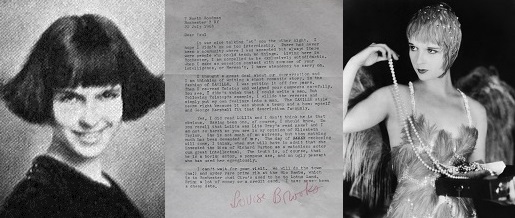
After I left the road and 90+ degree heat, I remembered who this woman was. Why, that’s Louise Brooks, Hollywood’s original flapper girl! When I googled her image, her 1922 high school Sophomore yearbook photo popped up. Right then, I knew I was writing an article. (See the photo above) One look at that photo, and you KNOW what the letter confirms: this was one interesting lady!
Mary Louise Brooks was born in Cherryvale, Kansas on November 14, 1906. Her life would prove to be as conflicted as the region of her birth. Despite its bucolic name, Cherryvale rests not far from the Oklahoma border. Bonnie & Clyde, Jesse James, Pretty Boy Floyd, the Dalton Gang and Belle Starr are but a few of the region’s exports. However, the area is also home to Little House on the Prairie, Vivian Vance of I Love Lucy fame and Harry S Truman. She would carry that enigmatic regional reputation around with her for the rest of her life.
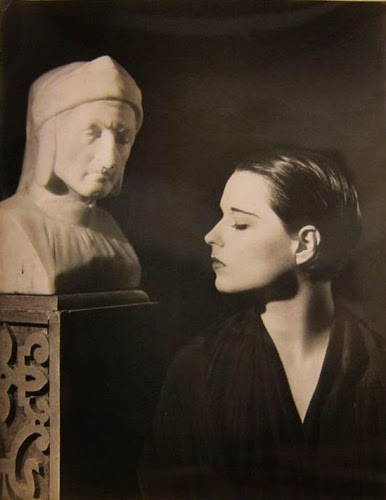
 Beginning in 1925, she starred in seventeen silent films and eight ‘talkies’ before retiring in 1938. She would forever be remembered as the iconic symbol of the flapper, and for popularizing the short ‘Bob’ haircut. Google Louise Brooks’ images and you will see why. In short, she was gorgeous at a time when classic Hollywood photographers were at their peak.
Born to an absent, disinterested lawyer father and an artistic mother who declared that any “squalling brats she produced could take care of themselves”, she was pretty much left to her own devices from the start. When she was 9 years old, a neighborhood predator sexually abused Louise, which influenced her life and career. Years later, she cited the incident as making her incapable of real love by stating that it “had a great deal to do with forming my attitude toward sexual pleasure….For me, nice, soft, easy men were never enough – there had to be an element of domination”. Years later, when the incident was revealed to her parents, her mother suggested that it was Louise’s fault for “leading him on”.
 Brooks began her career in 1922 as a dancer, joining the legendary Denishawn modern dance company in L.A., whose members included founders Ruth St. Denis and Ted Shawn, as well as a young Martha Graham. Her perceived closeness to Shawn (husband of Ruth St. Denis) got her booted from the troupe. Thanks to her friend Barbara Bennett (sister of Constance and Joan), Brooks almost immediately found employment as a chorus girl in George White’s Scandals and as a featured dancer in the Ziegfeld Follies. From there, her career caught fire.
Paramount Pictures signed her to a five-year contract in 1925. There she caught the eye of Charlie Chaplin and the two had an affair that lasted all summer. Soon, she was playing the female lead in silent comedies alongside luminaries like Adolphe Menjou and W. C. Fields. She made the transition to “talkies” with ease and the roles kept coming. By then, she was a Hollywood A-lister and a regular guest of William Randolph Hearst and his mistress, Marion Davies, at San Simeon.
More importantly, her distinctive bob “pageboy” haircut, worn by Brooks since childhood, helped start a trend that lasts to this day. She refused to play the Hollywood Studio game and after her 5-year contract with Paramount ran out, she left after being denied a promised raise. Choosing instead to leave for Europe to make films. Her rebellious stand against the studio system placed her on an unofficial Tinseltown blacklist for the next 30 years. She would make only 6 more films, mostly ignored by critics and audiences, over the next 7 years. Job offers slowed to a crawl.
Ever the rebel, Brooks turned down the female lead alongside James Cagney in the 1931 film The Public Enemy. The part went to Jean Harlow, which launched her career to stardom and Hollywood immortality. Turning down Public Enemy marked the end of Louise Brooks’s film career. Brooks declared bankruptcy in 1932 and began dancing in nightclubs to earn a living. She attempted a comeback in 1936 with bit parts in B-westerns. Her last hurrah came as the lead opposite John Wayne in the 1938 film Overland Stage Raiders. Her long hairstyle in that film made her all but unrecognizable from her flapper days.
Brooks then briefly returned to her middle America roots, but didn’t stay long. “That turned out to be another kind of hell,” she said. “The citizens either resented me having been a success or despised me for being a failure. And I wasn’t exactly enchanted with them. I must confess to a lifelong curse: My own failure as a social creature.”

After briefly trying her hand at operating a dance studio, she returned East and found work as a radio actor, a gossip columnist, and even worked as a salesgirl at Saks Fifth Avenue in New York City for a few years. Ultimately, she turned to a life as a courtesan with a few select wealthy men as clients. She claimed, “I found that the only well-paying career open to me, as an unsuccessful actress of thirty-six, was that of a call girl … and (I) began to flirt with the fancies related to little bottles filled with yellow sleeping pills.”
Brooks, a heavy drinker since age 14, sobered up and began a reasonably successful second career writing about film. Her first project, an autobiographical novel called Naked on My Goat (a title taken from Goethe’s Faust) began her trek on a path that would supply tons of juicy material and outrageous insights for future generations to devour. She was notoriously cheap for most of her life, although kind and generous (almost to a fault) with her friends. Those qualities shine through in the letter we found in the hills of Kentucky on the 127; a place I’m sure Ms. Brooks never could have dreamed it would land.
 Despite French film historians proclaiming Brooks skill surpassing Marlene Dietrich and Greta Garbo as a film icon, she lived in relative obscurity for years in New York City and Rochester, N.Y. Despite her two marriages, she never had children, referring to herself as “Barren Brooks”. Her many lovers once included a young William S. Paley, the founder of CBS along with a veritable who’s who of Hollywood leading men and women.
 By her own admission, Brooks was a sexually liberated woman, not afraid to experiment, even posing fully nude for art photography in her golden years. Brooks enjoyed fostering speculation about her sexuality, cultivating friendships with lesbian and bisexual women. She admitted to some lesbian dalliances, including a one-night stand with Greta Garbo. She later described Garbo as masculine but a “charming and tender lover”.
Louise Brooks identified herself as neither lesbian nor bisexual. Shortly before her death, she opined : “All my life it has been fun for me. … When I am dead, I believe that film writers will fasten on the story that I am a lesbian… I have done lots to make it believable […] All my women friends have been lesbians…There is no such thing as bisexuality. Ordinary people, although they may accommodate themselves, for reasons (like) marriage, are one-sexed. Out of curiosity, I had two affairs with girls – they did nothing for me.” Brooks published her memoir, Lulu in Hollywood, in 1982; three years later (August 8, 1985) she died of a heart attack at the age of 78. She had been suffering from arthritis and emphysema for many years. She was buried in Holy Sepulchre Cemetery in Rochester, New York. What a life! It just goes to show that you never know what you’re going to find in the hills and valleys of the Highway 127 yard sale.

 It was during the second day of the trip where our little quartet found our most interesting finds along the route. While at a tent city near Grimsley, Tennessee we came upon a large group of dealers set up in a local park. On this 95 degree / 50 % humidity day (heat index 107), I found a rather refined looking group of Southern Belles strategically seated in a shady corner of their booth. Leaning against a post near them was a heavy steel sign from the Jack Kerouac Era California State Beaches that read: “Clothing Optional Beyond This Point”. My red-faced smirk must have betrayed me and the ladies giggled at my sheepish delight. I asked for the price and as I picked it up I realized that the sign had 2 bullet holes in the center of it. I had to have it! I forked over the cash equivalent of a St. Elmo’s dinner for two (with shrimp cocktails of course) to make it mine. The delightful owner said she had purchased the sign on “this very same field 8 years ago.”
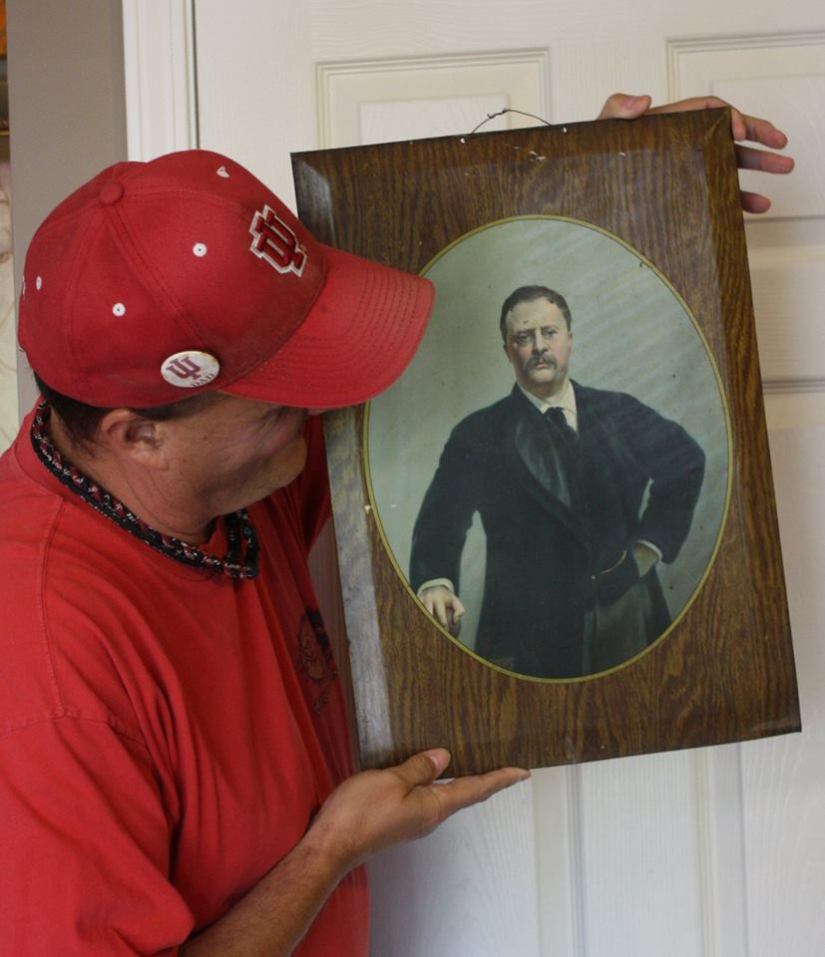
 Rhonda found a San Francisco Candlestick Park exit sign in the same booth from another lady and got a much better deal than I (about the cost of a McDonald’s Happy Meal.) A little further down the road, I found a beautiful Teddy Roosevelt metal color lithographed sign from 1903, a real stuffed alligator dressed as a sheriff complete with tiny cowboy hat and badge (please don’t judge me animal activists) and a wooden sign that had me puzzled at first. It was a large B&W direction arrow sign with the word “AWFISS” on the front. My traveling companion Chuck Hodson had to clue me in on the meaning. Apparently, “AWFISS” is slang for “Office” in the hill country. Sadly, it was not for sale.
 The last of the day’s finds was made by Chuck. It was a 12″ tall miniature prison electric chair complete with skull and crossbones in the back chair rest. “Beware Tennessee State Prison” and a 1956 year date were painted on the seat back. Constructed of wood, finish nails and leather straps, it was obviously made by an inmate back in the Ike Era. The Prison, located near downtown Nashville, opened in 1898 and closed in 1992. Hollywood movies Nashville, Ernest Goes to Jail, The Green Mile, and many more were filmed within it’s walls. I find myself strangely drawn to objects like these. I guess I love that type of gallows humor.

 Assuming you are starting South of Cincinnati, consider making hotel reservations in or around the Harrodsburg / Danville, Kentucky area for your first night’s stay. Not only will you be spending the night in historic Daniel Boone country, you’ll most likely find that, allowing for the frequent stops on your treasure hunt, you will have seen all you care to see by the time you reach this area. Go out and have a nice dinner and turn in early. If you are a people person, you’ll soon discover that most of your fellow hotel guests are coming off the sale as well. Many of them are eager to tell stories, share tips and show off their prized buys after a day of buying on the 127. Swapping tales about your shared struggle can be some of the best memories of all and are only rarely disappointing.
 Once you’re out on the road again, you’ll soon find that yard sales are EVERYWHERE! In the front yards of people’s homes, farm fields, cow pastures, side streets and alleyways, in empty lots, business parking lots, community parks, churches and town centers. Some areas will have large groups of vendors together (127 veterans call these ‘tent cities’), while others will be set up separately. As you weave your way from one yard sale to the next, Highway 127 winds through horse country surrounded by beautiful rural areas and interesting scenery, so be sure to enjoy the ride along the way.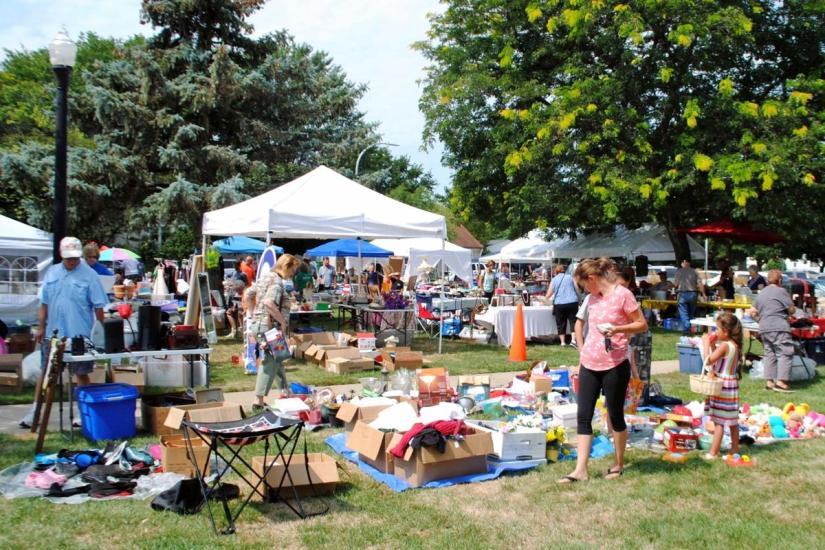

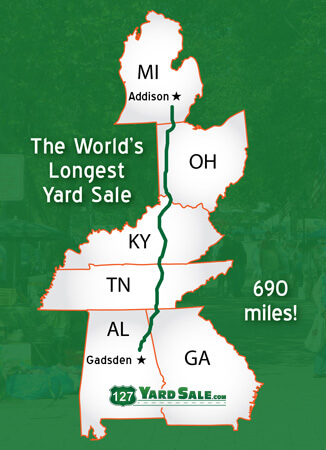
 We started our trip on Wednesday, August 2nd south of Cincinnati. We allowed ourselves three days for the 127. We learned long ago that it would take at least five to hit every sale. We started out at nine in the morning and made it as far as Harrodsburg Kentucky that evening. Normally it would take 2 hours to drive the 120 mile route between the two locations. The next day, Thursday, August 3rd, we left around 8:30 AM and by 6 PM we had made it as far as Spring City Tennessee. This day’s route was 180 miles between locations. Normally this is a four hour trip without stops. By our third day, Friday, August 4th, between the crowds, the traffic and general fatigue, we had just about had our fill. By the time we had reached Chattanooga that afternoon, we were done.
 And what did we find on the world’s longest yard sale 2017 redux? Unlike years past, we really didn’t find anything fantastic for ourselves; we just found stuff. Don’t get me wrong, we found some cool things. We just didn’t find any life changers. My personal prize was a bronze statue of Gettysburg hero General Winfield Scott Hancock. It now rests on my desk. I found tons of old paper to play that I am still winding my way through. My favorite so far is a packet of letters written by a French woman to her soldier beau in Geneva Indiana in 1919 – 20 at the close of World War I. She pleads for news from her soldier boy and wonders why he doesn’t write. Poignant to say the least.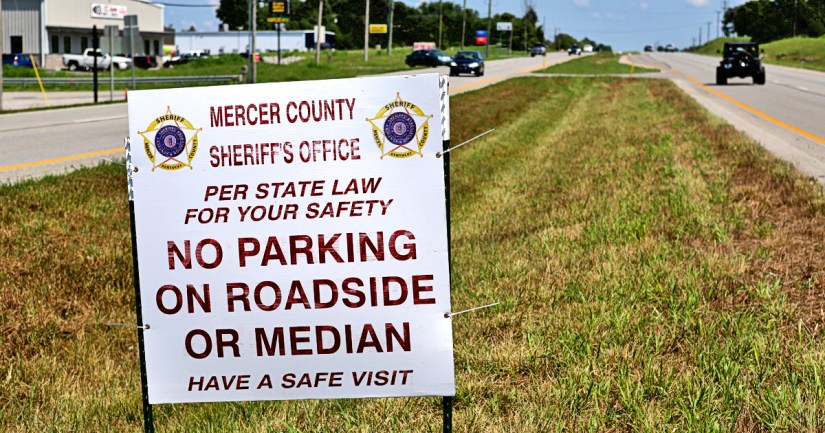
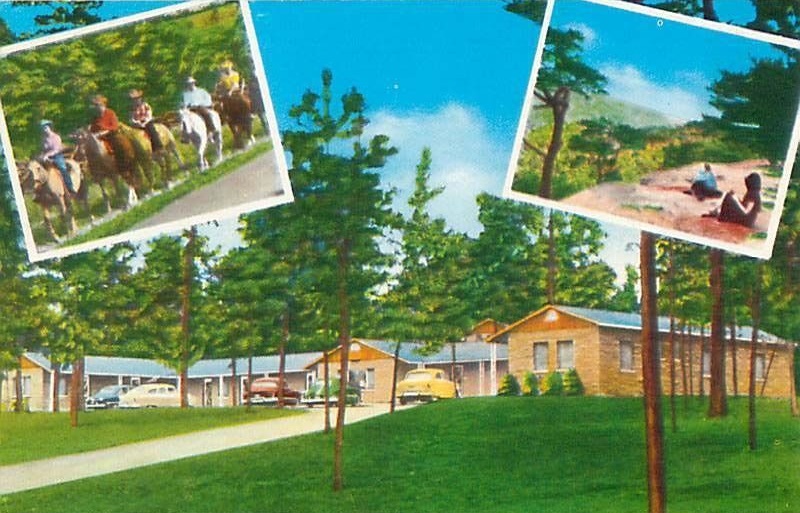
 My favorite memory comes from a gentleman I met at the Jordan Motel in Jamestown Tennessee. The motel is an important landmark on the 127 because this is the spot where the first booths were set up back in 1987 to start what would become the world’s longest yard sale. Jamestown is in the heart of Big South Fork Country which bills itself as the Trail Riding Capital of the Southeast. At first I was drawn to the booth by a large metal highway 70 sign leaning against a nearby tree. It was only 35 bucks but it wasn’t our I-70 so I passed. Let me rephrase that, Rhonda suggested I pass because I am apparently out of room for any more road signs.
 On this man’s table were a couple dirty squares of carpeting, each about 4″x4″ and each displayed in picture frames. Alongside the dingy relics were photographs of a scene that looked strangely familiar to me. It was a large hole inside a closed building that I soon recognized as the sinkhole that swallowed eight Corvettes at the National Corvette Museum in Bowling Green Kentucky around Valentine’s Day of 2014. I asked about them and was informed me that the vendor was the contractor hired to pull the cars out and repair the hole. He said, “In fact, I’m the guy that fired up that Corvette and drove it out. It didn’t have anything but an oil leak.” As he searched his cell phone to show me a video of the event as proof, he informed me that he was surprised the Corvette museum called him because, “I’m just a good old boy from Kentucky, I didn’t know thing about Corvettes or fixing sinkholes.” As Rhonda and I got back in the car and drove south, she asked me if I had asked him how much they were. Strangely, I hadn’t. I guess I was too caught up in the story.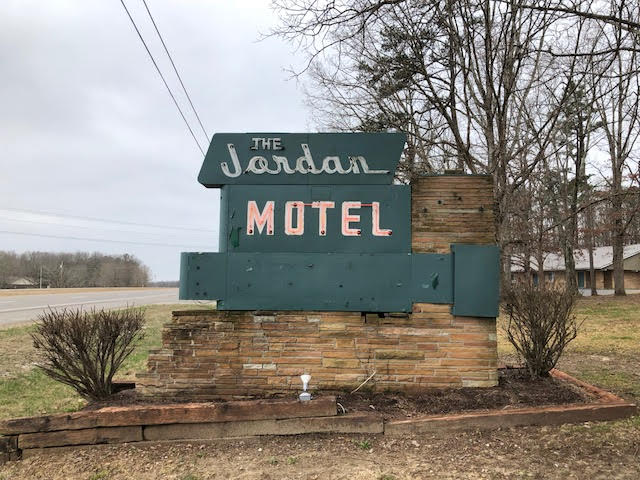
 Spring City Mayor Billy Ray Patton claims the town is one of the best places in the world to view the eclipse because it is located along the exact path the eclipse will travel. Spring City rests on the 70 mile wide “path of totality.” Residents and visitors will have two minutes and 39 seconds of totality when the moon completely blocks the view of the sun. The total solar eclipse will darken skies all the way from Oregon to South Carolina. But don’t get any ideas, the hotels in Spring City were already sold out two weeks ago. On Monday this small TVA town of 2000 is expected to swell to 50,000 with visitors hoping to catch a good view of the eclipse.







 Alan E. Hunter