cars, Pop Culture

Suicide Knobs.

Suicide Knob 3Original publish date:  June 8, 2015

I lost a favorite uncle last month. David A. McDuffee was my mother’s brother and a helluva man. He graduated from Ben Davis High School in 1958, as did my mom two years before him. He was a fixture in my life for as long as I can remember. I have fond memories of my Uncle Dave driving all the way from Avon to watch me play basketball all through my high school years. Then doing the same later in my life to watch high school baseball games while I was coaching. That’s just the kind of guy he was.
During his final ride to Boggstown cemetery, I couldn’t help but smile when the procession stopped for several minutes along a Shelby County road. The family had wisely decided to transfer the casket onto a hay wagon pulled by an old Farmall tractor for the final leg of his trip to the cemetery. It was my uncle’s tractor. As I recall, he named the thing Millard or Wilbur or something like that. He’d forgive me for getting the name wrong. He was not a farmer, he was a retired National Guardsman, faithful husband and loving grandfather…and uncle. He just wanted a tractor. That was my Uncle Dave.
At the cemetery, after the service, I wandered over to that tractor and gave it a good rub in his honor. In particular the steering wheel. All the while I was thinking about a memory from my childhood. My first car was a 1967 Mercury Comet. My grandfather had gone to a used car lot with my mom (his daughter) and purchased it when I was 16 years old. Before it was delivered I remember asking them to describe it and I recall my grandfather saying, “Well, it’s sporty.” (It wasn’t) But what made that car special to me was something my Uncle Dave had attached to the steering wheel. It was a suicide knob with a brightly colored 7-Up logo on it. My uncle worked at 7-up on Indy’s eastside for many years. He was a delivery driver and the suicide knob was a holdover relic from his years behind the wheel. I didn’t need it, that ’67 Mercury Comet had power steering, but I loved it just the same.
Don’t remember suicide knobs? Well, maybe you called them spinners, granny knobs, brodie knobs or “necker knobs”. They were usually made of plastic, rubber or bakelite and attached to the steering wheel by a metal bracket. They were most popular in the 1950s and 1960s in the age before power steering ruled the roads. These knobs enabled the driver to steer the wheel with one hand, freeing up the other hand for more important stuff. The term “necker knobs” came about when it was discovered that the driver could steer his car one-handed and wrap his free arm around his girlfriend, who was usually resting her head on the driver’s shoulder.
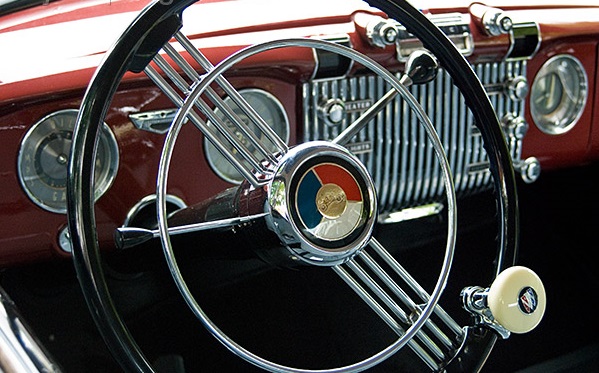
suicide knob 1

Although they were primarily designed for trucks and tractors, like fuzzy dice hanging from the rear view mirror, they quickly became a groovy accessory for hipsters all over the Circle City. The West Coast hot-rodders were the first to jump on the suicide knob bandwagon. Easy to grip, the knob was used to spin the steering wheel in one direction or the other while accelerating to cause the wheels to spin while whipping the car 180 degrees, or “half a donut.” West Coast hot-rodders called this maneuver “spinning a brodie.”
Back in the day, you could walk into any auto parts store in the city and choose from a wide array of these steering wheel knobs of every conceivable size and style. There were shiny chrome ones, Candy Apple or Orange Crush colored ones, product logos and, gulp, scantily clad women suicide knobs. If you were lucky, you might even score a free one from the auto parts store itself or some other transportation related company. Alas, unless you stumble across one at an antique shop or flea market, you never see suicide knobs anymore.
I loved that old 7-Up suicide knob but it did not come without its own built-in pitfalls. The knob itself was designed to spin in the drivers hand which sometimes caused it to slip out of your grip. Another disadvantage of the knob was that after turning a sharp corner and letting go, the steering wheel would spin rapidly causing the knob to hit the driver’s forearm or elbow. Or worse catching on loose clothing or jewelry. But no doubt about it, suicide knobs just flat out looked cool.
Brodie knobs (named for Steve Brodie, a New York City daredevil who jumped off the Brooklyn Bridge and survived on July 23, 1886.), have all but disappeared from cars today. But there was a time when every James Dean wannabe had one hand on the suicide knob and the other hand on his girlfriend. They were as much a part of the street scene as leather jackets, Brylcreemed ducktail hair and a pack of cigarettes rolled up in a t-shirt sleeve.
Most baby boomers grew up thinking that the Department of Transportation outlawed them in most states decades ago. But wait, that’s not true! More than likely, that rumor was started by concerned mothers and fathers to keep teenagers from buying them. There is no way of knowing, but that urban legend of a ban probably closely followed the coining of the term “Suicide Knob.” In truth, Brodie knobs are legal on private vehicles in most U.S. states. In New York State, a doctor’s prescription must be submitted to the New York State Department of Motor Vehicles, which in turn, shows that the knob is “required” on all vehicles the user drives and such requirement is entered on the user’s drivers license. You say you want a Brody knob on your steering wheel? Go right ahead, it’s legal in Indiana and you don’t even need a doctor’s note.
Their main use today is still in trucks, particularly 18-wheelers, where they allow simultaneous steering and operation of the radio or gearshift. They are also used on forklifts and riding lawnmowers, where frequent sharp turning is required. The knob is also standard equipment in most modern farm and commercial tractors, its main purpose being to ease single-hand steering while the driver operates other controls with his/her other hand or is traveling in reverse. Go on a gator excursion in Florida or Louisiana, you’ll most likely find one on the ship’s wheel. It’s a perfect way for captains to steer the boat with one hand and feed the gators with the other. Bringing new meaning to the term “Suicide knob.”
Over my years haunting roadside flea markets, antique malls and shows and yard sales, I have seen many different styles of suicide knobs offered for sale. Most of them have been well-used dull earth colored relics unworthy of comment until picked up and identified as a relic from the road. But others resonate in my memory like the 1939 World’s Fair version I saw many years ago. Or pin-ups like Bettie Page, Jayne Mansfield and Marilyn Monroe. Some were clear topped knobs containing pictures of long lost girlfriends or family members. But just as many bore familiar images like the Pep Boys, Sears, Skulls, Billiard balls, Mopar and every make and model of automobile you can imagine.
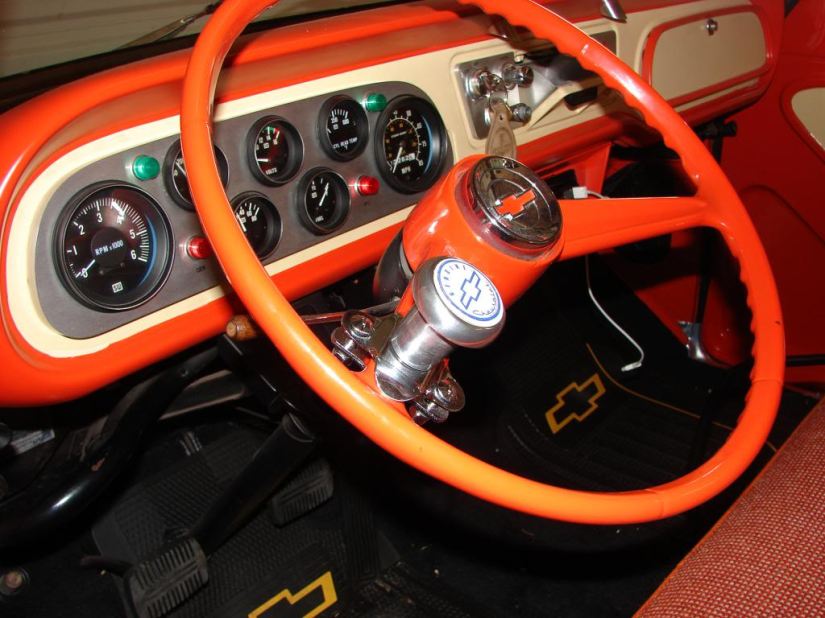
DSC02742_zps74330748The manufacturers names that can be found on these knobs are unfamiliar to all but the most dedicated gearhead: Casco, Fulton, Morton and Santay among others. As fas as I can tell, suicide knobs are an invention unique to the United States. I’ve yet to find one from another country. I believe the VW version I once saw was produced for the American market. But I have my suspicion now that Cuba’s borders are opening up, we might find that the suicide knob is alive and well in that Caribbean time capsule. If you’re lucky, you can pick up a vintage suicide knob for ten bucks or less, but some of them command several hundred dollars each.
A search of the internet revels that suicide knobs are being reproduced and newly produced for car guys today. However, whether they are for use or display, I cannot say. You can still find them at truckstops, but then again nowadays you can find anything at a truckstop. There is a USA Federal OSHA labor law restricting their use for specific construction vehicles, mostly those vehicles hauling chemicals and potentially unstable loads. They are a staple, and in some states mandated, for use by drivers with physical limitations.
So in this “everything old is new again” retro world we live in, suicide knobs may be making a comeback. But in this age of power steering, smart phones and texting, the suicide knob will probably remain a novelty. As for that 1967 Mercury Comet of mine, it was stolen when I was in high school and I never saw it again. I don’t miss that car, but I sure miss that suicide knob. And I miss my Uncle Dave.

Music, Pop Culture

The Monkees and Jimi Hendrix-Believe it.

Hendrix-Monkees1Original publish date:  July 11, 2016

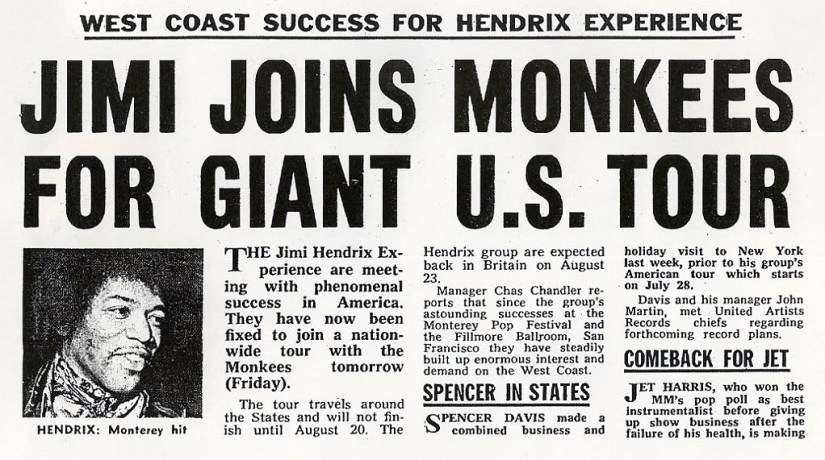
On July 16, 1967 (49 years ago this Saturday), the oddest concert pairing in music history came to an end: Jimi Hendrix dropped out as the opening act for The Monkees. Yes, it’s true. During the summer of 1967 the Jimi Hendrix Experience joined the as-seen-on-tv band The Monkees for a short 8-gig run of concerts. The king of psychedelic guitarists joined the tour on July 8, and lasted eight shows before leaving after three concerts at the Forest Hills Tennis Stadium in New York City on July 14, 15 and 16. As you may have already deduced, this absurd, hallucinatory pairing didn’t last long.
The Monkees’ 1967 summer tour marked the pinnacle of Monkeemania. On June 9, before the tour officially kicked off, the band played a show at the Hollywood Bowl, their tinseltown birthplace, in front of an adoring audience of over 17,000. Just five days earlier, The Monkees rocked the Emmy Awards by taking home two awards, including “Outstanding Comedy Series.” The tour commenced with the band’s third album, “Headquarters”, perched at #2 on the charts behind The Beatles’ Sgt. Pepper’s Lonely Hearts Club Band.
This unlikely concert bill was the brainchild of Hendrix’s manager, Mike Jeffery, who was seeking greater public exposure for his young client who was fast becoming a legend in the UK, but was an unknown in his native United States. For their part, The Monkees jumped at the opportunity. It was at a dinner party in John Lennon’s UK house where Monkee Mike Nesmith heard Hendrix play for the very first time. Nesmith recalled: “I was in London visiting John Lennon, and I was having dinner with him, (Paul) McCartney and (Eric) Clapton. And John was late. When he came in he said, “I’m sorry I’m late but I’ve got something I want to play you guys.” He had a handheld tape recorder and he played “Hey Joe.” Everybody’s mouth just dropped open. He said, “Isn’t this wonderful?” So I made a mental note of Jimi Hendrix, because Lennon had introduced me to his playing.” Nesmith failed to mention that his fellow Monkees Peter Tork and Micky Dolenz were at the dinner too.
The Monkees became instant Hendrix fans, following Jimi to California to witness his legendary performance at the Monterrey International Pop Festival in June 1967 which culminated with Jimi lighting his guitar on fire and holding it over his head. “Micky said, ‘We gotta get this guy,’” recalled Tork in the documentary The Monkees Story. “Micky was just enthusiastic about his music.” They encouraged their own manager to invite the Jimi Hendrix Experience to join their upcoming U.S. tour. Hendrix obviously didn’t have much to do with the arrangement. He’d made his opinion of the Monkees clear several months earlier in an interview with Melody Maker magazine: “Oh God, I hate them! Dishwater….You can’t knock anybody for making it, but people like the Monkees?”
Today, it’s easy for most hardcore music fans to dismiss The Monkees as bubble gum for the ears. But whatever you think of The Monkees’ music, you must admit that their tunes are catchy and that the band was anything but ordinary. After all, if you were at all shocked by the Hendrix connection, then you must be really stunned by the fact that the Beatles and Eric Clapton were among their legion of fans, let alone personal friends and peers.
True, The Monkees were originally formed as actors in a sitcom, whom Dolenz described as “an imaginary band… that wanted to be The Beatles,” but “was never successful.” On Sept. 8-10, 1965 an ad for cast members ran in Daily Variety and The Hollywood Reporter magazine. The ad read: “Madness!! Auditions. Folk & Roll Musicians-Singers for acting roles in new TV series. Running Parts for 4 insane boys, age 17-21. Want spirited Ben Frank’s types. Have courage to work. Must come down for interview.” Micky Dolenz, Peter Tork, Davy Jones and Michael Nesmith were selected out of 437 applicants.
Dolenz and Jones were actors while Tork and Nesmith were the true musicians of the group. Harry Nilsson, David Crosby and Stephen Stills auditioned for the sitcom but were not chosen. Popular legend claims that Neil Diamond and Charlie Manson also tried out, but that is not true. Manson was in jail and Diamond’s connection to the band was through his authorship of the hit songs “I’m a Believer” and “A Little Bit Me, a Little Bit You.”
However, it wasn’t long before the four members had mastered their instruments and began writing their own original songs. Overnight, The Monkees had evolved from a comic, lip-syncing boy band into genuine pop stars. Dolenz once described it as “the equivalent of Leonard Nimoy really becoming a Vulcan.” In the summer of 1967 the band embarked on a 29-city tour of the United States (the closest they ever came to Indianapolis was Chicago & Cincinnati). As improbable as it sounds today, the pairing of Hendrix and The Monkees actually sense. The Monkees wanted street cred and Hendrix needed an introduction to U.S. audiences. The Seattle-born Hendrix was known to music’s inner world as a touring musician and session player, but stardom in America still eluded him.
hendrix-monkeesJimi joined the tour on July 8 in Jacksonville, Florida, after The Monkees returned from three gigs in England. Now, imagine being a Monkees-loving teenager wedged into a sweaty, darkened, cram-packed concert hall anticipating the arrival of your favorite TV-pop band. Wearing your Monkees bubblegum machine pins, flipping through your official Monkees trading cards and holding your hand lettered poster professing your love for one Monkee or another. The curtain rises and this new guy Jimi Hendrix storms the stage to melt your face off while playing the guitar with his teeth!
Predictably, the reception given to Hendrix by Monkees fans (mostly young kids dragging along their parents as chaperons) was less than worshipful. As Mickey Dolenz later recalled, “Jimi would amble out onto the stage, fire up the amps and break out into ‘Purple Haze,’ and the kids in the audience would instantly drown him out with ‘We want Davy!’ God, was it embarrassing.” The Monkees’ young fans were confused by the overtly sexual stage antics of Hendrix, and when he tried to get them to sing along to “Foxy Lady” they stubbornly screamed “Foxy Davy!”
The fans’ chilly reception not withstanding, tales from the tour reveal that everyone involved got along great. “You can’t imagine what it must have been like for an act like Jimi Hendrix opening for the Monkees,” Dolenz wrote in his autobiography I’m a Believer. “It was evident from the start that we were witness to a rare and phenomenal talent. I would stand in the wings and watch and listen in awe.” Peter Tork recalls, “He was such a sweet guy. It was really just a pleasure to have him around for company.” But the group’s young audiences, as well as their parents who often accompanied them at shows, didn’t feel the same way.
afb53a9001b76af4387a7591bf6e0216

“[The parents] were probably not too crazy about having to sit through a Monkees concert,” said Dolenz, “much less see this black guy in a psychedelic Day-Glo blouse, playing music from hell…then lighting it on fire.” As for The Monkees, they pushed for Jimi Hendrix to open for them simply because they wanted to watch him play every night. The boys would show up early just to witness greatness. Tork later said that “it didn’t cross anybody’s mind that it wasn’t gonna fly…And there’s poor Jimi, and the kids go, ‘We want the Monkees, we want the Monkees.’ We went early to the show and listened to what this man could do because he really was a world class musician.” But in reality, few of the anxiously screaming Monkees fans cared to sit through an act they could neither comprehend nor appreciate.
fee05591blog_cropped-580The Jimi Hendrix Experience experiment lasted just eight of the 29 scheduled tour dates. After only a few gigs, Hendrix grew tired of the “We want the Monkees” chant that met his every performance. Matters came to a head a few days later as the Monkees played a trio of dates in New York. On Sunday July 16, 1967, Jimi flipped off the audience at Forest Hills Stadium in Queens, threw down his guitar and walked off stage, leaving Monkeemania forever in his wake. After all, “Purple Haze” and Are You Experienced? were climbing the American charts, and it was time for him play for audiences who wanted to see him. He asked to be let out of his contract, and he and the Monkees amicably parted ways.
No great loss for either band. A couple months later, Melody Maker presented Hendrix with a”World’s Top Musician” award. The Monkees sitcom was canceled in 1968, but the band continued to record music through 1971. Hendrix, of course, went on to achieve super stardom before dying three years later. The Rock and Roll Hall of Fame describes Hendrix as “arguably the greatest instrumentalist in the history of rock music”. Despite the fact that The Monkees have sold more than 75 million records worldwide and at their peak in 1967, outsold The Beatles and The Rolling Stones combined, the Rock and Roll Hall of Fame refuses to recognize them. Funny how things work out sometimes, isn’t it?

Music, Pop Culture

James Brown’s Hair.

James BrownOriginal publish date:  December 18, 2016
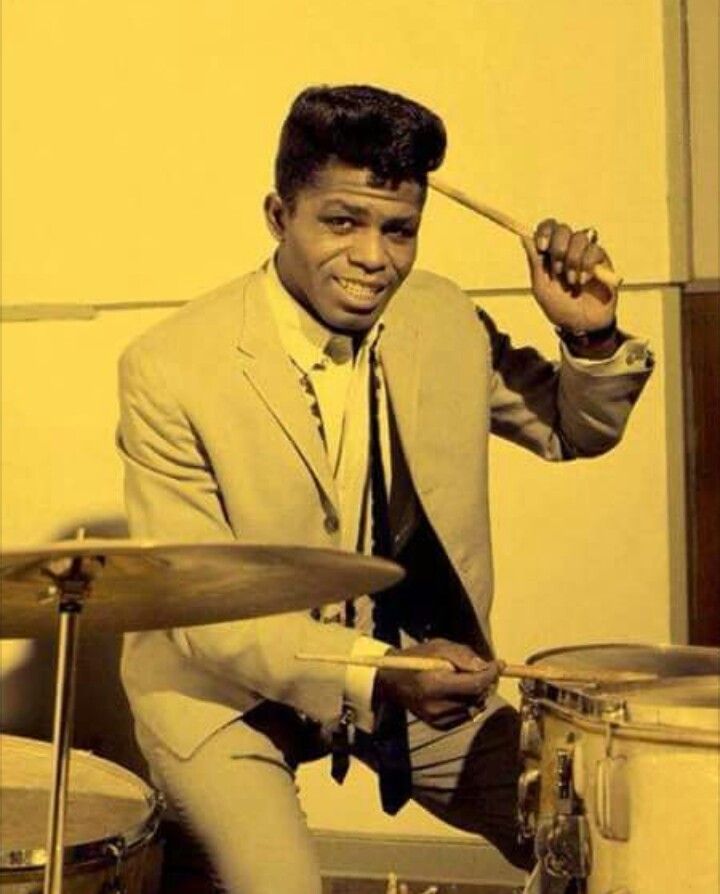
James Brown is remembered as the “Godfather of Soul” for his many contributions to music made during a six-decades-long career. Brown’s influence is a little more complicated than that. Truth is, not only was Brown a music legend, he was a civil rights pioneer. For a time in the 1960s, Brown was among the most important voices in the black empowerment movement. Not only did he change the culture in terms of music but also in terms of civil rights. Everything we now know about funk and hip-hop we learned from James Brown.
During the sixties, Brown’s music served as message of black empowerment and helped keep the peace during that tumultuous decade. Brown embraced the civil rights movement with the same energy and dynamism he devoted to his performances. In 1966, the song “Don’t Be a Drop-Out” urged black children not to neglect their education. In the same year, he flew down to Mississippi to visit wounded civil rights activist James Meredith, shot during his “March Against Fear.”
During that period Brown often provided nighttime performances to ease tensions when the Civil Rights Movement leadership was fracturing and threatening to break apart. As the civil rights leaders were embroiled in internal conflict, Martin Luther King, Jr. famously said, ‘You guys can stay here and argue if you want to, I’m going to go watch James Brown.” Brown recorded hits like “Say it Loud (I’m Black and I’m Proud)” and “I Don’t Want Nobody to Give Me Nothing (Open Up the Door and I’ll Get it Myself)” that embodied the positive spirit of the Civil Rights Movement in a way speeches, protests and marches never could. Brown later attested those songs “cost me a lot of my crossover audience,” but they shined the light on African-American nationalism and became unifying anthems of the age.
b5d335b4a5f928746bcc79c74bdba26a--soul-funk-james-brownBy 1968, James Brown was much more than an important musician; he was an African-American icon. He often spoke publicly about the pointlessness of rioting. In February 1968, Soul Brother No. 1 informed Black Panther leader H. Rap Brown, “I’m not going to tell anybody to pick up a gun.” Brown often canceled his shows to perform benefit concerts for black political organizations like the Southern Christian Leadership Conference (SCLC). In 1968, he initiated “Operation Black Pride,” and, dressing as Santa Claus, presented 3,000 certificates for free Christmas dinners in New York City’s poorest black neighborhoods. He also started buying radio stations.
On April 5, 1968, African Americans rioted in 110 cities following Dr. King’s assassination the day before. Like Robert F. Kennedy’s speech in Indianapolis the night of the assassination, James Brown hosted a free citywide concert at Boston Gardens aimed at avoiding another racially-charged riot. In the midst of that famous beantown concert, with Boston on the verge of going up in flames, Brown said, ‘I used to shine shoes outside a radio station. Now I own that radio station. That’s black power.’” Many Bostonians credit James Brown for keeping the peace in their city by the sheer force of his music and personal charisma.
However, there was a moment during the show when tensions could have boiled over. As a handful of young black male fans tried to climb on stage, white Boston policemen began forcefully pushing them back. Sensing the volatility of the moment, Brown urged the cops to back away from the stage, then addressed the crowd. “Wait a minute, wait a minute now WAIT!” Brown said. “Step down now, be a gentleman. Now I asked the police to step back, because I think I can get some respect from my own people.” Brown successfully restored order and continued the successful peacekeeping concert in honor of the slain Dr. King.
In 1969, Look Magazine called Brown “the most important black man in America.” In May 1968, President Lyndon Johnson invited Brown to the White House. The following month, the government sponsored him to perform for the troops in Vietnam. James Brown’s life and activism significantly influenced blacks in general, but some of his songs reflect the need for change that was so much a part of the Movement. James Brown used concerts as platforms to spread the philosophy of nonviolence and to bring attention to civil rights organizations. Brown’s music helped promote black consciousness and peace. It also inspired a generation of musicians. Indiana’s own John Mellencamp is probably the best example. Mellencamp has repeatedly acknowledged the influence of James Brown and it shows in his music.
James Brown had three noteworthy phases in his career: from 1962–66 he was ‘Mr. Dynamite”, from 1967–70 he was “Soul Brother No. 1” and from 1970 and beyond he was the “Godfather of Soul”. Sadly, casual fans remember James Brown for three things: his 1985 Rocky IV anthem “Living in America”, his brushes with the law and his hair. The Rocky song is a classic and his cameo in the film allowed viewers a glimpse of the legend that was James Brown. His brushes with the law always seemed a bit overblown to me. After all, he WAS James Brown. His hair, well that’s another story altogether.
There are countless stories about entertainer contract riders. The Beatles demanded a black and white television set and a few Coca-Colas, Elvis demanded 10 soft drinks and 4 cups of water, Van Halen’s rider included requests for “one large tube K-Y Jelly” and “M&Ms- BUT ABSOLUTELY NO BROWN ONES”, Eminem demands 2 cases of Mountain Dew and an assortment of Taco Bell food and Iggy Pop demanded that seven dwarfs greet him in his dressing room (Iggy Pop fans are not surprised).
James Brown’s contract called for a steam iron, ironing board, deli tray with assorted meats and cheeses, coffee, tea, soft drinks (Coke products), Gatorade, champagne (Cristal or Dom), 1 electric golf cart and a hooded hair dryer. Yes, one of those table-model hair dryers like our moms and grandmothers used at the local hair salon. The ones that fit completely over the head like a space helmet. That glorious hair didn’t make itself people. It took hours of painstaking hair engineering to create that unnatural helmet of hair. Plenty of chemicals, hair straightening techniques and, most importantly, a professional-grade rigid hooded hair dryer.
20120829_142758Except for a brief period during the mid-1960s when Brown wore his hair in a traditional afro as a temporary form of protest, for most of his career, James Brown had his hair “marceled” aka straightened or conked. The conk (derived from congolene, a hair straightener gel made from lye) was a hairstyle popular among African-American men. This hairstyle transformed naturally “kinky” hair by chemically straightening it with a relaxer (sometimes the pure corrosive chemical lye), so that the newly straightened hair could be styled in specific ways.
Often, the relaxer was made at home, by mixing lye, eggs, and potatoes, the applier having to wear gloves and the receiver’s head having to be rinsed thoroughly after application to avoid chemical burns. Conks were most often styled as large pompadours although others chose to simply slick their hair back to lie flat on their heads. Conks took a lot of work to maintain: a man often had to wear a do-rag of some sort at home, to prevent sweat or other agents from causing his hair to revert to its natural state prematurely. Also, the style required repeated application of relaxers; as new hair grew in, it too had to be chemically straightened.
In the African American Community of the early 20th century, the conk hairstyle served as a rite of passage from adolescence into adulthood for males. Because of the pain involved in the process, and the possibility of chemical burns and permanent scarring, the conk represented masculinity and virility.
Chuck Berry, Louis Jordan, Little Richard, James Brown, and The Temptations, were well known for sporting the conk hairstyle. The style fell out of popularity when the Black Power movement took hold, and the Afro became the symbol of African pride. Malcolm X, although a conk enthusiast in his youth, condemned the hairstyle as black self-degradation in his autobiography. He decried the conk’s implications about the superiority of a more “white” appearance. The conk is all but extinct as a hairstyle among African-American men today, although more mildly relaxed hairstyles such as the Jheri curl and the S-curl were popular during the 1980s and 1990s.
On December 23, 2006, Brown arrived at his dentist’s office in Atlanta, Georgia for dental implant work. Brown’s dentist observed that he looked “very bad … weak and dazed.” Instead of performing the work, the dentist advised Brown to see a doctor right away about his medical condition. Brown went to the hospital the next day and was admitted for observation and treatment. Brown had been struggling with a noisy cough since returning from a November trip to Europe. The singer had a history of never complaining about being sick and often performed while ill. Brown had to cancel upcoming concerts in Waterbury, Connecticut and Englewood, New Jersey but was confident he would recover in time for scheduled New Year’s Eve shows at the Count Basie Theatre in New Jersey, the B. B. King Blues Club in New York and performing a song live on CNN for the Anderson Cooper New Year’s Eve special. Brown wasn’t called the hardest working man in show business for nothing.
Brown remained hospitalized and his condition worsened throughout the day. On Christmas Day, 2006, Brown died at approximately 1:45 am at age 73. The official cause was congestive heart failure, resulting from complications of pneumonia. Brown’s last words were, “I’m going away tonight,” before taking taking three long, quiet breaths before dying.
James Brown wore his hair in a conk pompadour until the day he died. After Brown’s death, a public memorial service was held at the Apollo Theater in New York City and another at the James Brown Arena in Augusta, Georgia. Brown’s memorial ceremonies were elaborate, complete with costume changes for the deceased and videos featuring him in concert. His body, placed in a Promethean casket—bronze polished to a golden shine—was driven through the streets of New York to the Apollo Theater in a white, glass-encased horse-drawn carriage.
While plans were being made for the funeral, Brown’s family was contacted by Michael Jackson, a lifetime fan and friend. Michael had flown in from Bahrain, where he was living following his 2005 child molestation trial, and he asked to see the Godfather of Soul one last time. Reverend Al Sharpton, who officiated at Brown’s funeral, recalled, “I got a call from the mortician and he asked me if it was alright if Michael Jackson could come by the funeral home and see James Brown’s body. I said, ‘But Michael’s in Bahrain’. And he said, ‘No, he’s here’. A couple of hours later, I called and the mortician said, ‘He just left. He was here (for) about an hour and he was re-combing Mr. Brown’s hair. He felt that I had combed the hair wrong. People didn’t realize he was really into James and he actually styled his hair the way it was buried.”
Sharpton was insistent on making sure Michael stayed in town long enough to rightfully pay respects to the music legend, legal questions notwithstanding. Sharpton added, “I think his plan was to come in the middle of the night, see the body – because James Brown was his idol – and he was going to leave. No one had really seen him since the trial… but we convinced him to stay for the funeral. I told him, ‘Michael, you gotta stay. You’ve gotta re-emerge one day in public.” So in short, the King of Pop was the last person to attend to the Godfather of Soul. Michael would follow his idol to the grave less than three years later.

Music, Pop Culture

Jimmy Buffett: Walking Tall with Buford Pusser.

Buffett and PusserOriginal publish date:  June 26, 2014

Well, Jimmy Buffett time has once again come and gone in Indiana. The Parrotheads have poured themselves safely back into their beds and the loud Hawaiian shirts have been put away in the closet til next year. Whether you love him or hate him, you cannot deny that Buffett has became a force with a fierce following and a liturgy of songs about women, drinking and all things nautical. Some people think he’s a genius, others think he’s a sellout and still more think he’s just a good jump start to a party. Regardless, there was a time 40 years ago when he was just a hard working long haired rock-n-roller trying to find his sea legs.
During those early years, Buffett himself tells a great story about an encounter with an American legend that, assuming you haven’t heard it already, is sure to make you smile. “It” happened after a show in 1974 at the Exit/In in Nashville, Tennessee. The Exit/In is a live music venue in Nashville, Tennessee, located on Elliston Place near Centennial Park and the Vanderbilt University campus. The list of musicians and entertainers that have performed there are a who’s who of entertainment history. That list includes include Hank Williams Jr., The Ramones, The Police, Talking Heads, The Black Crowes, R.E.M., The B-52’s, Johnny Cash, Emmylou Harris, Willie Nelson, Steve Martin, Red Hot Chili Peppers, Elvis Costello, Muddy Waters, Linda Ronstadt, The Allman Brothers Band, Kings of Leon, Billy Joel, Etta James, Robin Trower, Ryan Adams, The Amazing Kreskin, Tom Petty and The Heartbreakers, Cheech and Chong and Waylon Jennings. The club was even featured in the 1975 Robert Altman classic film, Nashville.
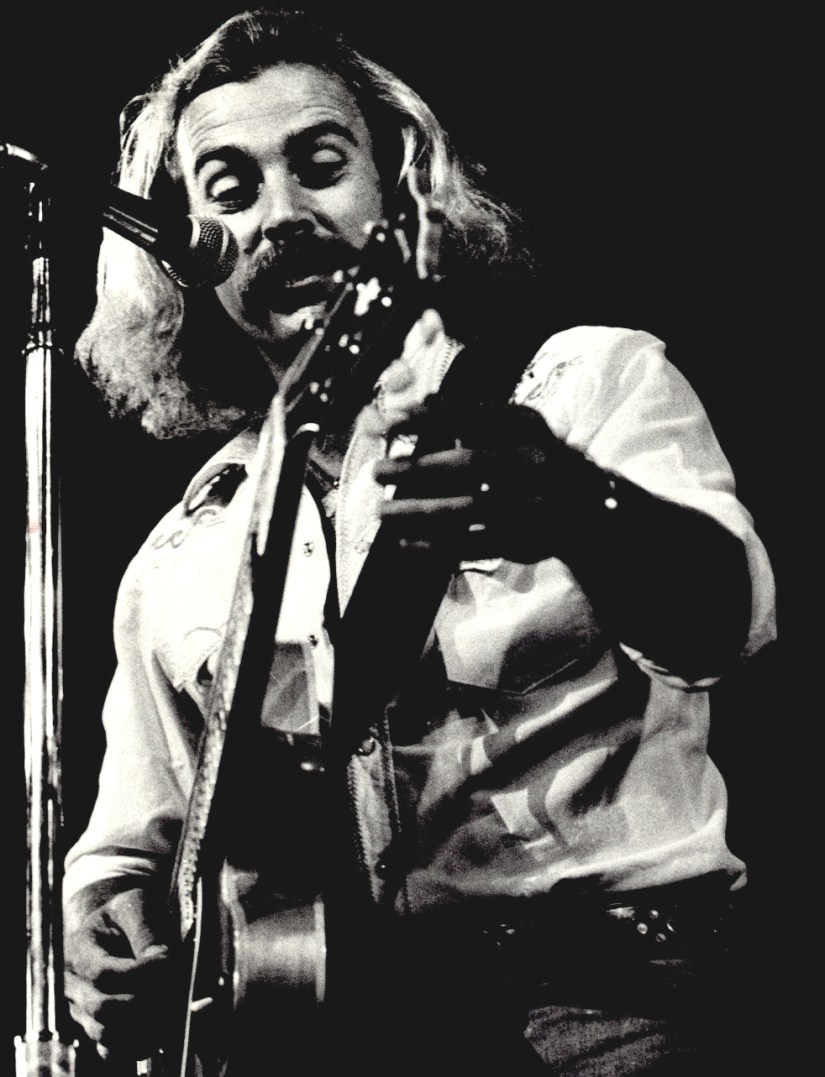
BuffettBuffett himself tells the story on his fan website, in a 1975 interview for Rolling Stone and in his own biography. “We’re there dining and dancing. Sammy Creason (Drummer) was with me (other accounts say Kris Kristofferson’s bass player Terry Paul was there too), so we provided just a gala of entertainment. Me on acoustic guitar so drunk I couldn’t hit the chords and him just pounding the drums out in 3-quarter time. Ran everybody out. We got the screaming munchies and we were going to Charlie Nickens to eat. And I couldn’t find my rent-a-car, which was parked somewhere amidst thousands of cars in the parking lot of the fabulous, plush King of the Road hotel. It was a little bitty car. It was hiding among many big ones there. And there was a Tennessee Prosecutors convention going on there. If they had made it to room 819 they would’ve had a closed door case.
So I stood on the hood of this car in a pair of old Ra Ra’s (shoes) that I bought in Miami for 2 bucks. They were white and brown, but they were golf shoes so I had to take the cleats out, but they still had the posts in them so they clicked a lot. I was standing on the hood of this particular car (a Cadillac he believed would offer a better vantage point) and as fate would have it, it belonged to a rather large man who came up behind me and threatened my life real quickly. And I hadn’t been in a fight since junior high school on the city bus in Mobile. He came up and said “Son you stay right there, you’re under arrest”. So I politely turned around and said “You kiss my a*s”. He didn’t. Instead he followed me over to the car which Sammy had found. I got in the driver’s side and Sammy got in the passenger’s side. My window was up, his was down and this fellow poked his head in and said “Would you like for me to turn this car over?”.
289c53f3a91b47b1c1e53d7a8aa2da9aI was not scared of this individual. I just thought he was some ex-football player turned counselor. And Sammy said “look whatever damage we did ABC will pay for everything” which was awfully generous of Sammy since he didn’t have the authority to say so. Being a good company man I took up for my company and said “No they won’t. I’m still gonna beat your a*s if you don’t leave us alone”. With that he pulled up then stuck his big head and his hand in and grabbed me by my hair until it separated from my head. I had a big bald spot on the back of it and I looked like a monk for about 3 months. Then he punched Sammy right in the nose. We knew he wasn’t kidding. So Sammy defended himself bravely with a bic pen. He starts stabbing at this man’s arm trying to get it out of the window because we couldn’t start the car because with the new modern features of ‘74 automobiles you can not start your car unless your seat belt’s buckled and we were too drunk to get ours hooked up.
So we sit there while this man pounded the hell out of both of us. I looked over at Creason and I said “Sammy I don’t wanna die in a Gremlin.” Eaten by a shark, killed in a plane crash, but what’s my mother gonna say? Smashed to death in a Gremlin in the parking lot of the plush King of the Road hotel. Nope. So I mustered all the courage and energy I had and all the coordination I had left in my poor body and got the seat belt buckled and went to Charlie Nickens. (Buffett later said their attacker jumped on the hood, fell off and picked a trash can up and threw it at them as they sped off.) We ordered our barbecue and on the way back we hit the Jefferson St. Bridge. Luckily there was no one around so we just backed up and headed for the hotel.
Got back, and we decided that this man may be lurking in the bushes or else may haven been snorkeling around in the pool trying to scoop up coins that people threw in. So we decided to defend ourselves with a classic southern weapon: a tire tool. So we destroyed the back end of the Gremlin looking for the tire tool, found it. Walked through the lobby of these prosecutors, and we had caused a turmoil by this time. And got up to the 8th floor where we were staying and figured we were all safe. But I had forgotten my key.
So I had to go back downstairs and Sammy said well you take this I’m not going back down there. And he gave me the weapon, which I stuck in my back pocket. Walked down into the plush lobby of the plush King of the Road hotel, walked up to the desk and asked for the key to my room. This man snuck up behind me and took the tire tool out of my back pocket. I whipped around and I said “look you, that was for my protection and you started this whole thing. I didn’t mean to get on your car and I’m still gonna beat your a*s if you don’t quit bothering me.” At this point, two detectives seized me, drug me into the elevator and said “son, we would call the police and have you arrested. You’ve caused quite a disturbance here tonight. But we figure your just lucky to be alive because that was Buford Pusser.” And I went “Oh. 8th floor please.”
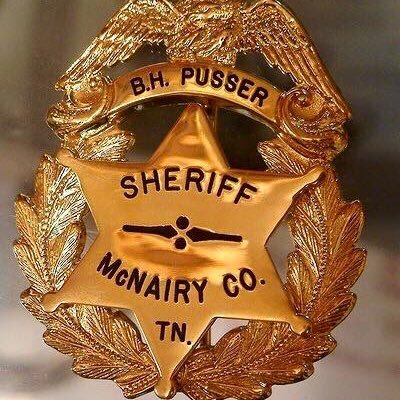
8w8L-lFp_400x400If you don’t recognize the name Buford Pusser, the epic films made about his life might ring a bell. Buford Hayse Pusser was the Sheriff of McNairy County, Tennessee from 1964 to 1970 and the subject of the film “Walking Tall”. Pusser, a 6 feet 6 inch tall 250 pound former professional wrestler, became known for his virtual one-man war on moonshining, prostitution, gambling, and other vices on the Mississippi-Tennessee state-line against the Dixie Mafia and the State Line Mob. By the time he encountered Buffett, Pusser had already killed two men.
Pusser survived several assassination attempts, suffering eight gunshot wounds and seven stabbings in these attacks. Buford’s wife Pauline was killed on August 12, 1967, during an assassination ambush intended for him. On August 21, 1974 Pusser was returning home alone from the McNairy County Fair in his souped up Corvette when he struck an embankment at high speed and was ejected from the vehicle, killing him instantly. The car caught fire and burned. Earlier that day, Pusser had contracted with Bing Crosby Productions in Memphis to portray himself in the sequel to Walking Tall.
Rumors of sabotage to the steering mechanism and the tie-rods were widely circulated but were largely ignored. Although no autopsy was performed on the body, Pusser allegedly had 0.18% blood alcohol content at the time of the accident and witnesses claimed that they had seen him drinking heavily at the fair. Both Pusser’s mother, Helen and his daughter, Dwana believed he was murdered. Sadly, Dwana, who was a passenger in another car, came upon the scene of the accident moments later. There is a museum dedicated to his life housed in the home he was living in at the time of his murder, ironically Pusser’s death came the same year as his encounter with Jimmy Buffett. His memory is so revered that a Buford Pusser Festival is held each May in his hometown of Adamsville, Tennessee.
Later that year, before Pusser’s untimely death in August of 1974, Buffett received an 8×10 photo of the legendary sheriff signed “To my favorite sparring partner. Next time, I’ll kill you. Buford Pusser”. Turns out the photo was not sent by Pusser but rather by Jimmy’s Nasville talent agent Don Light. In his December 1974 album “A1A”, Buffett refers to the Pusser incident in the song “Presents to send you” when he sings “I had my hair pulled out by a man who really wasn’t my friend.” Love him or hate him, you gotta hand it to Jimmy Buffett. He had an angry encounter with Buford Pusser…and survived!

Assassinations, Pop Culture

The Lorraine Motel. Prelude and Aftermath. Part II.

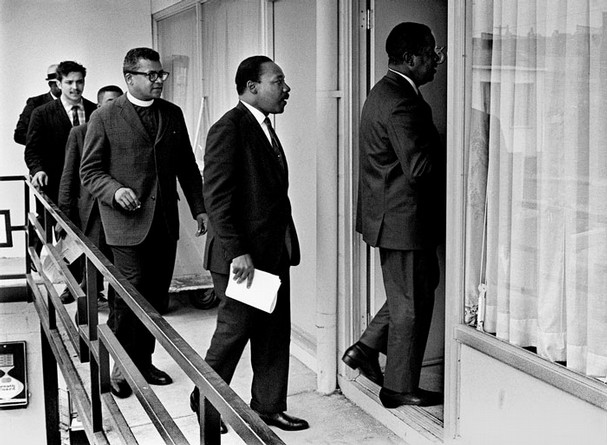
Civil rights ldr. Andrew Young (L) and others stanOriginal publish date:  April 7, 2017

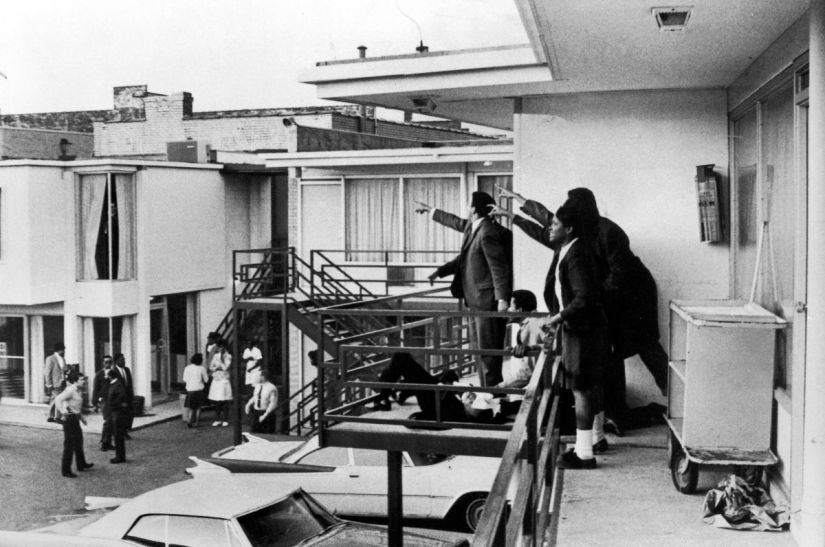
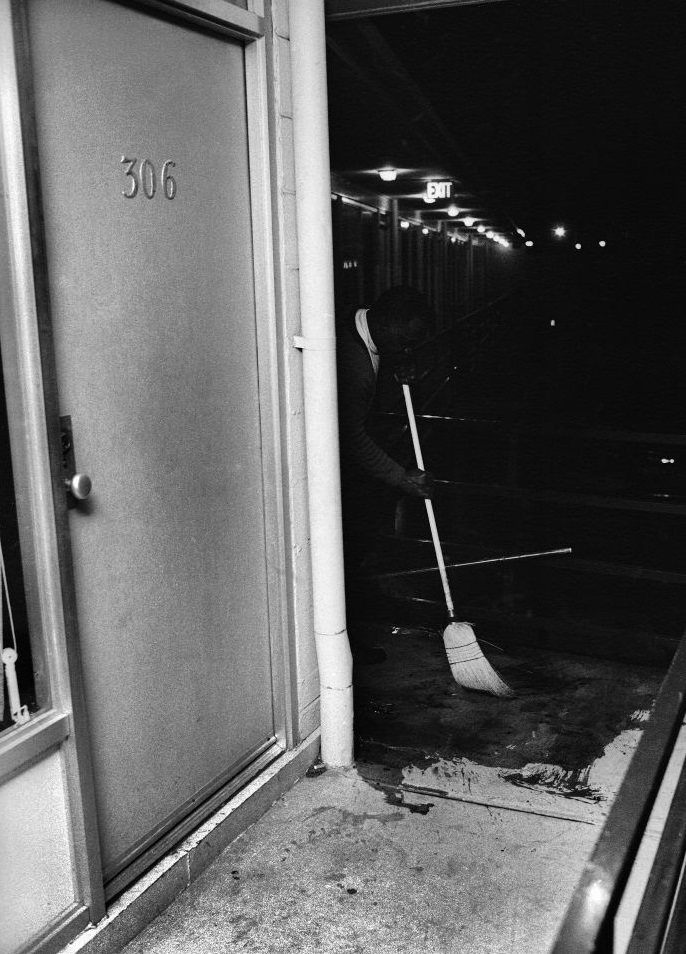
On Thursday, April 4, 1968, Reverend Martin Luther King, Jr. was staying in room 306 at the Lorraine Motel in Memphis. Dr. King traveled to the river city in support of striking African American city sanitation workers. King had gone out onto the balcony and was standing near his room when he was struck at 6:01 p.m., by a single .30-06 bullet fired from a Remington Model 760 rifle. The bullet entered King’s right cheek, breaking his jaw and several vertebrae as it traveled down his spinal cord, severing his jugular vein and major arteries in the process, before lodging in his shoulder. The force of the shot ripped off King’s necktie. King fell violently backward onto the balcony, unconscious as his life ebbed away. Despite his faint pulse, he died shortly afterwards at Saint Joseph hospital. He was pronounced dead at 7:05 p.m. In an instant, the Lorraine became one of the most famous motels in the United States, but for all the wrong reasons.
The Lorraine Motel was owned by Walter Bailey who renamed it to honor his wife Loree. For over two decades the motel, located at 450 Mulberry Street on the south edge of downtown Memphis, was THE place to stay for visiting minority musicians, athletes, clergymen and travelers passing through the segregated Jim Crow South. Walter and Loree Bailey were hands on owners who did everything from taking reservations to cooking dinners in the attached restaurant. When that rifle shot rang out, Loree Bailey suffered a stroke on the spot. Loree was at her post as the motel’s switchboard operator when she suffered her heart attack. When Rev. Samuel Kyles attempted to call an ambulance using the phone in the motel room, nobody was at the switchboard to direct the call. Loree Bailey died five days later on April 9th, the same day as Dr. King’s funeral. The official cause of her death was listed as a brain hemorrhage.
Walter Bailey continued to run the motel, but he never rented Room 306 and the adjoining room 307 again. He turned them into a memorial to Dr. King. The room was preserved exactly as it looked on that tragic night. There are two beds: one was King’s and the other was occupied by Dr. Ralph Abernathy. King’s bed was not fully made because he was not feeling well and had been lying down. Dishes were left in the room from the kitchen where Loree Bailey prepared food (fried Mississippi River catfish) for the motel room’s guests. In time, Bailey converted the other motel rooms to single room occupancy for low-income residential use.
Lorraine 1

After King’s murder, the Lorraine Motel began a long and steep decline. Despite Bailey’s efforts to preserve it as a working historical landmark, people no longer wanted to stay there. Walter Bailey continued to run the motel as a shadow of its former self. Bailey stood by helplessly as his once high-end establishment became a brothel and haven for drug dealers. He declared bankruptcy in 1982 and closed the motel. It was scheduled to be sold at auction but a “Save the Lorraine” group, part of the Martin Luther King Memorial Foundation, bought it at the last minute for $144,000 in December 1982 with the intent to turn it into a museum. Walter Bailey died on July 7, 1988 at the age of 73 and did not live to see his motel turned into a museum.
The Lorraine’s last tenant was Jacqueline Smith, a live-in housekeeper and front desk clerk at the motel since 1973. When told the Lorraine had been sold, she barricaded herself in her room and refused to leave. She was forcibly removed by law enforcement officers just 4 months before Walter Bailey died. Ms. Smith was lifted, lawn chair and all, and gently placed on the sidewalk across the street from the motel. Construction workers then moved her belongings into the street. With that, The Lorraine Motel officially closed for good on March 2, 1988.
In 1991 the National Civil Rights Museum opened to the public and Walter and Loree Bailey’s dream was finally realized. The Lorraine is now filled with artifacts, films, oral histories, and interactive media, all designed to guide visitors through five centuries of black history.
Despite being dragged from her room, Jacqueline Smith never really left the property. She set up camp on a street corner opposite the Lorraine, where she has waged a one-woman campaign protesting the institution’s existence for nearly 30 years. There she stays, 21 hours a day, calling for a boycott of the Civil Rights Museum. She leaves only to find food and go to the bathroom, all her worldly possessions stored under a blue tarp nearby.
jacqueline-smithJacqueline believed the Lorraine should be used for helping the poor and needy, rather than a celebration of Dr. King’s death. She told visitors that “Memphis has always been a city where the two biggest attractions are memorials to two dead men: Martin Luther King, Jr. and Elvis Presley.” Near Smith’s perch was a sign that read, “Stop worshiping the dead.” Smith argued that Dr. King’s legacy would have been better honored by converting the motel into low-income housing or a facility for the poor. “It’s a tourist trap, first and foremost… this sacred ground is being exploited.” Smith said of the museum that she never set foot in, despite invitations from the museum staff to do so. Smith’s call for a boycott has gone largely unheeded and she maintains her vigil outside the Loraine to this day.
Although the inside, except for room 306, has changed drastically, the Lorraine Motel exterior remains instantly recognizable; forever frozen in the spring of 1968. Two classic cars-a white 1959 Dodge Royal with lime green tail fins and a white 1968 Cadillac-are parked in front of the motel under that fateful balcony. The Lorraine motel sign still maintains silent witness. A large wreath hangs on the balcony outside Room 306, to mark the spot that changed the world. Flashes of those iconic photographs of King’s associates desperately pointing off into the distance at an assassin who is no longer there dominate the visitor’s mind. The eyes trace an imagined path to the window a football field away from which the death shot was fired. The scene is indelibly burned into America’s collective memory.
Room 306 remains faultlessly preserved. The unmade twin beds, half-filled ashtrays, black rotary phone, television with rabbit-ears antenna can all be viewed through a Plexiglass window. The meticulous attention to detail, which I was fortunate enough to witness myself when I visited with my wife and children on the 33rd anniversary of the sad event in 1991, is due and owing to one man who became an unexpected documentarian of an American tragedy.
Within hours of the assassination, Life magazine photographer Henry Groskinsky was on that balcony and through the door of King’s room. Although the physical body of Martin Luther King Jr. was gone, ethereal traces of the man remained. Groskinsky captured them all: a wrinkled shirt, a Soul Force magazine, a Styrofoam cup half full of coffee; a sign that King had momentarily left the room and would return soon. King’s still unpacked suitcase with a can of shaving cream, pajamas, brush and his book, “Strength to Love.” lay undisturbed.
The TV was still on when Groskinsky arrived, King’s face now occupying every newscast and eerily appearing in the background of many of his photographs. That wall upon which the TV had been mounted is now gone and has been replaced with a sheet of clear plastic through which millions of children have pressed their faces against straining to see this holy spot. Curious eyes dart back-and-forth at the relics in the room: the rumpled coverlet on King’s double bed folded back; a can of pomade on the vanity; a Gideon Bible on the nightstand; a newspaper with the headline “Racial Peace Sought by Two Negro Pastors”; and just outside the window, the balcony where King collapsed, a square of its original concrete flooring preserved denoting where the great man’s life trickled away.
It was the photo of the briefcase that resonated with me as an image of the suddenness of it all. Martin Luther King, Jr. has become a myth, a legend, a saint to most Americans. But the photo of his everyday possessions stands as testament to the fact that he was also a husband, a father and a man. However, the images captured by Groskinsky which haunt my dreams to this day are those of the aftermath of the assassination in its barest form.
article-2086676-0F734DC400000578-242_634x944

One need only visit the web and Google Henry Groskinsky’s name and a quick search will reveal two more photos from the fateful night. They are graphic and shocking in nature, so be warned. Both captioned “Clean Up”, one pictures Walter Bailey’s brother Theatrice as he scoops up King’s blood from the ground and places it into a jar. The other is less graphic but equally poignant and pictures Theatrice as he attempted to clean up Dr. King’s blood from the balcony with a broom. If these photos of the aftermath at the Lorraine Motel didn’t exist, the scene could not be believed.

34c024200fe89fd82f570c9f56151499