

Original publish date: May 14, 2020
Like all Americans, Covid-19 is affecting my life and adjusting my normal routine. For more than a quarter century, the Hunter family has ventured down to Daytona Beach, Florida every spring for an annual getaway. Well, that vacay was cancelled this year. The seriousness of this pandemic far outweigh a lost vacation and, when viewed alongside the sufferings of many of my fellow Hoosiers, is a minor issue indeed. So, since we are all confined to quarters together, I decided to write about a few things I have always loved about Daytona Beach.
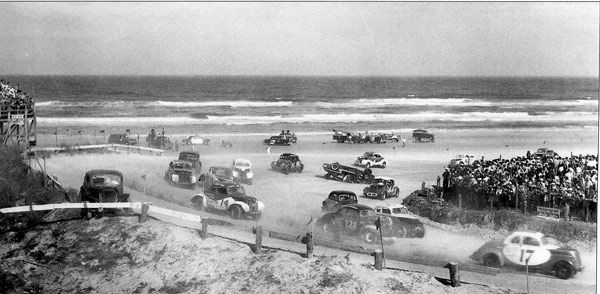 There is a lot of history on the world’s most famous beach: cars, gangsters, auto racing, motorcycles, bootleggers and Henry Ford, for starters. When you think of auto racing, two American cities come to mind: Indianapolis and Daytona. However, before Indianapolis and Daytona, Ormond Beach was the mecca of auto racing. Ormond Beach just north of Daytona, held races on the beach from 1902 until after World War II. At that time, Ormond Beach was a playground for America’s rich and famous: The Vanderbilts, Rockefellers, Roosevelts, Henry Flagler, John Jacob Astor; all spent their winters at the old Ormond Hotel.
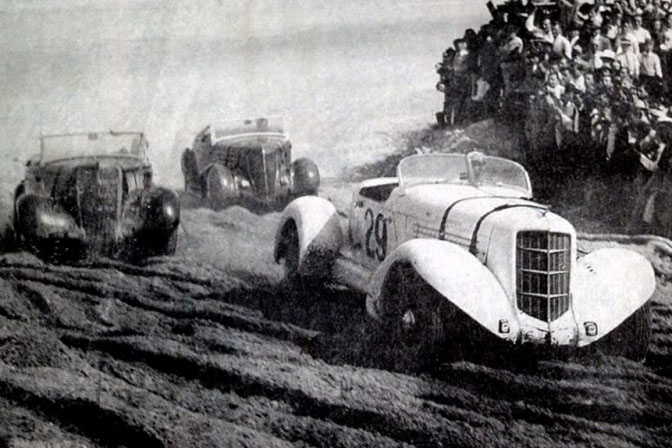 From 1902 to 1935, auto industry giants such as Henry Ford, Louis Chevrolet, and Ransom E. Olds brought their cars to race on the beach. Cigar-chomping Barney Oldfield, the most famous race-car driver in the world at the time, set a new world speed record on the Ormond-Daytona course in 1907. Racing faded somewhat in Ormond and Daytona after World War I as the racing world turned its attention to the Indianapolis Motor Speedway.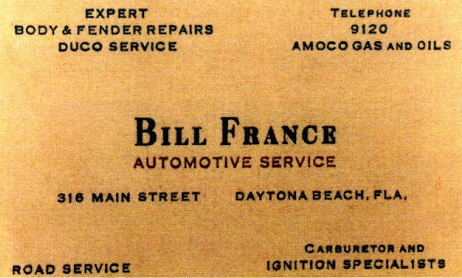
In 1936 the American Automobile Association sponsored the first national stock-car race on Daytona Beach. One of the drivers was Bill France, who later founded NASCAR. The first stock-car race after World War II was held in the spring of 1946. During that race, Bill France flipped has race his car and spectators rushed onto the beach to turn the car back on its wheels. Bill France finished the race. The next year, France began planning the construction of Daytona International Speedway 5 miles east of the beach.
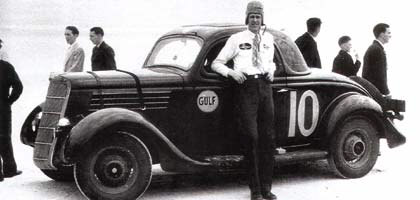
In 1937 Bill France, now a promoter and no longer a driver, arranged for the Savannah 200 Motorcycle race to be moved to the 3.2-mile Daytona Beach Road Course. World War II cancelled the races held between 1942 and 1946. By 1948, the old beach course had become so developed commercially that a new beach course was designed further south, towards Ponce Inlet (where our family time-share condo is located). The new course length was increased from the previous 3.2 miles to 4.1-miles. By the mid-1950s, the new beach course was lost to the rapid commercial growth of the Daytona Beach area.
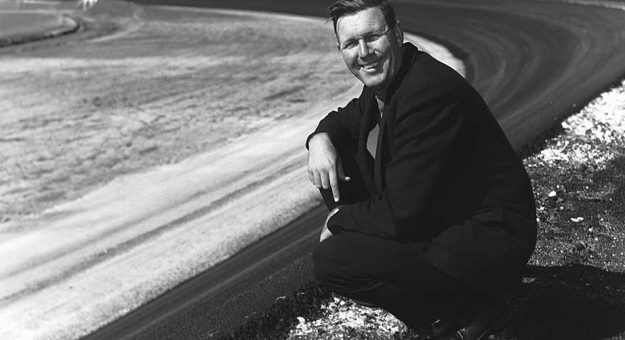
In 1957, France purchased a site near the Daytona airport and construction began on the Daytona International Speedway, a 2.5-mile paved, oval-shaped circuit with steep banked curves to facilitate higher speeds. The track opened in 1958. The first Daytona 500, run in 1959, was won by Lee Petty, father of Richard Petty. France convinced AMA officials to move the beach race to the Speedway in 1961. Today, the motorcycle racers are honored in a memorial garden, not unlike monument park in Yankee Stadium, located near the bandshell and Ferris Wheel off the Daytona Beach Boardwalk. Bill France is as much a legend in Daytona as Tony Hulman is in the Circle City and Henry Ford in the Motor City.
Although Henry Ford raced cars as a young man (he was the first American to claim a land speed record with his “flying mile” in 39.4 seconds, averaging 91.370 miles per hour in his “999” car on January 12, 1904) and attended many of the early Indianapolis 500 races as an honorary official, he did not allow his cars to take part in the races. In 1935 Edsel Ford brought his Ford V8 Miller to the IMS and after the elder Ford’s death in April 1947, the company had considerable success at Indianapolis (Mario Andretti won in a Ford powered turbocharged dohc “Indy” V-8 known as the “Hawk” in 1969). Bottom line, in the early years of automobiles, Henry Ford’s cars were fast.
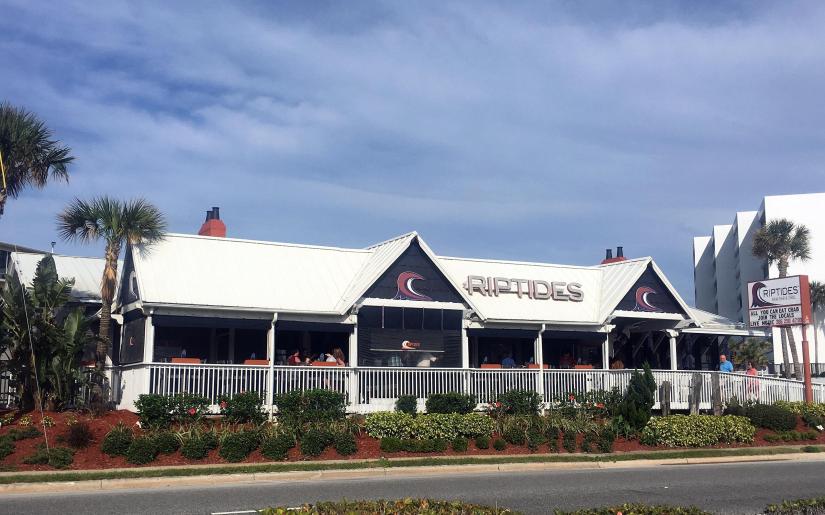
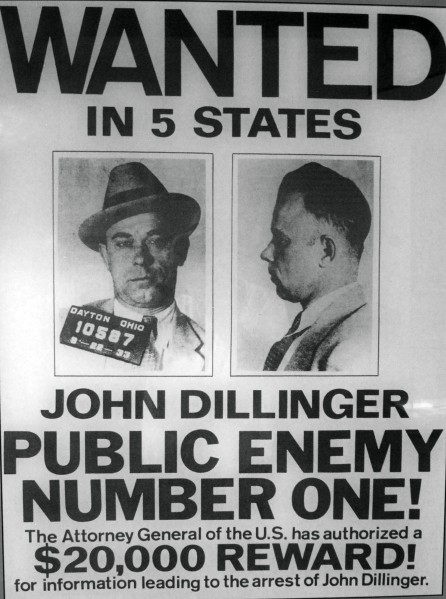 So it comes as no surprise that the gangsters of the 1930s drove Fords. In particular, outlaws John Dillinger, Bonnie and Clyde and Baby Face Nelson all preferred the Ford Model V8. Introduced in 1932, it was touted as America’s first affordable big-engine car. Dillinger also is said to have owned a Model A and what’s more, in mid-December of 1933, he drove his Ford to Daytona Beach for a vacation. After secretly visiting the Dillinger family farm in Mooresville, America’s first Public Enemy # 1 brought along girlfriend Evelyn “Billie” Frechette, Hoosier “Handsome Harry” Pierpont and his “molls” Mary Kinder, her sister Margaret and Opal Long and gang members Russell Clark and Fat Charlie Makley. The gang rented a spacious 3-story, seventeen room beach house for $ 100 a month at 901 South Atlantic Avenue until Mid-January, 1934. The house, long ago demolished, was located across the street from Seabreeze high school on the spot where “Riptides Raw Bar & Grill” and the Aliki Atrium are located today. Vacationers will recognize the “Riptides” name from the banner pulled by the tail of an airplane that constantly trails up and down Daytona beach.
Billie later called the house a mansion with four fireplaces. The gang swam, played cards, fished, went horseback riding and reportedly took a side-trip to Miami. Billie also stated that Dillinger spent his days chuckling as he listened to radio reports and read newspaper stories about the robberies he and the gang were committing back in Illinois and Indiana. On New Years Eve a drunken Dillinger (who normally drank very little) exited the house and fired a full drum of bullets from his tommy gun at the moon. Three young boys, the Warnock brothers, lived next door and ran out to see what was going on. When they saw Dillinger with flames spitting out of the muzzle of his tommy gun, they quickly ran back into the house. Sobering up the next morning and sure that his rash act would bring on the law, Dillinger and the gang packed up the Ford V8 and head out two weeks before the rental contract ended.
By January 1, 1934, John Dillinger had just two hundred days to live. He would spend that time praising Henry Ford and damning Bonnie and Clyde, who, ironically had less than 150 days to live and were also praising Henry Ford.
Next week:
Part II of Daytona Beach, Henry Ford, John Dillinger and Bonnie & Clyde.


 The big problem with these rumors is that they are not tied to the companies that actually have such programs, so that they motivate people to collect huge numbers of bottle caps, empty packets and the like to no avail. The biggest companies are usually the most frequently targeted, recent years those have been mostly soft drinks, beer, cigarettes, and tea. Sadly, before kidney dialysis came along you typically were told to save cigarette packs to earn time on an iron lung.
  Knowing the damage smoking causes to the lungs, these red stripe redemption rumors truly proved to be a “sick bargain”.
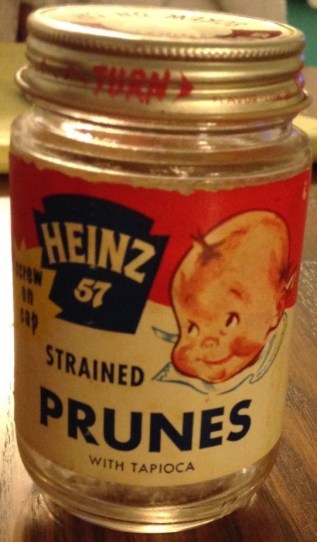 Today Heinz baby food labels can be redeemed to benefit children’s hospitals and Campbell’s soup labels can be used to buy school equipment. In Indianapolis, funds received from the recycling of pop tabs add up to between $30,000 and $50,000 annually for Riley Children’s Hospital. All this money helps with the operating expenses of the Ronald McDonald House Charities of Central Indiana and traditionally covers the cost of operating 3 rooms in the House for an entire year. With redemption rumors, it can sometimes be hard to separate fact from fiction.
 Even though it was a hoax, it didn’t mean it was a bad idea. In the 1950s, the Betty Crocker franchise started a coupon program run by General Mills. Most folks redeemed the coupons for kitchen utensils, but beginning in 1969 General Mills OK’d several fundraising campaigns in which coupons were used to purchase some 300 kidney dialysis machines. The company soon stopped dialysis drives due partly to complaints that it was “trading in human misery.” The program ceased operation in 2006.
 The most common iron lung, known as a “Drinker respirator”, was designed to provide temporary breathing support for people suffering paralysis of the diaphragm and intracostal muscles, which are essential for respiration. Developed in 1929, it came to be an important tool for the care of sufferers of paralytic polio. Strictly defined, “the iron lung is a large horizontal cylinder, in which a person is laid, with their head protruding from a hole in the end of the cylinder, so that their nose and mouth are outside the cylinder, exposed to ambient air, and the rest of their body sealed inside the cylinder, where air pressure is continuously cycled up and down, to stimulate breathing. To cause the patient to inhale, air is pumped out of the cylinder, causing a slight vacuum, which causes the patient’s chest and abdomen to expand (drawing air from outside the cylinder, through the patient’s exposed nose or mouth, into their lungs). Then, for the patient to exhale, the air inside the cylinder is compressed slightly (or allowed to equalize to ambient room pressure), causing the patient’s chest and abdomen to partially collapse, forcing air out of the lungs, as the patient exhales the breath through their exposed mouth and nose, outside the cylinder.” (The Iron Lung, Science Museum Group, Kensington, London, England, U.K)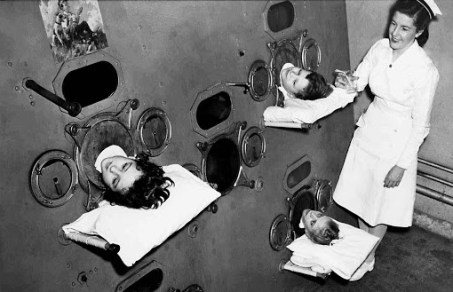
 By 2018, there were only 3 of these 700 pound behemoth iron lung machines operating in the United States. Some machines have a tray that slides out of the tube, others require the patient to climb into the bed of the pod, upon which the patient lays and is then pushed into the machine. The patient’s head is the only part of the body visible once the machine is closed, and the neck collar is adjusted to keep it airtight. Since the head is exposed, patients can eat and drink in the machine but, since both are done while laying down, swallowing can be a challenge and must be done carefully. Since the machine is pushing / pulling the patient, swallowing must occur while the machine is breathing out. Coughing and sneezing can be a challenge since both are involuntary and cannot be properly timed with the rhythm of the machine. The mechanics are under the bed, which produces a vibrating sensation for the patient.
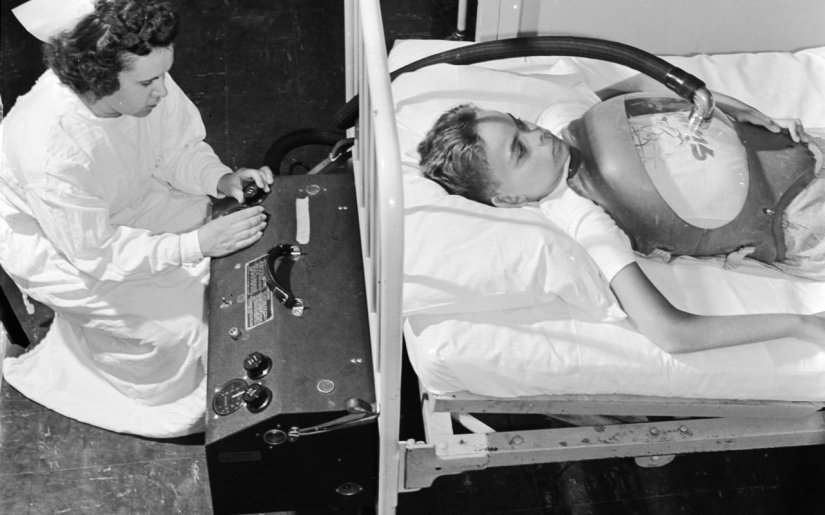 Today’s ventilators, like those being made in Kokomo right now, are much more portable and are mostly described as “breathing machines” that can be carried as easily as a briefcase. For extreme breathing cases, smaller single-patient iron lungs, known as “Cuirass ventilators” (named for the Cuirass, a torso-covering body armor worn by armored knights), are used. The Cuirass ventilator encloses only the patient’s torso, chest or abdomen, but otherwise operates essentially the same as the original, full-sized iron lung. The lightweight variation of the cuirass is a jacket ventilator or poncho / raincoat ventilator, which uses a flexible, impermeable material (such as plastic or rubber) stretched over a metal or plastic frame placed over the patient’s torso.
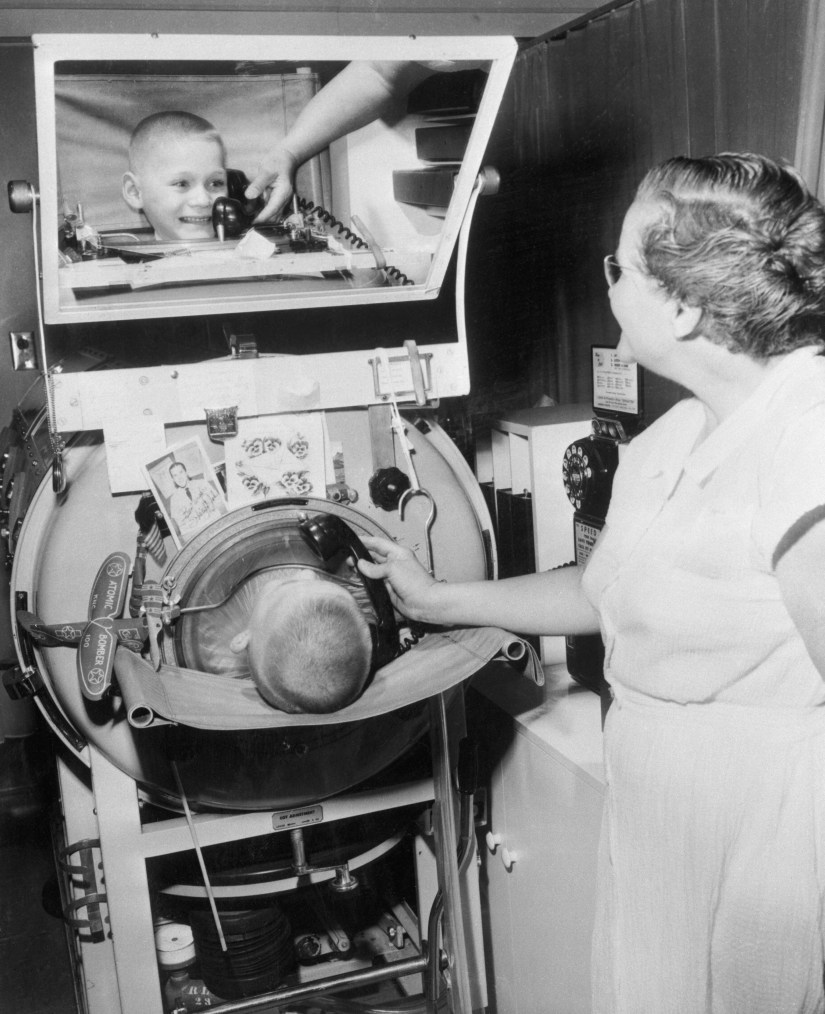 And, although the idea of the old fashioned iron lung mostly only survives in the collective public memory of baby boomers, the COVID-19 pandemic has revived some interest in the device. Thanks to the internet, public safety scams and urban legends proliferate our life daily. As silly as the idea of saving red stripes from packs of cigarettes to exchange for time in iron lungs sounded to the enlightened twenty years ago, when viewed through the periscope of new age social media theory today, it fits right in. And Covid-19 has reignited fears of epidemics past including Polio and the Spanish Flu (which allegedly originated in Kansas by the way). So, in short, there is nothing new under the sun and the takeaway from all of this is that, hopefully, this too shall pass.

 These unique roadside attractions began popping up along our highways in the 1930s and flourished into the 1960s. But the 1950s were their heyday. The Ike Era fifties was the decade of car culture; gas was cheap and families took to the open road, many for the very first time. The US interstate highway system was authorized in 1956 and construction began almost immediately in many states. Until then, families relied on connecting state road systems that took them on meandering journeys through big cities and small towns alike.
 Although modern construction has ensured that you are never far from fast food and gas, if you drive highway 40 today, it is easy to imagine how that drive must have felt back in the day. Today, driving along many of Indiana’s classic highways (Michigan Road, Brookville Road, Washington Street, Lincoln Highway) traces of old gift shops, restaurants, amusement parks and motels dot the landscape. Many of you can easily recall the giant TeePees that crowned the roof of the aptly named “TeePee” restaurants on the grounds of the state fairgrounds and on the cities southside. For me, I’ll always remember the giant coffee pot that formed the roof of the “Coffee Pot” restaurant in Pennville near Richmond on the National Road.
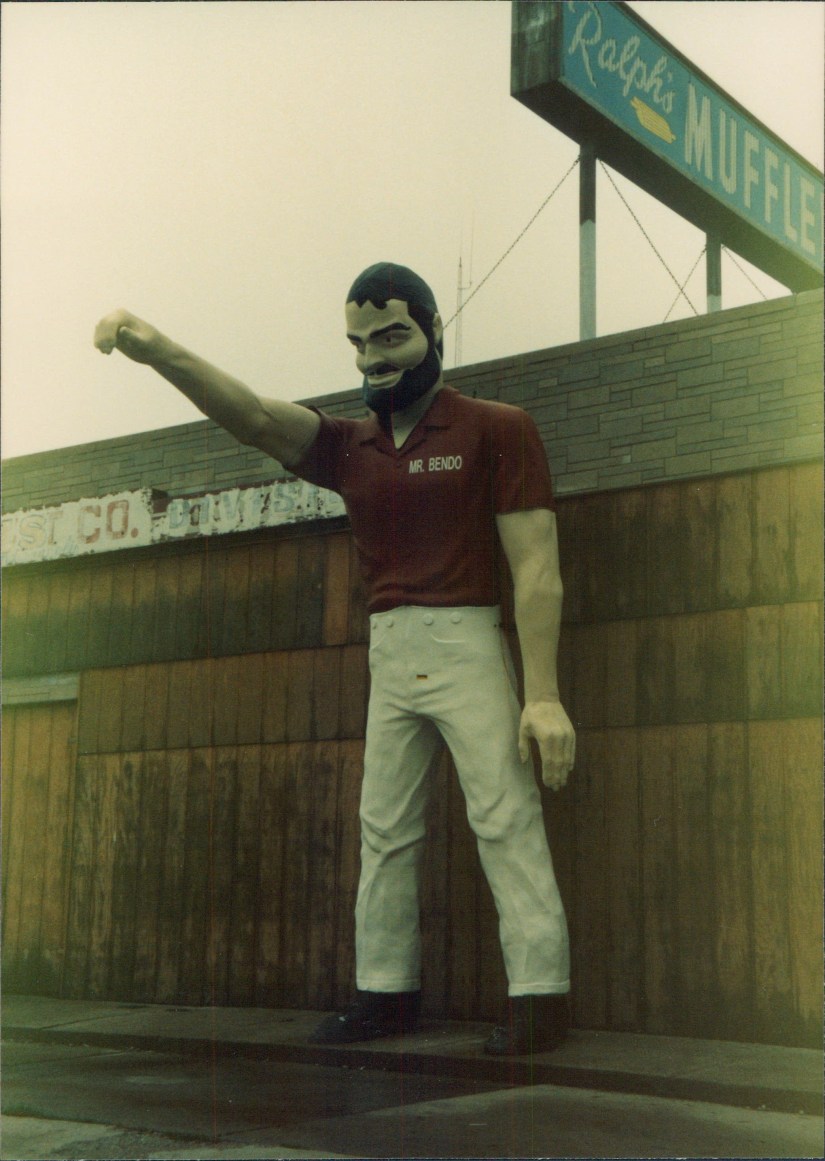 But, who remembers the “Mr. Bendo”, the muffler man? These giant statues routinely stood outside auto shops, usually with one arm outstretched while towering over the road with a muffler resting in his curved hand. Spotted in various incarnations all over the United States, these advertising icons were extraordinarily popular throughout the 1960s and 1970s. Legend claims that all of the original Muffler Men came from a single mold owned by Prewitt Fiberglass (later International Fiberglass). The first Muffler Man was allegedly a giant Paul Bunyan developed for a café on Route 66 in Arizona. Later incarnations were Native Americans, cowboys, spacemen and even the Uniroyal girl, who appeared in both a dress and a bikini. These behemoths either elicited fear or joy, but never failed to spur the imagination. Locally, you can find one of these “Mr. Bendo” statues at 1250 W. 16th St.
 Closeby, there is a giant Uncle Sam and his two smaller nephews on Shadeland Ave (between Washington St and 10th). There are two giant globes, one on Michigan Road on the way to Zionsville and the other near the pyramids visible from the interstate. There is a large dairy cow on South Shortridge Rd (between Washington St and Brookville Rd) sitting behind a 10-foot chain link fence topped with barbed wire and guard at the gate. There are two large swans in the middle of ponds, one on Mitthoffer (Between 21st St and 30th St) and the other on Pendleton Pike. Incidently there is a big fiberglass cow at 9623 Pendleton Pike near the afore mentioned swan.
 The old Galyan’s bear statue sits on the edge of the Eagle Creek Reservoir. When Dick’s Sporting Goods purchased Galyan’s, the company donated the statue to the City of Indianapolis. There are two huge bowling pins, one at Woodland bowl on the northside and the other at Expo bowl on the southside (visible from I-465). Don’t forget about the giant dinosaurs hatching from eggs at the Children’s Museum on the corner of 30th and N. Meridian Streets near downtown.
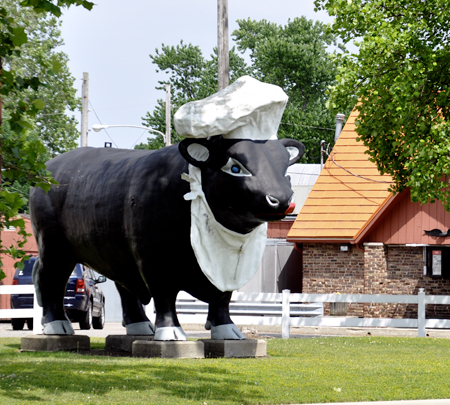 If you’re traveling to Logansport, you can visit three giant statues in the same town; Mr. Happy Burger on the corner of US Hwy 24/W. Market St. and W. Broadway St. features a fiberglass black bull wearing a chef’s hat and a bib as does the Mr. Happy Burger located at 3131 E. Market St. along with a giant chicken statue at 7118 W. US Hwy 24 (on the north side) that you can see from the road. Muncie has two giants; A big fiberglass muffler man stands alongside the scissor-lifts & heavy equipment in the Mac Allister rental lot at 3500 N. Lee Pit Rd. and a Paul Bunyan statue is the mascot of a bar named Timbers at 2770 W. Kilgore Ave.
 There is a car-sized basketball shoe at the Steve Alford All-American Inn on State Road 3 in New Castle and you can visit the towering, thickly-clothed “Icehouse man” painted in cool blue colors, the mascot of a bar named Icehouse at 1550 Walnut St. in New Castle. A balloon-shaped man with a chef’s hat, known by locals as “The Baker Man” is perched atop a pole with his arm raised in a friendly wave at 315 S. Railroad St. in Shirley, Indiana. And of course, who can forget the giant Santa Claus that greets visitors to Santa Claus, Indiana.
 I’m sure I’m forgetting a few, perhaps many, but if this list helps stir up some old roadside memories among you, or better yet, gets you charged up to take an inexpensive holiday in search of roadside oddities, well, then it was a worthwhile read.
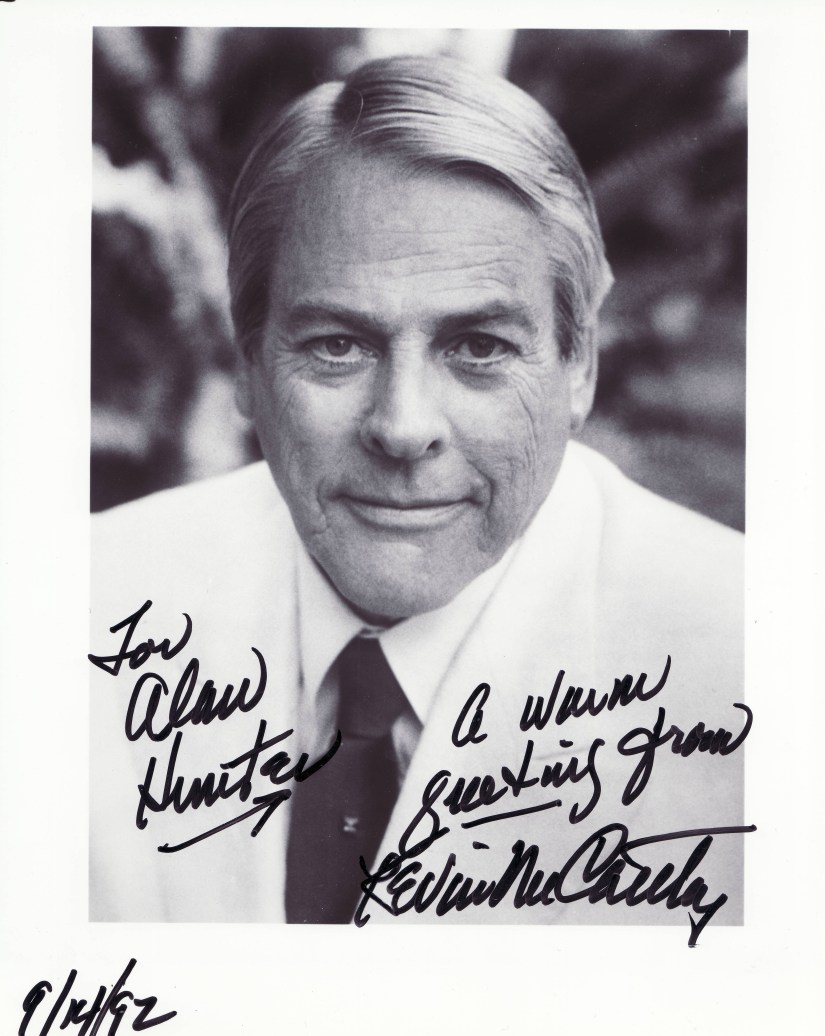
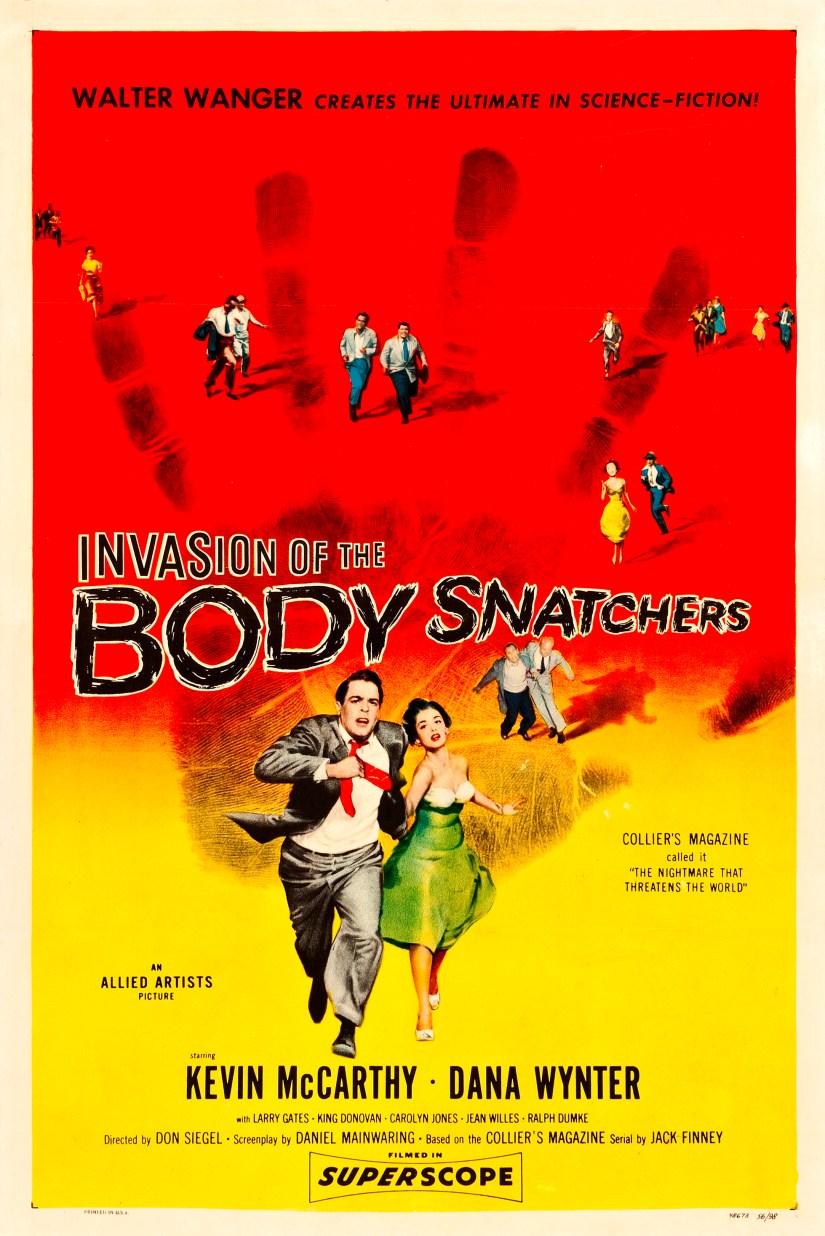 I had the opportunity to meet Kevin McCarthy in Chicago back in 1992 and he was gracious enough to sign a photo for me. It remains a cherished possession. Not only was he a great actor, he was a cousin of former U.S. senator and presidential candidate Eugene McCarthy and one actor Montgomery Clift’s best friends. I could not help but smile wryly when I learned of McCarthy’s death last year on 9/11. He lived to the ripe old age of 96 (we should all be so lucky) and lived a life that most of us can only dream about. The irony of his dying on 9/11, one of the most controversial politically charged dates in American history, was not lost on me. For “Invasion of the body snatchers” remains one of the most controversial politically charged movies of all-time.
 Invasion of the Body Snatchers was selected for preservation in the United States National Film Registry by the Library of Congress as being “culturally, historically, or aesthetically significant”. The American Film Institute ranked “Invasion number nine on its “Ten top Ten” best ten films in the science fiction category. The film ranked number 47 on AFI’s “100 Years… 100 Thrills”, a list of America’s most heart-pounding films.
 Bennell is picked up by the police and questioned in a clinic. The policemen in charge do not believe his account until they receive news of an accident in which a truck carrying strange giant bean pods is opened. The police are quick to alert the authorities; the message has been received, but the actual end of the story is left open. What cannot be denied is the central theme of the heroic struggle of one helpless but determined man of conscience, a small-town doctor (McCarthy), to vainly combat and quell a deadly, indestructible threat. An oft repeated theme of Sci-Fi films of today
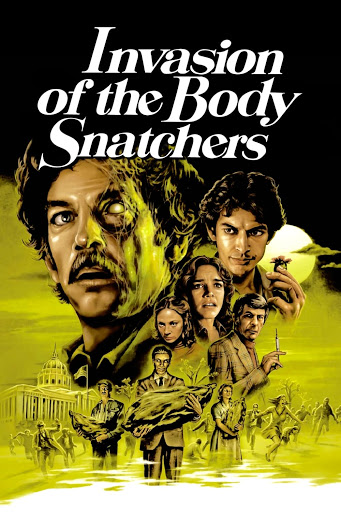 The film is widely viewed as an indictment of McCarthyism and the Red Scare Anti-Communist Era. The unmistakable metaphor: the turning of people into soulless doubles while they sleep represents the dangers faced of America turning a blind eye to McCarthyism. Over the years, others have interpreted the film as a metaphor for the loss of the individual in modern mass civilization, or paranoia about the spread of socialistic Communism, or blacklisting of Hollywood, or as a representation of the loss of personal freedom in the Soviet Union, or the spread of an unknown malignancy or virulent germ (a metaphor within a metaphor about the fear of annihilation by ‘nuclear war’), or of bland conformity in postwar Eisenhower-era America. Still others argue the film is an indictment of the damage to the human personality caused by ideologies of Right versus Left, a theme that resonates today.

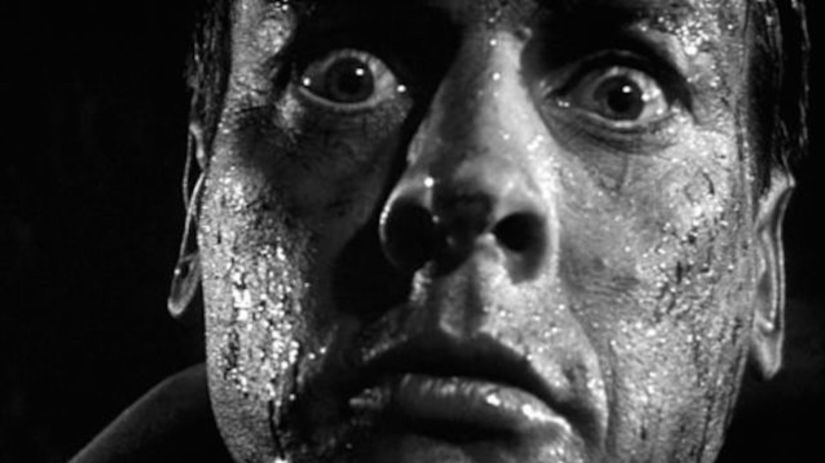 And whenever I wish, I can conjure up an image in my mind of the wide-eyed sweat and grime covered face of McCarthy as a crazed prophet of doom pointing directly into the camera desperately speaking his warning to humanity: “Look, you fools. You’re in danger. Can’t you see? They’re after you. They’re after all of us. Our wives, our children, everyone. They’re here already. YOU’RE NEXT!” Rest in Peace Kevin McCarthy.
 According to a 1907 article in the New York Times, “The anti-spitting movement, a thing of comparatively recent growth, has spread all over the union. The purpose of the anti-spitting ordinance is two fold: first, to abate a nuisance; second, to prevent disease. While the nuisance is a very real one, and from that stand point, if from no other, spitting should be prohibited, the danger of the spreading of disease by spitting in public places has been exaggerated…Spitting upon the sidewalks, in street cars and public places is not nearly so dangerous as the spitting in tenement houses, cheap lodging houses, factories and workshops, and other places which the average spitting law does not presume to prohibit.”
 More precisely, the article goes on to note that in 1907, there were 20 arrests in Indianapolis for spitting in public. All of these arrests were made by health officers, not policemen. The article went on to say “If you have to spit, don’t spit in Buffalo, N.Y., for it may cost you $25. The cheapest place to spit is Indianapolis, where people paid an average of 78 cents.” In 1907 tuberculosis was the second leading cause of death behind pneumonia /influenza.
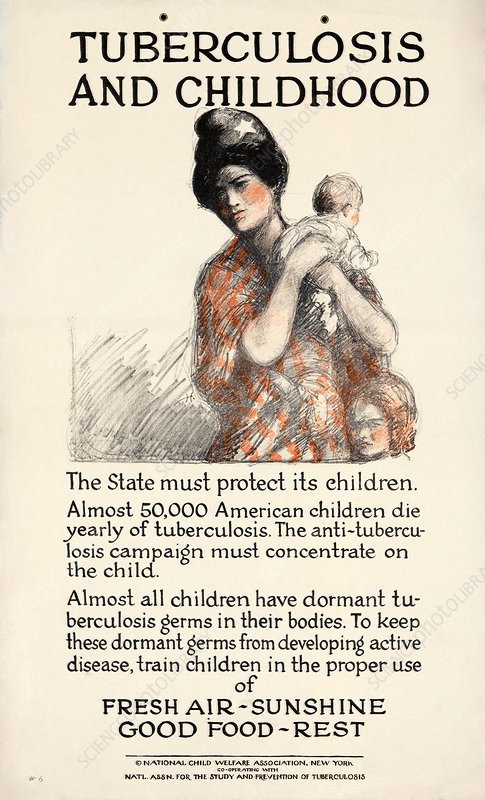 During this period, no fewer than four tuberculosis hospitals were built in and around Indianapolis. The Flower Mission Pavilion for Incurables was added to the grounds of the city hospital. The revolutionary design of the building featured open air verandas built at the height of 822 feet containing 2 wards with 10 beds each and 6 private rooms. This hospital was unique in that it charged no fee for services and was available only to patients with advanced, incurable cases of “Consumption.”
 But by far the most interesting of these four T.B. hospitals was the Day Camp of the Women’s Improvement Club, located in the Brightwood area of Indianapolis. It’s capacity was only 7 patients. Literature of the era described the facility as being “For colored women in incipient or convalescent stages of tuberculosis. The camp is located in a grove near Brightwood, a suburb of Indianapolis. The equipment used is largely tents. This is one of the few camps in the United States exclusively for colored women. It is conducted by the Women’s Improvement Club, composed of twenty colored women of Indianapolis.”
 It was mistakenly believed that the only way the epidemic could be stopped within a family was to visit the cemetery at night and disinter the deceased subject and remove it’s heart. There was a well documented case of this very thing happening in Rhode Island in 1892. Nineteen-year-old Mercy Brown had died of consumption and as her family began to suffer from the same symptoms, her father went to the family tomb two months after her death and, assisted by the family physician, removed her heart and burnt it to ashes. These fears and old wive’s tales about T.B. surely existed in 1907, undoubtedly contributing to the ferocity of the Tuberculosis War in Indianapolis.
 Alan E. Hunter