Indianapolis, Indy 500

The Liberty Bell In Indianapolis.

Original publish date July 3, 2024. https://weeklyview.net/2024/07/03/the-liberty-bell-in-indianapolis/
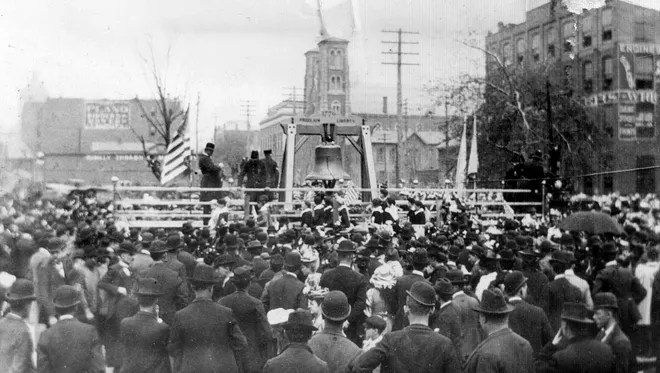
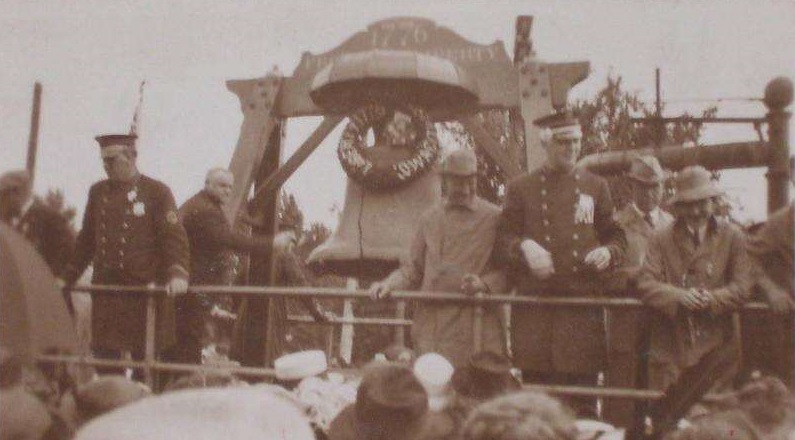
The Liberty Bell in Indianapolis 1893. Courtesy Bass Photo Collection.

The Liberty Bell is believed to have been brought to Pennsylvania by William Penn, arriving in Philadelphia on September 1, 1752. Its original use was to announce the opening of the Courts of Justice to the people and to call members of the Pennsylvania Provincial Assembly together. Surprisingly, the main purpose of the Liberty Bell was to announce the accession of a member of the British royal family to the throne, and the proclamation of treaties of peace and declarations of war. Ironically, the bell rang out loudly when the Declaration of Independence was publicly read for the first time in Philadelphia, on July 8, 1776. Contrary to legend, the bell did not crack at that time. It cracked exactly fifty-nine years to the day later during ceremonies honoring the death of John Marshall, Chief Justice of the U.S. Supreme Court who died two days prior on July 6, 1835.
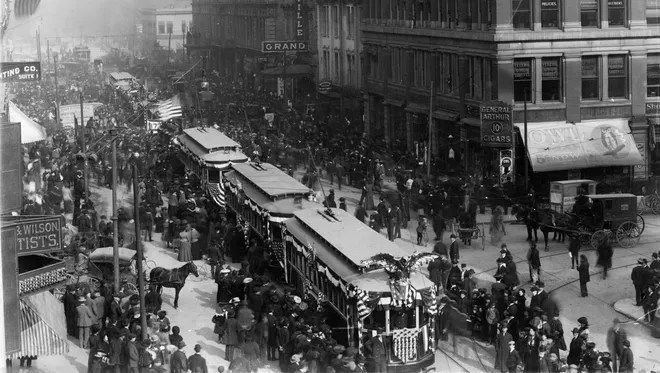
The train carrying the Liberty Bell arriving in Indianapolis. Courtesy Indianapolis Star.

Since the time of American Independence, no other inanimate symbol has come to represent the United States more than The Liberty Bell. Although inextricably associated with the city of Philadelphia, The Liberty Bell has traveled through Indianapolis on three separate occasions. The first visit came to our city on Friday, April 28, 1893, on its way to the World’s Fair in Chicago. It was traveling over the Pennsylvania rail lines which sent it directly through the heart of Irvington. America’s most famous relic to freedom arrived at 5 a.m. and was placed on a sidetrack at Tennessee Street (present-day Capitol Avenue) at downtown Union Station. By the time Mayor Thomas Sullivan and Chief of Police Thomas Colbert arrived with a squad of eight guards, the street was already choked full of people anxious to see The Liberty Bell. Nervous carpenters worked feverishly building wooden ramps to access the bed of the converted passenger coach upon which the flag-draped relic was fastened.

Indianapolis Mayor Thomas Lennox Sullivan (1846-1936) Courtesy Indiana Historical Society

The Indianapolis News reported, “Patriots came with such a rush to see the ‘Voice of Freedom’ that the ropes stretched around the car and along the street were incapable of holding the throng in check. Captain Charles Dawson began shouting at the top of his voice: ‘Get your tickets ready. Be sure and buy your tickets before you get in line!’ Of course, no tickets were necessary, but the cry had the desired effect. Hundreds fell out of the jam to make inquiries regarding tickets, and the police were then able to get the line properly formed.” The article details a strange phenomenon that swept that crowd. “When the crush was at its worst, a man passed up his matchbox to one of the policemen and asked that he touch the bell with the box. He felt that the mere touching of the bell would hallow the matchbox. Instantly, the policemen on guard were besieged with requests that they touch the bell with rings, ribbons, watches, canes, handkerchiefs, and a hundred other things.” Mothers and fathers handed babies up to the policemen for a rub against the bell. One child fainted amid the confusion. It resulted in a panic or sorts and “the touching incident had to be closed by the police for the sake of safety.”
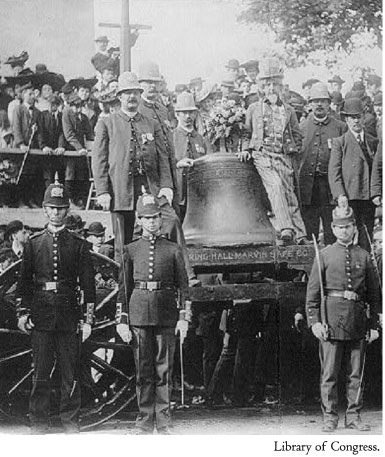
That 1893 visit culminated with a viewing at the Indiana State House where former President Benjamin Harrison delivered a speech honoring the bell. During the celebration, children from the Indianapolis Blind School were permitted to “get the sense of sight through the joy of touch. They fingered the beloved relic and went back to school fully satisfied.” The second visit of the Liberty Bell came on November 17, 1904, on its way back to Philly from the Louisiana Purchase Exposition aka the St. Louis World’s Fair. Sadly, the bell’s 6 p.m. arrival at the intersection of West and Washington Streets occurred the same day that the historic landmark Meridian Street Methodist Episcopal Church burnt to the ground nearby. The poet James Whitcomb Riley was among the official greeters for that 1904 visit. The Liberty Bell was on display at the interurban train sheds and Ohio Street traction station through the night, leaving the next morning. The culmination was a parade of all Indianapolis Public School children to the interurban station where they marched in front of the cherished relic to music provided by the Indianapolis News Newsboys Band. The Indianapolis News reported that the scene “moved grownups to tears and brought a full realization of the patriotic value of The Liberty Bell.” The bell was removed to the train station and sent on its way back to Philadelphia “almost buried under chrysanthemums that had been provided by patriotic citizens. As the car passed westward on Washington Street, the school children strewed the track with flowers.”
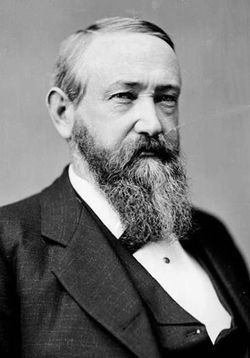
Hoosier President Benjamin Harison.

On July 5, 1915 (109 years ago this Friday) The Liberty Bell left Philadelphia for the last time on its way to the Panama-Pacific International Exposition World’s Fair in San Francisco, California. The bell debuted in the city by the bay on “Liberty Bell Day” on July 17. It was displayed in the Pennsylvania Building at the Fair for four months, every evening it was rolled and stored securely in a vault. Finally, on November 11, the bell left the Fairgrounds accompanied by cheers, church bells, and tearful smiles of farewell from those present. During the trip home, the bell made its final visit to Indianapolis. The event was planned (perhaps fittingly) by an Indianapolis Mayor named Joseph E. Bell, an interesting but long-forgotten figure in Indianapolis history. Bell, a Democrat and former law partner of John W. Kern, served from 1914 to 1918. Bell is notable for establishing the first police vice squad in the city and for his many public improvements including the the transformation of Pogue’s Run from an open sewer to an immense covered drain and a flood levee along the west bank of the White River and railroad track elevation permitting street and the development of the boulevard system. He also authorized the construction of the sunken gardens at Garfield Park. During Bell’s administration, 281 miles of streets, sidewalks, and sewers were built. Bell, a founder of the Indiana Democratic Club, died from an accidental, self-inflicted shotgun wound suffered at the Indianapolis Gun Club.
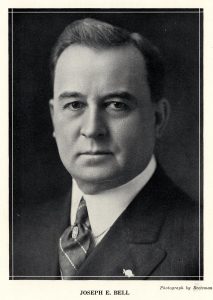
Mayor Joseph E. Bell.

Just as in 1904, The Liberty Bell narrowly escaped disaster during that 1915 visit when a warehouse fire in Louisville swept two large warehouses, coming within a thousand feet of the relic. No wonder Philly hasn’t let the bell out of its sight since that trip. The Liberty Bell was greeted upon its 7:45 p.m. arrival in the Circle City by 5,000 flag-waving citizens lining East Washington Street. The relic bell visited over 400 cities during its trip home. The Liberty Bell welcoming parade was led by a contingent of GAR Civil War Veterans, mounted Policemen, and cars containing Teddy Roosevelt’s former Vice-President Charles W. Fairbanks, Governor Sam Ralston, Butler President Thomas Carr Howe, & Poet James Whitcomb Riley. The Nov. 22, 1915, Indianapolis News reported, “Impressive features of the occasion marked the stopping of the bell at the statehouse and courthouse where school choruses from the Manual Training and Technical High Schools led by the teachers of those schools, sang ‘America’ and other patriotic songs.
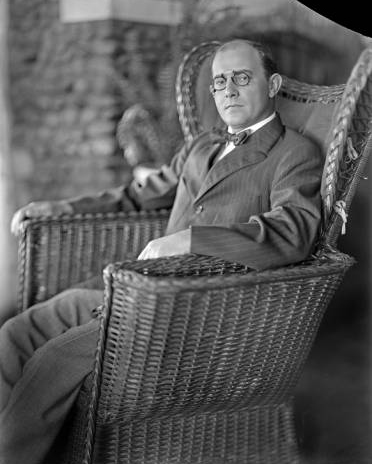
Indianapolis Motor Speedway Pioneer Carl G. Fisher.

An interesting side note occurred when Indianapolis Motor Speedway’s founding father Carl Fisher volunteered to repair the crack in the Liberty Bell. The Nov. 20, 1915, News reported, “Practical-minded Carl F. Fisher is going to propose that they leave the bell and its celebrated crack in Indianapolis so that by processes now in use at the Prest-O-Lite plant, near the motor speedway, the long silence of The Liberty Bell may be broken and its voice again proclaim the sweetness of American freedom.” Fisher, perhaps the greatest huckster the Hoosier state ever saw, told the News, “Philadelphia has been living off that crack long enough. We have had at our plant in the last two years bells that are older than the Liberty Bell. They were on old Spanish men-of-war and merchant vessels that represented ports older than Philadelphia itself. Unless Philadelphia wakes up and has some repair work done pretty soon they’ll have a total wreck of their famous relic. We can patch that crack up as easily as a shoemaker half-soles a shoe. Expansion and contraction are making the bell’s crack wider, and something must be done to heal that wound. If they will just let Indianapolis play surgeon for their beloved patient we will show them that we can do it.” The News further reported, “It was learned that the Philadelphia people have a pride in the crack and do not wish it mended.” The train carrying the Liberty Bell left Indianapolis at 12:30 a.m. en route to Columbus, Indiana. On Thanksgiving day in 1915, Philadelphians welcomed the Liberty back to Independence Hall at nightfall after its cross-country tour. Although the bell has been “tapped” many times for historic events after that 1915 homecoming, on September 25, 1920, it was rung for the last time in ceremonies in Independence Hall celebrating the ratification of the 19th Amendment giving women the right to vote.
Criminals, Health & Medicine, Indianapolis, Medicine

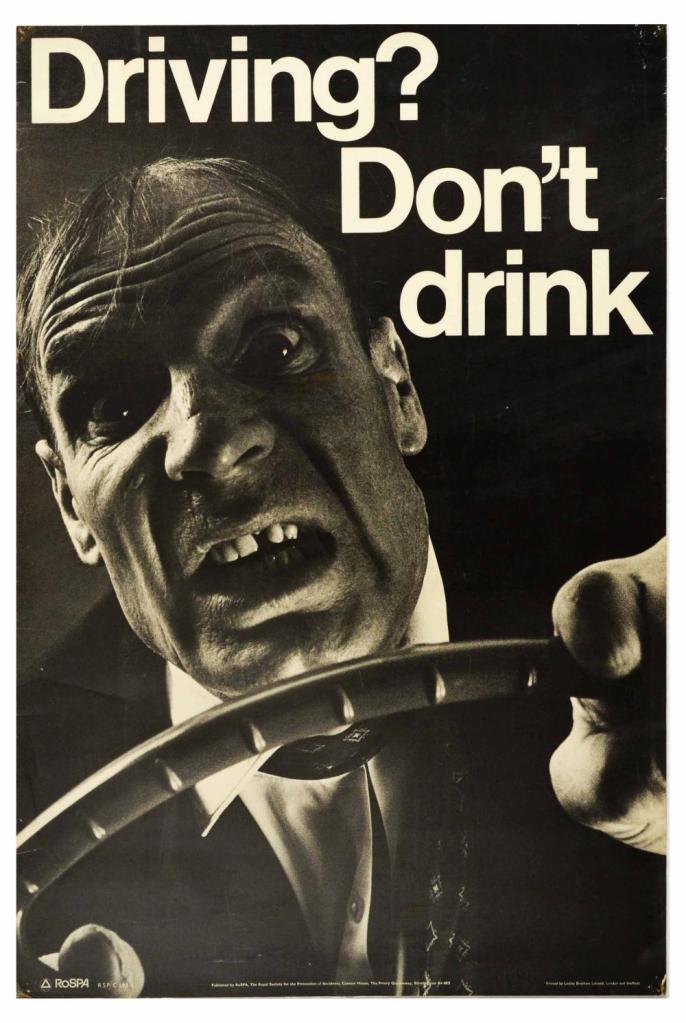
THE BREATHALYZER

Original publish date February 22, 2024. https://weeklyview.net/2024/02/22/the-breathalyzer/

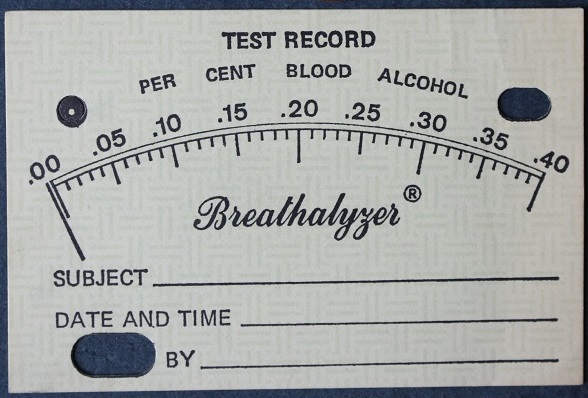
Recently, I found myself at an antique show rummaging through a small box of paper, not unfamiliar territory for me. The usual: postcards, coupons, ads, snapshot photos. Then my fingers danced past a small greenish-colored slip of paper with a frozen gauge chart numbered .00 to .40 and a pair of machine-cut holes in the corners. Titled “Breathalyzer” it was identified as a “Test Meter” to measure “Per Cent Blood Alcohol” with an unused 3-line identifier at the bottom for the “Subject” name, “Date and Time”, and name of the person administering the test. Okay, we all know what it means (some more than others) and if we are smart (or lucky) we have managed to avoid these at all costs in our lifetimes.

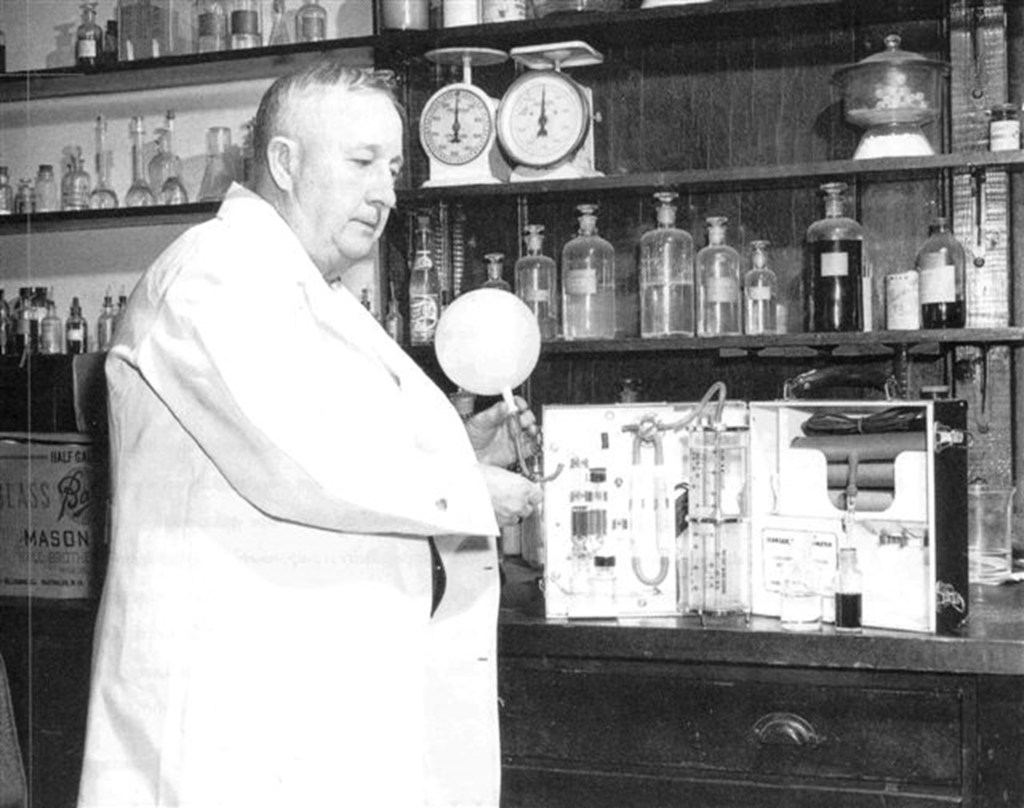
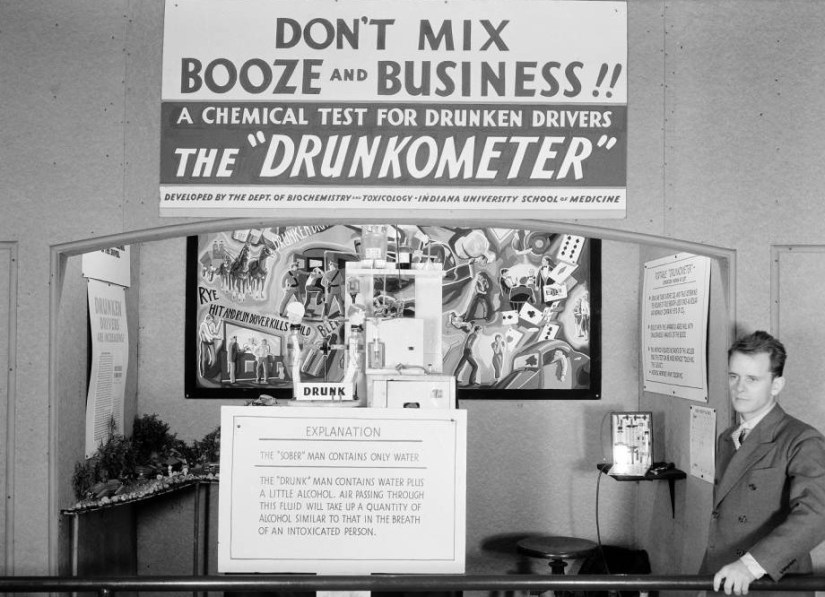
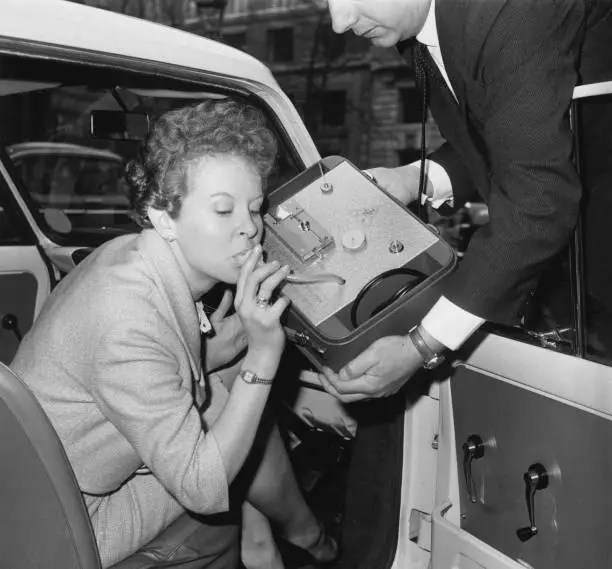
But did you know that the “Breathalyzer” instrument, known around the world as the “Breath of Death”, the “Intoxalock”, or the “Booze Kazoo”, was invented in Indiana? In 1931, a 41-year-old toxicology professor at Indiana University named Rolla Harger invented the first practical roadside breath-testing device called the Drunkometer. He was awarded a patent for it in 1936. The Drunkometer collected a sample of the motorist’s breath when the driver blew directly into a balloon attached to the machine. The breath sample was then pumped through an acidified potassium permanganate solution and if there was alcohol in the sample, the solution changed color. The greater the color change, the more alcohol there was present in the breath.

Rolla Neil Harger (January 14, 1890 – August 8, 1983).

In 1922, Harger became an assistant professor at Indiana University School of Medicine in the newly formed Department of Biochemistry and Pharmacology. He served as the department chairman from 1933 to 1956 and worked continuously in the department until 1960. However, the bulky Drunkometer proved impractical and unportable. The test required the suspected impaired driver to effectively inflate a balloon (a challenging task for some drunk or sober), which was then taken to the machine at police headquarters. This time-consuming, awkward process depended on the visual skills of the technician analyzing the sample-an Achilles heel that defense lawyers were often successful contesting. The Drunkometer eventually fell out of favor with police officers who saw it as complicated and unreliable. Police instead preferred to administer roadside dexterity tests to determine intoxication.

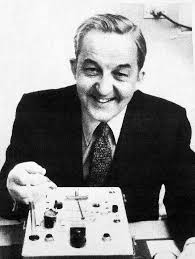
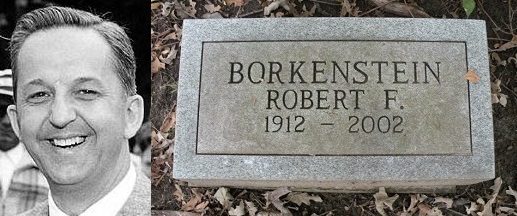
Frank Borkenstein (1912-2002)

Enter Robert Frank Borkenstein. Born August 31, 1912, in Fort Wayne, Borkenstein was a natural-born teacher, researcher, and inventor. Borkenstein was a product of the Great Depression, and like many young Hoosiers of that era, he was unable to attend college. His first job in Fort Wayne was as a photographic technician, where legend claims his expertise in color film led (at least in part) to the invention of the color camera. While that claim is hard to nail down, what we do know is that his skill and creativity were recognized by the Indiana State Police Criminology Laboratory which hired him in 1936. Borkenstein quickly rose through the ranks, he went from working as a clerk to Captain in charge of Laboratory Services to Director of the State Police Criminological Laboratory, one of the first state police laboratories in the US. During his time with the department, Borkenstein helped perfect the use of photography in law enforcement and worked extensively on developing the polygraph, or lie detector. He administered more than 15,000 tests before his retirement in the late 1980s.

Indiana University School of Medicine Dept. of Biochemistry-Toxicology display.

Also while with the department, Borkenstein developed a close professional relationship with IU Professor Rolla N. Harger who was still working to improve his Drunkometer. In the 1950s, Borkenstein attended Indiana University on a part-time basis, eventually earning his Bachelor of Arts in Forensic Science. In February of 1954, IPD Lieutenant Borkenstein, Director of the State police laboratory, developed his first working model of the Breathalyzer (an amalgam of “breath, alcohol and analyze”) in the partially dirt-floored basement of his small Indianapolis home at 6441 Broadway near Broad Ripple. His machine was more compact, easier to operate, and consistently produced reliable results when measuring blood alcohol content. The Breathalyzer substituted a rubber hose for the balloon and featured an automatic internal device to gauge the color changes previously determined by the naked eye. Borkenstein’s Breathalyzer was an inexpensive way to test intoxication and meant that BAC (blood alcohol content) could be quickly collected and analyzed for use as evidence. Upon graduation from IU, Borkenstein retired from the State Police and joined IU as Chairman of the newly-formed Department of Police Administration.

Borkenstein’s updated breathalyzer.

Robert Borkenstein, a convivial fellow known as “Bob” to friends, family, and colleagues, enjoyed listening to Gilbert and Sullivan, entertaining visitors, and serving drinks to his friends. According to one account, ironically Bob “exhibited a Catholic taste in wines and spirits”. But Bob insisted on one rule for himself and anyone consuming alcohol in his presence: No drinking and driving! This, even though he supervised a study, paid for by the liquor industry, that suggested that “the relaxing effect of having drunk less than two ounces of alcohol might produce a slightly better driver than one who had none”.

At I.U., Borkenstein was well-liked and known for his generosity to younger colleagues. He was also a Francophile who traveled extensively to Paris and other parts of France, incorporating the French language into much of his work. Another gadget Borkenstein invented was a coin-operated Breathalyser for use in bars. The idea is that when a customer drops a coin it causes a straw to pop up. When the straw is blown into, a reading of .04 or less would produce a message: “Be a safe driver.” Between .05 and .09, the machine blinked and advised: “Be a good walker.” At .10 or higher, it sounded a small alarm and warned: “You’re a passenger.”

He later became chairman of IU’s Forensic Studies Department and director of the university’s Centre for Studies of Law in Action. The class he established on alcohol and highway safety became a national standard in the United States for forensic science, law enforcement, and criminal justice professionals. Today, it is officially known as the “Robert F. Borkenstein Course on Alcohol and Highway Safety: Testing, Research, and Litigation”, more simply known as the “Borky”. In light of his achievements, Borkenstein was awarded an Honorary Doctor of Science by Wittenberg University in 1963 and an Honorary LL.D. from Indiana University in 1987. In March 1987 Borkenstein retired, though he continued to hold emeritus titles as both a professor and Director of the Center for Studies of Law in Action and was inducted into the Safety and Health Hall of Fame International in 1988. Borkenstein’s mentor Dr. Rolla Neil Harger died on August 8, 1983, in Indianapolis and is buried in Crown Hill Cemetery. Borkenstein’s papers are held at the Indiana University Archives in the Herman B Wells Library in Bloomington, IN.

Robert Borkenstein graveLindenwood Cemetery
Fort Wayne, Allen County, Indiana.

In 1938 Borkenstein married Marjorie K. Buchanan, a children’s book author who died in December 1998. The couple had no children. Robert Borkenstein died on August 10, 2002, at the age of 89. Borkenstein held the Breathalyzer patent for most of his life, finally selling it to the Colorado firm that markets it today. Although the Breathalyzer is no longer the dominant instrument used by police forces to determine alcohol intoxication, its name has entered the vernacular to the extent that it has become a generic name for any breath-testing instrument. Between 1955 and 1999, over 30,000 Breathalyzer units were sold. Without question, Bob Borkenstein’s invention has saved countless lives over the years and has become an irreplaceable tool of the police. And to think, it all started in Indiana.

Indianapolis, Music, Pop Culture

“Louie Louie”

This column first appeared in August 2013. https://weeklyview.net/2024/08/01/louie-louie-2/

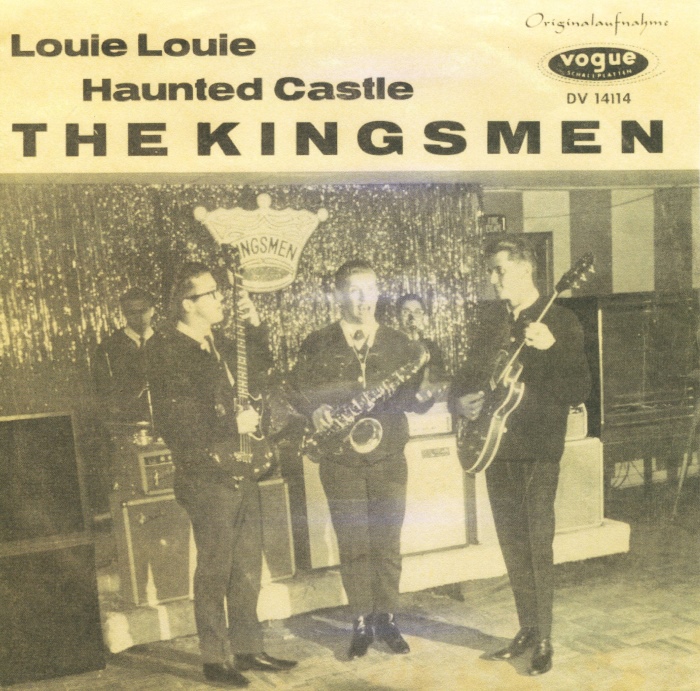
“Louie, Louie” by the Kingsman 1963.

Fifty years ago this week, a song was released by an obscure Portland, Oregon, garage band that would change the face of rock ‘n’ roll history forever and ultimately resonate through the halls of the Indiana Statehouse. “Louie Louie” was written by Richard Berry in 1955 and was originally performed in the style of a Jamaican reggae ballad. The original version tells the first-person story of a Jamaican sailor returning to the island to see his lady love. Berry released his version in April 1957 with his band, the Pharaohs, and scored a regional hit on the West Coast, particularly in San Francisco. When the group toured the Pacific Northwest, local garage bands picked up the song, increasing its popularity.

Richard Berry’s Original 1957 release on Jasmine Records.

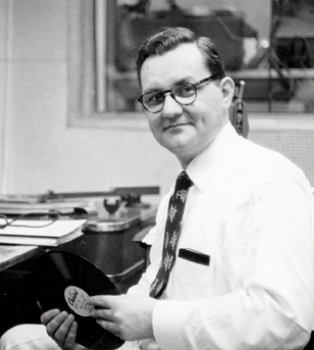
On August 8th, 1963, a relatively unknown band called The Kingsmen released their version and it swept across the airwaves from the West Coast like a musical tsunami. The band recorded the song for $50 at Northwestern, Inc., Motion Pictures and Recording studio in Portland. The band split the cost of the session. The session was produced by Ken Chase, a local radio personality on radio station KISN 91-AM. He also owned a teen nightclub that hosted the Kingsmen as his house band. The Kingsmen’s studio version was recorded in one take. They also recorded a “B” side song called “Haunted Castle.”

Berry’s version of the song on Flip Records.

The Kingsmen turned Berry’s syrupy sweet ballad into a raucous romp, backed by a twangy guitar, party chatter, and mostly unintelligible lyrics by lead singer Jack Ely. The song hit the top ten of the Billboard Hot 100 chart in December and would remain there for 16 weeks. “Louie Louie” reached number one on both the Cashbox pop and R&B charts. The version quickly became a standard at teen parties in the U.S. during the 1960s, even reappearing on the charts in 1966.

Louie Louie & Haunted Castle 45 Record.

However, it was the urban legend about the indecipherable lyrics that gave the song lasting fame — or infamy, depending on your point of view. Rumors claimed that the band intentionally slurred the lyrics to hide the profanity contained therein, in particular, graphic sex between a sailor and his lady. Soon, crumpled pieces of paper containing “the real lyrics” to “Louie Louie” circulated among giggling, red-faced teens. In time, the adults got involved in the form of unamused parents and distraught teachers who demanded action against this supposed pornography sweeping the airwaves. Keep in mind, singles by The Singing Nun and Bobby Vinton monopolized the top slot on the charts during the song’s run.

Indiana Governor Matt Welsh.

Eventually, the song was banned on many radio stations across the United States, including Indiana, where it was personally prohibited by Governor Matthew Welsh himself. Yes Indiana, our state officially banned the song “Louie, Louie” on Tuesday, January 21, 1964. The unprecedented involvement between state government and a rock ‘n’ roll song began when Governor Welsh of Indiana received a complaint from a Frankfort teenager, claiming that the lyrics to the song were obscene. The teenager included a handwritten copy of the obscene lyrics as evidence.

The Kingsmen.

Allegedly, Governor Welsh’s executive secretary Jack New went to a nearby music store to buy a copy of the record. Then, in what must’ve been a Monty Pythonesque moment, New and the Governor listened to it inside his Statehouse office. New told the Indianapolis Star “We slowed it down and we thought we could hear the words.” Billboard reported that the Governor said his ears “tingled.” The Governor’s press secretary, James McManus, said that the words were “indistinct, but plain if you listen carefully.”

WISH-Radio’s Reid “Chuckles” Chapman.

Governor Welsh snapped off a letter to Fort Wayne radio and TV personality and President of the Indiana Broadcasters Association Reid Chapman urging that the lyrics to the song be “examined.” Welsh said in 1991, “My position with respect to the whole matter was never that the record should be banned. At no time did I ever pressure anybody to take the song off the air. I suggested to him [Chapman] that it might be simpler all around if it wasn’t played.” The Governor had written to Chapman because he “was a friend of mine. I knew him; we weren’t close.”

Reid Chapman (1920-2006)

In response to the Governor’s letter, Chapman sent telegrams to Hoosier radio stations asking them to stop playing the record. The Kingsmen, who were ready to embark on a Midwestern concert tour (including an appearance at the Indiana State Fair), objected to any attempt to take their song off the air. These “hidden lyric” denials by the Kingsmen did little to stop the controversy but did much to boost sales of the record among curious teens and investigative adults.

Jack Ely (1943-2015)

In a January 24, 1964, editorial page article titled “Young Singers Dismiss As Hooey Obscenity Charge in ‘Louie Louie.’”, a reporter for the Indianapolis Star interviewed Lynn Easton, leader of the band, who “somewhat angrily” denied that the band sang obscene lyrics. “We took the words from the original version by Richard Berry and recorded them faithfully. There was no clowning around,” Easton said. To the Star’s credit, the conclusion of the editorial was against government censorship in any form. Lead singer Jack Ely explained the garbled lyrics were a result of the studio’s 19-foot ceiling which had a microphone suspended from it.

LeRoy K. New (1920-2205)

Despite the band’s protestations, LeRoy New, Chief Marion County deputy prosecutor, assigned two investigators to look into the obscenity charges. After listening to the record at three speeds, the investigators found nothing obscene, though they admitted the words were garbled. New said, “The record is an abomination of out-of-tune guitars, an overbearing jungle rhythm and clanging cymbals.” But New stopped short of saying the lyrics were obscene, and the obscenity laws of the day “just didn’t reckon with dirty sounds.”

Although Governor Welsh’s “woofing” about the record was not the cause, soon after the Indiana banning, it fell off the charts. Ironically, by the time the Kingsmen’s “Louie Louie” had achieved national popularity, the band had split up. In February 1964, an outraged parent wrote to U.S. Attorney General Robert F. Kennedy, alleging the song lyrics were obscene. Subsequently, J. Edgar Hoover’s FBI began a 31-month investigation into the matter that concluded the song was “unintelligible at any speed,” and they were “unable to interpret any of the wording in the record.” But by then, “Louie, Louie” was a footnote in rock history.

The Kingsmen.

Maybe it was the controversy about the obscene (or not obscene) lyrics that killed the song — who knows? But two weeks after the swan song, on Sunday, February 9, The Beatles appeared for the first time on the Ed Sullivan Show. The British Invasion had begun and the American garage band sound soon faded from the scene.

The song would not re-emerge until it was featured in the 1978 film Animal House. According to Kenny Vance, the musical director of the movie, a pre-Saturday Night Live John Belushi sang in a garage band that used to perform this song at frat parties. Belushi sang his version of the dirty lyrics in the studio while recording his vocals for the movie. Sadly, the tape of Belushi‘s version was lost in 2012 when Hurricane Sandy wiped out Kenny’s home in Queens.

Animal House 1978.

As for this reporter, I admired Governor Matt Welsh. He was one of my first interviews back in the early 1980s. But make no mistake about it, regardless of his posturing after the fact, Matt Welsh had the record banned. When I asked the Governor about the song, although polite, he expressed his frustration that “Louie Louie” is all he’s remembered for by “today’s” generation. Welsh did not mention the matter in his personal memoir but did say, “I thought the whole thing was a tempest in a teapot, and not worth any extended pursuit. I have no interest in it either way.”

Everyone knows the chorus: “Louie, Louie, oh no. Me gotta go. Aye-yi-yi, I said. Louie Louie, oh baby. Me gotta go.” But once and for all, here are the lyrics: “Fine little girl waits for me. Catch a ship across the sea. Sail that ship about, all alone. Never know if I make it home. Three nights and days, I sail the sea. Think of girl, constantly. Oh that ship, I dream she’s there. I smell the rose in her hair. See Jamaica, the moon above. It won’t be long, me see my love. Take her in my arms again. Tell her I’ll never leave again.” The supposed “lewd” version can be easily found on the Web, but I’ll leave that to your own devices.

The Kingsmen.

Disney, Hollywood, Indianapolis, Music

Irvington’s Disney Prince — Bill Shirley

Originally published in 2008, this article was reprinted on December 5, 2024. https://weeklyview.net/2024/12/05/irvingtons-disney-prince-bill-shirley-2/

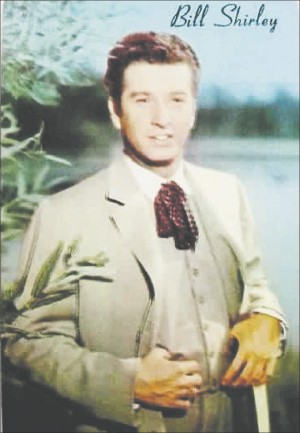
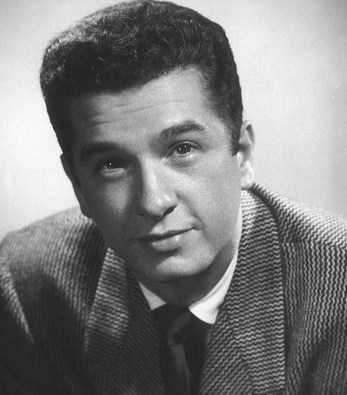
Bill Shirley on his 1953 “Mother’s Cookies” trading card.

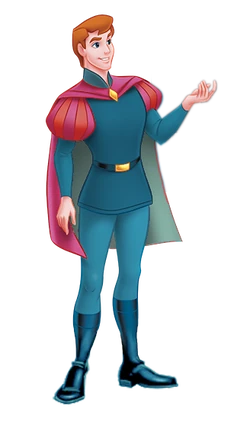
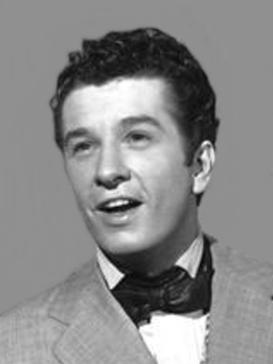
During World War II through the I Like Ike years in America, Irvington had its own representative in Tinseltown. Irvingtonian Bill Shirley made fifteen movies starting in 1941 starring alongside Hollywood luminaries like John Wayne, Abbott and Costello, Ward Bond, and the beautiful Audrey Hepburn. Bill played the part of legendary American songwriter Stephen Foster of “”Swanee River” fame and worked with the great Walt Disney as the voice of Prince Phillip in the 1959 Disney classic Sleeping Beauty.

Disney’s Prince Phillip 1959.

Bill Shirley was born in Irvington on July 6, 1921, and attended George Washington Julian School number 57. From his earliest days, Bill Shirley had a natural talent for singing and acting. He would spend his afternoons daydreaming about becoming a star in Hollywood, and his weekends were spent watching his idols on the big screen at the Irving Theatre, located to this day on Washington Street between the intersection of Ritter and Johnson Streets. By the tender age of 7, blessed with a beautiful singing voice, Bill had the rare honor of singing at the Easter sunrise services held annually from 1929 to 1938 on Monument Circle until age 16. Bill gained his acting abilities while performing in musicals and plays at the Irvington Playhouse and Civic Children’s Theater.

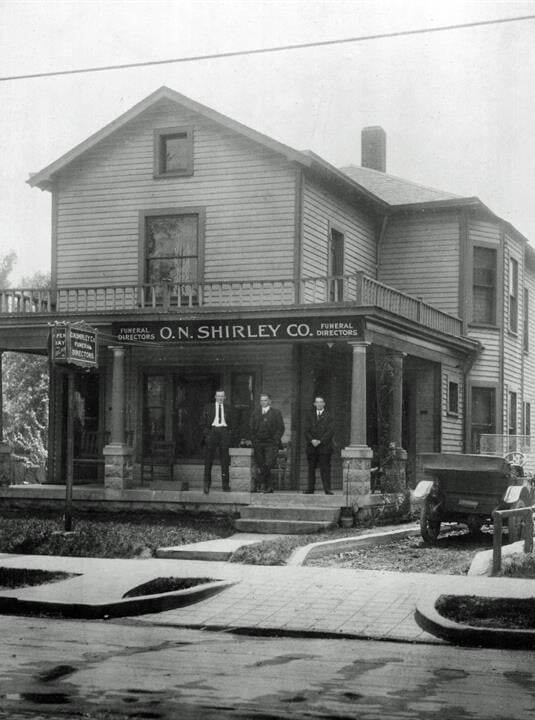
The original O.N. Shirley Funeral Home at 2755 East Washington Street in Indianapolis.

Bill’s father Ottie N. Shirley, along with his uncles Luther and Arley Shirley, formed the Shirley Brothers Funeral Home located at 2755 East Washington St. Bill lived with his family in their home at 5377 East Washington Street until he graduated from Shortridge High School at the age of 18. Immediately after Bill graduated, the family home was remodeled and opened as Irving Hill Chapel, part of the Shirley Brothers mortuary. As soon as Bill completed his studies at Shortridge, his mother packed up their bags and headed for Hollywood. She very wisely hooked Bill up with a voice coach in Los Angeles and almost immediately began to see results. His good looks, along with his mannish voice and natural acting ability, landed Bill a seven-year contract with Republic Pictures at the improbable age of 19. Bill made his first film in early 1941, a musical titled Rookies on Parade starring Bing’s brother Bob Crosby in the lead role. Within a year of arriving in Hollywood, Bill Shirley was cast in seven films for Republic Studios including the John Wayne war film Flying Tigers in 1942. Bill also appeared with one of his childhood idols, Roy Acuff in the 1942 film Hi, Neighbor shot at the Grand Ole Opry in Nashville, Tenn. His other films for Republic included Sailors on Leave and Doctors Don’t Tell in 1941, Ice Capades Review in 1942, Three Little Sisters in 1944, and Oh, You Beautiful Doll in 1949. Bill was uncredited in the film but sang the opening theme for Dancing in the Dark in 1949.

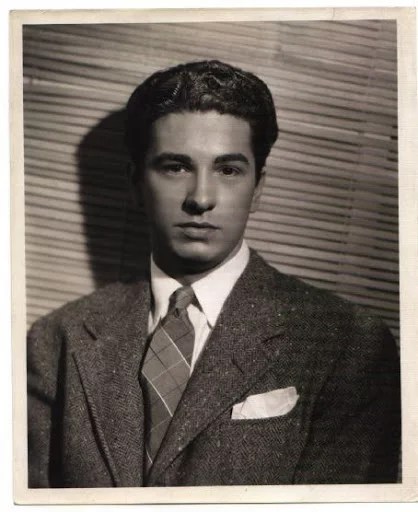
A very young Bill Shirley.

In the summer of 1942, Shirley joined the Army. When he returned at the close of the war, Bill found it hard to pick up his movie career where he had left off. He found a home as a radio announcer in Los Angeles but yearned to return to the big screen. He kept his acting skills sharp by performing on stage in the Hollywood area. He caught a break in 1947 when he was hired to dub the singing of actor Mark Stevens who was starring as Joe Howard, the man who invented kissing, in the entirely forgettable film I Wonder Who’s Kissing Her Now. This voice-over work came back to haunt him later in his career.

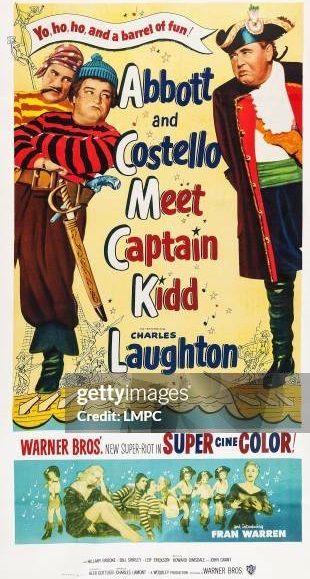
His next big break would come in 1952 when he landed a lead role as Bruce Martingale alongside the comedy team of Abbott & Costello and shared the screen with Academy Award-nominated British actor Charles Laughton in the Warner Brothers film Abbott & Costello Meet Captain Kidd. The critics hated it but the audiences loved this campy film.

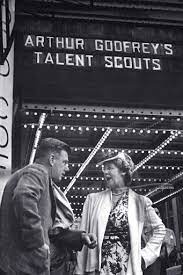
Bill landed the role of historic southern songwriter Stephen Foster in the 1952 film I Dream of Jeannie. He returned to Republic Pictures in 1953 to make the film Sweethearts on Parade. In this role, Shirley, along with co-star Ray Middleton, were being touted as Republic’s answer to the Bob Hope and Bing Crosby duo. It didn’t work. It was a critical and box office disappointment. Today the film is most remembered for the staggering 26 different songs in the film. Bill was a winning contestant on Arthur Godfrey’s “Talent Scouts” TV show which ran from 1948 to 1958. “Talent Scouts” was the highest rated TV show in America and was responsible for discovering stars like Tony Bennett, Lenny Bruce, Jonathan Winters, Connie Francis, and Don Knotts. Bill’s winning accomplishment is notable when you consider that Elvis Presley and Buddy Holly auditioned but were not chosen to appear on the show. It would take Bill six years before he made another film. But it was worth the wait.

In 1959, Bill Shirley made the film appearance he is most remembered for by today’s fans when he appeared as the voice of Prince Phillip in Walt Disney Pictures’ Sleeping Beauty. It was an impressive feat considering that he was one of only three lead voices in the entire film. The film would take nearly an entire decade to produce. The story work began in 1951, the voices were recorded in 1952 and the animation production began in 1953 and did not conclude until 1958 with the musical score recorded in 1957. During the original release on January 29, 1959, the film was considered a box office bust, returning only one-half of the Disney Studios’ investment of $6 million. It was widely criticized as slow-paced with little character development. Time has been much kinder to the film and today’s Disney fans and critics alike hail it as one of the best animated films ever made with successful releases in 20 foreign countries. To date the film has grossed nearly $500 million, placing it in the top 30 highest-grossing films of all time.

Bill Shirley.

In 1959, Bill Shirley made the film appearance he is most remembered for by today’s fans when he appeared as the voice of Prince Phillip in Walt Disney Pictures’ Sleeping Beauty. It was an impressive feat considering that he was one of only three lead voices in the entire film. The film would take nearly a decade to produce. The story work began in 1951, the voices were recorded in 1952 and the animation production began in 1953 and did not conclude until 1958 with the musical score recorded in 1957. During the original release on January 29, 1959, the film was considered a box office bust, returning only one-half of the Disney Studios’ investment of $6 million. It was widely criticized as slow-paced with little character development. Time has been much kinder to the film and today’s Disney fans and critics alike hail it as one of the best animated films ever made with successful releases in 20 foreign countries. To date the film has grossed nearly $500 million, placing it in the top 30 highest-grossing films of all time.

Bill Shirley.

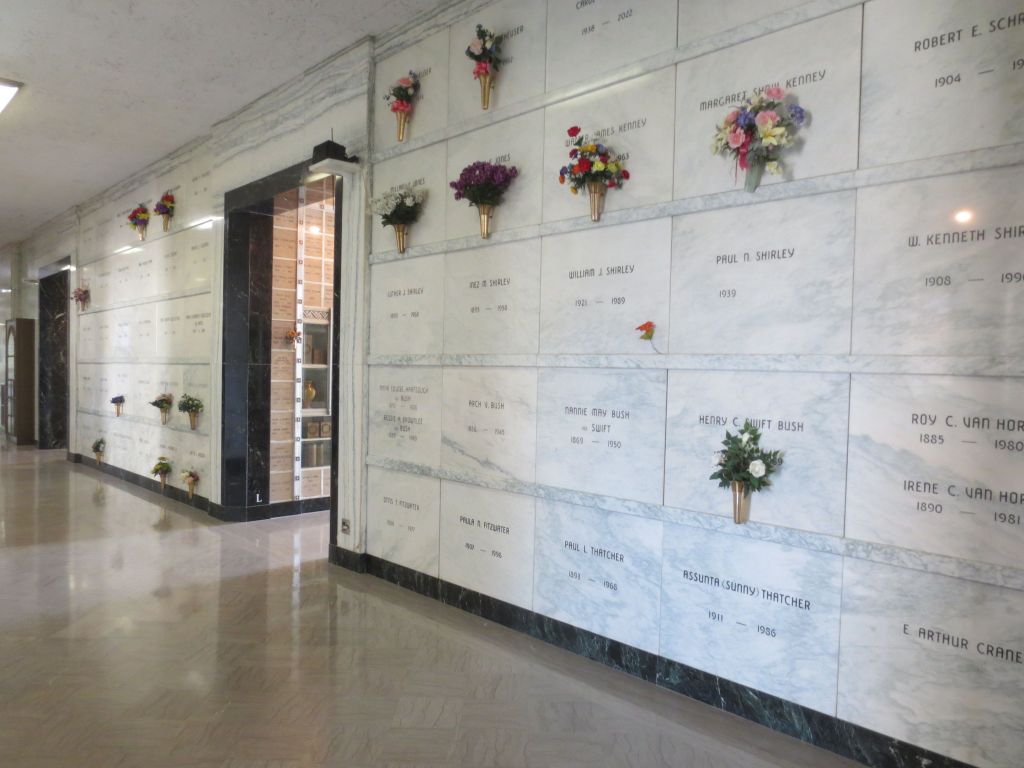
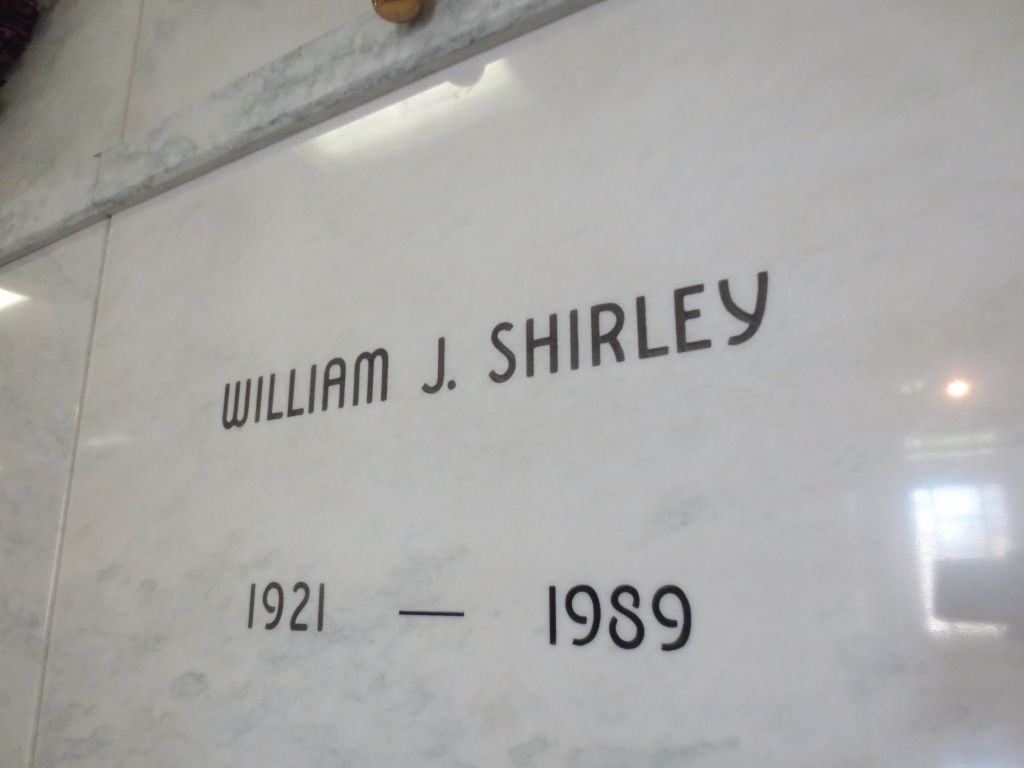
Bill Shirley died of lung cancer on August 27, 1989, in Los Angeles, California. He is buried in Crown Hill Cemetery. By the way, what is the trivia question attached to Irvington’s Bill Shirley? Prince Phillip was the first of the Disney Princes to have a first name. Cinderella’s and Snow White’s previous princes had gone nameless. Bill Shirley’s name may be all but forgotten by most of Indy’s eastsiders, but I assure you that not only has he attained a lasting measure of fame in the film industry, but he has also been immortalized in a way that not even his wildest dreams could have predicted. You see, Bill Shirley appeared in the 1953 “Mother’s Cookies” baseball-style trading card set of up-and-coming movie stars. He’s card # 33 out of the 63 card set of these premium cards that were given away in packs of Mothers Cookies sold in the Oakland/San Francisco region. The card is pretty rare and if you can find it at all, it’ll cost you about $25.

Bill Shirley’s Grave at Crown Hill Cemetery in Indianapolis, Indiana.

food, Indianapolis, Pop Culture, Uncategorized

Beef Manhattan: Born in Irvington?

Original Publish Date March 14, 2024 https://weeklyview.net/2024/03/14/beef-manhattan-born-in-irvington/

Okay, okay, not likely…but possible. No one really knows EXACTLY where the Beef Manhattan was born, but most culinary historians agree that the dish (a diagonally cut roast beef sandwich split butterfly fashion with a generous scoop of mashed potatoes resting between the two halves and the whole shebang swimming in a pool of brown beef gravy) came from the eastside of Indianapolis.

Legend claims the Beef Manhattan was born at the Naval Air Warfare Center, a former US Navy facility located at Arlington Avenue and East 21st Street in Warren Township, a stone’s throw from Irvington. The knife and fork-plated comfort food was (allegedly) the brainchild of Manhattan-trained cooks working at the factory during World War II. Faced with an overage of Hoosier staples (meat, potatoes, & bread) these crafty Hell’s Kitchen food slingers came up with a plan.

A poor man’s version of the dish had been making the rounds of Manhattan (the most densely populated and smallest of the five boroughs of New York City) for generations. The difference was, that the first version contained mysterious New York City street meat, rolls, not bread, potatoes, and no gravy. We do not know the name of the chef (or chefs) who created it or, for that matter, the date the dish first showed up in the cafeteria of the Naval Ordnance Plant. But, the best guess is that the Beef Manhattan made its debut in the winter of 1942.

Ratheon-300x136
Naval Ordinance Plant in Indianapolis.

The plant opened that year, covering 1,000,000 square feet and employing 3,000 workers in avionics research and development. Construction began in 1941 and the plant became fully operational in 1943. The “NOP-I”, as it was known locally, was one of five inland sites selected in July 1940 by the US Department of the Navy Bureau of Ordnance for the manufacture of naval ordnance. The other plants were in Canton, Ohio; Center Line, Michigan; Louisville, Kentucky; and Macon, Georgia. The government-owned, contractor-operated (GOCO) plant was built for $13.5 million ($255 million in 2024 dollars) and the plant manufactured Norden bombsights until September 1945.

After World War II, the plant was renamed the Naval Avionics Center, where employees designed and built prototype avionics, including “electronic countermeasures, missile guidance technologies, and guided bombs.” In 1992, the facility changed its name to the Naval Air Warfare Center Aircraft Division. The site was closed in 1996 on the recommendation of the 1995 Base Realignment and Closure Commission at which time it transferred ownership to Hughes Electronics Corporation. In 1997, it was the “largest full-scale privatization of a military facility in U.S. history” at the time. Eventually, the company was acquired and renamed the Raytheon Analysis & Test Laboratory. As of 2022, the facility is privately owned by Vertex Aerospace and employs about 600.

While those are the facts about the origin of place for the Beef Manhattan, determining where it first hit the streets of Indianapolis is a little bit more speculative. The riddle begins with the name itself. It is a misnomer. The dish is one of two Manhattan-named staples with no ties to New York City other than a space on the menu. The other, Manhattan clam chowder, originated in Rhode Island. Sure, New York City can claim many different foods created within its five boroughs: Eggs Benedict & the Waldorf salad (Midtown), Chicken & Waffles (Harlem), The Reuben (Manhattan), and the Cronut (So-Ho), but the Beef Manhattan is pure Hoosier.

There are different variations. One calls for shredded, pot-roast style beef on two slices of white bread, mashed potatoes on the side, with a layer of brown gravy poured over all. While another insists that the mashed potatoes are placed on top of the sliced, but unseparated, sandwich which is then drowned in brown gravy. Some versions call for diagonal slices, others conventional center-sliced bread. Another variation is Turkey Manhattan, which substitutes turkey for roast beef, but that is an obvious imposter. And, although the dish is named after Manhattan, if you were to order it in a Gotham City restaurant, you’re likely to be served a cocktail (whiskey, sweet vermouth, bitters, and a maraschino cherry garnish). Beef Manhattan is unknown there, instead such dishes are usually called “open-face sandwiches” in the Big Apple.

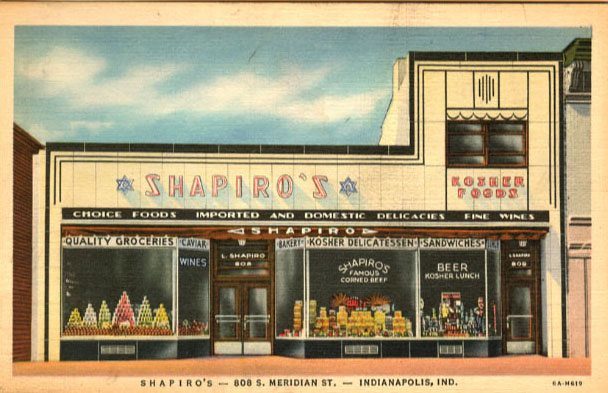
Should you Google it, you are likely to see that the dish was first served under the name “Beef Manhattan” in a now-defunct Indianapolis deli in the late 1940s, and shortly after its introduction, it became a Hoosier staple. But, nobody seems to know exactly which Indianapolis Deli was the first to put it on the menu. However, there are a few likely suspects. The natural choice would seem to be Shapiro’s. Their website states that restaurant namesakes, Louis and Rebecca Shapiro, arrived in the Hoosier state around 1900 after fleeing Russia due to anti-Semite persecution which included vandalism to their family grocery store in Odessa, Ukraine. They sold sugar and flour from a pushcart on the streets of Indianapolis for two years while saving up money to open their deli at Shapiro’s 808 South Meridian in 1905.

Shapiro's

So, Shapiro’s certainly fits the bill timewise, appearing on the scene a generation before the birth of the Beef Manhattan. Shapiro’s is the sentimental favorite for sure. And it has an Irvington tie-in too. In 1925, during the reign of terror by the Ku Klux Klan in Indiana, Shapiro’s thumbed their nose at Klansman/Governor (and Irvington resident) Ed Jackson by redecorating their storefront in an art-deco style dominated by a huge Star of David for all to see. But officially, “Shapiro’s Kosher Deli” didn’t open until 1945, three years after the dish was invented.

Likewise, the Hook’s Drug Company opened a new drugstore and soda fountain at the corner of 22nd and Meridian Streets on Feb. 17, 1940, to serve hungry Hoosiers. Hook’s restaurant featured a new stainless steel soda fountain perfectly designed to serve Beef Manhattans. A contemporary news article described Hook’s as having “year-round air conditioning” and as “the last word in efficiency and beauty. The floor behind the fountain is depressed to a level so that the customer is sitting in the same comfortable position as at his own dining table. The fountain is provided with a system of sterilization which makes it sanitary for refreshments and luncheons. The cooking equipment is electrical.” Hook’s advertised heavily in the 1940s but never mentioned the Beef Manhattan in those ads. The dish did not appear in Hook’s ads until the 1950s.

The best bet (at least of this reporter) is that the Beef Manhattan most likely appeared first as a menu selection somewhere on Illinois Street. There were at least three delis operating on Illinois Street in 1942, including Brownie’s Kosher Deli at 3826 N. Illinois, Fox Delicatessen at 19 S. Illinois, and Henry Dobrowitz & Sons Kosher Meats and Delicatessen at 1002 S. Illinois. Someday, somewhere, a better Circle-city researcher than me will pinpoint the exact location but until then, I’m content to let it remain a mystery.


Choosing instead to revisit Shapiro’s version of the “Hot Beef Manhattan” in my daydreams. It consists of 2 slices of white bread, not cheap squishy white bread, but good firm white bread with some heft to it, cut diagonally and spread out on the plate like a poker hand, a layer of handmade mashed potatoes binds them together, and forms the foundation for a generous portion of thin-sliced tender beef, brisket I’m guessing. The meat mound is topped with more mashed potatoes and covered with enough gravy to float a kayak. Not that better than bouillon gravy stuff that somehow smacks of chemicals to me, but rather, real gravy made from the constant stirring of the collected juices of meats roasting. To those haughty Food Network snobs, the Beef Manhattan looks like a failure pile on a sadness plate, but Hoosiers know it is delicious.

Typically, Indianapolis sees 29 days a year where the thermometer doesn’t rise above 32 °F, and for five months a year, we’re shivering below the fifties. So, knowing that, is it that hard to understand why the Beef Manhattan remains so popular in Indiana? I mean, no one eats a tenderloin to get warm. And while the Beef Manhattan most likely wasn’t born in Irvington, it did originate on the east side of Indianapolis and Irvingtonians can fairly claim to be among the first wave of devotees.