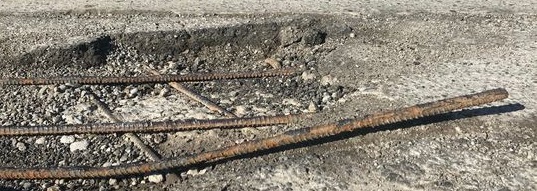
Rebar “snakehead” on Oriental Avenue in front of Arsenal Technical High School.
Original publish date: March 1, 2018
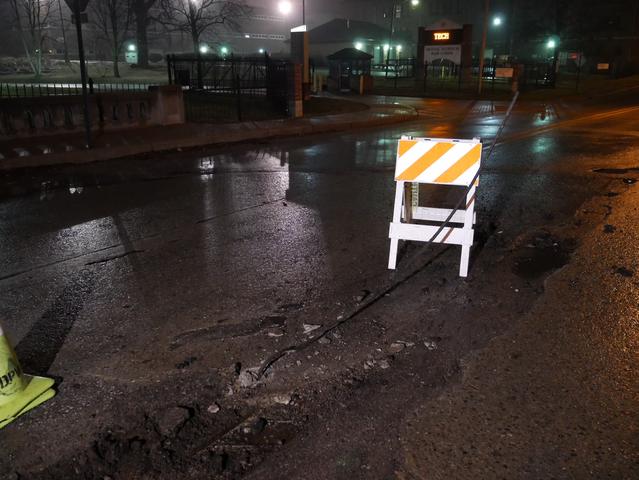
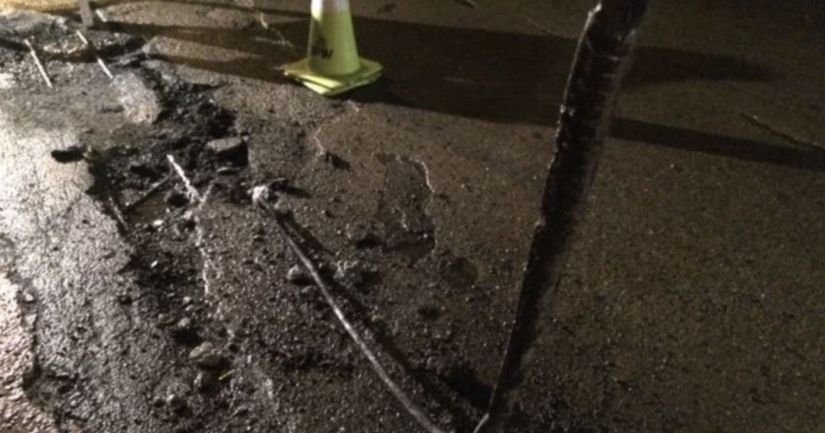
Last Thursday a young eastsider by the name of Trevor McCoy was driving south on Oriental Avenue when he was startled by a large piece of rebar as it came knifing through the floorboard of his car. The steel bar curled towards the sky as it traveled up and out the back window before McCoy’s car came to a halt, ripping off the muffler in the process. The incident happened around midnight in front of Arsenal Technical high school. The driver was shaken, but unhurt.
Rebar “snakehead” on Oriental Avenue in front of Arsenal Technical High School.
The news story piqued my interest because it happened on Oriental Avenue. My dad, Robert E. Hunter, grew up on Oriental and graduated from Tech in 1954. He delighted in taking detours whenever possible to point out the stoop that was once his family home. “That’s my stoop, that’s all that’s left.” he would say. However, as I learned the details of the incident, one word popped into my mind: Snakehead!
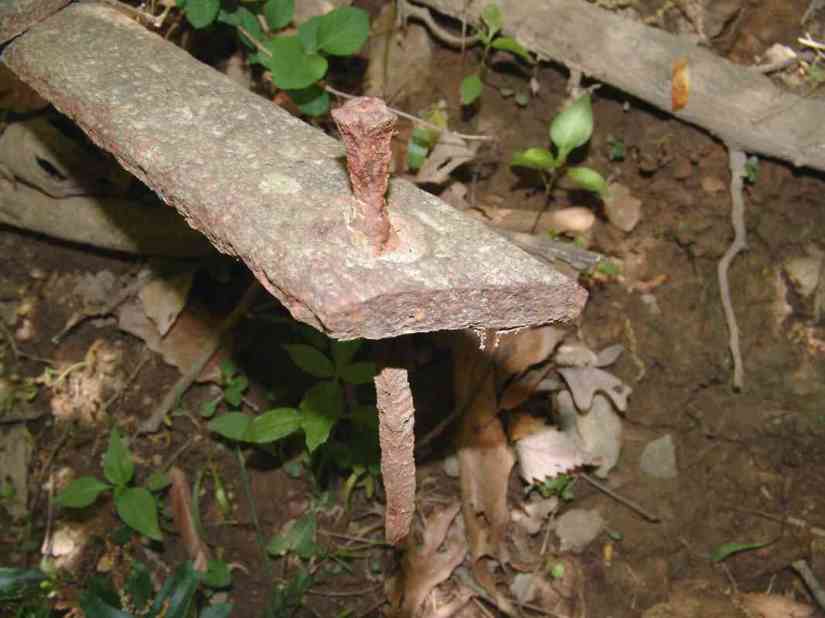
As an imaginative, history-loving kid, snakeheads were fodder for my nightmares. A snakehead is the term used to describe iron rails which would curl up and come loose from their wooden rails. Often, snakeheads took center stage in ghoulish tales where rails would pierce the bottom of a car, crashing upwards into the wooden floorboards like a knife through butter, sometimes impaling some poor unsuspecting passenger.
Close-up of Rebar “snakehead” n front of Arsenal Technical High School.
Traveling through the South in 1843-44, Minnesota clergyman Henry Benjamin Whipple wrote on page 76 of his diary: “The passengers are amused on this road by running off the track, sending rails up through the bottom of the cars and other amusements of the kind calculated to make one’s hair stand on end” Likewise, in his book “Southern Railroad Man: Conductor N. J. Bell’s Recollections of the Civil War Era (Railroads in America)”, Bell wrote: “It is said that one of these snakeheads stuck up so high that it ran over the top of a wheel of a coach and through the floor, and killed a lady passenger”
As anyone who has ever taken one of my tours knows, my Grreat-grandfather was a lifetime railroad man. He spoke of snakeheads often and always in the most terrifying terms. I searched every book, magazine and newspaper I could get my hands on looking for clarification on this dread phenomenon. Let me tell ya, researching in the years before the internet wasn’t for sissies. It took me years to discover the truth behind snakeheads and it turns out, they weren’t as scary as they were made out to be. Unless you were a first generation Hoosier.
Although the engine is the undisputed king of the rails, nothing is more important to a railroad as the track. After all, without rails, ties, and ballasting, freight and passengers do not move. Even though the image of the railroad is most closely tied to the American west, the railroad was born in France in the early 1700s. Or England in the mid 1700s. Depends on which version you believe. There are even those that say it was developed in Boston in the late 1700s. Regardless, that is an argument this article will not settle. The 4-feet width and 8 1/2-inch height were reportedly based upon ancient Roman chariot roads, that much is known.
Old flat iron rail snakehead.
In the United States, the Granite Railway of Massachusetts is credited as the very first, opening on October 7, 1826. It used early strap-iron rails atop a wooden base with thin strips of iron added for increased strength. During that first decade, virtually everything about railroading was an experiment learned on the fly. Early on, the strap-iron method worked best and engineers eventually learned that dense hardwoods, like oak, proved the most economical material for the supporting base. It was determined that cross-ties be at least 8-10 inches thick and about 8-10 feet in length.
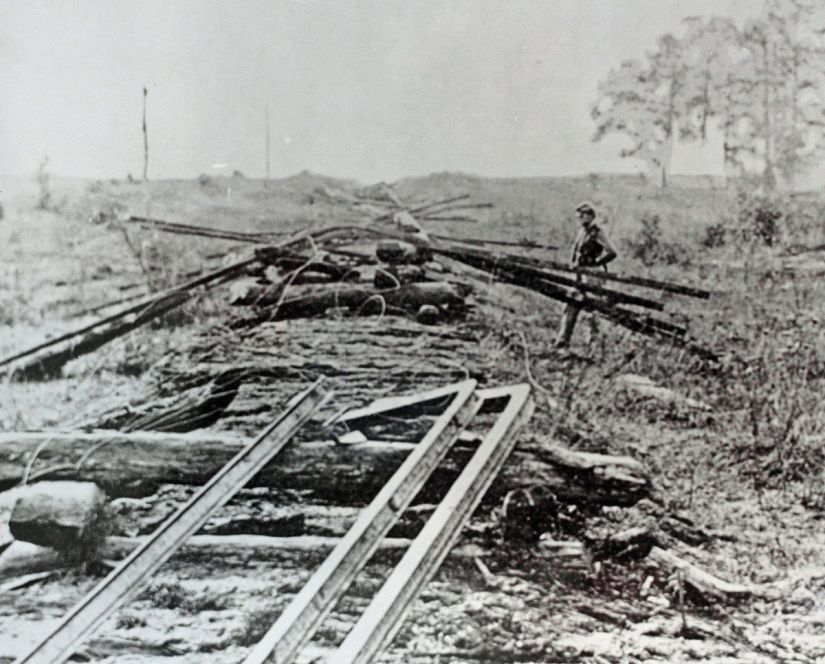
Snakeheads reared their ugly heads, literally, as the straps holding the flat iron rails began to wear out after a decade or more of almost constant use. While crews of laborers were employed to inspect and replace any worn straps, the mass expansion of the railroad severely taxed the time and resources of railway inspectors. Strap failures caused the rails to become dislodged and the shock and bounce of the trains caused them to curl up. One train might pass over a dislodged rail without incident, while the next might encounter an entirely different rail situation as the loose end of the rail flew up violently under spring tension. One need only think of the last time they got a splinter, then magnify it, to imagine the result.
The prospect of an iron rail ripping through the bottom of a rail car is terrifying, but it seems to be confined solely to railroads is use before the Civil War. The reason snakeheads are so hard to research is the lack of comprehensive statistics for antebellum railroads. There was no federal agency collecting data and state interest was even less. Railroad companies sometimes self-reported accidents, but they had an obvious incentive to under-report.
To determine how prevalent and dangerous snakeheads actually were, the best way is to examine contemporary reports, if you can find them. The April 7, 1841 Newport Rhode Island Republican newspaper reported an accident near Bristol, PA: “As the train of cars were going from New York towards Philadelphia, near Bristol, one of the wheels struck the end of an iron rail, which was loose, and erected in the manner generally called a snake’s head.—The bar passed through the bottom of the car, and between the legs of a passenger, (Mr. Yates, of Albany) tearing his cloak in pieces, grazing his ear, and thence passed out the top of the car. An inch difference in his position on the seat, and he must have been killed.”
Bent rails from General Sherman’s March to the Sea. during the Civil War.
On June 22, 1841, the Boston Daily Atlas reported a similar accident in New Jersey, but later retracted the story after the president of the railroad wrote that the injury was caused by the passenger falling on a “fragment of the seat,” not from a rail springing through the floor. A careful (and exhausting) internet search reveals some 20 newspaper accounts of snakeheads in antebellum era newspapers. In one, a woman was slightly injured when a piece of iron entered a car in New York around 1848, and in another, a workman was killed on a construction train of the Jersey Central some years earlier. Most injuries usually stemmed from passengers being shook up from the jolt as the train left the tracks rather than being directly injured by the rail, but some of the injuries were frightening nonetheless.
In 1845, John F. Wallis of the Virginia legislature was injured on the Winchester and Potomac Railroad. According to the Baltimore Sun on July 21: “It lifted Mr. W. completely off his seat, coursing up the surface of his leg and abdomen, lacerating him in several places and injuring his hand severely.” The New London, Connecticut, Morning News gave a more vivid description of the same accident: “One of the bars of iron becoming loosened from the rails, it shot up through the car at the seat where Mr. Wall was sitting, severely lacerating the back part of the hand, cutting his breast and pinning him up to the top of the car.”
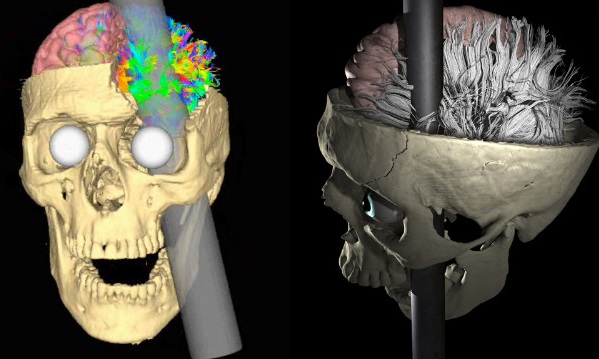
The Staats injury.
Only one fatality could be found and that was reported in the August 22, 1843 Baltimore Sun newspaper. It happened to a “young man named Staats” killed on a train in New Jersey on the way to New York City, “the bar entered under the chin of this young man, and came out at the back of his head. He was instantly killed, but no other person injured. The cars went back to Boundbrook, left the body, and then after an hour’s delay, started for the city.” As macabre as it may sound, a description this gruesome was exactly what I needed to justify those nightmares of my youth.
While 20 snakehead reportings in a 30-year period might not qualify as a catastrophic transportation epidemic, it does make the snakehead newsworthy. These numbers do not take into account unreported snakehead incidents where no injury resulted. The vagueness of most reports and the difficulty of finding them in newspapers must be viewed as a sign of the times. Obviously, snakeheads were bad for business. However, the railroad workers knew the stories and they were quick to spin their tales to unsuspecting, impressionable laymen. That’s how folklore starts in the first place; part fact, part fiction and all imagination.
By the time of the Civil War, strap-iron rails fell out of favor, deemed too costly to maintain (and too dangerous) by the railroads. In 1831 solid iron, “T”-rail had been introduced but were not yet widely in use. By 1839, American railroads ran on tracks of a wide variety of gauges and shapes: 101 railroads were still using strap iron on sleepers, forty-two were using some form of shaped rail, and twenty-nine were using an unspecified method.
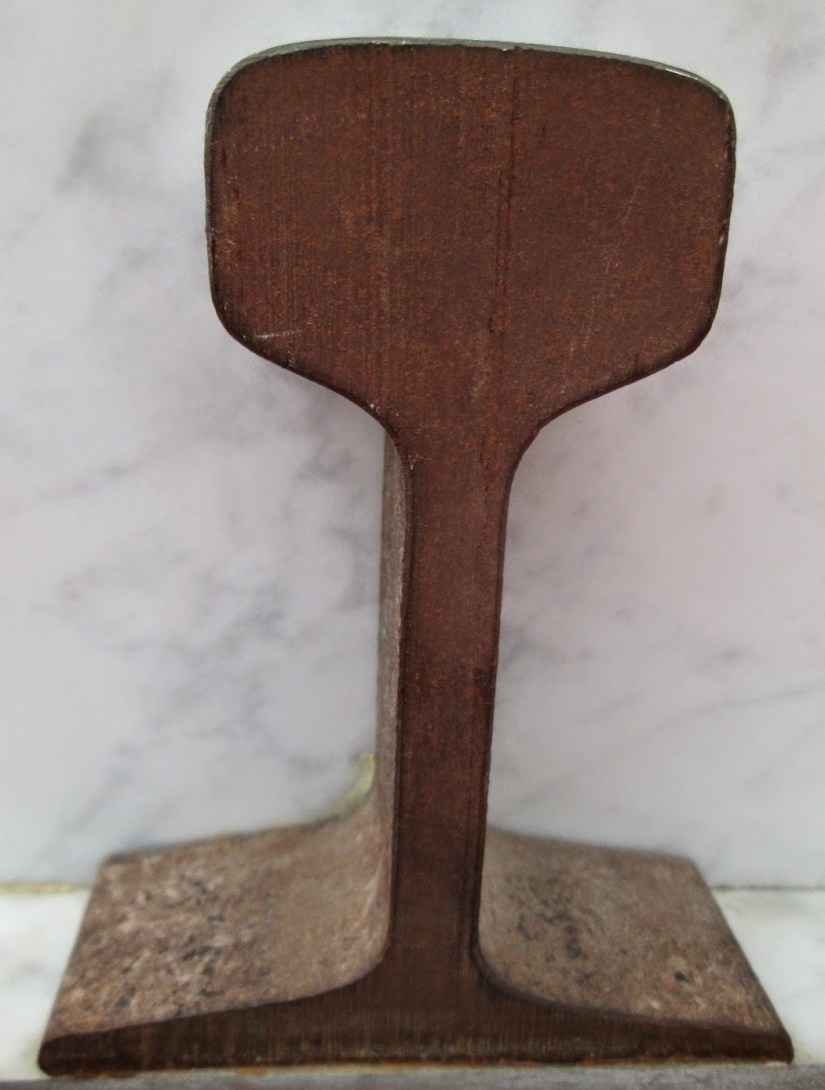
Modern T-Rail track.
That all changed when, on October 8, 1845, the Montour Iron Works of Danville, Pa. rolled the first iron T-rails in the United States and the age of standard gauge track was born. The rail looked like a capital “T,” only inverted; the top was placed on the ground, providing a solid base of support while the narrow end was the wheel’s guideway. Within a single generation, American railroads replaced every foot of iron rail track with stronger and more durable steel T-rails. Interestingly, even today, some lightly used branch lines can still be found carrying rail rolled during the late 19th century.
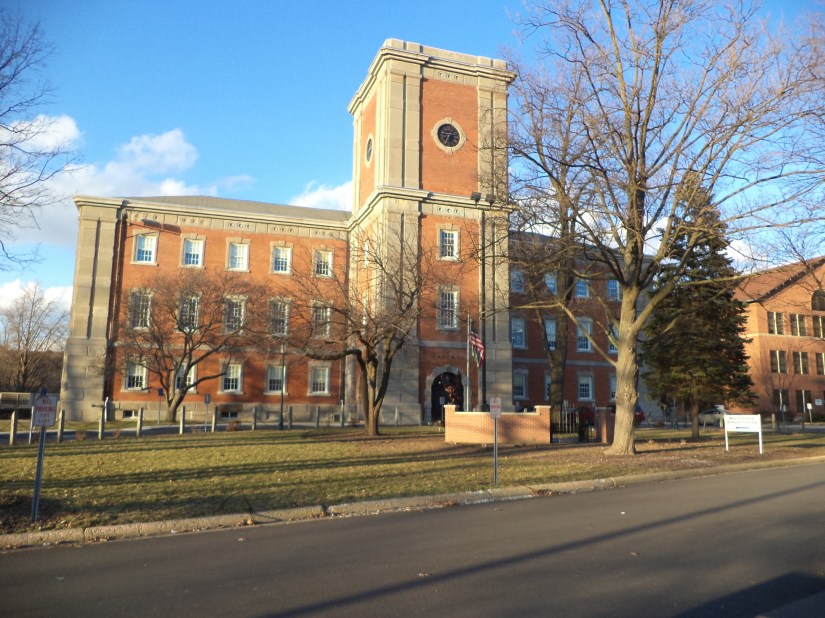
Arsenal Technical High School.
That brings us back to the Arsenal Tech snakehead that appeared last week. The piece of rebar that swept up and out of the pothole to pierce young Trevor McCoy’s car has been cut off and the pothole has been filled. No doubt some of you may be wondering what a piece of rebar was doing there in the first place. Rebar (short for reinforcing bar) is used in roads to make the concrete stay in place after it cracks, not really to make the road stronger. Rebar gives tensile strength, nothing more. Pot holes are caused by tiny cracks in the concrete that allow water to seep in. The water destroys the concrete from inside the crack during the freeze / thaw cycle.
Antebellum Americans viewed the “terror” of the snakehead as a risk they were willing to accept and in time, snakeheads faded into folklore. The winter of 2017-18 saw an estimated 10,000 potholes on over 8,000 miles of city streets. By most accounts, this season’s more radical than usual freeze / thaw cycle has contributed to the worst pothole season ever. These rebar reinforced concrete streets are reaching social security eligibility age. Rebar snakeheads may well be on their way to becoming the folktales of Uber and Lyft drivers in years to come.
Original publish date: May 25, 2010 Reissue date: May 25, 2018
I originally wrote this article back in May of 2010 and in the years since, I have been informed by a longtime friend (and Irvingtonian) Bruce Gable that there is an Irvington connection, so I figured I’d update it and run it again. For the most part, here it is as it ran back then with a few appropriate updates.
It was 50 years ago that the “King of Hollywood”, Clark Gable died. They called him the king for good reason. Women swooned at his masculine screen presence and men viewed him as the ultimate man’s man. Best remembered as Rhett Butler in Gone with the Wind, most film critics agree that without Gable, GWTW would have blown away quietly. Yet, most Hoosiers don’t realize that Gable has several ties to our fair state.
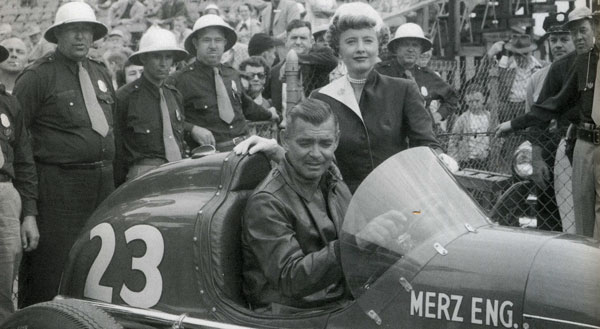
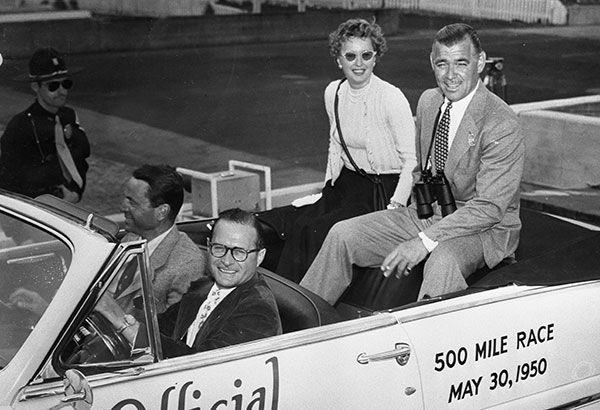
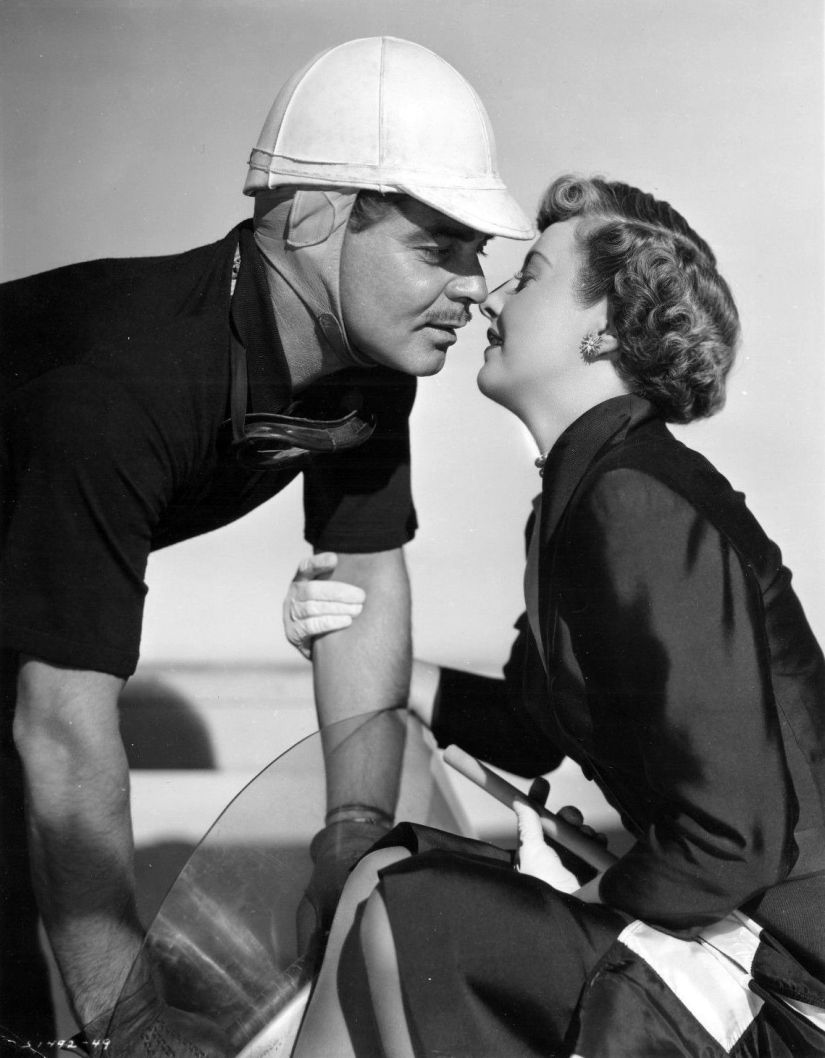
Clark Gable & Barbara Stanwyck at the Indianapolis Motor Speedway.
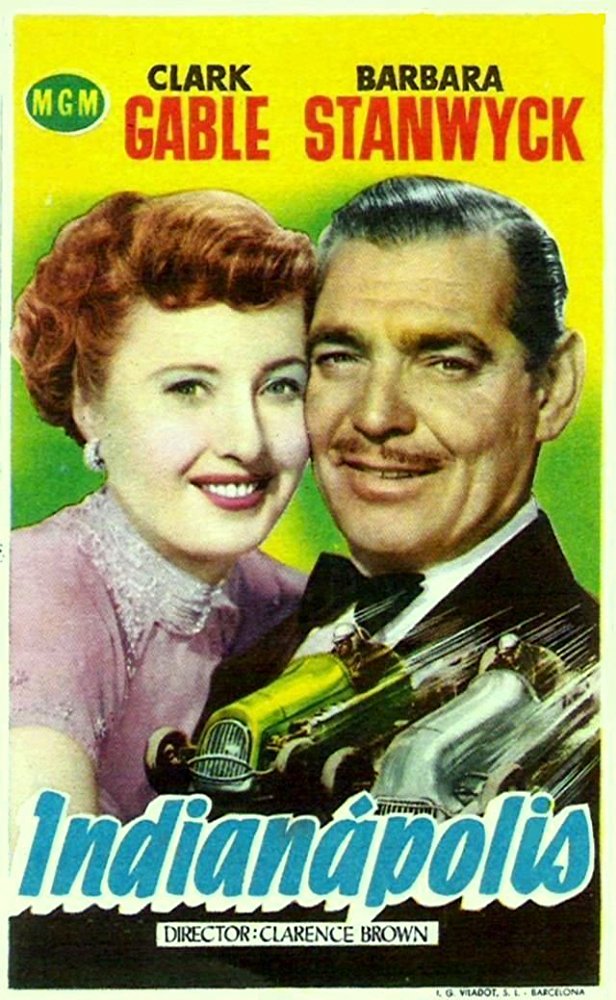
It is a little known fact that Gable was a devoted race fan who regularly attended races including the Indianapolis 500. In 1950 Gable starred in the movie “To Please a Lady”, filmed at the Indianapolis Motor Speedway,. Although not critically acclaimed, the movie is considered to be a motorsports classic. Most of the scenes were shot over a three-week period at the speedway. To make the racing scenes as authentic as possible, director Clarence Brown used a good deal of actual professional racing footage. Gable did some of his own driving for close-ups, while a stunt driver took the wheel for the more dangerous shots. The film’s climax was shot at the 1950 Indianapolis 500 won by Johnnie Parsons in a rain shortened race.
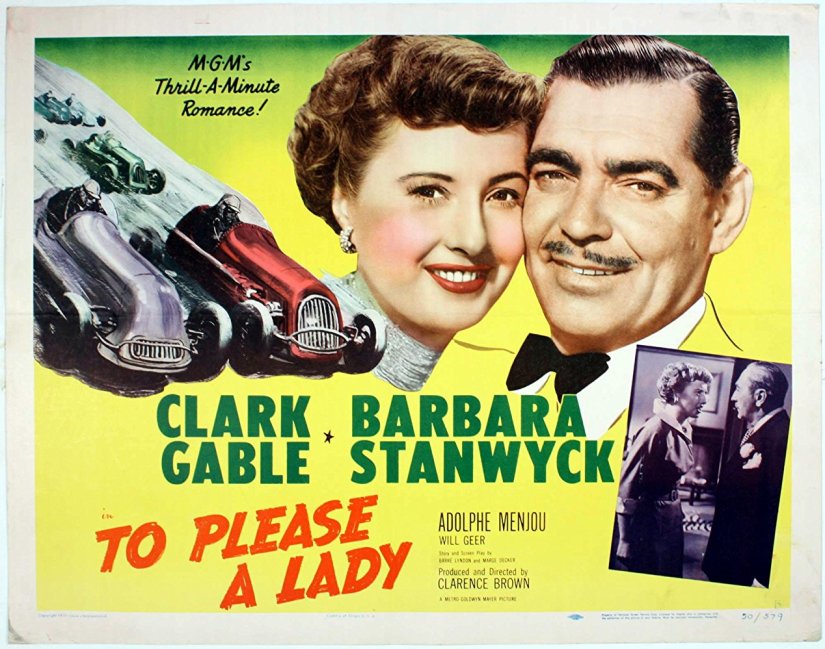
Clark Gable & Barbara Stanwyck in Indianapolis.
In the film Gable stars as Mike Brannon, a thrill-seeking race car driver whose ruthless tactics cause a crash that results in another driver’s death. Barbara Stanwyck plays Regina Forbes, an influential newspaper columnist who is determined to get him permanently banned from the professional racing circuit. Gable’s Brannan character has a bad reputation and Stanwyck’s columnist Forbes character tries to interview him, but he refuses. Regina’s column suggests that Brannan caused the fatal accident deliberately, which leads to him losing his ride. Brannan begins driving in a stunt show, eventually earning enough money to buy a car of his own and enter the Indy 500 himself. The pair engages in an explosive battle of wills while fighting off an attraction to each other that threatens to spin out of control.
The film was director Clarence Brown’s eighth and final film with Clark Gable, who was also his good friend. Brown managed to pull off some of the most thrilling racing sequences ever filmed, capturing the raw excitement of the speedway by throwing viewers right into the middle of the action. Fans experience the energy of the pit crew in action, the zooming car engines, and the roar of the crowd. Cinematographer Hal Rosson used up to six camera crews at a time to capture action from actual races. The location shooting paid off in the film’s nail-biting climax where car speeds averaged 100 miles an hour.
Clark Gable & Barbara Stanwyck.
Gable and Stanwyck are well matched as a romantic onscreen duo whose character’s intense chemistry is undeniable. This was the couple’s second film together. Their first, “Night Nurse”, was made nearly 20 years earlier at Warner Bros. In that movie Gable, not yet a major movie star played a small role as a nasty chauffeur who viciously slaps Barbara Stanwyck across the face. The moment was replicated in the speedway film when Stanwyck took another smack across the kisser from Gable.
Ironically, “To Please a Lady” was not a major box office success due in part to the surge in household television sales, which by 1950 was rapidly taking business away from movie theaters. However, the film did win plenty of critical praise. The New York Times said of the film: “You can bet that Indianapolis never experienced a contest as hotly run as the race that Mr. Brown has staged.” Variety proclaimed that the movie “has excitement, thrills, with some of the greatest racing footage ever put on celluloid – It firmly returns Gable to the rugged lover, rugged character status.”
The film’s legacy among race fans is the chance to see authentic open-wheel midget and Indy-car racing footage from an often neglected time in auto racing. The montage featuring a racing engine being machined and assembled along with some nice race car close-ups and pit stop action make it a must see flick for gear heads. The film also captures a couple of minutes of authentic footage of Joie Chitwood’s famous stunt car show, a rare treat for vintage race fans.
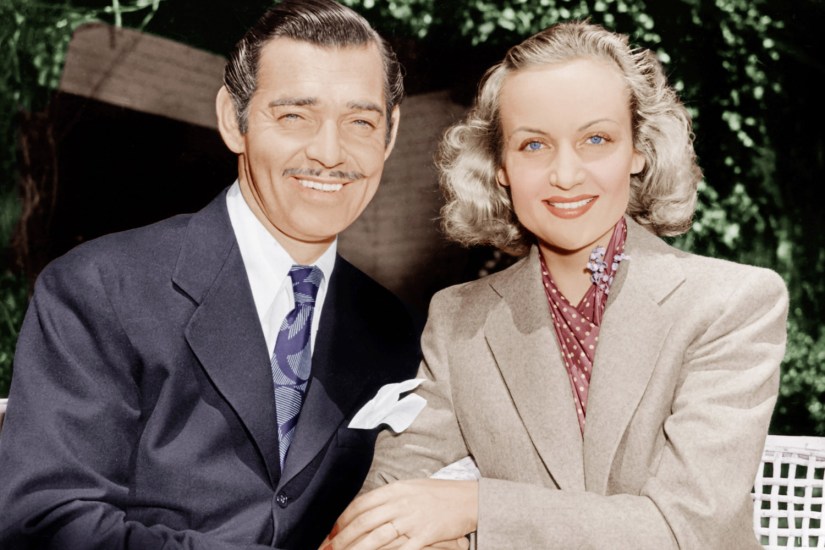
Clark Gable and Hoosier Carole Lombard.
Being in Indianapolis was difficult for Clark Gable personally. Married five times, Gable’s most glittering union was with Hoosier actress Carole Lombard. The city was the final stop of a 1942 war bond tour headlined by Lombard, before flying back home to Los Angeles. Tragically, Lombard’s plane never made it, crashing in Nevada killing everyone on board. Gable and Lombard honeymooned at Lake Barbee near Warsaw, Indiana. Their three-year marriage had been the ideal Tinseltown union, and Lombard’s death was a loss from which Gable never recovered.
At the time of “To Please a Lady” Gable had finally remarried, this time to Douglas Fairbanks’ widow, Lady Sylvia Ashley. During filming he seemed happier and healthier than he had been in years according to friends. Even so, Gable remembered his beloved late wife while in Indianapolis. He quietly made a point to visit the downtown locations where Lombard had made her final public appearances before her tragic death.
When Gable left Indianapolis, he had one last surprise waiting for him. Lady Sylvia’s teenage nephew, Timothy Bleck showed up on set with a group of friends and took over several rooms at the Marriott Hotel, where the Gables were staying, charging their bill to the Gable’s account. Many who knew Bleck felt that the youngster had developed a “crush” on Gable. For his part, Gable often complained to his new wife that Bleck and his friends were “eating me out of house and home and always pestering me for money.”
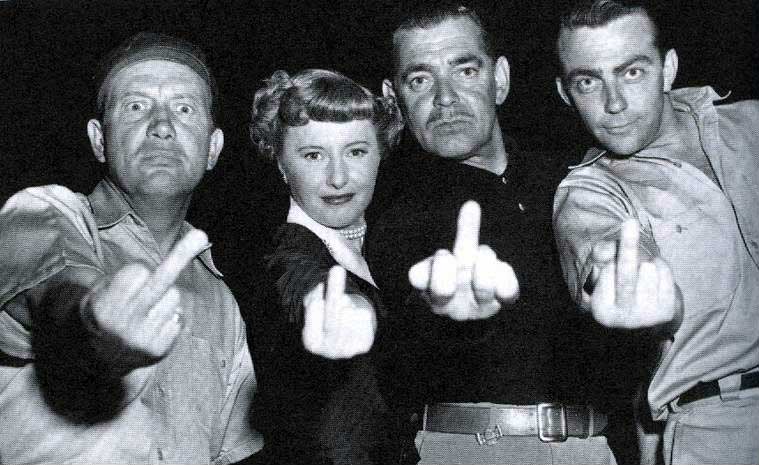
Clark Gable & Barbara Stanwyck breaking bad at the Indianapolis Motor Speedway.
Lady Sylvia, a British National famous for her temper tantrums. Later that same year, she demanded a spacious dressing room for her personal use during Clark’s next movie being filmed in Durango, Mexico, “The Wide Missouri.” (Gable’s first Technicolor film since Gone with the Wind.) Heretofore an exclusive luxury granted only to mega-movie stars like Greta Garbo, Marlene Dietrich, Joan Crawford and Bette Davis. The couple divorced within the year.
Gable’s list of film pairings includes many of the most beautiful women in Hollywood. Joan Crawford teamed with Gable eight times, more than any other actress. Jean Harlow starred with Gable in six films in a union that would have undoubtedly continued if not for her untimely death. Lana Turner shared the credits with him four times. Gable worked twice each with Loretta Young and Claudette Colbert. In his final film, “The Misfits” at almost sixty-years-old, Gable starred opposite 34-year-old Marilyn Monroe. Gable had been her childhood idol. The film also starred the tragically flawed fallen film idol Montgomery Clift.
The Misfits would take on a macabre life of its own, fostering whispers of a curse, when Gable suffered a heart attack two days after filming ended, He died ten days later. Monroe and Clift attended the premiere in New York in February 1961 while Monroe was on pass from a psychiatric hospital; she later said that she hated the film and could not watch herself in it. Within a year and a half, she was dead of an alleged drug overdose. The Misfits was the last completed film for both Monroe and Gable.
Montgomery Clift, previously known for his classic profile, had been badly injured in a 1956 car crash requiring reconstructive surgery on his face, evident in his close-ups for “The Misfits”. He died six years after the filming. The Misfits was on television on the night Clift died. His live-in personal secretary asked Clift if he wanted to watch it. “Absolutely not” was Clift’s reply, the last words that he spoke to anyone. He was found dead the next morning, having suffered a heart attack during the night.
Many feel that Clark Gable danced a tango with death and morbid curiosity throughout his career. Gable’s perceived death wish circled around the many dangerous, often violent, themed films he starred in, his early death and the unexpected deaths of his costars. Capped off with the tragic early demise of his wife Carole Lombard. Another eerie connection to Indiana by Clark Gable can be found in the last movie Hoosier outlaw John Dillinger ever saw. Moments before he was gunned down in an alley outside Chicago’s Biograph Theatre, Public Enemy #1 was watching an MGM film called “Manhattan Melodrama” starring…you guessed it, Clark Gable.
Update: Irvingtonians Bruce and Fred Gable have shared stories with me about their famous relative. Turns out, Clark Gable was a distant cousin. The Gable home was located at 5850 University Avenue across from the guardian home. Bruce & Fred researched the Gable family connection and discovered that their Great-grandfather and Clark Gable’s grandfather were 1st cousins. “They were wildcatters who migrated to Indiana from Pennsylvania in search of oil back in the 1880s,” Bruce states, “All they found was natural gas though and neither made any money on that.”
Irvingtonian Bruce Gable
The Gable family lived for a time in the Audubon Court apartments and they can remember stories about the elder Gable visiting his cousin / their grandfather in Irvington. Gable’s Great-grandfather owned the Thompkins drugstore on South Audubon Road across from the Magic Candle. The brothers recall a time when telling neighborhood kids that they were related to Clark Gable was a big deal. “Later, when my kids told their friends that, no one knows who they’re talking about.” says Bruce. As for that I’ll quote Rhett Butler by saying, “Frankly my dear I don’t give a damn” because I’m just glad to hear that Irvington has a connection to one of the most admired leading men in Hollywood history.
Mayor Joe Hogsett, Dick Wolfsie, City Councilman Michael McQuillen, Senator Joe Donnelly, City Councilman Vop Osili, Dr. John Abrams, Scott Tarter, Rupert Boneham, Ted Green and Congresswoman Susan Brooks. Photo by Ron Sanders.
Original publish date: May 17, 2018
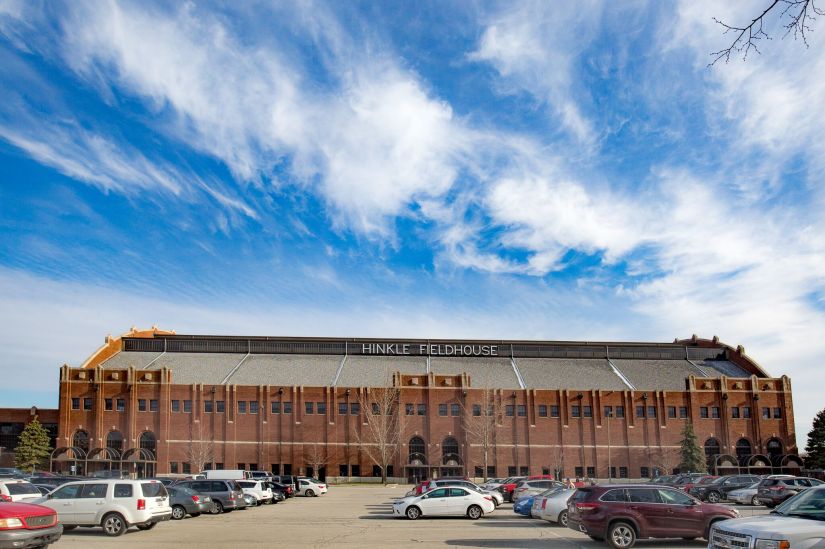
On Saturday April 7, 2018, Indianapolis was the setting for the 50th anniversary reunion of the American Basketball Association hosted by the Dropping Dimes Foundation. A special Saturday event was held at historic Hinkle Fieldhouse on the campus of Butler University. The choice of venue was not by accident. Hinkle had hosted the first ABA All-Star game on January 9, 1968. The East team, led by Pacers stars Roger Brown, Mel Daniels, Bob Netolicky and Freddie Lewis, defeated the West team by a score of 126 to 120. Despite being on the losing side, somehow Larry Brown was named MVP of the game, even though he wasn’t even the leading scorer on the west squad and was outscored by 3 members of the winning east squad. I should also mention that Brown didn’t show up for the reunion either but somehow got a ring.
Hinkle Fieldhouse. Photo by Lauri Mohr of Imagine Mohr Photography
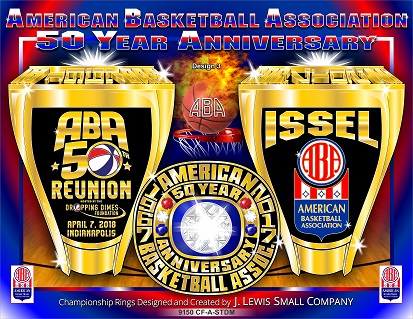
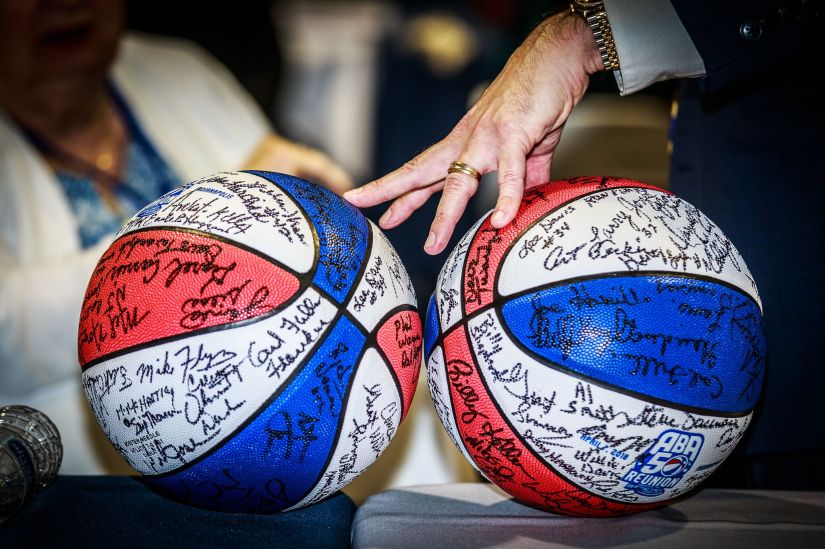
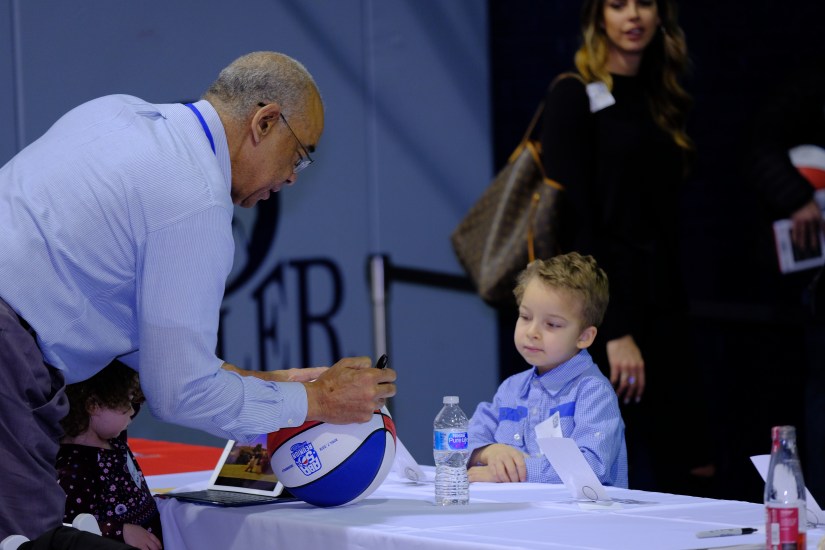
The Hinkle event included a card & memorabilia show hosted by J & J All-Star Sports cards and an autograph signing featuring over 90 former players and alumni of the ABA league. But the highlight of the day’s events was the ring presentation ceremony. As detailed in part I of this story, Bob Netolicky, Slick Leonard and I designed and created a special 50th anniversary ABA ring to be presented to league alumni in attendance that day. The road to the ceremony was not an easy one.
Original artwork for the ABA 50th Anniversary ring.
When Neto & I, who, along with ABA Pacers co-founder Richard P. Tinkham Jr., planned, created and hosted the 30 year ABA reunion two decades before, agreed to help out with the 50th reunion we were roughly six weeks out. The desire was still there, the ABA flame still burned and the passion of 20 years before was unwaning. But was there enough time to pull it off?
The ring design was finalized and approved during a late February Board meeting of the Dropping Dimes foundation. The meeting took place in the top floor conference room of the Bose, McKinney & Evans law firm in the Sales Force Tower on Monument Circle. The sample ring was passed around the room hand-to-hand by those assembled. For those few moments, we band of dreamers watched in awe as the ring floated above the clouds of the city that created the dynasty franchise of the ABA. It would be hard to imagine a more fitting setting for the big reveal.
One detail remained: we still needed a ring sponsor. Neto and Dr. Abrams did their level best to seek out a willing benefactor, including two noteworthy Circle-City car dealers who consistently run ads with local sports stars touting their community support. They both declined. But the rings were in production, players were sending in ring sizes and, sponsor or not, we were going ahead with the rings. As you might expect, the ring sizes varied and were all over the board. Bob Costas, who started his career in broadcasting with the Spirits of St. Louis, wore the smallest at 6 7/8 while Carolina Cougars / Miami Floridians / Dallas Chaparrals 7-footer Rich Niemann wore the largest ring at 18.
Kentucky Colonels legend Artis Gilmore, who at 7′ 2″ tall is the biggest man I’ve ever met, wore a size 15. Believe me, shaking the A-train’s hand is like putting your hand in a vice. It will bring you to your knees. Fellow Colonels Hall of famers Dan Issel wore a 13 1/2 and Louie Dampier a 10 1/2. The remaining ABA Hall of famers checked in at: George Gervin & Ricky Barry-13, Spencer Haywood-12 1/2, George McGinnis-12 and Bobby “Slick” Leonard a size 9 1/2. These Hall of Famer’s ring size information has no real historical value, but it sure makes for fun trivia. When all was said and done, nearly 100 player rings were ordered. But still, no sponsor.
The week before the reunion, event emcee Bob Costas called dropping Dimes co-founder Scott Tarter to confirm the final details and to ask if there was anything else he could do to help make the reunion a success. Scott asked if Costas could put him in touch with Bob’s old boss, Spirits owner Dan Silna. Tarter explained the need for a ring sponsor and within a few hours, Dan Silna agreed to sponsor the rings. Mr. Silna has been the subject of a past column, google him to learn his amazing story.
Meantime, Bob Netolicky was working on finding a ring sponsor on his own. Neto contacted his old San Antonio Spurs boss, Red McCombs. The 90-year-old McCombs, who attended the 30 year reunion but could not attend the 50th, not only owned the ABA Spurs, but also the NBA Denver Nuggets and NFL Minnesota Vikings. Neto secured a ring co-sponsorship from Red as well. So, after weeks with no sponsor, we now found ourselves with two. The rings were completed and delivered on Friday April 6th, mere hours before the players arrival.
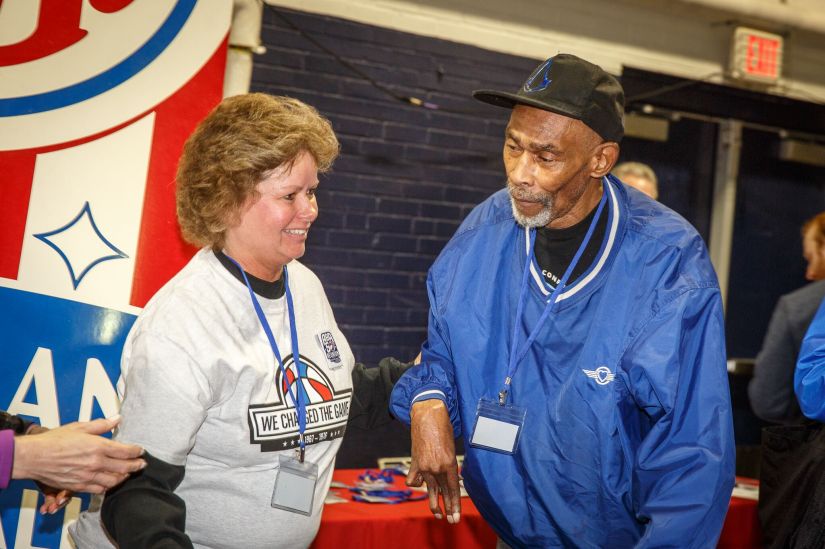
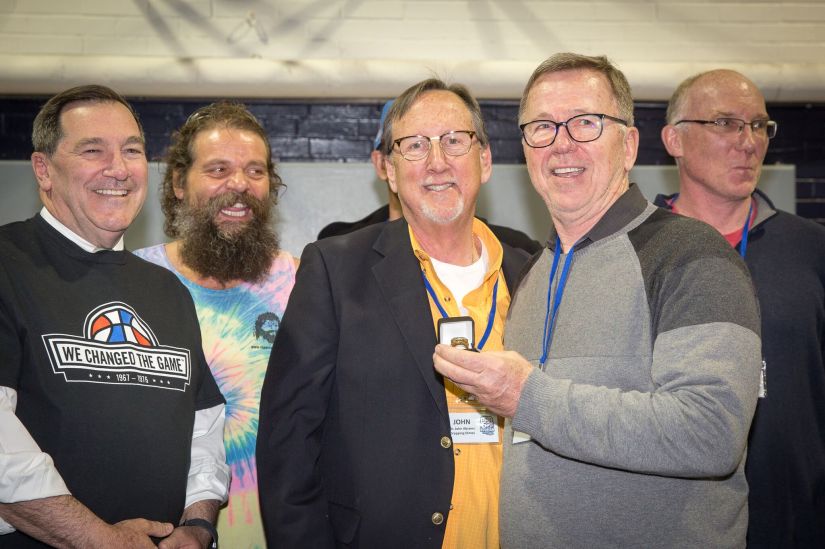
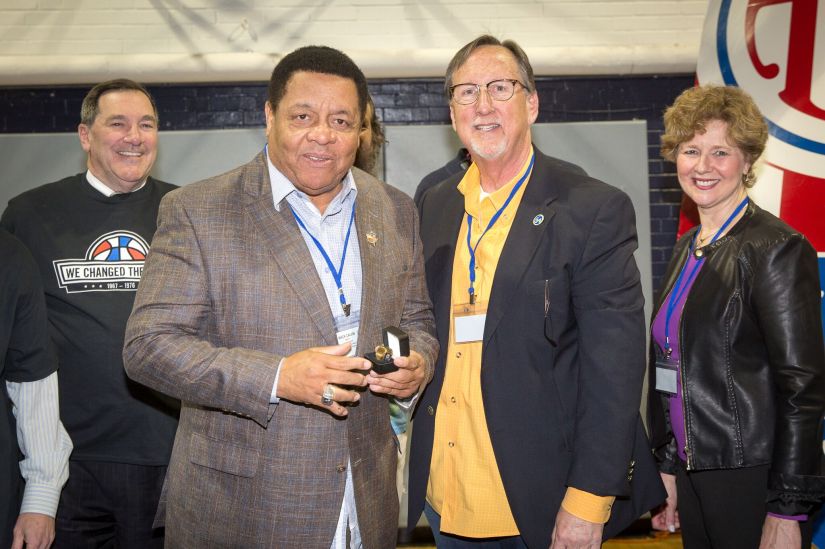
To make the event even more meaningful for the players and fans in attendance, several local dignitaries volunteered as honorary guest ring presenters. Senator Joe Donnelly, Congresswoman Susan Brooks, Mayor Joe Hogsett, City Councillors Vop Osili and Michael McQuillen, newscaster Dick Wolfsie, Trip III (the Butler “Blue” Bulldog) and even Rupert Boneham from Survivor showed up to pass out the iron. Former Q-95 regular Dave “The King” Wilson announced each player individually to the delight of the estimated 1,000 friends, fans and family of the ABA honorees.
Dr. John Abrams, Congresswoman Susan Brooks, Rhonda Hunter & Kentucky Colonels Bobby Rascoe getting his ring. Photo by Lauri Mohr of Imagine Mohr Photography
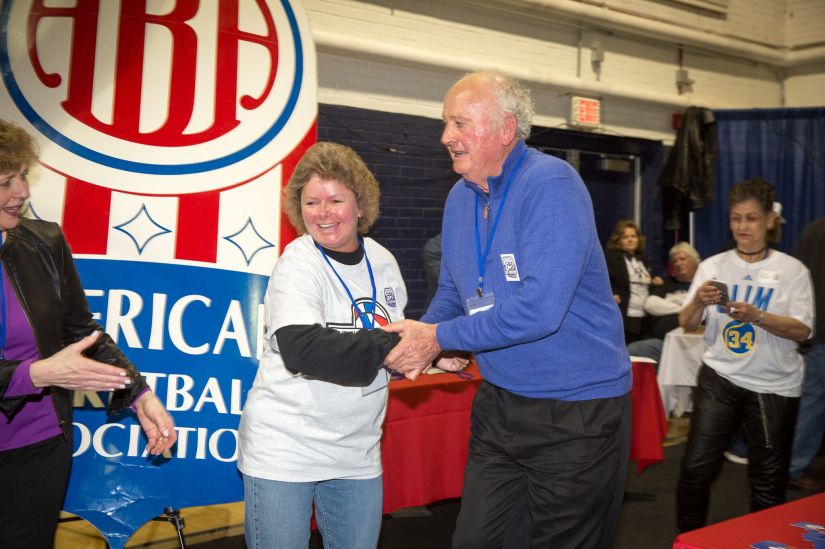
Rhonda Hunter and Kris Branch secured, double-checked and delivered the rings to the dignitaries. “It was fun to watch the dignitaries jockey for position and compete to present a ring to their favorite player.” said Rhonda. “The Pacer players were in high demand but it was great to see how much all of the players enjoyed themselves.” Kris added, “I’ll always remember the expressions of pure joy on the faces of those legends as they received their rings and I will always remember that I had the once-in-a-lifetime honor of handling every ring.”
Nicole Misencik, Kris Branch, Brandon Kline, Trudy Rowe & Rhonda Hunter. Photo by Lauri Mohr of Imagine Mohr Photography.
Roger Branch, Steve Hunt and Keith Hudson served as security for the rings. Tim and Cecelia Poynter, Christy McAbee, Cindy Adkins, Trudy Rowe and Kerry Hooker pitched in wherever needed. Brandon Kline and Nicole Misencik were invaluable to the day’s proceedings making sure gaps were filled wherever needed. My lovely mother-in-law Kathy Hudson and everybody’s favorite Irvingtonion Dawn Briggs served as hostesses for the event. Several troops of Indianapolis Girl Scouts were on hand to aid the alumni players throughout the day. It was hectic but fun for everyone involved. Since all of these folks were volunteering their time and services to help out in this once-in-a-lifetime event, I cannot thank them enough.
Mayor Joe Hogsett, Louie Dampier & Scott Tarter. Photo by Ron Sanders.
The Dropping Dimes trio of Scott Tarter, Dr. John Abrams and Ted Green served their worthy foundation majestically during the ring presentation ceremony by greeting every player as they received their rings. Tarter later remarked that he believed the ring ceremony made the day unforgettable. After the reunion weekend hoopla subsided, Tarter told me, “You know, when you originally brought up the ring idea, at first I wasn’t sure about it. But now I realize that the ring was the thing. You knocked it out of the park with that one Al.”
Dr. John Abrams, a former ABA Pacers ball-boy who is now one of the most successful eye doctors in the Circle City, remarked, “I still can’t believe how many of the former players came up and hugged me with tears in their eyes telling me how much that ring meant to them. That is the memory I will take away from the event.” For many of the players, those rings were the only official recognition they ever got for their service in a league left forgotten and unacknowledged by the NBA for three decades after the merger. The Saturday ring presentation at Hinkle Fieldhouse went off without a hitch but the saga of the rings was not over yet.
Dan Issel and Dr. John Abrams. Photo by Ron Sanders.
The Hinkle event concluded at 3:00 pm as the players boarded the bus transports back to the hotel. There were some twenty rings left over, made for players who were scheduled to attend but, for whatever reason, were not present to receive them. The rings were secured in the back of the Hunter van as Rhonda & I headed back home to prepare for that night’s gala at Banker’s Life Fieldhouse. We were to pick up Bob and Elaine Netolicky and drive down together to the event and deliver the rest of the rings. At least, that was the plan.
Problem was, when we arrived home, the rings were gone. It is hard to describe the level of panic that set in, but it was bad. Keep in mind, among the missing rings were those belonging to Julius “Dr. J” Erving, George McGinnis, Bobby “Slick” Leonard and Bob Costas. I called Neto and informed him the rings were gone. For once Neto was speechless.
Photo by Lauri Mohr of Imagine Mohr Photography.
The idea that the rings were gone left us thunderstruck. Needless to say, it was a long ride down to the Fieldhouse that night. The one bright spot of the mostly silent car ride was a phone call from Bob & Elaine’s daughter Nicole. When she learned about the missing rings, Nicole said, “Don’t worry, they’ll turn up somewhere daddy.” At that moment, I appreciated the sentiment but doubted the prediction. An hour long cocktail party preceded the banquet. Word had gotten out about the missing rings and during that happy hour I was approached time and time again by players expressing their heartfelt concern and support about the situation. Indiana basketball Hall of Famer Monte Towe chief among them.
Bob Costas. Photo by Lauri Mohr of Imagine Mohr Photography.
The banquet concluded, complete with the presentation of a “dummy” ring on stage to emcee Bob Costas. Fueled by the excitement of the evening, the ride home was more jovial. The ring situation was on the back burner until Neto began to rub his chin and stare off in space before remarking, “How could someone have gotten in your locked car? You’re gonna find those rings. You know what happened, you hit a chuckhole and they fell out of the box. They’re under the seat in the back floorboard of your car.” I mumbled something in polite incredulity and dropped our guests off for the night.
During the final leg of our journey home I tried to think positive and buy in to Neto’s theory. We pulled in the driveway and I dashed into the house to retrieve the keys to the van, which had remained parked and loaded with supplies from the Hinkle Fieldhouse event. I was careful not to tell Rhonda simply because I didn’t want her to get her hopes up. I looked behind the driver’s seat where the empty boxes were found, but found nothing. I searched the back of the van, nothing. As a last ditch effort, I removed some empty plastic bags behind the passenger’s seat, certain the rings could never have ended up there. Faith and Begorrah, there they were. The missing rings had been found, just as Neto theorized.
I called Bob even before I told Rhonda. I have never heard Neto laugh so long and so loud. Neto called Rhonda as I gathered the rings and before I had the chance to go in and tell her. The next morning, Rhonda & I headed down to the J.W.Marriott to get the rings safely into the hands of the Dropping Dimes guys and also to get the rings to a few of the players before they left town. Nets great and Dropping Dimes Board member Brian Taylor met Tarter, Abrams and I in the lobby and took Julius his ring while Dr. J was eating breakfast in the restaurant. Tarter got McGinnis his ring and the rest were mailed. Finally, all rings were delivered.
I managed to drop Bob Costas off his ring just minutes before he left town. He was staying at the Conrad. I left the ring with the front desk and made my way back home, secure that all but one of the rings were safely out of my hands once and for all. Neto and I went to Slick Leonard’s house that Sunday morning and Neto gave me the honor of presenting Slick his ring. All’s well that ends well.
Later that day, I discovered that Pacers media guy Mark Montieth wrote an article about the event mentioning me (by name) and the missing ring situation. Not exactly how you want to see your name in print. Luckily, Montieth’s story was not the final note on the ABA ring affair. Later that afternoon, I received a voicemail from Bob Costas. The message said, “Hi Al, this is Bob Costas. I just wanted to call and thank you for delivering my ring and let you know how much I appreciate your bringing it down here for me. Take care and thanks again.”
The ABA Alumni. Photo by Lauri Mohr of Imagine Mohr Photography.
Now you know the true and accurate story of the ABA 50th anniversary rings. I wanted to set the record straight for posterity once and for all. The rings started out as an idea, developed into reality and came together only through the efforts of many people sharing the same vision. The rings will outlive us all. Someday they may be the only reminder of that one special weekend in April of 21018 when the Golden anniversary of the American Basketball Association was celebrated here in Indianapolis. Proof positive that dreams really can come true.
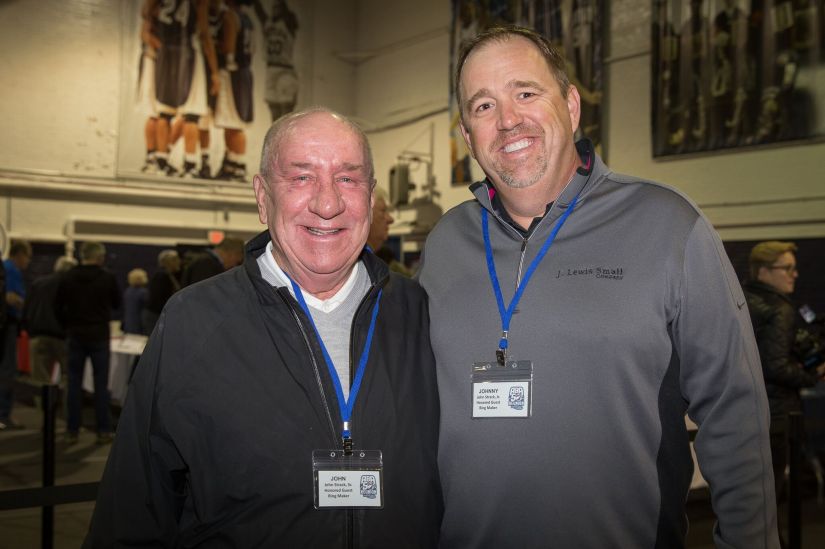
Now Dr. Dunk, you know the rest of the story. Photo by Lauri Mohr of Imagine Mohr Photography.Johnny Strack Sr. and Johnny Strack Jr.- The ring makers. Photo by Lauri Mohr of Imagine Mohr Photography.
The card show crowd. Photo by Lauri Mohr of Imagine Mohr Photography.
Dick Wolfsie, Rupert & Dave Wilson. Photo by Lauri Mohr of Imagine Mohr Photography.
The Butler Girl Scouts on site to lend a hand. Photo by Lauri Mohr of Imagine Mohr Photography.
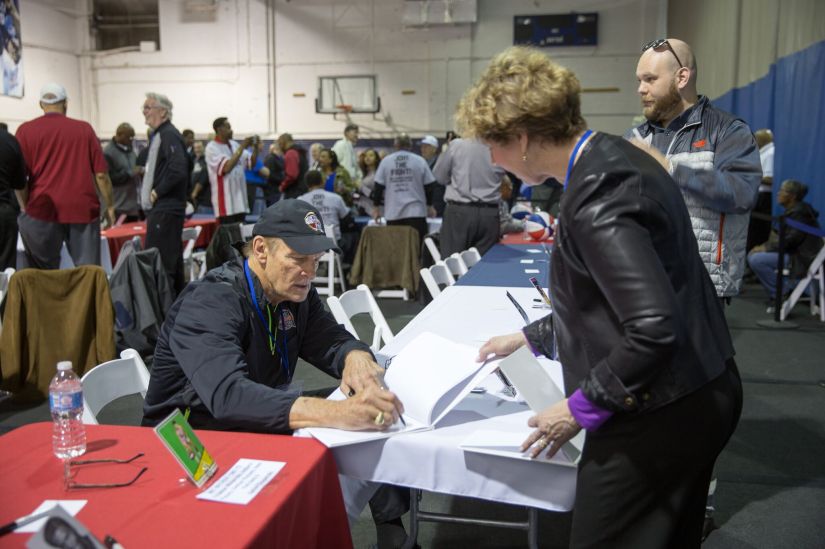
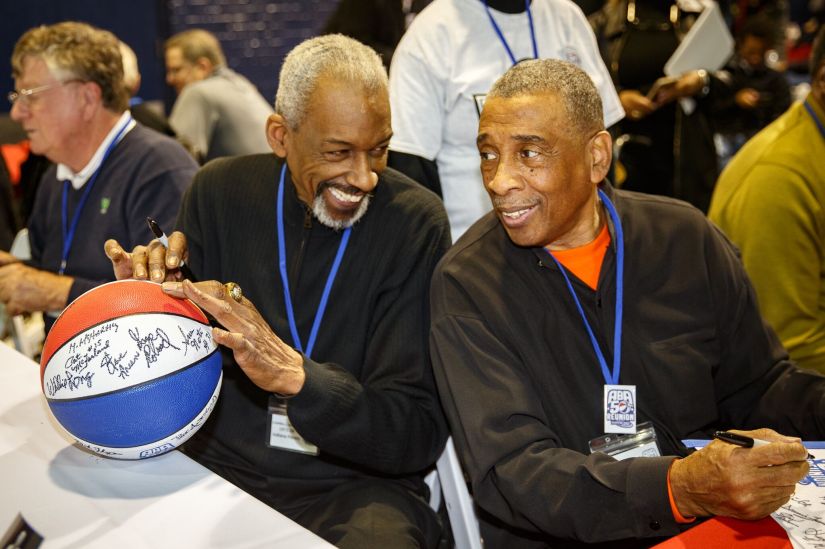
Over 90 former ABA players were on hand to sign autographs for the public. Photo by Lauri Mohr of Imagine Mohr Photography.
Rhonda Hunter, Nicole Micensik, Johnny Strack, Sr., Bob Netolicky, Alan E. Hunter & Brandon Kline getting ready for the festivities to begin, The calm before the storm. Photo by Lauri Mohr of Imagine Mohr Photography.
Rick Barry signing an autograph for Congresswoman Susan Brooks. Photo by Lauri Mohr of Imagine Mohr Photography.
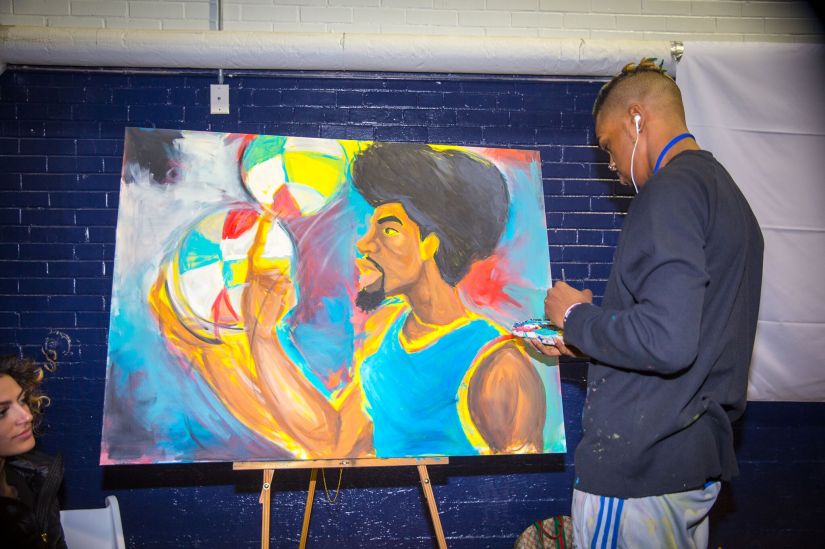
Artist Shane James Harden Young at work on Julius “Dr. J” painting. Skills! Photo by Lauri Mohr of Imagine Mohr Photography.
Scott Tarter shows off a couple of Shane’s portraits from his own collection to ABA Denver Rockets player Grant Simmons. Photo by Michael B. Delaney.
IU / ABA standout Steve Green & Bob Netolicky “discussing” the ABA Pension cause. Photo by Ron Sanders.
Rupert and Senator Joe Donnelly. Photo by Ron Sanders.
Alan E. Hunter & San Antonio Spurs Legend James Silas. The Snake! Photo by Ron Sanders.
Senator Joe Donnelly and Alan E. Hunter. Photo by Ron Sanders.
Rupert and Dave Wilson. Photo by Ron Sanders.
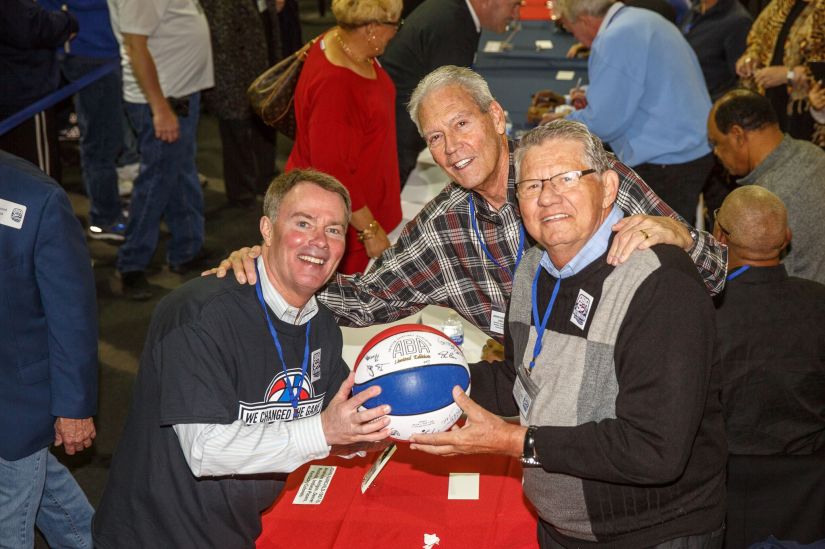
Dick Wolfsie, Mike McQuillen, Senator Joe Donnelly, Vop Osili, Dr. John Abrams, Scott Tarter, Rupert and Butler Blue III (Trip). Photo by Ron Sanders.
Pacers Darnell “Dr. Dunk” Hillman & Captain Freddie Lewis. Photo by Lauri Mohr of Imagine Mohr Photography.
Swen Nater & Dave Robisch. Photo by Lauri Mohr of Imagine Mohr Photography.
Stew Johnson (all the way from Sweden) and Councilman Mike McQuillen. Photo by Lauri Mohr of Imagine Mohr Photography.
ABA Pacers John Fairchild and Ron Perry. Photo by Lauri Mohr of Imagine Mohr Photography.
First Season ABA Pittsburgh Pipers Champs team player Steve Vacendak & Alan E. Hunter. Photo by Lauri Mohr of Imagine Mohr Photography.ABA Pacer Tom Thacker and All-Star Chuck Williams. Photo by Lauri Mohr of Imagine Mohr Photography.
ABA Pacers Freddie Lewis, Tom Thacker, Chuck Williams & Pacer Billy Knight. Photo by Lauri Mohr of Imagine Mohr Photography.
Mayor Joe Hogsett with ABA Pacers John Fairchild and Ron Perry. Photo by Lauri Mohr of Imagine Mohr Photography.
Rhonda Hunter with Kentucky Colonels Bird Averitt. Photo by Lauri Mohr of Imagine Mohr Photography.
Scott Tarter, Rupert, Congresswoman Susan Brooks, Rhonda Hunter & Kentucky Colonels Bird Averitt. Photo by Lauri Mohr of Imagine Mohr Photography.
Dr. John Abrams, Scott Tarter, Senator Joe Donnelly & ABA Spurs star Coby Dietrick. Photo by Lauri Mohr of Imagine Mohr Photography.
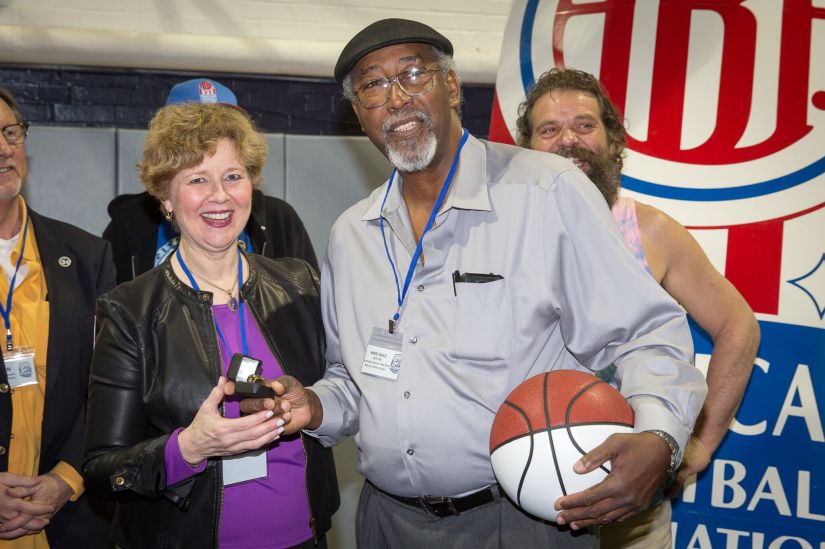
Congresswoman Susan Brooks & ABA Spurs / Nets / Colonels star Mike Gale. Photo by Lauri Mohr of Imagine Mohr Photography.
Mayor Joe Hogsett, Councilman Vop Osili & ABA Pacers Jerry Harkness. Photo by Lauri Mohr of Imagine Mohr Photography.
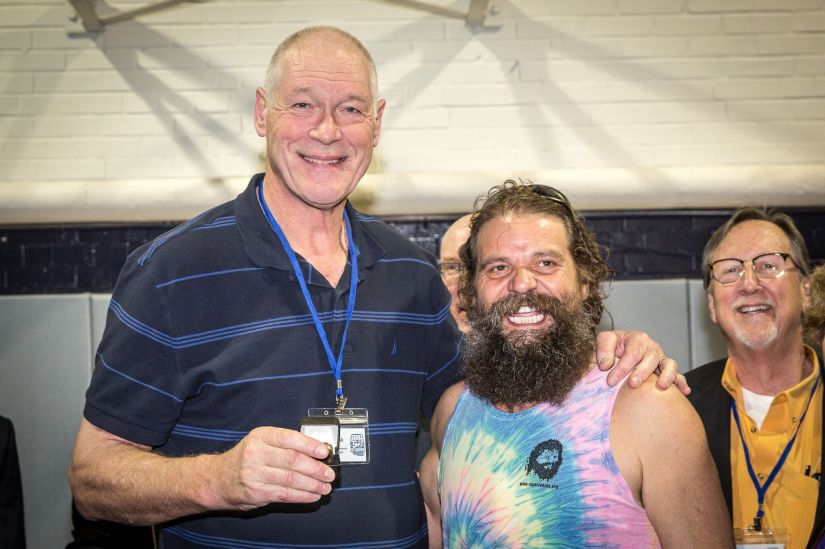
Swen Nater, Rupert & Dr. John Abrams. Photo by Lauri Mohr of Imagine Mohr Photography.
Mayor Joe Hogsett, ABA Great Bill Melchioni & Senator Joe Donnelly. Photo by Lauri Mohr of Imagine Mohr Photography.
Scott Tarter, Senator Joe Donnelly, Peter Vecsey, Ted Green & Dr. John Abrams. Photo by Lauri Mohr of Imagine Mohr Photography.
ABA Pacer Wayne Pack, Dr. John Abrams & Congresswoman Susan Brooks. Photo by Lauri Mohr of Imagine Mohr Photography.
Scott Tarter, Mayor Joe Hogsett, Senator Joe Donnelly, Dr. John Abrams, Indiana Pacers Dave Robisch and Congresswoman Susan Brooks. Photo by Lauri Mohr of Imagine Mohr Photography.
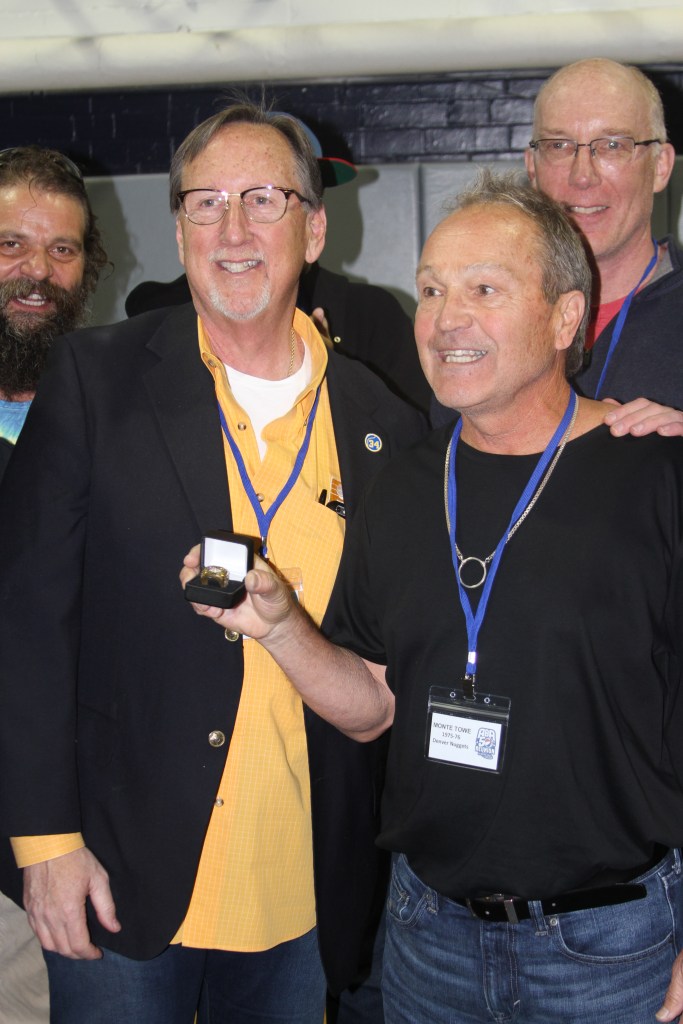
Mayor Joe Hogsett, Senator Joe Donnelly, Rupert, ABA Great Ollie Taylor, Dr. John Abrams and Ted Green. Photo by Lauri Mohr of Imagine Mohr Photography.Senator Joe Donnelly, Vop Osili, Rupert, ABA Great Claude Terry, Dr. John Abrams and Ted Green and Congresswoman Susan Brooks. Photo by Lauri Mohr of Imagine Mohr Photography.Dr. John Abrams and ABA Star Monte Towe. Photo by Ron Sanders.Michael McQuillen, Mayor Joe Hogsett, Vop Osili, Senator Joe Donnelly and ABA & Butler Great Billy Shepherd. Photo by Ron Sanders.Senator Joe Donnelly, Rupert, Dr. John Abrams, ABA Great Dave Twardzik and Ted Green. Photo by Lauri Mohr of Imagine Mohr Photography.
Senator Joe Donnelly, ABA Great Jim Eakins & Dr. John Abrams. Photo by Lauri Mohr of Imagine Mohr Photography.
Congresswoman Susan Brooks, Rhonda Hunter & Kentucky Colonels Darel Carrier. Photo by Lauri Mohr of Imagine Mohr Photography.
Congresswoman Susan Brooks & Indiana Pacers Great Billy Knight. Photo by Lauri Mohr of Imagine Mohr Photography.
Vop Osili, Mayor Joe Hogsett, Senator Joe Donnelly, ABA Pacers Great Billy Keller, Mike McQuillen, Dr. John Abrams and Congresswoman Susan Brooks. Photo by Lauri Mohr of Imagine Mohr Photography.
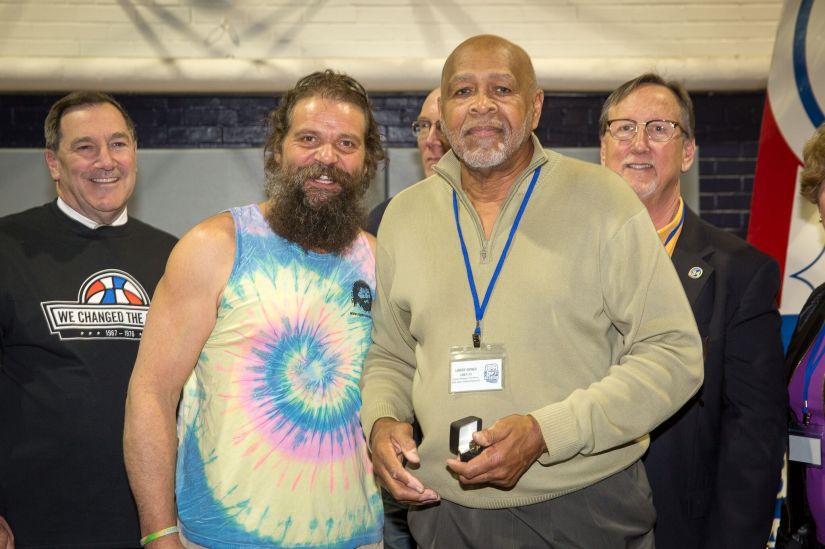
Senator Joe Donnelly, Rupert, ABA Great Larry Jones & Dr. John Abrams. Photo by Lauri Mohr of Imagine Mohr Photography.
Senator Joe Donnelly, ABA Great Mack Calvin, Dr. John Abrams & Congresswoman Susan Brooks. Photo by Lauri Mohr of Imagine Mohr Photography.Mayor Joe Hogsett, Senator Joe Donnelly, ABA Pacers Darnell Hillman, Rupert, Ted Green & Dr. John Abrams. Photo by Lauri Mohr of Imagine Mohr Photography.
Mayor Joe Hogsett, Senator Joe Donnelly, ABA Pacers Donnie Freeman, & Rupert. Photo by Lauri Mohr of Imagine Mohr Photography.
Councilman Vop Osili and ABA Pacers Great Bob Netolicky. Photo by Ron Sanders.
Mike McQuillen, Vop Osili, Mayor Joe Hogsett, Senator Joe Donnelly, ABA Great Doug Moe, & Dr. John Abrams. Photo by Lauri Mohr of Imagine Mohr Photography.Mayor Joe Hogsett, Vop Osili ABA Great Willie Wise, & Ted Green. Photo by Lauri Mohr of Imagine Mohr Photography.
ABA Kentucky Colonels Hall of Famers Louie Dampier & Dan Issel. Photo by Lauri Mohr of Imagine Mohr Photography.
Scott Tarter, Congresswoman Susan Brooks, Rhonda Hunter and ABA San Antonio Spurs Hall of Famer George Gervin aka “The Iceman”. Photo by Lauri Mohr of Imagine Mohr Photography.Mayor Joe Hogsett, Rupert, Mike McQuillen, ABA San Antonio Spurs Hall of Famer George Gervin and Dr. John Abrams. Photo by Lauri Mohr of Imagine Mohr Photography.Congresswoman Susan Brooks & ABA Kentucky Colonels Hall of Famer Artis Gilmore aka “The A-Train”. Photo by Lauri Mohr of Imagine Mohr Photography.Hall of Famer Rick Barry & Councilman Michael McQuillen. Photo by Ron Sanders.Mayor Joe Hogset, Councilman Vop Osili, Hall of Famer Spencer Haywood, Scott Tarter & Ted Green. Photo by Ron Sanders.The Ring. Photo by Lauri Mohr of Imagine Mohr Photography.
ABA vet Grant Simmons brought his own ABA Dave DeBusschere ball to have signed. How cool is that? Photo by Lauri Mohr of Imagine Mohr Photography.Photo by Lauri Mohr of Imagine Mohr Photography.The Coach. Hall of Famer Bobby “Slick” Leonard, Photo by Lauri Mohr of Imagine Mohr Photography.
Julius Erving and Rick Barry. Photo by Lauri Mohr of Imagine Mohr Photography.
Indiana Pacers Hall of Famer George McGinnis. Photo by Lauri Mohr of Imagine Mohr Photography.
Brian Taylor & George McGinnis. Photo by Lauri Mohr of Imagine Mohr Photography. Rick Barry and Bobby “Slick” Leonard signing Barry’s basketball panels. Photo by Lauri Mohr of Imagine Mohr Photography.Julius Erving and Elaine Netolicky. Photo by Lauri Mohr of Imagine Mohr Photography.ABA Kentucky Colonels star Joe Hamilton signing for fans. Photo by Michael B. Delaney.
ABA Utah Stars Legend Willie Wise signing for a young fan. Photo by Michael B. Delaney.
ABA Indiana Pacers Star Bob Netolicky says “That’s all folks!”. Photo by Lauri Mohr of Imagine Mohr Photography.
Tuesday February 9th was an especially busy day for Governor Mike Pence. It was also an especially happy day for our state’s history-loving Chief Executive. That afternoon, he proudly watched as his protege, Lt. Governor Sue Ellspermann, became president of Ivy Tech Community College. Governor Pence then introduced his pick to replace her, former state Republican Party chairman Eric Holcomb. Historic events for our state to be sure, but the Governor’s wide grin that afternoon was due mostly to an event he presided over at the Indiana State Museum earlier in the day.
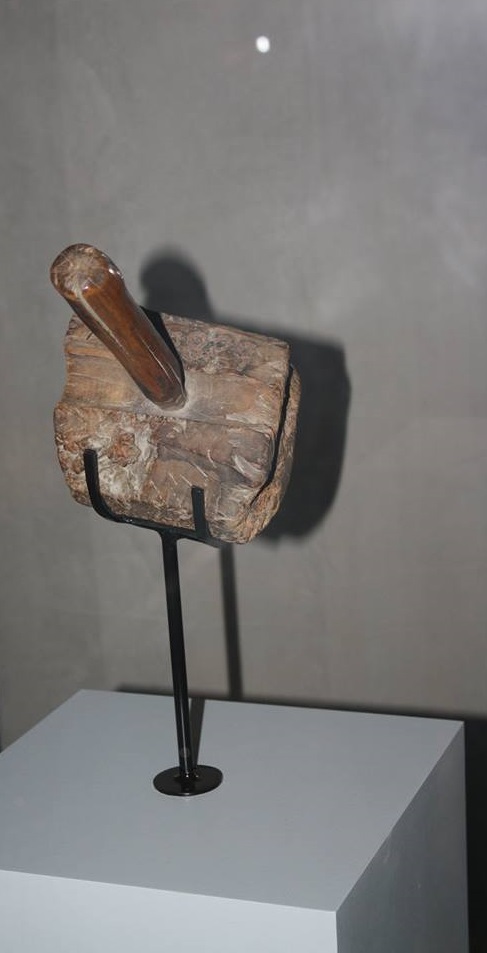
That morning, Governor Pence unveiled the most important personal artifact ever discovered directly connected to Abraham Lincoln, the Hoosier. The rough-hewn handled relic is referred to by the State Museum as “Abraham Lincoln’s Mallet, 1829.” It was put on display at ISM on Lincoln’s birthday (February 12th) and will remain on view at the museum throughout 2016 to coincide with our state’s 200th anniversary celebration. It was the crescendo of a 188 year journey made almost entirely in secret. So secret that Governor Pence himself was kept in the dark about it until shortly before the unveiling. The primitive looking hammer seems perfectly matched to the muscular 20-year-old young man who wielded it back in 1829. The mallet is made from the trunk of a tree cut from the virgin timber forest that once populated Spencer County, Indiana. No doubt Thomas Lincoln cut the tree from the unbroken forest surrounding the family cabin for use by his young son Abraham in splitting wood. Those famous “rail splitting” images we all remember from our history books? Well they all picture Honest Abe using this mallet.
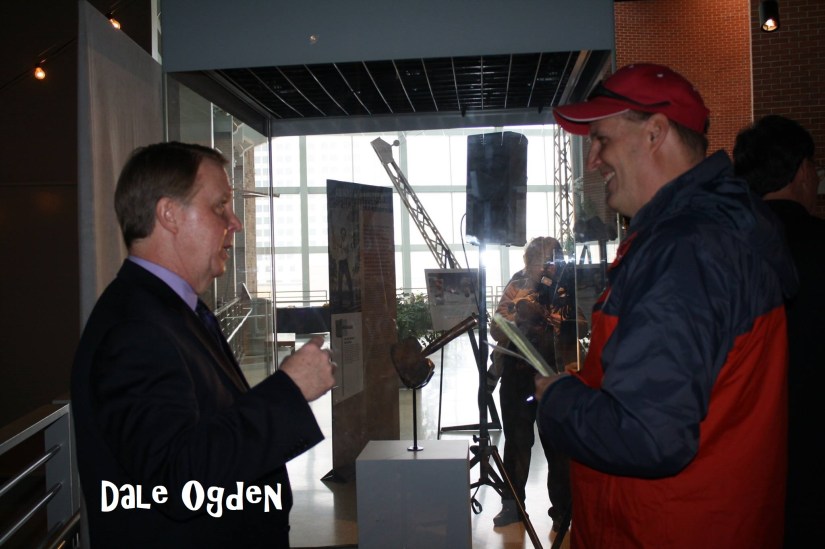
State museum Chief Curator Dale Ogden points out that the mallet on display is about one half it’s original size. “It was originally twice this size in diameter. The mallet had a longer handle. The tool saw heavy use and the damage presumably occurred in the course of normal, everyday usage.” Ogden continues “The mallet is an extremely rare and important find that connects Abraham Lincoln to his Hoosier roots and to the rail-splitter legend.”
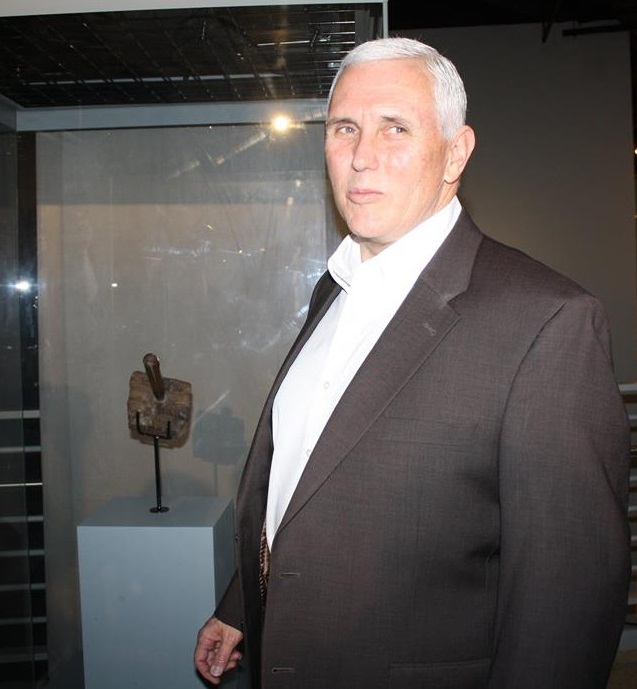
“This artifact was originally a splitting maul used by Lincoln to drive iron wedges into logs creating split rails for fencing. The maul head, made from a tree-root ball, eventually split in half,” said Steve Haaff, Spencer County resident and foremost expert on Lincoln furniture made in Indiana. “Rather than discard the tool, Lincoln repurposed it into a bench mallet he used to drive pegs into furniture and other fixtures. Lincoln discarded the long handle and relocated a shorter grip into the remaining portion of the maul to create a mallet.” Before Governor Pence dropped the curtain to reveal the relic, he took off his jacket to reveal rolled up shirt sleeves in a workingman’s fashion to honor the Indiana Railsplitter. “I thought it was appropriate for the occasion,” the Governor explained. Staying in the moment, Pence harkens back to a predecessor by repeating Governor Otis Bowen’s quote, “Lincoln made Illinois, but Indiana made Lincoln.” He made sure to mention his trip to Southern Indiana a couple days before to bury another predecessor, Edgar Whitcomb, who died February 6th. Make no mistake about it, Mike Pence loves Indiana history.
Pence, a history major at Hanover College, could barely contain his excitment as he removed the cover hand-over-hand as if he were climbing a rope. When the cloth cover became stuck on top of the case, Pence was the one to dislodge it. Amid the awe inspiring big reveal, it was Pence himself who scurried to hastily gather the material now piled on the floor in front of the priceless relic and stow it safely, yet reverently, away behind the case. After his official duties were concluded, Mike Pence quickly slipped into a role that was obviously more pleasing to him; that of being a fan of Hoosier history.
Steve Haaff and Governor Mike Pence.
According to Steve Haaff, the mallet descended through the family of Barnabus Carter, a neighbor of the Lincolns. Haaff explains that he has discovered nearly a dozen and a half original pieces of furniture attributed to Thomas Lincoln and his young apprentice Abraham. Most of the pieces are done in the Federal style but some are quite primitive. “Lincoln made this furniture for his neighbors and priced it according to what they could pay,” says Haaff. Dale Ogden expounds on Haaff’s statement by saying “If a person had $ 5 and a chicken, Thomas Lincoln made a piece of furniture equal to that price. If they had $ 5 and a pig, the quality appreciated accordingly.”
Of those 18 pieces, Haaff believes that half are in museums and half in private homes. Haaff is still turning up pieces today. “The stories behind the furniture are as much fun as discovering the furniture itself. Often, the owner is still using the furniture in their home everyday.” says Haaff. “The University of Michigan has a Lincoln cabinet in their office, not on display, but in their office. The staff had screwed in little gold cup hooks underneath the cabinet to hang their coffee cups from!”
In an attempt to unravel the mallet’s secret journey, I spoke with one of the family members present at the unveiling press conference. Tom Vicki explains that he first learned of the mallet’s existence from his cousin Keith Carter, the Gr-Gr-Gr-Great Grandson son of Barnabus. “I was told that the mallet was a family secret known by only a few. It had been kept hidden for 175 years in the basement ceiling of the Carter’s Richland, Indiana home.” Vicki continues, “It then traveled to Rockport for a few years before it ended up here. 187 years in the same family and Spencer County’s best kept secret the whole time” The mallet most closely resembles a carnival strongman’s prop,or Thor’s hammer, but a closer examination immediately reveals it’s cryptic secret. Above the handle’s stem lay the initials “A.L.” with a year date of “1829.” Steve Haaff explains that the initials and date are not carved as one may surmise, but rather they are metal inlays. Haaff states, “Thomas Lincoln was a carpenter and Abe was his only apprentice. Thomas hoped that his young son would follow him into carpentry, but Abe Lincoln wanted to be a blacksmith. These metal pieces were inserted into the mallet by Abe Lincoln himself.” ISM’s Ogden further explains, “He didn’t put those initials and that date into the mallet because he was Abraham Lincoln, he put them there to mark the tool as his own. He was just a Hoosier farm-boy at the time with no idea he was on his way to becoming a legend.” Ogden, whose fervor for Lincoln is rivaled by few, explains the mallet’s secret by identifying it as the only known item that ties Abraham Lincoln to Indiana. “The Lincoln’s were Indiana pioneers, they arrived here just a week before we were made a state in the Union. While they were not poor, they were also not wealthy.” says Ogden. “The Lincoln family used everything they owned, in most cases using it all up. When they moved to Illinois in 1830, they couldn’t take everything with them and this mallet was among those things left behind. Whether Abe gave the mallet to his neighbors, or whether the Carter family simply picked it up from the pile of discards is debatable. But we’re certainly glad it survived and are delighted to be able to display it for our guests.”
Mr. Ogden, a subject of past articles, has an innate ability to blend history with current events. He presides over one of the foremost state-owned collections of Lincoln artifacts and memorabilia with an exuberance that borders on fanaticism. The bulk of the ISM collection was obtained from the Lincoln Financial Life Insurance company who began collecting all things Lincoln in 1915 and opened their museum in 1931. The museum closed in 2008 and for a time, the fate of the collection was in doubt. “There was talk of selling the collection at auction.” says Ogden. “One rumor had the collection being bought up by Donald Trump for display at one of his Casinos.” Ogden explains that the ISM was fortunate to obtain the collection and although it is vast and comprehensive, he says that the question he got the most from visitors was, “Where is the Indiana material? and I always had to reply, There is no Indiana material. This mallet changes all that. Those railsplitter legends were all we had. This mallet confirms that folklore and brings all of those stories together.”
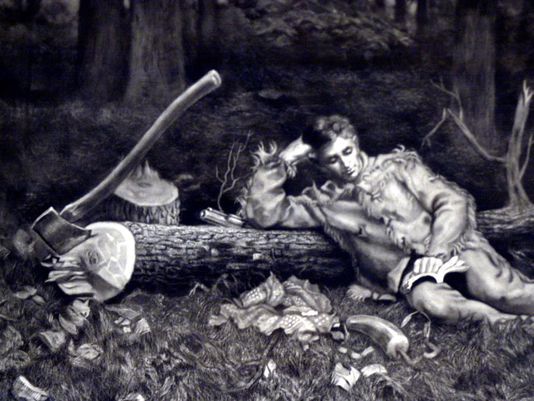
Steve Haaff talked about young Abe Lincoln’s subservient role to his father Thomas. “When Lincoln returned to Indiana in 1844 to campaign for Henry Clay for President, he visited a house of a neighbor who he knew to have a piece of furniture that Lincoln and his father had created.” Haaff continued, “As they passed, the buildings he knew were mostly gone. His wagon passed an empty, neglected saw pit and Lincoln remarked that this was where he and his father hand sawed the planks used to make his mother’s coffin.” Lincoln’s mother Nancy died of milk sickness in October of 1818. Haaff states that the planks were made from a log from the leftovers pile used to make the family cabin. “Thomas made the coffin while 9-year-old Abe sat nearby and whittled the pegs for his mother’s coffin.” His mother’s death, and that of his beloved elder sister Sarah’s death 10 years later, devastated Lincoln and laid the foundation for the depression that haunted him for the rest of his life. No doubt, Thomas and Abraham made the coffin for Sarah too.
Although it can never be proved and is purely conjecture on my part, is it not hard to imagine that Lincoln may have used this very mallet in performance of those sad tasks. Maybe during one of those moments of melancholy in 1829, Lincoln carefully memorialized his ownership by carefully hammering in the pieces of metal he felt would hold significance to him in the future. Lincoln had issues with his years growing up in Southern Indiana and even deeper issues with his father. Thomas Lincoln never met his grandchildren, did not attend Abe & Mary’s wedding and Lincoln did not attend his father’s funeral in 1851. So, when the fog of depression cleared from 21-year-old Abraham Lincoln’s tortured soul, maybe he left that mallet behind on purpose. Now it is on display at the Indiana State Museum for you to go visit, examine and daydream about Lincoln the Hoosier.
Last week I traveled out to the Indianapolis Motor Speedway to catch up with an old friend. Most people know Dave Wilson from his many appearances on the Q-95 Bob & Tom show, others from his longtime gig as an Indy 500 radio man, and still more know him as “The King” of the Circle City stand-up comic scene. What most don’t know about Dave is his devotion to his hometown of Indianapolis.
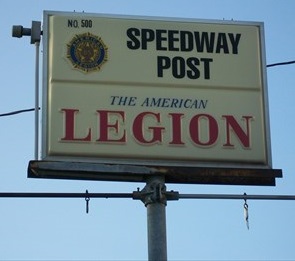
Dave and his wife Peggy are now running the club room of the Speedway American Legion Post # 500 at 1926 Georgetown Road. The post is literally a stone’s throw from the track and, as you might guess, the interior is decked out in a black and white checkered flag design. “This will be my 51st Indy 500,” says Dave. “My dad brought me to this post for the first time even before I saw my first race.” Turns out that both Dave’s and Peggy’s fathers were high ranking members of Post 500. “In the past 5 years, we’ve lost 300 members to father time.” Dave continues. “We were really afraid that this post might not be able to continue.”
Speedway American Legion Post # 500. 1926 Georgetown Rd, Indianapolis.
Now, with the Wilson’s steady management alongside the leadership of Post Commander John Hannon, the Speedway Legion Post 500 is on the upswing. “In the old days, if you didn’t get here by 5 o’clock on a Friday or Saturday night, you didn’t get a table.” Wilson says. “Those numbers fell way off in the in late 1990s-early 2000s, but we’re attracting younger members now and things are looking up.”
Wilson is a busy man during the month of May. Along with his daily management chores at Post 500, Dave reports from the Pits at the Speedway for the Bob & Tom Show. While race fans are accustomed to seeing Wilson on patrol in Gasoline Alley, Dave’s biggest impact may well be his work for the “Race for Riley” which celebrates its 21st year in 2017. Wilson started the charity go kart race back in 1995 with his longtime WIBC radio show host (and former Indianapolis Colt) Joe Staysniak and NASCAR / Indy Car driver John Andretti. The race is always held at the New Castle Motorsports Park the week before the Brickyard 400.
Wilson has known John Andretti since the late-1980s. Dave recalls that inaugural Race for Riley event, “John called into my radio show every Tuesday. At the time he was driving in the NASCAR series for Cale Yarborough Motorsports. Somehow we came up with the idea of a go-kart race for charity and we picked Riley Children’s Hospital as our beneficiary. We raised $ 36,000 for Riley that first year. As of this year, we are up over $ 4 million.”
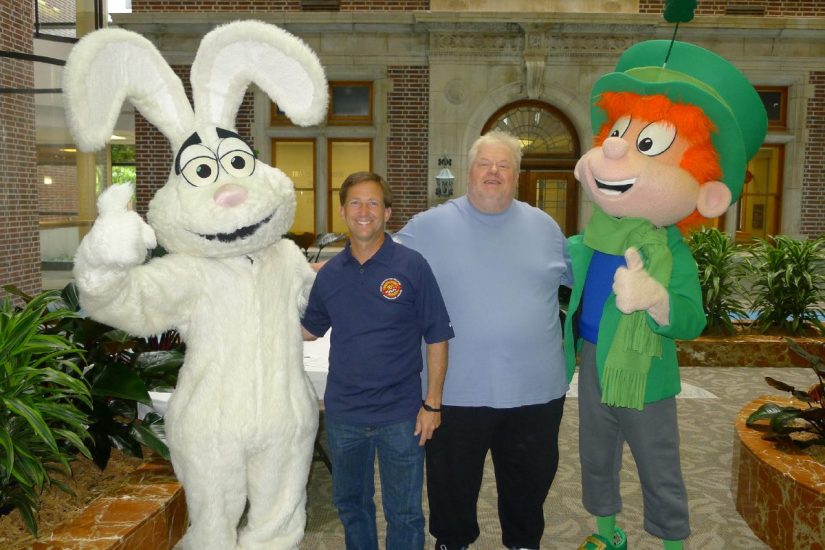
John Andretti and Dave Wilson alongside Trix the Rabbit and Lucky.
Dave notes that while John Andretti has been the name draw for the Race for Riley over the years, Andretti does it all without the use of a foundation. What does that mean? Dave answers, “That means that all of the money raised goes directly to Riley. Since there is no foundation, there are no administrative fees and no overhead. Everything is donated.” As for the expenses involved in this 3 or 4 day event, “John pays most of those out of his own pocket.” states Wilson. “That’s just the kind of guy he is.” Wilson pauses for a moment to reflect about his friend of 30 years.
John Andretti has been in the news lately. On April 28th, Andretti revealed to the world that he is battling stage four colon cancer. The 54-year-old Andretti made 393 starts in NASCAR’s premier series from 1993-2010, scoring 13 top-five and 37 top-10 finishes. He also won four poles- at Darlington, Talladega, Atlanta and Phoenix. He made the last of his 10 Indy 500 starts in 2011, with a best finish of fifth in 1991. He has two NASCAR and one IndyCar wins in his career, and was last a full-time driver during the 2009 NASCAR season. Andretti, the nephew of famed racer Mario Andretti, is currently undergoing chemotherapy and will have surgery in June.
“At first, John wanted to keep his diagnosis private,” says Wilson. “But word got out and John decided he was going to use his personal battle to spur others to get themselves checked out for colon cancer.” The Andretti family has started using the hashtag #checkit4Andretti on social media to encourage people to take the easy test for colon cancer. Their goal is to keep other families from suffering their pains by getting a colonoscopy before it’s too late.
When asked how he feels about his friend’s prognosis, Wilson replies,”Well, if anybody can do it, John can. He’s tough. One of the toughest guys I know.” Wilson notes that Andretti is getting some good advise and counsel from NASCAR engine builder and team owner Robert Yates, who is himself battling stage 4-B cancer.
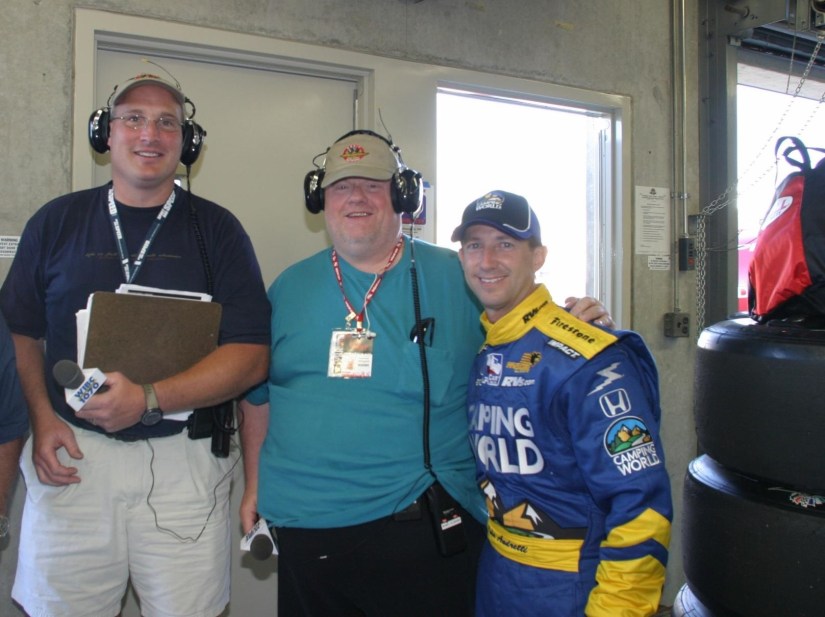
Big Joe Staysniack, Dave Wislon & John Andretti.
Wilson relates how his friend John Andretti, who makes his home in North Carolina, would often drop into Riley Children’s hospital unannounced whenever he was in town. “After every race, we have a party in the lobby at Riley. John always goes upstairs to visit with those kids too sick to attend and he would spend hours up there. Do you remember the pro wrestler Bobby “The Brain” Heenan? I had him on my radio show once and I took him out to Riley to see the kids. He didn’t last 10 minutes.” says Wilson. That’s how dedicated John Andretti is.
The Andretti family has a rich history in our city. They are as much a part of our racing tradition as the Unser’s, the Bettenhausen’s, the Vukovich’s, the Foyt’s and the Hulman’s. We owe it to those racing families, just as much as our own, to go and get ourselves tested. Guys, if you are 50 years old or older, the time to get a colonoscopy is now. When you make your appointment, reach out to John Andretti on social media and let him know your date. Don’t tell him you’re thinking about it, give him the date. That will make John Andretti smile and it might just save your life.

























 The primitive looking hammer seems perfectly matched to the muscular 20-year-old young man who wielded it back in 1829. The mallet is made from the trunk of a tree cut from the virgin timber forest that once populated Spencer County, Indiana. No doubt Thomas Lincoln cut the tree from the unbroken forest surrounding the family cabin for use by his young son Abraham in splitting wood. Those famous “rail splitting” images we all remember from our history books? Well they all picture Honest Abe using this mallet.
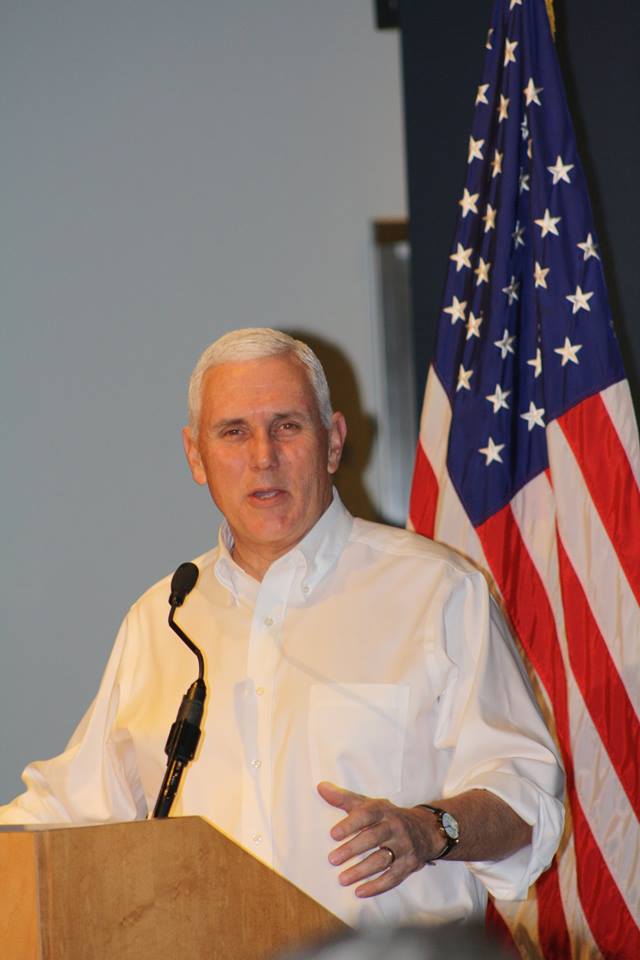 Before Governor Pence dropped the curtain to reveal the relic, he took off his jacket to reveal rolled up shirt sleeves in a workingman’s fashion to honor the Indiana Railsplitter. “I thought it was appropriate for the occasion,” the Governor explained. Staying in the moment, Pence harkens back to a predecessor by repeating Governor Otis Bowen’s quote, “Lincoln made Illinois, but Indiana made Lincoln.” He made sure to mention his trip to Southern Indiana a couple days before to bury another predecessor, Edgar Whitcomb, who died February 6th. Make no mistake about it, Mike Pence loves Indiana history.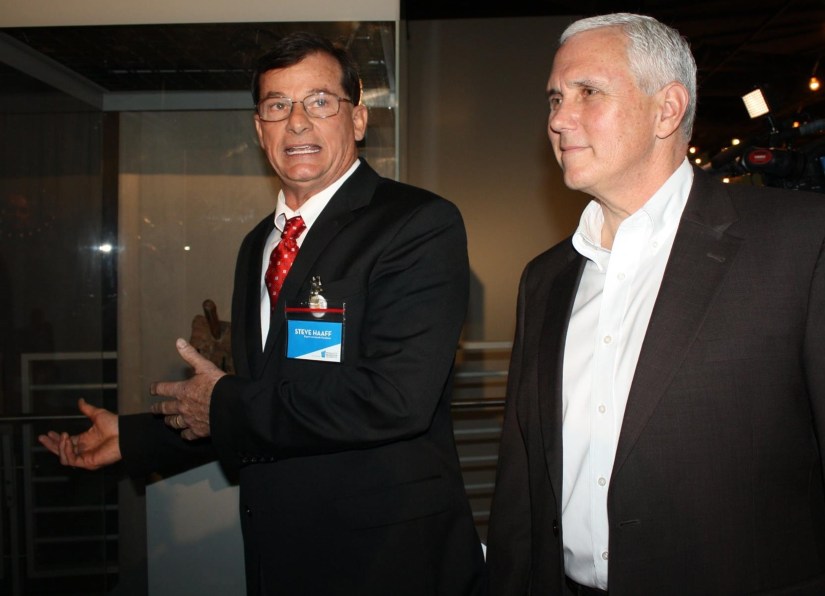
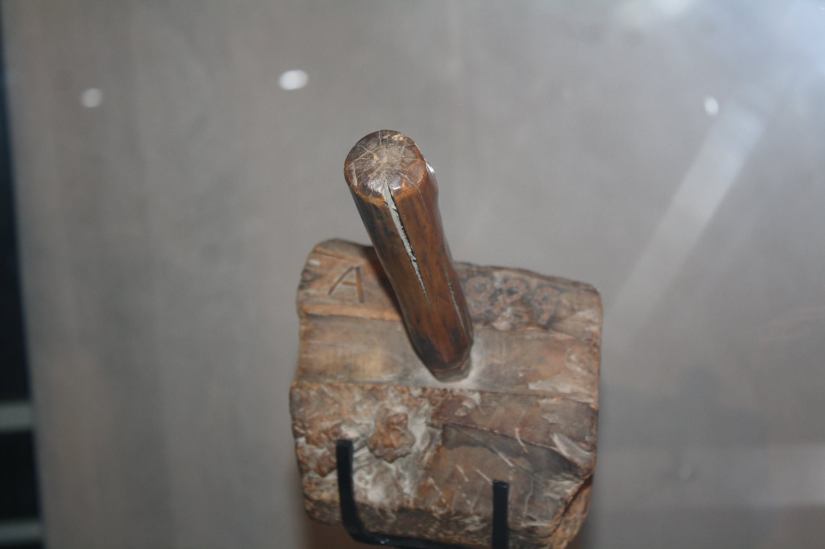 The mallet most closely resembles a carnival strongman’s prop,or Thor’s hammer, but a closer examination immediately reveals it’s cryptic secret. Above the handle’s stem lay the initials “A.L.” with a year date of “1829.” Steve Haaff explains that the initials and date are not carved as one may surmise, but rather they are metal inlays. Haaff states, “Thomas Lincoln was a carpenter and Abe was his only apprentice. Thomas hoped that his young son would follow him into carpentry, but Abe Lincoln wanted to be a blacksmith. These metal pieces were inserted into the mallet by Abe Lincoln himself.”
 ISM’s Ogden further explains, “He didn’t put those initials and that date into the mallet because he was Abraham Lincoln, he put them there to mark the tool as his own. He was just a Hoosier farm-boy at the time with no idea he was on his way to becoming a legend.” Ogden, whose fervor for Lincoln is rivaled by few, explains the mallet’s secret by identifying it as the only known item that ties Abraham Lincoln to Indiana. “The Lincoln’s were Indiana pioneers, they arrived here just a week before we were made a state in the Union. While they were not poor, they were also not wealthy.” says Ogden. “The Lincoln family used everything they owned, in most cases using it all up. When they moved to Illinois in 1830, they couldn’t take everything with them and this mallet was among those things left behind. Whether Abe gave the mallet to his neighbors, or whether the Carter family simply picked it up from the pile of discards is debatable. But we’re certainly glad it survived and are delighted to be able to display it for our guests.”
 Ogden explains that the ISM was fortunate to obtain the collection and although it is vast and comprehensive, he says that the question he got the most from visitors was, “Where is the Indiana material? and I always had to reply, There is no Indiana material. This mallet changes all that. Those railsplitter legends were all we had. This mallet confirms that folklore and brings all of those stories together.”
 Lincoln’s mother Nancy died of milk sickness in October of 1818. Haaff states that the planks were made from a log from the leftovers pile used to make the family cabin. “Thomas made the coffin while 9-year-old Abe sat nearby and whittled the pegs for his mother’s coffin.” His mother’s death, and that of his beloved elder sister Sarah’s death 10 years later, devastated Lincoln and laid the foundation for the depression that haunted him for the rest of his life. No doubt, Thomas and Abraham made the coffin for Sarah too.
 Alan E. Hunter