Original publish date: September 9, 2011 Reissued: July 5, 2018
It was Wednesday night March 16, 1921, St. Patrick’s Day Eve, and Indianapolis was stretching the boundaries of the cultural heartland. That is, with the help of recent Pulitzer Prize winning playwrite Eugene O’Neill. The state and nation were in flux; World War II was still fresh in the hearts and minds of Americans (the United States officially declared peace with Germany in August of that year), newly minted President Warren G. Harding had been in office less than two weeks, and the Indiana Ku Klux Klan was officially chartered by the state. Worldwide, Adolph Hitler assumes leadership of the Nazi party, Albert Einstein wins the Nobel Prize in Physics, and 5 million people die in the Russian Famine brought on by the Russian Civil War.

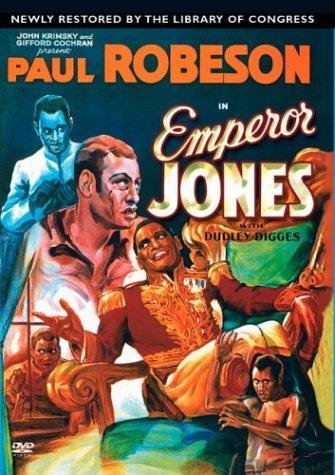
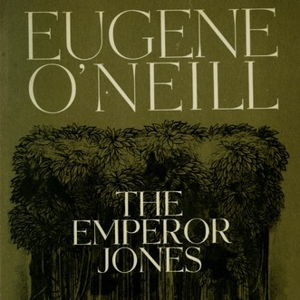
Out of this atmosphere and into the footlights of the Little Theatre in Indianapolis stepped “The Emperor Jones”, an expressionist play by Eugene O’Neill featuring a controversial unlikable black protagonist in the lead role. The play tells the story of Brutus Jones, an African-American train porter who kills a man, is sentenced to prison, escapes to a Caribbean island, and cons his way to the Emperor’s throne. The story is told from the prospective of Jones himself in a series of eight acts that are written in flashback style and scripted in the vernacular of Jim Crow America in a decidedly unflattering colloquial tongue. So dominant is the lead character, that scenes two thru seven feature only Rufus Jones himself speaking in a rambling retrospective of his two year sojourn to the top.
The play had premiered off Broadway in 1920 and was so well received that it eventually had to be moved to a larger theatre on Broadway to accommodate demand. It was Eugene O’Neill’s first critical and financial success and is credited with launching the future Nobel Prize winner’s career. While there can be no doubt that Eugene O’Neill took daring chances with his plays that would ultimately change the face of American theatre, we must also tip our cap to the “Little Theatre” of Indianapolis for the risks assumed by staging this one-time performance.
“The Little Theatre Society” was founded in the Fall of 1915 to showcase productions by American and European authors / playwrites heretofore unable to garner recognition by mainstream producers. The Society was unique in that it had no theatre of its own. During the earliest years, plays were performed in the sculpture court of the John Herron Art Institute. Although beautiful, the acoustics were poor and the venue could only seat 200 guests. Soon, performances were soon moved to the Masonic Temple. The Temple was beautiful and could seat 1,000 guests, but the stage was shallow and there were no dressing rooms. Each member of the society paid a $ 5 annual membership fee which entitled them to 12 tickets for every performance. Members could use the tickets themselves or sell them to the public at an average cost of between twenty-five and fifty cents each.
According to the Society’s literature, their purpose is to: “encourage the production of new plays, plays which cannot be produced by commercial stage, either because of their content or lack of commercial possibility-in short, to encourage all community endeavor of an original character in the field of the theatre.” The Little Theatre Society was among the first to shine a spotlight on Hoosiers Theodore Dreiser and W.O. Bates. Other productions included George Bernard Shaw, Booth Tarkington, Jack London, Oscar Wilde, William Butler Yeats, George Ade, Meredith Nicholson, and James Whitcomb Riley. And that was just in the Theatre’s first two years.
 With the choice of O’Neill’s work, “The Emperor Jones”, the Society was taking an enormous risk if only for the fact that it required an elaborate stage for a one night performance. And then there was the Klan. The KKK was growing by leaps and bounds despite the fact that it had just been formally recognized in the state that same year. Soon, one third of the native male white born citizenry of the state would belong to the Klan. This was a play solely centered around a strong, murderous black man in a position of absolute authority in production in the principally white governed center of the WASP-ish Midwestern cornbelt.
On the contrary, in defiance of its cornbelt stereotype, the Little Theatre Society was chartered for just such bold experimentation and modeled after such avant-garde venues as the Moscow Art Theatre, the Abbey Theatre of Dublin, the Manchester Players in England and Théâtre Libre in Paris. Local critics, like Walter D. Hickman of the Indianapolis Times, applauded the company’s brave undertaking immediately: “Last night at the Masonic Temple, an Indianapolis audience witnessed for the first time a local presentation of The Emperor Jones. No legitimate theatre in Indianapolis would ever think of presenting this play…the title role was played by a local negro educator, Mr. Arthur T. Long…Mr. Long dominated every scene last night and gave to the role the great beauty of expressive inflection which the part demands. I forgot that a local man was playing the role and I surrendered myself to the grim tragedy which was unfolded on the Masonic stage. A grim tragedy told in a volcanic way.”
 W. F. McDermott, drama editor of the Indianapolis News, wrote this about Long: “a colored actor, played the role of the emperor with several moments of great naturalness. He was able to portray the negro fear of “ha’nts” with unusual power.” But McDermott was less kind to the playwrite, “O’Neill writes darkly of brooding, inscrutable fate; of black and stormbound heights, of man, stripped savage and terrified; of man tragically at odds with his environment and foredoomed.”
However, it was the local black owned press that was perhaps hardest on the production, routinely denouncing O’Neill’s work for its stereotypes in the form of the backwards (certainly by today’s standard) dialog. Although groundbreaking when viewed within the context of the time, today, O’Neill’s so called “Negro plays” are seldom performed nowadays because of their perceived negative stereotypes. Much the same as Mark Twain’s historic works have been routinely revised and censured by modern day pundits. In truth, racial issues were never O’Neill’s focus. His aim was the human soul in its tragic destiny. His ultimate goal was to provide opportunities in mainstream theatre for talented black actors. Eugene O’Neill was the son of James O’Neill, an actor whose “Romeo” character was described as the best ever, making him one of the countries first matinee idols. O’Neill was determined to revolutionize what he called the “hateful theater of my father, in whose atmosphere I had been brought up.”
 Perhaps the most unusual feature of the Indianapolis production was the choice of the lead actor chosen to portray Brutus Jones. Arthur Theodore Long was born on December 31, 1884, the son of Henry and Nattie (Buckner) Long in Morrillton, Arkansas. According to the 6th edition of “Who’s Who in Colored America (1941-1944)”, Long graduated from Sumner High School in St. Louis, Missouri in 1904. He entered the University of Illinois at age twenty and earned a BA degree in 1908. Arthur then went on to further his education at both Indiana and Butler universities. He then studied at the University of Chicago, presumably in pursuit of his master’s degree. Long earned teaching credentials in history, civics, English, music and mathematics.
In 1909 Long was hired to teach at I.P.S. 26 (one of the “colored schools”) in Indianapolis. There he served as assistant principal (1910 to 1915) and as principal (1915 to 1923). Long served as principal at a high school in Crawfordsville and later as a supervisor for principals in Indiana. Long then took a similar position at Lincoln School in Trenton, New Jersey, where he served for a decade. Wherever he went, Arthur T. Long promoted the arts (dance, music, and drama) and was described by people who knew him as a “tall, light skinned serious minded disciplinarian who liked to play the piano for the students in the mornings.” In good weather, he often lit up the school playground at night to stage impromptu school productions featuring black heroes like Frederick Douglas, Booker T. Washington and Benjamin Banneker. Long left his position in Trenton in November of 1933, just two months before his fiftieth birthday and was never heard from again.

What became of O’Neill’s social masterpiece, “The Emperor Jones?” Although it struck the theatre world like an electric shock nearly a century ago, it is relatively forgotten today. Personally, I believe it to be as socially relevant today as it was when it made its debut back in 1920, regardless of color. The story could easily serve as a parable for many of the problems facing every facet of today’s society. O’Neill’s Brutus Jones is a desperate man facing a hopeless situation who is thrust into an opportunity he sees as his only chance at survival. He arrives on an isolated island and is immediately elevated to a position of authority and power by the island’s uninformed, superstitious inhabitants. In time, he abuses his position, becomes careless and is punished (in this case killed) by his “subjects” who have caught on to his game.
Is this not unlike today’s ninety-day wonders: rookie corner drug dealers who operate freely and undetected for brief periods of time with more money than they can spend and more friends than they can count before law enforcement catches up to them? Or perhaps a modern day investment banker or securities trader spending the money of trusted friends and clients for his own whims before he is discovered and prosecuted? Both of these examples speak their own language and justify their own actions in the same coarse way as Eugene O’Neill’s Brutus Jones did all those years ago. Although you can easily look up “The Emperor Jones” on the web and decide for yourself, its unlikely that you’ll be seeing it on Broadway anytime soon. But, like me, you can take pride in the fact that nearly a century ago, a brave little theatre troupe in Indianapolis had the guts to stage the saga on St. Patty’s Day eve when other, allegedly more “Cosmopolitan” cities wouldn’t touch it.
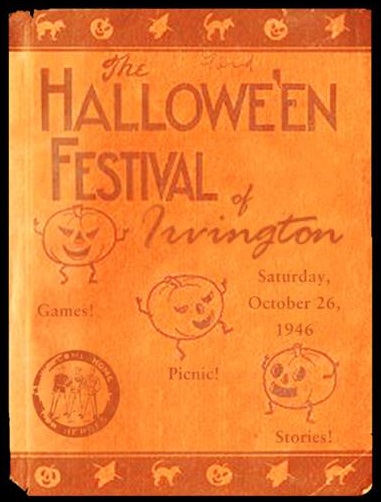
 We’ve all heard the stories, legends and rumors surrounding that now legendary first event. It was sponsored by the Walt Disney company featuring costumed characters with a Disney based theme. The Disney folks gave away potentially priceless hand painted film production cels right here on the streets of old Irvington town. Walt Disney himself was seen walking down Audubon with Mickey Mouse at his side. It’s hard to separate fact from fiction nowadays.
 A week later on May 5, 1942, every United States citizen received their much anticipated “War Ration Book Number One”, good for a 56-week supply of sugar. Initially, each stamp was good for one pound of sugar and could be redeemed over a specified two-week period. Later on, as other items such as coffee and shoes were rationed, each stamp became good for two pounds of sugar over a four-week period. The ration book bore the recipient’s name and could only be used by household members. Stamps had to be torn off in the presence of the grocer. If the book was lost, stolen, or destroyed, an application had to be submitted to the Ration Board for a new copy. If the ration book holder entered the hospital for greater than a 10-day stay, the ration book had to be brought along with them. Talk about your red tape!
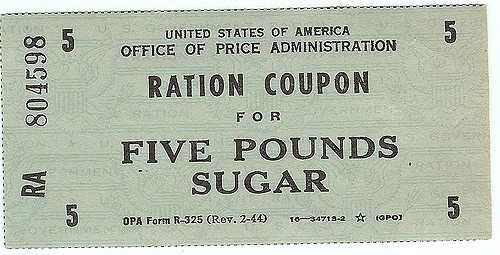
 To make matters worse, just because you had a sugar stamp didn’t mean sugar was available for purchase. Shortages occurred often throughout the war, and in early 1945 sugar became nearly impossible to find in any quantity. As Europe was liberated from the grip of Nazi Germany, the United States took on the main responsibility for providing food to those war ravaged countries. On May 1, 1945, the sugar ration for American families was slashed to 15 pounds per year for household use and 15 pounds per year for canning – roughly eight ounces per week per household. Sugar supplies remained scarce and, just as sugar had the distinction of being the first product rationed at the start of the war, sugar was the last product to be rationed after the war. Sugar rationing continued until June of 1947, over six months after the first Irvington Halloween festival in October of 1946.
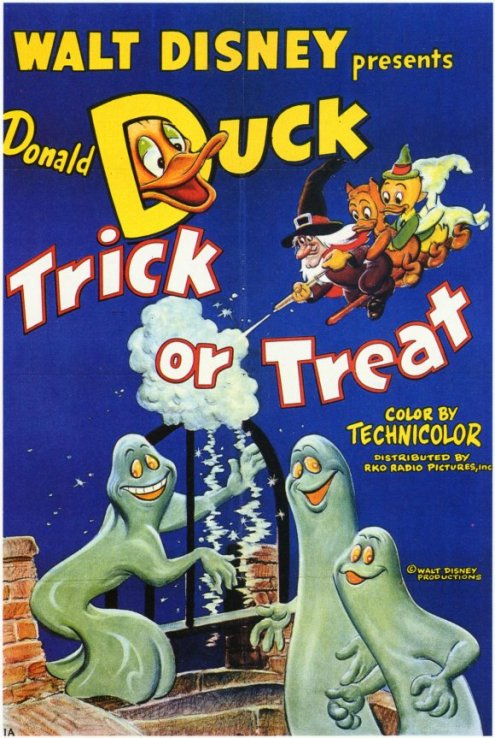
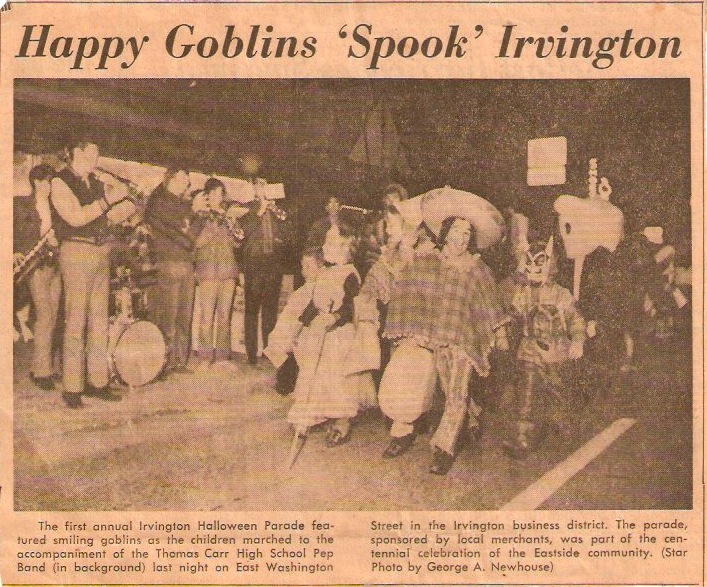 An argument can be made that it was events like the First Irvington Halloween Festival that kicked off the tradition of trick-or-treating as we know it today. Although the Halloween holiday was certainly well known in America before that first Irvington celebration, it was predominantly a holiday for adult costume parties and a chance to cut loose with friends playing party games while consuming hard cider. Early national attention to trick-or-treating in popular culture really began a year later in October of 1947. That’s when the custom of passing out the playful “candy bribes” began to appear in issues of children’s magazines like Jack and Jill and Children’s Activities, and in Halloween episodes of network radio programs like The Baby Snooks Show, The Jack Benny Show and The Adventures of Ozzie and Harriet. Trick-or-treating was first depicted in a Peanuts comic strip in 1951, perhaps the image most identified with the children’s holiday in the hearts and minds of baby boomers today. The custom had become firmly established in popular culture by 1952, when Walt Disney debuted his Donald Duck movie “Trick or Treat”, and again when Ozzie and Harriet were besieged by trick-or-treaters on an episode of their popular television show. In 1953, less than a decade after that first festival in Irvington, the tradition of Halloween as a children’s holiday was fully accepted when UNICEF conducted it’s first national children’s charity fund raising campaign centered around trick-or-treaters.
 Most of this column’s readers are aware that part of my passion for history revolves around collecting, cataloging, displaying and observing antiques and collectibles. There exists in the collecting world a strong group of enthusiasts devoted to the pursuit and preservation of Halloween memorabilia of all types. Costumes, decorations, photographs, publications and postcards in particular. The origins of Halloween as we now know it might best be traced in the postcards issued to celebrate the tradition. The thousands of Halloween postcards produced between the turn of the 20th century and the 1920s commonly show costumed children, but do not depict trick-or-treating. It is believed that the pranks associated with early Halloween were perpetrated by unattended children left to their own devices while their parents caroused and partied without them. Some have characterized Halloween trick-or-treating as an adult invention to curtail vandalism previously associated with the holiday. Halloween was not widely accepted and many adults, as reported in newspapers from the 1930s and 1940s, typically saw it as a form of extortion, with reactions ranging from bemused indulgence to anger. Sometimes, even the children protested. As late as Halloween of 1948, members of the Madison Square Boys Club in New York City carried a parade banner that read “American Boys Don’t Beg.” Times have certainly changed since that first Halloween festival 65 years ago.
 A 2005 study by the National Confectioners Association reported that 80 percent of American households gave out candy to trick-or-treaters, and that 93 percent of children, teenagers, and young adults planned to either venture out trick-or-treating or to participate in other Halloween associated activities. In 2008, Halloween candy, costumes and other related products accounted for $5.77 billion in revenue. An estimated $2 billion worth of candy will be passed out during this Halloween season and one study claims that “an average Jack-O-Lantern bucket carries about 250 pieces of candy amounting to about 9,000 calories and containing three pounds of sugar.” Yes, 65-years ago, Halloween looked quite different than it does today. Next week, doorbells all over Irvington will ring, doors will be opened and wide-eyed gaggles of eager children will unanimously cry out “Trick-or-Treat” from Oak Avenue to Pleasant Run Parkway.
 Costumed kids will be rewarded for their efforts with all sorts of tribute in the form of coins, nuts, popcorn balls, fruit, cookies, cakes, and toys. As a casual observer born long after that first Irvington Halloween Festival and an active participant in the festivities that will begin next week, I’m glad that our Irvington forefathers skirted government regulations all those years ago. In fact, as a fan of all things Irvington, I’d go so far as to say that this community has played a big part in the Halloween holiday as we know it today. Because, grammar notwithstanding, nobody does Halloween like Irvington do.


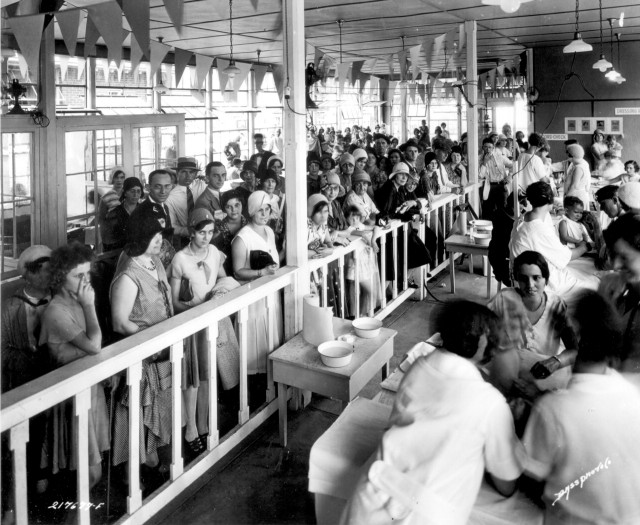
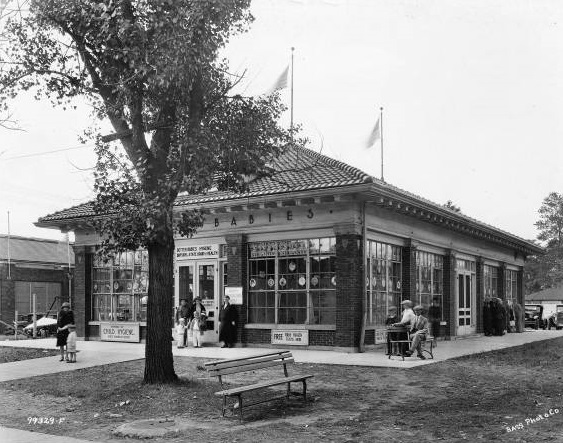
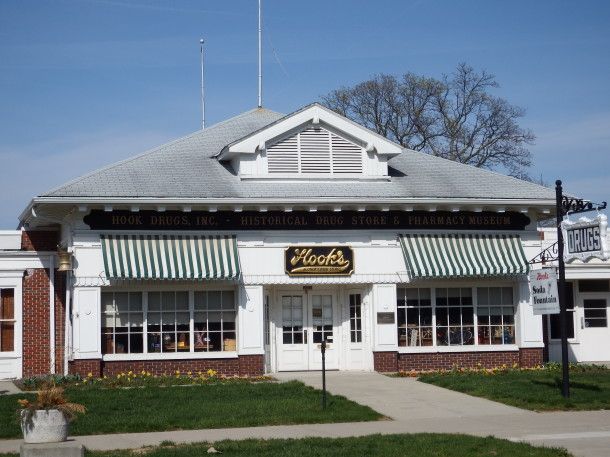

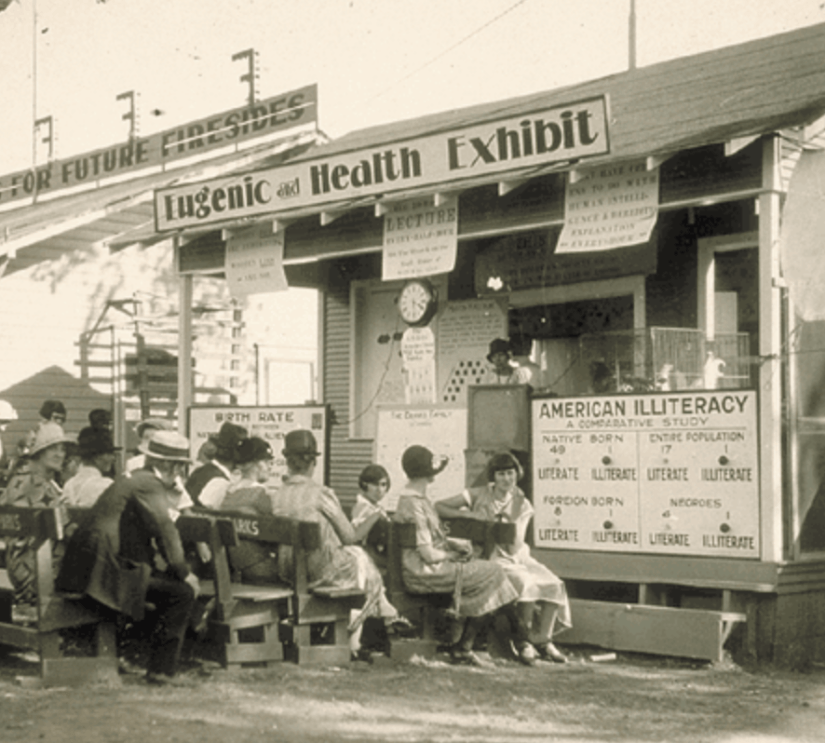
 If the criteria were based solely on demography and topography, Indiana was the perfect test case for the larger National Eugenics movement. In 1920, the state’s population approached 3 million residents, 95% of whom were native-born and 97% of whom were White. The bulk of Indiana’s African American and immigrant communities lived in segregated communities within the cities of Indianapolis, Gary, and East Chicago. Unlike other more racially diverse, multilingual states such as New York, Illinois, and California, Indiana’ Eugenics project did not have to translate their message into foreign languages or tailor their “Americanization” campaigns to foreign speaking populations. Instead, the Hoosier project targeted poor and working-class Whites, especially impoverished farm dwellers living in undeveloped rural communities. (Keep in mind that most rural Hoosier farms and homes did not have indoor plumbing or electricity until the 1940s.)
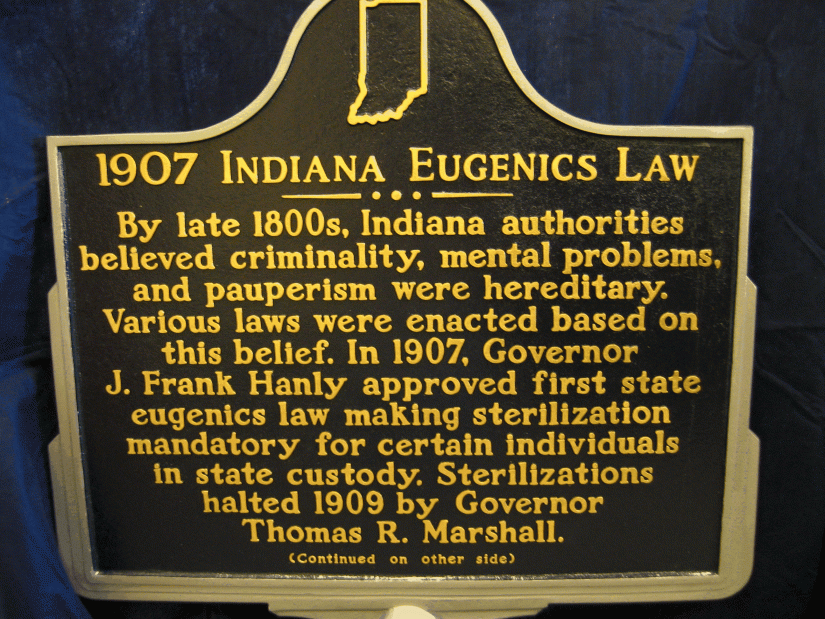 As a Hoosier, although others may argue otherwise, the connection between Eugenics and the Ku Klux Klan cannot be denied. Implicit to be sure, both organizations shared undeniable common goals, the first being the assurance of racial purity and the second being the improved survival of the Anglo-Saxon race. Luckily for us, the fall from favor of the Eugenics movement in our state and nation coincides with the fall of the KKK.

 The sad truth is that 2,424 people were medically sterilized in Indiana institutions. There was near parity between males and females in that number: 1,167 males and 1,257 females were sterilized. 1,751 of these people were considered mentally deficient and 667 mentally ill. That figure does not reflect the number of sterilizations performed in the years before the law was passed. As many as 800 of those sterilizations were carried out in the Indiana State Reformatory by one man, Dr. Harry Sharp. It was Dr. Sharp who is credited with performing the very first vasectomy in the United States and the procedure has changed little since he created it in 1899.
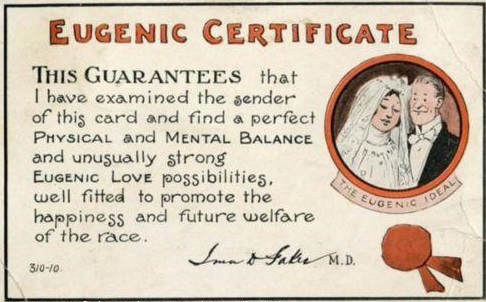
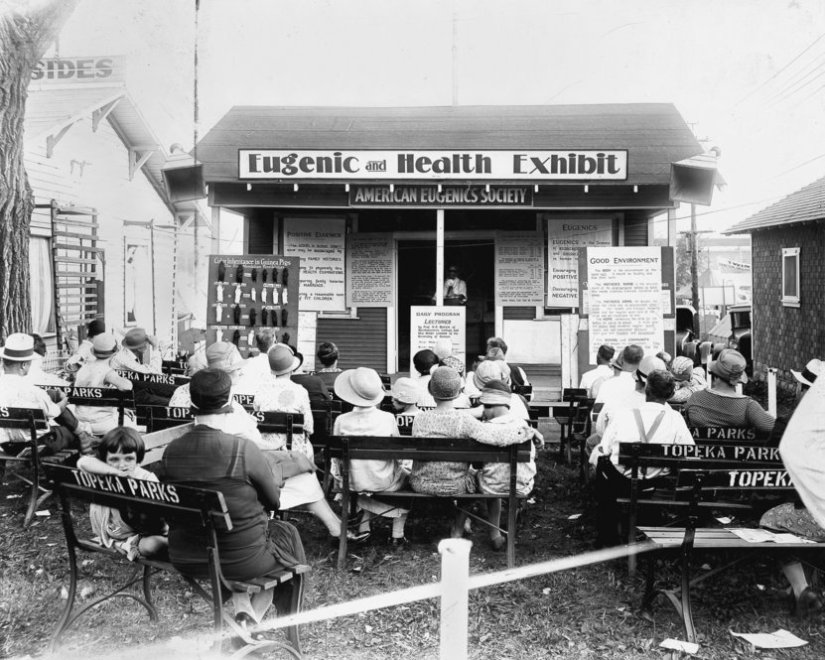
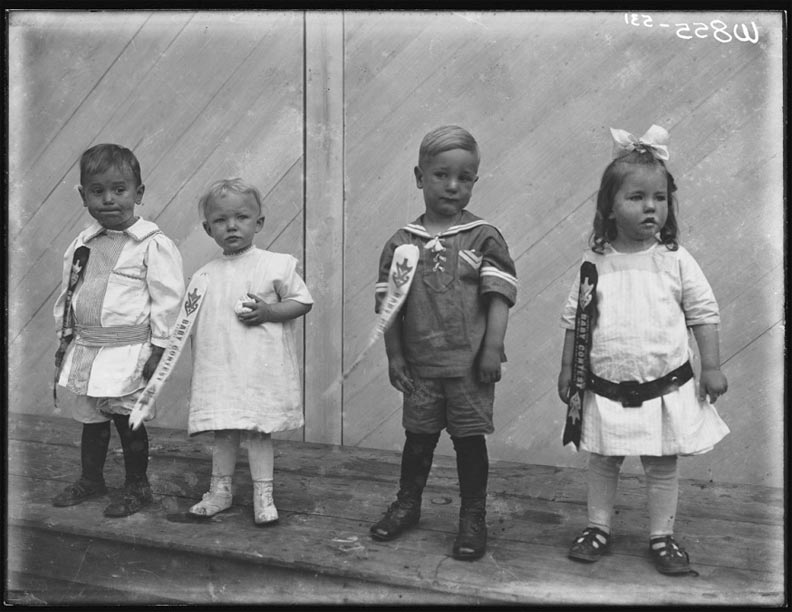 Over 19 million people attended this “West Coast World’s Fair Exposition” during 10 months from February 20 to December 4, 1915. The fair was devoted to extolling the virtues of a rapidly progressing nation, with particular emphasis devoted to new developments in science, agriculture, manufacturing and technology. The display generating the most interest among fairgoers was devoted to medical developments concerning health and disease, particularly theories on race betterment or, the promotion of eugenic studies. Expo promoters noted the interest of excited visitors and soon, Eugenics, billed as the advancement of civilization, became the main theme of the fair.