


Original publish date August 10, 2010 Reissue date: August 27, 2020
Recently the Leslie Hindman auction house in Chicago caused a flap when it was announced that they would be auctioning off the instruments used to embalm Elvis Presley after his untimely death at the age of 42. The auction house was planning to sell the macabre Elvis relics in two separate lots: one with a pre-sale value of $4,000 to $6,000, and the other estimated at $6,000 to $8,000. Elvis may have left the building, but the man’s ability to get people “all shook up” has not diminished as the announcement sent shock waves through the media and wrought havoc among fans, collectors, historians and auctioneers alike.
The items in question, which included a comb, eye liner, rubber gloves, forceps, needle injectors, an arterial tube, aneurysm hooks, and a toe tag, came from an unidentified former employee who worked for the Memphis funeral home where Elvis’ body was last attended to. They were used only once — to embalm Elvis’ body, apply makeup to his face, and dye his graying hair to the jet-black color his fans knew so well. The replacement toe tag, marked “John Doe,” was attached to the King’s body after an eager fan stole Elvis’s original tag during the chaos at the hospital where he was taken. Other items in the grouping include the coffin shipping invoice, autopsy room preparation paperwork and the hanger that Elvis Presley’s funeral suit and tie arrived on.
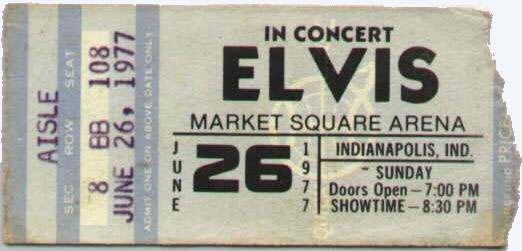
Elvis Presley’s last concert at MSA in Indianapolis.

According to the auction house, the items were used to prepare the King’s body for a private viewing for family and friends only in the morning after his death. Presley died August 16, 1977, in the bathroom of his Graceland estate of an irregular heartbeat. “The senior embalmer at the Memphis Funeral Home at the time of Presley’s death saved the items for the last 33 years and decided to sell them after he realized someone might value them,” said Mary Williams, director of books and manuscripts for Leslie Hindman Auctioneers.
Presley’s autopsy involved draining all body fluids and removal of all vital organs which were then sent to a pathology lab for testing to ascertain the cause of death. The coroner, Dr. Jerry Francisco, along with Dr. Eric Muirhead and Dr. Noel Florredo, presided over the autopsy of Presley. The trio initially concealed the facts by attributing the cause of death to a massive heart attack. They later claimed their motive “was not to tarnish the image by a scandal of a drug habit.” For decades, when asked about the rumors that Elvis is not dead, Francisco consistently replied, “If Elvis is NOT dead, he’s walking around without his major organs as Elvis’ brain and heart are still in storage at Memphis Memorial Hospital.”
When the sale was announced, a spokesman for the auction house admitted the auction may be controversial as some people “are going to be disappointed” by the sale of these items. However, Elvis memorabilia remains in strong demand with a lock of his hair selling for $18,300, a red ultra-suede shirt worn by Elvis in publicity photos garnering a $34,000 bid, and an inscribed record sleeve selling for $10,370 at a Hindman’s auction in October 2009. The proposed sale of these creepy collectibles combined with the fact that he’s been dead for 33 years, keeps Presley intact as one of the highest grossing celebrities, bringing in $55 million in 2009 according to Forbes.com. Presley’s posthumous popularity notwithstanding, why would anyone want to buy these things?

Luckily, that question will remain unanswered because these sad rock-n-roll souvenirs were removed from the August 12th auction after doubts were raised about their provenance and authenticity. According to the auction house, the items have been given back to the Memphis Funeral Home, following a dispute between the home and the potential consignor. “Due to questions of ownership, the retired embalmer and his son have decided to turn over the property to the Memphis Funeral Home and its parent company, Service Corporation International, with the intention of donation,” Hindman said in a post on their Web site.
Shortly after the auction was announced, the Memphis Funeral Home claimed that those tools were taken without the home’s consent. The funeral home thought the embalmer was dead, but he’s not. He’s in his 80s. The funeral home contacted the elderly man and told him he can’t sell the items and if they were not returned, legal steps would be taken to reclaim them. According to funeral home president E.C. Daves, “We are awaiting word from the Elvis Presley estate on its preferences for the items. The items could be donated to a funeral history museum in Houston or they could be destroyed. Either way, the funeral home is not going to do anything until the Presley estate agrees with it.”

Now, maybe you’re thinking, “But you never answered the question, who would buy this stuff?” Well, before the items were pulled from the sale, Hindman’s auction house specialist Williams explained, “It’s really about owning a piece of the celebrity themselves… and how much closer can you get than the actual embalming instruments?” Okay that’s a creepy statement. However, I can help add some clarity to the issue for you. If you’ve been paying attention to past columns, you’ve learned that I’ve been an antique dealer for 30 years and a memorabilia collector for even longer than that. As with many collectors, I’ve bought, traded and sold many collections over the years.

One of those collections was a group of crime related autographs, artwork and paintings featuring infamous names like serial killers John Wayne Gacy and Ted Bundy, Manson family members Charles Manson, Tex Watson and Squeaky Fromme and political assassins James Earl Ray, Jack Ruby, Lee Harvey Oswald, and Charles Guiteau. I have owned signatures of Bob Ford, the “dirty little coward” who killed Jesse James and a personal check signed and written out by Bruce Lee made payable to and endorsed by his hairstylist Jay Sebring, who died alongside Sharon Tate in the Manson family massacre. Most of these items lost their appeal to me as I grew older but the urge of the infamous and their misdeeds never fully went away, for I still own a signed photo of John Wilkes Booth and a few other assorted macabre mementos from our country’s history.
I have seen many similar grisly relics offered for sale in the past, and held many of these macabre items in my hands including several items connected to the Lincoln assassination conspirators, the blood stained glasses that John Lennon wore the night he was murdered, the “Double Fantasy” record album Lennon signed for Mark David Chapman just a short time before Chapman killed Lennon, the watch that was in Notre Dame coach Knute Rockne’s pocket when he died in a plane crash, the watch Buddy Holly wore on his wrist when he likewise perished in a plane crash, and countless locks of hair and death masks from celebrities in every field across the board. Within the “hobby” they are commonly known as “blood relics” and they are in high demand. Whether you agree or disagree with their relevance, there exists a lucrative market for these sad souvenirs.
Collecting is an addiction. There is the thrill of the chase, the negotiation for acquisition, the elaborate planning for display and the final realization that you now possess the object of your desired search. For those collectors whose fandom goes beyond collecting rare records, signed merchandise and other conventional methods of capturing a performer’s essence, it’s only natural that they would be interested in something that would bring them a little closer to the performer. And friends, it doesn’t get much “closer” than this. So ask yourself: if you had the chance to own, possess or simply handle one of these unique items, what would you do?

 When animals huddle together in open fields…when ants travel in straight lines (or are unusually active)…when the “Northern Lights” are visible in the sky…when bats cry much, or attempt to fly into the house…when more bees enter than leave the hive (every notice that bees never get caught in a shower?)…when distant bells sound close…when birds skim close to the ground…when boiling water evaporates more rapidly than usual…when dead branches fall to the ground in calm weather…when bubbles rise from marshy ground or appear on pools of stagnant water…
 If coffee bubbles cling to the cup instead of floating in the center…when corns are more painful than usual… when cottonwood trees turn the undersides of their leaves upward…when a cow thumps its ribs, or attempts to scratch its ear, with its tail…when crabs leave the water and remain on land… when cream or milk sours during the night…an old adage states that a new (crescent) moon with horns tilting downward can’t hold water so…when crickets chirp loudly and more persistently than usual… when crows caw loudly and continuously or when a crow is seen flying alone… when curly hair becomes more unruly than usual…
 When grate fires crackle and throw sparks to a greater degree than usual…when fish jump from the water, or swim close to the surface…when oiled floors “sweat”…when flowers stay open all night (and some say when the fragrance is stronger)… when frogs assume a brownish hue and croak louder and longer…when there are two full moons in a single month…when geese are particularly noisy…when glow worms shine brighter…when goats bleat a great deal…
 And lastly, when ordinary salt begins to lump, cake and clog the saltcellar, get ready for rain. According to Morton’s, their salt is not made this way because, “When it rains it pours.” Morton’s explanation: “Because of its unique cube shaped crystals, which tumble off one another in damp weather instead of sticking together like the flake crystals of ordinary salt…every grain is usable-there are no wasteful lumps to throw away. If you have children between 6 and 18, be sure to use the iodized variety and thus protect them simple goiter.” Goiter is a swelling in the neck resulting from an enlarged thyroid gland. Before iodized salt hit the grocery shelves on May 1, 1924, iodine deficiency was the main cause of goiter in the U.S. and even though it has nothing to do with rain, I couldn’t resist throwing that last part in. So much information packed into such a little brochure.


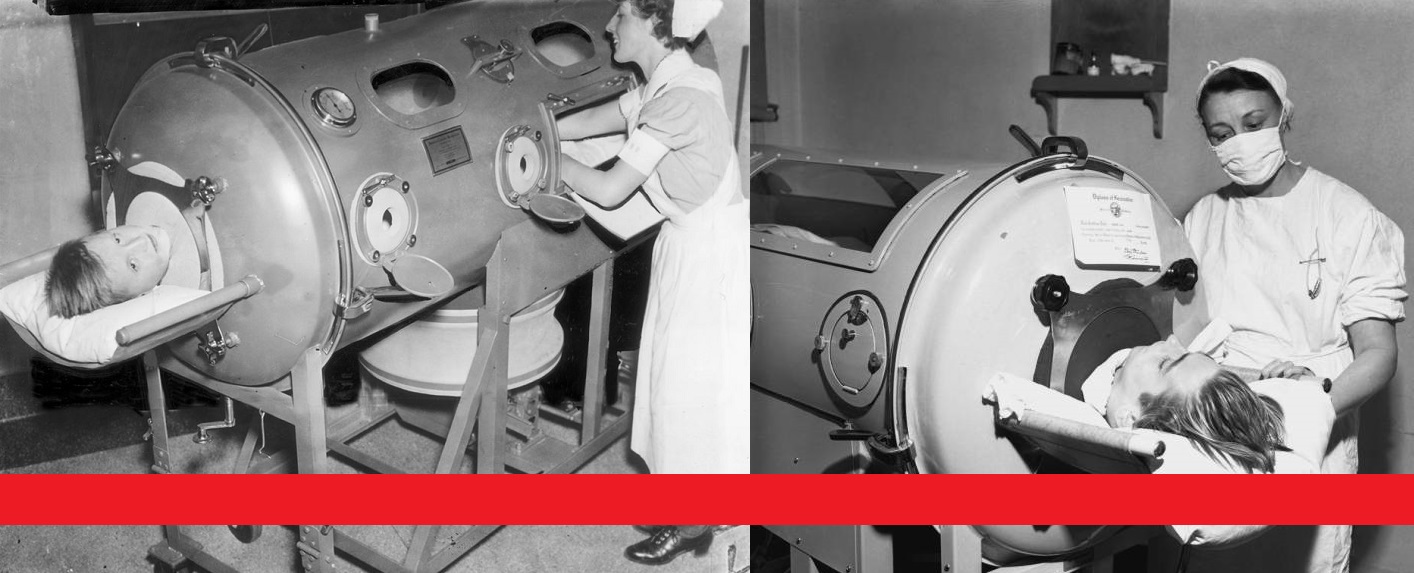

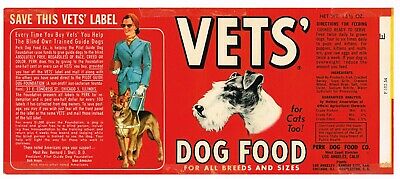 The big problem with these rumors is that they are not tied to the companies that actually have such programs, so that they motivate people to collect huge numbers of bottle caps, empty packets and the like to no avail. The biggest companies are usually the most frequently targeted, recent years those have been mostly soft drinks, beer, cigarettes, and tea. Sadly, before kidney dialysis came along you typically were told to save cigarette packs to earn time on an iron lung.
 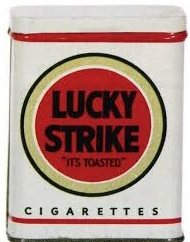 Knowing the damage smoking causes to the lungs, these red stripe redemption rumors truly proved to be a “sick bargain”.
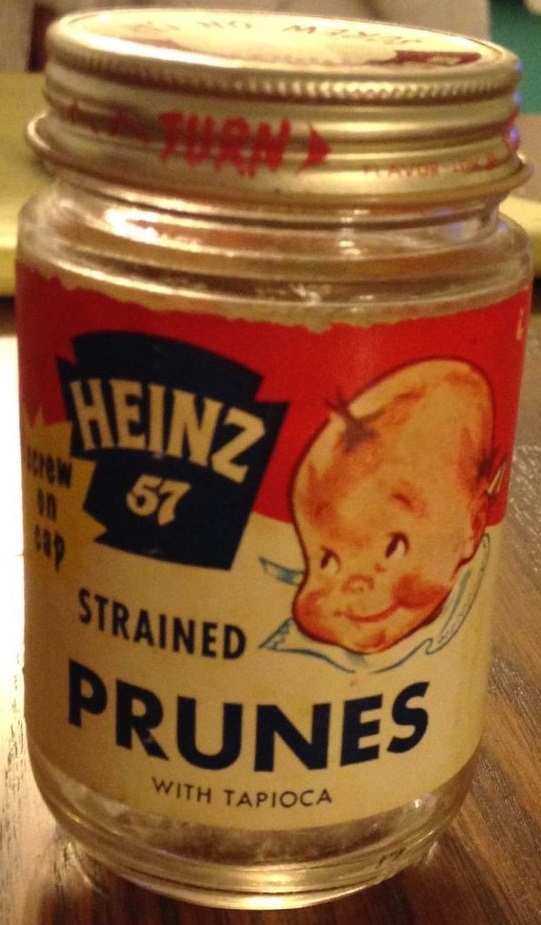 Today Heinz baby food labels can be redeemed to benefit children’s hospitals and Campbell’s soup labels can be used to buy school equipment. In Indianapolis, funds received from the recycling of pop tabs add up to between $30,000 and $50,000 annually for Riley Children’s Hospital. All this money helps with the operating expenses of the Ronald McDonald House Charities of Central Indiana and traditionally covers the cost of operating 3 rooms in the House for an entire year. With redemption rumors, it can sometimes be hard to separate fact from fiction.
 Even though it was a hoax, it didn’t mean it was a bad idea. In the 1950s, the Betty Crocker franchise started a coupon program run by General Mills. Most folks redeemed the coupons for kitchen utensils, but beginning in 1969 General Mills OK’d several fundraising campaigns in which coupons were used to purchase some 300 kidney dialysis machines. The company soon stopped dialysis drives due partly to complaints that it was “trading in human misery.” The program ceased operation in 2006.
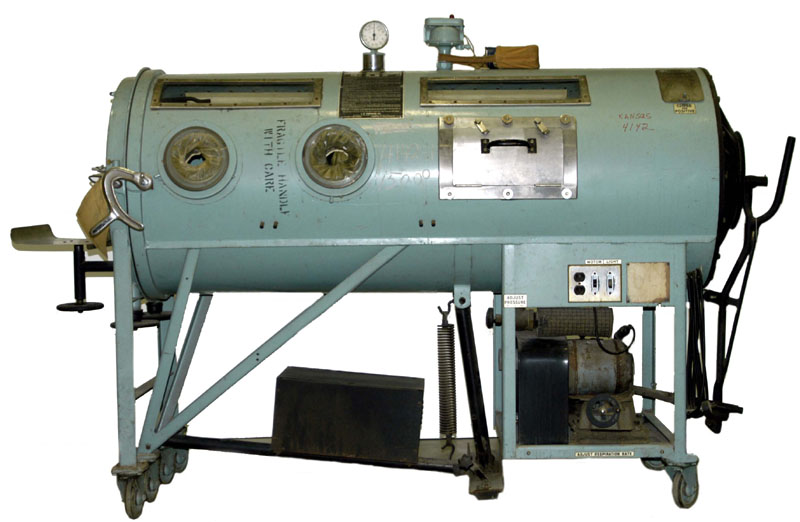 The most common iron lung, known as a “Drinker respirator”, was designed to provide temporary breathing support for people suffering paralysis of the diaphragm and intracostal muscles, which are essential for respiration. Developed in 1929, it came to be an important tool for the care of sufferers of paralytic polio. Strictly defined, “the iron lung is a large horizontal cylinder, in which a person is laid, with their head protruding from a hole in the end of the cylinder, so that their nose and mouth are outside the cylinder, exposed to ambient air, and the rest of their body sealed inside the cylinder, where air pressure is continuously cycled up and down, to stimulate breathing. To cause the patient to inhale, air is pumped out of the cylinder, causing a slight vacuum, which causes the patient’s chest and abdomen to expand (drawing air from outside the cylinder, through the patient’s exposed nose or mouth, into their lungs). Then, for the patient to exhale, the air inside the cylinder is compressed slightly (or allowed to equalize to ambient room pressure), causing the patient’s chest and abdomen to partially collapse, forcing air out of the lungs, as the patient exhales the breath through their exposed mouth and nose, outside the cylinder.” (The Iron Lung, Science Museum Group, Kensington, London, England, U.K)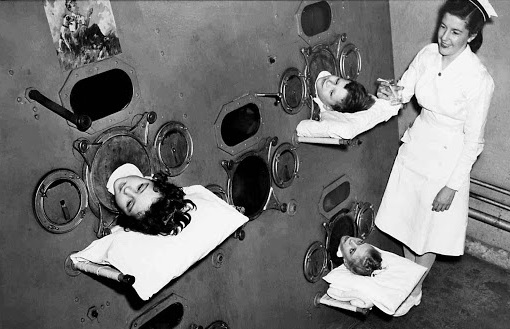
 By 2018, there were only 3 of these 700 pound behemoth iron lung machines operating in the United States. Some machines have a tray that slides out of the tube, others require the patient to climb into the bed of the pod, upon which the patient lays and is then pushed into the machine. The patient’s head is the only part of the body visible once the machine is closed, and the neck collar is adjusted to keep it airtight. Since the head is exposed, patients can eat and drink in the machine but, since both are done while laying down, swallowing can be a challenge and must be done carefully. Since the machine is pushing / pulling the patient, swallowing must occur while the machine is breathing out. Coughing and sneezing can be a challenge since both are involuntary and cannot be properly timed with the rhythm of the machine. The mechanics are under the bed, which produces a vibrating sensation for the patient.
 Today’s ventilators, like those being made in Kokomo right now, are much more portable and are mostly described as “breathing machines” that can be carried as easily as a briefcase. For extreme breathing cases, smaller single-patient iron lungs, known as “Cuirass ventilators” (named for the Cuirass, a torso-covering body armor worn by armored knights), are used. The Cuirass ventilator encloses only the patient’s torso, chest or abdomen, but otherwise operates essentially the same as the original, full-sized iron lung. The lightweight variation of the cuirass is a jacket ventilator or poncho / raincoat ventilator, which uses a flexible, impermeable material (such as plastic or rubber) stretched over a metal or plastic frame placed over the patient’s torso.
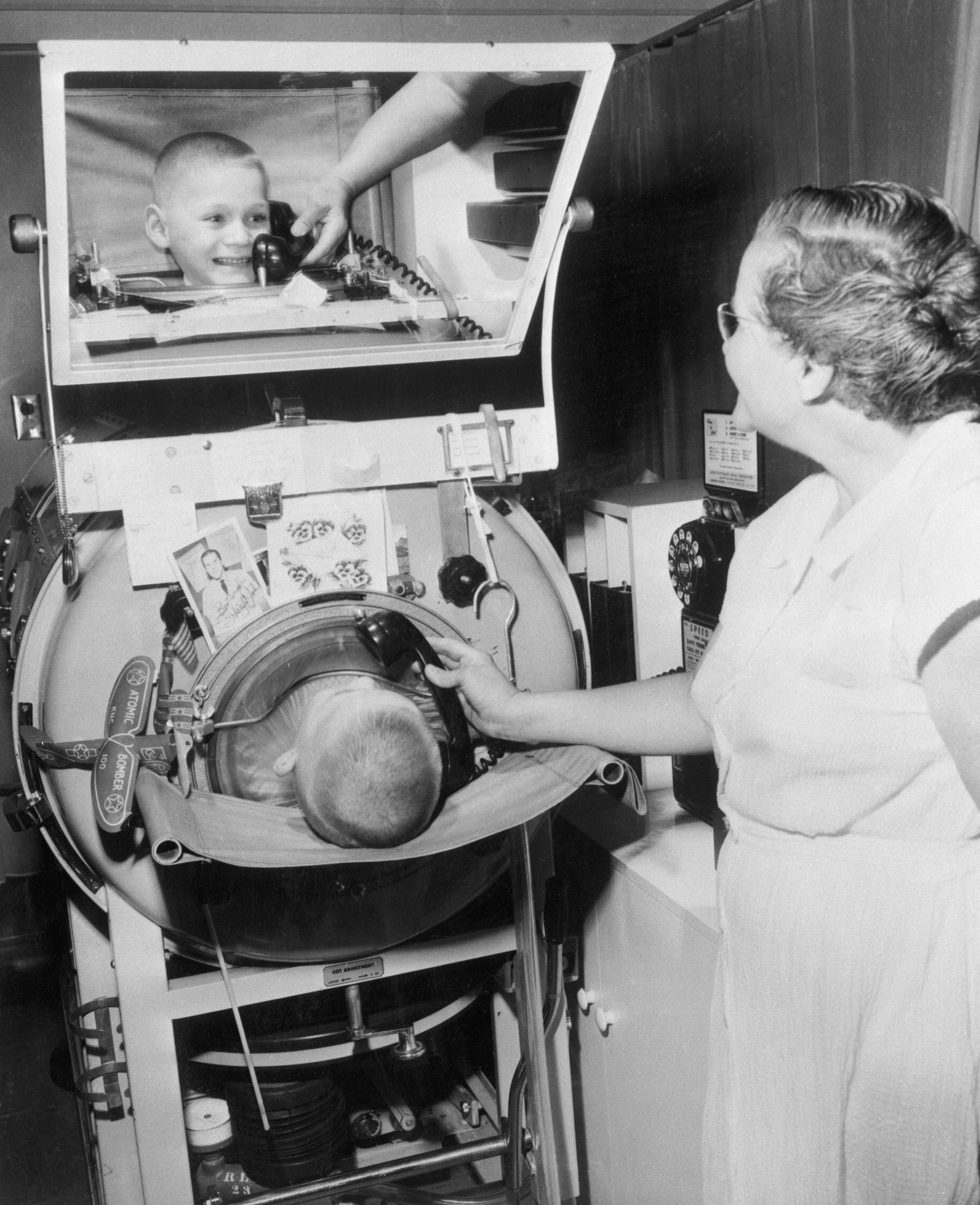 And, although the idea of the old fashioned iron lung mostly only survives in the collective public memory of baby boomers, the COVID-19 pandemic has revived some interest in the device. Thanks to the internet, public safety scams and urban legends proliferate our life daily. As silly as the idea of saving red stripes from packs of cigarettes to exchange for time in iron lungs sounded to the enlightened twenty years ago, when viewed through the periscope of new age social media theory today, it fits right in. And Covid-19 has reignited fears of epidemics past including Polio and the Spanish Flu (which allegedly originated in Kansas by the way). So, in short, there is nothing new under the sun and the takeaway from all of this is that, hopefully, this too shall pass.

 I had the opportunity to meet Kevin McCarthy in Chicago back in 1992 and he was gracious enough to sign a photo for me. It remains a cherished possession. Not only was he a great actor, he was a cousin of former U.S. senator and presidential candidate Eugene McCarthy and one actor Montgomery Clift’s best friends. I could not help but smile wryly when I learned of McCarthy’s death last year on 9/11. He lived to the ripe old age of 96 (we should all be so lucky) and lived a life that most of us can only dream about. The irony of his dying on 9/11, one of the most controversial politically charged dates in American history, was not lost on me. For “Invasion of the body snatchers” remains one of the most controversial politically charged movies of all-time.
 Invasion of the Body Snatchers was selected for preservation in the United States National Film Registry by the Library of Congress as being “culturally, historically, or aesthetically significant”. The American Film Institute ranked “Invasion number nine on its “Ten top Ten” best ten films in the science fiction category. The film ranked number 47 on AFI’s “100 Years… 100 Thrills”, a list of America’s most heart-pounding films.
 Bennell is picked up by the police and questioned in a clinic. The policemen in charge do not believe his account until they receive news of an accident in which a truck carrying strange giant bean pods is opened. The police are quick to alert the authorities; the message has been received, but the actual end of the story is left open. What cannot be denied is the central theme of the heroic struggle of one helpless but determined man of conscience, a small-town doctor (McCarthy), to vainly combat and quell a deadly, indestructible threat. An oft repeated theme of Sci-Fi films of today
 The film is widely viewed as an indictment of McCarthyism and the Red Scare Anti-Communist Era. The unmistakable metaphor: the turning of people into soulless doubles while they sleep represents the dangers faced of America turning a blind eye to McCarthyism. Over the years, others have interpreted the film as a metaphor for the loss of the individual in modern mass civilization, or paranoia about the spread of socialistic Communism, or blacklisting of Hollywood, or as a representation of the loss of personal freedom in the Soviet Union, or the spread of an unknown malignancy or virulent germ (a metaphor within a metaphor about the fear of annihilation by ‘nuclear war’), or of bland conformity in postwar Eisenhower-era America. Still others argue the film is an indictment of the damage to the human personality caused by ideologies of Right versus Left, a theme that resonates today.
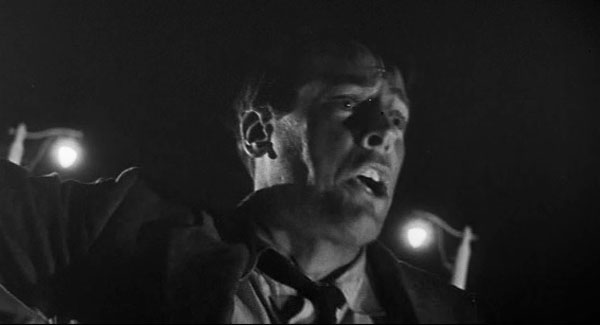
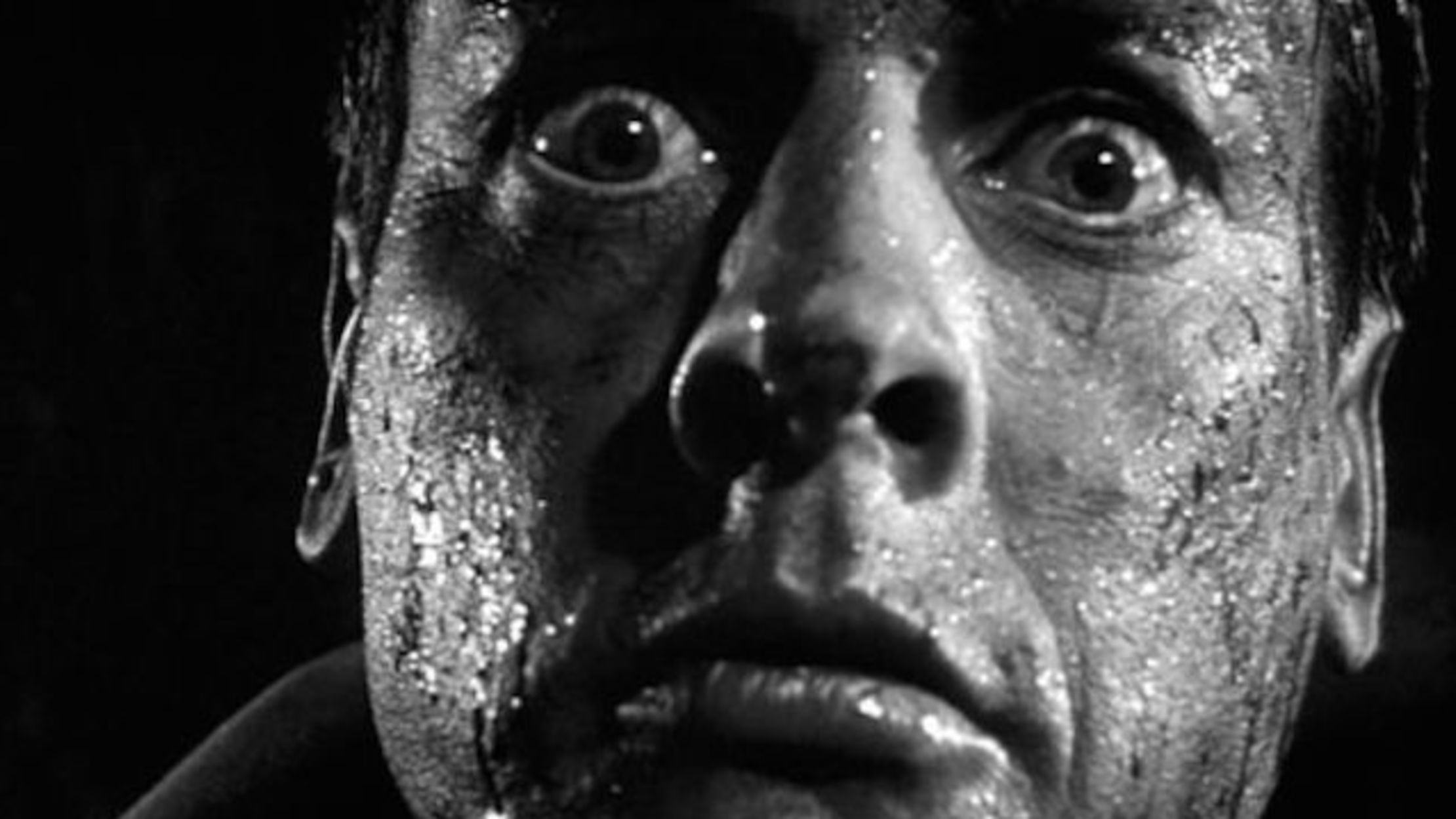 And whenever I wish, I can conjure up an image in my mind of the wide-eyed sweat and grime covered face of McCarthy as a crazed prophet of doom pointing directly into the camera desperately speaking his warning to humanity: “Look, you fools. You’re in danger. Can’t you see? They’re after you. They’re after all of us. Our wives, our children, everyone. They’re here already. YOU’RE NEXT!” Rest in Peace Kevin McCarthy.
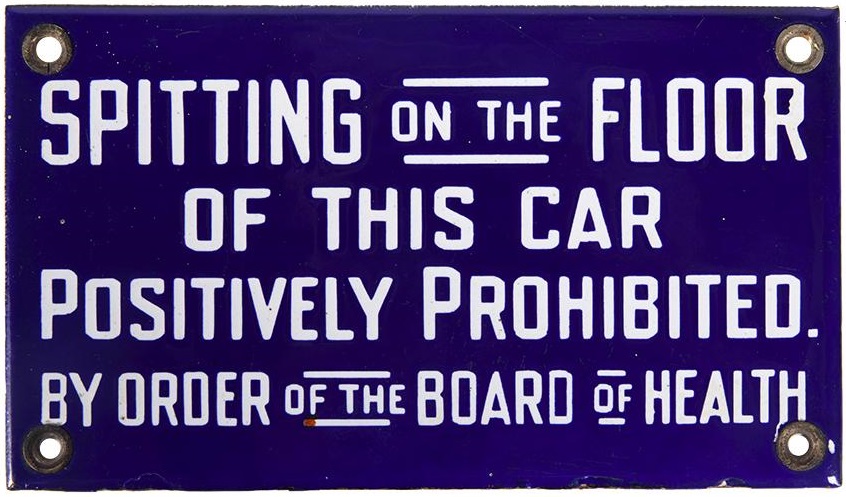
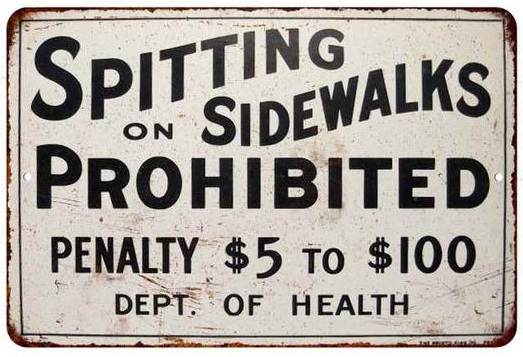
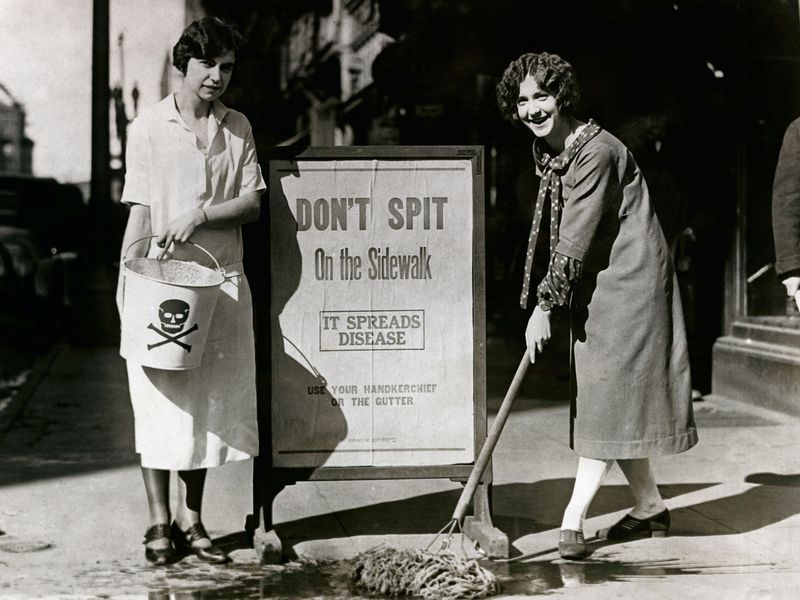 According to a 1907 article in the New York Times, “The anti-spitting movement, a thing of comparatively recent growth, has spread all over the union. The purpose of the anti-spitting ordinance is two fold: first, to abate a nuisance; second, to prevent disease. While the nuisance is a very real one, and from that stand point, if from no other, spitting should be prohibited, the danger of the spreading of disease by spitting in public places has been exaggerated…Spitting upon the sidewalks, in street cars and public places is not nearly so dangerous as the spitting in tenement houses, cheap lodging houses, factories and workshops, and other places which the average spitting law does not presume to prohibit.”
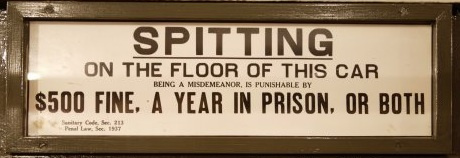 More precisely, the article goes on to note that in 1907, there were 20 arrests in Indianapolis for spitting in public. All of these arrests were made by health officers, not policemen. The article went on to say “If you have to spit, don’t spit in Buffalo, N.Y., for it may cost you $25. The cheapest place to spit is Indianapolis, where people paid an average of 78 cents.” In 1907 tuberculosis was the second leading cause of death behind pneumonia /influenza.
 During this period, no fewer than four tuberculosis hospitals were built in and around Indianapolis. The Flower Mission Pavilion for Incurables was added to the grounds of the city hospital. The revolutionary design of the building featured open air verandas built at the height of 822 feet containing 2 wards with 10 beds each and 6 private rooms. This hospital was unique in that it charged no fee for services and was available only to patients with advanced, incurable cases of “Consumption.”
 But by far the most interesting of these four T.B. hospitals was the Day Camp of the Women’s Improvement Club, located in the Brightwood area of Indianapolis. It’s capacity was only 7 patients. Literature of the era described the facility as being “For colored women in incipient or convalescent stages of tuberculosis. The camp is located in a grove near Brightwood, a suburb of Indianapolis. The equipment used is largely tents. This is one of the few camps in the United States exclusively for colored women. It is conducted by the Women’s Improvement Club, composed of twenty colored women of Indianapolis.”
 It was mistakenly believed that the only way the epidemic could be stopped within a family was to visit the cemetery at night and disinter the deceased subject and remove it’s heart. There was a well documented case of this very thing happening in Rhode Island in 1892. Nineteen-year-old Mercy Brown had died of consumption and as her family began to suffer from the same symptoms, her father went to the family tomb two months after her death and, assisted by the family physician, removed her heart and burnt it to ashes. These fears and old wive’s tales about T.B. surely existed in 1907, undoubtedly contributing to the ferocity of the Tuberculosis War in Indianapolis.
 Alan E. Hunter