
Original publish date: October 16 2011
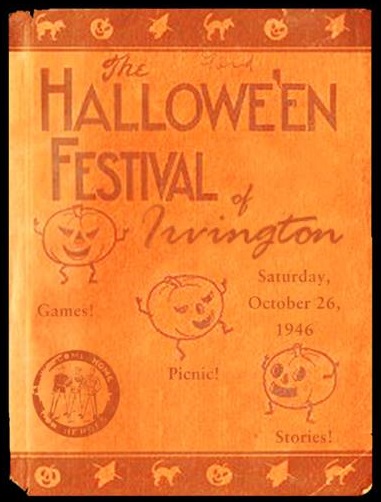
Next week, once again, Irvington will celebrate “All Hallows Eve” better than anyplace else in the Hoosier state by hosting the 65th annual Halloween Festival. Trick-or-treating, window painting, house decorating, and a costume parade down the middle of Washington Street are all cherished traditions eagerly anticipated by the participants involved. But what about that first Halloween festival back in 1946? What was that like? And most importantly, were Irvingtonians breaking the law by hosting it?
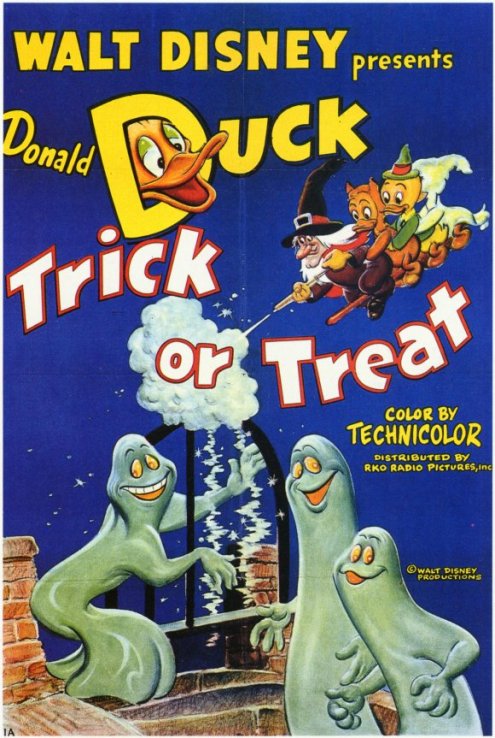 We’ve all heard the stories, legends and rumors surrounding that now legendary first event. It was sponsored by the Walt Disney company featuring costumed characters with a Disney based theme. The Disney folks gave away potentially priceless hand painted film production cels right here on the streets of old Irvington town. Walt Disney himself was seen walking down Audubon with Mickey Mouse at his side. It’s hard to separate fact from fiction nowadays.
However, a good place to start would be the history books. What was going on in the world back in October of 1946? Mensa was founded in Great Britain and the United Nations held its first meeting on Long Island. World War II ended a year before, yet the Nuremberg War trials concluded with the execution of ten German war criminals just two weeks before the festival. Among the adolescent ghosts and goblins wandering the streets of Irvington 65 years ago was a spectral leftover from the second world war looming menacingly over the costumed treat seekers. The specter of Sugar rationing. Really? Sugar rationing on Halloween?
When the empire of Japan conquered the Philippine Islands in the early months of 1942 the United States lost a major source of it’s national sugar imports. Sugar shipments from Hawaii had already been curtailed by fifty percent when cargo vessels typically used for transporting sugar from the islands to the mainland were diverted for use by the military. Seemingly overnight, U.S. sugar supply fell by more than one-third. To ensure adequate supplies for manufacturers, the military, and civilians, sugar became the first food item to be rationed during the war. Manufacturers’ supplies were reduced to 80 percent of pre-war levels and that percentage was further reduced over time.
On April 27, 1942, Irvington families registered for ration books at the local elementary schools. One book was issued for each family member. To prove they were serious about wartime rationing, the US Government required that these books were to be surrendered upon death of the recipient. In a drastic move that harkens back to FDR’s closure of the banks and financial institutions during the Great Depression, the sale of sugar was halted for one week to prepare for the program. During that sugarless week, to discourage hoarding, each family was required to report how much sugar they had on hand and a corresponding number of stamps were removed from the ration book.
 A week later on May 5, 1942, every United States citizen received their much anticipated “War Ration Book Number One”, good for a 56-week supply of sugar. Initially, each stamp was good for one pound of sugar and could be redeemed over a specified two-week period. Later on, as other items such as coffee and shoes were rationed, each stamp became good for two pounds of sugar over a four-week period. The ration book bore the recipient’s name and could only be used by household members. Stamps had to be torn off in the presence of the grocer. If the book was lost, stolen, or destroyed, an application had to be submitted to the Ration Board for a new copy. If the ration book holder entered the hospital for greater than a 10-day stay, the ration book had to be brought along with them. Talk about your red tape!
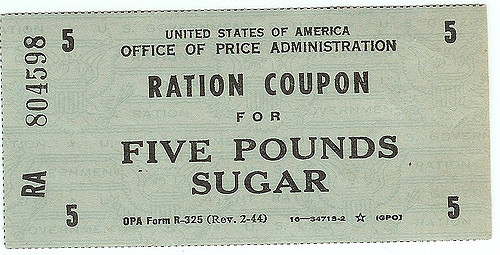
Housewives learned to be creative, using saccharine, corn syrup, and even packets of Jell-O as sugar substitutes. Sugar beets became a staple of nearly every American dinner table. Women’s magazines featured recipes with reduced sugar or creative ingredient substitutes. “Victory Gardens” sprung up all over the cities and home canning was strongly encouraged during the war. However, canning requires sugar and to provide for this patriotic need, each person could apply for a one time only 25-pound allotment of lower grade canning sugar each year. Each local war ration board determined the quantity and season of availability based on the local harvest. A special canning sugar stamp was issued and included in the ration book. This special “spare canning sugar stamp 37” had to be attached to the government application. Problem was, that they looked exactly like the household sugar stamp and confusion reigned as many people mistakenly used the regular sugar stamp 37 in it’s place, invalidating it for normal household purchases. Did I mention the red tape?
 To make matters worse, just because you had a sugar stamp didn’t mean sugar was available for purchase. Shortages occurred often throughout the war, and in early 1945 sugar became nearly impossible to find in any quantity. As Europe was liberated from the grip of Nazi Germany, the United States took on the main responsibility for providing food to those war ravaged countries. On May 1, 1945, the sugar ration for American families was slashed to 15 pounds per year for household use and 15 pounds per year for canning – roughly eight ounces per week per household. Sugar supplies remained scarce and, just as sugar had the distinction of being the first product rationed at the start of the war, sugar was the last product to be rationed after the war. Sugar rationing continued until June of 1947, over six months after the first Irvington Halloween festival in October of 1946.
So, knowing this, can it be said that every sugary sweet handed out to euphoric trick-or-treaters in Irvington during that first festival was a violation of Federal law? Technically yes, but in reality, it might best be compared to ripping the tag off of your mattress today. Never fear, Irvington is not Australia and you are not descended from a colony of law breakers and felons. By the time of that first Irvington Halloween Festival, war time rationing was on the wane and most Americans were eager to celebrate after a long, hard fought war, too enraptured with the outcome, and their personal survival, to care much about wartime shortages. As evidence, one need look no further than the baby boomer generation, a direct bi-product of that euphoria.
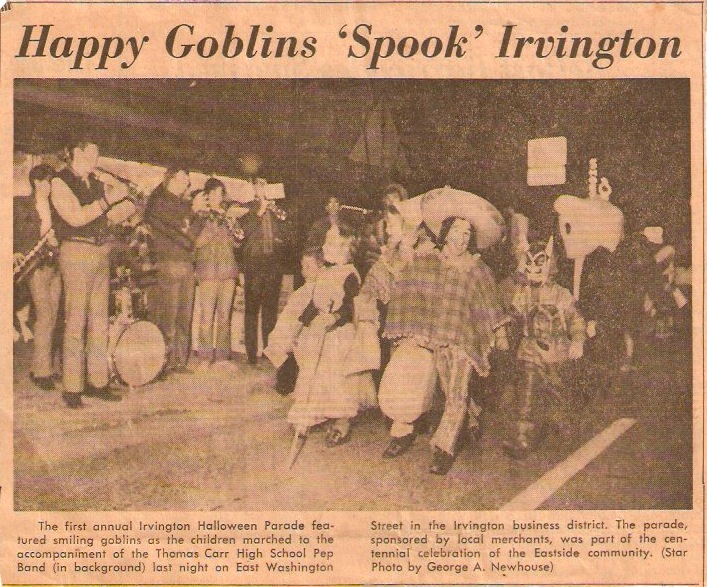 An argument can be made that it was events like the First Irvington Halloween Festival that kicked off the tradition of trick-or-treating as we know it today. Although the Halloween holiday was certainly well known in America before that first Irvington celebration, it was predominantly a holiday for adult costume parties and a chance to cut loose with friends playing party games while consuming hard cider. Early national attention to trick-or-treating in popular culture really began a year later in October of 1947. That’s when the custom of passing out the playful “candy bribes” began to appear in issues of children’s magazines like Jack and Jill and Children’s Activities, and in Halloween episodes of network radio programs like The Baby Snooks Show, The Jack Benny Show and The Adventures of Ozzie and Harriet. Trick-or-treating was first depicted in a Peanuts comic strip in 1951, perhaps the image most identified with the children’s holiday in the hearts and minds of baby boomers today. The custom had become firmly established in popular culture by 1952, when Walt Disney debuted his Donald Duck movie “Trick or Treat”, and again when Ozzie and Harriet were besieged by trick-or-treaters on an episode of their popular television show. In 1953, less than a decade after that first festival in Irvington, the tradition of Halloween as a children’s holiday was fully accepted when UNICEF conducted it’s first national children’s charity fund raising campaign centered around trick-or-treaters.
 Most of this column’s readers are aware that part of my passion for history revolves around collecting, cataloging, displaying and observing antiques and collectibles. There exists in the collecting world a strong group of enthusiasts devoted to the pursuit and preservation of Halloween memorabilia of all types. Costumes, decorations, photographs, publications and postcards in particular. The origins of Halloween as we now know it might best be traced in the postcards issued to celebrate the tradition. The thousands of Halloween postcards produced between the turn of the 20th century and the 1920s commonly show costumed children, but do not depict trick-or-treating. It is believed that the pranks associated with early Halloween were perpetrated by unattended children left to their own devices while their parents caroused and partied without them. Some have characterized Halloween trick-or-treating as an adult invention to curtail vandalism previously associated with the holiday. Halloween was not widely accepted and many adults, as reported in newspapers from the 1930s and 1940s, typically saw it as a form of extortion, with reactions ranging from bemused indulgence to anger. Sometimes, even the children protested. As late as Halloween of 1948, members of the Madison Square Boys Club in New York City carried a parade banner that read “American Boys Don’t Beg.” Times have certainly changed since that first Halloween festival 65 years ago.
 A 2005 study by the National Confectioners Association reported that 80 percent of American households gave out candy to trick-or-treaters, and that 93 percent of children, teenagers, and young adults planned to either venture out trick-or-treating or to participate in other Halloween associated activities. In 2008, Halloween candy, costumes and other related products accounted for $5.77 billion in revenue. An estimated $2 billion worth of candy will be passed out during this Halloween season and one study claims that “an average Jack-O-Lantern bucket carries about 250 pieces of candy amounting to about 9,000 calories and containing three pounds of sugar.” Yes, 65-years ago, Halloween looked quite different than it does today. Next week, doorbells all over Irvington will ring, doors will be opened and wide-eyed gaggles of eager children will unanimously cry out “Trick-or-Treat” from Oak Avenue to Pleasant Run Parkway.
 Costumed kids will be rewarded for their efforts with all sorts of tribute in the form of coins, nuts, popcorn balls, fruit, cookies, cakes, and toys. As a casual observer born long after that first Irvington Halloween Festival and an active participant in the festivities that will begin next week, I’m glad that our Irvington forefathers skirted government regulations all those years ago. In fact, as a fan of all things Irvington, I’d go so far as to say that this community has played a big part in the Halloween holiday as we know it today. Because, grammar notwithstanding, nobody does Halloween like Irvington do.
 When you hear the term “Gypsy”, what comes to mind? A vagabond road wanderer? A classic motorcycle? Maybe a Sonny and Cher song? Well, let me share with you a real gypsy story from a century ago that happened just up the National Road in Terre Haute. On May 16, 1914 three bodies were interred in “Terry Hot’s” Highland Lawn cemetery. According to newspaper accounts of the day, at the burial site “strange balls of incense” were placed around the graves. As the caskets were slowly lowered into the ground, veiled women wailed, tore at their clothing and pounded their chests. Their grief cut through the thick sickly sweet smoke hovering over the graves like a switchblade. When the graves were closed wine bottles were opened and their contents pored atop each grave in the shape of a cross.
 The May Day visit began like any other visit to town by the Gypsies. But Sunday May 3rd would prove to be an especially raucous day in camp. No-one knows what the Gypsies were celebrating, but celebrating they were. During the day (and through most of the night) 8 kegs of beer, wine and ale were consumed in camp. Neighbors reported the “camp was a scene of brawling and hilarity.” Eventually, most of the Gypsies passed out cold in their bunks. But in the predawn hours of Monday, one man still stalked the camp: John Demetro.
 Camp residents warned officers to be careful as Demetro was still stalking around the camp, most likely armed with his 16-shot Remington rifle, and was sure not to go down without a fight. Officers found him sitting in front of his tent, gun laid across his lap, staring blankly at the ground. Policemen cautiously approached, guns drawn, ready for a gunfight. But instead of resisting, Old John placidly handed over his gun and calmly surrendered. When they drew back the tent flap, they learned that Demetro had first bludgeoned, then shot, his wife to death. He then turned the gun on her father Bob Riska and shot Joe Riska in the face. Socca and Bob were DOA but Joe, despite missing half of his head, was still clinging to life. They took John to jail and Joe to the hospital were he died of his awful shotgun wound the next day.
 John Demetro’s wife and other victims lay in a Terre Haute Cemetery far from the lands of their birth. In Terre Haute’s Highland Cemetery Gypsies make almost annual pilgrimages to visit the graves each summer. Of course, there are numerous reports that the gravesites are haunted by “Gypsy Ghosts”, but most consider these stories as mere folklore designed to scare girlfriends and make kids nervously giggle. But, like every historical ghost story, there is truth behind the legend.
 Original publish date: September 2, 2013
 Original publish date: July 14, 2010
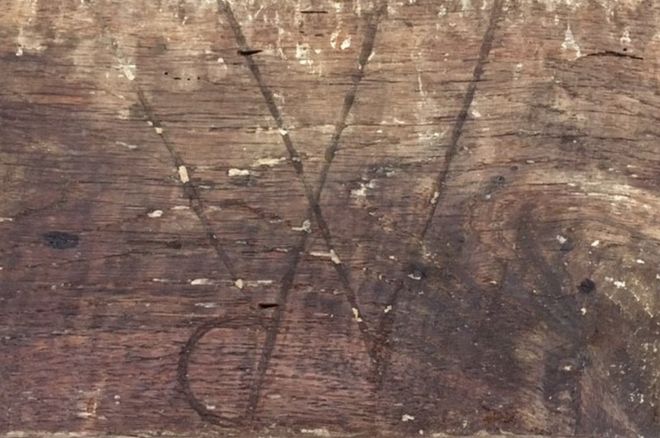
 He was watching a documentary about witches and soon a segment flashed across the screen that told about the superstitious markings made by ancient people used to ward off witchcraft. The program talked about an English estate called “Kew Palace”, built in 1631. The owners were particularly superstitious, and believed that evil influences or witches could enter the house disguised as cats or frogs and cast spells on people while they slept. To ward this off, the original carpenters who made the roof carved special secret signs near windows, doors, fireplaces and other vulnerable places, to protect themselves from evil. ( Other ways of protecting a house included hiding old shoes, mummified cats and kittens under the floorboards, or ‘urine bottles’ filled with hair and nail-clippings in special, secret cavities.)
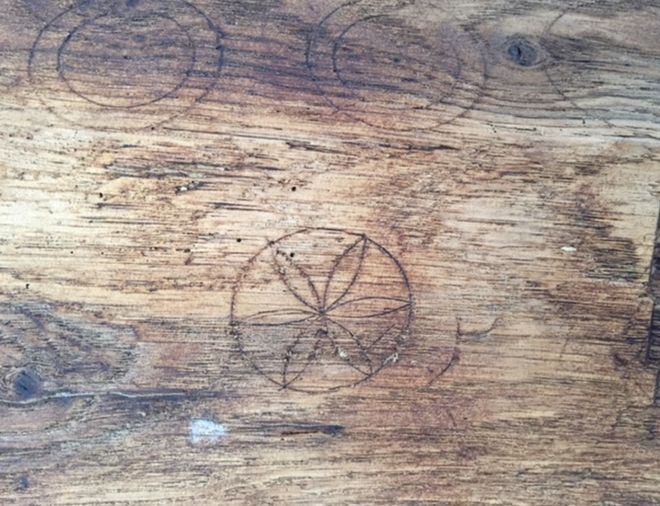 Rick has no idea where the panel originally came from but he suspects that the symbols were cut into the item by the resident family before being affixed as a softening decoration to an ancient stone wall. That way the marks would be unseen by the casual observer, presumed witch or evil spirit, but still provide protection for the family at the same time. Rick quickly discovered that there has been little formal study of these “witches signs” and historians have offered little support to his theories, choosing instead to dismiss them as silly superstitions.
 Original publish date: November 9, 2008
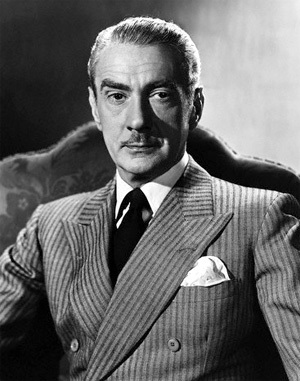
 Webb was tapped by director Otto Preminger to appear in the classic “Laura” alongside Gene Tierney. He would receive his first Oscar nomination for this appearance, even though he was relatively unknown to movie fans. 2 years later in 1946 he again starred with Tierney in the cult classic film “The Razor’s Edge”. He received his second Oscar nomination for this role. Webb’s created the lasting character “Mr. Belvedere” in 1949 for the film “Sitting Pretty” and would reprise the role 2 more times. This character would earn him his third and final Academy Award nomination. This same “Mr. Belvedere” character would be retooled as a TV show and played by 4 different actors from the 1950s thru the 1980s.
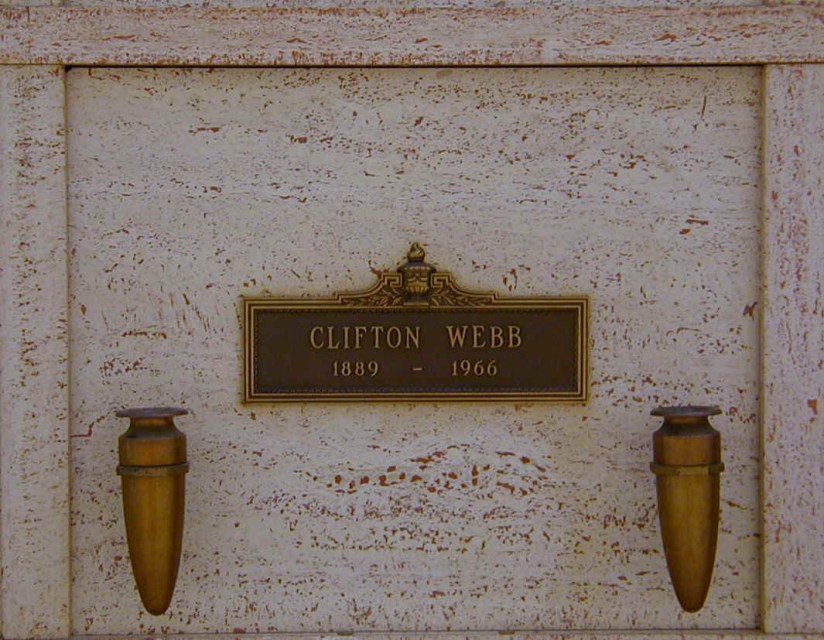 I can tell you from first hand experience, this slab does indeed move to and fro within the slot that covers the burial cavity. I had heard these legends and visited the Hollywood Forever cemetery 9 years ago to test the theory. I will tell you that it’s an eerie feeling and an even stranger sound. If I were alone in that vault and heard that sound without explanation as to whom or what was causing it, I would not stick around to see if it was my famous fellow Hoosier, Clifton Webb!
 Alan E. Hunter