
Original publish date: May 2014 Reissue date: September 26, 2019
Outlaws Bonnie and Clyde have been in the news again lately, nearly 85 years after they died in dramatic fashion on a dusty backroad in Gibsland, Louisiana. I wrote this 3-part series over 5 years ago and have since added an updated part 4 to the saga. So, here are the first 3 parts as written a hemi-decade ago. Stay tuned for the updates just in time for Halloween Festival weekend.
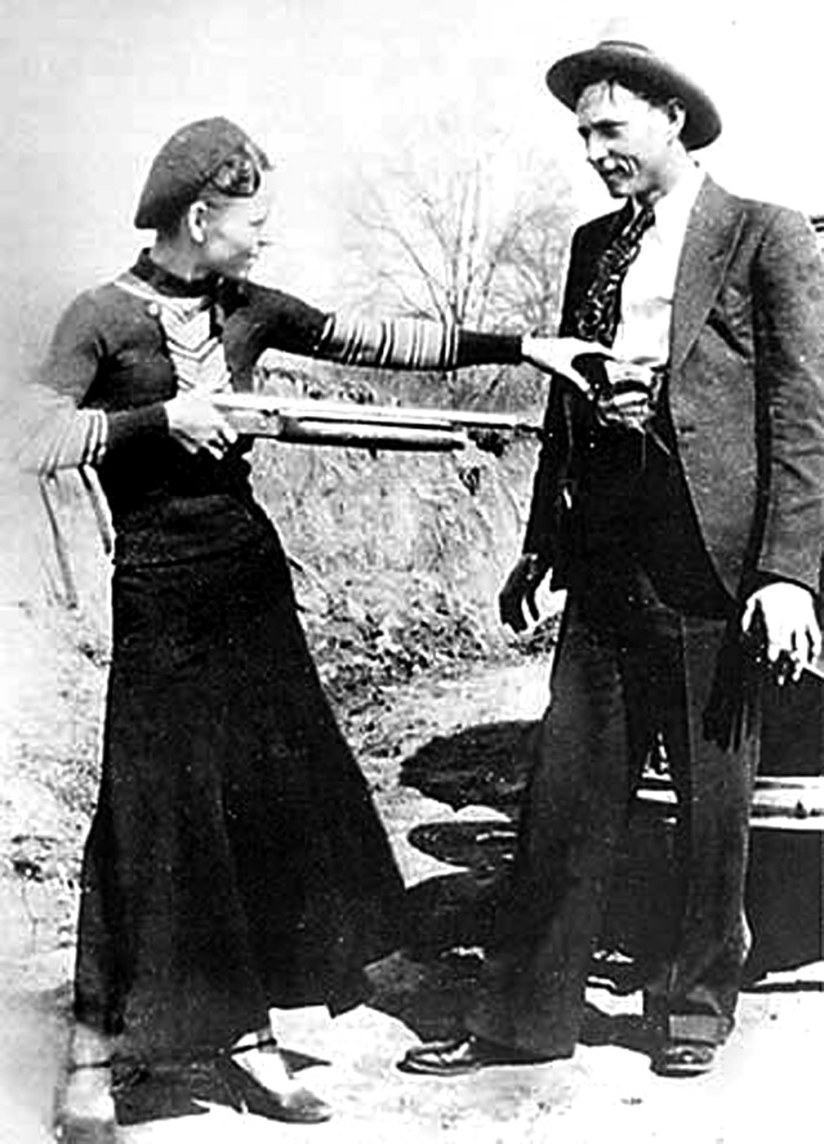
Bonnie and Clyde. Names that evoke different images to different people. Although their image, like those of Billy the Kid , Jesse James and John Dillinger, have been romanticized over the years; the truth is a little bit more complicated. Without doubt, Bonnie Parker and Clyde Barrow are the most famous pair of star crossed outlaws this country has ever seen. On May 23, 1934, 80 years ago this week, they died exactly as they lived: violently. Bonnie was only 23 years old; Clyde a mere 24.
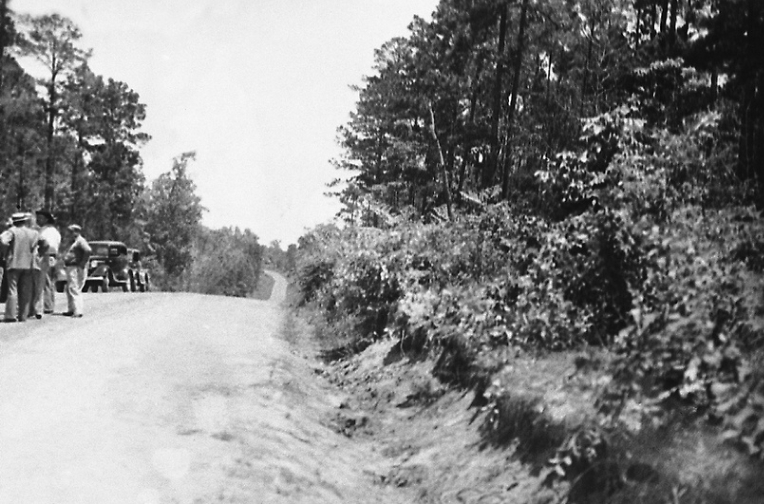
On a dusty, mosquito choked rural road near Gibsland, Louisiana, Bonnie & Clyde were ambushed by a group of six heavily armed hardcore Texas lawmen. The deadly duo never had a chance. When the smoke had cleared, the coroner counted 17 separate entrance wounds on Clyde Barrow’s body and 26 on Bonnie Parker’s. Other accounts say Clyde was shot 23 times and Bonnie 25, either way, they were killed instantly. The wounds included several headshots on each, one bullet snapping Barrow’s spinal column. Undertaker C. F. “Boots” Bailey had difficulty embalming the bodies because of all the bullet holes.
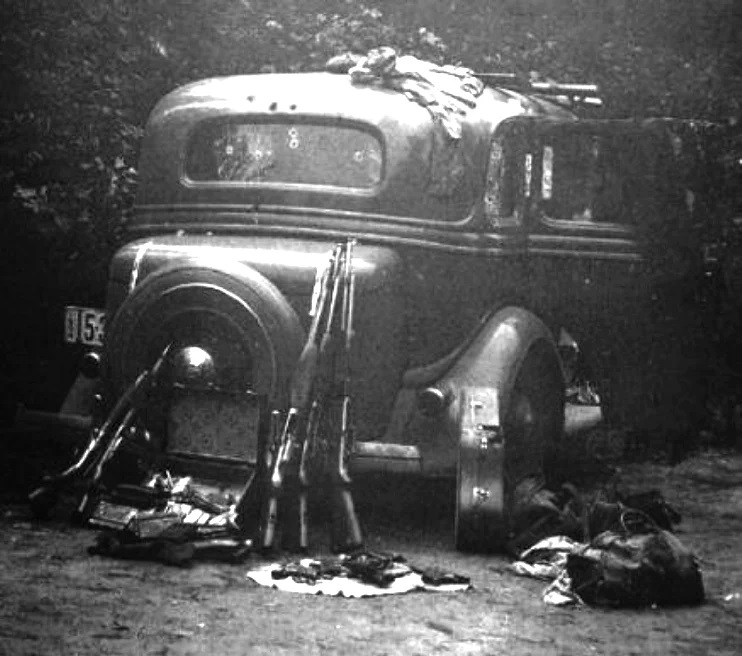
The posse used Browning Automatic Rifles, perhaps better known in gun circles as “BAR’s”, which was ironically also the weapon most favored by the Barrow Gang. The BAR’s were so powerful that some of the bullets went completely through one car door and out the other. A total of 167 bullets were fired, non of which came from either Bonnie or Clyde. The temporarily deafened officers inspected the vehicle and discovered an arsenal of weapons, including stolen automatic rifles, sawed-off semi-automatic shotguns, assorted handguns, and several thousand rounds of ammunition.

According to statements made by Dallas County Sheriff’s Deputies Ted Hinton and Bob Alcorn (both of whom knew Barrow and Parker by sight): “Each of us six officers had a shotgun and an automatic rifle and pistols. We opened fire with the automatic rifles. They were emptied before the car got even with us. Then we used shotguns … There was smoke coming from the car, and it looked like it was on fire. After shooting the shotguns, we emptied the pistols at the car, which had passed us and ran into a ditch about 50 yards on down the road. It almost turned over. We kept shooting at the car even after it stopped. We weren’t taking any chances.” The lawmen had been hiding in the bushes for a day and a half waiting for the outlaws. They weren’t in a mood to parlay.
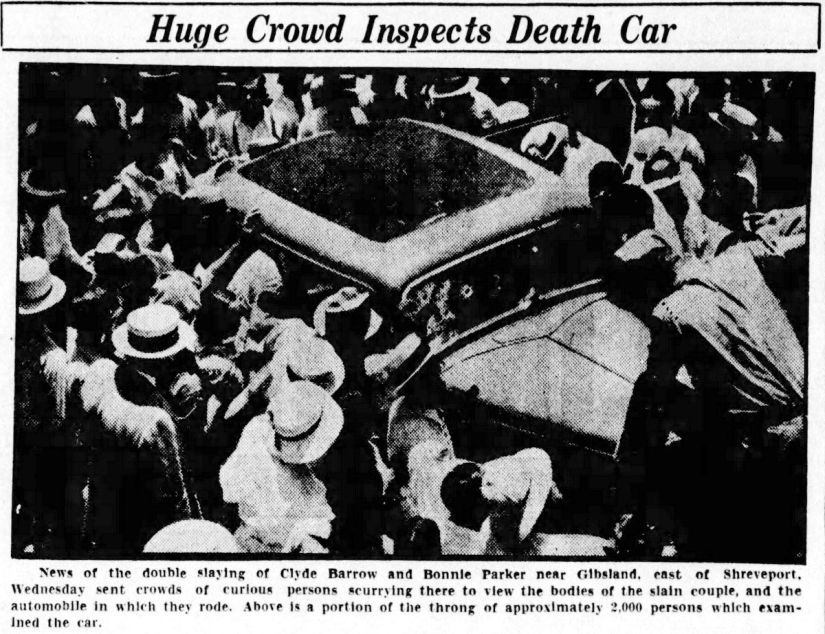 Word of the ambush quickly spread after the officers drove into town to telephone their respective bosses. A raucous crowd soon flooded the death scene and the car that was still resting there. Two members of the posse were left to guard the bodies, but they quickly lost control of the bloodthirsty souvenir hunters. Locals pushed and shoved their way to the death car; one woman cut off bloody locks of Bonnie’s hair and pieces from her dress. She was later seen back in town selling them as grisly souvenirs. Hinton returned just in time to keep a man from cutting off Clyde’s trigger finger. Arriving at the scene, the coroner observed the following: “nearly everyone had begun collecting souvenirs such as shell casings, slivers of glass from the shattered car windows, and bloody pieces of clothing from the garments of Bonnie and Clyde. One eager man had opened his pocket knife, and was reaching into the car to cut off Clyde’s left ear.” The coroner enlisted Hamer for help in controlling the “circus-like atmosphere” and Clyde’s ear remained intact.
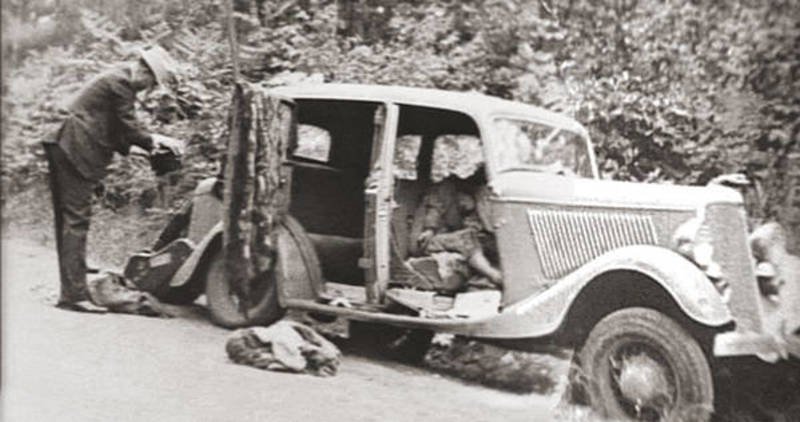
Texas Ranger inspecting death car with Bonnie’s dead body still inside.
The Ford, with the bodies still inside, was towed to the Conger Furniture Store & funeral parlor located on Railroad Avenue downtown across from the Illinois Central train station (which is now a historical museum containing Bonnie and Clyde artifacts.) The crowds were so unruly, that the caretaker had to squirt embalming fluid on them to keep them back. Preliminary embalming was done by Bailey in a small preparation room in back of the furniture store (it was common for furniture and undertakers to be together back then.) The tiny northwest Louisiana town swelled in population from 2,000 to 12,000 within hours. Curiosity seekers arrived on foot, by train, horseback, buggy, and airplane. Beer, which normally sold for 15 cents a bottle, jumped to 25 cents; ham sandwiches quickly sold out. After identifying his son’s body, Henry Barrow sat in a rocking chair in the furniture section and wept.
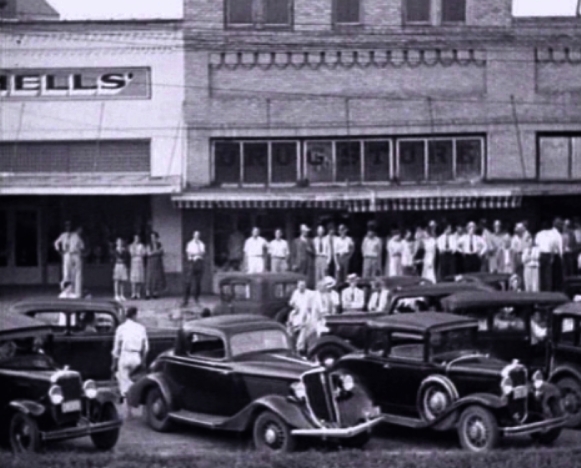
H.D. Darby, a young undertaker who worked for the McClure Funeral Parlor in nearby Ruston, and Sophia Stone, a home demonstration agent also from Ruston, came to Arcadia to identify the bodies. They had been kidnapped by the Barrow gang the previous year in Ruston, on April 27, 1933, and released near Waldo, Arkansas. Bonnie reportedly laughed when she asked Darby his profession and discovered he was an undertaker. She remarked that maybe someday he would be working on her. As fate would have it, Darby assisted Bailey in embalming the outlaws.
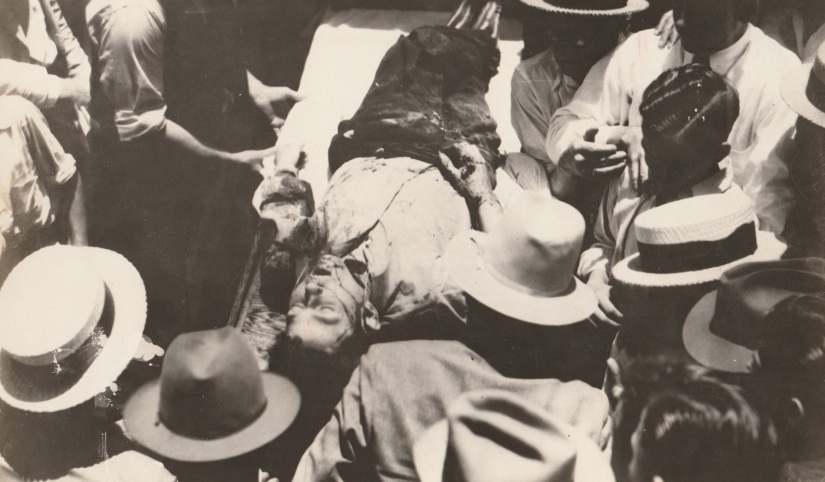
The coroner found $ 500 in cash in Clyde’s pockets and $ 6 and some change in Bonnie’s purse alongside a bullet shattered pocket mirror. All the fingers on Bonnie’s right hand had been shot off, as they laid on a pack of bloody cigarettes. Inside the car, besides the firearms arsenal, other curious items were found, including a saxophone, Hollywood movie magazines, newspapers, a box of fishing tackle and 15 sets of license plates from various states, including Indiana.
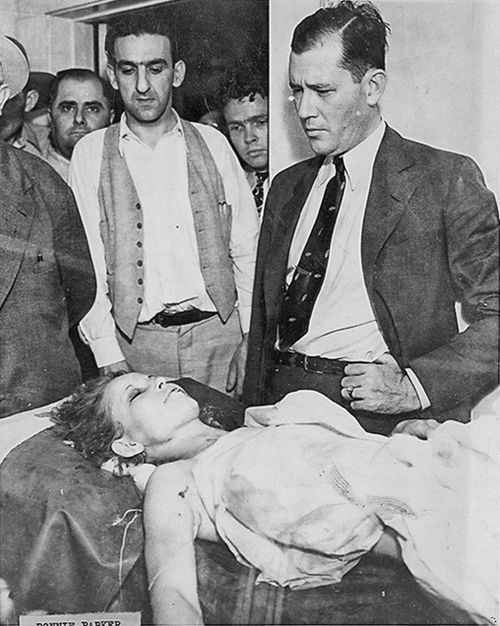
Although Bonnie had famously requested that she and Clyde be buried side by side in her poem “The Story of Bonnie and Clyde”, the Parker family would not allow it. Mrs. Parker was quoted as having said, “Clyde had her for two years and look what he did to her.” Mrs. Parker wanted to grant her daughter’s final wish by bringing the dead outlaw’s body home, but mobs surrounding the Parker house day-and-night made that impossible. Parker’s family used the McKamy-Campbell Funeral Home, located on present day Martin Luther King, Jr. Blvd in Dallas, to conduct her funeral. Bonnie’s mutilated hair was waved and curled into its former neatness. Her nails were manicured. More than 20,000 attended Bonnie Parker’s funeral, and her family had to be escorted by lawmen to her grave site.
Bonnie’s brother, Hubert “Buster” Parker, escorted her body from Arcadia to Dallas in the back of an ambulance. Her services were held on Saturday, May 26, 1934, at 2 pm, in the funeral home. Flowers came from everywhere, including some with cards allegedly from Pretty Boy Floyd and John Dillinger, who were still very much alive and on the run themselves. Curiously, the largest floral tribute was sent by a group of Dallas city newsboys. Seems the issue covering the deaths of Bonnie and Clyde sold 500,000 newspapers in Dallas alone. Although initially buried in the Fishtrap Cemetery, Parker was moved in 1945 to the new Crown Hill Cemetery in Dallas.
Clyde Barrow’s family used the Sparkman-Holtz-Brand Morticians in downtown Dallas. Thousands of people gathered outside both Dallas funeral homes hoping for a chance to view the bodies. Barrow’s private funeral was held at sunset on Friday, May 25, in the funeral home’s chapel. He was buried next to his brother Buck on a bare slope in a West Dallas Cemetery. The Barrow brothers share a single granite marker with their names on it and a four-word epitaph previously selected by Clyde: “Gone but not forgotten.” As the crowd dispersed, a low-flying plane dropped a gigantic floral wreath near the gravesite.
The life insurance policies for both Bonnie Parker and Clyde Barrow were paid in full by American National of Galveston. Since then, the policy of pay-outs has changed to exclude pay-outs in cases of deaths caused by any criminal act by the insured. Those original life insurance policies, obtained by the mothers of Bonnie and Clyde, are displayed at the American National Insurance Company Building in Galveston, Tx. It has been reported that the families of the outlaws made more off their death than the deadly duo ever made off of their short lives of crime.
The six men of the posse were each to receive a one-sixth share of the reward money. Dallas Sheriff Schmid had promised Ted Hinton this would total some $26,000, but most of the state, county, and other organizations that had pledged reward funds reneged on their pledges. In the end, each lawman earned just $200.23 for his efforts. Hamer promised his barber a lock of Clyde’s hair and delivered on that promise by picking a lock off of Clyde’s shirt that had been shorn off by a BAR bullet. The posse, including Frank Hamer, took and kept for themselves all of the guns that were found in the death car. Personal items such as Bonnie’s clothing and Clyde’s saxophone were also taken, and when the Parker family asked for them back, they were refused.
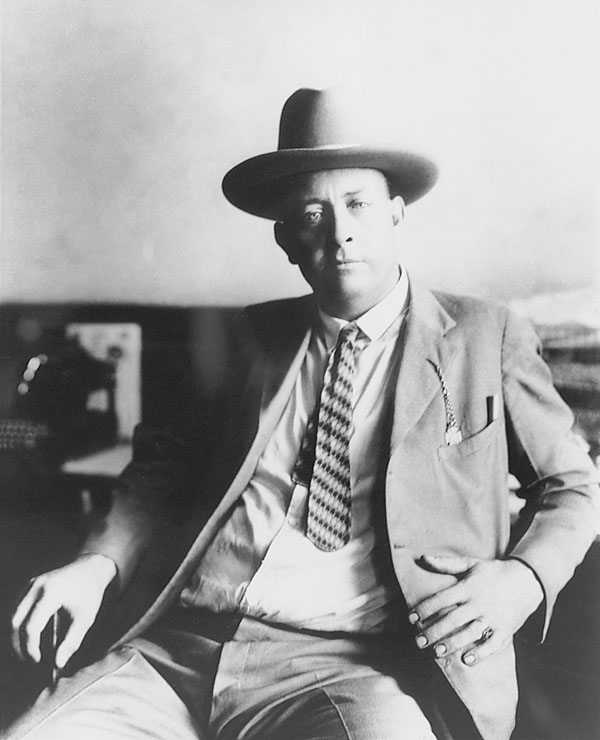
In July, Clyde’s mother wrote to Hamer asking for the guns’ return: “You don’t never want to forget my boy was never tried in no court for murder and no one is guilty until proven guilty by some court so I hope you will answer this letter and also return the guns I am asking for.” The guns were not returned, and remained with the Hamer family. There’s no evidence Hamer ever answered her letter. The guns were later sold as souvenirs.
Bonnie and Clyde are thought of almost exclusively as Southwestern outlaws from the rough-and-tumble areas of Texas, Oklahoma and Louisiana. But did you know that the Barrow gang had ties to Indiana? One of those ties marries one of the grisliest of all blood relics ever collected with an iconic Circle City department store not far from where you are reading this article right now.
Next Week: Part II of Bonnie & Clyde-The Indiana Connection




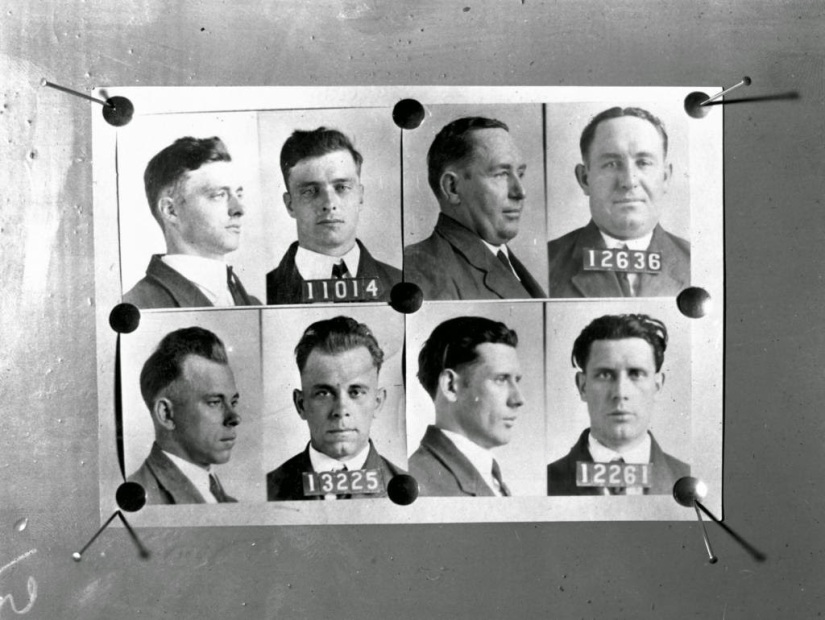
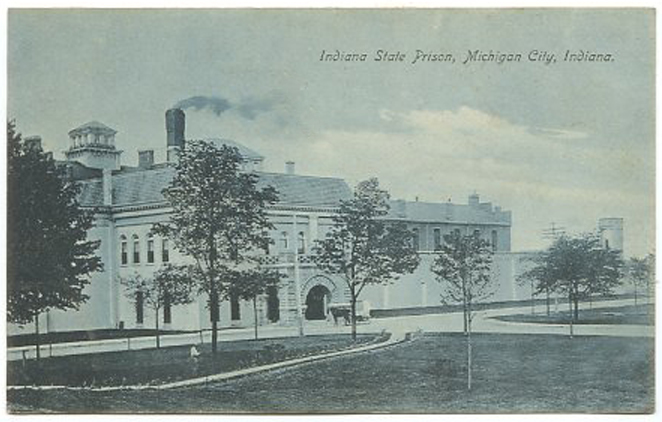
 Hamilton, escaped out the main gate of Indiana State Prison.
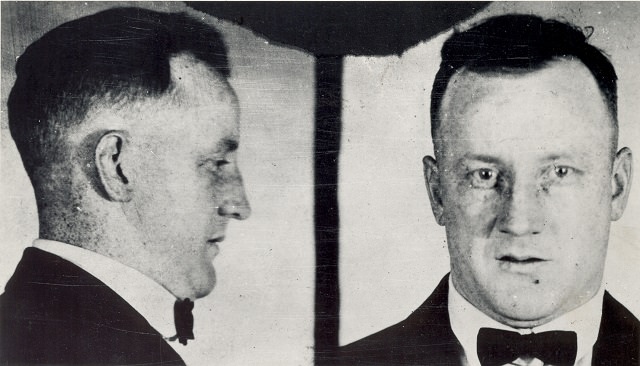
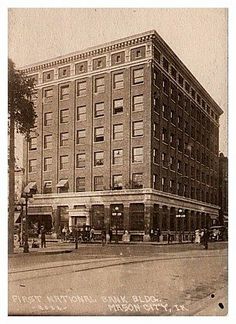
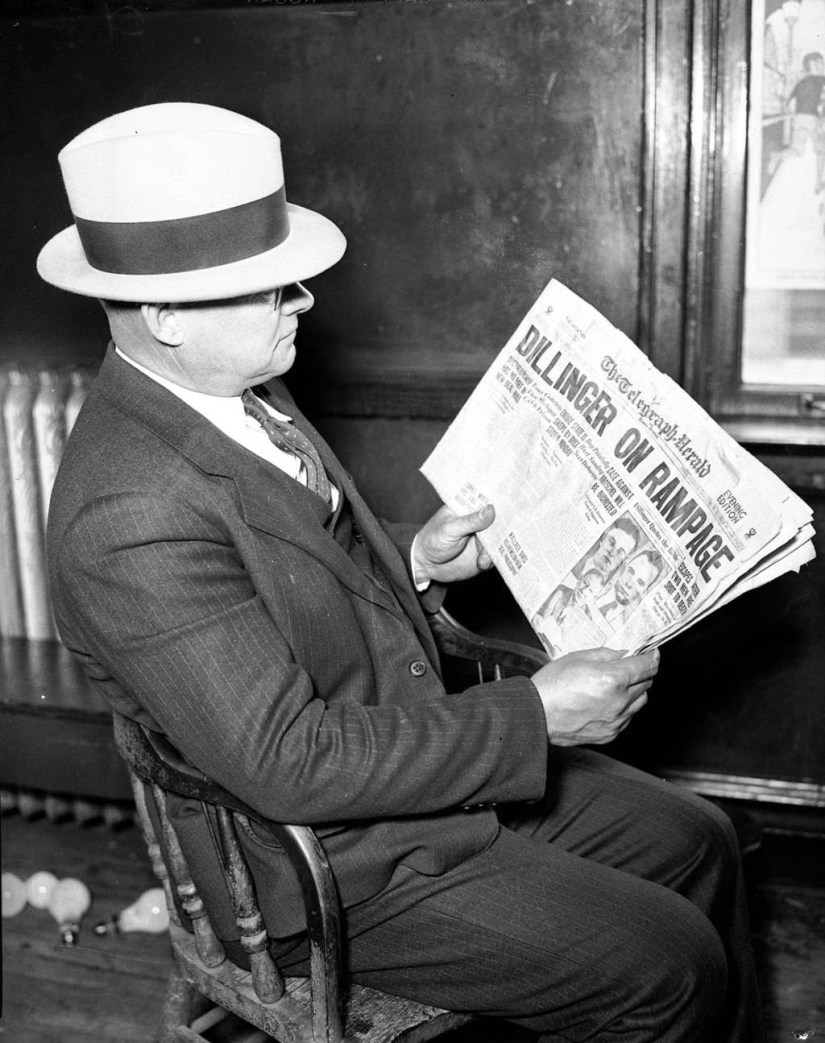 On December 13, 1933, the Dillinger gang robbed a Chicago bank, netting a reported $50,000. Afterwards, the gang went down to Daytona Beach, Florida for a time and then went west to Tucson. Hamilton, however, decided to go to Chicago instead, where, on December 13, 1933, he took part in the robbery of a local bank. The next day, Hamilton left his car at a Chicago garage for some body work, the garage’s mechanic called police reporting it as a “gangster car”. Hamilton returned to pick up the car and found police detective, William Shanley and two other officers waiting for him. He opened fire, killing Shanley, and escaped from the other two officers. Red’s incident led to the Chicago Police Department forming a special forty man “Dillinger Squad”. A month later, on January 15, 1934, Hamilton and Dillinger robbed the First National Bank in East Chicago, Indiana, for $20,376. During the heist, police officer William O’Malley was shot dead. Dillinger was officially charged with the murder, but several witnesses ID’d Hamilton as the shooter. By the end of the year, Hamilton found himself ranked third on Indiana’s list of “public enemies”, behind circle-city natives Dillinger and Pierpont.
 During the robbery, Hamilton was shot twice and left in the care of his girlfriend Pat Cherrington and underworld physician Joseph Moran, while Dillinger and the others headed to Tucson where they were apprehended by the authorities. Afterwards, for a short time, the fugitive Hamilton shot to the top of the public enemies list. There he remained until Dillinger, using a wooden gun, escaped from the Crown Point jail. Afterwards, Dillinger formed a new gang consisting of Hamilton, Homer Van Meter, Tommy Carroll, Eddie Green, and Baby Face Nelson.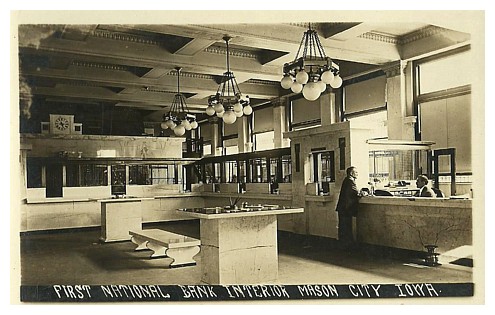
 Dillinger smashed out the window and returned fire with his .45, shattering the windshield of the police car and nearly killing the pursuing officer. A running gun battle ensued as the two cars traded 40 or 50 rounds for the next 50 miles or so, before the outlaws finally losing the pursuing patrolmen. With Hamilton losing blood from the massive hole in his back, Dillinger told Van Meter to head to Chicago and find a doctor for his friend. But first, they needed a faster, less bullet-riddled car. Van Meter cut off a 1934 Ford V8 Deluxe containing power company manager Roy Francis, his wife, Sybil, and their 19-month-old son, Robert.

 I have always attributed the genesis of the F.B.I. to another infamous Hoosier with Irvington ties, John Dillinger, who robbed an Irvington drug store and soda fountain in the summer of 1933. The building still stands and is home today to DuFours restaurant on the northwest corner of Washington and Audubon (now the Lincoln Square Pancake House). At the time, Dillinger allegedly lived on a property known as “Rickett’s Farm” near the Kile Oak in Irvington. I knew that J. Edgar Hoover, the man most people credit with forming the present day F.B.I., was a little known Washington D.C. bureaucrat until Dillinger came along. Hoover made his reputation by expanding the law enforcement powers of his obscure bureau to track down Dillinger. Dillinger became the bureau’s first “Public Enemy # 1” on June 22,1934, which ironically was John’s 31st birthday. Hoover’s G-men would kill Dillinger barely a month later outside of Chicago’s Biograph Theatre on July 23, 1934. Hoover would display Dillinger’s death mask on the wall outside of his office for the next 40 years.
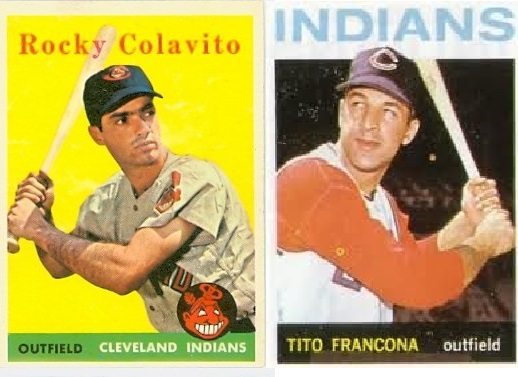
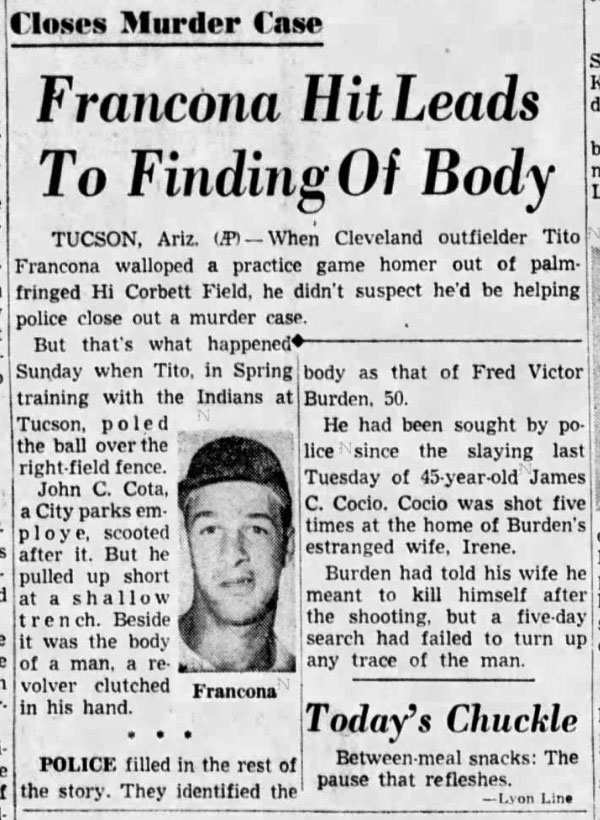 The front page of the Tucson Daily Citizen on March 27, 1961 ran a story headlined, “Practice Homer Leads To Body”. The story detailed, “An over-the-wall smash by Cleveland Indians’ Tito Francona yesterday led to the discovery that Frederick Victor Burden had carried out his threat to commit suicide after killing a man in the home of his estranged wife. Burden’s body, with a bullet in the head, was found by city parks employee John C. Cota, 52, of 238 E. E. 19th St., while he was looking for a ball that had just been knocked over the west wall during the practice at Hi Corbett Field in Randolph Park. The partially concealed body was found lying in a shallow watering trench under low – hanging palm fronds when discovered about 11:30 a m.”
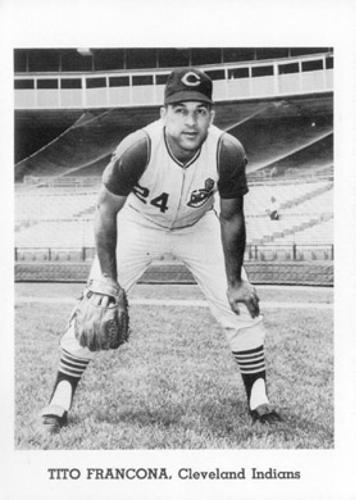 Despite having emerged as the best defensive left fielder in the league, Francona was shifted to first base during spring training in 1962 and finished the season leading the American League in double plays turned as a first baseman. He finished with 14 homers, 28 doubles and batted .272. When Birdie Tebbetts took over as Indians manager in 1963, Francona was moved back into left, but his numbers fell drastically. His .228 batting average was a career low, and his ten home runs and 41 RBIs were his fewest over a full season. The Indians acquired All-Star Leon “Daddy Wags” Wagner to play left field prior to the 1964 season, so Francona split time between right and first base. After the season, he was dealt to the St. Louis Cardinals for a player to be named later and cash.
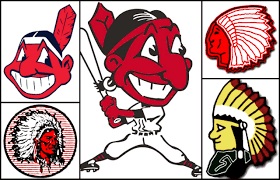 And what about that curse? The curse of Rocky Colavito? Well, in recent years, it has dampened a little with the Indians “rebuilding years” of the past two decades. But. although they’ve played in three World Series Championships since 1995, they still haven’t won one. Here are just a few of the mishaps blamed on that curse since Colavito’s 1960 trade. September 1961: Fireballer “Sudden Sam” McDowell breaks two ribs throwing a fastball. June 1964: Third Baseman Max Alvis suffers an attack of spinal meningitis on a team flight. January 1965: The Indians reacquire Rocky Colavito from the Kansas City A’s in exchange for Rookie of the Year winner Tommie Agee and future 286-game winner Tommy John. July 1970: Reds star Pete Rose plows over catcher Ray Fosse in the All-Star game, effectively ending Fosse’s career in Cleveland. June 1974: Drunken fans pour onto the Cleveland Stadium field during ten-cent beer night, forcing a forfeit while destroying the diamond. March 1977: 20-game winner Wayne Garland hurts his arm in Spring training, effectively ending his career. March 1978: Indians trade Hall of Famer Dennis Eckersley to the Red Sox. July 1981: Cleveland hosts the All-Star game which is delayed until August by the MLB strike. August 1981: 1980 AL Rookie of the Year “Super Joe” Charboneau is sent down to AAA, never to be heard of again. April 1987: Sports Illustrated picks the Indians to win the pennant but they lose 101 games and finish last. March 1993: three Indians pitchers die in car crashes and a fourth is seriously injured. July 1994: Indians are speeding towards the World Series when the season is cancelled by a player’s strike.
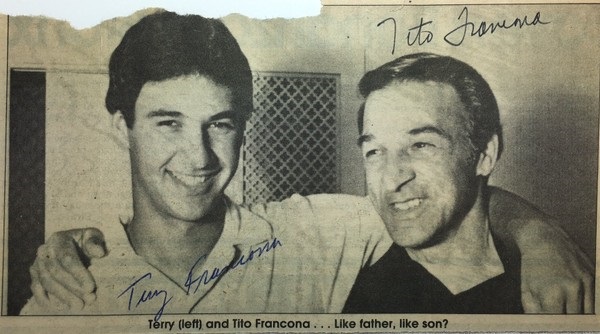 There is so much about Tito Francona that typifies that which makes baseball so interesting. Aside from one of the greatest nicknames in sports history, he was considered a journeyman for most of his career, but a damned good one. Tito Francona was a baseball player, a great husband and father and an even better teammate. When he died at the age of 84 he left a lasting legacy. Tito was there at the beginning of “The Curse” and although he’s gone, he’s likely to be there when the curse ends because “Little Tito” just might lead the Indians to a World Series Championship this season. After all, it was Francona who broke the Boston Red Sox Curse of Babe Ruth by winning two World’s Series titles in four years. Yep, baseball is a funny game.
 Alan E. Hunter