


Original publish date: July 30, 2020
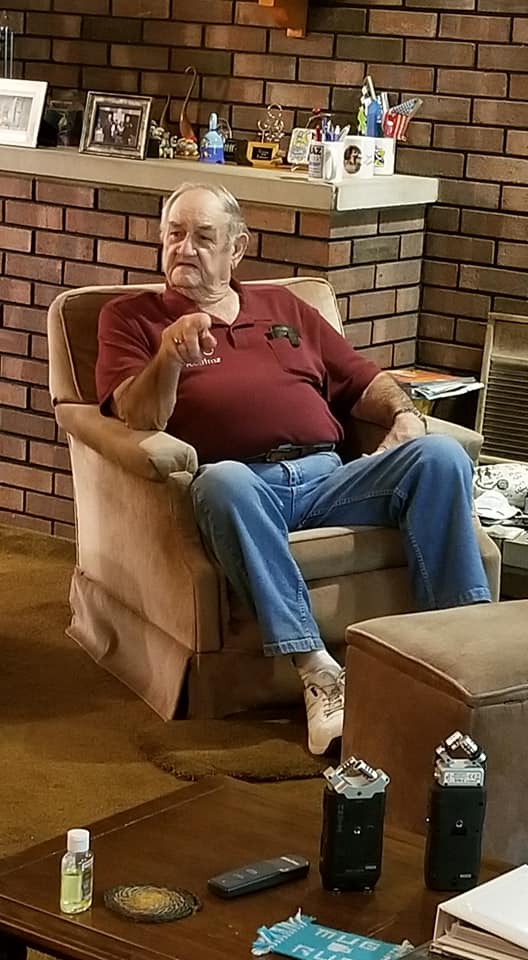
I asked guard Jim Albright what he remembers about the closing of Alcatraz prison in March of 1963, in particular the visit by Attorney General Robert F. Kennedy. “Oh yeah. I remember. He toured the island and had about 50 bodyguards all around him. He didn’t want any of those bad guys to get near him.” Jim can still recall the names and numbers of the infamous inmates on the island when he was there. “Whitey Bulger # 1428, Alvin Creepy Karpis # 325. Alvin was the lowest number left when I was there. Alvin did more time on the island than any other convict. He did just straight at 26 years.” Jim recalls both Bulger and Karpis as “good cons”, both were “quiet and respectful when they spoke to you.” However Jim does say this about Karpis, a notorious kidnapper with the Ma Barker gang, “He was creepy, oh yeah, he was creepy.” Jim states, “I always treated them like I would have wanted to be treated had I been the convict. My job was not to punish them, my job was security.”
Jim recalls, “Everybody talks about that escape in the Clint Eastwood movie, but I was on duty for the last escape from Alcatraz. John Paul Scott # 1503. December 16, 1962. That was 25 years, almost to the day from the first escape. I was in the control center. I got the call on the red phone, that’s the emergency phone, and you ‘dial the deuces’ as they call it, 222. ‘Jim get me some help, I got a couple missing from the kitchen basement’ was all I heard.” It was Jim Albright’s responsibility to call out the news, order the boat and man the towers for that final escape. Once again displaying his amazing recall after nearly 60 years, Jim says, “Darrel and Don Pickens, they were from Arizona, and they were both red haired and red freckles, red faced…I put them out in # 2 and # 3 towers and every thing’s going along and pretty soon they’re yelling.” They had found Scott’s fellow escapee Daryl D. Parker clinging for life on “Little Alcatraz” (a small rock in San Francisco Bay roughly 80 yards off the northwest side of the Island). Scott, by now naked and battered senseless, came to rest on a rocky outcropping in the bay near Fort Point. He was brought back to the Rock.

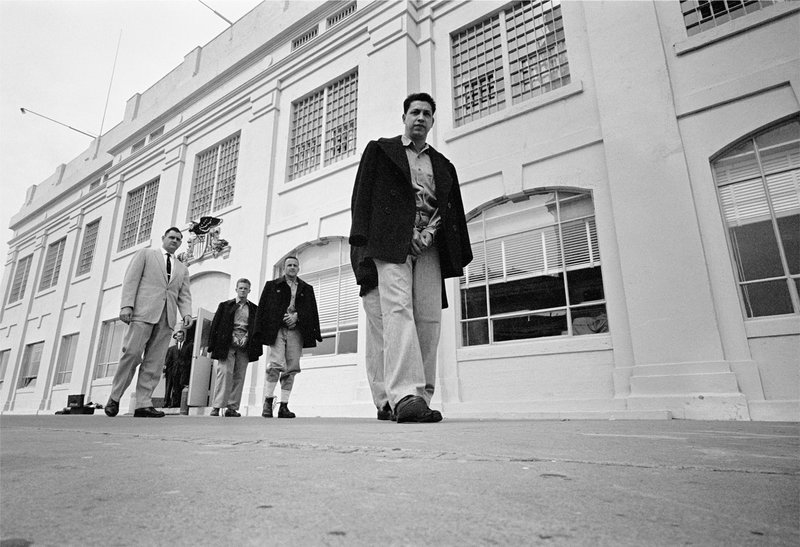
“I escorted the last inmate off the island, Frank Weatherman # 1576. We never had reporters, they were never allowed on the island but that day (of the closing) we probably had 250 of ’em, from all walks of news. One of ’em almost got in line as we’re heading out and asked me ‘what do you think about this?’ as we’re walking and I said, ‘Hey! I’m still working. My job is going on right now. The biggest thing I gotta watch right now is that one of you damned idiots don’t give ’em something they can escape with. Afterwards, I thought, Jim, keep your big mouth shut.” I asked Cathy where she was during that final prisoner walk down to the dock and she answered, “I was on the balcony watching. I was filming it.” Jim says, “We took the film to get it developed, but never got it back.” Cathy answers, “Somebody’s got it but we don’t.” Cathy also notes, “Well the inmates did not want Alcatraz to close. Some of them cried when they left because where they were going they might have to go to a 4-or-5-man cell, Alcatraz was single cells and they liked that.” Jim adds, “Some of them went, and Creepy Karpis was one of em, to McNeil Island in Washington and they had 10-man cells up there. Creepy, for 25, 26 years almost was used to a one man cell. They finally paroled him and deported him to Canada…from there he went to Spain. I guess he couldn’t take being free, cause he hung himself.”

Jim missed Robert Stroud, the infamous “Birdman of Alcatraz”, by just a few days. “I went there in August and he left in July. But I heard all the stories about him,” Jim recalls. “He was not liked by inmates or staff, either one. You talk about somebody no good, that was him…He was a weird old, nasty guy.” Jim and Cathy remained on the island for three months after that last inmate was escorted onto the boat by Officer Albright himself. It was only afterwards that the couple allowed themselves a little luxury, “We were there March to June. We moved from 64 building over across the parade ground to the city side…They had what they called B & C apartments, these were nicer apartments, they had fireplaces in them.” Jim smiles as he recalls Alcatraz historian and author Jerry Champion jokingly asking, “You had a fireplace did ya? Where’d you get your firewood?” (There are no trees on Alcatraz island).
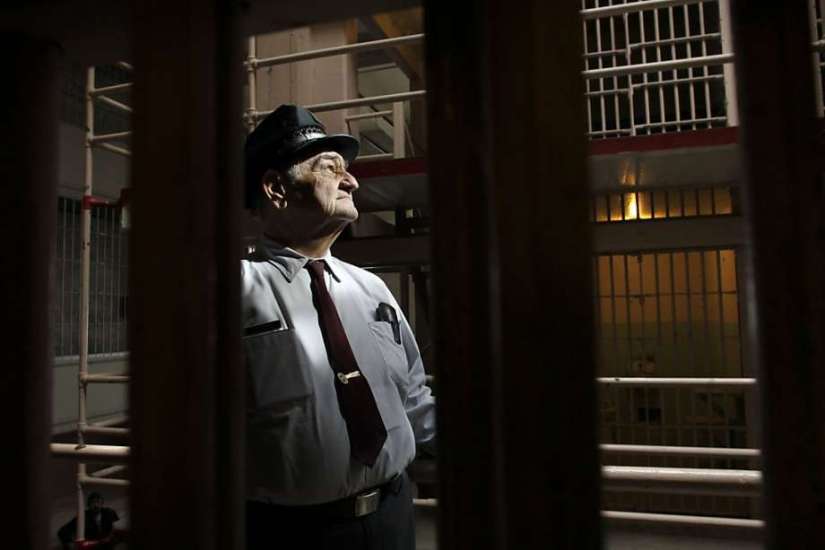
Jim guesses that there may be a “half a dozen or less” Alcatraz guards still living, and “two of them are in wheelchairs” and the former guard estimates the same for the former convicts. Cathy notes that the inmates used to come to the reunions too and Jim recalls that it took awhile for the inmates to show up because “they were ashamed of what the guards would think, ya know.” But spend five minutes with Jim Albright and you quickly realize that he was never one to hold a grudge. Officer Albright is simply not the judging kind. Jim Albright is a people person. He enjoys meeting people and loves to see their reactions when he shares his story, especially when he reveals that they lived on the island. “As soon as I tell them that and point to my wife, it’s “FWEET!” (he says with a whistle and grin), they go right over to her and I’ve lost ’em.”
For many years, Jim and Cathy traveled by train from Terre Haute to San Francisco, a 2 1/4 day’s travel from nearby Galesburg, Illinois. “There used to be 150 people come out to those reunions, but then it got down to 30 cause there’s just nobody left.” Because of the current situation with Covid-19, the couple’s trip has been postponed. Cathy admits, “Well, we’re all getting older” and Jim chimes in, “And that’s the thing about not going in August, that means that last August was probably our last time going out there. The odds are against us.” Jim and Cathy fear that the alumni association will soon be no more. “There’s just not enough of ’em left,” Cathy says.
 A week after our visit to Jim and Cathy Albright, the United States Supreme Court lifted the ban on executions at the Terre Haute penitentiary located a mere three miles from their front door. At the time of this writing, there had been three executions in four days. While there were never any State sanctioned executions at Alcatraz, there was not much rehabilitation taking place there either. Convicts were different back then, some actually viewed it as a profession. When asked about the convicts of today, Jim simply shakes his head and says, “They were more like professional convicts ya know ‘I did the crime, I’ll do the time’. It’s just not the same. It’s a different world now.”
In his book, Jim wrote quite eloquently of his feelings on that last day, “Emotions of prison personnel were very strong and it was hard to accept that all the convicts were gone…I boarded the boat for the last time as a guard on Alcatraz. I though to myself, what an experience I had just completed, and how fast the time went by. I felt tears grow in my eyes as the boat went across the water to Fort Mason.” I asked the couple individually, if they could make one statement about the Rock, what would it be? Cathy answered, “Well, I really liked the place. I did not want to leave. It was one big family… It was something special. It was home.” Jim reflected for a few moments, titled his head back as if looking through the mist of time, and replied, “A very enjoyable life living on the island and a very safe place to raise our children.”
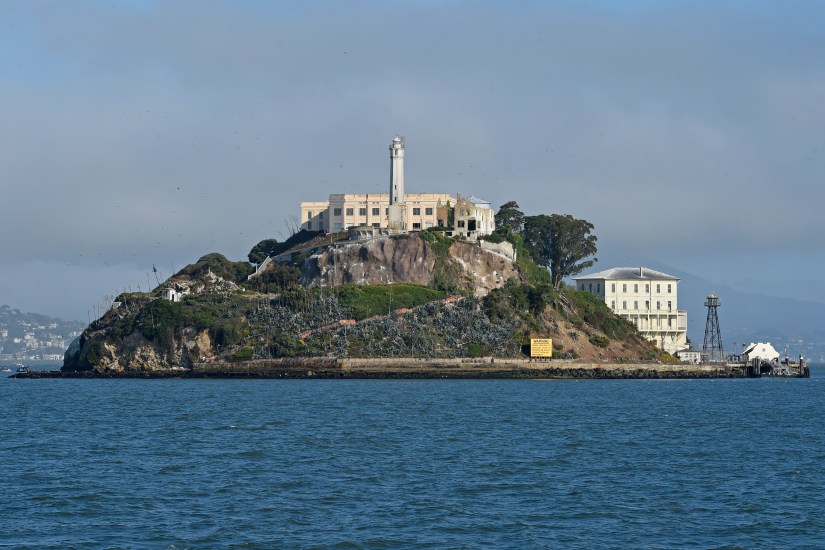
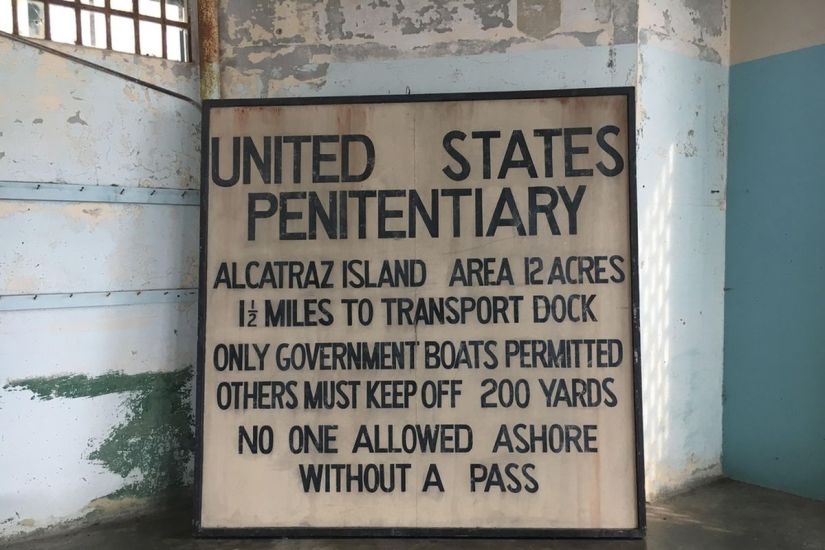
Alcatraz Federal Penitentiary has been closed for over 57 years now. During that time it has become more myth than reality. Alcatraz Island encompasses a total of 22 acres in the center of San Francisco Bay. It opened to the public in fall 1973 and since that time has hosted millions of people from every corner of the world. The flood of people who once lived on the island during the time it was the world’s most famous prison has trickled to a slow drip. However, there remains one couple living on the western edge of the Hoosier state who know that sometimes, even if they don’t consider themselves as such, legends are real and history is the foundation of all that is worthy in life.

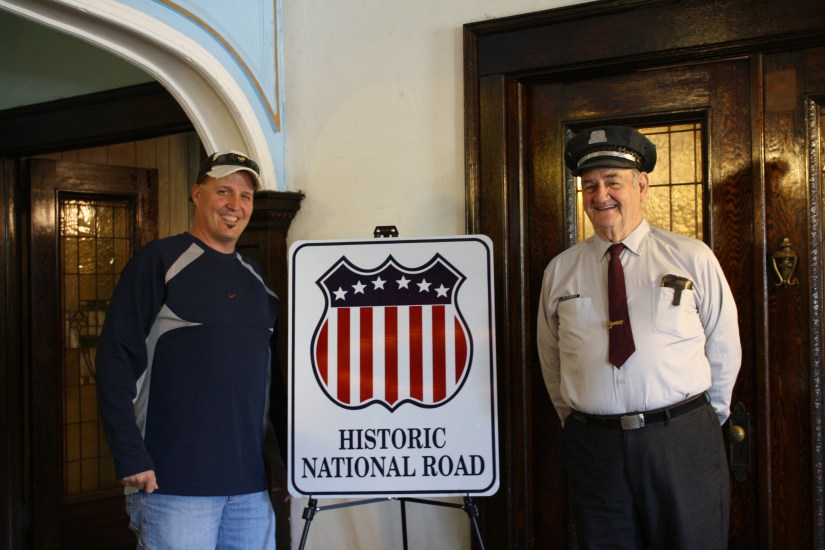


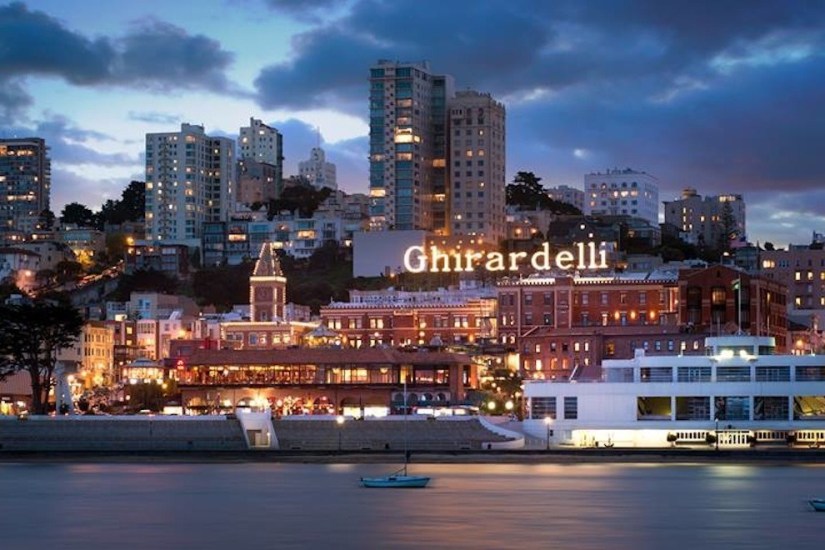 Jim’s recollections about his time on the island are limitless, he can affirm or deny legends about the island with ease. He relates details as if they happened yesterday. “The best cell placement on the island was the second tier because you could look out to see and hear San Francisco. On New Years especially, you could hear the parties and watch the party boats go past. When I was there, Ghiardelli Chocolate factory was still operational and you could smell that chocolate cooking when the breeze was just right.” He continues, “Al, you’ll like this, when I was in the tower, if one of those boats got too close to the island, I’d warn them with a bullhorn and if they didn’t listen, I could fire a shot across their bow. They moved then,” says the veteran guard. The prisoners were aware of the rumor that the island was patrolled by sharks, “Well the prisoners heard the rumor that the guards went down and caught all the sharks and cut the left fin off to make them swim in a circle around the island and we guards didn’t do anything to change their mind.”
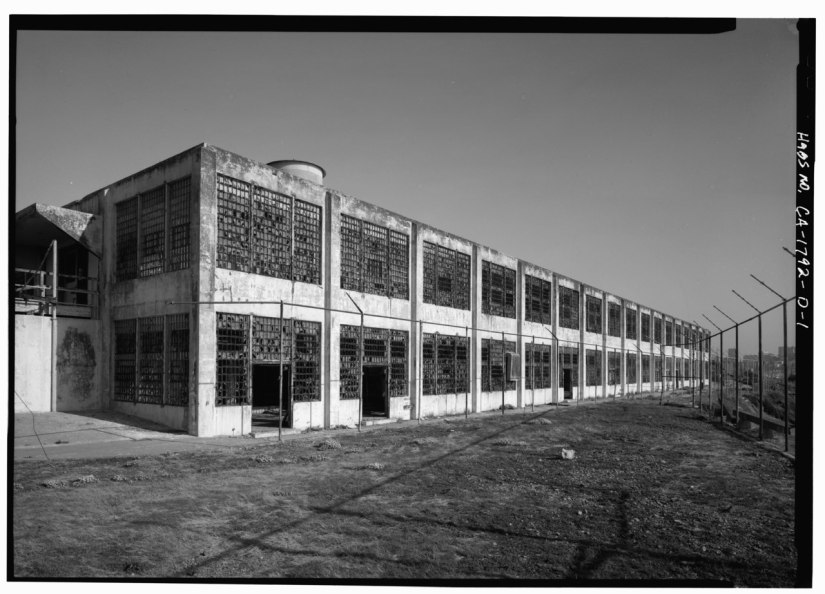
 Jim recalls patrolling the perimeter of the island and occasionally finding relics left over by military personnel during the time Alcatraz was in operation as a military fort guarding the bay from the Civil War up into World War II. Jim would see the old tokens gleaming in the moonlite at water’s edge, “I found script, I guess you’d call it. I think I’ve still got a dime, a fifty cent piece and a quarter around here somewhere.” He continues, “the guys would fish, there was a bout a half a dozen of them, down below the industries building. When you were dock and patrolman, there was a list, when you walked into the dock office, and when you saw the stripe bass running, you looked on that list and you’d call those guys who wanted to fish, anytime day or night, and you could make another round and when yo came back there could be anywhere from ten to thirty guys down there fishing. They made a Formica chute where they’d filet them right there on the spot and give the scraps to the seagulls. Quite often, you could help yourself to as many filets as you wanted. The head chef loved it cause they’d catch enough to feed the whole main line of prisoners.” I asked Jim if he ate the same meals the convicts ate. “When I first started there, I went thru the line and took my food back to a table in the kitchen. then they built us an officer’s dining room upstairs. The food was good.” Jim says the Alcatraz convicts, “had the best food in the prison service. Good food keeps trouble down.”





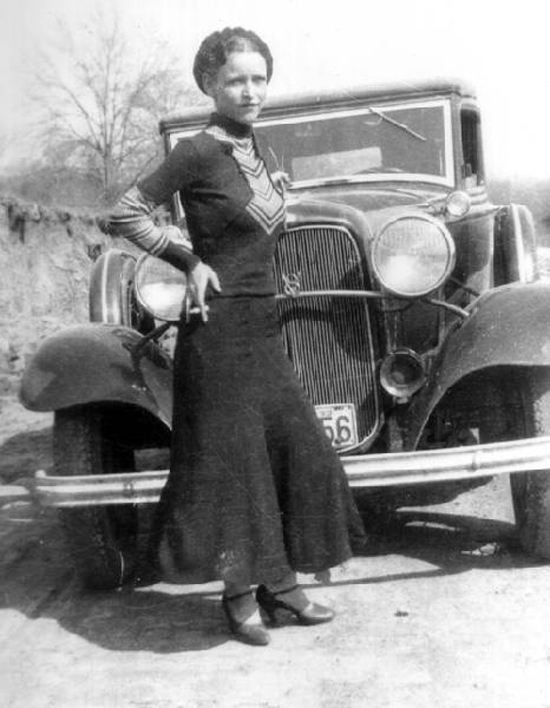
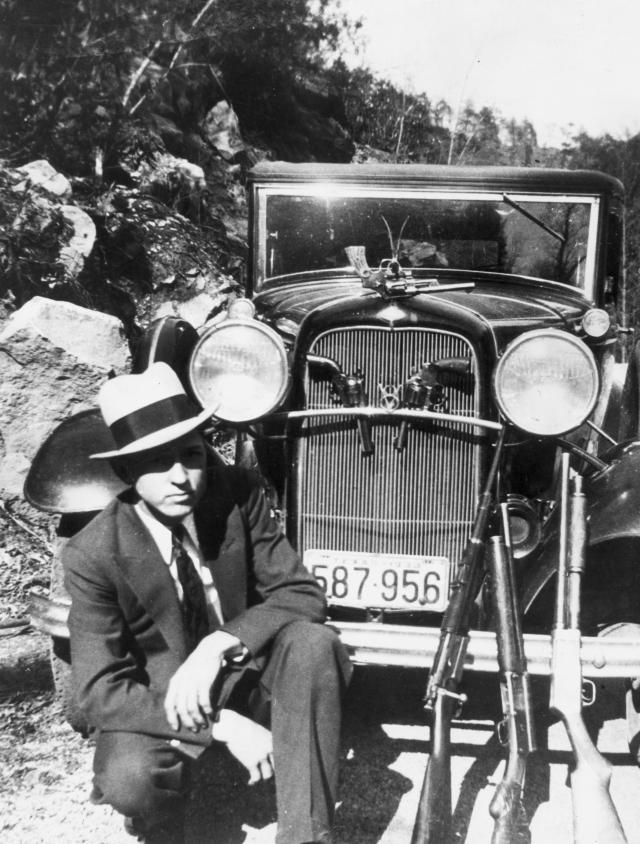 Clyde had an uncanny ability to steal Ford V8 cars and evade the police whenever he was trapped, cornered or surrounded. Clyde claimed that a Ford V8 car could outmaneuver and outrun any police car that attempted to follow him. Additionally, living a life on the run meant that Clyde and Bonnie spent days (or weeks) traveling long distances and sleeping in their car at night. Clyde supposedly preferred Ford V8s because he thought that their bodies were thicker and, thereby, more bullet-resistant. And those famous photos of Bonnie and Clyde mugging, clowning and romancing for the camera, most of them include a Ford V8 in the background.
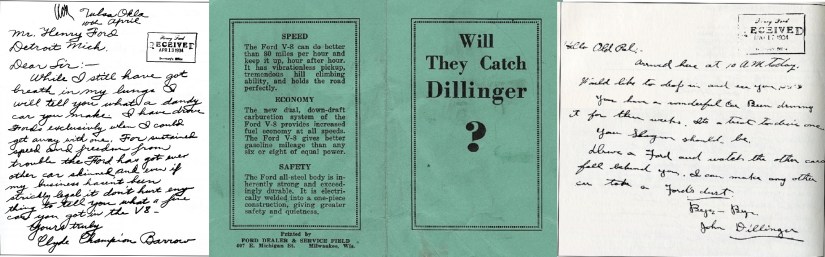
 Clyde Barrow loved the Ford V8 so much that he wrote a letter to Henry Ford in April of 1934 praising the car. Addressed simply to “Mr. Henry Ford Detroit, Mich.” from “Tulsa, Okla. 10th April” the letter, misspellings and all, reads: “Dear Sir:- While I still have got breath in my lungs I will tell you what a dandy car you make. I have drove Fords exclusively when I could get away with one. For sustained speed and freedom from trouble the Ford has got ever other car skinned and even if my business hasen’t been strickly legal it don’t hurt enything to tell you what a fine car you got in the V8- Yours truly, Clyde Champion Barrow” (Clyde Barrow’s middle name was actually Chestnut. He jokingly listed “Champion” as his middle name when he entered the Texas state prison at Huntsville in 1930.)
 Amazingly, after Ford’s secretary failed to recognize the outlaw’s name,a reply was sent on April 18th. The neatly typed letter on the ornate letterhead of the Ford Motor Company reads: “Mr. Clyde Barrow, Tulsa, Oklahoma. Dear Sir: On behalf of Mr. Ford, we wish to acknowledge your letter of April 10 and thank you for your comments regarding the Ford car. H.R. Waddell, Secretary’s Office.” Six weeks later, Bonnie and Clyde were dead. A debate rages to this day as to whether the letter is authentic or not. Regardless, it is a priceless piece of Americana that can often be found on public display at the Henry Ford museum in Dearborn. When Dillinger was asked about Bonnie & Clyde after his capture and incarceration at Crown Point, he responded, “Bonnie & Clyde? Huh, a couple a punks.”
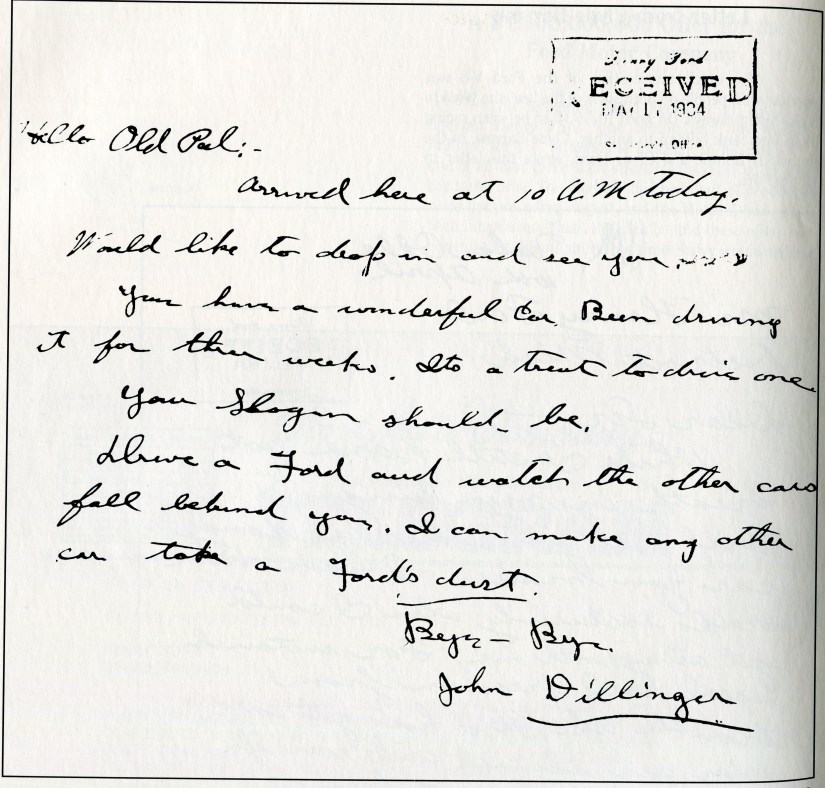 Ironically, a month later, Henry Ford would receive another letter. In May of 1934, a letter arrived from the most famous gangster in the world: John Dillinger. Like the previous letter, this one features the official stamp of the Henry Ford office, dated May 17, 1934. The letter is postmarked from Detroit and, like the Bonnie & Clyde letter, is entirely handwritten. It reads: “Hello Old Pal. Arrived here at 10:00 AM today. Would like to drop in and see you. You have a wonderful car. Been driving it for three weeks. It’s a treat to drive one. Your slogan should be, Drive a Ford and watch the other cars fall behind you. I can make any other car take a Ford’s dust! Bye-Bye, John Dillinger”. The Dillinger gang had just held up the Citizens Commercial Savings Bank in Flint, Michigan, on May 18, 1934. Like the Barrow letter, the authenticity of the letter writer is called into question. A week after this letter was received, Bonnie and Clyde were dead. 67 days later, so was John Dillinger. While Dillinger died in a Chicago Alley next to the Biograph Theater, Clyde Barrow died behind the wheel of his last stolen car: a Ford V8.
 The letter, coming on the heels of the disastrous escape by Dillinger and his gang from the Little Bohemia Lodge in Manitowish Waters, Wisconsin a month before on April 22, inspired a Milwaukee Ford Motor Car dealership to create and distribute a sales brochure asking the question, “Will They Catch John Dillinger?” on the front. When opened, it featured the answer, “Not Until They Get Him Out of a Ford V-8!” with additional info at bottom reading, “NEWS NOTE: John Dillinger evaded capture by making speedy get-away in new Ford V-8 after famous jail break at Crown Point, Indiana. His spectacular get-away from Little Bohemia Resort, Mercer, Wisconsin, was also in a Ford V-8.” The back of the brochure touts the Ford V-8’s “Speed: The Ford V-8 can do better than 80 miles per hour and keep it up, hour after hour. It has vibrationless pickup, tremendous hill climbing ability, and holds the road perfectly.” The “Economy: The new dual down-draft carburetion system of the Ford V-8 provides increased fuel economy at all speeds. The Ford V-8 gives better gasoline mileage than any other six or eight of equal power.” And, perhaps confirming Clyde Barrows assertion, the “Safety: The Ford all-steel body is inherently strong and exceedingly durable. It is electrically welded into a one-piece construction, giving greater safety and quietness.” The brochure concludes with the dealership name and address at 407 E. Michigan Street in Milwaukee, Wisconsin.
 Alan E. Hunter