

Original publish date: September 3, 2018
Attention Hoosiers, Abraham Lincoln needs your help. More specifically the Abraham Lincoln Presidential Library Foundation in Springfield, Illinois is appealing to all friends of Mr. Lincoln to lend a hand in their hour of need. Last week I traveled to the ALPLM to speak with the State Historian of Illinois and Director of Research and Collections, Dr. Samuel Wheeler. Although his title and resume may sound imposing, “Sam” is a breath of fresh air for the Lincoln historical community. Dr. Wheeler’s appearance is immediately disarming, his countenance inviting and friendly. Sam breaks the long-established mold of the elderly historian whose gray hair, Meerschaum pipe and leather-elbowed corduroy jacket are calculatedly designed to intimidate. Sam’s youthful appearance and ready smile invite everyone to come, sit and talk history for awhile.

Dr. Samuel Wheeler is the tenth State Historian in Illinois history and when you consider that 2018 is the state’s Bicentennial year, you may deduce that they choose their historians carefully. Sam’s specialty is the cool stuff: the history of Illinois, the Civil War Era, and the Life and Legacy of Abraham Lincoln. Dr. Wheeler’s life mission is to protect, preserve, and promote history through education. During his three years at the helm, he has devoted much of his time to assisting other museums, libraries, historic sites, documentary projects, and historical societies. He regularly speaks to diverse audiences across the country, writes for scholarly journals and popular magazines, and offers commentary to newspaper, radio, and television outlets. In short, Dr. Wheeler is a busy man.
The subject of my visit is a topic that has occupied social media, blog spots and chat rooms for the past few weeks. The ALPLM is in danger of losing some of its most precious Abraham Lincoln relics and associative memorabilia. If the ALPLM cannot satisfy a substantial financial liability by October 2019, priceless Lincoln relics will have to be sacrificed to meet their obligation. Meaning that these items will likely end up in the private collections of millionaires never to be displayed publicly again. While the amount of the liability, $9.7 million is staggering, Dr. Wheeler points out that “if we could just get every citizen of Illinois to donate one dollar each, we would wipe out that debt in no time.” Sam continues, “and if you could get Indiana to pitch in the same, we can keep the collection open for generations to come.”
 The ALPLM’s “problems” began back in 2007 when it purchased the famous Taper collection for $23 million. “The collection is amazing,” says Sam, “the Lincoln top hat and bloodied gloves seem to be the items that resonate most with people, but the collection is much more than that.” Dr. Wheeler says that the uniqueness of the Taper collection centers around its emphasis on assassination related items, a field that had been largely ignored by Lincoln collectors at that time of its assemblage. The collection was created by Louise Taper, daughter-in-law of Southern California real estate magnate S. Mark Taper. She created the exhibition The Last Best Hope of Earth: Abraham Lincoln and the Promise of America which was at the Huntington Library from 1993–1994 and at the Chicago Historical Society from 1996-1997.
According to the ALPLM’s website, “Louise Taper amassed the largest private collection of Lincolniana in more than a half-century, highlighted by 1 of 3 stovepipe hats known to have belonged to Lincoln; the earliest of his boyhood sumbook pages, ca. 1824-1826; and more than 100 letters or notes in the hands of Abraham or Mary Lincoln. Also among the 1,500 items in the collection are manuscripts by friends and contemporaries, personally owned books and clothing or other accouterments, prints, broadsides, newspapers, artworks, period photographs, and assassination-related materials.”
The ALPLM acquired the Taper Collection two years after they opened the $150 million facility on April 19, 2005. To blunt public charges that the ALPLM had bit off more than it could chew, Dr, Wheeler compares the museum to a 13-year-old child. He states, “Not too many 13-year-olds have got it all together. We’ve matured a lot in the last two years.” Sam notes that in those two years, the ALPLM has streamlined much of their operation citing as examples that more of the collection has been digitized for research and the museum’s six research rooms have been pared down to one.
 “Bottom line,” Sam says, “we need to keep the collection here. That is our first priority.” It is easy to see how important this collection is to Dr. Wheeler by simply watching his eyes as he speaks. To Wheeler, the collection is not just a part of the museum, it is a part of the state of Illinois. Sam relates how when he speaks to groups, which he does quite regularly on behalf of the ALPLM, he often reaches into the vault to bring along pieces from the Taper collection to fit the topic. “People love seeing these items. It gives them a direct connection to Lincoln.” states Wheeler.
When asked if he has a particular favorite from the Taper collection, Dr. Wheeler smiles and says, “I’m particularly drawn to the gold cufflink that Lincoln was wearing at Ford’s Theater that night.” However, Sam is quick to point out that what makes the Taper collection so special is the depth of quality it represents. The collection contains Mary Lincoln’s hand fan carried to the theater that night, locks of hair from members of the Lincoln family, and the oldest piece of writing by Abraham Lincoln known. It is a page from 15-year-old Abraham Lincoln’s 1824 schoolbook whose content Dr. Wheeler can recite by hear. “Abraham Lincoln is my name/ and with my pen I wrote the same/ I wrote in both haste and speed/ and left it here for fools to read.”
Dr. Wheeler also informs that the Taper collection contains a treasure trove of letters written by John Wilkes Booth and his entire family as well as the ring J.W. Booth presented to his fiancée Elizabeth Sumner. “We also have stage costumes and the handwritten character sketch for John Wilkes Booth’s role in Shakespeare’s Macbeth,” says Wheeler. “Our main objection for the collection, is that we keep it in the public realm. That is imperative.”
The Lincoln Library foundation recently said, “If the foundation is not able to secure commitments in the very near future to retire most-if not all-of the remaining $9.7 million debt, it will have no choice but to accelerate the possibility of selling these unique artifacts on the private market-which would likely remove them from public view forever.”
 Hoosiers may ask, why doesn’t the ALPLM just ask the state of Illinois for the money? After all, with 300,000 visitors annually, the Lincoln Library Museum is one of the most popular tourist sites in the state of Illinois and is prominently featured in all of their state tourism ads. Well, the state is billions of dollars in debt despite approving a major income-tax increase last summer and as of the time of this writing, has yet to put together a budget. To the casual observer, one would think that financial stalemate between the state and the museum would be a no-brainer when you consider that the ALPLM has drawn more than 4 million visitors since opening in 2005. The truth is a little more complicated than that. Illinois State government runs and funds the Lincoln library and museum. The separately run foundation raises private funds to support the presidential complex. The foundation, which is not funded by the state, operates a gift store and restaurant but has little role in the complex’s operations, programs and oversight.
Aside from the items previously mentioned, the Taper collection, which numbers over 1500 pieces, also includes a pair of Lincoln’s eyeglasses and his billfold. The Taper collection includes about 100 Mary Todd Lincoln letters, giving the Lincoln presidential library a total of 500-out of only 600 in the world.
Museum officials are sorting out which Taper collection items were donated and transferred to the state, and what might end up for sale-if it should come to that. One item that won’t be on the auction block is the state’s rare copy of the Gettysburg Address, written in Lincoln’s own hand. Luckily, the document wasn’t part of the Taper purchase. The state’s collection of Lincoln artifacts, tens of thousands strong, draws researchers from across the globe and gives the public a chance to see up close the man many Americans feel was the greatest President in U.S. history.

The Taper collection also included a dress worn by 1950s movie star Marilyn Monroe, an admitted “fan girl” of the 16th President. The blonde bombshell’s dress was considered a non-Lincoln item that potentially would fetch big bucks to help pay off the loan. Perhaps to show that they were serious, in late July the ALPLM sent Monroe’s slinky black dress off to a Las Vegas auctionhouse, where it fetched $50,000 from the lucky bidder. Also sold were seven original photographs of Monroe, which sold for $3000 each. However, an original bust of Lincoln biographer Carl Sandburg failed to sell. All proceeds from the Julien’s sale went towards the outstanding debt. Hopefully Lincoln relics will not be next up on the auction block.

Dr. Wheeler is doing his best to get the message out. Aside from his normal 60 hour work week he spends nights and weekends all over the state and country talking about Lincoln, the museum and sounding the alarm to save the collection. The museum is getting help from cherished friends like Doris Kearns Goodwin who will be speaking at the ALPLM on October 29 with “proceeds from this event to benefit the campaign to secure a permanent home for Lincoln’s most personal effects comprising the Taper collection.” Interested and concerned Hoosiers can help by visiting the Abraham Lincoln Presidential Museum and Library website at http://www.alplm,org and there is a “Save the Lincoln Artifacts” go find me page on the web.
If every Hoosier would chip in a few bucks we could honor our state’s favorite son and help our neighbors in Illinois at the same time. Skip that latte for Lincoln. Snap off that sawbuck for the rail splitter. Honest Abe is depending on you.
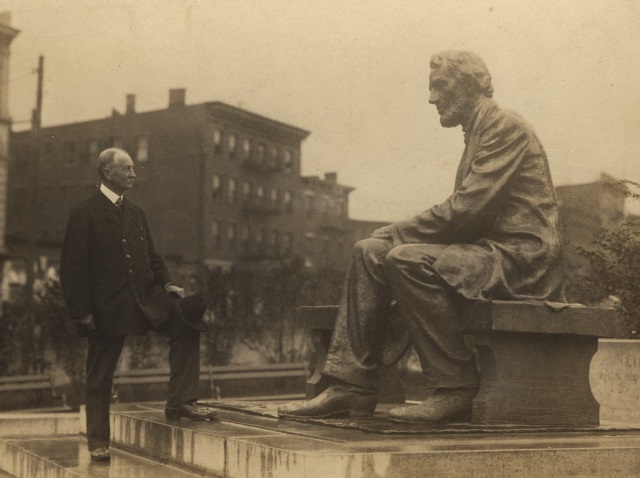
 On June 16th I found myself in Marshalltown examining the items. I obtained my bidder number, which happened to be bidder # 1, and retreated to my hotel room to await the next day’s auction. There’s not much to do in Marshalltown, Iowa so I decided to drive to the nearby community of LeClaire, Iowa to mark time.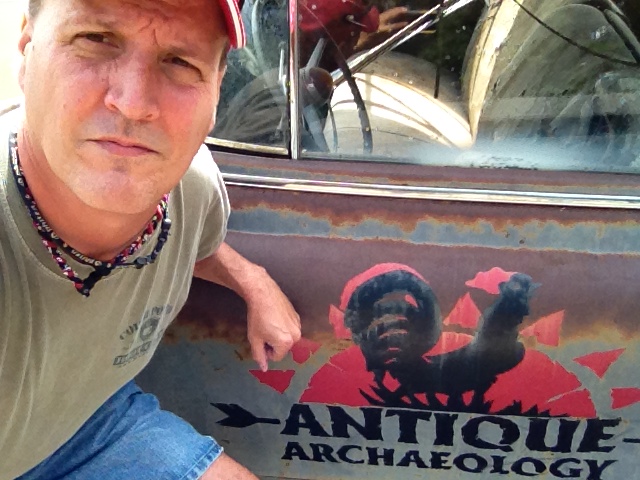
 Among the items I brought home were a pair of contemporaneous framed leaflets. Both are displayed starkly in black wood and glass frames, one is a copy of Lincoln’s farewell address to the citizens of Springfield, and the other is a copy of Lincoln’s favorite poem. The farewell address is important to me because Lincoln’s first stop after the delivery of this poignant edict was Indianapolis. The next item was a classic-looking photo of Lincoln ascending to heaven wrapped in the open arms of George Washington. The careworn oval metal frame fits snugly in the palm and bears the wear and patina of an item held repeatedly in the loving hands of a legion of Lincoln admirers.
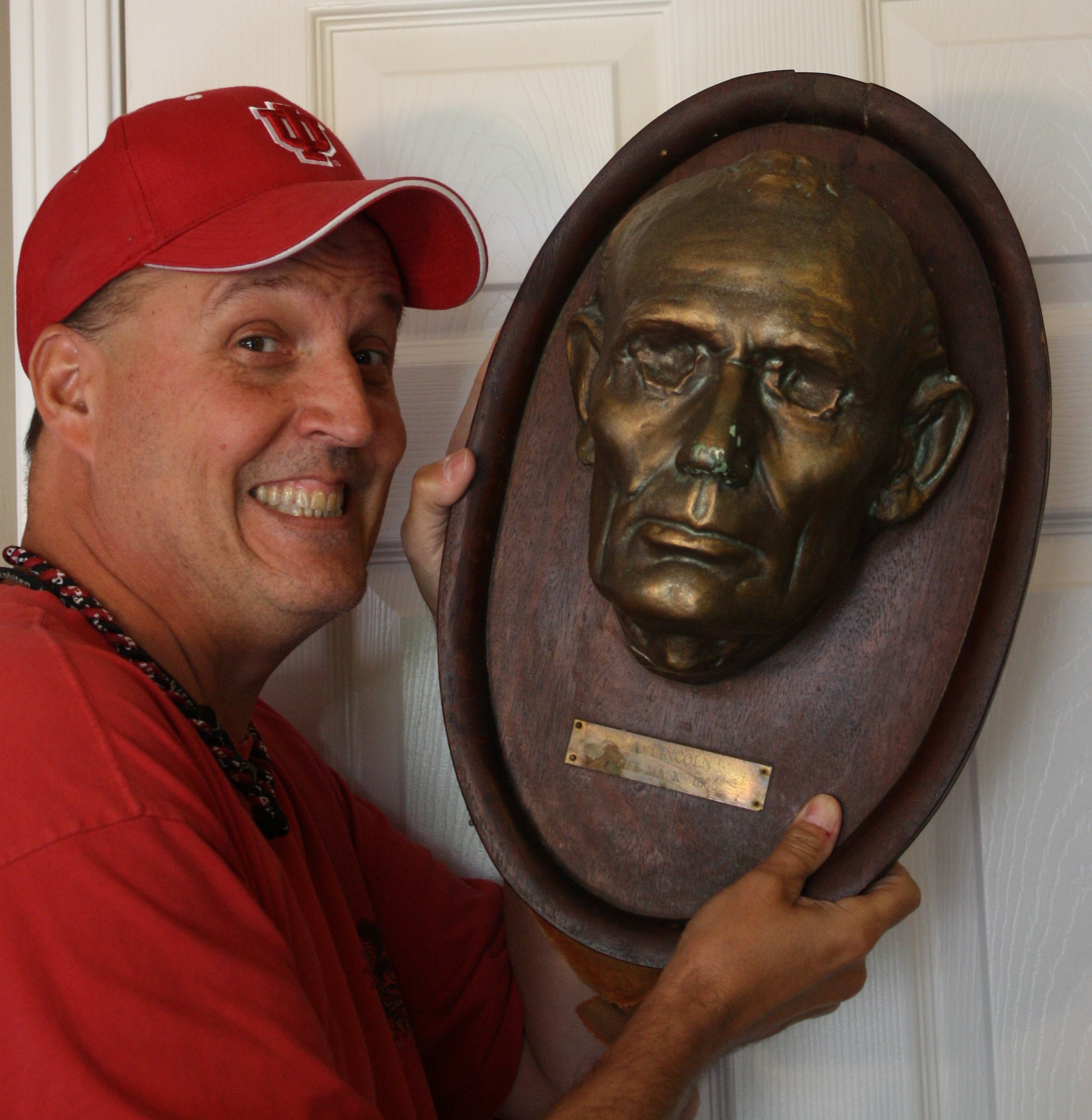 The next item is the haunting life mask of Abraham Lincoln that once hung on the wall of Oldroyd’s museum. The lifesized mask is attached to a larger handcrafted oval wooden plaque with a smaller brass nameplate attached to the front. The lifemask, made by artist Leonard Volk in 1860 before Lincoln grew his signature beard, is an accurate representation of what it would have been like to look at the face of a young and vibrant Lincoln. This item was surely a highlight of the museum and, judging by the loss of paint and subsequent repair of the nose, was a good luck talisman for all visitors. Rubbing Lincoln’s nose is still a popular tradition at the Lincoln tomb in Springfield.
 owned. The Bible was obtained by Oldroyd after Mr. Lincoln was killed and presumably following the death of Mary and Tad Lincoln. The phone book-sized Bible shows signs of heavy wear and transport in compliance with the somewhat vagabond lifestyle led by Mary and Tad after vacating the White House in 1865. Mary died in 1882. Tad preceded her in 1871. The Bible includes a couple pages of contemporary Carte de Visite photographs of the Lincoln family along with a few other disparate images from the Civil War and immediate post-period. The inclusion of CDVs depicting Union Civil War Generals Grant, Sheridan, Burnside, and Sherman alongside images of the US Capitol Dome under construction and George and Martha Washington could easily be construed as Tad’s version of collecting baseball cards.
 The last three items of acquisition were perhaps the most important to me. I am a native Hoosier. I cherish the idea that Abraham Lincoln grew to manhood in the southern region of my home state. These three items offered a direct connection to Lincoln and Indiana. The first two items are innocuous in their relevance to Lincoln the Hoosier; the Lincoln family coffee grinder and Abraham Lincoln’s ice skate.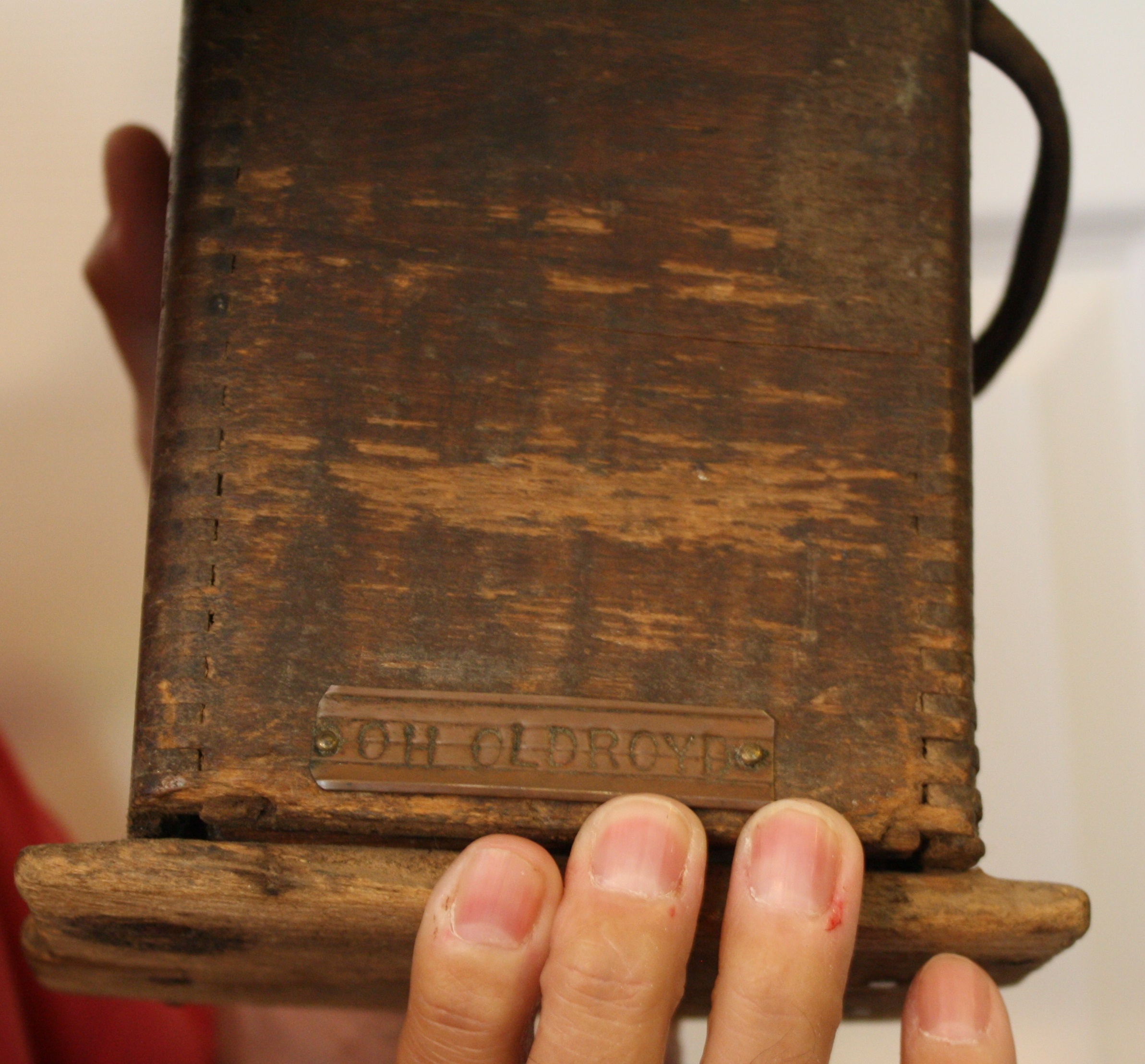
 The next Indiana Lincoln item is an ice skate. The thick wooden shoe stand is shaped like an hourglass and the heavy iron blade is curled at each end like an ancient Crakow shoe. While no official reference exists of Lincoln the ice skater, the skate presents a romantic image of boyhood Lincoln at play on a frozen southern Indiana pond. Simply holding it in your hands brings a smile to your face.
 with me, at all costs. It is an ancient-looking Colonial Era metal candle maker. During colonial times up to the Antebellum Era, candles were the main source of light during the long, dark, nighttime hours. Candles on the western frontier were made from beeswax and tallow (animal fat). The wicks were lain loosely inside the tube as the wax was poured in around them to harden.
 Included with the candle maker is a framed certificate written and signed by Osborn Oldroyd reading: “This candle maker is from the Lincoln and Sparrow Cabin on Pigeon Creek Indiana (1818-1835) O.H. Oldroyd Washington April 9, 1901”. The certificate has a small brass diecut tab attached with the seal of the state of Indiana inset. It would be hard to find a more romantic artifact to illustrate Lincoln’s time spent in the Hoosier state. Young Abraham may well have learned to read by the light of a candle made in this, the Lincoln family candle mold. Stories abound of Young Abe the railsplitter reading by candle and firelight into the wee hours of the morning after a long day’s work in the fields.
 Lastly, my wife treated me to a birthday trip to Springfield, Illinois in July. I traveled to the Lincoln home on an early Saturday morning to reflect while seated in front of the Lincoln home. Based on trips past, I’ve learned that the early morning hours are best. No school buses, tourists or fitness walkers/bikers to mar the scene. I have been coming to Springfield for many years. Of course, Abraham Lincoln is the reason for my visit. However, I never forget that Osborn Oldroyd lived in the house and operated his museum here for nearly a decade (1884-93). I’d asked several people, ranging from officials at the Lincoln Museum to parks department employees, about Oldroyd in the past but always got a cool reception to my querie.
 Original publish date: March 20, 2014
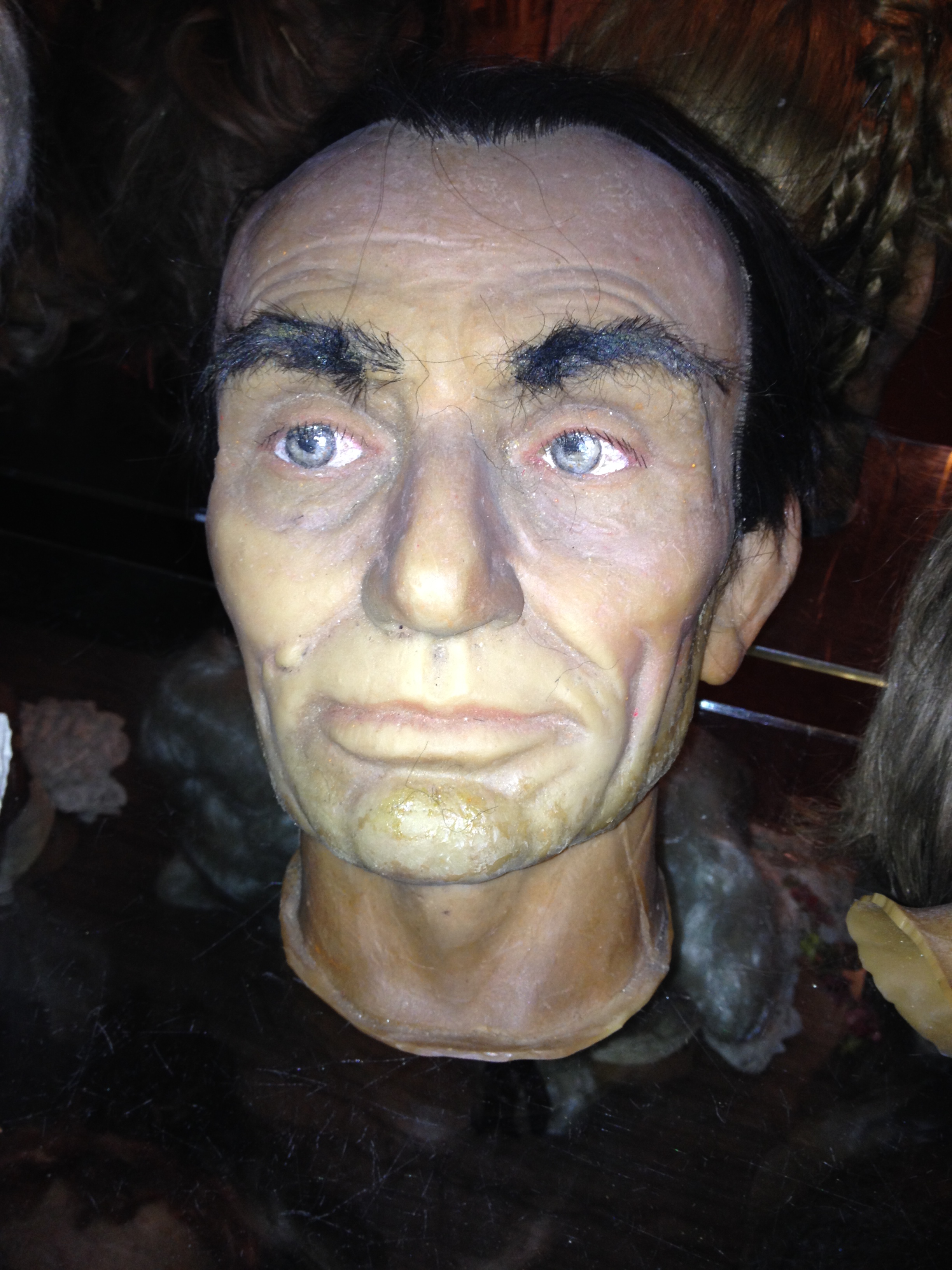 On Saturday, March 15th the museum’s contents were sold to the public at auction. The sale included 95 Civil War wax figures and the accouterments used to illustrate each scene. In it’s half century of service the museum saw over 8 million visitors walk through the turnstiles, now lot # 265 in this very special auction.
 As I finished perusing the auction lots, I halted at an area tucked away in a back corner of the hall. This dimly lit crook featured tiered shelves upon which rested approximately 40 disembodied heads. Some of the heads were recognizable to me; Abraham Lincoln, Andrew Jackson. On a shelf nearby lay a pile of arms, legs and hands. Some of these body parts, in keeping with the brutality of the Civil War, were spattered with blood stains. Seeing these, I turned to my wife and said “Now these have the potential to go sky high.”
 The synchronicity of the moment was not lost on me as, outside just yards away, bulldozers busily cleared out the massive football field sized blacktop parking lot. It had once served the old visitor’s center (torn down in 2008) and Cyclorama building, built the same year as the wax museum and torn down in March 2013. In the past 25 years I watched as other tourist landmarks disappeared from the borough including the Lincoln Room Museum, The National Tower, and now, the Wax Museum.
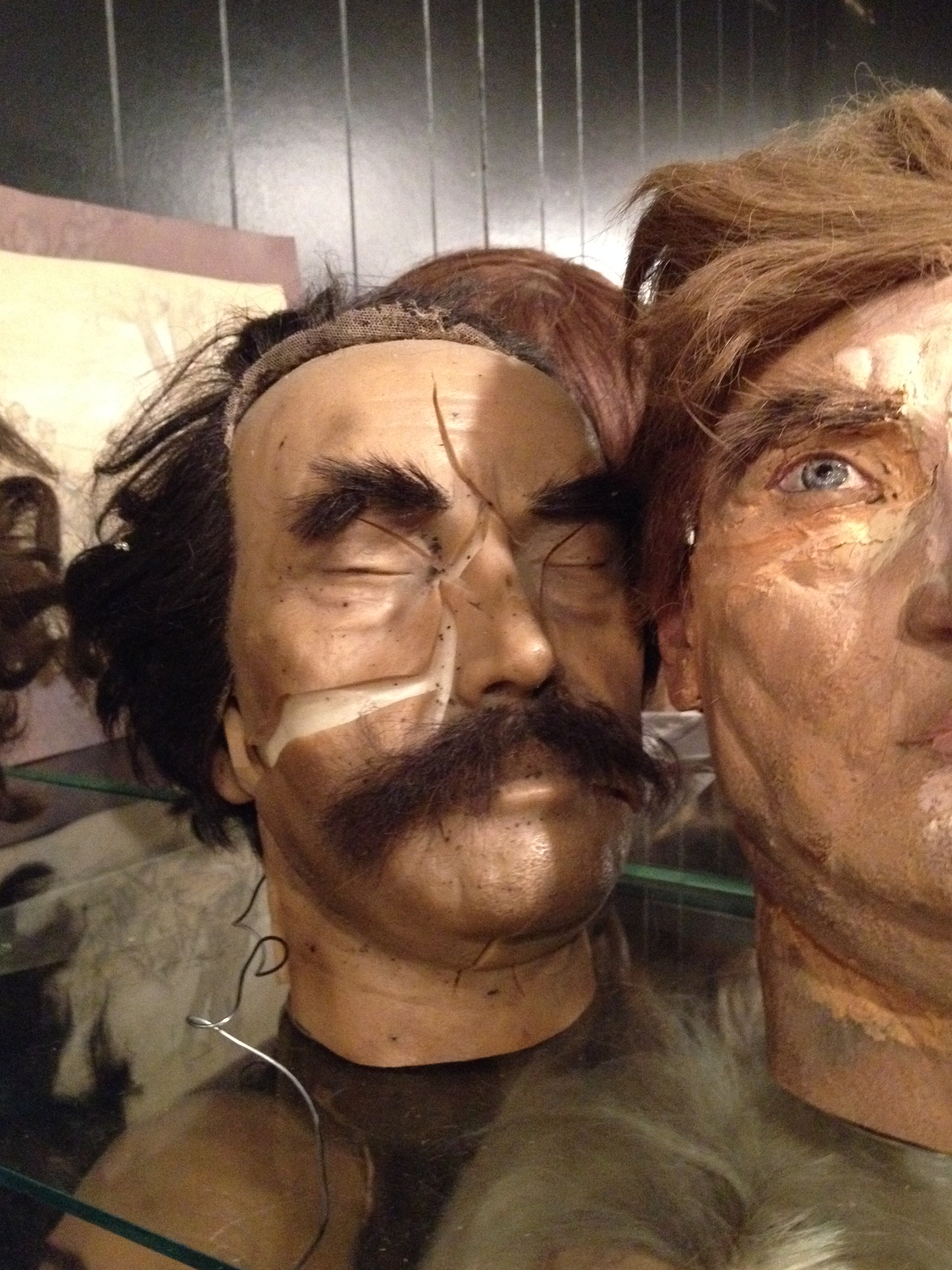 Undoubtedly the happiest person in the room that day was a young woman named Kim Yates. She was hard to miss. Towards the end of the auction she bid on, and won, the last wax figure in the catalog. Suddenly, the previously sedate young lady began to scream wildly and jump around the room. One of the ringmen sidled over to me, after noting the look of obvious surprise on my face, and whispered, “She’s never bid in an auction before.”
 Original publish date: July 16, 2010
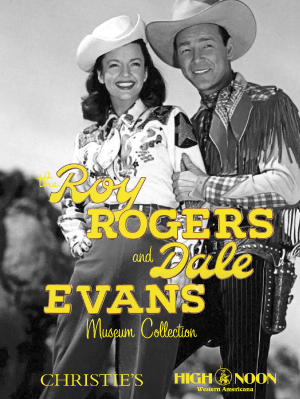
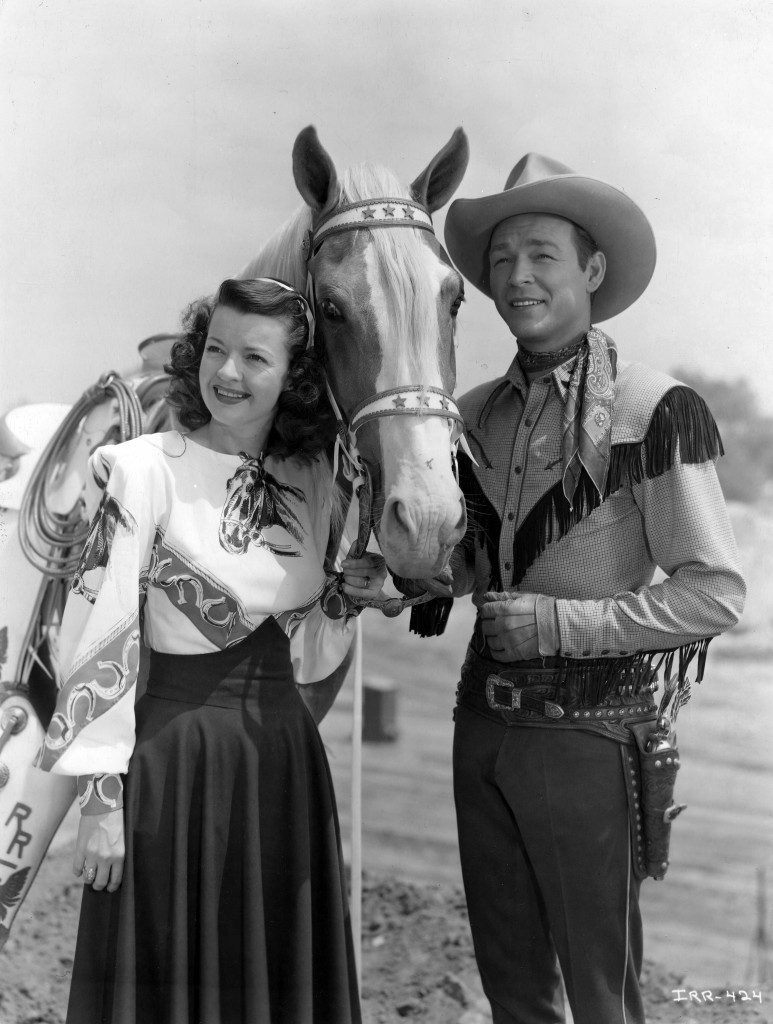 Roy died on July 6, 1998 and Dale followed him on February 7, 2001, prompting the move to Branson. Sadly, the popular museum closed for financial reasons on Dec. 12, 2009. It seems that Roy’s demographic and interest in his life and career was dying with him. The museum was operated by Roy Rogers, Jr., known as “Dusty” to fans, whose decision to close the museum was like another death in the family. In a move that shocked fans, historians and preservationists alike, Dusty announced that the contents of the museum would be liquidated. What most people fail to realize is that Dusty is simply doing what his late father told him to. Roy often told his family that when interest in his career inevitably waned, sell the collection and close the museum.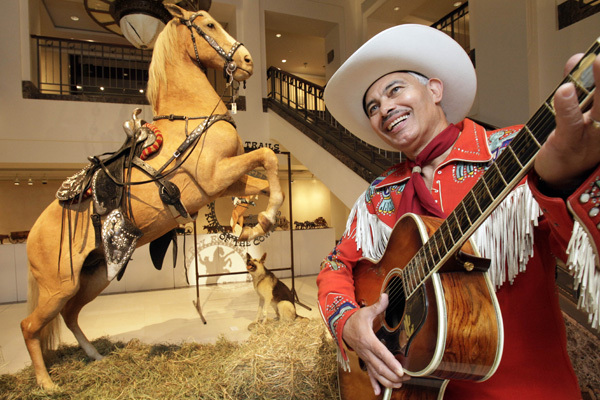

 Original publish date: December 7, 2013
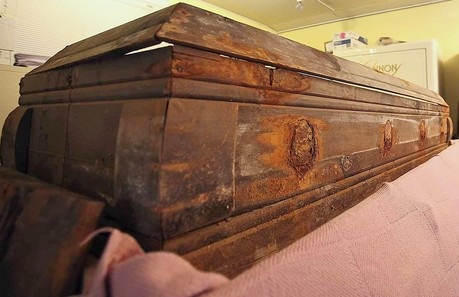 Lee Harvey Oswald assassinated John F. Kennedy on November 22, 1963 by firearm from the sixth floor of the Texas schoolbook depository in Dallas, Texas. Later that day, Oswald murdered Dallas police officer J. D. Tippit by shooting him four times on a Dallas street approximately 40 minutes after Kennedy. He was arrested while seated in the Texas Theatre a short time later and taken into police custody. On Sunday, November 24 Oswald was being led through the basement of Police Headquarters on his way to the county jail when, at 11:21 a.m., Dallas strip-club operator Jack Ruby stepped from the crowd and shot Oswald in the abdomen. Oswald died at 1:07 p.m. at Parkland Memorial Hospital-the same hospital where Kennedy had died two days earlier. A network television camera was broadcasting the transfer live and millions witnessed the shooting as it happened. After autopsy Oswald was buried in Fort Worth’s Rose Hill Memorial Burial Park.
 Alan E. Hunter