Assassinations, Politics

Richard Lawrence and Old Hickory. Andrew Jackson Assassination Attempt.

Jackson attempt January 30 photo                                                   Original publish date:  January 24, 2014
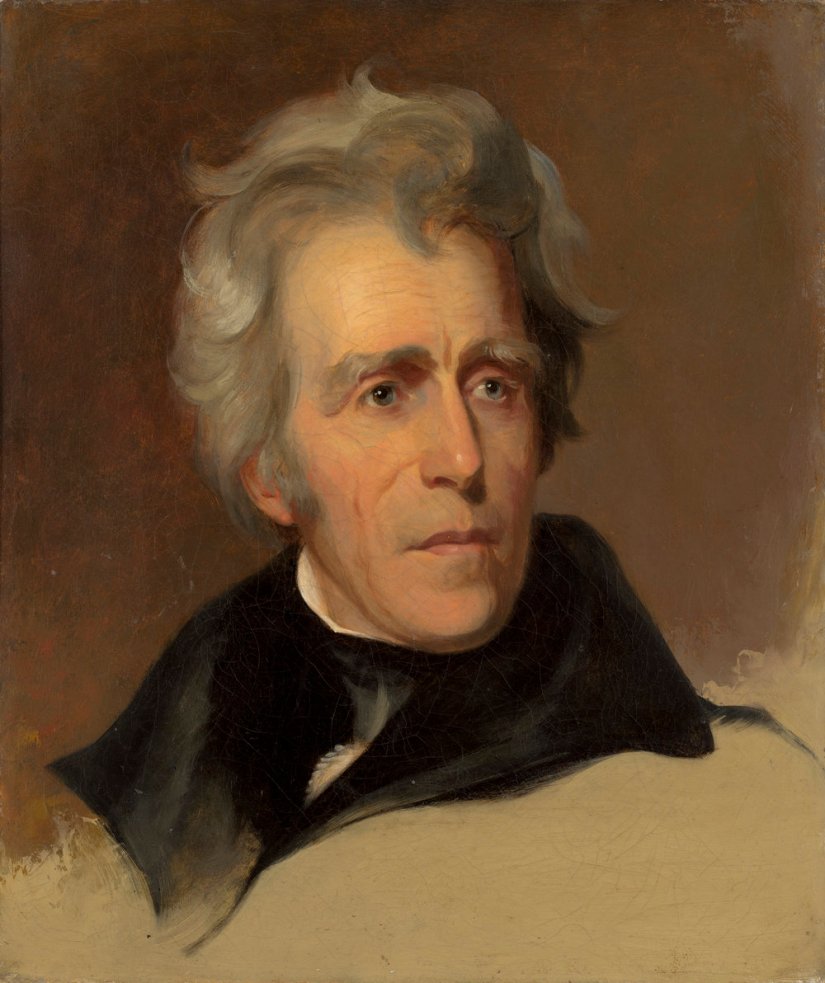
Who is Richard Lawrence and why should you care? In the next few minutes, I’ll introduce you to him, but as for caring, I’ll leave that up to you. Richard Lawrence was a house painter by trade. More importantly, he was the first known person to attempt to assassinate a President of the United States. Still doesn’t ring a bell? Don’t feel bad, the attempt came 179 years ago this week and the President in question was “Old Hickory”, Andrew Jackson.                                                                                                                                                                 

President Andrew Jackson did not know him, which comes as no surprise when you realize that, at the time of the assassination attempt Lawrence did not even know himself. He believed himself to be King Richard III of England who died some 350 years before. Lawrence was born in England sometime around 1800-1801. His family emigrated to America when he was 12 years old and settled in Virginia near Washington, D.C. Lawrence’s childhood and early adult years were apparently normal.                                                                         

Until January 30, 1835, when Lawrence attempted to shoot Jackson outside the United States Capitol, his life was an unremarkable one. Most of what we know of him comes from testimony at his trial. He was described by relatives and acquaintances as a “relatively fine young boy…” who was “reserved in his manner; but industrious and of good moral habits.” Historians speculate that exposure to chemicals contained in the house paints may have fried his brain.
Jackson-Assassination-attempt-Granger-1200X480In November 1832, Lawrence announced to his family that he was returning to England. He left Washington, D.C. only to return a month later claiming that he decided not to go because it was too cold. Within weeks, he changed his mind and told friends & family that he was returning to England to study landscape painting. Lawrence left once again and got as far as Philadelphia before returning home. He told his family that the U.S. government had prevented him from traveling abroad and barred his planned return to England. He further claimed that while in Philadelphia, he read several newspaper stories about himself that were critical of his travel plans and his character. Lawrence told his family that he had no choice but to return to Washington, D.C. until such time as he could afford to hire his own ship and captain and sail away to England.
Oh yeah, he also quit his job. When questioned by his sister and brother-in-law with whom he was living, Lawrence stated that he did not need to work because the U.S. government owed him a large sum of money. Lawrence, now claiming to be King Richard III of England, believed he was owed money on two English estates that he owned. In time, Lawrence became convinced that President Jackson’s opposition to the establishment of a national bank was delaying payment on this imagined debt. He felt that if Jackson was no longer in office, Vice President Martin Van Buren would establish a national bank and allow Congress to pay him the money for his English estate claims.

Lawrence’s personality and outward appearance changed dramatically around this point. The once conservatively dressed Lawrence began buying expensive, flamboyant clothing which he changed three or four times a day. Lawrence also took to standing in the doorway of his home for hours staring blankly out into the street. Neighborhood children would jokingly address him as “King Richard”. This typically pleased Lawrence who failed to realize the children were making fun of him. He also became paranoid and hostile towards others. On one occasion, he threatened to kill a maid who he thought was laughing at him.

Lawrence also began verbally and physically abusing his family, mainly his sisters, over imagined slights. In one instance, he threatened to hit his sister with a paperweight because he believed she had been talking about him. At Lawrence’s trial, witnesses described the bizarre behavior he exhibited during this time. Several people testified that Lawrence would engage in nonsensical conversations with himself while others claimed he was prone to laughing and cursing fits.
In the weeks leading up to the assassination attempt, Lawrence began stalking Andrew Jackson. Witnesses often saw Lawrence sitting in his paint shop muttering to himself about President Jackson. On the day of the attempt, he was seen sitting in his shop reading a book and laughing. Lawrence suddenly got up and left the shop with a smile stating, “I’ll be damned if I don’t do it.”
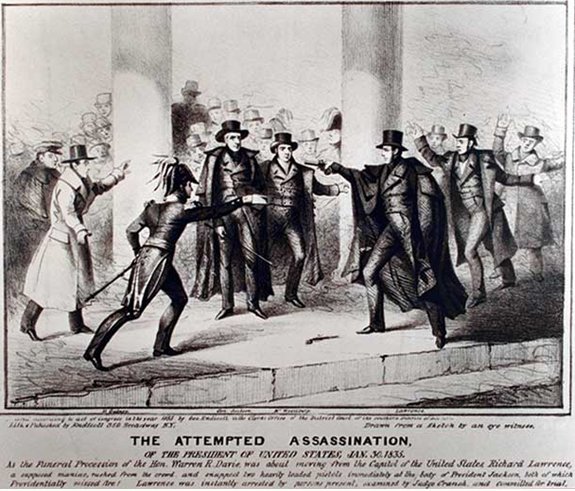
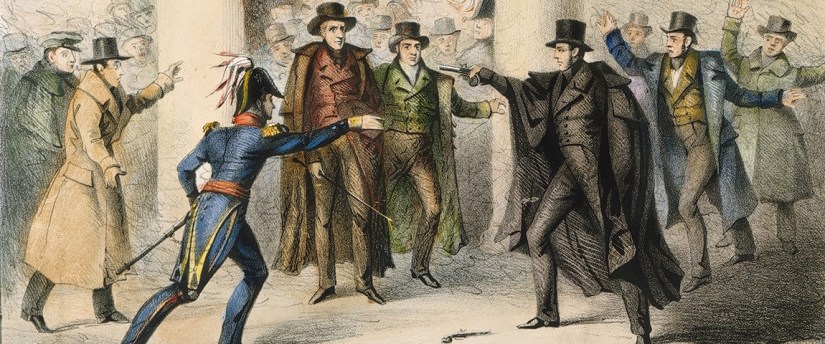
On January 30, Jackson was attending the funeral of South Carolina congressman Warren R. Davis at the U.S. Capitol. Lawrence’s plan was to shoot Jackson as he entered the service but he was unable to get close enough to the President. However, as Jackson left the funeral, Lawrence positioned himself aside a pillar on the East Portico that Jackson would soon pass by. As Jackson passed, the slender man with a thick black beard stepped from behind the pillar, pointed a one shot Derringer pistol at Jackson’s heart from six feet away, and pulled the trigger. A shot was heard, but the bullet never left the chamber.

It was later determined that the percussion cap exploded, but the bullet did not discharge. Now, the deranged house painter found himself face-to-face with a formidable opponent. While everyone else ducked and covered, the enraged Jackson headed straight toward his attacker while raising his walking cane to throttle his attacker. Lawrence dropped the first gun, immediately pulled out a second gun, and again fired at the President’s heart. This time Lawrence squeezed the trigger at point-blank range, but it also misfired. This second shot reportedly went off like the first, with a loud bang, but again no bullet exited the chamber.
Jackson’s aides quickly wrestled Lawrence away from the president, leaving Jackson unharmed. It was probably a good thing for Lawrence that the sides pulled the hero of the battle of New Orleans off of him. Andrew Jackson is said to have killed 13 men in duels and had 3 bullets in his body to prove it. Ironically, one of those who rushed to the President’s aid that day was Congressman Davy Crockett, a staunch political enemy of Jackson, who nevertheless helped restrain the would-be assassin. Crockett later said. “I wanted to see the damnedest villain in the world and now I have seen him!” Witnesses claim that Jackson had to be pulled off of his attacker again and again as he continued to beat him with his hickory cane even after Lawrence was down and completely subdued. Witnesses claimed that Jackson was shouting “Let me alone! Let me alone! I know where this came from!”

Years earlier Jackson had advised a young man on how to wield a cane in combat. He warned that “a cane swung at head level was easy to deflect; rather one should take the stick so [held like a spear] and punch him in the stomach.” He described having once fought a man that way in Tennessee: “Sir, it doubled him up. He fell at my feet, and I stamped on him.” Richard Lawrence later told investigators that the only time he ever felt genuine fear was when he saw the 67-year-old President charge at him.

Needless to say, Jackson didn’t take kindly to this assassination attempt, but instead of getting angry, he got paranoid. At the time, Jackson’s Democrats and the Whigs were locked in a battle over Jackson’s attempt to dismantle the Bank of the United States. Old Hickory was not alone in his paranoia as his vice president, Martin Van Buren, thereafter carried two loaded pistols with him when visiting the Senate. Although Lawrence was found to be a mentally unstable individual with no connections to Jackson or his political rivals, to his dying day, Jackson believed that Lawrence had been hired by his Whig Party opponents to assassinate him.

Jackson also suspected a former friend and supporter turned adversary, Senator George Poindexter of Mississippi, to be involved in the murder for hire. He had hired Lawrence to paint his house just a few months before. Poindexter was unable to convince the voters back home in Mississippi that he was not involved in the plot. When his constituents left, many of his biggest supporters withdrew their support and he was unable to get re-elected. Jackson believed Senator John C. Calhoun was the main person behind the attempt, prompting Calhoun to make a statement on the U.S. Senate floor disavowing connection to the attack. Oddly, nobody ever denied Lawrence’s involvement in a plot, including the gunman himself.
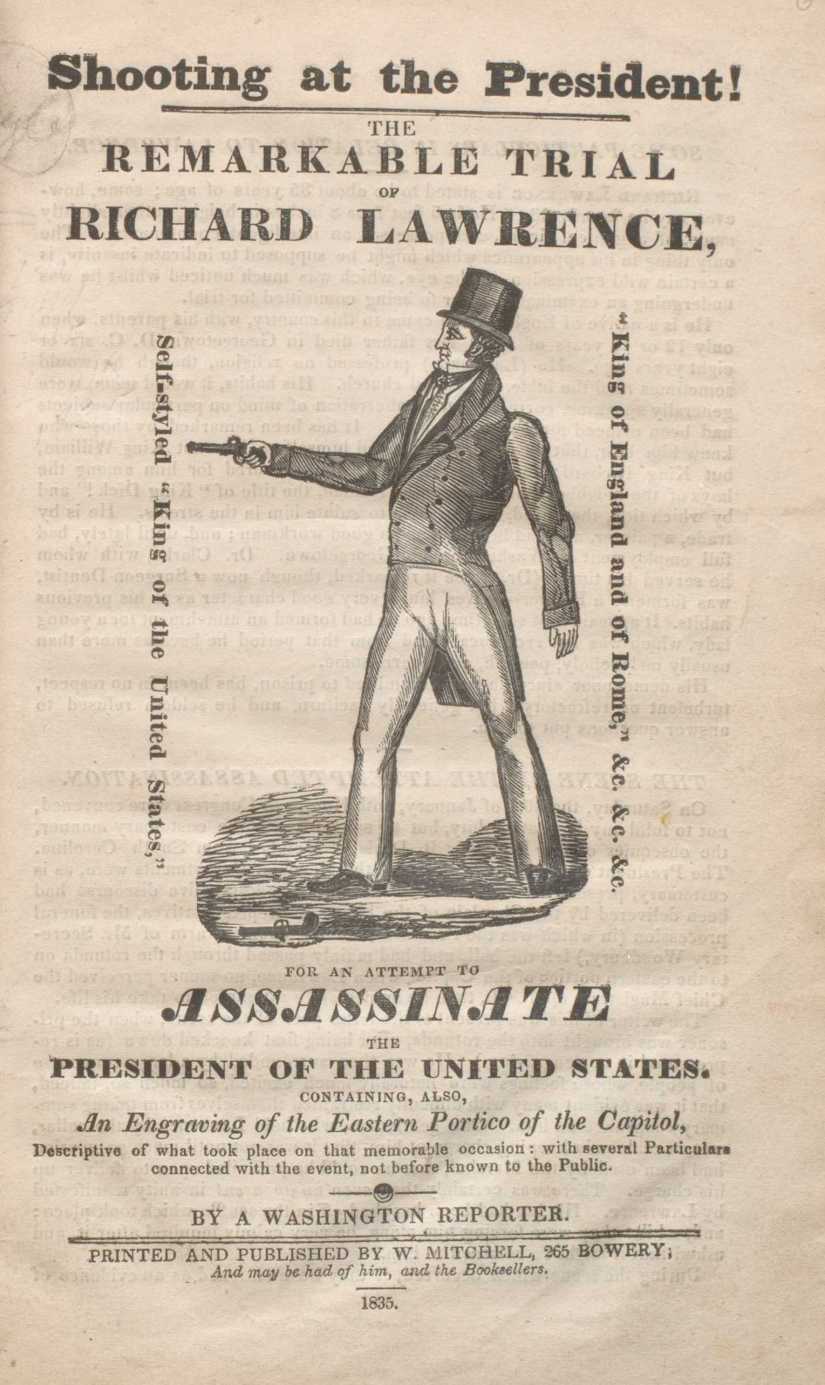
ShootingatthePresidentTheRemarkableTrialofRichardLawrenceLawrence was brought to trial on April 11, 1835, at the District of Columbia City Hall. The prosecuting attorney was Francis Scott Key, author of the Star Spangled Banner. After only five minutes of deliberation, the jury found Lawrence “not guilty by reason of insanity.” In the years following his conviction, Lawrence was held by several institutions and hospitals. In 1855, he was committed to the newly opened Government Hospital for the Insane (later renamed St. Elizabeth’s Hospital) in Washington, D.C. There he remained until his death on June 13, 1861, almost 16 years to the day after his nemesis, Andrew Jackson, died on June 8, 1845.
Strangely enough, not only was Andrew Jackson our country’s first commander in chief to be chased by a nut with a gun, he was also the first president to be attacked physically. A year and a half before Lawrence jumped from behind that pillar to fire upon his president, Jackson ordered the dismissal of Robert B. Randolph from the Navy for embezzlement. On May 6, 1833, Jackson sailed on USS Cygnet to Fredericksburg, Virginia, where he was to lay the cornerstone of a monument near the grave of Mary Ball Washington, George Washington’s mother. During a stopover near Alexandria, Randolph appeared and struck the President, drawing a trickle of blood from the President’s mouth. Jackson was seated behind a table at the time, which no doubt lessened the affect of the attack (for both Jackson and his assailant). Randolph fled the scene chased by several members of Jackson’s party, including the well-known writer Washington Irving. Randolph ended up getting away scot-free when Jackson decided not to press charges.

While the finest doctors in Washington were busy listening to Lawrence’s claim to be the king of England, the police were testing “his majesty’s” misfired pistols. They worked perfectly. Astonished witnesses watched as bullets once intended for the President now plowed through inch-thick wood planks at 30 paces. It was later determined that the weapons Lawrence had chosen were known for being vulnerable to moisture and the weather on that date was extremely humid and damp. A century later, Smithsonian researchers conducted a study of Lawrence’s derringers, during which both guns discharged properly on the test’s first try. It was later determined that the odds of both guns misfiring during the assassination attempt were one in 125,000.

Many of Jackson’s contemporaries believed that Old Hickory had been protected by the same “Divine Providence” that protected the fledgling nation. This national pride was a large part of the Jacksonian cultural myth fueling American “Manifest Destiny” expansion in the 1830s. Senator Thomas Hart Benton, who had also once shot at Jackson himself, reflected that “two pistols-so well loaded, so coolly handled, and which afterward fired with such readiness, force, and precision-missing fire, each in its turn when leveled eight feet at the President’s heart . . . made a deep impression upon the public feeling, and irresistibly carried many minds to the belief in a superintending Providence.” To many Americans, Jackson’s survival could be nothing but the work of a higher power.
A13734.jpgIronically, after the attack, Jackson returned by carriage to the White House and got back to business immediately. Several concerned citizens rushed to the President only to find him “calm, cool, and collected as if nothing had happened.” Another visitor arrived an hour later to find Jackson bouncing a child playfully on his knee while discussing the incident with General Winfield Scott. That evening, a thunderstorm swept the D.C. area blanketing the Capitol in thunder, lightning, and sheets of rain. Conversely, most Washingtonians never realized the storm they had just averted. Had those pistols met their mark, a literal firestorm would have swept our young nation. Eventually, the incident fed the legend that became Old Hickory. Love him or hate him, there are no gray areas with Andrew Jackson. He was a true American original.

Assassinations, Creepy history, John F. Kennedy, Pop Culture

Lee Harvey Oswald and the death of Innocence. Part II

781_1026023017Original publish date:  December 14, 2013

It was Monday November 24, 1963 and recently widowed Marina and the rest of the family were watching the John F. Kennedy funeral in a Fort Worth, Texas motel. Marina wanted to keep watching it, but the family said it was time to leave for nearby Rose Hill Cemetery. When they arrived, the small party drove straight to the chapel, expecting that their loved one would be buried in a religious service. But the chapel was empty. Instead, she was told to expect a brief service at the gravesite.
The 22-year-old widow made her way to section 17 of Shannon Rose Hill Memorial Park, a lonely, sparsely populated plot of Texas real estate where even the grass struggled to survive. A hole was waiting there with a handful of empty chairs waiting alongside. Only a few people were there to watch as the casket was lowered into the ground. Reporters who were covering the funeral carried the casket from the hearse to the graveside. Reporters? The casket contained the remains of 24-year-old Lee Harvey Oswald, the murderer of President John F. Kennedy and Dallas police officer J.D. Tippitt.
The dead man’s wife, Marina, felt humiliated that her husband was denied a religious ceremony. She was ashamed that no friends were present to act as pallbearers for her beloved Lee. Instead reporters, there for a story, were pressed into service to carry the dead man to his final resting place. This sad Texas spectacle was in sharp contrast to the ceremony taking place at the same time some 35 miles away in Dallas. The funeral of Officer Tippit at the Laurel Land Memorial Park cemetery included posthumous awards of valor and accolades from all over the nation. The lavish state funeral of President John F. Kennedy in full swing some 1,360 miles away in the Nation’s Capitol included accolades from all over the world.
Oswald’s funeral time, date and location were kept a closely guarded secret during its preparations in order to keep the morbidly curious away. To further insure that the services would not be disturbed, Oswald’s funeral was held at the same time as JFK’s because the family and officials from the funeral home knew that at that time everyone would be attending the president’s funeral.781_132829300087
On December 16, 2010, the original coffin of assassin Lee Harvey Oswald sold for $87,469 (which includes a 20 percent buyers’ fee) in an online auction at a California auction house. The starter bid was $1,000 and bidding ended when one of two top buyers dropped out around 10 p.m. The auction described the macabre relic as: “Original pine coffin that held the body of Lee Harvey Oswald from his burial on 25 November 1963 until his exhumation on 4 October 1981. At the time, conspiracy theories swirled over who was actually buried in the coffin.The coffin’s wood exterior was very soft from moisture damage, and had dark areas of discoloration. Visible along the sides were the tarnished original metallic ornamentation. The interior of the casket also showed splotchy dark discoloration and moisture-softening of the wood. A portion of the original fabric that lined the top of the casket had fallen upon the decomposed remains. Oswald’s remains were transported back to Rose Hill Cemetery for re-interment in a new casket and vault. The original deteriorated coffin offered here, measures 80″ long x 24″ deep, with the thickness of the sides of the casket approximately one inch. Sitting on wood crate which measures 84″ x 24″. Accompanied by a Letter of Authenticity by Funeral Director Allen Baumgardner, who assisted at the original embalming of Lee Harvey Oswald and later purchased the Miller Funeral Home along with all of its property.”
Because water had got into a cracked burial vault and damaged the original coffin, the funeral home swapped it with the family for a new one and Oswald’s body was reburied in another casket. The original casket was heavily water damaged and whats left of its metal ornamentation is rusted and parts of it, including the roof, have rotted extensively. Its satin lining has long since disintegrated but the coffin still contains shredded newspapers and other padding material left from its manufacture. Baumgardner, one of the funeral directors who participated in that autopsy kept the casket because no one seemed interested in it at the time, The Dallas Morning News reported. Baumgardner was a 21-year-old funeral home assistant when Oswald was shot to death, “I’ve never seen so many security police and FBI and Secret Service and news media just everywhere,” he recalled. The mortician kept it in storage in his Fort Worth funeral home for three decades. But Baumgardner, now 68, decided last month to sell it. “None of us is going to be around forever,” he said.
The auction also included instruments used to embalm Oswald, the 1963 funeral home log book, ( On Page 525 are the details of the original $573.50 mortuary fee and $135 cemetery plot. Oswald’s coffin cost $300, and the leaky vault that enclosed it was $200), an Easter card he sent to his brother and a section of the car seat the President Kennedy was sitting on when he was shot described as “A chilling relic…section of the seat upon which he and First Lady Jacqueline Kennedy sat…Light blue leather seat section which composed the main portion of the bench seat and clearly shows rust-colored staining consistent with long-dried blood…Accompanied by a letter of provenance on White House letterhead by White House Technical Service Rep. F. Vaughn Ferguson. Ferguson, whose involvement with the limousine before and after the shooting is well-documented, writes in part: “…Four days after the assassination the White House upholsterer and I removed this leather at the White House. The light blue leather is from the center of the rear seat…The spots on the leather are the dried blood of our beloved President John F. Kennedy.” The first draft of Oswald’s death certificate is for sale too. It was redone after the justice of the peace hastily wrote “Shot by Jack Rubenstein” in the space listing “How Injury Occurred” and someone pointed out that Ruby had not yet been convicted of the killing.
Although the auction is over and your chance to participate is lost, never fear. For if you want a chance to experience any left over “bad vibes” of Lee Harvey Oswald, you can always travel to Ft. Worth and try to locate the final resting place of the enigmatic Marine assassin. Just keep in mind, its not easy. True Oswald is buried in section 17 of east Ft. Worth’s Rose Hill cemetery (7301 East Lancaster Avenue) once you get there, don’t expect any help from the cemetery staff. The workers are not allowed to divulge the location of Oswald’s grave. The general manager at Rose Hill confirms that curiosity-seekers are not told how to find his grave at the sprawling cemetery, out of respect for his relatives. Another reason for the secrecy might be found in the current marker atop the dead assassin’s body that is inscribed simply “Oswald.” The current rose colored granite stone replaces the stolen original tombstone, which gave Oswald’s full name and birth-death dates.
If you find Oswald’s marker, you’d never realize that his controversial mother Marguerite, who died Jan. 17, 1981, is buried next to him on the left in an unmarked grave. However, the first thing you’ll notice is the stone marker that rests just inches to the left of Oswald inscribed simply “Nick Beef”. For years, veteran journalists, scholars and members of the entertainment world who have studied the assassination, knew nothing about the “Nick Beef” mystery. Who is it? What does it mean? Why is it so close to the Oswald stone? No-one knew.
d12508937307b3a2fe6c2cc97a868177The mysterious stone was first noticed in 1998 and soon after word of the “Nick Beef” stone got out prompting would be grave hunters to ask the staff for directions to that stone, knowing that was the surest way to find Oswald’s. But nowadays, the staff is wise to that ploy and they won’t tell people where Nick Beef’s grave is either. But the question remains, who is / was Nick Beef?
On holidays, when the cemetery is covered with flowers from loved ones, both of these plots typically remain barren. However, they remain free of ornamentation for two very different reasons. It can be argued that no single gravesite in the country holds more secrets than Lee Harvey Oswald’s. Whatever secrets Oswald knew, he certainly took them to the grave with him. But Nick Beef’s grave holds a secret too: it’s empty. Ask the black suits at the cemetery office, and they’ll tell you that Nick Beef is the stage name of a comedian who bought the plot and had a headstone with that name installed. As part of his act, he reportedly told fans that if they wanted to find Oswald’s grave at Rose Hill…just ask for Nick Beef and you’ll find Oswald.
However, the employees can’t tell you anymore about Nick Beef than I’ve told you here, in fact they will often teasingly mislead you by claiming that Mr. Beef is a disc jockey. If you find the Oswald grave and its “Beef” neighbor on your own and return to the office to confront the workers who routinely tell visitors asking for Mr. Beef’s grave by saying “They have no record of any such person”, the office workers explain their dissemination of misinformation with , “I did not lie. You asked me where Nick Beef is buried, and I told you truthfully that no Nick Beef is buried here. That stone marks a cenotaph (A monument erected in honor of a dead person whose remains lie elsewhere).”
Internet searches and computerized property records suggest only one vague possibility – that a “Nick Beef” might have lived in a high-rise apartment complex in New York during the mid to late 1990s. The spot is in Manhattan’s trendy West Village, known for its nightspots, and comedy clubs. But there is no phone number for a “Nick Beef,” and several residents of the complex said they do not remember a neighbor by such a name. However, the Comedy Cellar, one of New York’s most established stage-comedy clubs, whose featured entertainers have included Robin Williams, Jerry Seinfeld and Chris Rock, is located only a block away. But, after that, the “Nick Beef” trail turns cold.
After you have found Lee Harvey Oswald’s Gravesite you can exit Rose Hill Memorial Burial Park and head west on Lancaster Avenue. A couple blocks before you reach the 820 Freeway, on the right side of the road, in the Urban Village of Handley, you will find The Ozzie Rabbit Lodge. Ozzie Rabbit was Oswald’s nickname while in the army.
If you’re looking for a bright spot in the Oswald family tragedy, believe it or not, a few can be found. His brother, Robert, lives in Wichita Falls Texas and according to the funeral home paid the total cost of $710.00 for the burial of his brother. He believes that Lee was guilty of JFK’s murder and blames his mother as the main reason his brother went bad. Robert has lived a model life and has made a few media appearances recently. Despite the stigma of being the brother of an assassin, he maintains a quiet dignity that has earned him the admiration of many. Lee’s half-brother John is deceased.
Lee’s daughters, June and Rachael took the name of their stepfather, Ken Porter, in 1965. This helped them to maintain a slight anonymity while growing up in Texas. According to a 1995 article, June keeps a low profile and uses her married name in an effort to protect her own children from the controversy. She manages to keep a sense of humor and mentioned that she enjoyed the “second spitter” episode of Seinfeld, which parodies the Single Bullet theory. In 1995 it was reported that Rachael worked for seven years as a waitress while putting herself through nursing school. She seemed to be the more conspiracy-oriented of the two daughters and enjoyed meeting Oliver Stone during the making of his film “JFK”.
Marina, the widow of Lee Harvey Oswald, has changed her beliefs about the assassination several times over the years and is often described as being influenced by whatever book or theory is in vogue at the time. In 1965 she married Kenneth Jess Porter, with whom she has a grown son. The couple divorced on October 11, 1974. She has lived in Dallas for many years, and has appeared in numerous documentaries on the Kennedy assassination. In recent years she has expressed the view that Oswald was innocent in the assassination, though she has never recanted any of her Warren Commission testimony. In April 1996 she wrote : “At the time of the assassination of this great president whom I loved, I was misled by the “evidence” presented to me by government authorities and I assisted in the conviction of Lee Harvey Oswald as the assassin. From the new information now available, I am now convinced that he was an FBI informant and believe that he did not kill President Kennedy.”
John Kennedy’s assassination was the death of innocence. After that, the shock, sorrow and overwhelming bewilderment of unexpected celebrity death no longer surprised us. JFK’s was the first American tragedy covered from start to finish by every available media, but most especially television. During that extended weekend of unabated grief, the main players visited us in our living rooms. We could feel the events as they unfolded as if they were happening to our friends, neighbors, or relatives. We would find out in short order that it was sadly all too true. And we would never trust again

Assassinations, Auctions, Creepy history, Criminals, John F. Kennedy, Politics

Lee Harvey Oswald and the death of Innocence. Part I

oswaldshot1Original publish date:   December 7, 2013

Fifty years ago this month, the death of innocence in America began. I believe its roots can be found in a single diary entry made on February 1, 1961 that reads: “Make my first request to American Embassy, Moscow for reconsidering my position, I stated “I would like to go back to U.S.” Nearly two weeks later, on February 13, 1961, the author of that diary entry officially notifies the Embassy that he wants to return to the United States. That disgruntled Cold War continental traveler was Lee Harvey Oswald, the man who killed President John F. Kennedy.
Indeed, a case can be made that the path to the death of innocence in America was paved by many events; the assassination of Abraham Lincoln, the attack on Pearl Harbor, Watergate? However it was the death of JFK that changed America forever. True, three U.S. Presidents were assassinated before Kennedy, but these murders were perpetrated by men best described as “nuts with a cause.” Oswald killed Kennedy for one reason only; fame. Lee Harvey Oswald proved once and for all that one motivated, unknown man with a gun can change history forever. That single act shattered the myth of the invincibility of power and fostered an atmosphere of mistrust of authority that survives to this day.
The assassination of Kennedy is much too complicated to sort out in this simple article and I assume that all of the facts, theories and lore are well known to my readers, so I won’t debate the particulars here. The facts are that both men are dead and both men are forever linked by this one cowardly act. Kennedy was a true American hero; an accomplished author, legendary statesman and devoted father who deserves to be remembered for the way he lived, not the tragic way he died. Oswald is an American nightmare; the product of the original dysfunctional family, a disgraced Marine, a misanthrope who craved fame so much that he didn’t care who he killed to get it. The fact that Oswald’s name is known by millions of Americans disturbs me, but would delight the assassin immeasurably today.
Controversy followed Lee Harvey Oswald for all of his life and doesn’t appear to be waning nearly fifty years after he pulled the trigger. He very publicly supported Fidel Castro’s rise to power in the late 1950s. He defected to Communist Russia at the height of the Cold War in 1960. He changed his mind and returned to the United States, with a Russian bride, in 1961. He tried to kill right-wing Major General Edwin Walker in April of 1963. He killed millionaire President John F. Kennedy with a $ 20 mail order rifle in November of 1963. He was killed two days later in what was the first televised murder in the history of our country. For the next 3 decades he was the central figure in countless conspiracy theories revolving around the death of the President. His body was exhumed in 1981 when rumors persisted that he was not the corpse buried in his own grave. And most recently, his coffin was auctioned for @ $ 87,500 by a California auction house.

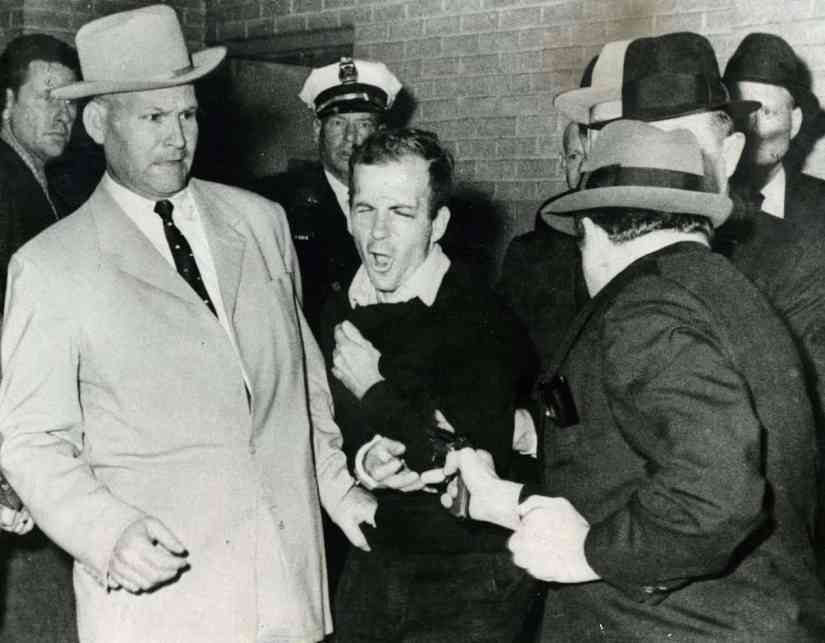
For saleLee Harvey Oswald assassinated John F. Kennedy on November 22, 1963 by firearm from the sixth floor of the Texas schoolbook depository in Dallas, Texas. Later that day, Oswald murdered Dallas police officer J. D. Tippit by shooting him four times on a Dallas street approximately 40 minutes after Kennedy. He was arrested while seated in the Texas Theatre a short time later and taken into police custody. On Sunday, November 24 Oswald was being led through the basement of Police Headquarters on his way to the county jail when, at 11:21 a.m., Dallas strip-club operator Jack Ruby stepped from the crowd and shot Oswald in the abdomen. Oswald died at 1:07 p.m. at Parkland Memorial Hospital-the same hospital where Kennedy had died two days earlier. A network television camera was broadcasting the transfer live and millions witnessed the shooting as it happened. After autopsy Oswald was buried in Fort Worth’s Rose Hill Memorial Burial Park.
In 1981, with widow Marina Oswald’s support, the grave was opened to test a theory from a conspiracy book alleging that during Oswald’s stay in the Soviet Union he was replaced with a Soviet double. The rumor claimed that it was this double, not Oswald, who killed Kennedy and who is buried in Oswald’s grave. The author charged that the remains, if exhumed, would prove it when a surgical scar Oswald was known to carry would not be found. Robert Oswald (brother of Lee Oswald) obtained a temporary restraining order halting the exhumation. Marina filed suit against Robert to allow the exhumation to proceed. Two days later citing emotional and financial burdens, Robert withdrew his opposition to the exhumation.
Backhoes began the process with the onset of sufficient daylight at about 6:30 am Central time on October 4th. The initial plan called for the removal of the entire concrete vault containing the casket. When the excavated vault was found to be cracked it was immediately obvious that the casket and body had suffered extensive water damage. The casket cover was noted to be severely weakened and one section had fallen in, actually exposing the remains to onlookers.
The casket was then covered by a cardboard lid and carefully slid onto a wooden platform placed in the trench alongside the coffin. The entire platform was then raised and placed in a waiting hearse for the trip to nearby Baylor University. The excavation took about two and a half hours, by which time the small crowd had turned into a large one including the morbidly curious and several members of the news media.
The remains arrived at Baylor and the examination began at 10:00 am. The casket was opened and it was obvious that the water that had so damaged the coffin had caused marked decomposition of the body as well. The exposed ribs crumbled with only mild pressure and the beige viscera bag containing the organs (placed in the bag after the original ’63 autopsy) was in full view.
Mortician Paul Groody, who had embalmed and buried Oswald in 1963, remained in the examination room long enough to identify the remains as those he had worked with. First, he observed rings on the hands of the body that were placed there by Marina Oswald. The rings, a gold wedding band and a red stone ring, were the same and seemed to be in the same position as he remembered. Secondly, Groody recognized the aforementioned viscera bag that was not in common use in 1963. Finally, Groody noticed that the clothes were those that he had placed on Oswald before he was laid to rest. After making his identification, Groody promptly left the examination room.
The identification would be made primarily using dental records. However, the team was aware of the craniotomy procedure performed on the skull of the deceased that would provide convincing proof of the identity of the corpse. The head was removed from the body in order to facilitate the examination by an incision near the second cervical vertebral interspace. The autopsy saw cut was indeed present providing the first confirmation of Oswald’s craniotomy procedure.
The teeth were cleaned and photographs and x-rays taken. Two forensic odontologists then charted the complete dentition independently and dental casts were made and a positive dental identification of Lee Harvey Oswald was therefore made. A news conference was held at about 3:00 pm to announce, “We… have concluded beyond any doubt, and I mean beyond any doubt, that the individual buried under the name of Lee Harvey Oswald in Rose Hill Cemetery is in fact Lee Harvey Oswald.”
Perhaps unsurprisingly, in the decades that followed, conspiracy pundits raised identity questions based on the condition of the burial vault and coffin, claiming both had been tampered with, questioned the autopsy craniotomy with the charge that the head had been replaced, and questioned the identification by dental records after it was pointed out that Oswald had lost a front tooth during a high school fight (there is a photo of him in class with a gap-tooth smile, and many classmates remember the fight and the missing tooth) and that the exhumed skull had a full set of natural front teeth. However, Marina had made it clear to the media that she considered the exhumation issue closed.
The murder of John F. Kennedy proved once and for all that a disgruntled, motivated mental defective like Oswald can change the world by a singular cowardly act and bask, however briefly, in the reflected spotlight of their unwitting victim. In some circles, Lee Harvey Oswald has become a sympathetic figure. In truth, he’s a stone cold killer who ruined many lives.
Why do I feel it necessary to delve into the gory details of Oswald’s exhumation and subsequent body defilation? Because, for years I’ve watched film clips of a beloved President’s assassination being played and replayed on television and in movies, undoubtedly at times within eye-shot of his friends, family and loved ones, and I object. I think for once, the wages of Oswald’s crime should be made clear. Lee Harvey Oswald does not rest in peace.

Assassinations, Pop Culture

The Lorraine Motel. Prelude and Aftermath. Part II.

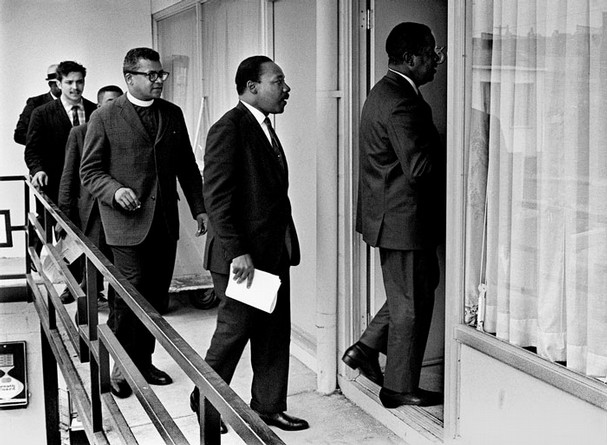
Civil rights ldr. Andrew Young (L) and others stanOriginal publish date:  April 7, 2017

On Thursday, April 4, 1968, Reverend Martin Luther King, Jr. was staying in room 306 at the Lorraine Motel in Memphis. Dr. King traveled to the river city in support of striking African American city sanitation workers. King had gone out onto the balcony and was standing near his room when he was struck at 6:01 p.m., by a single .30-06 bullet fired from a Remington Model 760 rifle. The bullet entered King’s right cheek, breaking his jaw and several vertebrae as it traveled down his spinal cord, severing his jugular vein and major arteries in the process, before lodging in his shoulder. The force of the shot ripped off King’s necktie. King fell violently backward onto the balcony, unconscious as his life ebbed away. Despite his faint pulse, he died shortly afterwards at Saint Joseph hospital. He was pronounced dead at 7:05 p.m. In an instant, the Lorraine became one of the most famous motels in the United States, but for all the wrong reasons.
The Lorraine Motel was owned by Walter Bailey who renamed it to honor his wife Loree. For over two decades the motel, located at 450 Mulberry Street on the south edge of downtown Memphis, was THE place to stay for visiting minority musicians, athletes, clergymen and travelers passing through the segregated Jim Crow South. Walter and Loree Bailey were hands on owners who did everything from taking reservations to cooking dinners in the attached restaurant. When that rifle shot rang out, Loree Bailey suffered a stroke on the spot. Loree was at her post as the motel’s switchboard operator when she suffered her heart attack. When Rev. Samuel Kyles attempted to call an ambulance using the phone in the motel room, nobody was at the switchboard to direct the call. Loree Bailey died five days later on April 9th, the same day as Dr. King’s funeral. The official cause of her death was listed as a brain hemorrhage.
Walter Bailey continued to run the motel, but he never rented Room 306 and the adjoining room 307 again. He turned them into a memorial to Dr. King. The room was preserved exactly as it looked on that tragic night. There are two beds: one was King’s and the other was occupied by Dr. Ralph Abernathy. King’s bed was not fully made because he was not feeling well and had been lying down. Dishes were left in the room from the kitchen where Loree Bailey prepared food (fried Mississippi River catfish) for the motel room’s guests. In time, Bailey converted the other motel rooms to single room occupancy for low-income residential use.
Lorraine 1

After King’s murder, the Lorraine Motel began a long and steep decline. Despite Bailey’s efforts to preserve it as a working historical landmark, people no longer wanted to stay there. Walter Bailey continued to run the motel as a shadow of its former self. Bailey stood by helplessly as his once high-end establishment became a brothel and haven for drug dealers. He declared bankruptcy in 1982 and closed the motel. It was scheduled to be sold at auction but a “Save the Lorraine” group, part of the Martin Luther King Memorial Foundation, bought it at the last minute for $144,000 in December 1982 with the intent to turn it into a museum. Walter Bailey died on July 7, 1988 at the age of 73 and did not live to see his motel turned into a museum.
The Lorraine’s last tenant was Jacqueline Smith, a live-in housekeeper and front desk clerk at the motel since 1973. When told the Lorraine had been sold, she barricaded herself in her room and refused to leave. She was forcibly removed by law enforcement officers just 4 months before Walter Bailey died. Ms. Smith was lifted, lawn chair and all, and gently placed on the sidewalk across the street from the motel. Construction workers then moved her belongings into the street. With that, The Lorraine Motel officially closed for good on March 2, 1988.
In 1991 the National Civil Rights Museum opened to the public and Walter and Loree Bailey’s dream was finally realized. The Lorraine is now filled with artifacts, films, oral histories, and interactive media, all designed to guide visitors through five centuries of black history.
Despite being dragged from her room, Jacqueline Smith never really left the property. She set up camp on a street corner opposite the Lorraine, where she has waged a one-woman campaign protesting the institution’s existence for nearly 30 years. There she stays, 21 hours a day, calling for a boycott of the Civil Rights Museum. She leaves only to find food and go to the bathroom, all her worldly possessions stored under a blue tarp nearby.
jacqueline-smithJacqueline believed the Lorraine should be used for helping the poor and needy, rather than a celebration of Dr. King’s death. She told visitors that “Memphis has always been a city where the two biggest attractions are memorials to two dead men: Martin Luther King, Jr. and Elvis Presley.” Near Smith’s perch was a sign that read, “Stop worshiping the dead.” Smith argued that Dr. King’s legacy would have been better honored by converting the motel into low-income housing or a facility for the poor. “It’s a tourist trap, first and foremost… this sacred ground is being exploited.” Smith said of the museum that she never set foot in, despite invitations from the museum staff to do so. Smith’s call for a boycott has gone largely unheeded and she maintains her vigil outside the Loraine to this day.
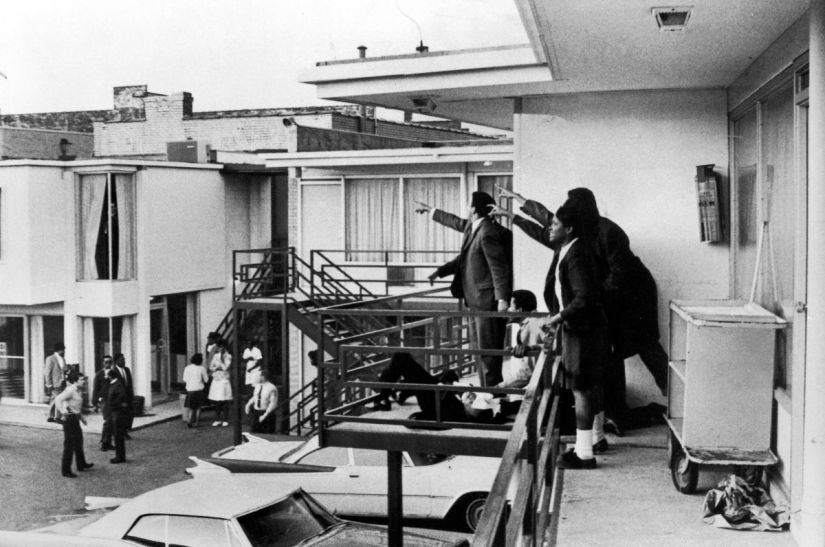
Although the inside, except for room 306, has changed drastically, the Lorraine Motel exterior remains instantly recognizable; forever frozen in the spring of 1968. Two classic cars-a white 1959 Dodge Royal with lime green tail fins and a white 1968 Cadillac-are parked in front of the motel under that fateful balcony. The Lorraine motel sign still maintains silent witness. A large wreath hangs on the balcony outside Room 306, to mark the spot that changed the world. Flashes of those iconic photographs of King’s associates desperately pointing off into the distance at an assassin who is no longer there dominate the visitor’s mind. The eyes trace an imagined path to the window a football field away from which the death shot was fired. The scene is indelibly burned into America’s collective memory.
Room 306 remains faultlessly preserved. The unmade twin beds, half-filled ashtrays, black rotary phone, television with rabbit-ears antenna can all be viewed through a Plexiglass window. The meticulous attention to detail, which I was fortunate enough to witness myself when I visited with my wife and children on the 33rd anniversary of the sad event in 1991, is due and owing to one man who became an unexpected documentarian of an American tragedy.
Within hours of the assassination, Life magazine photographer Henry Groskinsky was on that balcony and through the door of King’s room. Although the physical body of Martin Luther King Jr. was gone, ethereal traces of the man remained. Groskinsky captured them all: a wrinkled shirt, a Soul Force magazine, a Styrofoam cup half full of coffee; a sign that King had momentarily left the room and would return soon. King’s still unpacked suitcase with a can of shaving cream, pajamas, brush and his book, “Strength to Love.” lay undisturbed.
The TV was still on when Groskinsky arrived, King’s face now occupying every newscast and eerily appearing in the background of many of his photographs. That wall upon which the TV had been mounted is now gone and has been replaced with a sheet of clear plastic through which millions of children have pressed their faces against straining to see this holy spot. Curious eyes dart back-and-forth at the relics in the room: the rumpled coverlet on King’s double bed folded back; a can of pomade on the vanity; a Gideon Bible on the nightstand; a newspaper with the headline “Racial Peace Sought by Two Negro Pastors”; and just outside the window, the balcony where King collapsed, a square of its original concrete flooring preserved denoting where the great man’s life trickled away.
It was the photo of the briefcase that resonated with me as an image of the suddenness of it all. Martin Luther King, Jr. has become a myth, a legend, a saint to most Americans. But the photo of his everyday possessions stands as testament to the fact that he was also a husband, a father and a man. However, the images captured by Groskinsky which haunt my dreams to this day are those of the aftermath of the assassination in its barest form.
article-2086676-0F734DC400000578-242_634x944

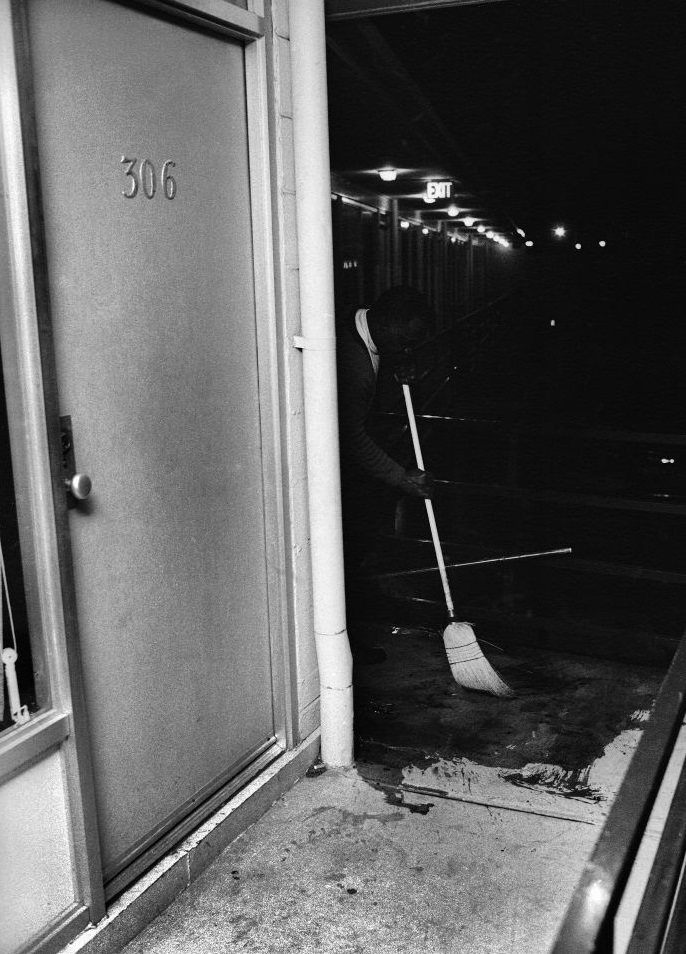
One need only visit the web and Google Henry Groskinsky’s name and a quick search will reveal two more photos from the fateful night. They are graphic and shocking in nature, so be warned. Both captioned “Clean Up”, one pictures Walter Bailey’s brother Theatrice as he scoops up King’s blood from the ground and places it into a jar. The other is less graphic but equally poignant and pictures Theatrice as he attempted to clean up Dr. King’s blood from the balcony with a broom. If these photos of the aftermath at the Lorraine Motel didn’t exist, the scene could not be believed.

34c024200fe89fd82f570c9f56151499

Assassinations, Pop Culture

The Lorraine Motel. Prelude and Aftermath. Part I.

Lorraine Motel Part IOriginal publish date:  March 31, 2017

History just happens. Often, history is well planned, scheduled and expected. The history I have always found most appealing is that which was unplanned, unscheduled and unexpected. Examples: Gettysburg, Woodstock, and Robert F. Kennedy’s April 4, 1968 speech in Indianapolis. True, the soldiers were gonna fight, the bands were gonna rock and RFK was gonna give a speech, but history happened far beyond the participants’ wildest imaginations. The prologue and aftermath, those always intrigued me the most.
For example, the Loraine Motel in Memphis, Tennessee. Historians recognize the name as the site of the assassination of Reverend Martin Luther King, Jr. But what about the Lorraine Motel before and after that tragic night? The Lorraine Motel, located at 450 Mulberry Street, in downtown Memphis, first opened its doors in 1925. The 16-room one-story all-white establishment was first known as the Windsor Hotel and stood just six blocks east of the Mississippi River. When the hotel first opened, Memphis was fast becoming a music hotspot with Beale Street as a mecca for Delta blues fans. Machine Gun Kelly roamed the streets, Cotton was king and Democratic Party Boss Crump ran the city like a well oiled machine.
The Windsor served businessmen, musicians and tourists until the closing days of World War II when it underwent a name change to the Marquette Hotel. In 1945, the hotel was purchased by minority businessman Walter Bailey, who renamed the hotel “Lorraine” to honor his wife Loree and his favorite song “Sweet Lorraine” by Nat King Cole. During the segregation era, Bailey re-branded the hotel as upscale lodging that catering to black clientele. At the time of purchase the Lorraine included 16 rooms, a café, and living quarters for the Baileys.
The Baileys added a second floor with 12 rooms, a swimming pool, and drive-up access for more rooms on the south side of the complex. The Baileys added even more guest rooms and drive-up access, transforming it from a hotel into a motel. Under the Baileys’ ownership, the Lorraine Motel became a safe haven for black travelers in the Jim Crow South. The motel was listed in “The Negro Motorist Green Book,” also known as the Green Guide, a compilation of hotels, restaurants, gas stations, beauty parlors, barber shops, and other businesses that were friendly to African-Americans during the segregation era.
As lackluster as those old guest registers from the Windsor must have been in the hotel’s first two decades, Bailey’s Lorraine became star studded and the registers must have read like a who’s who of black celebrities. With the 1957 opening of Stax Records, less than 3 miles away, the Lorraine became the preferred home away from home for some of the biggest names in the music business: Ray Charles, Lionel Hampton, Aretha Franklin, Ethel Waters, Otis Redding, Cab Calloway, Count Basie, Louis Armstrong, Sarah Vaughan, the Staple Singers and Wilson Pickett to name just a few. The Lorraine was even visited by the Bailey’s favorite singer Nat King Cole on several occasions.
The motel’s proximity to Beale Street attracted black songwriters and session musicians would stay at the Lorraine while they were recording in Memphis. Negro League baseball teams, in town to play the Memphis Red Sox, and the Harlem Globetrotters also spent time at the motel. Although officially categorized as a segregated hotel, the Baileys welcomed both black and white guests. The Lorraine became equally famous its home-cooked meals, Memphis barbecue, and upscale environment at affordable rates (under $13 a night).
Stax recording artist Isaac Hayes, best remembered by baby boomers for his classic theme from “Shaft”, former owner of the old ABA Memphis Tams and as his character “Chef” from South Park, was a frequent guest of the Lorraine Motel back in the day. He once said this of the historic motel, “We’d go down to the Lorraine Motel and we’d lay by the pool and Mr. Bailey would bring us fried chicken and we’d eat ice cream. . . . We’d just frolic until the sun goes down and [then] we’d go back to work.” Two famous songs, Wilson Pickett’s “In the Midnight Hour” and Eddie Floyd’s “Knock on Wood,” were written at the motel.
Steve Cropper, a white Stax record guitarist with Booker T & the MG’s, co-wrote both songs with the artists while staying at the Loraine. He has stated in interviews that there was a lightning storm the night that he and Eddie wrote the song, hence the lyrics ‘It’s like thunder and lightning, The way you love me is frightening’. When Sam & Dave shout “Play It Steve” in their hit song “Soul Man”, they’re talking about Cropper. Other prominent guests included Brooklyn Dodgers stars Jackie Robinson and Roy Campanella.
However, Martin Luther King, Jr., was the Lorraine Motel’s most famous guest. It was Dr. King’s preferred residence while visiting the city. Dr. King and Rev. Ralph Abernathy had stayed together at the Lorraine several times, sharing Room 306 so often that they jokingly called it “the King-Abernathy suite” when phoning in reservations. His last visit was in the spring of 1968, when he came to Memphis to support 1,300 striking sanitation workers. Their grievances included unfair working conditions: when it rained, black workers were sent home without pay while paid white supervisors remained on the job, black workers were given only one uniform and no place in which to change clothes, and poor pay capped at a fraction of the pay for white workers doing the same jobs. Following a bloody confrontation between marching strikers and police, a court injunction had been issued banning further protests. King hoped to lead a peaceful protest march aimed at overturning the court injunction.
921552_1280x720Dr. King had stayed at the Lorraine on March 18, when he spoke to an enormous crowd at the Mason Temple Church of God in Christ in support of the striking sanitation workers. The venue was perhaps the largest meeting space for African Americans in the South and a good fit for King’s Poor People’s Campaign. As King called for a general work the crowd (estimated at 12-14,000 people) erupted in cheers and foot-stomping.
King returned to Memphis a week later to lead a protest march on City Hall. That day turned out to be one of the worst in King’s career. The marchers paraded down Beale Street with Dr. King was at the head of the column. When they turned onto Main Street, they were greeted by police in riot gear blocking their way. Dr. King reluctantly turned around. Then, police attacked with tear gas and billy clubs. One marcher was shot to death. Dozens of protesters were injured and nearly 300 arrested. Stores were looted and burned. The whole sad affair was captured on film and broadcast on television. Soon, Memphis became an armed camp and martial law was the rule of the day.
Dr. King quickly planned a return visit six days later to blot this stain off the civil rights landscape. That morning, King’s plane from Atlanta was delayed by a bomb threat; no explosive was found. King spent the better part of the day, April 3, meeting with aides and local organizers at the Lorraine Motel. He was exhausted and feeling ill. A heavy storm rumbled in and raged on and off all day long. That evening, Mason Temple had scheduled Rev. Abernathy as the evening speaker, but when the 3,000 person crowd demanded to hear King, Abernathy phoned King at his room in the Lorraine and asked him to address the assembly.
Dr. King arrived as the storm rattled windows and rain beat down on the metal roof of the Temple. Dr. King stepped to the podium and delivered his prophetic “Mountaintop” speech that night. It would be the last speech of his life. He closed with the eerily prophetic lines, “I would like to live a long life. Longevity has its place.But I’m not concerned about that now… I’ve seen the promised land. I may not get there with you… And so I’m happy, tonight. I’m not worried about anything. I’m not fearing any man! Mine eyes have seen the glory of the coming of the Lord!”
questi7King spent April 4, 1968, the last day of his life, at the Lorraine Motel. He shared a plate of fried Mississippi River catfish with Rev. Abernathy for his final meal. Afterwards, Dr. King participated in a playful pillow fight with Abernathy and aide Andrew Young. Just after 6 p.m., Dr. King stepped out of Room 306 and conversed with Jesse Jackson in the parking lot below. He leaned over the metal railing and asked the saxophonist Ben Branch to play “Take My Hand, Precious Lord” , one of King’s personal favorites, at the rally that evening. As King wondered aloud whether he needed a topcoat and turned back towards his room, a sharp sound rang out. Some thought it was a firecracker, or a car backfiring. Martin Luther King Jr. had been shot in the face. He died shortly afterwards at a hospital.
The world, and the Lorraine Motel, would never be the same.