ABA-American Basketball Association, Indianapolis

Richard P. Tinkham’s ABA Indiana Pacers. PART I

Dick Tinkham Part I photo
Alan E. Hunter & ABA Indiana Pacers legend Richard P. Tinkham.

Original Publish date: March 19, 2018

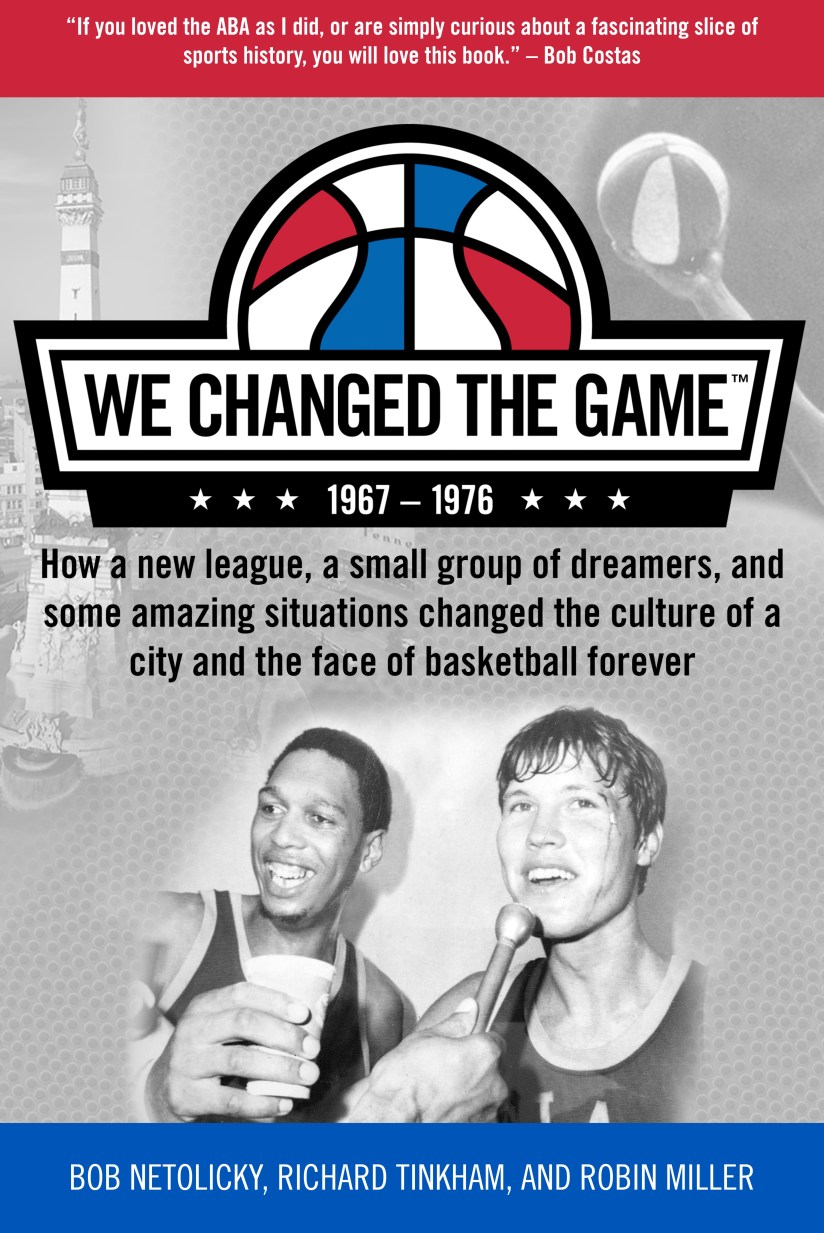
This past weekend the Irving Theatre played host to a book signing. Bob Netolicky, Robin Miller and Richard P. Tinkham visited the Irv for the official release party of their new book “We changed the game.” The book tells the story of the Indiana Pacers and the ABA from the very beginning by the men who lived it. Netolicky and Miller shared funny stories about the league that kept the crowd of 150 guests in stitches for the duration. However, even though he spoke in measured tones, sometimes barely above a whisper, it was Mr. Tinkham who kept the crowd on the edge of their seats.
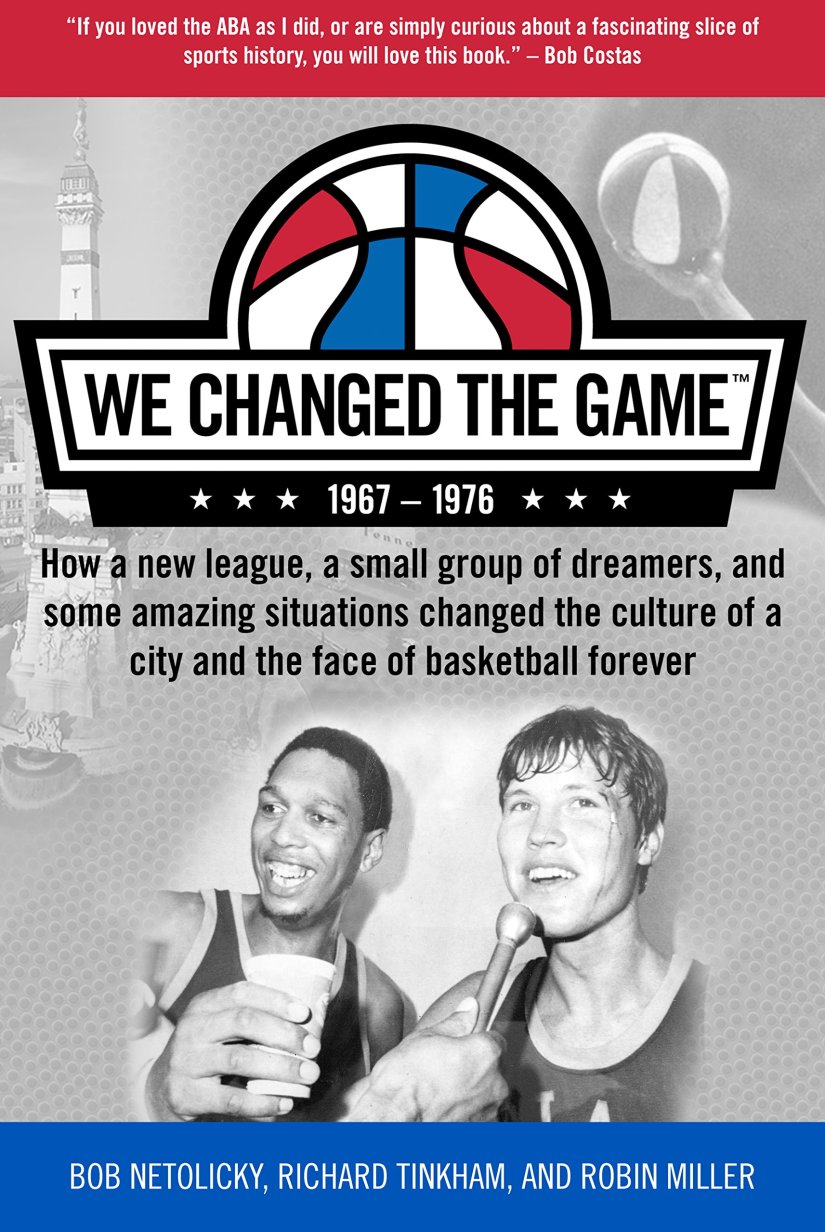
z 914lSM8JoKLDick Tinkham is the Rosetta Stone of the American Basketball Association. He was there during the embryonic stages of the league forward. Dick explained how the ABA was originally designed to be a six-foot or under player league…gasp! He revealed how the Pacers team almost folded at the close of the 1968-69 season…gulp! And he continued with tales of crucial deals made in airports, hotel rooms, restaurants and bars…wheeze! Yes, Dick Tinkham knows where all the bodies are buried.
Mr. Tinkham talked about early attempts by the ABA to lure Indianapolis native and hall of famer Oscar Robertson away from the NBA Cincinnati Royals. In 1967, Tinkham had hopes that Robertson might jump to the upstart Pacers. Robin Miller pointed out that Oscar had a $100,00 guaranteed contract and that “the Big O wasn’t going anywhere”. Mr. Tinkham then disclosed that it was Robertson who advocated that the Pacers travel to Dayton Ohio and check out a young man named Roger Brown. That signing changed the face of this city and arguably, saved the ABA. Ironically a few shot years later, Oscar Robertson would pop up again, this time as the foil for the ABA.
In June of 1971, only three years after the ABA began play, NBA owners voted 13–4 to work toward joining both leagues. A merger between the NBA and ABA appeared imminent and Dick Tinkham was right in the middle of it. After the 1970–71 season, Basketball Weekly reported: “The American basketball public is clamoring for a merger. So are the NBA and ABA owners, the two commissioners and every college coach. The war is over. The Armistice will be signed soon.” During this short-lived courtship, the two leagues agreed to play pre-season interleague exhibition games for the first time ever.
At last Saturday’s event in the Irving theatre, Dick Tinkham detailed how he met privately with Seattle SuperSonics owner Sam Schulman, a member of the ABA–NBA merger committee in 1971 to work out details for the merger. Schulman asked Tinkham how much it was going to take to get each ABA team (there were 11 at the time) to move into the NBA. Tinkham revealed to the gathered crowd that this was a question he had not anticipated and was totally unprepared to answer. Dick, thinking fast on his feet, replied that it would take $ 1 million for each team. Schulman agreed and phoned NBA Commissioner J. Walter Kennedy to announce that an agreement had been reached for a merger.

z 10aaf9897fcf9141cfc56787e4644a74
Seattle Supersonics owner San Schulman with ABA standout Spencer Haywood.

Schulman told the commissioner that he was so adamant about the merger that if the NBA did not accept the agreement, he would move the SuperSonics from the NBA to the ABA. Not only that, but Schulman threatened to move his soon-to-be ABA team to Los Angeles to compete directly with the Lakers. The owners of the Dallas Chaparrals (now the NBA’s San Antonio Spurs) were so confident of the impending merger that they suggested that the ABA hold off on scheduling and playing a regular season schedule for the 1971–72 season.

z 71champs-1100
1971-72 NBA Milwaukee Bucks.

The first NBA vs. ABA exhibition game was played on September 21, 1971 at Moody Coliseum in Dallas, Texas. The first half was played by NBA rules and the second half by ABA rules, including the red, white and blue basketball and 3-point shot. Kareem Abdul-Jabbar’s NBA Milwaukee Bucks barely squeaked past John Beasley’s ABA Dallas Chaparrals, 106-103.
Down 12 points with 10 minutes to go, Chaps Gene Phillips hit six straight shots in fourth quarter to rally his team. The Chaps went ahead 103-102 with 24 seconds remaining on a pair of free throws from guard Donnie Freeman. With the Chap’s defense collapsing on Jabbar, McCoy McLemore hit a 15-foot jumper with 11 seconds left to give the Bucks a 104-103 lead. The Chaps’ Steve “Snapper” Jones missed a 10-foot baseline jumper with five seconds on the clock. Bucks Lucius Allen made two free throws for the final score. Bucks’ stars Oscar Robertson and Bob Dandridge missed the game. Dandridge was appearing in a Willamsburg Virginia court settling a traffic ticket and Oscar Robertson was in Washington D.C. fighting the merger.

z Chaps 71-72 Home Team
1971-72 ABA Dallas Chaparrals.

Officially, the litigation was known as “Robertson v. National Basketball Association, 556 F.2d 682 (2d Cir. 1977)”, but it became forever known as the Oscar Robertson suit. Robertson, as president of the NBA Players Association, filed a lawsuit in April of 1970 to prevent the merger on antitrust grounds. Robertson, still smarting from his unexpected trade by his college hometown Cincinnati Royals to the Milwaukee Bucks, sought to block any merger of the NBA with the American Basketball Association, to end the option clause that bound a player to a single NBA team in perpetuity, to end the NBA’s college draft binding a player to one team, and to end restrictions on free agent signings. The suit also sought damages for NBA players for past harm caused by the option clause. The court issued an injunction against any merger thus delaying the ABA-NBA merger.
Robertson himself stated that his main gripe was that clubs basically owned their players: players were forbidden to talk to other clubs once their contract was up, because free agency did not exist back then. In 1972, the U.S. Congress came close to enacting legislation to enable a merger despite the Oscar Robertson suit. In September 1972, a merger bill was reported favorably out of a U.S. Senate committee, but the bill was put together to please the owners, and ended up not pleasing the Senators or the players. The bill subsequently died without coming to a floor vote. When Congress reconvened in 1973, another merger bill was presented to the Senate, but never advanced.
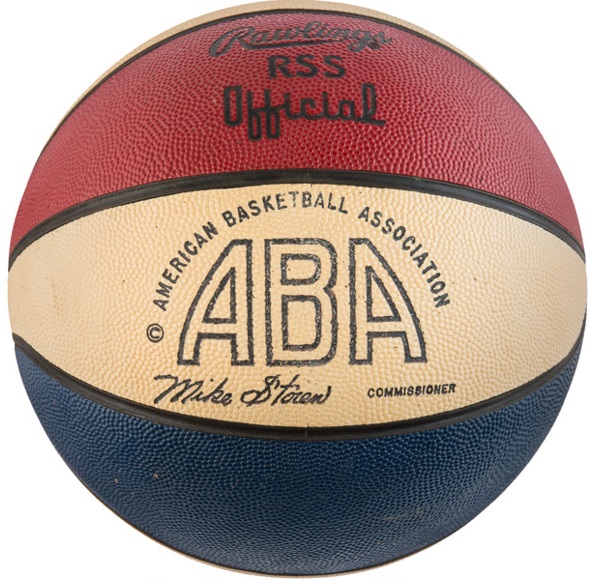
lfMeantime, the ABA-NBA exhibition games continued. In these ABA vs. NBA exhibition games, the ABA’s RWB ball was used for one half, and the NBA’s traditional brown ball was used in the other half, the ABA’s three-point shot (and 30 second shot clock) was used for one half only, in some games, the ABA’s no-foul out rule was in effect for the entire game and the league hosting the game provided its own referees. NBA refs wore the traditional B&W “zebra” shirts while ABA refs wore shorts matching the ball: red, white & blue. Most of the interleague games were played in ABA arenas because the NBA did not want to showcase (and legitimize) the ABA in front of NBA fans. On the flip side, ABA cities were eager to host NBA teams because they attracted extra fans, made more money, and proved both leagues could compete against each other. Results from those first few years were not highly publicized by either league.
Although they didn’t count for anything except pride, ABA / NBA exhibition games were always intense due to the bad blood between the leagues. During these ultra-competitive games players (including future Hall of Famers Rick Barry and Charlie Scott who played for teams in both leagues) were thrown out with multiple technical fouls. Likewise, Hall of Fame coaches like Larry Brown and Slick Leonard (who coached in both leagues) often ended up listening to interleague games in the locker room after being ejected.
After the 1974-75 regular season, the ABA Champion Kentucky Colonels formally challenged the NBA Champion Golden State Warriors to a “World Series of Basketball,” with a winner-take-all $1 Million purse (collected from anticipated TV revenues). The NBA and the Warriors refused the challenge. Again, after the 1975-76 season, the ABA Champion New York Nets offered to play the NBA Champion Boston Celtics in the same fashion, with the proceeds going to benefit the 1976 United States Olympic team. Predictably, the Celtics declined to participate.
In the later years of the rivalry, buoyed by younger players, better talent and the home court advantage, ABA teams began winning most of the games. Over the last three seasons of the rivalry, the ABA steadily pulled ahead: 15-10 (in 1973), 16-7 (in 1974), and 31-17 (in 1975). The ABA won the overall interleague rivalry, 79 games to 76 and in every matchup of reigning champions from the two leagues, the ABA champion won, including in the final pre-merger season when the Kentucky Colonels defeated the Golden State Warriors, sans $ 1 million dollar purse.
The Oscar Robertson suit would eventually seal the fate of the ABA and for the entirety of its pendency it presented an insurmountable obstacle to the desired merger of the two leagues. The worm was beginning to turn.

Next Week- Part II including details of the April 7, 2018 American Basketball Association Reunion in Indianapolis.

ABA-American Basketball Association, Indianapolis

Indiana Pacers Slick Leonard in Irvington

Leonard Original publish date:     November 1, 2013
Slick; a nickname that conjures up images of loud suits, a big smile and winning basketball. Bobby “Slick” Leonard is Indiana Pacers basketball, period. His trademark phrase (seriously he trademarked it), “Boom Baby”, sums up Slick’s personality better in two words better than anything I’ll write in this article. Everyone remembers Slick’s drive to lead the Indiana Pacers to greatness during the ABA Championship years. Most remember Slick’s stewardship of the Pacers during the team’s fledgling first seasons in the NBA. But many have forgotten just how great a player he was. In high school, college and the NBA, Slick was a solid star and a force to be reckoned with on the court.

William Robert “Slick” Leonard was born in Terre Haute on July 17, 1932. It was a Sunday and I suspect that somewhere nearby there must have been an old lace-up basketball swishing through a net at the exact moment he greeted this world because his would become the most basketball blessed life of that Hoosier generation. He would grow to become an impressive 6’3″ 185 lb guard for the “Black Cats” of Terre Haute Gerstmeyer High School where he was alternate on the 1950 Indiana all-star team. He would also excel as a tennis player, winning the state tennis championship as a senior.

Slick was heavily recruited by Indiana colleges, including Notre Dame, but finally landed with the Indiana University Hoosiers. As an aside, many of you know I collect oddball things. One of those “things” is a handwritten letter from a very young Bobby Leonard on the letterhead of the Central Hotel in “Terry Hot” in 1950. The letter was written to legendary Notre Dame football star & 3-time All-American basketball star Ed “Moose” Krause who had just taken over the job of Athletic Director for the Irish.

Knowing that Slick would become a hoops legend at I.U. makes the letter all the more interesting. It reads: “Dear Mr. Krause, I definitely would like to go to college, but I do not think I am financially able, I have had several letters from other schools, but it has always been my desire to attend Notre Dame. I like your set-up of not having co-eds as it gives the boys more time to attend to their studies. My grades were not so good during my first years in high school, but after I began to apply myself I have attained a “B” average. I will send you a copy of my grades as soon as possible. Sincerely, Bob Leonard”. The letter includes a separate sheet detailing his classes (Psychology, Print Shop, Sociology, Spanish, etc.) and, more importantly, his high school average and record for the Black Cats.

In spite of this letter’s intent, Slick became a star for Branch McCracken’s Hurryin Hoosiers squad. He captained two Big Ten championship teams and the 1953 NCAA championship team. Slick hit the game winning free throws that gave Indiana the victory over Phog Allen’s heavily favored Kansas Jayhawks team. Leonard was the Most Valuable Player for I.U. in 1952 and an All-Big Ten and All-American player in 1953 and 1954. As a sophomore he was MVP of the East-West college all-star game in Gotham Cities’ Madison Square Garden. The first player inducted into the Indiana University Sports Hall of Fame? Bob Leonard.

He was selected with the first pick of the second round of the 1954 NBA Draft. He spent the bulk of his seven-year professional playing career with the Lakers (four years in Minneapolis and the first year after the move to Los Angeles). He got the nickname “Slick” from a former Lakers teammate with a colorful nickname of his own, “Hot Rod” Hundley. After Bobby won a game of gin by blitzing a team truck driver after a game, Hundley said. “Boy, you sure are slick” and the name stuck. He spent his last two years with the Chicago Packers/Zephyrs, his final season as a player / coach. The team moved to Baltimore in 1964 where Slick coached them for one more year. For his seven years in the pros, Leonard earned less money overall than current Pacers shooting guard Paul George makes in one game.

In 1968, Leonard became the coach of the upstart ABA’s Pacers. He was “the coach” for the next 12 years including the first four in the NBA. Some of that time Slick also served as general manager. Leonard led the Pacers to three ABA championships before the ABA-NBA merger in June 1976. In the 8-year history of the ABA, Slick led the team to the Championship finals in 5 of those 8 seasons; the team never missed the playoffs.
Those 3 Championships are still to this day the only titles won by the Indiana Pacers. Although the NBA Pacers struggled during Slick’s tenure as coach, that was no reflection on this man’s ability. Speaking as a rabid fan who observed those early years, Slick never had a chance. Pacers management nearly gutted the team to meet the financial burdens imposed by the merger and never gave Slick the personnel to put together a winning team during those early NBA years.

I have a personal connection to those ABA teams, although it came long after that cork popped on the last bottle of locker room champagne. I organized and planned the ABA reunion in August of 1997 at the old Hoosier Dome. Former Pacers legend Bob Netolicky and team President Dick Tinkham steered the players and owners while my wife Rhonda & I handled many of the details. During that reunion, I witnessed firsthand how much the players loved and respected Bobby “Slick” Leonard. Not only Pacers players, but players from all around the league. I heard more than one millionaire ABA team owner present at that reunion claim that it was Slick and those great ABA Pacers teams that held that league together and brought it credibility.

Slick was the last Pacers coach at the State Fairgrounds Coliseum and the first coach at Market Square Arena. A good illustration of Bobby Leonard’s impact on Hoosier hoops, during the last practice at Market Square Arena after the players had left the floor, then Pacers coach Larry Bird asked for Slick to come out on the court. The legendary duo stood alone on the court in the house that Slick’s teams built. As the workers stood outside the perimeter poised and ready to tear up the floor, Larry legend threw a bounce pass to Slick and said, “I want you to take the last shot here.“ Of course, he made it.

Documantarian Ted Green, friend and subject of past columns, plans to follow-up to his popular film of last year, “Undefeated: The Roger Brown story” with a film about Bobby “Slick” Leonard titled “Bobby ‘Slick’ Leonard: Heart of a Hoosier”. I was honored to assist in a small way with that production and equally proud of Ted’s newest venture. Green, whose previous documentaries profiled John Wooden, Indiana war veterans and Indianapolis’ climb from sleepy “Naptown” to a Super Bowl site, believes that a film about Slick is the next natural step.

“Hoosiers forget what a great player Slick was. They remember him as a coach, but he was a helluva player. He has done basically everything there is to do in basketball and at all levels, and he did most of it right here.” says Green “Plus, I don’t think a lot of people are fully aware of the amazing contributions he’s made to the game beyond his success with the Pacers. That’s one of my goals with this film, to illuminate his remarkable run from the beginning, show people stuff they don’t know, and hopefully open some eyes nationally. I’ve already discovered a lot of things that I believe will do that.”

Knowing Ted, the project promises to be just as colorful as Slick himself. Although Slick is one of only five individuals in Pacers history to have a banner raised in his honor,Ted believes he deserves more. Green, who told me last year that he believes Slick has a very good chance of being the next ABA inductee to the James Naismith Basketball Hall of Fame in Springfield, Massachusetts, hopes to finish the film in time for a March madness release. Keep in mind, Ted released his film on Pacer’s star Roger Brown BEFORE the “Rajah” was elected to the Hall of Fame and his film on Slick could be just as timely.
I feel a kindred spirit in Ted Green. As Hoosiers become more-and-more familiar with his work, they quickly realize that Green gets more in depth on his subjects than anyone else. Ted, who calls this trait his “sickness”, will most certainly tell us things about Slick that we never knew about. Nobody digs deeper than Ted Green. “This will be my most extensively researched film yet. As a competitive journalist I want to play it a little close to the vest, but I can say that I’ve made several discoveries that I think will surprise even people who know Bob well, and will definitely open eyes nationally to the incredible impact on his sport that this man has had.” says Ted.

As for Slick’s shot at the Hall of Fame, Ted says, “I think there’s little doubt that Slick will get in someday, and like a lot of people around here, I’m hopeful that it’ll happen in the next class. Unfortunately, I don’t think that’s a lock — the fact that we’ve had two ABA Pacers back-to-back in Mel and Roger could factor against Slick as well as George McGinnis, who’s also deserving. But if you look solely at impact, at winning and losing, at what the person meant to the league, I think Slick has to be next.”

Now 81 years old, Leonard returned to Terre Haute twice to drive filmmaker Green through the neighborhoods where he grew up. Together they visited the old Gerstmeyer gym, now incorporated into the Terre Haute Boys and Girls Club, where Green surprised Leonard with impromptu visits by longtime friends including former prep school teammates the “Gerstmeyer Twins” Harley and Arley Andrews. Green filmed slick rolling through town, reminiscing about selling ice cream at Union Depot and of sneaking into the old Indiana State Teachers College gym in the late 1940s to watch Coach John Wooden drill the Sycamore players through basketball practices. Green is still in production and is looking for photographs not only of Bobby Leonard in his youthful days and his Gerstmeyer teams, but also of city scenes from the 1930s, ’40s and ’50s. If you can help, contact me and I’ll pass it on to Ted.

Leonard returned to the Pacers in 1985 as a color commentator, first for television, then on radio. He is in his 24th year as a Pacers broadcaster. Modern fans know him for his phrase “Boom, baby!”, which he shouts exuberantly after every successful three-point shot. Bobby “Slick” Leonard is the common thread running through Indiana’s accepted pastime and next week, you have the chance to meet him.

Bobby Leonard has written a new book, “Boom, Baby!: My Basketball Life in Indiana”, and he will recount many of these stories personally next Thursday evening in Irvington. Slick is coming to Bookmamas at 6 p.m. on Thursday, November 14 to give a short talk and sign copies of his new memoir.

Leonard, in typical heartfelt modesty, has repeatedly said that his exclusion from the Hall of Fame doesn’t bother him. His focus has always been on getting “his guys” there instead. Mel Daniels got into the Hall in 2012 (alongside NBA Pacers icon Reggie Miller) and Roger Brown made it posthumously in 2013. Slick’s guys have made it, and with this class coming up, I hope that he makes it too. Come out to Bookmamas next Thursday and discuss it with Slick yourself. Tell them Al sent ya.

ABA-American Basketball Association, Pop Culture

Neto Comes to Irvington.

Neto signing photoOriginal publish date:  March 11, 2018

You never know who’s going to show up when Neto walks into the room. Bob Netolicky, former ABA Indiana Pacers 4-time all-star, can draw a crowd. On any given day, Neto may show up with former teammates like George McGinnis, Darnell Hillman or Billy Keller. Or maybe with former Pacers coach Bobby “Slick” Leonard or Pacers team founder Dick Tinkham. Or media legends like Robin Miller or Bob Costas. Neto knows ’em all.
This Sunday, March 18th, you are invited to the Irving theatre to hang out with Neto and friends. Netoclicky, along with Dick Tinkham and Robin Miller, has written a book called “We Changed the Game” and all three authors will be in Irvington from 2:00 to 4:00 to sign books, swap stories and answer questions from fans. The trio has chosen the Irving Theatre for their book release party. Former Q-95 on -air personality, actor and stand-up comedian Dave “The King” Wilson will act as emcee for the event.
Neto says, “The book is a collection of stories told by those who lived it. It’s the Pacers’ insider’s view from the very first day of the franchise.” Netolicky stresses that the book is not just another stat guide or seasonal recap. “It’s the real story of a team, a coach and a handful of dreamers, who brought a new league and a new team to Indianapolis – and how they not only changed the culture and future of a city, but the game of basketball forever,” said Netolicky.
Richard “Dick” Tinkham, an original ABA Indiana Pacers founder and legal counsel, is one of the few execs still around to tell the real stories of the team, the league and the ABA-NBA merger from the perspective of someone who was intimately involved with the X’s and O’s of the team and league from start to finish. It was Tinkham who reviewed all documents, ranging from incorporation papers, player contracts to merger agreements. Yes fans, there was more than one ABA-NBA merger agreement. Tinkham will share never-before-heard stories about the mergers, anti-trust lawsuits, and wild negotiations between the two leagues that could only be told by someone who was there. Mr. Tinkham, whose reputation and shrewd negotiating skills in the league are legendary, will tell you all about it this Sunday.
ABC Sports reporter Robin Miller will also be at the Irving to talk about his days as a cub reporter for the Indianapolis Star from 1968-76. Born in Anderson, Miller grew up in Indianapolis. His first assignment with the Star was to answer the score phones and run copy. Miller had two passions during those early years: the Pacers and auto racing. He was lucky to find himself working in the epicenter of both.
This Sunday, Miller will describe the Pacer’s from the viewpoint of a cub reporter not yer old enough to drink (were there really guns in the locker room?), Tinkham will explain how the ABA contracts worked (did the team really sign Mel Daniels contract on a barrom napkin?) and Neto will share stories about Pacers coach Bobby “Slick” Leonard’s unusual motivational techniques (did Slick REALLY chase Neto around the locker room with a hockey stick?).
ABA Irvington-0263The nicest thing about this book is that, in many instances, it defines the folklore of the league by telling the real story from the men who actually lived it. For me, the book’s bombshell revelation is the story of just how close the Pacers came to folding at the close of the 1968-69 season. Before that second season, the Pacers made the greatest trade in team history, sending Jimmy Dawson, Ron Kozlicki and cash to the Minnesota / Miami franchise for ABA Rookie of the Year Mel Daniels. That trade, along with the hing of Leonard as the new head coach, legitimized the team. After starting the season 2-7, the team went 42-27 the rest of the way, winning the Eastern Division by 1 game over Miami. However, the Pacers found themselves down 3 games to 1 against the rival Kentucky Colonels in the first round of the league playoffs.
In the book, for the first time ever, Tinkham recounts how that game 5 playoff changed everything. “If we hadn’t won that game and advanced, there was no additional playoff revenue,” Tinkham said. “There was no more money and, even worse, there was no plan.” Mayor Bill Hudnut, who wrote the foreword for the book prior to his passing in 2016, said “to have the franchise fold would have sent out the message that Indianapolis could not be considered a major-league city, and that in turn would hinder our ability to garner business and jobs from elsewhere.”
The Pacers won the next 3 games by an average of 15 points per game to take the series 4 games to 3 and then defeated Miami in 5 games. The Oakland Oaks beat the Pacers 4-1 to win the second ABA Championship, but the Pacers strong playoff performance saved the franchise. That win changed not only the face of a city but the game of professional basketball forever. Netolicky averaged nearly 19 points and 10 rebounds per game. Neto seemed to always rise to the occasion in the playoffs. During his 9-year ABA career, Bob averaged 15.5 points per game. Good enough to land him at 30th place on the all-time ABA playoff scoring average list. 8 of the 29 in front of him are Hall of Famers.
What I’ll look forward to most this Sunday are the stories Netolicky will surely share with Irvingtonians. Long considered one of pro basketball’s most colorful personalities, Neto’s tales live up to that reputation. Netolicky was famous for a having a pet ocelot. If you don’t know what an ocelot is, google it. Neto hints, “When I’d come home after midnight I’d often find it (the ocelot) in my bed, I’d try to move it… it would growl… and I’d go sleep on the couch.” Known for his mod lifestyle and popularity with Pacers’ female fans, one sportswriter dubbed him the “Broadway Joe Namath of the ABA”.
Neto talks about those days coming out of college and joining the upstart new league, “I didn’t know the difference between the ABA and the NBA. I’d been to a lot of NBA games but I found out pretty fast that the ABA game was more wide open, it moved a little faster. The NBA was a post-up league; a bunch of big, clumsy guys with a good center. The ABA had speed and quickness from the start. It was a faster league.” Neto continues, “I’m a big auto racing fan, and the way I associate the early ABA with the NBA was similar to when the rear-engine car came to Indy racing. It changed the sport by making it faster, better, quicker. They took the big, old roadsters, which were fun to watch, but slow, heavy and not very maneuverable, and they changed—they literally adapted and changed the sport, and that’s what the ABA did.”
Neto and Tinkham both agree that in those early years, the ABA was touch and go. But soon parity set in and within a few years, the most exciting players were in the ABA. Neto explains, “Right before the merger happened, there were a couple of teams, Seattle most prominent, where the owner [Sam Schulman] said that if the merger wasn’t going to happen, they were going to jump to the ABA. The Supersonics literally wanted to go to the ABA.”
“We Changed the Game” is being published by Hilton Publishing. It’s founder is Dr. Hilton M. Hudson II, one of less than 40 board-certified, African-American interventional cardiologists practicing in this country. Dr. Hilton grew up in Indianapolis and as a high school player, he used to scrimmage with the old ABA Pacers during the off seasons. Yet another Indianapolis connection to the book can be found right here in Irvington. The book is being handled by McFarland P.R. & Public Affairs, Inc. whose offices are located at 211 S Ritter Ave.
The book release party comes just a few weeks before the ABA 50-year reunion celebration on April 7th in Indianapolis Ten percent of the book proceeds will fund Dropping Dimes, an Indiana nonprofit that assists ABA players and their families facing financial or medical difficulties. “These proceeds are crucial to so many of my former teammates and league players, because after the merger … former ABA players who were not absorbed into the NBA were generally left without a pension,” said Netolicky, who serves on the advisory board of Dropping Dimes. For the past few years, Bob has been involved in trying to get the ex-ABA players their rightly deserved pensions, many of these former players are experiencing extreme hardships today.
The American Basketball Association (ABA) gave many unsung players a shot or a second chance to make it in pro basketball. It was the first to shine the spotlight on Indianapolis as a nationwide sports mecca. The ABA flagship Pacers franchise became one of the top-contending professional basketball teams in the country. 50 years ago, the ABA Pacers triggered the transformation of downtown Indianapolis, turning it into a thriving destination for sports at every level and in every hue. Come out to the Irving Theatre this Sunday and hear the story as witnessed by Robin Miller, Richard Tinkham and Bob Netolicky who were there through it all.
ABA Irvington-0012For sure, there will be other book signings for “We Changed the Game”. Thus far Neto has scheduled a signing at the J & J all-star sportscard show on Saturday March 24th from 10:00 to 12:00. The card show is held at the American Legion Post # 470 at 9091 E. 126th St. in Fishers and then again at Saturday March 31st from Noon to 2:00 at Bruno’s Shoebox 50 North 9th St. in Noblesville. Bruno’s shoebox is owned and operated by former longtime Indianapolis Star / News reporter and Indiana Pacers webmaster Conrad “Bruno” Brunner.
But this Sunday’s book release event is the only opportunity fans will have to hear stories and ask questions of the authors in a public forum. So come out and say hi to Neto, Robin Miller, Dick Tinkham and Dave “The King” Wilson from 2:00 to 4:00 pm. Books will be available for sale and you will have the opportunity to have your copy personally signed by these sports legends. Admission is free and the program will be free wheelin’. And remember, you never know who might show up with Neto in the Irv. Could be Slick, Dr. Dunk, Big Mac or any other Pacer great you can imagine. You never can tell with Neto.

Photos courtesy Lauri Mohr-Imaginemohr photography.

ABA-American Basketball Association, Indianapolis, Music

Breakfast with Neto: Marvin Gaye.

Neto Breakfast cropedOriginal publish date:  May 2, 2017

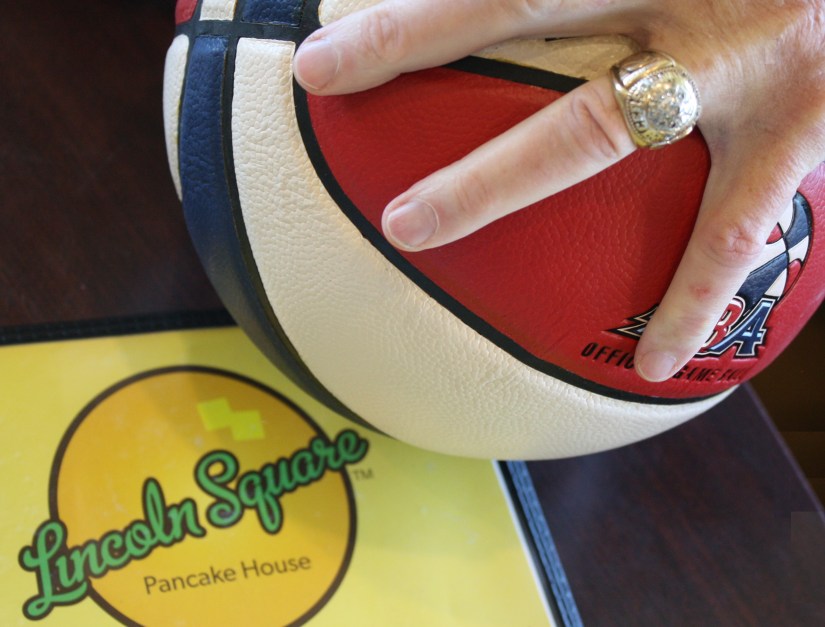
This is the first in a series of articles that I hope will bring insight into the Indianapolis sports and pop culture history scene as seen through the eyes of former ABA Pacers All-star player Bob Netolicky. I have known Bob for well over 20 years and have had the benefit of his counsel and insight on topics both on and off the court. Neto’s stories are informative, often amazing and always entertaining. Neto has called Indianapolis home for over 50 years and frankly, these stories need to be shared. We meet regularly for breakfast at the Lincoln Square Pancake House at 7305 East 21st Street so I’m calling these articles “Breakfast with Neto”. I hope you enjoy reading them as much as I enjoyed writing them.
tumblr_mpjk7gTsvv1qzp5buo1_400The ABA Indiana Pacers were the powerhouse of the old American Basketball Association, appearing in the league finals five times and winning three Championships in nine-years. By the time of the NBA-ABA merger in 1976, the Pacers had established themselves as the league’s elite. The players were household names and their reputation was now legend. The crowds at the State Fair Coliseum, and later Market Square Arena, where the Pacers held court were always dotted with celebrities from all walks of life. In the Circle City of the seventies, everyone wanted an association with the Pacers. In short, they were rock stars.
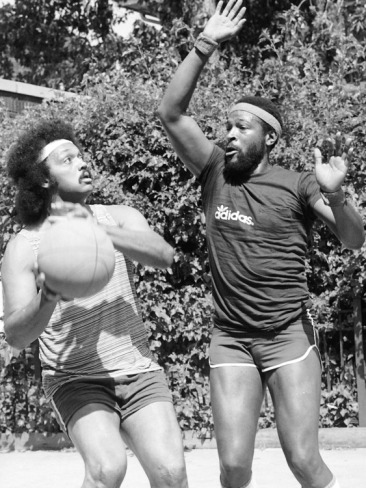
During the summer of the 1975-76 season, the Pacers held informal workouts at the Brebeuf high school gym. “The guys would all get together for scrimmages to keep in shape, It was me, George (McGinnis), Roger (Brown), Mel (Daniels), Danny Roundfield and a few others. We would get together and practice with the high school kids there.” says Neto. “One of the guys, I don’t remember who, showed up one day with Marvin Gaye in tow. Marvin was so bad, we made the high school guys take him on their team.”
Wait, what? Motown star Marvin Gaye? THE Marvin Gaye? “Yep, Motown star Marvin Gaye.” Neto replies. “He was in town for a concert as I recall.” Marvin Gaye, Jr. was born on April 2, 1939, in Washington, D.C., to a church minister father and domestic worker mother. He grew up in the Fairfax Apartments on the rougher side of D.C. Although once populated by elegant Federal-style homes on the Southwest side, when Marvin was coming up there it was primarily a vast slum. Buildings were small one or two story shacks in disrepair, many lacked electricity or running water and nearly every dwelling was overcrowded. Gaye and his friends nicknamed the area “Simple City”, owing to its being “half-city, half country” atmosphere.
slide_409216_5137250_freeYoung Marvin, who would grow to be over 6 feet tall, became a fixture on the tough D.C. basketball courts. One of his neighbors was future Detroit Mayor and Pistons All-star Dave Bing. Although smaller and four years younger, Bing played alongside Gaye on those DC project courts. The two men forged a friendship that lasted the rest of their lives. Bing continued to excel on the court as Marvin’s skills faded. Ironically, both men landed in Detroit. Gaye turned to song, which led him to Motown immortality; Bing landed in the Basketball Hall of Fame.
Marvin once said, “I was always a sports fan but I was determined to play for real. I knew I could. When I was a kid, I was scared to compete. Father wouldn’t let me. Preachers kids weren’t supposed to be football players. Well I decided to change all that. I trained with the Detroit Lions and was convinced I could start at offensive end. You see, I had this fantasy. I was in the Super Bowl, with millions of people watching me on TV all over the world, as I made a spectacular leaping catch and sprinted for the winning touchdown.”
footballWhile Marvin was busy helping Berry Gordy shape the sound of Motown in the 1960s, he never lost his love of sports. The “Prince of Soul” recorded iconic concept albums including What’s Going On and Let’s Get It On while keeping active on the courts, courses and fields around the Motor City. In the book “Divided Soul; The Life of Marvin Gaye”, author David Ritz says, “Gaye was a good athlete, but not of professional quality. His football playing, just like his basketball playing (where he loved to hog the ball and shoot) were further examples of his delusions of grandeur.” Gaye was a regular at celebrity golf tournaments and loved rubbing elbows with pro athletes like Bob Lanier, Gordie Howe and Willie Horton.
In 1969, The Four Tops’ Obie Benson and Motown songwriter Al Cleveland began working on a song that would eventually become “What’s Going On.” The song was repeatedly turned down by several different Motown acts. The duo pitched the song to Marvin Gaye in 1970. Gaye told a couple friends, Detroit Lions stars Lem Barney and Mel Farr, about the song during a round of golf at Detroit’s Palmer Park Golf Course. Palmer attracted many of the city’s black celebrities, including Joe Louis, Smokey Robinson and The Temptations. Gaye was reluctant to record the as yet unnamed song saying it just didn’t fit his style. Farr and Barney talked him into it, saying that Marvin was the only person who could pull it off.
Marvin finally agreed, coming up with the song’s title while with his two Lions buddies over a few beers after another round of golf. Marvin told the duo that he would only record the song under one condition: if Farr and Barney sang background vocals. The Al=Pro duo thought Gaye was joking, but they soon discovered that he was quite serious. The two men, NFL offensive and defensive rookies of the year just three years earlier with the Lions, agreed even though neither had ever sang professionally before. True, they had been in the studio before as Marvin’s guests, but they never dreamed they would be singing alongside their friend.
The song came at a time when America was coming apart at the seams. Malcolm X, Martin Luther King Jr. and Robert Kennedy’s assassinations were the fuel and intercity angst the match. The Watts and Detroit riots exploded after decades of racial bigotry. The Vietnam war raged on. Now, Marvin saw a chance to merge sports with music and social commentary in the epic song “What’s Going On.” Marvin headed to the recording studio alongside two of the Detroit Lions all-time greatest players. The song and album became a hit reaching No. 1 on the R&B chart, selling over two million copies. Not long after the record was released, Gaye dropped another bombshell. Now that he, Barney and Farr were musical collaborators, Gaye told them he wanted to join them on the Detroit Lions.
Gaye was 31 and had never played football professionally. In the book, “Marvin Gaye, My Brother.” Frankie Gaye quoted his brother as saying, “Don’t even try to discourage me. Smokey [Robinson] said I’m insane, but he’s hanging in with me because, you know what?…I’d rather catch a pass and score a touchdown in Tiger Stadium, than rack up another gold record.” Problem was, Barney and Farr couldn’t guarantee a tryout, let alone a spot on the team. Gaye quickly committed himself to an intense workout regimen, running 4-5 miles per day and lifting weights. He arranged workouts at the University of Michigan and transformed portions of his house into a gym, moving his Rolls-Royce and other cars out of the garage to make room.
Gaye bulked up nearly 30 pounds during the training. Gaye was realistic, he knew his NFL dream was a long shot. He trained with Farr, Barney and future Hall of Fame receiver Charlie Sanders. In addition to the university and Gaye’s garage, they trained at parks and local high schools, anywhere a productive workout could take place. Word traveled fast in the Motor city that Motown’s Marvin Gaye was in training for a tryout with the Lions.
Joe Schmidt, then Detroit’s head coach and a fan of Gaye’s music, was impressed when he learned that two of his star players were featured on a hit song of Gaye’s. However, Coach Schmidt, a member of both the pro and college football hall of fame, was less enthusiastic when he learned that the “Prince of Soul” wanted to be a Lion. Nonetheless, Schmidt agreed to meet with Gaye. Marvin put on his best three-piece suit and arrived for the meeting in a limousine. He didn’t waste a second before selling himself in the interview. He told Schmidt that not only could he could start for the Lions, but he could score a touchdown the first time he touched the ball.
Schmidt asked about Gaye’s previous on field experience. Marvin did not attended college and never played high school football either. He told Schmidt that he had dropped out at 17 and enlisted in the Air Force. Schmidt, an eight-time first-team All-Pro whose career started with leather helmets and no facemasks, was worried that Marvin would get hurt. And getting a Motown superstar injured, or worse, would be disastrous for the hometown team.
As a courtesy, Schmidt invited Marvin to a three-day shoes-and-shorts workout at the University of Michigan. He pledged to try Marvin out at several positions, including running back, tight end, wide receiver and fullback. Before beginning his tryout, Marvin said a prayer with Barney and Farr. Marvin did everything he was asked, running routes and lining up wherever he was told to. For a musician, he made a decent football player. But for a football player, he made an excellent musician.
For Schmidt, the thought of turning Gaye loose against heavy hitters like Ray Nitchske, Deacon Jones, or Dick Butkus, was too terrible to contemplate. Marvin Gaye didn’t receive a training camp invite. Regardless, Gaye got his shot at playing in the NFL. He had achieved his personal goal. Unlike later periods of his life, during his short lived dream of playing pro football, drugs -most notably cocaine- were absent.
In 1973, Marvin became one of the 33 owners of the WFL Detroit Wheels, which lasted less than a year despite having Little Caesars founder Mike Ilitch (who would later own the Red Wings and Tigers) among the ownership. After the team folded in September of 1974, Marvin told friends that he wanted to buy another WFL franchise in Memphis, Tennessee so that he could play in the backfield and sing the National Anthem before games.
Marvin’s “post-NFL” music career was sporadic at best. Although albums like “Trouble Man,” “Let’s Get It On,” “I Want You” and the controversial “Here, My Dear,” elevated him to a living legend, soon, drug addiction and mounting tax issues led to a self-imposed European exile in the early 1980s. The song “Sexual Healing,” found on his last album, 1982’s “Midnight Love,” slingshot Marvin to the top of the music world one last time.
In 1983, Marvin Gaye won the only two Grammys of his career and delivered a soulful, moving rendition of the national anthem at the NBA All-Star Game. Farr and Barney last saw Gaye at the Detroit stop in June of the singer’s 1983 tour, Marvin’s last. Twelve years had passed since “What’s Going On” was released on Super Bowl Sunday in 1971. The album is today credited with changing the course of popular political music. Hard to believe, but only 3.500 showed up for Marvin Gaye’s concert at Indianapolis’ Market Square Arena on December 30, 1983. Barely 4 months later, on April 1, 1984, Gaye’s father, Marvin Gay Sr., fatally shot him at their house in Los Angeles. At first, fans thought the news was just a bad April Fools’ Day joke. Sadly, it was true. Motown’s Prince of Soul was gone.
This year marks the 50th anniversary of the ABA. A 50th anniversary reunion is in the works in Indianapolis in April of 2018. Bob Netolicky, former Pacers & League President Dick Tinkham and noted journalist / author Robin Miller are putting the finishing touches on a new ABA retrospective book titled “We changed the game” due to be released in late 2017. A book signing / party will be held at the Irving Theatre to coincide.
Oh, about that book. It is being published by Hilton Publishing Company. HPC co-founder, Dr. Hilton Hudson II, grew up in Indianapolis and attended high school in our city. Dr. Hilton was one of the those high school kids shooting hoops with the Pacers at Brebeuf high school back in the summer of 1975. Full circle in the circle city.

ABA-American Basketball Association, Indianapolis, Music

ABA Indiana Pacers Reggie Harding & The Supremes. Part II

Reggie Harding and Flo BallardOriginal publish date:  March 19 2017

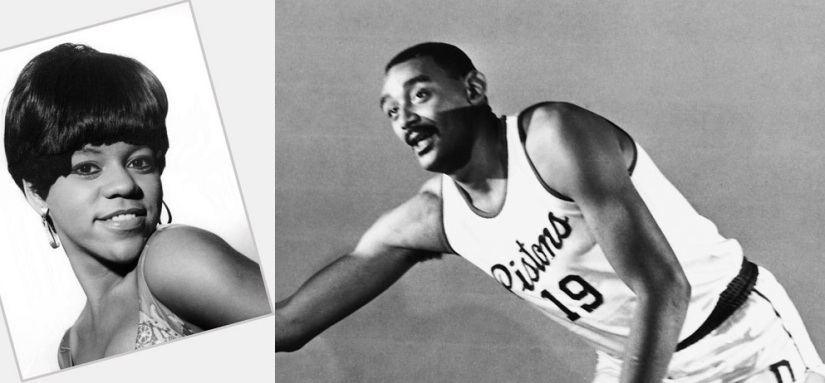
Detroit 7’0″ high school phenom Reggie Harding had a brief, but hauntingly promising, stint with our Pacers fifty years ago during the team’s first season in the upstart ABA. He had recently been cut loose by the Chicago Bulls after just 14 games into that milestone season of 1967-68. Harding had been the first player in the history of pro basketball to sign a contract as a high school player. He was selected by the Detroit Pistons and played parts of four seasons in the NBA. He lasted only 25 games with the Pacers; his career was over by the age of 26. He became legendary for his “world’s dumbest criminals” style antics off the court that began well before he left high school.
Here was a man who drew guns on teammates, became addicted to heroin and repeatedly robbed stores in his own neighborhood thinking no-one would ever finger him for the crimes despite being the only 7-foot tall black man in the area. He paid for his crimes with a bullet in the head fired by a man he believed was his friend and he died at the age of 30 on a trash strewn street in the Motor City on September 2, 1972. Although Reggie’s exploits are viewed somewhat comically after all these years, mainly because no one got hurt, there was at least one incident pinned on Reggie Harding that is sad and damaging in the worst way.
In 1960 Reggie Harding was a prep star for Eastern High School. The were in the second of four consecutive Detroit Public School League men’s basketball season titles from 1959-62. Reggie averaged 31 points and 20 rebounds per game while shooting an astounding 60 percent from the field for the Indians. He would earn first team high school All-American status by Parade Magaine that year. However, those sparkling hoops credentials weren’t enough to hide the tarnished image Reggie carried around with him.
While a Sophomore, Reggie had been arrested in upstate Michigan in the summer of 1959 for stealing a truck and was sentenced to probation. Reggie’s size (He was 6′ 11″ as a Freshman) taught him that he could intimidate adults on the streets, let alone kids in hall. If Reggie wanted your lunch money, or your car keys, Reggie got ’em. He didn’t even need a weapon. His most oft used tactic was to simply grab his prey by the shoulders and lift them several inches off the ground.
In 1960, when Reggie was eighteen, he was arrested for the charge of having “carnal knowledge” of a minor in Detroit. According to court records, the victim was a 15-year-old named Jean. During his trial for statutory rape, Harding admitted to the encounter but claimed in was a consensual act. At the time, Reggie Harding was ranked as the best prep player in the state and he was acquitted. That same year, Reggie allegedly raped a 17-year-old Detroit girl named Florence Glenda Chapman, better known as Flo Ballard of the Motown super-group The Supremes.
In 1958, Florence Ballard was a junior high school student living in the Brewster-Douglass Housing Projects in Detroit. There she met future singing partner Mary Wilson during a middle-school talent show and they became friends. Named “Blondie” and “Flo” by family and friends, Ballard attended Northeastern High School. Wilson soon enlisted another neighbor, Diana Ross, then going by “Diane” for their group named “The Primettes”. The group performed at talent showcases and at school parties before auditioning for Motown Records in 1960. Berry Gordy, head of Motown, felt the girls were too young and inexperienced and encouraged them to return after they graduated from high school. Flo dropped out of high school while her group-mates graduated.
In the summer of 1960, just weeks after meeting Berry Gordy, Flo went to a sock hop at Detroit’s Graystone Ballroom. She had attended with her brother Billy, but they accidentally lost track of each other in the crowded dance hall. She began to walk home in the dark but accepted a ride home from a young man whom she thought she recognized from the newspapers, a local high-school basketball player. According to her friends and family, that man was Reggie Harding. Instead of being driven home, Ballard was taken north of Detroit to an empty parking lot off Woodward Ave and Cantfield Blvd where Reggie raped her at knife point.
For the next several weeks, Ballard secluded herself in her room, away from friends and family. She even hid from her bewildered band mates when they came to call. Eventually, Ballard told Wilson and Ross what happened to her. Although the girls were sympathetic, they were puzzled by Ballard’s subsequent behavior; she had always been strong and resilient, but now her personality had changed. Wilson described her friend Flo as a “generally happy if somewhat mischievous and sassy teenager.” Now she was sullen and withdrawn, prone to sudden rages and arguments with no explanation. One thing didn’t change for Flo though, she never mentioned the rape again.
The girls continued working after the assault with Florence as the group’s original lead vocalist and Diana and Mary singing lead on alternating songs. Despite Berry Gordy’s reluctance to work with underage girls and admonition to come back after their high school graduation, the group persisted on getting signed to Motown by sitting on the steps of Motown’s Hitsville USA building and flirting with Motown’s male artists & staffers as they came and went. When a staff producer would come outside looking for people to provide background vocals or hand-claps, the girls were the first to volunteer. In January 1961, Gordy agreed to sign The Primettes on the condition they change their name. Flo Ballard chose the name “The Supremes”. Gordy agreed to sign them under that new name on January 15, 1961.
The group struggled in their early years with the label, releasing eight singles that failed to crack the Billboard Hot 100, giving them the nickname the “no-hit Supremes”. During this period, they provided background vocals for established Motown acts such as Marvin Gaye and Mary Wells. In the spring of 1964, the group released “Where Did Our Love Go”, which became their first number-one hit on the Billboard Hot 100, paving the way for ten number-one hits recorded by Ross, Ballard and Wilson between 1964 and 1967.
According to Mary, Florence’s vocals were so loud that she was made to stand seventeen feet away from her microphone during recording sessions. Florence’s voice (which went up three octaves) was often described as “soulful, big, rich and commanding,” ranging from deep contralto to operatic soprano. Flo was known for her trademark onstage candor (which included telling jokes), she became popular with audiences & most of the jokes were in response to Diana Ross’ comments. As Flo’s jokes became more frequent, Miss Ross was not amused. Florence acknowledged the widening gap between the trio when she told an interviewer that she, Diana & Mary now had their own hotel rooms unlike in the past when they all shared one room. To combat these issues and silence those demons from her past, Florence turned to alcohol which resulted in constant arguments with Mary and Diana. Flo’s shot clock was winding down.
Eerily, Reggie Harding’s rise in pro basketball paralleled Flo Ballard’s rise in the music industry. Reggie was signing with the hometown Pistons at the same time Flo was signing with the hometown Motown records. By 1967-68 while Reggie was struggling with the Bulls, Flo was struggling with The Supremes. As Reggie missed practices and plane rides, Flo missed rehearsals and performances. By March of 1968, Reggie was out of pro basketball and Flo had left The Supremes. Both became addicts; Harding to heroin, Ballard to alcohol. By 1972 Harding was dead and Ballard was on a slow march towards an early grave.
Mary Wilson would later attribute Ballard’s self-destructive behavior to the rape by Reggie Harding when she was a teenager. Ballard’s adult personality had turned to cynicism, pessimism and fear or mistrust of others. After Harding’s murder vacated the headlines, newspapers revealed that former Supreme Flo Ballard, with three children and no career, had now applied for public welfare relief. As a member of The Supremes, Flo sang on sixteen top-40 singles (including ten number-one hit songs). In January of 1969, Florence performed at one of President Richard Nixon’s inaugural galas. Two years later, Flo’s home was foreclosed and she was an alcoholic. Florence Ballard died at 10:05 a.m. on February 22, 1976; her official cause of death, following years of alcoholism and mental stress, was coronary thrombosis aka: a heart attack. She was only 32 years old. Florence is buried in Detroit Memorial Park Cemetery located in Warren, Michigan. Florence Ballard’s grave is just a short walk from Reggie Harding’s, who is buried nearby.