Creepy history, Ghosts

The Spooky “Hidden Mother” Photo.

Hidden Mother photo side blanketOriginal publish date:  August 21, 2015

If you like haunting antique shops and shows like me, I’m about to give you a new hobby, or at the very least blow your mind a little. Next time you find yourself walking by a table with a shoebox full of old CDV’s, tintypes and cabinet photos (they seem to appear everywhere) pick them up and look carefully at the photos of small children and babies. You might just find a “Hidden Mother” in one them.
Back in the stone ages before the advancement of digital imaging, cameras required film which then required development at a photo lab. The lab would take the film, create a negative, print your image and Eureka, you had a photo you could actually hold in your hands, not just look at on a screen. The first practical digital cameras started popping up in the 1980s, but before that, there was no “photoshopping” people out of negatives. True, negatives from commercial cameras from the 1930s on could be manipulated by the skillful use of a razor blade and a re-shoot, but they were clunky and easy to spot. In the case of Civil War Era CDVs (Carte de Visites) and tintypes or Victorian Era Cabinet photos, editing was nearly impossible, so other methods were utilized. In early photographs, a subject had to sit still because of long camera exposure times, usually 10-15 seconds depending on the lighting.
The longer the exposure, the better the image. That is, of course, unless the subject was a squirming baby, distracted pet or active small child. In those instances, these subjects were sometimes held in a deftly disguised lap or reassured by a disembodied adult hand just out of range of the camera lens. In some cases , this was accomplished using a photographer’s assistant but in most cases it was a relative, a nanny, or father, but primarily it was the child’s mother. Collectors make no distinction and photos of this description are always known as “hidden mother photographs” of “hidden mama photos.”
Back in the horse-and-buggy days there were really only a few ways to have your picture made. You either visited a photography studio (every town had one), went to an event like a Carnival, Amusement Park, State or County Fair to visit the photographer’s tent, or took advantage of traveling photographers who routinely roamed the back roads (often with an adorable pony in tow) to make a picture of the family for a quarter. Since many parents wanted photographs showing only the children, photographers had to get creative to block out the person in charge of corralling the child.
This was accomplished a couple of ways: a mother would drape herself in fabric and hold the squirming child on her lap or she would attempt to hide herself out of the camera’s view. This resulted in photos that at best subtly hid the caretaker from view or, at worse, created an image that looked looked like there was a creepy old ghost in the room. In in the case of the undisguised “hidden mama”, the mother’s features were confined to a far edge or an upper corner, that way, after the photo was developed, it could be placed behind an oval mat or frame which would crop out the mother, thereby deceiving the viewer into thinking the child was posing alone.
There were many techniques used to disguise the mother and a good photographer could make her nearly invisible, but she was never quite completely gone. If you look closely, you’ll see a hand, a set of fingers or the outline of an arm (sometimes the silhouette of an entire body) hidden within the photo. Just as digital photography changed the camera industry forever, improvements in technology led to exposure time being drastically cut down from minutes to seconds by the close of 19th century. Those uncomfortably long exposure times gave us some unmistakable Victorian Era photography peculiarities that you’ll find in every photograph from that age, regardless if you’re lucky enough to find a “hidden mother” photo or not. These include the stiff postures and unsmiling faces of subjects trying to remain perfectly still during the excruciatingly long time it took for the photographer to remove the lens cap and expose the film. Having had several of these photos made of me and my family over the years, I can testify that you can remain itch free for hours until the moment that a box camera photographer tells you “Okay, stand still” and counts off the seconds. One unconscious twitch or involuntary movement would result in a ruined picture. You could blink your eyes and not have it appear in the finished photo, but that was about it.
Now that you know about these photos, I suspect you’ll start looking and finding them on your own. Obviously, you first need to find an old fashioned photo of a child, but failing that, you can also look at the photos of the adults, usually when they are posed standing alone in a studio. Sometimes, the cast iron photographer’s stand can be seen behind them. Look first at the floor behind the subject’s feet and then look at the neck. These bulky stands looked like an old floor lamp with tripod footing and a U-shaped topper that was placed behind the neck to hold the subject still. Most of these are subtle, but some are quite obvious when you know what to look for.
In the case of “hidden mother” photos, the mother is most often “seen” disguised as a chair or camouflaged under decorative throws behind or holding the child. The throws can be as simple as a black or white tablecloth (the white tablecloths REALLY making it look like a ghost) or bulky Persian rugs and drapes with heavy backings that surely made the “disguisee” herself wriggle uncomfortably during the process. Another interesting subset of the “ghost mother” phenomenon has developed more recently. That is the debate among fans of this type of photo asking, is the child dead or alive?
Post Mortem photos were very popular during the same era. While the practice of taking a photo of a dead person, particularly an infant, appears macabre, perhaps repulsive, to people today, it has a plausible explanation. The Post Mortem photo was often the only photo the family had of that person. Most of these photos are of the very old or the very young. The argument in the late 1800s to early 1900s was that elderly folks were born before the advent of commercial photography and usually lived their entire lives in rural settings with no opportunity, or need, for a photo to have ever been attempted of them. For babies and small children, the argument would be that parents believed there would be plenty of time to have photos made of the kids down the line. An unexpected, early death would hasten that schedule.
Quite obviously it would be highly unusual (and very creepy) to find a hidden mother in the photo of an adult. But not so unusual in the instance of a photo of a dead child. Grief and mourning for lost children was the same then as it is now. Depending on the timing of the sad event, the parent may have been reluctant to allow the child to be removed from their clutches while awaiting burial, particularly in the very early stages of infant death. The principal question is, if the child is dead and not moving, why is the mother hidden?
Well, just as photographers used cast iron braces, officially known as “posing stands”, to keep a wavering subject steady during the prolonged exposure process, perhaps the “hidden mother” was used for the dearly departed child because the parent refused to have their baby propped up by cold steel. After all, a concerned mother would want her precious child to appear as lifelike as possible and in fact many Post-Mortems have accomplished just that and are hard to distinguish by any but the most expert eye.
I’ve included a trio of photos of the “hidden mother” variety for you to see. But there is at least one obvious example of a Post Mortem hidden mama photo that you can easily view on the net by simply typing “hidden mother Post Mortem” into your browser bar. I decided to omit that photo from this article for the sake of propriety choosing instead to let you the reader make that choice for yourself. So if there is one obvious example of a Post Mortem “hidden mama”, there surely must be more. Regardless, the next time you pass one of those shoeboxes full of old photos invariably marked as “Instant Relatives”, pick up a stack and peruse them. Pay close attention, you might just find a “hidden mother” of your own.

ABA-American Basketball Association

Whatever Happened to John Brisker? Part II

john-brisker-part IOriginal publish date:  February 1, 2016

For 3 seasons (1969-71), John Brisker ruled the ABA. He averaged 26.1 pts per game, which is crazy good, but more importantly, he led the league in fights and his intimidation factor was off the charts. In an outlaw league filled with castoffs and misfits, John Brisker topped them all. Executives placated him, coaches hated him, opposing players feared him and even his own teammates refused to guard him during practice. All of which was perfectly fine with John Brisker.
Brisker’s temper showed his dark side, but he was also highly intelligent. He was proud of his African heritage and studied African culture by reading and researching the subject whenever he could. He began to wear a dashiki (a loose, brightly colored African shirt or tunic) as a way of exhibiting his African pride. Although readily accepted today, at the time, it made Brisker a target of inquiry. Some within the establishment pegged him as a black militant.
During his 3 seasons in Pittsburgh under 2 different team names (Pipers & Condors) Brisker also found trouble off the court. In the fall of 1971, he attended a Pirates World Series home game with a girlfriend. After hailing a cab at the end of the game, Brisker got in an argument with a man who claimed that he had reserved the cab ahead of time. Brisker refused to get out of the cab, resulting in a fistfight with the man. Three nearby policemen spotted the brawl and as they investigated, Brisker began fighting the cops too. Two of the three officers were hospitalized and Brisker was arrested for assault and battery, disorderly conduct and resisting arrest. The handwriting was on the wall for John Brisker.
Brisker decided to cash in his ABA success by signing a lucrative multi-year contract with the NBA’s Seattle SuperSonics. Los Angeles businessmen Sam Schulman, the Sonics owner, was threatening to move his team to the ABA and worse, to move his soon-to-be ABA team to L.A. to compete directly with the Lakers. The Sonics had just signed Brisker’s Detroit neighbor & ABA All-Star Spencer Haywood the season before. Brisker had come in second to Haywood for ABA Rookie-of-the-year honors in 1969-70. So it seemed like a good fit for everyone involved including the fans.
It was a good financial move, but it came at a deeper price for Brisker. The NBA was not as tolerant of Brisker’s Bruising Brawls as the ABA had been and his new teammates, perhaps dubious of the ABA hype, were not as accepting of him. NBA players didn’t scare so easily, and they knew he wasn’t going to risk a suspension, with its fine and loss of pay. Still,old habits die hard and during one Sonic scrimmage, Brisker got in a shoving match with a teammate, knocking out the player’s front teeth. A move that prompted one Seattle Post-Intelligencer columnist to induct Brisker into the Seattle Boxing Hall of Fame. So, faced with this new reality, Brisker did his best to fit in. Despite his negative reputation, he became a positive force in the community, always the first to volunteer to attend charity functions during the off season. Brisker also liked to run basketball clinics for underprivileged youth from Seattle’s slums, always at his own expense.
“I want to play here, in this city, for these fans,” Brisker said. Any plans for conformity and NBA normalcy by Brisker were derailed during the 1973-74 season when the Supersonic hired former Boston Celtic great Bill Russell as their new head coach. Brisker quickly found himself at odds with Russell, an old school NBAer who was a believer in strict discipline, practice and a strong defense. Russell’s philosophy did not mesh with the free-spirited offensive minded forward.
Although still a powerful presence both on and off the court, the Sonics demoted Brisker to the CBA’s Eastern Basketball League after only 35 games even though John was averaging a healthy 12.5 points per game. Russell said Brisker “lacked discipline” and he “sent him down to learn to play some defense.” Brisker, obviously thinking a good offense beats a good defense every time, scored 56 in his first CBA outing. The next season saw more of the same with Brisker playing in only 21 games and averaging a career low 7.7 ppg. By the time Brisker collected the third paycheck of his third season he was out of Seattle’s starting line-up.
Sonics owner Sam Schulman claimed that Brisker was sparking “dissension” on the club and released him prior to the 1975-76 season. No other teams showed interest in signing him leading many to believe Brisker had been blackballed by professional basketball. So Brisker gave up on his playing career. The world lost contact with him by the late ’70s. Brisker played six seasons in the ABA and NBA averaging 20.7 points per game for his career (26.1 points per game in the ABA, and 11.9 points per game in the NBA). Brisker’s enigmatic, mercurial life, like his career, was about to take its strangest turn.
In 1978, Brisker boarded a flight to Africa and was never seen again. He told family and friends that he had plans to get into the import-export business in Idi Amin’s Uganda. Other than a occasional long distance phone call or photo from abroad, Brisker’s family lost touch with him forever. His brother “Rapid Ralph” Brisker, himself a former college basketball star, said John had been invited to Uganda as a guest of President Amin, a wild basketball enthusiast. The most often repeated contemporary rumor claims Brisker went to Uganda to fight as a mercenary soldier in the jungles of Africa.
When it came to Brisker’s whereabouts after 1978, John’s family offered similar variations of the same narrative:. “John was into a black separatist thing. Black power. Black business for black people. Black communities with black leaders.” Mark Brisker, a nephew who bounced around the Euro leagues for a few years, told him Uncle John had sent the family a picture from Africa of him on horseback. He signed it, “Have money will travel, John.” Brisker’s last contact came in a phone call came from Kampala, the capital and largest city of Uganda. Then literally, dead silence.
For years more wild rumors began to circulate. Brisker was on the run from the Feds. Brisker was on the run from the mob. Brisker fell in with some shady Liberian grifters. Brisker is alive and well living under an assumed identity in Africa. Brisker made it back to the States and is still alive. Another rumor claimed that Brisker was hired to coach the Ugandan National basketball team, ended up arguing with Amin and ended up as just another of the bloodthirsty tyrant’s many corpses. The wildest rumor claims that Brisker died in the Jonestown massacre orchestrated by cult leader (and former Hoosier) Jim Jones. Perhaps the most plausible explanation is that Brisker, who was living in the Royal Palace at Amin’s invitation, was executed by a firing squad of revolutionaries when the brutal dictator was removed from power in 1979. The State Department and FBI checked out that angle and came up empty-handed.
No official documentation tying him to Amin has ever been located. Officially Brisker was considered missing. That remained his status until 1985, when Seattle’s King County medical examiner finally declared him dead at the age of 38. That declaration paved the way for Brisker’s family to lay claim to his estate, modest as it was. His body was never found and his remains are believed to be buried somewhere in the steamy, impenetrable jungles that surround the Capitol of Uganda. All anyone knows for sure is that this ungentle giant’s light shone all too briefly before flaming out completely in a post-merger age. An age where Brisker should have been an established vet on his way to the Hall of Fame.
Still, there are some who believe that Brisker remains alive and simply does not want to be found, choosing instead to live his life in anonymity wherever that may be. John Brisker exuded the requisite toughness necessary to survive the mean streets of Detroit of the 1960s. “In Detroit, if you’re tough enough,” Brisker once told a reporter, “they name playgrounds for you.” Brisker used to play ball at a playground located between Hamtramck High School and Highland Park. Sure enough, the playground would be named after John Brisker. In a sense, it’s the most fitting epitaph to this enigmatic figure. John Brisker’s disappearance had a spiritual, antithetic quality to it; the adventurer-narrative of a lost soul journeying to a lost land for a lost cause. And then the soul vanishes. The mystery surrounding his fate only adds to the legend of John Brisker and the ABA.

ABA-American Basketball Association

Whatever Happened to John Brisker? Part I

john-brisker-part IIOriginal publish date:  January 25, 2016
I was an ABA fanatic when I was a kid. Of course, it didn’t hurt that I was growing up in the greatest basketball state in the nation and the hometown of the American Basketball Association’s greatest team. My parents did not necessarily share my rabid enthusiasm for the Pacers. Oh, they were fans but they simply didn’t feel the need to indulge me by buying tickets to every Pacers home game as I often begged them to do. Instead, they humored me by taking me down to the Indiana State Fairgrounds Coliseum about an hour before Pacers home games. Then they would drop me off near the player’s entrance where I would stand and get autographs of my heroes as they filtered in while they killed time with coffee and pie at the TeePee restaurant until tip-off.
During those years, I think I met every player from every team. Dr. J Julius Erving, Big Mac George McGinnis, The Rocket Rick Mount, The Beast Mel Daniels, Iceman George Gervin, Skywalker David Thompson, The Kangaroo Kid Billy Cunningham, Dr. Dunk Darnell Hillman, The Whopper Billy Paultz, Marvin Bad News Barnes, Little Louie Dampier, and Big Z Zelmo Beaty. They were always quick with a smile, friendly hello and quick autograph for a skinny little buck-toothed kid sporting a Hollywood Burr. Yep, that was me. I still have all of those signed cards and during this frigid Indiana winter, I took a walk through them the other night. My eyes filled with stars just like the old days. I stopped suddenly when I saw one signed card in particular: John Brisker.
John Brisker never played for the Pacers, but he first shot to prominence here as a rookie with the 1969-70 Pipers during a game where he replaced injured veteran Tom Washington in the line-up, scoring 42 points, while grabbing 12 rebounds. Brisker became one of the first true unknown talent discoveries ever made by the ABA. He was one of the Motor City Marauder imports from Detroit that included fellow ABA All-stars Mel Daniels, Spencer Haywood, Ralph Simpson and George Gervin. He too had a nickname: “the heavyweight champion of the ABA.” At 6’5″ and 210, he wasn’t the biggest guy in the league and he was certainly not the strongest, but he was the most feared.
Brisker enjoyed a short but stellar career at the University of Toledo. Well, stellar athletically at least. Brisker joined future NBA star Steve Mix to lead the 23-2 Rockets to the 1966-67 MAC championship. Although on scholarship, he remained academically ineligible for his first 3 years at TU. In the fall of 1966, he joined the Toledo marching band to raise his GPA so he could play basketball. He proved to be an A student and a pretty fair musician mastering the sousaphone, a scaled down tuba that fits around the body like Rambo’s bullet belt.
Brisker was drafted by the ABA Pittsburgh Condors, the league’s first champions. He was built like a linebacker with 40+ inch vertical leap and the shooting touch of a swingman, but played more like a power forward-bruising, tough, and even violent, at times. Brisker averaged 21 points per game as a rookie. By season two, he was up to 29 points a game. Whether it was shooting a 3-pointer or posting his man down low, Brisker could score at will. He could also rebound and defend when he wanted to, but make no mistake, Brisker was there to score. He established himself as a two-time All-Star, one of the best players in the early years of the ABA.
Brisker quickly earned a reputation as one of the most volatile players in the league, ejected from more games for fighting than any other player during those early years. According to his Condors teammate Charlie Williams, “He was an excellent player, but say something wrong to the guy and you had this feeling he would reach into his bag, take out a gun and shoot you.” Rather than shunning his bullying image, the Condors capitalized on Brisker’s reputation as an enforcer. Their 1970-71 media guide featured Brisker in a Mexican sombrero with a pair of six-shooters holstered to his hips. The Condors’ PR man, Fred Cranwell, got the idea based on Brisker’s routine of bringing a loaded gun with him to practice and games.
Brisker’s most infamous incident came during a game on December 5th 1971 against the Denver Rockets. He was ejected two minutes after tip-off for a vicious elbow on the Rockets’ (and former Pacer) Art Becker. Brisker was sent to the showers early but charged back onto the court after Becker three more times. Police finally ushered Brisker to the locker room for good under threat of arrest. After the game rumors swirled league-wide that the Dallas Chaparrals head coach put up a $500 bounty on Brisker. During that 1970-71 season, Brisker was involved in bloody fistfights on the court with Wendell Ladner of the Memphis Pros, Joe Caldwell of the Carolina Cougars, and Ron Boone of the Texas Chaparrals. The latter two fights requiring facial reconstructive surgery due to Brisker’s punishment.
His Pittsburgh teammate and roomie George Thompson once said everyone in the ABA had been terrified of him and Brisker cultivated that image. Brisker once racked up 56 points in a game without shooting a single free-throw. Guys were afraid to guard him, let alone foul him. Around the league, Brisker had a justified reputation for provoking fights and drawing blood. Early during the 1971-72 season, the Utah Stars visited the Condors at Pittsburgh’s Civic Arena. The Stars’ Willie Wise held Brisker to just four points in the first half. A frustrated Brisker scuffled with several Utah players, and tempers flared before the game was over. Brisker was held in check and thankfully no blood was spilled.
On November 4, 1971, the Condors visited Salt Lake City, and Stars’ management dreamed up “John Brisker Intimidation Night.” The Stars put pro boxer Ron Lyle on the cover (A heavyweight who fought Muhammad Ali for the title and was the only man to ever knock George Foreman down in the ring). The Stars added to the spectacle by lining the courtside with boxing stars both past and present including Lyle, Don and Gene Fullmer, Rex Layne, Tony Doyle and more. The ploy worked and Brisker behaved himself that night.
Even in a league defined by a multi-colored ball, 3-point shots and on court fist fights without suspensions or fines, Brisker’s transgressions stood out. One legend claims that Brisker’s teammates were so worried about guarding him during practice (particularly the day after a loss) that Pittsburgh Execs brought in a brawny ex-football player whose only job was to watch Brisker and flatten him the first time he got out of line. Reportedly, the practice was halted after the football player warned the surly Brisker that he was going to the locker room to get his gun. Brisker said he was fine with that, since that gave him time to go to his locker and get his gun.
Another story claims that immediately after the ABA All-Star game at Greensboro, North Carolina In 1971, Brisker walked up to league commissioner Jack Dolph and demanded his All-Star bonus right then and there. Brisker had scored 15 points and grabbed 17 rebounds in his team’s win. Knowing the fearsome reputation of the man standing before him, Dolph reached into his own wallet and paid Brisker $ 300 cash on the spot. By the next season, both men were out of the league.

Music, Pop Culture

Bruce Springsteen meets Elvis Presley. Well, sort of.

bornToRun            Original publish date:  May 8, 2016

A couple of weeks ago we passed another one of those anniversaries that always seem to fascinate me. My favorites are those events that involve history colliding with pop culture and celebrity. 16-year-old Bill Clinton photographed meeting John F. Kennedy at the White House, 6-year-old Teddy Roosevelt photographed watching the funeral cortege of Abraham Lincoln from the second story window of his family mansion in New York City, Elvis Presley photographed shaking hands with Richard Nixon in the Oval Office just before Christmas in 1970. I LOVE stuff like that!
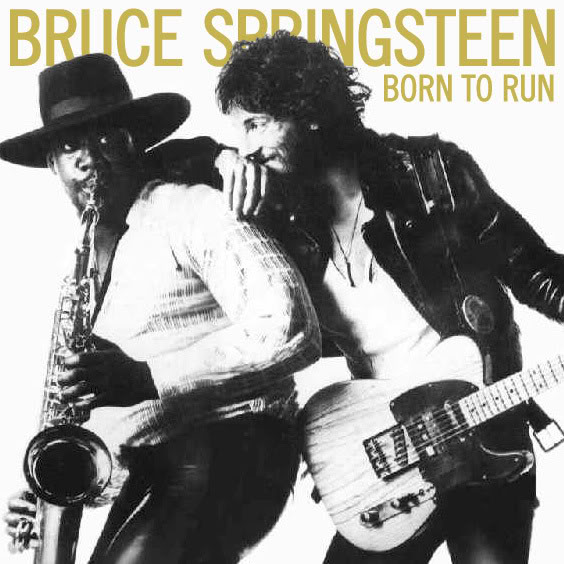
There are no photos from this event, at least none that I’m aware of, but this story does have Elvis. In the wee hours of the morning on April 30, 1976, Bruce Springsteen jumped the fence at Elvis Presley’s estate. The E-Street Band was touring Memphis, Tennessee, the birthplace of Rock ‘n Roll, in support of their Born to Run album. After the show, 26-year-old Springsteen and guitarist Little Steven (aka Steve Van Zandt) hailed a taxicab and decided to pay a 3 a.m. visit to Graceland. When Springsteen saw lights on in the mansion, he climbed over the stone wall and ran through the grass, jumped up on the porch and rushed to the front door; just as he was about to ring the doorbell, he was nabbed by security.
‘Is Elvis home?’ Springsteen asked. ‘No, Elvis isn’t home, he’s in Lake Tahoe’ came the answer from the unamused guards. As ‘The Boss’ was brusquely led away from the mansion and back towards the front gate, Springsteen attempted to wow them by telling them that he was himself a performer and had recently made the covers of Time and Newsweek. They were not impressed. Springsteen poured on the charm and begged to be let inside – but he was instead escorted promptly through the gate and out onto the sidewalk. Elvis died at Graceland the very next year. Ironically, if you look closely at the cover of Born to Run, Springsteen’s guitar strap proudly bears an Elvis fan club button.
Bruce Springsteen was seven when he first saw Elvis on The Ed Sullivan Show. It was The King’s third and final appearance on January 6, 1957. According to one reviewer: ‘On that Sunday night in 1957, Elvis smiled, smirked and played with the audience. Breaking from his usual attire, Presley came out wearing a bloused shirt and vest, with makeup painted around his eyes. That night Elvis sang hits like Don’t Be Cruel, Love Me Tender, and Hound Dog, shaking his hips and standing on his toes while girls screamed in the audience. And that guitar: it was a weapon and it was armor. This was the dream.’
Watching the show, Springsteen was hooked: ‘I couldn’t imagine anyone not wanting to be Elvis Presley’, he recalled. His mother eventually bought him a guitar and paid for private lessons, but young Brucey’s hands were too small. He didn’t like structured instruction so he put the guitar in the closet and started playing sports. Meantime, Elvis was on the way to stardom and legend.
Elvis purchased Graceland for his mom and dad on March 19, 1957 for the amount of $102,500. The 17,552 square foot mansion has a total of 23 rooms, including eight bedrooms and bathrooms. Located at 3764 Elvis Presley Boulevard, the 13.8-acre estate is located in the vast Whitehaven community about 9 miles from Downtown Memphis and less than four miles north of the Mississippi border.
During the years that Elvis lived at Graceland the front gate area was a gathering place for fans. After all, there was always the chance that he might drive through in one of his cars or on a motorcycle, or ride down on a golf cart or on horseback and have an impromptu autograph session. They could also watch him and his ‘Memphis Mafia’ friends ride their horses and golf carts around the grounds. Even when Elvis out of town, fans gathered at the gates and chatted up the security guards (some of whom were Elvis’ relatives) while meeting other fans from around the nation and the world at the same time. When Elvis was away, sometimes the guards would let fans onto the grounds for photos, sometimes even driving them up to the front of the house. There was always a sense of warmth, welcome and camaraderie. Many lifelong friendships between Elvis fans began at the Graceland gates.
However, it wasn’t all that uncommon for fans and curiosity-seekers to climb over the stone wall or wood fence on a dare or, more often, with the misguided mission to meet Elvis. The security staff not only routinely escorted uninvited guests off the grounds, they sometimes had to coax them down from the trees. Legend states that on one occasion Elvis caught a couple of mischievous young guys who had jumped the fence and were taking a swim. Elvis is said to have nonchalantly suggested that they be careful, then went back in the house. Once, a fan made his way into the house and was found sitting in the den waiting for Elvis, hoping to interest him in some songs he had written, but the meeting never happened. I imagine the songwriting intruder was busy being arrested. It certainly was a different world back then.
Anyone who’s attended a Bruce Springsteen concert knows that the Boss loves to share stories with his fans. His legendary 3-hour sets are littered with songs punctuated by long anecdotes, and there’s no story he loves telling more than the time he got booted from Elvis Presley’s front porch.

“Later on, I used to wonder what I would have said if I had knocked on the door and if Elvis had come to the door. Because it really wasn’t Elvis I was goin’ to see, but it was like he came along and whispered some dream in everybody’s ear and somehow we all dreamed it. And maybe that’s why we’re here tonight, I don’t know.’ Bruce continues,’ I remember later when a friend of mine called to tell me that he’d died. It was so hard to understand how somebody whose music came in and took away so many people’s loneliness and gave so many people a reason and a sense of all the possibilities of living could have in the end died so tragically. And I guess when you’re alone, you ain’t nothin’ but alone’. Presley was only forty-two years old when his life tragically ended. “They found him slumped up against the drain,” Bruce Springsteen would later sing of his fallen idol, “with a whole lot of trouble running through his veins; Bye-bye, Johnny;
Johnny, bye-bye; You didn’t have to die; you didn’t have to die.”

13 months later, on May 28, 1977, Springsteen and Van Zandt attended an Elvis Presley concert in Philadelphia. It was not one of Elvis’ better performances according to reviews and fan accounts, including Bruce’s own account, ”that wasn’t a very good night.” After that disastrous show, Bruce apparently went home and wrote ‘Fire’ to assuage his disappointment. Springsteen envisioned “Fire” as a song which could be recorded by Elvis, his idol. The song is a superb tribute to the great early sixties recordings Presley made, in particular Suspicion and His Latest Flame. Springsteen later stated ‘I sent Elvis a demo of it but he died August 16, 1977 before it arrived.’
After Elvis died Bruce gave the demo to rockabilly singer Robert Gordon, who cut it in New York in December 1977 with Link Wray on lead guitar and Bruce himself playing (un-credited-at-the-time) piano. Later, the Pointer Sisters got a hold of the track and recorded their version which made it to #2 on the pop charts in 1979. Don’t remember the song? Do these lyrics ring a bell? ‘I’m ridin’ in your car. You turn on the radio. You’re pullin’ me close. I just say no. I say I don’t like it. But you know I’m a liar. ‘Cause when we kiss Ooooh, fire.” My wife might disagree, but Elvis Presley would have killed with that song.

Music, Pop Culture

Buddy Holly’s Glasses: Lost and Found.

Buddy HollyOriginal publish date:  February 17, 2017

Leap years generally go unnoticed by everyone except those who were born on one. Leap years are recognized every four years in the month of February by tacking an extra day onto the end. To most, leap years are just another event in a month of neglected holidays. After all, when is the last day you celebrated Ground hog day? Or President’s day? To make matters worse, leap years land on Presidential election years which tend to shrink the calendar as it is. Nobody ever remembers leap years. However, one event from a leap year 37 years ago (this week) struck a chord from beyond Rock ‘n Roll eternity.
On February 29, 1980, a pair of glasses were found in a filing cabinet of the Cerro Gordo County Sheriff’s office in Mason City, Iowa. The glasses had a peculiar government issued appearance that looked oddly out of place for the Disco Era discovery. Today that style could be spotted in every office, college campus or corner coffee shop. The glasses were found in a manila envelope marked simply, “Charles Hardin Holley received April 7, 1959”. Along with the glasses, four dice, a cigarette lighter and a watch belonging to one Jiles Perry Richardson were also in the envelope. The lenses of the glasses were missing but the watch still ran pretty well.
buddyhollyThe relics had been resting in sweet repose for nearly twenty-one years. They had been found at the scene of the February 3, 1959 plane crash that took the life of pop stars Richie Valens, the Big Bopper J.P. Richardson, Buddy Holly and pilot Roger Peterson. The charter plane’s wreckage was strewn across nearly 300 yards of snow-covered cornfields. The death certificate issued by the Cerro Gordo County Coroner noted the clothing Holly was wearing, the presence of a leather suitcase near his body and the following personal effects: Cash $193.00 less $11.65 coroner’s fees – $181.35, 2 Cuff links: silver 1/2 in. balls having jeweled band, Top portion of ball point pen. Notably missing from the list were Holly’s signature eyeglasses. Officially, the crash was caused by a combination of inclement weather and pilot error. To fans, it would forever be remembered as the day the music died.
The wristwatch and cigarette lighter belonged to Richardson and the horn rimmed glasses belonged to Buddy Holly. It is widely believed that the envelope had remained undiscovered because nobody recognized the innocuous plain sounding name Charles Hardin Holley written on the outside. The envelope was found while some records were being moved. Officials speculated that the leftover items had been found by a farmer two months later after the snow melted. The coroner’s office collected (and then misplaced) them in the process of moving to a new county courthouse.
The Big Bopper’s watch was inscribed with a legend for a 1957 disc-a-thon, an important milestone in his life. In May 1957, at the Jefferson Theatre in Beaumont Texas broadcasting from radio station KTRM, the Big Bopper beat the record for continuous broadcasting that had been set by a DJ in El Paso just months before. The disc-a-thon was a popular radio station gimmick where DJ’s would stay on air continuously playing records to the point of exhaustion. Kids would rush to the station, crowding the studio and parking lots, to see how long their local DJ could last.
Richardson had been awake for a little over 3 days before he began to show signs of severe sleep deprivation. Several breaks were taken to refresh JP. Cold Towels, Hot Coffee mixed with adrenaline were used to keep him awake. The record was broken at 122 hours and 8 minutes (a little over 5 days) during which the Big Bopper stayed on air and awake the entire time. At the tail end of the sleepless marathon, Richardson began to hallucinate. Exhausted, he was carried from the studio in an ambulance. Later, he recalled one hallucination that foretold his own death. Afterwards, he told a friend, “the other side wasn’t that bad.”
Buddy’s glasses had been thrown clear of the plane wreckage and buried in the snow. Those glasses were special, they were Buddy Holly’s trademark. The focal point of a carefully crafted look. They became the single item most remembered by his fans. However, they weren’t his first choice. The Texas-born singer had 20/800 vision and couldn’t read the top line of the eye chart as a boy. At first he performed spec-less, thinking glasses would hurt his image. According to Texas Monthly, that changed after an early show where he dropped his guitar pick and had to crawl around on stage searching for it. At first, Holly asked his Lubbock, Texas, optometrist, Dr. J. Davis Armistead to be fitted with contact lenses. Buddy was a patient of his since junior high after being referred by the school nurse, and remained his patient until his untimely death at the age of 22.
It was early 1956, and Holly was going to an audition in Tennessee. The contact lenses back then were thick and bulky and had to be floated over the cornea and sclera with saline solution, which would cloud up and needed to be frequently replaced. Holly was unable to wear his contacts for more than an hour or two at a time, so Buddy watched and waited offstage until just before his time to go on, he then ran to the bathroom and inserted the contacts. The judges called an unexpected break and by the time they returned, Buddy couldn’t see the audience. Ditching the contacts, he went home and switched back to a understated plastic and metal framed pair of eyeglasses, chosen precisely to blend in rather than stand out.
hollyBefore his June 2014 death, Dr. Armistead recalled. “Buddy was trying to wear the least conspicuous frames he could find. Personally, I was not happy with the frame styles we had been using. I did not think they contributed anything to a distinct personality that a performer needs.” Armistead was watching Phil Silvers play Sergeant Bilko on television one night when he realized what skillful use Silvers made of the black-rimmed glasses to define Bilko’s character. He thought that a heavier-rimmed pair would be perfect for Holly’s narrow face. While on vacation in Mexico City, Armistead found a pair of heavy plastic frames that he felt were perfect for Buddy. Made by a Mexican company named Faiosa, the frames featured angular, slightly up swept top corners that looked like tail fins on a 57 Chevy. He brought back two pairs, one black and one demi-amber, and fitted them with Holly’s prescription lenses. Holly chose the black pair. “Those heavy black frames achieved exactly what we wanted—they became a distinct part of him.”
Holly was rough on his glasses, breaking several pairs. He became a regular visitor to Armistead’s office in search of a new pair. “He always had a gang with him when he came by the clinic,” Armistead told a reporter in 2008. “I always knew when he was out front because I could hear them beating the time (to a song) on the corner table in the waiting room.” If Armistead could not get the Faiosa frames, he supplied Holly with similar Sidewinder or Freeway frames, made by an American company called Shuron. Much to the delight of bespectacled nerds everywhere, Holly managed to make wearing thick-framed glasses cool.
When Holly and his wife, the former María Elena Santiago, moved to New York in the summer of 1958, Buddy started buying his glasses from Courmettes and Gaul, a Manhattan optometry office that was able to obtain the Mexican frames for him. Those were the glasses that he was wearing when he was killed on that snowy February night in 1959.
When that envelope was discovered, Holly’s parents claimed the glasses, as did his widow, and on March 20, 1981, a judge awarded the eyeglasses to María Elena in the same Mason City courthouse where they were discovered. According to the book “The Day the Music Died…” by Larry Lehmer, the Cerro Gordo Sheriff’s office ignored a Holly fanatic from Delaware who offered his entire life savings ($502.37) for the glasses. Maria kept them until October 1998, when she sold them to Civic Lubbock, the nonprofit cultural organization that created the Buddy Holly Center. The price was $80,000. Today the glasses, visibly scarred from the plane crash, are on exhibit at the center, in a case near Holly’s Fender Strato-caster guitar. Other pieces in the collection include Buddy’s stage clothing, letters, photos, and a book containing handwritten song lyrics.
f264ad59003fe09c7db0320aa765fdb6

Buddy Holly’s thick black frames were rock ’n roll’s first great fashion statement and they became almost as iconic and influential as his music itself. Until Buddy came along, people wearing eyeglasses suffered a certain stigma in the fifties. Buddy Holly paved the way for Roy Orbison to perform wearing distinctive eye-wear (the very same style as Buddy’s). Another notable influence was on Paul McCartney and John Lennon. Both were huge fans of Holly, claiming it was him who inspired them to play, sing and write their own songs. They called their band The Beatles as a nod to Holly’s band The Crickets. In a 1986 interview, McCartney remarked that before Buddy rock stars couldn’t wear glasses on stage, and that seeing him perform in his thick black frames made them want to start a band too. John Lennon was extremely nearsighted, and surely Buddy had influenced John’s signature round spectacles. One thing is certain: Buddy Holly’s black frames spoke to a generation and that leap year discovery in a dusty filing cabinet 37 years ago this week gave the world one last look at a rock ‘n roll legend thru a storied pair of glasses.