Creepy history, Medicine

The last of the Radium Girls.

Radium girls             Original publish date:  January 2, 2015

2014 has come and gone and along with it, the passing of many notables whose time on this earth has run out. Lost among them is a woman you may have never heard of. Mae Keane died this year. She was the last of the radium girls.
On December 21, 1898, Marie and Pierre Curie discovered the radioactive element radium after extracting it from uraninite. Five years after that, they won a Nobel Prize in physics for their discovery, making her the first woman to win one. She went on to win a second Nobel Prize in 1911; this time in chemistry, for isolating radium, making her the first person to win two.
Radium was soon all the rage: bottled radium water was used as a health tonic, radium filled facial creams were used to “rejuvenate the skin”; the Radium Institute in New York City was giving radium injections to all who could pay for them; some toothpastes started to include Radium; high-end spas began adding radium to the water of their pools and some hospitals were using radium as a treatment for those who had cancer after it was observed that exposing tumors to radium salts would shrink them. Although the latter sounds admirably feasible, the former should sound shocking when you consider that radium is highly radioactive.
Additionally, it was found that when radium salts were mixed with zinc sulfide and a glue agent, the result was a glow-in-the-dark paint. During World War I the advent of trench warfare necessitated the invention of many things. Trenches were dark, damp and dirty. A single match lit by a soldier hunkered down in a pitch dark trench might be the spark to draw enough enemy fire to wipe out an entire company of soldiers. Time dragged on endlessly; when you couldn’t see your own hand in front of your face, you had no hope of seeing the hands of a clock face.
Not only were soldiers crawling and wading around in the mud unable to see their watch dials at night, their pocket watches weren’t suitable for this environment. Soon, watchmakers created men’s watches with straps designed to be worn on a wrist rather than placed in a pocket. Before the great war, wrist watches were primarily worn only by women, with men favoring pocket watches. By November of 1915, British soldiers were putting dots of radium paint next to the hour numerals to make them visible at night. The dimness of the glow was beneficial as they could tell the time without giving away their position.
Of course, at this time, the dangers of radioactivity were not fully understood. Enter Mary “Mae” O’Donnell Keane and the radium girls. In the early 1920s, the hot new gadget was a wristwatch with a glow-in-the-dark dial. Their ads extolled “the magic of radium!” And according to some, radium was magic. Salesmen promised that it could extend your life, pump up your sex drive and make women more beautiful. Doctors used it to treat everything from colds to cancer. In the Roaring Twenties, women earned the right to vote, got the urge to smoke and marched to work in factories alongside their male counterparts.
Young women ranging in age from the mid teens to the early 20’s were employed to apply the paint to clock dials and watch faces. The job was promoted as ideally suited for delicate female hands. The work was easy, the wages high and most dial painters were typically single and living with their parents. Over the first 10 years about 4000 women were employed at 3 locations: Orange, NJ, Waterbury, CT and Ottawa, IL.
The first dial painters came from the china painting industry. These seasoned workers used a technique called lip-pointing which involved wetting their camel hair paintbrushes between the lips to bring it to a sharper point. The practice was passed on to the radium painting industry whose products required fine brush work. In 1924, 18-year-old Mae Keane was hired at the U.S. Radium Corporation factory in Waterbury Connecticut. The pay was $18 a week for a 40-hour work week, and 8 cents a dial. A pretty good salary for a woman back then.
Twelve numbers per watch, 200 watches per day-and with every glowing digit, the radium girls swallowed a little bit more poison. Mae said that on her very first day, she decided that she didn’t like the taste of the gritty radium paint. “I wouldn’t put the brush in my mouth,” she recalled years later. During breaks and at lunchtime, it was a popular pastime of the radium girls to paint comic faces on each other, then turn out the lights for a laugh. “The girls sneaked the radium out of the factory to paint their toe nails and teeth to make them glow,” Keane said.
Mae couldn’t remember what led her to work at the watch & clock factory but did remember that she disliked the work more than she liked the paycheck. Luckily, she was not as fast as her supervisor wanted her to be. “I made 62 cents one day,” Keane once said, which translates to a high of 8 watches in a day. “That’s when my boss came to me and said I better find another job.” That poor performance probably saved her life. She worked in the dial painting room for eight to nine weeks, then transferred to another job at the company. “I often wish I had met him after to thank him,” Keane said, “because I would have been like the rest of them.”
The dial painters would become some of the earliest victims of radioactive poisoning. By the late-1920s, they were falling ill by the dozens, afflicted with horrific diseases. The radium they had swallowed was now slowly eating their bones away from the inside out. “We were young,” Mae told The Hartford Courant in 2004. “We didn’t know anything about the paint. I don’t think the bosses even knew it was poison. The foreman would tell us it was very expensive, and to be careful. We had no idea. But when they did find out, they hid it.”
Reports of maladies afflicting the radium girls began to bubble up to the surface. Dial painters began to suffer from a variety of illnesses, often crippling and frequently fatal as a result of ingesting radium paint. One account describes a woman (Frances Splettstocher) visiting her dentist to have a tooth pulled only to have her entire jaw yanked out in the process. Soon, her gums and cheek rotted away, ultimately resulting in a hole in her cheek. Her health continued to deteriorate and she was dead within the month.
Other radium girls had their legs snap underneath them and more still had their spines collapse. Dozens of women died, many while still in their 20s. Ingested radium is known to deposit permanently in bone structures damaging bone marrow. In all, by 1927, more than 50 women had died as a result of radium paint poisoning. Many of them developed cancerous tumors, honeycombed and fragile bones, and suffered painful amputations. At a factory in New Jersey, 5 of the women sued the U.S. Radium Corporation for poisoning. The trial would have a profound impact on workplace regulations.
Ironically, many in these factory towns blamed the women for the loss of jobs during the Great Depression. Furthermore, it would be discovered that U.S. Radium had paid off doctors and dentists to claim the girls were suffering from the sexually transmitted disease syphilis (often having this listed as the cause of death when the girls died), with the hope that it would not only shield the corporation from litigation, but also sully the girls’ reputations.
At every turn U.S. Radium sought to delay the trial as much as possible with the hope that all the women in the case would die before an outcome could be reached (in fact all five of the original radium girls were dead by the mid-1930s). With the company asking for delay after delay, the trial crawled along at a painful pace. Marie Curie herself chimed in on the issue, but had little comfort to give the radium girls by stating, “I would be only too happy to give any aid that I could, [but] there is absolutely no means of destroying the substance once it enters the human body.” Curie herself would die on July 4th, 1934 from leukemia; likely caused by her long term exposure to radium.
By the time the girls finally got a chance to testify in January of 1928, none of them were able to raise their arms to take the oath, and two were bedridden. After their testimonies, the case was once again postponed for a few months for no good reason. The case was settled in the fall of 1928, before it could be deliberated by the jury, and the settlement for each of the radium girls was $10,000 ($135,000 in 2014 dollars) and a $600 per year annuity while they lived, and all medical and legal expenses would also be paid by the company. Many of the victims would ultimately end up using the money to pay for their own funerals. The lawsuit and resulting publicity was a factor in the establishment of occupational disease labor law. Most importantly, the trial proved that the injuries suffered by the radium girls were completely preventable.
As part of the settlement, the girls agreed not to hold U.S. Radium liable for their health problems. So what was U.S. Radium’s official position in the aftermath? They stated they didn’t settle because they were wrong, but rather because the public was biased against them and they couldn’t have received a fair trial. U.S. Radium’s president, Clarence Lee, stated: “We unfortunately gave work to a great many people who were physically unfit to procure employment in other lines of industry. Cripples and persons similarly incapacitated were engaged. What was then considered an act of kindness on our part has since been turned against us.”
But these radium town’s plight didn’t end when the case was settled in court. The chemical element found its way into the soil and groundwater, contaminating residential and commercial properties around the towns. The dangers of radium no longer was isolated to those who worked in the radium dial plant, it now threatened the populace. The factory sites became EPA Superfund cleanup sites in the 1980s. The plight of the radium girls was now known to, and shared by, everyone.
But Mae Keane was a proud survivor. Over the years, she had some health problems: she developed numerous skin ailments and eye problems, suffered from migraines and had two bouts with cancer. “The doctor wanted to give me chemotherapy,” Keane said. “I told him ‘no.'” Keane lost all of her teeth in her 30s and suffered pain in her gums until the day she died. “I was left with different things, but I lived through them. You just don’t know what to blame,” she said. The only prescription medication she ever took was to control her blood pressure. Despite her ailments, Mae admitted, “I was one of the fortunate ones.”
Keane, a Red Sox fan, was once asked about her secret to longevity. “I’m lazy,” Keane said, adding she never smoked, loved to walk and dance, and enjoyed caramel candy, chocolate and an occasional apricot sour or Bailey’s Irish Cream. “I didn’t get old until I was 98,” she once said.” She was 107 when she died on March 1 in Middlebury, CT.; the last living participant in one of the darkest moments in American industrial history.

ABA-American Basketball Association, Indianapolis, Music

Breakfast with Neto: Marvin Gaye.

Neto Breakfast cropedOriginal publish date:  May 2, 2017

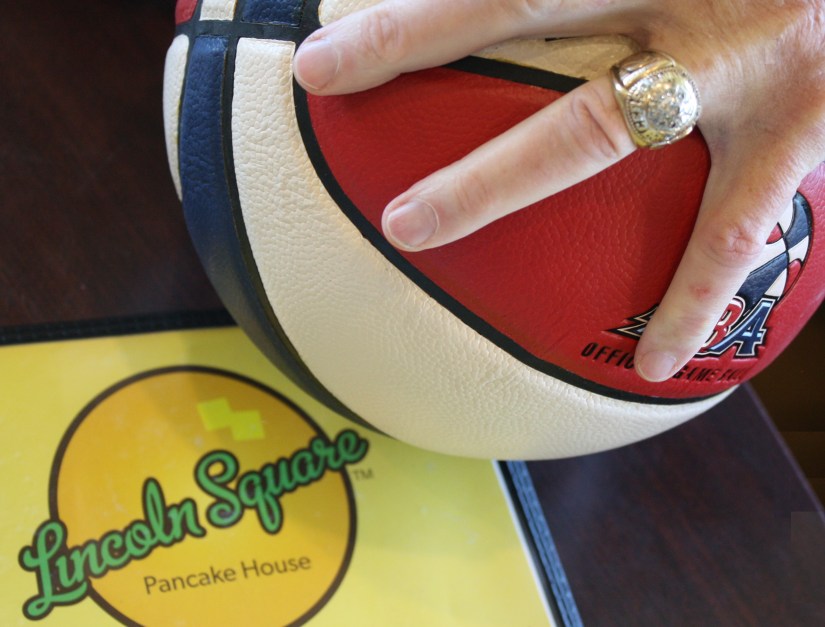
This is the first in a series of articles that I hope will bring insight into the Indianapolis sports and pop culture history scene as seen through the eyes of former ABA Pacers All-star player Bob Netolicky. I have known Bob for well over 20 years and have had the benefit of his counsel and insight on topics both on and off the court. Neto’s stories are informative, often amazing and always entertaining. Neto has called Indianapolis home for over 50 years and frankly, these stories need to be shared. We meet regularly for breakfast at the Lincoln Square Pancake House at 7305 East 21st Street so I’m calling these articles “Breakfast with Neto”. I hope you enjoy reading them as much as I enjoyed writing them.
tumblr_mpjk7gTsvv1qzp5buo1_400The ABA Indiana Pacers were the powerhouse of the old American Basketball Association, appearing in the league finals five times and winning three Championships in nine-years. By the time of the NBA-ABA merger in 1976, the Pacers had established themselves as the league’s elite. The players were household names and their reputation was now legend. The crowds at the State Fair Coliseum, and later Market Square Arena, where the Pacers held court were always dotted with celebrities from all walks of life. In the Circle City of the seventies, everyone wanted an association with the Pacers. In short, they were rock stars.
During the summer of the 1975-76 season, the Pacers held informal workouts at the Brebeuf high school gym. “The guys would all get together for scrimmages to keep in shape, It was me, George (McGinnis), Roger (Brown), Mel (Daniels), Danny Roundfield and a few others. We would get together and practice with the high school kids there.” says Neto. “One of the guys, I don’t remember who, showed up one day with Marvin Gaye in tow. Marvin was so bad, we made the high school guys take him on their team.”
Wait, what? Motown star Marvin Gaye? THE Marvin Gaye? “Yep, Motown star Marvin Gaye.” Neto replies. “He was in town for a concert as I recall.” Marvin Gaye, Jr. was born on April 2, 1939, in Washington, D.C., to a church minister father and domestic worker mother. He grew up in the Fairfax Apartments on the rougher side of D.C. Although once populated by elegant Federal-style homes on the Southwest side, when Marvin was coming up there it was primarily a vast slum. Buildings were small one or two story shacks in disrepair, many lacked electricity or running water and nearly every dwelling was overcrowded. Gaye and his friends nicknamed the area “Simple City”, owing to its being “half-city, half country” atmosphere.
slide_409216_5137250_freeYoung Marvin, who would grow to be over 6 feet tall, became a fixture on the tough D.C. basketball courts. One of his neighbors was future Detroit Mayor and Pistons All-star Dave Bing. Although smaller and four years younger, Bing played alongside Gaye on those DC project courts. The two men forged a friendship that lasted the rest of their lives. Bing continued to excel on the court as Marvin’s skills faded. Ironically, both men landed in Detroit. Gaye turned to song, which led him to Motown immortality; Bing landed in the Basketball Hall of Fame.
Marvin once said, “I was always a sports fan but I was determined to play for real. I knew I could. When I was a kid, I was scared to compete. Father wouldn’t let me. Preachers kids weren’t supposed to be football players. Well I decided to change all that. I trained with the Detroit Lions and was convinced I could start at offensive end. You see, I had this fantasy. I was in the Super Bowl, with millions of people watching me on TV all over the world, as I made a spectacular leaping catch and sprinted for the winning touchdown.”
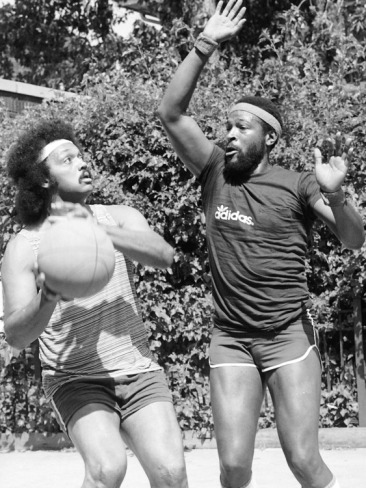
footballWhile Marvin was busy helping Berry Gordy shape the sound of Motown in the 1960s, he never lost his love of sports. The “Prince of Soul” recorded iconic concept albums including What’s Going On and Let’s Get It On while keeping active on the courts, courses and fields around the Motor City. In the book “Divided Soul; The Life of Marvin Gaye”, author David Ritz says, “Gaye was a good athlete, but not of professional quality. His football playing, just like his basketball playing (where he loved to hog the ball and shoot) were further examples of his delusions of grandeur.” Gaye was a regular at celebrity golf tournaments and loved rubbing elbows with pro athletes like Bob Lanier, Gordie Howe and Willie Horton.
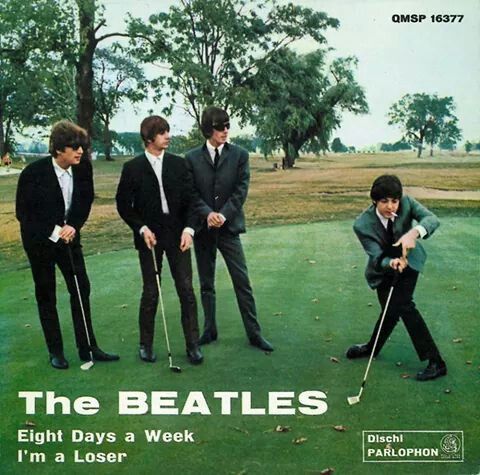
In 1969, The Four Tops’ Obie Benson and Motown songwriter Al Cleveland began working on a song that would eventually become “What’s Going On.” The song was repeatedly turned down by several different Motown acts. The duo pitched the song to Marvin Gaye in 1970. Gaye told a couple friends, Detroit Lions stars Lem Barney and Mel Farr, about the song during a round of golf at Detroit’s Palmer Park Golf Course. Palmer attracted many of the city’s black celebrities, including Joe Louis, Smokey Robinson and The Temptations. Gaye was reluctant to record the as yet unnamed song saying it just didn’t fit his style. Farr and Barney talked him into it, saying that Marvin was the only person who could pull it off.
Marvin finally agreed, coming up with the song’s title while with his two Lions buddies over a few beers after another round of golf. Marvin told the duo that he would only record the song under one condition: if Farr and Barney sang background vocals. The Al=Pro duo thought Gaye was joking, but they soon discovered that he was quite serious. The two men, NFL offensive and defensive rookies of the year just three years earlier with the Lions, agreed even though neither had ever sang professionally before. True, they had been in the studio before as Marvin’s guests, but they never dreamed they would be singing alongside their friend.
The song came at a time when America was coming apart at the seams. Malcolm X, Martin Luther King Jr. and Robert Kennedy’s assassinations were the fuel and intercity angst the match. The Watts and Detroit riots exploded after decades of racial bigotry. The Vietnam war raged on. Now, Marvin saw a chance to merge sports with music and social commentary in the epic song “What’s Going On.” Marvin headed to the recording studio alongside two of the Detroit Lions all-time greatest players. The song and album became a hit reaching No. 1 on the R&B chart, selling over two million copies. Not long after the record was released, Gaye dropped another bombshell. Now that he, Barney and Farr were musical collaborators, Gaye told them he wanted to join them on the Detroit Lions.
Gaye was 31 and had never played football professionally. In the book, “Marvin Gaye, My Brother.” Frankie Gaye quoted his brother as saying, “Don’t even try to discourage me. Smokey [Robinson] said I’m insane, but he’s hanging in with me because, you know what?…I’d rather catch a pass and score a touchdown in Tiger Stadium, than rack up another gold record.” Problem was, Barney and Farr couldn’t guarantee a tryout, let alone a spot on the team. Gaye quickly committed himself to an intense workout regimen, running 4-5 miles per day and lifting weights. He arranged workouts at the University of Michigan and transformed portions of his house into a gym, moving his Rolls-Royce and other cars out of the garage to make room.
Gaye bulked up nearly 30 pounds during the training. Gaye was realistic, he knew his NFL dream was a long shot. He trained with Farr, Barney and future Hall of Fame receiver Charlie Sanders. In addition to the university and Gaye’s garage, they trained at parks and local high schools, anywhere a productive workout could take place. Word traveled fast in the Motor city that Motown’s Marvin Gaye was in training for a tryout with the Lions.
Joe Schmidt, then Detroit’s head coach and a fan of Gaye’s music, was impressed when he learned that two of his star players were featured on a hit song of Gaye’s. However, Coach Schmidt, a member of both the pro and college football hall of fame, was less enthusiastic when he learned that the “Prince of Soul” wanted to be a Lion. Nonetheless, Schmidt agreed to meet with Gaye. Marvin put on his best three-piece suit and arrived for the meeting in a limousine. He didn’t waste a second before selling himself in the interview. He told Schmidt that not only could he could start for the Lions, but he could score a touchdown the first time he touched the ball.
Schmidt asked about Gaye’s previous on field experience. Marvin did not attended college and never played high school football either. He told Schmidt that he had dropped out at 17 and enlisted in the Air Force. Schmidt, an eight-time first-team All-Pro whose career started with leather helmets and no facemasks, was worried that Marvin would get hurt. And getting a Motown superstar injured, or worse, would be disastrous for the hometown team.
As a courtesy, Schmidt invited Marvin to a three-day shoes-and-shorts workout at the University of Michigan. He pledged to try Marvin out at several positions, including running back, tight end, wide receiver and fullback. Before beginning his tryout, Marvin said a prayer with Barney and Farr. Marvin did everything he was asked, running routes and lining up wherever he was told to. For a musician, he made a decent football player. But for a football player, he made an excellent musician.
For Schmidt, the thought of turning Gaye loose against heavy hitters like Ray Nitchske, Deacon Jones, or Dick Butkus, was too terrible to contemplate. Marvin Gaye didn’t receive a training camp invite. Regardless, Gaye got his shot at playing in the NFL. He had achieved his personal goal. Unlike later periods of his life, during his short lived dream of playing pro football, drugs -most notably cocaine- were absent.
In 1973, Marvin became one of the 33 owners of the WFL Detroit Wheels, which lasted less than a year despite having Little Caesars founder Mike Ilitch (who would later own the Red Wings and Tigers) among the ownership. After the team folded in September of 1974, Marvin told friends that he wanted to buy another WFL franchise in Memphis, Tennessee so that he could play in the backfield and sing the National Anthem before games.
Marvin’s “post-NFL” music career was sporadic at best. Although albums like “Trouble Man,” “Let’s Get It On,” “I Want You” and the controversial “Here, My Dear,” elevated him to a living legend, soon, drug addiction and mounting tax issues led to a self-imposed European exile in the early 1980s. The song “Sexual Healing,” found on his last album, 1982’s “Midnight Love,” slingshot Marvin to the top of the music world one last time.
In 1983, Marvin Gaye won the only two Grammys of his career and delivered a soulful, moving rendition of the national anthem at the NBA All-Star Game. Farr and Barney last saw Gaye at the Detroit stop in June of the singer’s 1983 tour, Marvin’s last. Twelve years had passed since “What’s Going On” was released on Super Bowl Sunday in 1971. The album is today credited with changing the course of popular political music. Hard to believe, but only 3.500 showed up for Marvin Gaye’s concert at Indianapolis’ Market Square Arena on December 30, 1983. Barely 4 months later, on April 1, 1984, Gaye’s father, Marvin Gay Sr., fatally shot him at their house in Los Angeles. At first, fans thought the news was just a bad April Fools’ Day joke. Sadly, it was true. Motown’s Prince of Soul was gone.
This year marks the 50th anniversary of the ABA. A 50th anniversary reunion is in the works in Indianapolis in April of 2018. Bob Netolicky, former Pacers & League President Dick Tinkham and noted journalist / author Robin Miller are putting the finishing touches on a new ABA retrospective book titled “We changed the game” due to be released in late 2017. A book signing / party will be held at the Irving Theatre to coincide.
Oh, about that book. It is being published by Hilton Publishing Company. HPC co-founder, Dr. Hilton Hudson II, grew up in Indianapolis and attended high school in our city. Dr. Hilton was one of the those high school kids shooting hoops with the Pacers at Brebeuf high school back in the summer of 1975. Full circle in the circle city.

ABA-American Basketball Association, Indianapolis, Music

ABA Indiana Pacers Reggie Harding & The Supremes. Part II

Reggie Harding and Flo BallardOriginal publish date:  March 19 2017

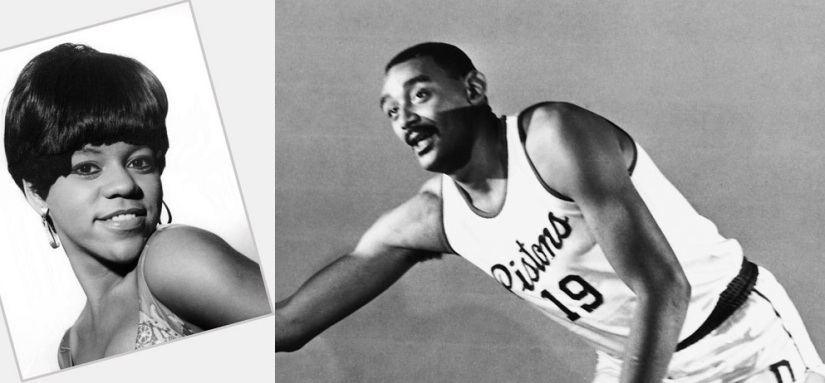
Detroit 7’0″ high school phenom Reggie Harding had a brief, but hauntingly promising, stint with our Pacers fifty years ago during the team’s first season in the upstart ABA. He had recently been cut loose by the Chicago Bulls after just 14 games into that milestone season of 1967-68. Harding had been the first player in the history of pro basketball to sign a contract as a high school player. He was selected by the Detroit Pistons and played parts of four seasons in the NBA. He lasted only 25 games with the Pacers; his career was over by the age of 26. He became legendary for his “world’s dumbest criminals” style antics off the court that began well before he left high school.
Here was a man who drew guns on teammates, became addicted to heroin and repeatedly robbed stores in his own neighborhood thinking no-one would ever finger him for the crimes despite being the only 7-foot tall black man in the area. He paid for his crimes with a bullet in the head fired by a man he believed was his friend and he died at the age of 30 on a trash strewn street in the Motor City on September 2, 1972. Although Reggie’s exploits are viewed somewhat comically after all these years, mainly because no one got hurt, there was at least one incident pinned on Reggie Harding that is sad and damaging in the worst way.
In 1960 Reggie Harding was a prep star for Eastern High School. The were in the second of four consecutive Detroit Public School League men’s basketball season titles from 1959-62. Reggie averaged 31 points and 20 rebounds per game while shooting an astounding 60 percent from the field for the Indians. He would earn first team high school All-American status by Parade Magaine that year. However, those sparkling hoops credentials weren’t enough to hide the tarnished image Reggie carried around with him.
While a Sophomore, Reggie had been arrested in upstate Michigan in the summer of 1959 for stealing a truck and was sentenced to probation. Reggie’s size (He was 6′ 11″ as a Freshman) taught him that he could intimidate adults on the streets, let alone kids in hall. If Reggie wanted your lunch money, or your car keys, Reggie got ’em. He didn’t even need a weapon. His most oft used tactic was to simply grab his prey by the shoulders and lift them several inches off the ground.
In 1960, when Reggie was eighteen, he was arrested for the charge of having “carnal knowledge” of a minor in Detroit. According to court records, the victim was a 15-year-old named Jean. During his trial for statutory rape, Harding admitted to the encounter but claimed in was a consensual act. At the time, Reggie Harding was ranked as the best prep player in the state and he was acquitted. That same year, Reggie allegedly raped a 17-year-old Detroit girl named Florence Glenda Chapman, better known as Flo Ballard of the Motown super-group The Supremes.
In 1958, Florence Ballard was a junior high school student living in the Brewster-Douglass Housing Projects in Detroit. There she met future singing partner Mary Wilson during a middle-school talent show and they became friends. Named “Blondie” and “Flo” by family and friends, Ballard attended Northeastern High School. Wilson soon enlisted another neighbor, Diana Ross, then going by “Diane” for their group named “The Primettes”. The group performed at talent showcases and at school parties before auditioning for Motown Records in 1960. Berry Gordy, head of Motown, felt the girls were too young and inexperienced and encouraged them to return after they graduated from high school. Flo dropped out of high school while her group-mates graduated.
In the summer of 1960, just weeks after meeting Berry Gordy, Flo went to a sock hop at Detroit’s Graystone Ballroom. She had attended with her brother Billy, but they accidentally lost track of each other in the crowded dance hall. She began to walk home in the dark but accepted a ride home from a young man whom she thought she recognized from the newspapers, a local high-school basketball player. According to her friends and family, that man was Reggie Harding. Instead of being driven home, Ballard was taken north of Detroit to an empty parking lot off Woodward Ave and Cantfield Blvd where Reggie raped her at knife point.
For the next several weeks, Ballard secluded herself in her room, away from friends and family. She even hid from her bewildered band mates when they came to call. Eventually, Ballard told Wilson and Ross what happened to her. Although the girls were sympathetic, they were puzzled by Ballard’s subsequent behavior; she had always been strong and resilient, but now her personality had changed. Wilson described her friend Flo as a “generally happy if somewhat mischievous and sassy teenager.” Now she was sullen and withdrawn, prone to sudden rages and arguments with no explanation. One thing didn’t change for Flo though, she never mentioned the rape again.
The girls continued working after the assault with Florence as the group’s original lead vocalist and Diana and Mary singing lead on alternating songs. Despite Berry Gordy’s reluctance to work with underage girls and admonition to come back after their high school graduation, the group persisted on getting signed to Motown by sitting on the steps of Motown’s Hitsville USA building and flirting with Motown’s male artists & staffers as they came and went. When a staff producer would come outside looking for people to provide background vocals or hand-claps, the girls were the first to volunteer. In January 1961, Gordy agreed to sign The Primettes on the condition they change their name. Flo Ballard chose the name “The Supremes”. Gordy agreed to sign them under that new name on January 15, 1961.
The group struggled in their early years with the label, releasing eight singles that failed to crack the Billboard Hot 100, giving them the nickname the “no-hit Supremes”. During this period, they provided background vocals for established Motown acts such as Marvin Gaye and Mary Wells. In the spring of 1964, the group released “Where Did Our Love Go”, which became their first number-one hit on the Billboard Hot 100, paving the way for ten number-one hits recorded by Ross, Ballard and Wilson between 1964 and 1967.
According to Mary, Florence’s vocals were so loud that she was made to stand seventeen feet away from her microphone during recording sessions. Florence’s voice (which went up three octaves) was often described as “soulful, big, rich and commanding,” ranging from deep contralto to operatic soprano. Flo was known for her trademark onstage candor (which included telling jokes), she became popular with audiences & most of the jokes were in response to Diana Ross’ comments. As Flo’s jokes became more frequent, Miss Ross was not amused. Florence acknowledged the widening gap between the trio when she told an interviewer that she, Diana & Mary now had their own hotel rooms unlike in the past when they all shared one room. To combat these issues and silence those demons from her past, Florence turned to alcohol which resulted in constant arguments with Mary and Diana. Flo’s shot clock was winding down.
Eerily, Reggie Harding’s rise in pro basketball paralleled Flo Ballard’s rise in the music industry. Reggie was signing with the hometown Pistons at the same time Flo was signing with the hometown Motown records. By 1967-68 while Reggie was struggling with the Bulls, Flo was struggling with The Supremes. As Reggie missed practices and plane rides, Flo missed rehearsals and performances. By March of 1968, Reggie was out of pro basketball and Flo had left The Supremes. Both became addicts; Harding to heroin, Ballard to alcohol. By 1972 Harding was dead and Ballard was on a slow march towards an early grave.
Mary Wilson would later attribute Ballard’s self-destructive behavior to the rape by Reggie Harding when she was a teenager. Ballard’s adult personality had turned to cynicism, pessimism and fear or mistrust of others. After Harding’s murder vacated the headlines, newspapers revealed that former Supreme Flo Ballard, with three children and no career, had now applied for public welfare relief. As a member of The Supremes, Flo sang on sixteen top-40 singles (including ten number-one hit songs). In January of 1969, Florence performed at one of President Richard Nixon’s inaugural galas. Two years later, Flo’s home was foreclosed and she was an alcoholic. Florence Ballard died at 10:05 a.m. on February 22, 1976; her official cause of death, following years of alcoholism and mental stress, was coronary thrombosis aka: a heart attack. She was only 32 years old. Florence is buried in Detroit Memorial Park Cemetery located in Warren, Michigan. Florence Ballard’s grave is just a short walk from Reggie Harding’s, who is buried nearby.

ABA-American Basketball Association, Indianapolis

Reggie Harding: ABA Indiana Pacers’ 1st 7-Footer. Part I

Reggie Harding 1Original publish date:  March 12, 2017

The Indiana Pacers are winding down another season and the playoff situation remains uncertain. This season marks the 50th anniversary of the franchise’s start in the old ABA. It was about this time of year a half century ago that the Pacers signed one of the most infamous names to ever blot the roster. A 7-foot tall high school star from Detroit, Michigan who certainly became more famous for what he did off the court than for we he did on it.
Reggie Harding was the very first high-school basketball player drafted by the NBA. He graduated from Detroit’s Eastern High School in 1960 (re-named Martin Luther King High in 1968). The basketball talent coming out of Detroit in the sixties was astonishing. The Motor City hoops alumni back in the day included Spencer Haywood, John Brisker, Archie Clark, Dave DeBuschere, George Gervin, Ralph Simpson, and Mel Daniels to name but a few. Harding barely scraped by academically, so college was out of the question. He played briefly at a prep school in Nashville followed by two seasons on Midwest League teams in Toledo, Ohio and Holland, Michigan.
Unlike today, 7-footers were rare in sixties, and much prized by NBA teams hoping to clog the lane and blunt the likes of Wilt Chamberlain and Bill Russell. In 1963, the Pistons desperately needed a big man, so they drafted Reggie in the sixth round with the 48th overall pick, making him the first player ever drafted who hadn’t played in college. Harding made his NBA debut with the Pistons in the 1963-1964 season, joining the team late in the year because of a suspension on gun charges.
He played 39 games that year, averaging 11.0 ppg and 10.5 rpg. The next season, Harding averaged 34.6 minutes in 78 games and scored 12.0 ppg while pulling down 11.6 rpg for a Pistons team that finished fourth in the Western Division. When Harding joined the Pistons as a rookie in 1963, he roomed on the road with veteran 6’9″ power forward Ray Scott. During an 11-year career in the NBA and ABA, Scott played for the Pistons, Baltimore Bullets, and Virginia Squires. Scott coached the Pistons from 1972 to 1976 and in 1974, he was named NBA Coach of the Year, the first African-American to be so honored. Scott was an intellectual who favored books about the Civil Rights struggle in America.
In 1965, Reggie Harding noticed that Scott was reading The Autobiography of Malcolm X by Alex Haley and asked to read it after he finished. Turns out Reggie would have plenty of time to read it since he was suspended for the entire 1965-66 season (most likely due to ongoing gun charges because Reggie was never far from a gun). The book had a profound affect on Reggie and his views on life became more serious and his behavior more demonstrative. It didn’t help his game much though as Reggie averaged only 18.5 minutes per game during the next season, recording 6.1 rebounds and 5.5 points per game. The Pistons traded him to the Chicago Bulls for a third-round draft pick in 1967 where he lasted only 14 games. In four seasons with the Pistons and Chicago Bulls, Harding averaged 9.0 points and 9.1 rebounds per game.
It was common knowledge by all who knew him that Reggie carried a gun in his gym bag wherever he went. He was known for finishing practice and leaving without showering, pausing only to towel the sweat and spin the cylinder on his revolver. Once while playing in Detroit, Harding was said to have shot at teammate (& former Purdue All-American) Terry Dischinger’s feet to make him “dance.” During his brief tenure with the Bulls, Reggie often played one-on-one with Bulls star Flynn Robinson. Flynn would routinely beat him and Reggie would threaten to pistol whip him. Flynn was Reggie’s roommate and recalled once being startled awake in the pitch dark to find Reggie pointing a gun at him. Flynn was averaging 16 points per game, Reggie less than 5, so it isn’t hard to figure out what happened next.
During a West Coast road trip, Harding was called home for his mother’s funeral. For the next 10 days, the Bulls didn’t hear from him. Finally he returned, saying that he had been appointed executor of his mother’s estate and needed the extra time away. A few days later, the Bulls placed Reggie Harding on waivers. Then the Pacers came calling.
During that first ABA season, the Pacers started out well, going 18-7 but started to lose ground to the rest of the league by mid-season. Bob Netolicky, a 6’9″ star from Drake University, was holding down the center spot. Despite his prodigious vertical leaping ability, Neto’s game was better suited for the forward slot and with about 30 games to go, Neto caught the mumps. So the Pacers saw an opportunity when the Bulls handed Harding his walking papers. Pacers GM Mike Storen and team co-founder Dick Tinkham met Harding at the airport at 5 am. The duo was due to board a plane with the team for an away game at 9:30.
Reggie Harding sat down with the Pacers’ duo in an airport coffee shop booth and listened disinterestedly until the subject of money came up. The Pacers reps explained that since there was less than half the season left, the team would pay Reggie $ 10,000 to sign. Reggie scoffed saying that if they signed him the Pacers were guaranteed to win the Championship. Reggie replied, “They can talk about black power and white power. I believe in green power: money, man, money.” Reggie countered with a bottom line figure of $ 15,000. Tinkham, true to his shrewd reputation, offered $ 300 per game adding, that if what Reggie said was true, the Pacers had 30 games left in the season and another 20 in the post season. $ 300 for 50 games adds up to Reggie’s desired number. Reggie signed and dressed for that night’s game. The deal, like Tinkham himself, became a Pacer’s legend,
Harding was a problem from the start beginning with his refusal to wear a suit and tie on the plane to the game. Instead he wore his uniform. From there, Reggie skipped practices, arrived late for team flights and once requested leave from the team saying he had to go to his daughter’s funeral. Problem was, Reggie didn’t have a daughter. Perhaps the most famous Reggie Harding Pacers story comes from Kokomo prep star & I.U. 2-time All-American Jimmy Rayl. While rooming with Reggie on the road one night, Rayl was asleep in the darkened room. He heard the door open and saw the silhouette of his 7-foot roomie walk through the door. Moments later, Reggie clicked the light on, Rayl opened his eyes and found he was staring down the barrel of a gun. Reggie accused Rayl of being a racist, which Jimmy is not, and after a long conversation, Reggie put his gun down. Jimmy Rayl slept in the lobby that night.
The Pacers finished the season 38-40 and played just three postseason games; losing each game by double digits to Connie Hawkins’ eventual ABA champion Pittsburgh Pipers team. Reggie’s game total didn’t really matter because between the fines for missed practices, suspensions and arriving late for flights, Harding ended up owing the Pacers $400. During that abbreviated 1967–68 season with the ABA Pacers, Harding averaged 13.4 points and 13.4 rebounds in 25 games. Obviously, Reggie Harding did have occasional flashes of brilliance. The Pacers’ first triple-double came courtesy of Reggie Harding when he had 30 points and 22 rebounds on March 14 against Mel Daniels and his Minnesota Muskies. Although blocked shot stats were not kept back then, the newspaper account of the game stated Harding “pounded at least 10 shots back at the stunned Muskies.” His capstone for his Pacers career came when, during a television interview, Reggie threatened to shoot Pacers’ general manager, Mike Storen.
Reggie Harding’s once promising pro career was done by the time he was 26. With no other marketable skills, Harding returned to small time cons and petty larceny on the mean streets of Detroit. He quickly fell in with the wrong crowd. The sad after-basketball life of Reggie Harding is perhaps best exemplified by one oft repeated story. Reggie walked into a neighborhood establishment (described variously as either a liquor store or gas station) with a nylon stocking over his head, brandishing a gun and demanding money. The clerk took one look at the 7-footer and reportedly said, “I know that’s you, Reggie,” to which Harding replied, “It ain’t me, man. Shut up and give me the money!” Legend has it that Harding robbed that same gas station in his own Detroit neighborhood a total of three times.
Reggie Harding’s post-basketball career was plagued by a number of personal problems. He spent time in jail and often struggled with drug addictions. But he was turning his life around. He had kicked his heroin addiction, was jogging and playing basketball every day and talking to friends about an NBA comeback. He was scheduled to start a new job in the Fall. Reggie had been raised by foster parents but had recently reconnected with his mother, Lilie Mae Thomas. In August of 1972, Lillie Mae was shot and killed by her husband. Witnesses remembered Reggie standing at his mother’s graveside and telling the preacher how he wanted to be buried.
On September 2, 1972, Harding was standing on the corner of Parkview and Kercheval talking to a couple of girls. A car pulled up and parked nearby. 26-year-old Carl Scott, a former friend of Reggie’s, stepped out, walked up and pointed a gun at the former NBA player. Reggie thought he was joking (he’d just taken Scott to church with him the Sunday previous) and said, “If you shoot me, shoot me in the head. I don’t want to feel no pain.” On his way down to the ground, Reggie cried out, “Why? Why? Man you shot me.” Reggie Harding died on the litter strewn sidewalks he had grown up on. A warrant for First Degree Murder was issued for Carl Scott but the outcome of charges, if ever brought, are unknown.
Reggie Harding was dead at the age of 30, a bullet through his skull and brain. Mike Storen, the Pacers’ General Manager who Reggie had threatened to shoot 4 years before, was one of only three white people to attend the funeral. When the funeral party arrived at the Greater Mount Carmel Baptist Church, it became apparent that the 7-foot tall Harding’s grave, like his life, was too short. The large casket had to be buried at an angle in the plot. Reggie’s body was laid to rest near the burned out shell of the old Eastern High School Building where Reggie gained fame as a prep star. Seems that, even in death, Reggie Harding couldn’t catch a break.
Next week, in part II of this story, Reggie Harding’s other connection to Motown.

Creepy history, Ghosts

The Spooky “Hidden Mother” Photo.

Hidden Mother photo side blanketOriginal publish date:  August 21, 2015

If you like haunting antique shops and shows like me, I’m about to give you a new hobby, or at the very least blow your mind a little. Next time you find yourself walking by a table with a shoebox full of old CDV’s, tintypes and cabinet photos (they seem to appear everywhere) pick them up and look carefully at the photos of small children and babies. You might just find a “Hidden Mother” in one them.
Back in the stone ages before the advancement of digital imaging, cameras required film which then required development at a photo lab. The lab would take the film, create a negative, print your image and Eureka, you had a photo you could actually hold in your hands, not just look at on a screen. The first practical digital cameras started popping up in the 1980s, but before that, there was no “photoshopping” people out of negatives. True, negatives from commercial cameras from the 1930s on could be manipulated by the skillful use of a razor blade and a re-shoot, but they were clunky and easy to spot. In the case of Civil War Era CDVs (Carte de Visites) and tintypes or Victorian Era Cabinet photos, editing was nearly impossible, so other methods were utilized. In early photographs, a subject had to sit still because of long camera exposure times, usually 10-15 seconds depending on the lighting.
The longer the exposure, the better the image. That is, of course, unless the subject was a squirming baby, distracted pet or active small child. In those instances, these subjects were sometimes held in a deftly disguised lap or reassured by a disembodied adult hand just out of range of the camera lens. In some cases , this was accomplished using a photographer’s assistant but in most cases it was a relative, a nanny, or father, but primarily it was the child’s mother. Collectors make no distinction and photos of this description are always known as “hidden mother photographs” of “hidden mama photos.”
Back in the horse-and-buggy days there were really only a few ways to have your picture made. You either visited a photography studio (every town had one), went to an event like a Carnival, Amusement Park, State or County Fair to visit the photographer’s tent, or took advantage of traveling photographers who routinely roamed the back roads (often with an adorable pony in tow) to make a picture of the family for a quarter. Since many parents wanted photographs showing only the children, photographers had to get creative to block out the person in charge of corralling the child.
This was accomplished a couple of ways: a mother would drape herself in fabric and hold the squirming child on her lap or she would attempt to hide herself out of the camera’s view. This resulted in photos that at best subtly hid the caretaker from view or, at worse, created an image that looked looked like there was a creepy old ghost in the room. In in the case of the undisguised “hidden mama”, the mother’s features were confined to a far edge or an upper corner, that way, after the photo was developed, it could be placed behind an oval mat or frame which would crop out the mother, thereby deceiving the viewer into thinking the child was posing alone.
There were many techniques used to disguise the mother and a good photographer could make her nearly invisible, but she was never quite completely gone. If you look closely, you’ll see a hand, a set of fingers or the outline of an arm (sometimes the silhouette of an entire body) hidden within the photo. Just as digital photography changed the camera industry forever, improvements in technology led to exposure time being drastically cut down from minutes to seconds by the close of 19th century. Those uncomfortably long exposure times gave us some unmistakable Victorian Era photography peculiarities that you’ll find in every photograph from that age, regardless if you’re lucky enough to find a “hidden mother” photo or not. These include the stiff postures and unsmiling faces of subjects trying to remain perfectly still during the excruciatingly long time it took for the photographer to remove the lens cap and expose the film. Having had several of these photos made of me and my family over the years, I can testify that you can remain itch free for hours until the moment that a box camera photographer tells you “Okay, stand still” and counts off the seconds. One unconscious twitch or involuntary movement would result in a ruined picture. You could blink your eyes and not have it appear in the finished photo, but that was about it.
Now that you know about these photos, I suspect you’ll start looking and finding them on your own. Obviously, you first need to find an old fashioned photo of a child, but failing that, you can also look at the photos of the adults, usually when they are posed standing alone in a studio. Sometimes, the cast iron photographer’s stand can be seen behind them. Look first at the floor behind the subject’s feet and then look at the neck. These bulky stands looked like an old floor lamp with tripod footing and a U-shaped topper that was placed behind the neck to hold the subject still. Most of these are subtle, but some are quite obvious when you know what to look for.
In the case of “hidden mother” photos, the mother is most often “seen” disguised as a chair or camouflaged under decorative throws behind or holding the child. The throws can be as simple as a black or white tablecloth (the white tablecloths REALLY making it look like a ghost) or bulky Persian rugs and drapes with heavy backings that surely made the “disguisee” herself wriggle uncomfortably during the process. Another interesting subset of the “ghost mother” phenomenon has developed more recently. That is the debate among fans of this type of photo asking, is the child dead or alive?
Post Mortem photos were very popular during the same era. While the practice of taking a photo of a dead person, particularly an infant, appears macabre, perhaps repulsive, to people today, it has a plausible explanation. The Post Mortem photo was often the only photo the family had of that person. Most of these photos are of the very old or the very young. The argument in the late 1800s to early 1900s was that elderly folks were born before the advent of commercial photography and usually lived their entire lives in rural settings with no opportunity, or need, for a photo to have ever been attempted of them. For babies and small children, the argument would be that parents believed there would be plenty of time to have photos made of the kids down the line. An unexpected, early death would hasten that schedule.
Quite obviously it would be highly unusual (and very creepy) to find a hidden mother in the photo of an adult. But not so unusual in the instance of a photo of a dead child. Grief and mourning for lost children was the same then as it is now. Depending on the timing of the sad event, the parent may have been reluctant to allow the child to be removed from their clutches while awaiting burial, particularly in the very early stages of infant death. The principal question is, if the child is dead and not moving, why is the mother hidden?
Well, just as photographers used cast iron braces, officially known as “posing stands”, to keep a wavering subject steady during the prolonged exposure process, perhaps the “hidden mother” was used for the dearly departed child because the parent refused to have their baby propped up by cold steel. After all, a concerned mother would want her precious child to appear as lifelike as possible and in fact many Post-Mortems have accomplished just that and are hard to distinguish by any but the most expert eye.
I’ve included a trio of photos of the “hidden mother” variety for you to see. But there is at least one obvious example of a Post Mortem hidden mama photo that you can easily view on the net by simply typing “hidden mother Post Mortem” into your browser bar. I decided to omit that photo from this article for the sake of propriety choosing instead to let you the reader make that choice for yourself. So if there is one obvious example of a Post Mortem “hidden mama”, there surely must be more. Regardless, the next time you pass one of those shoeboxes full of old photos invariably marked as “Instant Relatives”, pick up a stack and peruse them. Pay close attention, you might just find a “hidden mother” of your own.