
Original publish date: October 16 2011
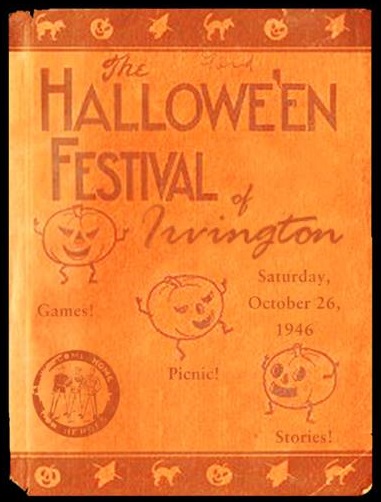
Next week, once again, Irvington will celebrate “All Hallows Eve” better than anyplace else in the Hoosier state by hosting the 65th annual Halloween Festival. Trick-or-treating, window painting, house decorating, and a costume parade down the middle of Washington Street are all cherished traditions eagerly anticipated by the participants involved. But what about that first Halloween festival back in 1946? What was that like? And most importantly, were Irvingtonians breaking the law by hosting it?
 We’ve all heard the stories, legends and rumors surrounding that now legendary first event. It was sponsored by the Walt Disney company featuring costumed characters with a Disney based theme. The Disney folks gave away potentially priceless hand painted film production cels right here on the streets of old Irvington town. Walt Disney himself was seen walking down Audubon with Mickey Mouse at his side. It’s hard to separate fact from fiction nowadays.
However, a good place to start would be the history books. What was going on in the world back in October of 1946? Mensa was founded in Great Britain and the United Nations held its first meeting on Long Island. World War II ended a year before, yet the Nuremberg War trials concluded with the execution of ten German war criminals just two weeks before the festival. Among the adolescent ghosts and goblins wandering the streets of Irvington 65 years ago was a spectral leftover from the second world war looming menacingly over the costumed treat seekers. The specter of Sugar rationing. Really? Sugar rationing on Halloween?
When the empire of Japan conquered the Philippine Islands in the early months of 1942 the United States lost a major source of it’s national sugar imports. Sugar shipments from Hawaii had already been curtailed by fifty percent when cargo vessels typically used for transporting sugar from the islands to the mainland were diverted for use by the military. Seemingly overnight, U.S. sugar supply fell by more than one-third. To ensure adequate supplies for manufacturers, the military, and civilians, sugar became the first food item to be rationed during the war. Manufacturers’ supplies were reduced to 80 percent of pre-war levels and that percentage was further reduced over time.
On April 27, 1942, Irvington families registered for ration books at the local elementary schools. One book was issued for each family member. To prove they were serious about wartime rationing, the US Government required that these books were to be surrendered upon death of the recipient. In a drastic move that harkens back to FDR’s closure of the banks and financial institutions during the Great Depression, the sale of sugar was halted for one week to prepare for the program. During that sugarless week, to discourage hoarding, each family was required to report how much sugar they had on hand and a corresponding number of stamps were removed from the ration book.
 A week later on May 5, 1942, every United States citizen received their much anticipated “War Ration Book Number One”, good for a 56-week supply of sugar. Initially, each stamp was good for one pound of sugar and could be redeemed over a specified two-week period. Later on, as other items such as coffee and shoes were rationed, each stamp became good for two pounds of sugar over a four-week period. The ration book bore the recipient’s name and could only be used by household members. Stamps had to be torn off in the presence of the grocer. If the book was lost, stolen, or destroyed, an application had to be submitted to the Ration Board for a new copy. If the ration book holder entered the hospital for greater than a 10-day stay, the ration book had to be brought along with them. Talk about your red tape!
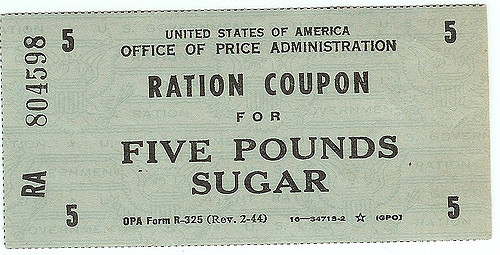
Housewives learned to be creative, using saccharine, corn syrup, and even packets of Jell-O as sugar substitutes. Sugar beets became a staple of nearly every American dinner table. Women’s magazines featured recipes with reduced sugar or creative ingredient substitutes. “Victory Gardens” sprung up all over the cities and home canning was strongly encouraged during the war. However, canning requires sugar and to provide for this patriotic need, each person could apply for a one time only 25-pound allotment of lower grade canning sugar each year. Each local war ration board determined the quantity and season of availability based on the local harvest. A special canning sugar stamp was issued and included in the ration book. This special “spare canning sugar stamp 37” had to be attached to the government application. Problem was, that they looked exactly like the household sugar stamp and confusion reigned as many people mistakenly used the regular sugar stamp 37 in it’s place, invalidating it for normal household purchases. Did I mention the red tape?
 To make matters worse, just because you had a sugar stamp didn’t mean sugar was available for purchase. Shortages occurred often throughout the war, and in early 1945 sugar became nearly impossible to find in any quantity. As Europe was liberated from the grip of Nazi Germany, the United States took on the main responsibility for providing food to those war ravaged countries. On May 1, 1945, the sugar ration for American families was slashed to 15 pounds per year for household use and 15 pounds per year for canning – roughly eight ounces per week per household. Sugar supplies remained scarce and, just as sugar had the distinction of being the first product rationed at the start of the war, sugar was the last product to be rationed after the war. Sugar rationing continued until June of 1947, over six months after the first Irvington Halloween festival in October of 1946.
So, knowing this, can it be said that every sugary sweet handed out to euphoric trick-or-treaters in Irvington during that first festival was a violation of Federal law? Technically yes, but in reality, it might best be compared to ripping the tag off of your mattress today. Never fear, Irvington is not Australia and you are not descended from a colony of law breakers and felons. By the time of that first Irvington Halloween Festival, war time rationing was on the wane and most Americans were eager to celebrate after a long, hard fought war, too enraptured with the outcome, and their personal survival, to care much about wartime shortages. As evidence, one need look no further than the baby boomer generation, a direct bi-product of that euphoria.
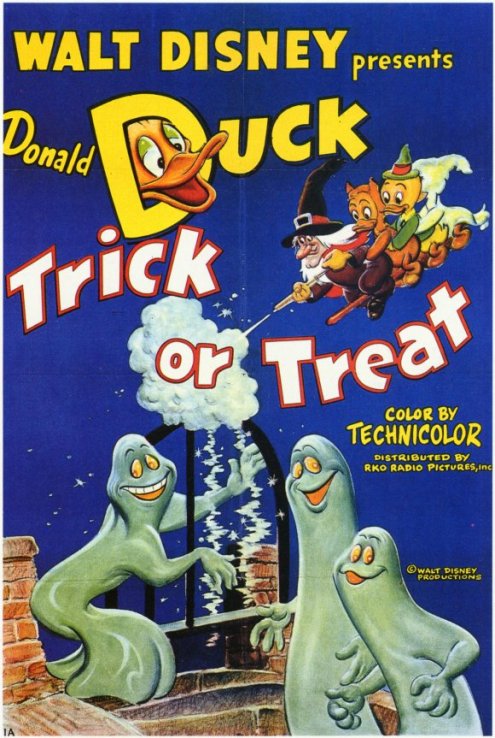
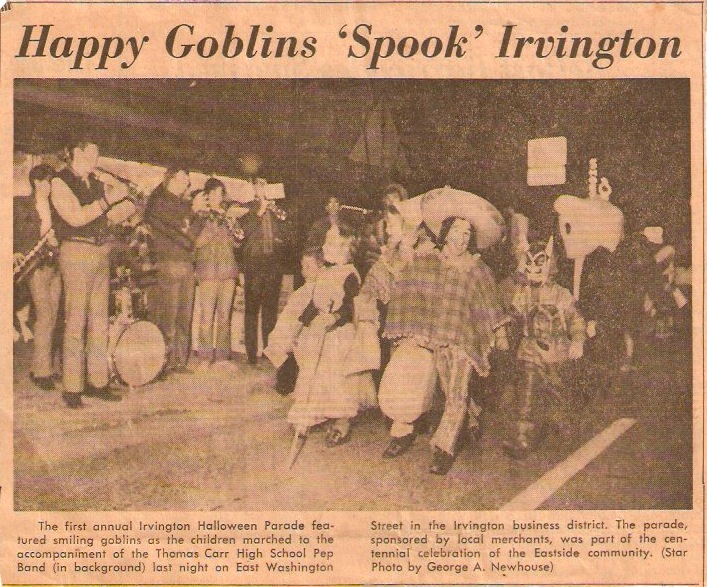 An argument can be made that it was events like the First Irvington Halloween Festival that kicked off the tradition of trick-or-treating as we know it today. Although the Halloween holiday was certainly well known in America before that first Irvington celebration, it was predominantly a holiday for adult costume parties and a chance to cut loose with friends playing party games while consuming hard cider. Early national attention to trick-or-treating in popular culture really began a year later in October of 1947. That’s when the custom of passing out the playful “candy bribes” began to appear in issues of children’s magazines like Jack and Jill and Children’s Activities, and in Halloween episodes of network radio programs like The Baby Snooks Show, The Jack Benny Show and The Adventures of Ozzie and Harriet. Trick-or-treating was first depicted in a Peanuts comic strip in 1951, perhaps the image most identified with the children’s holiday in the hearts and minds of baby boomers today. The custom had become firmly established in popular culture by 1952, when Walt Disney debuted his Donald Duck movie “Trick or Treat”, and again when Ozzie and Harriet were besieged by trick-or-treaters on an episode of their popular television show. In 1953, less than a decade after that first festival in Irvington, the tradition of Halloween as a children’s holiday was fully accepted when UNICEF conducted it’s first national children’s charity fund raising campaign centered around trick-or-treaters.
 Most of this column’s readers are aware that part of my passion for history revolves around collecting, cataloging, displaying and observing antiques and collectibles. There exists in the collecting world a strong group of enthusiasts devoted to the pursuit and preservation of Halloween memorabilia of all types. Costumes, decorations, photographs, publications and postcards in particular. The origins of Halloween as we now know it might best be traced in the postcards issued to celebrate the tradition. The thousands of Halloween postcards produced between the turn of the 20th century and the 1920s commonly show costumed children, but do not depict trick-or-treating. It is believed that the pranks associated with early Halloween were perpetrated by unattended children left to their own devices while their parents caroused and partied without them. Some have characterized Halloween trick-or-treating as an adult invention to curtail vandalism previously associated with the holiday. Halloween was not widely accepted and many adults, as reported in newspapers from the 1930s and 1940s, typically saw it as a form of extortion, with reactions ranging from bemused indulgence to anger. Sometimes, even the children protested. As late as Halloween of 1948, members of the Madison Square Boys Club in New York City carried a parade banner that read “American Boys Don’t Beg.” Times have certainly changed since that first Halloween festival 65 years ago.
 A 2005 study by the National Confectioners Association reported that 80 percent of American households gave out candy to trick-or-treaters, and that 93 percent of children, teenagers, and young adults planned to either venture out trick-or-treating or to participate in other Halloween associated activities. In 2008, Halloween candy, costumes and other related products accounted for $5.77 billion in revenue. An estimated $2 billion worth of candy will be passed out during this Halloween season and one study claims that “an average Jack-O-Lantern bucket carries about 250 pieces of candy amounting to about 9,000 calories and containing three pounds of sugar.” Yes, 65-years ago, Halloween looked quite different than it does today. Next week, doorbells all over Irvington will ring, doors will be opened and wide-eyed gaggles of eager children will unanimously cry out “Trick-or-Treat” from Oak Avenue to Pleasant Run Parkway.
 Costumed kids will be rewarded for their efforts with all sorts of tribute in the form of coins, nuts, popcorn balls, fruit, cookies, cakes, and toys. As a casual observer born long after that first Irvington Halloween Festival and an active participant in the festivities that will begin next week, I’m glad that our Irvington forefathers skirted government regulations all those years ago. In fact, as a fan of all things Irvington, I’d go so far as to say that this community has played a big part in the Halloween holiday as we know it today. Because, grammar notwithstanding, nobody does Halloween like Irvington do.

 My first thought, where the heck is Bloomfield, Indiana? Well, if you didn’t know, it is a small town of some 2,400 people located in Greene County not far from, and currently considered a part of, Bloomington. Its best known for having one of the most well preserved covered bridges in the state and for its long association with the Native American Indian tribes including the Miami, Kickapoo, Piankeshaw, and Wesa tribes. That settled, I was on to the next question. What is this thing? I’m guessing some of you already know the answer, but it was unknown to me. It is a book, distributed by the electric company to their wartime, homefront customers to read their own meters and pay the fees associated with usage based on the honor system. That’s right, the honor system. With the electric company. An Oxymoron if you ever heard one right?
 The customer would record the electricity their household used, pay the bill, and the electric company trusted them. Seriously? The electric company…trust you? Could that be possible? Can you imagine such a system? I gotta tell ya, when I see things like this I’m convinced that I was born in the wrong era. I must admit, I’m one of those people that believes that the World War II Generation was truly our greatest. Life was simpler, people were nicer, and businesses were staffed by friends and neighbors who were really rooting for our success. Whenever I see things like this I realize that back then, everyone pulled together to do their part. All for one and one for all. Corny, but true. I didn’t realize that this little booklet was a first generation relic of the rural electrification movement that began in 1935 as part of an effort to bring electricity, telephone and indoor plumbing to the rural communities all over the state. Something we take for granted today.


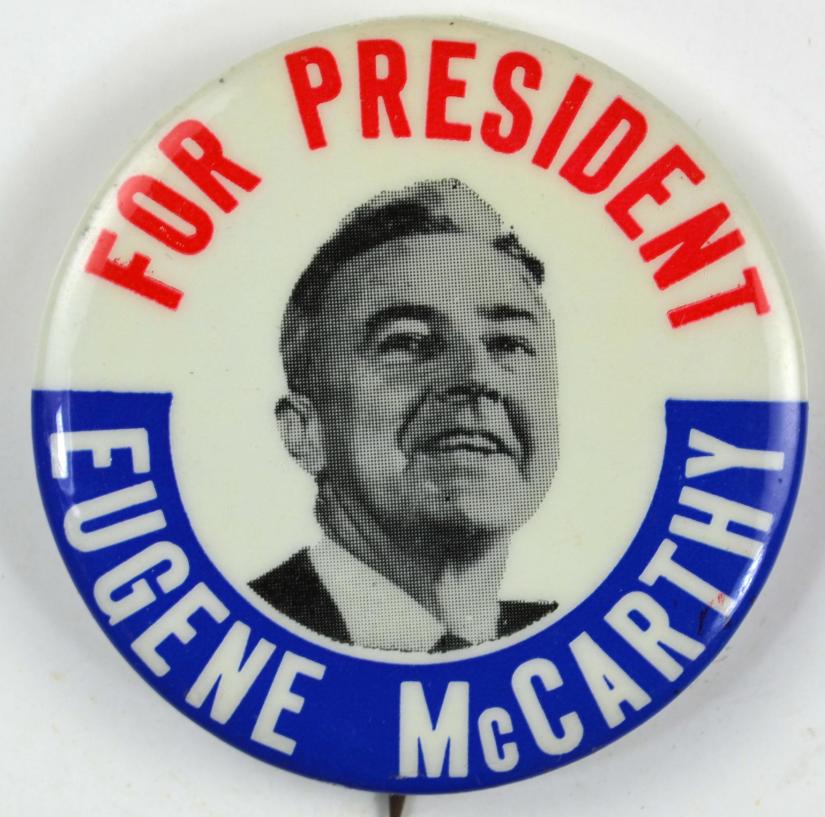
 To be sure, Minnesota has given us very normal politicians like Lyndon B. Johnson’s Vice-President Hubert H. Humphrey and Jimmy Carter’s Vice-President Walter Mondale and Senator Eugene McCarthy. All 3 men ran for President (Humphrey and McCarthy against each other in 1968) and all 3 men lost. Although mainstream, all 3 were unconventional in their own ways. McCarthy was the grandfatherly looking darling of the Anti-Vietnam War Hippy protesters, most of whom were one third his age. Humphrey was a peace seeking dove who became the hawkish voice of the LBJ administration during the Vietnam War. And Mondale was the first to chose a woman as his running mate (Geraldine Ferraro 1984).
 You may not realize just how prolific Minnesota has been in baby boomer’s collective national political conversation until you realize that Mondale, McCarthy or Hubert Humphrey were on the Democratic ticket as candidates for President or Vice President in the 1964, 1968, 1972, 1976, 1980, 1984, 1988 and 1992 elections. Minnesota is known for a politically active citizenry, with populism being the driving force among the state’s political parties. Minnesota has consistently high voter turnout, in the 2008 U.S. presidential election, 77.8% of eligible Minnesotans voted – the highest percentage of any U.S. state or territory – versus the national average of 61.7%.
 The history of Minnesota electing non-conventionals goes back to 1876 when the state elected John Pillsbury as their 8th Governor. Name sound familiar? Yes, he was the namesake of the Pillsbury doughboy and served from 1876 to 1882. He died in 1901. Following the food theme, Minesota also elected Frank B. Kellogg tot he Senate in 1916. No, he wasn’t the cereal guy, but he did become Secretary of State, British Ambassador and a Nobel Prize winner in 1929.
 Then came (and came-and came-and came) Harold Stassen, Minnesota Governor (it’s youngest ever) from 1939 to 1943. Stassen was a candidate for the Republican Party nomination for President nine times between 1944 and 1992 (1944, 1948, 1952, 1964, 1968, 1980, 1984, 1988, and 1992). He never won the Republican nomination, much less the presidency; in fact, after 1952, he never even came close, but continued to campaign actively and seriously for President until just a year before his death. When you add Stassen’s name alongside those of McCarthy, Mondale and Humphrey, a Minnesotan was on the ballot for every Presidential election for six decades.
 Then came Jesse Ventura. The former navy seal turned pro wrestler known as “The Body” was born James George Janos in Minneapolis in 1951. In the Minnesota gubernatorial election of 1998 he was elected the 38th Governor of Minnesota and served from 1999 to 2003 but did not seek a second term. Ventura ran as a candidate for the Reform Party of Minnesota. Ventura went on to gain the highest approval rating of any governor in Minnesota history, with some polls ranking his public approval as high as the 73% in 1999. Ventura is widely regarded as one of the first candidates to effectively use the Internet in a national political campaign.
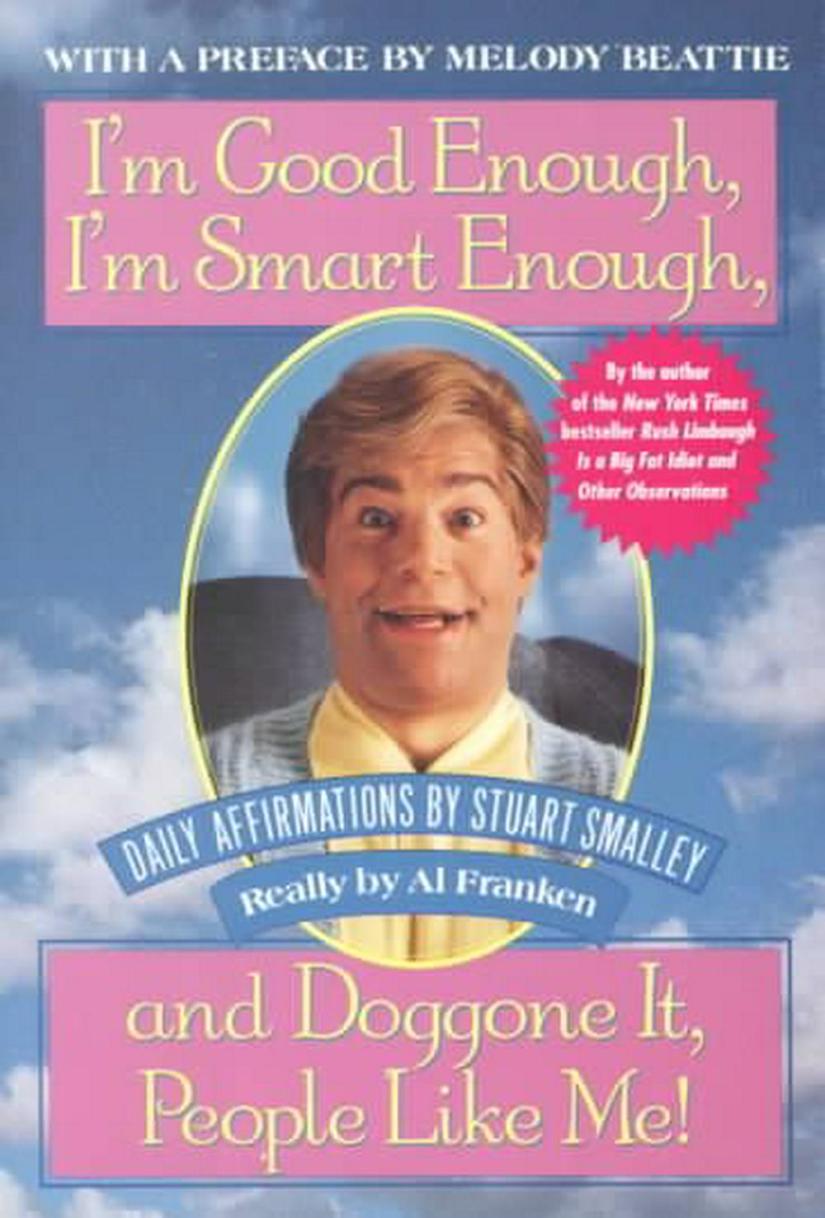 Franken then hosted a nationally syndicated, political radio talk show, The Al Franken Show, and authored six books, four of which are political satires critical of conservative politics. The success of his radio show and books led Franken to run for the U.S. Senate. Franken’s narrow victory was challenged but upheld. The most famous incident that emerged revolved around a ballot that would come to epitomize Franken’s victory. It was a ballot that had been marked twice, once for Franken and once for a write-in candidate known as “Lizard People.” This ballot gained infamy, not only for the absurd nature of a vote being cast for Lizard People but also for whether it should be counted for Franken or for lizard people. Eventually, the ballot was thrown out altogether. Franken was sworn into the Senate on July 7, 2009 (seven months after the congressional session had started) and was re-elected to a second term in office in 2014.


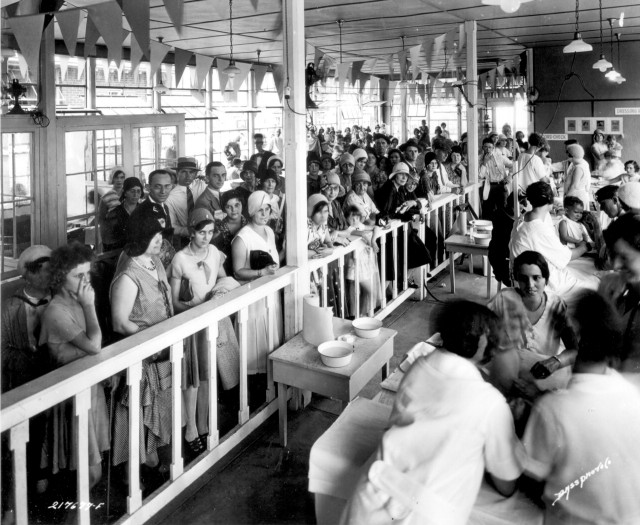
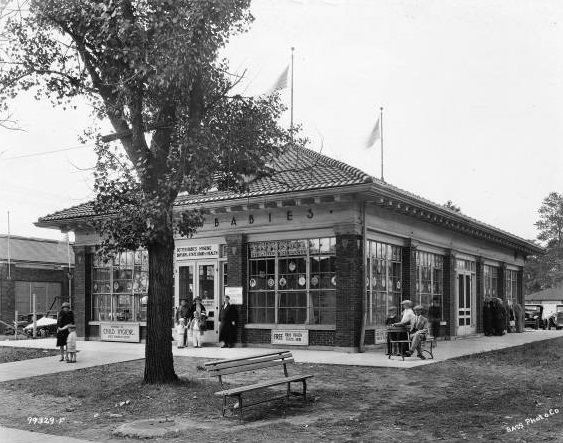
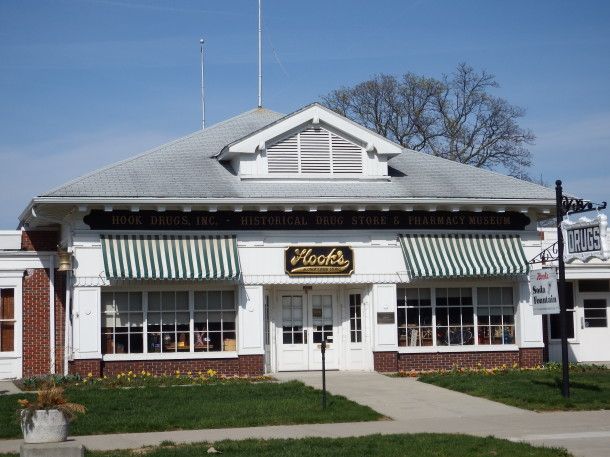

 If the criteria were based solely on demography and topography, Indiana was the perfect test case for the larger National Eugenics movement. In 1920, the state’s population approached 3 million residents, 95% of whom were native-born and 97% of whom were White. The bulk of Indiana’s African American and immigrant communities lived in segregated communities within the cities of Indianapolis, Gary, and East Chicago. Unlike other more racially diverse, multilingual states such as New York, Illinois, and California, Indiana’ Eugenics project did not have to translate their message into foreign languages or tailor their “Americanization” campaigns to foreign speaking populations. Instead, the Hoosier project targeted poor and working-class Whites, especially impoverished farm dwellers living in undeveloped rural communities. (Keep in mind that most rural Hoosier farms and homes did not have indoor plumbing or electricity until the 1940s.)
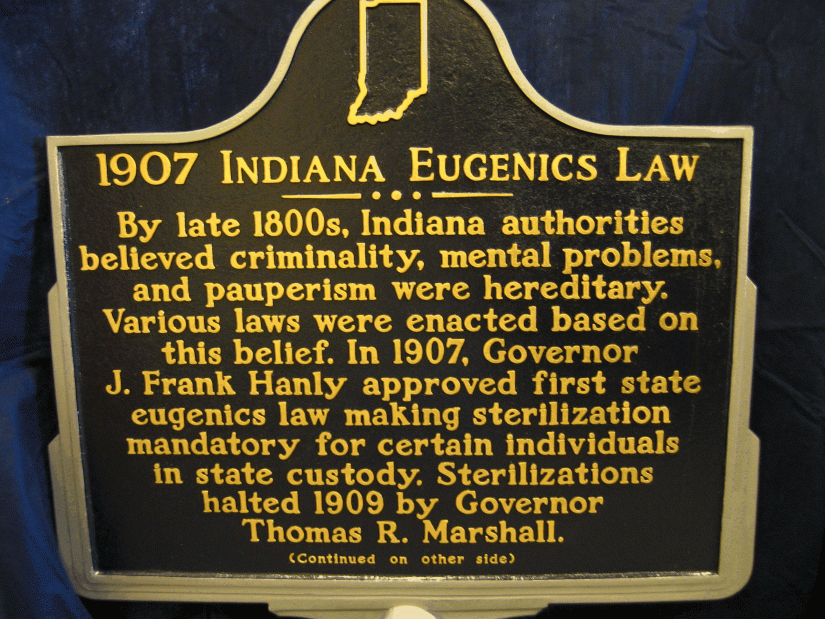 As a Hoosier, although others may argue otherwise, the connection between Eugenics and the Ku Klux Klan cannot be denied. Implicit to be sure, both organizations shared undeniable common goals, the first being the assurance of racial purity and the second being the improved survival of the Anglo-Saxon race. Luckily for us, the fall from favor of the Eugenics movement in our state and nation coincides with the fall of the KKK.
 The sad truth is that 2,424 people were medically sterilized in Indiana institutions. There was near parity between males and females in that number: 1,167 males and 1,257 females were sterilized. 1,751 of these people were considered mentally deficient and 667 mentally ill. That figure does not reflect the number of sterilizations performed in the years before the law was passed. As many as 800 of those sterilizations were carried out in the Indiana State Reformatory by one man, Dr. Harry Sharp. It was Dr. Sharp who is credited with performing the very first vasectomy in the United States and the procedure has changed little since he created it in 1899.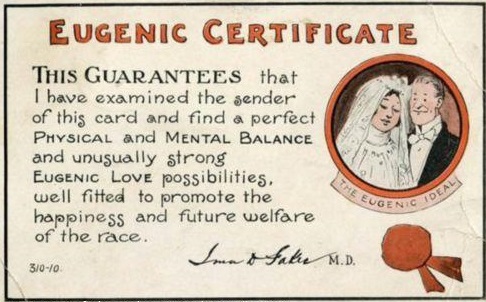
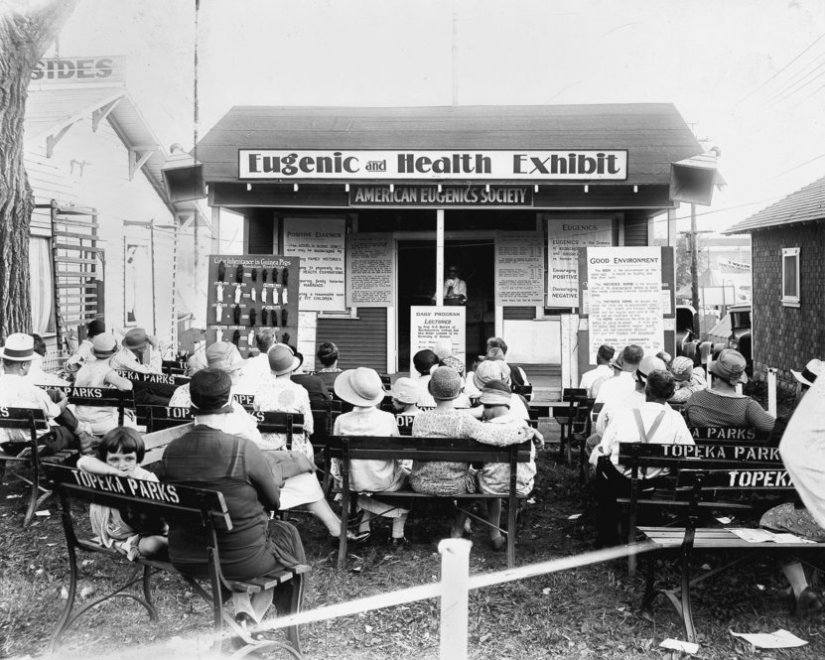
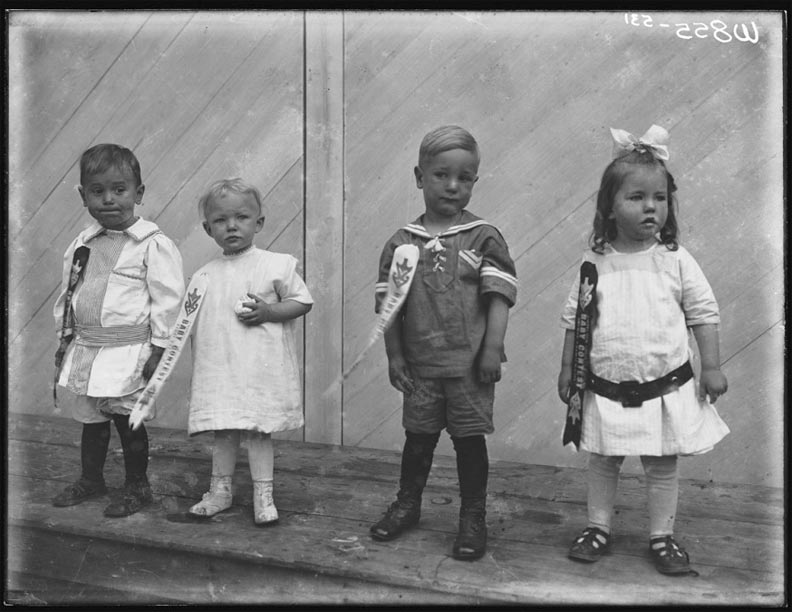 Over 19 million people attended this “West Coast World’s Fair Exposition” during 10 months from February 20 to December 4, 1915. The fair was devoted to extolling the virtues of a rapidly progressing nation, with particular emphasis devoted to new developments in science, agriculture, manufacturing and technology. The display generating the most interest among fairgoers was devoted to medical developments concerning health and disease, particularly theories on race betterment or, the promotion of eugenic studies. Expo promoters noted the interest of excited visitors and soon, Eugenics, billed as the advancement of civilization, became the main theme of the fair.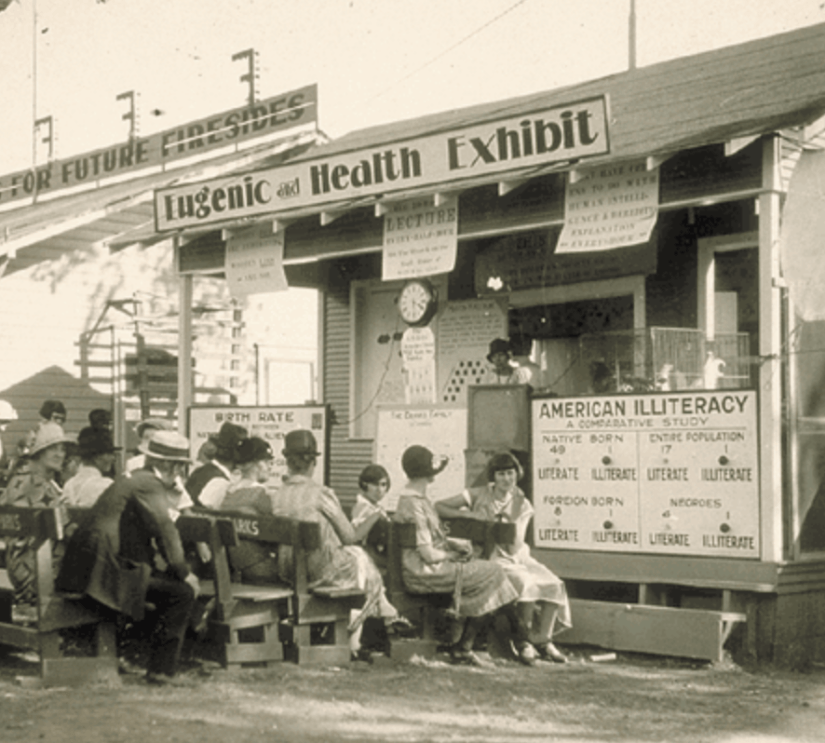


 Alan E. Hunter