
Original publish date: September 23, 2021. https://weeklyview.net/2021/09/23/the-devils-tower/
https://www.digitalindy.org/digital/collection/twv/id/4308/rec/153
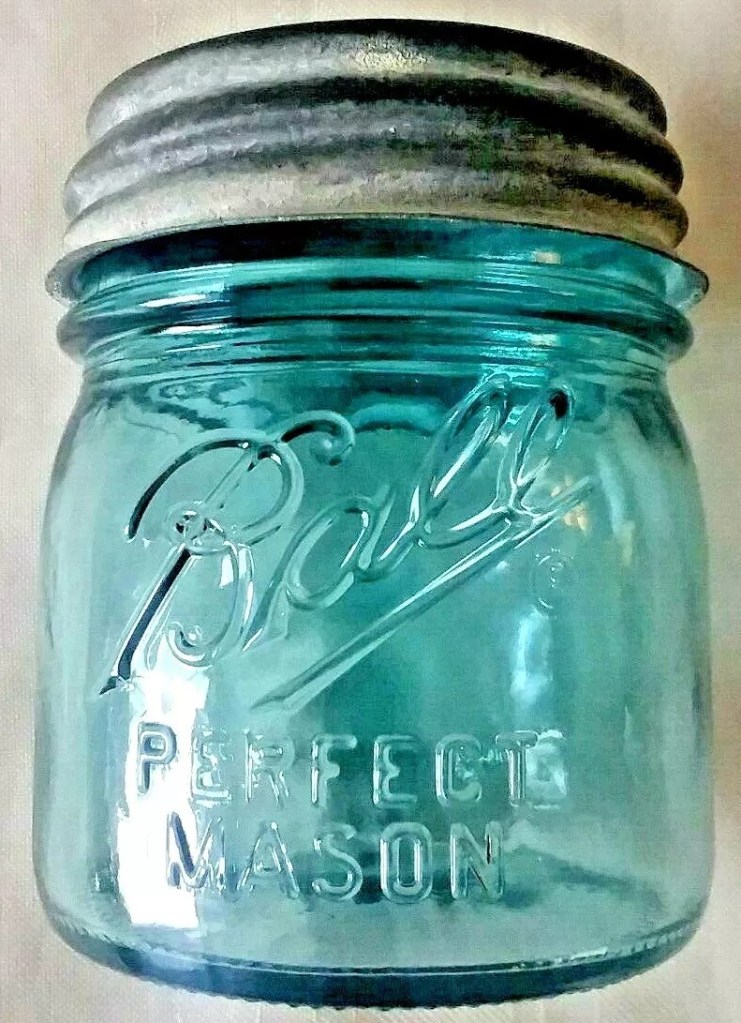
Over the last couple of weeks, I detailed a long-lost Indiana landmark known as the Hoosier Slide in Michigan City. This giant mound of sand became a tourist attraction when visitors discovered that they could slide down its slopes on slices of cardboard or fragments of cloth like a sled on a snow mound. The Hoosier Slide disappeared from the northern Indiana landscape around World War I after it was purchased by the Ball Brothers Corporation in Muncie to furnish the distinctive blue tint for their popular Ball Brand fruit jars.
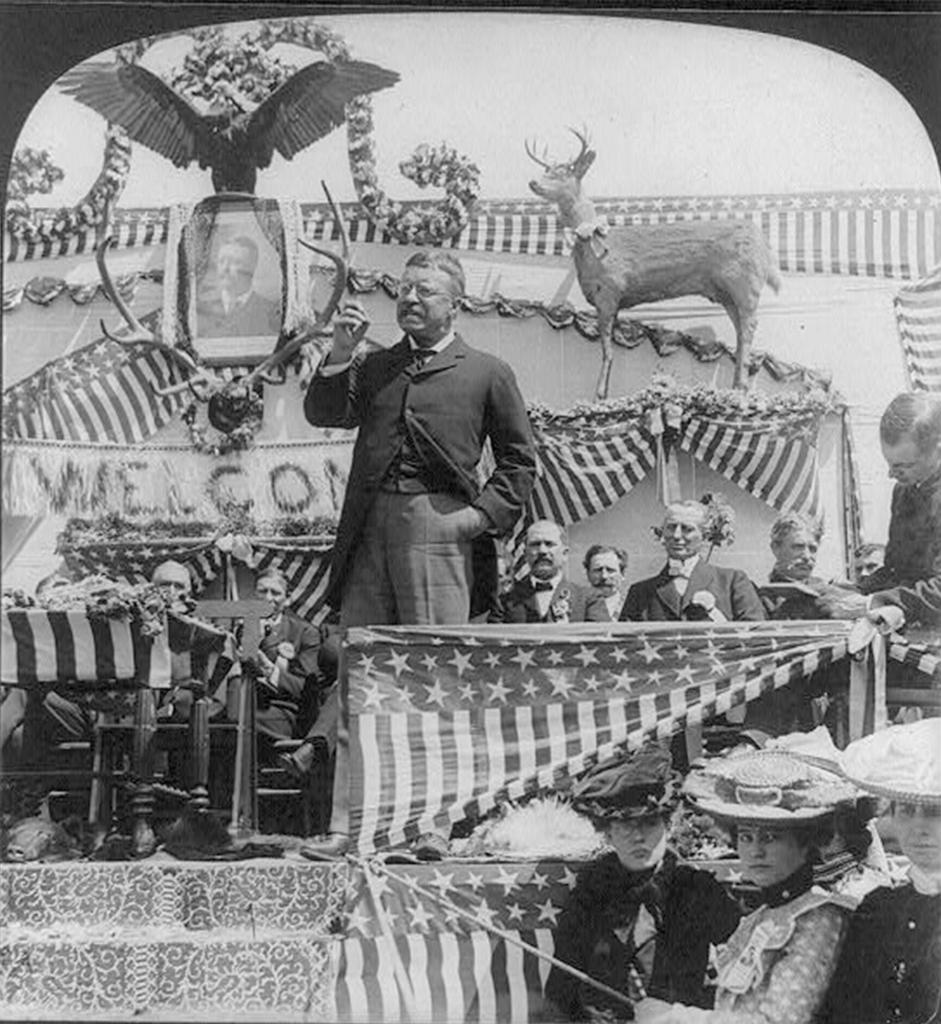
Continuing that theme, it was 115 years ago this week (Sept. 24, 1906) that President Theodore Roosevelt proclaimed Devils Tower in Wyoming as the nation’s first National Monument, under new authority granted to him by Congress in the Antiquities Act. The Antiquities Act resulted from concerns about protecting mostly prehistoric Native American ruins and artifacts (aka “antiquities”) located on federal lands. The United States Congress designated the area a U.S. forest reserve in 1892. However, in the ensuing years, the threat of commercial development and the removal of artifacts from these unprotected lands by private collectors, whom Teddy famously referred to as “pot hunters,” had become a serious problem. Making this a high-priority goal for Teddy’s second term.
Although Devils Tower (apostrophe purposely omitted) might not ring any bells in your house, it was so important to Roosevelt that he designated it for protection before he established the Grand Canyon Game Preserve by proclamation on November 28, 1906, and the Grand Canyon National Monument on January 11, 1908. Devils Tower, also called Bear Lodge Butte, is part of the Black Hills mountain range located above the Belle Fourche River near Hulett and Sundance in Crook County, northeastern Wyoming. The tower, technically called a “monolith”, was formed from cooled magma exposed through erosion. It stands 1,267 feet tall; 867 feet from summit to base (5,112 feet above sea level) and encloses an area of 1,347 acres.
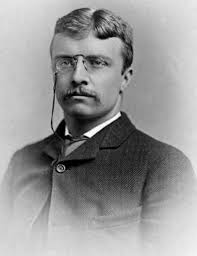
The oldest rocks visible in Devils Tower National Monument were once part of a shallow sea during the Triassic period 250 million years ago, which saw the rise of reptiles and the first dinosaurs. Devils Tower hails from the Jurassic period, about 200 million years ago, which ushered in birds and mammals. The Tower was here 150 million years before the Rocky Mountains and the Black Hills were formed. It is easy to imagine that the thought of dinosaurs roaming around Devils Tower may well have sparked Teddy Roosevelt’s vivid imagination, thus leading him to designate it as the country’s first National Landmark.
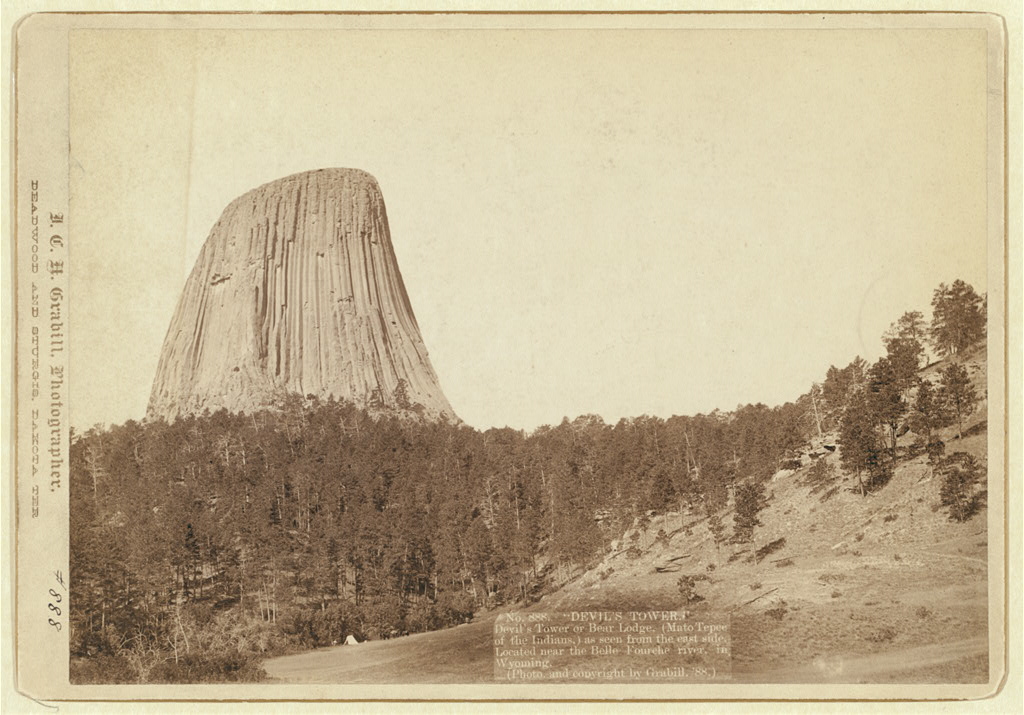
Fur trappers may have visited Devils Tower, but they left no written evidence of having done so. The first documented Caucasian visitors were members of Captain William F. Raynolds’s 1859 expedition to Yellowstone. Sixteen years later, Colonel Richard I. Dodge escorted a US Government Office of Indian Affairs scientific survey party to the massive rock formation and coined the name Devils Tower. The misnomer was created when his interpreter reportedly misinterpreted a native name to mean “Bad God’s Tower”. The Indigenous Native American people had many names for the outcropping including Bear’s House, Grizzly Bear Lodge, Bear’s Tipi, Home of the Bear, Bear’s Lair, Tree Rock, Great Gray Horn, and Brown Buffalo Horn.
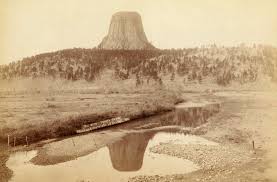
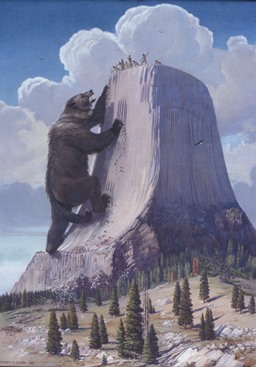
According to the lore of the Lakota tribe, the traditional name for the tower came after a group of girls went out to play and were spotted by several giant bears, who began to chase them. In an effort to escape the bears, the girls climbed atop a rock, fell to their knees, and prayed to the Great Spirit to save them. Hearing their prayers, the Great Spirit made the rock rise from the ground towards the heavens so that the bears could not reach the girls. The bears, in an effort to climb the rock, left deep claw marks in the sides, which had become too steep to climb. Those are the marks that appear today on the sides of Devils Tower. When the girls reached the sky, they were turned into the star formation known as the “Seven Sisters.”
Another version tells that two Kiowa Sioux boys wandered far from their village when Mato the bear, a huge creature that had claws the size of teepee poles, spotted them and wanted to eat them for breakfast. He was almost upon them when the boys prayed to Wakan Tanka the Creator to help them. They rose up on a huge rock, while Mato tried to get up from every side, leaving huge scratch marks as he did. Finally, he sauntered off, disappointed, discouraged, and hungry. The bear came to rest east of the Black Hills at what is now Bear Butte. Wanblee, the eagle, helped the boys off the rock and back to their village. A painting depicting this legend by artist Herbert A. Collins hangs over the fireplace in the visitor’s center at Devils Tower.
In a Cheyenne version of the story, the giant bear pursues the girls and kills most of them. Two sisters escape back to their home with the bear still tracking them. They tell two boys that the bear can only be killed with an arrow shot through the underside of its foot. The boys have the sisters lead the bear to Devils Tower and trick it into thinking they have climbed the rock. The boys attempt to shoot the bear through the foot while it repeatedly attempts to climb up and slides back down leaving more claw marks each time. The bear was finally scared off when an arrow came very close to its left foot. This last arrow continued to go up and never came down.

Wooden Leg, a Northern Cheyenne, related still another legend told to him by an old man as they were traveling together past the Devils Tower around 1866. A Native American man decided to sleep at the base of Bear Lodge. In the morning he found that he had been transported to the top of the rock by the Great Medicine with no way down. He spent another day and night on the rock with no food or water. After he had prayed all day and then gone to sleep, he awoke to find that the Great Medicine had brought him back down to the ground. Devils Tower is still considered to be sacred ground which has caused distress among the Native American tribes who described the Devils Tower designation as offensive. However, the name was never changed.
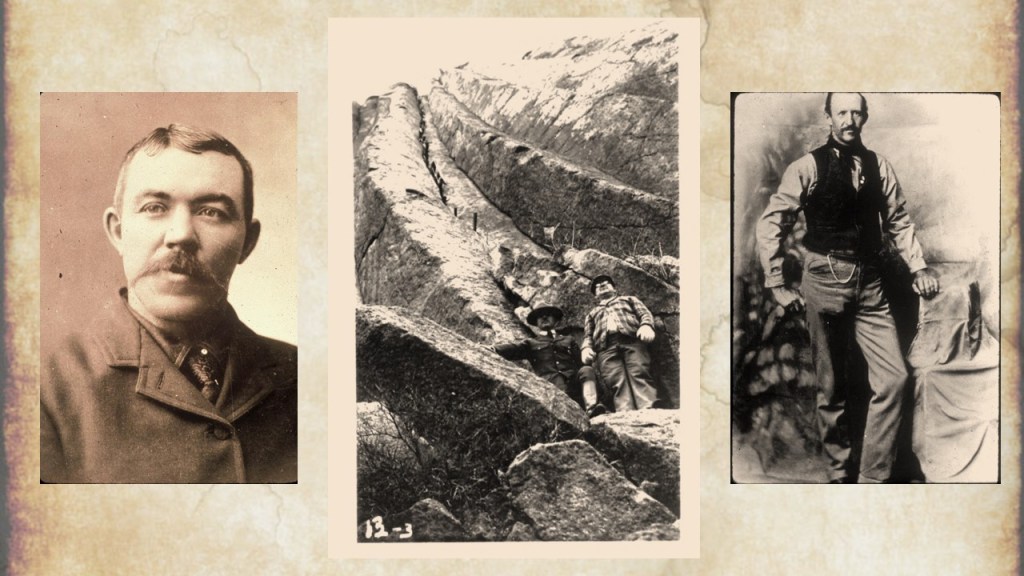
In recent years, climbing Devils Tower is on many a bucket list. The first known ascent of Devils Tower occurred on July 4, 1893. It is credited to a pair of local ranchers, William Rogers and Willard Ripley. They completed this first ascent after constructing a ladder of wooden pegs driven into cracks in the rock face. About 1,000 people came from up to 12 miles away to witness this first formal ascent of the tower. Rogers’ wife Linnie ascended the ladder two years later, becoming the first woman to reach the summit of the tower. An estimated 215 people later ascended the tower using Rogers’ ladder. It was last used in 1927 by stunt climber Babe (”the Human Fly”) White, a roaring twenties daredevil who climbed skyscrapers all over the country for publicity.
Rogers and Ripley’s climb jump-started a sport climbing industry at the tower that continues to the present day. Over thirty years, the ladder, located on the southeast side of Devils Tower, fell into disrepair. Today, what remains of the ladder begins about 100 feet above the ground and ascends from there to the summit. Sources vary on the original length of the ladder, some accounts say it was 350 feet while others say 270 feet. In the 1930s, the decision was made to remove the lower 100 feet of the ladder for safety reasons. The ladder can still be seen from the trails around the monument.
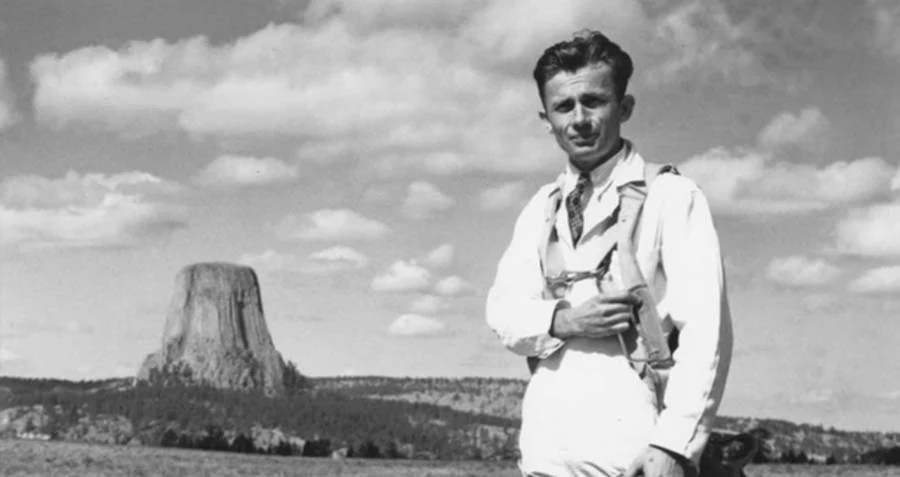
In 1941, Devils Tower became front-page news. Daredevil George Hopkins parachuted onto Devils Tower to settle a bet. His intention was to repel down the slope via a 1,000-foot rope dropped to him after a successful landing on the butte. To Hopkins’ horror, the package containing the rope, a sledgehammer, and a car axle to be driven into the rock as an anchor piton for the rope. As the weather deteriorated, a second attempt was made to drop equipment, but the rope froze in the rain and wind and could not be used. Hopkins was stranded for six days, exposed to frigid temperatures, freezing rain, and 50 mph winds before a mountain rescue team reached him and brought him down.
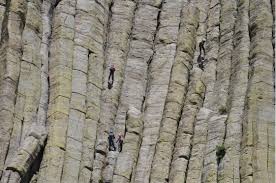
Today, hundreds of climbers scale the sheer rock walls of Devils Tower via climbing routes covering every side of the prehistoric landmark. All of them must check in with a park ranger before and after attempting a climb. No overnight camping at the summit is allowed; climbers return to base on the same day they ascend. Because the Tower is sacred to several Plains tribes, including the Lakota, Cheyenne, and Kiowa, many Native American leaders objected to climbers ascending the monument, considering this to be a desecration. Because of this, a compromise was reached with a voluntary climbing ban during the month of June when the tribes are conducting ceremonies around the monument.
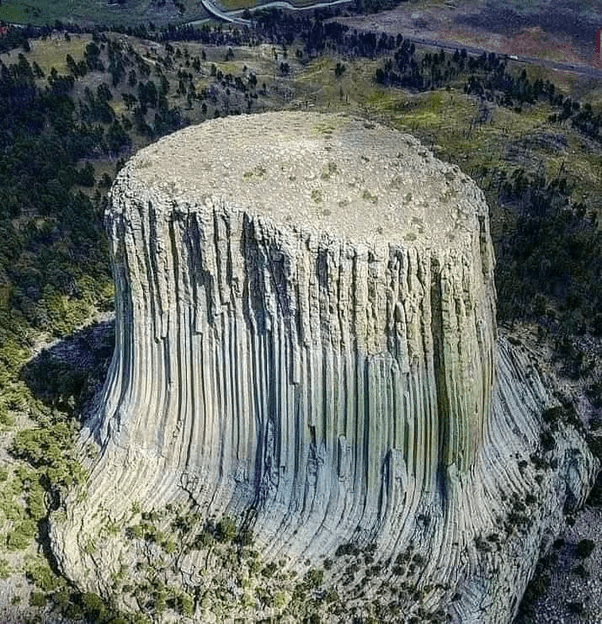
The tower has a flat top covering 1.5 acres and its fluted sides give it an otherworldly appearance. Its color is mainly light gray and buff. Lichens cover parts of the tower, and sage, moss, and grass grow on its top. Chipmunks and birds live on the summit, and a pine forest covers the surrounding countrysides below. Additionally, Devils Tower National Monument protects many species of wildlife, such as white-tailed deer, bald eagles, and prairie dogs, the latter of which maintain a sizeable population at the base of the monument.
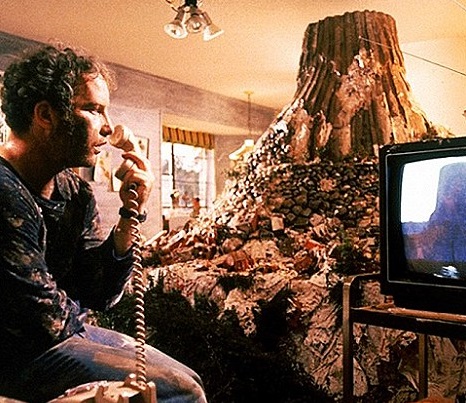
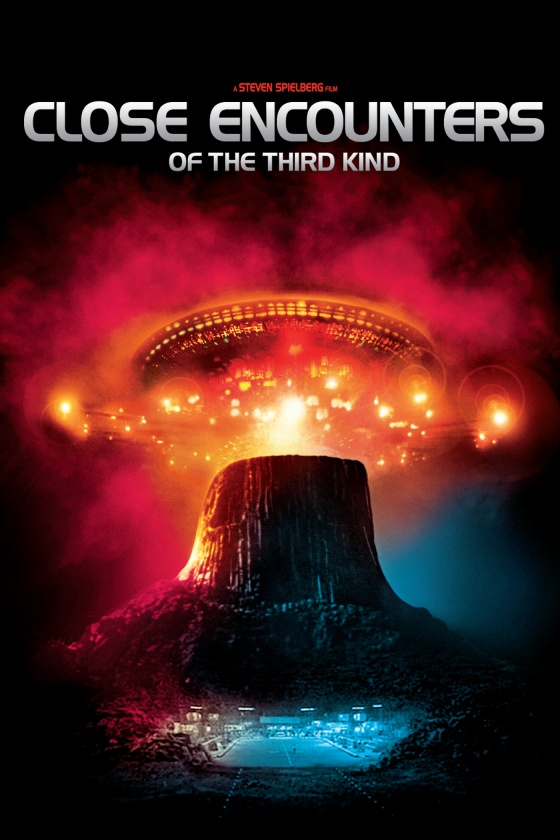
All of this is well and good and obviously, had the Hoosier slide been likewise protected, we may still be sliding down the massive sand dune in northern Indiana today. But movie buffs everywhere recognize Devils Tower for another reason. The 1977 movie Close Encounters of the Third Kind used the formation as the bellwether of its climactic scene. It soon became the film’s trademark logo. Its release caused a large increase in visitors and climbers to the monument. Today, the otherworldly pull and Hollywood fame of Devils Tower has made it a cultural waymark.
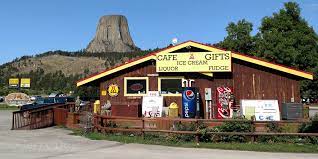
With the funds from the film’s creation, the owners of the surrounding land were able to open a campground and restaurant to host climbers, sightseeing fans of the landscape, and movie buffs. Campers are welcome to hike and climb the tower twenty-four hours a day, and at night they’re treated to a showing of Close Encounters on a screen at the base of the landmark. According to the brochure, “Visitors leave with a new appreciation for the unique rock formation and a deepened curiosity about our place in space.”
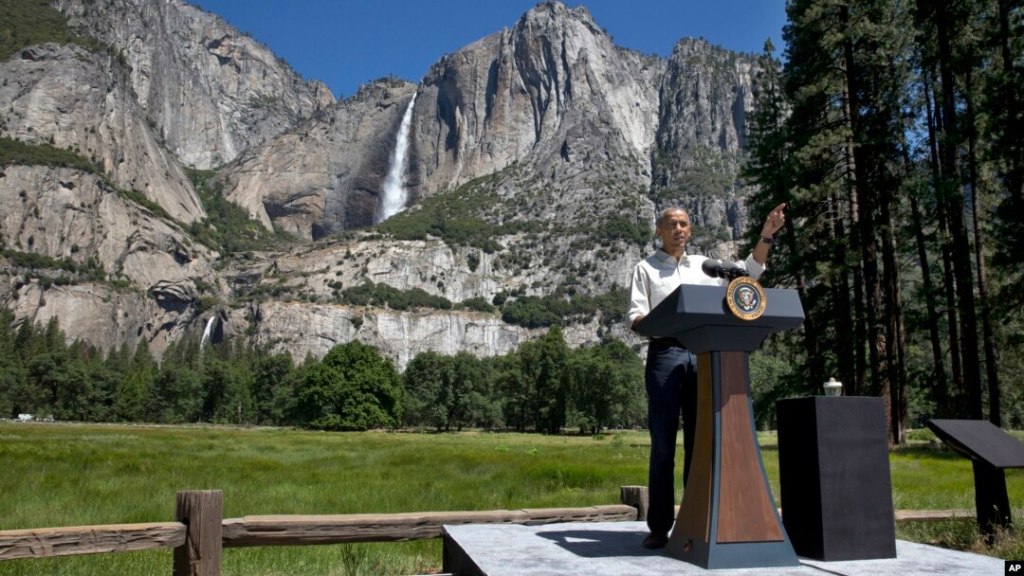
And, for an added “new appreciation”, although Teddy Roosevelt is considered to be the “father” of the National Park System, you might be interested to learn that during his two terms, President Obama established more monuments than any President before him with 26, breaking the previous record held by President Theodore Roosevelt who had 18. In short, on both accounts, it was a bi-partisan land grab for the good.

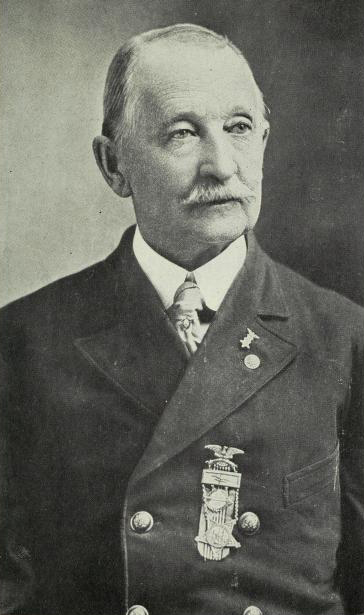

 The Reynolds leaflet further reveals,”Father and mother were at Ford’s Theatre the night of the assassination, and although it was late when they returned home, the general excitement of the night had reached our neighborhood. The newsboys shrill cries of “Extra! Extra! President Lincoln Shot” had awakened everybody in the boarding house. I, too, was awake. Young as I was, I realized what dreadful thing had happened, and I lay wide-eyed in my little trundle bed while father and mother related to the others their personal story of the tragedy. Father, accompanied by several of the men guests, went back to the scene and did not return until after the fateful hour of 7:22 the next morning. I remember as clearly as though it were of yesterday, wearing a wide band of black around the sleeve of my bright plaid jacket, and, carried in father’s arms, of passing the somber catafalque in the rotunda of the Capitol, which inclosed (sic) all that was mortal of the beloved Lincoln. A few weeks later I witnessed the Grand Review of the Army – that wonderful spectacle of the returning boys in blue – which took several days in its passing.”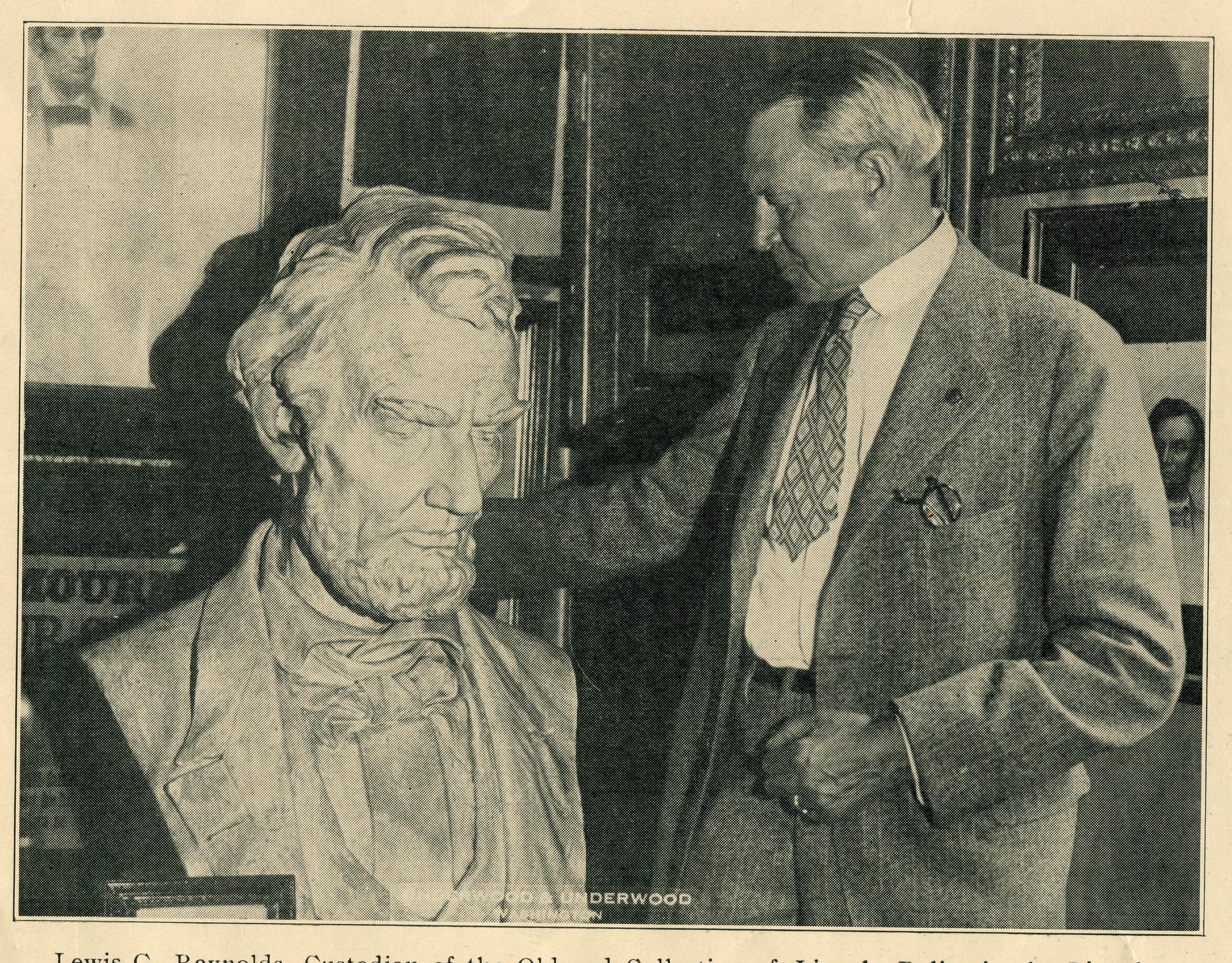

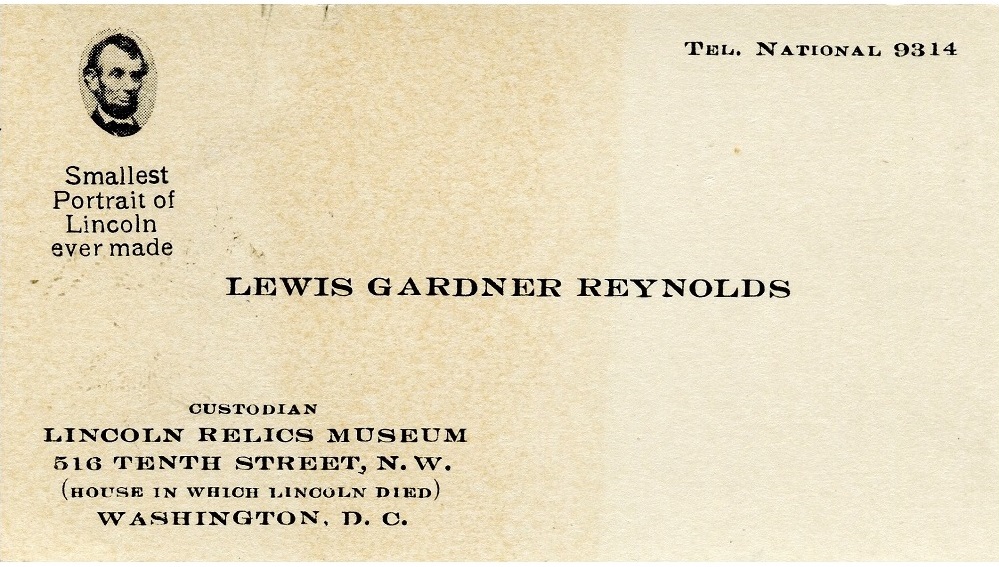 Two decades later, in 1960, the Richmond Palladium-Item newspaper profiled the widow of the former curator, offering new insight. The article is titled: “Local Woman Conducted Tours In House Where Lincoln Died.” It reveals, “Mrs. Reynolds and her husband lived on the second floor of the house at 516 Tenth Street, Washington, DC, at the time Mr. Reynolds was curator of the Oldroyd Lincoln Memorial collection. This was from 1928 through 1936. “I never heard anyone ask Mr. Reynolds a question about Mr. Lincoln he could not answer,” Mrs. Reynolds recalls. Her husband acquired the job as curator when he heard Oldroyd wanted to retire… “I have had visitors say to me doesn’t it give you a creepy feeling?” (sleeping in the house where Lincoln died.) Her answer was always “No.” To the reporter, she said, “I never had a creepy feeling. When I thought about it, it was just a feeling of awe and reverence.” Mr. Reynolds described the collection via radio from the Petersen house several times.“

 Most Americans remember President William McKinley solely for the way he died. His image a milquetoast chief executive from the age of American Imperialism who was at the helm for the dawn of the 20th century. McKinley’s ordinary appearance belied the fact that he was the last president to have served in the American Civil War and the only one to have started the war as an enlisted soldier. It is long forgotten that McKinley led the nation to victory in the Spanish-American War, protected American industry by raising tariffs, and kept the nation on the gold standard by rejecting free silver. Most notably, his assassination at the 1901 Pan-American Exposition in Buffalo, New York unleashed the central figure who would come to personify the new century; his Vice-President Teddy Roosevelt.
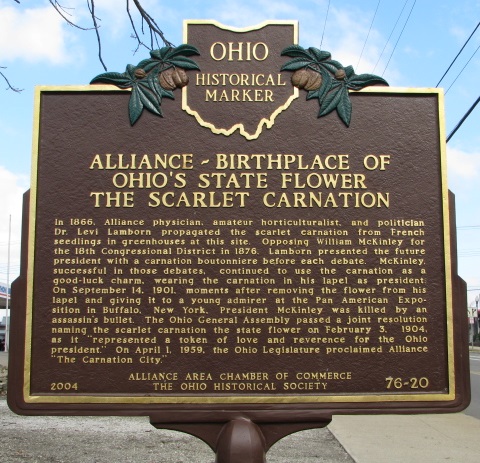
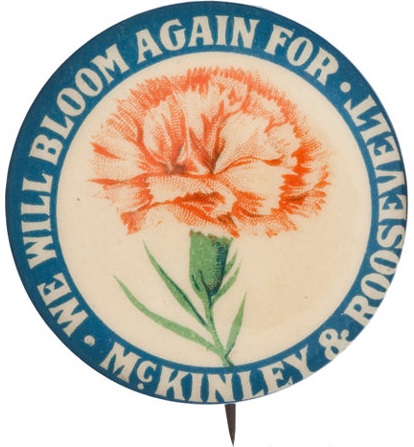
 McKinley’s favorite flower was a red carnation. He displayed his affection by wearing one of the bright red florets in his lapel every day. The carnation boutonnière soon became McKinley’s personal trademark. As President, bud vases filled with red carnations were conspicuously placed around the White House (known as the “Executive Mansion” back then). Whenever a guest visited the President, McKinley’s custom was to remove the carnation from his lapel and present it to the star-struck visitor. For men, he would often place the souvenir blossom into the lapel himself and suggest that it be given to an absent wife, mother, or child. Afterward, he would replace his boutonnière with another from a nearby vase and repeat the transfer again and again for the rest of the day. McKinley was superstitious about these carnations, believing that they brought good luck to both him and his recipient.
 One account alleges that McKinley’s “Genus Dianthus” custom began early in his presidency when an aide brought his two sons to the White House to meet the President. McKinley, who loved children dearly, presented his carnation to the older boy. Seeing the disappointment in the younger boy’s face, the President deftly retrieved a replacement carnation and pinned it on his own lapel. Here the flower remained for a few moments before he removed it and gave to the younger child, explaining “this way you both can have a carnation worn by the President.”
 However, McKinley’s ubiquitous floral tradition can be traced to the election of 1876, when he was running for a seat in Congress. His opponent, Dr. Levi Lamborn, of Alliance, Ohio, was an accomplished amateur horticulturist famed for developing a strain of vivid scarlet carnations he dubbed “Lamborn Red.” Dr. Lamborn presented McKinley with a “Lamborn Red” boutonniere before their debates. After he won the election, McKinley viewed the red carnation as a good luck charm. He wore one on his lapel regularly and soon began his custom of presenting them to visitors. He wore one during his fourteen years in Congress, his two gubernatorial wins and both 1896 and 1900 presidential campaigns.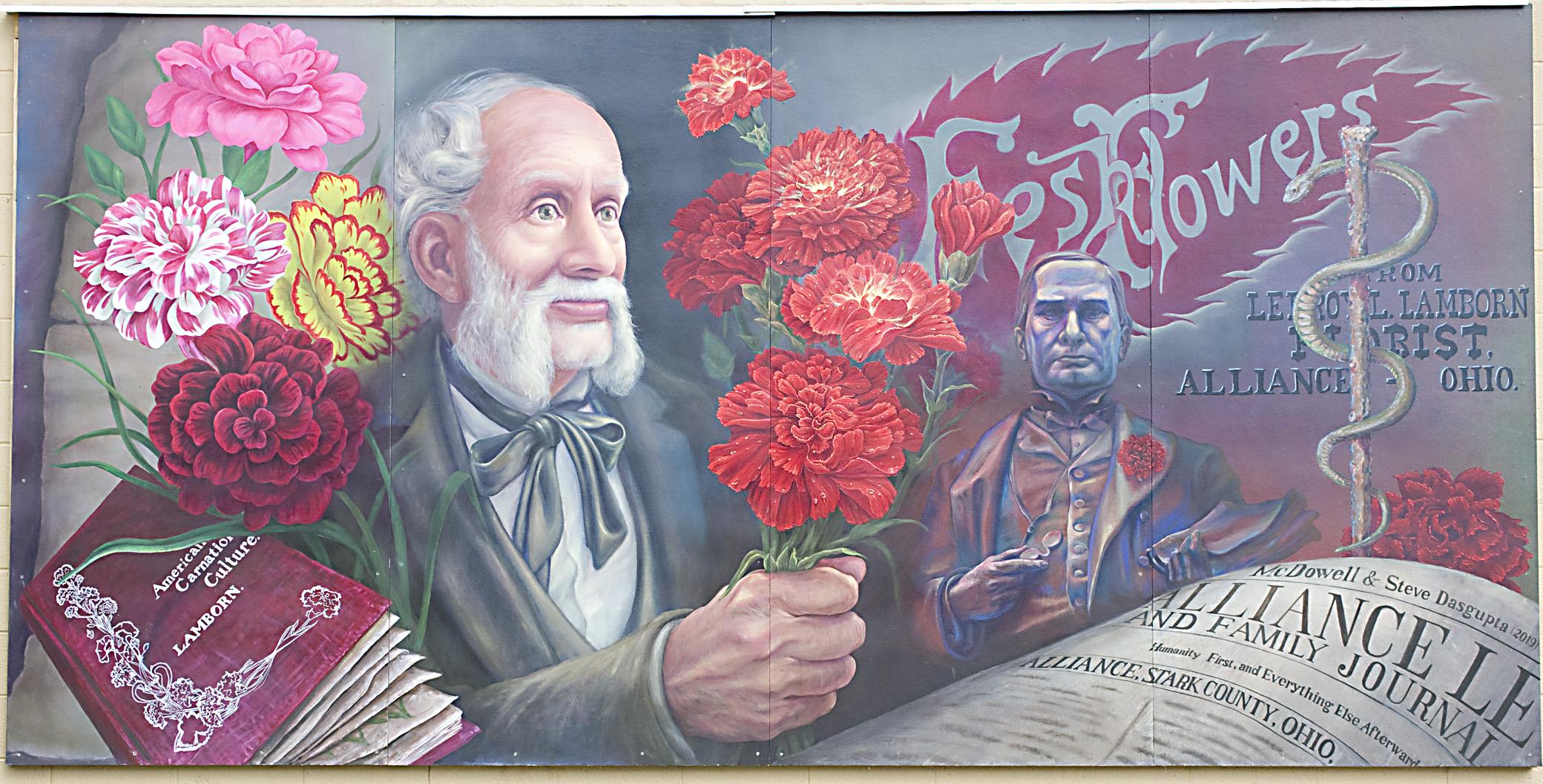
 After his second inauguration on March 4, 1901, William and Ida McKinley departed on a six-week train trip of the country. The McKinleys were to travel through the South to the Southwest, and then up the Pacific coast and back east again, to conclude with a visit to the Buffalo Exposition on June 13, 1901. However, the First Lady fell ill in California, causing her husband to limit his public events and cancel a series of planned speeches. The First family retreated to Washington for a month and then traveled to their Canton, Ohio home for another two months, delaying the Expo trip until September.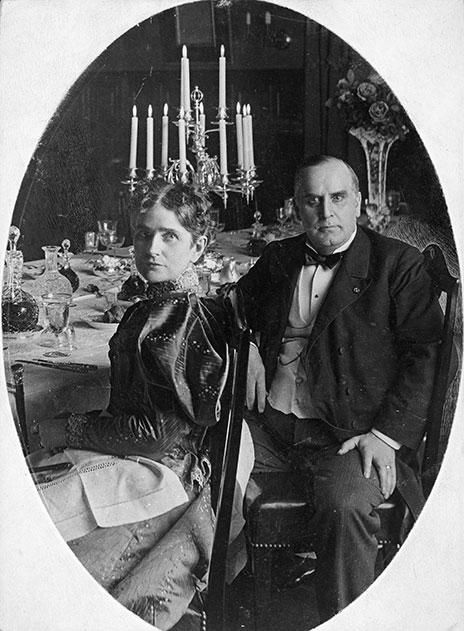
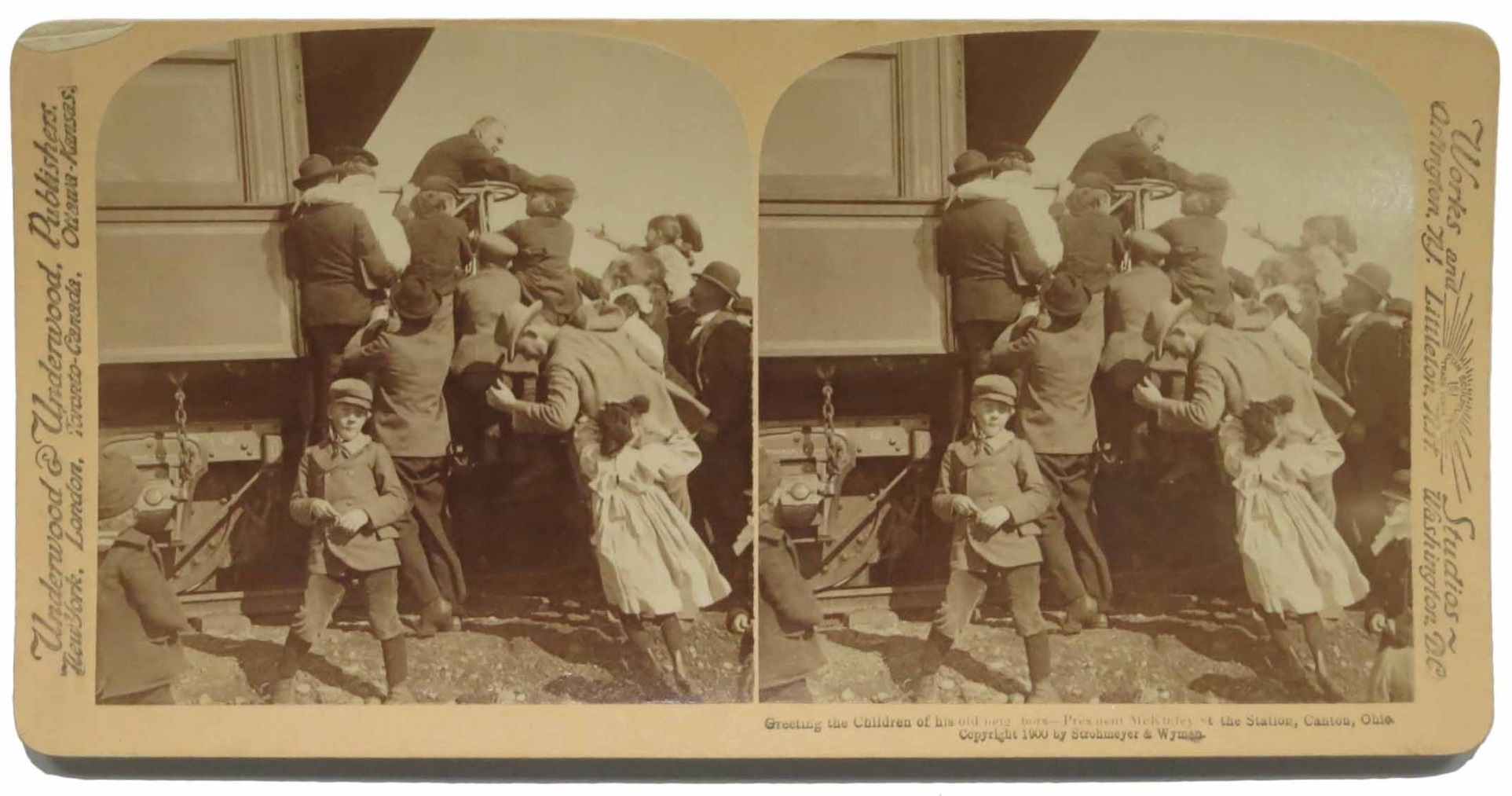
 As McKinley fell backwards into the arms of his aides, members of the crowd immediately attacked Czolgosz. McKinley said, “Go easy on him, boys.” McKinley urged his aides to break the news gently to Ida, and to call off the mob that had set on Czolgosz, thereby saving his assassin’s life. McKinley was taken to the Exposition aid station, where the doctor was unable to locate the second bullet. Ironically, although a newly developed X-ray machine was displayed at the fair, doctors were reluctant to use it on the President because they did not know what side effects. Worse yet, the operating room at the exposition’s emergency hospital did not have any electric lighting, even though the exteriors of many of the buildings were covered with thousands of light bulbs. Amazingly, doctors used a pan to reflect sunlight onto the operating table as they treated McKinley’s wounds.
 McKinley drifted in and out of consciousness all day. By evening, McKinley himself knew he was dying, “It is useless, gentlemen. I think we ought to have prayer.” Relatives and friends gathered around the deathbed. The First Lady sobbed over him, “I want to go, too. I want to go, too.” Her husband replied, “We are all going, we are all going. God’s will be done, not ours” and with final strength put an arm around her. Some reports claimed that he also sang part of his favorite hymn, “Nearer, My God, to Thee” while others claim that the First Lady sang it softly to him. At 2:15 a.m. on September 14, President McKinley died. Czolgosz was sentenced to death and executed by electric chair on October 29, 1901.
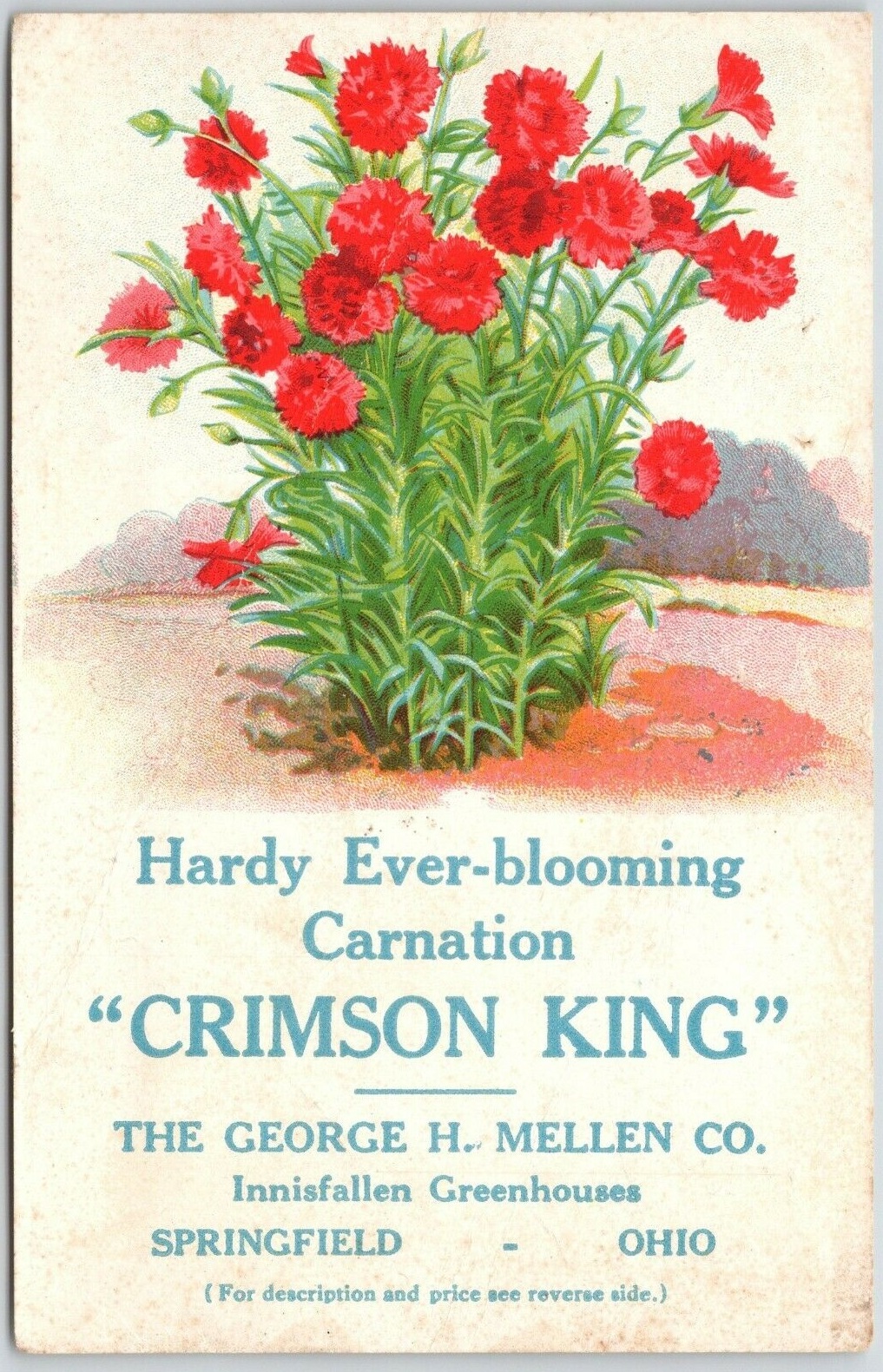 Loyal readers will recognize my affinity for objects and will not be surprised by the query, “What became of that assassination carnation?” In an article for the Massillon, Ohio Daily Independent newspaper on Sept. 7, 1984, Myrtle Ledger Krass, the 12-year-old-girl to whom the President gave his lucky flower moments before he was killed, reported that the McKinley’s carnation was pressed and kept in the family Bible. Myrtle, at the time a well-known painter living in Largo, Florida, explained how, many years later while moving, “The old Bible had been put away for years, when I took it out to wrap it for moving, it just crumbled in my hand. Just fell away to nothing.”
 In 1902, Lewis Gardner Reynolds (born in 1858 in Bellefontaine, Ohio) found himself in Buffalo on business on the first anniversary of McKinley’s death. While there he found that the mayor of Buffalo had declared the day a legal holiday. Gardner recalled, “without thinking at the time that I was doing something that would become a national custom, I purchased a pink carnation which I placed in the buttonhole of my coat after tying a small piece of black ribbon on it. As I went through Buffalo I explained to questioners the reason for the flower and the black ribbon. Many of those who questioned me followed my example.” On his return to Ohio, he explained to his friend Senator Mark Hannah what he had done in Buffalo. Later, in Cleveland, Reynolds met with Hannah and Governor Myron T. Herrick. Soon plans were made to celebrate Jan. 29, the anniversary of McKinley’s birth, as “Carnation Day.”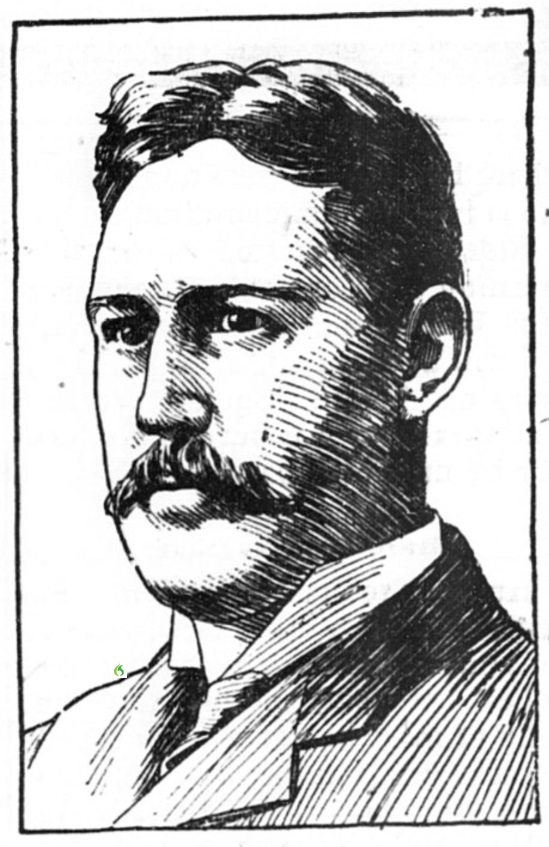
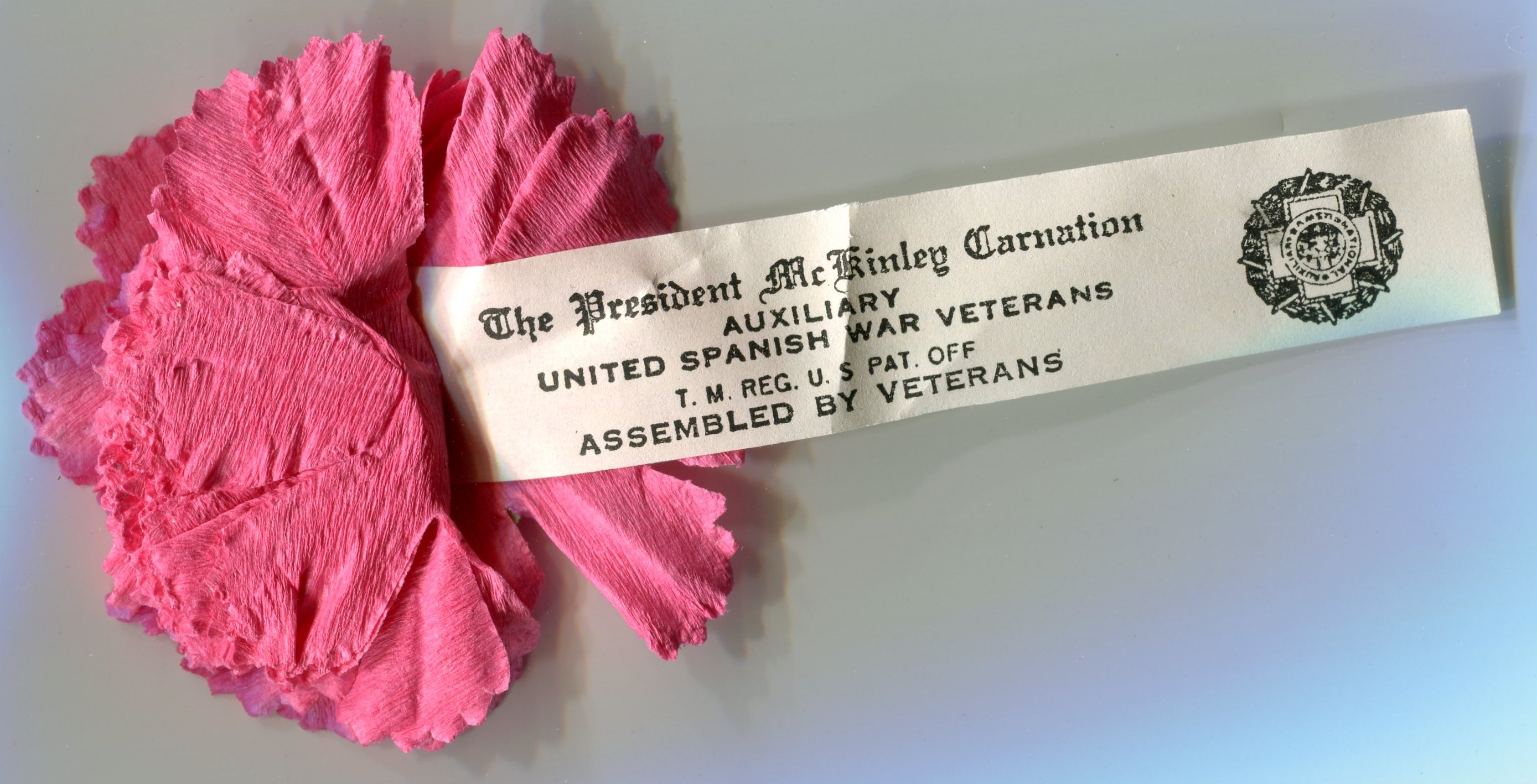 Today, the Ohio Statehouse in Columbus continues observing Red Carnation Day every January 29 by installing a small display honoring the assassinated President. Last year, the Statehouse Museum Shop and on-site restaurant offered special discounts to anyone wearing a red carnation or dressed in scarlet on that day. Yes, the sentimental association of the carnation with McKinley’s memory is due to Lewis Gardner Reynolds.


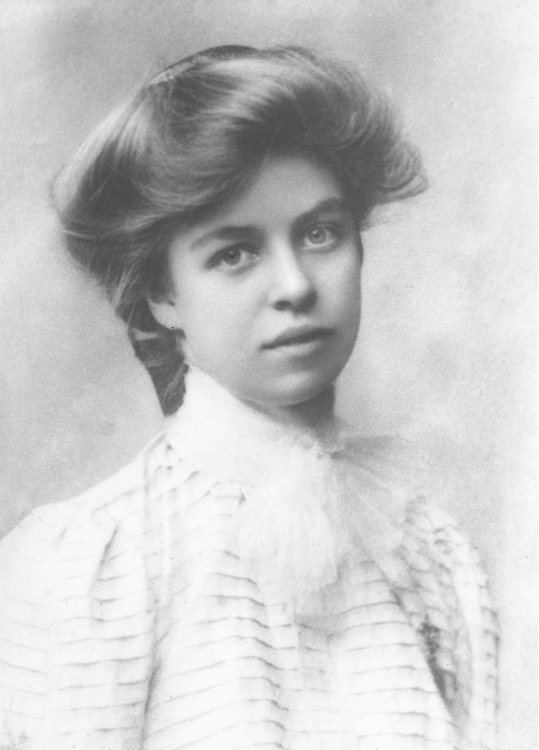

 Oh, and by the way, Eleanor Roosevelt, the First lady of the world, icon of liberalism, fighter for civil rights, champion of the poor and marginalized and powerful advocate for women’s rights was a gun owner. Yes, Eleanor Roosevelt, mother of six, grandmother to twenty, was packing heat. Her application for a pistol permit in New York’s Dutchess County can be found at the Franklin D. Roosevelt Presidential Library and Museum in Hyde Park. With debate raging around the nation about gun control and Second Amendment rights, the fact that one of the icons of the Democratic womanhood not only owned a gun, but carried it for protection, may come as a surprise.
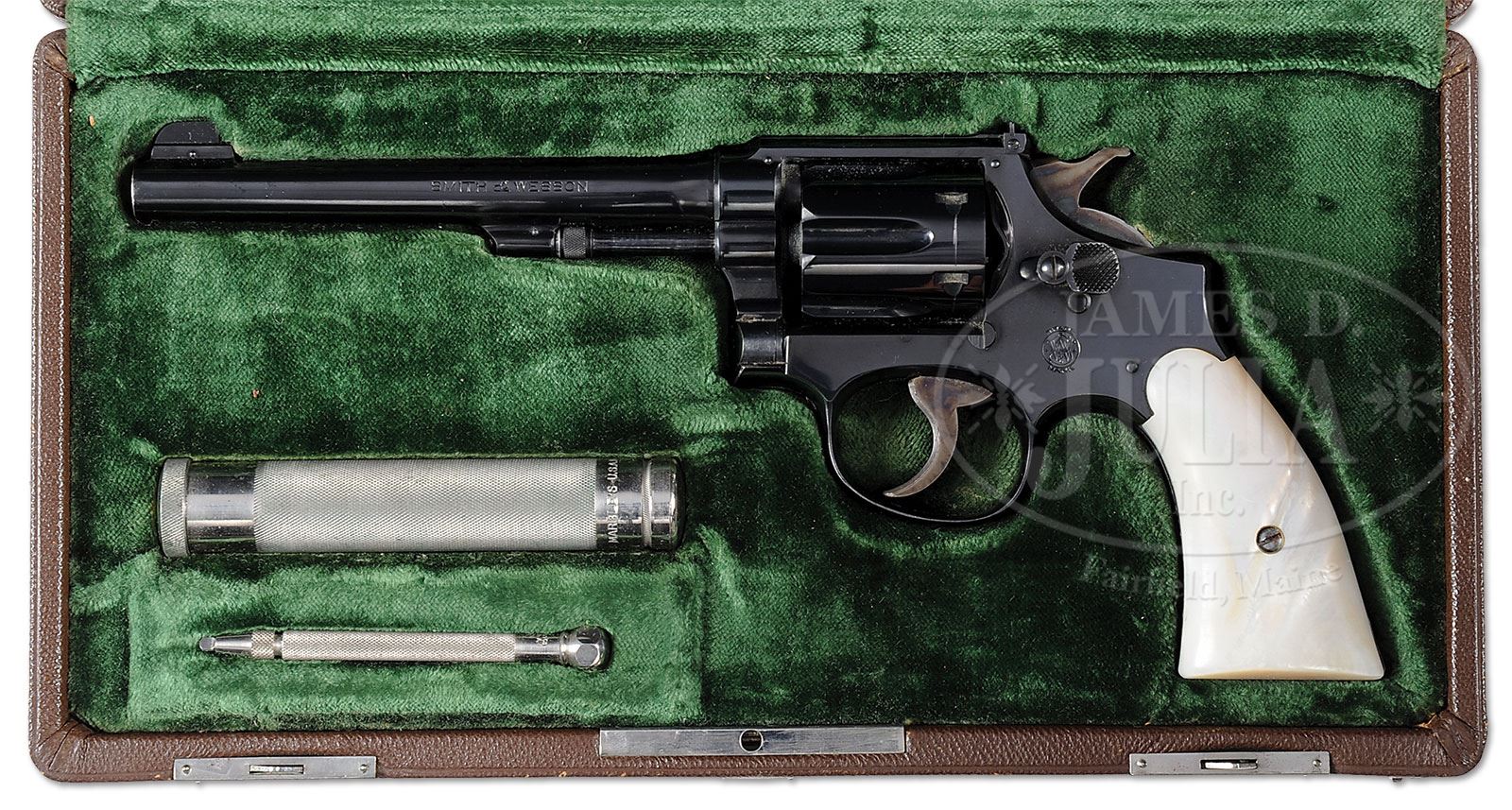
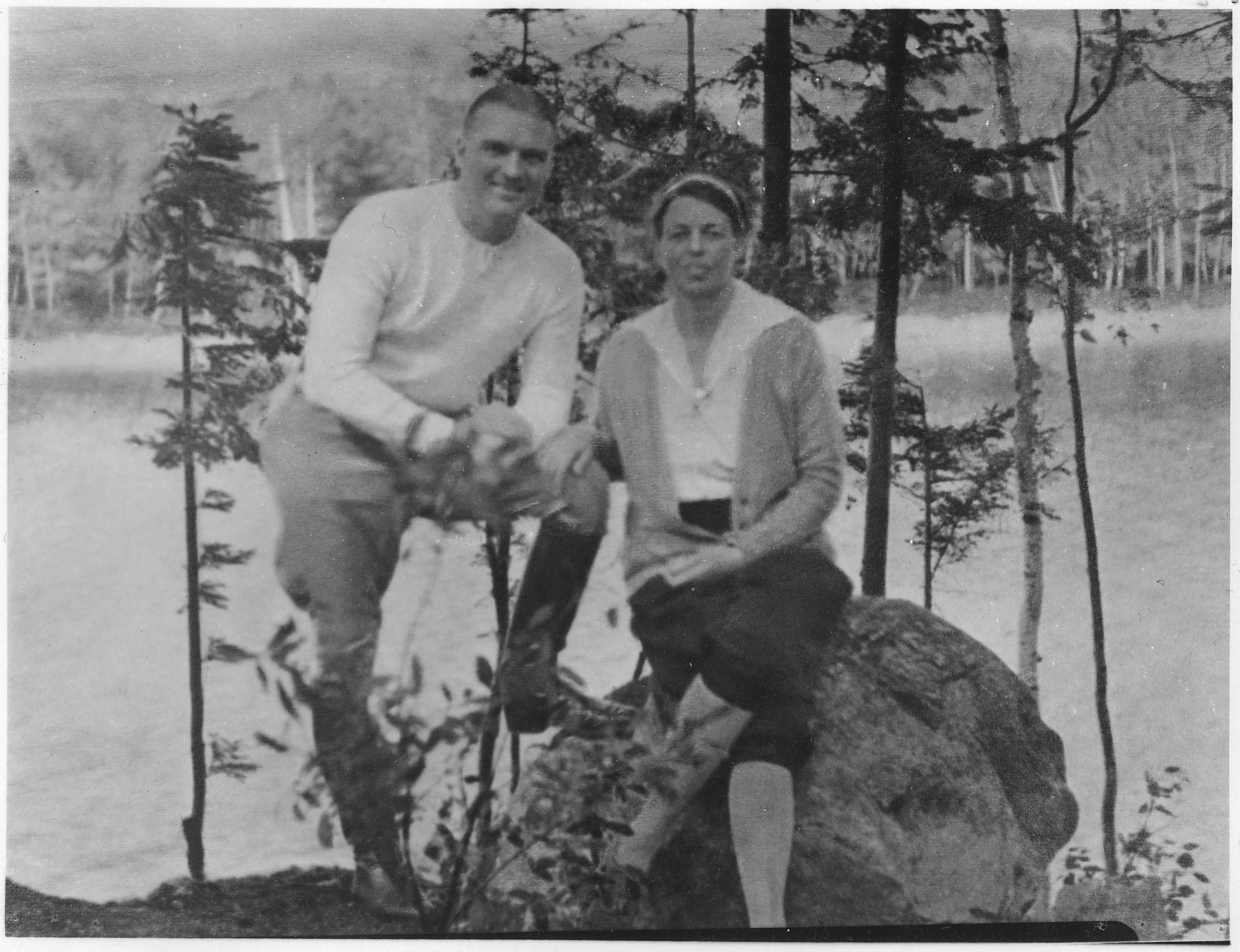

 The application was processed by the Dutchess County Sheriff’s Office and signed by then-Sheriff C. Fred Close. It included a photo of Eleanor Roosevelt wearing a hat, fur stole and double strand of pearls. The reason for the pistol, according to Eleanor Roosevelt’s application, was “protection.” The timing of the pistol permit coincided with Eleanor Roosevelt’s travels throughout the South-by herself-in advocacy of civil rights. Those trips prompted death threats.
 Viewed from the perspective of 21st century politics, where Republicans and Democrats have lined up on opposing sides of the gun control debate, Eleanor Roosevelt’s pistol offers a fresh take on the ongoing debate over the rights of gun owners, the Democrats who want to curtail them and the Republicans who want to expand them.

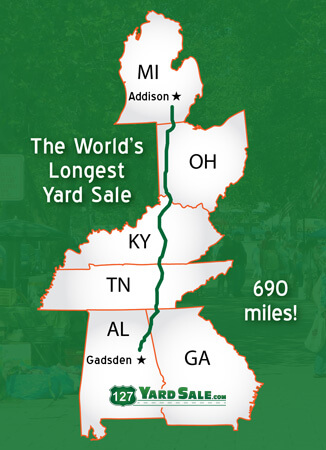


 It was during the second day of the trip where our little quartet found our most interesting finds along the route. While at a tent city near Grimsley, Tennessee we came upon a large group of dealers set up in a local park. On this 95 degree / 50 % humidity day (heat index 107), I found a rather refined looking group of Southern Belles strategically seated in a shady corner of their booth. Leaning against a post near them was a heavy steel sign from the Jack Kerouac Era California State Beaches that read: “Clothing Optional Beyond This Point”. My red-faced smirk must have betrayed me and the ladies giggled at my sheepish delight. I asked for the price and as I picked it up I realized that the sign had 2 bullet holes in the center of it. I had to have it! I forked over the cash equivalent of a St. Elmo’s dinner for two (with shrimp cocktails of course) to make it mine. The delightful owner said she had purchased the sign on “this very same field 8 years ago.”
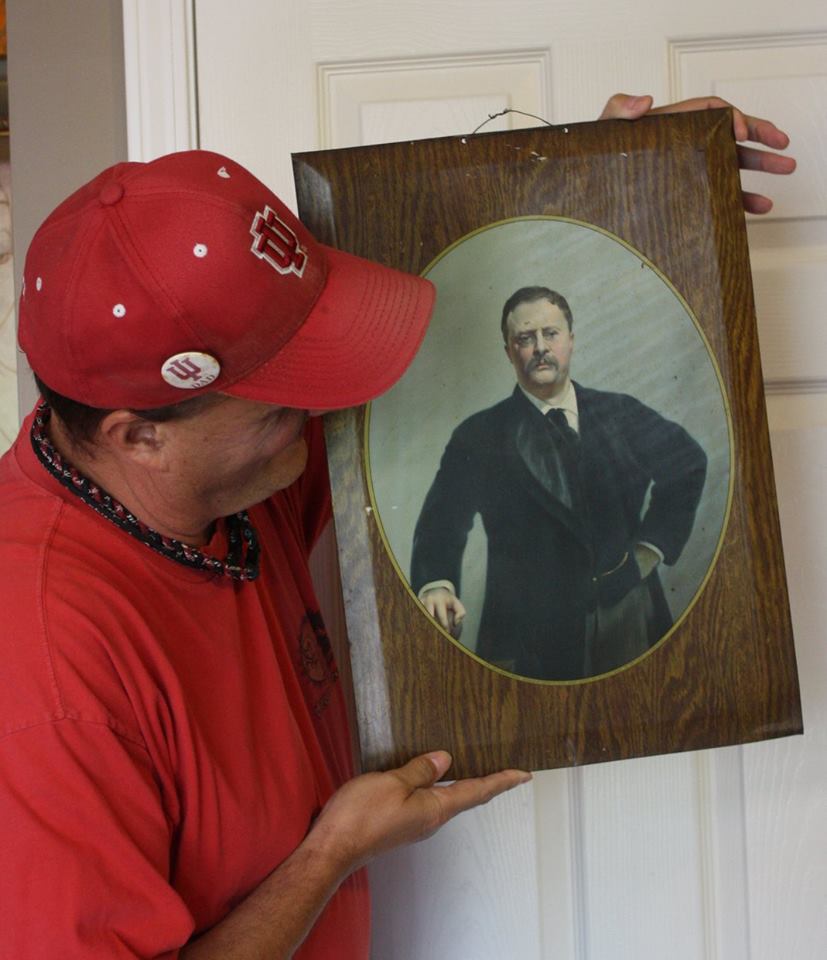
 Rhonda found a San Francisco Candlestick Park exit sign in the same booth from another lady and got a much better deal than I (about the cost of a McDonald’s Happy Meal.) A little further down the road, I found a beautiful Teddy Roosevelt metal color lithographed sign from 1903, a real stuffed alligator dressed as a sheriff complete with tiny cowboy hat and badge (please don’t judge me animal activists) and a wooden sign that had me puzzled at first. It was a large B&W direction arrow sign with the word “AWFISS” on the front. My traveling companion Chuck Hodson had to clue me in on the meaning. Apparently, “AWFISS” is slang for “Office” in the hill country. Sadly, it was not for sale.
 The last of the day’s finds was made by Chuck. It was a 12″ tall miniature prison electric chair complete with skull and crossbones in the back chair rest. “Beware Tennessee State Prison” and a 1956 year date were painted on the seat back. Constructed of wood, finish nails and leather straps, it was obviously made by an inmate back in the Ike Era. The Prison, located near downtown Nashville, opened in 1898 and closed in 1992. Hollywood movies Nashville, Ernest Goes to Jail, The Green Mile, and many more were filmed within it’s walls. I find myself strangely drawn to objects like these. I guess I love that type of gallows humor.
 Alan E. Hunter