
https://weeklyview.net/2023/02/02/99-birthday-cards-for-doc/
PLEASE SHARE!
February 5, 2023.
Friends, please consider joining me in a project celebrating the 99th birthday of the Dean of all Abraham Lincoln scholars from Springfield, Illinois:
Dr. Wayne C. “Doc” Temple.
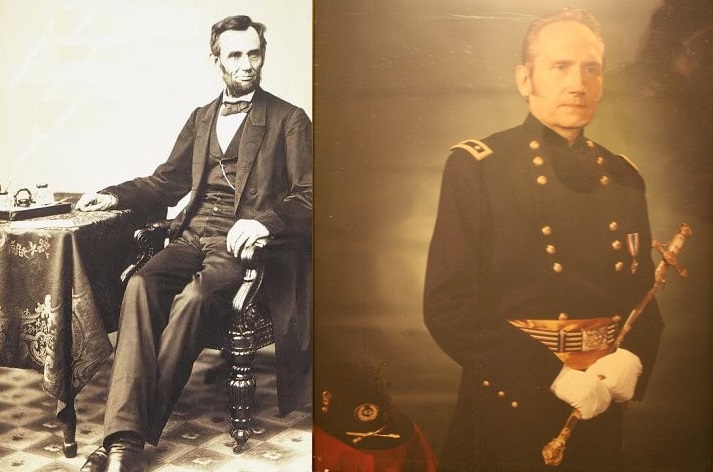
I have been working on a biography of Doc for some time now. For nearly 70 years, Doc has researched, written, and published more than 20 books and over 300 articles on Abraham Lincoln, the Civil War, Indigenous tribes, and Midwest history. Along the way, Doc has graciously volunteered his time, knowledge & wisdom with countless students and scholars along the way. Most of today’s Lincoln scholars have consulted Doc for facts in their work.
This will be Doc’s first birthday since losing Sandy, his wife of 42 years, last March. Doc is a member of America’s greatest generation having fought bravely for the United States in the European theatre, once actually standing in an open road firing a Thompson Sub-machine gun at a German fighter plane strafing his unit. He is an amazing man.
I ask that you join me in sending a birthday card or friendly note to Doc (he doesn’t do e-mail) in time for his 99th birthday (February 5, 2023) in care of the address below. Please share this humble announcement to your page and we’ll see if we can’t get 99 cards for Doc’s 99th birthday. His personal archives will be donated to the Abraham Lincoln Presidential Library and Museum in Springfield and these birthday cards will be preserved among that collection. Thank you for your consideration.
Wayne “Doc” Temple
c/o Books on the Square
427 East Washington Street
Springfield, IL 62701
————–
Doc’s historical resume is unchallenged. In my opinion, he is our nation’s greatest living Lincoln scholar. I am just one of the legion of Lincoln scholars he has helped and encouraged along the way. Doc served as chief deputy director of the Illinois State Archives for over 50 years (1964-2016), Secretary-treasurer of the National Lincoln-Civil War Council during the 100th anniversary Centennial years (1958-1964), and editor / associate of the Lincoln Herald since 1973.
I have listed Doc’s “resume” below. As you can see, it is quite impressive.
Doc’s education credentials & historical resume:
AB cum laude, University of Illinois, 1949; AM, University of Illinois, 1951; Doctor of Philosophy, University of Illinois, 1956; Lincoln Diploma of Honor (Illinois’ highest civilian award), Dean of history at Lincoln Memorial U., Harrogate, Tennessee, 1963. Wayne Calhoun Temple has been listed as a noteworthy Historian by Marquis Who’s Who.
Curator ethnohistory, Illinois State Museum, 1954-1958; editor-in-chief, Lincoln Herald, Lincoln Memorial U., 1958-1973; associate editor, Lincoln Herald, Lincoln Memorial U., since 1973; also director department Lincolniana, director university press, John Wingate Weeks professor of history, Lincoln Herald, Lincoln Memorial U., 1958-1964; with, Illinois State Archives, since 1964; chief deputy director, Illinois State Archives. Lecturer United States Military Academy, 1975. Secretary-treasurer National Lincoln-Civil War Council, 1958-1964.
Member bibliography committee Lincoln Lore, since 1958. Honorary member Lincoln Sesquicentennial Commission, 1959-1960. Advisory council United States Civil War Centennial Commission, 1960-1966.
Major Civil War Press Corps, since 1962. President Midwest Conference Masonic Education, 1985.
Doc’s books include:
Lincoln the Railsplitter 1961. (listed in the top 100 Lincoln books ever written)
Stephen A. Douglas, freemason Stephen A. Douglas, Freemason.
Abraham Lincoln and Others at the St. Nicholas.
Lincoln’s Confidant: The Life of Noah Brooks (The Knox College Lincoln Studies Center) by Wayne C. Temple, Douglas L. Wilson, et al. / Nov 30, 2018
Abraham Lincoln: From Skeptic to Prophet 1st Edition by Wayne C. Temple (1995)
Alexander Williamson: Friend of the Lincolns (Special publication)
Lincoln’s Surgeons at His Assassination Hardcover – October 29, 2015
BY SQUARE AND COMPASS: THE BUILDING OF LINCOLN’S HOME AND ITS SAGA.
Lincoln-Grant: Illinois militiamen Lincoln-Grant: Illinois militiamen
Indian Villages of the Illinois Country: Historic Tribes (Scientific Papers, Vol 2, Pt 2)
Membership:
Sponsor Abraham Lincoln Bay, Washington National Cathedral. Member Illinois State Flag Commission, since 1969. Trustee, regent Lincoln Academy Illinois, 1970-1982, Bicentennial Order Lincoln, 2009.
Board governors St. Louis unit Shriners Hospitals for Crippled Children, 1975-1981. Commissioning committee, honorary crew member and plank owner United States Ship Springfield submarine, since 1990. Honorary crew member United States Ship Abraham Lincoln aircraft carrier, since 1989.
With United States Army, 1943-1946, general Reserve (retired). Fellow Royal Society Arts (life). Member National Rifle Association, Knight Templar (Red Cross Constantine), Lincoln Group District of Columbia (honorary), University Illinois Alumni Association, Illinois State History Society, Board of Advisors, The Lincoln Forum, Illinois Professional Land Surveyors Association, Illinois State Dental Society (citation plague 1966), Reserve Officers Association, Lincoln Fellowship of Wisconsin, Iron Brigade Association (honorary life), Military Order Loyal Legion United States (honorary companion), Military Order Foreign Wars United States, Army and Navy Union, Masons (33 degree, Meritorious Service award, grand representative from Grand Lodge of Colorado), Shriners, Kappa Delta Pi, Phi Alpha, Phi Alpha Theta (Scholarship Key award), Chi Gamma Iota, Phi Beta Kappa, Tau Kappa Alpha, Alpha Psi Omega, Sigma Pi Beta (Headmaster), Sigma Tau Delta (Gold Honor Key award for editorial writing), Zeta Psi.


 The ALPLM’s “problems” began back in 2007 when it purchased the famous Taper collection for $23 million. “The collection is amazing,” says Sam, “the Lincoln top hat and bloodied gloves seem to be the items that resonate most with people, but the collection is much more than that.” Dr. Wheeler says that the uniqueness of the Taper collection centers around its emphasis on assassination related items, a field that had been largely ignored by Lincoln collectors at that time of its assemblage. The collection was created by Louise Taper, daughter-in-law of Southern California real estate magnate S. Mark Taper. She created the exhibition The Last Best Hope of Earth: Abraham Lincoln and the Promise of America which was at the Huntington Library from 1993–1994 and at the Chicago Historical Society from 1996-1997.
 “Bottom line,” Sam says, “we need to keep the collection here. That is our first priority.” It is easy to see how important this collection is to Dr. Wheeler by simply watching his eyes as he speaks. To Wheeler, the collection is not just a part of the museum, it is a part of the state of Illinois. Sam relates how when he speaks to groups, which he does quite regularly on behalf of the ALPLM, he often reaches into the vault to bring along pieces from the Taper collection to fit the topic. “People love seeing these items. It gives them a direct connection to Lincoln.” states Wheeler.
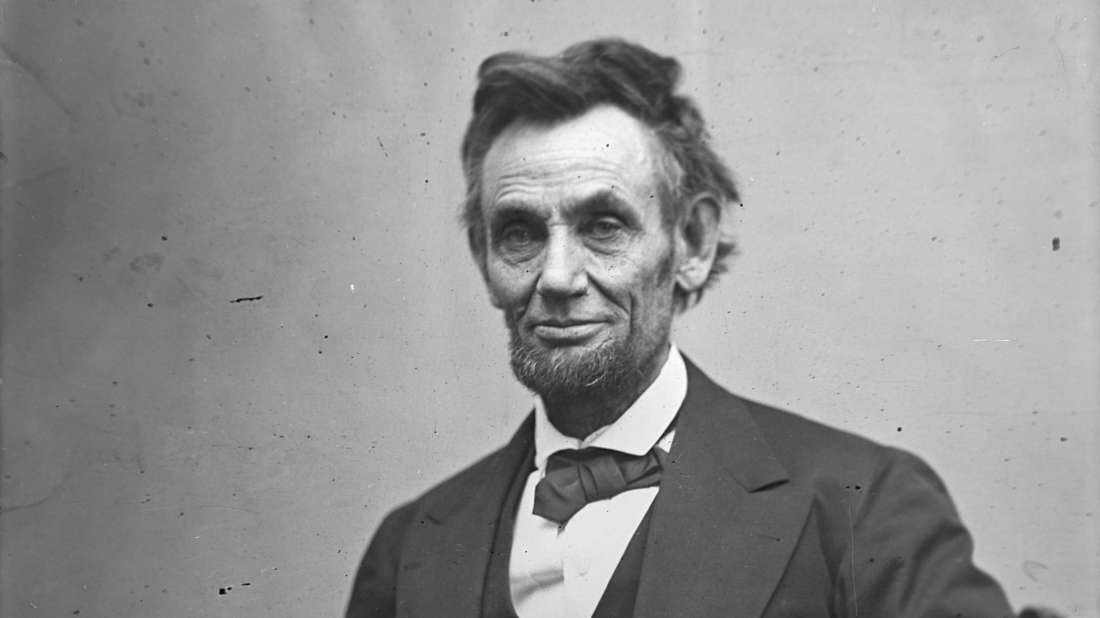 Hoosiers may ask, why doesn’t the ALPLM just ask the state of Illinois for the money? After all, with 300,000 visitors annually, the Lincoln Library Museum is one of the most popular tourist sites in the state of Illinois and is prominently featured in all of their state tourism ads. Well, the state is billions of dollars in debt despite approving a major income-tax increase last summer and as of the time of this writing, has yet to put together a budget. To the casual observer, one would think that financial stalemate between the state and the museum would be a no-brainer when you consider that the ALPLM has drawn more than 4 million visitors since opening in 2005. The truth is a little more complicated than that. Illinois State government runs and funds the Lincoln library and museum. The separately run foundation raises private funds to support the presidential complex. The foundation, which is not funded by the state, operates a gift store and restaurant but has little role in the complex’s operations, programs and oversight.

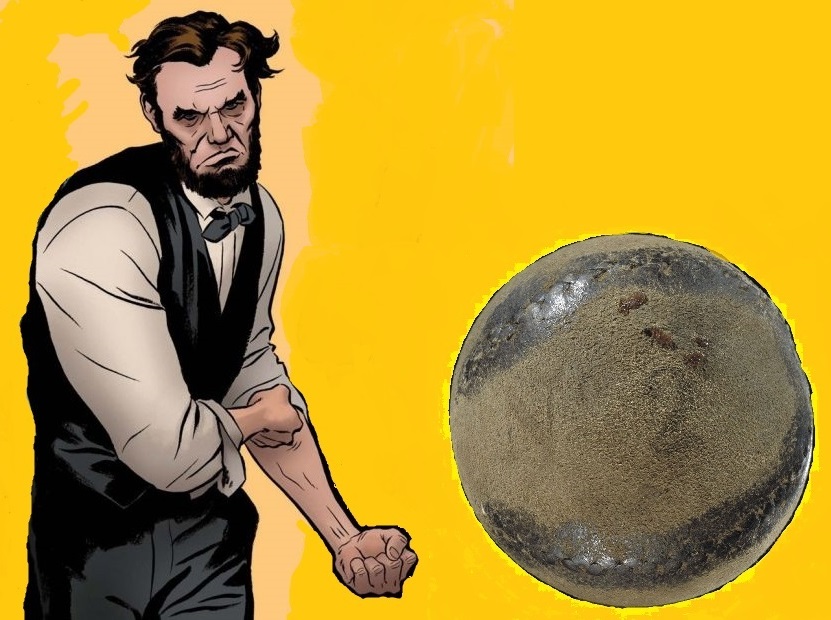
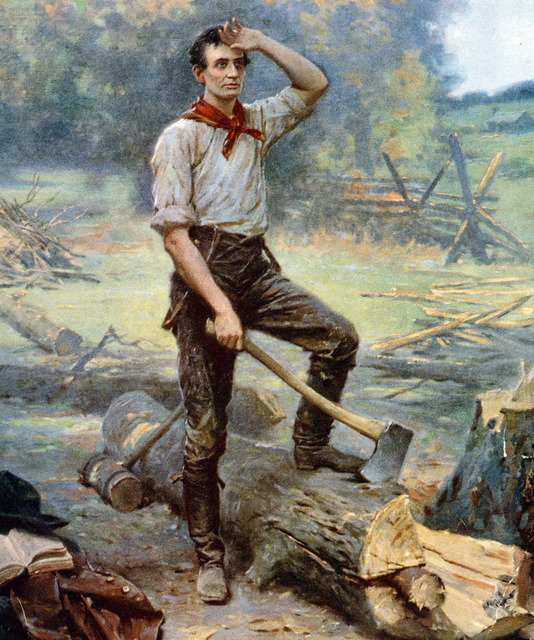 Likewise, you may have heard that he was a handball player, as have I, but details have always been hard to find. The game of handball was much better suited to Lincoln. At 6 feet 4 inches tall, his long legs and gangly arms served the rail splitter well. Muscles honed while wielding an axe as a youth were kept tight and toned as an adult. Lincoln milked his own cows and chopped his own wood even though he was a successful, affluent lawyer with little time to spare.
 The term handball really didn’t exist in Lincoln’s day. It was called a “game of fives” by Abe and his contemporaries. When Mr. Lincoln went to town, he frequently joined with the boys in playing handball. In the Springfield version, players choose sides to square off against one another. The game is begun by one of the boys bouncing the ball against the wall of the Logan building. As it bounced back, and opponent strikes it in the same manner, so that the ball is kept going back and forth against the wall until someone misses the rebound. ‘Old Abe’ was often the winner, for his long arms and long legs served a good purpose in reaching and returning the ball from any angle his adversary could send it to the wall. The game required two, four or six players, spread equally on each side. The three players who lost paid 10 ¢ each, making 30 ¢ a game. So as you can imagine the games got pretty serious.
 Court clerk Thomas W.S. Kidd spoke of Mr. Lincoln’s love of the game: “In 1859, Zimri A. Enos, Esq., Hon. Chas. A. Keyes, E. L. Baker, Esq., then editor of the Journal, William A. Turney, Esq., Clerk of the Supreme Court, and a number of others, in connection with Mr. Lincoln, had the lot, then an open one, lying between what was known as the United States Court Building, on the northeast corner of the public square, and the building owned by our old friend, Mr. John Carmody, on the alley north of it, on Sixth street, enclosed with a high board fence, leaving a dead wall at either end. In this ‘alley’ could be found Mr. Lincoln, with the gentlemen named and others, as vigorously engaged in the sport as though life depended upon it. He would play until nearly exhausted and then take a seat on the rough board benches arranged along the sides for the accommodation of friends and the tired players.”
 Lincoln’s friend, Dr. Preston H Bailhache, recalled a handball game played on a court built by Patrick Stanley in an ‘alley’ in the rear of his grocery in the Second Ward, which is still standing. “I have sat and laughed many happy hours away watching a game of ball between Lincoln on one side and Hon. Chas. A. Keyes on the other. Mr. Keyes is quite a short man, but muscular, wiry and active as a cat, while his now more distinguished antagonist, as all now know, was tall and a little awkward, but which with much practice and skill in the movement of the ball, together with his good judgment, gave him the greatest advantage. In a very hotly contested game, when both sides were ‘up a stump’ – a term used by the players to indicate an even game – and while the contestants were vigorously watching every movement, Mr. Lincoln and Mr. Turney collided with such force that it came very near preventing his nomination to the Presidency, and giving to Springfield a sensation by his death and burial. Both were badly hurt, but not so badly as to discourage either from being found in the ‘alley’ the next day.”
 Another eyewitness was the unofficial gatekeeper of the Handball Court, William Donnelly, a nephew of John Carmody. Years later, Donnelly offered this account to a reporter, “I worked in the Carmody store and usually had charge of the ball court. I smoothed the wall and leveled the ground. I made the balls. Old stockings were rolled out and wound into balls and covered with buckskin. Mr. Lincoln was not a good player. He learned the game when he was too old. But he liked to play and did tolerably well. I remember when he was nominated as though it were yesterday. It was the last day of the convention and he was plainly nervous and restless.”
 John Carmody recalled another handball game: “An incident took place, during one of those games, which I have retained clearly in my memory. I had a nephew named Patrick Johnson who was very expert in the game. He struck the ball in such a manner that it hit Mr. Lincoln in the ear. I ran to sympathize with him and asked if he was hurt. He said he was not, and as he said it he reached both of his hands toward the sky. Straining my neck to look up into his face, for he was several inches taller than I was, I said to him, ‘Lincoln, if you are going to heaven, take us both.’”
 In October of 2004, the Smithsonian Institution displayed Abraham Lincoln’s handball as part of their exhibit “Sports: Breaking Records, Breaking Barriers.” It’s small (about the size of a tennis ball), dirty and well worn and really, really old. The ball has “No. 2” stamped on the side but it is unclear if the stamp was on the ball when Lincoln handled it or if it was stamped on the side for reference years later. It came from the Lincoln Home in Springfield, where Lincoln lived with his family from 1844 until 1861.
 Although Assassin John Wilkes Booth was not in the production, he would appear at the McVicker’s 4 times in different productions between 1862 & 1863 while Mr. Lincoln was in the White House. Ironically, the McVickers Theatre was the very first place where actor Harry Hawk began theater work as a call boy, or stagehand. Hawk was the actor on stage alone at the moment of Lincoln’s assassination and likely uttered the last words Mr. Lincoln ever heard. Who knew a well worn piece of leather sports equipment could have so many connections?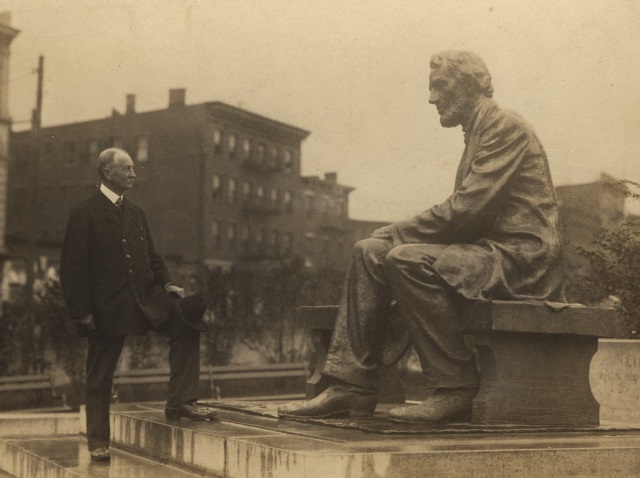
 On June 16th I found myself in Marshalltown examining the items. I obtained my bidder number, which happened to be bidder # 1, and retreated to my hotel room to await the next day’s auction. There’s not much to do in Marshalltown, Iowa so I decided to drive to the nearby community of LeClaire, Iowa to mark time.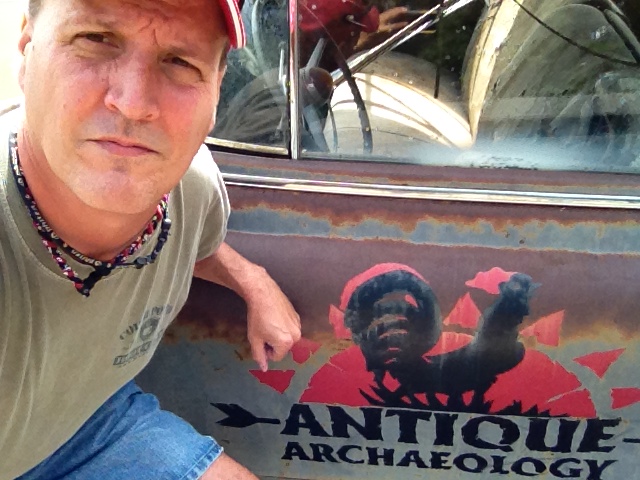
 Among the items I brought home were a pair of contemporaneous framed leaflets. Both are displayed starkly in black wood and glass frames, one is a copy of Lincoln’s farewell address to the citizens of Springfield, and the other is a copy of Lincoln’s favorite poem. The farewell address is important to me because Lincoln’s first stop after the delivery of this poignant edict was Indianapolis. The next item was a classic-looking photo of Lincoln ascending to heaven wrapped in the open arms of George Washington. The careworn oval metal frame fits snugly in the palm and bears the wear and patina of an item held repeatedly in the loving hands of a legion of Lincoln admirers.
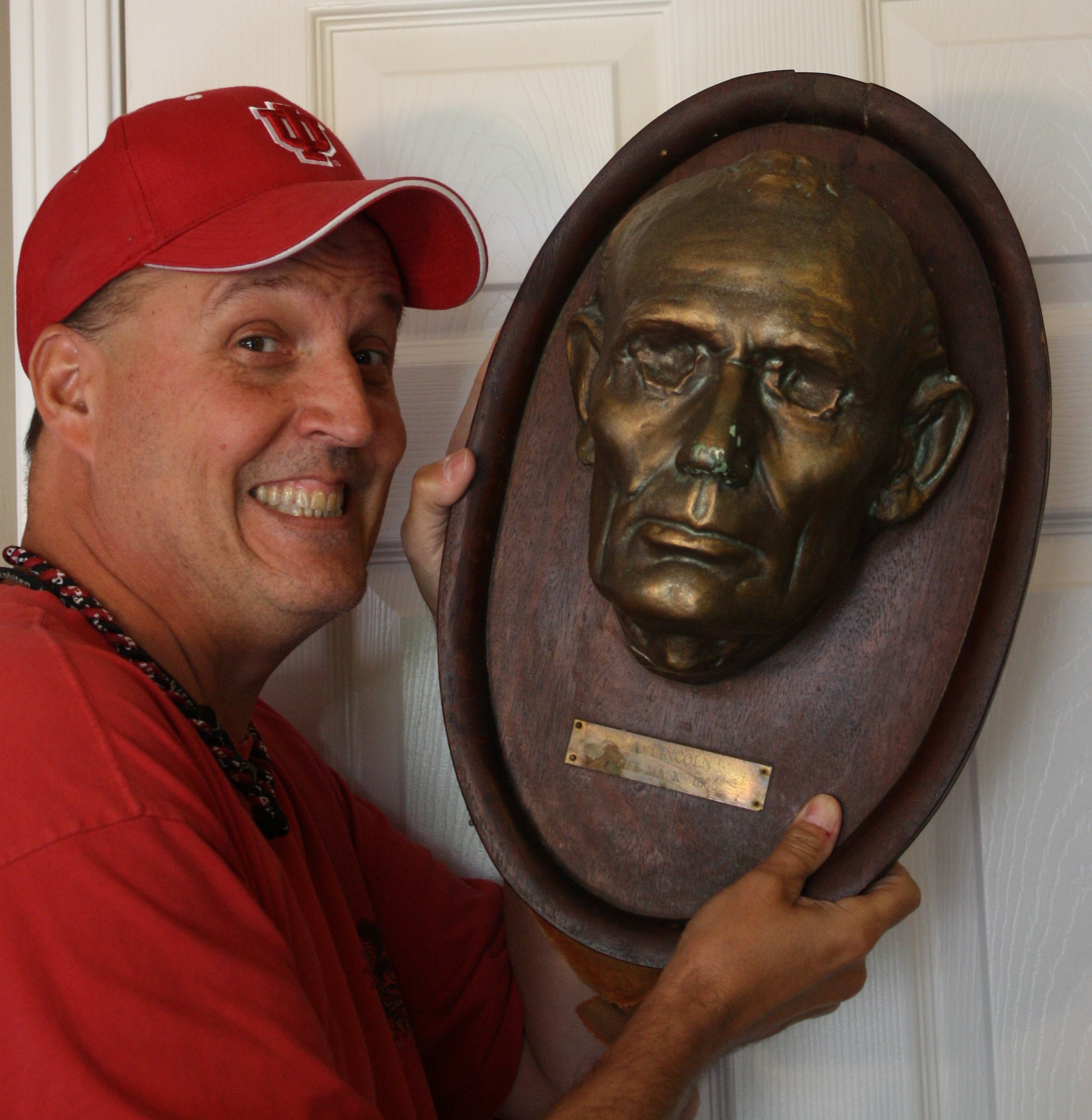 The next item is the haunting life mask of Abraham Lincoln that once hung on the wall of Oldroyd’s museum. The lifesized mask is attached to a larger handcrafted oval wooden plaque with a smaller brass nameplate attached to the front. The lifemask, made by artist Leonard Volk in 1860 before Lincoln grew his signature beard, is an accurate representation of what it would have been like to look at the face of a young and vibrant Lincoln. This item was surely a highlight of the museum and, judging by the loss of paint and subsequent repair of the nose, was a good luck talisman for all visitors. Rubbing Lincoln’s nose is still a popular tradition at the Lincoln tomb in Springfield.
 owned. The Bible was obtained by Oldroyd after Mr. Lincoln was killed and presumably following the death of Mary and Tad Lincoln. The phone book-sized Bible shows signs of heavy wear and transport in compliance with the somewhat vagabond lifestyle led by Mary and Tad after vacating the White House in 1865. Mary died in 1882. Tad preceded her in 1871. The Bible includes a couple pages of contemporary Carte de Visite photographs of the Lincoln family along with a few other disparate images from the Civil War and immediate post-period. The inclusion of CDVs depicting Union Civil War Generals Grant, Sheridan, Burnside, and Sherman alongside images of the US Capitol Dome under construction and George and Martha Washington could easily be construed as Tad’s version of collecting baseball cards.
 The last three items of acquisition were perhaps the most important to me. I am a native Hoosier. I cherish the idea that Abraham Lincoln grew to manhood in the southern region of my home state. These three items offered a direct connection to Lincoln and Indiana. The first two items are innocuous in their relevance to Lincoln the Hoosier; the Lincoln family coffee grinder and Abraham Lincoln’s ice skate.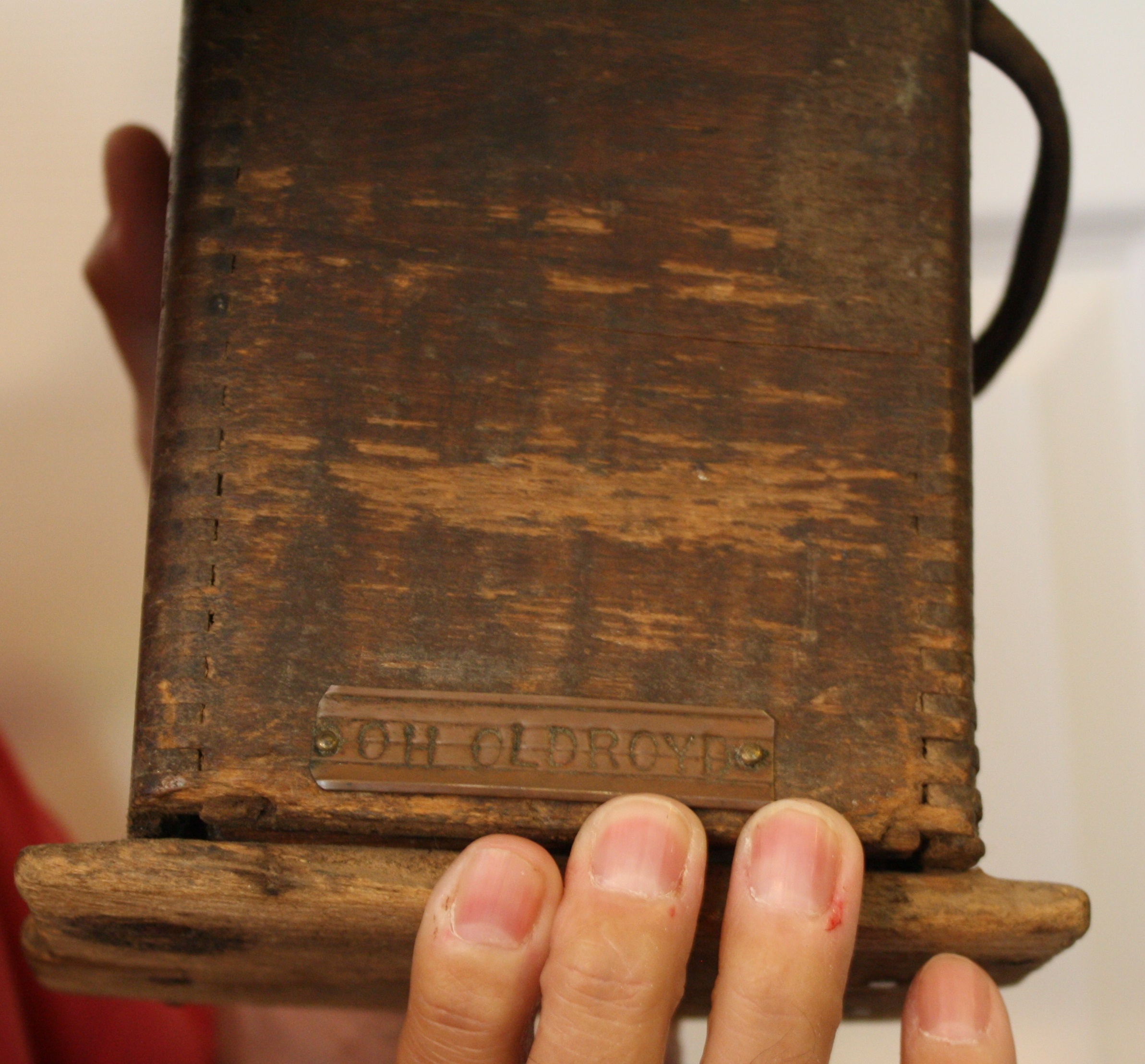
 The next Indiana Lincoln item is an ice skate. The thick wooden shoe stand is shaped like an hourglass and the heavy iron blade is curled at each end like an ancient Crakow shoe. While no official reference exists of Lincoln the ice skater, the skate presents a romantic image of boyhood Lincoln at play on a frozen southern Indiana pond. Simply holding it in your hands brings a smile to your face.
 with me, at all costs. It is an ancient-looking Colonial Era metal candle maker. During colonial times up to the Antebellum Era, candles were the main source of light during the long, dark, nighttime hours. Candles on the western frontier were made from beeswax and tallow (animal fat). The wicks were lain loosely inside the tube as the wax was poured in around them to harden.
 Included with the candle maker is a framed certificate written and signed by Osborn Oldroyd reading: “This candle maker is from the Lincoln and Sparrow Cabin on Pigeon Creek Indiana (1818-1835) O.H. Oldroyd Washington April 9, 1901”. The certificate has a small brass diecut tab attached with the seal of the state of Indiana inset. It would be hard to find a more romantic artifact to illustrate Lincoln’s time spent in the Hoosier state. Young Abraham may well have learned to read by the light of a candle made in this, the Lincoln family candle mold. Stories abound of Young Abe the railsplitter reading by candle and firelight into the wee hours of the morning after a long day’s work in the fields.
 Lastly, my wife treated me to a birthday trip to Springfield, Illinois in July. I traveled to the Lincoln home on an early Saturday morning to reflect while seated in front of the Lincoln home. Based on trips past, I’ve learned that the early morning hours are best. No school buses, tourists or fitness walkers/bikers to mar the scene. I have been coming to Springfield for many years. Of course, Abraham Lincoln is the reason for my visit. However, I never forget that Osborn Oldroyd lived in the house and operated his museum here for nearly a decade (1884-93). I’d asked several people, ranging from officials at the Lincoln Museum to parks department employees, about Oldroyd in the past but always got a cool reception to my querie.
 Alan E. Hunter