
![IMG_3526[1]](https://alanehunter.com/wp-content/uploads/2019/07/img_35261.jpg?w=825)
Original publish date: July 11, 2019
Sometimes you just need to step back, relax, reflect awhile and think about what it means to be a Hoosier. The fourth of July seems a perfect time for such reflections. I was born in Indianapolis, as were my parents, grand parents and great-grand parents. Like many of us, I had forefathers who served in the Civil War. In my case, I had gr-gr-grandfathers serving on both sides of the conflict; my maternal forefather was riding with Morgan’s Raiders while my paternal forefather was chasing him. Had one caught the other, I might not be here.
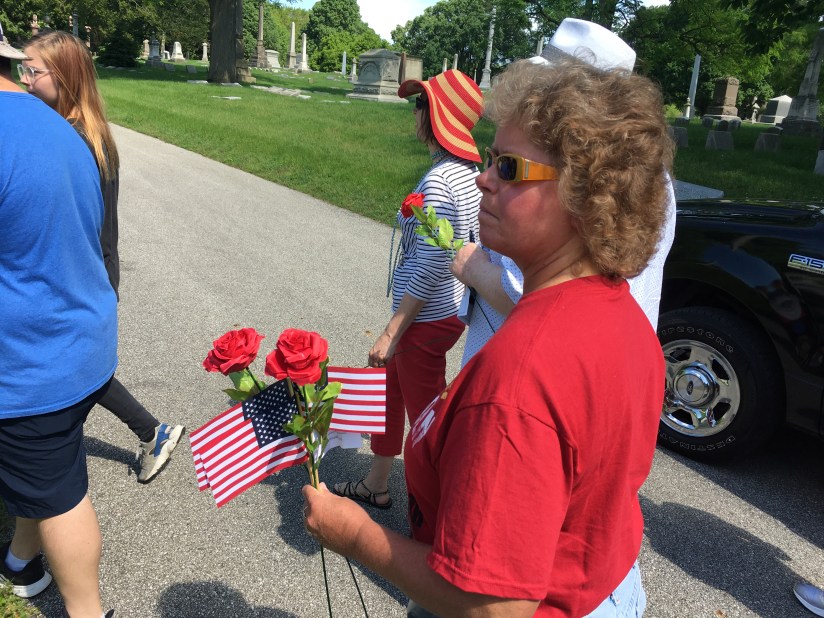
This past Memorial Day, I finally decided to venture out to Crown Hill Cemetery and attend the official ceremonies hosted by the Sons of Union Veterans of the Civil War-Ben Harrison Camp #356. Dave “The King” Wilson had suggested I join a few years back and I just got around to joining recently. I’ve known Camp Commander Jim Floyd for nearly two decades and was delighted to be present as a spectator while Jim and Dave led the ceremonies. Truth is, I joined not only to honor the veterans in my past family but also to honor my muse of the past decade: Osborn Oldroyd.

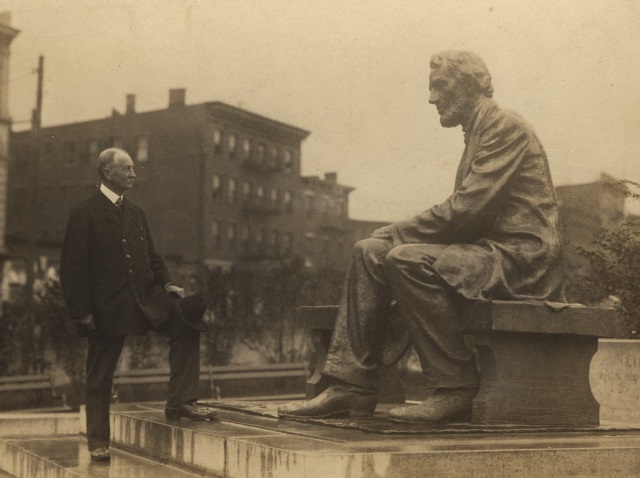
As many of you know, Oldroyd has been on my mind lately. Not only was he the very first curator of a Lincoln museum, first housed in the Lincoln homestead in Springfield, Illinois for a decade and then in the House Where Lincoln Died in Washington D.C. for over three decades more. Equally importantly, he also served as Assistant Adjutant General of the Grand Army of the Republic in the District for over twenty years. Regardless of how I got there, I got there. And hopefully by the time you’re finished reading this article, you’ll decide you might want to join too.
The Ben Harrison Camp No. 356 SUVCW was originally founded on June 19, 1884 with 46 members, most of whom were “real sons”. After that first camp disbanded, it reorganized on March 8, 1897 with 32 members. It continued meeting into the early 1970’s before it disbanded again. In 1981, the Ben Harrison camp was organized once again and has met continuously ever since. Their mission statement, quite simply, is to “Honor Union Veterans and all who have patriotically served our country in any war, preserving & perpetuating the Grand Army of the Republic, and Patriotic Education.” All with the goal to help America become a better nation by helping to keep the stories and sacrifice of our Civil War ancestors alive.
The Ben Harrison camp “honors the soldiers who fought to preserve the Union and free an enslaved people through activities including: maintaining their graves, teaching patriotism, and ensuring future generations continue to learn from the mistakes of the past.” As for the parent organization, “The Sons of Union Veterans of the Civil War (SUVCW) is the volunteer, non-profit, charitable, fraternal, patriotic and educational organization created by the Grand Army of the Republic (GAR), which was the largest Union Civil War veterans’ organization. The SUVCW is officially recognized as the GAR’s legal successor, and received its Congressional Charter in 1954.”
![IMG_3525[1]](https://alanehunter.com/wp-content/uploads/2019/07/img_35251.jpg?w=825)
 This memorial day, the Ben Harrison camp honored Hoosier Civil War soldier Captain Richard Burns. With temperatures in Indianapolis hovering above or around the 90 degree mark for nearly two months now, Captain Burns’ story seems apropos to the moment. For you see, Captain Richard Burns died of sunstroke. At 5′ 10″ and weighing 143 pounds, Richard Burns was light skinned with piercing blue eyes and prematurely gray hair. Burns first enlisted on September 21, 1861 as a private in Third Battery, Indiana Light Artillery. The unit was organized in Connersville, Indiana, and mustered in at Indianapolis on August 24, 1861. Ironically, the unit would muster out nearly 4 years to the day (August 21, 1865) at the same place.
Within weeks of his enlistment, Burns was appointed corporal on October 1, 1861. From there Burns advanced to squad sergeant then orderly sergeant. On November 25, 1862 he was appointed second lieutenant then rose to first lieutenant on October 25, 1863. On July 25, 1865 Burns was appointed captain, a rank he would retain until his discharge on August 21, 1865. While his rise through the ranks might be described as meteoric, it did not come without cost. During his service, Burns contracted typhoid pneumonia (more commonly known as consumption back then) and was plagued by chronic diarrhea for nearly all of his military service. The latter, while uncomfortable, was temporary. However, the Streptococcus pneumonia remained and slowly invaded and weakened his heart for the remainder of his life.
Before the war, Burns worked in the “burnt district” of Wayne County as a heavy machinist. After his discharge, Burns returned to Cambridge City but was confined to light duty, working as a grocery clerk and a brick mason. Burns relocated to Montana in 1867, presumably chasing gold or cattle alongside other fortune-hunting Civil War veterans, but moved back to Cambridge City the next year. From there, Burns moved to Anderson and finally to Indianapolis.
According to an article titled “THE OPPRESSIVE HEAT” found in the August 16, 1888 Indianapolis Journal newspaper (page 8), “The remarkably cool weather of the first three days of the week was followed by a hot wave yesterday that raised the mercury to 91 degrees at 3 o’clock in the afternoon. The air during the afternoon and early evening, in the absence of any breeze, was very oppressive, and as people were not prepared for the sudden change there was much discomfort. At 5 o’clock in the evening Richard Burns, a brick-mason, living at No. 90 North New Jersey street, was prostrated on Hadley avenue, where he was working. Kregelo’s ambulance was called, and the attendants were taking him to the City Hospital when he died. He was fifty years of age.”

The Indianapolis News of that same day, reported “Yesterday afternoon the temperature mounted to an uncomfortable degree, and the heat was very oppressive. Late in the day Captain Richard Burns, residing 90 North New Jersey street and employed on Hadley avenue, was overcome by the heat, and he died while Kregelo’s ambulance was removing him to the hospital. He was aged about fifty, and was a member of Chapman Post, G. A. R., and a pensioner. he leaves a wife, but no children….” He was buried on Lot 49, Section 4 in Crown Hill Cemetery on August 19, 1888 at 2:00.
This memorial day’s ceremony at Crown Hill was solemn, stirring and well organized. However, it wasn’t until afterwards that I learned of a connection between Captain Burns, myself and Irvington. The Third Light Battery was assigned to General John C. Fremont’s Army of the Tennessee and accompanied it in the campaign through southwestern Missouri in the Western Theater. In December, 1863, the battery moved to Columbus, Ky., where it served in the winter campaign through western Tennessee before it moved to Vicksburg and joined Sherman’s army on the expedition to Meridian, Miss., in Feb., 1864. From there, the battery assisted in the storming and capture of Fort De Russy. It then served at Memphis and Tupelo, Miss. In Jan., 1865, the unit moved to New Orleans, where it took part in the siege and capture of Fort Blakely, which resulted in the surrender of Mobile. It next moved to Montgomery, thence to Selma, Ala., where it remained until July 30, 1865, when orders were received to proceed to Indianapolis. It was mustered out Aug. 13, 1865, numbering 3 officers and 71 men, having lost 64 in killed and wounded.
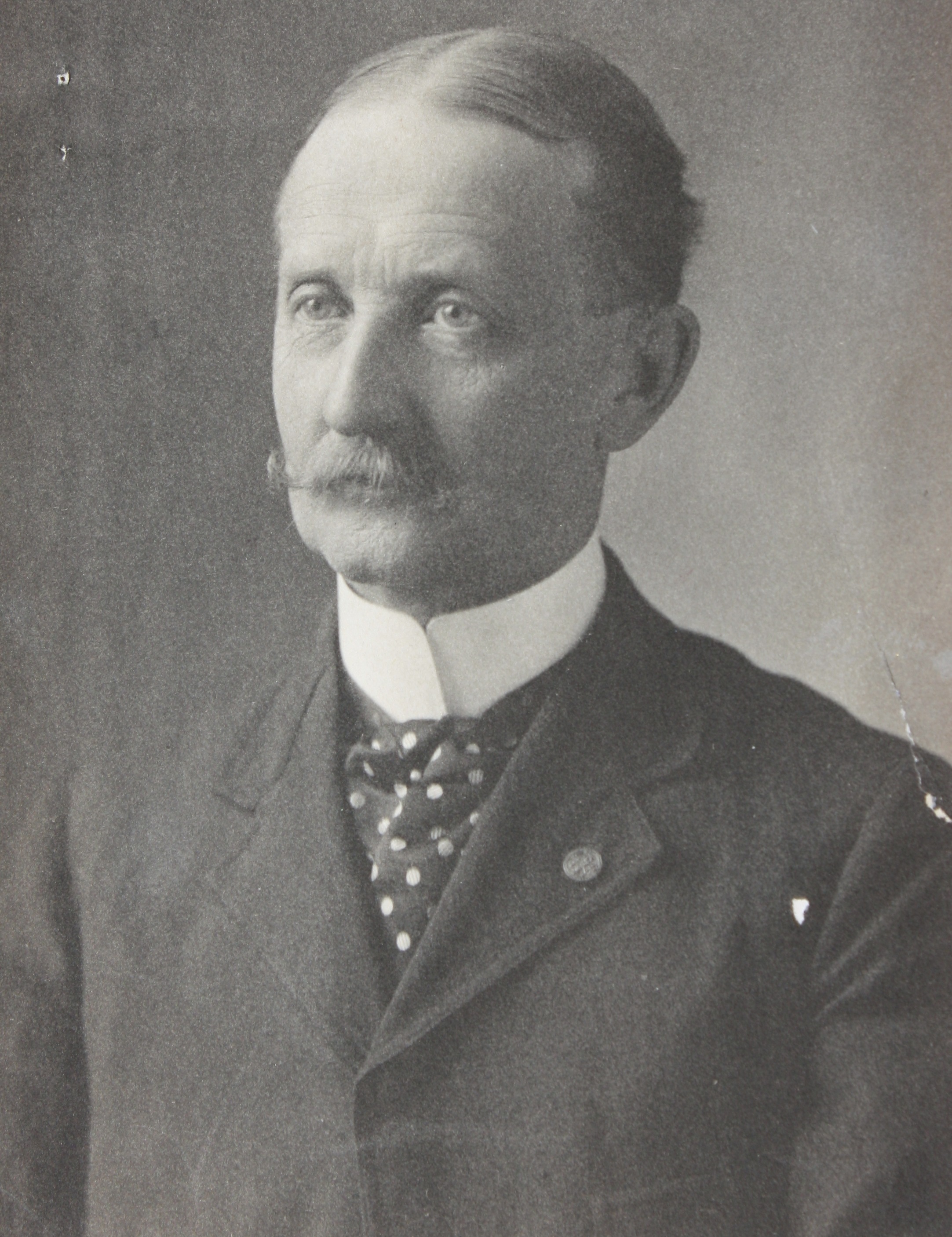
Captain Richard Burns served in in the Third Battery, Indiana Light Artillery alongside fellow Captains James M. Cockefair, Thomas J. Ginn, and Watton W. Frybarger. Capt. Frybarger was promoted major and was wounded in the head during the Battle of Shiloh. After which he was ordered back to Indianapolis to organize all of the state’s artillery units by his pre-war friend, Indiana’s Civil War Governor Oliver P. Morton. It should be noted that Frybarger has the distinction of organizing the Hoosier state’s only artillery battery in place BEFORE the war. Frybarger went to work shoring up the southern border of Indiana by placing guns at several places along the Ohio River. His invasion fears were realized in early July of 1863 when Morgan’s Raiders invaded the state via Kentucky. Yes, Major Frybarger was a born artillerist.

If you have taken my October tours of Irvington, then you’ve met Major Frybarger. Well, sort of anyway. I conclude every tour of Irvington with a stop at the spot where Abraham Lincoln’s funeral train slowly steamed past in the pre-dawn hours of April 30th, 1865. As I share with my guests, many years ago I was offered some of the personal effects of Major Frybarger. Among those effects were an ancient leather-bound album full of family tintype and CDV photos, a lock of his hair, a large silver platter, and his regimental ring. The platter, which at 21″ tall and 33″ wide, is quite large. It is inscribed “Presented by the 22nd and 23rd Indiana Mounted Artillery to Mrs Major W.W. Frybarger Indianapolis March 1863” and was given to the Major’s wife by grateful soldiers in thanks to the Major securing the southern Indiana border.

Equally important to the Frybarger saga is his role in the Lincoln funeral here in Indianapolis. As every Hoosier student of Lincoln knows, when the martyred President’s remains arrived in Indianapolis, it arrived in the midst of a torrential downpour so strong that the official public ceremonies had to be cancelled. For that evening of April 30th, 1865 Mr. Lincoln’s body remained in the rotunda of the old statehouse. Who was in charge of the decorating and care of the railsplitter’s body that night? Major W.W. Frybarger. I tell October visitors to Irvington that story while placing the ring on the finger of every guest I approach with the admonition that Frybarger’s regimental ring may well have touched the body of Abraham Lincoln.

Now, thanks to the impeccable research of Sons of Union Veterans Camp Commander Jim Floyd and Eliza E. George Auxiliary No. 356 Secretary / Treasurer Jennifer Thompson, I now have another connection to Frybarger. I should note that by the time you read this article, I will have joined the Sons of Union Veterans Ben Harrison Camp No. 356 as an official member. I am sure that the brothers would be happy to have you in their ranks as well. For more information, contact http://benharrisoncamp.org/ Or drop me an e-mail and I’ll steer you towards this fine organization.

 On June 16th I found myself in Marshalltown examining the items. I obtained my bidder number, which happened to be bidder # 1, and retreated to my hotel room to await the next day’s auction. There’s not much to do in Marshalltown, Iowa so I decided to drive to the nearby community of LeClaire, Iowa to mark time.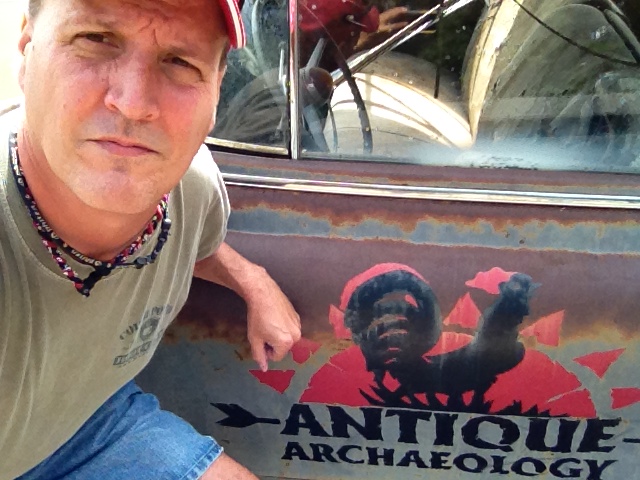
 Among the items I brought home were a pair of contemporaneous framed leaflets. Both are displayed starkly in black wood and glass frames, one is a copy of Lincoln’s farewell address to the citizens of Springfield, and the other is a copy of Lincoln’s favorite poem. The farewell address is important to me because Lincoln’s first stop after the delivery of this poignant edict was Indianapolis. The next item was a classic-looking photo of Lincoln ascending to heaven wrapped in the open arms of George Washington. The careworn oval metal frame fits snugly in the palm and bears the wear and patina of an item held repeatedly in the loving hands of a legion of Lincoln admirers.
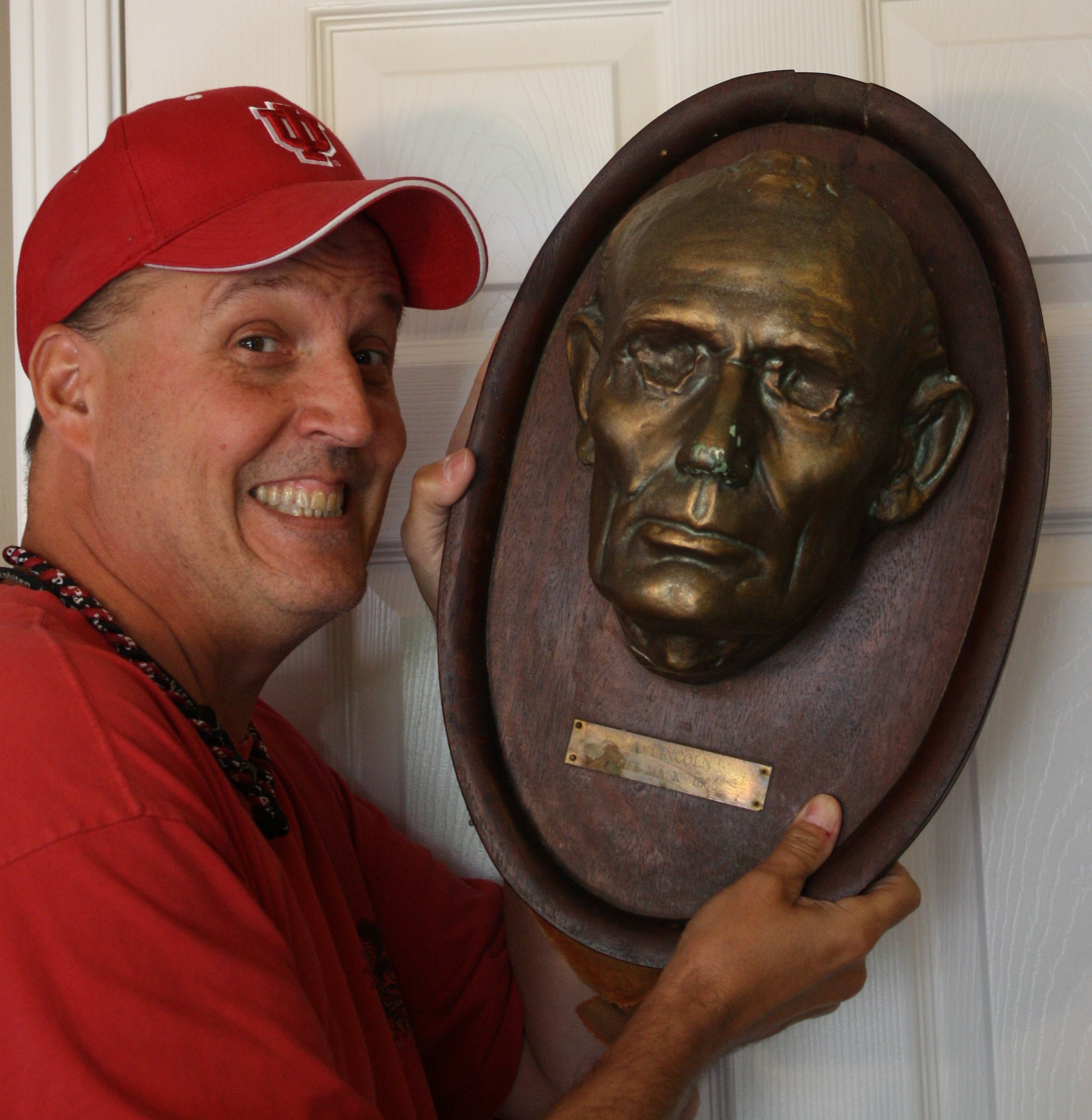 The next item is the haunting life mask of Abraham Lincoln that once hung on the wall of Oldroyd’s museum. The lifesized mask is attached to a larger handcrafted oval wooden plaque with a smaller brass nameplate attached to the front. The lifemask, made by artist Leonard Volk in 1860 before Lincoln grew his signature beard, is an accurate representation of what it would have been like to look at the face of a young and vibrant Lincoln. This item was surely a highlight of the museum and, judging by the loss of paint and subsequent repair of the nose, was a good luck talisman for all visitors. Rubbing Lincoln’s nose is still a popular tradition at the Lincoln tomb in Springfield.
 owned. The Bible was obtained by Oldroyd after Mr. Lincoln was killed and presumably following the death of Mary and Tad Lincoln. The phone book-sized Bible shows signs of heavy wear and transport in compliance with the somewhat vagabond lifestyle led by Mary and Tad after vacating the White House in 1865. Mary died in 1882. Tad preceded her in 1871. The Bible includes a couple pages of contemporary Carte de Visite photographs of the Lincoln family along with a few other disparate images from the Civil War and immediate post-period. The inclusion of CDVs depicting Union Civil War Generals Grant, Sheridan, Burnside, and Sherman alongside images of the US Capitol Dome under construction and George and Martha Washington could easily be construed as Tad’s version of collecting baseball cards.
 The last three items of acquisition were perhaps the most important to me. I am a native Hoosier. I cherish the idea that Abraham Lincoln grew to manhood in the southern region of my home state. These three items offered a direct connection to Lincoln and Indiana. The first two items are innocuous in their relevance to Lincoln the Hoosier; the Lincoln family coffee grinder and Abraham Lincoln’s ice skate.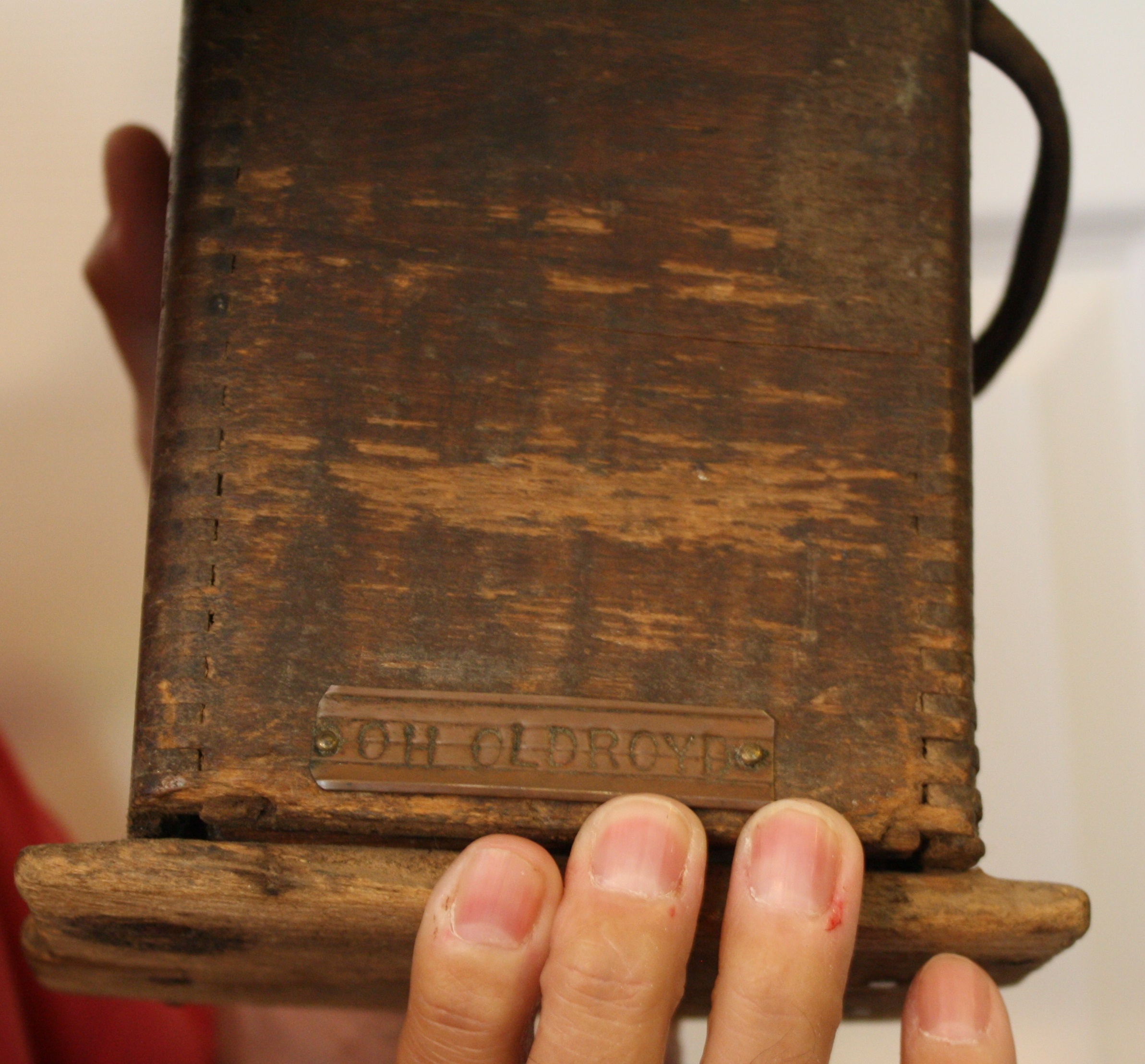
 The next Indiana Lincoln item is an ice skate. The thick wooden shoe stand is shaped like an hourglass and the heavy iron blade is curled at each end like an ancient Crakow shoe. While no official reference exists of Lincoln the ice skater, the skate presents a romantic image of boyhood Lincoln at play on a frozen southern Indiana pond. Simply holding it in your hands brings a smile to your face.
 with me, at all costs. It is an ancient-looking Colonial Era metal candle maker. During colonial times up to the Antebellum Era, candles were the main source of light during the long, dark, nighttime hours. Candles on the western frontier were made from beeswax and tallow (animal fat). The wicks were lain loosely inside the tube as the wax was poured in around them to harden.
 Included with the candle maker is a framed certificate written and signed by Osborn Oldroyd reading: “This candle maker is from the Lincoln and Sparrow Cabin on Pigeon Creek Indiana (1818-1835) O.H. Oldroyd Washington April 9, 1901”. The certificate has a small brass diecut tab attached with the seal of the state of Indiana inset. It would be hard to find a more romantic artifact to illustrate Lincoln’s time spent in the Hoosier state. Young Abraham may well have learned to read by the light of a candle made in this, the Lincoln family candle mold. Stories abound of Young Abe the railsplitter reading by candle and firelight into the wee hours of the morning after a long day’s work in the fields.
 Lastly, my wife treated me to a birthday trip to Springfield, Illinois in July. I traveled to the Lincoln home on an early Saturday morning to reflect while seated in front of the Lincoln home. Based on trips past, I’ve learned that the early morning hours are best. No school buses, tourists or fitness walkers/bikers to mar the scene. I have been coming to Springfield for many years. Of course, Abraham Lincoln is the reason for my visit. However, I never forget that Osborn Oldroyd lived in the house and operated his museum here for nearly a decade (1884-93). I’d asked several people, ranging from officials at the Lincoln Museum to parks department employees, about Oldroyd in the past but always got a cool reception to my querie.
 Original publish date: July 20, 2017
 Another of the letters, dated Dec. 10, 1902, touched me personally because it was written by the sister of Louis Weichmann, the main government witness at the trial of the conspirators. Weichmann lived in Mrs. Surratt’s boarding house and many believe it was Weichmann’s testimony that got Mary Surratt hung. Weichmann moved to Anderson Indiana after the trial and founded Anderson business college. He is buried in Anderson’s St. Francis cemetery in an unmarked grave. “Dear Sir-I am sending you a copy of Sunday’s Indianapolis Journal containing a confession of one of the conspirators of President Lincoln….With best regards from our family, I remain Sincerely yours, Mrs. C.O. Crowley Sister of the late L.J. Wiechmann.” Curiously, Mrs. Crowley misspelled her own maiden name in her letter.
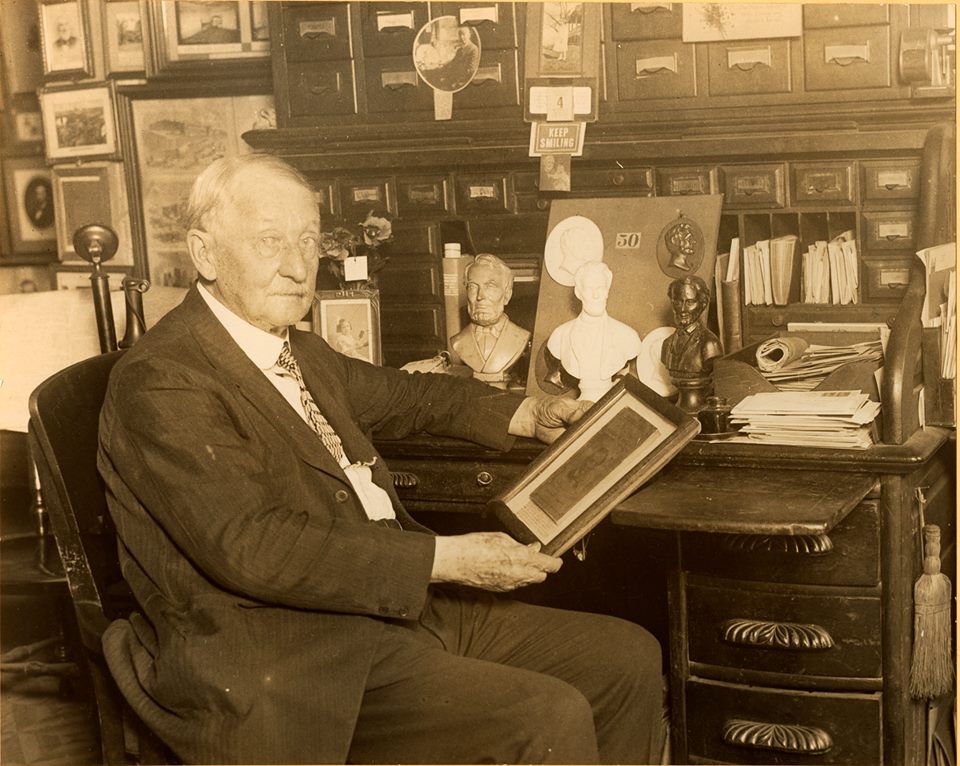
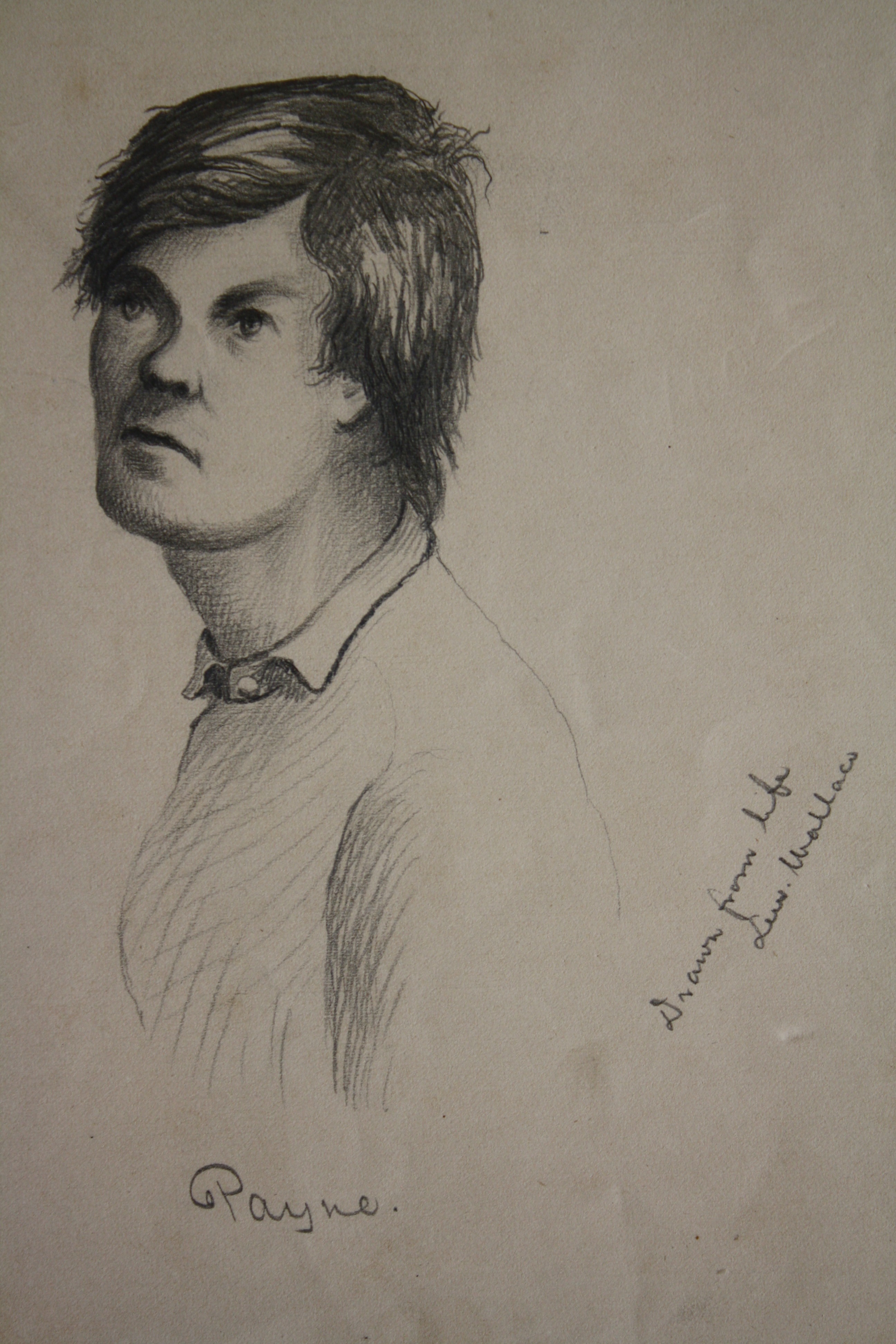 Included within that collection was a group of several dozen items that once belonged to Osborn Oldroyd himself. This included correspondence from Anderson’s Louis Weichmann to Oldroyd about shared information for books about Abraham Lincoln both men were simultaneously working on as well as photos and several handwritten eyewitness accounts of the assassination of President Lincoln. My personal favorite was a pencil drawing of Lincoln Conspirator Lewis Thornton Powell drawn by Crawfordsville, Indiana’s General Lew Wallace.
 Original publish date: July 13, 2017
 Ironically, the same year that Oldroyd moved to the Peterson house, Ford’s Theatre, where John Wilkes Booth had shot Abraham Lincoln, collapsed. The building closed since the President’s death, operated as an office until June 9, 1893, when the interior of the historic building collapsed. Twenty-two clerks died in the tragedy and sixty-eight others were seriously injured. Within a year the damage was repaired and the former theatre was remodeled for use as a government warehouse.
 The May 2, 1926, Washington Post announced the purchase with a banner headline reading, “Gets Storehouse of Lincoln Relics: Government Action Assures Preservation of Oldroyd Collection Here.” The newspaper column reported, “Captain Oldroyd has been gathering the collection for 63 years, having started on this patriotic work of love for his chieftain soon after he was released from service in the internecine strife (Civil War). Mr. Oldroyd is now 80 years old. Having for years been a student of Lincoln, acting as a guide for his collection all through its formation, Capt. Oldroyd has become a rich source of Lincoln traditions. Passage by Congress of the measure authorizing the purchase of the Oldroyd collection, 3, 000 authentic Lincoln mementos now on display in the historic Petersen House where the martyred president died, will preserve for future generations making pilgrimages to Washington a great storehouse of materials identified with Lincoln tradition.”
 What became of the pilfered Lincoln home artifacts? During a near forty year period between the 1950s and late 1980s, the Lincoln Home got back the disputed 25 items from Ford’s Theater that Oldroyd had allegedly removed without permission. “The items were well preserved. For the most part, these were all utilitarian items that might have been used every day by the residents of the home during the years before preservation became a priority.” says curator Cornelius “An argument could be made that if not for Osborn Oldroyd, these items might have been lost forever.”
 Original publish date: July 6, 2017
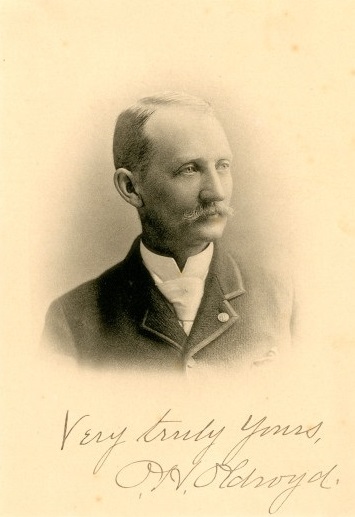
 During his early years in Springfield, he ran a succession of failed businesses. All the while, Oldroyd was moving his family ever closer to the Lincoln Home at Eighth and Jackson Streets. The Oldroyd family first lived at 1101 South Seventh, then 500 South Eighth Street (immediately south of the home), and then, in 1883, when the Lincoln Home became available to rent, Oldroyd moved his family in before the last occupants had completely moved out. At that time, Lincoln’s only surviving son, Robert, owned the home and reluctantly charged Oldroyd $25 per month rent. Contemporary accounts claim that Robert Todd Lincoln agreed to the idea of a museum as long as it was free to the public, a stipulation in place to this day.
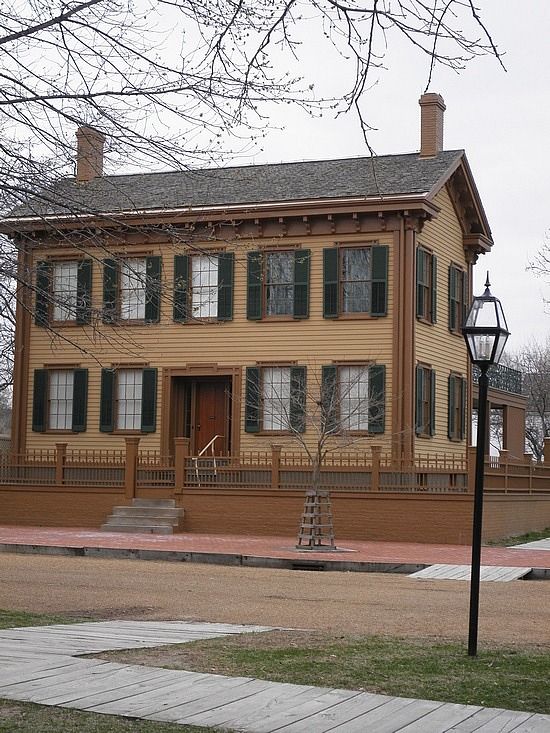 For the next five years “Captain” Oldroyd kept the Lincoln Home and added to his Lincoln collection. At one point, reports claim that Robert Lincoln was furious when Oldroyd allegedly displayed a photograph of John Wilkes Booth in the home, reportedly on the fireplace mantle. Some sources claim that Robert protested and in 1893, when the Illinois state political tides shifted, Oldroyd was unceremoniously ousted as custodian. The new governor put one of his own men into Oldroyd’s former position as political patronage.
 Alan E. Hunter