ABA-American Basketball Association, Sports

Wendell Ladner. The ABA’s Brawling Burt Reynolds. Part 2.

Original publish date January 26, 2023. https://weeklyview.net/2023/01/26/wendell-ladner-the-abas-brawling-burt-reynolds-part-2/
Wendell Ladner Kentucky Colonels.

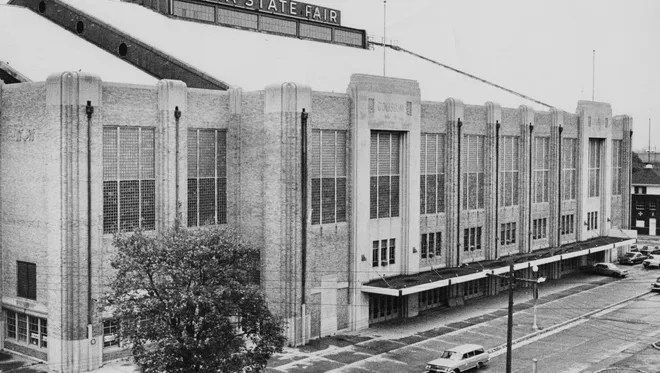
I grew up a gym rat. I’ve mentioned before how my parents used to take me down to the Fairgrounds, drop me off at the player entrance at the State Fairgrounds Coliseum, and leave me there for an hour or so while they traveled over to the TeePee Restaurant for pie and coffee. That’s when this reporter, then a 10-year-old with a Hollywood burr, first encountered a muscular, burly 6-foot-5, 220-pound guy who was a dead ringer for Burt Reynolds. His name was Wendell Ladner, and even though for much of his career he wasn’t even a starter, he always hustled, threw himself after any loose ball, and elbowed his way to every rebound. He was an important cog for a New York Nets team that won an ABA championship and a Kentucky Colonels team that thumped up on my beloved Indiana Pacers often enough that I held a grudge. But he was always nice enough to stop, smile, and talk for a minute to a shy buck-toothed kid when I asked him for an autograph.
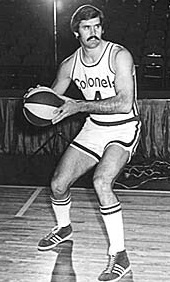
Wendell Ladner.

Things changed for Wendell Ladner midway between the 1972-73 season when he joined Southport High School’s “Little” Louie Dampier, “The Horse” Dan Issel, and the “A-Train” Artis Gilmore as a member of Pacer’s arch-rival Kentucky Colonels. His numbers weren’t his best with the Colonels, falling to 7.3 ppg and 4.9 rpg the first season and 9.9 ppg and 7.9 rpg that second season. Despite those numbers, he quickly became one of the most popular players on the Colonels roster — “expecially” with the ladies. However, if you were ever privileged enough to see a Pacers vs. Colonels game in person back then, you know that Colonels fans are tough. So Wendell had to win the male fans over first.

Today, they would call Wendell Ladner a “defensive specialist” for the Colonels. But what that really meant was Ladner was an enforcer whose job it was to hack the hell out of anyone who dared foul Dan Issel or Artis Gilmore. He was involved in more than one Pacers fistfight during his tenure with the Colonels. While fight stats in the ABA were never kept, I would be willing to bet that Ladner got in a “spirited scuffle” with players on every team in the league. Rumor has it that the Dallas Cowboys once invited Ladner to try out for the team. Colonels minority owner Bill Boone called him “the toughest SOB I’ve ever seen . . . a rebounding fool and hatchet man.”
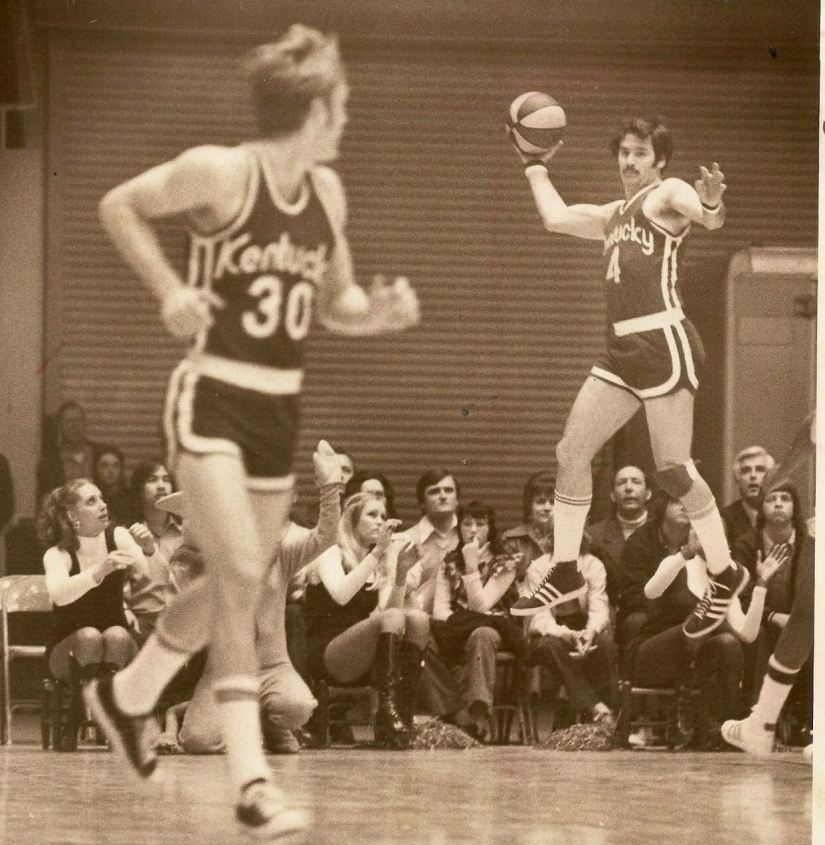
Wendell Ladner Kentucky Colonels.

During the 30th ABA reunion in 1997, Bob Netolicky and I traveled down to do a radio show in Louisville with longtime Colonels trainer Lloyd “Pink” Gardner. After the show, we retreated to the radio station breakroom for some after-hour storytelling. Pink was the team trainer for all nine seasons of the ABA (1967-1975) so he knew everyone. He remembered Wendell’s habit of fussing over his hair constantly. Pinky said, “Wendell had a habit of never adding the ‘ed’ suffix to his words when he talked. He’d say things like ‘I don’t want to get my hair all mess up.’ or ‘I’m going out tonight so I gotta get all dress up.’ One night Ladner had a terrible game, lost us the game actually. Dan Issel came into the locker room and saw Wendell primping in the mirror with his hairbrush getting ready to scoot out for a hot date. Dan yelled, ‘Watch out everybody, Wendell’s game was all foul up so don’t say nothin’ to him or you’ll get him all peeve off.’ (Only Issel didn’t say foul or peeve if you know what I mean.) Next thing you know Issel and Ladner were throwing punches while the whole locker room was rolling on the floor laughing.”
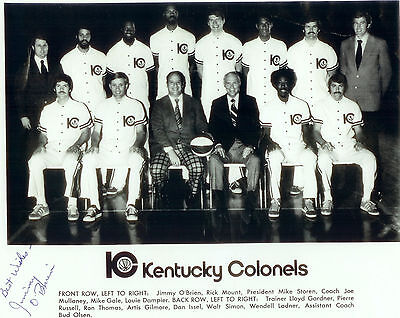
1972-73 Kentucky Colonels. Lloyd Gardner back row far left. Wendell Ladner back row 2nd from right.

In his book Kentucky Colonels: Shots from the Sidelines, Pink explained: “Wendell always played with reckless abandon, always diving after loose balls, jumping over press tables, always hoping that he would come down in the lap of some beautiful lady.” Pink recalled one game “with 3:09 left in the game and the Colonels with a sizable lead, Wendell went airborne over the Cougars bench, crashing into a five-gallon glass water cooler.” The bottle smashed to the floor and Wendell landed on the shards of broken glass. He jumped up quickly and tried to get back to the floor, but the trainer stopped him because he was bleeding profusely from gashes in his arm. Pink continued, “He wanted to go back out and play. Dr. Rudy Ellis said no. We took him to the hospital and stitched him up, 37 stitches in all.
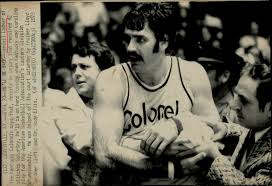
Lloyd Gardner (left) wrapping Wendell Ladner’s lacerated arm.

It was April 21st, 1973, game 6 of the ABA Eastern Division finals against the Carolina Cougars at Freedom Hall and the Cougars were up in the series 3 games to 2. Play was stopped while Wendell was led to the locker room dripping in blood while the crowd watched in stunned silence. Thirty minutes later, here comes Ladner sprinting back to the bench, a bandage encasing his left forearm. The Colonels were losing and Ladner begged to re-enter the game, but sanity prevailed and Mr. Excitement was placed at the end of the bench for his own protection.” Pink noted, “but Wendell never missed a practice or game.” Kentucky would win that game and then another to take the series. But they lost the ABA Championship to the Indiana Pacers 4 games to 3. The Pacers became the first team to win a third ABA championship while the Colonels became the first team to lose two separate ABA championship series. Complete disclosure: The Pacers would eventually lose two, too.
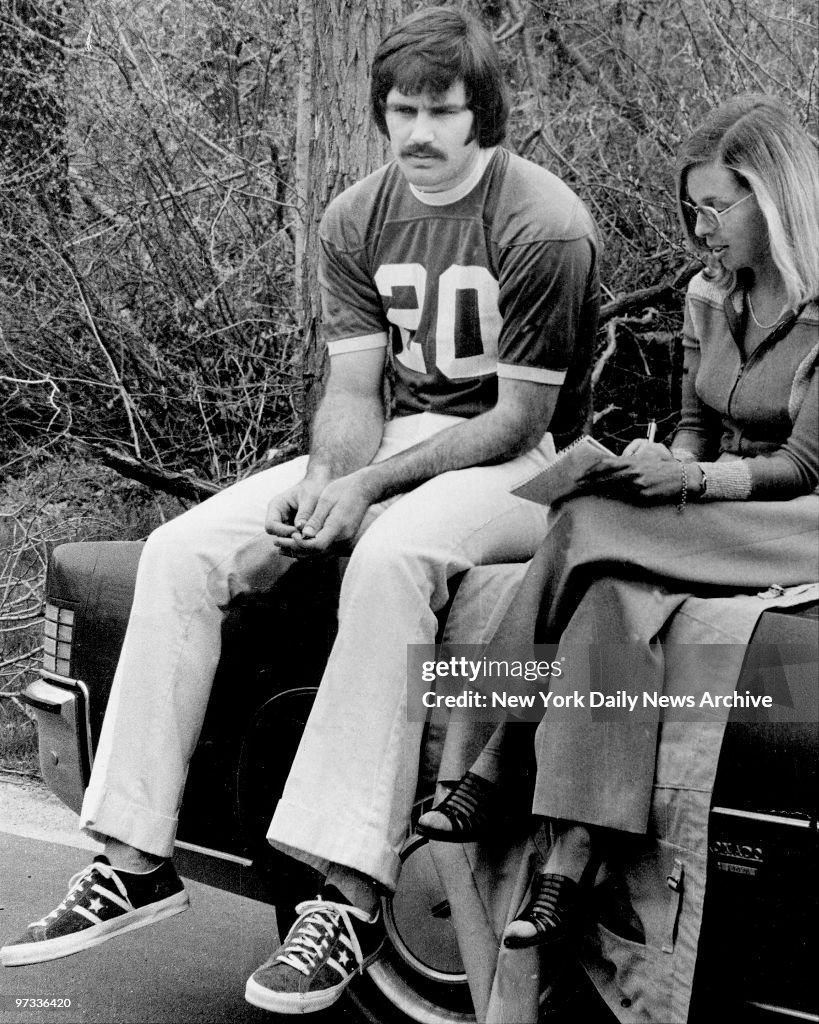
Wendell Ladner talks to reporter Kay Gilman. Getty images.

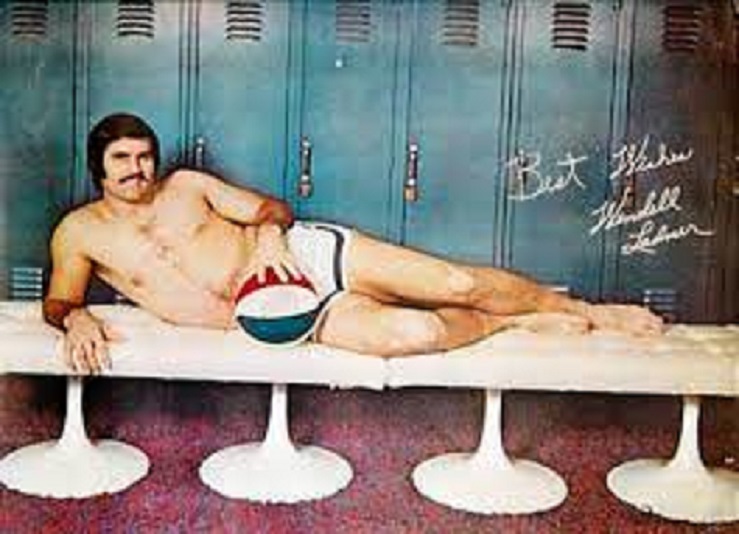
Also in 1973, Wendell pulled off the stunt he is most remembered for to this day. Ladner did his best imitation of Burt Reynolds infamous Cosmopolitan magazine nude pose in a shirtless beefcake poster that sold out in hours. Wendell is posed stretched out on the Colonels’ locker room bench at Freedom Hall in Louisville wearing only his “tighty-whitey” home uniform trunks (players didn’t wear the baggy trunks they wear today) with a Red, White, & Blue ABA basketball strategically positioned to hide his naughty bits. Ladner flashed a million-dollar smile for the female Colonel faithful. Oh, and the poster has a “Best Wishes” facsimile autograph in the upper right corner. After that poster came out, Ladner really played up to that image. During timeouts, women jockeyed for position behind the Colonels bench to giggle and shout sweet nothings to their favorite as he brushed the hair away from his eyes and smiled back at them.
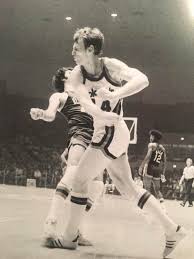
Dan Issel and Ladner go at it.

The next season (January of 1974), Ladner was traded to the New York Nets, a trade KFC magnate and Colonels owner John Y. Brown, Jr. later said he regretted. The Colonels traded Ladner and Mike Gale to the Nets for John Roche, pronounced “Ouch” by Colonels fans. At the time of the trade New York trailed Kentucky in the Eastern Division standings, but after adding Ladner, the Nets surged past the Colonels to win the Eastern Division championship and the 1974 ABA championship beating his old team. During that series, Ladner and his old teammate Dan Issel exchanged punches in one game: Issel wound up with three stitches under one eye.
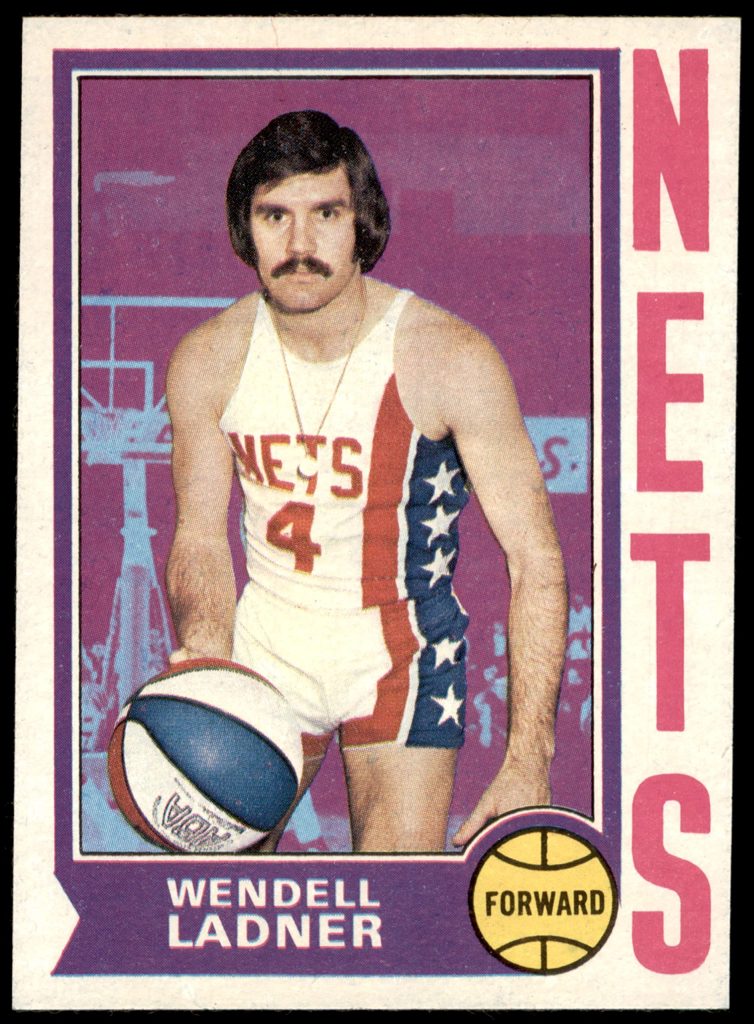
Former ABA Virginia Squires and Cincinnati Reds broadcaster Marty Brennaman called it “the worst trade ever in professional basketball.” Maybe not the worst pro basketball trade ever, but it sure was a bad one. The next year, Little Louie Dampier busted his hand wide open during a game and asked Colonels team doctor Rudy Ellis to stitch up his hand “in a hurry so I can get back into the game” to which the Doctor replied, “I thought Wendell Ladner was the only person that crazy.” In New York, Ladner’s job with the Nets was to protect Julius Erving. Dr. J called Wendell his wackiest teammate ever because “he wanted to be Burt Reynolds with a basketball”.
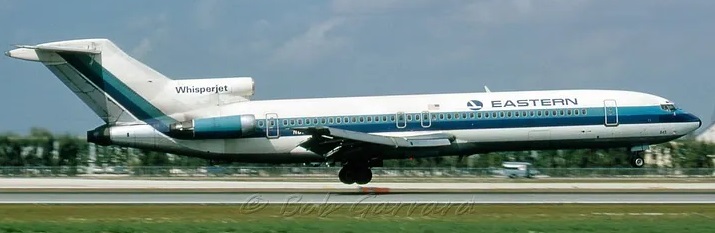
Eastern Air Lines Flight 66.

After winning his one and only ABA Championship, on June 24, 1975, Ladner boarded Eastern Air Lines Flight 66 from New Orleans to New York City. The plane, a Boeing 727 trijet tail number N8845E, departed from Moisant Field (Louis Armstrong International Airport today) without any reported difficulty at 1:19 PM EDT with 124 people on board, including 116 passengers and a crew of 8. A severe thunderstorm hit JFK airport just as Flight 66 was approaching the New York City area. At 3:52, the approach controller warned all incoming aircraft that the airport was experiencing “very light rain showers and haze” with zero visibility and that all approaching aircraft would need to perform instrumental landings. At 3:53, Flight 66 was approaching Runway 22L.  6 minutes later, the controller warned all aircraft of “a severe wind shift” on the final approach, the aircraft encountered a microburst or wind shear environment caused by the severe storms.
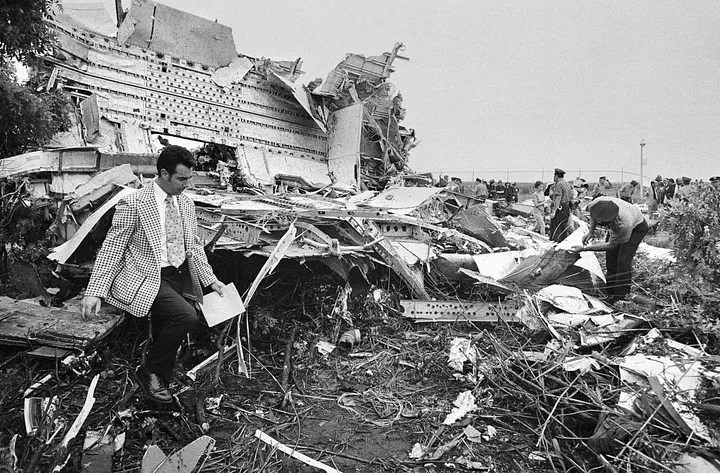
The wreckage of Eastern Airlines flight 66 after it crashed on approach to JFK Airport. (AP)

The plane continued its descent until it began striking the approach lights approximately 2,400 feet from the start of the runway. Upon the first impact, the plane banked to the left. It continued striking the approach lights until it burst into flames and scattered the wreckage along Rockaway Boulevard, which runs along the northeast perimeter of JFK airport. Of the 124 people on board, 107 passengers and six crew members (including all four flight crew members) were killed. The other 11 people on board, including nine passengers and two flight attendants, were injured but survived. Wendell Ladner was not among them.
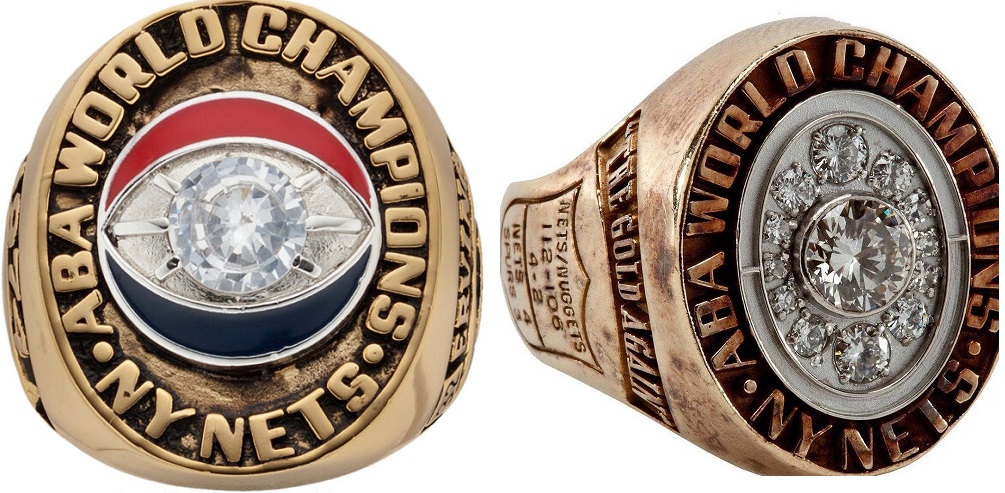
Ladner died at the age of 26. His body was identified by medical examiners only because he was wearing his charred Nets ABA championship ring. At the time, the crash was the deadliest in United States history. For many years, the Nets included his name and uniform number in their list of retired numbers, though Ladner’s No. 4 did not hang in the rafters with the other retired numbers. Out of respect to Ladner, Fritz Massmann, Nets trainer from 1970 to 1992, never issued No. 4 to any other player for 17 years after Ladner’s death. When Fritz retired, the New Jersey Nets issued Wendell’s number 4 to Rick Mahorn which he wore for the next 4 years.
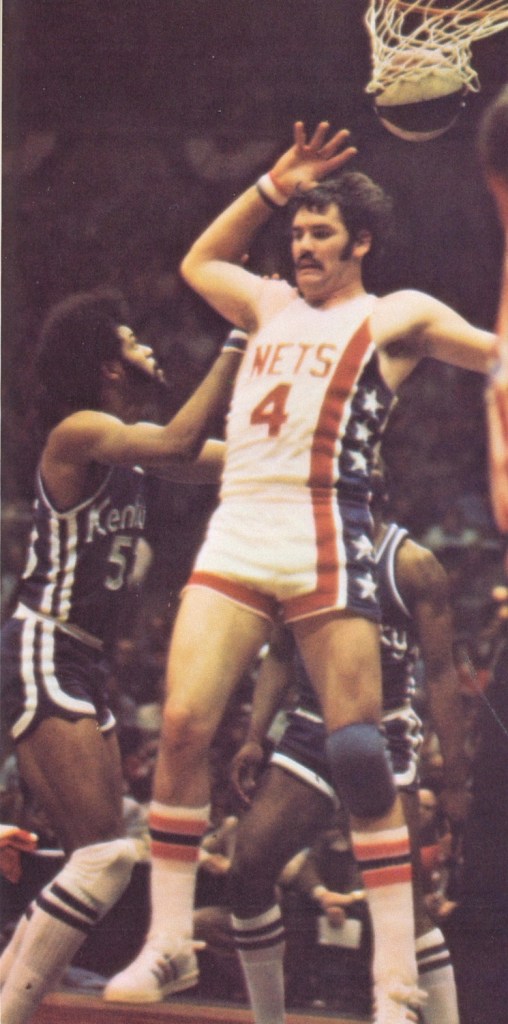
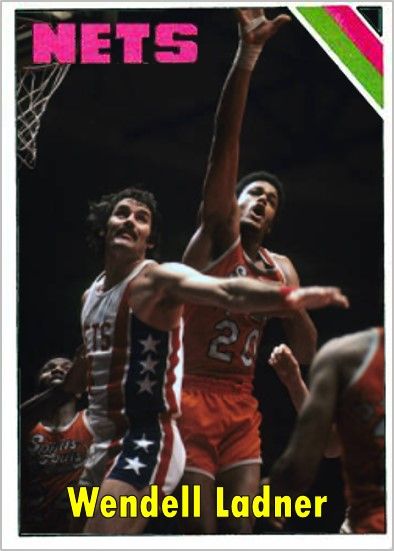
Wendell Ladner finished his 300-game ABA career with 3,474 points and 2,481 rebounds. He also played in 40 ABA playoff games and a pair of ABA all-star games. Ladner also has a road in Perkinston, Mississippi, named after him in his honor. The crash of Flight 66 led to the development of the first low-level wind shear alert system by the U.S. Federal Aviation Administration in 1976. The accident also led to the discovery of downbursts, a weather phenomenon that creates vertical wind shear and poses dangers to landing aircraft, which ultimately sparked decades of research into downburst and microburst phenomena and their effects on aircraft. ABA fans might find it ironic that the term for the natural phenomenon that took Wendell Ladner’s life became known as a microburst. If Mother Nature had nicknamed this masculine mauler from the Magnolia State herself, she quite likely would have reserved the name microburst for him. Because, make no mistake about it, Wendell Ladner was a true force of nature.
ABA-American Basketball Association, Sports

Wendell Ladner. The ABA’s Brawling Burt Reynolds. Part 1.

Original publish date January 19, 2023. https://weeklyview.net/2023/01/19/wendell-ladner-the-abas-brawling-burt-reynolds-part-1/

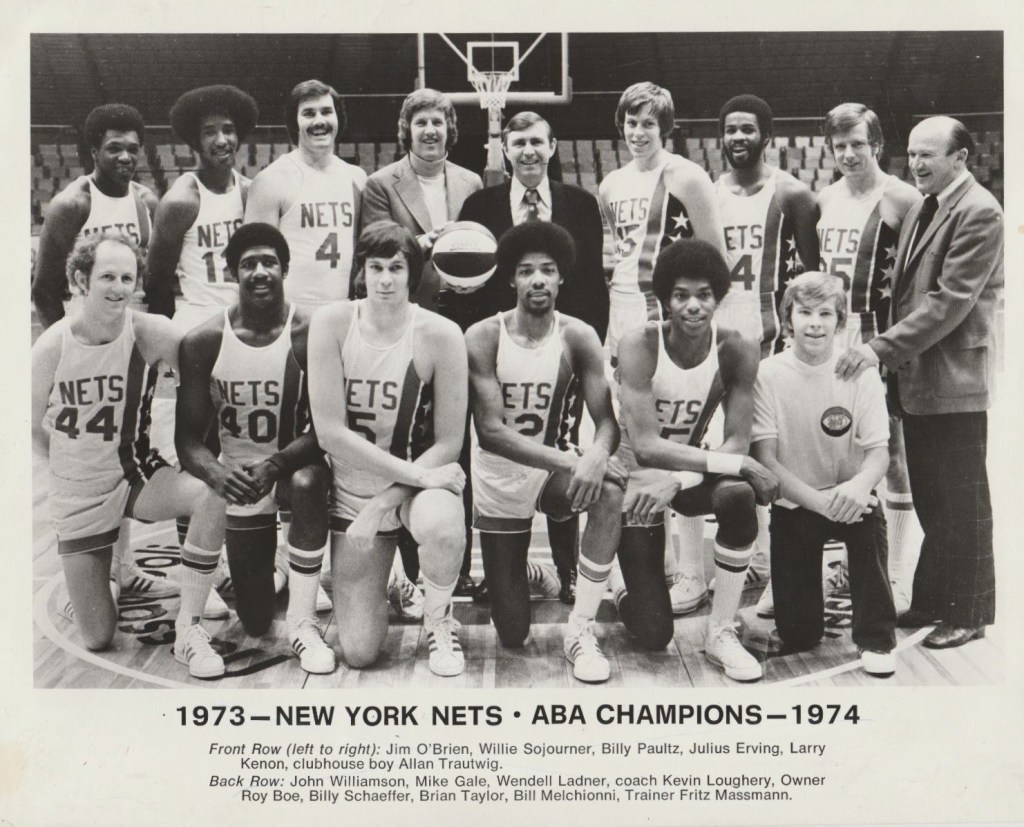
1973-74 ABA Champion New York Nets. Wendell Ladner # 4 standing baw row 3rd from left.

Rhonda and I headed down to the Indiana State Fairgrounds for the Greater Indianapolis Garage Sale this weekend. We hadn’t been to that show in a couple of years, mostly due to Covid-19 concerns. We enjoy that show simply because it is one of the true flea market-style gatherings left in the Circle City. We always find something. It might be a tchotchke for the kids or a treasure for the wife, you never can tell. Me, I like diving into boxes of old paper. You never know what you’re going to find.

This time, as I thumbed through a box of old paper goods and tickled my way past maps, old greeting cards, receipts, family photos, and travel brochures, I found a hidden treasure. A treasure to my eyes anyway. Folded up into quarters wedged between a couple of totally dissimilar items was a photo of the 1973-74 ABA New York Nets. I was (and always will be) an Indiana Pacers kid. But I always had a healthy respect for three rival teams: The Kentucky Colonels, Utah Stars, and the New York Nets. It always seemed that when the Pacers weren’t winning championships, it was because of one of those damned teams stole one from us. It was a thrill to find the photo just a few hundred yards away from the building where they actually played.

State Fairgrounds Coliseum. Home of the ABA Pacers.

So here they were, dressed in those classic home white uniforms with the stars and stripes ribbon bursting out of their heart and flowing down the side. Julius “Dr. J” Erving was front and center (right where he should be) flanked by Billy “Whopper” Paultz, “Super John” Williamson (who spent some time as a Pacer), Mike “Sugar” Gale, Willie “Rainbow” Sojourner (who gave his teammate the nickname “Dr. J”), Larry “Mr. K” Kenon, Bill “Cyclops” Melchioni, Brian Taylor (who didn’t have a nickname but was so good he deserved one) and a teenaged clubhouse boy named Allan Trautwig. Yes — the same Al Trautwig from MSG Network, ABC, NBC, NBC Sports Network, and USA Network and the pre-game/post-game shows/sometime play-by-play man for the New York Knicks and Rangers during his Emmy Award-winning career.

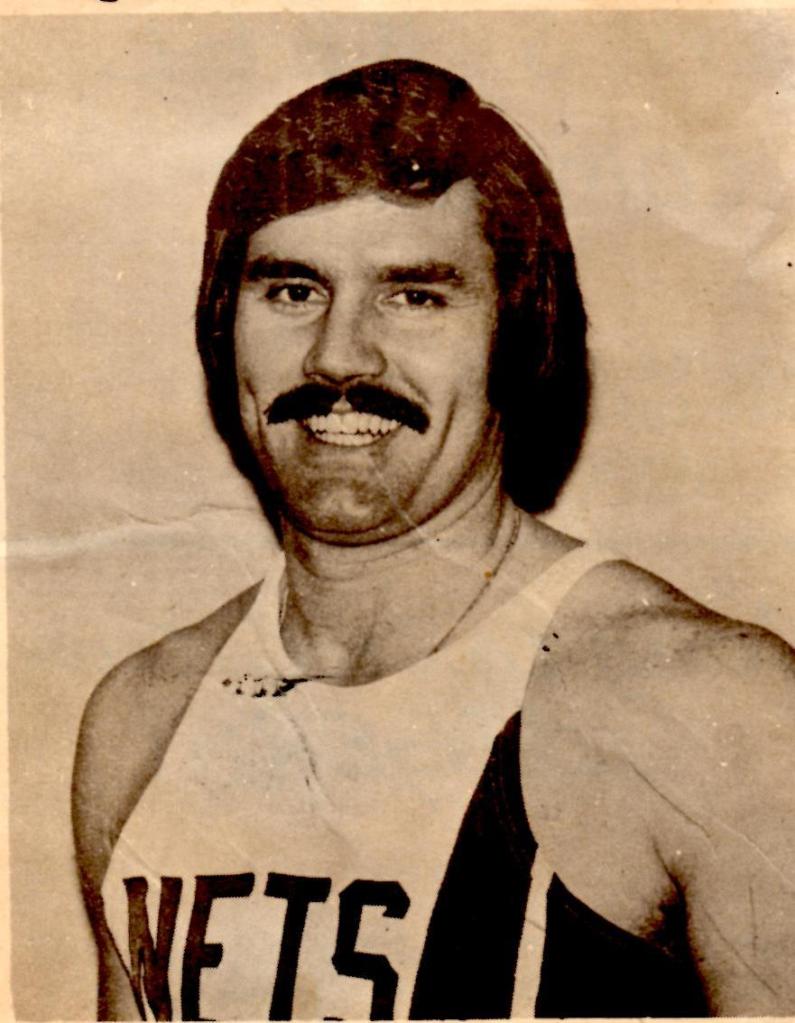
Wendell Ladner.

But the man in that photo that drew my interest was standing in the back row, third from the left. It was “Mr. Excitement” Wendell Ladner. If you are a fan of the ABA, you remember Wendell Ladner. Ladner was born on October 6, 1948, in Necaise Crossing, a tiny, unincorporated town in Hancock County, Mississippi, the far southwest corner of the state. Ladner’s birth seems to be the only noteworthy thing that ever happened there. Ladner played prep ball for the Hancock North Central High School Hawks in Kiln, Mississippi. The school opened in 1959 and for a quarter century, Wendell was the school’s star athlete until Green Bay Packers quarterback Brett Favre came along in 1985.

Jim O’Brien.

Legendary ABA beat writer (and friend) Jim O’Brien was one of the first to recognize Ladner’s talent. Writing about him in 1972 in the book ABA All-Stars, O’Brien said, “Ladner likes to talk about his town, which he says had about 600 people living in it. The nearest big town was Gulfport, about 32 miles away. ‘None of my friends had driver’s licenses, so without transportation, we couldn’t go to town very often. I’d never been around a town a lot. Necaise Crossing, to me, was a lot of fun. I grew up there and might’ve played basketball from the time I was 9 ‘til I was 17 and went away to college. We’d shoot basketball all day and into the night. We didn’t have any lights, so we’d go out into the woods with axes and cut us some logs. It was no big thing. We’d cut up oak trees that had fallen. We’d chop them up good, and use the splinters to start the fire. We’d have one big fire and it’d light the area so we could play. The only other thing you did was milk cows and ride horses. We raised hogs, too. My family had a dairy barn. We had no heat in the house, except for the big fireplace, and no bathroom. We’d get a wagonload of wood and pile it by our house. We were over at our grandmother’s house killing hogs one day when our house burned down. Some ashes hadn’t gone out, my sister said, and they started a fire again and it caught on some drapes and the whole place went up in smoke.’”

A young Wendell Ladner.

Of his college years, Ladner told the sportswriter, “‘I never watched my weight in college. I just ate all the time. I never trained like I should have. This is a lot different from college. It’s a lot rougher. In college, I had to go against guys my size, but now most of the people I play against are a lot bigger.’ O’Brien added, “That’s how he got started. Now Ladner would like to improve his play and help the Pros to build a winner in Memphis. ‘I think I’ll be a lot better,’ he said at the start of his second season in the ABA. ‘I’m still making too many fouls and lots of mistakes, but I know when to take a shot now. You know, I really was surprised I had a rookie season like I did. I just wanted to make the team. I didn’t think I’d make it. But in the first exhibition game, I scored 17 points and grabbed 15 rebounds, and it surprised me that I could do something like that. The biggest surprise, of course,’ he continued, ‘was making the All-Star team. It was an honor to make it…the only rookie on the West team. That was a big thrill.’ Brute strength and a desire to excel are among his most recognizable traits. He has good basketball instincts and is unusually quick for a man his size. ‘I like the way he rebounds and gets the ball out in a hurry,’ said (coach) Babe McCarthy. ‘He could be a big asset in a fast-break attack.’ ‘I’m not going to live on my first-year reputation,’ Ladner told us. ‘I have to prove it this year again and get back into that All-Star game.’”

Ladner was a star at the University of Southern Mississippi from 1966 to 1970 averaging 20.5 ppg and 16.5 rpg for his career. His 1,256 career rebound mark is still the second-highest in USM history and the highest among 3-season players. His SMU career stats: 650 out of 1,410 Field Goals, and 261 out of 390 Free Throws for a total of 1,561 points place him 11th all-time in scoring at Southern Miss and his career scoring average of 20.5 is still the best in school history. He owns 14 of the top 16 rebounding performances in Southern Miss history including a school record 32 rebounds against Texas-Pan American, 31 against Old Dominion, and 30 against Louisville during the 1969-70 season. Ladner was drafted in the second round of the American Basketball Association draft by the Memphis Tams and was signed prior to the NBA draft, where he was projected to be one of the top 20 prospects.

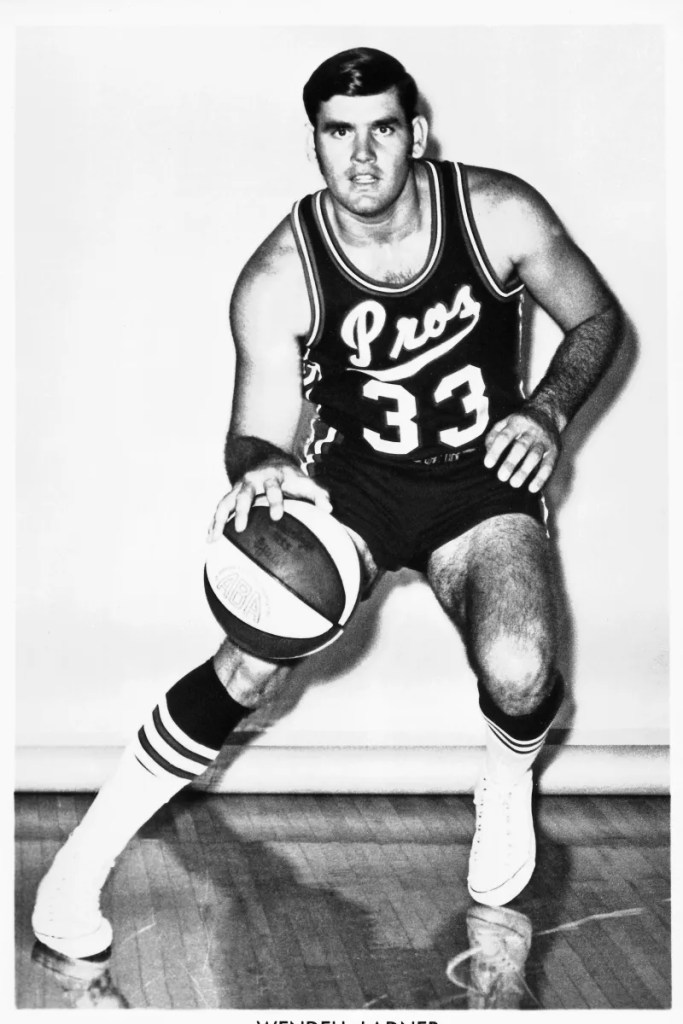
Wendell Ladner Memphis Pros.

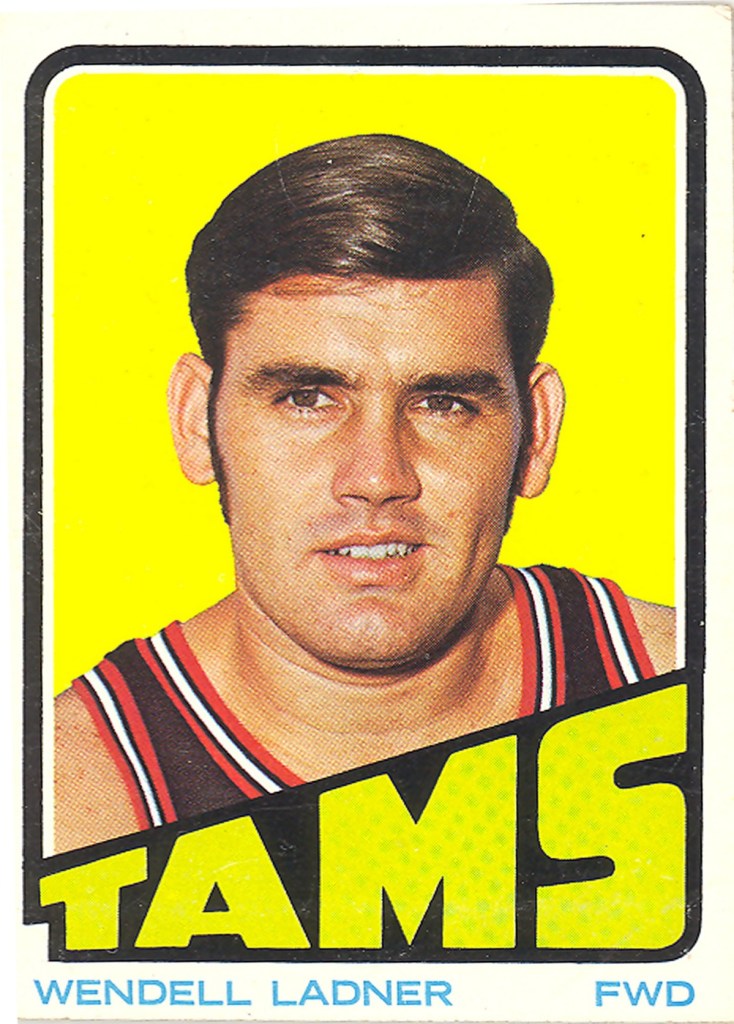
From 1970 to 1973, Wendell played for the Memphis Pros, Carolina Cougars, and Memphis Tams, all utterly forgettable teams. Ladner was named to the 1971 ABA All-Rookie team, and selected to the ABA all-star game his rookie season alongside Dan Issel and Charlie Scott, the ABA’s Co-Rookies of the Year. That year, on January 24, he set his career-high points total of 34 in a Memphis win over The Floridians. During those years, the 6 ft. 5 inch, 220-pound power forward developed into one of the league’s toughest enforcers while averaging 16 points and 10 rebounds per game. Unsurprisingly, he also averaged over 4 fouls per game during that time, leading the league in 2 out of his first 3 seasons, in both of those foul-leading seasons, he made the all-star team. He was the enforcer for five ABA teams during his career, which lasted from 1970 to 1975. His job was to protect his star teammates like Dr. J and Dan Issel by roughing up anyone he viewed as playing too rough.

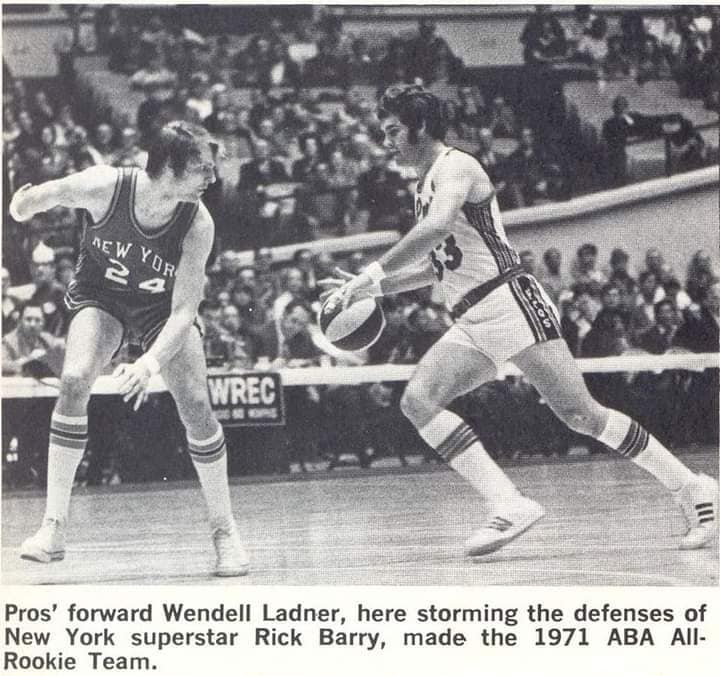
Early in the 1971-72 season, playing against the Nets in New York, Ladner was ejected from the game during an overtime period for what an official termed “a malicious foul” on superstar Rick Barry. Ladner said it was necessary for him to play Barry aggressively, but insisted he didn’t mean to hurt him. “I sure wouldn’t want to break his leg and put him up in bed with his family,” said the good old boy from Mississippi. He said it wasn’t a dirty play, and even stopped by the Nets dressing room to explain it to Barry. “I know one thing,” said Barry. “If you were trying to hurt me, you would have done a better job of it.”

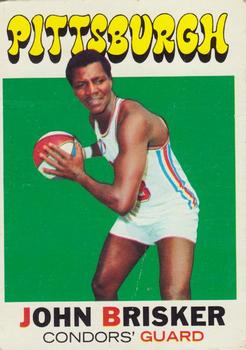
One of the great stories about Ladner involves a former ABA player named John Brisker whom I profiled years ago in a Weekly View story that actually led to my appearance in a Beyond the Paint documentary on ESPN (I appeared sandwiched in between Rick Barry and Julius Erving no less!). Ladner regularly squared off against Brisker, widely considered to be the meanest, roughest, toughest player in the history of the ABA. Legend claims that Ladner once marched into the Pittsburgh Condors’ locker room before the game started yelling, “Hey, John, you wanna fight right now or wait for the game?” Brisker and Ladner often beat each other bloody on the court, only to hang out together at a local bar afterward. Those were the kind of stories that made Wendell Ladner a legend and Wendell Ladner was the kind of player that made the ABA legendary.

Next Week: Part 2

ABA-American Basketball Association, Pop Culture

Neto Comes to Irvington.

Neto signing photoOriginal publish date:  March 11, 2018

You never know who’s going to show up when Neto walks into the room. Bob Netolicky, former ABA Indiana Pacers 4-time all-star, can draw a crowd. On any given day, Neto may show up with former teammates like George McGinnis, Darnell Hillman or Billy Keller. Or maybe with former Pacers coach Bobby “Slick” Leonard or Pacers team founder Dick Tinkham. Or media legends like Robin Miller or Bob Costas. Neto knows ’em all.
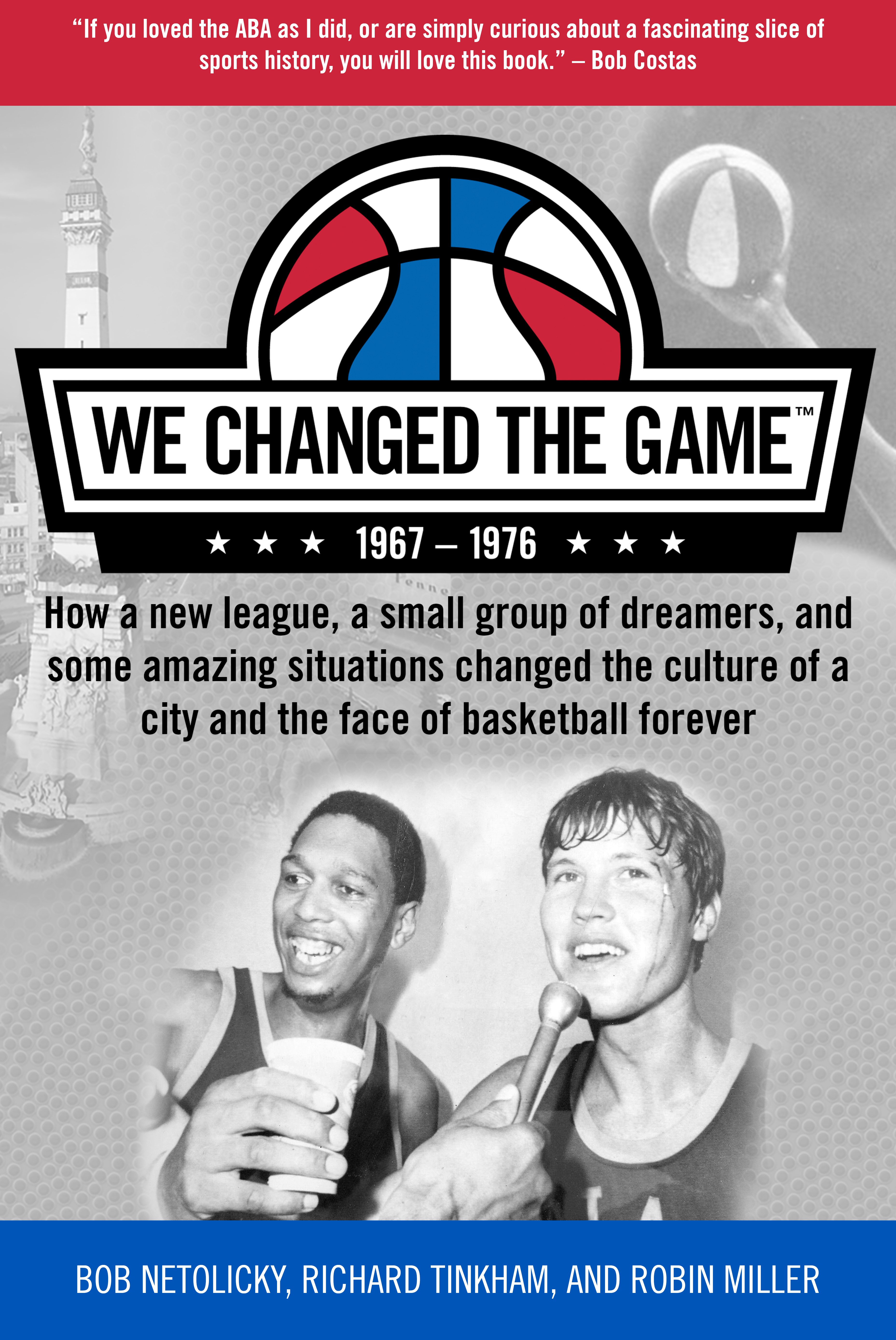
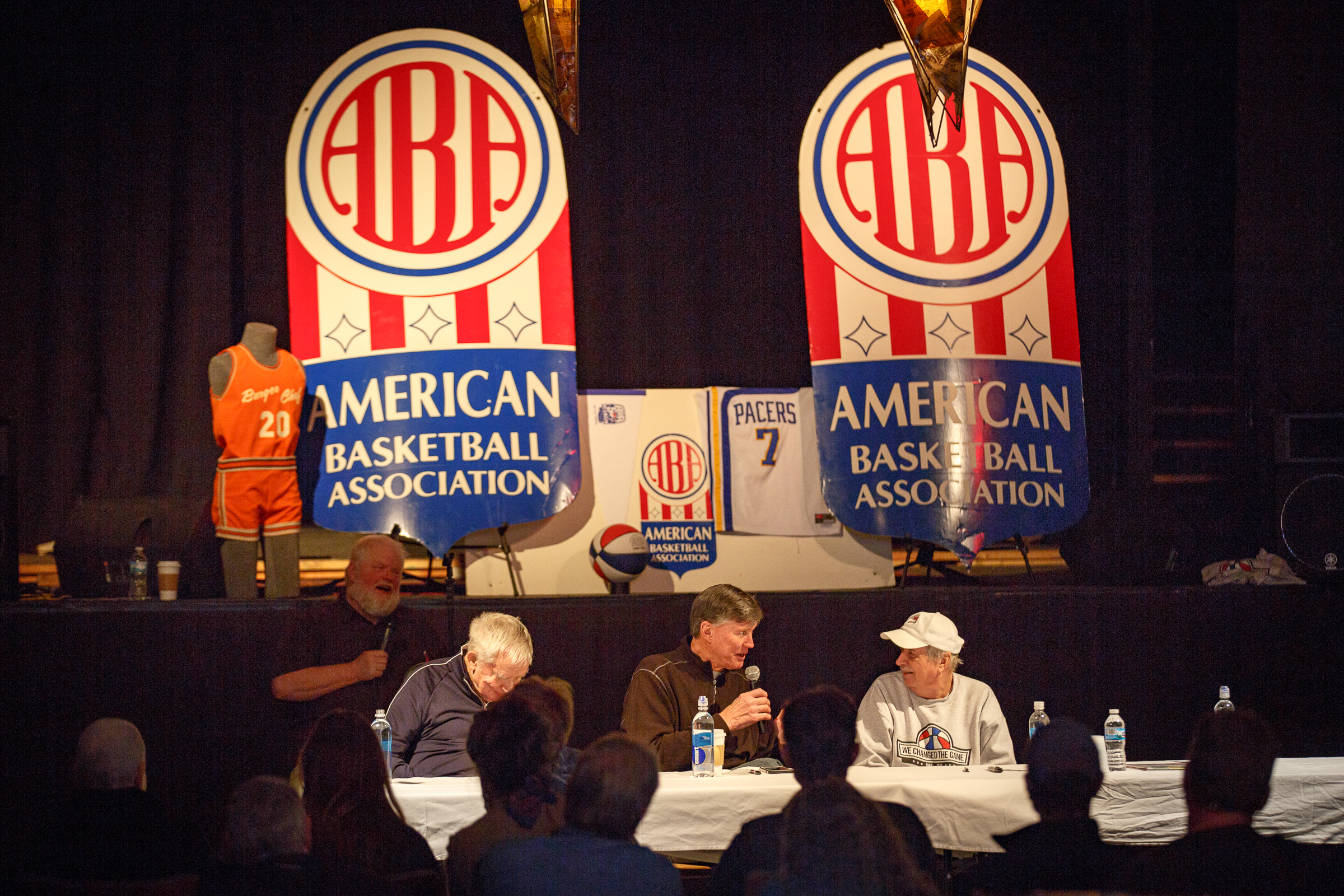
This Sunday, March 18th, you are invited to the Irving theatre to hang out with Neto and friends. Netoclicky, along with Dick Tinkham and Robin Miller, has written a book called “We Changed the Game” and all three authors will be in Irvington from 2:00 to 4:00 to sign books, swap stories and answer questions from fans. The trio has chosen the Irving Theatre for their book release party. Former Q-95 on -air personality, actor and stand-up comedian Dave “The King” Wilson will act as emcee for the event.
Neto says, “The book is a collection of stories told by those who lived it. It’s the Pacers’ insider’s view from the very first day of the franchise.” Netolicky stresses that the book is not just another stat guide or seasonal recap. “It’s the real story of a team, a coach and a handful of dreamers, who brought a new league and a new team to Indianapolis – and how they not only changed the culture and future of a city, but the game of basketball forever,” said Netolicky.
Richard “Dick” Tinkham, an original ABA Indiana Pacers founder and legal counsel, is one of the few execs still around to tell the real stories of the team, the league and the ABA-NBA merger from the perspective of someone who was intimately involved with the X’s and O’s of the team and league from start to finish. It was Tinkham who reviewed all documents, ranging from incorporation papers, player contracts to merger agreements. Yes fans, there was more than one ABA-NBA merger agreement. Tinkham will share never-before-heard stories about the mergers, anti-trust lawsuits, and wild negotiations between the two leagues that could only be told by someone who was there. Mr. Tinkham, whose reputation and shrewd negotiating skills in the league are legendary, will tell you all about it this Sunday.
ABC Sports reporter Robin Miller will also be at the Irving to talk about his days as a cub reporter for the Indianapolis Star from 1968-76. Born in Anderson, Miller grew up in Indianapolis. His first assignment with the Star was to answer the score phones and run copy. Miller had two passions during those early years: the Pacers and auto racing. He was lucky to find himself working in the epicenter of both.
This Sunday, Miller will describe the Pacer’s from the viewpoint of a cub reporter not yer old enough to drink (were there really guns in the locker room?), Tinkham will explain how the ABA contracts worked (did the team really sign Mel Daniels contract on a barrom napkin?) and Neto will share stories about Pacers coach Bobby “Slick” Leonard’s unusual motivational techniques (did Slick REALLY chase Neto around the locker room with a hockey stick?).
ABA Irvington-0263The nicest thing about this book is that, in many instances, it defines the folklore of the league by telling the real story from the men who actually lived it. For me, the book’s bombshell revelation is the story of just how close the Pacers came to folding at the close of the 1968-69 season. Before that second season, the Pacers made the greatest trade in team history, sending Jimmy Dawson, Ron Kozlicki and cash to the Minnesota / Miami franchise for ABA Rookie of the Year Mel Daniels. That trade, along with the hing of Leonard as the new head coach, legitimized the team. After starting the season 2-7, the team went 42-27 the rest of the way, winning the Eastern Division by 1 game over Miami. However, the Pacers found themselves down 3 games to 1 against the rival Kentucky Colonels in the first round of the league playoffs.
In the book, for the first time ever, Tinkham recounts how that game 5 playoff changed everything. “If we hadn’t won that game and advanced, there was no additional playoff revenue,” Tinkham said. “There was no more money and, even worse, there was no plan.” Mayor Bill Hudnut, who wrote the foreword for the book prior to his passing in 2016, said “to have the franchise fold would have sent out the message that Indianapolis could not be considered a major-league city, and that in turn would hinder our ability to garner business and jobs from elsewhere.”
The Pacers won the next 3 games by an average of 15 points per game to take the series 4 games to 3 and then defeated Miami in 5 games. The Oakland Oaks beat the Pacers 4-1 to win the second ABA Championship, but the Pacers strong playoff performance saved the franchise. That win changed not only the face of a city but the game of professional basketball forever. Netolicky averaged nearly 19 points and 10 rebounds per game. Neto seemed to always rise to the occasion in the playoffs. During his 9-year ABA career, Bob averaged 15.5 points per game. Good enough to land him at 30th place on the all-time ABA playoff scoring average list. 8 of the 29 in front of him are Hall of Famers.
What I’ll look forward to most this Sunday are the stories Netolicky will surely share with Irvingtonians. Long considered one of pro basketball’s most colorful personalities, Neto’s tales live up to that reputation. Netolicky was famous for a having a pet ocelot. If you don’t know what an ocelot is, google it. Neto hints, “When I’d come home after midnight I’d often find it (the ocelot) in my bed, I’d try to move it… it would growl… and I’d go sleep on the couch.” Known for his mod lifestyle and popularity with Pacers’ female fans, one sportswriter dubbed him the “Broadway Joe Namath of the ABA”.
Neto talks about those days coming out of college and joining the upstart new league, “I didn’t know the difference between the ABA and the NBA. I’d been to a lot of NBA games but I found out pretty fast that the ABA game was more wide open, it moved a little faster. The NBA was a post-up league; a bunch of big, clumsy guys with a good center. The ABA had speed and quickness from the start. It was a faster league.” Neto continues, “I’m a big auto racing fan, and the way I associate the early ABA with the NBA was similar to when the rear-engine car came to Indy racing. It changed the sport by making it faster, better, quicker. They took the big, old roadsters, which were fun to watch, but slow, heavy and not very maneuverable, and they changed—they literally adapted and changed the sport, and that’s what the ABA did.”
Neto and Tinkham both agree that in those early years, the ABA was touch and go. But soon parity set in and within a few years, the most exciting players were in the ABA. Neto explains, “Right before the merger happened, there were a couple of teams, Seattle most prominent, where the owner [Sam Schulman] said that if the merger wasn’t going to happen, they were going to jump to the ABA. The Supersonics literally wanted to go to the ABA.”
“We Changed the Game” is being published by Hilton Publishing. It’s founder is Dr. Hilton M. Hudson II, one of less than 40 board-certified, African-American interventional cardiologists practicing in this country. Dr. Hilton grew up in Indianapolis and as a high school player, he used to scrimmage with the old ABA Pacers during the off seasons. Yet another Indianapolis connection to the book can be found right here in Irvington. The book is being handled by McFarland P.R. & Public Affairs, Inc. whose offices are located at 211 S Ritter Ave.
The book release party comes just a few weeks before the ABA 50-year reunion celebration on April 7th in Indianapolis Ten percent of the book proceeds will fund Dropping Dimes, an Indiana nonprofit that assists ABA players and their families facing financial or medical difficulties. “These proceeds are crucial to so many of my former teammates and league players, because after the merger … former ABA players who were not absorbed into the NBA were generally left without a pension,” said Netolicky, who serves on the advisory board of Dropping Dimes. For the past few years, Bob has been involved in trying to get the ex-ABA players their rightly deserved pensions, many of these former players are experiencing extreme hardships today.
The American Basketball Association (ABA) gave many unsung players a shot or a second chance to make it in pro basketball. It was the first to shine the spotlight on Indianapolis as a nationwide sports mecca. The ABA flagship Pacers franchise became one of the top-contending professional basketball teams in the country. 50 years ago, the ABA Pacers triggered the transformation of downtown Indianapolis, turning it into a thriving destination for sports at every level and in every hue. Come out to the Irving Theatre this Sunday and hear the story as witnessed by Robin Miller, Richard Tinkham and Bob Netolicky who were there through it all.
ABA Irvington-0012For sure, there will be other book signings for “We Changed the Game”. Thus far Neto has scheduled a signing at the J & J all-star sportscard show on Saturday March 24th from 10:00 to 12:00. The card show is held at the American Legion Post # 470 at 9091 E. 126th St. in Fishers and then again at Saturday March 31st from Noon to 2:00 at Bruno’s Shoebox 50 North 9th St. in Noblesville. Bruno’s shoebox is owned and operated by former longtime Indianapolis Star / News reporter and Indiana Pacers webmaster Conrad “Bruno” Brunner.
But this Sunday’s book release event is the only opportunity fans will have to hear stories and ask questions of the authors in a public forum. So come out and say hi to Neto, Robin Miller, Dick Tinkham and Dave “The King” Wilson from 2:00 to 4:00 pm. Books will be available for sale and you will have the opportunity to have your copy personally signed by these sports legends. Admission is free and the program will be free wheelin’. And remember, you never know who might show up with Neto in the Irv. Could be Slick, Dr. Dunk, Big Mac or any other Pacer great you can imagine. You never can tell with Neto.

Photos courtesy Lauri Mohr-Imaginemohr photography.