Criminals, Indianapolis, National Park Service

The Indiana Alcatraz Connection PART I

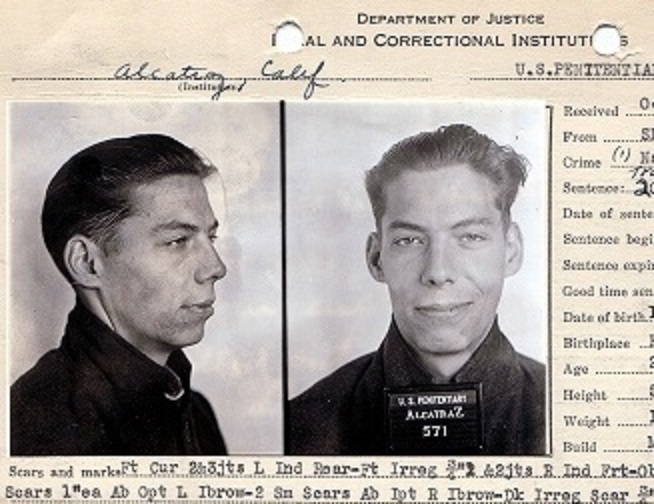
Alcatraz boarman musshot Part I
Indiana Alcatraz inmate James A. Boarman

Original publish date:  August 11, 2009

I first ran this article in 2009 on the 75th anniversary of an Alcatraz escape attempt by a desperate inmate with ties to fountain square. I thought it might be worth another read. Next week will mark the 84 years since the escape escape attempt. Since the time of my visit, the Island has changed much. The area where the escape attempt occurred, closed to the public back then, is now open to visitors.
z alcatraz-1954
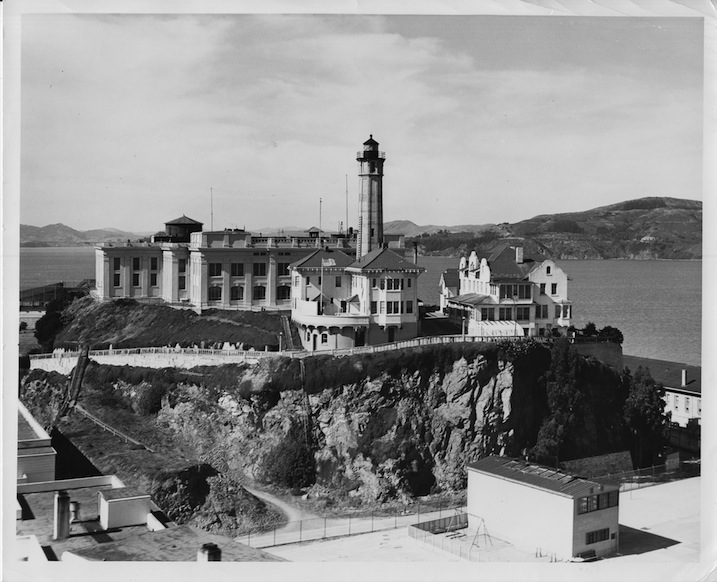
Alcatraz Prison and lighthouse.

Alcatraz Federal Penitentiary opened on August 11, 1934, exactly 75 years ago last week. I visited “The Rock” last Tuesday morning for an exclusive “Behind the Scenes” tour led by arguably the most famous face on the island, Emmy award winning park ranger John Cantwell. If you’ve ever seen a television program on the subject of Alcatraz, Cantwell’s face should be very familiar as he’s appeared in nearly every taped segment made on the island over the last dozen or so years. A Wisconsin native, Cantwell has worked for the National Park Service for almost 20 years having started as a clerk in the Alcatraz book store while still in high school. During his tenure, he has befriended over two dozen former inmates, countless former island residents and more than a dozen former guards, several of whom were like family to Cantwell often staying with John and his wife in their home while visiting the island for reunions and book signings. Sadly, the ranks of these former alumni have dwindled drastically in the last few years to the point that during the official 75th reunion ceremonies, only 5 former inmates and 2 former guards were in attendance.

z 4396975203_761c1da998_z
Alcatraz National Park Service Ranger John Cantwell.

The subject of my visit was a young man by the name of James A. Boarman, an Indianapolis bank robber with eastside ties who served two and one half years on “The Rock” from 1940 to 1943. James Arnold Boarman was born on November 3, 1919 in Whalen, Kentucky, the sixth of eight children. His father was a carpenter who died of an accidental drowning when James was only seven years old. His mother moved her brood to Indianapolis where all 9 family members shared residence in a small apartment on the cities’ southeast side. Young Jimmy Boarman attended St. Patrick’s Catholic School in Fountain Square until dropping out at age 14 when he got a job as a gardener to help support the family. His mother recalled that he was a “good boy” who didn’t mind turning his earnings over to her to help support the impoverished family.
At the age of 16, Jimmy was arrested for stealing an automobile, placed on probation and released to the custody of his sickly mother. However, he quickly stole two more cars (one in Indianapolis and another in Oklahoma) and, with two accomplices, headed to California where the trio was quickly apprehended. Unbeknownst to James, with this crime, he had graduated from a small time car thief to an enemy of the Federal Government by transporting a stolen car across state lines. His mother traveled west to plead for mercy for her son to no avail as James was sentenced to three years in Federal Prison in El Reno, Oklahoma. Boarman quickly became involved in several escape attempts and was considered such a high flight risk that he was transferred to the more secure facility at Lewisburg less than a year after arriving in the Sooner state. Unrepentant, James continued to fight, plot escape and hoard weapons until his release right up to his release in Christmas of 1939.
James headed back to Indianapolis and tried to “go straight” by getting a job at the RCA plant on Sherman Avenue. A series of layoffs and rehires pushed Boarman back into a life of crime. James was later quoted as saying: “When I came out of Lewisburg, I intended to go straight. I got me a job and did go straight. I lost that job, and couldn’t find another one for hell. I tried to join the Army, the Navy, and the Marine Corps and didn’t get in, so I went and got me a gun and started robbin’.” A sympathetic parole officer attempted to help Boarman in his quest to join the military by contacting recruiters directly, but the armed forces representatives felt that James’ past criminal conduct made him an unsuitable prospect for military induction. In August of 1940, James began what would be his last crime spree by stealing a car a gunpoint from an Indianapolis auto dealer and robbing the “Fletcher Trust Company” bank of $ 12,812 in cash. He was quickly arrested in Frankfort, Ky. after drawing attention to himself by spending over $1,000 of the stolen cash on a new car, firearms and several suits of flashy clothing.
When questioned by police, Boarman proudly claimed that while in town, he had amused himself by holding up several gas stations, grocery stores and “two ladies in a parking lot.” His F.B.I. report describes James as a “vicious menace to society… a highly unstable and impulsive youth…quite proud of the fact that he committed the instant offense without the aid or advice of others…He is convinced that he is entirely capable of whipping the whole world.” Sentenced to 20 years in Federal prison, true to form, James would again attempt escape while enroute back to Lewisburg by violently kicking the back of the driver’s seat of the police car transporting him, causing the car to veer off the road into a ditch. James struggled in a vain attempt to wrest the revolver away from the officer earning instead a one way ticket to Alcatraz, arriving 2 days before Halloween of 1940.
Boarman was a “Con’s Con”, generally well liked by his fellow inmates and always on the lookout for a viable escape plan. Ironically, Boarman would hatch his plan for freedom in early 1943 while working in the Island’s mat shop manufacturing cement ballast blocks for submarine nets used by the military during the war, the very same military that denied him employment as a citizen before his incarceration. Boarman, along with three other inmates, Harold Brest, Fred Hunter and Floyd Hamilton, would plan their escape for April of 1943. Brest was a kidnapper and bank robber destined to serve two separate stretches on the rock, Hunter was a member of the Ma Barker / Creepy Karpis kidnapping and robbery gang who made it to the F.B.I.’s legendary “Public Enemy” list, and Hamilton was one of the most famous men on Alcatraz at the time, a bank robber intimately linked to the famed 1930s outlaw couple “Bonnie & Clyde” and former “Public Enemy # 1” on the F.B.I. most wanted list of 1938. The four inmates planned their escape carefully and by April fool’s day were ready to go. However, Hoosier James Boarman insisted that they wait until the time and conditions were perfect for them to “Do the Houdini” and escape.
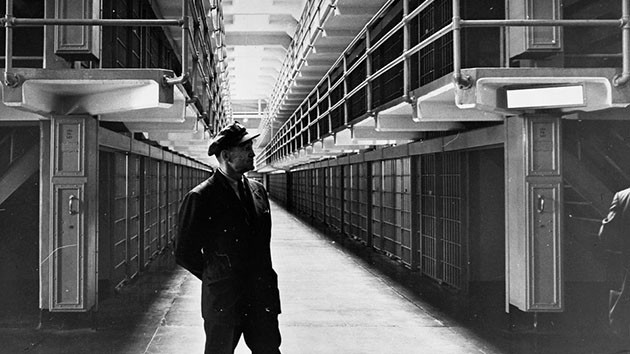
z 1d0f1fbf-0205-3d74-354f283f1068d086-masterTuesday April 13, 1945 dawned unusually cold with a dense layer of fog blanketing Alcatraz Island. The four convicts walked nervously down the narrow gravel road that led from the cell house to the mat shop located in the old “Model Industries Building” on the far northwest corner of the island. The building was built by the U.S. Military in the years that Alcatraz served as a disciplinary barracks before the Federal prison arrived in 1934 and as such was filled with many hidden corners and blind angles, not to mention a design flaw that seemingly allowed the back corner walls to drop directly into San Francisco Bay. The inmates had previously cut through the steel mesh covering the windows in preparation for their big moment. At 10:00 am, they made their move.
One of the guards, Custodial Officer George Smith, was overpowered by Hamilton, quickly tied up, gagged and dragged into a back room just as the Captain of the Guards, Henry Weinhold, a former Marine that the inmates called “Bullethead”, rounded the corner. James Boarman, armed with a knife and a hammer, began to beat the massive officer repeatedly with the heavy carpenter’s tool until finally subduing and tying him up to join his fellow guard now lying helpless on the floor. The inmates pushed the metal bars off the window and placed a cloth covered wooden ramp over the barbed wire fence located just a few feet from the window. The fugitive foursome then scooted carefully across the makeshift bridge and dropped to the narrow ledge below. The desperadoes, clad only in their underwear and leather belts, miraculously escaped grave injury during their bare-footed 30-foot plunge down a sheer cliff to the rock-strewn shore below. The quartet brought with them two empty cans designed to keep them afloat in the bay, each stuffed with stolen Army uniforms with which they hoped to make good their escape. Keep in mind that 1943 was the height of World War II and the shores of San Francisco Bay were lined with Army units and defense gun crews as well as being a major debarkation point for U.S. soldiers heading off to war in the Pacific theatre. Armed with the false confidence of their makeshift flotation devices and oblivious to the fact that they were surrounded by enough guns to fill an armory, the quartet hit the water.
Creepy history, Criminals, Museums, Pop Culture

The Nutshell Studies of Unexplained Death.

a227dded319454408ba52d476a643a5e - Copy

Original publish date:  July 12, 2018

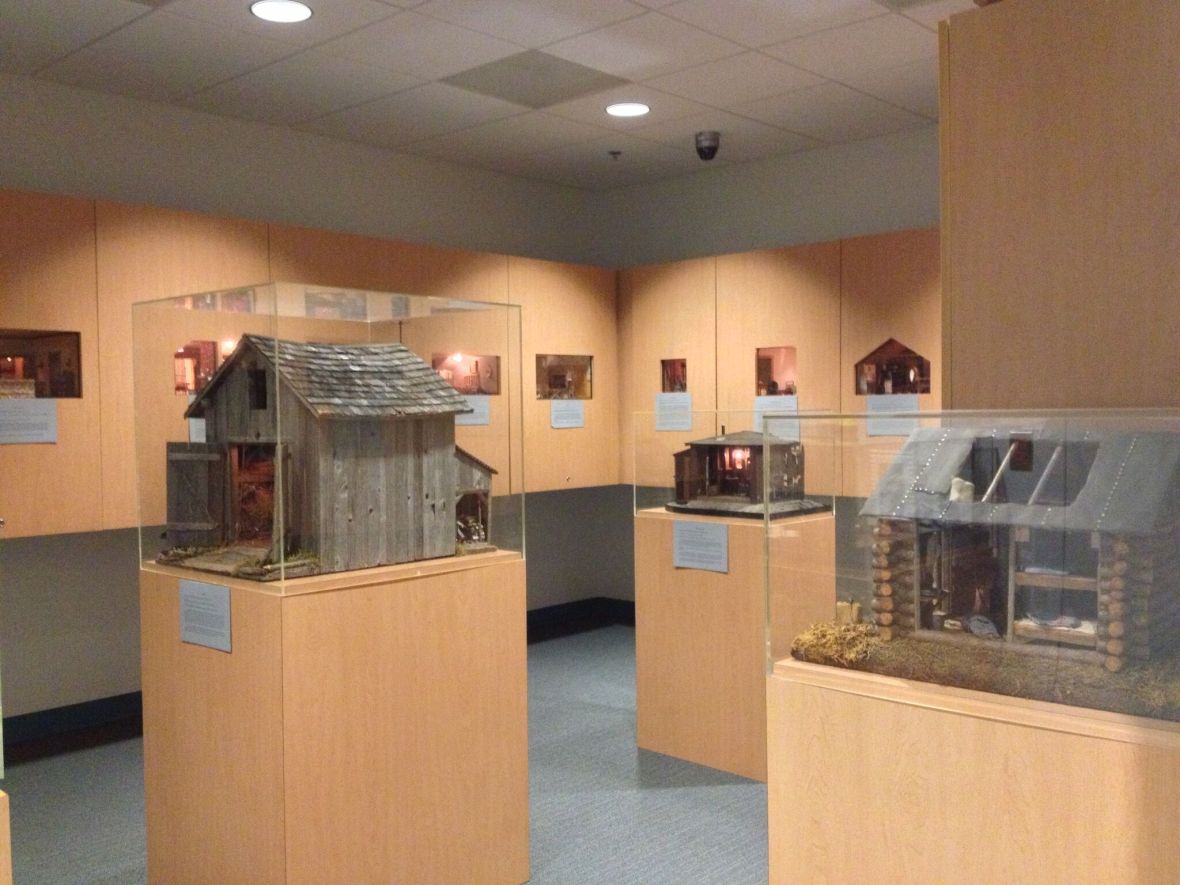
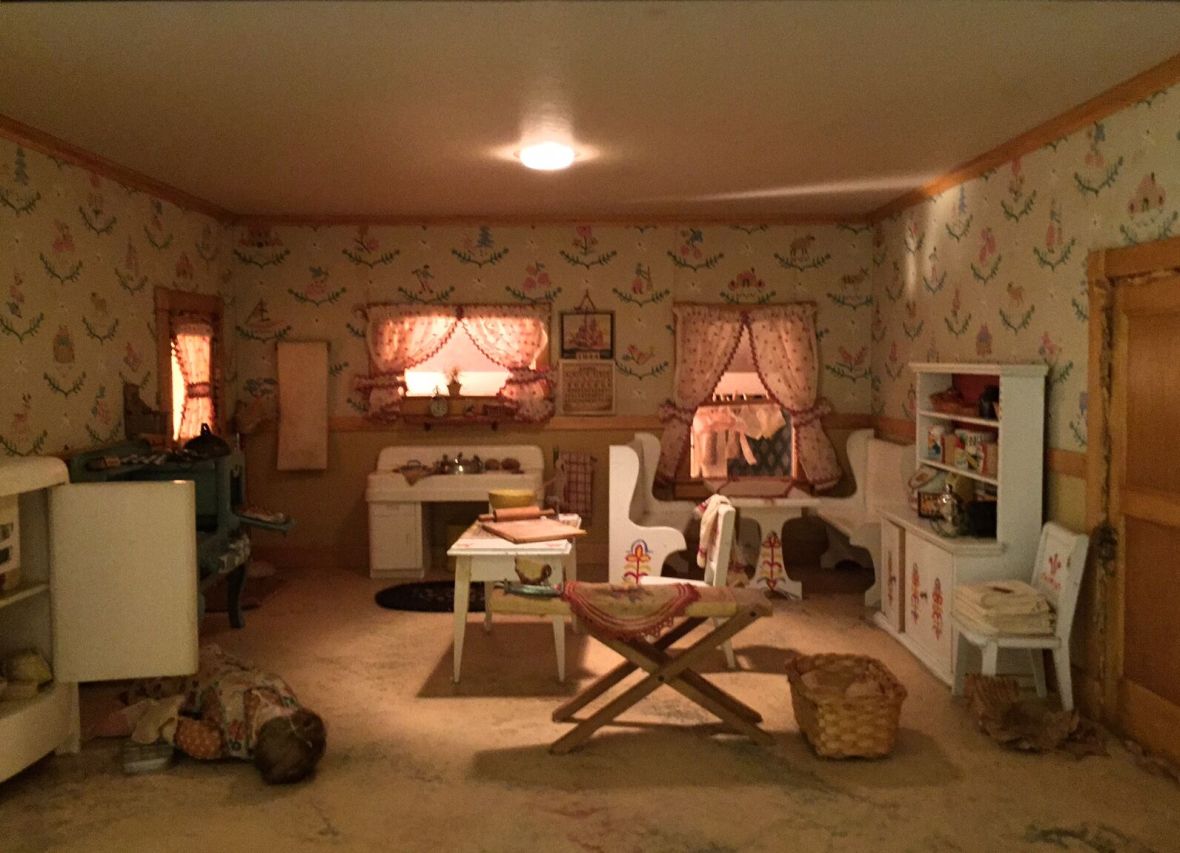
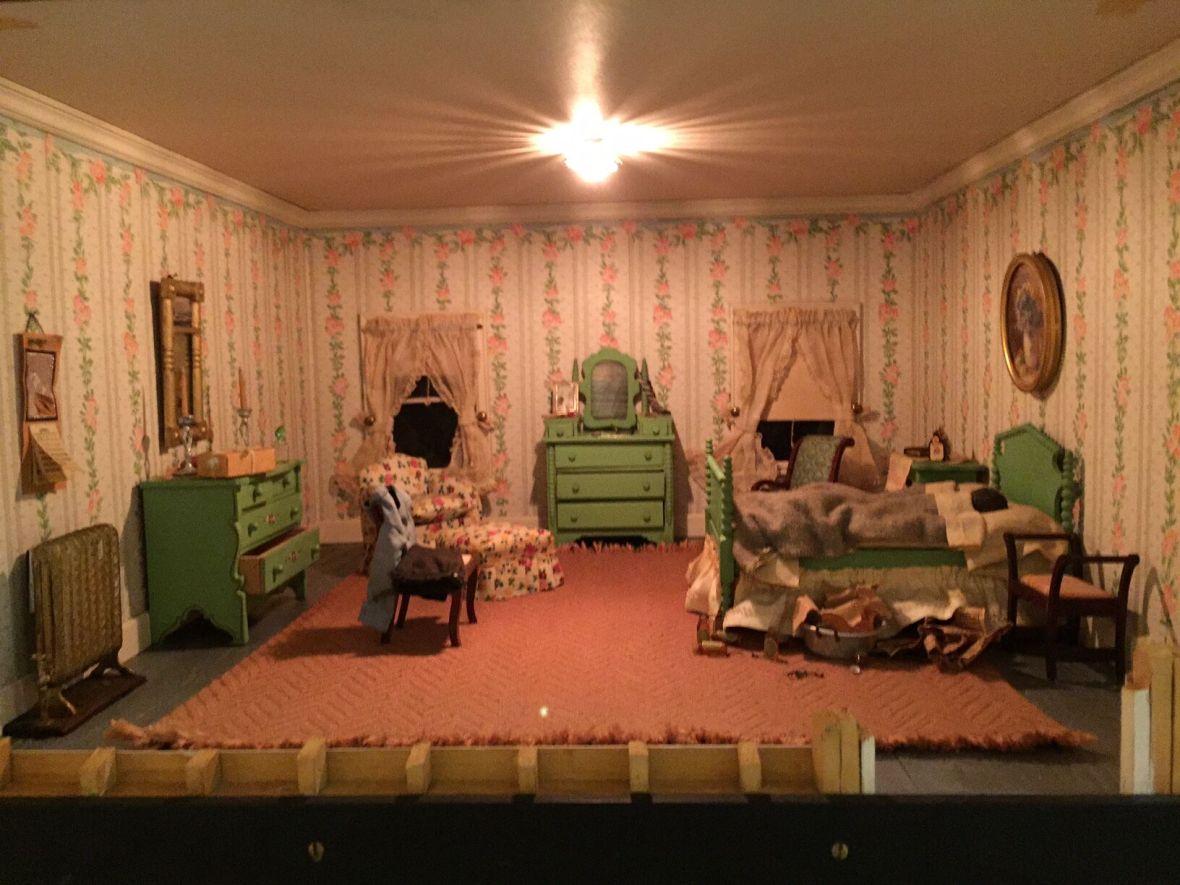
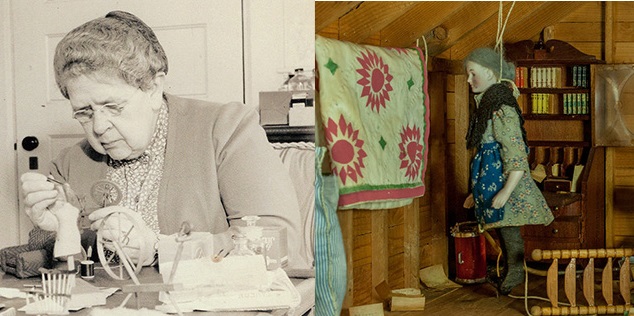
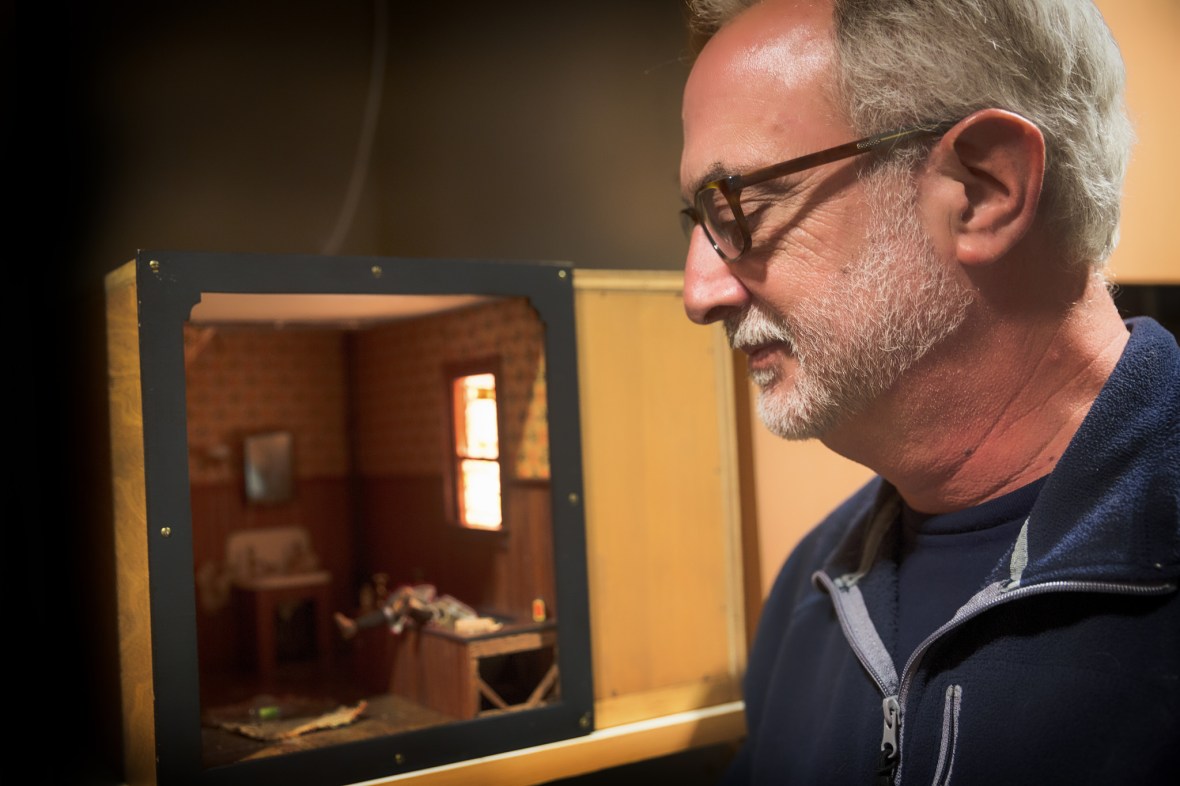
Recently I was fortunate enough to take a tour of an American treasure housed within the Maryland Medical Examiner’s Office in Baltimore, Maryland. What, you ask? An American treasure in a medical examiner’s office? Yes dear reader, let me share with you a story about the coolest display you’re ever likely to find in any government office, anywhere. This is the story of the “Nutshell Studies of Unexplained Death.” On the fourth floor, room 417 is marked “Pathology Exhibit” and it holds 18 dollhouses of death. These meticulous teaching dioramas, dating from the World War II era, are an engineering marvel in dollhouse miniature and easily the most charmingly macabre tableau I’ve ever seen.

54755978_137002244249
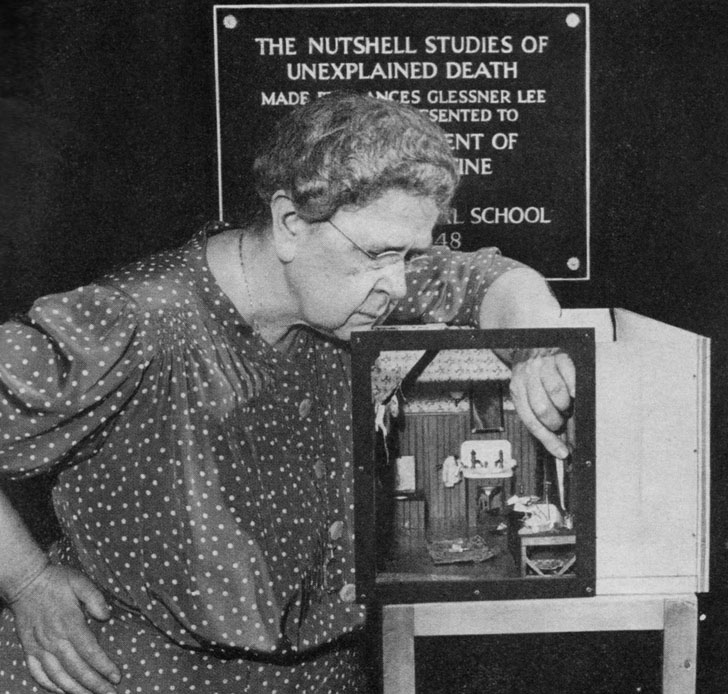
Frances Glessner Lee

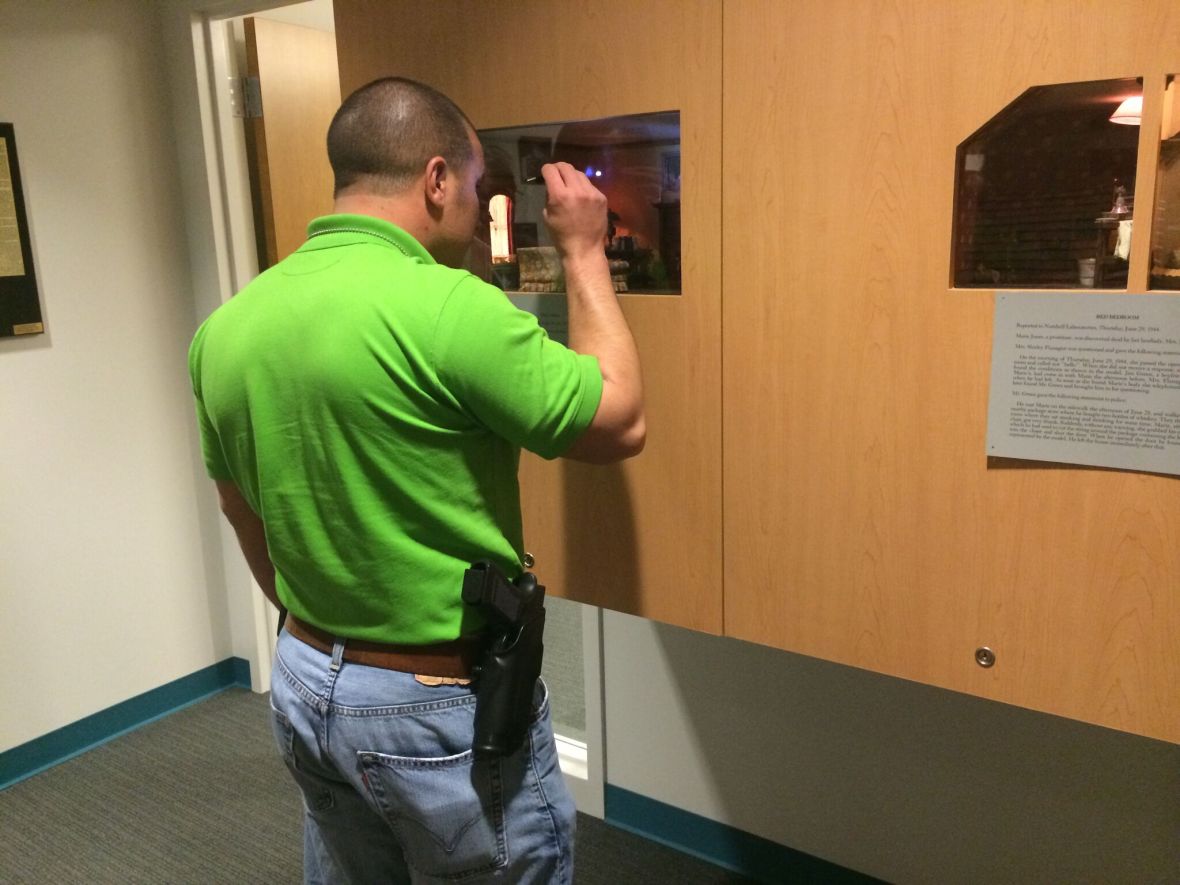
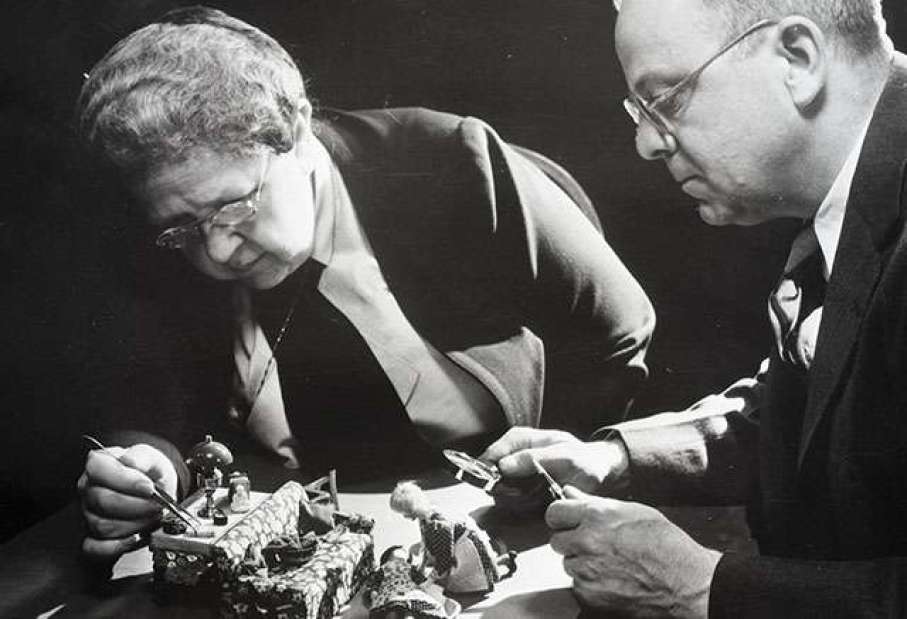
These dioramas were created by Frances Glessner Lee (1878–1962) over the course of 5 years between 1943 and 1948. Glessner Lee was a pioneer in the burgeoning field of forensic science and a trailblazer for women’s rights. She used a sizable inheritance to establish a department of legal medicine at Harvard Medical School in 1936. She donated the first of the Nutshell Studies in 1946 for use in lectures on the subject of crime scene investigation. Glessner Lee named her studies nutshells because they were designed to “convict the guilty, clear the innocent, and find the truth in a nutshell.” She instructed her students to study each scene methodically by “moving the eyes in a clockwise spiral” before drawing conclusions based on visual evidence. Crime-scene investigators had 90 minutes to study each diorama.
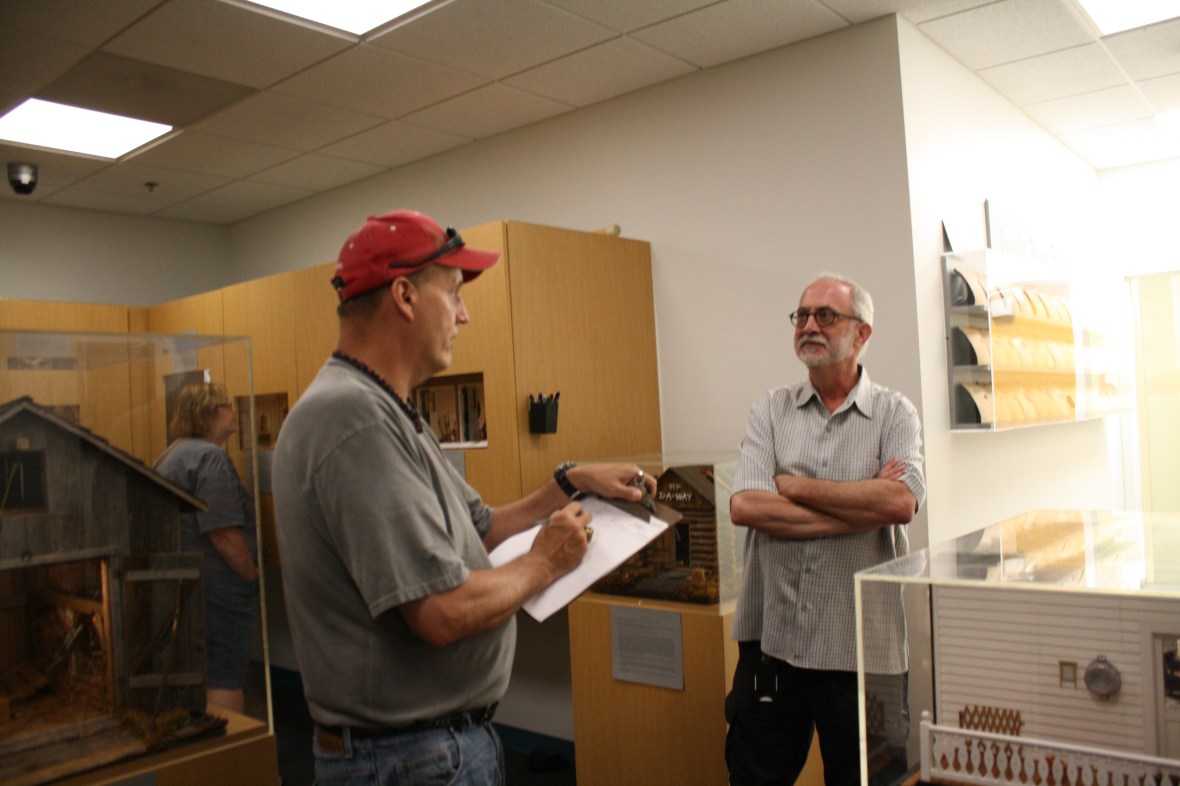
I was fortunate to have Bruce Goldfarb, Special Assistant for the Office of the Chief M.E., as my personal tour guide. Bruce, a former EMT, newspaper writer and accomplished author many times over, knows more about the Nutshell Studies than any one else in the Clipper City. “There are 18 dioramas in our collection and another is housed in a museum in Littleton, New Hampshire.” Bruce says, “Glessner Lee was an heiress to the International Harvester fortune and a dedicated model-maker. Each diorama cost as much to make as a full sized house.” Each model cost about US$3,000–4,500 to create which, when calculated for inflation, translates to $ 40,000 to $ 60,000 today.

z 1 4jwG4jGQ
Photo by Rhonda Hunter.

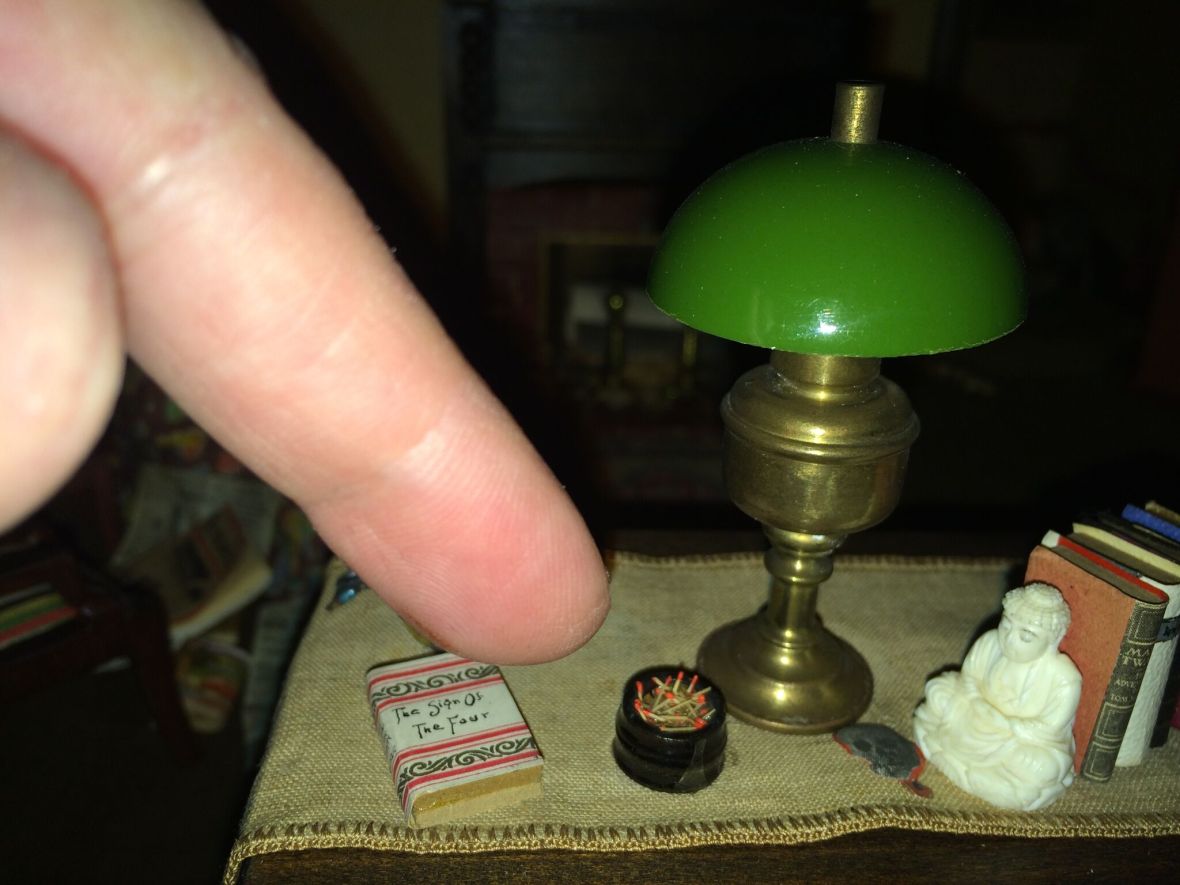
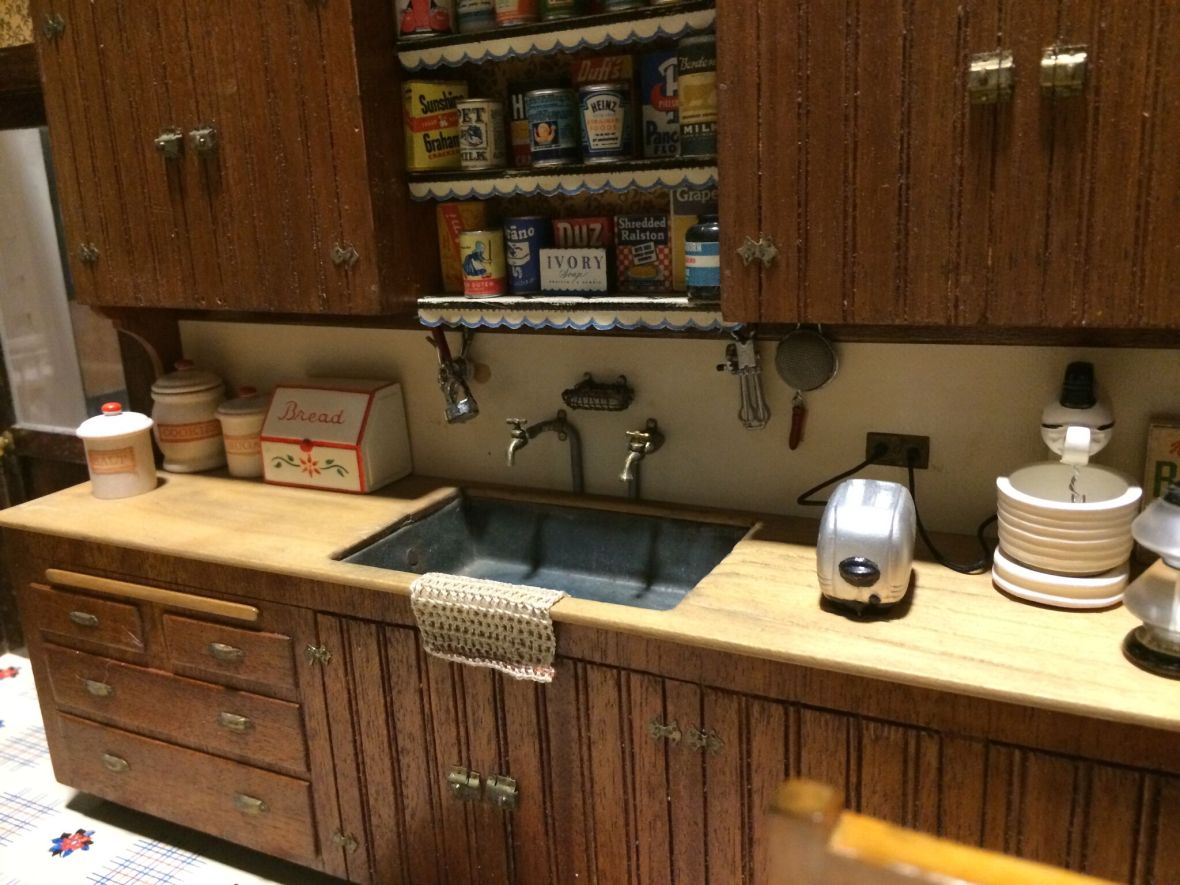
Each exquisitely detailed miniature diorama (1 inch equals 1 foot or a 1:12 scale) depicts a different true crime scene and are so well done that they are still used for forensic training today. Bruce explains, “These are not famous crime scenes. They are local scenes chosen by Frances to tell a story using composites of actual court cases. They are designed to teach young investigators how to examine and preserve a crime scene properly.”
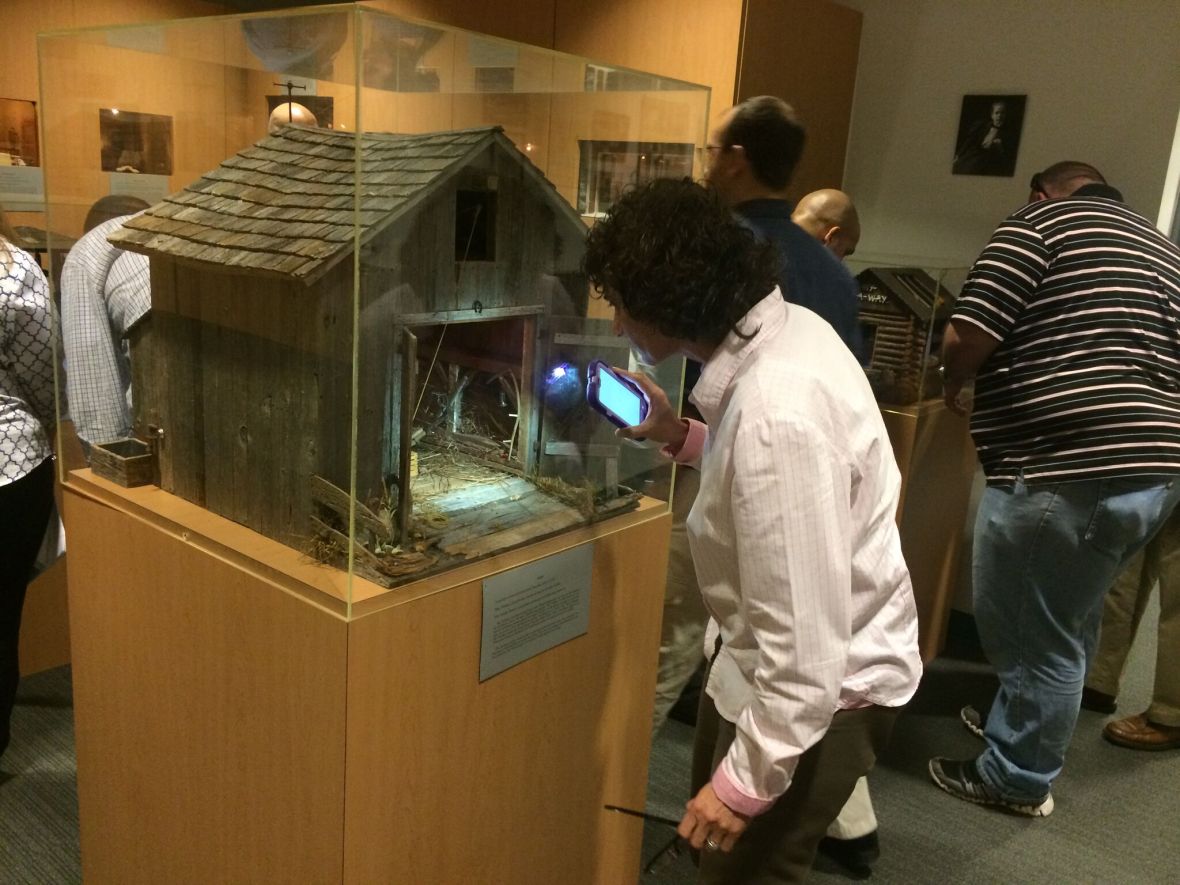
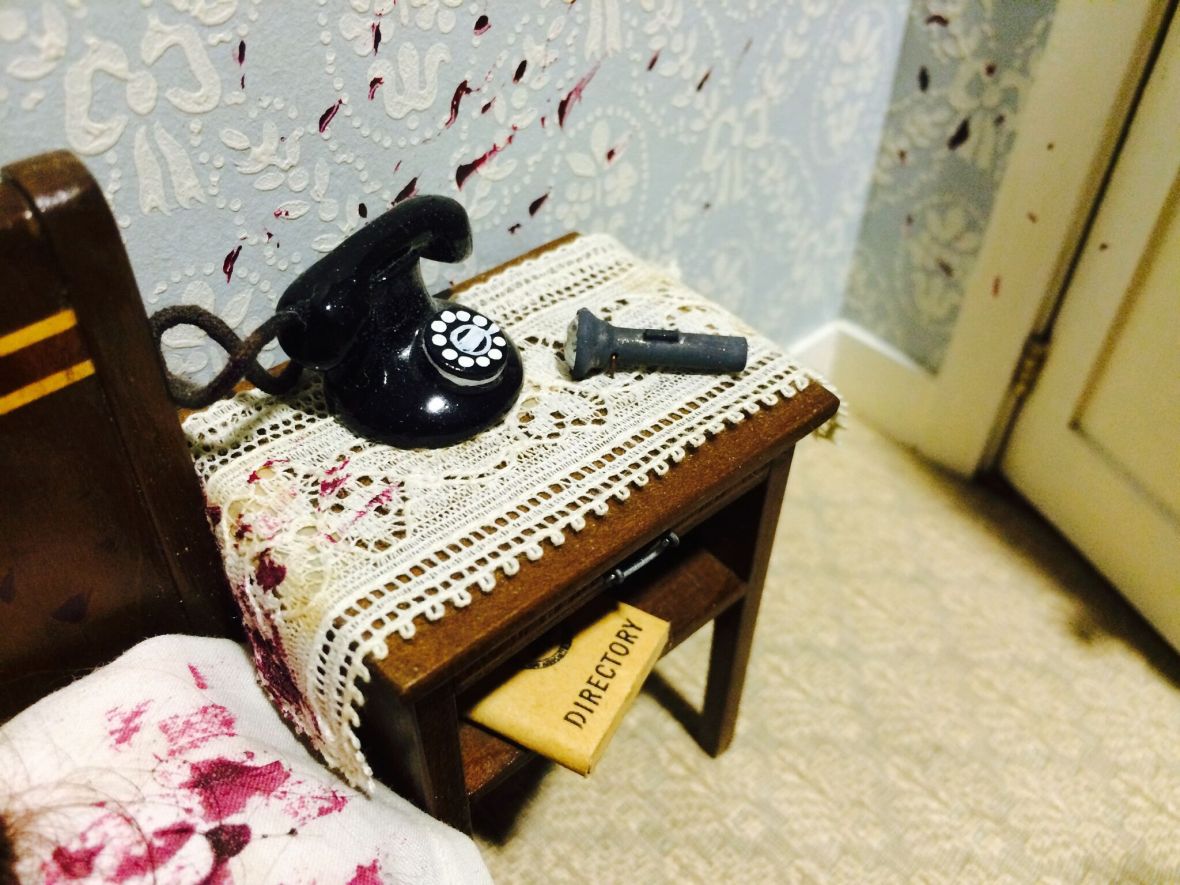
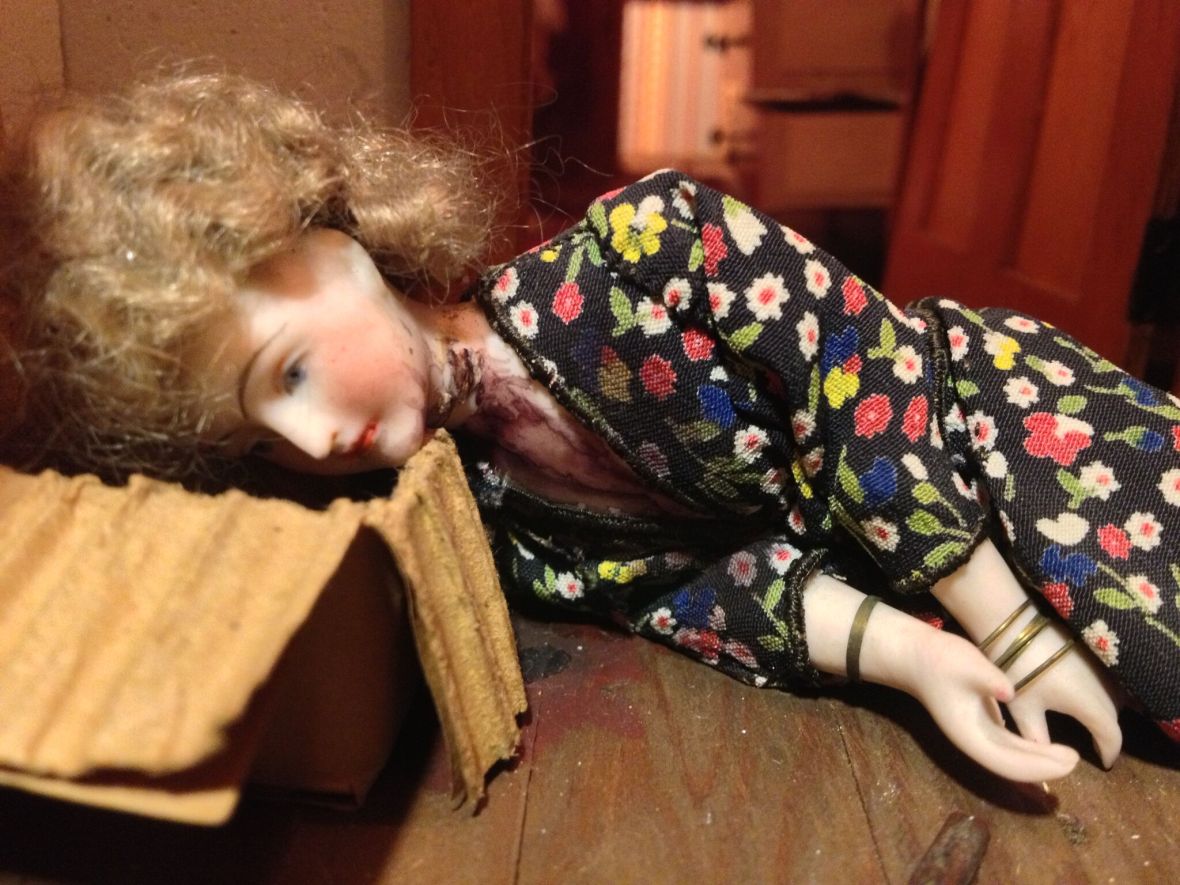
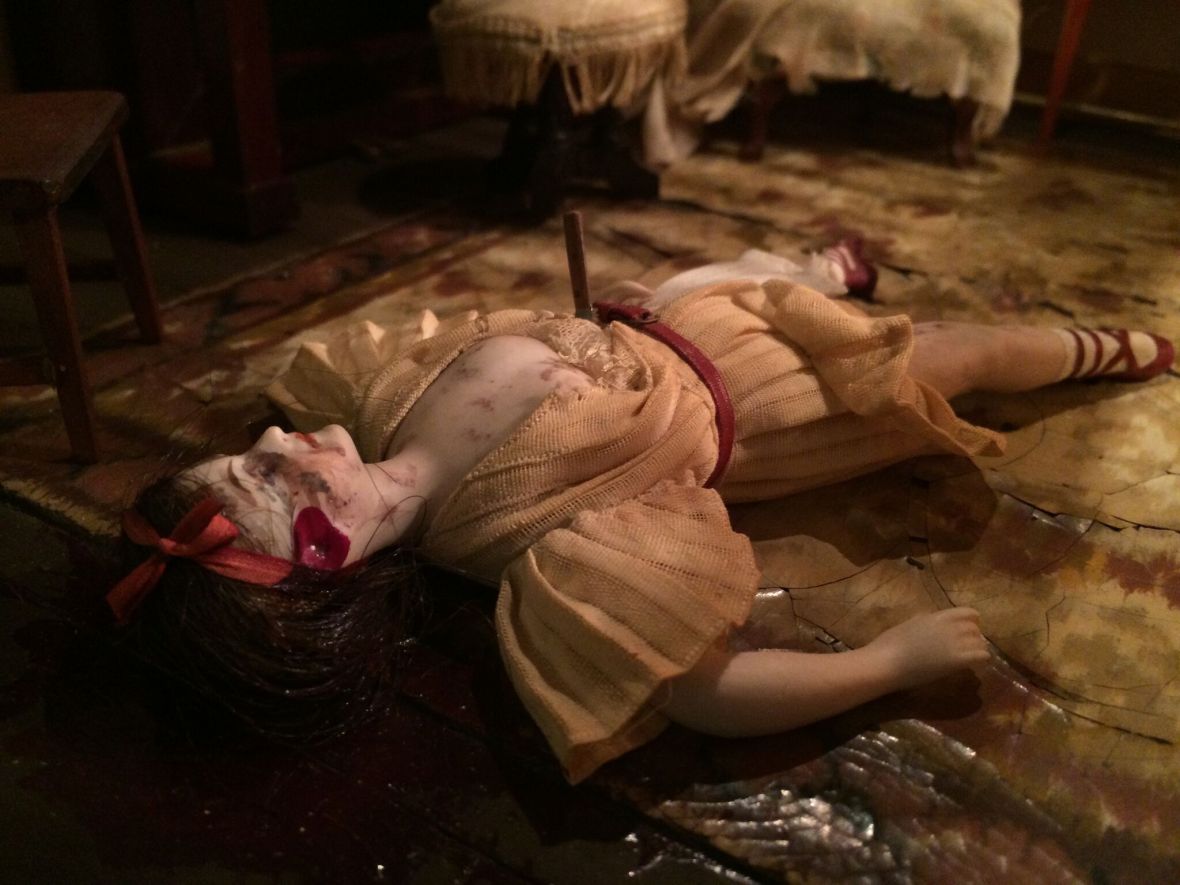
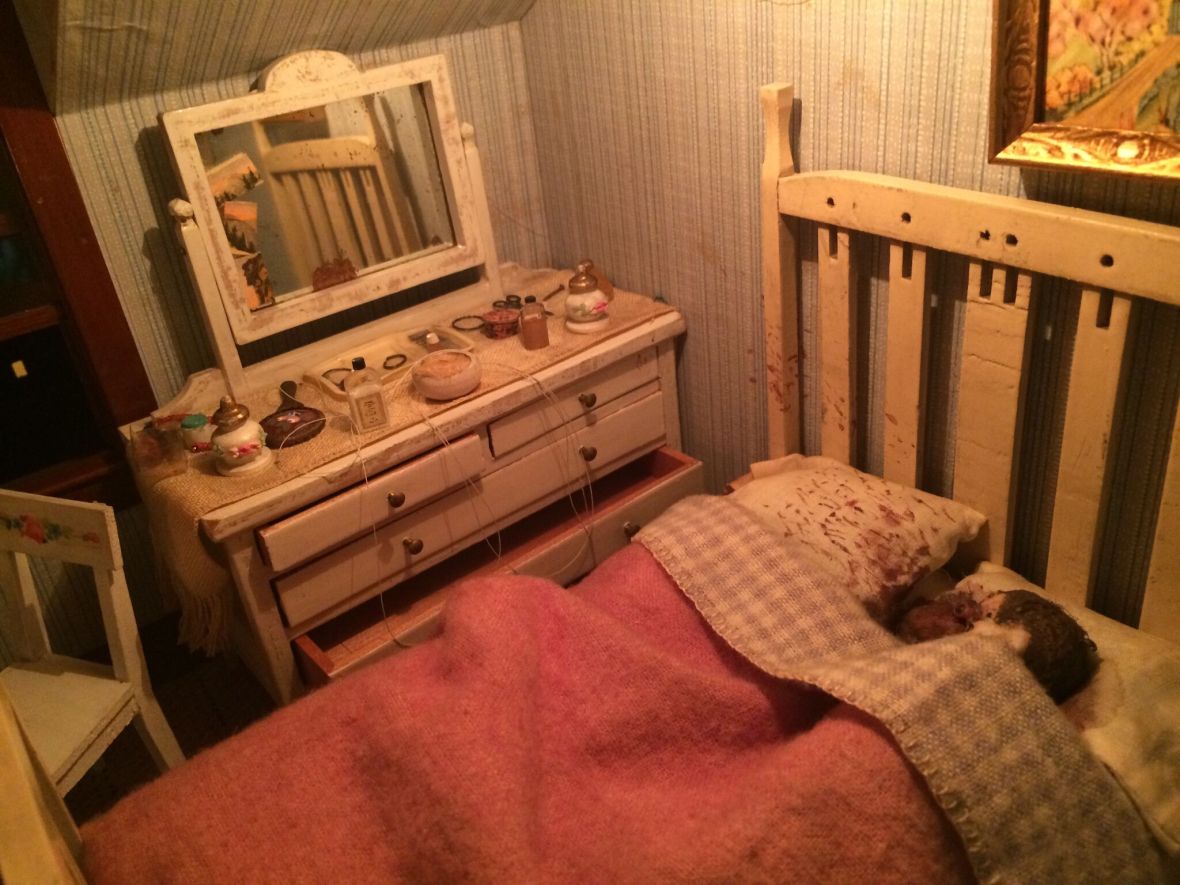
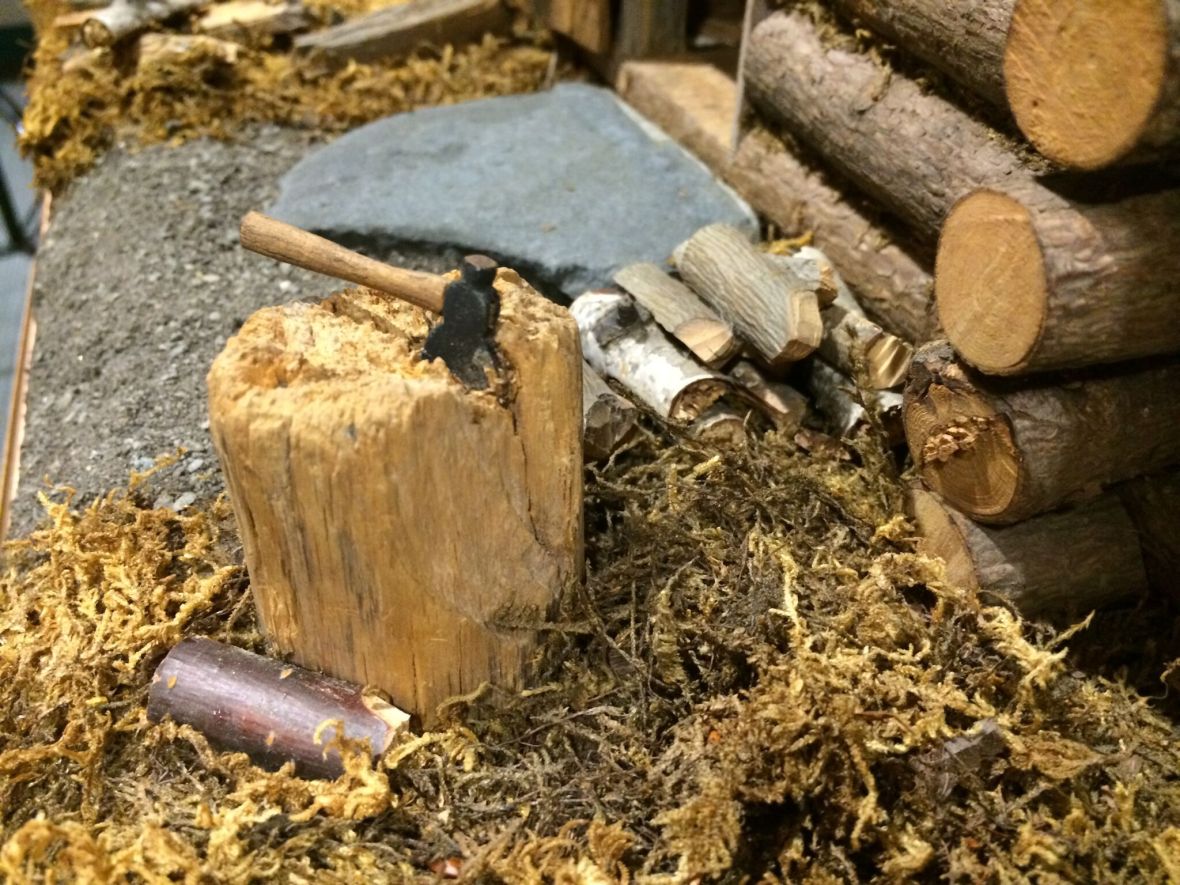
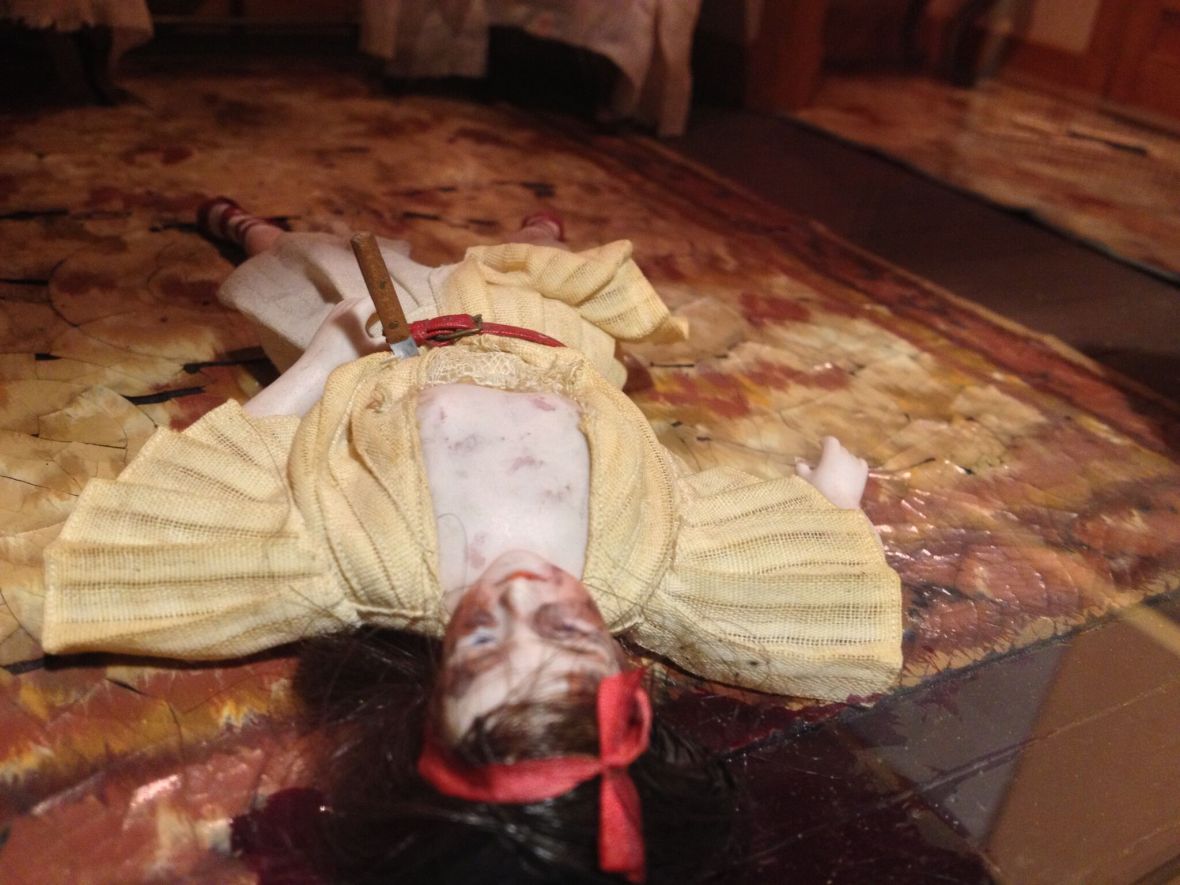
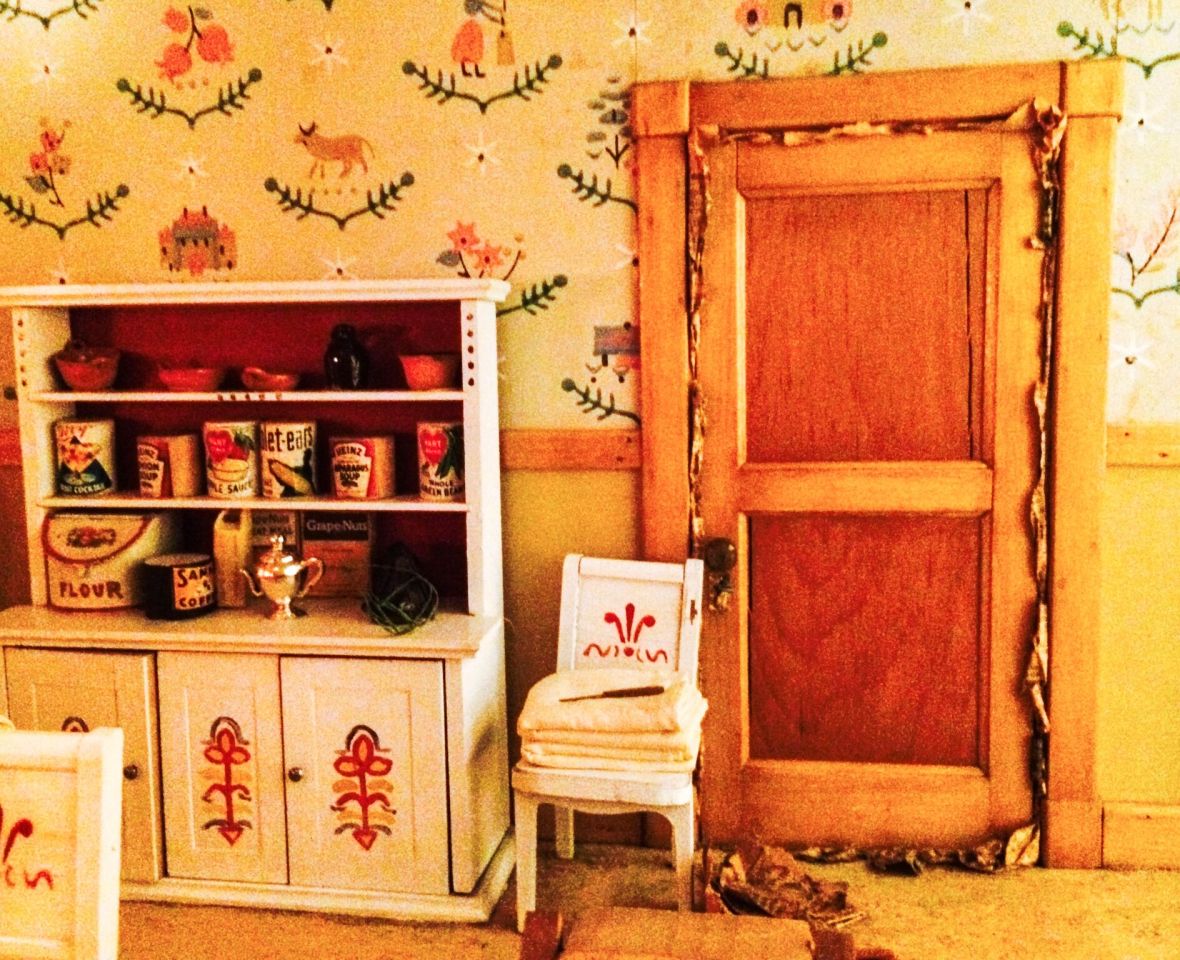
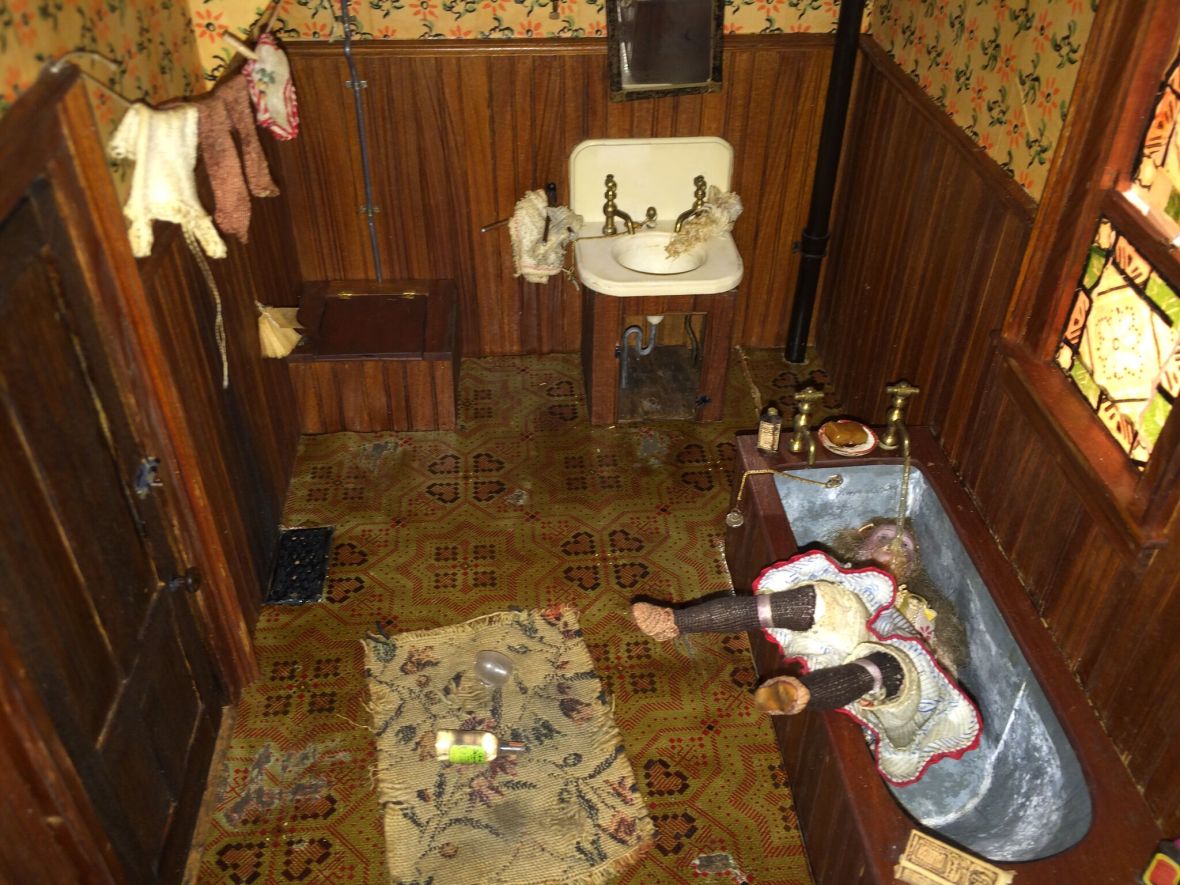
11-11-28 Nutshell StudiesHoused in impressive looking wood and glass locked cases, they are not unlike the ancient penny arcade mechanical machines recalled by every baby boomer’s childhood. Except these scenes are populated by dead bodies, gruesome instruments of death and startling realistic blood spatter patterns. The scenes take place in attics, barns, bedrooms, log cabins, bathrooms, garages, kitchens, parsonages, saloons, jails, porches and even a woodman’s shack. Sometimes, it’s easy to determine the cause of death, but look closer and conclusions are tested. There is more than meets the eye in the Nutshell Studies and any object could be a clue. Every element of the dioramas-angles of minuscule bullet holes, placements of window latches, discoloration of painstakingly painted miniature corpses-challenges the powers of observation and deduction.
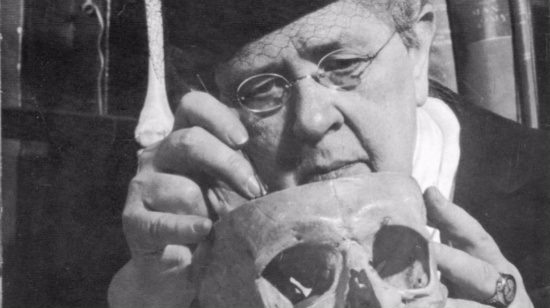
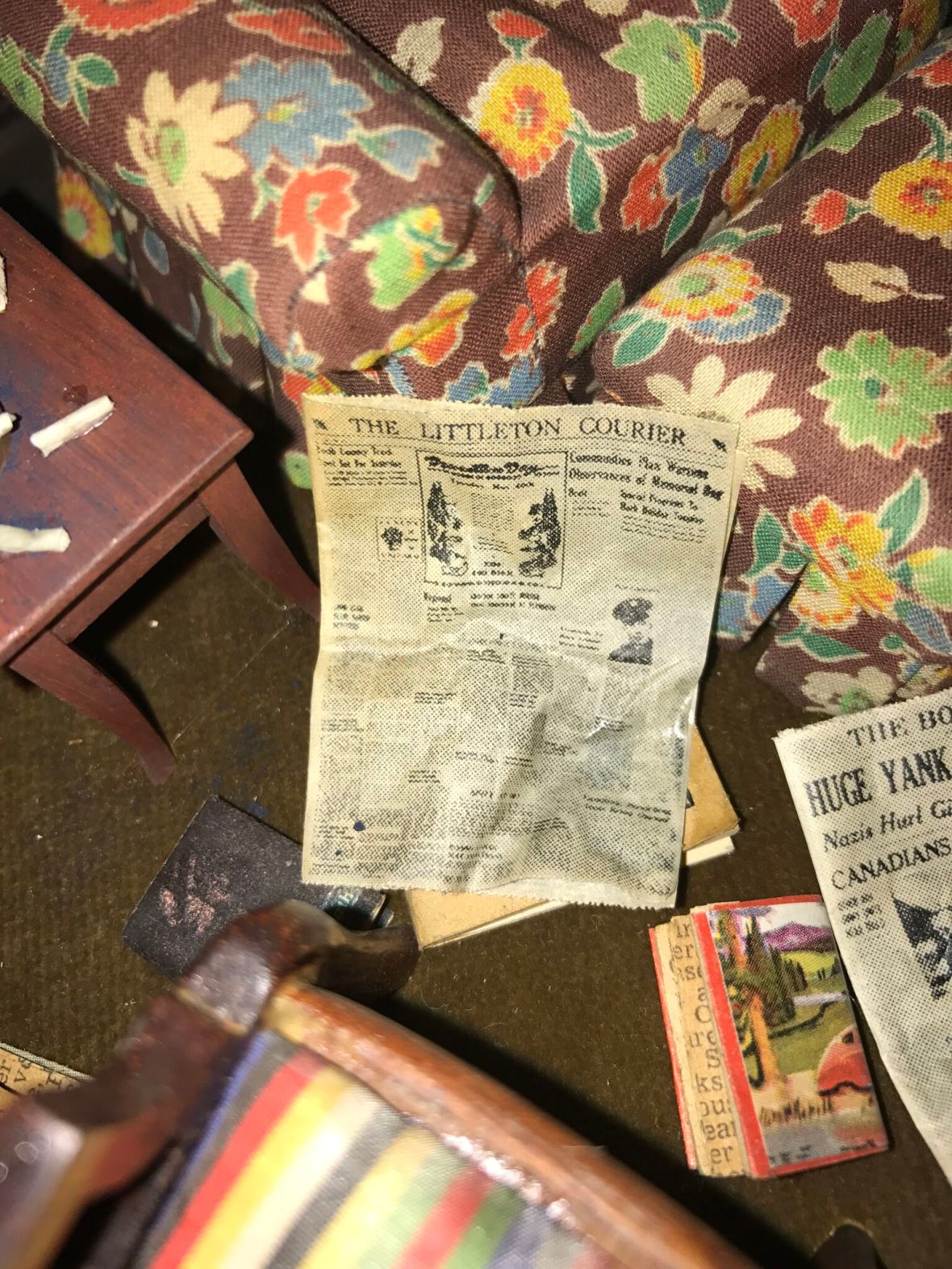
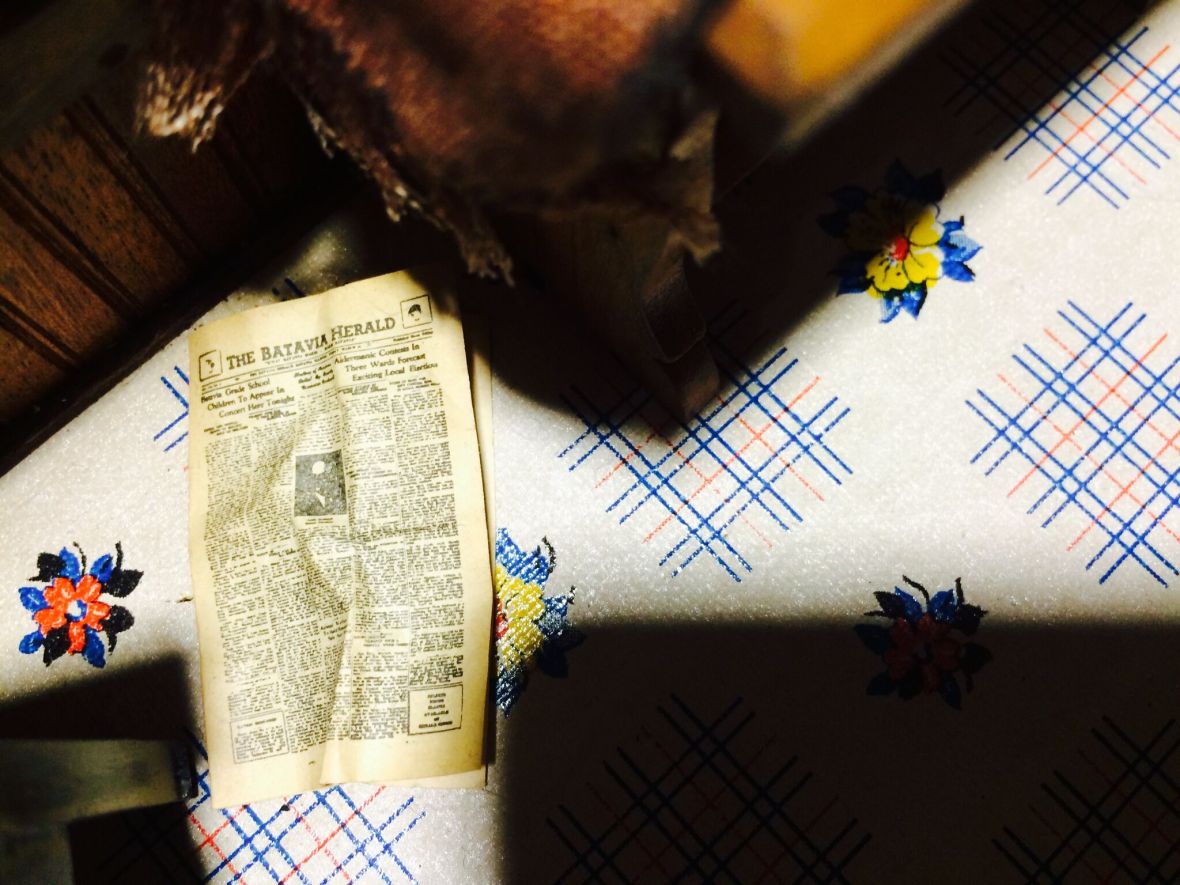
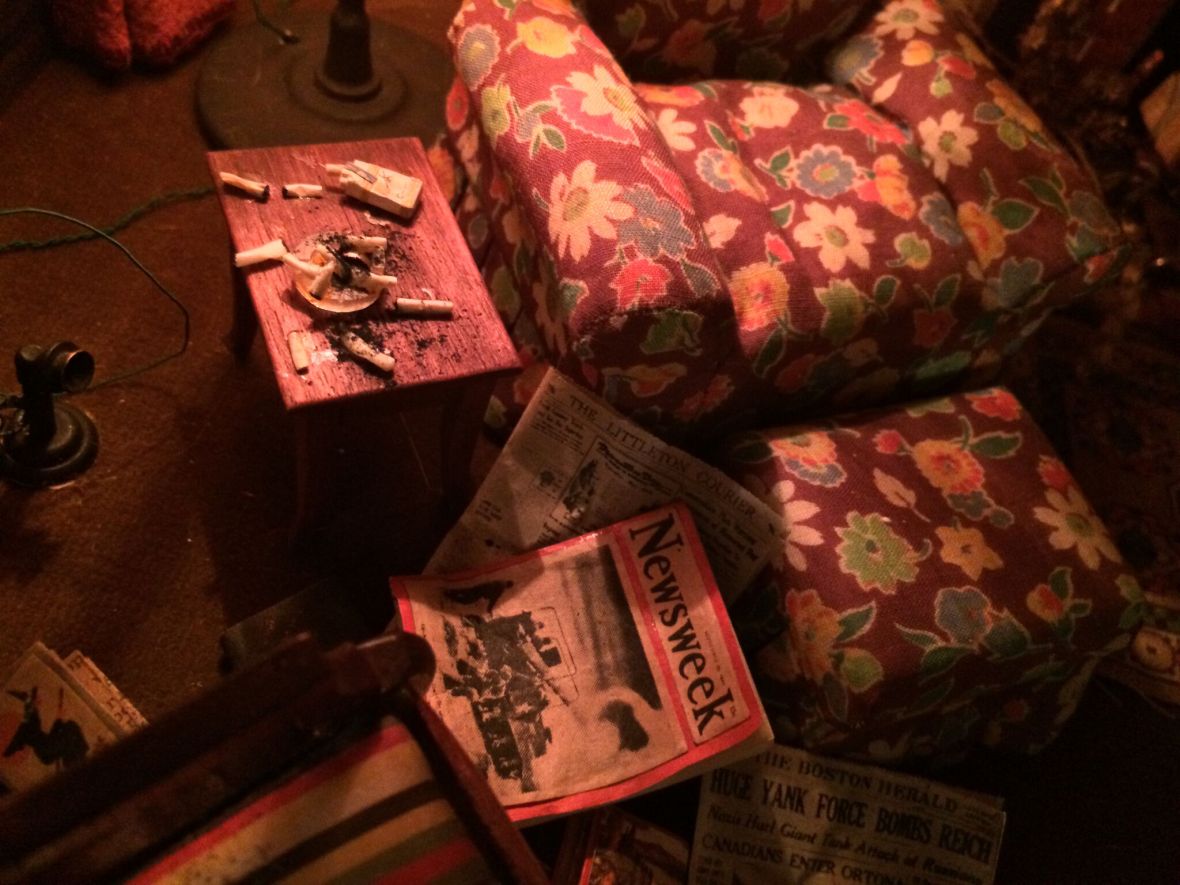
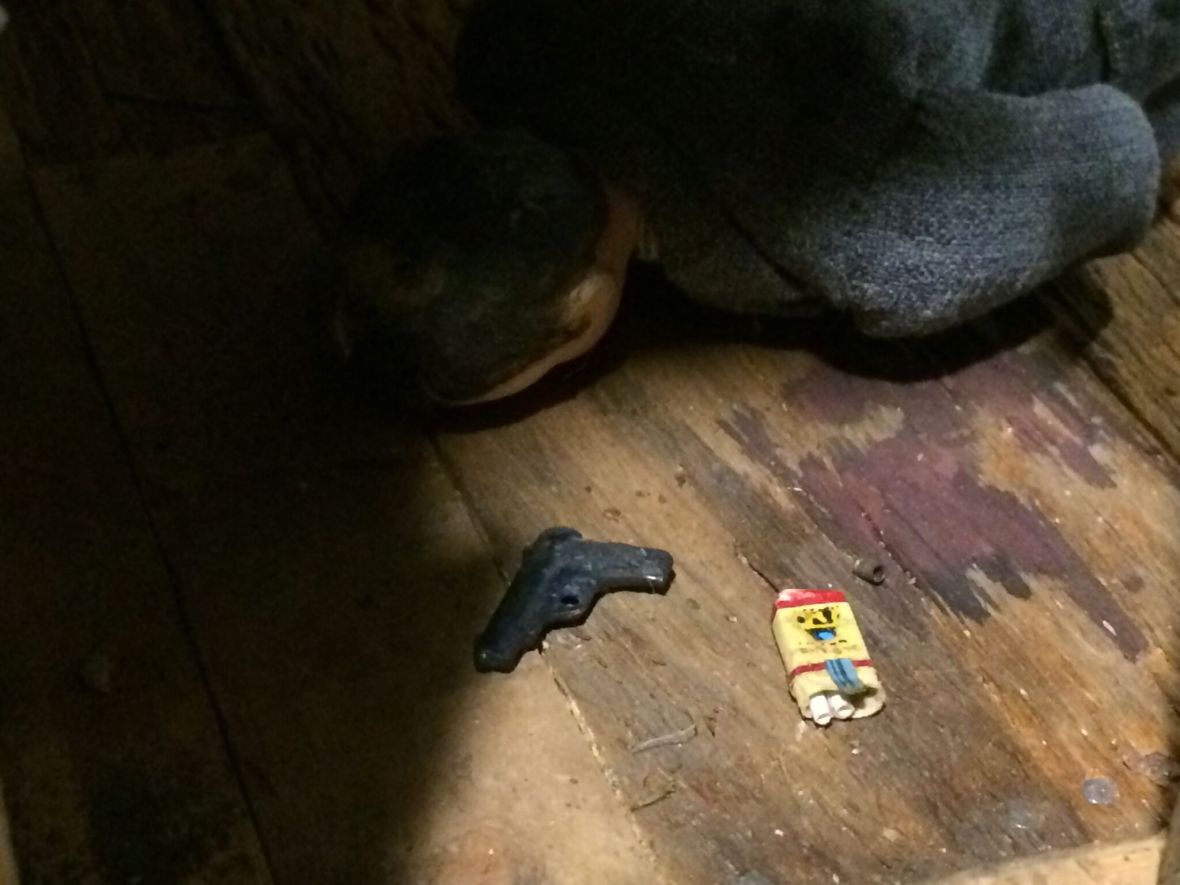
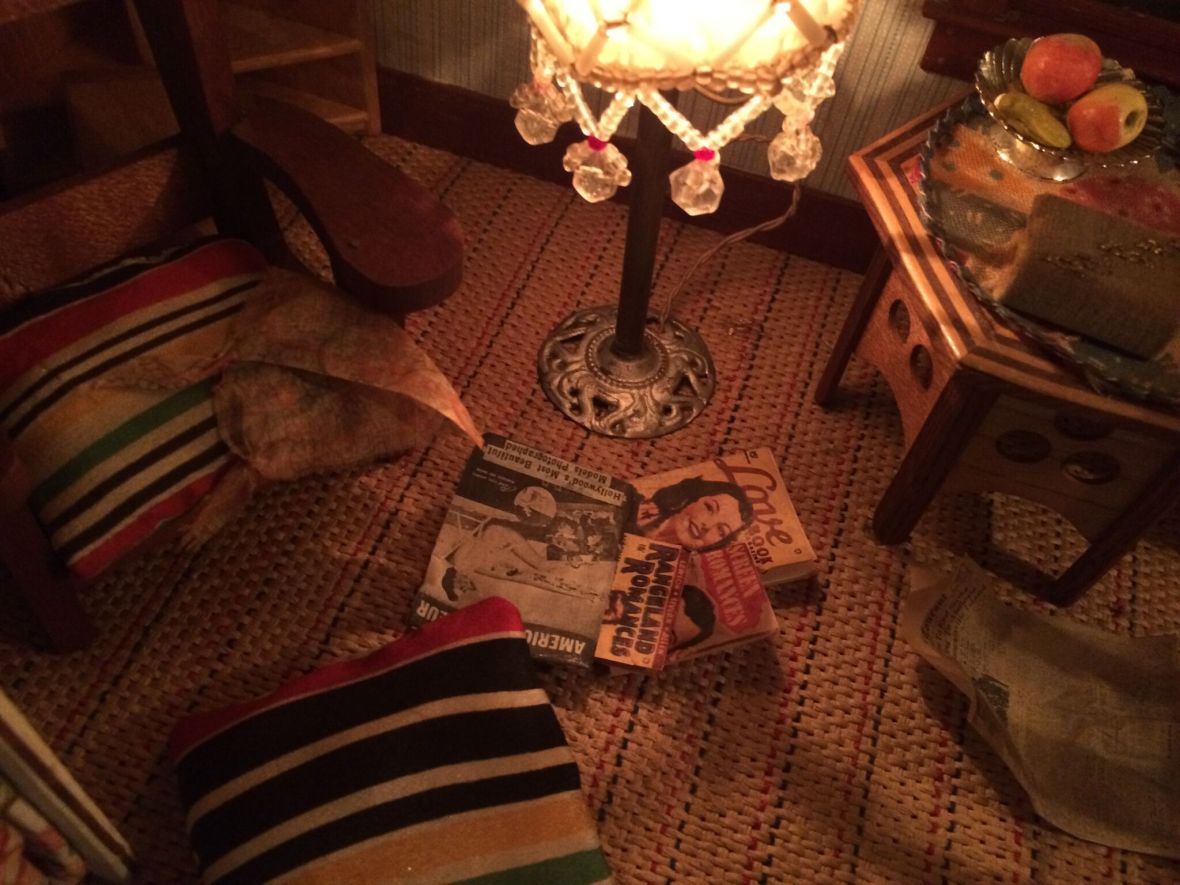
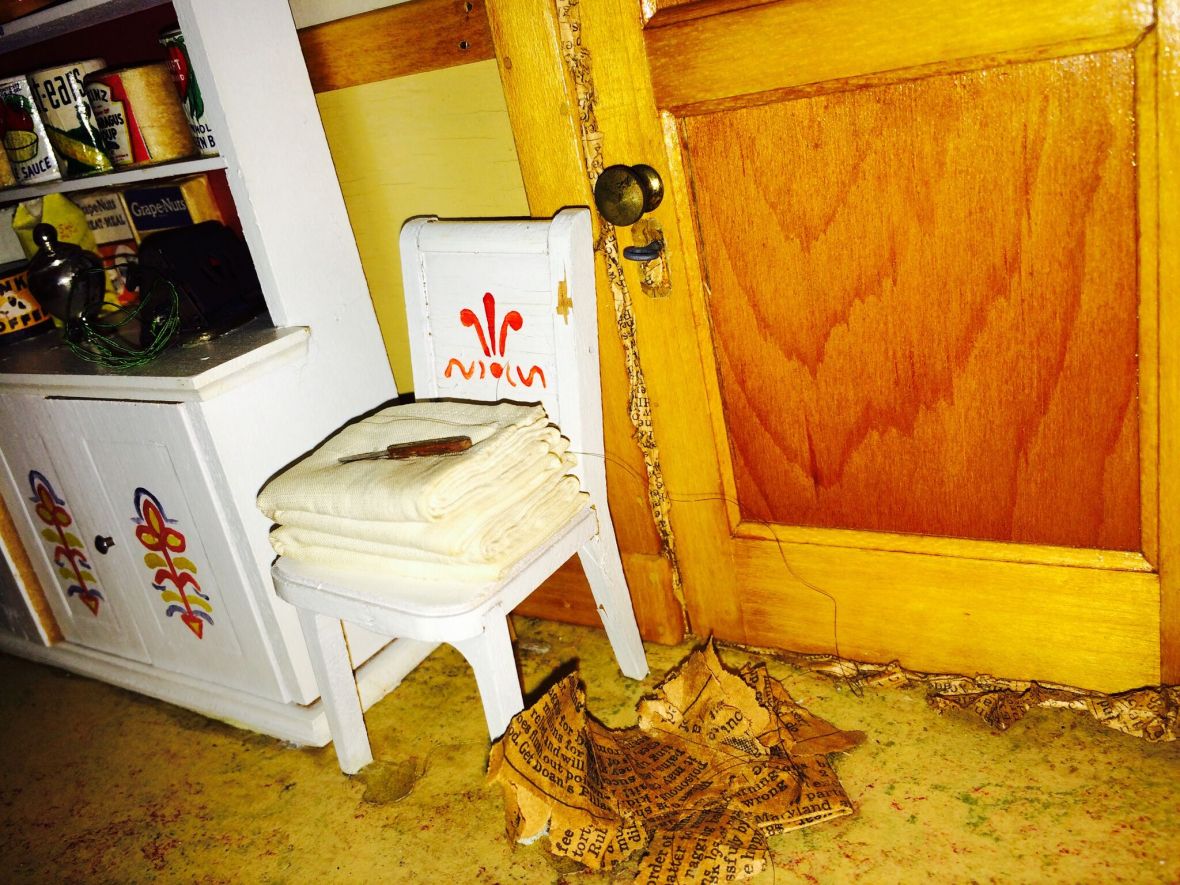
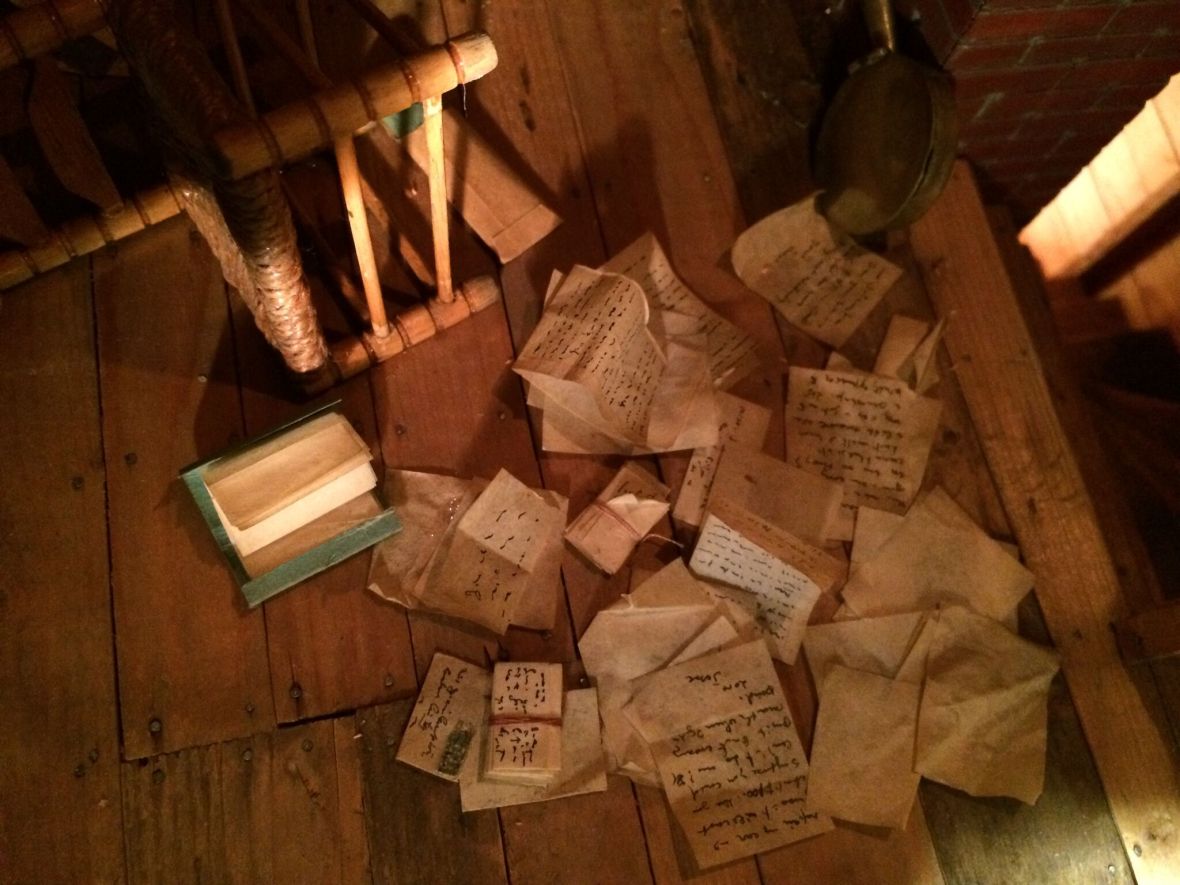
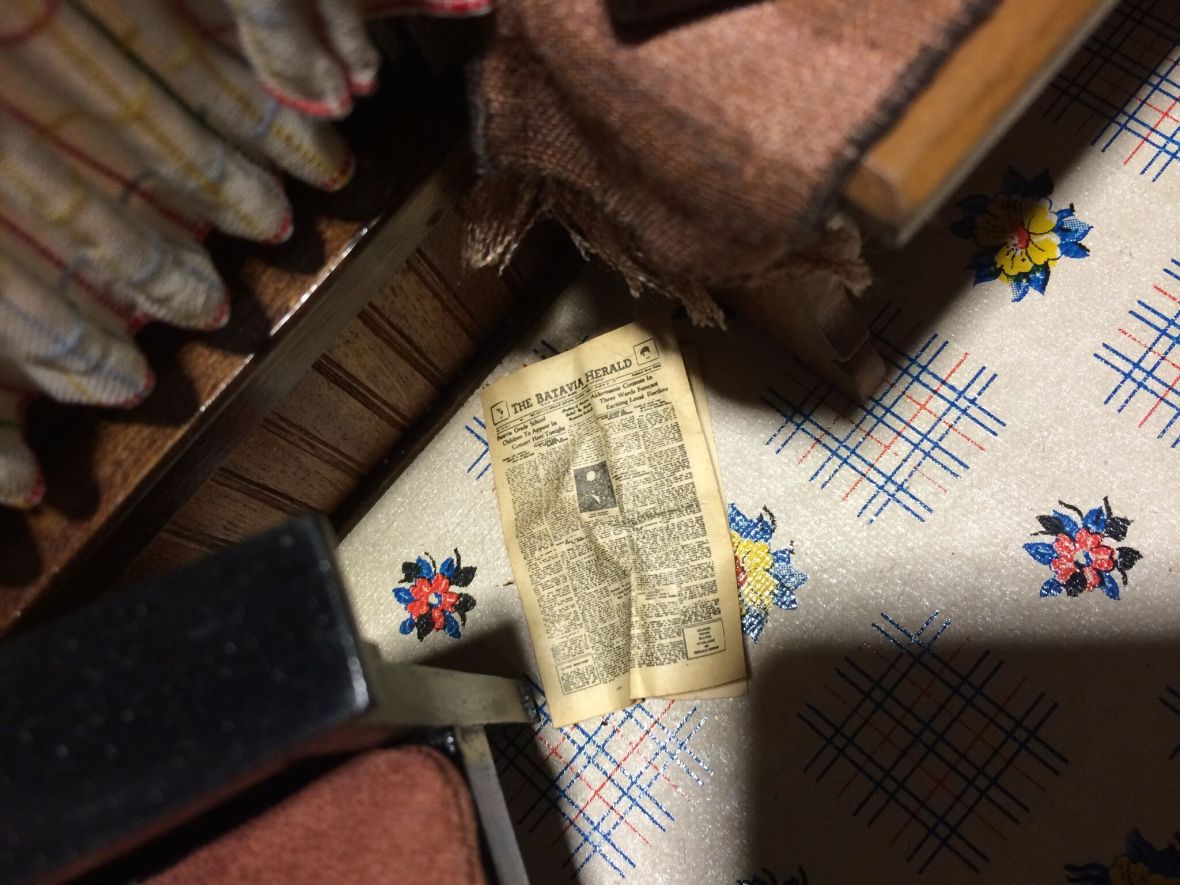
99percent_5Bruce says, “Look at the miniature sewing machine (about the size of your thumbnail) it’s threaded. There is graffiti on the jail cell walls. The newspapers (less than the size of a postage stamp) are real. Each one had to be printed on a tiny press, the newsprint is immeasurably small. The Life magazine cover is accurate to the week of the crime. The ant-sized cigarettes are hand rolled and burnt on the end. Amazing!” Bruce, who came to the M.E.’s office in 2012, says that although he’s been over every inch of each diorama, he is still making new discoveries.
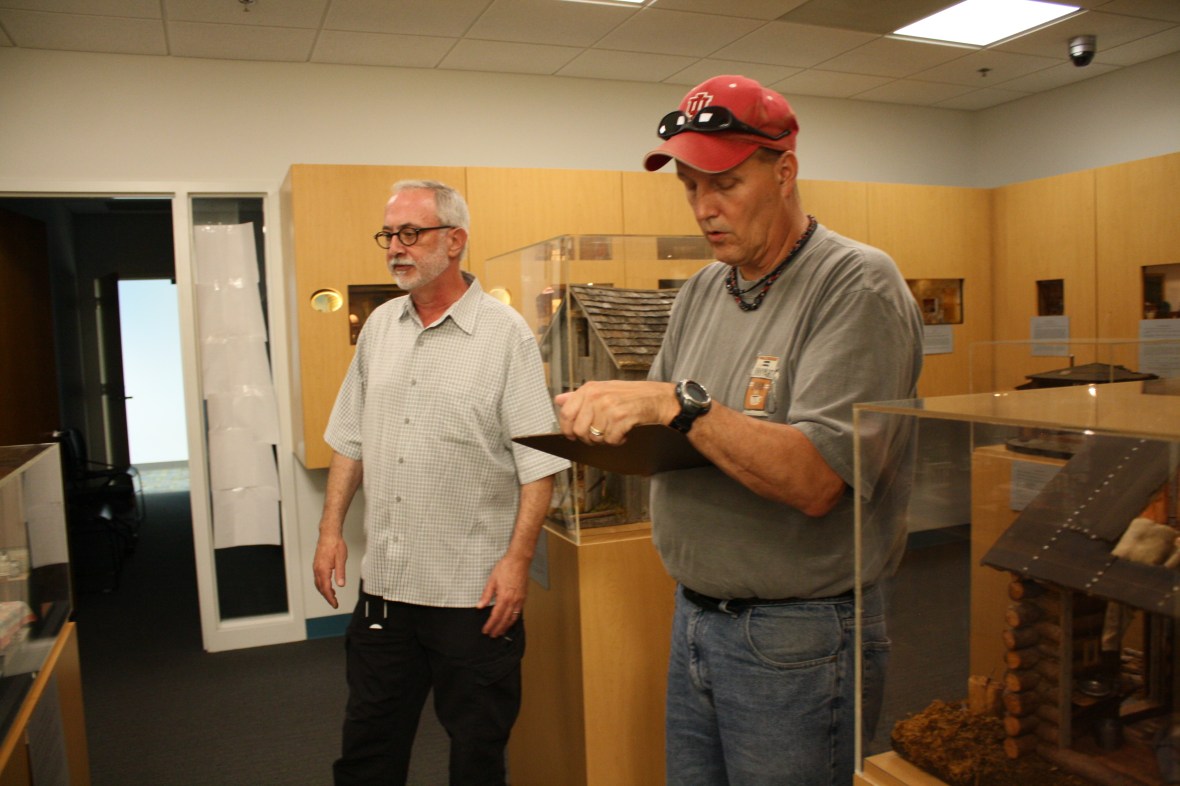
IMG_1614
Bruce Goldfarb and Alan E. Hunter

Bruce credits a recent exhibition of the Nutshell Studies at the Smithsonian for reinvigorating interest in the displays among the public. The dioramas were exhibited at the Renwick Gallery of the Smithsonian’s American Art Museum in Washington, DC from October 20, 2017 to January 28, 2018. When I asked if they would ever be put on public display again, Bruce answers quickly, “Never. That is the last time they will be available to the general public. This is a classroom, not a gallery. The studies won’t leave this room again.” He continues, “The Smithsonian people really helped in our preservation efforts. They had expertise far beyond our knowledge.” Bruce especially credits Smithsonian conservator Ariel O’Connor for her expertise, “Ariel is the only woman to have entered the Apollo 11 capsule and only the 6th person overall. She was lowered Tom Cruise / Mission Impossible style into the capsule to retrieve a bag left under the seat by Neil Armstrong.”

IMG_1618
Frances Glessner Lee’s diploma.

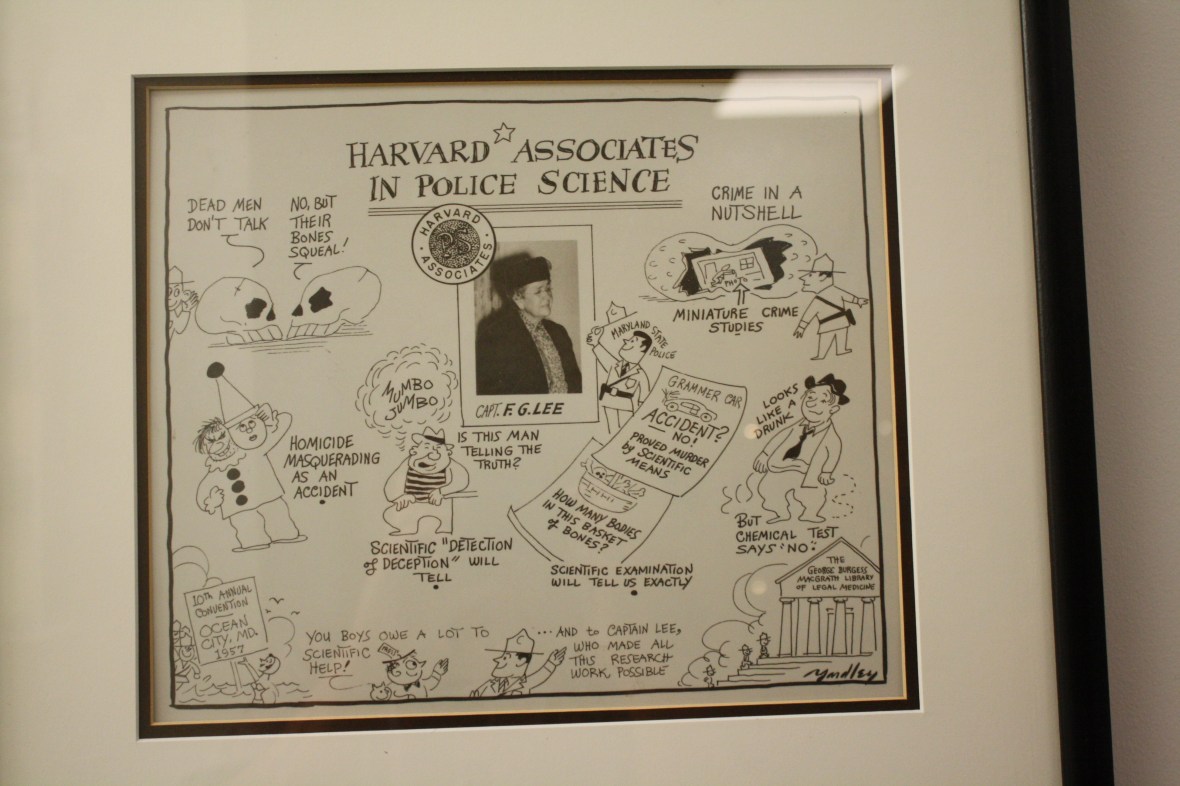
As informative as Mr. Goldfarb is on the dioramas, his eyes really light up when it comes to the artist. He explains “Lee was the first female police captain in the U.S. and is considered the mother of forensic science.” Lee’s original commission as captain hangs nearby on the wall. Bruce delights in telling the story of how a woman co-opted traditionally feminine crafts to advance the male-dominated field of police investigation and to establish herself as one of the founders of “legal medicine”, what we now call forensic science. “These studies are not puzzles waiting to be solved. They are designed to teach police officers to handle, observe and assess crime scenes. Frances wanted the investigator to get a sense of who these people were by deciphering the residual clues found in the surroundings.”
primary_298The Nutshell Studies made their debut at the homicide seminar in Boston in 1945. It was the first of it’s kind. Bruce says, “Frances’ intention was for Harvard University to do for crime scene investigation what they had done for their famous business school. When Frances died in 1962, support evaporated and by 1966, the department of legal medicine at Harvard was dissolved.” When asked how the displays made the trip from Harvard yard to Baltimore, Bruce states, “That’s a good question. When Harvard planned to throw them away, longtime medical examiner Russell S. Fisher brought them here in 1968. Fisher was a legend and a former student of Frances Glessner Lee. Fisher was one of the doctors called in to examine John F. Kennedy’s head wounds.”
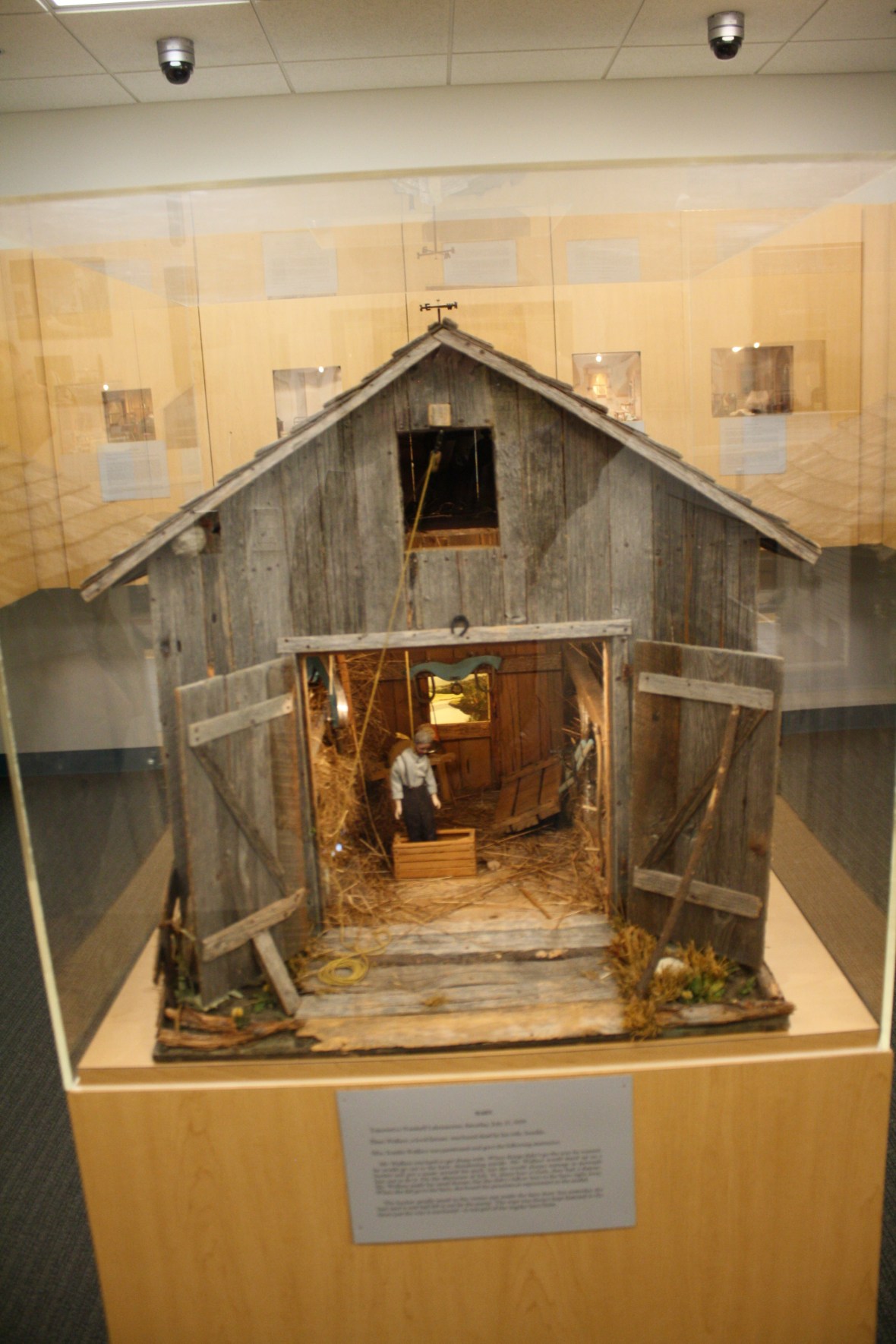
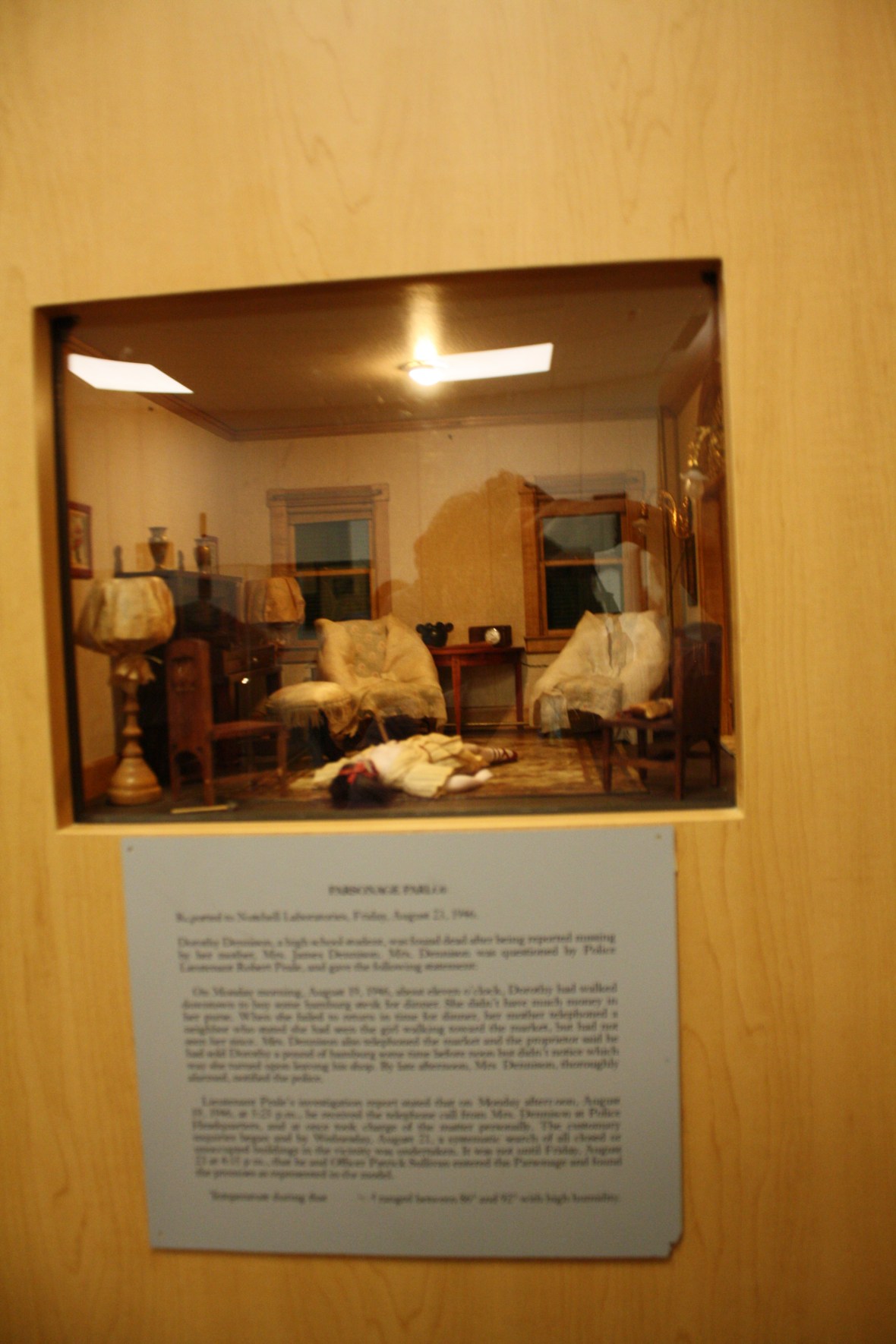
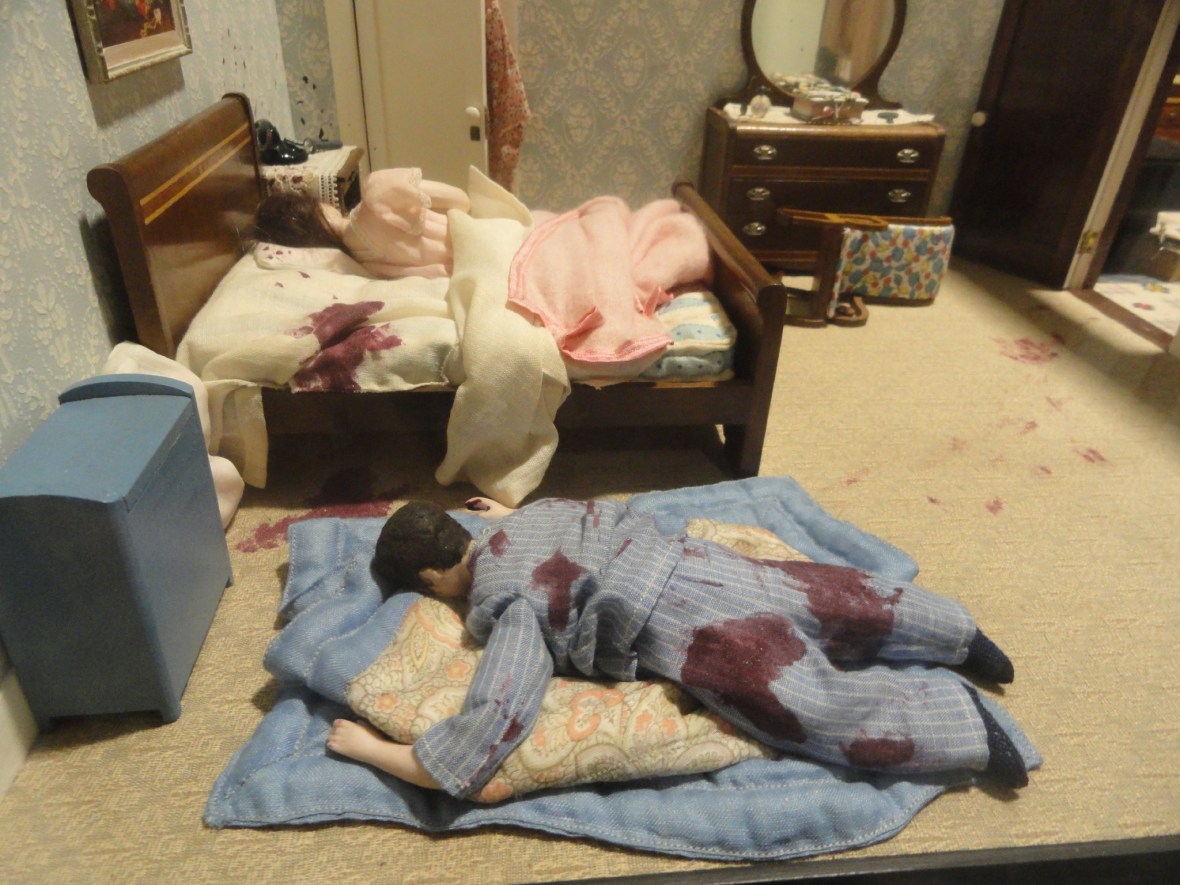
Each study includes a descriptive crime scene report placard (written by Lee to accompany each case) containing a general outline of the crime, parties involved and date. But the solutions remain a secret. One such placard reads: “Robert Judson, a foreman in a shoe factory, his wife, Kate Judson, and their baby, Linda Mae Judson, were discovered dead by Paul Abbott, a neighbor.”

IMG_1608
Photo by Rhonda Hunter.

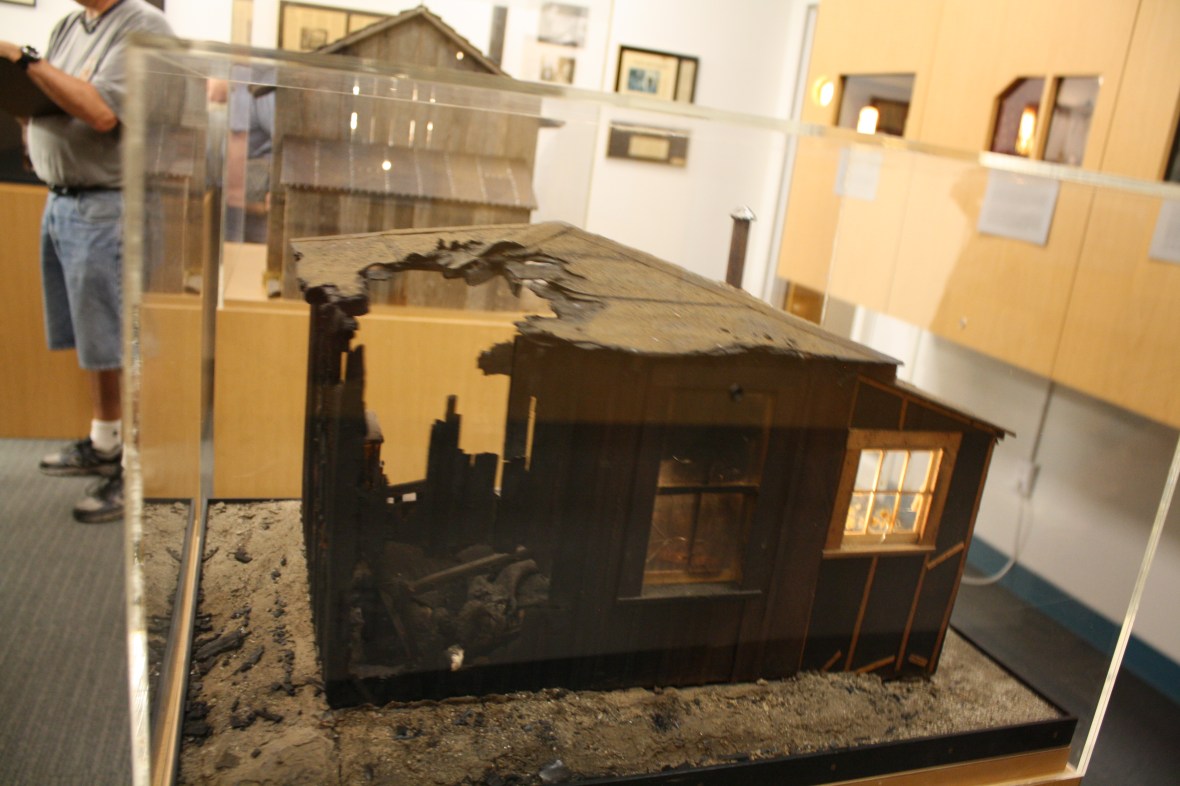
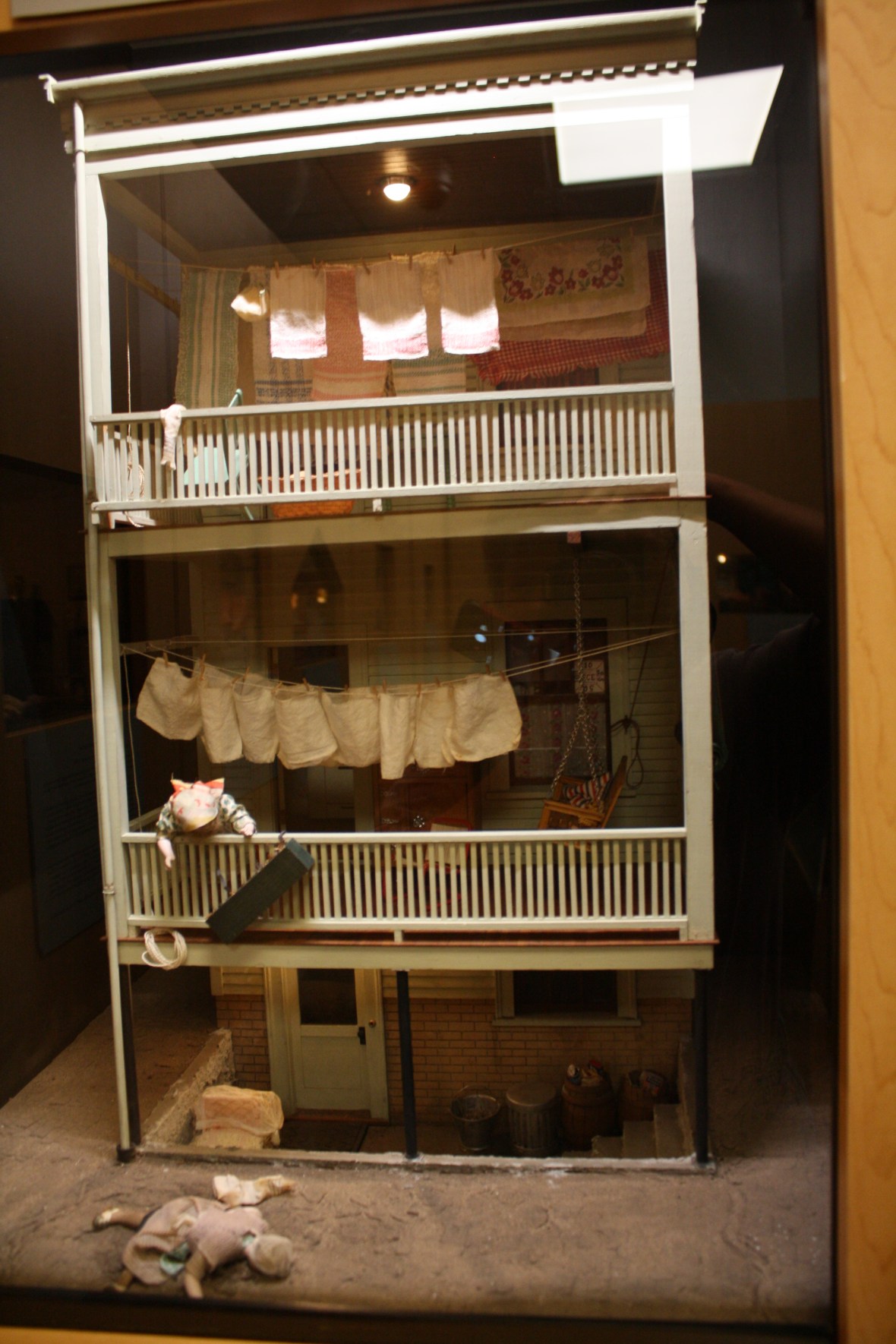
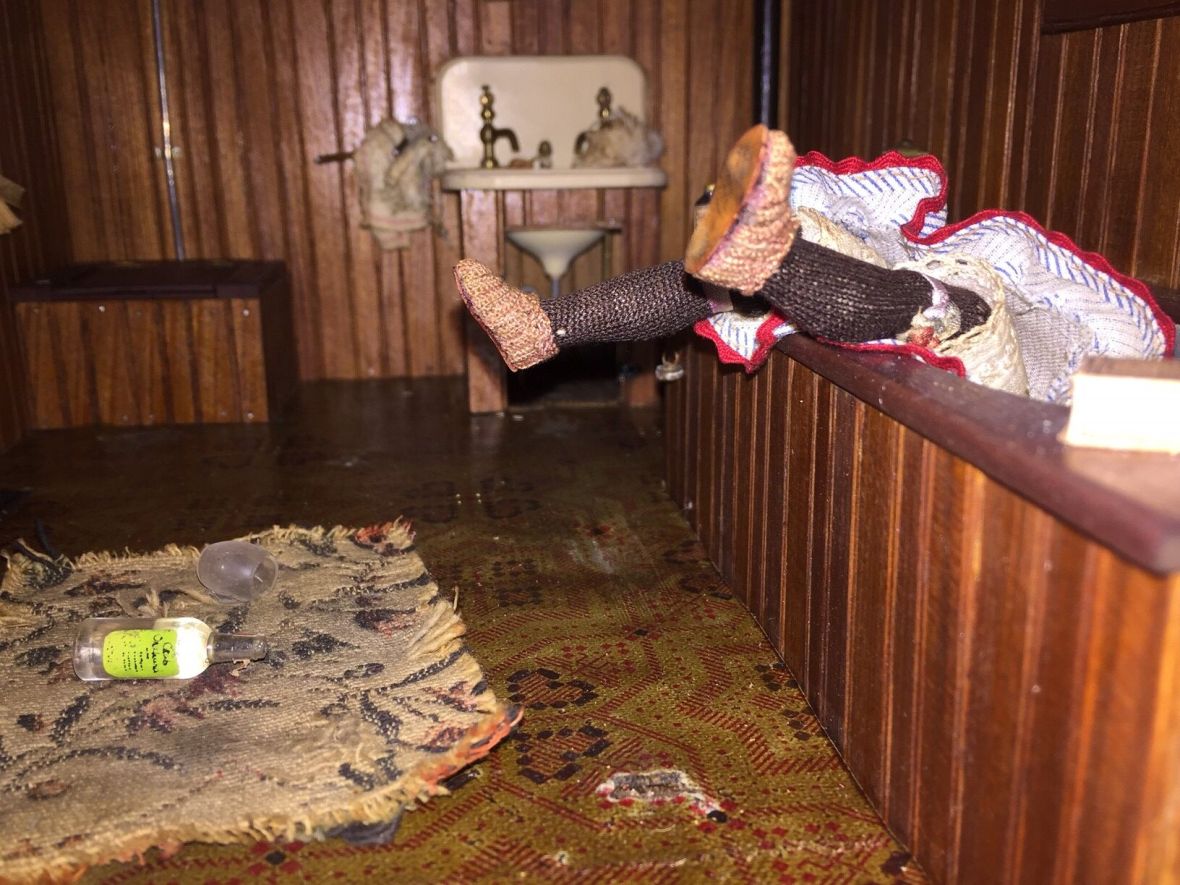
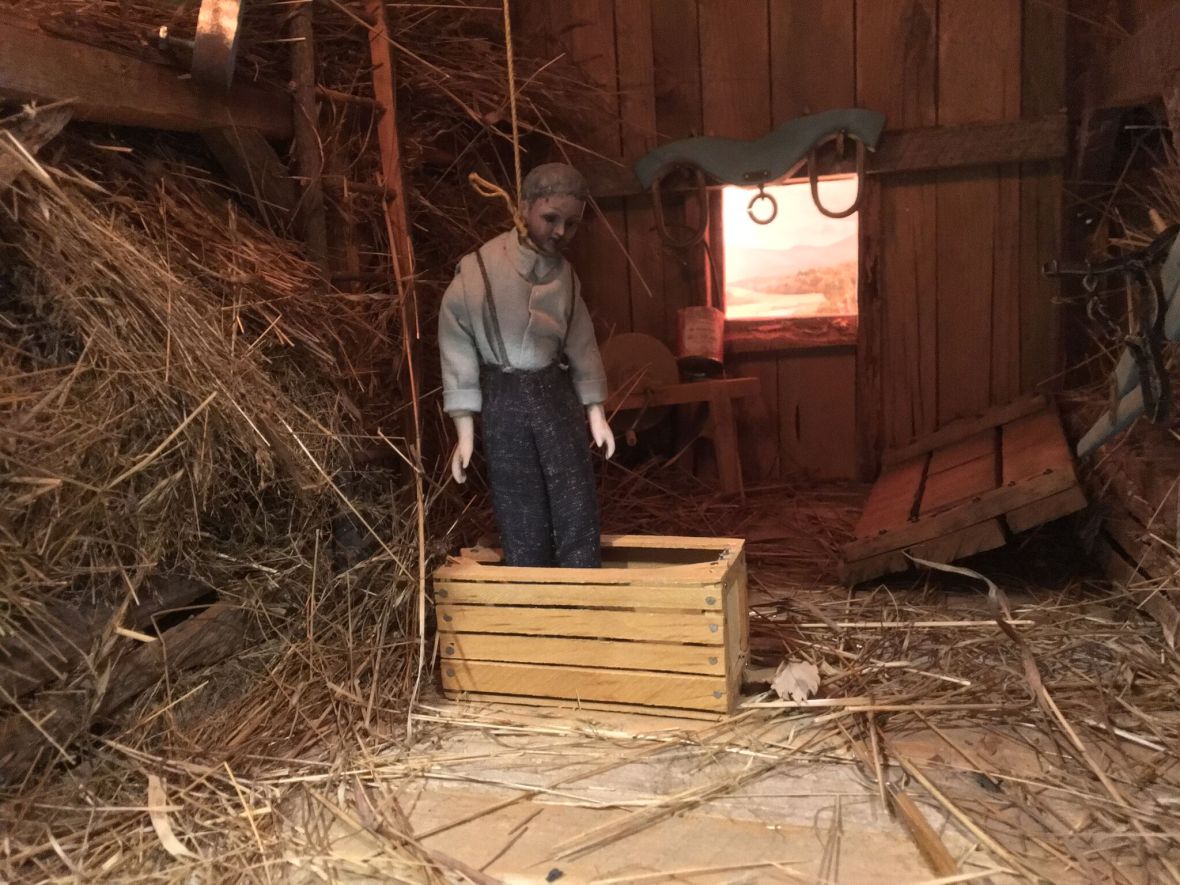
One model shows farmer Eben Wallace hanged in a hay-filled barn. One depicts a man shot to death in a log cabin, another shows a charred body in a burnt home, another, a body splattered face-down on the sidewalk outside a three-story apartment complex and still another reveals the decomposing body of “Mrs. Rose Fishman,” found in a pink bathroom in 1942. The scenes are accurate to the tiniest of details, including the appropriate lighting. “Frances was very ingenious in her lighting choices. There were no LED lighting options available. She used turn signal bulbs, Christmas tree lights, flashlight bulbs, anything she could find. Sometimes it came down to the color of the bulb or a particular paint color to achieve appropriate mood lighting.” says Bruce. “The blood pools and spatter are actually finger nail polish, which took us forever to figure out.”
While perusing these fascinating dioramas, it’s easy to forget where you are. Researchers who work in the $43 million Forensic Medical Center call the state-of-the-art facility the “Bat Cave.” It is the largest free-standing medical examiner’s office in the country and home to some 80 full-time employees, many of them pathologists, who analyze death in minute scientific detail, much like the Nutshell Studies themselves. Here, the state of Maryland learns the facts behind thousands of deaths each year.

z 32906385430_20611a436c_k
Bruce Goldfarb

I inform Bruce that the last time I was in Baltimore was on April 15, 2015 during the 150th anniversary of the Civil War. It was 3 days after the tragic death of Freddie Gray that sparked Civil Rights protests in the city and all across the country. My visit this time came just 3 days after the Capital Gazette newspaper shootings in Annapolis. Bruce pauses, shakes his head slightly and says, “Yes, we were very involved in the Freddie Gray incident and we’re working on the Capital Gazette shootings downstairs right now.”
In a typical summer, the M.E.’s office receives 13 to 18 bodies each day (more than 8,000 per year). It is the sole medical examiner’s office for the entire state. Homicide accounts for about 14 % of deaths, suicide for 12 % and accidents for 27 %. The first floor of the building serves as a garage that can be transformed into a mass casualty center. A large classroom on the fourth floor, with banks of desks and communication connections, can become an emergency command center during disasters. It’s like a hospital where patients are getting a physical exam, one day too late.

z 1 TIZqHjVA
Each investigator is given a penlight to examine the diorama closer.

Bruce says the Nutshell Studies are an integral part of the M.E.’s popular 5-day homicide seminar every April. The seminars are limited to 90 people and are routinely filled to capacity. He reveals that the courses are likely to be expanded this October. “The seminars are not pass or fail, they are designed as a team exercise. Each team member is paired up with strangers. They are conducted the same way that Frances did them back in 1945. Each graduate receives a ‘Harvard Associates in Police Sciences’ diploma and a class photo. Historically, police officers and journalists do well.” Bruce says with a wry smile.

IMG_1622
Photo by Rhonda Hunter.

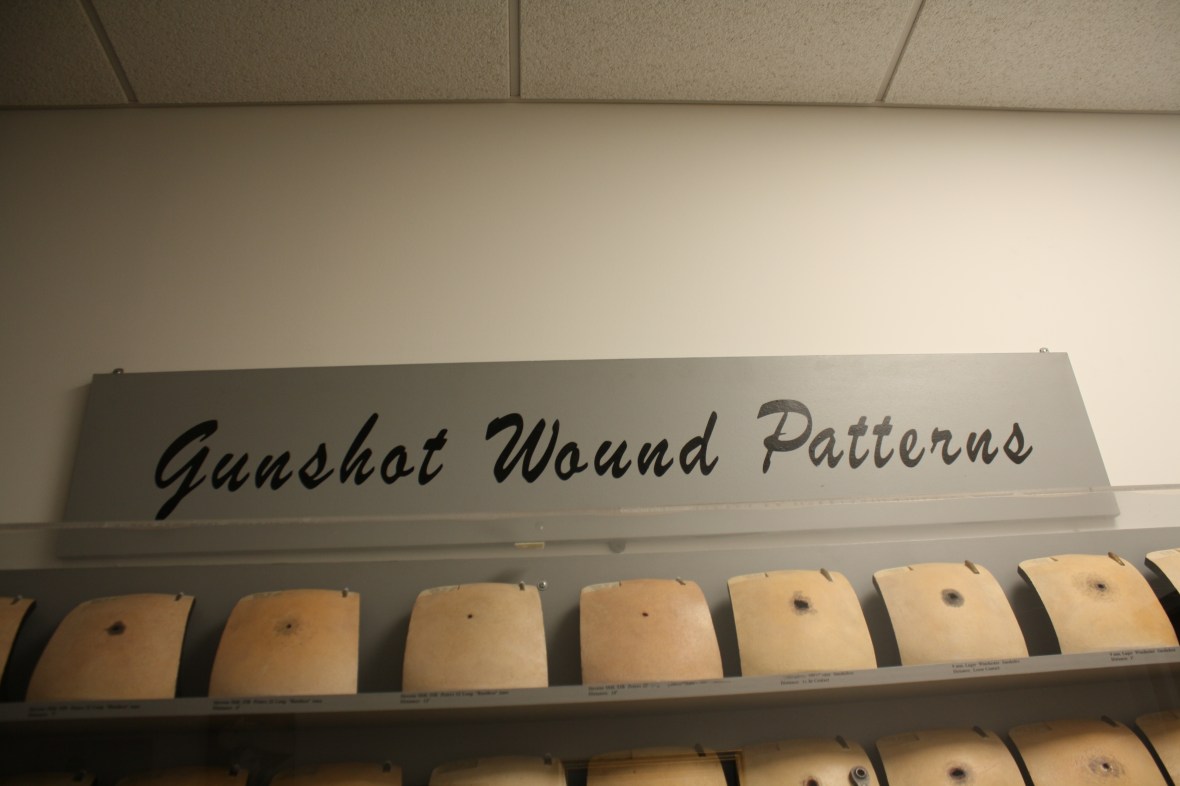
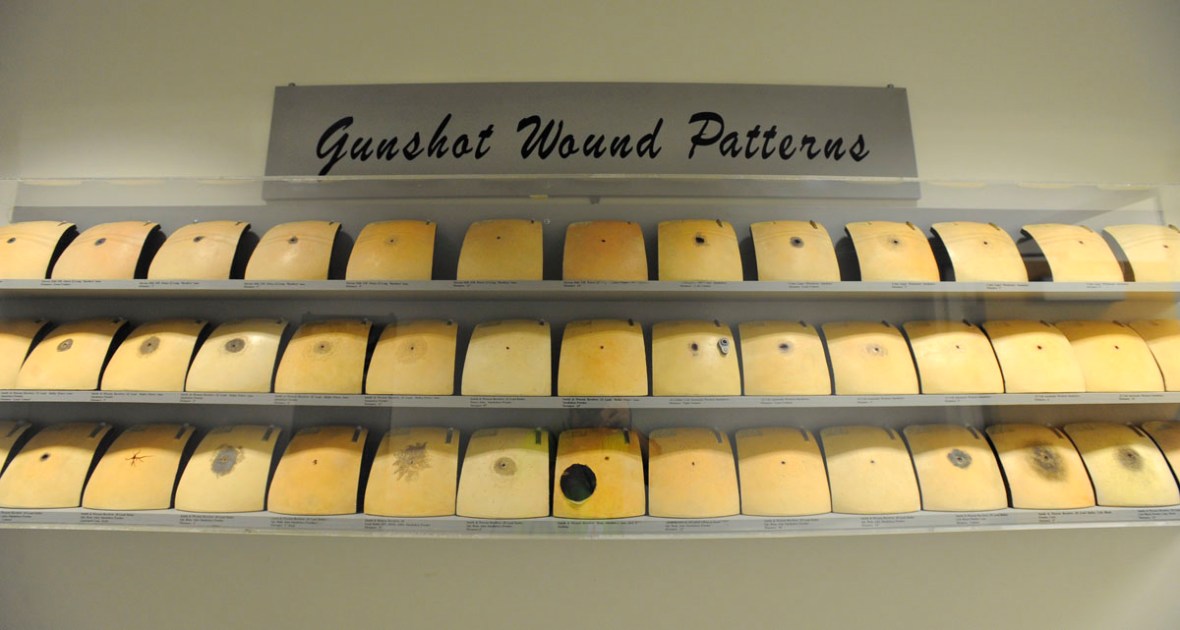
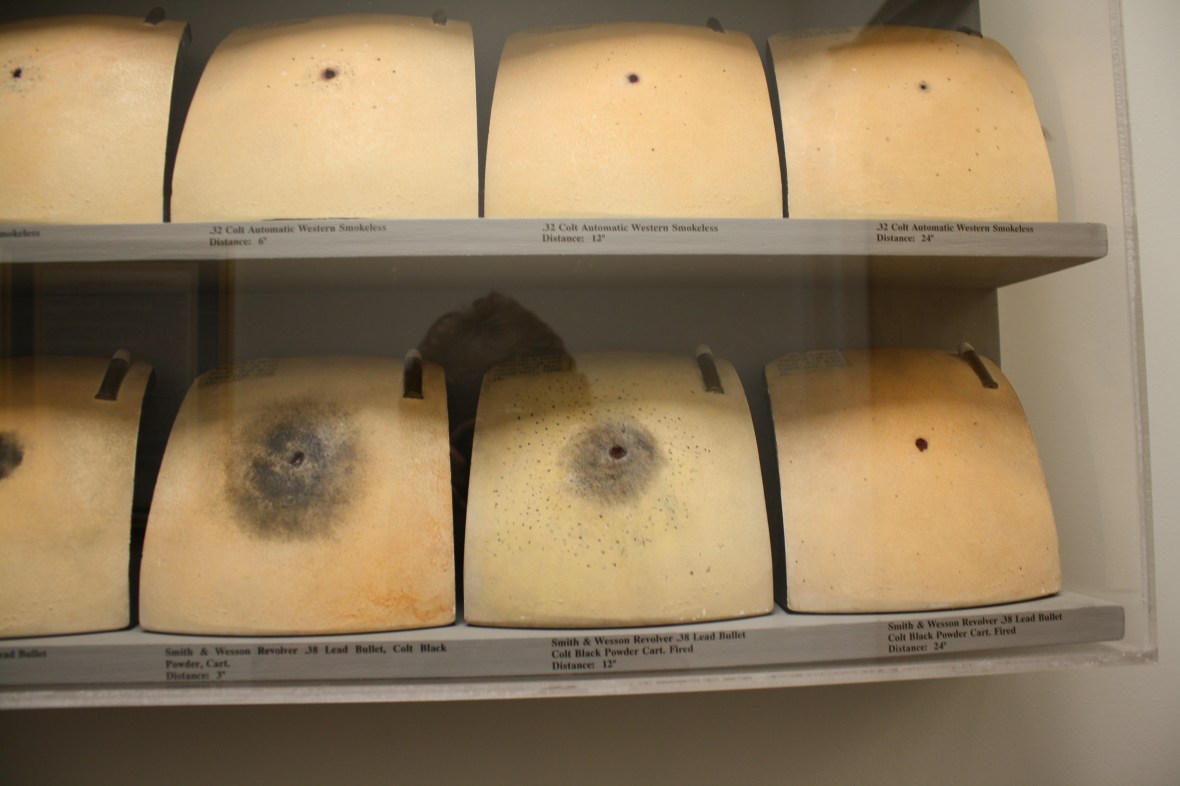
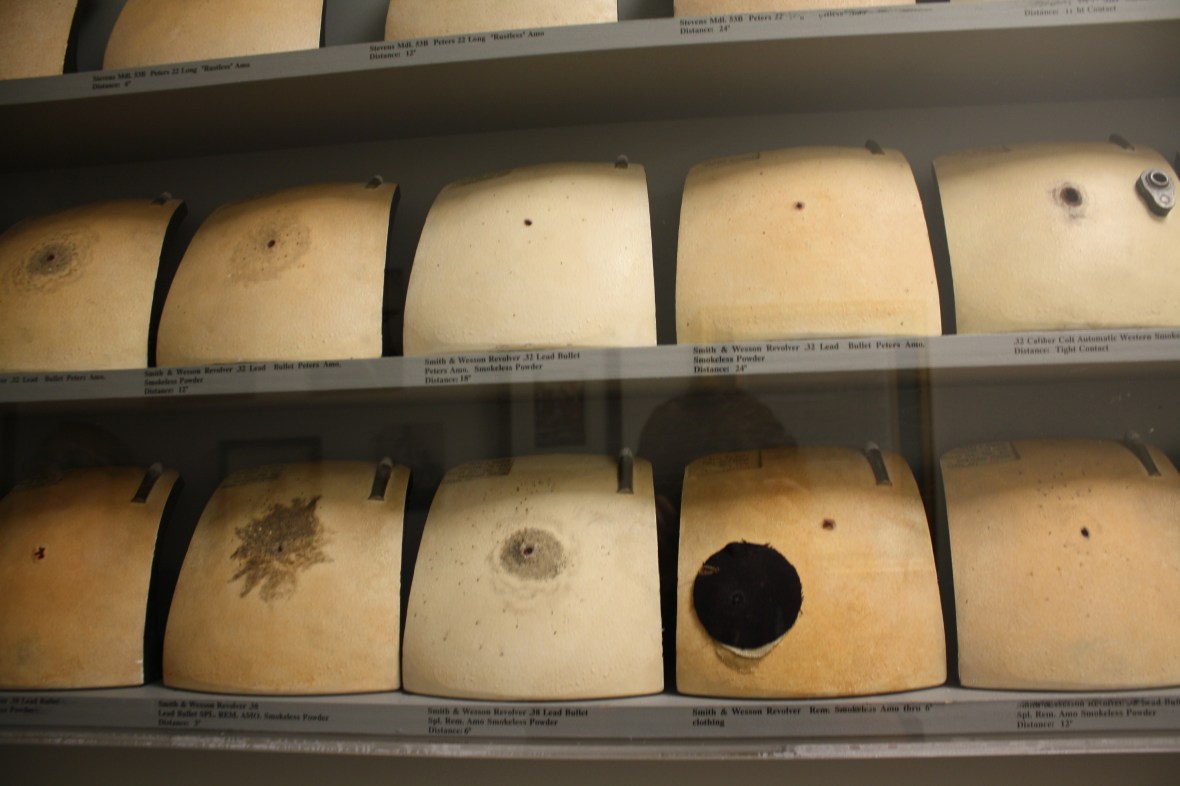
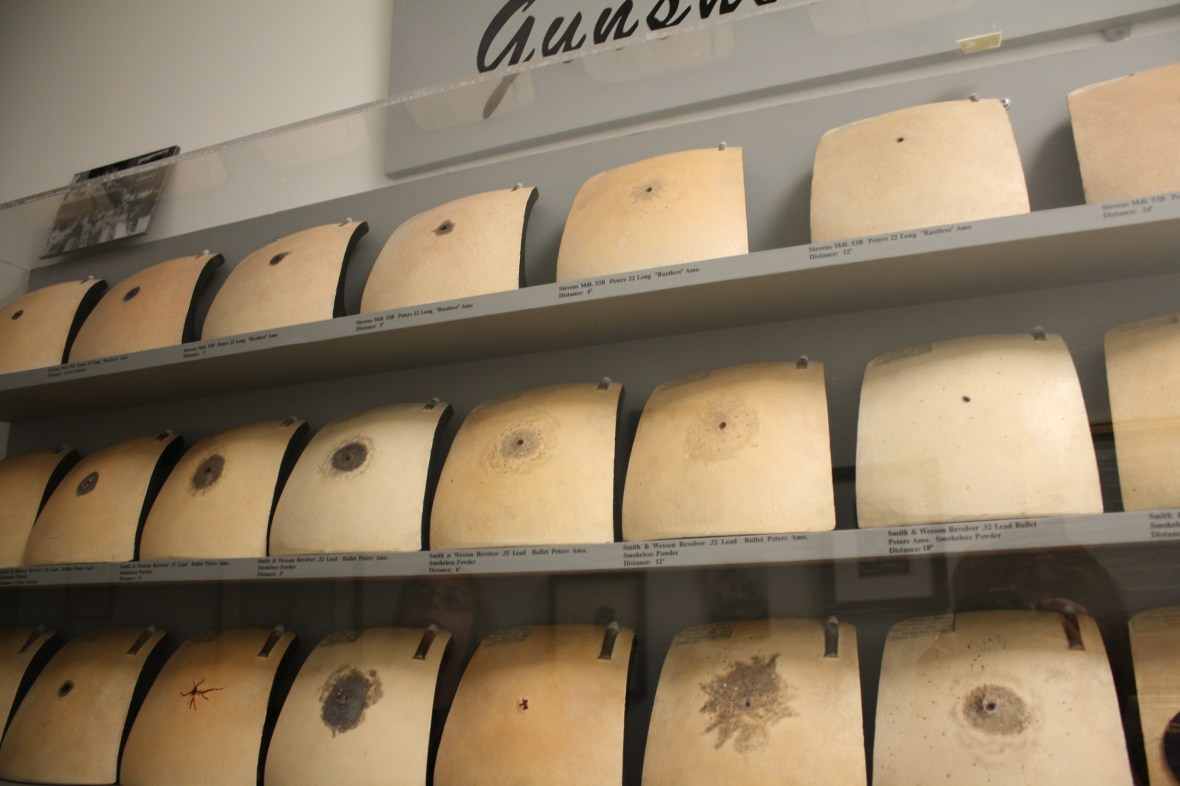
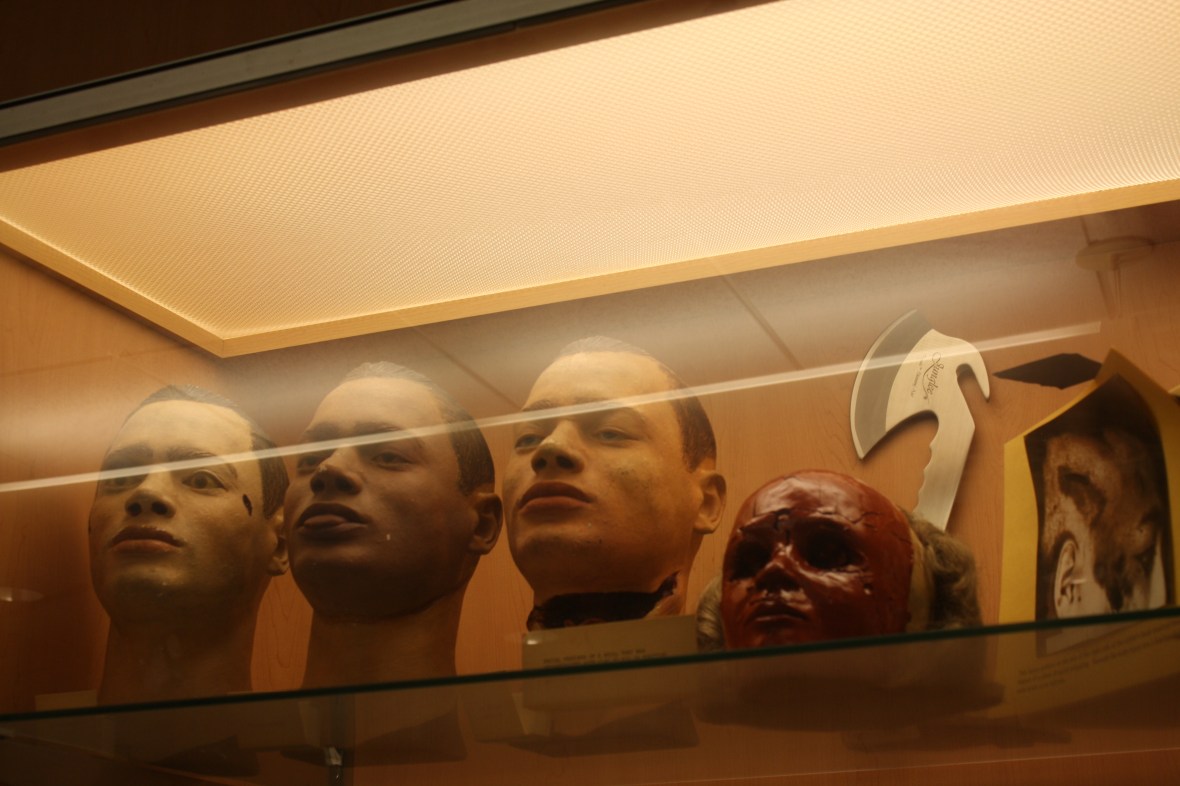
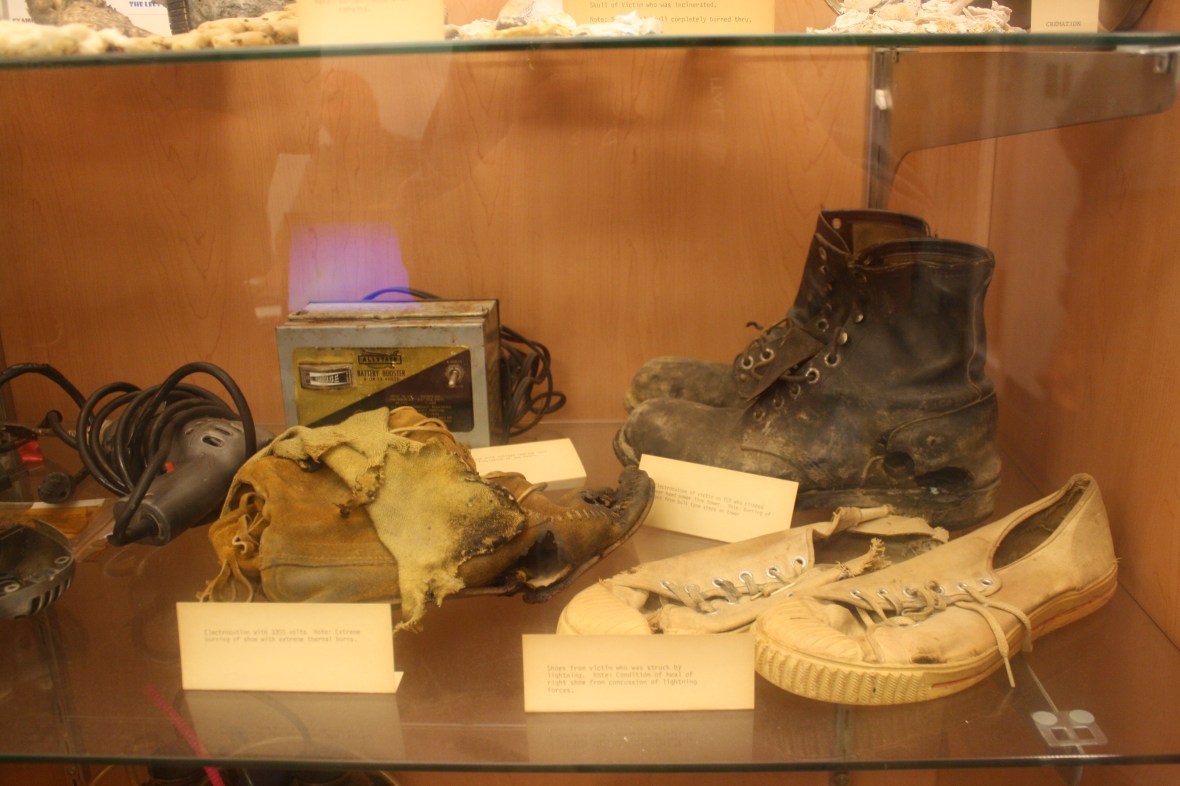
However, the Nutshell Studies are not the only visual aids created by Frances on display in the M.E.’s office. The walls of the entryway to room 417 are lined with 48 incredibly realistic looking bullet wound patterns and the conference room has 3 life-size heads with bullet wounds, slashed throats and a reconstructed face. Cases contain cremated remains, shoes worn by people struck by lightning, exploded oxygen tanks and even a motorcycle helmet from a crash victim who died in an accident. But wait, there’s more.
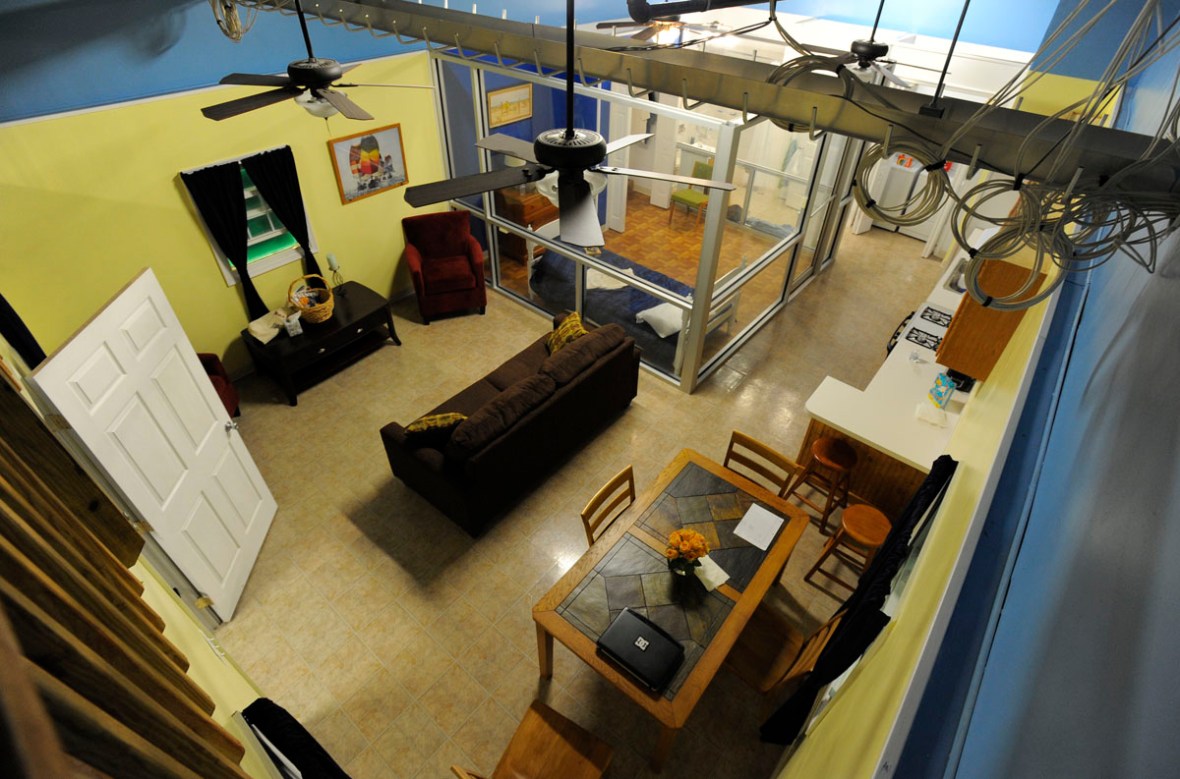
Bruce asks, “Would you like to see the Scarpetta House?” Accompanied by official tech advisers Kris & Roger Branch and my photographer wife Rhonda, I answered “Absolutely” even though I had no idea what lay in store for us. Bruce explains that the Scarpetta house is an enclosed space decorated like a typical model home complete with a swing set and wooden deck “outside”, a furnished living room, bedroom, bathroom, kitchen and laundry room “inside.” It was donated by novelist Patricia Cornwell and the facility is named after Kay Scarpetta, Cornwell’s medical examiner heroine. Her books, including 24 novels in the Scarpetta series and 2 non-fiction books on Jack the Ripper, have sold more than 100 million copies worldwide.

z BS-md-p4-hidden-maryland-morgue-fox
The Scarpetta House.

It should come as no surprise that the Scarpetta house is incredibly accurate in every detail. Cigarettes on the kitchen table, cereal boxes on the counter, trash in the trashcans: it looks like someone just stepped out to get the mail. Bruce notes that a few years ago, the M.E.’s office used bloody mannequins to recreate death scene scenarios for investigators to solve, but now they use live volunteers to portray the dead.
“We have local makeup artists with ‘Special FX’ experience from TV and movies come in to apply the Moulage make-up. And they look very realistic. We’ve even had some celebrities come in to portray dead people. It’s like a bucket list thing with them.” Bruce continues, “Last year my brother came in and portrayed a suicide victim. His family asked him not to take the makeup off when he was finished so they could see it. I drove him home (in the passenger seat) with a gunshot wound (complete with dripping blood) to the right temple. I even pulled in to the 7-Eleven and parked. Nobody even raised an eyebrow. He warned me that if I got pulled over for speeding, he was gonna play dead and let me explain it.”
I must admit that by this time in our visit, the investigation bug had bitten our little group. The four of us were now spread out in the Scarpetta house in search of our own clues. And although the facility had been cleaned up after last Spring’s class departed, upon closer examination, blood spatter evidence remained in those hard to reach places found in normal household scenarios. For example, the space between the toilet & sink, the bathtub grout and that pesky space between the fridge and the cabinet. Rhonda notes that there was no toilet paper in the bathroom but the empty roll remained on the holder. “That is a crime in itself,” she states. While in the kitchen, Bruce pauses before saying, “Oh yeah, don’t open the fridge” before walking out of the room. Although tempted, we took his advice and left it alone without ever knowing exactly what was inside of it.

1 z BSoieiaQ
Photo Courtesy Forensic Medical Center State of Maryland. 

Viewing the Nutshell Studies in this information age of virtual reality, it becomes easy to appreciate them as works of art and popular culture over and above their importance as forensic tools. Lee’s hyper-real dioramas are designed to re-train people to see. It becomes obvious that Frances Glessner Lee’s genius for story telling by using simple materials was both exacting and highly creative in her pursuit of detail-knitting tiny stocking by hand with straight pins, writing minuscule letters with a single-hair paintbrush, and crafting working locks for tiny windows and doors. Exacting details, easily overlooked.
What may be most overlooked in her dioramas is the subtle social commentary found within these complex cases. Her subversive velvet touch challenges the mores of femininity, questions domestic bliss and upends the traditional ideals for dollhouse miniature modeling, sewing, and other crafts considered to be “women’s work” back in the day. Often, her models focus on society’s “invisible victims” and feature victims (women, the poor, and people living on the fringes of society) whose cases might be overlooked or tainted with prejudice on the part of the investigator. She wanted trainees to recognize and overcome any unconscious biases and to treat each case equally, regardless of the status of the victim.
So much of today’s culture is digital, and the Nutshell Studies are three-dimensional. You can’t really understand it from a flat page; you have to see it to believe it. And if that isn’t enough, Bruce Goldfarb is in the final stages of a book about Frances Glessner Lee. “Why not? I know her as well as anyone and it’s a story is worth telling. ” Bruce says. I’m sure that Bruce’s book will sum it up quite nicely…in a nutshell.


IMG_1574
Alan E. Hunter and Bruce Goldberg.  Photo by Rhonda Hunter.


IMG_1591
Photo by Rhonda Hunter.
IMG_1594
Photo by Rhonda Hunter.
IMG_1588
Photo by Rhonda Hunter.
BS-md-p3-hidden-maryland-morgue-fox
Photo by Rhonda Hunter.
IMG_1627
Photo by Rhonda Hunter.
IMG_1629
Photo by Rhonda Hunter.
IMG_1630
Photo by Rhonda Hunter.
IMG_1620
Photo by Rhonda Hunter.
IMG_1632
Photo by Rhonda Hunter.
z b2cY5wIA
Photo Courtesy Forensic Medical Center State of Maryland. 
z BmCAag2A
Photo Courtesy Forensic Medical Center State of Maryland. 
z _W-kDXbg
Photo Courtesy Forensic Medical Center State of Maryland. 
z 1K95sg-w
Photo Courtesy Forensic Medical Center State of Maryland. 
z 3NQhVO_A
Photo Courtesy Forensic Medical Center State of Maryland. 
z 6FaZE3VQ
Photo Courtesy Forensic Medical Center State of Maryland. 
z 33EhQKyg
Photo Courtesy Forensic Medical Center State of Maryland. 
z 174kvkkw
Photo Courtesy Forensic Medical Center State of Maryland. 


z BrAdW9fA
Photo Courtesy Forensic Medical Center State of Maryland. 
z ChzD512A
Photo Courtesy Forensic Medical Center State of Maryland. 
z cOJZDHhg
Photo Courtesy Forensic Medical Center State of Maryland. 
z e6rB4pAg
Photo Courtesy Forensic Medical Center State of Maryland. 
z Ep5liGkQ
Photo Courtesy Forensic Medical Center State of Maryland. 
z GmfuDs9w
Photo Courtesy Forensic Medical Center State of Maryland. 
z H7P_cqTA
Photo Courtesy Forensic Medical Center State of Maryland. 
z KR3c3Jiw
Photo Courtesy Forensic Medical Center State of Maryland. 
z Mbk4mLMQ
Photo Courtesy Forensic Medical Center State of Maryland. 
z Mi_LBDMw
Photo Courtesy Forensic Medical Center State of Maryland. 
z ms8YUgkA
Photo Courtesy Forensic Medical Center State of Maryland. 
z nNKd9FMA
Photo Courtesy Forensic Medical Center State of Maryland. 
z Nwfc_boQ
Photo Courtesy Forensic Medical Center State of Maryland. 
z SSq4P10A
Photo Courtesy Forensic Medical Center State of Maryland. 
z UkV8qVTQ
Photo Courtesy Forensic Medical Center State of Maryland. 
z V_Ap9vDg
Photo Courtesy Forensic Medical Center State of Maryland. 


Hollywood, Indianapolis, Pop Culture

The Emperor Jones.

Emperor Jones poster

Original publish date:  September 9, 2011            Reissued: July 5, 2018

It was Wednesday night March 16, 1921, St. Patrick’s Day Eve, and Indianapolis was stretching the boundaries of the cultural heartland. That is, with the help of recent Pulitzer Prize winning playwrite Eugene O’Neill. The state and nation were in flux; World War II was still fresh in the hearts and minds of Americans (the United States officially declared peace with Germany in August of that year), newly minted President Warren G. Harding had been in office less than two weeks, and the Indiana Ku Klux Klan was officially chartered by the state. Worldwide, Adolph Hitler assumes leadership of the Nazi party, Albert Einstein wins the Nobel Prize in Physics, and 5 million people die in the Russian Famine brought on by the Russian Civil War.

z Original-Subscription-Card
Original membership card from 1915-16 to The Little Theatre in Indianapolis.

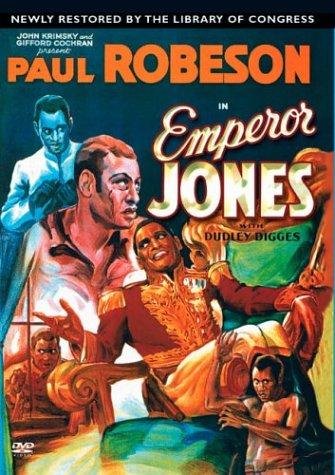
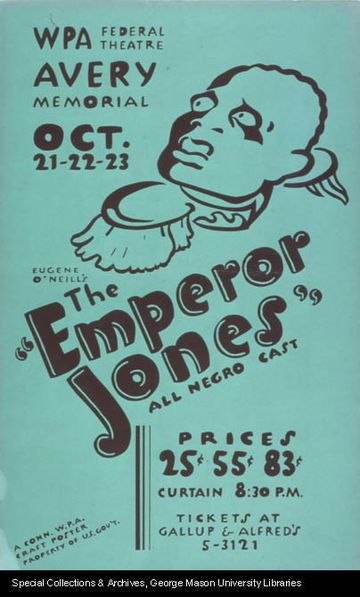
Out of this atmosphere and into the footlights of the Little Theatre in Indianapolis stepped “The Emperor Jones”, an expressionist play by Eugene O’Neill featuring a controversial unlikable black protagonist in the lead role. The play tells the story of Brutus Jones, an African-American train porter who kills a man, is sentenced to prison, escapes to a Caribbean island, and cons his way to the Emperor’s throne. The story is told from the prospective of Jones himself in a series of eight acts that are written in flashback style and scripted in the vernacular of Jim Crow America in a decidedly unflattering colloquial tongue. So dominant is the lead character, that scenes two thru seven feature only Rufus Jones himself speaking in a rambling retrospective of his two year sojourn to the top.
The play had premiered off Broadway in 1920 and was so well received that it eventually had to be moved to a larger theatre on Broadway to accommodate demand. It was Eugene O’Neill’s first critical and financial success and is credited with launching the future Nobel Prize winner’s career. While there can be no doubt that Eugene O’Neill took daring chances with his plays that would ultimately change the face of American theatre, we must also tip our cap to the “Little Theatre” of Indianapolis for the risks assumed by staging this one-time performance.
“The Little Theatre Society” was founded in the Fall of 1915 to showcase productions by American and European authors / playwrites heretofore unable to garner recognition by mainstream producers. The Society was unique in that it had no theatre of its own. During the earliest years, plays were performed in the sculpture court of the John Herron Art Institute. Although beautiful, the acoustics were poor and the venue could only seat 200 guests. Soon, performances were soon moved to the Masonic Temple. The Temple was beautiful and could seat 1,000 guests, but the stage was shallow and there were no dressing rooms. Each member of the society paid a $ 5 annual membership fee which entitled them to 12 tickets for every performance. Members could use the tickets themselves or sell them to the public at an average cost of between twenty-five and fifty cents each.
According to the Society’s literature, their purpose is to: “encourage the production of new plays, plays which cannot be produced by commercial stage, either because of their content or lack of commercial possibility-in short, to encourage all community endeavor of an original character in the field of the theatre.” The Little Theatre Society was among the first to shine a spotlight on Hoosiers Theodore Dreiser and W.O. Bates. Other productions included George Bernard Shaw, Booth Tarkington, Jack London, Oscar Wilde, William Butler Yeats, George Ade, Meredith Nicholson, and James Whitcomb Riley. And that was just in the Theatre’s first two years.
z 6b90f7f2801f80121cede26010e5597dWith the choice of O’Neill’s work, “The Emperor Jones”, the Society was taking an enormous risk if only for the fact that it required an elaborate stage for a one night performance. And then there was the Klan. The KKK was growing by leaps and bounds despite the fact that it had just been formally recognized in the state that same year. Soon, one third of the native male white born citizenry of the state would belong to the Klan. This was a play solely centered around a strong, murderous black man in a position of absolute authority in production in the principally white governed center of the WASP-ish Midwestern cornbelt.
On the contrary, in defiance of its cornbelt stereotype, the Little Theatre Society was chartered for just such bold experimentation and modeled after such avant-garde venues as the Moscow Art Theatre, the Abbey Theatre of Dublin, the Manchester Players in England and Théâtre Libre in Paris. Local critics, like Walter D. Hickman of the Indianapolis Times, applauded the company’s brave undertaking immediately: “Last night at the Masonic Temple, an Indianapolis audience witnessed for the first time a local presentation of The Emperor Jones. No legitimate theatre in Indianapolis would ever think of presenting this play…the title role was played by a local negro educator, Mr. Arthur T. Long…Mr. Long dominated every scene last night and gave to the role the great beauty of expressive inflection which the part demands. I forgot that a local man was playing the role and I surrendered myself to the grim tragedy which was unfolded on the Masonic stage. A grim tragedy told in a volcanic way.”
300px-Poster-The-Emperor-Jones-Marionettes-1937W. F. McDermott, drama editor of the Indianapolis News, wrote this about Long: “a colored actor, played the role of the emperor with several moments of great naturalness. He was able to portray the negro fear of “ha’nts” with unusual power.” But McDermott was less kind to the playwrite, “O’Neill writes darkly of brooding, inscrutable fate; of black and stormbound heights, of man, stripped savage and terrified; of man tragically at odds with his environment and foredoomed.”
However, it was the local black owned press that was perhaps hardest on the production, routinely denouncing O’Neill’s work for its stereotypes in the form of the backwards (certainly by today’s standard) dialog. Although groundbreaking when viewed within the context of the time, today, O’Neill’s so called “Negro plays” are seldom performed nowadays because of their perceived negative stereotypes. Much the same as Mark Twain’s historic works have been routinely revised and censured by modern day pundits. In truth, racial issues were never O’Neill’s focus. His aim was the human soul in its tragic destiny. His ultimate goal was to provide opportunities in mainstream theatre for talented black actors. Eugene O’Neill was the son of James O’Neill, an actor whose “Romeo” character was described as the best ever, making him one of the countries first matinee idols. O’Neill was determined to revolutionize what he called the “hateful theater of my father, in whose atmosphere I had been brought up.”
z the-emperor-jones-b2skuw13.znxPerhaps the most unusual feature of the Indianapolis production was the choice of the lead actor chosen to portray Brutus Jones. Arthur Theodore Long was born on December 31, 1884, the son of Henry and Nattie (Buckner) Long in Morrillton, Arkansas. According to the 6th edition of “Who’s Who in Colored America (1941-1944)”, Long graduated from Sumner High School in St. Louis, Missouri in 1904. He entered the University of Illinois at age twenty and earned a BA degree in 1908. Arthur then went on to further his education at both Indiana and Butler universities. He then studied at the University of Chicago, presumably in pursuit of his master’s degree. Long earned teaching credentials in history, civics, English, music and mathematics.
In 1909 Long was hired to teach at I.P.S. 26 (one of the “colored schools”) in Indianapolis. There he served as assistant principal (1910 to 1915) and as principal (1915 to 1923). Long served as principal at a high school in Crawfordsville and later as a supervisor for principals in Indiana. Long then took a similar position at Lincoln School in Trenton, New Jersey, where he served for a decade. Wherever he went, Arthur T. Long promoted the arts (dance, music, and drama) and was described by people who knew him as a “tall, light skinned serious minded disciplinarian who liked to play the piano for the students in the mornings.” In good weather, he often lit up the school playground at night to stage impromptu school productions featuring black heroes like Frederick Douglas, Booker T. Washington and Benjamin Banneker. Long left his position in Trenton in November of 1933, just two months before his fiftieth birthday and was never heard from again.
z o'neill
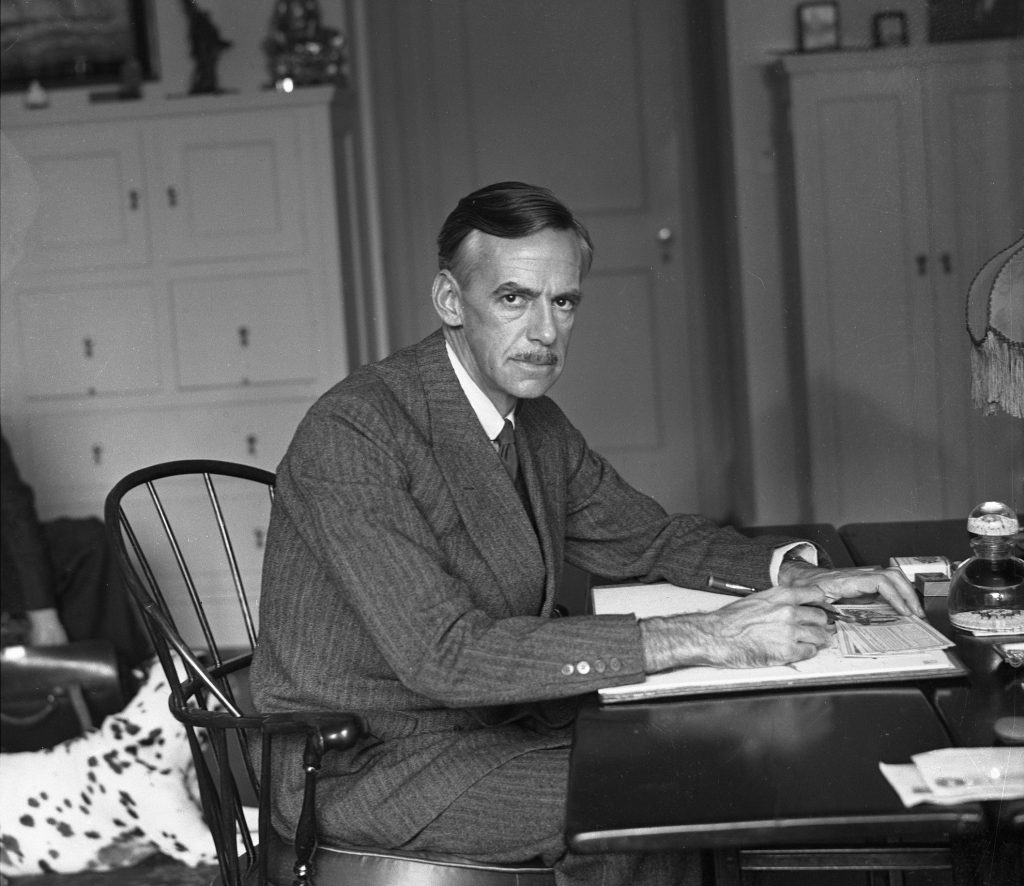
Playwrite Eugene O’Neill

What became of O’Neill’s social masterpiece, “The Emperor Jones?” Although it struck the theatre world like an electric shock nearly a century ago, it is relatively forgotten today. Personally, I believe it to be as socially relevant today as it was when it made its debut back in 1920, regardless of color. The story could easily serve as a parable for many of the problems facing every facet of today’s society. O’Neill’s Brutus Jones is a desperate man facing a hopeless situation who is thrust into an opportunity he sees as his only chance at survival. He arrives on an isolated island and is immediately elevated to a position of authority and power by the island’s uninformed, superstitious inhabitants. In time, he abuses his position, becomes careless and is punished (in this case killed) by his “subjects” who have caught on to his game.
Is this not unlike today’s ninety-day wonders: rookie corner drug dealers who operate freely and undetected for brief periods of time with more money than they can spend and more friends than they can count before law enforcement catches up to them? Or perhaps a modern day investment banker or securities trader spending the money of trusted friends and clients for his own whims before he is discovered and prosecuted? Both of these examples speak their own language and justify their own actions in the same coarse way as Eugene O’Neill’s Brutus Jones did all those years ago. Although you can easily look up “The Emperor Jones” on the web and decide for yourself, its unlikely that you’ll be seeing it on Broadway anytime soon. But, like me, you can take pride in the fact that nearly a century ago, a brave little theatre troupe in Indianapolis had the guts to stage the saga on St. Patty’s Day eve when other, allegedly more “Cosmopolitan” cities wouldn’t touch it.

Art, Civil War, Gettysburg, Museums

General James Longstreet at Gettysburg. Part III.

31381355_1822681061096482_4450482538460217344_n
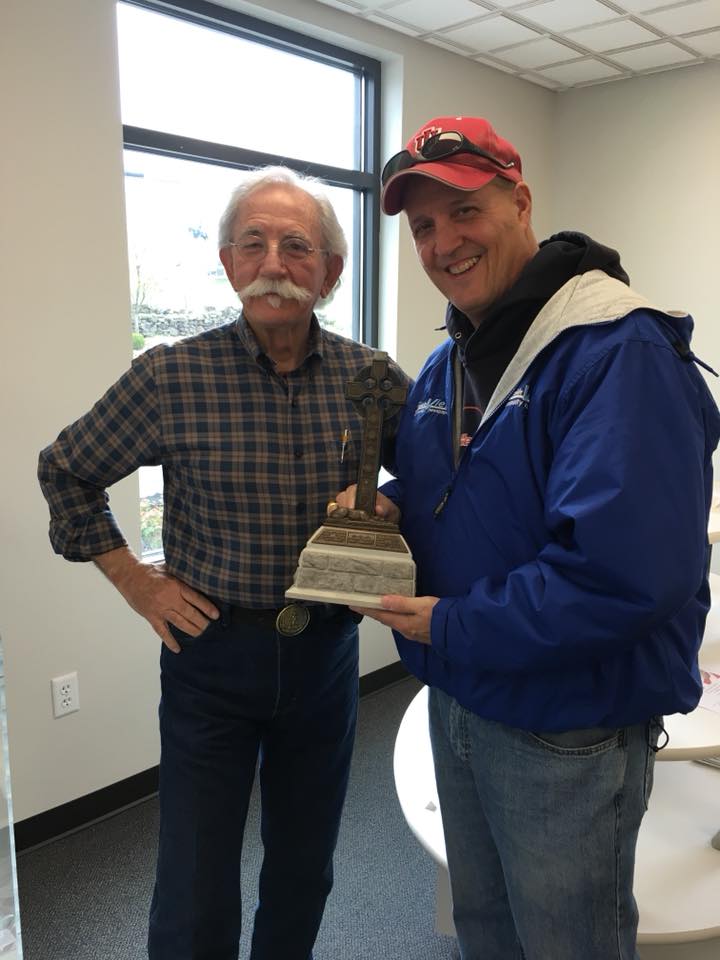
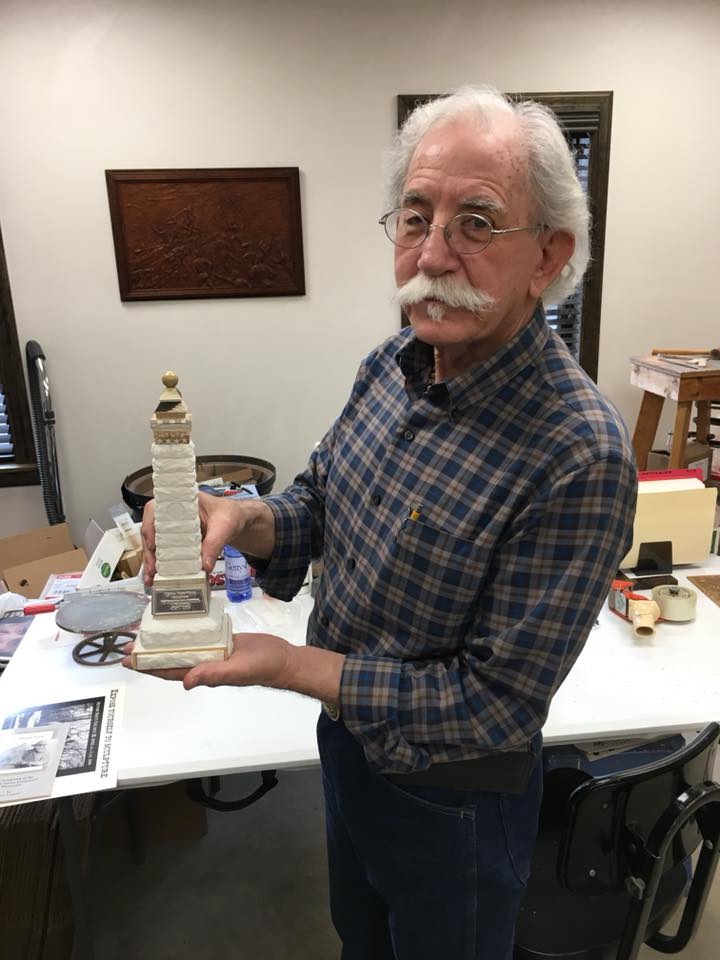
Gettysburg Longstreet Monument Sculptor Gary Casteel and Alan E. Hunter.


Original publish date:  June 22, 2018

Any student of history knows that Gettysburg was the turning point of the Civil War. Up until 2:00 pm on July 3rd 1863, when General James Longstreet ordered General George Pickett out of the woods along Seminary Ridge, the South still had a chance. Pickett’s charge would fail miserably and less than 2 years later, the war for Southern independence was over. But the battle to restore both men’s reputations had just begun. As detailed in parts I and II of this series, that battle was waged by the General’s widows and would last well into the 20th century.

z l1
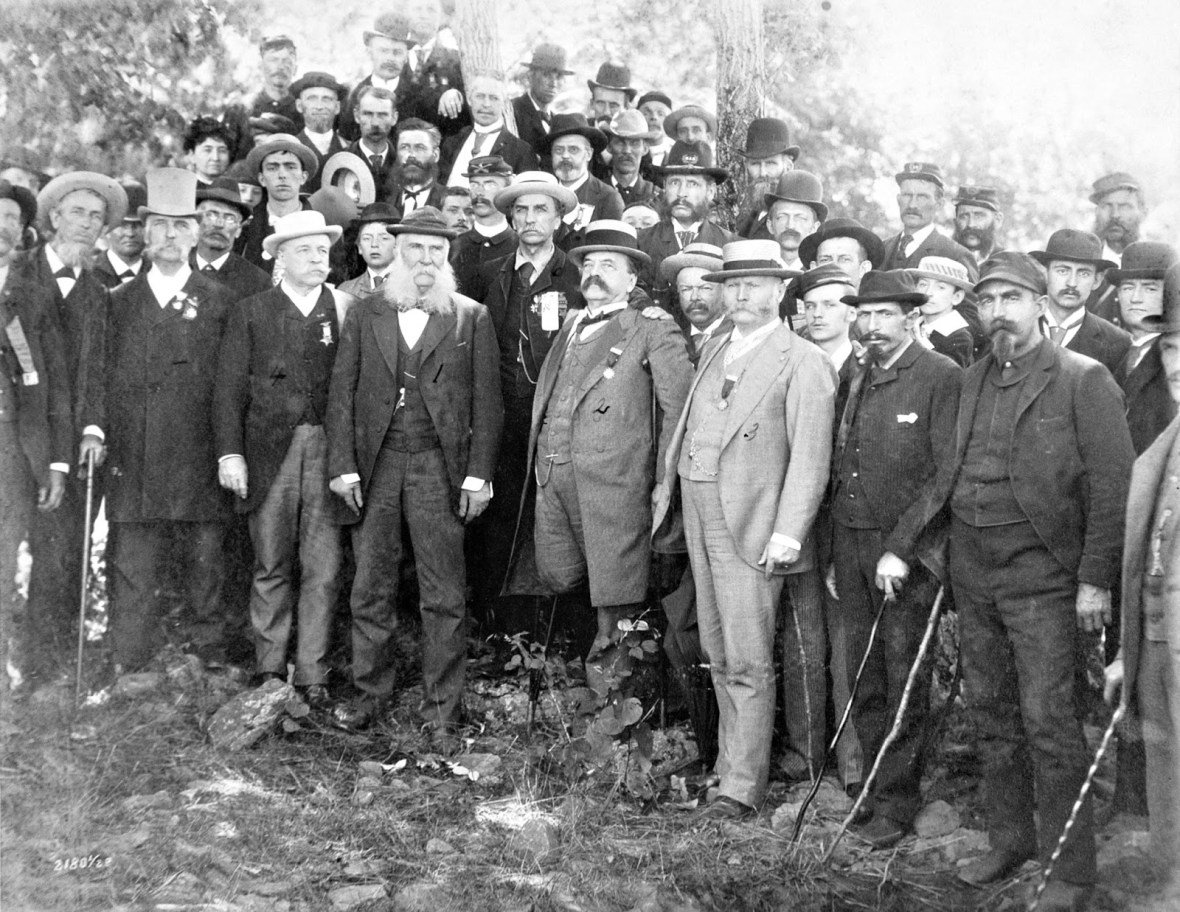
Longstreet and his former Union adversaries in Gettysburg.
z 4
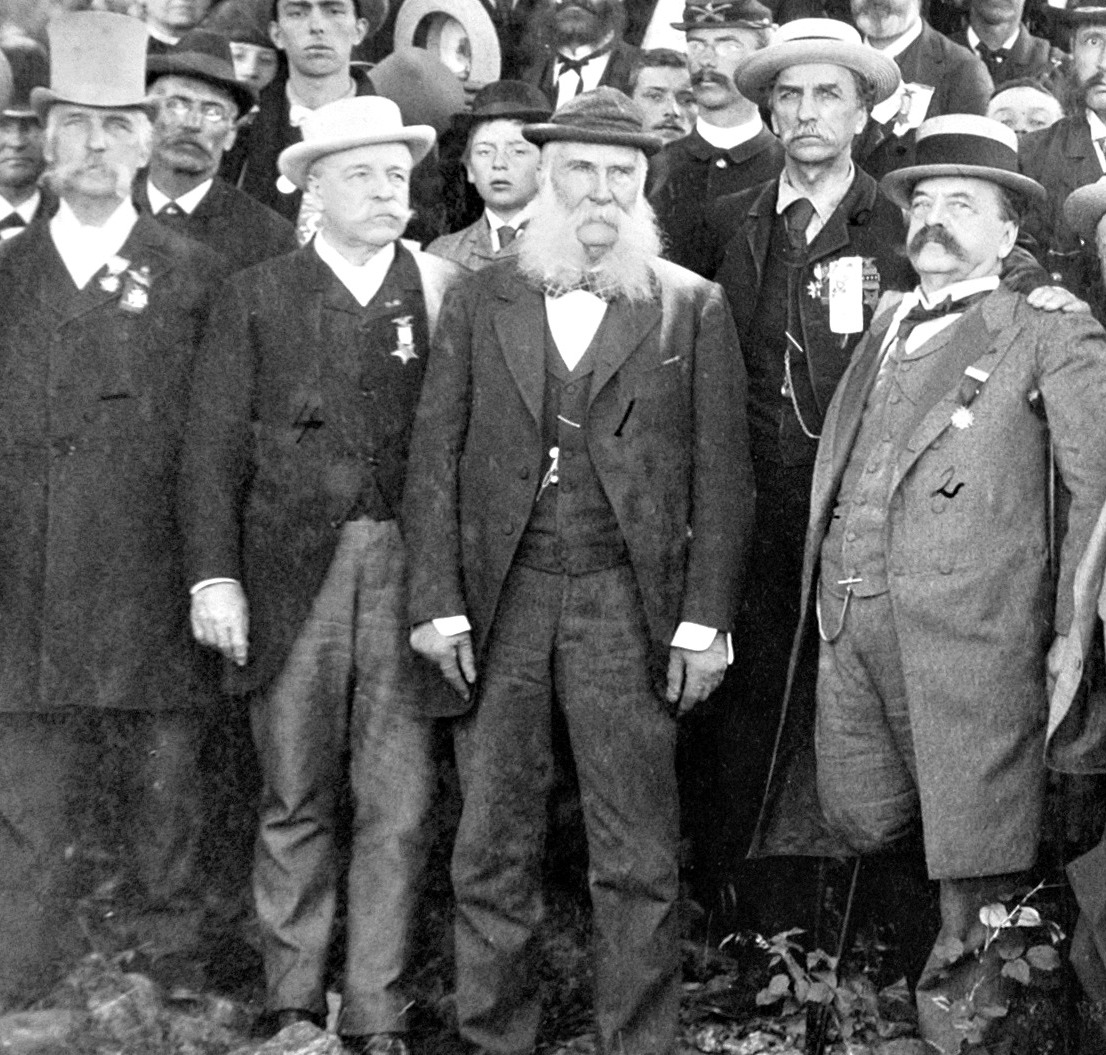
Enlargement of the William Tipton image. Civil War commanders (from left)
Joshua Chamberlain, Daniel Butterfield, James Longstreet and one-legged Dan Sickles
 pose in Gettysburg on July 3, 1888. Sickles lost his leg at Gettysburg on July 3, 1863.

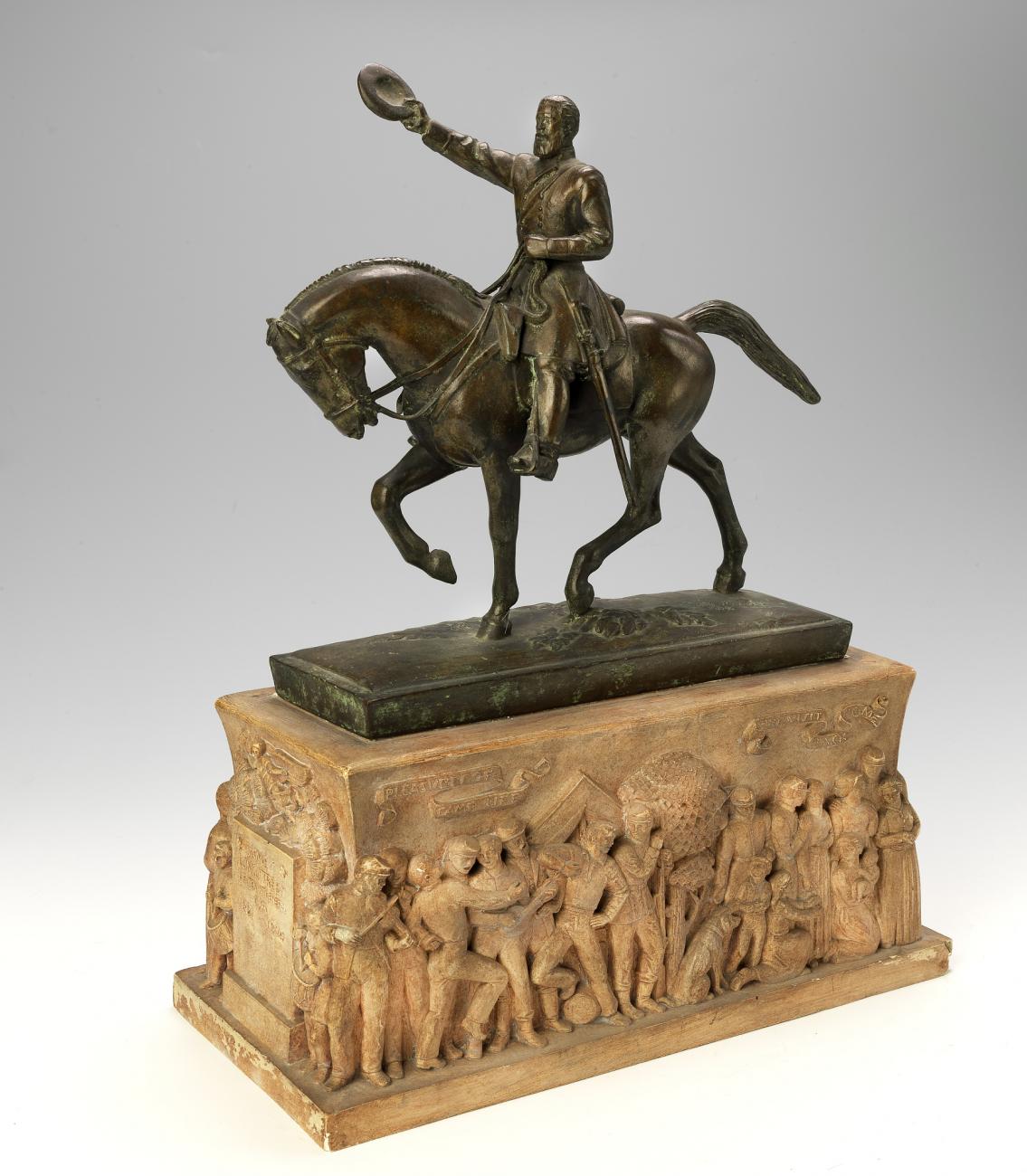
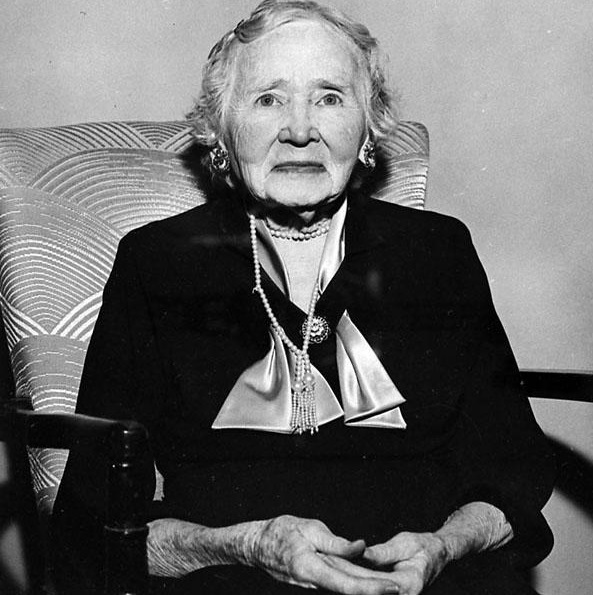
After the General died in 1904, his widow Helen Dortch Longstreet, known as the “Fighting Lady,” spent the next half century fulfilling a promise made to her husband that “in the future, so long as I shall live, whenever your war record is attacked, I will make answer.” In 1939, as the founder of the Longstreet Memorial Association, she arranged to have a statue of her late husband placed at Gettysburg. The proposed Longstreet memorial would be created by sculptor Paul Manship and a scale model of the statue was unveiled at the site dedication event in July, 1941. The sample statue featured General Longstreet on a horse (with one foot up) urging his men forward with a wave of his hat held in his outstretched arm. At 12 feet high and 12 feet wide, it was placed atop a base of red marble and would be surrounded by stone seats for viewing.
z SAAM-1966.47.11A-B_1
1940 Paul Manship model of James Longstreet Memorial at Gettysburg: never placed.

However, after a photo of the proposed statue was published in a local newspaper, the National Park Service wrote a letter to Mrs. Longstreet voicing a concern: “There is one feature that has caused considerable local comment and one I feel to be of sufficient importance to be called to your attention…The position of the horses’ feet in each of the existing equestrian statues now in the park tell a story. This fact is widely known and has become one of the items of which the visiting public likes to check. 1. Both feet of the ground: Rider died in action. 2. One foot off the ground: Rider wounded in action. 3. All four feet on the ground: Rider unscathed. As far as I have been able to determine this uniformity of position is but a happenstance. However, it is true within the park.”
 

helen
Helen Dortch Longstreet

Mrs Longstreet replied: “This will thank you warmly for your constructive criticism of the model of the proposed equestrian statue of General Longstreet for the Gettysburg field. I am forwarding it to Mr. Manship, the sculptor, who will, I am sure, will appreciate it as sincerely as I do. I know it is Mr. Manship’s intention to make the Longstreet Memorial the noblest on the Gettysburg battlefield and to correspond in every respect with the magnificent memorials already there.” And that is where the question remained until December 7. 1941. The bombing of Pearl Harbor changed everything and put the brakes on the Longstreet memorial plans at Gettysburg.


z james-longstreet-gettysburg-battlefield
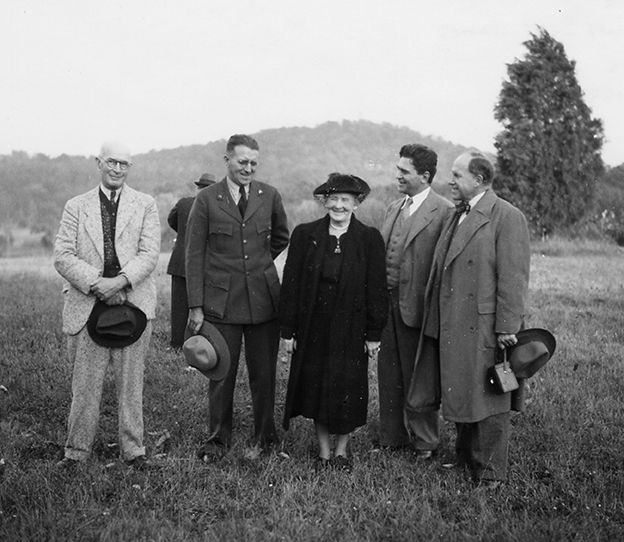
Helen Dortch Longstreet (center) at the original site set aside by the National Park Service for the Longstreet Memorial, October 27, 1939. Park Superintendent James R. McConaghie (left of Mrs. Longstreet) and sculptor Paul Manship (right of Mrs. Longstreet). Little Round Top can be seen behind them.

With the coming of World War II, raising funds to build the Longstreet monument seemed pointless in the face of homefront shortages and War Bond fund raising rallies to fight the Axis. After the war, interest for Civil War monuments evaporated. Although Mrs. Longstreet’s efforts to raise funds for her husband’s monument continued, her health declined rapidly. By the mid-1950s, Mrs. Longstreet developed “mental problems” and in 1957 she was placed in Central State Hospital in Milledgeville, Georgia. She remained institutionalized there until her death on May 3, 1862. Three years later the Soldiers and Sailors of the Confederacy monument would instead be placed on the original ground selected for the Longstreet memorial.


z MemorialAssociationLMA
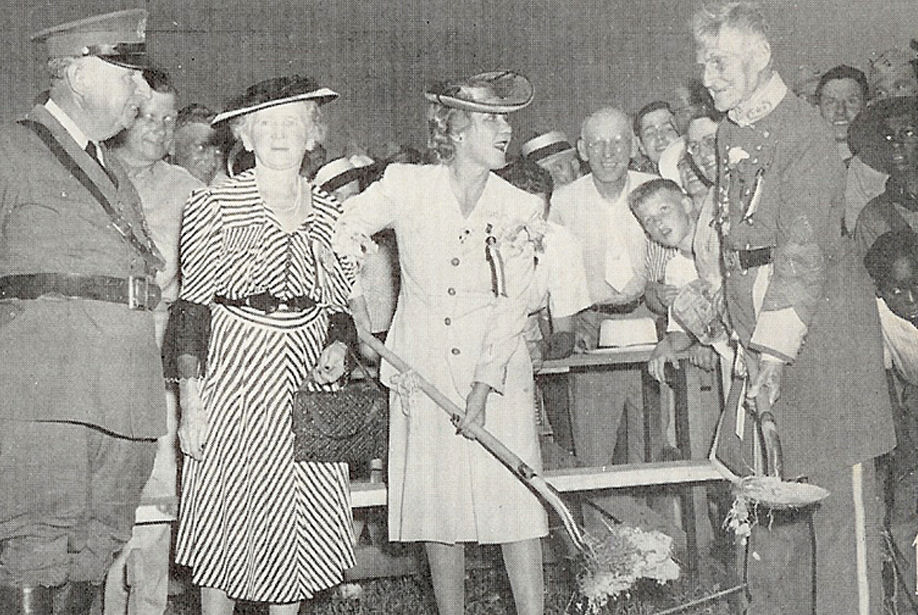
Helen Longstreet (left) with actress Mary Pickford and UCV Commander Julius F. Howell at the Gettysburg groundbreaking ceremony for the Longstreet equestrian statue on July 2, 1941. National Park Service Dr. J. Walter Coleman is at the left.

The Longstreet memorial remained forgotten for the next 30 years until pop culture and history collided to rekindle the legend of General James Longstreet. Ken Burns 1990 PBS documentary miniseries on the Civil War changed everything. Suddenly the Civil War was brought to the forefront like never before. Then came the 1993 movie Gettysburg which detailed the complicated men and ideals of this highly misunderstood period of American history. One of those most affected by the tarnished legend of Longstreet was a Sanford, North Carolina state forestry service heavy-equipment operator named Robert C. Thomas.
Thomas was moved to action after reading a 1990 book, “Lee’s Tarnished Lieutenant: James Longstreet and His Place in Southern History”, written by Dr. William Garrett Piston, editor of North and South magazine and Professor at Southwest Missouri State University . Thomas shared the book with fellow Civil War enthusiasts and together they decided that Longstreet’s time was overdue. In June 1991, Robert & Joe Thomas, along with Ray King, Bill Bates and Sion Harrington formed the Longstreet Memorial Fund Committee. This band of dedicated activists began selling mugs, T-shirts, tote bags, pens and cross-stitch portraits of the general at re-enactments across the country to raise funds for a proper monument to honor General James Longstreet. Gettysburg sculptor Gary Casteel was enlisted to craft a monument for placement in Pitzer Woods on Confederate Avenue on the battlefield.

z 3
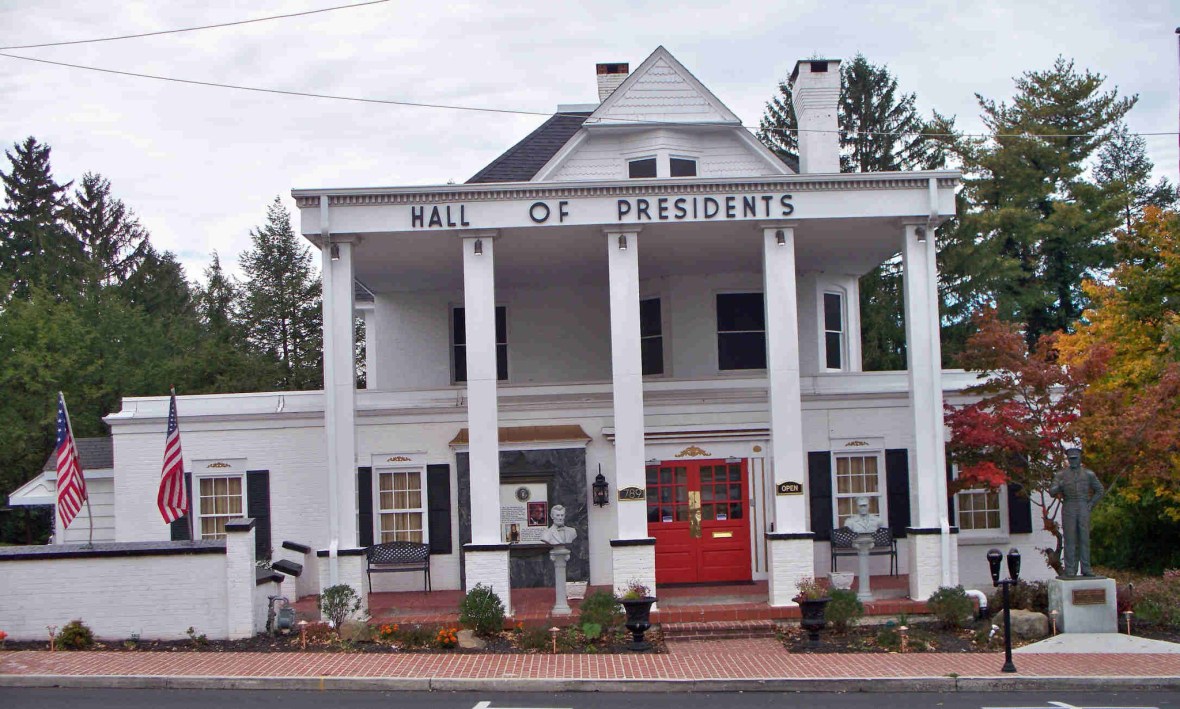
The former Hall of Presidents & First Ladies Museum-Now Gary Casteel’s Studio.

As fate would have it, during a late April trip to Gettysburg, I happened across the studio of Mr. Casteel. My habit is to wander the battlefield on early fog wrapped mornings before the tour buses role in while my wife Rhonda sleeps in. Last year, the Hall of Presidents and First Ladies wax museum was closed and all of the figures were sold off. The 363 lots sold in a January 2017 auction for a total of $217,409. If you’re interested, as am I, the average cost of a wax president was $3,088 while the average cost of a wax first lady figure was $437 proving that the wage gap transcends the pages of time. The top three highest-selling presidents were Abraham Lincoln ($9,350); Teddy Roosevelt ($8,800); Ulysses S. Grant ($6,820). Mary Todd Lincoln sold for $990 while Rosalynn Carter hammered down at a mere $247.50.
While relaxing atop my sunny perch on the Hancock equestrian monument base (across from the Evergreen cemetery gatehouse) I noticed that the old wax museum had undergone a facelift. So I wandered over to take a peek at the new digs and quite happily stumbled across the studio of none other than Gary Casteel, the sculptor of the Longstreet monument. i could hardly contain my excitement. I had heard stories about that monument for years since it’s 1998 installment and unveiling and immediately altered my travel plans in hopes of meeting this accomplished artist. It was well worth the wait.
Rhonda and I ventured over to the studio (at 789 Baltimore St. in Gettysburg) and much to my amazement, we were greeted by the artist in the flesh. Gary Casteel is the epitome of a southern gentleman. He speaks in measured tones that bespeak his West Virginia birthright. When I hear a West Virginia accent, I think of General Chuck Yeager. Tom Wolfe said it best in his book “The Right Stuff” when he described it as: “a particular drawl, a particular folksiness, a particular down-home calmness” that seems to draw the listener in and immediately put them at peace. Phrases like “Oh my” frame words like Riv-ah, He-ah and Nev-ah to form sentences with genteel insight rarely heard in Hoosier land.

31421516_1822681181096470_5411414843112554496_n
Sculptor Gary Casteel in his Gettysburg studio.

Classical music fills the air of Gary Casteel’s studio and adds to the importance of the moment. Gary’s studio, adjacent to the entrance to the National Cemetery, is sparkly clean and meticulously organized. Not at all like certain media portrayals would lead you to believe an artist’s studio should look like. There is no tortured artist at work here my friends. This is the workplace of a practiced hand that is straight as a preacher and as long a memory. One look at Gary’s work and that attention to minute detail is easily discerned. Although his work appears effortless, it is obviously the result of decades of difficult training and practice.
Gary Casteel grew up in the coal mining region of West Virginia and resolved early to become a sculptor while attending grade school there. Contrary to the stereotypes of the region, from an early age, he listened to classical music on the radio, devoured the works of William Shakespeare and idolized Michelangelo. In Gary’s own words, “through marriage, divorce, military service, occupation transfers, relocation, business ownership or family strife, I stayed true to my commitment to become a sculptor.” The Longstreet commission was the culmination of a lifetime dream for sculptor Casteel.
“My point of view has always been that heroes are larger than life. They are to be physically and mentally looked up to.” says Casteel. “In my youth, I was reared with ideals of heroes such as Davy Crockett, Daniel Boone, Robert E. Lee, George Patton. Now as a middle aged man with more than half a century of experience, living in an age of of hero deterioration and downfall, I choose my Icons with more wisdom. Longstreet, the General, was larger than life.” Gary Casteel decided that the memorial to Longstreet should be larger than life as well.
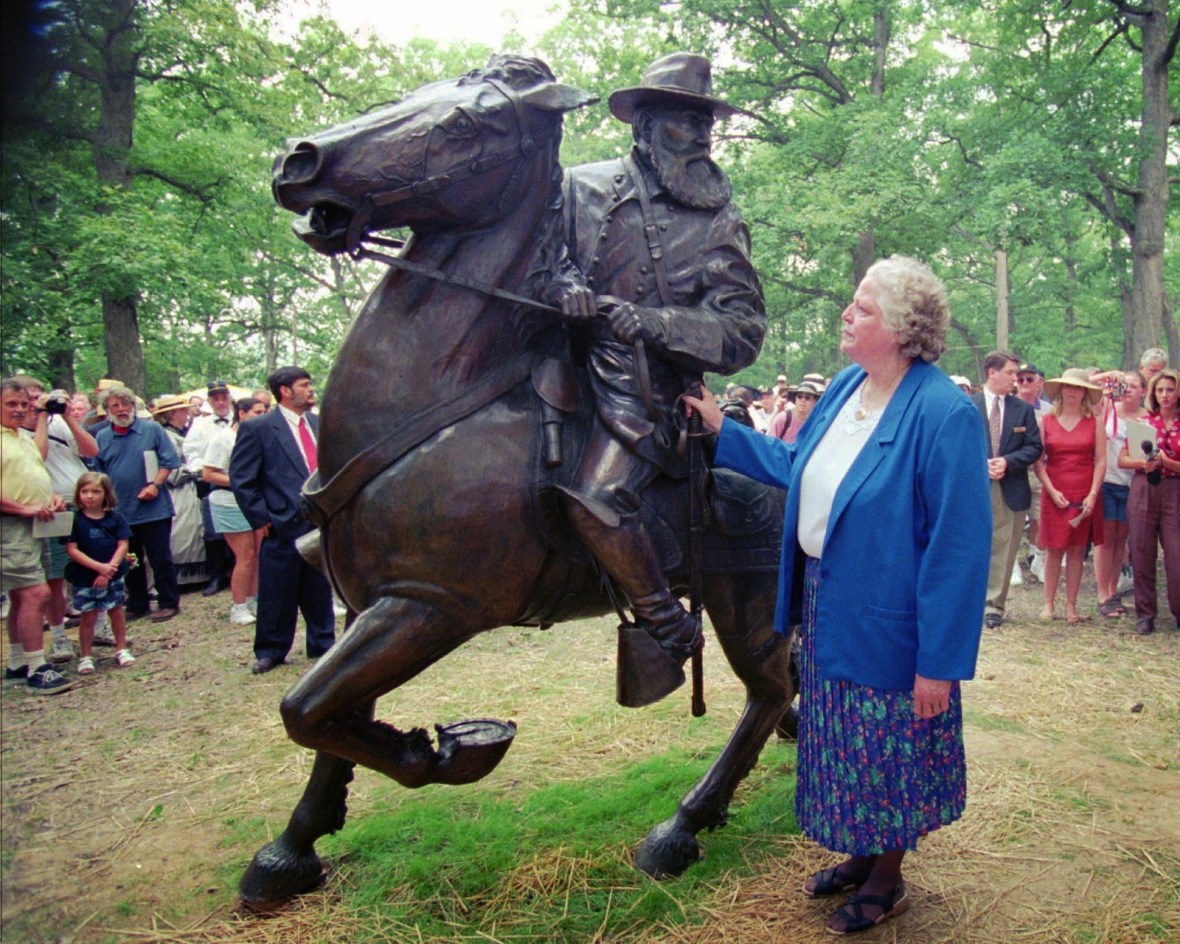
Unlike most monuments at Gettysburg, Casteel’s Longstreet rests at ground level and is not perched upon a lofty pedestal. The General is shown astride his favorite horse, Hero. Longstreet is pulling hard at the reins as Hero’s hooves dig into the soft Pennsylvania soil. The General’s attention is directed towards the copse of trees, the focal point of attack, mere moments before his troops would emerge from the treeline behind him. The field has become known as Pickett’s Charge and the copse of trees is forever referred to as the high water mark of the Confederacy. General Longstreet’s steely gaze is forever fixed on the target his men would never attain and one he never believed was attainable in the first place.

Longstreet's grandaughter 2
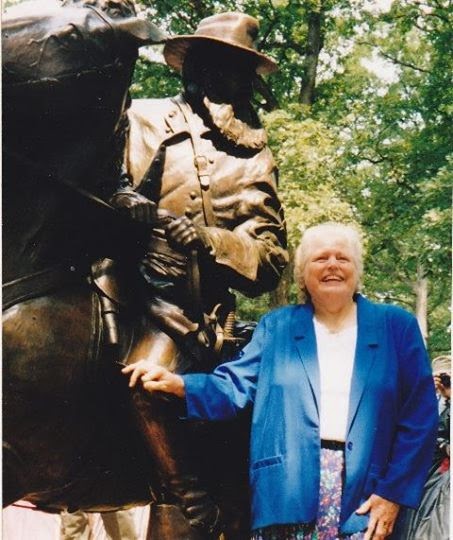
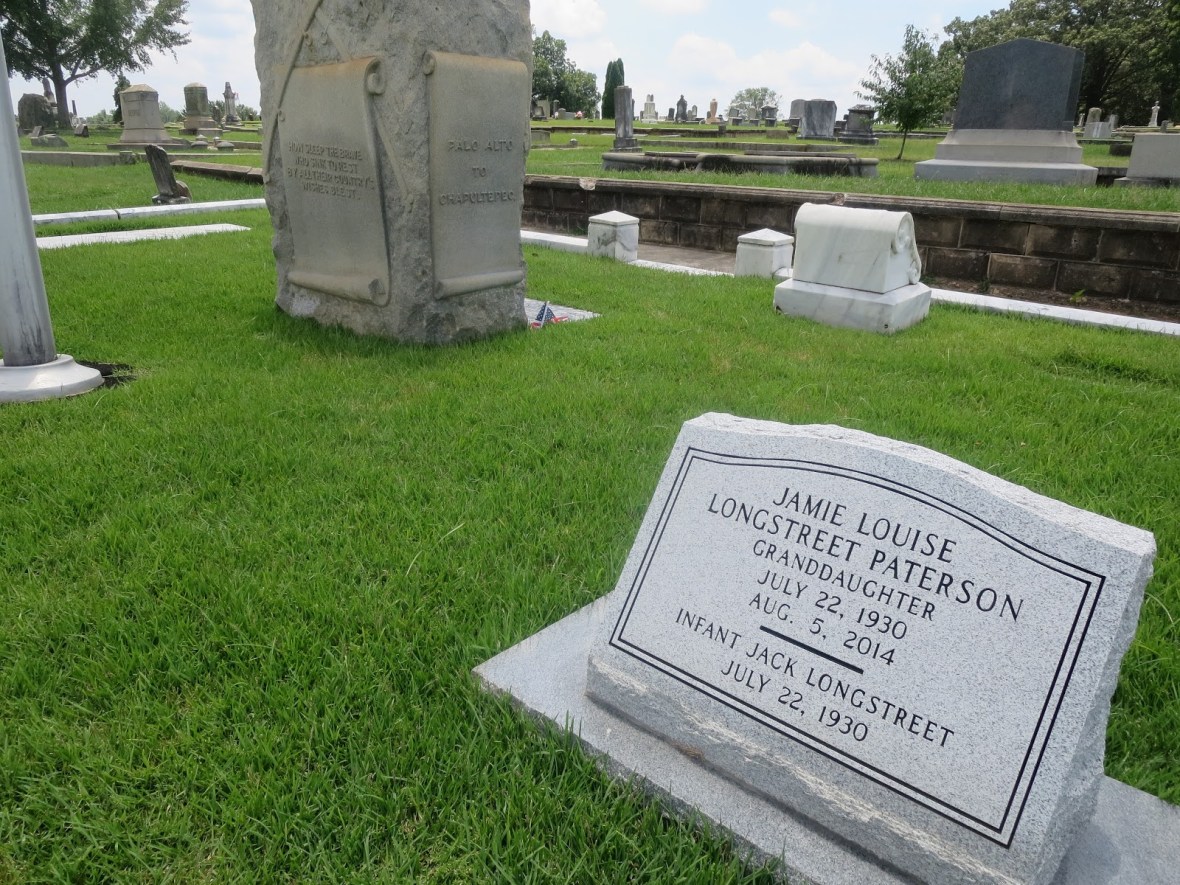
Jamie Longstreet Paterson-The General’s Granddaughter at the dedication.

Longstreet's grandaughterI asked Mr. Casteel if it was true that Longstreet’s granddaughter attended the unveiling ceremony. He answered quickly, “Oh yes. Jamie Longstreet Paterson attended the dedication ceremony. We brought out a ladder and she climbed up to get a better look at the General. I was worried because she was 67-years-old but more worried when she started to cry,” said Gary. “I thought, oh my, we may have a problem here. When she came down, I realized they were tears of joy as she said, ‘I never thought I would look him in the face’.” Sculptor Casteel’s Longstreet memorial was one of the last monuments erected at the Gettysburg National Military Park. It was dedicated on July 3, 1998, the 135th anniversary of the end of the battle of Gettysburg. Jamie Paterson Longstreet died six years later on August 4, 2014.
IMG_3339It should be noted that Casteel is not only an accomplished sculptor, knowledgeable historian and well versed art scholar, he has deeper personal roots in the Civil War and Battle of Gettysburg itself. Casteel says that his own family had two ancestors -brothers in fact- who actually fired at each other from opposing sides during the Battle of Gettysburg. “I call him Uncle Bill and he placed his rifle against that stone wall and fired our way from right over there” as he points out his studio window. Casteel is currently hard at work on several pieces for the proposed National Civil War Memorial. “Did you realize that there is no national monument to the Civil War?” he asks.
 

z 31384133_1822681114429810_9116746432894730240_n
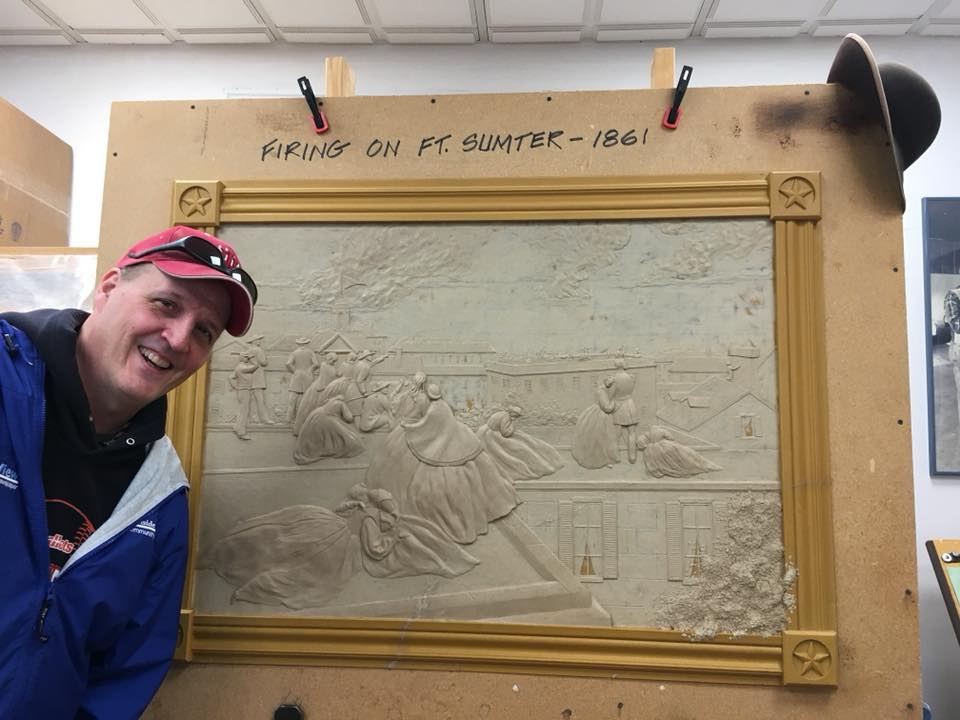
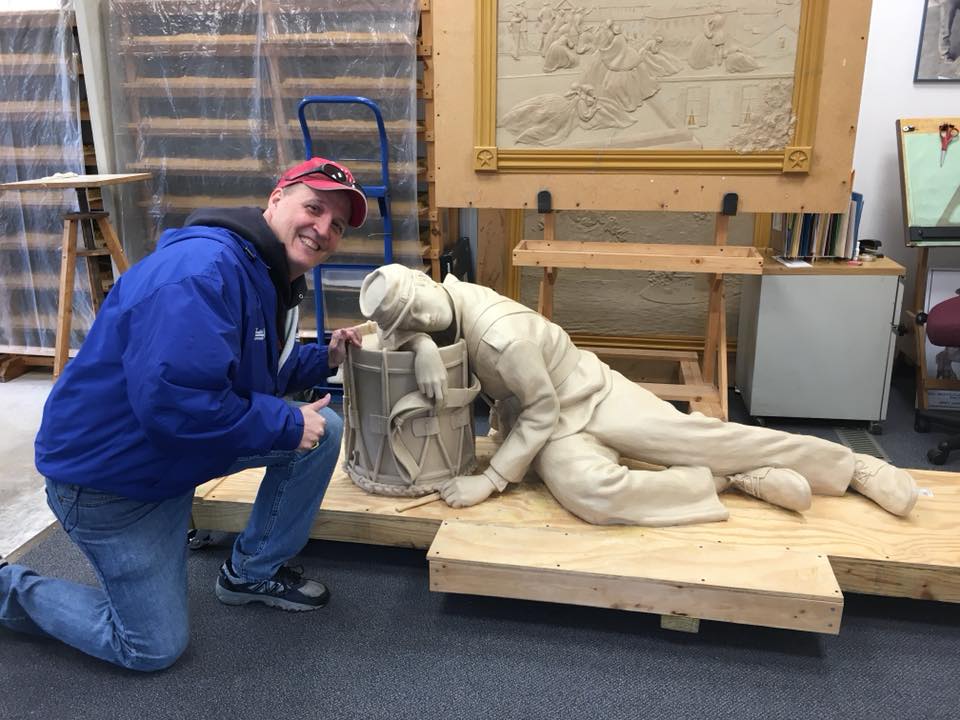
Me inside Gary Casteel’s studio.

z 31398193_1822681077763147_4410866842453671936_nGary guides us to a loose leaf binder containing images of the large sculpture medallions he has created for the museum. Lincoln, Lee, Jefferson Davis, and John Wilkes Booth are just a few of the completed images resting on the drying racks in the back of Gary’s studio. Gary remarks, “I asked Ed Bearss (Chief Historian Emeritus of the National Park Service), who serves on the museum board, why there was no plaque for Joshua Lawrence Chamberlain (Hero of Gettysburg’s Little Round Top) in the selection. He responded, ‘Gary, no one ever heard of Chamberlain before Gettysburg or afterwards for that matter.” Yes, talking with Gary Casteel gives new perspective to an old subject and promises to make a visit to his studio an unforgettable memory.
If Longstreet had died in battle, he undoubtedly would have been placed among the South’s greatest heroes, with monuments located everywhere he led men into battle. But after the death of Lee in 1870 and Pickett’s death five years later in 1875, Longstreet became the living scapegoat for the South’s defeat at Gettysburg. Gary Casteel’s statue has helped alter that view. Sometimes all it takes a new perspective from an old school craftsman to help cast things in a new light.


Abe Lincoln, Civil War, Gettysburg

The Confederate Monument Debate. Ad Infinitum.

z 5920890d654ae.image
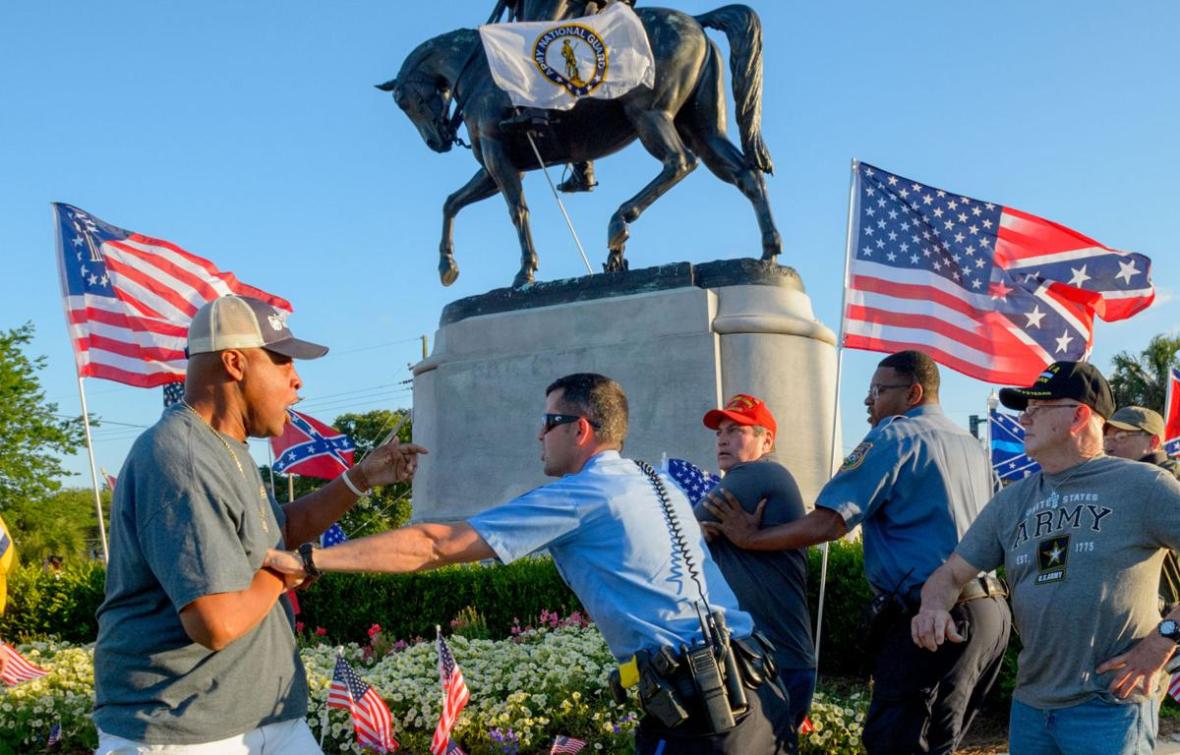
Protesters in New Orleans Louisiana. May 16, 2017. Photo by Matthew Hinton

Original publish date:  August 17, 2017

There has been a lot of talk lately Confederate Civil War monuments and what they stand for. In fact recently, several of those monuments to rebel leaders and soldiers toppled by protesters and removed in the dark of the night by officials. My wife and I traveled to Gettysburg 2 to 3 times every year and a fairly wear out my Facebook friends with the many pictures I post from that famous battlefield. The monuments on the Gettysburg battlefield had escaped the relevant racial scrutiny and have often been viewed as untouchable and different from the ones being protested across the nation until last week when the debate hit the pages of the Gettysburg compiler newspaper.
Scott Hancock, an associate professor of History and Africana studies at Gettysburg College, says it may be time to question the Confederate monuments on the Gettysburg battlefield. “As an African American, I’m glad for one that we seem to have a broader public movement consensus of people that want to get the history right,” Hancock said.

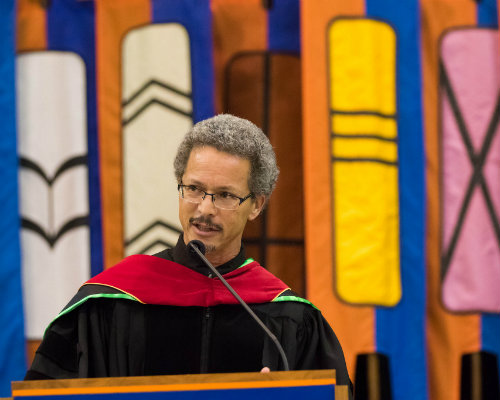
z midyear+grads+Hancock
Scott Hancock, associate professor at Gettysburg College.

Hancock explained that, in the last decade or so, a majority of historians have concluded that slavery was the central issue of the Civil War. As a result, the monuments dedicated to the Confederacy and Confederate figures represent a “narrow, twisted version of history,” Hancock said. For some, the Confederate monuments on the battlefield help tell the full story of the Battle of Gettysburg. If nothing else, Hancock’s story begs the question: Is there a difference between Confederate monuments found in public parks and those found on battlefields? What about Confederate monuments in cemeteries?
The root of the question may be historical context. Should Confederate soldier’s sacrifices, and in many cases their deaths, be recalled and remembered at the spot of their struggle? In my opinion, the battlefield monuments to both sides speak to all who view them. Not only do they represent the soldiers that fought there, they are also valuable pieces of public art. Often, they are made of stone native to that soldier’s state or placed upon a sacred spot of battlefield relevance.

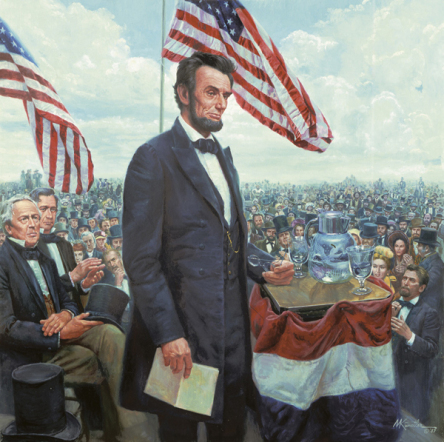
z gettysburg-address
Abraham Lincoln at Gettysburg.

One need only look as far as Abraham Lincoln’s Gettysburg address to understand why those monuments are placed there. Lincoln said, ” Now we are engaged in a great civil war, testing whether that nation, or any nation so conceived and so dedicated, can long endure. We are met on a great battle-field of that war. We have come to dedicate a portion of that field, as a final resting place for those who here gave their lives that that nation might live. It is altogether fitting and proper that we should do this. But, in a larger sense, we can not dedicate—we can not consecrate—we can not hallow—this ground. The brave men, living and dead, who struggled here, have consecrated it, far above our poor power to add or detract. The world will little note, nor long remember what we say here, but it can never forget what they did here. It is for us the living, rather, to be dedicated here to the unfinished work which they who fought here have thus far so nobly advanced. It is rather for us to be here dedicated to the great task remaining before us—that from these honored dead we take increased devotion to that cause for which they gave the last full measure of devotion—that we here highly resolve that these dead shall not have died in vain—that this nation, under God, shall have a new birth of freedom—and that government of the people, by the people, for the people, shall not perish from the earth.”
To most Americans that should be reason enough to leave the Confederate Civil War monuments found on battlefields in cemeteries in place. The question is not only consigned to the Gettysburg battlefield however. Indianapolis, although never the scene of a major Civil War battle, has monuments to Confederate dead as near as Garfield Park and Crown Hill Cemetery. Undoubtedly, the question of whether or not they should remain there will be debated soon.
The argument as to whether these monuments are part of our cultural landscape will most likely continue. As for their presence on battlefields and in cemeteries, these site-specific memorials were designed to be educational markers to interpret history. From Professor Hancock’s perspective is it appropriate to have markers of any kind honoring the Confederacy placed on public land and maintained by public money? For the record, that debate goes on within the Hunter household. But, I guess I’m just a late stage baby boomer who grew up during the Cold War and who is proud to have been born during the centennial celebration of the Civil War. So I guess it’s a generational thing.
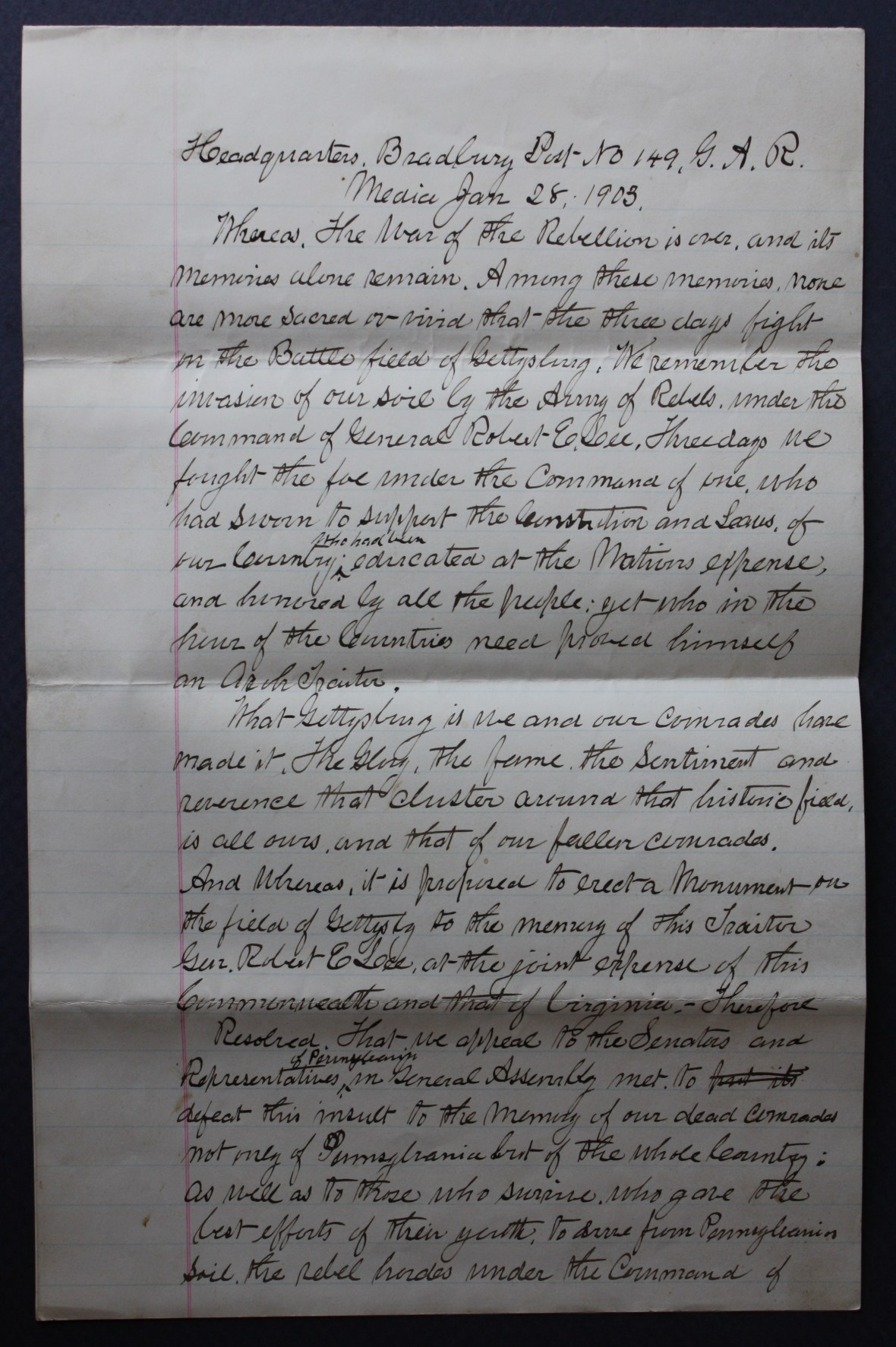
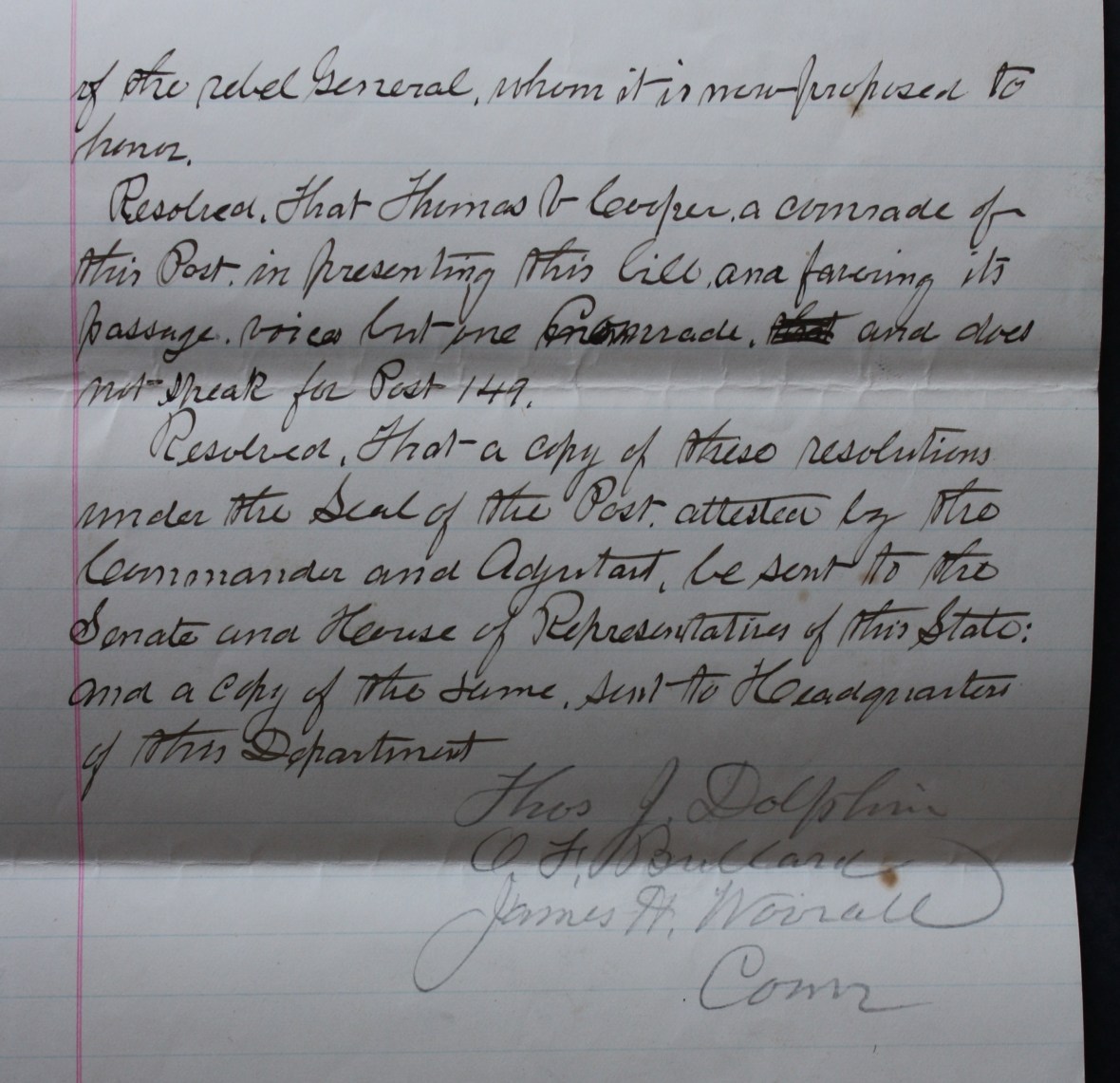
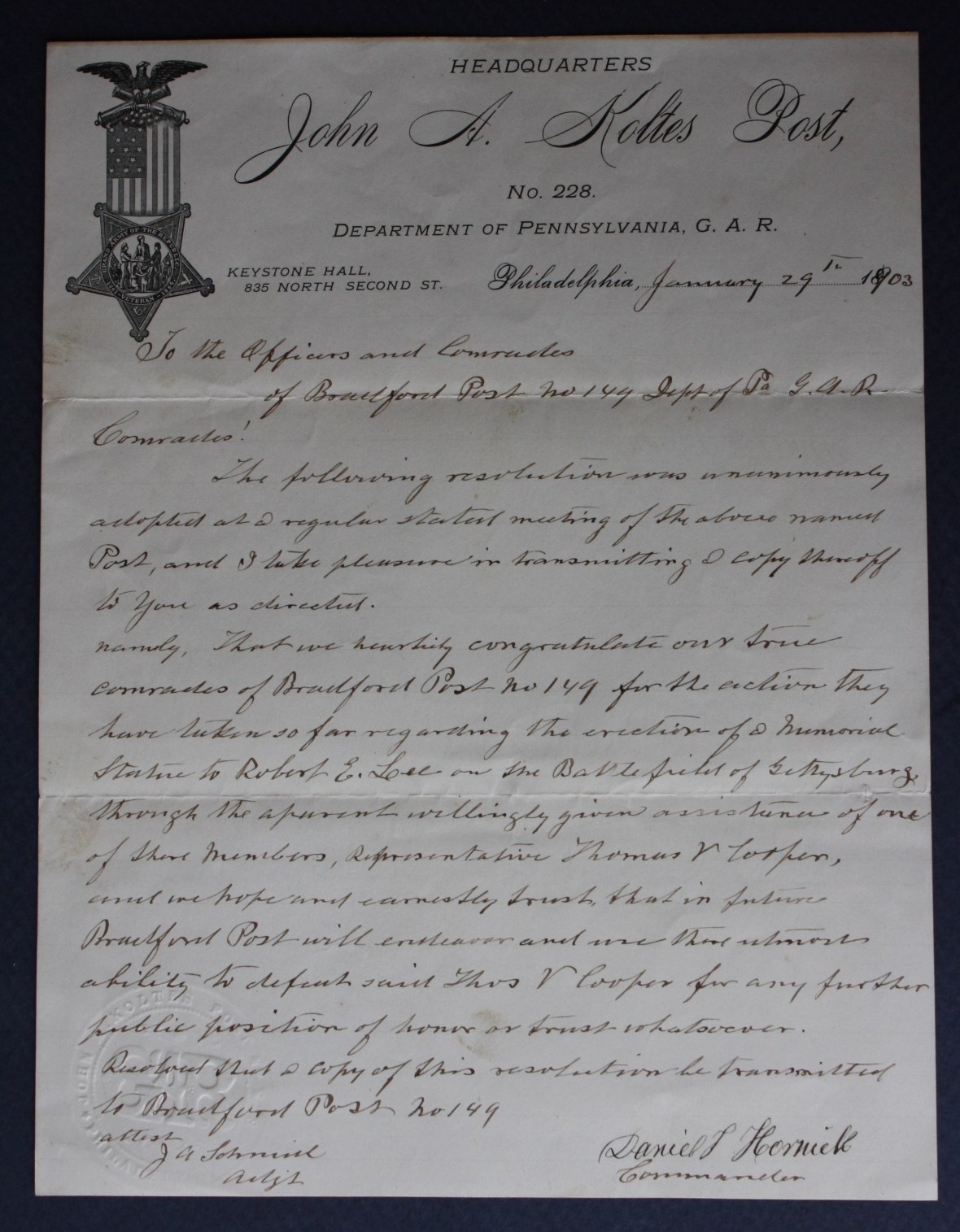
I’m not prepared to make a personal political statement in this article but I did want to share an item from my collection that I feel speaks to the issue from a different perspective. Among the many collections I obsess over is my gathering of items of all sorts relating to the battle of Gettysburg. One such item is a set of documents I bought several years ago from January 1903.

Confederate Monuments 2
One is a two-page handwritten document on legal sized paper from the Grand Army of the Republic (G. A. R.) Headquarters post Bradberry Pennsylvania near Philadelphia dated January 28, 1903. The official resolution document reads: “Whereas the War of the Rebellion is over, and its memories alone remain. Among these memories none are more sacred or vivid than the three days fight on the Battlefield of Gettysburg. We remember the invasion of our soil by the Army of Rebels under the command of General Robert E Lee. Three days we fought the faux under the command of one who had sworn to support the Constitution and Sons of Our Country. Who had been educated at the nation’s expense, and honored by all the people: yet who in the hour of the country’s need proved himself an Arch Traitor.
What Gettysburg is we and our comrades have made it. The glory, the fame, the sentiment and reverence that cluster around that historic field, is all ours, and that of our fallen comrades. And whereas, it is proposed to erect a monument on the field of Gettysburg to the memory of this traitor Gen. Robert E Lee, at the joint expense of this Commonwealth and that of Virginia.
Therefore resolved, that we appeal to the Senators and Representatives of Pennsylvania in General Assembly met to defeat this insult to the memory of our dead comrades not only of Pennsylvania but of the whole country; as well as to those who survive, who gave the best efforts of their youth, to drive from Pennsylvania’s soil, the rebel hordes under the command of the Rebel General, to whom it is now proposed to honor.

Confederate Monuments 3
Resolved. That Thomas V. Cooper, a comrade of this post in presenting this bill and favoring its passage, voices but one comrade and does not speak for post-149. Resolved. That a copy of these resolutions under the seal of the post attested by the commander and adjutant, be sent to the Senate and House of Representatives of the State: and a copy of the same, sent to Headquarters of This Department.” The document is signed by three members of the post, (Thos. J. Dolphin, O. F. Bullard, & James H Worrall) All of whom I’m sure our former Union soldiers.

Confederate Monuments 1
The other is an 8.5 x 11 handwritten letter dated January 29, 1903 on the ornate letterhead of the “Headquarters John A Koltes Post No. 228 Department of Pennsylvania, G. A. R. Keystone Hall, 835 North Second St., Philadelphia” the letterhead features an image of the G.A.R. soldier’s badge at the top. The letter reads: “To the Officers and Comrades of Bradford Post No 149 Department of Pa. G. A. R. Comrades! The following resolution was unanimously adopted at a regular slated meeting of the above named Post, and I take pleasure in transmitting a copy thereof to you as directed. Namely, that we heartily congratulate our brave comrades of Bradford Post No 1494 the action they have taken so far regarding the erection of a memorial statue to Robert E Lee on the Battlefield of Gettysburg, through the apparent willingly given assistance of one of those members, Representative Thomas V Cooper, and we hope and earnestly trust, that in future Bradford post will endeavor and use the utmost ability to defeat said Thomas V Cooper for any further public position of honor or trust whatsoever. Resolved that a copy of this resolution be transmitted to Bradford Post No 149. Daniel L Hornick Commander.”
The letters illustrate that this debate was going on 40 years after the close of the Civil War and was being waged by the soldiers who participated in it. Think about the strife and turmoil that must’ve been swirling within the walls of this lodge as they protested the placement of the statue to the Rebel General they fought so bravely against. The ex-soldiers were so vehement in their opposition that they were willing to take on one of their most accomplished lodge members, Senator “Red Headed and Hopeful” Tom Cooper.

z 4469
Senator Thomas Valentine Cooper 1835-1909

Cooper served as a delegate to the 1860 Chicago Republican Convention and played a pivotal role in the nomination of Mr Lincoln. At the outset of the Civil War, Thomas helped organize Company F of the Fourth Pennsylvania Regiment and later enlisted in Hartranft’s Company C, 26th Regiment, serving three years in the Army of the Potomac. He mustered-out at Independence Hall, June 14, 1864, having served in 13 major engagements, including Second Bull Run, Chancellorsville, Fredericksburg, Gettysburg, the Wilderness, and Spotsylvania Court House. Thomas represented Delaware County in the State House of Representatives, 1870-72, and was elected to the state Senate in 1872. He served 17 consecutive years in the upper house. Cooper was a Mason, a member of the Bradbury G.A.R. Post . Cooper died in his home on December 19, 1909 after a freak fire engulfed his room, most likely, the result of an ash falling from his trademark cigar. Cooper had as much right to protest the placement of the Robert E Lee statue as anyone. His patriotic credentials were unquestioned. Yet he supported the placement of a Confederate monument on a battlefield he risked his life fighting on.

z cde19355003fe507efcf59f6110a0f85
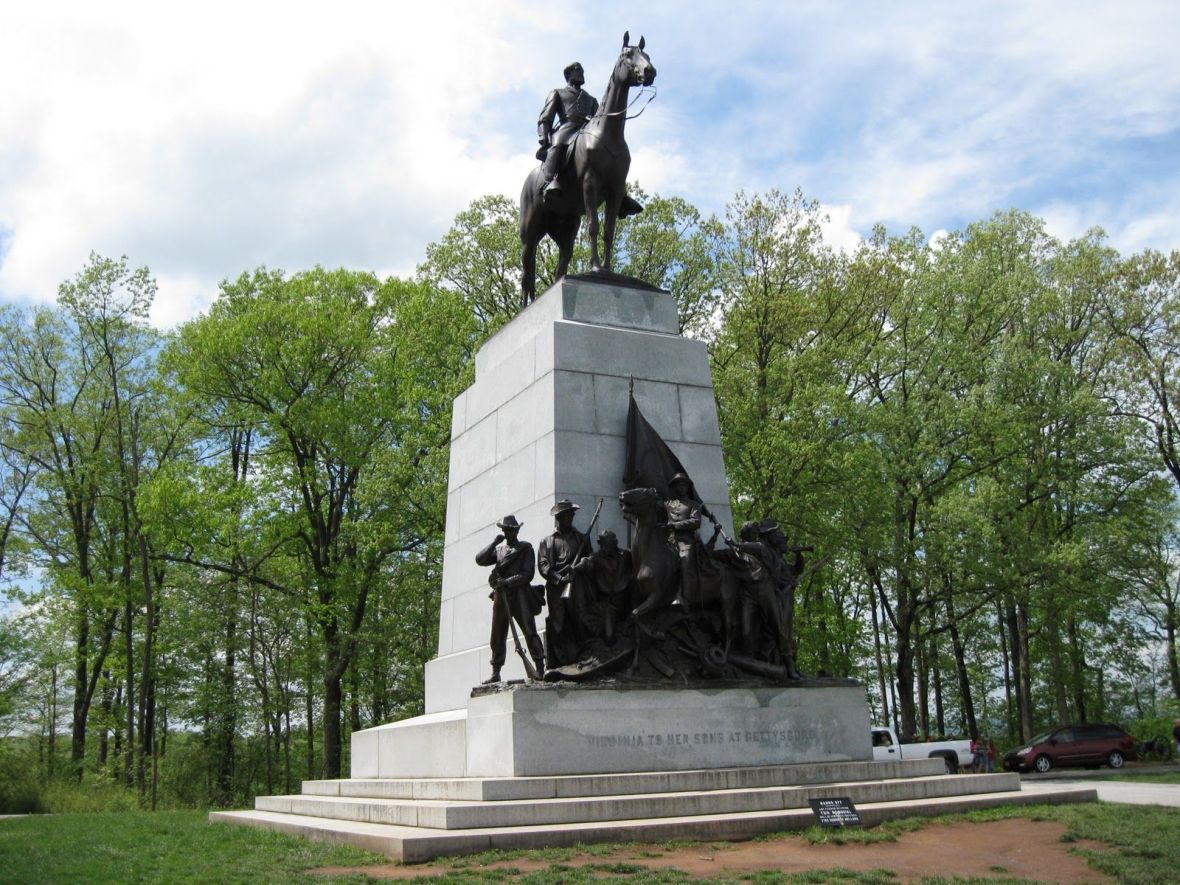
The Virginia Monument at Gettysburg.

Despite the Bradford Post’s attempt to thwart the placement of the Lee Monument at Gettysburg, the iconic landmark was indeed placed there in the days just before World War I. The Virginia monument, located on West Confederate Avenue, was the first of the Confederate State monuments at Gettysburg. It was dedicated on June 8, 1917 and unveiled by Miss Virginia Carter, a niece of Robert E Lee. It is the largest of the Confederate monuments on the Gettysburg battlefield, a fitting tribute for the state that provided the largest contingent to the Army of Northern Virginia, its commander, and its name. Lee’s figure, topping the monument astride his favorite horse, Traveler, was created by sculptor Frederick Sievers from photographs and life masks of the general. He even went to Lexington, Virginia to study Traveler’s skeleton, preserved at Washington and Lee University. The monument stands 41 feet high. The statue of Lee and Traveler stands 14 feet high. The total cost of the monument was $50,000. Virginia contributed over 19,000 men to the Army of Northern Virginia at Gettysburg, the largest contingent from the twelve Confederate states. Almost 4,500 of these – almost 1 out of 4 – became casualties, the second highest state total at Gettysburg.
When it comes to the battlefield, Hancock pointed out that, while most of the park’s monuments and markers were constructed in the late 19th and early 20th century, several Confederate memorials were erected in the 1960s and 1970s. Hancock points out that many of those monuments to the Confederacy were erected before, during and after the civil rights movement and deserve particular scrutiny “because of the social and racial context of the time.” Hancock singled out the Confederate monuments along Confederate Avenue, in particular that of Mississippi, which was erected in the early 1970s. The monument speaks of Mississippians fighting for the “righteous cause” and “sacred heritage of honor.”
Voices on both sides of the issue will certainly attempt to add clarity in the days ahead. For instance, former Martin Luther King Jr. right-hand man, UN representative under Jimmy Carter and Atlanta Mayor Andrew Young recently said, “I think it’s too costly to continue to fight the Civil War.” Condoleezza Rice, former Secretary of State under George W. Bush, said this: “”When you start wiping out your history, sanitizing your history to make you feel better, it’s a bad thing.” The debate promises to continue. But let’s not forget this is a debate that has been going on for over 150 years now.