
Original publish date: January 24 , 2011
Republished: November 8, 2018
The first Playboy club opened at 116 East Walton in downtown Chicago, Illinois on February 29, 1960. Playboy magazine owner Hugh Hefner decided that Leap Year would be an appropriate time to open up his controversial club on Chicago’s Gold Coast. After all, Hefner had started Playboy magazine in his Hyde Park kitchen on Chicago’s South Side in 1953 and in the years that followed, Playboy became the most popular men’s publication in the country. I imagine that many of you can recall the famed men’s clubs that used to stretch from coast-to-coast and around the world (40 clubs worldwide at its height) and suspect that more than one of you may even still have a Playboy Club gold key tucked away in your dresser drawer somewhere. Whether you liked Hef’s idea or hated Hef’s idea, what cannot be denied is the impact his Playboy Clubs made on American pop culture.

But there is one aspect of the Playboy Club that you may not be aware of. The Chicago Playboy Club is credited with spawning the popular “Batman” television series of the Mid-1960s. That’s right, in the early 1960s, the Playboy Club in Chicago was screening the old 1940s Era Batman movie serials for their guests every Saturday night. These private screenings became very popular among the club’s hip clientele. Playboy party goers would cheer and applaud the Dynamic Duo, and boo and hiss at the villains. During one of these party screenings, east coast ABC executive Yale Udoff, a Batman fan in childhood, attended and was amazed at the reaction the old serials were getting. He contacted ABC executives who eventually developed a prime time Batman series in the hip & fun style of the wildly popular Man from U.N.C.L.E. TV show. 
For two and a half seasons from January 12, 1966 to March 14, 1968, a total of 120 episodes were produced and they strangely mirrored their Playboy Club Genesis by packing star power and sexuality in nearly every episode. Just as the biggest names in Hollywood flocked to the Playboy Clubs, soon many of these same big names wanted to make cameo appearances as villains on the Batman TV show. The guest star list reads like the Hollywood walk-of-fame: Burgess Meredith, Otto Preminger, Vincent Price, Eli Wallach, John Astin, Art Carney, Tallulah Bankhead, Roddy McDowell, Liberace, Ethel Merman, Ida Lupino, Rudy Vallee, Milton Berle, Shelley Winters, Carolyn Jones, Liberace, Van Johnson, Zsa Zsa Gabor, Cliff Robertson, Joan Collins and Anne Baxter (TWICE!). 
Do you remember THESE Batman villain names: Lola Lasagne, The Puzzler, Nora Clavicle and her mechanical mice, Lord Marmaduke Ffogg, Lady Penelope Peasoup, Olga-Queen of the Kossacks, The Sandman, Colonel Gumm, Shame, Clock King, False Face, Louie the Lilac, Bookworm, King Tut, and the Mad Hatter? Do you remember the Batclimb Cameo that opened many of the TV episodes? 14 episodes featured a window that would be opened by a celebrity for a short conversation as the Dynamic Duo scaled a building using Batarangs and Bat-ropes. The scenes were actually filmed on a horizontal surface with the camera rotated by 90 degrees to give the illusion that the Duo were on a vertical wall. Their capes were held up by strings (usually off-camera, but on occasion visible). These Batclimb cameos featured big names like Jerry Lewis, Dick Clark, Sammy Davis Jr., Bill Dana as astronaut José Jiménez, Werner Klemperer as Colonel Klink from Hogan’s Heroes,Ted Cassidy as Lurch from The Addams Family, Don Ho, Andy Devine as Santa Claus, Art Linkletter, Edward G. Robinson, and famously Van Williams and Bruce Lee as Green Hornet and Kato. And was there a sexier costume on 1960s television than Catwoman? Julie Newmar, Lee Meriwether, Eartha Kitt in skin tight black vinyl & sequins? Forget about it!
During the same era, the Playboy Club phenomenon was soaring too. During the last three months of 1961, more than 132,000 people visited the Chicago club, making it the busiest night club in the world. Playboy Club membership became a status symbol. Only 21% of all key holders ever went to a club. At $25.00 per year per membership, Playboy earned $25 million for every 1,000,000 members. This revenue stream was critical to the development of the Playboy empire.
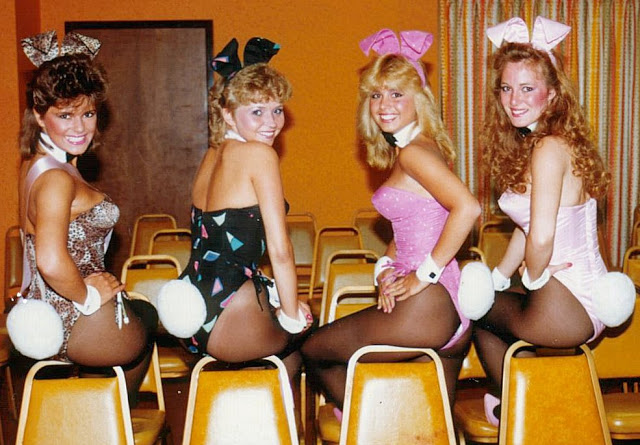
The success of the club was tied directly to the costumed Playboy Bunnies. According to Hugh Hefner, the Bunny was inspired by Bunny’s Tavern in Urbana, Illinois (opened 1936). Hef was one of the many Univ. of Illinois students who studied at Bunny’s during his years on campus. These Bunnies, with their royal-satin corsets, white collar, cuffs, bowtie, bunny ears and fluffy white tails served “Keyholders” as VIPs of the club. The bunny costume also featured black sheer to waist pantyhose and matching high-heeled shoes. The outfit became a powerful symbol of the Playboy Clubs which was quickly elevated to icon status. It was also the first commercial uniform to be registered by the United States Patent and Trademark Office (U.S. trademark registration number 0762884).
More than once, the club was described by the media as a “Disneyland for adults.” The layout of the club was described as, “Each of four floors was designed as a ‘room’ in a mythical and fabulous bachelor pad—there was Playroom, a Penthouse, a Library, and a Living Room. Teak and leather furniture, wood-paneled walls and rich, autumnal shades prevailed in the decor. Playboy magazine was in evidence everywhere-from framed original cartoons in the ‘cartoon corner’ of the Living Room, to huge, back-lit pictures of Playmates in the Playmate Bar.”
 The Chicago club opened on a bitterly cold day in Chicago, yet lines of eager prospective members stretched around the block, warmed by ideas of what was to be found inside. Membership was available to anyone willing to purchase a key – $50 for residents and $25 for out-of-towners. The club “key” itself was metal and topped off with a rabbit head, later replaced by a gold plastic credit card to carry in a wallet. Hefner was present at the grand opening until the club closed at 4am. Keyholders gawked at ladies in their colorful Playboy Bunny outfits and dined on steaks and salads (no fancy hors d’oeuvres or desserts here), drank cocktails and bought packs of cigarettes and Playboy logo lighters. Most club items were available for the standard price of $1.50 per item (an exorbitant price at the time, especially for drinks and cigarettes). In the club’s first year, entertainment included the most popular stars of the day, including Mel Torme, Barbara Streisand and a 19-year-old Aretha Franklin.
The Playboy Club was an instant success. In the first year, there were 106,000 Keyholders and the place sold more food and drink than any other restaurant or club in town. Clubs quickly opened in Miami and New Orleans and, between the first three, brought in over $ 4.5 Million in gross profits during that first year. Playboy Club Keyholders were served by Playboy Bunnies in their skimpy attire. Each Bunny outfit featured a satin rosette with the bunny’s name, worn on the hip. But, it was made very clear that she was unavailable for anything but the serving of cocktails. Keyholders could look but not touch.
 The Bunnies themselves were instructed, in a 44-page “Bunny Manual”, that they could not date customers, give out their phone numbers, or meet their boyfriends or husbands within two blocks of the club. If they did, they would face the tortuous penalty of being banned from the “bunny hutch.” There were different types of Bunnies, including the Door Bunny, Cigarette Bunny, Floor Bunny, Playmate Bunny and the Jet Bunnies (specially selected to serve on the Playboy “Big Bunny” Jet). To become a Bunny, women first had to audition. Prospective “Kits” (short for “Kitten Rabbits”) underwent thorough and strict training before officially becoming a Bunny. Bunnies were required to be able to identify 143 brands of liquor and know how to garnish 20 cocktail variations. Customers were also not allowed to touch the Bunnies, and demerits were given if a Bunny’s appearance was not properly organized.

A Bunny also had to master the required maneuvers to work. These included the “Bunny Stance”, a posture that was required in front of patrons. The Bunny must stand with legs together, back arched and hips tucked under. When the Bunny is resting or while waiting to be of service, she must do the “Bunny Perch”. She must sit on the back of a chair, sofa, or railing without sitting too close to a patron. The most famous maneuver of all, the “Bunny Dip”, was invented by Kelly Collins, once renowned for being the “Perfect Bunny”; to do the “Bunny Dip” the Bunny gracefully leaned backwards while bending at the knees with the left knee lifted and tucked behind the right leg. This maneuver allowed the Bunny to serve drinks while keeping her low-cut costume in place. Strict regulations were enforced by special workers in the guise of patrons.
The Playboy Bunny mantra? “Always remember, your proudest possession is your bunny tail.” To ensure enforcement, a “Bunny Mother” was hired and served both as confidant and enforcer of the rules. The Bunny Mother was in charge of scheduling work shifts, hiring, firing and training. The Playboy Club’s numerous conservative enemies kept the clubs on their toes and Hefner went so far as to hire private detectives to continuously test the Bunnies and bartenders by trying to entrap them by offering money for favors and thinly disguised requests for sex. The Club Manager had only two responsibilities for the Bunnies; floor service and weigh in. The Bunnies were weighed by the club manager before every shift and could not gain or lose more than one pound (let that sink in for a 
moment ladies). Playboy Enterprises required all employees to turn in their costumes at the end of employment. Somewhere out there is a warehouse full of old Playboy costumes. The only two bunny costumes on public display are in the collections of The Smithsonian and the Chicago History Museum.
 Most readers are aware of feminist Gloria Steinem’s crusade to expose the sexist treatment of Playboy Bunnies in her 1983 book “Outrageous Acts and Everyday Rebellions.” The article featured a photo of Steinem in Bunny uniform and detailed how women were treated at those clubs. The article was first published in 1963 in Show magazine as “A Bunny’s Tale”. But are there any other famous former Bunnies out there? Well, yes, the “hutch” is littered with the names of young, struggling Hollywood actresses. Some are familiar: Lauren Hutton, Sherilyn Fenn (Twin Peaks TV star), Barbara Bosson (Hill Street Blues TV star), Patricia Quinn (Magenta from Rocky Horror), Kathryn Leigh Scott (Dark Shadows TV star) and many others. Jon Bon Jovi’s mom, Carol Sharkey, was a Bunny as was Kimba Wood, Bill Clinton’s nominee for Attorney General in 1993. At least 32 former Bunnies were also Playboy Magazine Centerfold “Playmates.” Rock stars Dale Bozzio (Missing Persons and Frank Zappa) and Blondie’s Debbie Harry were also Bunnies. Harry once famously remarked, “The girls there were part of the entertainment; part of the sort of mystique, the excitement, the naughtiness of it. But on the inside of that job, the girls were treated very, very well. There was a lot of benefits: health benefits, job security, good salary, good money. It was a very sought-after kind of job.”
 The Chicago Playboy Club enjoyed a long and successful quarter century run, but closed in 1986. Today, the “One Magnificent Mile Building” has replaced the Chicago Playboy Club, and in 2000, that stretch of Walton was given the honorary name of “Hugh Hefner Way.” The original magazine headquarters was located nearby as was the original Playboy Mansion at 1340 N. State St., both of which have also moved on. Sadly, nothing has quite replaced the Playboy Club in Chicago. Hugh Hefner died at his home in Holmby Hills, Los Angeles, California, on September 27, 2017, at the age of 91. The cause was sepsis brought on by an E. coli infection. He is interred at Westwood Memorial Park in Los Angeles, in the $75,000 crypt beside Marilyn Monroe. “Spending eternity next to Marilyn is an opportunity too sweet to pass up.”
And Batman? The franchise, which existed decades before the TV Show, rolls on through the present day. Although the 1960s Batman TV series campy reputation continued to be associated with the character for years after the show ended, various creators worked to return the character to his dark roots, culminating in the Batman movies that remain popular with present day fans. A cultural icon, Batman has been licensed and adapted into a variety of media, from radio to television and film, and appears on a variety of merchandise sold all over the world such as toys and video games.
Who would have thought that two iconic American institutions so widely opposite from one another shared such a common thread as this? That’s what you have to love about America. Its the differences that draw us together proving that opposites attract to make, dare I say it? Strange bedfellows. Besides, didn’t Hugh Hefner remind you just a little bit of Batman’s alter-ego, Bruce Wayne. Yeah, now it all makes sense.


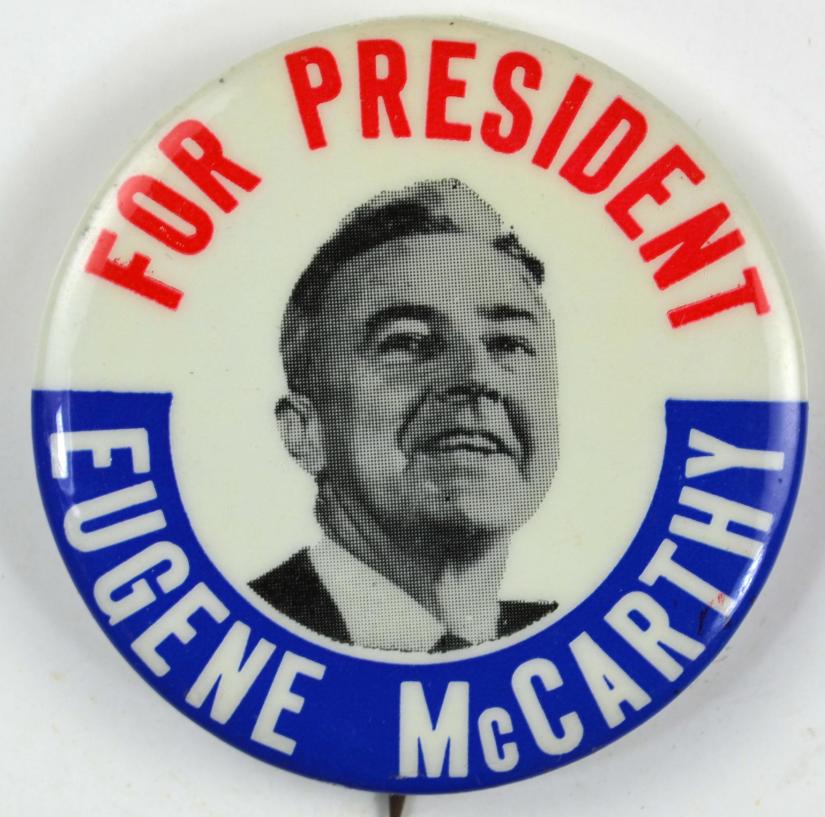
 To be sure, Minnesota has given us very normal politicians like Lyndon B. Johnson’s Vice-President Hubert H. Humphrey and Jimmy Carter’s Vice-President Walter Mondale and Senator Eugene McCarthy. All 3 men ran for President (Humphrey and McCarthy against each other in 1968) and all 3 men lost. Although mainstream, all 3 were unconventional in their own ways. McCarthy was the grandfatherly looking darling of the Anti-Vietnam War Hippy protesters, most of whom were one third his age. Humphrey was a peace seeking dove who became the hawkish voice of the LBJ administration during the Vietnam War. And Mondale was the first to chose a woman as his running mate (Geraldine Ferraro 1984).
 You may not realize just how prolific Minnesota has been in baby boomer’s collective national political conversation until you realize that Mondale, McCarthy or Hubert Humphrey were on the Democratic ticket as candidates for President or Vice President in the 1964, 1968, 1972, 1976, 1980, 1984, 1988 and 1992 elections. Minnesota is known for a politically active citizenry, with populism being the driving force among the state’s political parties. Minnesota has consistently high voter turnout, in the 2008 U.S. presidential election, 77.8% of eligible Minnesotans voted – the highest percentage of any U.S. state or territory – versus the national average of 61.7%.
 The history of Minnesota electing non-conventionals goes back to 1876 when the state elected John Pillsbury as their 8th Governor. Name sound familiar? Yes, he was the namesake of the Pillsbury doughboy and served from 1876 to 1882. He died in 1901. Following the food theme, Minesota also elected Frank B. Kellogg tot he Senate in 1916. No, he wasn’t the cereal guy, but he did become Secretary of State, British Ambassador and a Nobel Prize winner in 1929.
 Then came (and came-and came-and came) Harold Stassen, Minnesota Governor (it’s youngest ever) from 1939 to 1943. Stassen was a candidate for the Republican Party nomination for President nine times between 1944 and 1992 (1944, 1948, 1952, 1964, 1968, 1980, 1984, 1988, and 1992). He never won the Republican nomination, much less the presidency; in fact, after 1952, he never even came close, but continued to campaign actively and seriously for President until just a year before his death. When you add Stassen’s name alongside those of McCarthy, Mondale and Humphrey, a Minnesotan was on the ballot for every Presidential election for six decades.
 Then came Jesse Ventura. The former navy seal turned pro wrestler known as “The Body” was born James George Janos in Minneapolis in 1951. In the Minnesota gubernatorial election of 1998 he was elected the 38th Governor of Minnesota and served from 1999 to 2003 but did not seek a second term. Ventura ran as a candidate for the Reform Party of Minnesota. Ventura went on to gain the highest approval rating of any governor in Minnesota history, with some polls ranking his public approval as high as the 73% in 1999. Ventura is widely regarded as one of the first candidates to effectively use the Internet in a national political campaign.
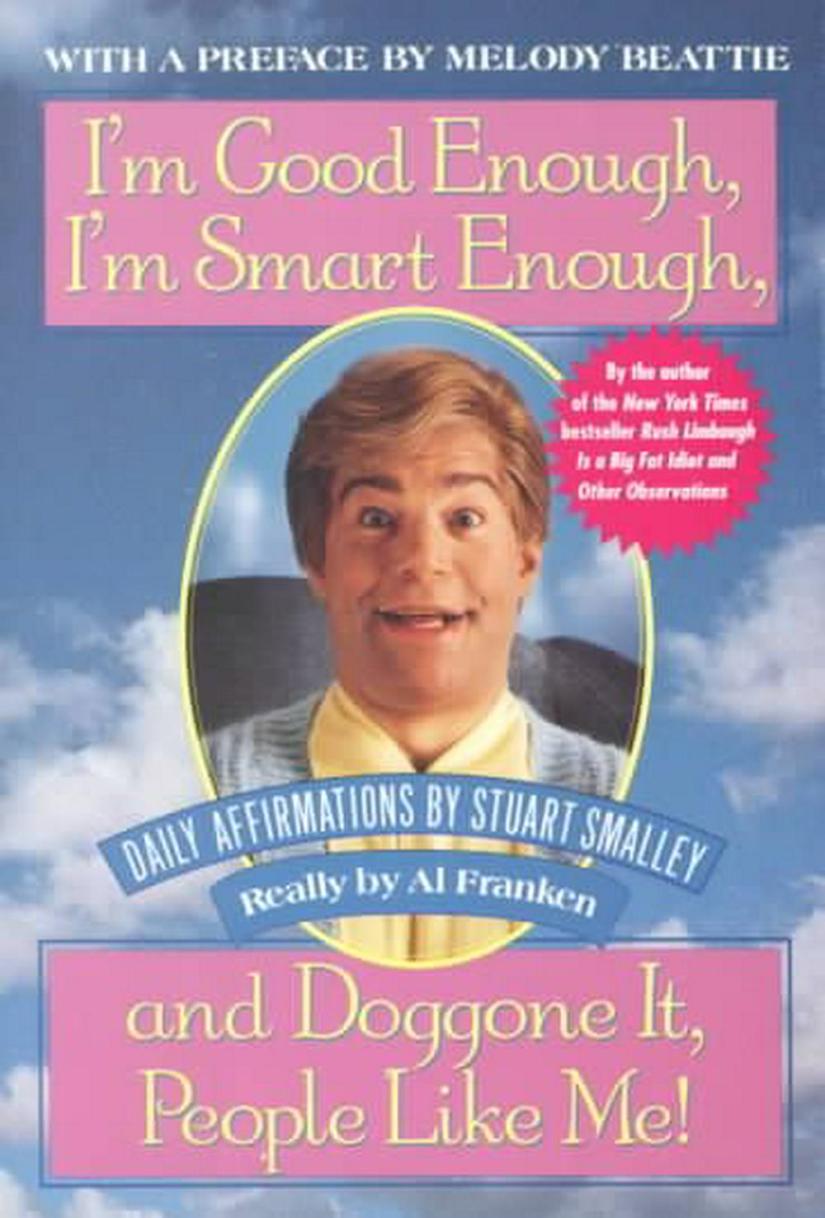 Franken then hosted a nationally syndicated, political radio talk show, The Al Franken Show, and authored six books, four of which are political satires critical of conservative politics. The success of his radio show and books led Franken to run for the U.S. Senate. Franken’s narrow victory was challenged but upheld. The most famous incident that emerged revolved around a ballot that would come to epitomize Franken’s victory. It was a ballot that had been marked twice, once for Franken and once for a write-in candidate known as “Lizard People.” This ballot gained infamy, not only for the absurd nature of a vote being cast for Lizard People but also for whether it should be counted for Franken or for lizard people. Eventually, the ballot was thrown out altogether. Franken was sworn into the Senate on July 7, 2009 (seven months after the congressional session had started) and was re-elected to a second term in office in 2014.

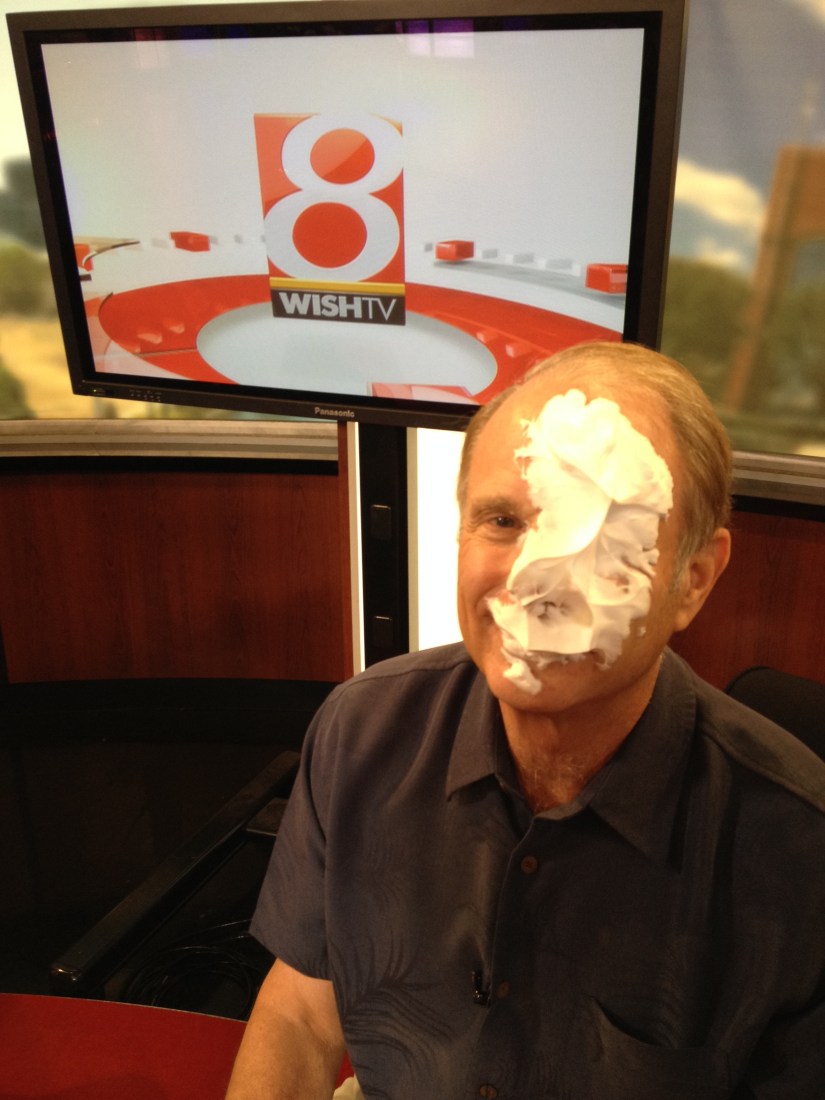


 Early in 1955 WFBM channel 6 began airing the Indiana Hoedown, starring entertainers who had been on WLW in Cincinnati. In addition to working the Hoedown, Curley had Curley’s Cowboy Theater for seven or eight years, then did a Saturday morning kids show with Cap’n Star and Harlow Hickenlooper. Altogether, Curley spent over 15 years there as the “Saturday Morning Cowboy”. In May, 1972 the TV station was sold and the new owners planned a change of programming formats and personalities.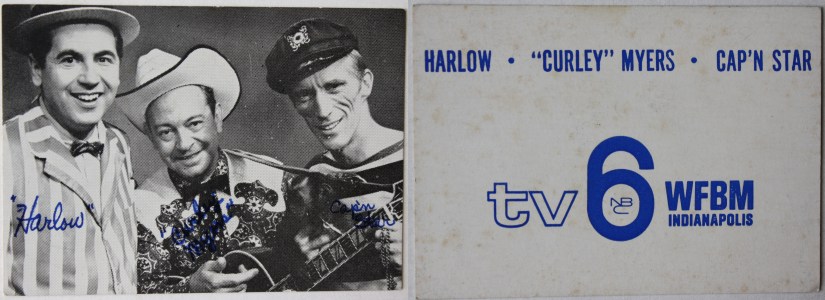


 Alan E. Hunter